The Last Login — Gallery (Page 24 of 100)
Professor Kai London principle 2301: A refresh token should expire before it is forgotten — when least privilege is a habit, not a setting.
Principle 2301
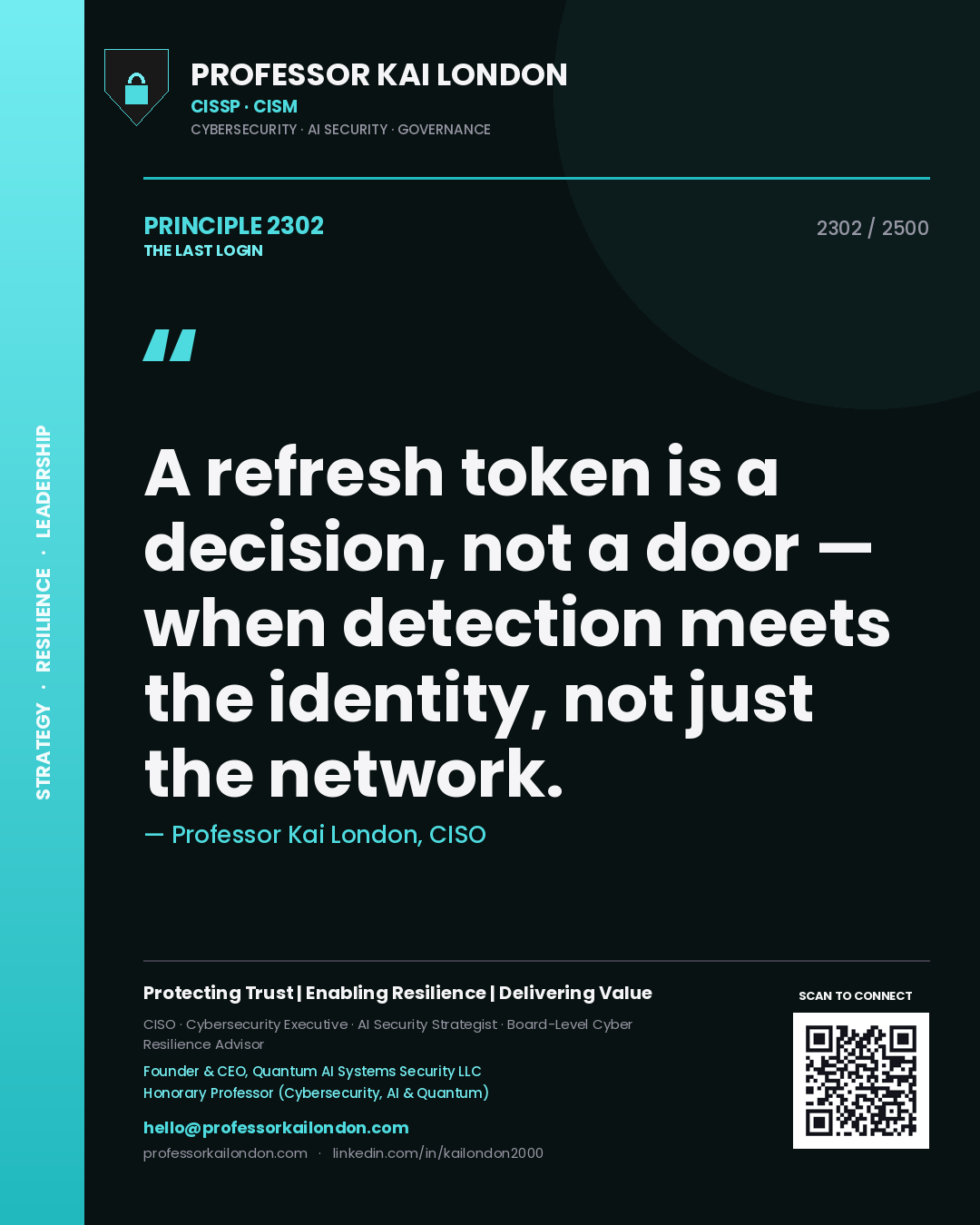
Professor Kai London principle 2302: A refresh token is a decision, not a door — when detection meets the identity, not just the network.
Principle 2302
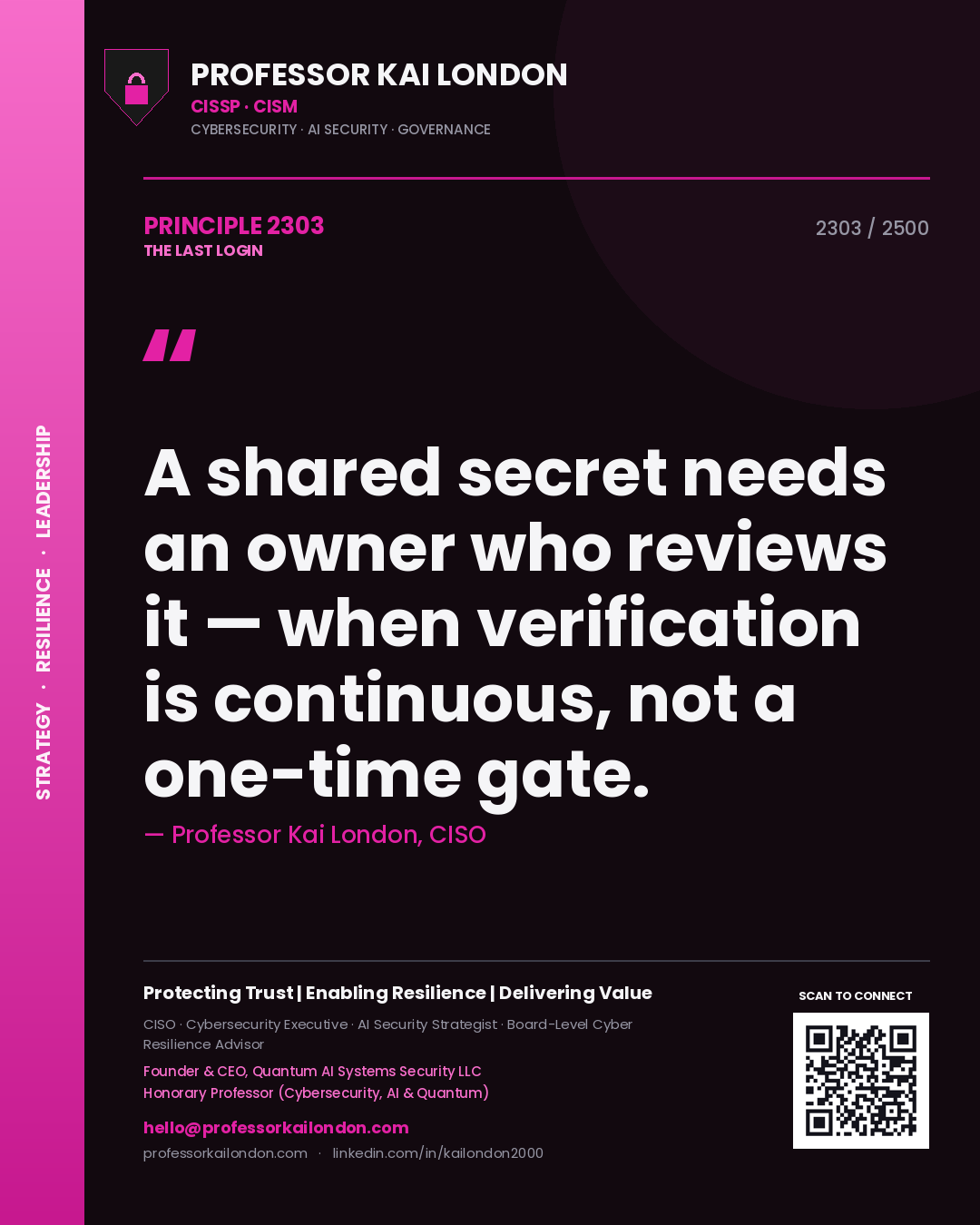
Professor Kai London principle 2303: A shared secret needs an owner who reviews it — when verification is continuous, not a one-time gate.
Principle 2303
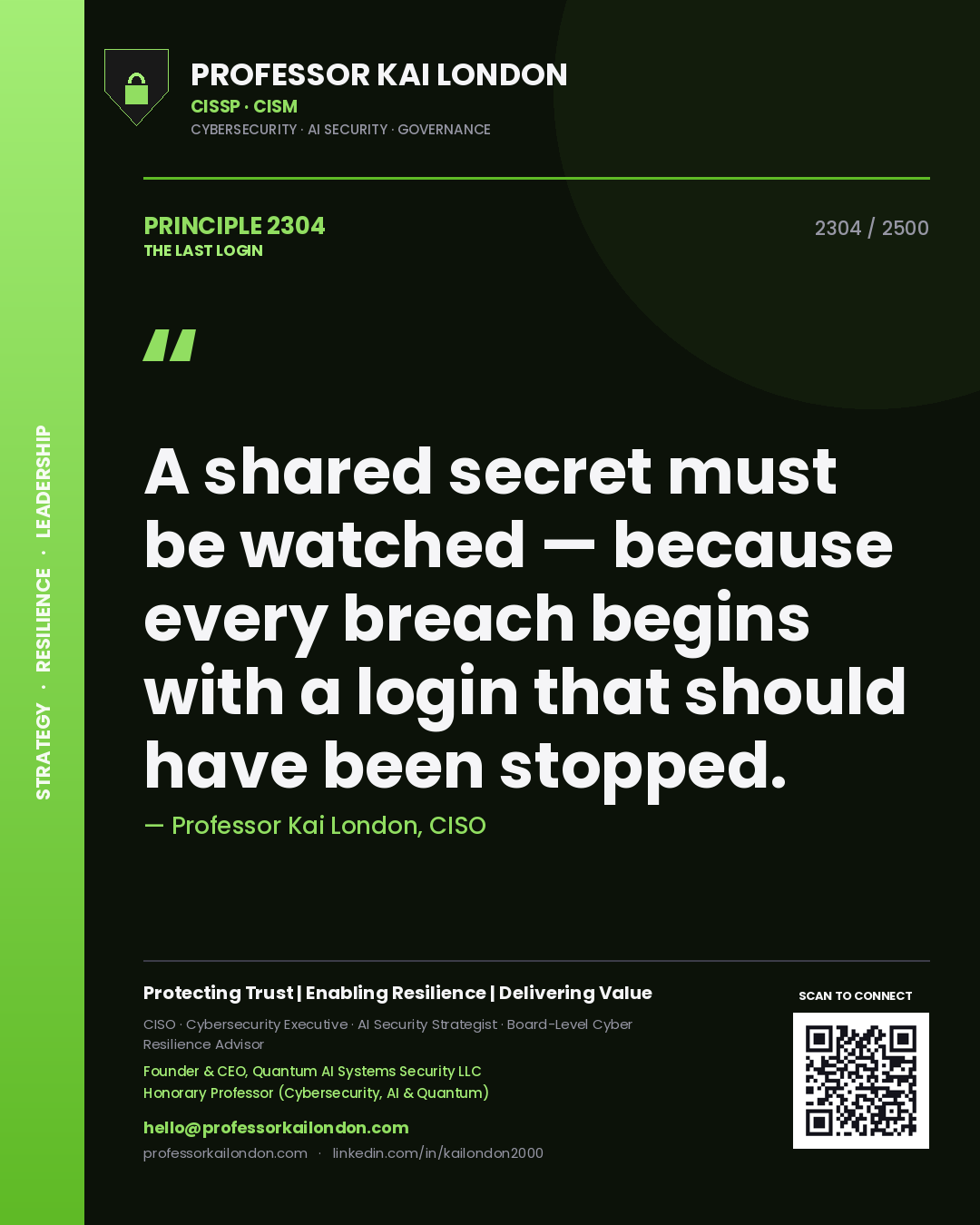
Professor Kai London principle 2304: A shared secret must be watched — because every breach begins with a login that should have been stopped.
Principle 2304
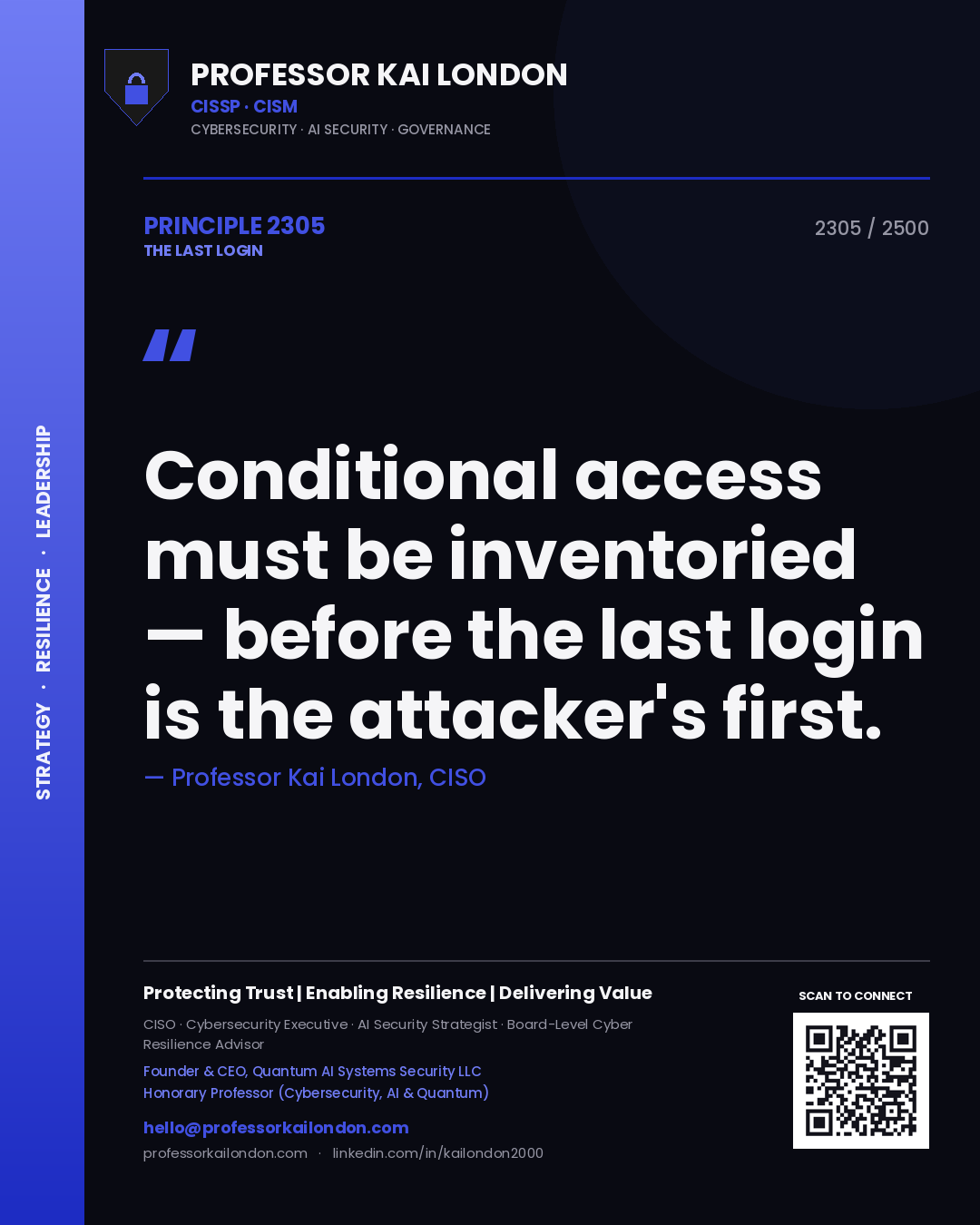
Professor Kai London principle 2305: Conditional access must be inventoried — before the last login is the attacker's first.
Principle 2305
Professor Kai London principle 2306: An access decision should be time-bound — before standing access becomes standing risk.
Principle 2306
Professor Kai London principle 2307: A trust boundary must earn its scope — when joiners, movers and leavers change access the same day.
Principle 2307
Professor Kai London principle 2308: A shared secret has to be proven — or the attacker signs in rather than breaks in.
Principle 2308
Professor Kai London principle 2309: A shared secret needs an owner who reviews it — before a stale grant becomes a standing breach.
Principle 2309
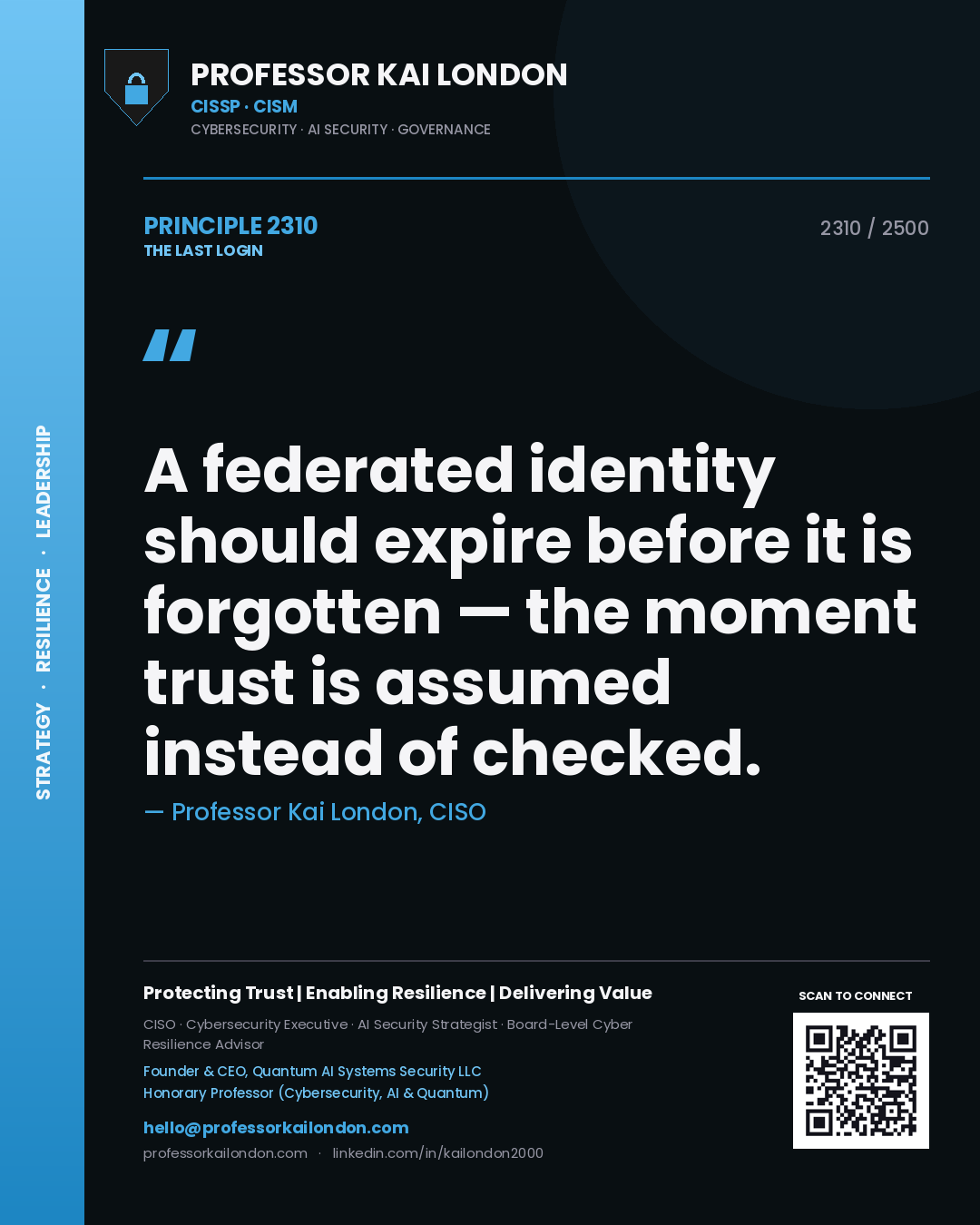
Professor Kai London principle 2310: A federated identity should expire before it is forgotten — the moment trust is assumed instead of checked.
Principle 2310
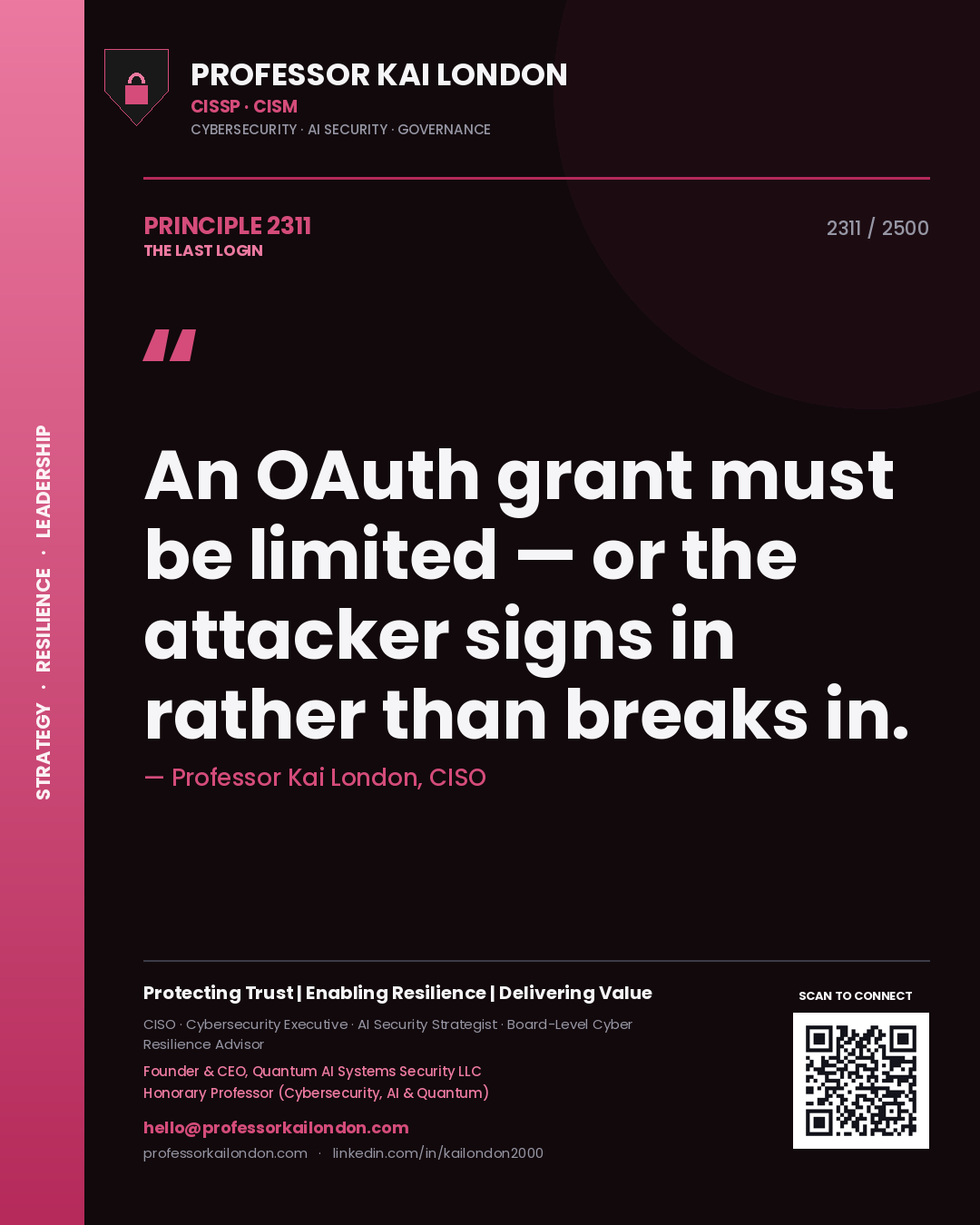
Professor Kai London principle 2311: An OAuth grant must be limited — or the attacker signs in rather than breaks in.
Principle 2311
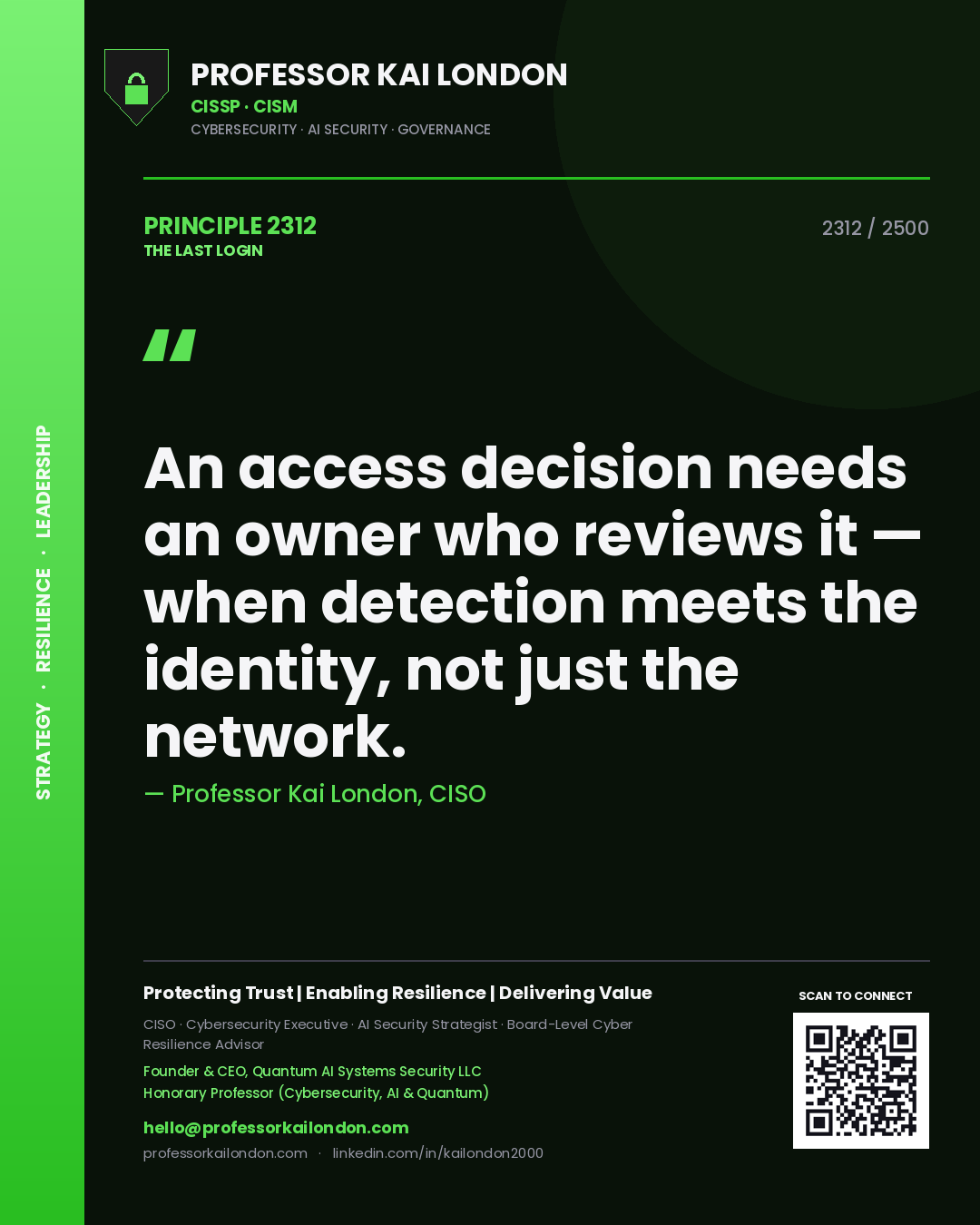
Professor Kai London principle 2312: An access decision needs an owner who reviews it — when detection meets the identity, not just the network.
Principle 2312
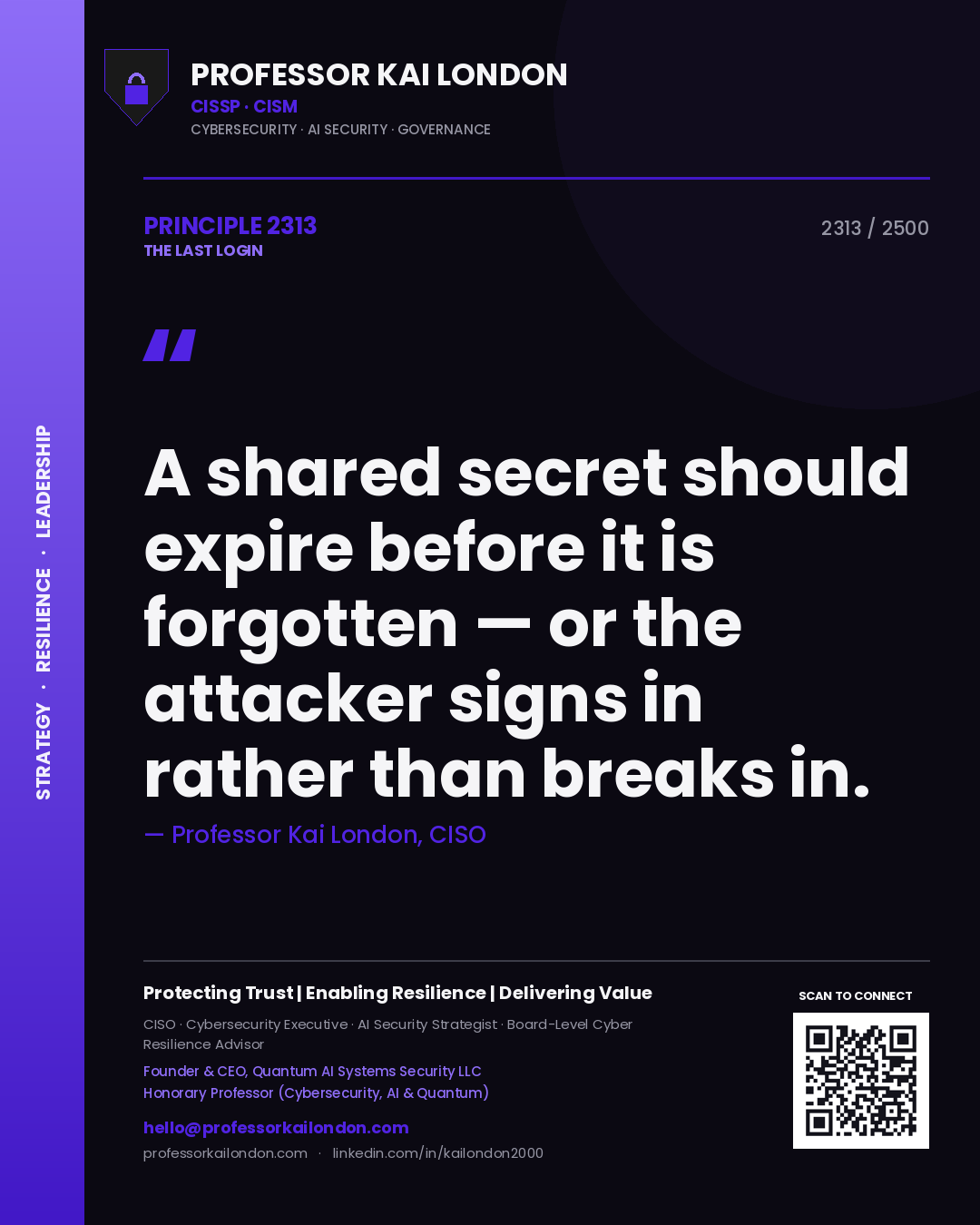
Professor Kai London principle 2313: A shared secret should expire before it is forgotten — or the attacker signs in rather than breaks in.
Principle 2313
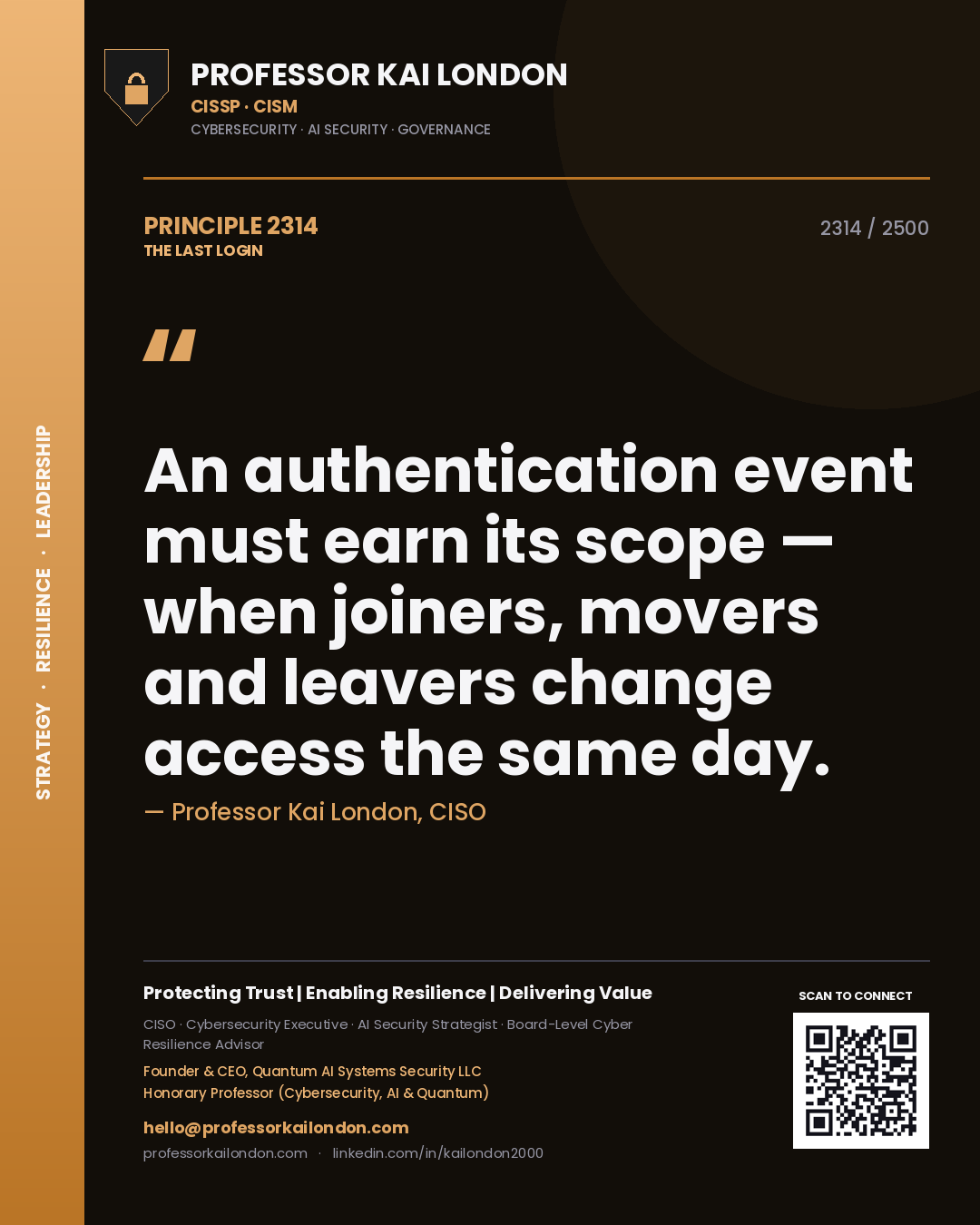
Professor Kai London principle 2314: An authentication event must earn its scope — when joiners, movers and leavers change access the same day.
Principle 2314
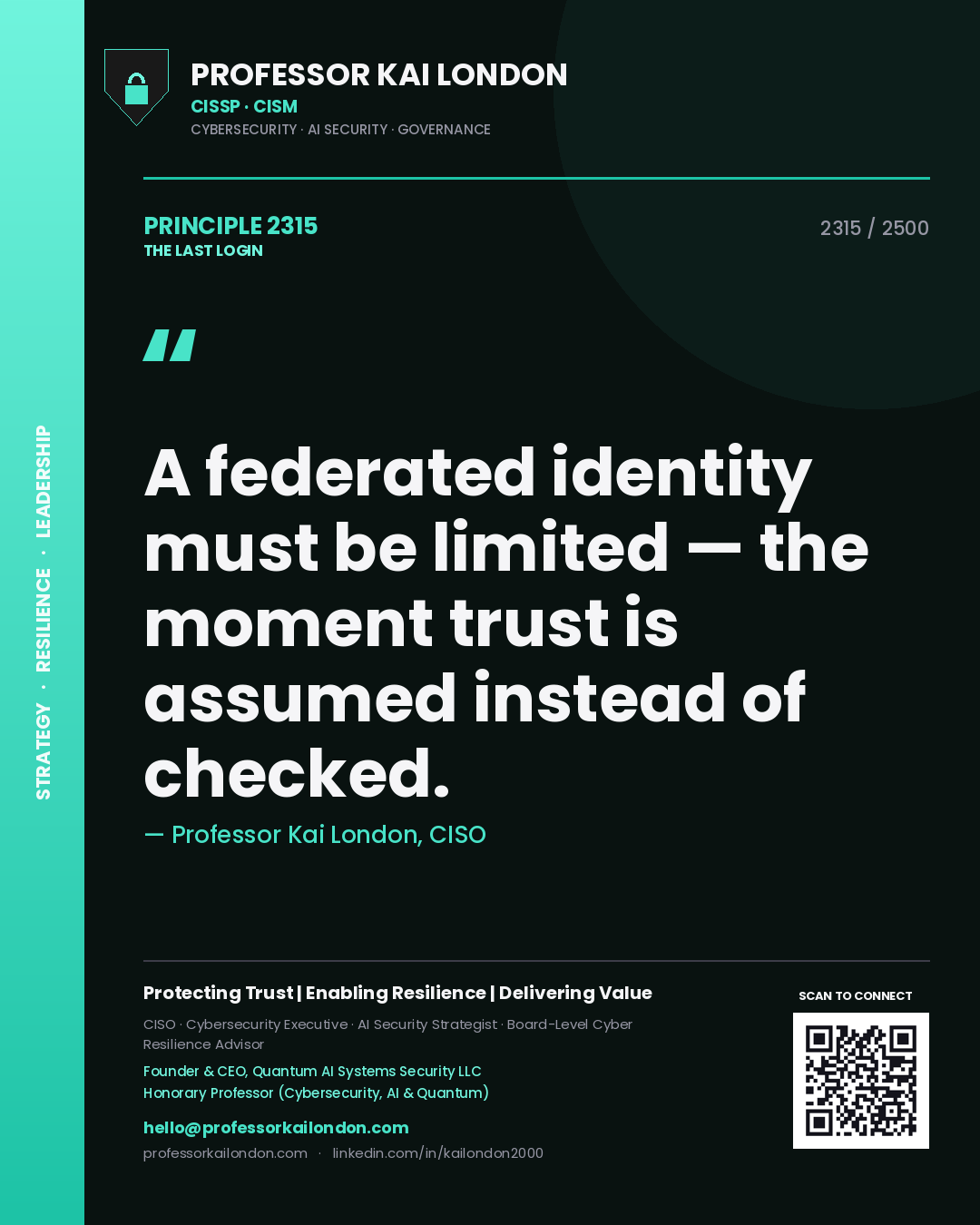
Professor Kai London principle 2315: A federated identity must be limited — the moment trust is assumed instead of checked.
Principle 2315
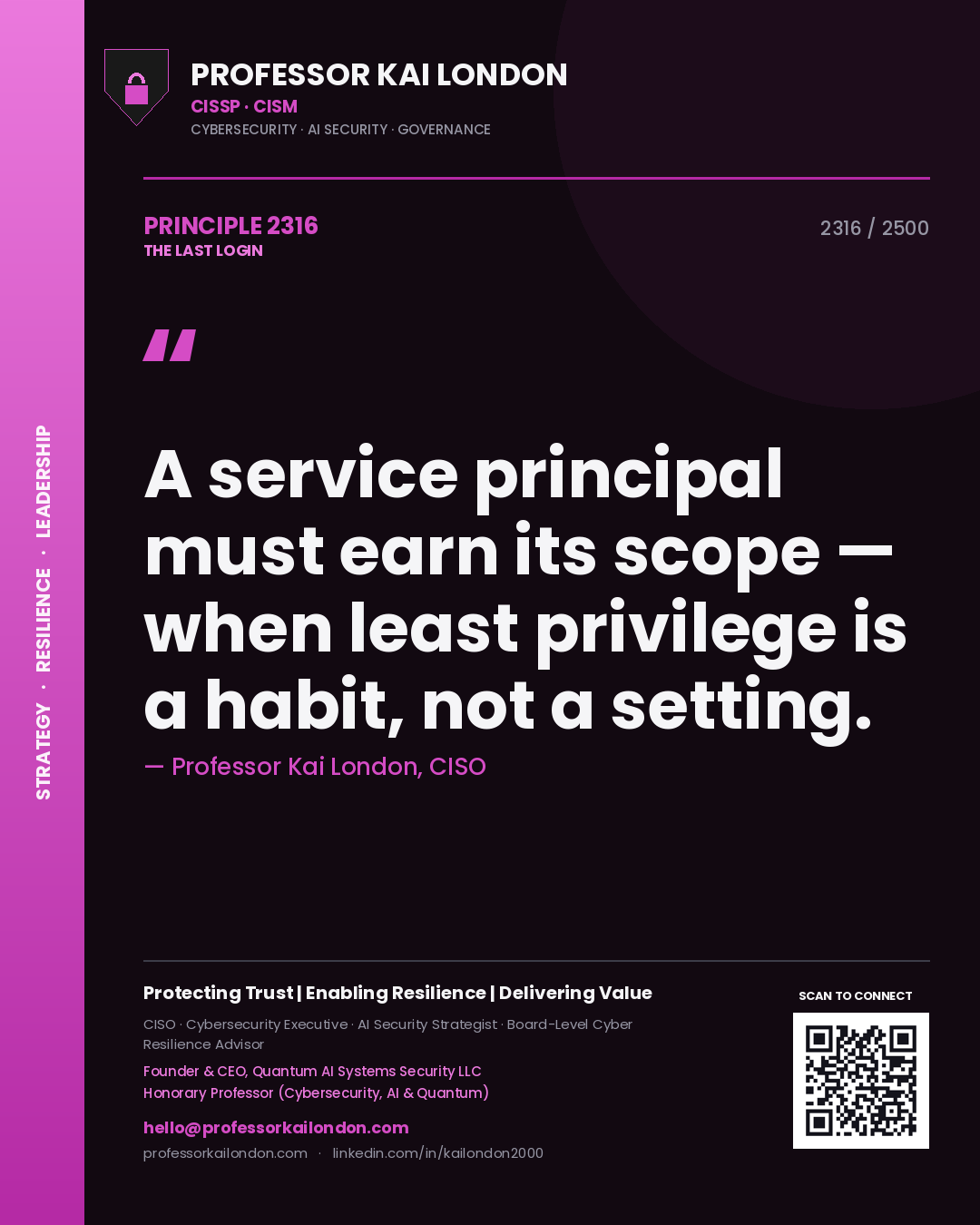
Professor Kai London principle 2316: A service principal must earn its scope — when least privilege is a habit, not a setting.
Principle 2316
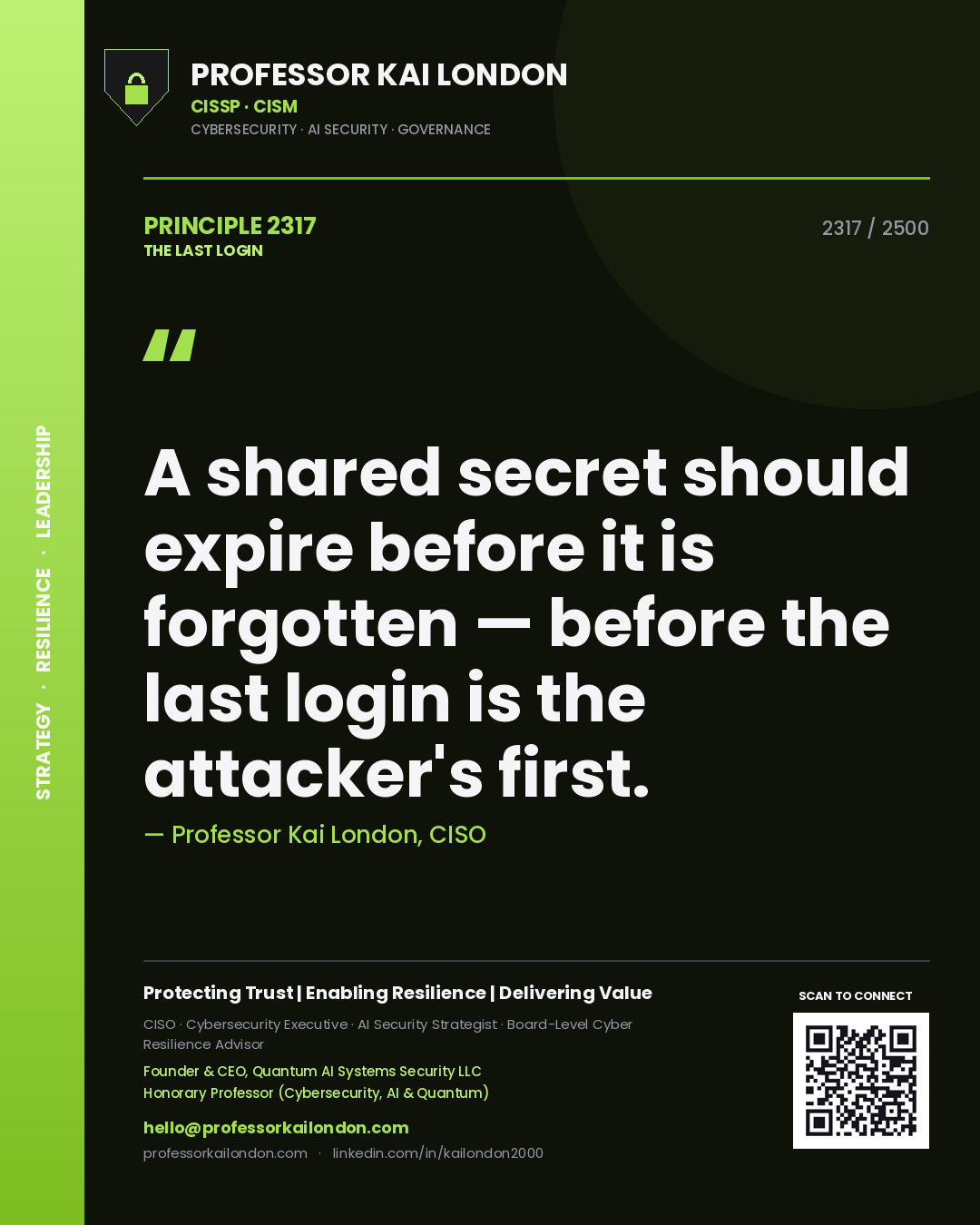
Professor Kai London principle 2317: A shared secret should expire before it is forgotten — before the last login is the attacker's first.
Principle 2317
Professor Kai London principle 2318: An OAuth grant is a decision, not a door — when verification is continuous, not a one-time gate.
Principle 2318
Professor Kai London principle 2319: A dormant account must earn its scope — when verification is continuous, not a one-time gate.
Principle 2319
Professor Kai London principle 2320: A break-glass account must be watched.
Principle 2320
Professor Kai London principle 2321: A credential is a liability until it is retired — when joiners, movers and leavers change access the same day.
Principle 2321
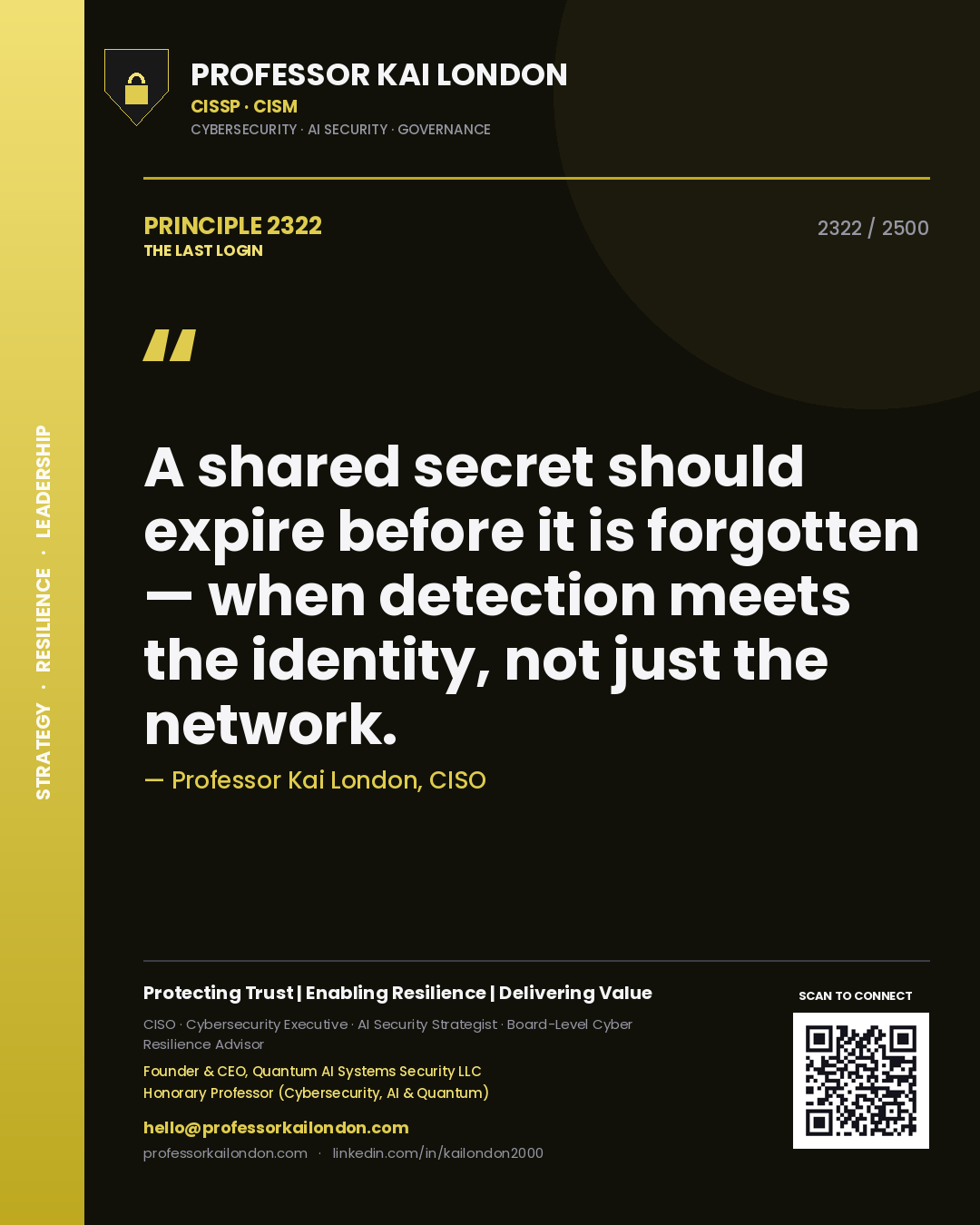
Professor Kai London principle 2322: A shared secret should expire before it is forgotten — when detection meets the identity, not just the network.
Principle 2322
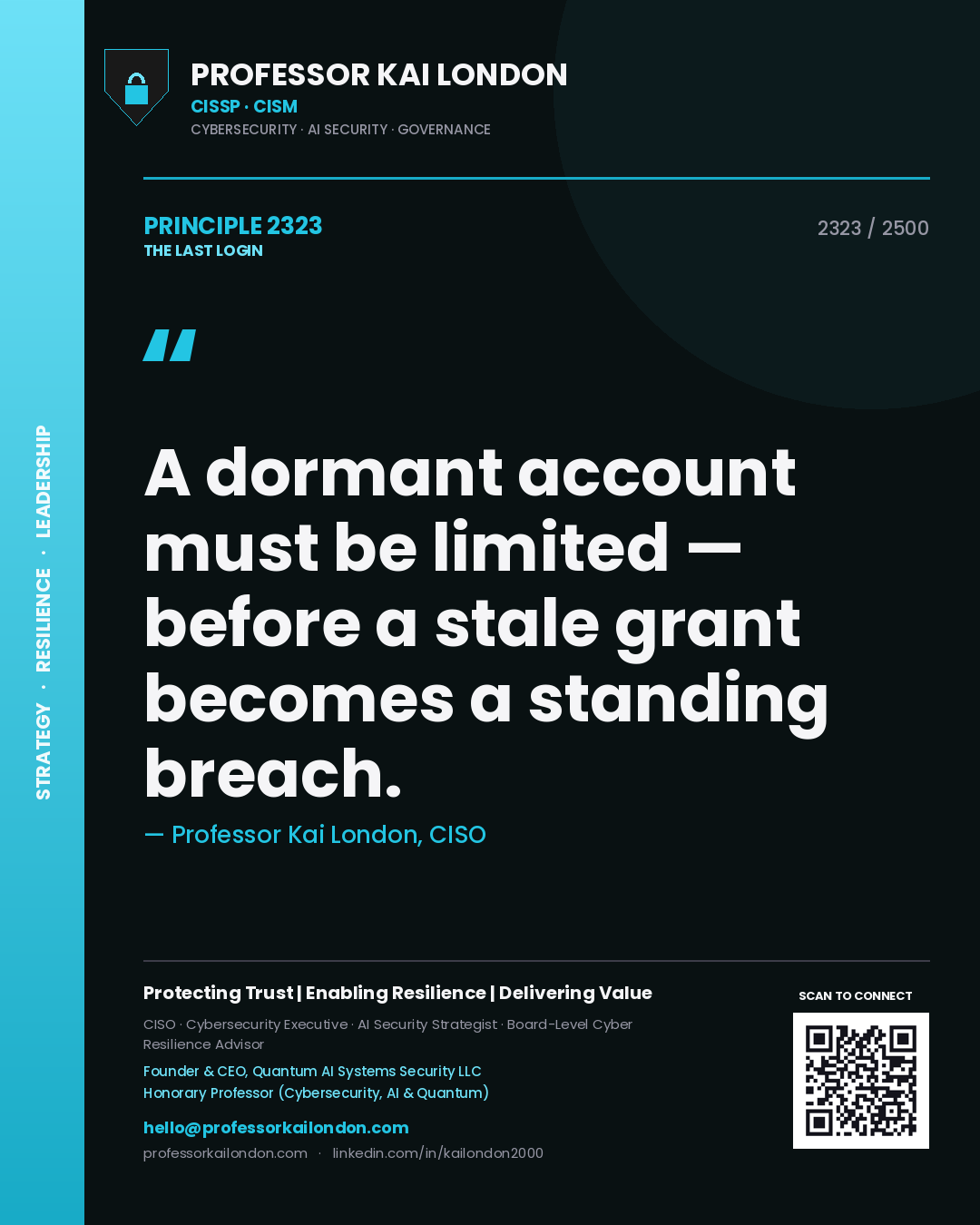
Professor Kai London principle 2323: A dormant account must be limited — before a stale grant becomes a standing breach.
Principle 2323
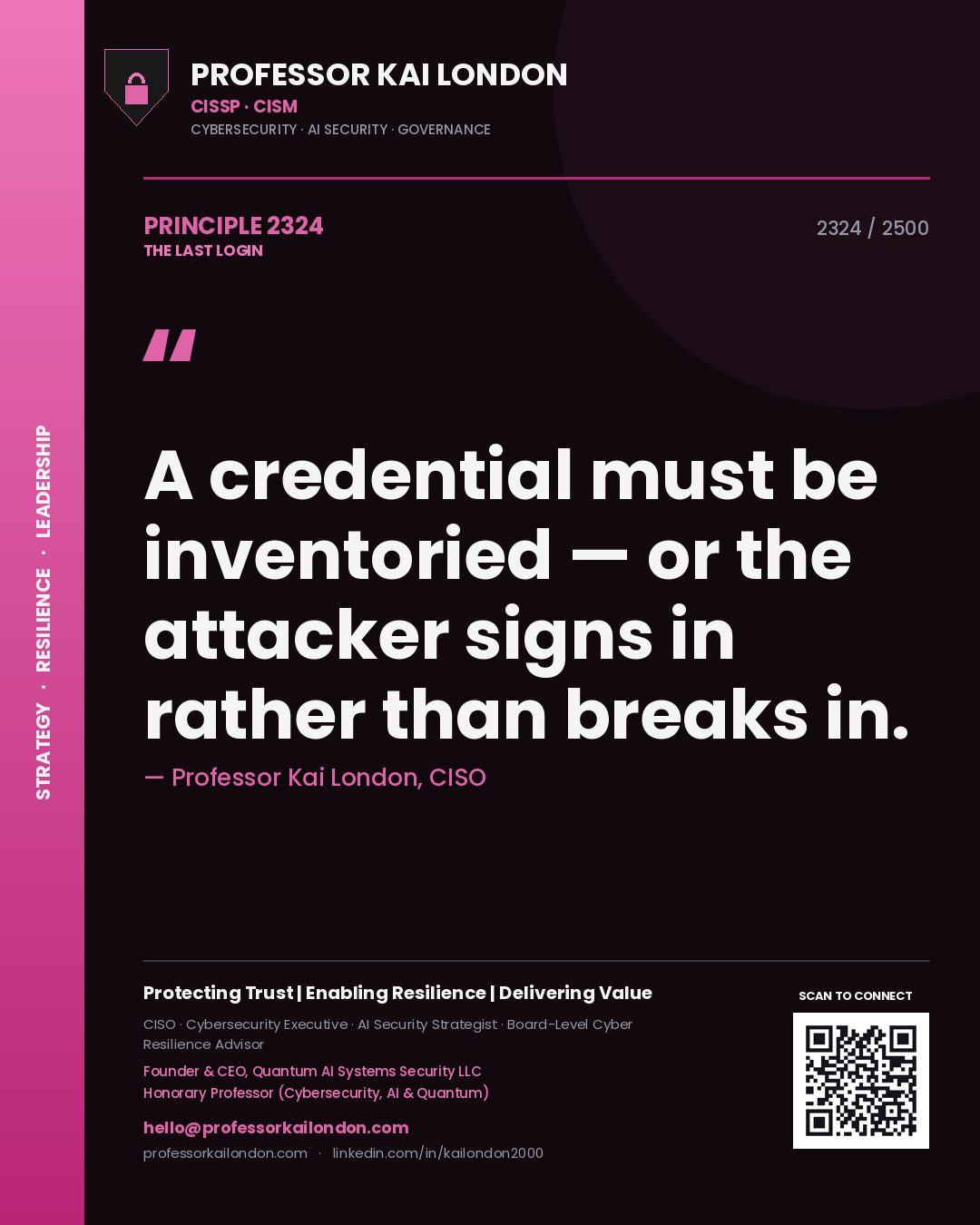
Professor Kai London principle 2324: A credential must be inventoried — or the attacker signs in rather than breaks in.
Principle 2324
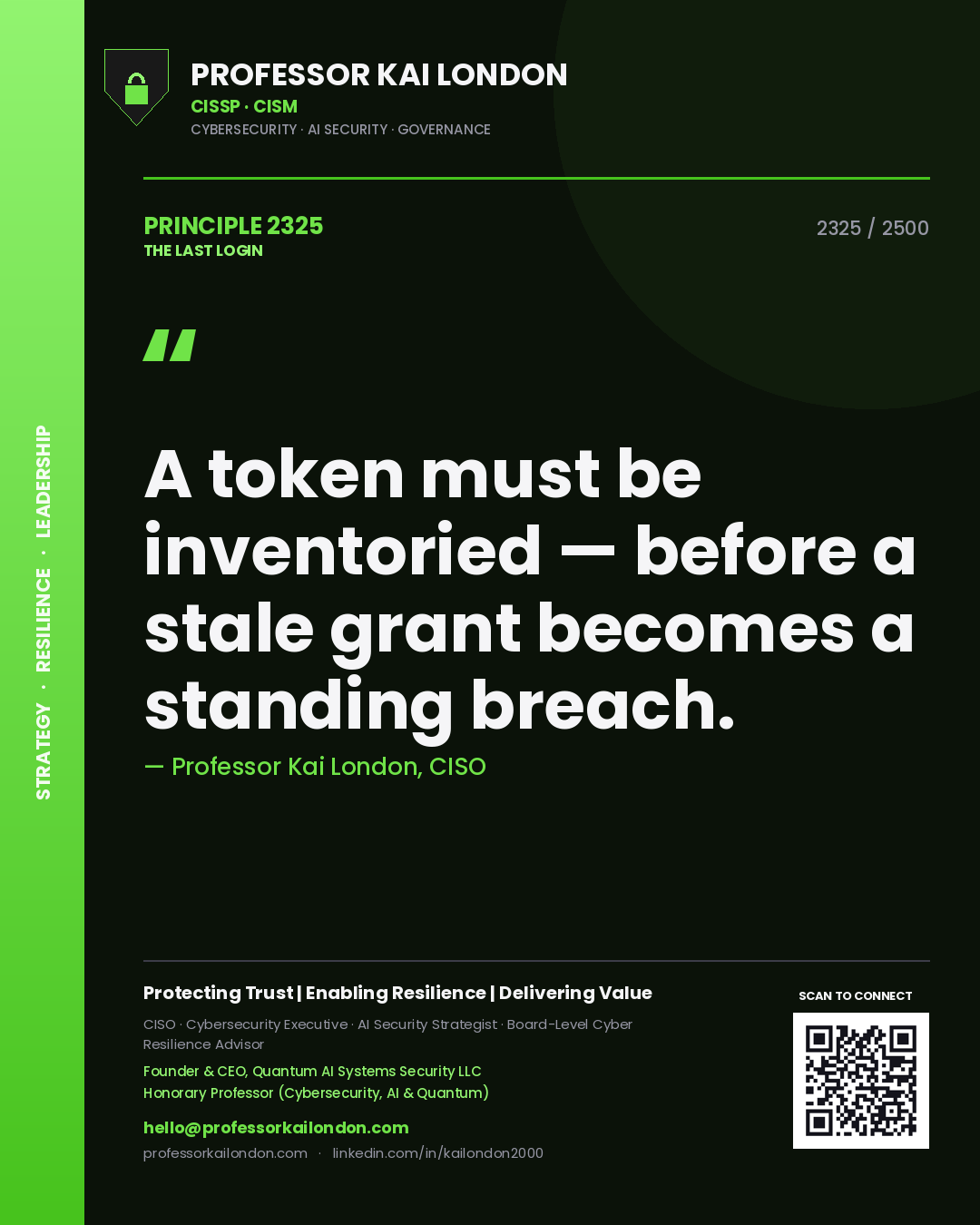
Professor Kai London principle 2325: A token must be inventoried — before a stale grant becomes a standing breach.
Principle 2325
Professor Kai London principle 2326: A credential needs to be detected — because forgotten access is the access attackers love most.
Principle 2326
Professor Kai London principle 2327: A privileged account must be watched — when detection meets the identity, not just the network.
Principle 2327
Professor Kai London principle 2328: A dormant account needs to be detected — the moment trust is assumed instead of checked.
Principle 2328
Professor Kai London principle 2329: Every login needs to be detected — the moment trust is assumed instead of checked.
Principle 2329
Professor Kai London principle 2330: A break-glass account must be inventoried — because forgotten access is the access attackers love most.
Principle 2330
Professor Kai London principle 2331: A shared secret must earn its scope — when detection meets the identity, not just the network.
Principle 2331
Professor Kai London principle 2332: A dormant account is a decision, not a door — because every breach begins with a login that should have been stopped.
Principle 2332
Professor Kai London principle 2333: A service principal must be limited — when every grant is reviewed, not just requested.
Principle 2333
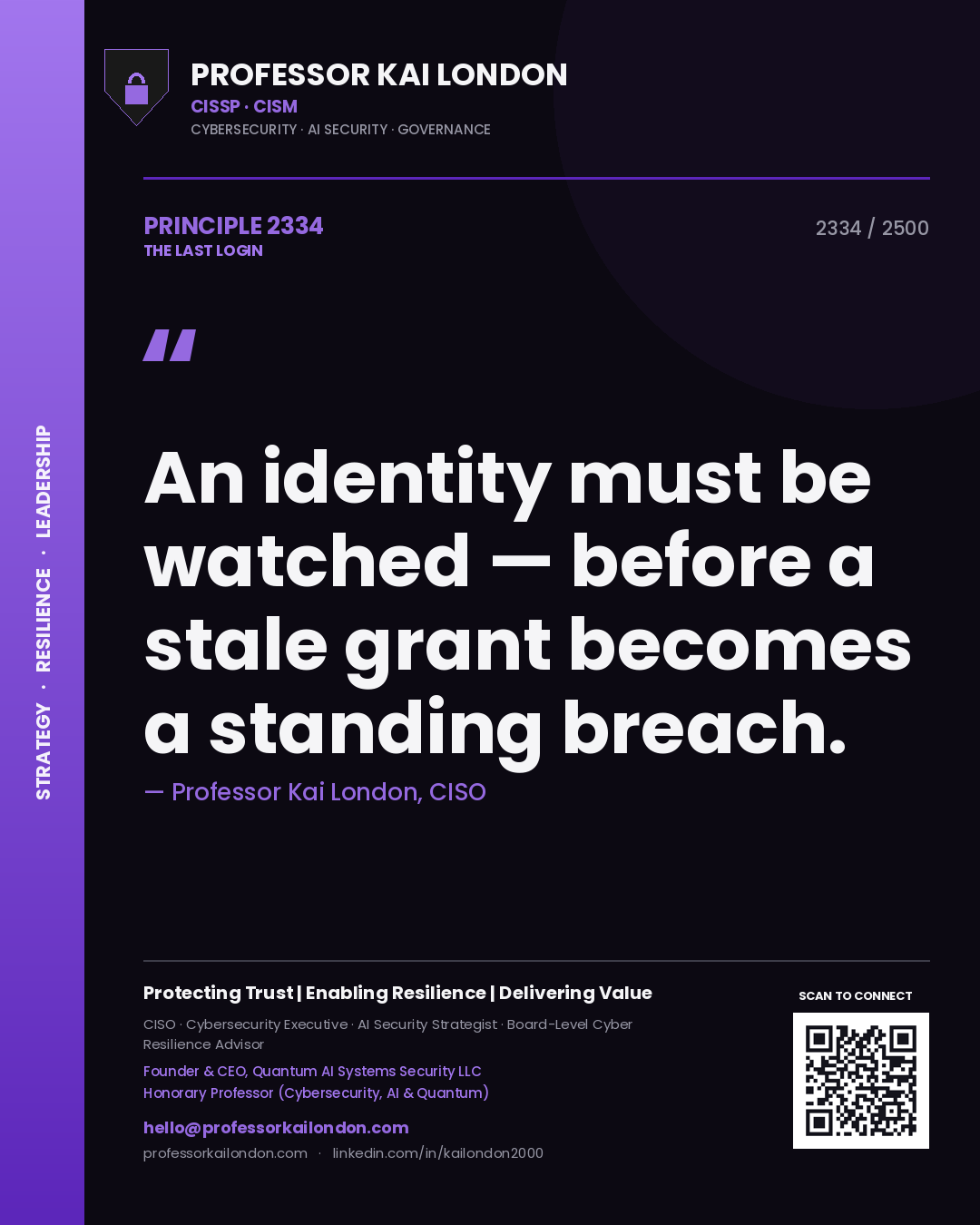
Professor Kai London principle 2334: An identity must be watched — before a stale grant becomes a standing breach.
Principle 2334
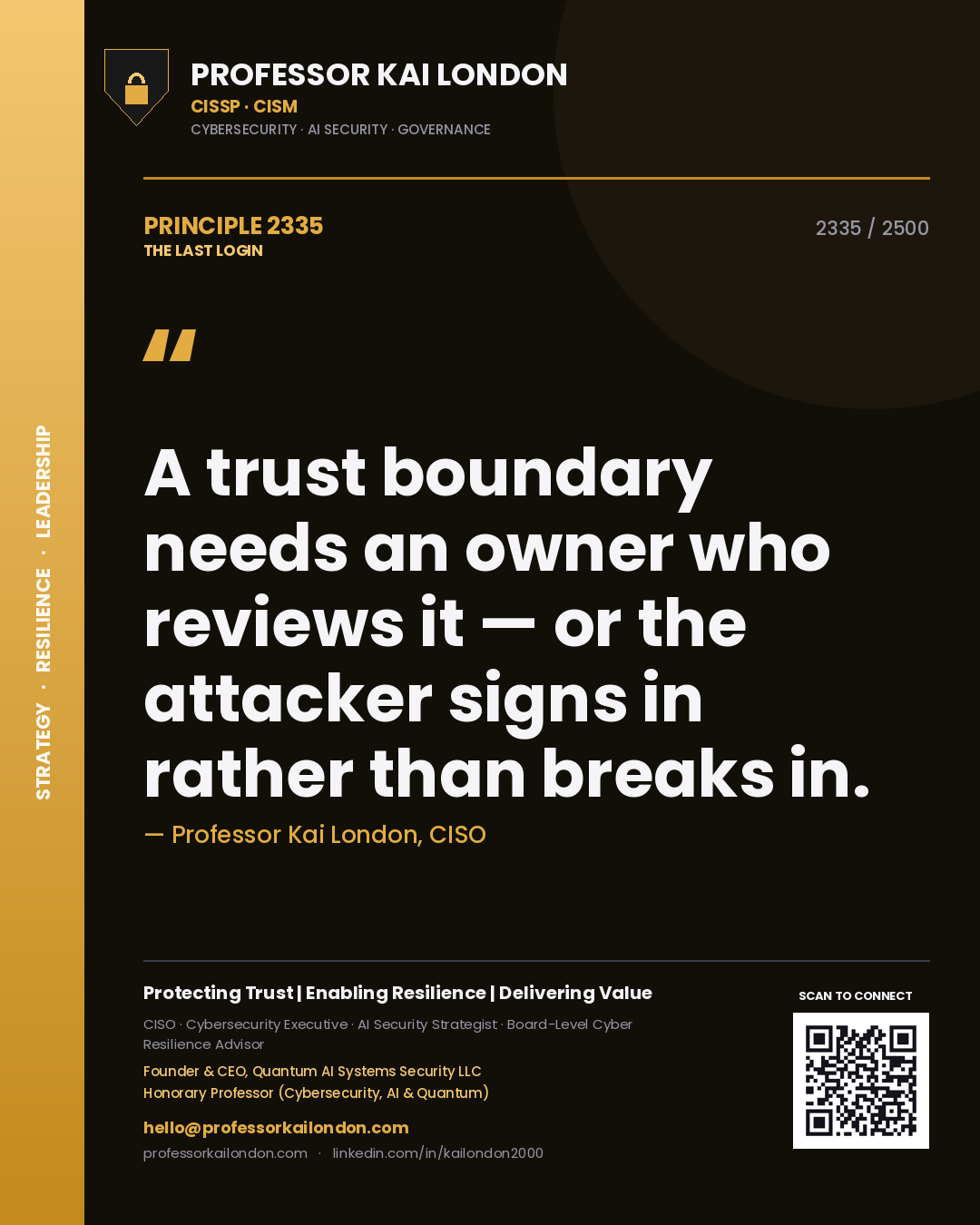
Professor Kai London principle 2335: A trust boundary needs an owner who reviews it — or the attacker signs in rather than breaks in.
Principle 2335
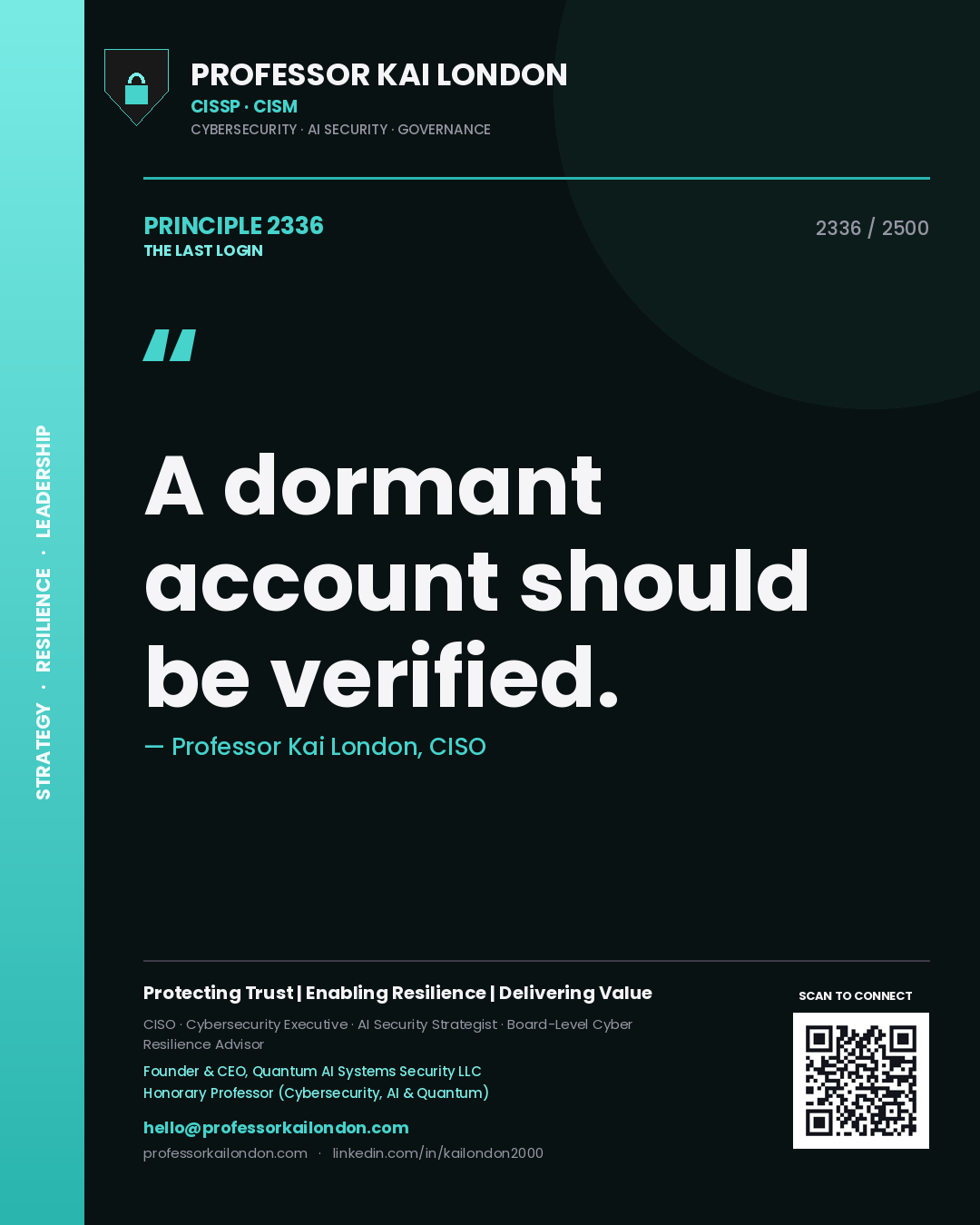
Professor Kai London principle 2336: A dormant account should be verified.
Principle 2336
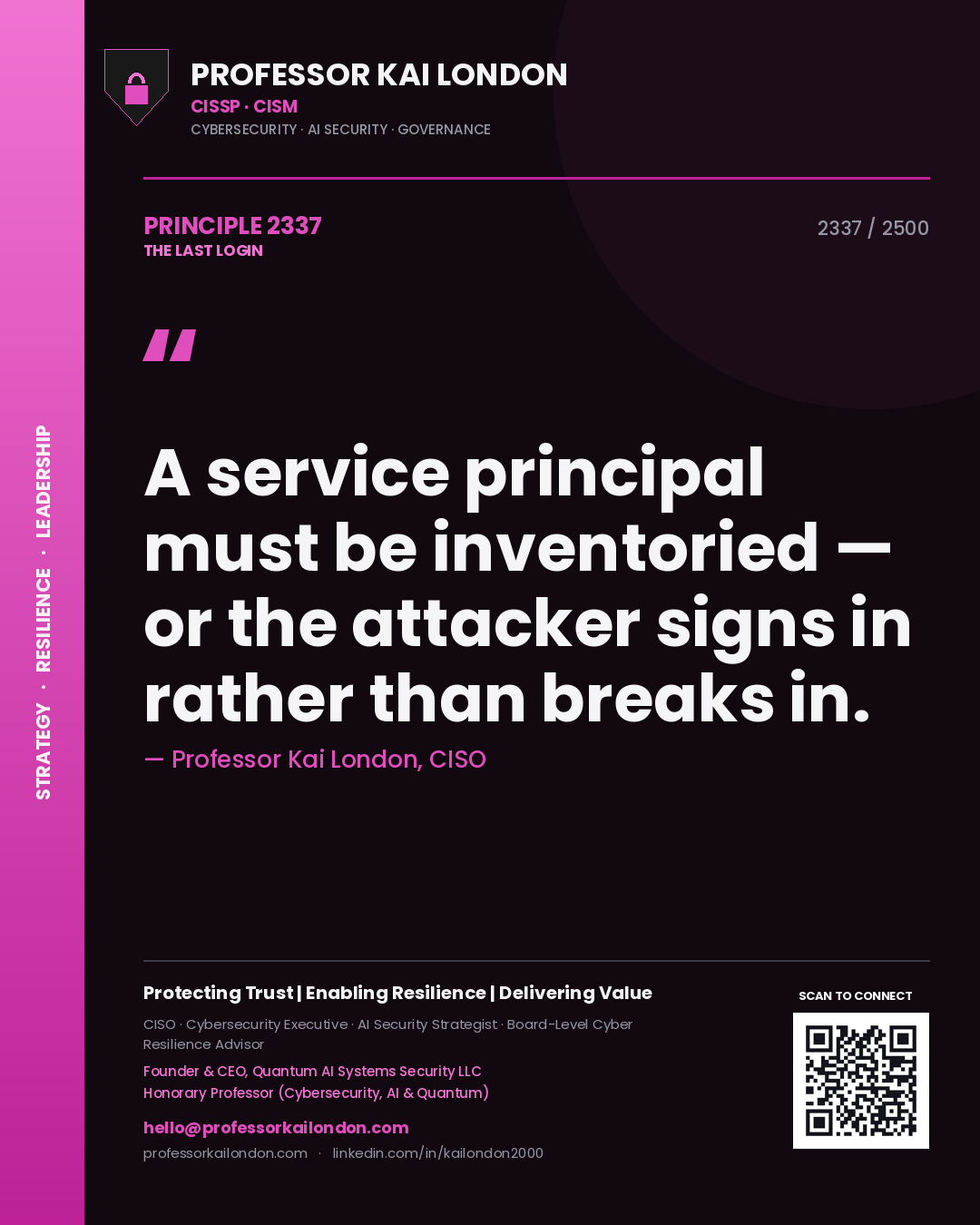
Professor Kai London principle 2337: A service principal must be inventoried — or the attacker signs in rather than breaks in.
Principle 2337
Professor Kai London principle 2338: Every login is the new perimeter — when every grant is reviewed, not just requested.
Principle 2338
Professor Kai London principle 2339: Every login must be inventoried — before the last login is the attacker's first.
Principle 2339
Professor Kai London principle 2340: A trust boundary must be inventoried — because an unused key is a door you forgot you built.
Principle 2340
Professor Kai London principle 2341: Every login is the new perimeter — before a stale grant becomes a standing breach.
Principle 2341
Professor Kai London principle 2342: A federated identity is a liability until it is retired — because every breach begins with a login that should have been stopped.
Principle 2342
Professor Kai London principle 2343: A dormant account must earn its scope — when joiners, movers and leavers change access the same day.
Principle 2343
Professor Kai London principle 2344: A break-glass account should be time-bound — because every breach begins with a login that should have been stopped.
Principle 2344
Professor Kai London principle 2345: A privileged account must be watched — before a stale grant becomes a standing breach.
Principle 2345
Professor Kai London principle 2346: A break-glass account needs to be detected — because an unused key is a door you forgot you built.
Principle 2346
Professor Kai London principle 2347: An OAuth grant must earn its scope — because every breach begins with a login that should have been stopped.
Principle 2347
Professor Kai London principle 2348: A refresh token is a key someone owns — when joiners, movers and leavers change access the same day.
Principle 2348
Professor Kai London principle 2349: An authentication event should be time-bound.
Principle 2349
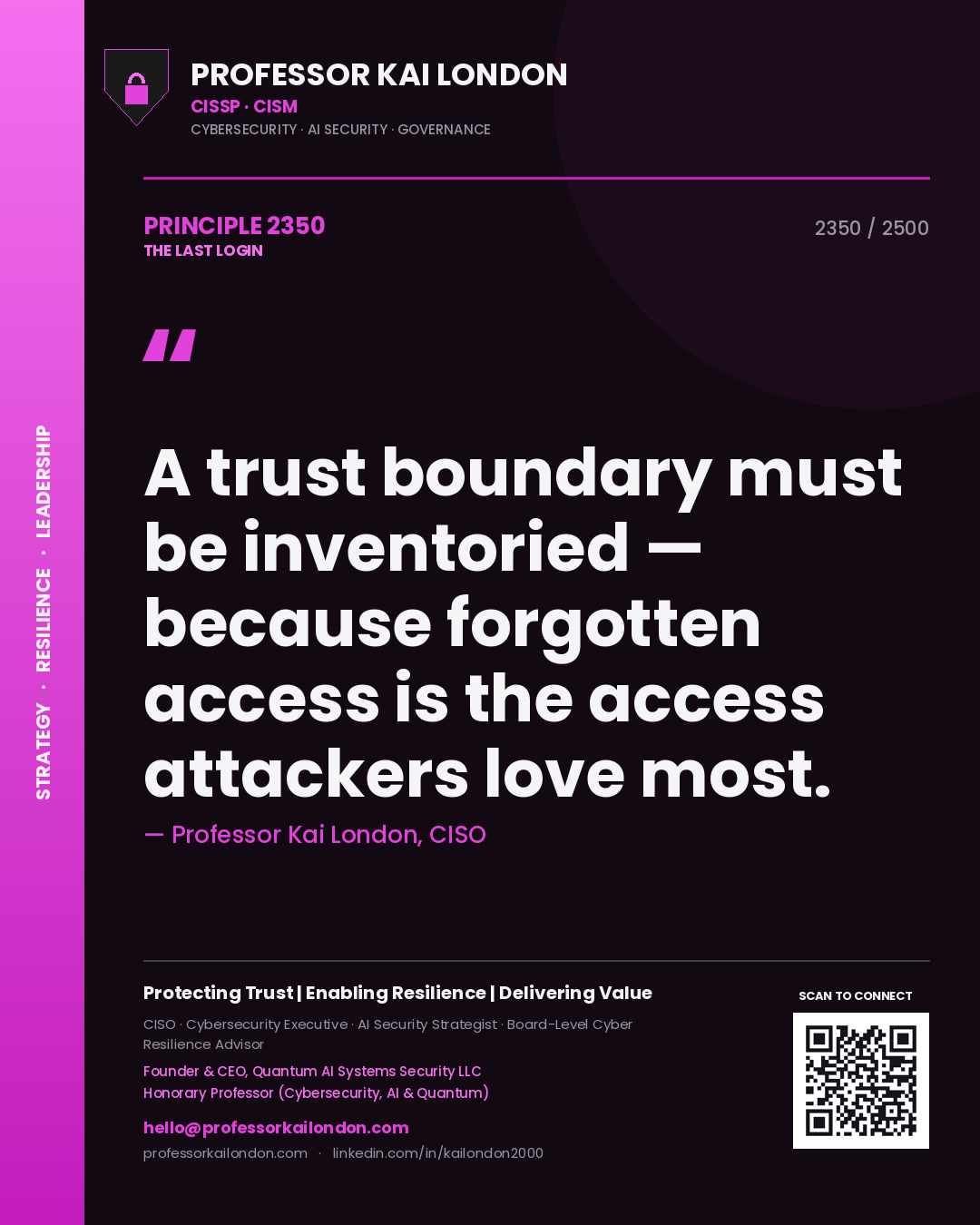
Professor Kai London principle 2350: A trust boundary must be inventoried — because forgotten access is the access attackers love most.
Principle 2350
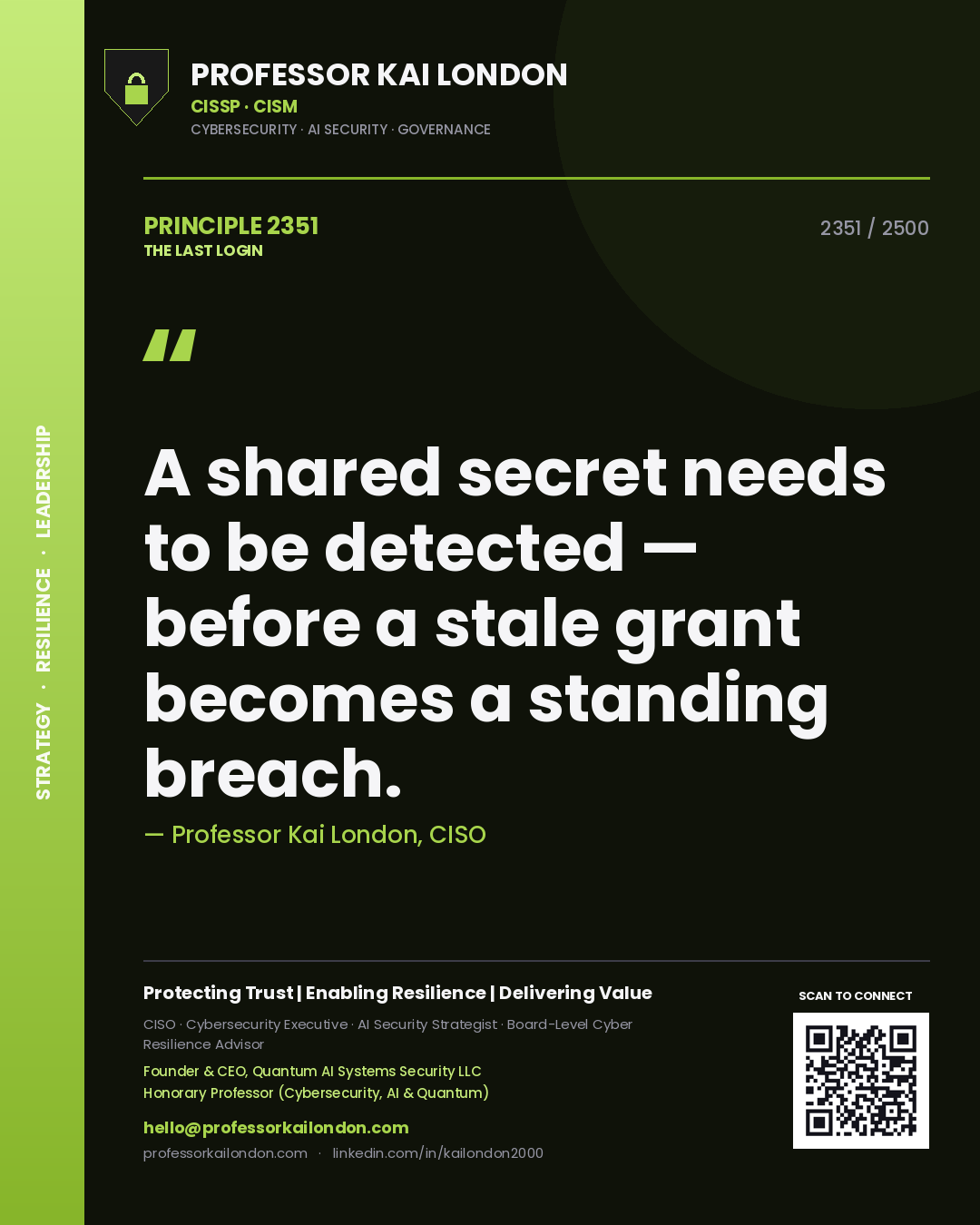
Professor Kai London principle 2351: A shared secret needs to be detected — before a stale grant becomes a standing breach.
Principle 2351
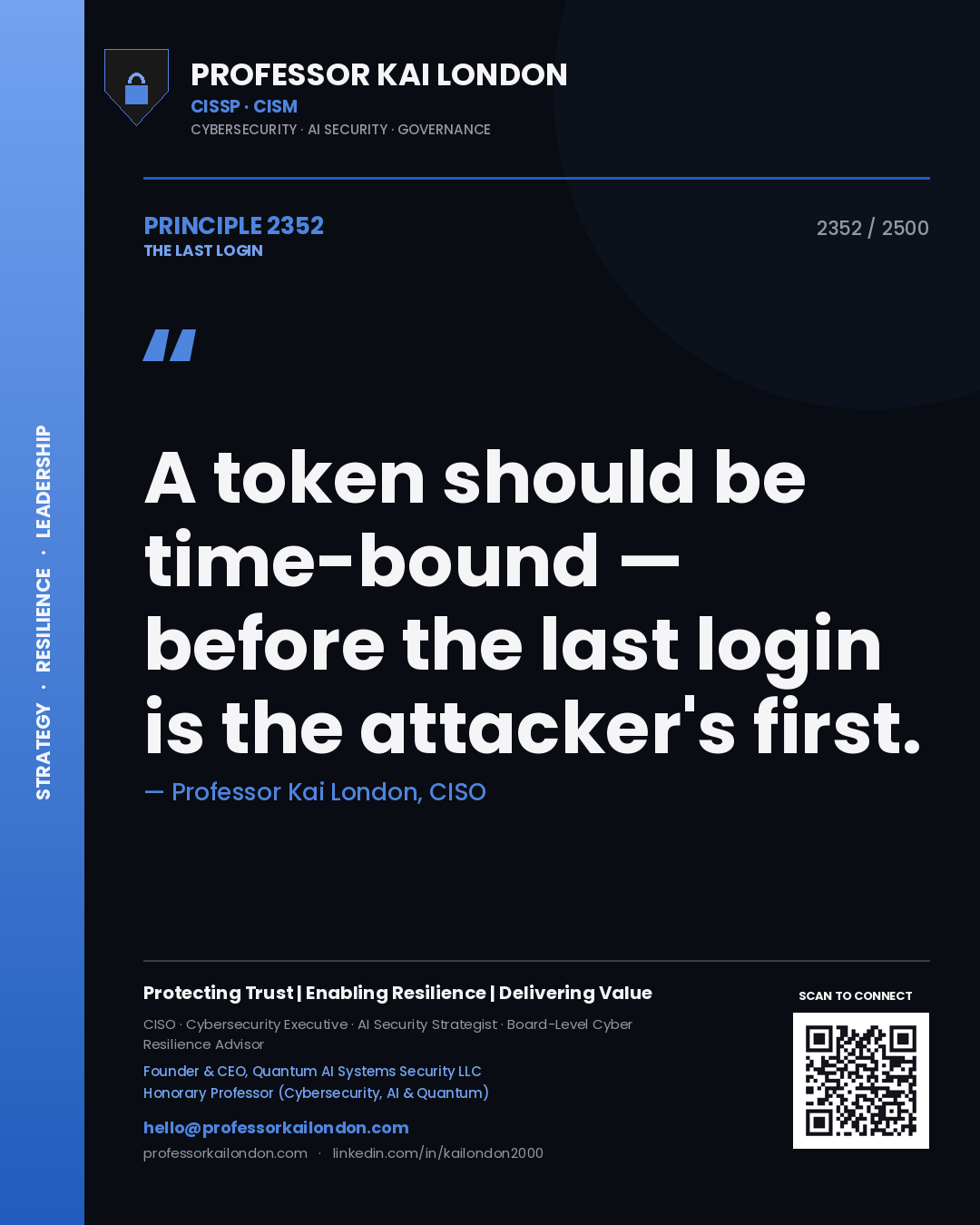
Professor Kai London principle 2352: A token should be time-bound — before the last login is the attacker's first.
Principle 2352
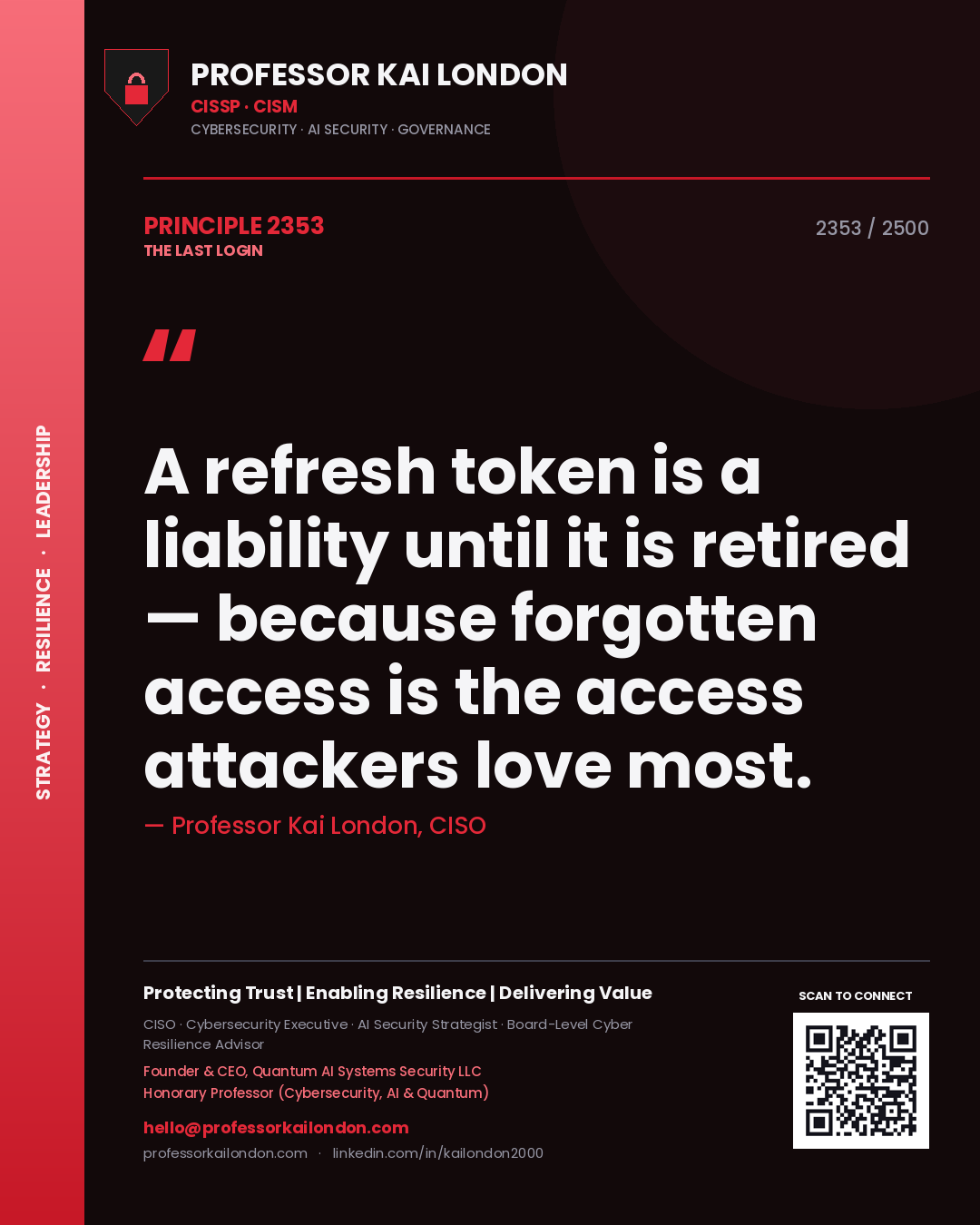
Professor Kai London principle 2353: A refresh token is a liability until it is retired — because forgotten access is the access attackers love most.
Principle 2353
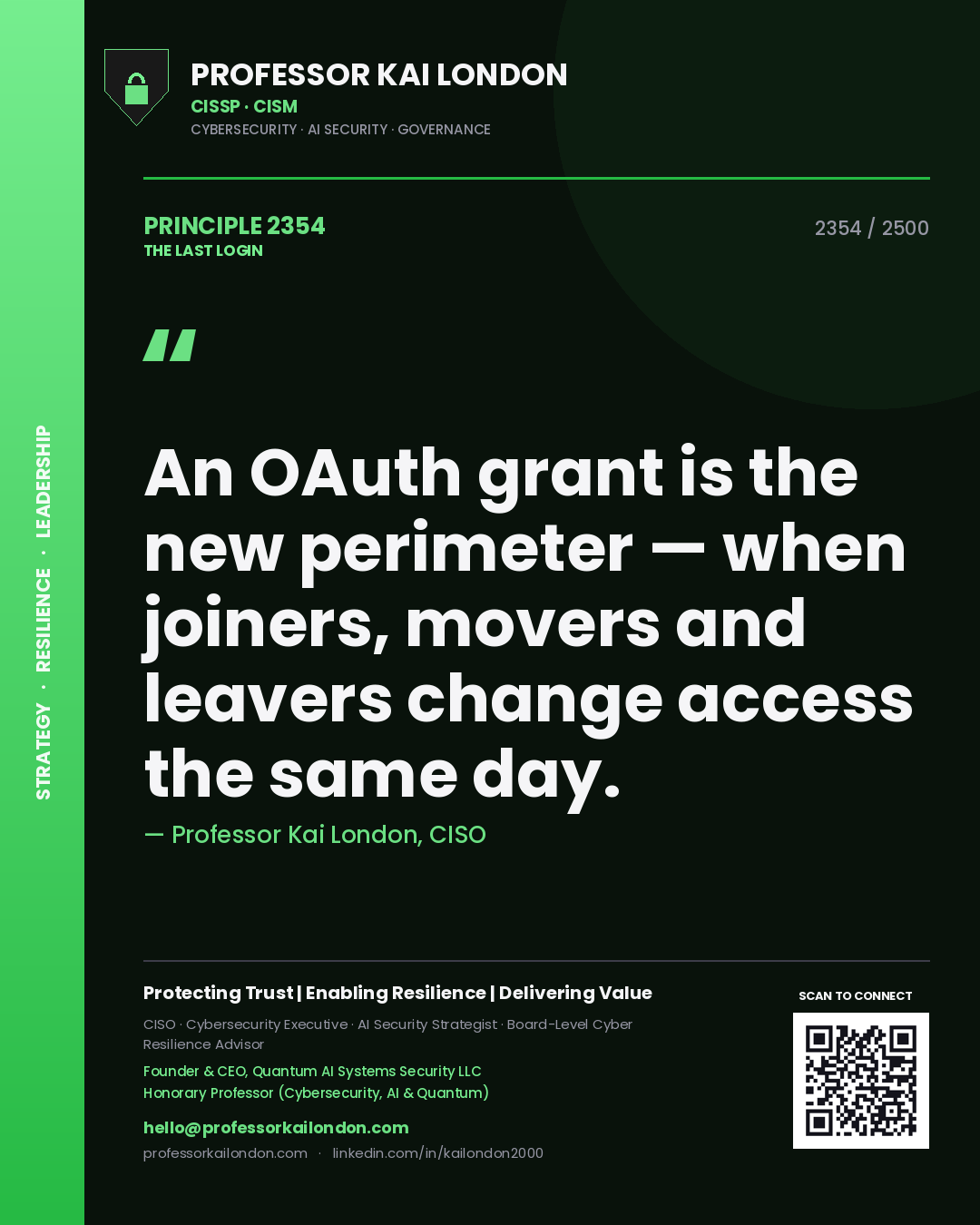
Professor Kai London principle 2354: An OAuth grant is the new perimeter — when joiners, movers and leavers change access the same day.
Principle 2354
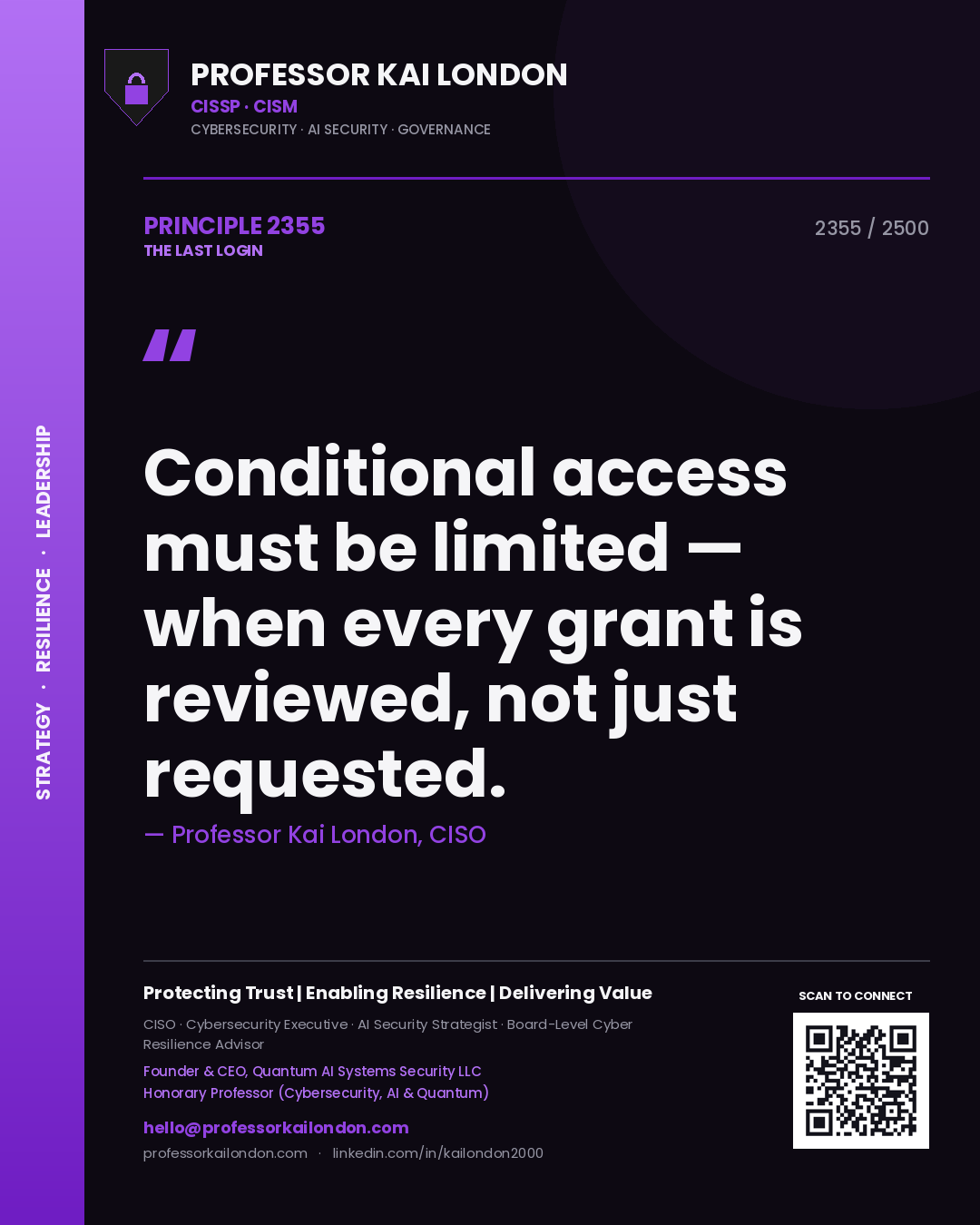
Professor Kai London principle 2355: Conditional access must be limited — when every grant is reviewed, not just requested.
Principle 2355
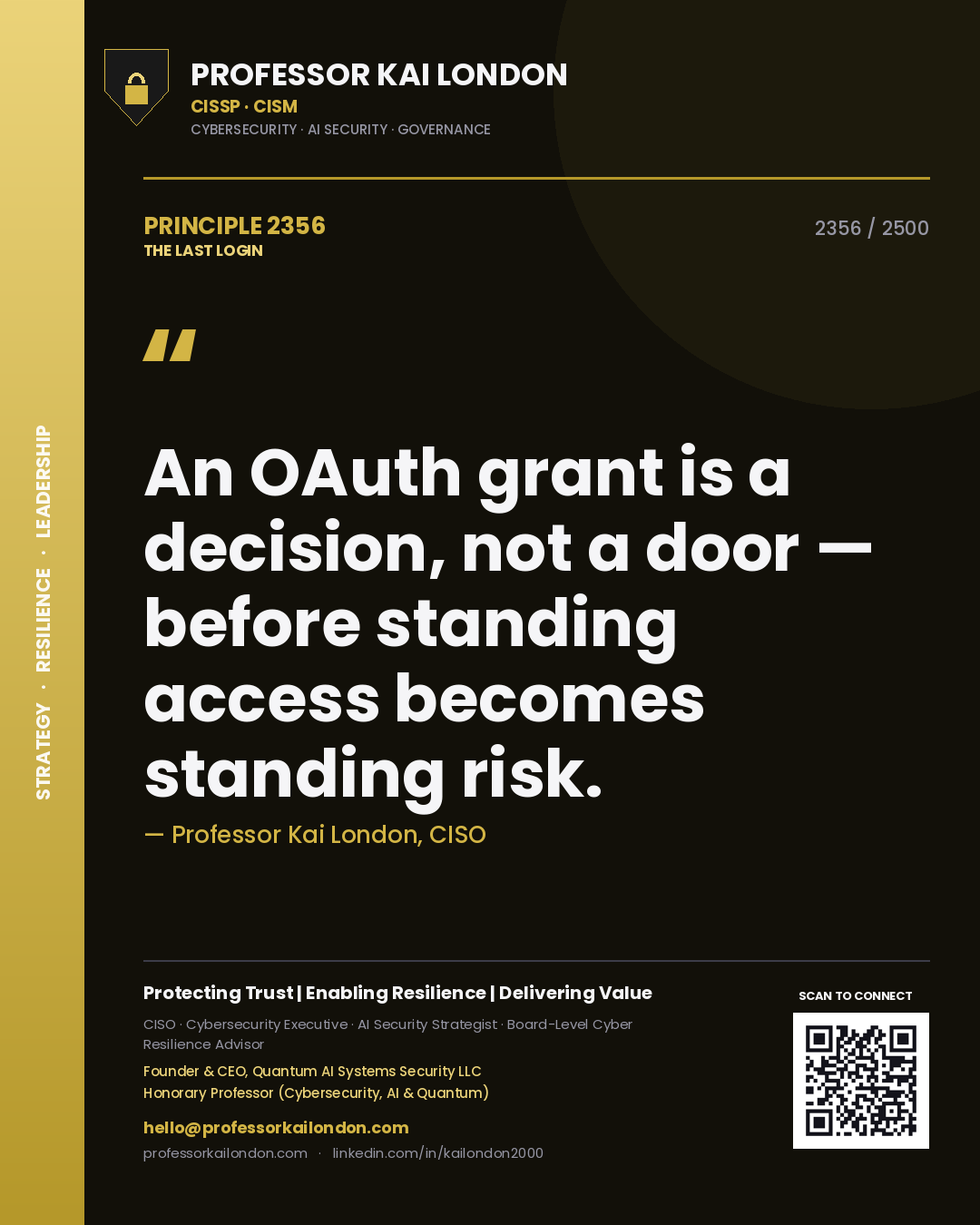
Professor Kai London principle 2356: An OAuth grant is a decision, not a door — before standing access becomes standing risk.
Principle 2356
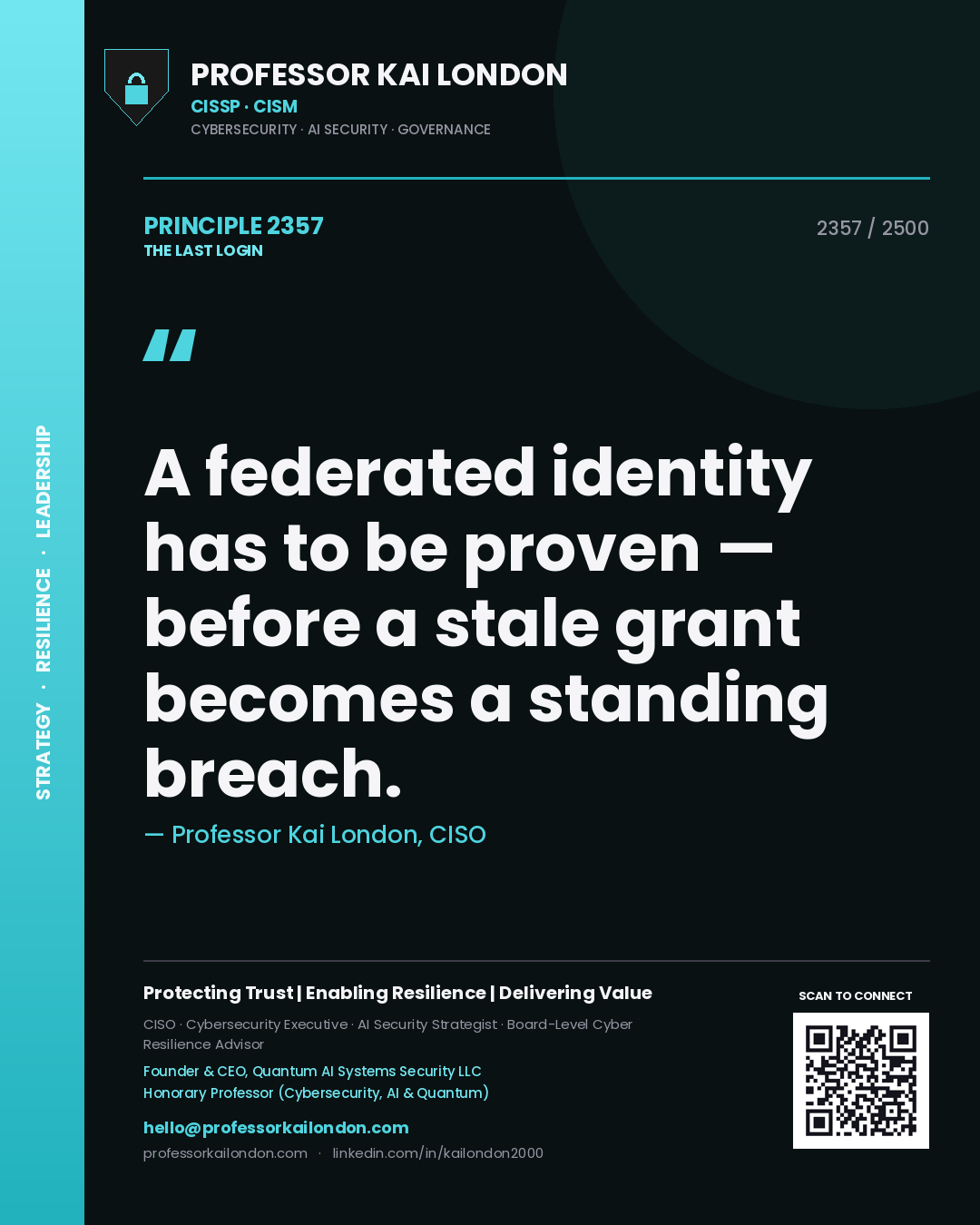
Professor Kai London principle 2357: A federated identity has to be proven — before a stale grant becomes a standing breach.
Principle 2357
Professor Kai London principle 2358: A federated identity must earn its scope — when verification is continuous, not a one-time gate.
Principle 2358
Professor Kai London principle 2359: An OAuth grant is a key someone owns — when joiners, movers and leavers change access the same day.
Principle 2359
Professor Kai London principle 2360: A privileged account is a liability until it is retired — when the account is governed as tightly as the data.
Principle 2360
Professor Kai London principle 2361: A federated identity should expire before it is forgotten — before the last login is the attacker's first.
Principle 2361
Professor Kai London principle 2362: A refresh token must earn its scope — because forgotten access is the access attackers love most.
Principle 2362
Professor Kai London principle 2363: A shared secret needs to be detected — before the last login is the attacker's first.
Principle 2363
Professor Kai London principle 2364: A dormant account is the new perimeter — because forgotten access is the access attackers love most.
Principle 2364
Professor Kai London principle 2365: A refresh token must be watched — when detection meets the identity, not just the network.
Principle 2365
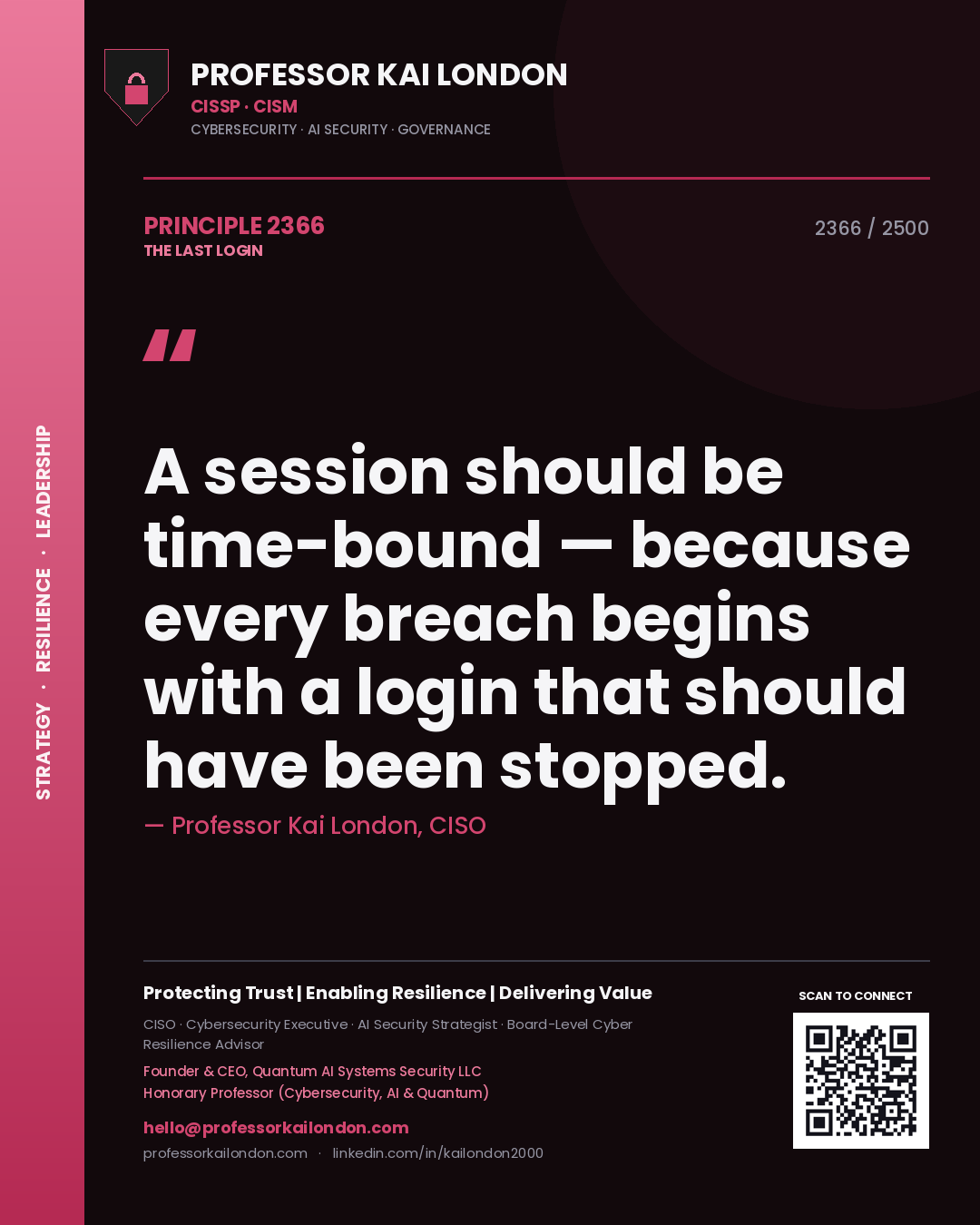
Professor Kai London principle 2366: A session should be time-bound — because every breach begins with a login that should have been stopped.
Principle 2366
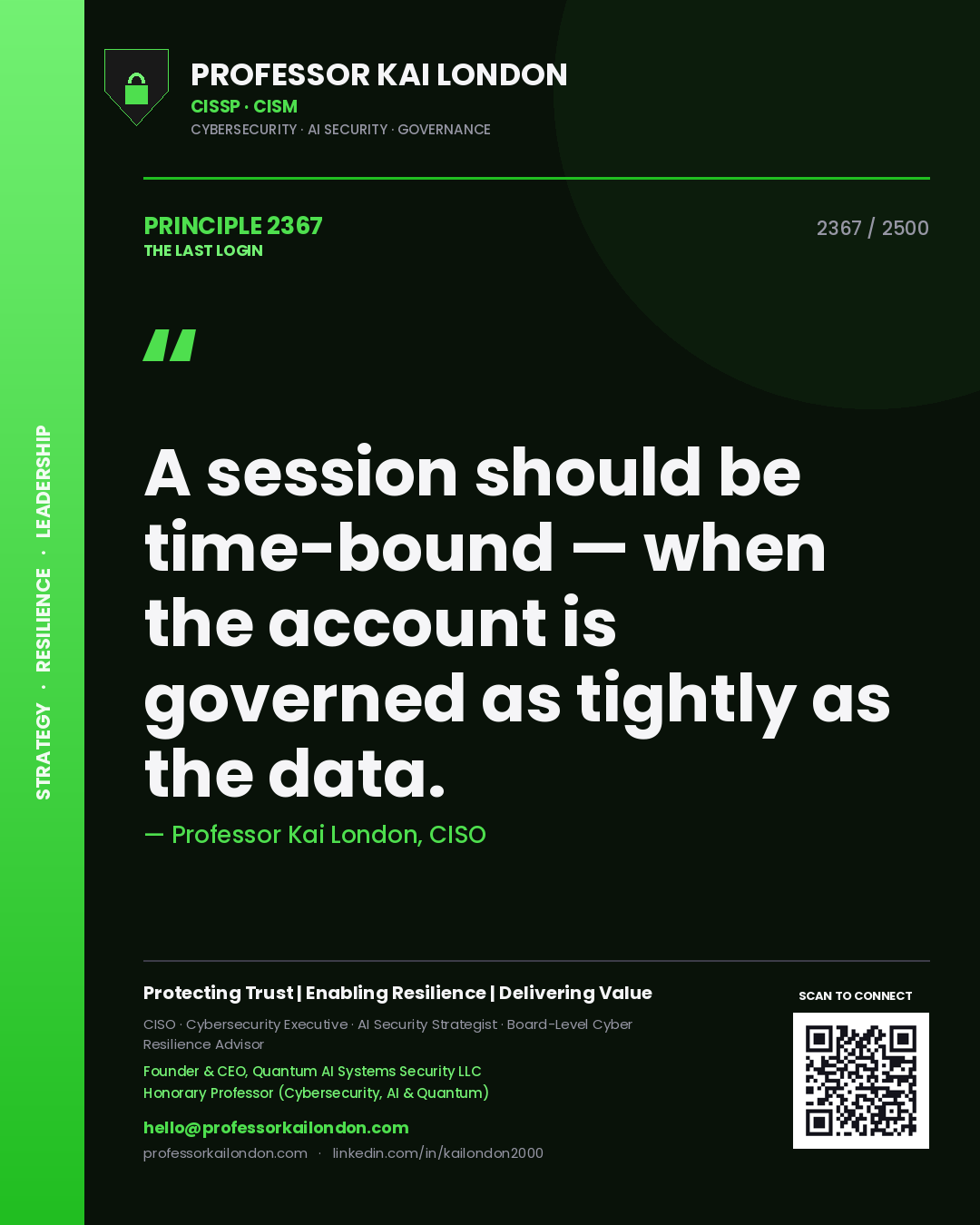
Professor Kai London principle 2367: A session should be time-bound — when the account is governed as tightly as the data.
Principle 2367
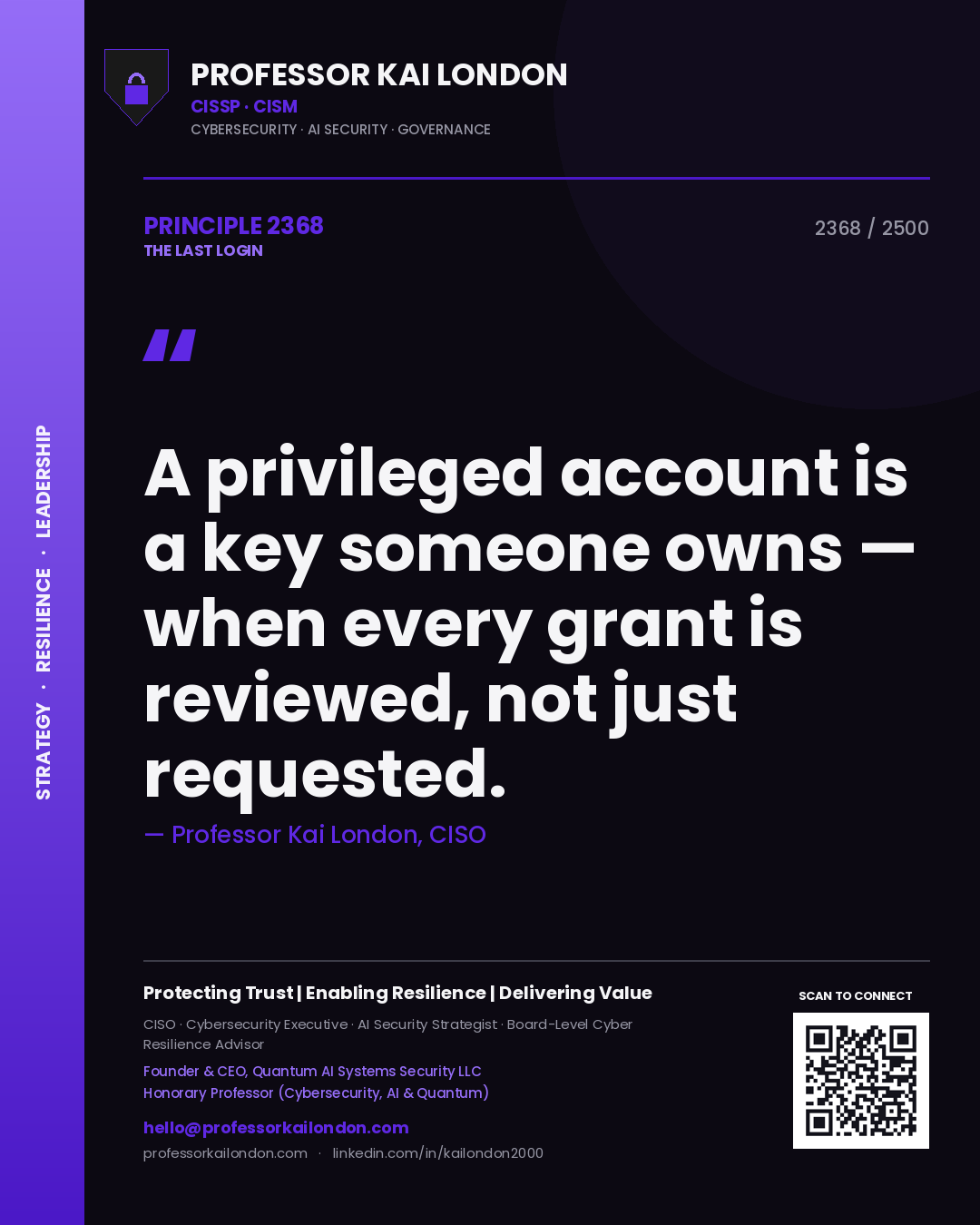
Professor Kai London principle 2368: A privileged account is a key someone owns — when every grant is reviewed, not just requested.
Principle 2368
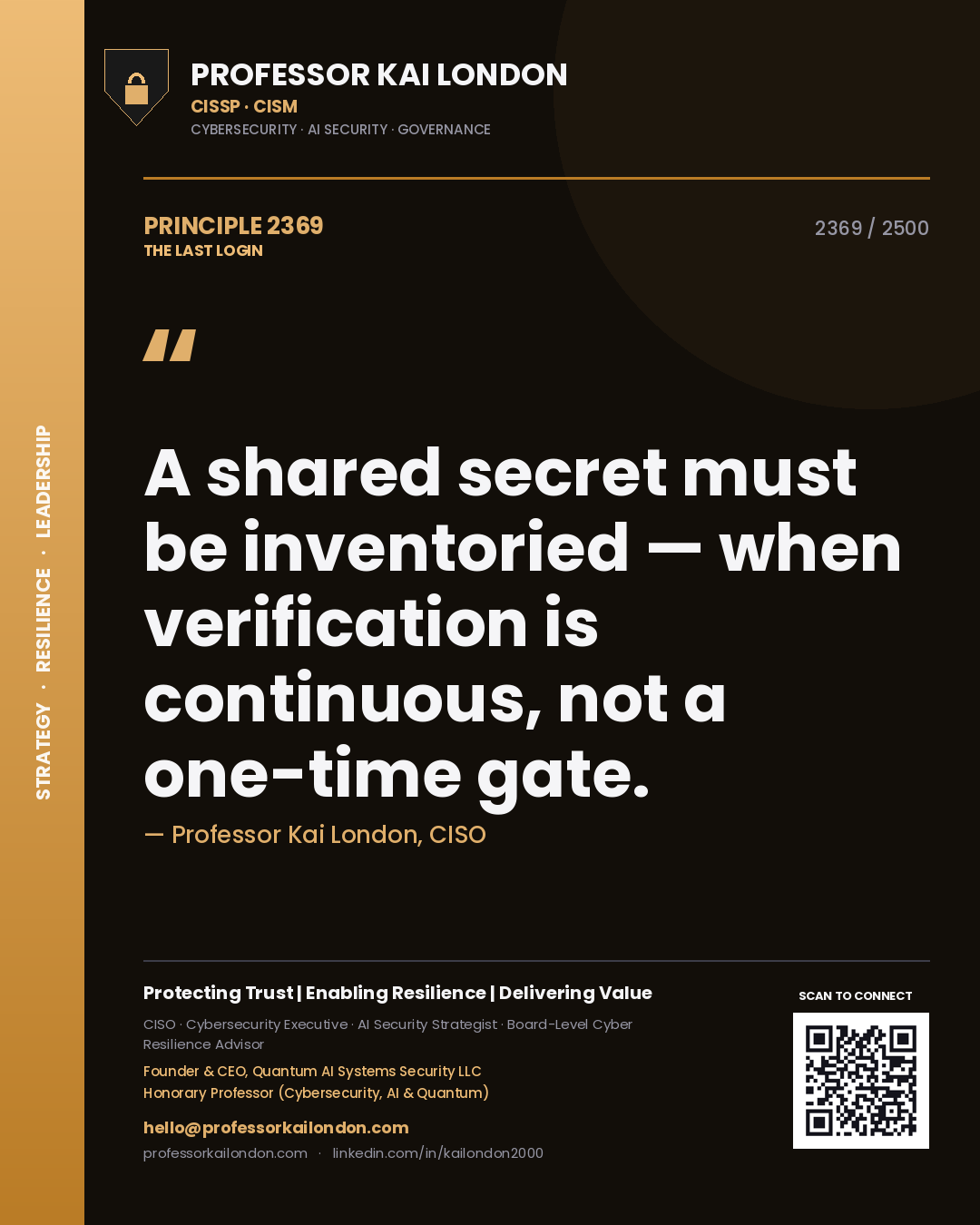
Professor Kai London principle 2369: A shared secret must be inventoried — when verification is continuous, not a one-time gate.
Principle 2369
Professor Kai London principle 2370: A refresh token is a key someone owns — before the last login is the attacker's first.
Principle 2370
Professor Kai London principle 2371: Every login is a key someone owns — when verification is continuous, not a one-time gate.
Principle 2371
Professor Kai London principle 2372: A dormant account must earn its scope — because an unused key is a door you forgot you built.
Principle 2372
Professor Kai London principle 2373: A dormant account is a decision, not a door — before the last login is the attacker's first.
Principle 2373
Professor Kai London principle 2374: An OAuth grant must be limited — because forgotten access is the access attackers love most.
Principle 2374
Professor Kai London principle 2375: A refresh token must earn its scope — before the last login is the attacker's first.
Principle 2375
Professor Kai London principle 2376: An access decision should be time-bound — because an unused key is a door you forgot you built.
Principle 2376
Professor Kai London principle 2377: A refresh token has to be proven — when least privilege is a habit, not a setting.
Principle 2377
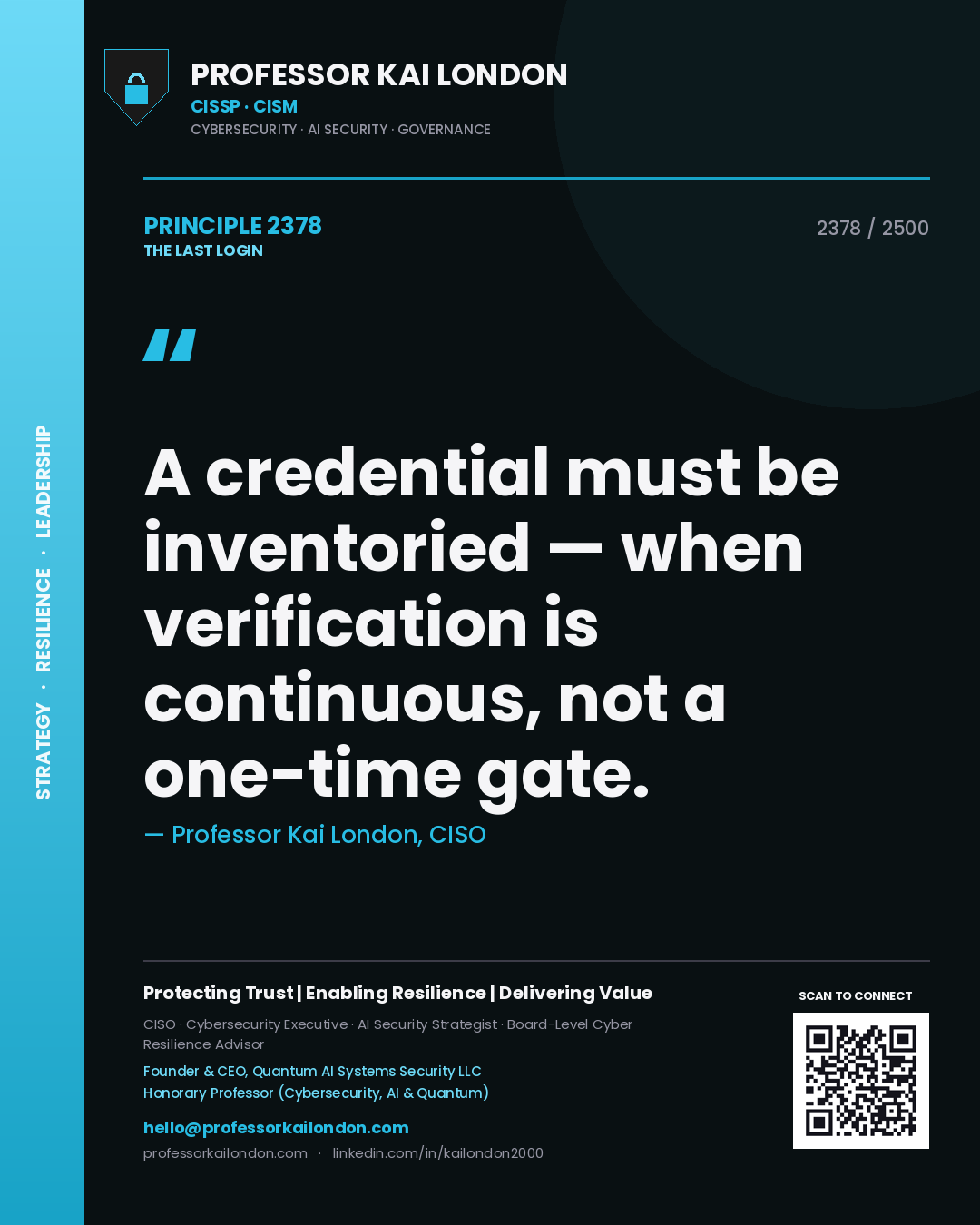
Professor Kai London principle 2378: A credential must be inventoried — when verification is continuous, not a one-time gate.
Principle 2378
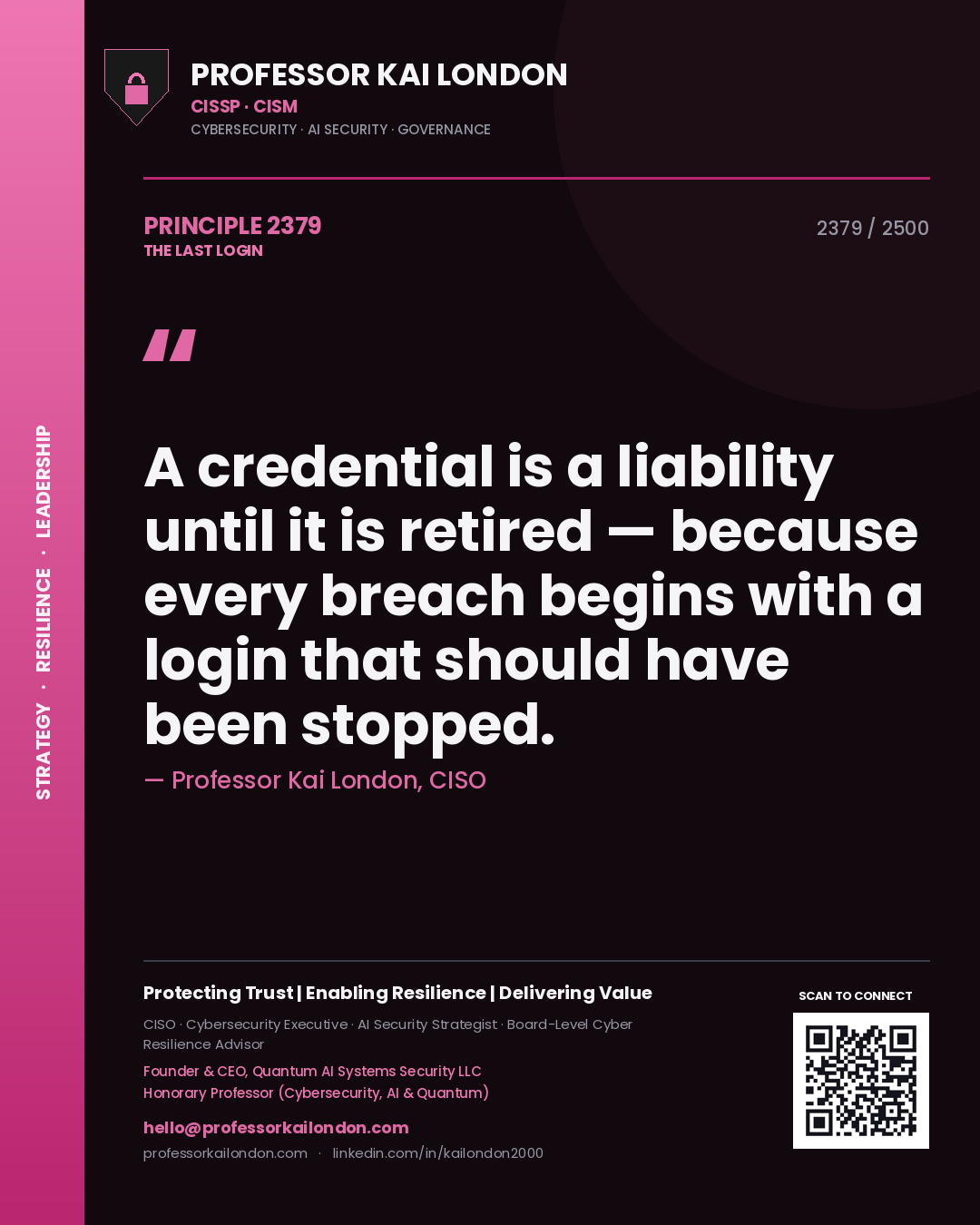
Professor Kai London principle 2379: A credential is a liability until it is retired — because every breach begins with a login that should have been stopped.
Principle 2379
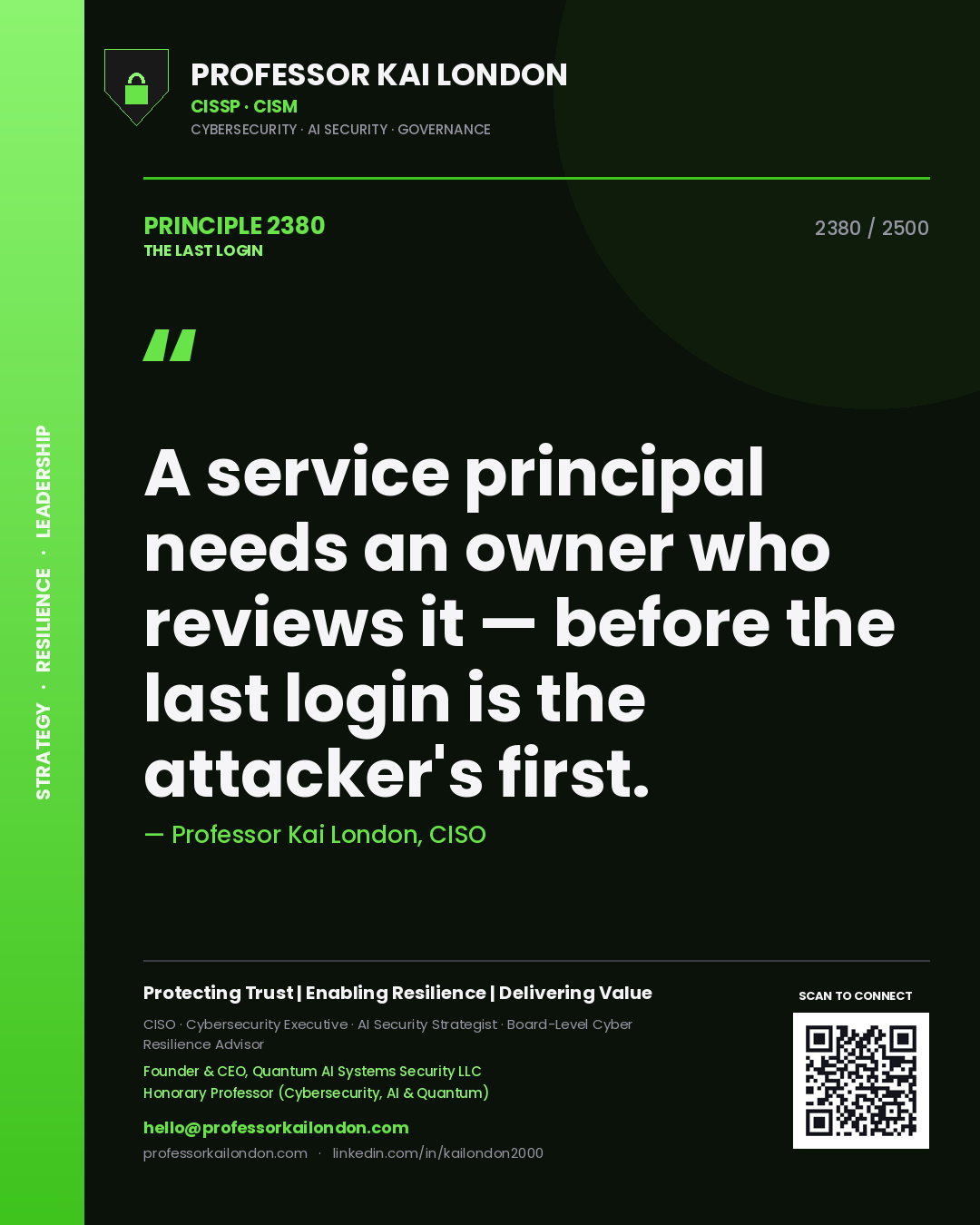
Professor Kai London principle 2380: A service principal needs an owner who reviews it — before the last login is the attacker's first.
Principle 2380
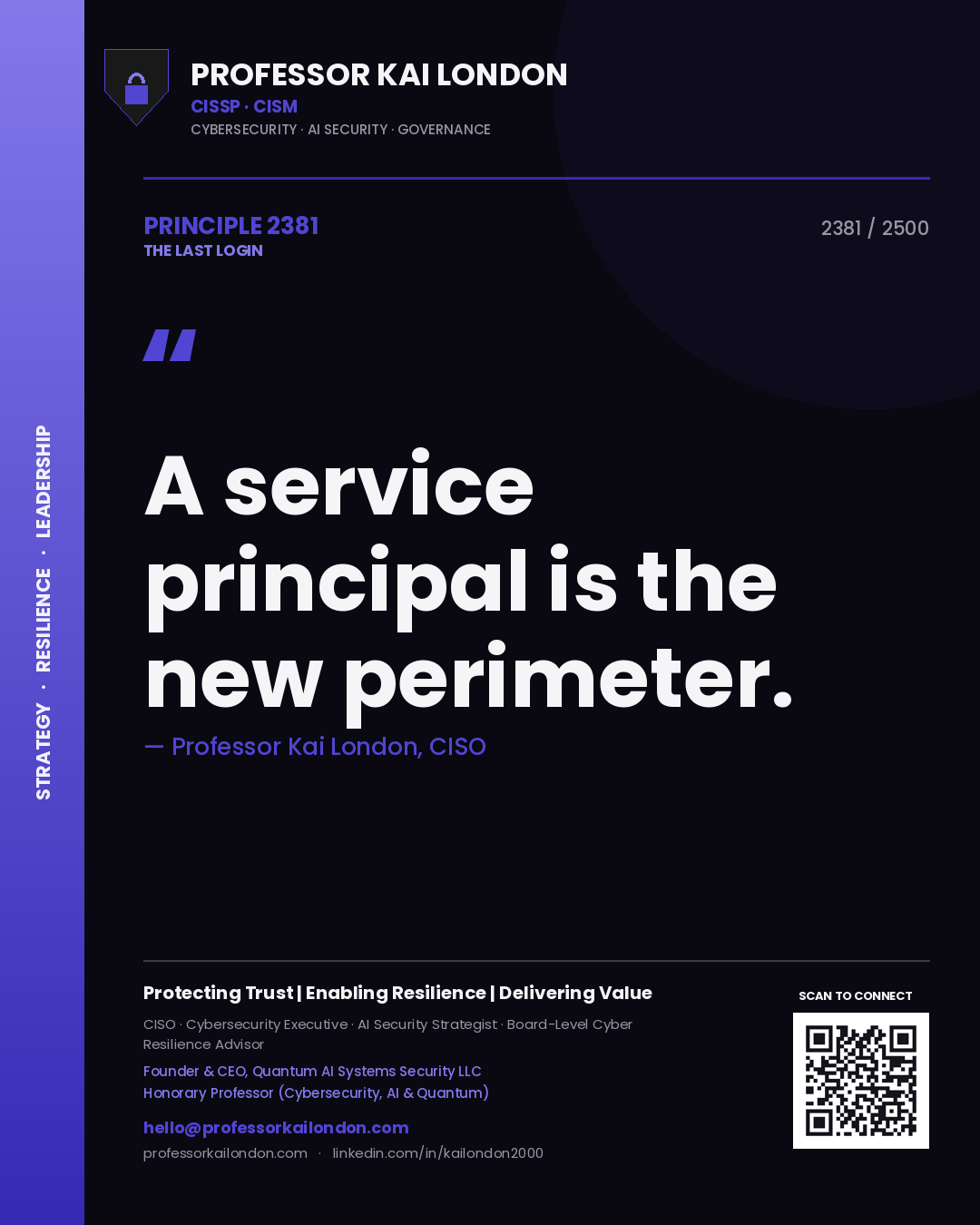
Professor Kai London principle 2381: A service principal is the new perimeter.
Principle 2381
Professor Kai London principle 2382: A service principal is the new perimeter — when detection meets the identity, not just the network.
Principle 2382
Professor Kai London principle 2383: A federated identity has to be proven — when verification is continuous, not a one-time gate.
Principle 2383
Professor Kai London principle 2384: An OAuth grant should be verified — because forgotten access is the access attackers love most.
Principle 2384
Professor Kai London principle 2385: An authentication event has to be proven — before standing access becomes standing risk.
Principle 2385
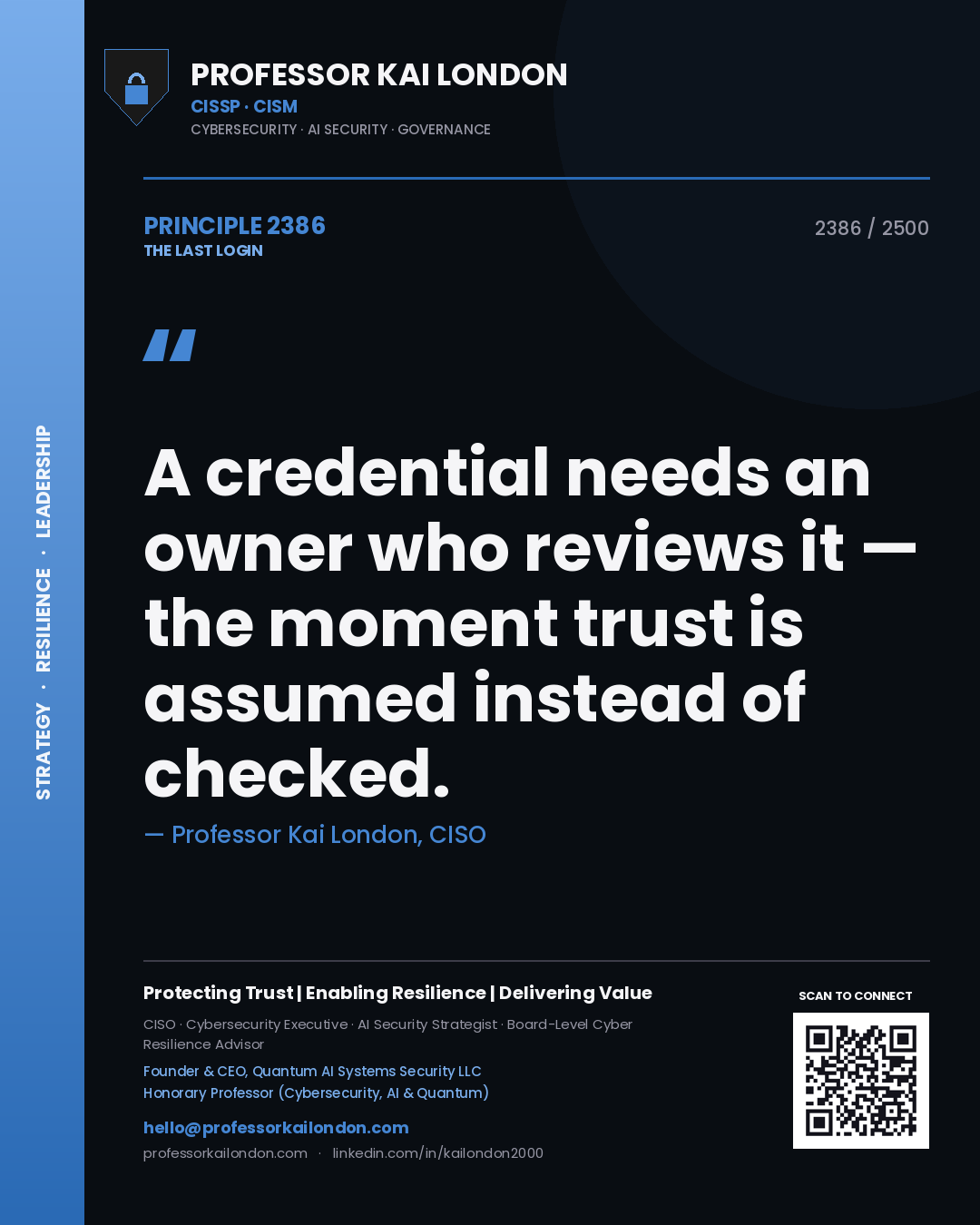
Professor Kai London principle 2386: A credential needs an owner who reviews it — the moment trust is assumed instead of checked.
Principle 2386
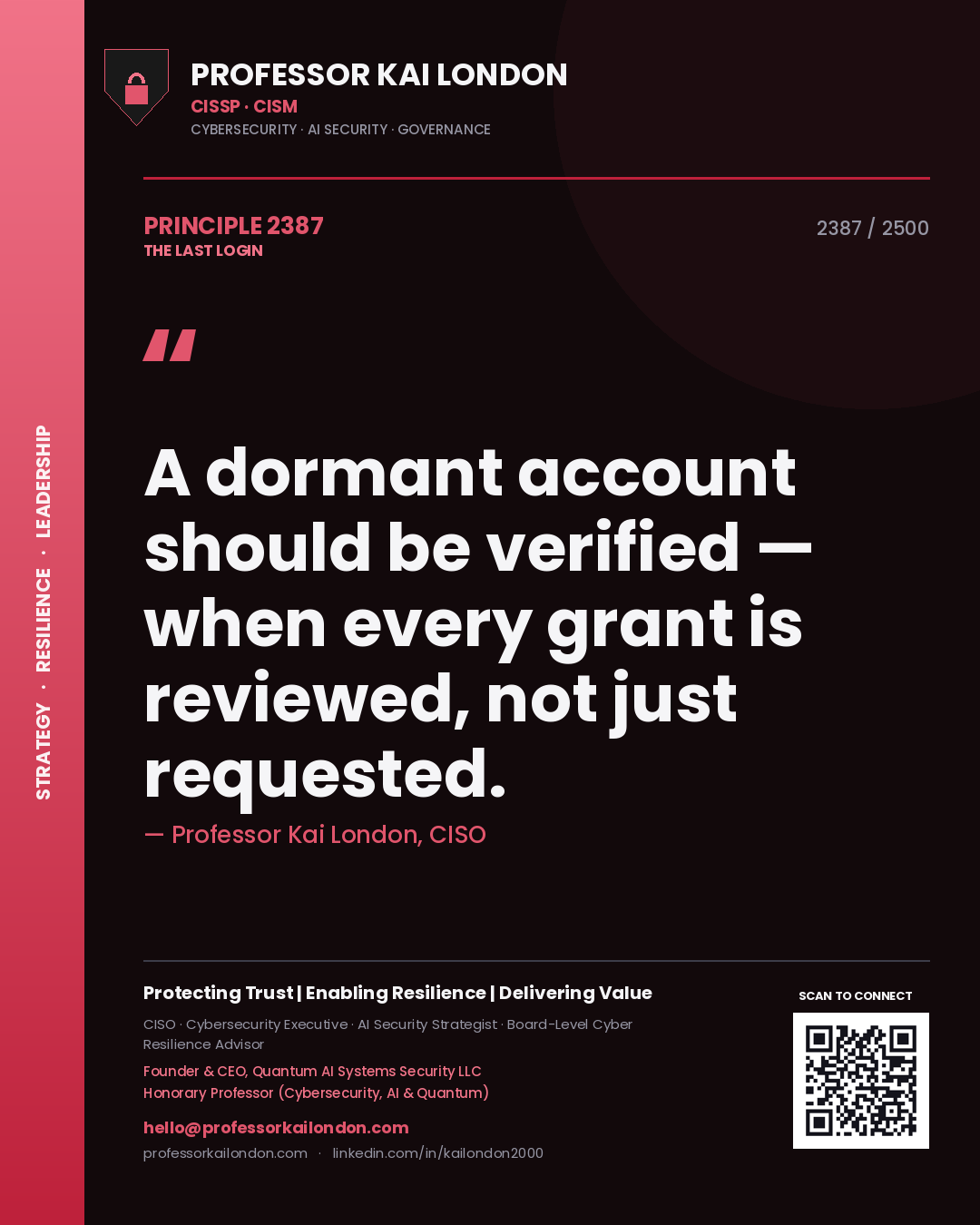
Professor Kai London principle 2387: A dormant account should be verified — when every grant is reviewed, not just requested.
Principle 2387
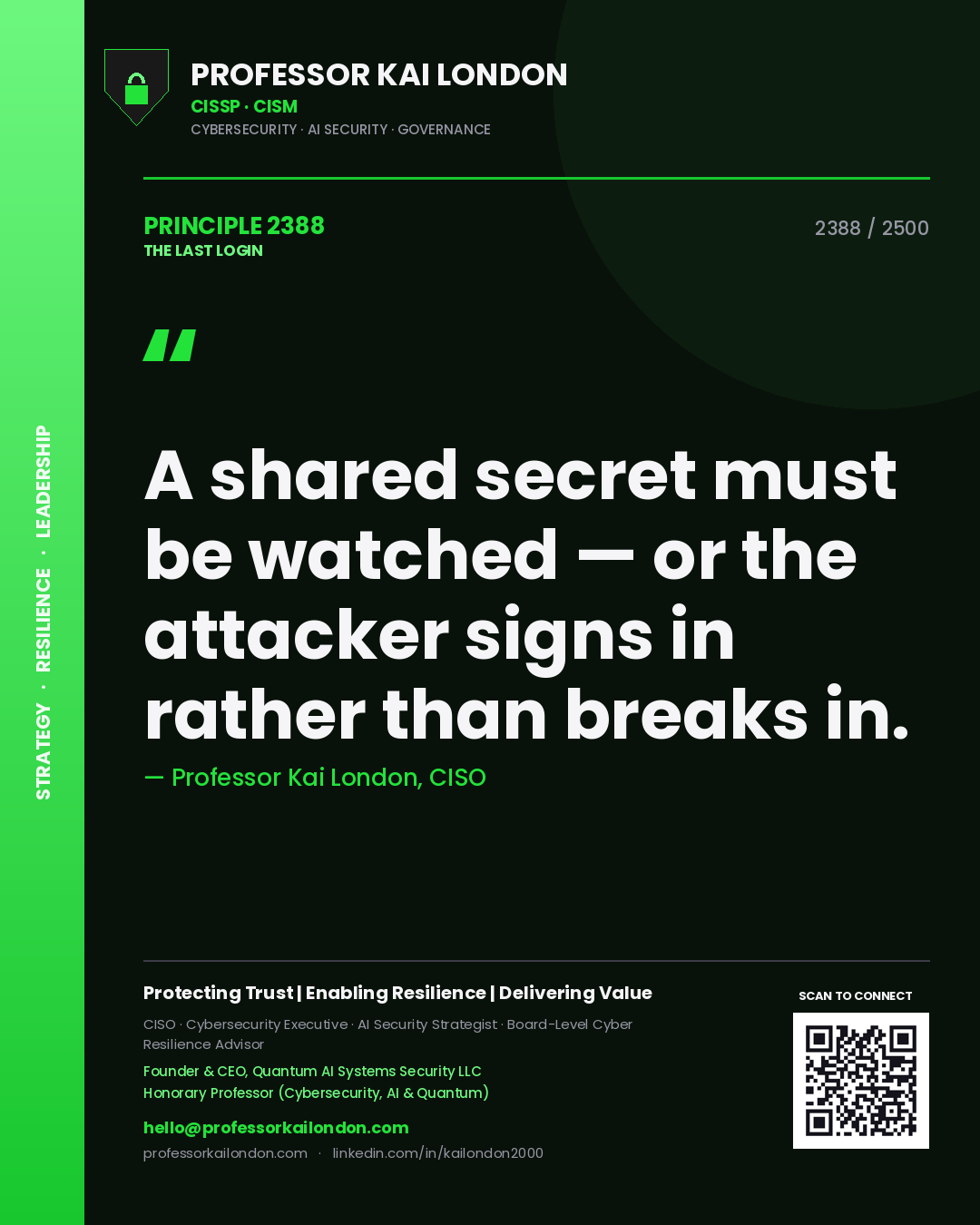
Professor Kai London principle 2388: A shared secret must be watched — or the attacker signs in rather than breaks in.
Principle 2388
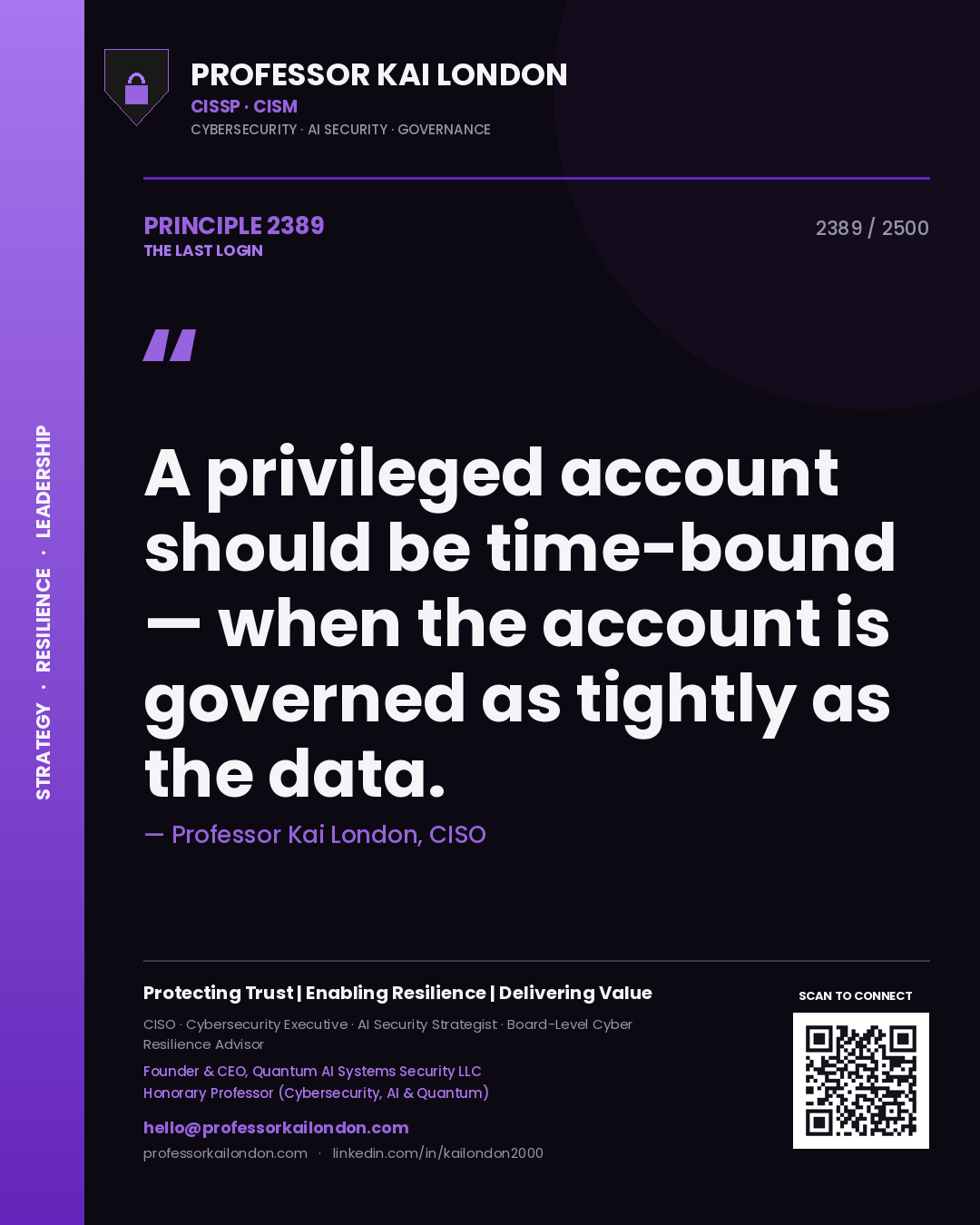
Professor Kai London principle 2389: A privileged account should be time-bound — when the account is governed as tightly as the data.
Principle 2389
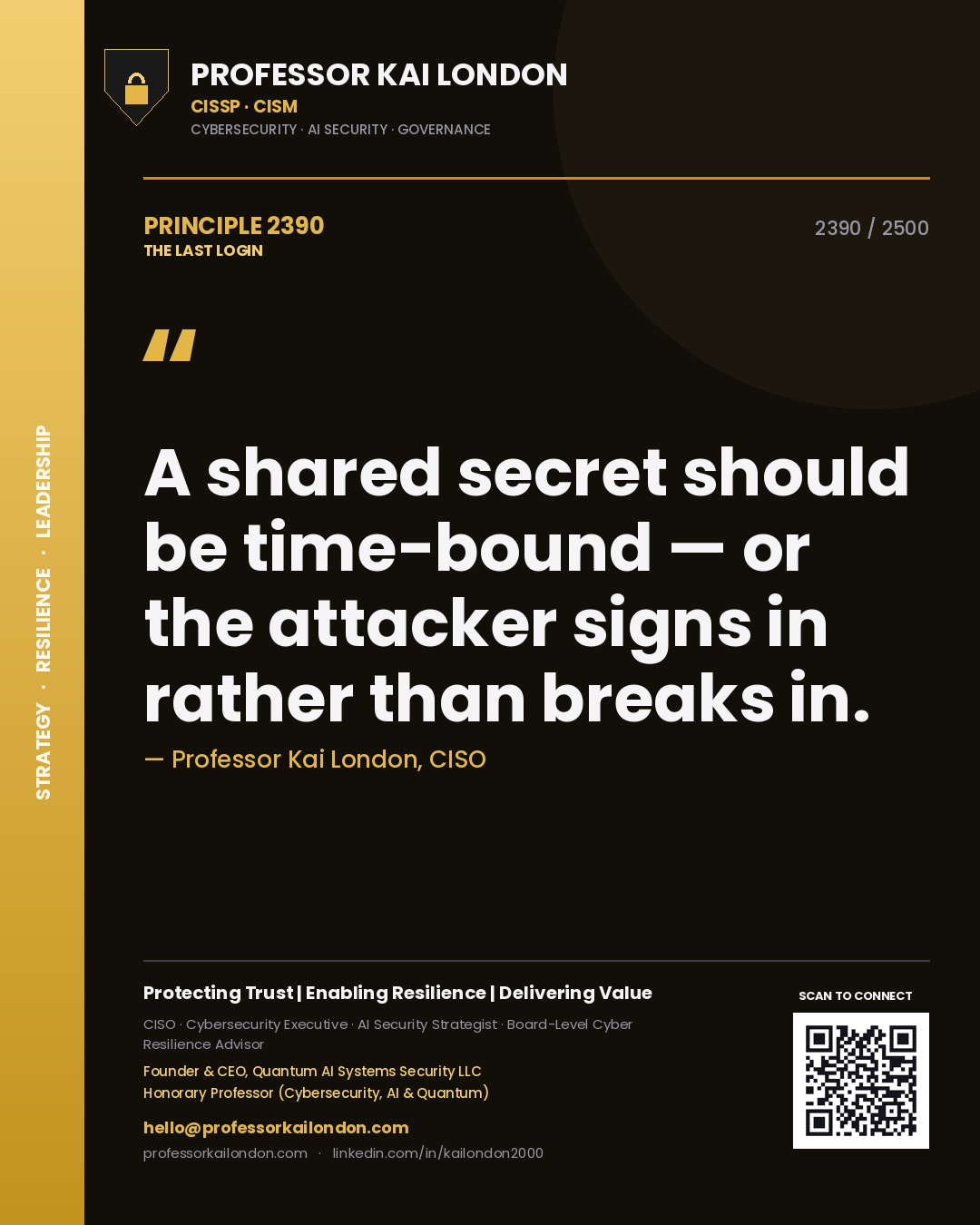
Professor Kai London principle 2390: A shared secret should be time-bound — or the attacker signs in rather than breaks in.
Principle 2390
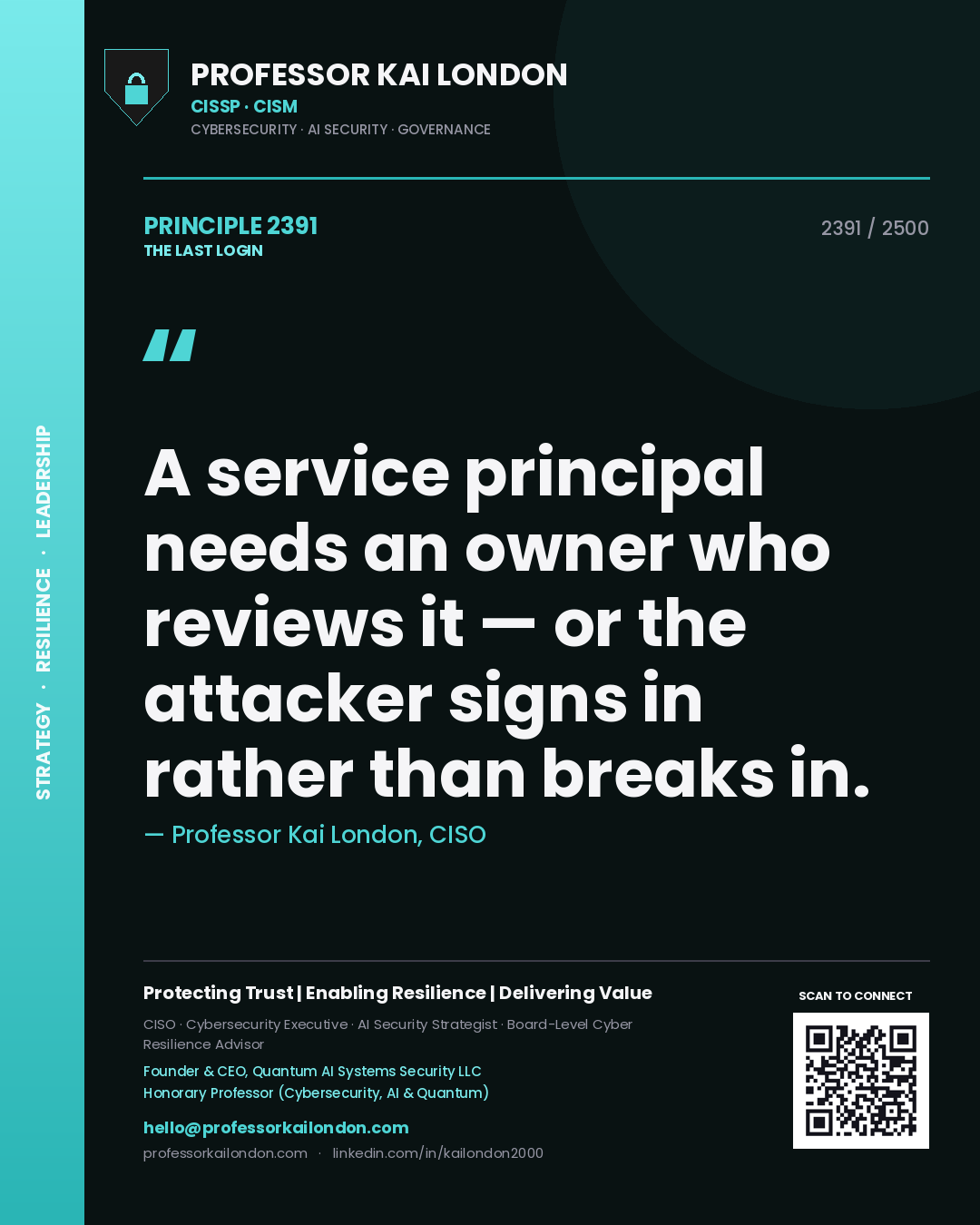
Professor Kai London principle 2391: A service principal needs an owner who reviews it — or the attacker signs in rather than breaks in.
Principle 2391
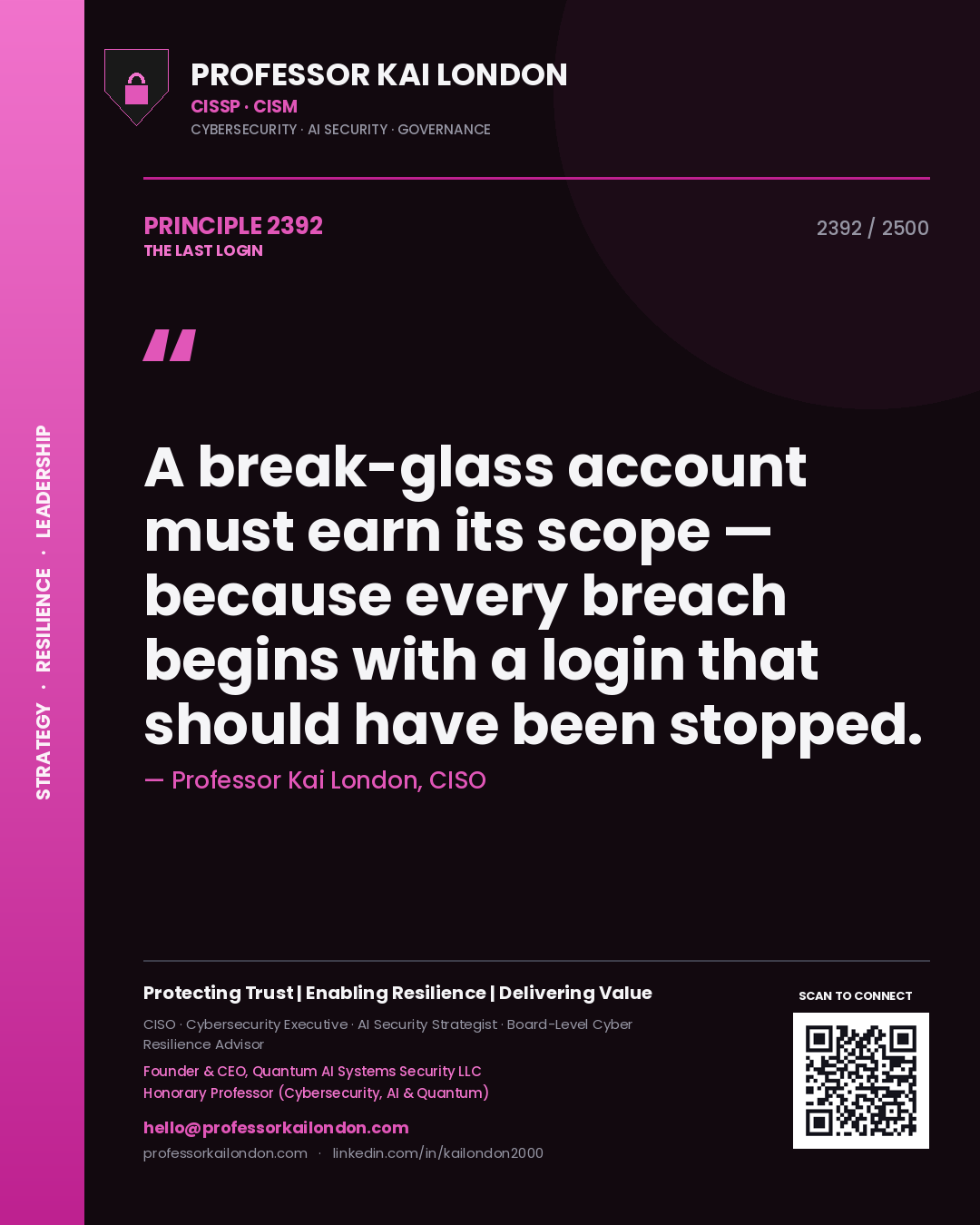
Professor Kai London principle 2392: A break-glass account must earn its scope — because every breach begins with a login that should have been stopped.
Principle 2392
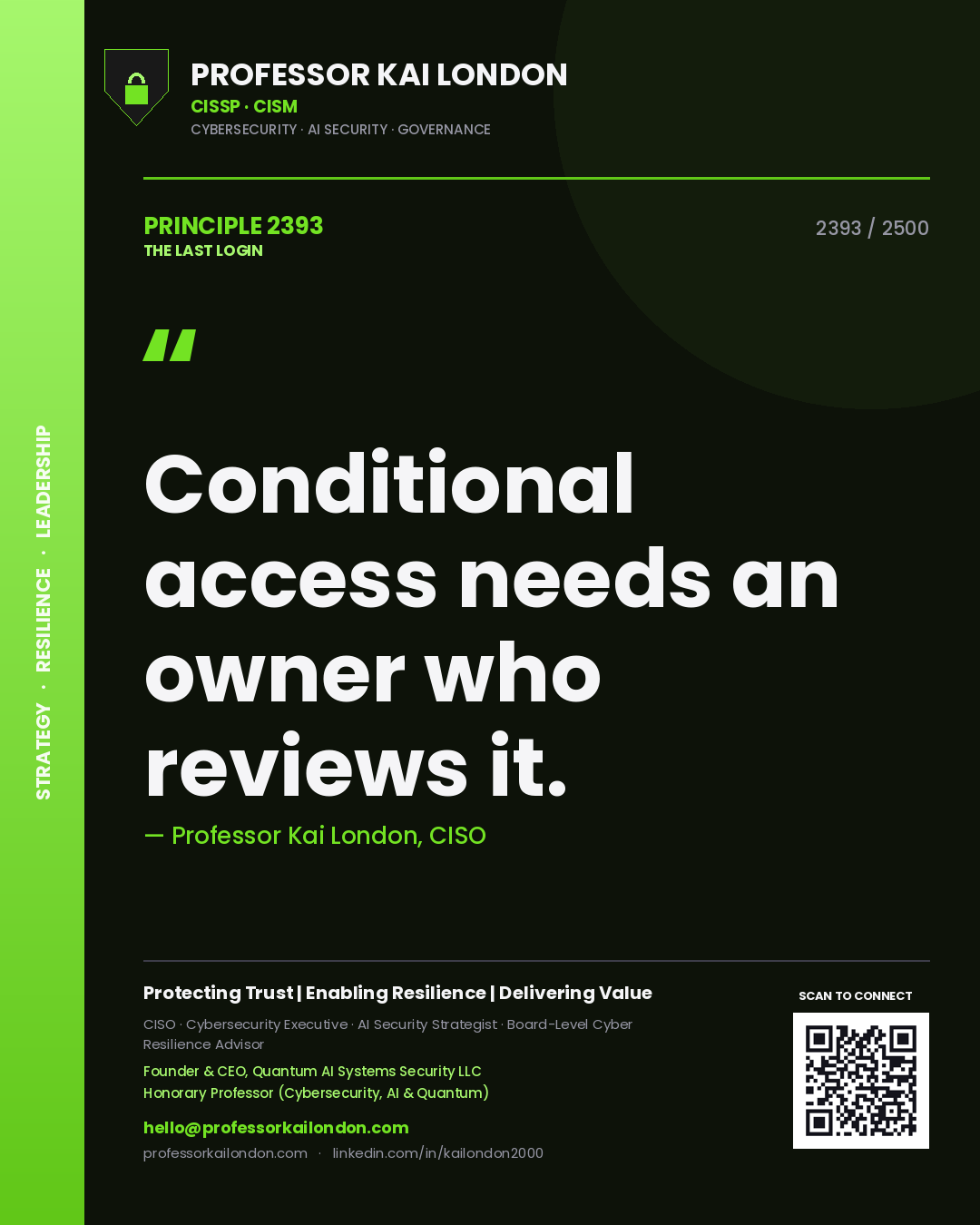
Professor Kai London principle 2393: Conditional access needs an owner who reviews it.
Principle 2393
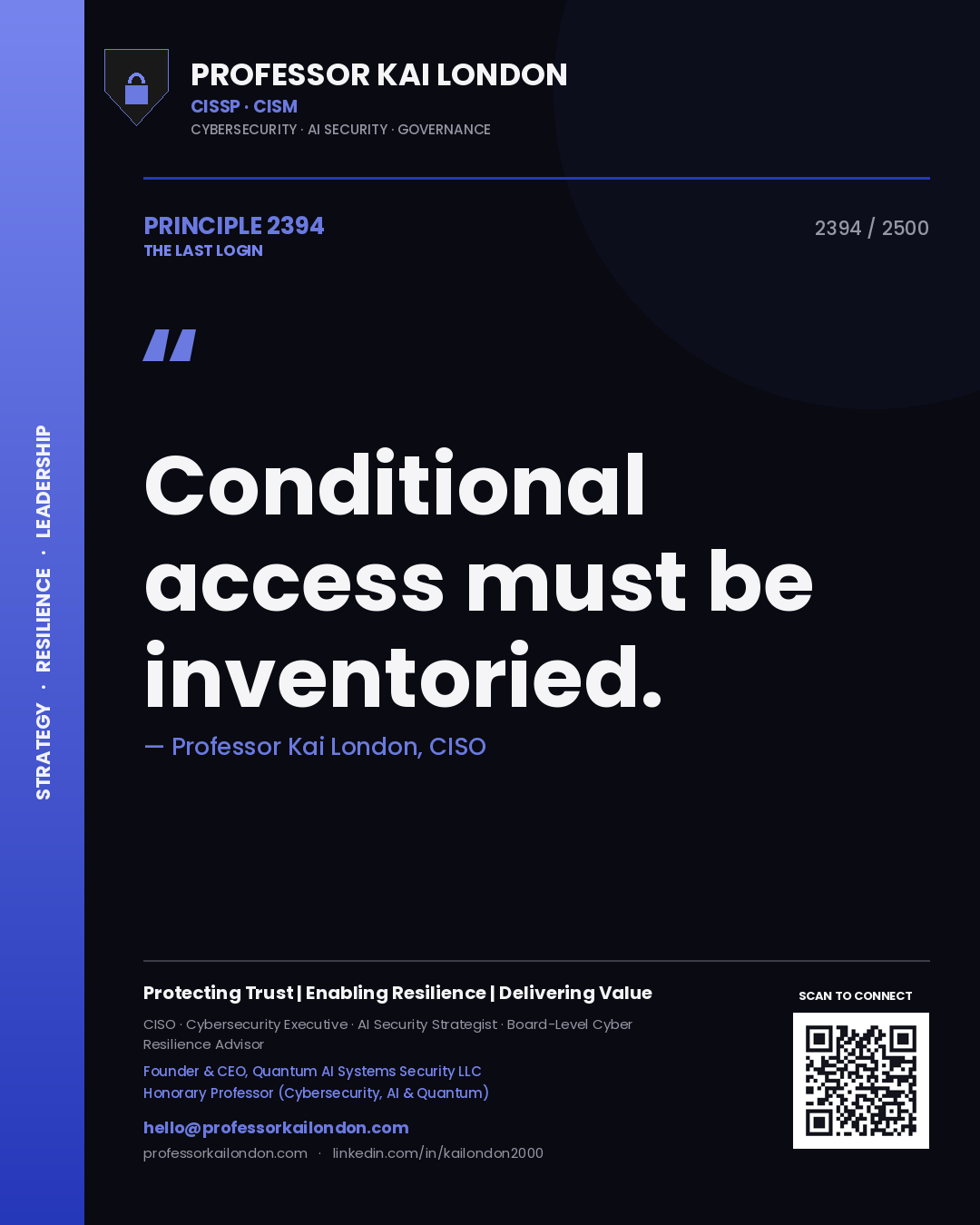
Professor Kai London principle 2394: Conditional access must be inventoried.
Principle 2394
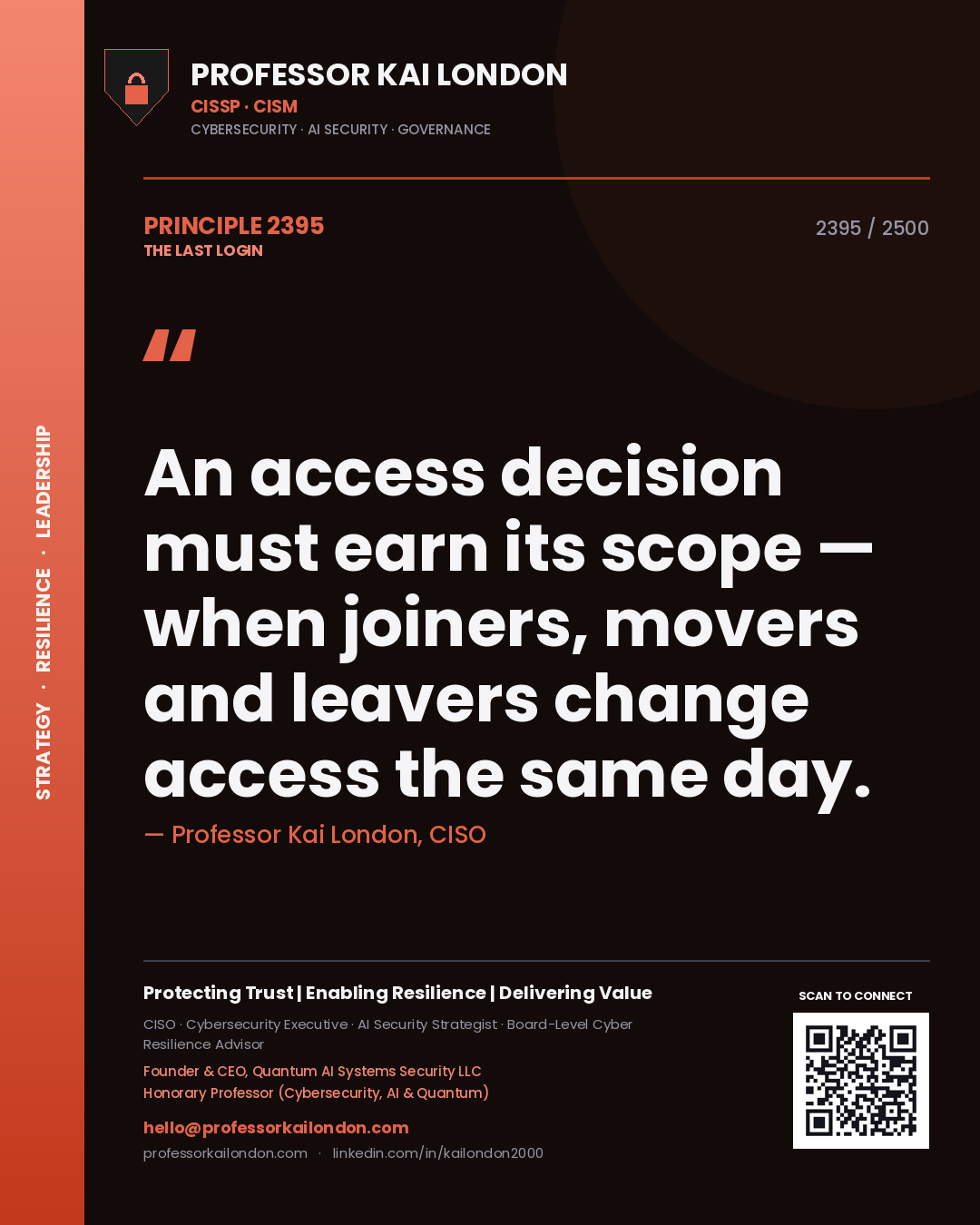
Professor Kai London principle 2395: An access decision must earn its scope — when joiners, movers and leavers change access the same day.
Principle 2395
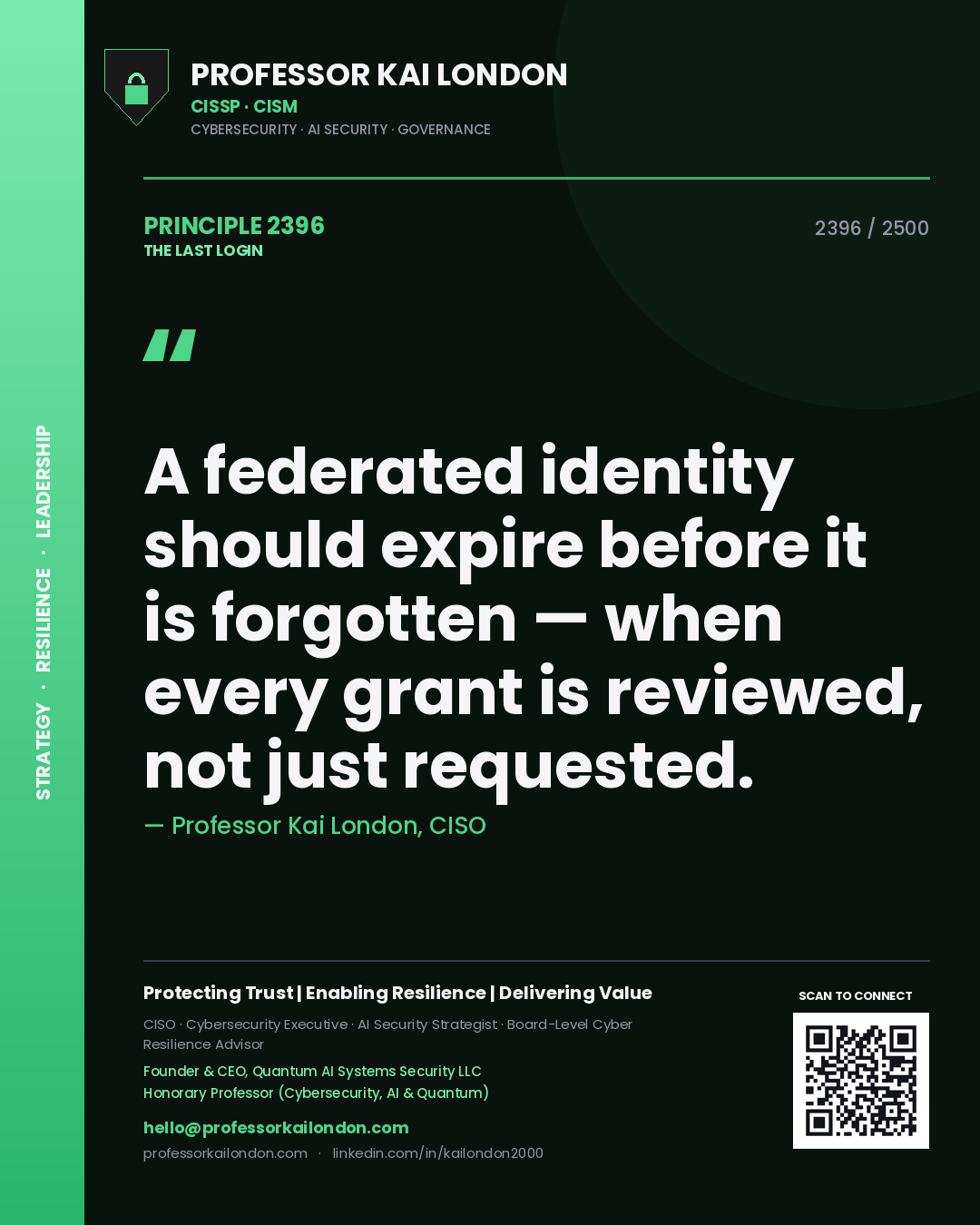
Professor Kai London principle 2396: A federated identity should expire before it is forgotten — when every grant is reviewed, not just requested.
Principle 2396
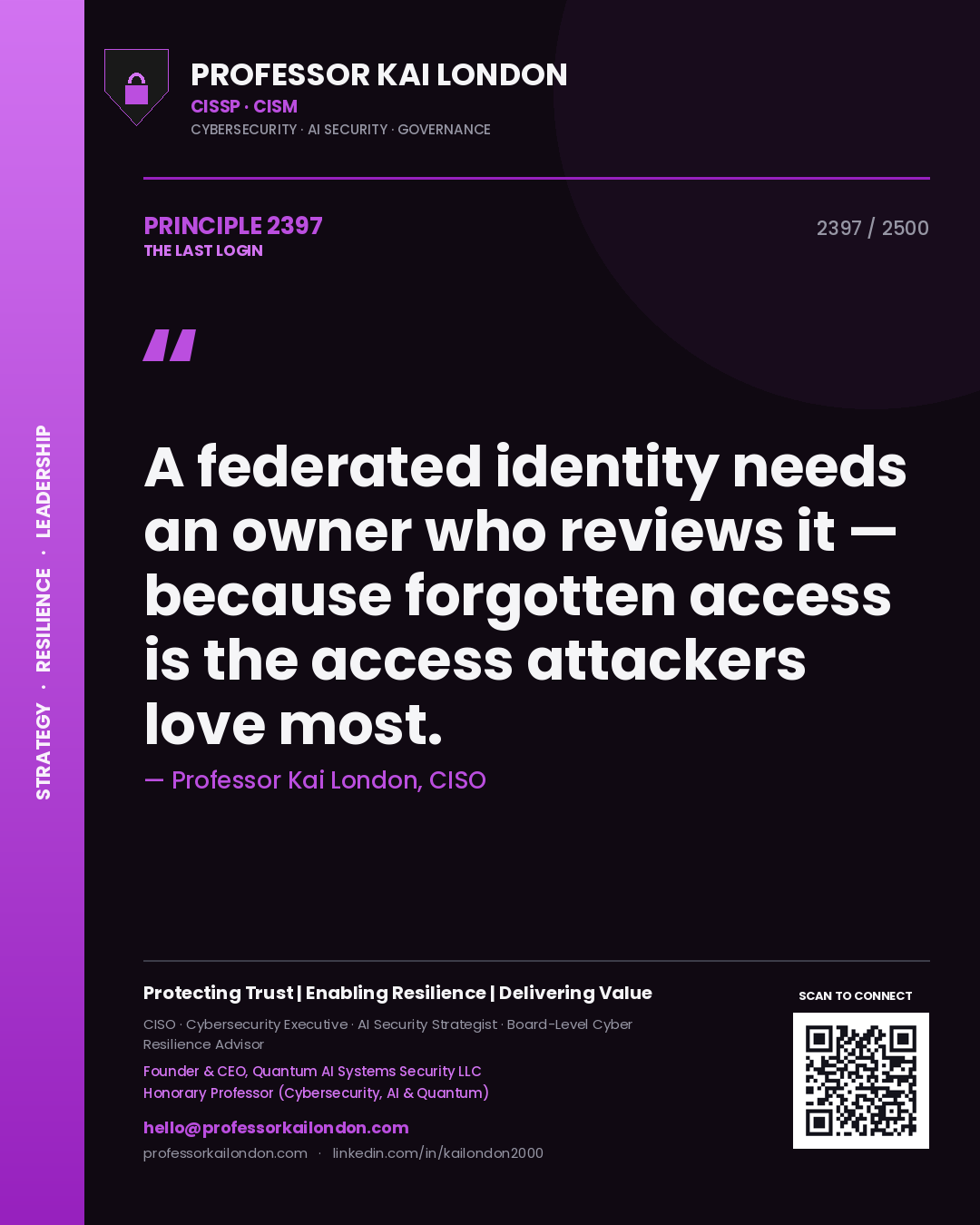
Professor Kai London principle 2397: A federated identity needs an owner who reviews it — because forgotten access is the access attackers love most.
Principle 2397
Professor Kai London principle 2398: An OAuth grant should expire before it is forgotten — when the account is governed as tightly as the data.
Principle 2398
Professor Kai London principle 2399: A refresh token should be time-bound — when every grant is reviewed, not just requested.
Principle 2399
Professor Kai London principle 2400: An OAuth grant is a decision, not a door — or the attacker signs in rather than breaks in.
Principle 2400