The Day the Control Room Went Silent — Gallery (Page 16 of 100)
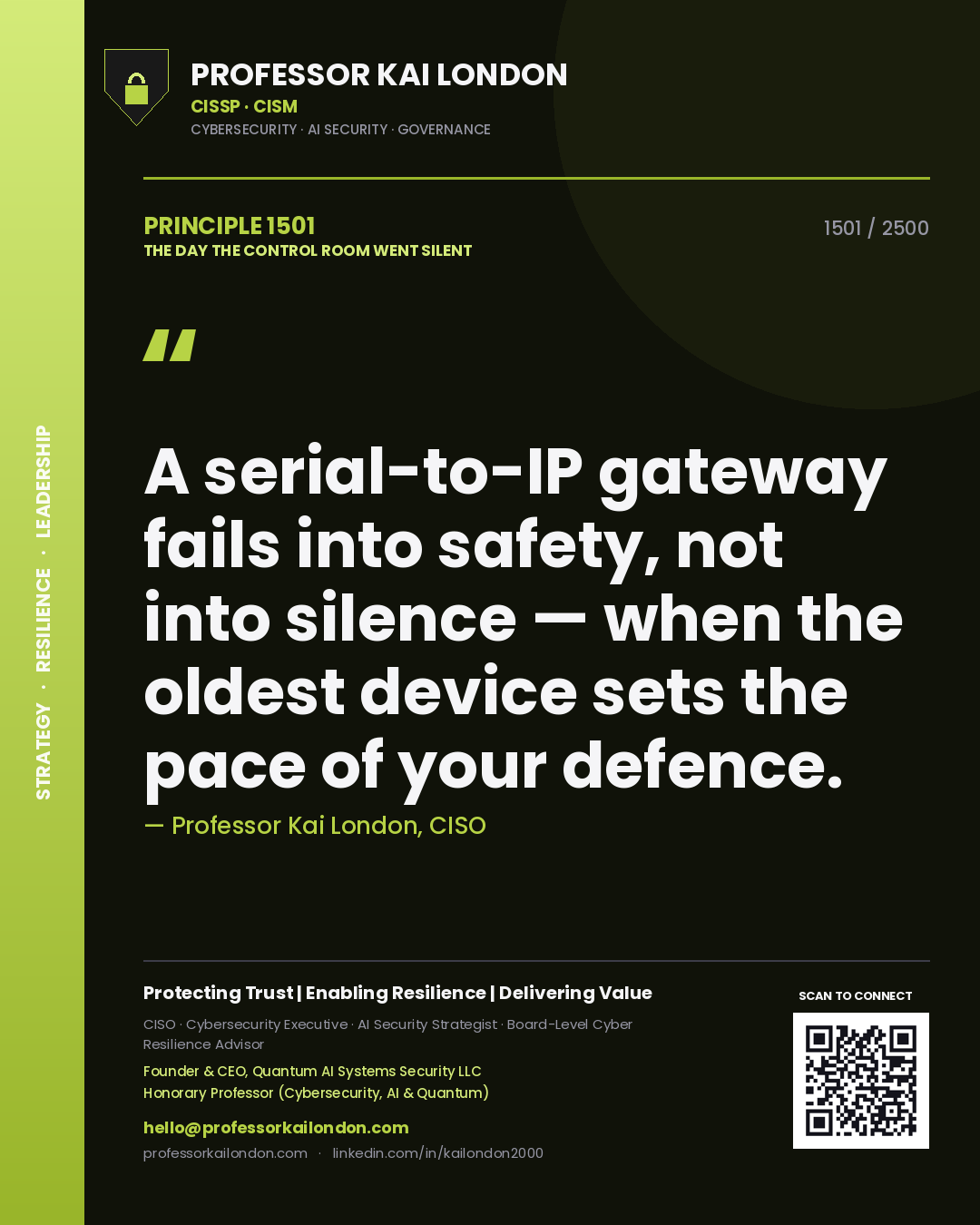
Professor Kai London principle 1501: A serial-to-IP gateway fails into safety, not into silence — when the oldest device sets the pace of your defence.
Principle 1501
Professor Kai London principle 1502: A firmware update defends lives, not just data.
Principle 1502
Professor Kai London principle 1503: A historian server needs visibility before it needs control — because in OT a failure can cost more than money.
Principle 1503
Professor Kai London principle 1504: The plant floor must know its safe state before an attacker teaches it — before a convenient bridge becomes the attack path.
Principle 1504
Professor Kai London principle 1505: A control room fails into safety, not into silence — when the plant keeps running because someone proved it could.
Principle 1505
Professor Kai London principle 1506: A serial-to-IP gateway must see it, trust it, hand it back, and prove it — when the control room stays loud enough to be heard.
Principle 1506
Professor Kai London principle 1507: A safety instrumented system governs consequence, not just configuration.
Principle 1507
Professor Kai London principle 1508: A historian server bridges IT risk into physical consequence — when the plant keeps running because someone proved it could.
Principle 1508
Professor Kai London principle 1509: A vendor VPN governs consequence, not just configuration — when safety and security agree before the incident.
Principle 1509
Professor Kai London principle 1510: An OT network needs monitoring that respects the process — when you see it, trust it, hand it back, and prove it.
Principle 1510
Professor Kai London principle 1511: A historian server must fail to a safe state — because a keystroke here moves the physical world.
Principle 1511
Professor Kai London principle 1512: A historian server cannot be patched on a memo's schedule — when the oldest device sets the pace of your defence.
Principle 1512
Professor Kai London principle 1513: A safety instrumented system bridges IT risk into physical consequence — before the next attack finds the control room.
Principle 1513
Professor Kai London principle 1514: A control room defends lives, not just data — when safety and security agree before the incident.
Principle 1514
Professor Kai London principle 1515: A jump host treats availability as its first language — before a convenient bridge becomes the attack path.
Principle 1515
Professor Kai London principle 1516: A legacy controller protects operations without disrupting them — when safety and security agree before the incident.
Principle 1516
Professor Kai London principle 1517: A serial-to-IP gateway needs visibility before it needs control.
Principle 1517
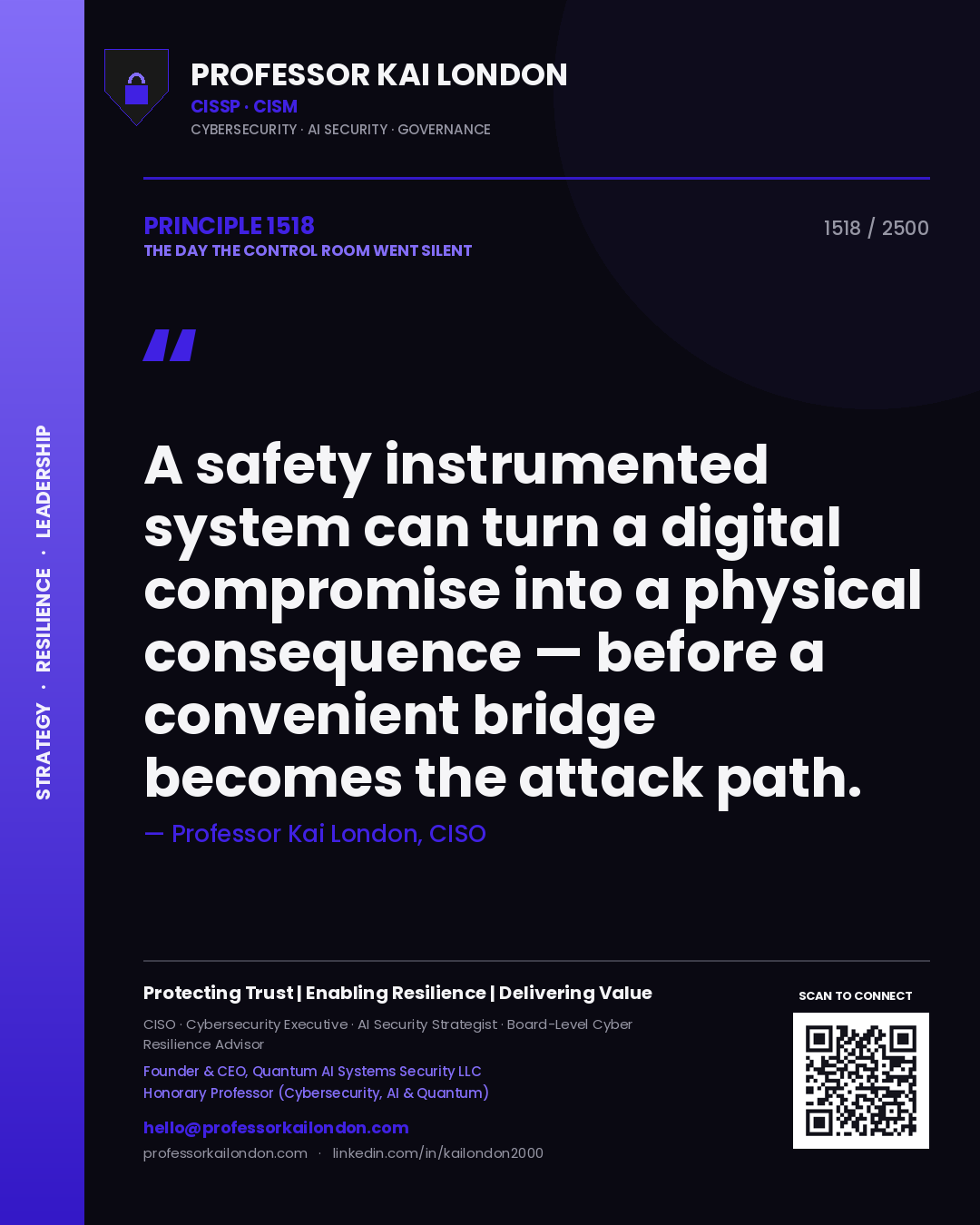
Professor Kai London principle 1518: A safety instrumented system can turn a digital compromise into a physical consequence — before a convenient bridge becomes the attack path.
Principle 1518
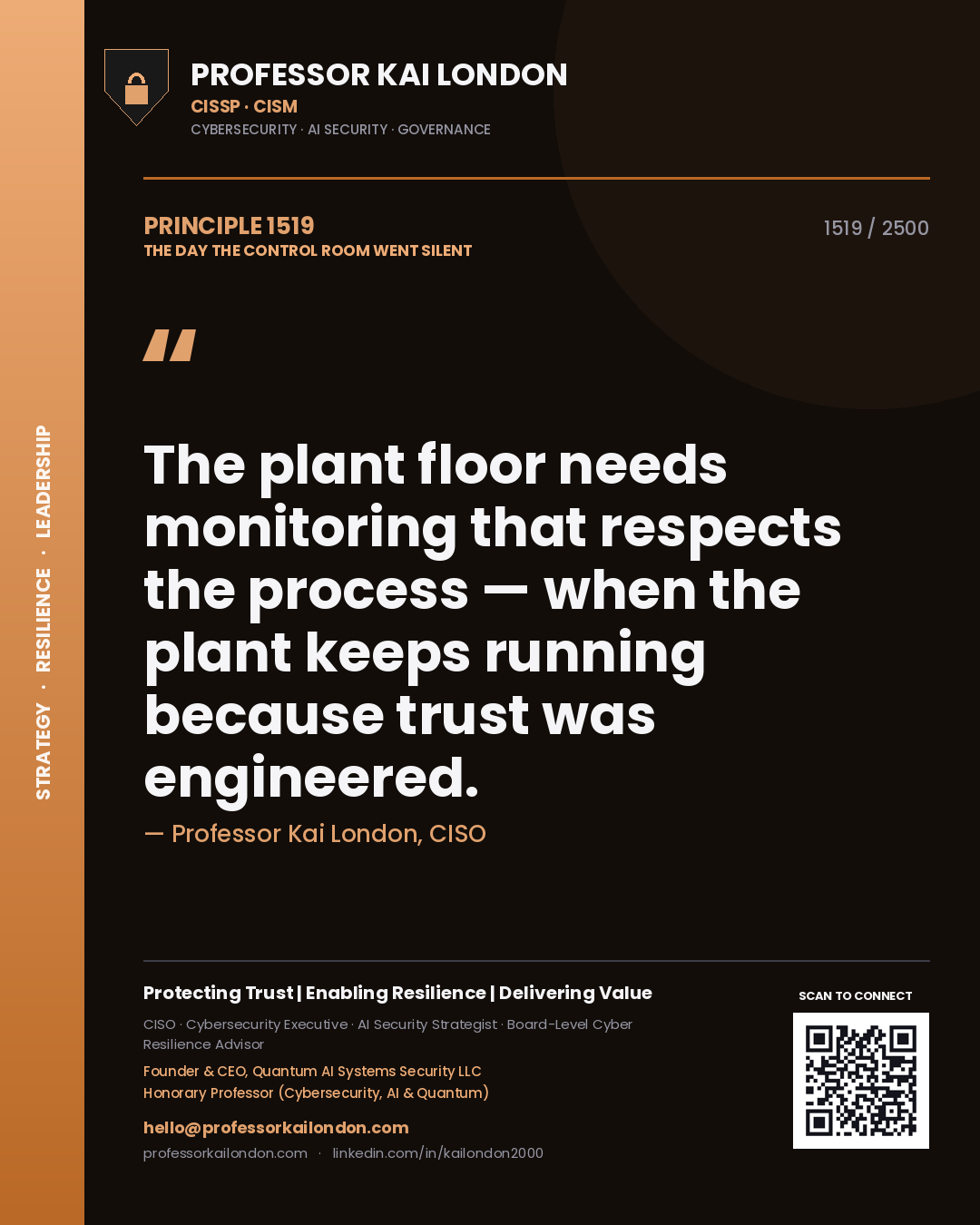
Professor Kai London principle 1519: The plant floor needs monitoring that respects the process — when the plant keeps running because trust was engineered.
Principle 1519
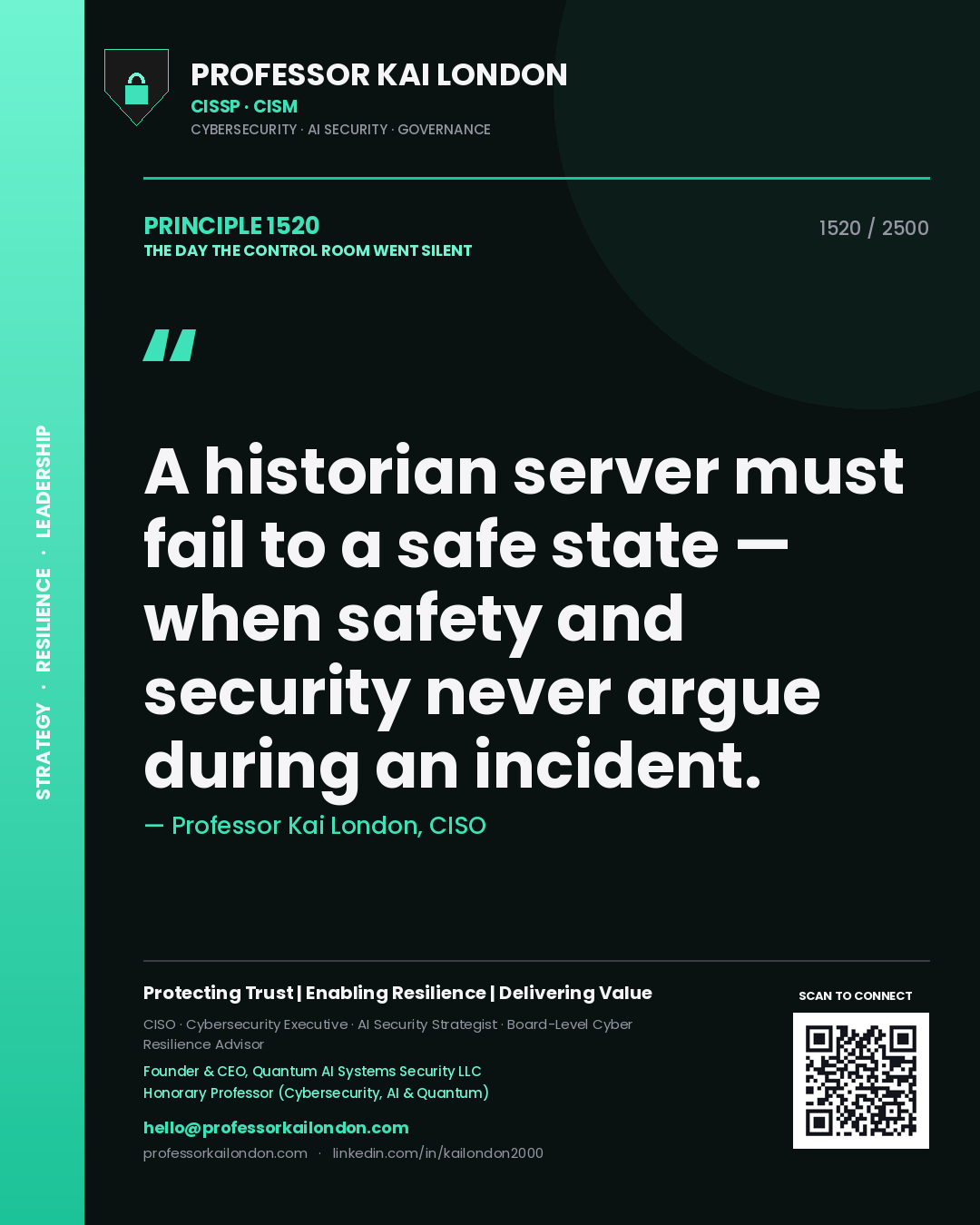
Professor Kai London principle 1520: A historian server must fail to a safe state — when safety and security never argue during an incident.
Principle 1520
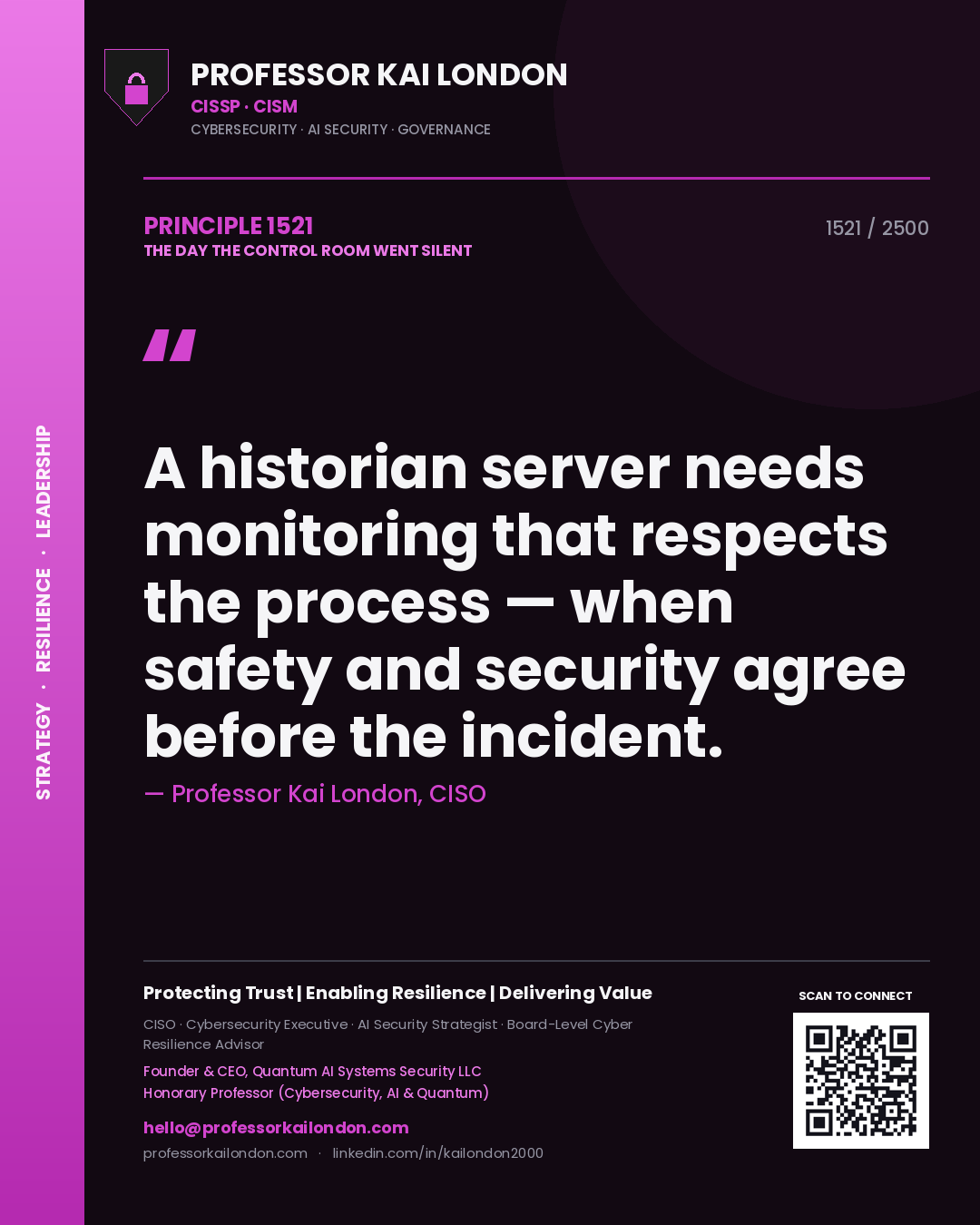
Professor Kai London principle 1521: A historian server needs monitoring that respects the process — when safety and security agree before the incident.
Principle 1521
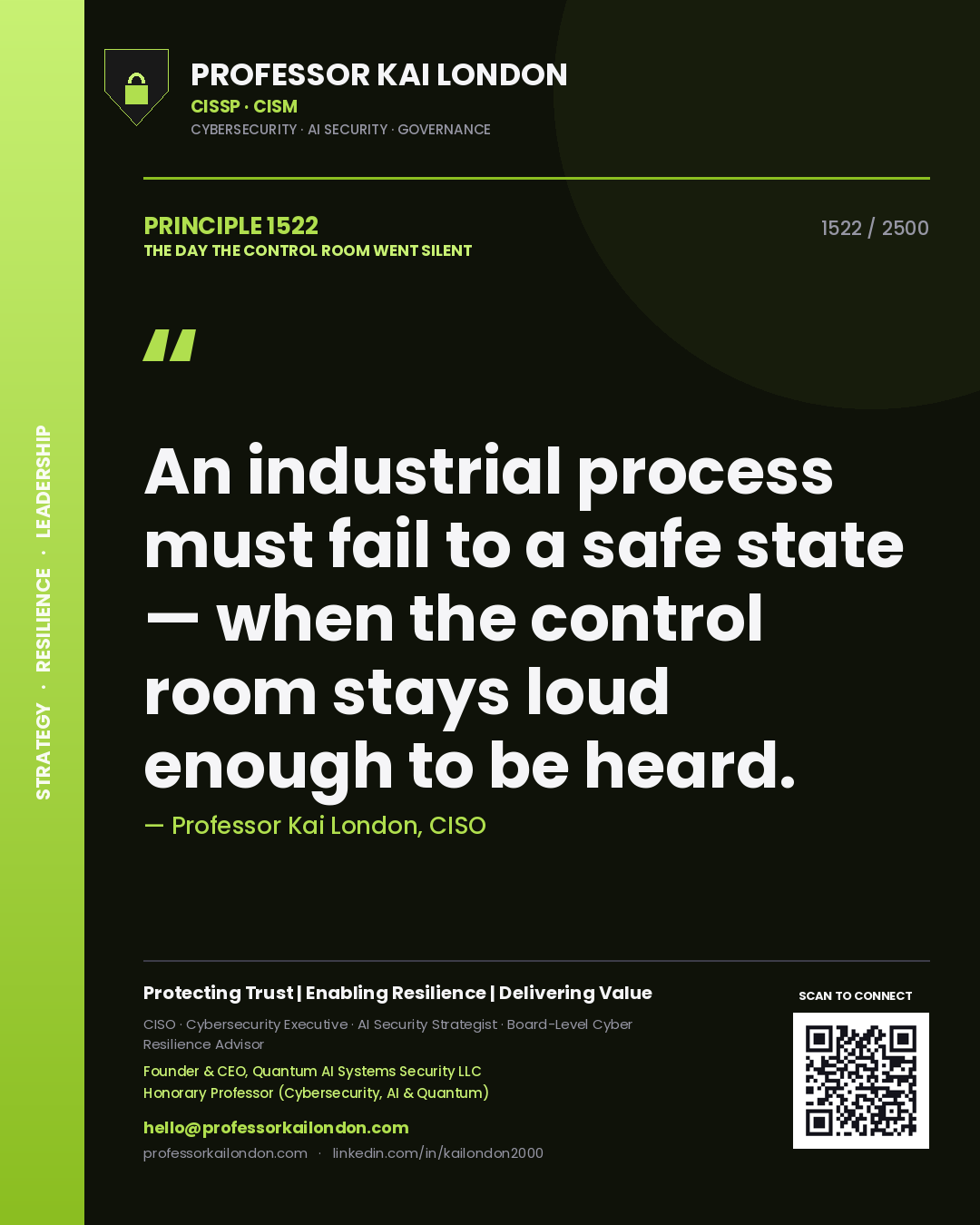
Professor Kai London principle 1522: An industrial process must fail to a safe state — when the control room stays loud enough to be heard.
Principle 1522
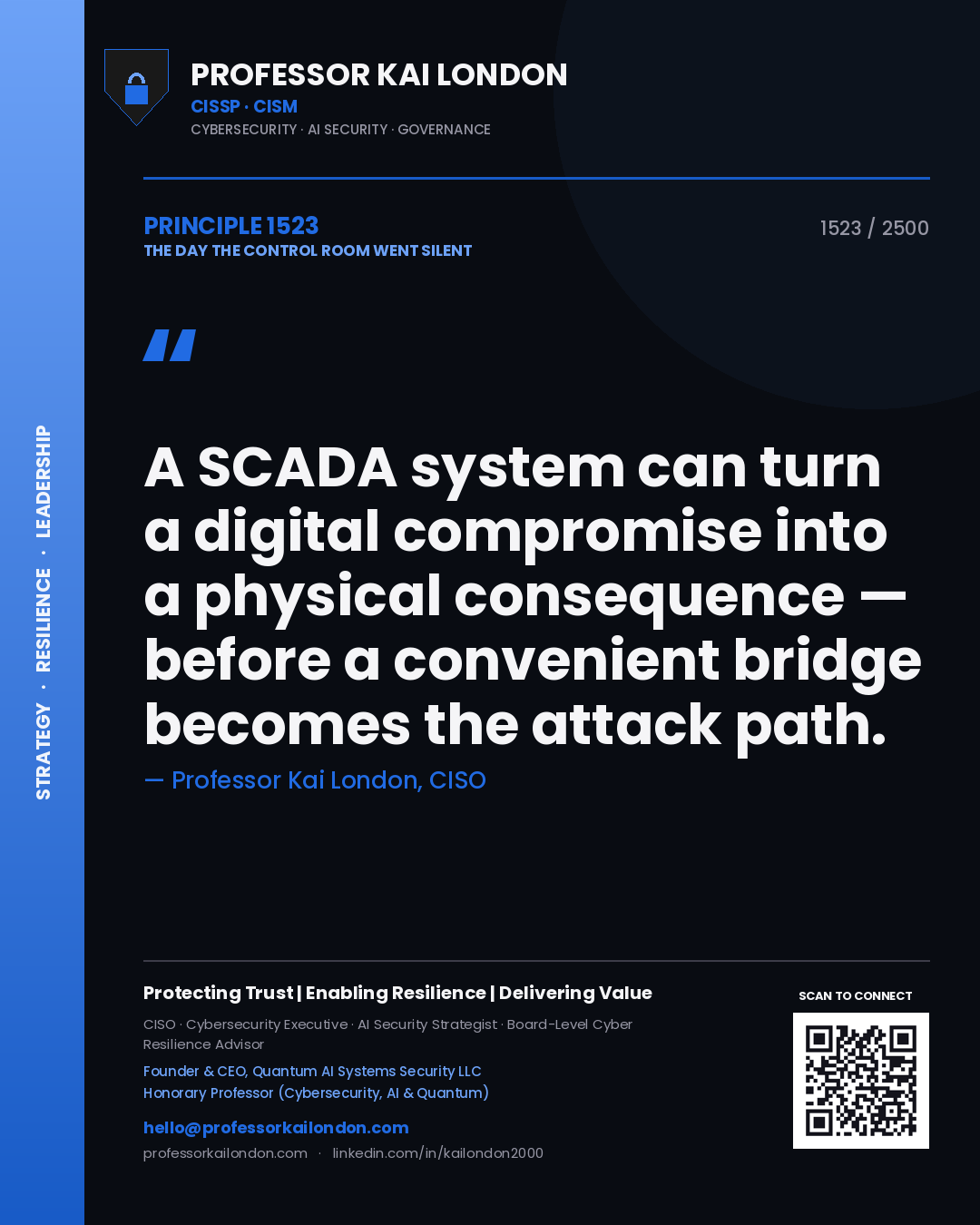
Professor Kai London principle 1523: A SCADA system can turn a digital compromise into a physical consequence — before a convenient bridge becomes the attack path.
Principle 1523
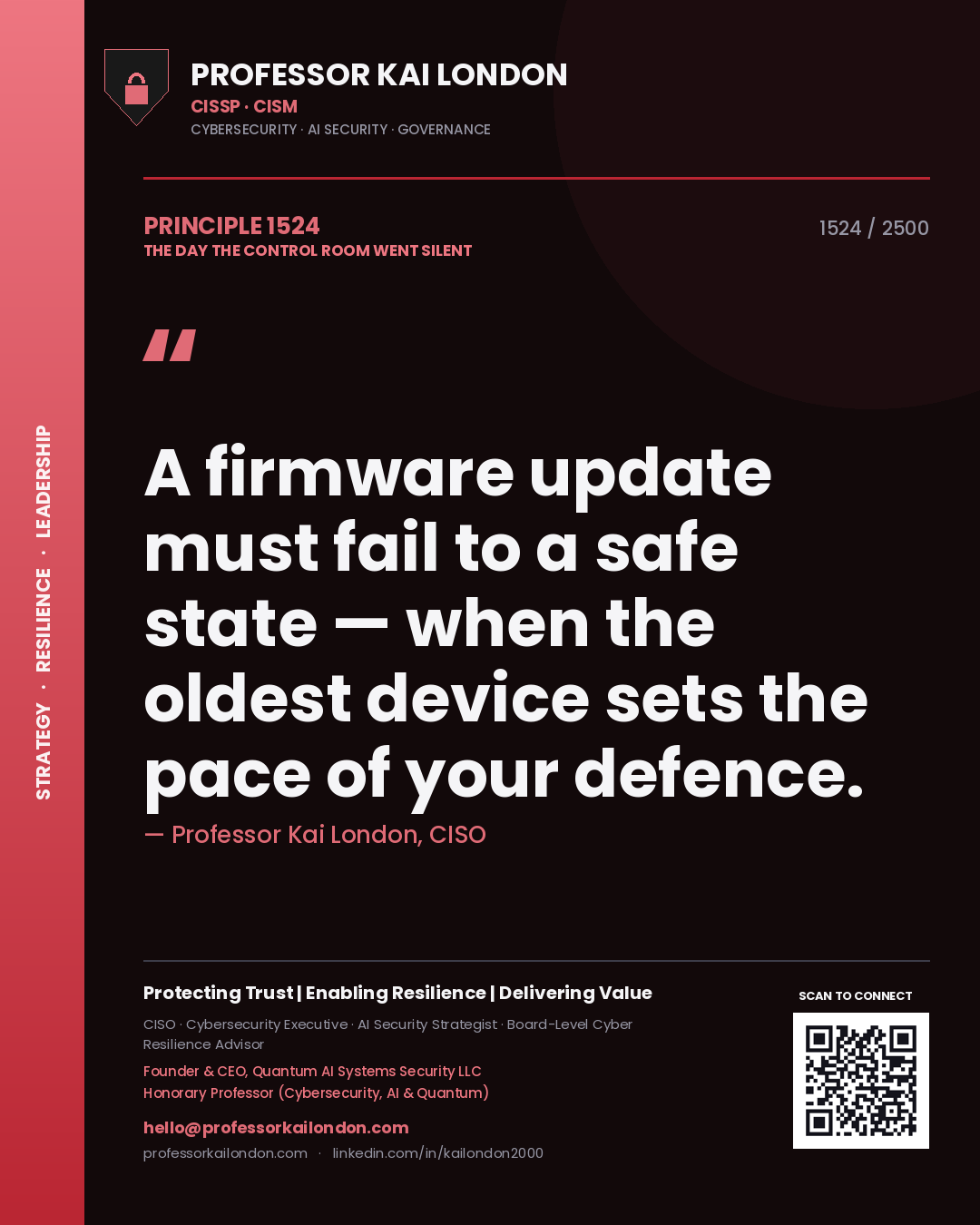
Professor Kai London principle 1524: A firmware update must fail to a safe state — when the oldest device sets the pace of your defence.
Principle 1524
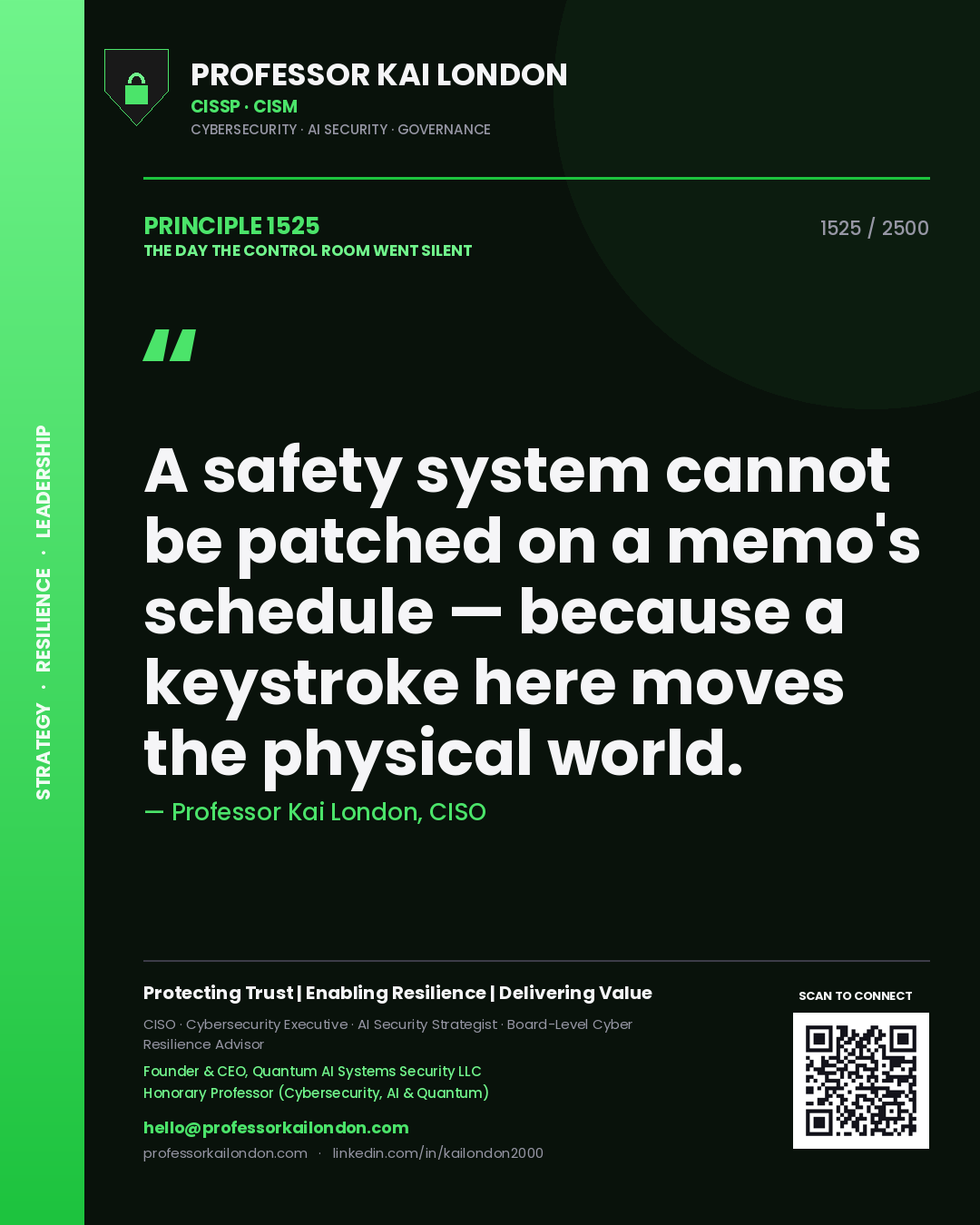
Professor Kai London principle 1525: A safety system cannot be patched on a memo's schedule — because a keystroke here moves the physical world.
Principle 1525
Professor Kai London principle 1526: An industrial process bridges IT risk into physical consequence — because critical infrastructure resilience is a public duty.
Principle 1526
Professor Kai London principle 1527: A vendor VPN needs visibility before it needs control — before a convenient bridge becomes the attack path.
Principle 1527
Professor Kai London principle 1528: A jump host treats availability as its first language — when the plant keeps running because trust was engineered.
Principle 1528
Professor Kai London principle 1529: An unverified digital input cannot be patched on a memo's schedule — when the oldest device sets the pace of your defence.
Principle 1529
Professor Kai London principle 1530: An industrial process needs monitoring that respects the process — the moment IT logic meets OT consequence.
Principle 1530
Professor Kai London principle 1531: A jump host protects operations without disrupting them — when safety and security never argue during an incident.
Principle 1531
Professor Kai London principle 1532: A historian server protects operations without disrupting them — when the plant keeps running because trust was engineered.
Principle 1532
Professor Kai London principle 1533: A firmware update treats availability as its first language — when safety and security agree before the incident.
Principle 1533
Professor Kai London principle 1534: A firmware update treats availability as its first language — when the plant keeps running because trust was engineered.
Principle 1534
Professor Kai London principle 1535: A remote engineering laptop protects operations without disrupting them — when the plant keeps running because someone proved it could.
Principle 1535
Professor Kai London principle 1536: A serial-to-IP gateway needs monitoring that respects the process — because in OT a failure can cost more than money.
Principle 1536
Professor Kai London principle 1537: A historian server can turn a digital compromise into a physical consequence — when the plant keeps running because trust was engineered.
Principle 1537
Professor Kai London principle 1538: A historian server cannot be trusted just because it is old — because a keystroke here moves the physical world.
Principle 1538
Professor Kai London principle 1539: A serial-to-IP gateway needs visibility before it needs control — before a convenient bridge becomes the attack path.
Principle 1539
Professor Kai London principle 1540: A historian server must know its safe state before an attacker teaches it — when the plant keeps running because someone proved it could.
Principle 1540
Professor Kai London principle 1541: A vendor VPN must fail to a safe state — because an unverified input can move the physical world.
Principle 1541
Professor Kai London principle 1542: A safety system cannot be trusted just because it is old — because a keystroke here moves the physical world.
Principle 1542
Professor Kai London principle 1543: A remote engineering laptop defends lives, not just data — before the next attack finds the control room.
Principle 1543
Professor Kai London principle 1544: A firmware update fails into safety, not into silence — because an unverified input can move the physical world.
Principle 1544
Professor Kai London principle 1545: A vendor VPN cannot be patched on a memo's schedule — before the next attack finds the control room.
Principle 1545
Professor Kai London principle 1546: A jump host cannot be patched on a memo's schedule — when safety and security agree before the incident.
Principle 1546
Professor Kai London principle 1547: A firmware update bridges IT risk into physical consequence — when the oldest device sets the pace of your defence.
Principle 1547
Professor Kai London principle 1548: An OT network must fail to a safe state — when the control room stays loud enough to be heard.
Principle 1548
Professor Kai London principle 1549: An industrial process must fail to a safe state.
Principle 1549
Professor Kai London principle 1550: A safety system must fail to a safe state — before the next attack finds the control room.
Principle 1550
Professor Kai London principle 1551: A firmware update cannot be patched on a memo's schedule — when safety and security never argue during an incident.
Principle 1551
Professor Kai London principle 1552: A remote engineering laptop must see it, trust it, hand it back, and prove it — when safety and security never argue during an incident.
Principle 1552
Professor Kai London principle 1553: An unverified digital input cannot be trusted just because it is old — when the plant keeps running because someone proved it could.
Principle 1553
Professor Kai London principle 1554: A firmware update bridges IT risk into physical consequence — when the plant keeps running because someone proved it could.
Principle 1554
Professor Kai London principle 1555: A SCADA system fails into safety, not into silence — because a keystroke here moves the physical world.
Principle 1555
Professor Kai London principle 1556: A SCADA system bridges IT risk into physical consequence — before a convenient bridge becomes the attack path.
Principle 1556
Professor Kai London principle 1557: An unverified digital input bridges IT risk into physical consequence — because critical infrastructure resilience is a public duty.
Principle 1557
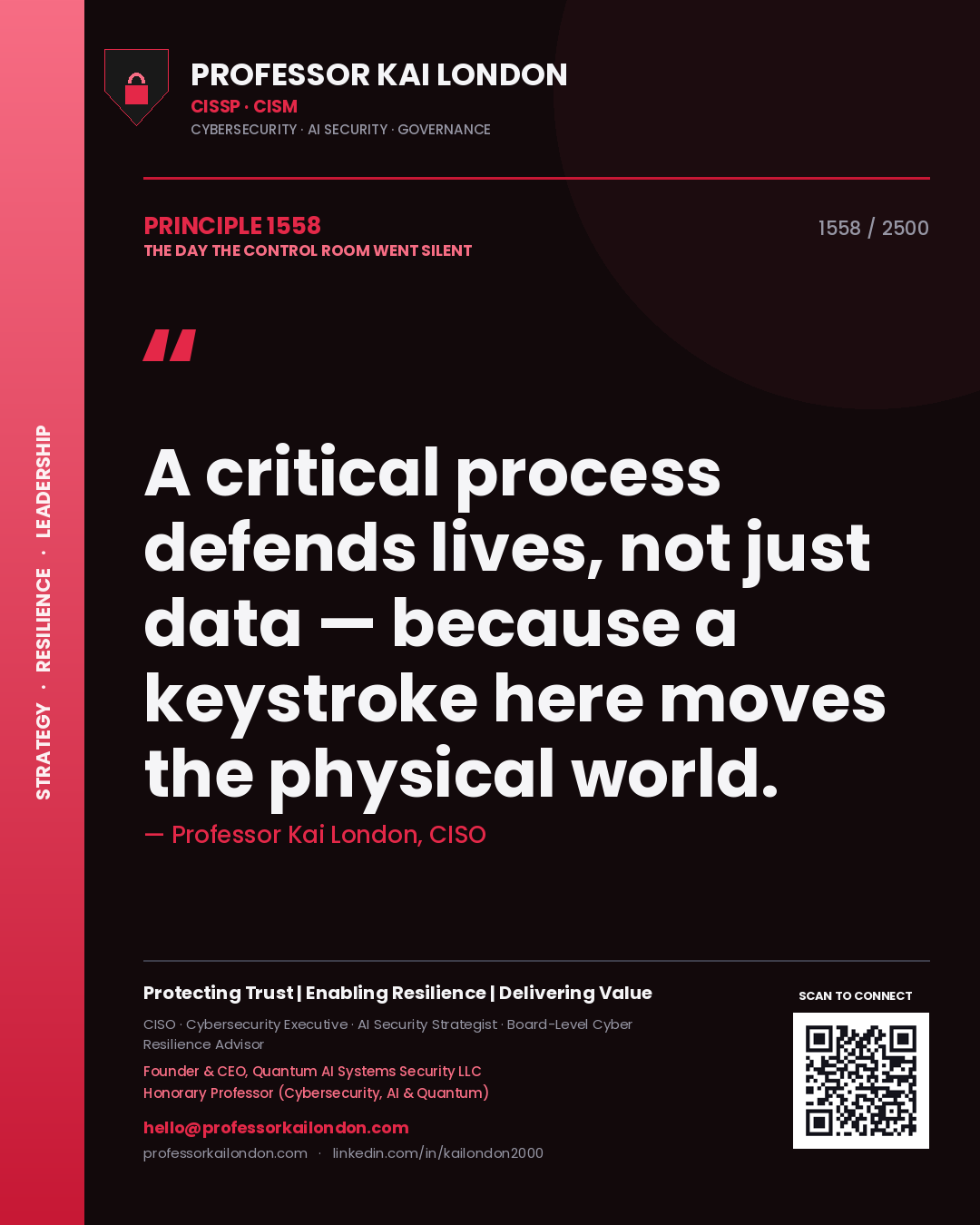
Professor Kai London principle 1558: A critical process defends lives, not just data — because a keystroke here moves the physical world.
Principle 1558
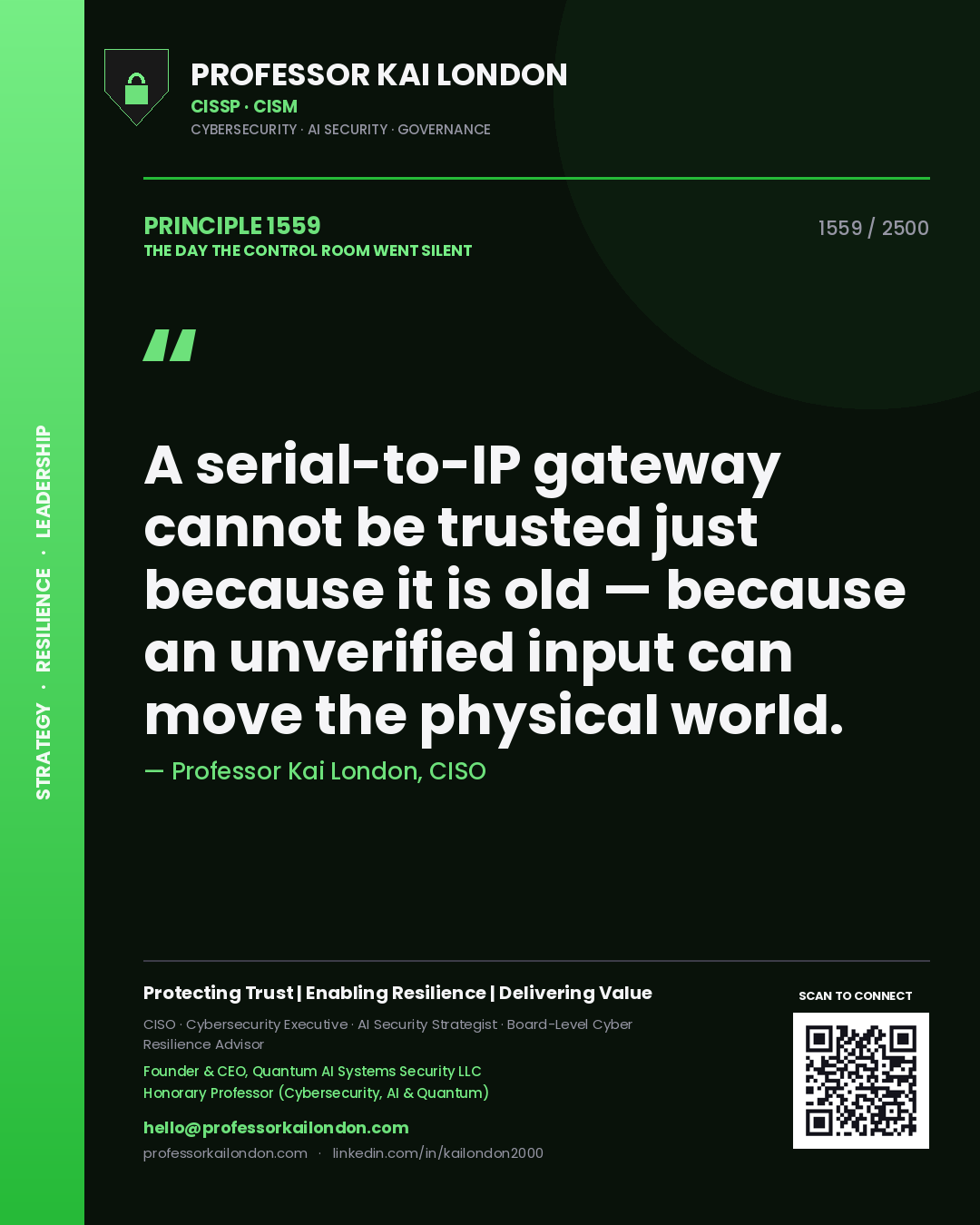
Professor Kai London principle 1559: A serial-to-IP gateway cannot be trusted just because it is old — because an unverified input can move the physical world.
Principle 1559
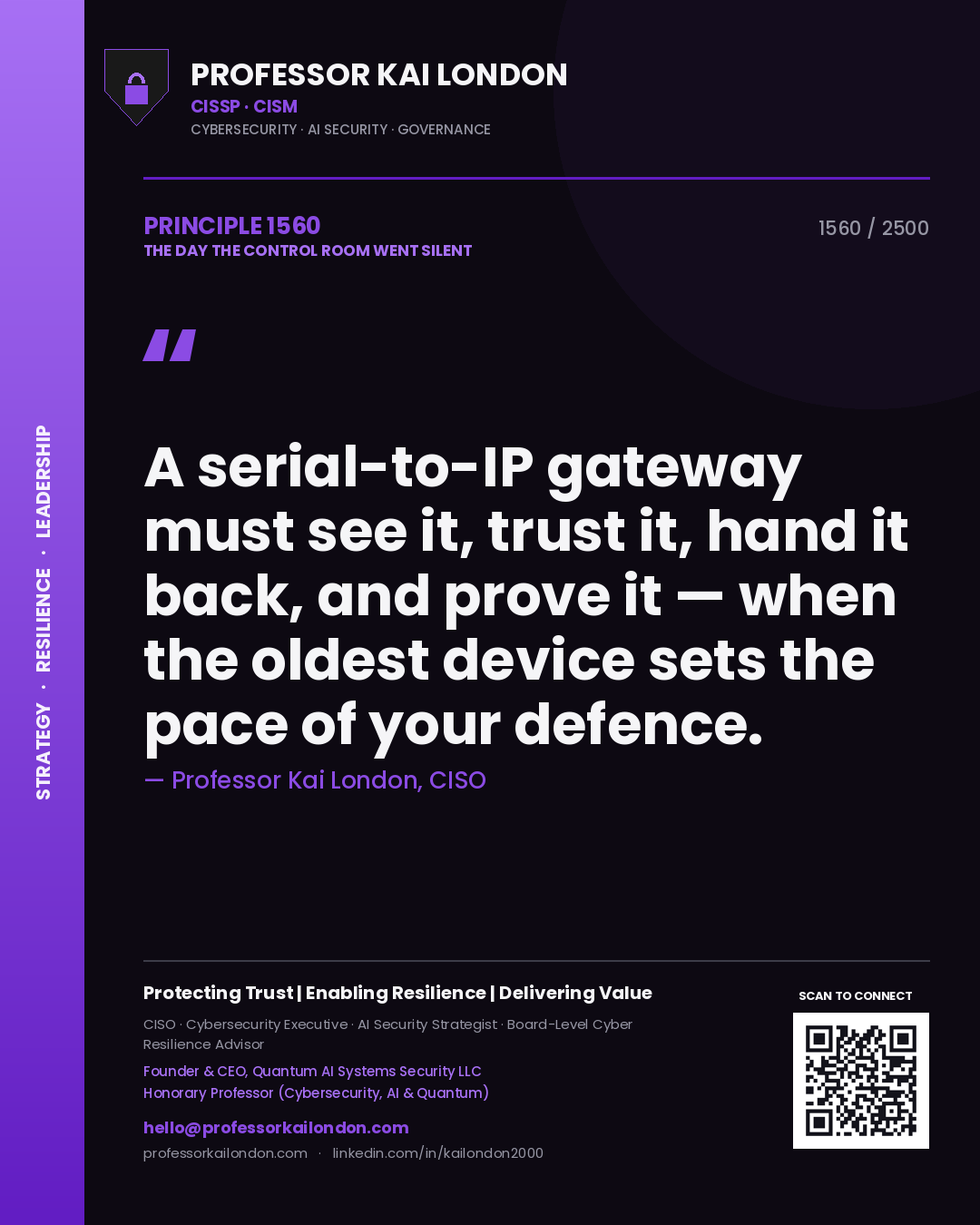
Professor Kai London principle 1560: A serial-to-IP gateway must see it, trust it, hand it back, and prove it — when the oldest device sets the pace of your defence.
Principle 1560
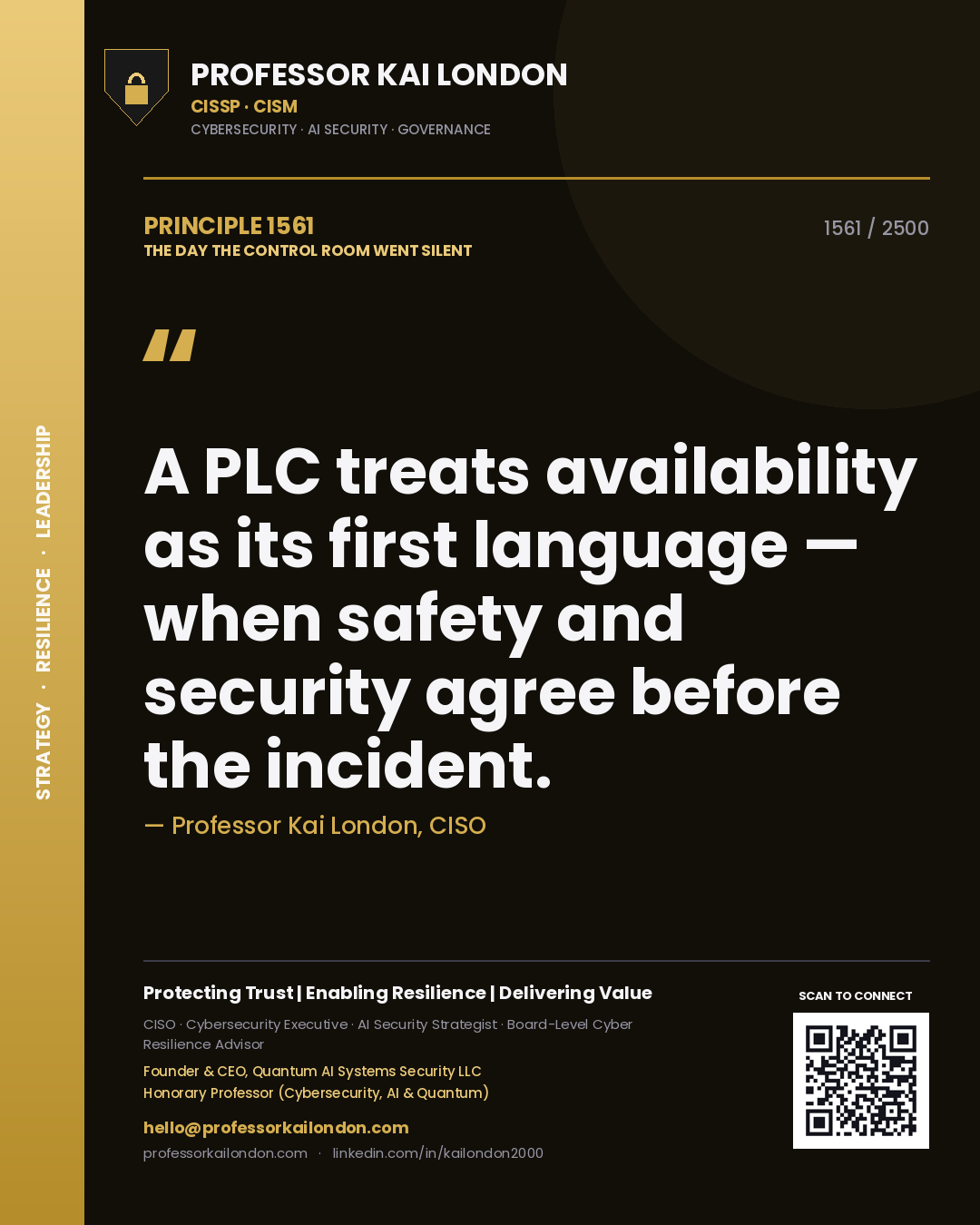
Professor Kai London principle 1561: A PLC treats availability as its first language — when safety and security agree before the incident.
Principle 1561
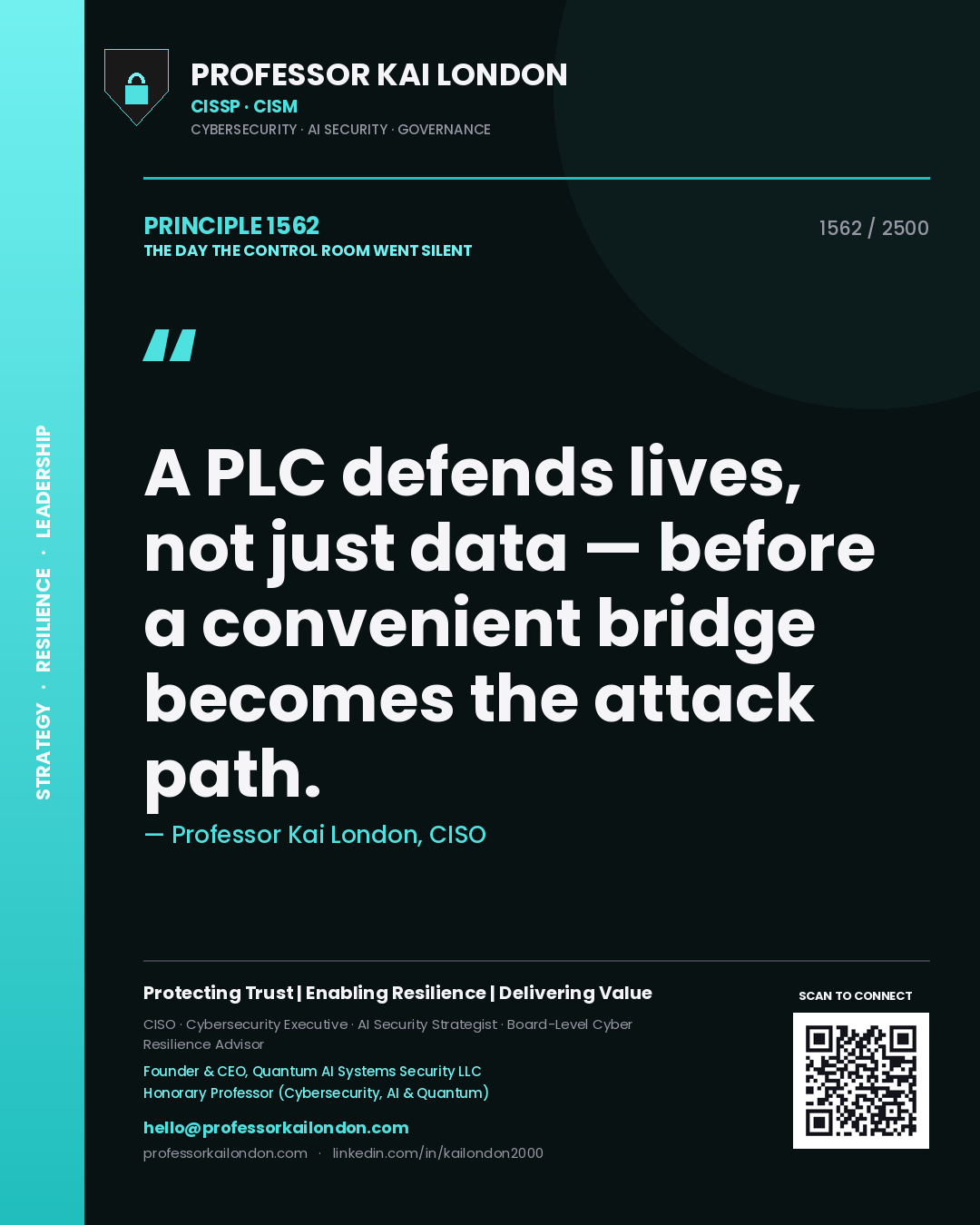
Professor Kai London principle 1562: A PLC defends lives, not just data — before a convenient bridge becomes the attack path.
Principle 1562
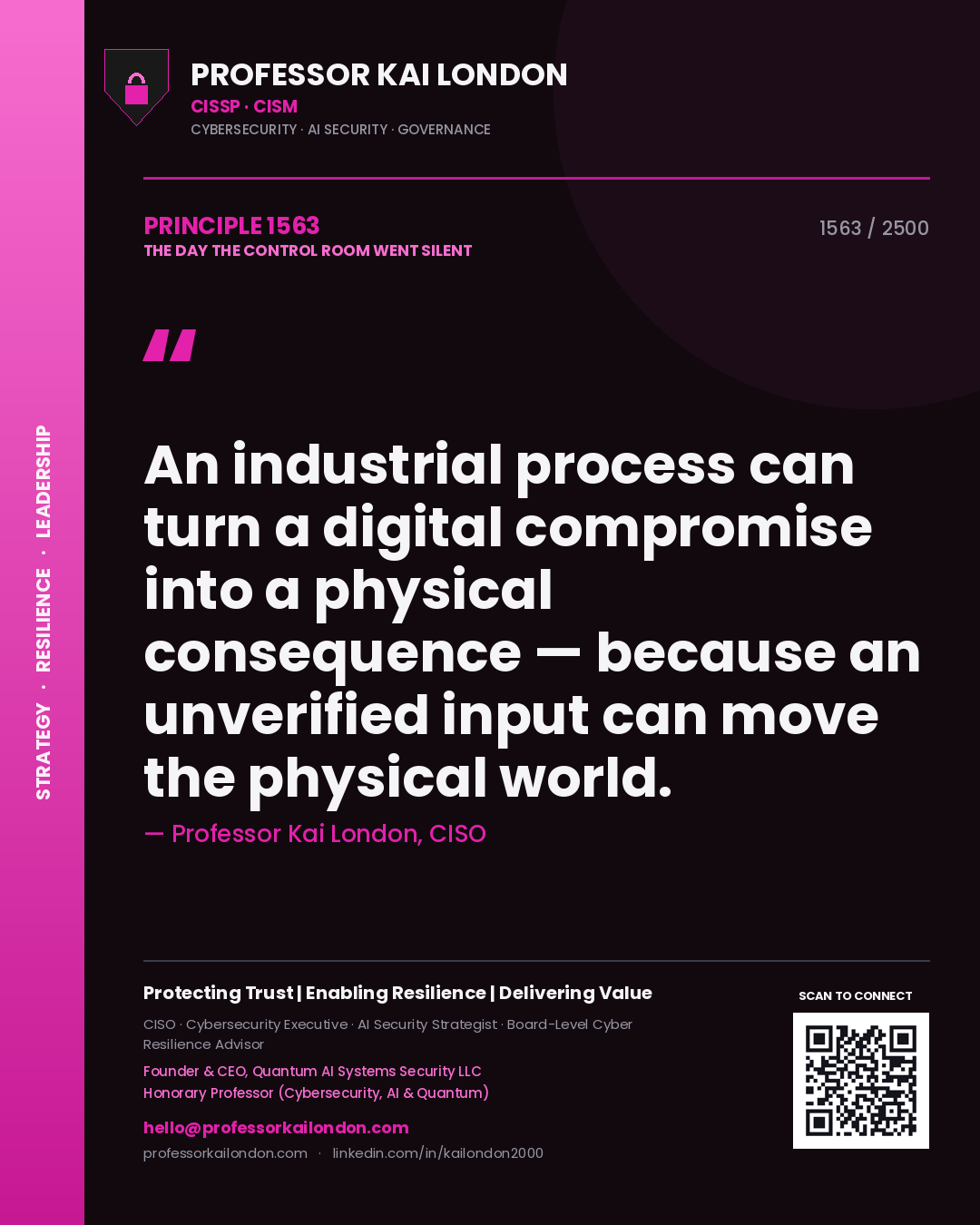
Professor Kai London principle 1563: An industrial process can turn a digital compromise into a physical consequence — because an unverified input can move the physical world.
Principle 1563
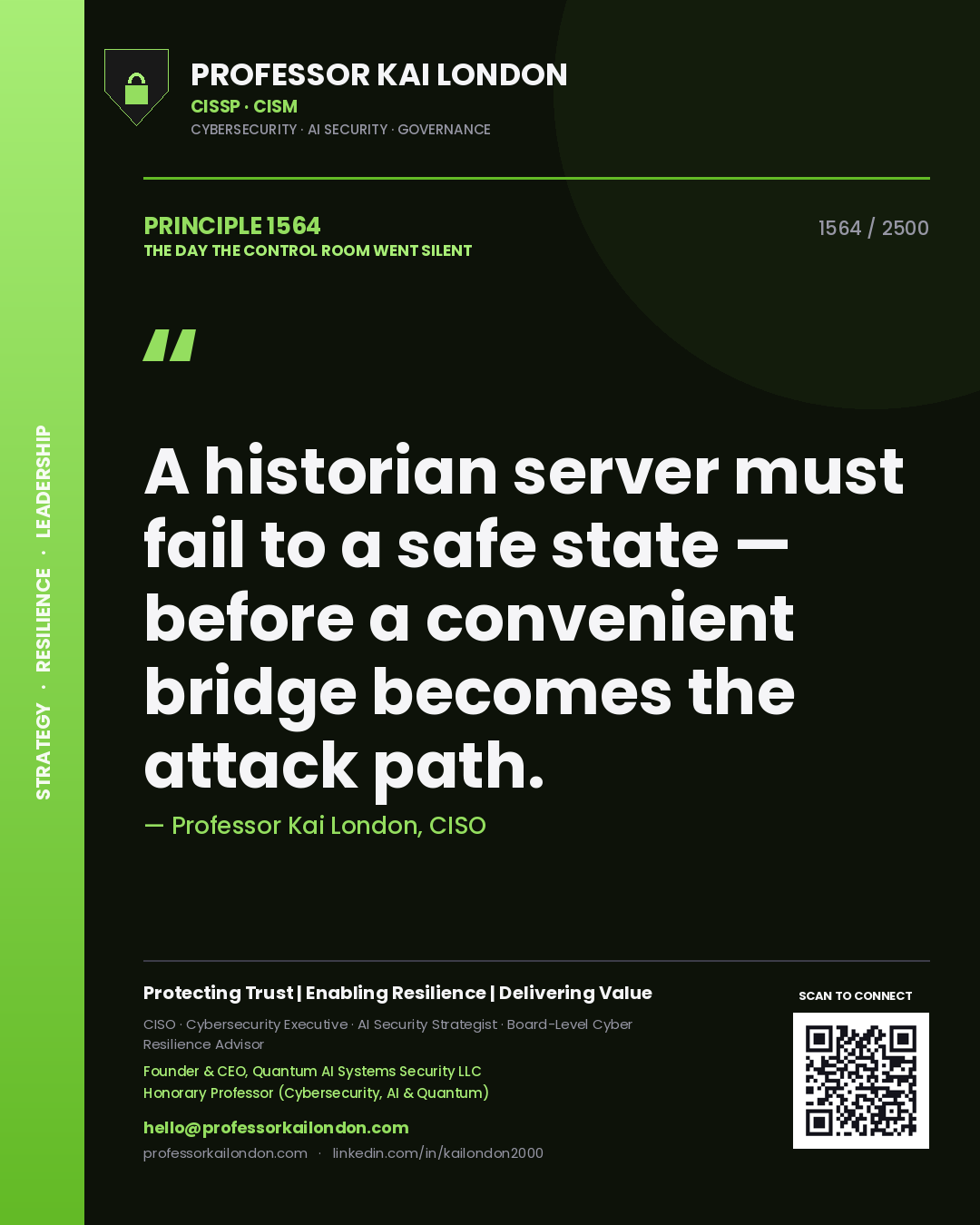
Professor Kai London principle 1564: A historian server must fail to a safe state — before a convenient bridge becomes the attack path.
Principle 1564
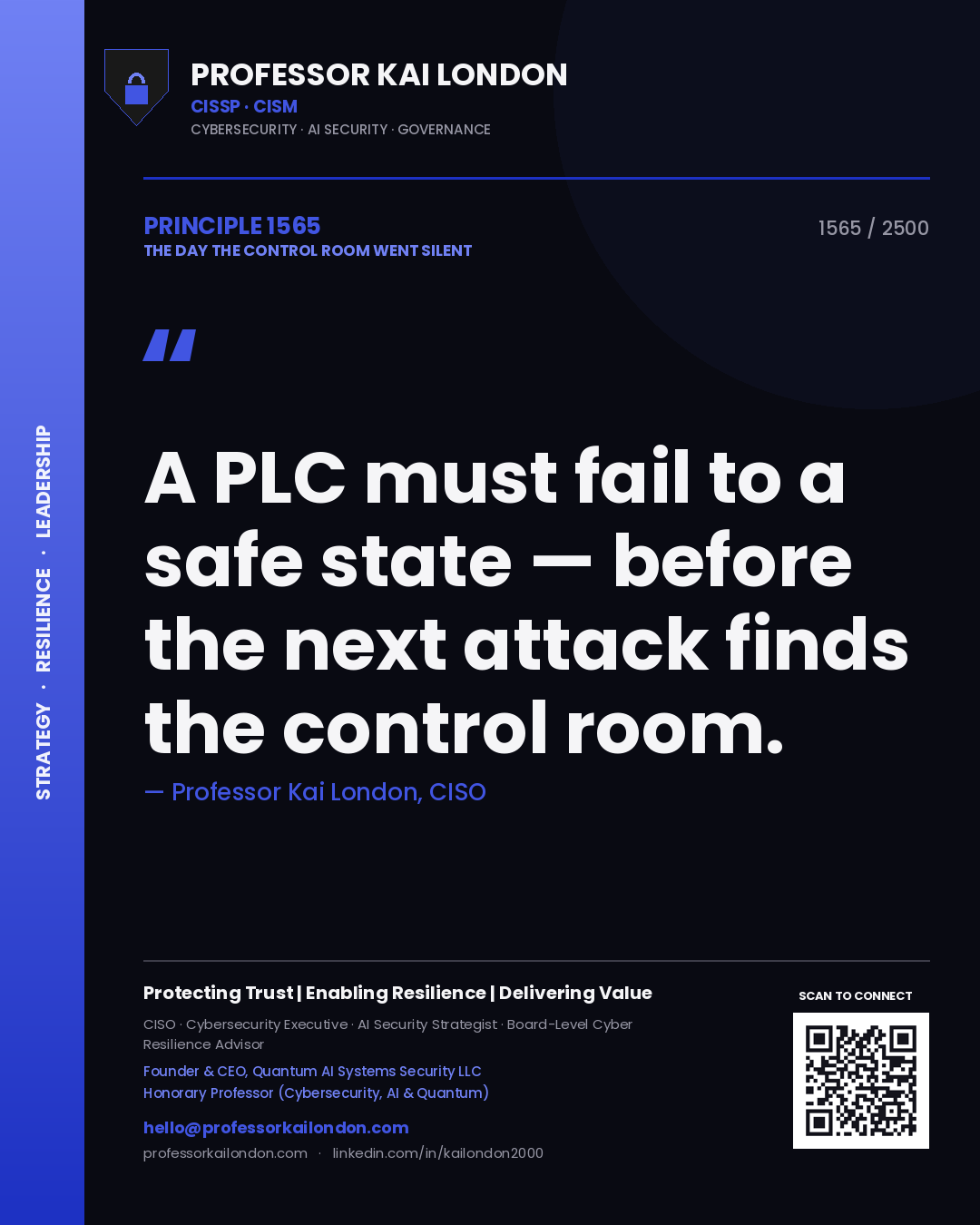
Professor Kai London principle 1565: A PLC must fail to a safe state — before the next attack finds the control room.
Principle 1565
Professor Kai London principle 1566: A safety system must fail to a safe state — because an unverified input can move the physical world.
Principle 1566
Professor Kai London principle 1567: A control room needs monitoring that respects the process — when the plant keeps running because someone proved it could.
Principle 1567
Professor Kai London principle 1568: A critical process treats availability as its first language — because a keystroke here moves the physical world.
Principle 1568
Professor Kai London principle 1569: A SCADA system needs monitoring that respects the process — the moment IT logic meets OT consequence.
Principle 1569
Professor Kai London principle 1570: The plant floor cannot be trusted just because it is old — because a keystroke here moves the physical world.
Principle 1570
Professor Kai London principle 1571: A firmware update protects operations without disrupting them — before the next attack finds the control room.
Principle 1571
Professor Kai London principle 1572: A safety instrumented system must fail to a safe state.
Principle 1572
Professor Kai London principle 1573: A historian server needs monitoring that respects the process — the moment IT logic meets OT consequence.
Principle 1573
Professor Kai London principle 1574: A historian server cannot be patched on a memo's schedule — before the next attack finds the control room.
Principle 1574
Professor Kai London principle 1575: A safety system can turn a digital compromise into a physical consequence — because in OT a failure can cost more than money.
Principle 1575
Professor Kai London principle 1576: An industrial process cannot be trusted just because it is old — when safety and security agree before the incident.
Principle 1576
Professor Kai London principle 1577: A safety instrumented system defends lives, not just data — because critical infrastructure resilience is a public duty.
Principle 1577
Professor Kai London principle 1578: A vendor VPN bridges IT risk into physical consequence — when the control room stays loud enough to be heard.
Principle 1578
Professor Kai London principle 1579: A safety instrumented system governs consequence, not just configuration — the moment IT logic meets OT consequence.
Principle 1579
Professor Kai London principle 1580: A remote engineering laptop must know its safe state before an attacker teaches it — when you see it, trust it, hand it back, and prove it.
Principle 1580
Professor Kai London principle 1581: A firmware update can turn a digital compromise into a physical consequence — when the oldest device sets the pace of your defence.
Principle 1581
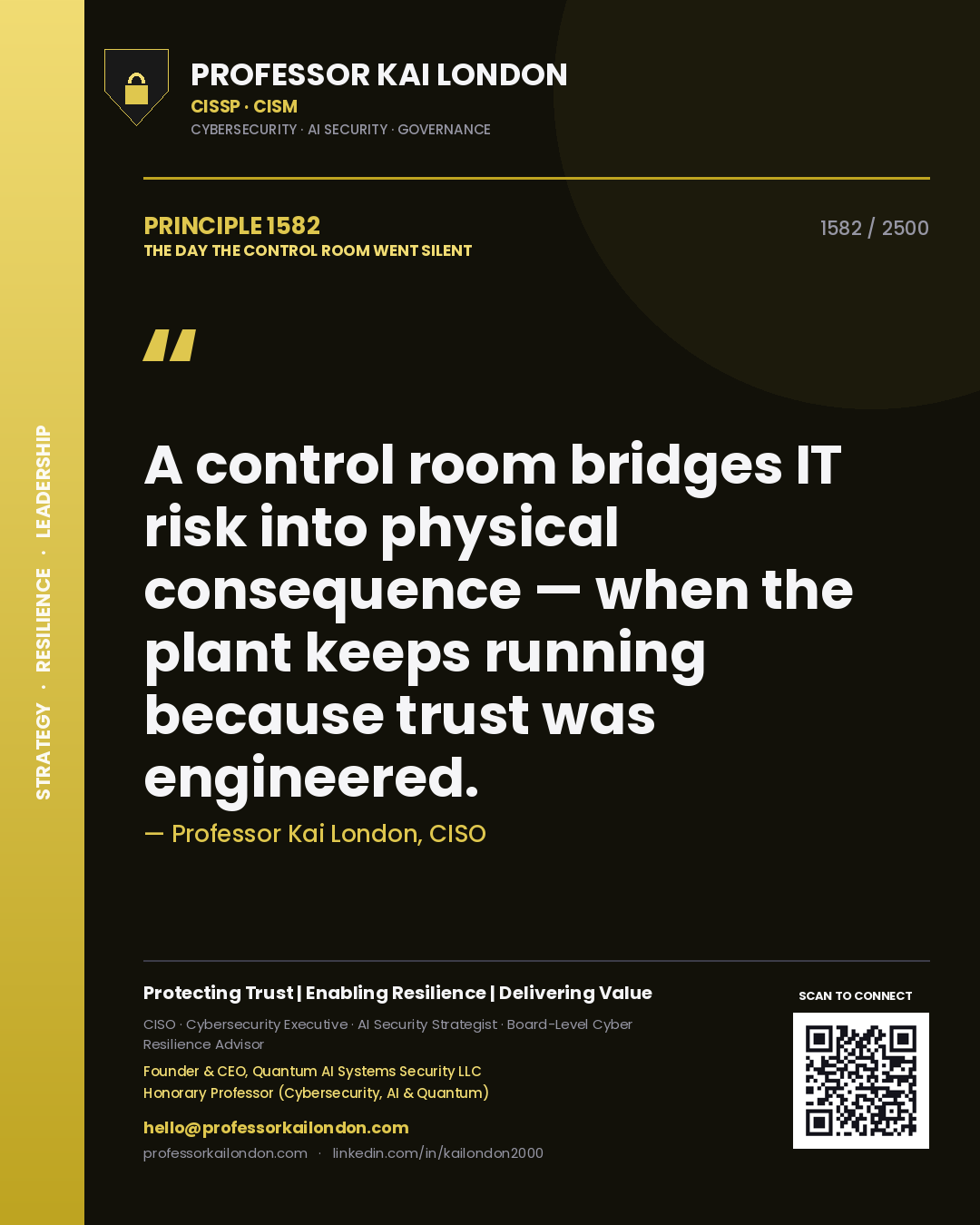
Professor Kai London principle 1582: A control room bridges IT risk into physical consequence — when the plant keeps running because trust was engineered.
Principle 1582
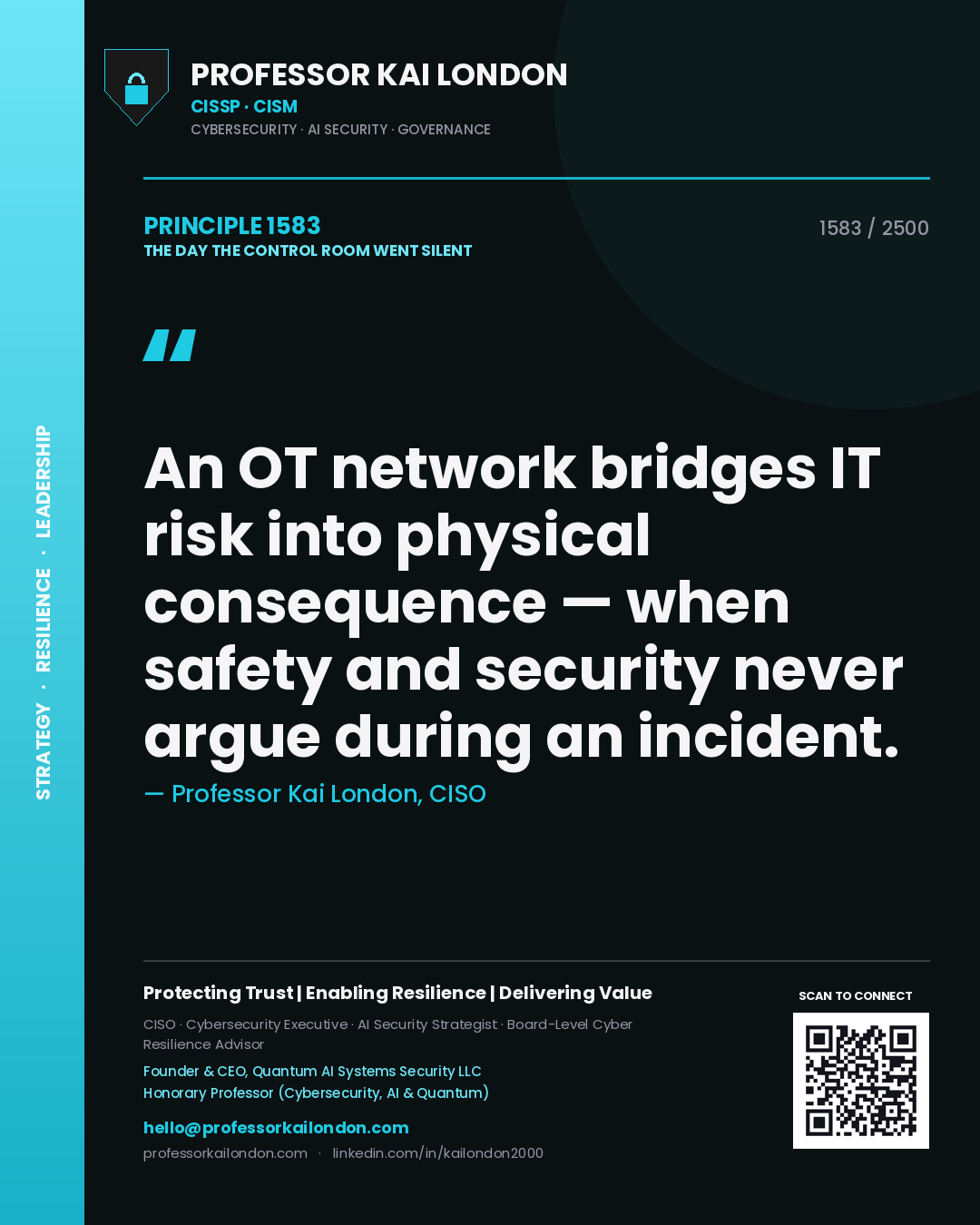
Professor Kai London principle 1583: An OT network bridges IT risk into physical consequence — when safety and security never argue during an incident.
Principle 1583
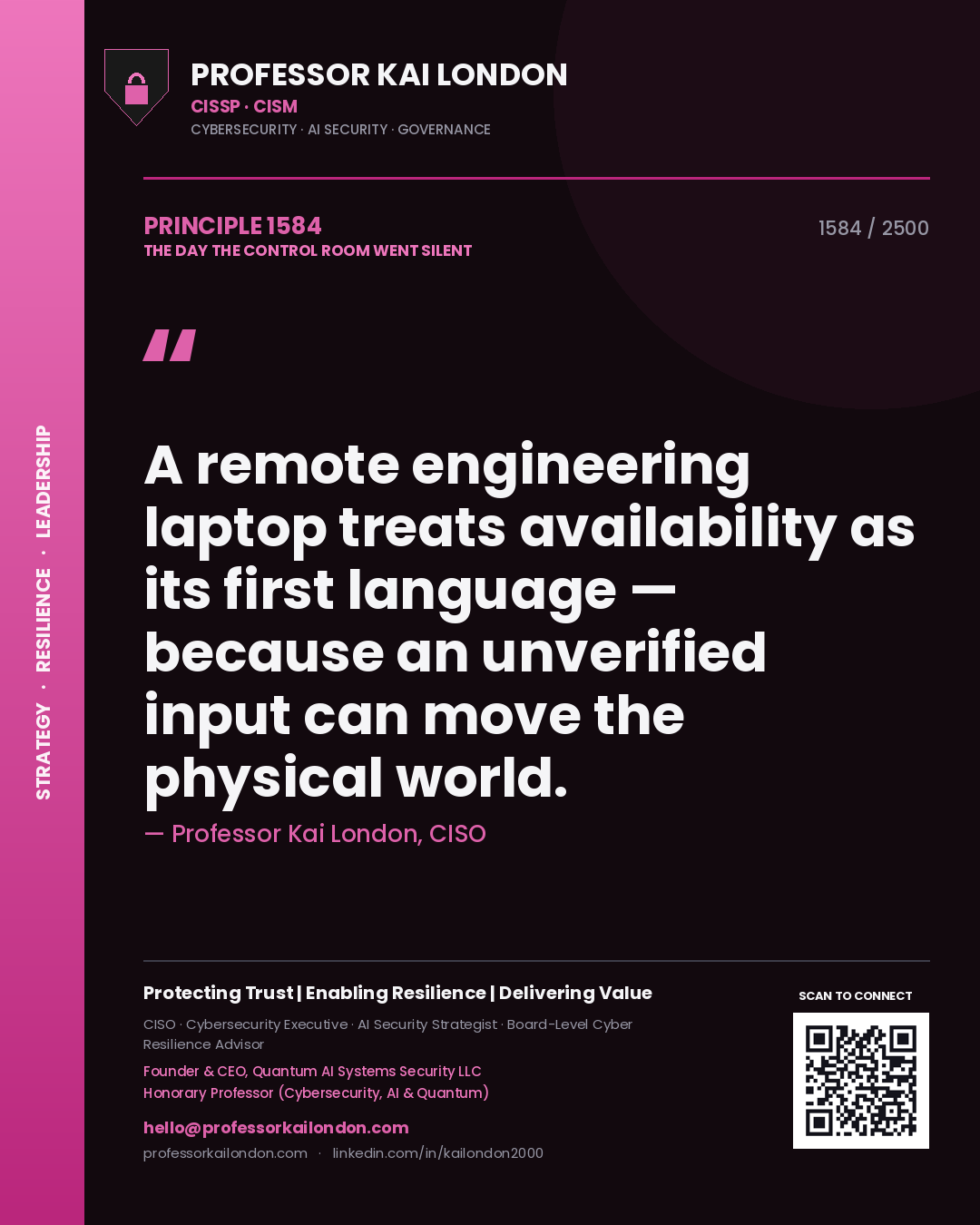
Professor Kai London principle 1584: A remote engineering laptop treats availability as its first language — because an unverified input can move the physical world.
Principle 1584
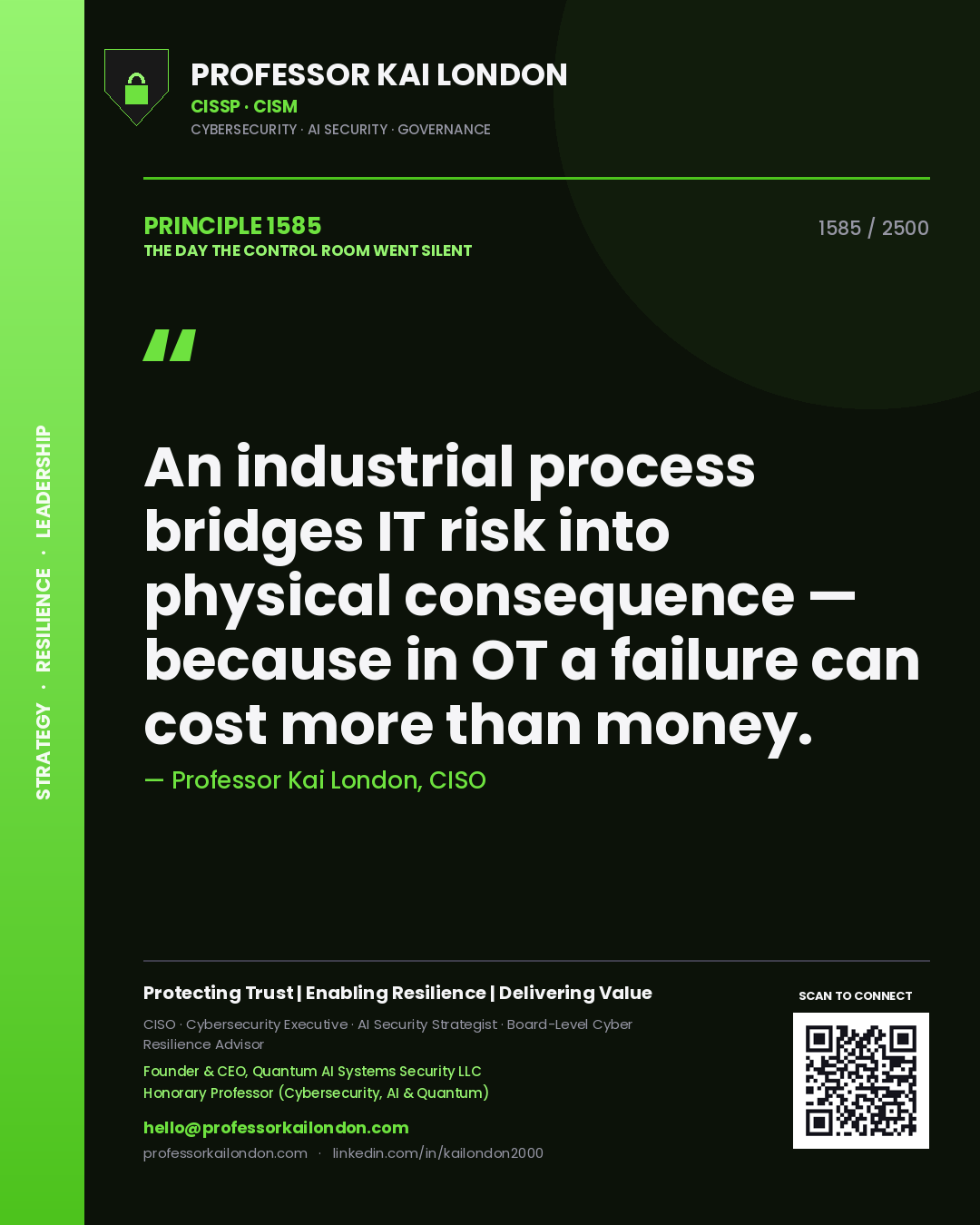
Professor Kai London principle 1585: An industrial process bridges IT risk into physical consequence — because in OT a failure can cost more than money.
Principle 1585
Professor Kai London principle 1586: A safety instrumented system protects operations without disrupting them — when the plant keeps running because trust was engineered.
Principle 1586
Professor Kai London principle 1587: A SCADA system treats availability as its first language — before a convenient bridge becomes the attack path.
Principle 1587
Professor Kai London principle 1588: A historian server must know its safe state before an attacker teaches it.
Principle 1588
Professor Kai London principle 1589: A control room cannot be patched on a memo's schedule — when the plant keeps running because someone proved it could.
Principle 1589
Professor Kai London principle 1590: A historian server needs monitoring that respects the process — before the next attack finds the control room.
Principle 1590
Professor Kai London principle 1591: A SCADA system must fail to a safe state — when safety and security never argue during an incident.
Principle 1591
Professor Kai London principle 1592: A jump host must see it, trust it, hand it back, and prove it — when safety and security agree before the incident.
Principle 1592
Professor Kai London principle 1593: A critical process bridges IT risk into physical consequence — when the control room stays loud enough to be heard.
Principle 1593
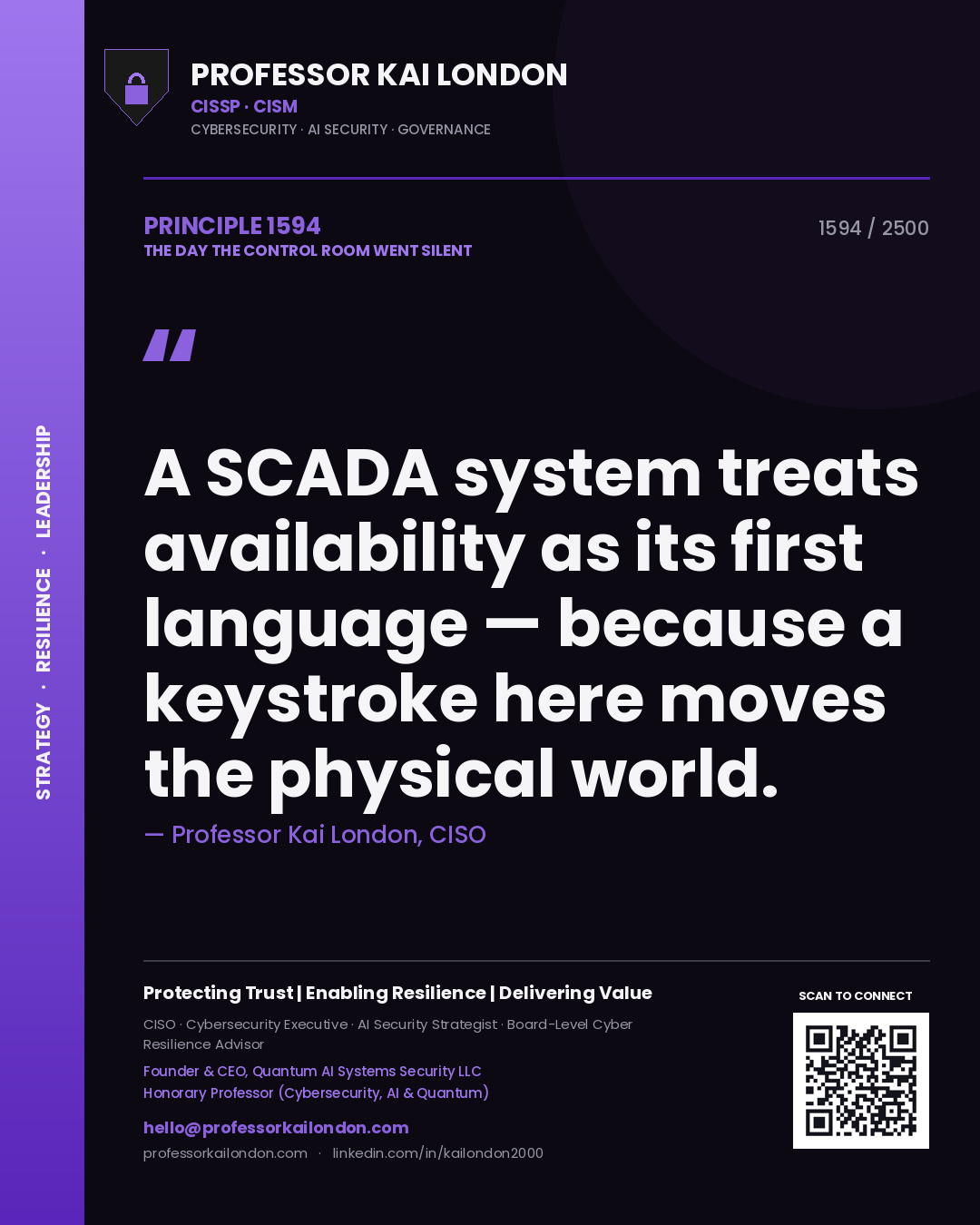
Professor Kai London principle 1594: A SCADA system treats availability as its first language — because a keystroke here moves the physical world.
Principle 1594
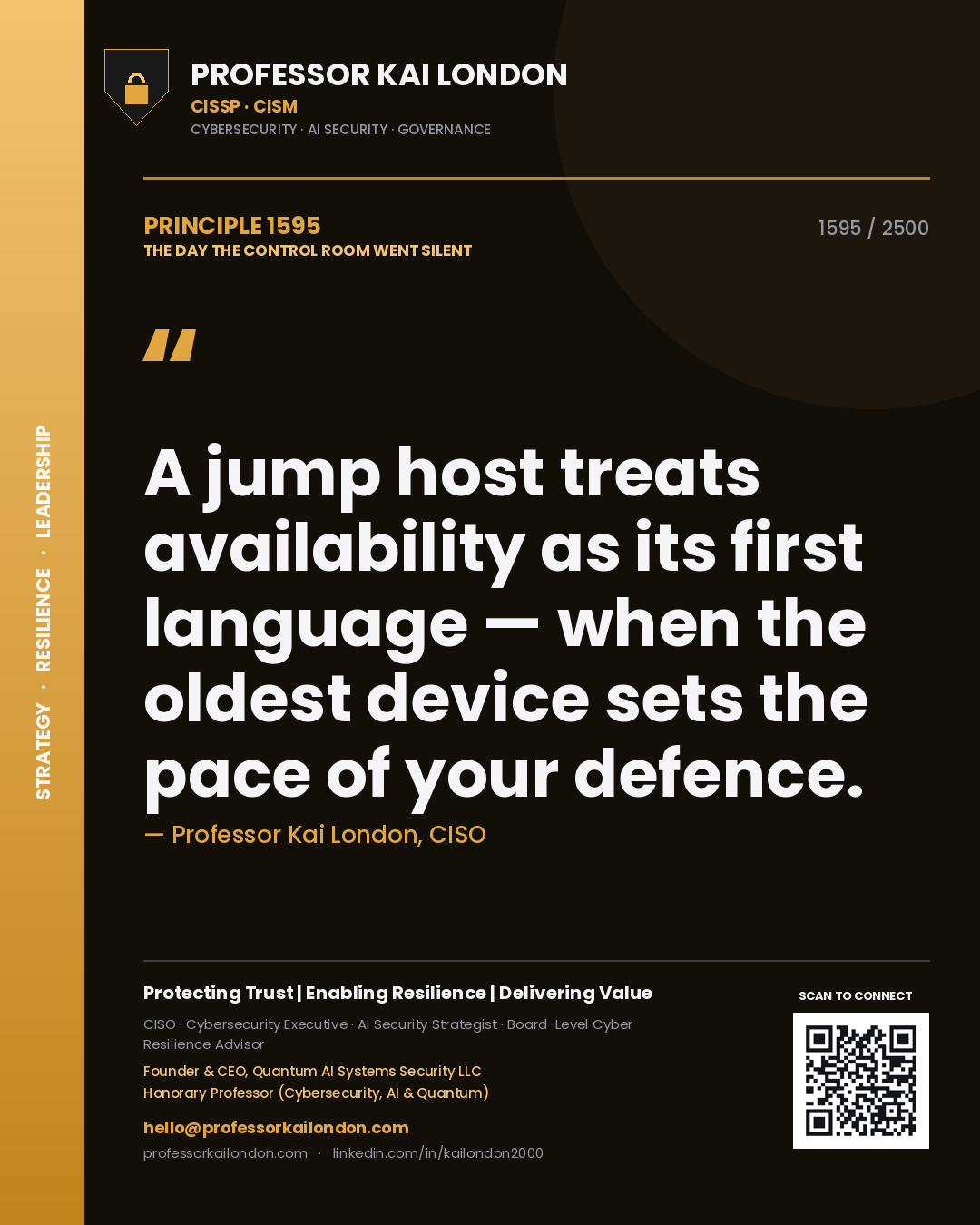
Professor Kai London principle 1595: A jump host treats availability as its first language — when the oldest device sets the pace of your defence.
Principle 1595
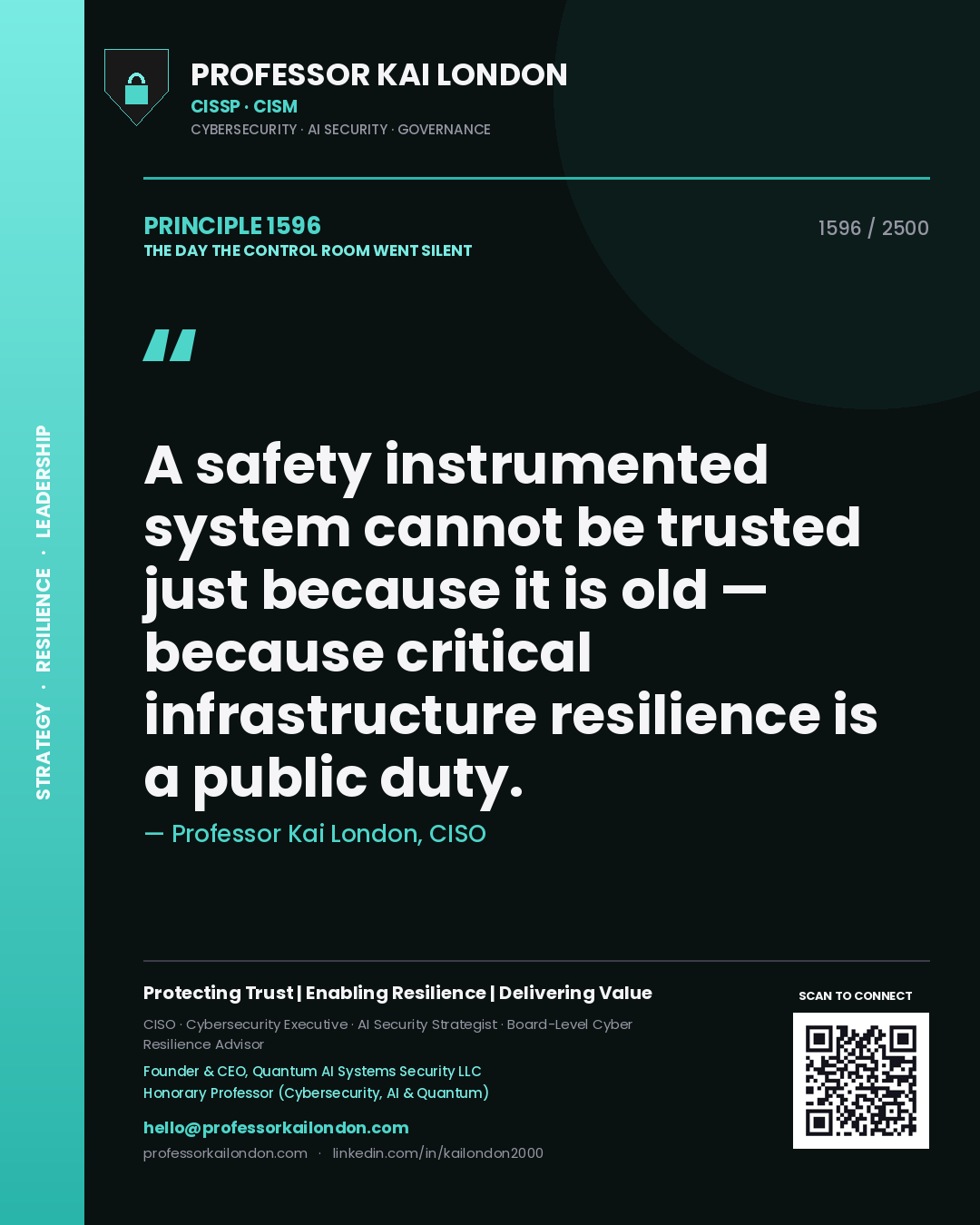
Professor Kai London principle 1596: A safety instrumented system cannot be trusted just because it is old — because critical infrastructure resilience is a public duty.
Principle 1596
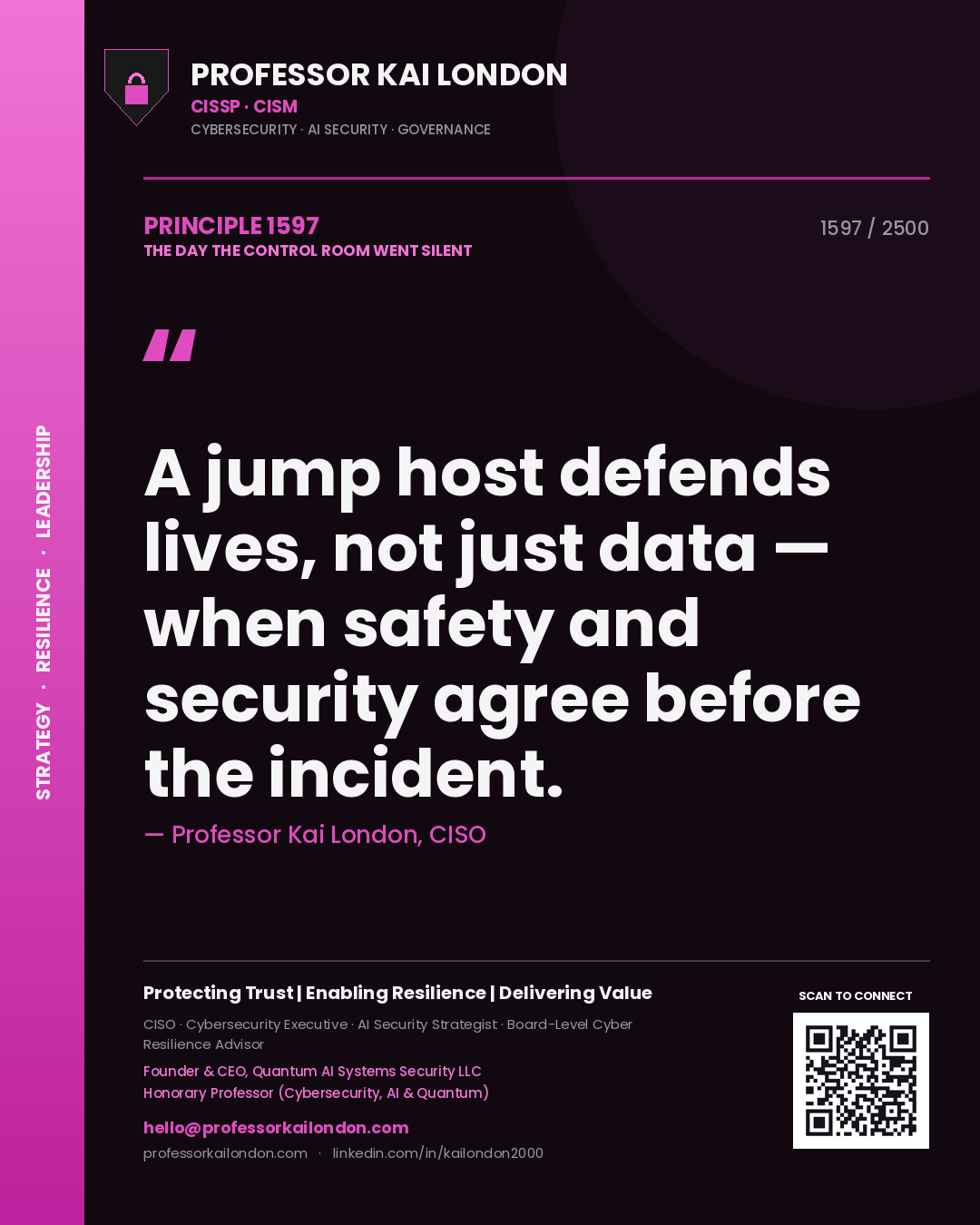
Professor Kai London principle 1597: A jump host defends lives, not just data — when safety and security agree before the incident.
Principle 1597
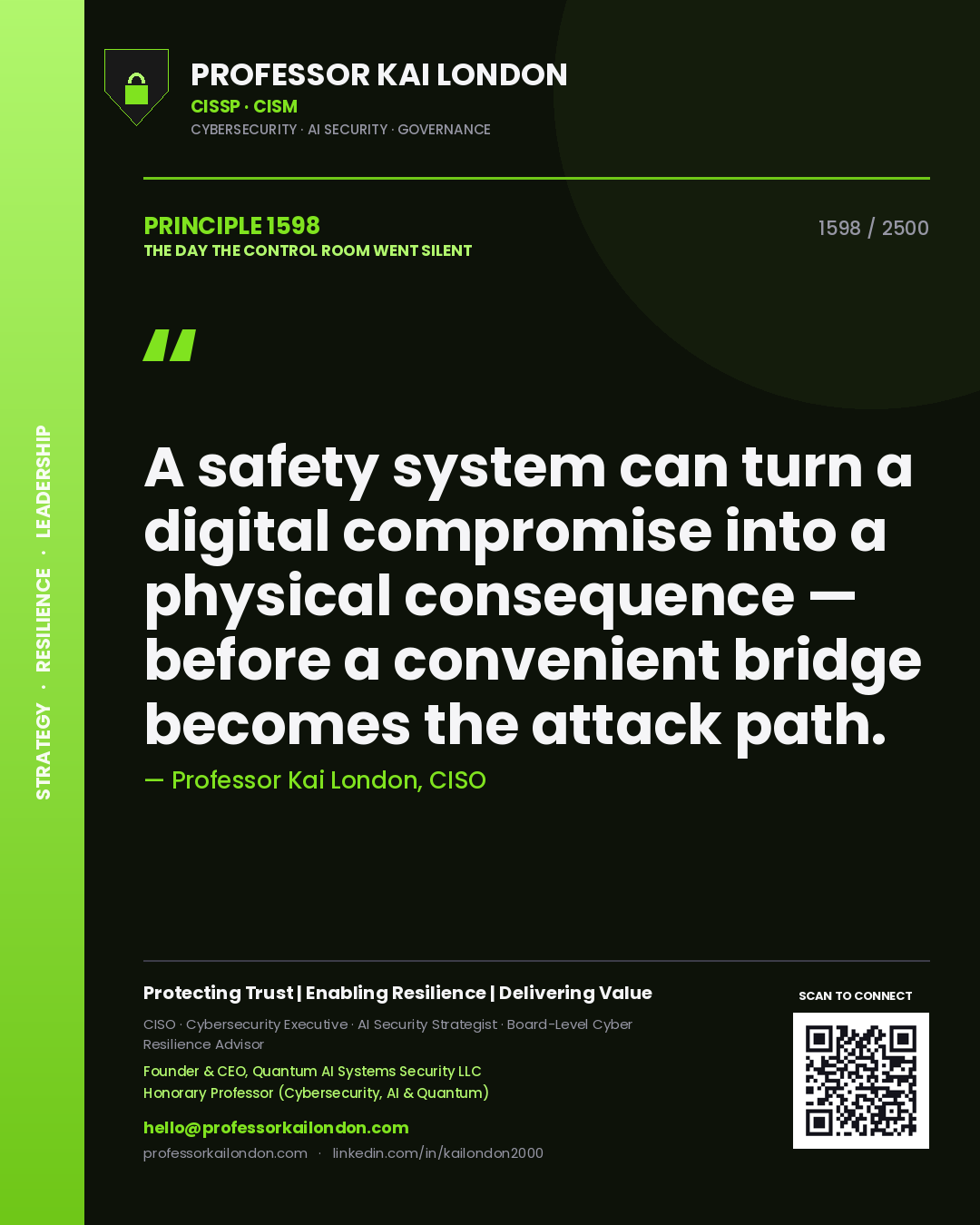
Professor Kai London principle 1598: A safety system can turn a digital compromise into a physical consequence — before a convenient bridge becomes the attack path.
Principle 1598
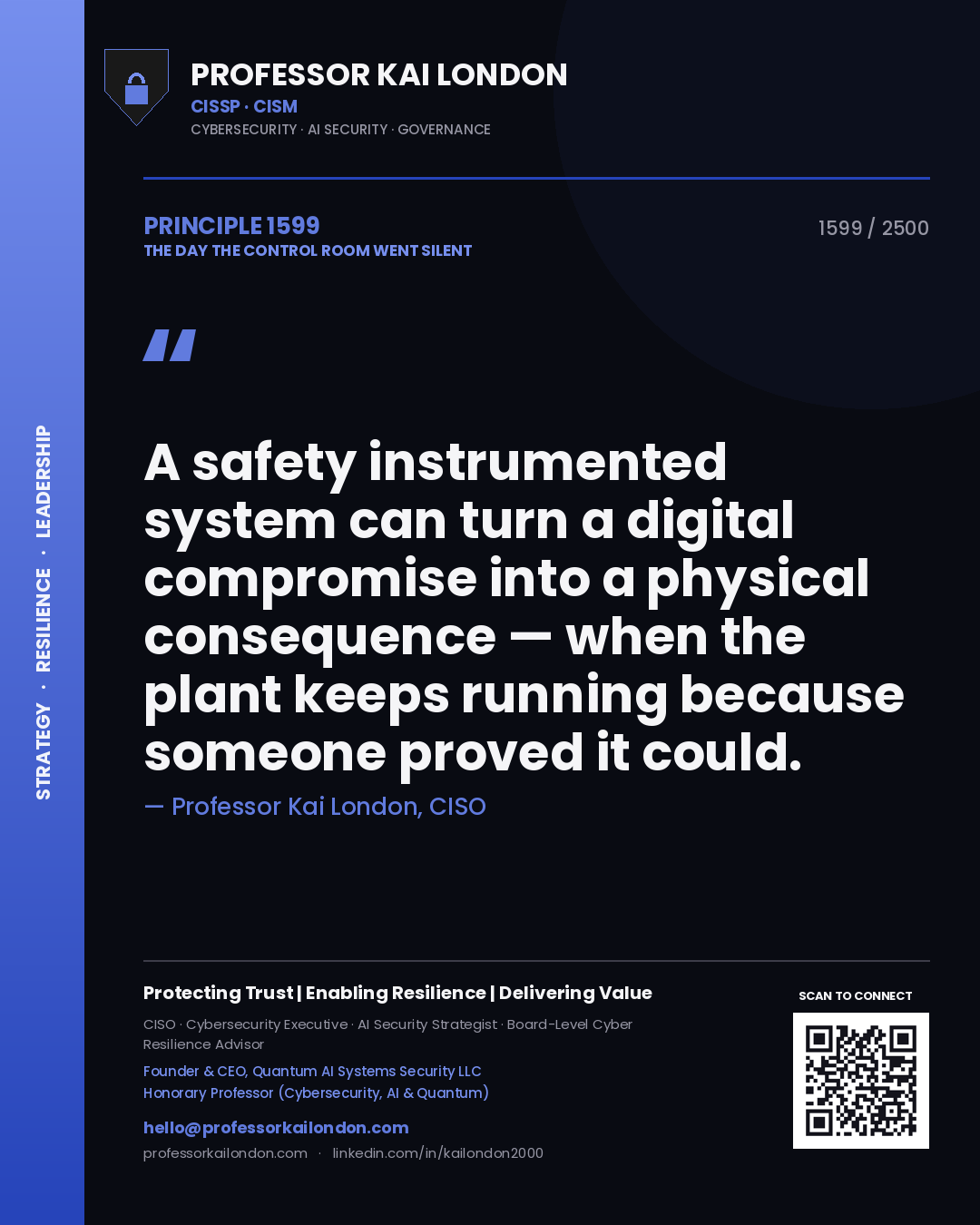
Professor Kai London principle 1599: A safety instrumented system can turn a digital compromise into a physical consequence — when the plant keeps running because someone proved it could.
Principle 1599
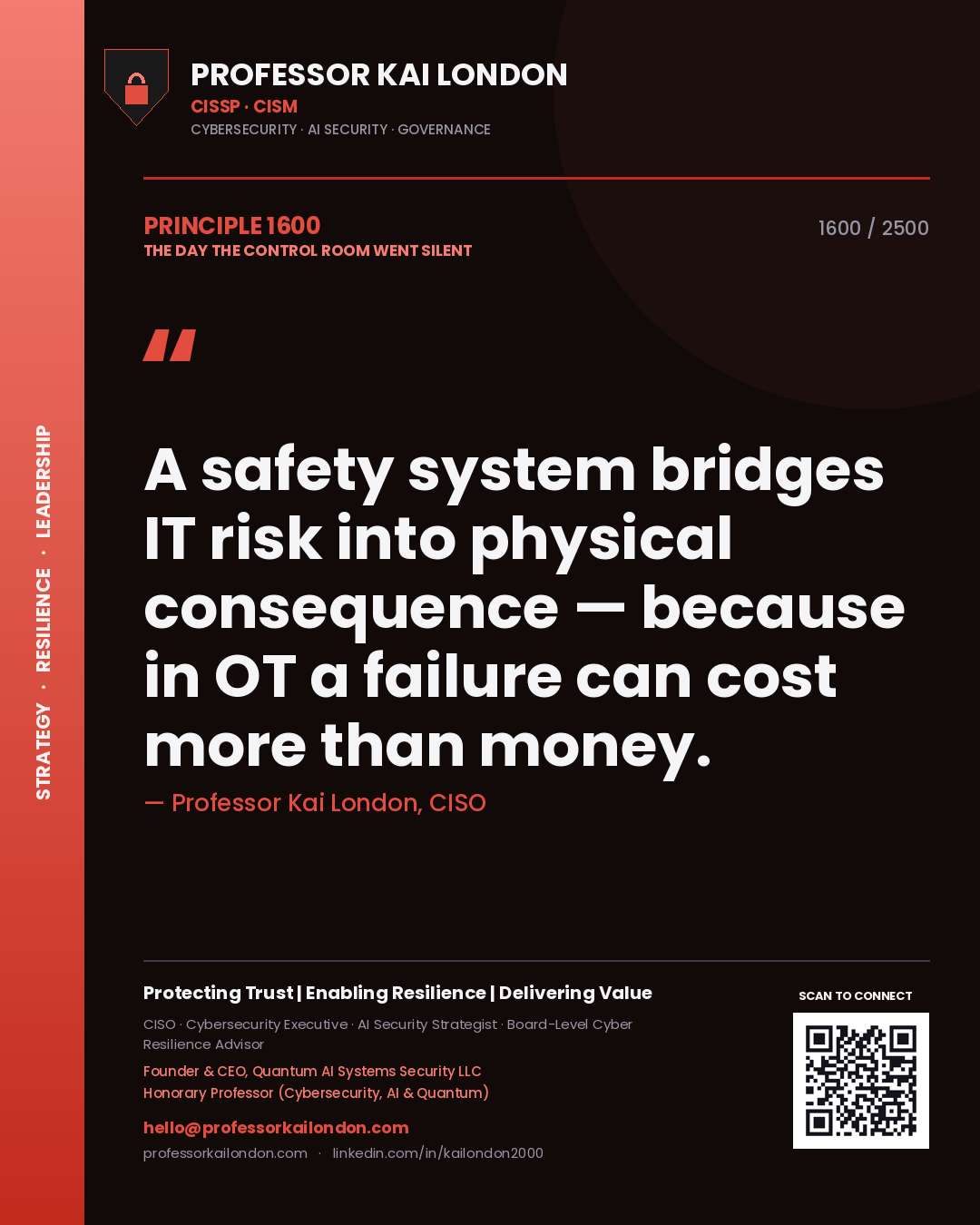
Professor Kai London principle 1600: A safety system bridges IT risk into physical consequence — because in OT a failure can cost more than money.
Principle 1600