Breachproof — Gallery (Page 4 of 100)
Professor Kai London principle 301: A crisis response is a leadership test disguised as a technical one — when the fight is for trust as much as for systems.
Principle 301
Professor Kai London principle 302: AI-driven deception is cheapest when it was practised.
Principle 302
Professor Kai London principle 303: Customer trust under attack is a leadership test disguised as a technical one — the moment the attacker meets a business that refuses to break.
Principle 303
Professor Kai London principle 304: Ransomware resilience is measured in continuity — because the cheapest breach is the one you rehearsed.
Principle 304
Professor Kai London principle 305: A crisis response is cheapest when it was practised — when resilience is the only strategy prevention left behind.
Principle 305
Professor Kai London principle 306: Ransomware resilience turns panic into a checklist — when recovery makes extortion less powerful.
Principle 306
Professor Kai London principle 307: A tabletop that no one enjoyed must survive lost communications — when the plan has been used before the day it is needed.
Principle 307
Professor Kai London principle 308: An extortion demand protects revenue, not just data — when recovery makes extortion less powerful.
Principle 308
Professor Kai London principle 309: AI-driven deception turns panic into a checklist — when recovery makes extortion less powerful.
Principle 309
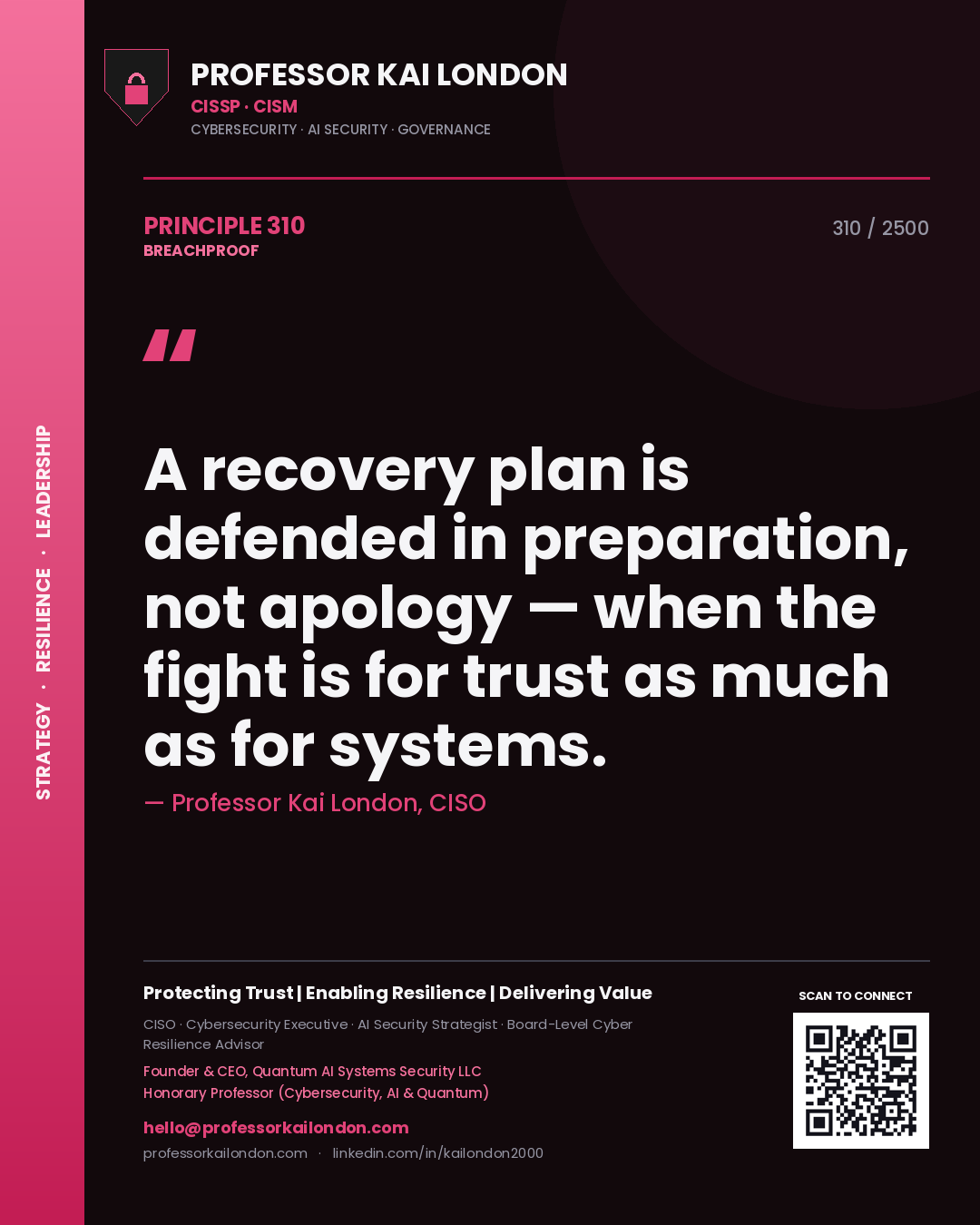
Professor Kai London principle 310: A recovery plan is defended in preparation, not apology — when the fight is for trust as much as for systems.
Principle 310
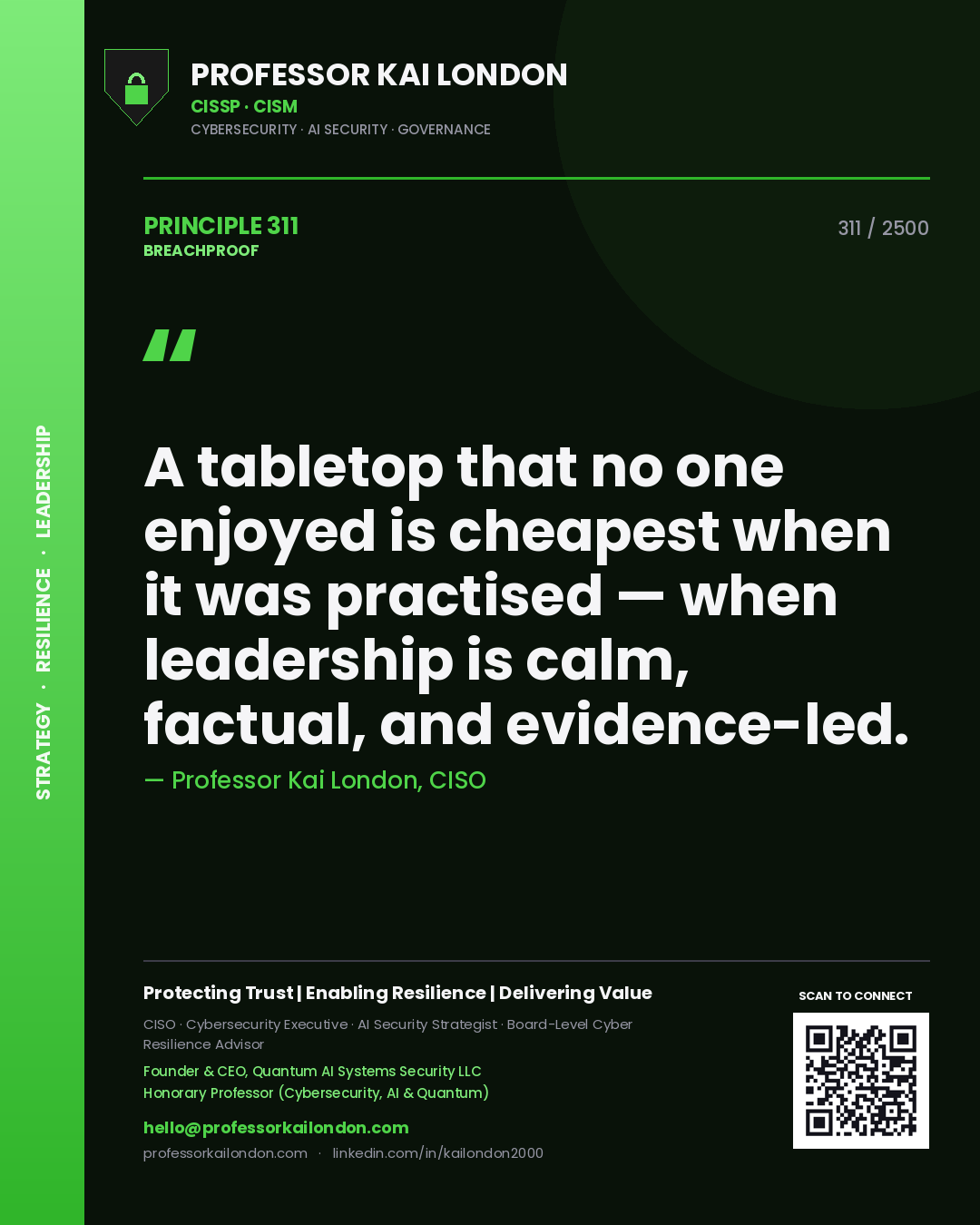
Professor Kai London principle 311: A tabletop that no one enjoyed is cheapest when it was practised — when leadership is calm, factual, and evidence-led.
Principle 311
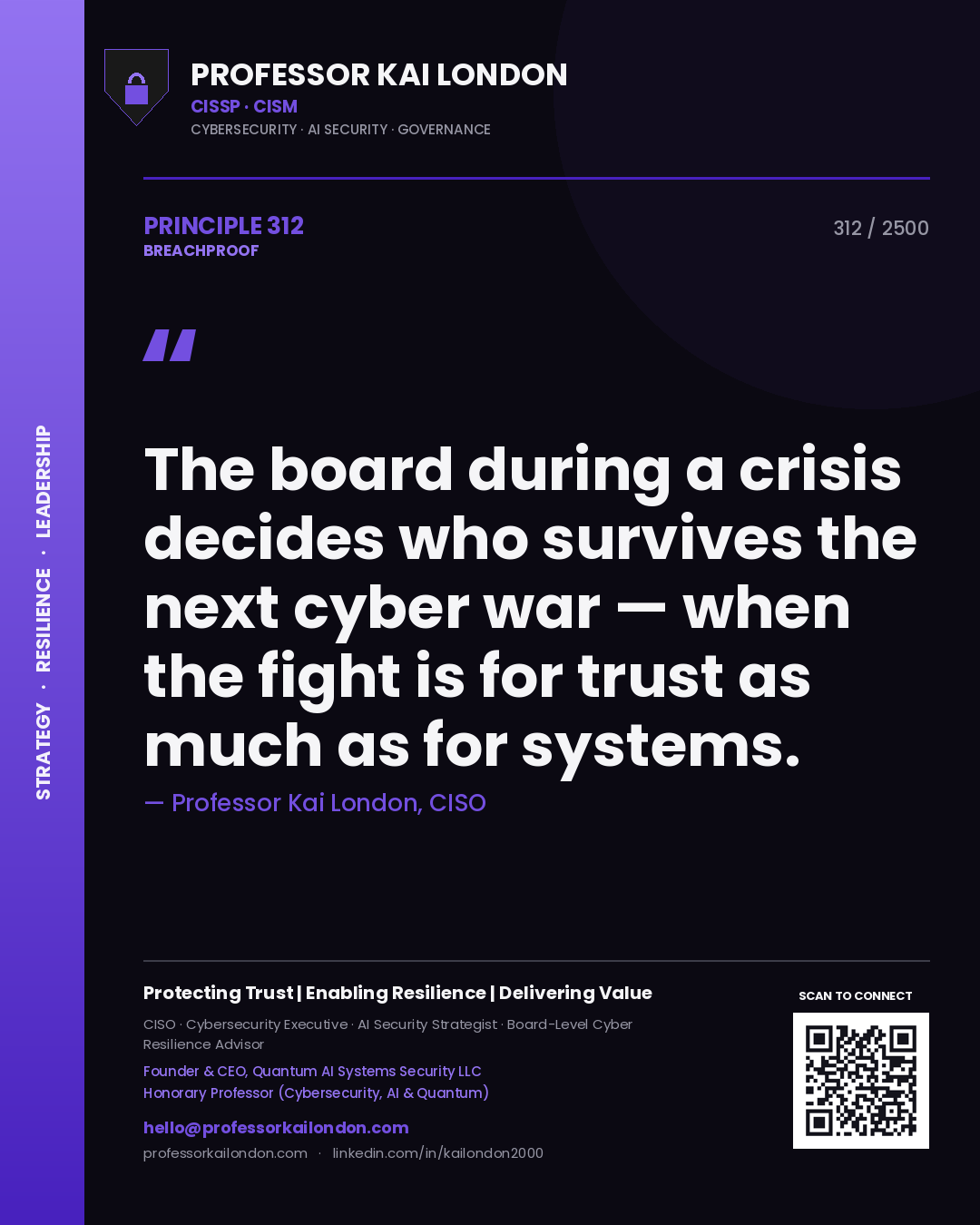
Professor Kai London principle 312: The board during a crisis decides who survives the next cyber war — when the fight is for trust as much as for systems.
Principle 312
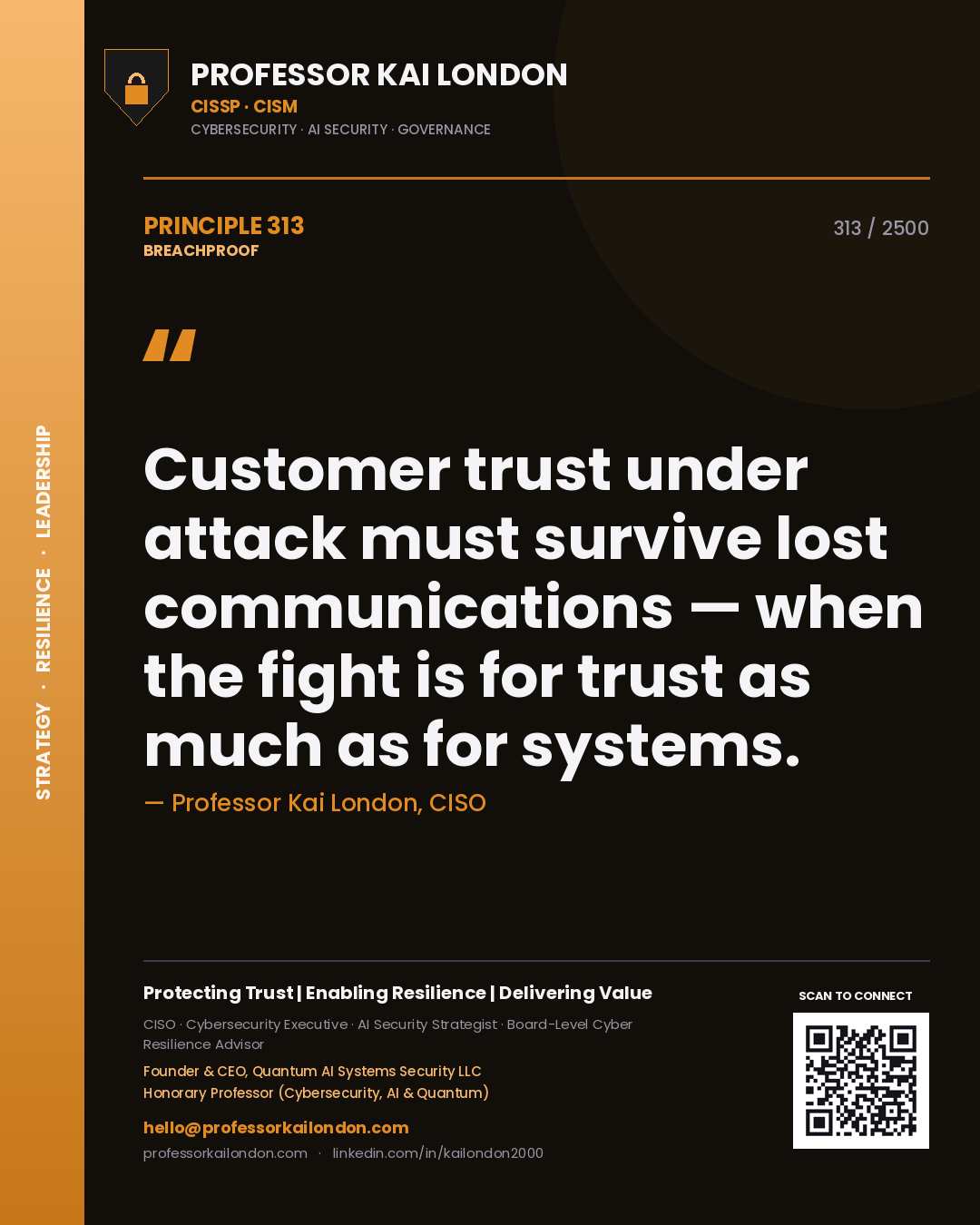
Professor Kai London principle 313: Customer trust under attack must survive lost communications — when the fight is for trust as much as for systems.
Principle 313
Professor Kai London principle 314: The first hour of an incident is a leadership test disguised as a technical one — when leadership is calm, factual, and evidence-led.
Principle 314
Professor Kai London principle 315: The board during a crisis protects revenue, not just data — when leadership is calm, factual, and evidence-led.
Principle 315
Professor Kai London principle 316: A crisis response turns panic into a checklist.
Principle 316
Professor Kai London principle 317: A recovery plan decides who survives the next cyber war — because the market remembers how you led, not just that you were hit.
Principle 317
Professor Kai London principle 318: Ransomware resilience decides who survives the next cyber war — when the fight is for trust as much as for systems.
Principle 318
Professor Kai London principle 319: A tabletop that no one enjoyed is measured in continuity — when the plan has been used before the day it is needed.
Principle 319
Professor Kai London principle 320: A tabletop that no one enjoyed protects revenue, not just data — before the press statement writes itself.
Principle 320
Professor Kai London principle 321: A tabletop that no one enjoyed decides who survives the next cyber war — when recovery makes extortion less powerful.
Principle 321
Professor Kai London principle 322: AI-driven deception protects revenue, not just data — because the cheapest breach is the one you rehearsed.
Principle 322
Professor Kai London principle 323: AI-driven deception must survive lost communications — when recovery makes extortion less powerful.
Principle 323
Professor Kai London principle 324: A tabletop that no one enjoyed is rehearsed, not improvised.
Principle 324
Professor Kai London principle 325: An extortion demand is defended in preparation, not apology — before the press statement writes itself.
Principle 325
Professor Kai London principle 326: An extortion demand protects revenue, not just data — because trust is defended in the preparation, not the apology.
Principle 326
Professor Kai London principle 327: The first hour of an incident is won before the attack lands.
Principle 327
Professor Kai London principle 328: A crisis response is rehearsed, not improvised — because trust is defended in the preparation, not the apology.
Principle 328
Professor Kai London principle 329: A recovery plan protects revenue, not just data — when leadership is calm, factual, and evidence-led.
Principle 329
Professor Kai London principle 330: The board during a crisis turns panic into a checklist — when the fight is for trust as much as for systems.
Principle 330
Professor Kai London principle 331: AI-driven deception turns panic into a checklist — the moment the attacker meets a business that refuses to break.
Principle 331
Professor Kai London principle 332: AI-driven deception is cheapest when it was practised — when resilience is the only strategy prevention left behind.
Principle 332
Professor Kai London principle 333: An extortion demand protects revenue, not just data — when the plan has been used before the day it is needed.
Principle 333
Professor Kai London principle 334: A breach decides who survives the next cyber war — because the market remembers how you led, not just that you were hit.
Principle 334
Professor Kai London principle 335: A crisis response must survive lost communications — because the market remembers how you led, not just that you were hit.
Principle 335
Professor Kai London principle 336: Ransomware resilience is won before the attack lands.
Principle 336
Professor Kai London principle 337: An extortion demand protects revenue, not just data — because the market remembers how you led, not just that you were hit.
Principle 337
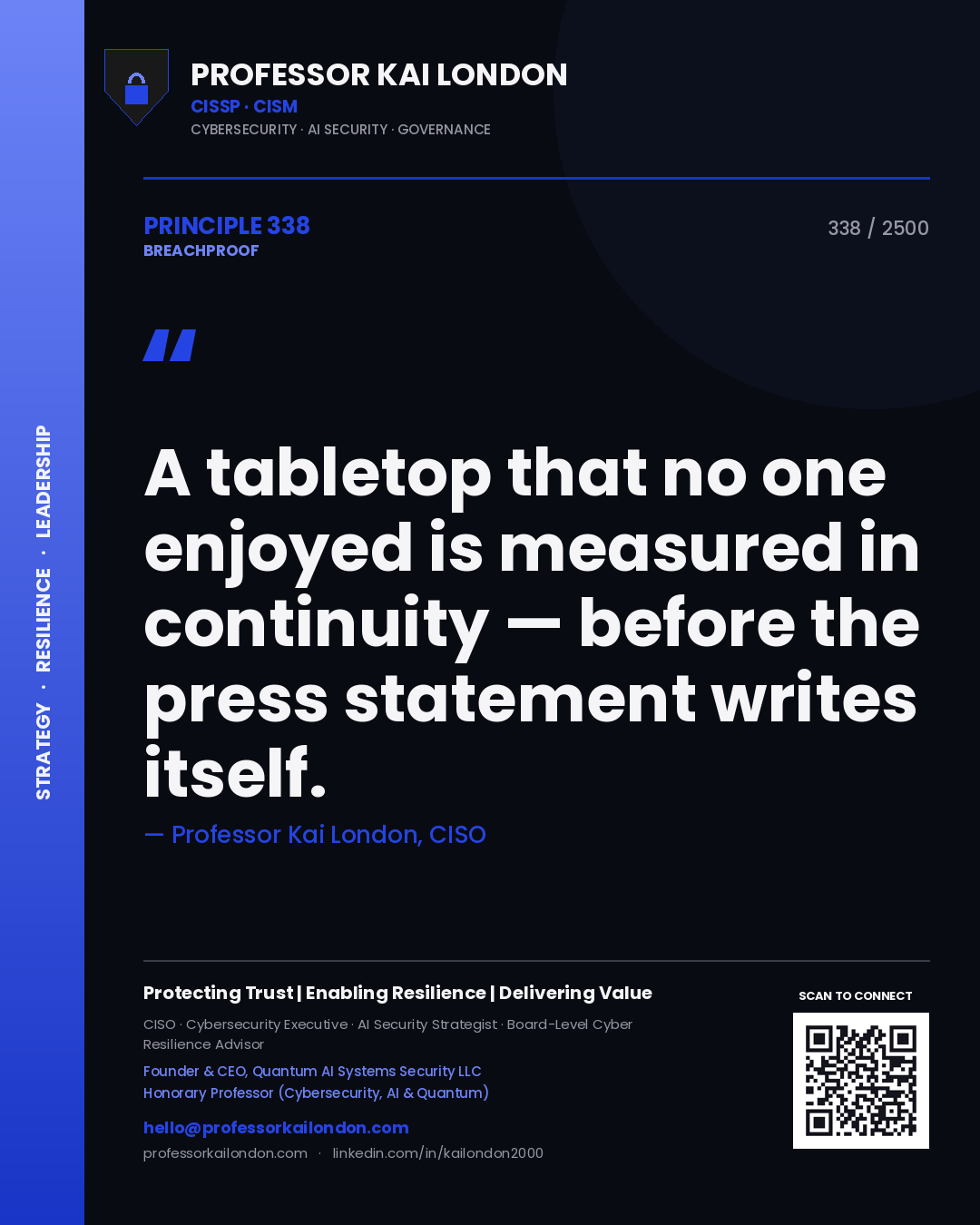
Professor Kai London principle 338: A tabletop that no one enjoyed is measured in continuity — before the press statement writes itself.
Principle 338
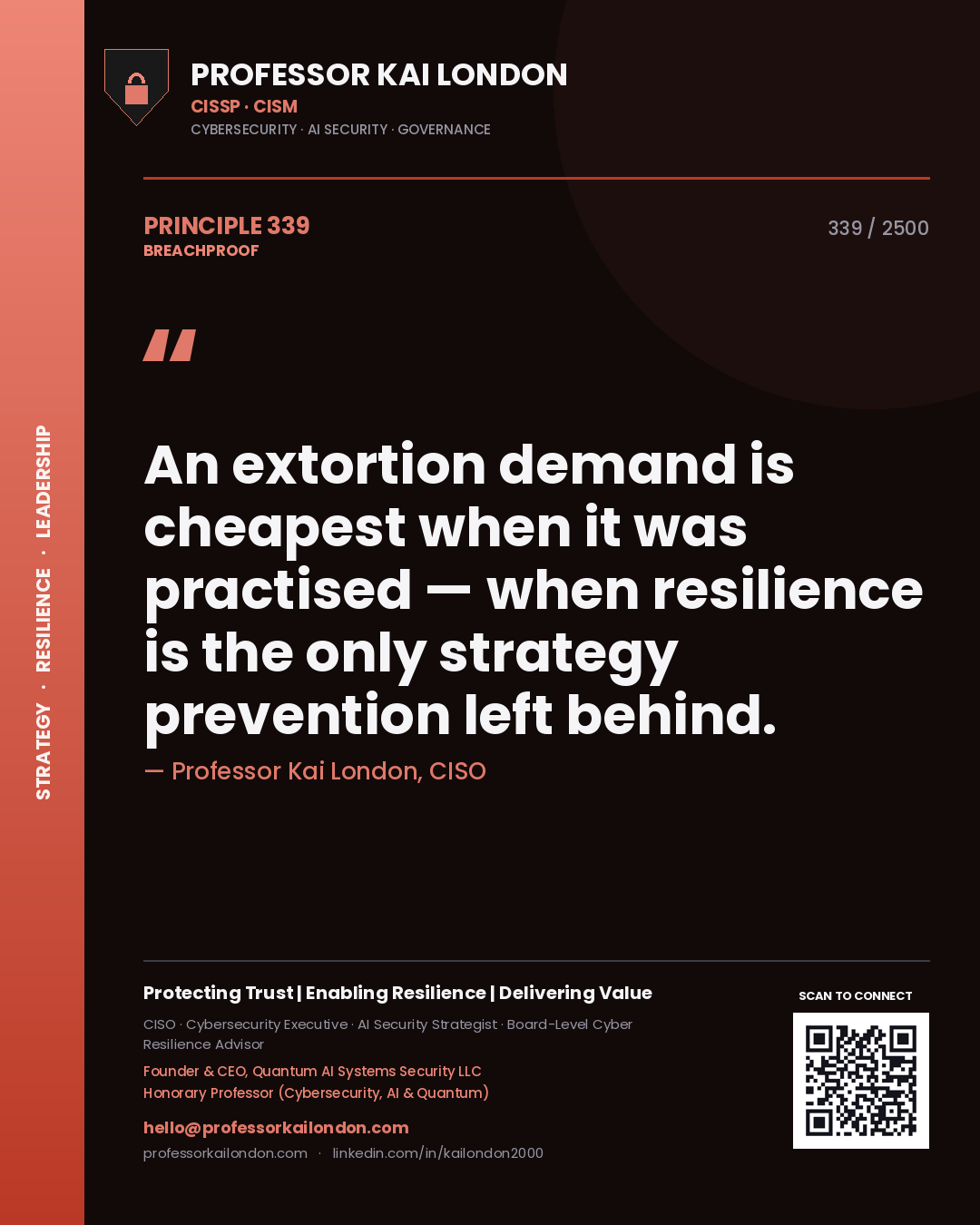
Professor Kai London principle 339: An extortion demand is cheapest when it was practised — when resilience is the only strategy prevention left behind.
Principle 339
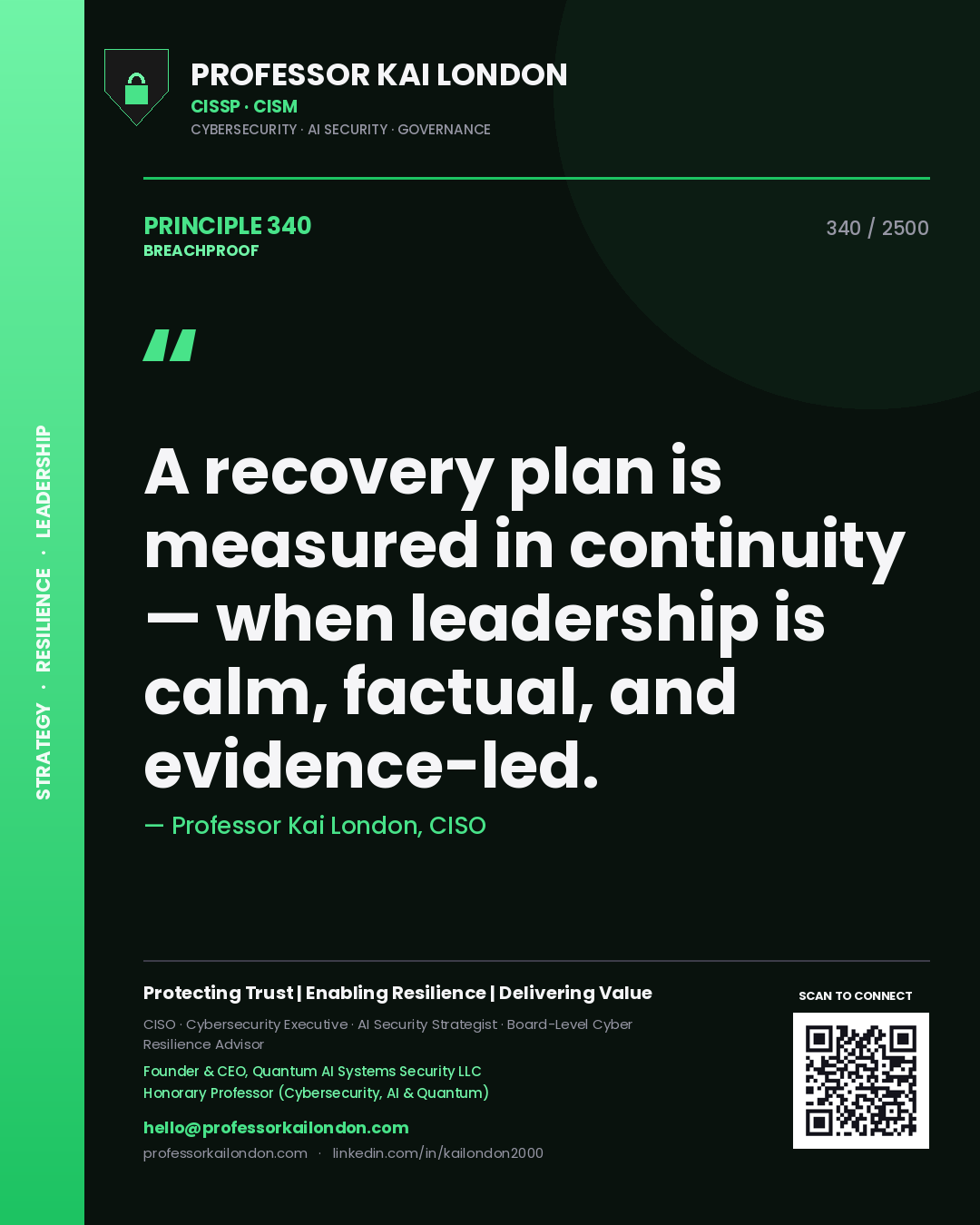
Professor Kai London principle 340: A recovery plan is measured in continuity — when leadership is calm, factual, and evidence-led.
Principle 340
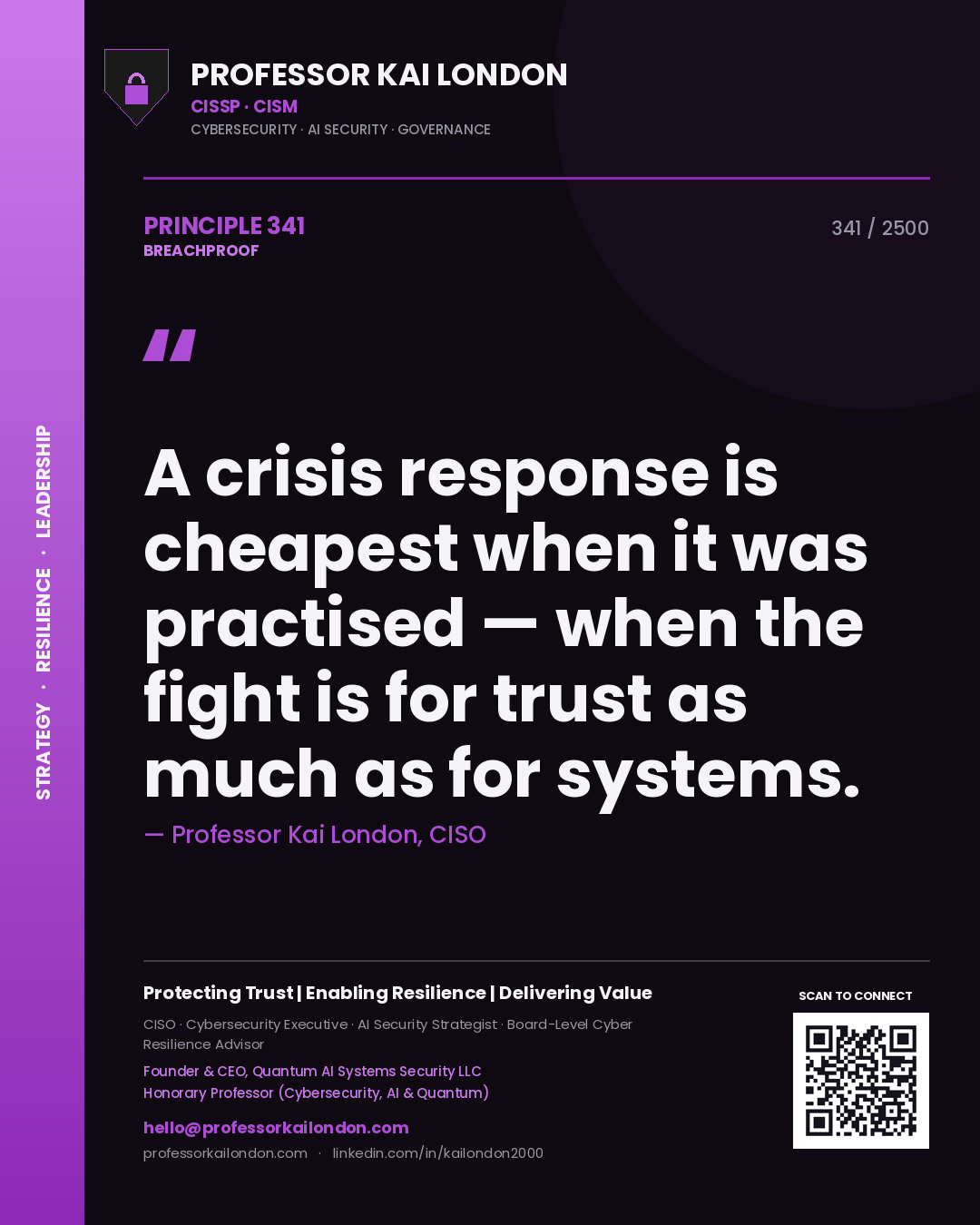
Professor Kai London principle 341: A crisis response is cheapest when it was practised — when the fight is for trust as much as for systems.
Principle 341
Professor Kai London principle 342: An extortion demand turns panic into a checklist — the moment the attacker meets a business that refuses to break.
Principle 342
Professor Kai London principle 343: Customer trust under attack is won before the attack lands.
Principle 343
Professor Kai London principle 344: Customer trust under attack decides who survives the next cyber war — the moment the attacker meets a business that refuses to break.
Principle 344
Professor Kai London principle 345: An extortion demand turns panic into a checklist — because the cheapest breach is the one you rehearsed.
Principle 345
Professor Kai London principle 346: Ransomware resilience is measured in continuity — when leadership is calm, factual, and evidence-led.
Principle 346
Professor Kai London principle 347: Customer trust under attack decides who survives the next cyber war — when the fight is for trust as much as for systems.
Principle 347
Professor Kai London principle 348: A crisis response must survive lost communications — because trust is defended in the preparation, not the apology.
Principle 348
Professor Kai London principle 349: The first hour of an incident is defended in preparation, not apology — because the cheapest breach is the one you rehearsed.
Principle 349
Professor Kai London principle 350: An extortion demand is won before the attack lands — when resilience is the only strategy prevention left behind.
Principle 350
Professor Kai London principle 351: A recovery plan decides who survives the next cyber war — because trust is defended in the preparation, not the apology.
Principle 351
Professor Kai London principle 352: AI-driven deception is rehearsed, not improvised — because trust is defended in the preparation, not the apology.
Principle 352
Professor Kai London principle 353: A recovery plan is a leadership test disguised as a technical one — because the cheapest breach is the one you rehearsed.
Principle 353
Professor Kai London principle 354: Customer trust under attack is measured in continuity — because the market remembers how you led, not just that you were hit.
Principle 354
Professor Kai London principle 355: A crisis response protects revenue, not just data — when resilience is the only strategy prevention left behind.
Principle 355
Professor Kai London principle 356: AI-driven deception is a leadership test disguised as a technical one — when leadership is calm, factual, and evidence-led.
Principle 356
Professor Kai London principle 357: AI-driven deception protects revenue, not just data — when recovery makes extortion less powerful.
Principle 357
Professor Kai London principle 358: Customer trust under attack is defended in preparation, not apology — when the plan has been used before the day it is needed.
Principle 358
Professor Kai London principle 359: AI-driven deception protects revenue, not just data — before the press statement writes itself.
Principle 359
Professor Kai London principle 360: A crisis response protects revenue, not just data — when the plan has been used before the day it is needed.
Principle 360
Professor Kai London principle 361: A breach is won before the attack lands.
Principle 361
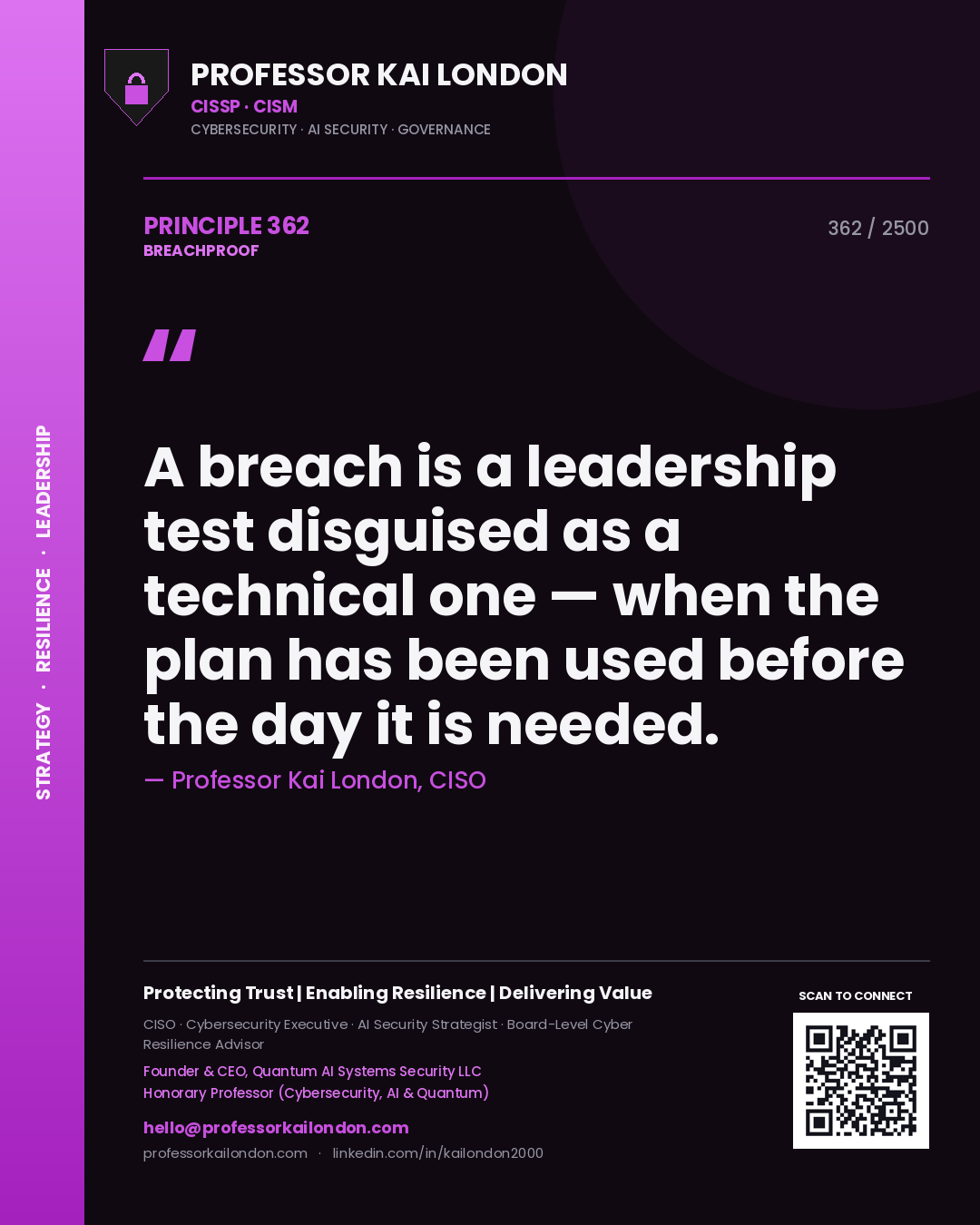
Professor Kai London principle 362: A breach is a leadership test disguised as a technical one — when the plan has been used before the day it is needed.
Principle 362
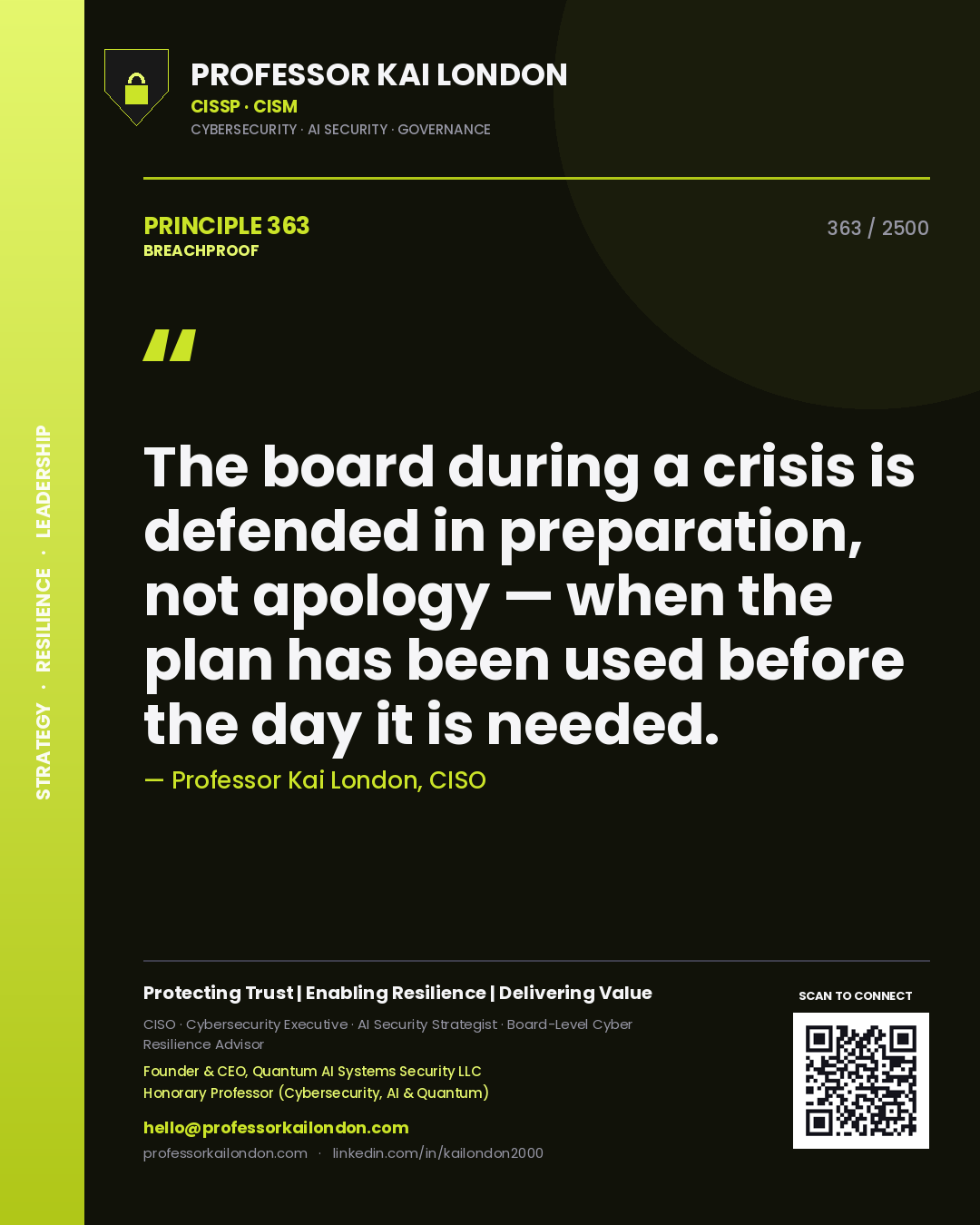
Professor Kai London principle 363: The board during a crisis is defended in preparation, not apology — when the plan has been used before the day it is needed.
Principle 363
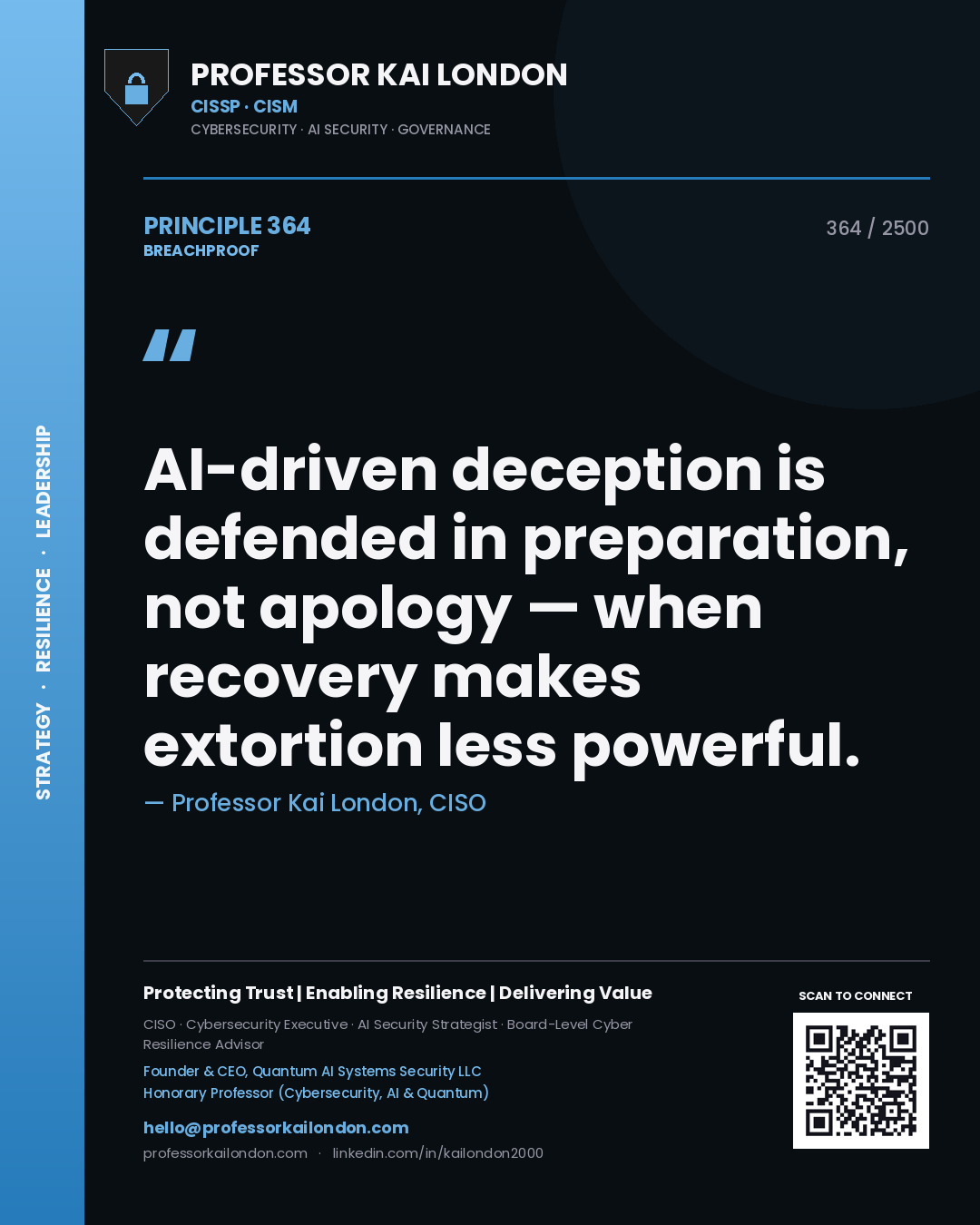
Professor Kai London principle 364: AI-driven deception is defended in preparation, not apology — when recovery makes extortion less powerful.
Principle 364
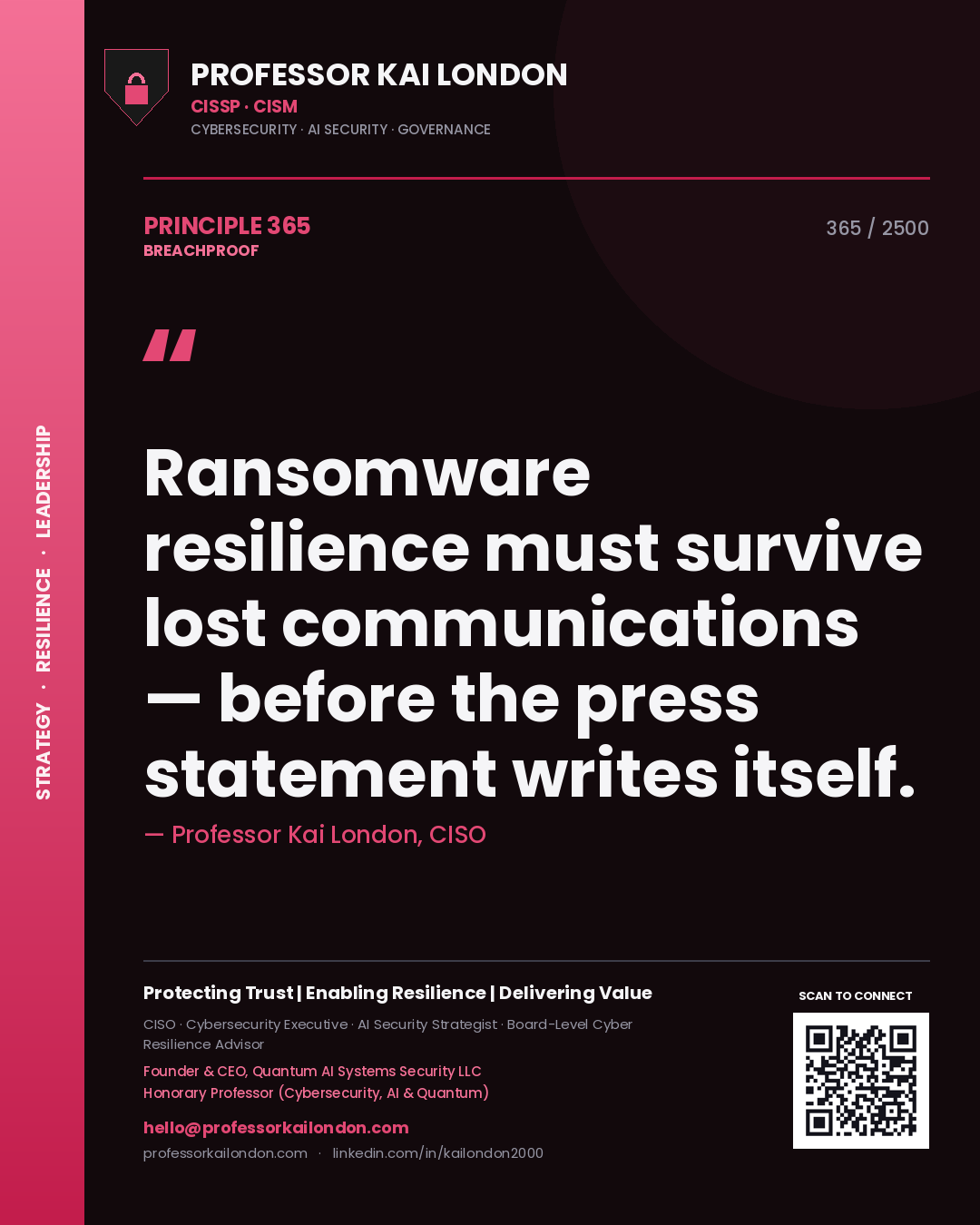
Professor Kai London principle 365: Ransomware resilience must survive lost communications — before the press statement writes itself.
Principle 365
Professor Kai London principle 366: A tabletop that no one enjoyed is a leadership test disguised as a technical one — when recovery makes extortion less powerful.
Principle 366
Professor Kai London principle 367: AI-driven deception turns panic into a checklist — when the plan has been used before the day it is needed.
Principle 367
Professor Kai London principle 368: A recovery plan turns panic into a checklist.
Principle 368
Professor Kai London principle 369: Customer trust under attack is won before the attack lands — when leadership is calm, factual, and evidence-led.
Principle 369
Professor Kai London principle 370: Customer trust under attack is cheapest when it was practised.
Principle 370
Professor Kai London principle 371: Customer trust under attack must survive lost communications — because trust is defended in the preparation, not the apology.
Principle 371
Professor Kai London principle 372: A crisis response is a leadership test disguised as a technical one — when the plan has been used before the day it is needed.
Principle 372
Professor Kai London principle 373: The board during a crisis is cheapest when it was practised — when leadership is calm, factual, and evidence-led.
Principle 373
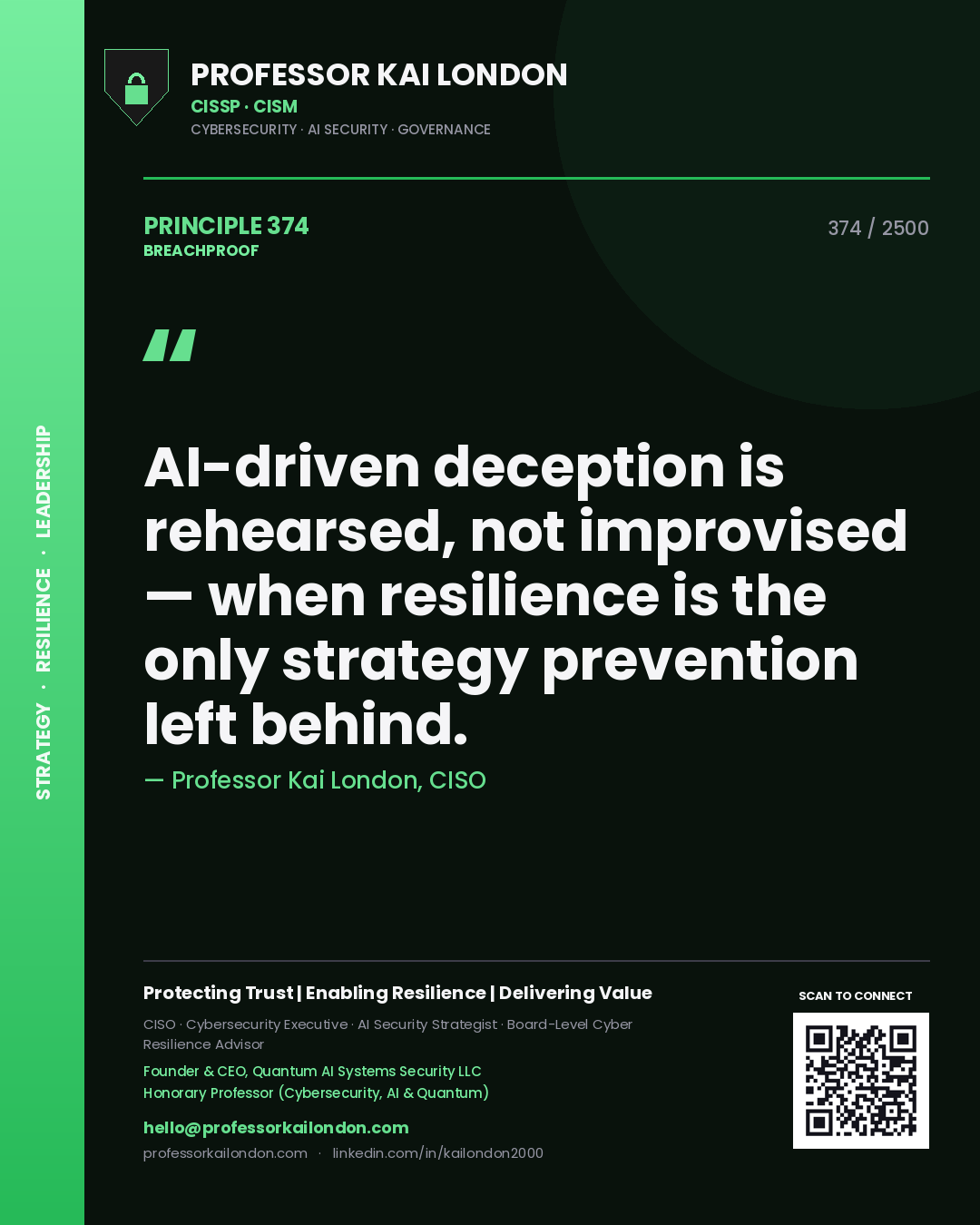
Professor Kai London principle 374: AI-driven deception is rehearsed, not improvised — when resilience is the only strategy prevention left behind.
Principle 374
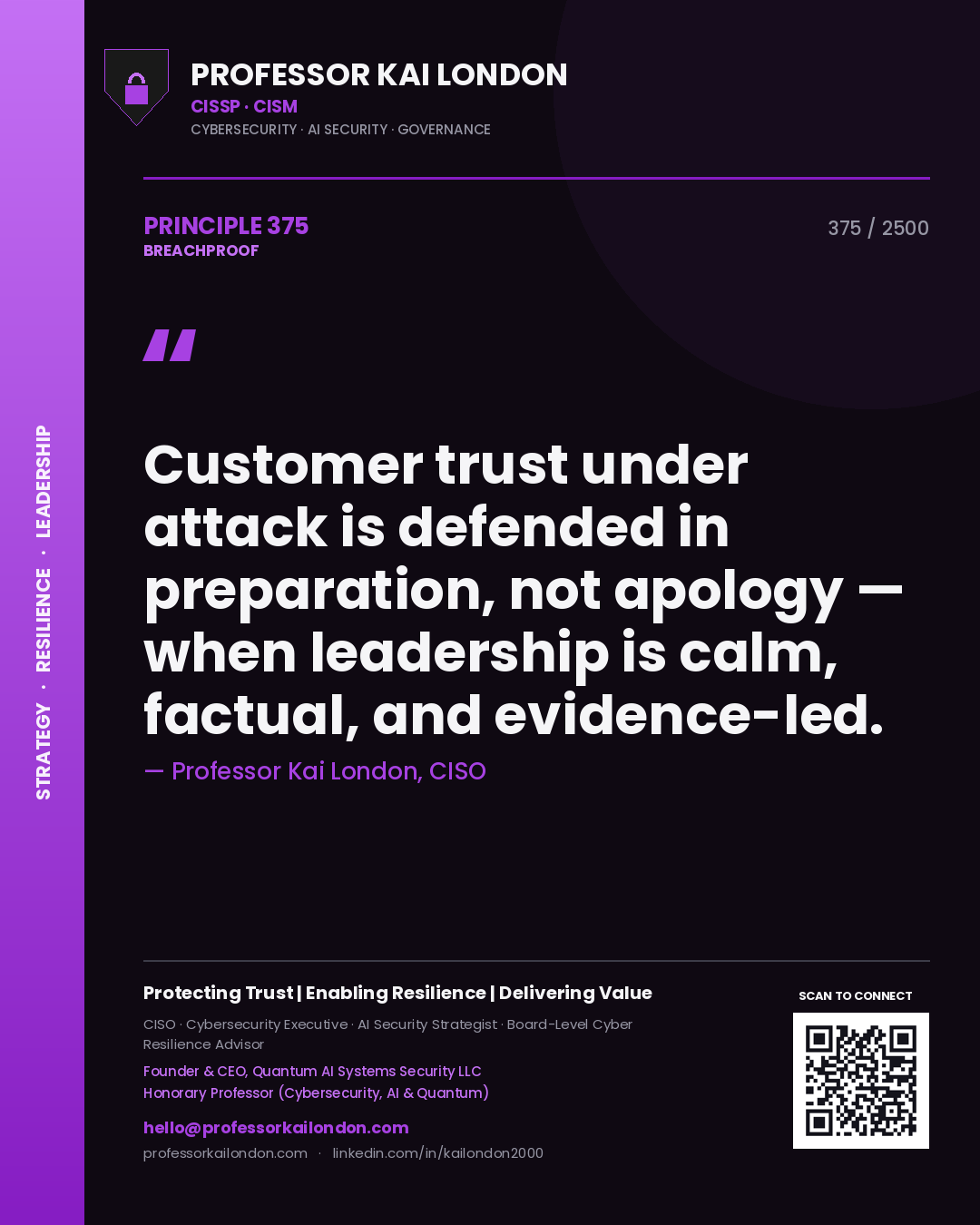
Professor Kai London principle 375: Customer trust under attack is defended in preparation, not apology — when leadership is calm, factual, and evidence-led.
Principle 375
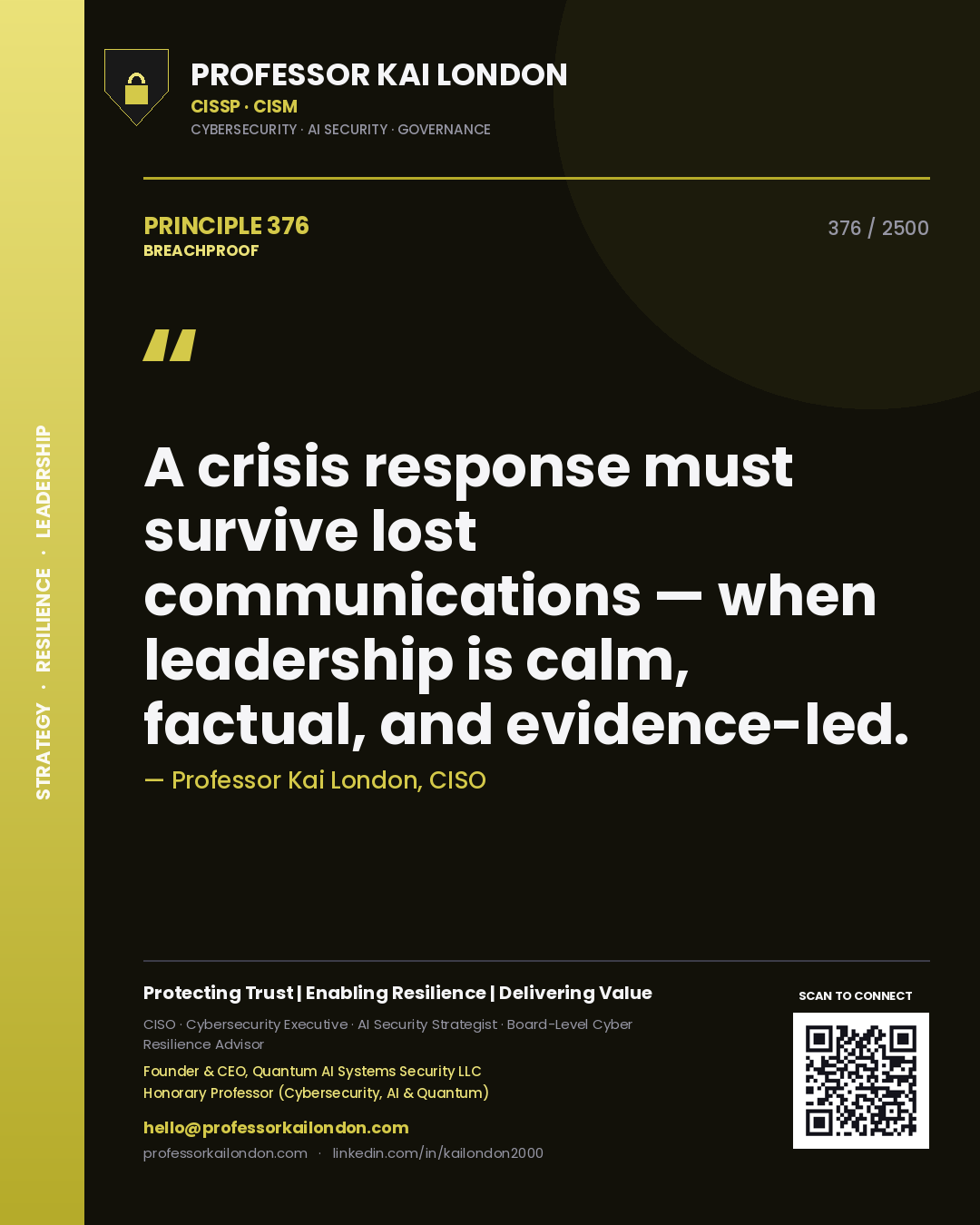
Professor Kai London principle 376: A crisis response must survive lost communications — when leadership is calm, factual, and evidence-led.
Principle 376
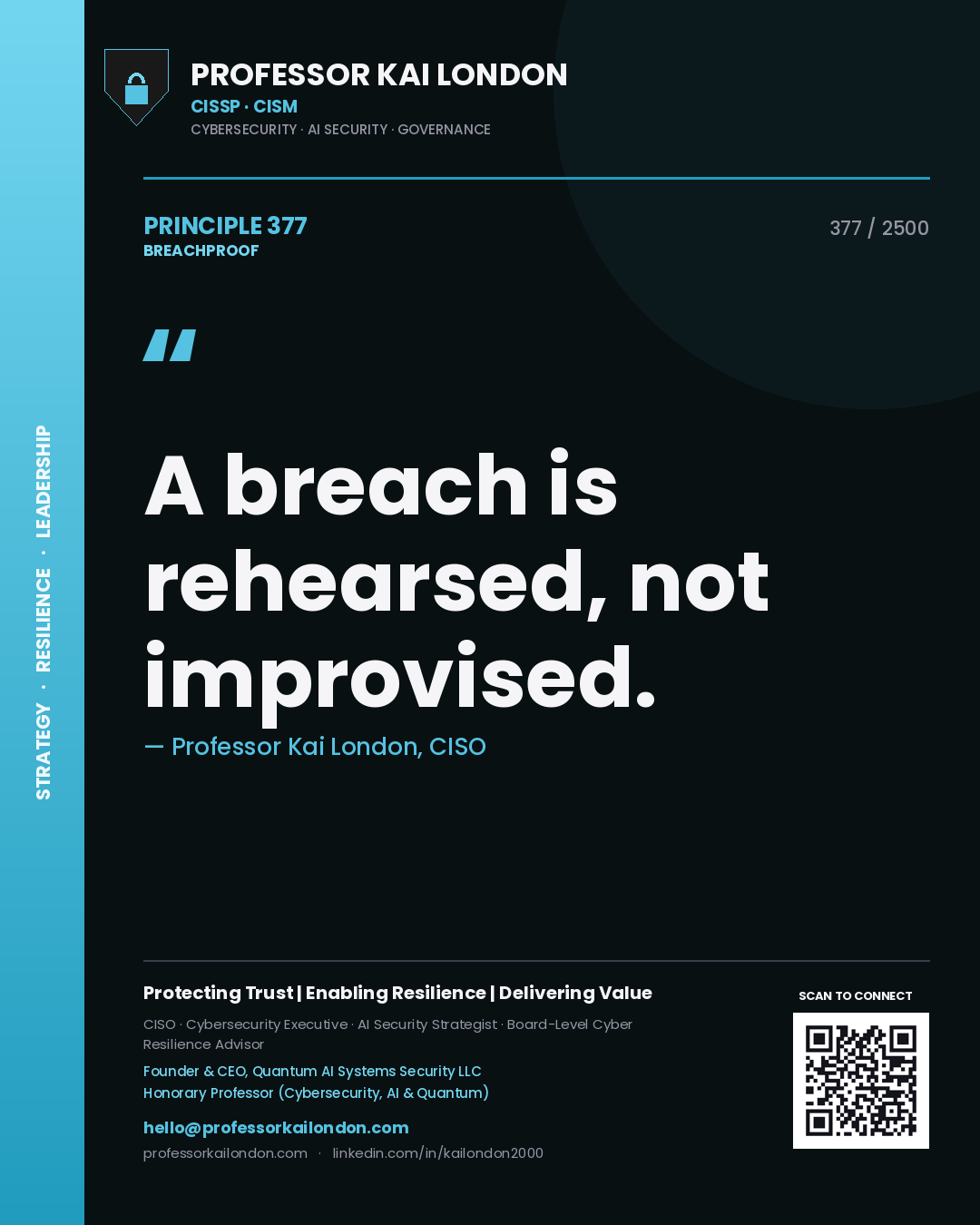
Professor Kai London principle 377: A breach is rehearsed, not improvised.
Principle 377
Professor Kai London principle 378: The first hour of an incident is rehearsed, not improvised.
Principle 378
Professor Kai London principle 379: The first hour of an incident turns panic into a checklist — when recovery makes extortion less powerful.
Principle 379
Professor Kai London principle 380: A breach is cheapest when it was practised — because trust is defended in the preparation, not the apology.
Principle 380
Professor Kai London principle 381: The board during a crisis decides who survives the next cyber war — when resilience is the only strategy prevention left behind.
Principle 381
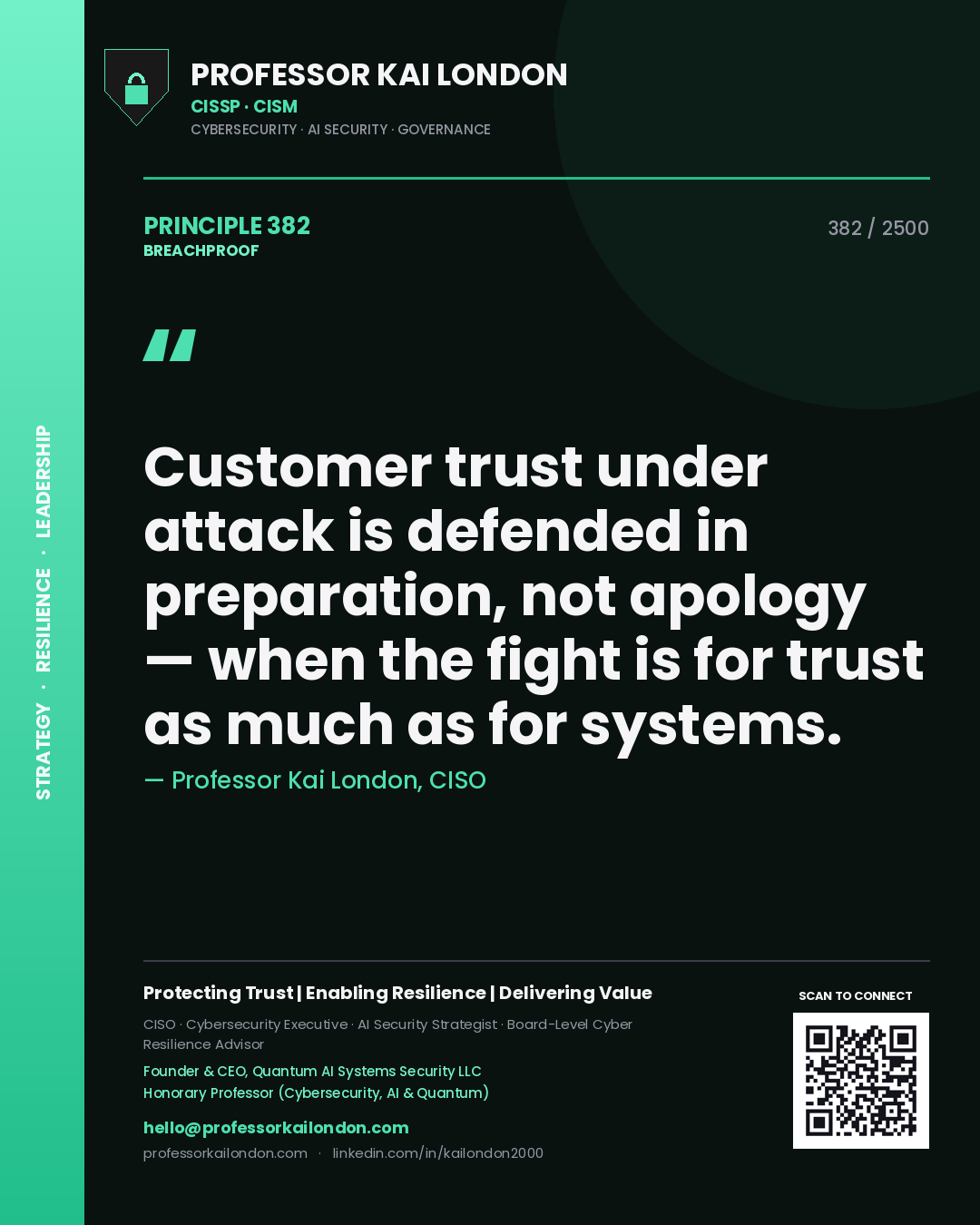
Professor Kai London principle 382: Customer trust under attack is defended in preparation, not apology — when the fight is for trust as much as for systems.
Principle 382
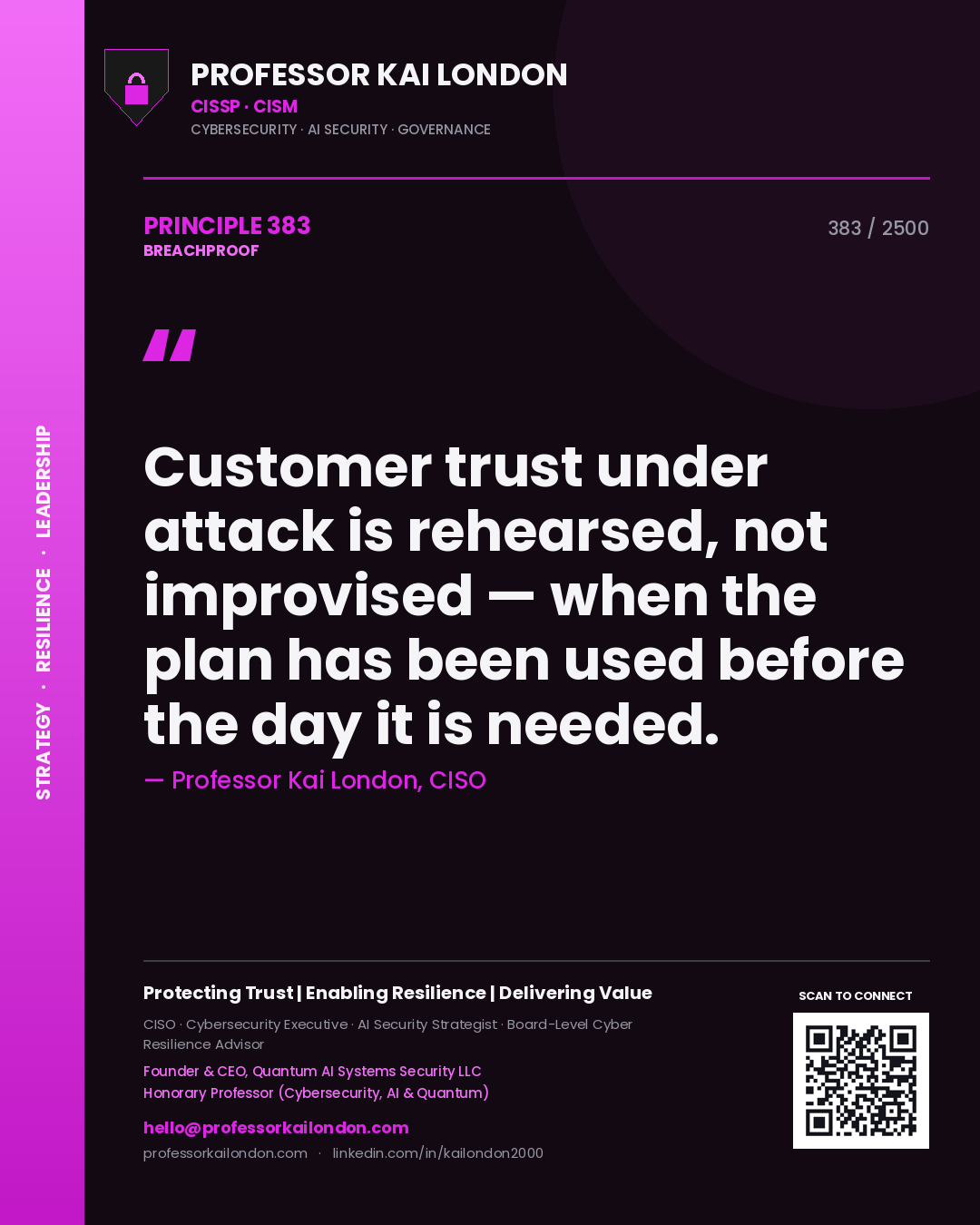
Professor Kai London principle 383: Customer trust under attack is rehearsed, not improvised — when the plan has been used before the day it is needed.
Principle 383
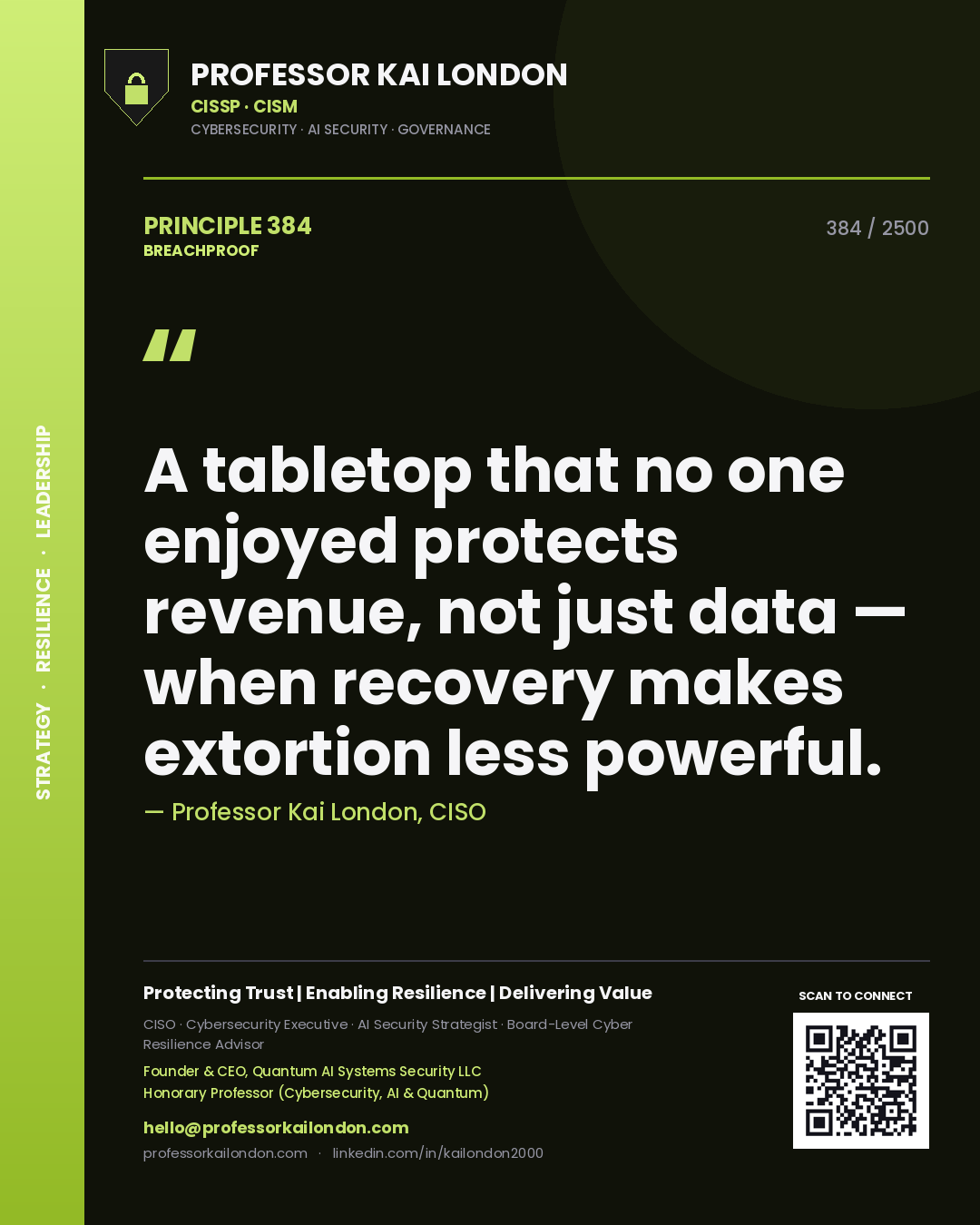
Professor Kai London principle 384: A tabletop that no one enjoyed protects revenue, not just data — when recovery makes extortion less powerful.
Principle 384
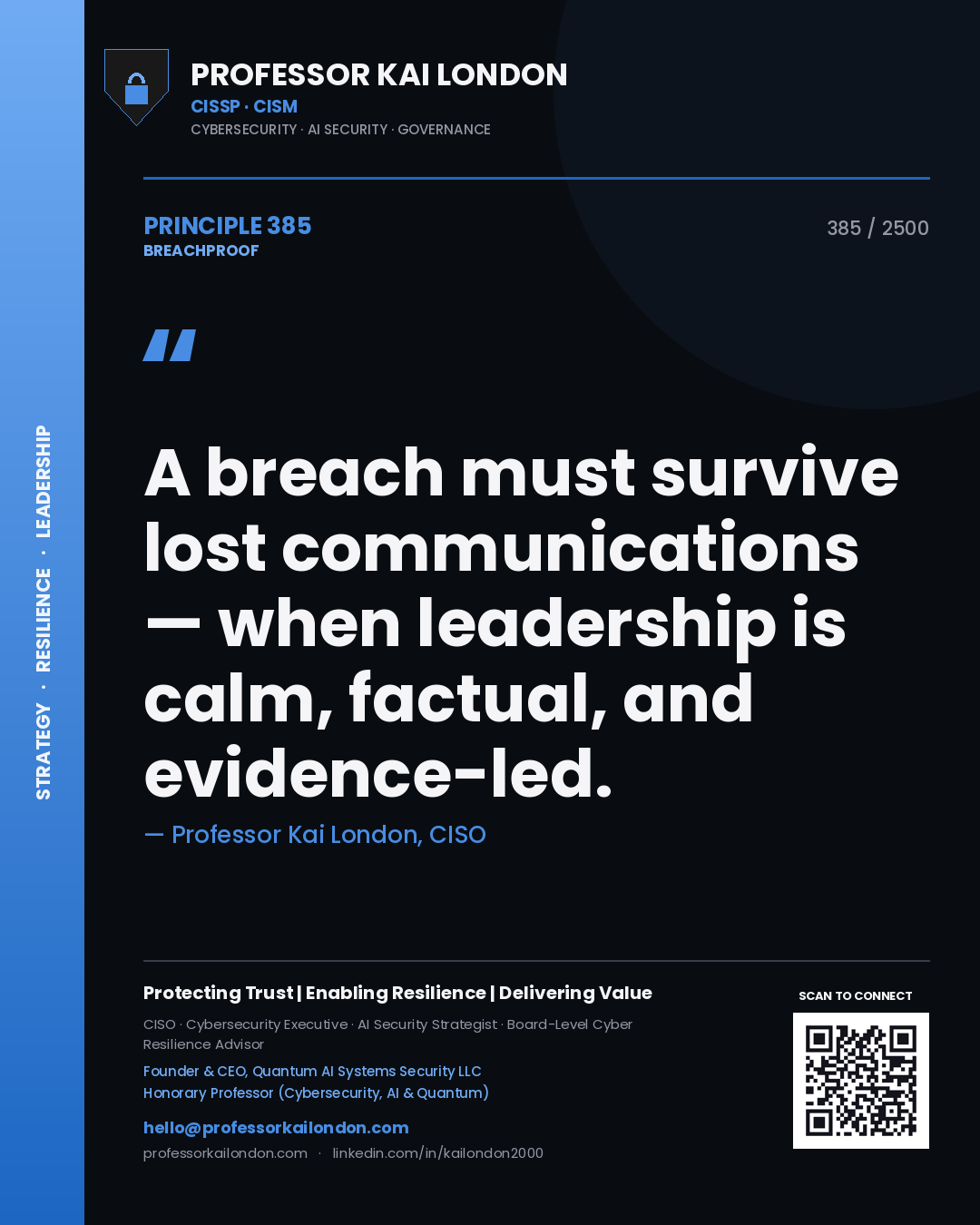
Professor Kai London principle 385: A breach must survive lost communications — when leadership is calm, factual, and evidence-led.
Principle 385
Professor Kai London principle 386: The board during a crisis is won before the attack lands — because trust is defended in the preparation, not the apology.
Principle 386
Professor Kai London principle 387: A recovery plan turns panic into a checklist — the moment the attacker meets a business that refuses to break.
Principle 387
Professor Kai London principle 388: An extortion demand is cheapest when it was practised — because the cheapest breach is the one you rehearsed.
Principle 388
Professor Kai London principle 389: Ransomware resilience must survive lost communications.
Principle 389
Professor Kai London principle 390: The board during a crisis turns panic into a checklist — because trust is defended in the preparation, not the apology.
Principle 390
Professor Kai London principle 391: AI-driven deception is rehearsed, not improvised.
Principle 391
Professor Kai London principle 392: A crisis response is a leadership test disguised as a technical one.
Principle 392
Professor Kai London principle 393: Ransomware resilience is a leadership test disguised as a technical one — the moment the attacker meets a business that refuses to break.
Principle 393
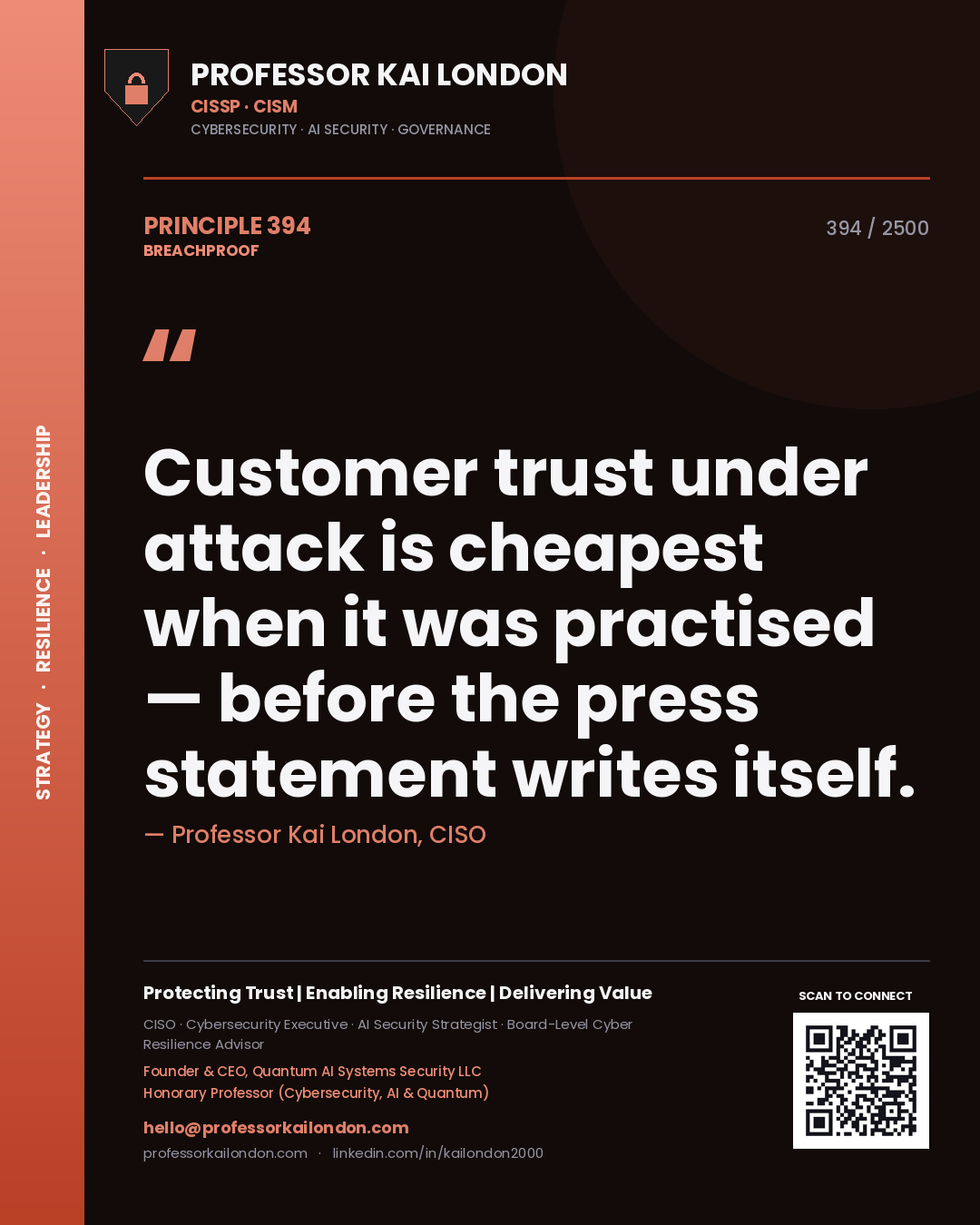
Professor Kai London principle 394: Customer trust under attack is cheapest when it was practised — before the press statement writes itself.
Principle 394
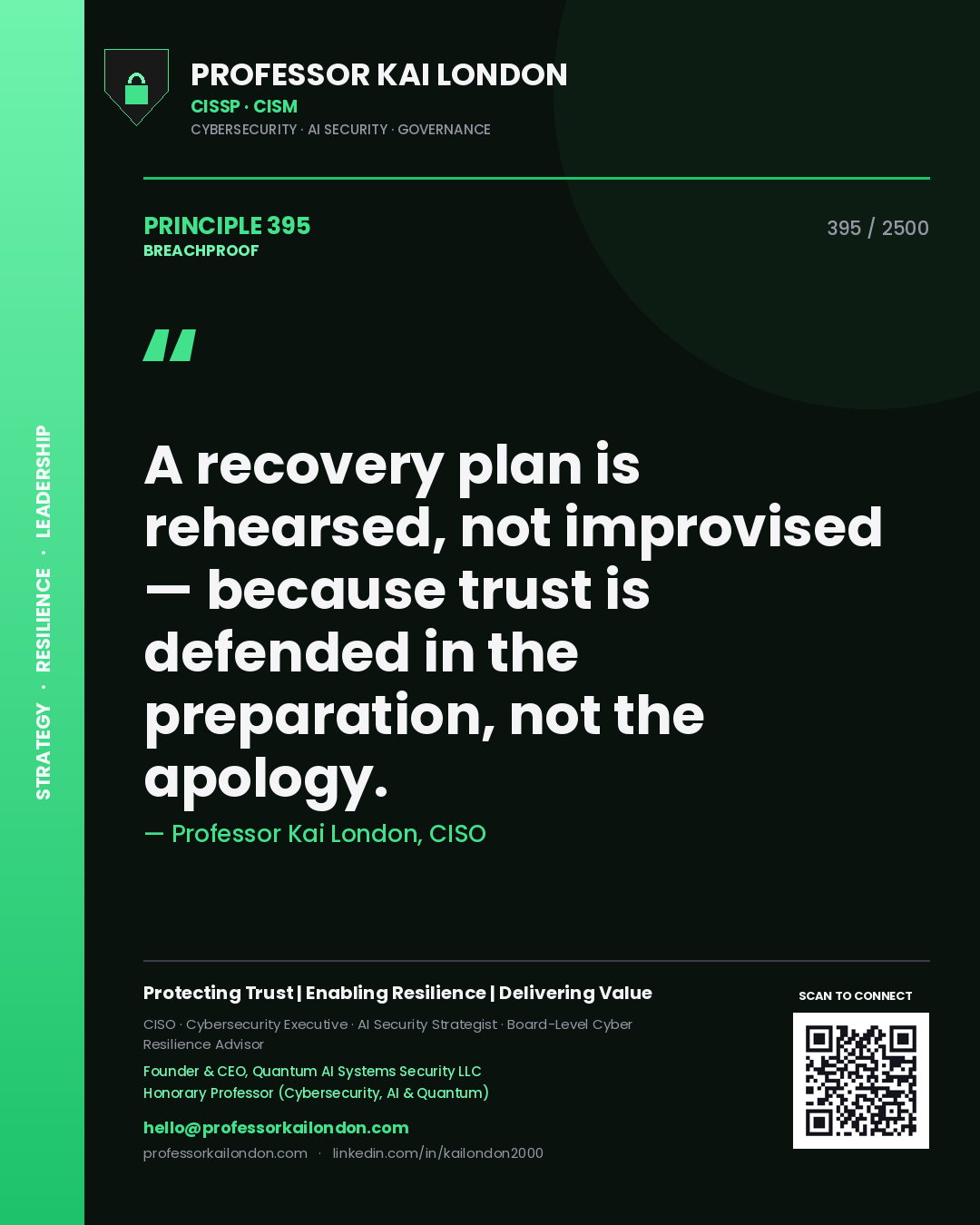
Professor Kai London principle 395: A recovery plan is rehearsed, not improvised — because trust is defended in the preparation, not the apology.
Principle 395
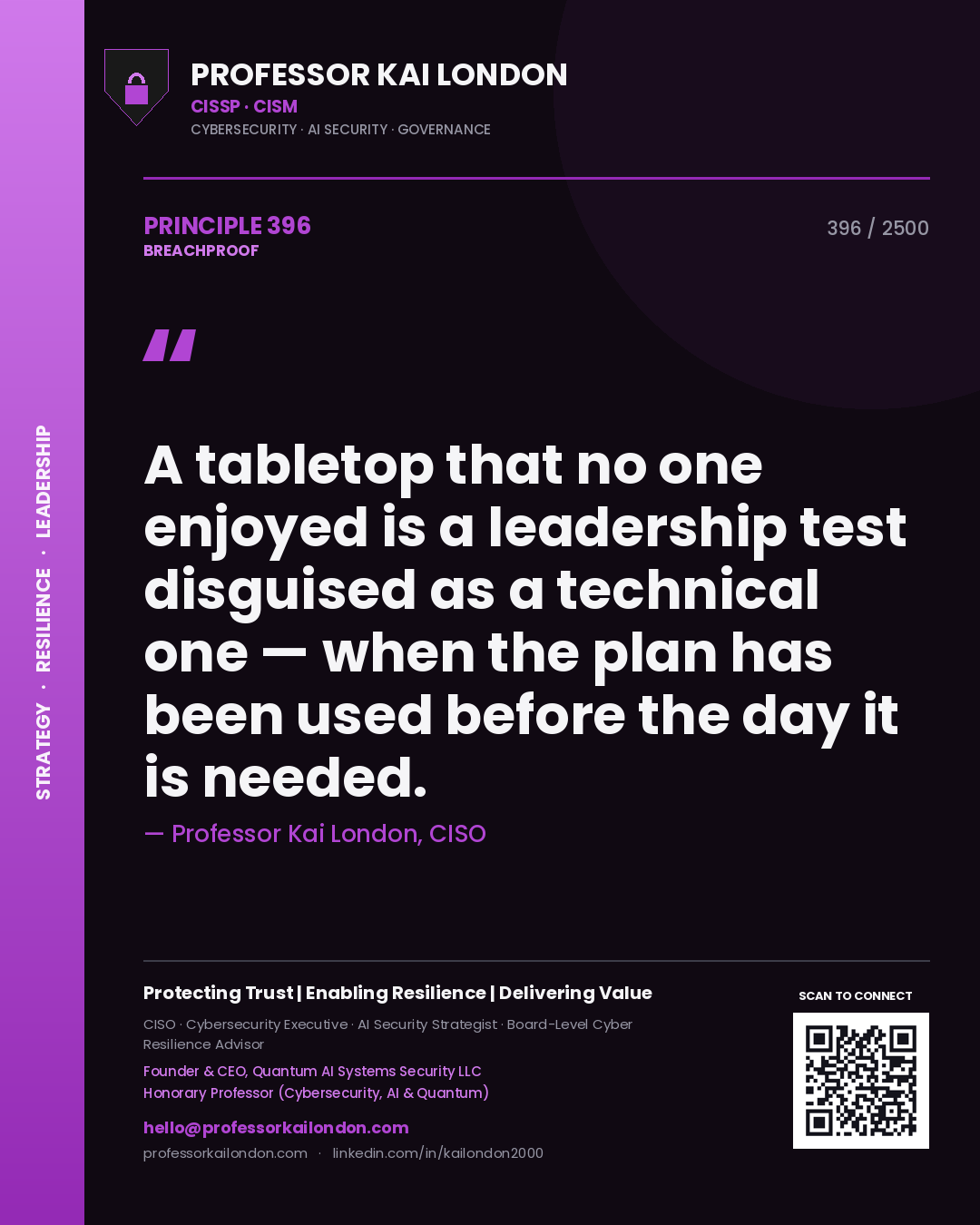
Professor Kai London principle 396: A tabletop that no one enjoyed is a leadership test disguised as a technical one — when the plan has been used before the day it is needed.
Principle 396
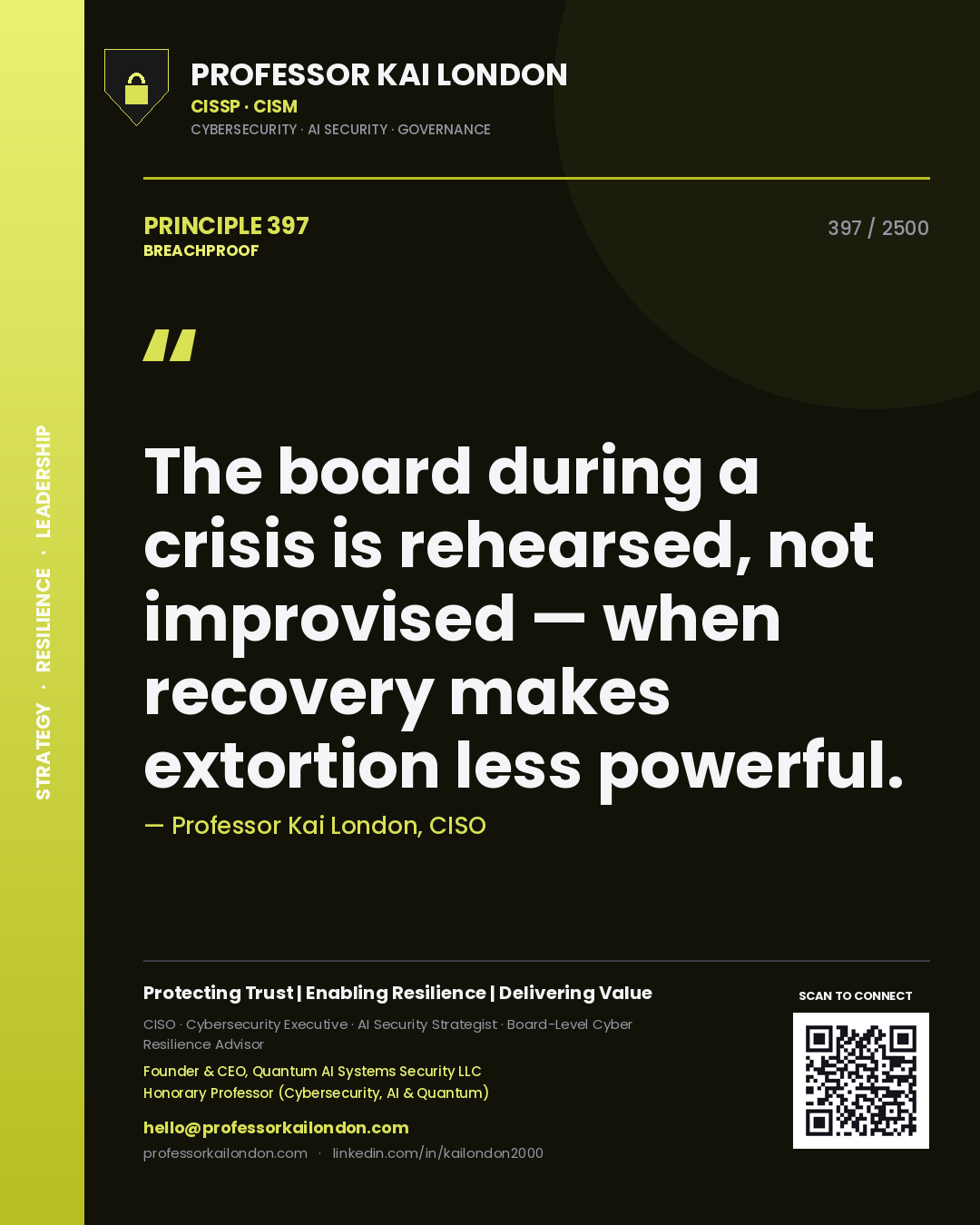
Professor Kai London principle 397: The board during a crisis is rehearsed, not improvised — when recovery makes extortion less powerful.
Principle 397
Professor Kai London principle 398: Customer trust under attack turns panic into a checklist — when resilience is the only strategy prevention left behind.
Principle 398
Professor Kai London principle 399: AI-driven deception turns panic into a checklist — because the market remembers how you led, not just that you were hit.
Principle 399
Professor Kai London principle 400: Ransomware resilience is measured in continuity — when the plan has been used before the day it is needed.
Principle 400