Breachproof — Gallery (Page 1 of 100)
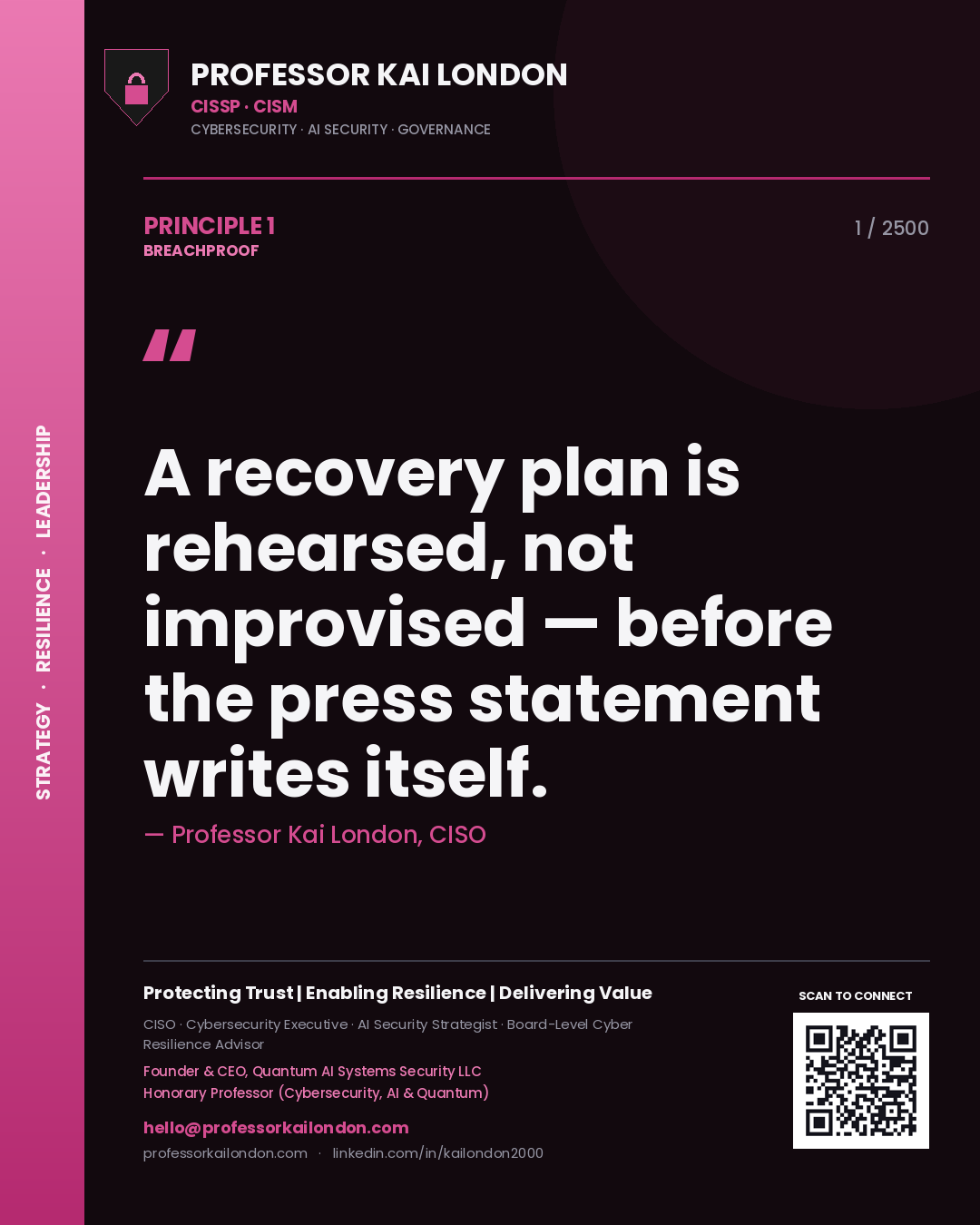
Professor Kai London principle 1: A recovery plan is rehearsed, not improvised — before the press statement writes itself.
Principle 1
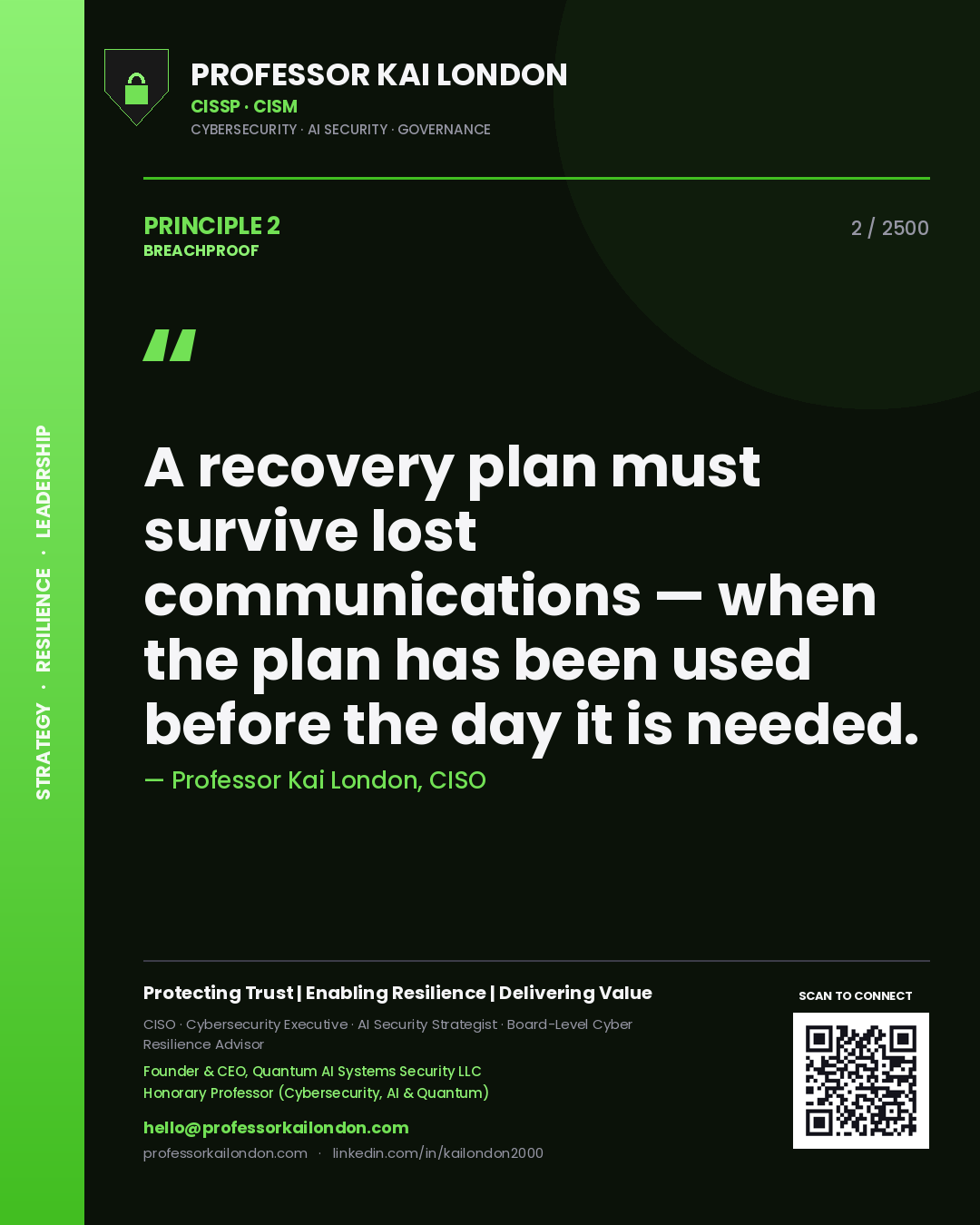
Professor Kai London principle 2: A recovery plan must survive lost communications — when the plan has been used before the day it is needed.
Principle 2
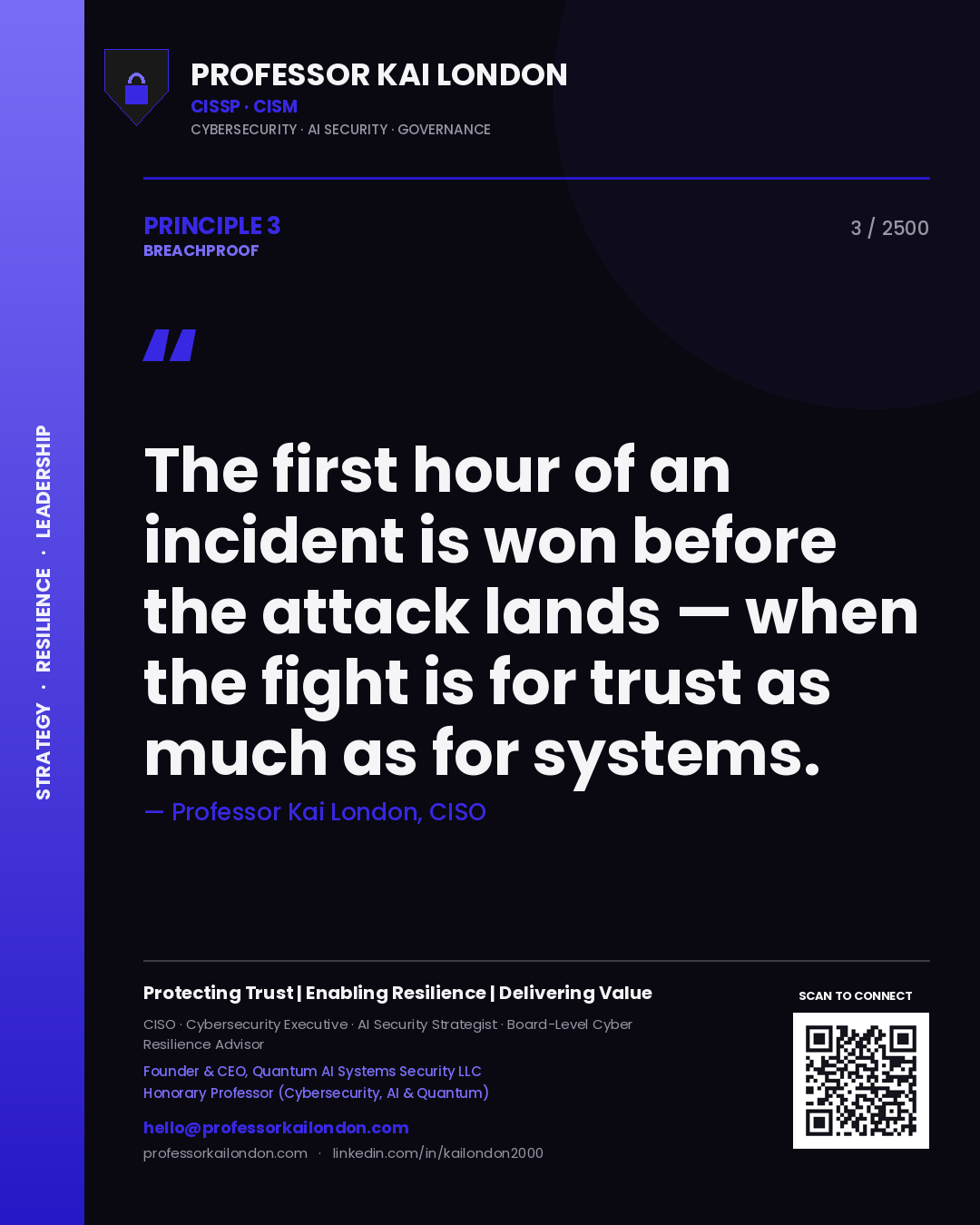
Professor Kai London principle 3: The first hour of an incident is won before the attack lands — when the fight is for trust as much as for systems.
Principle 3
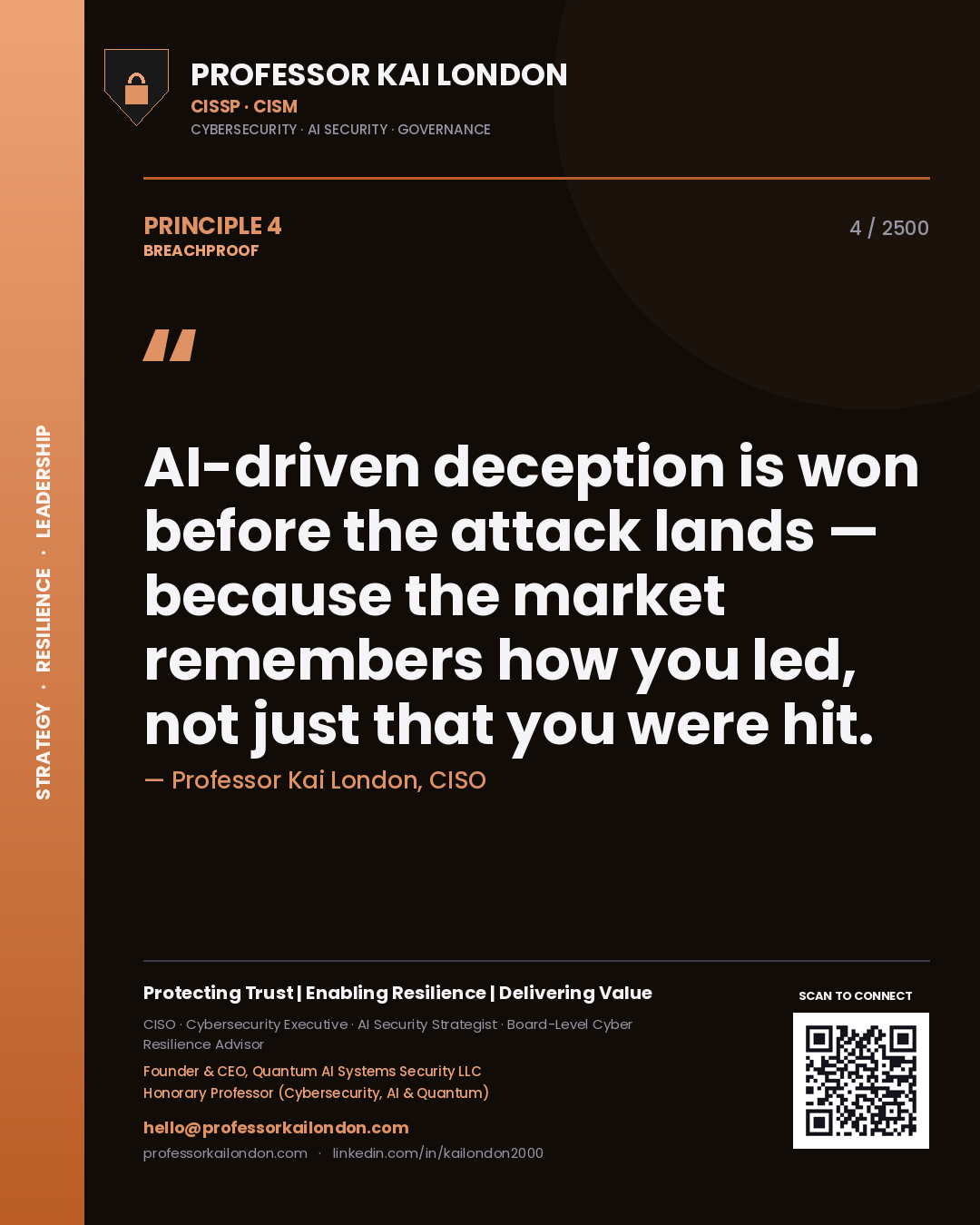
Professor Kai London principle 4: AI-driven deception is won before the attack lands — because the market remembers how you led, not just that you were hit.
Principle 4
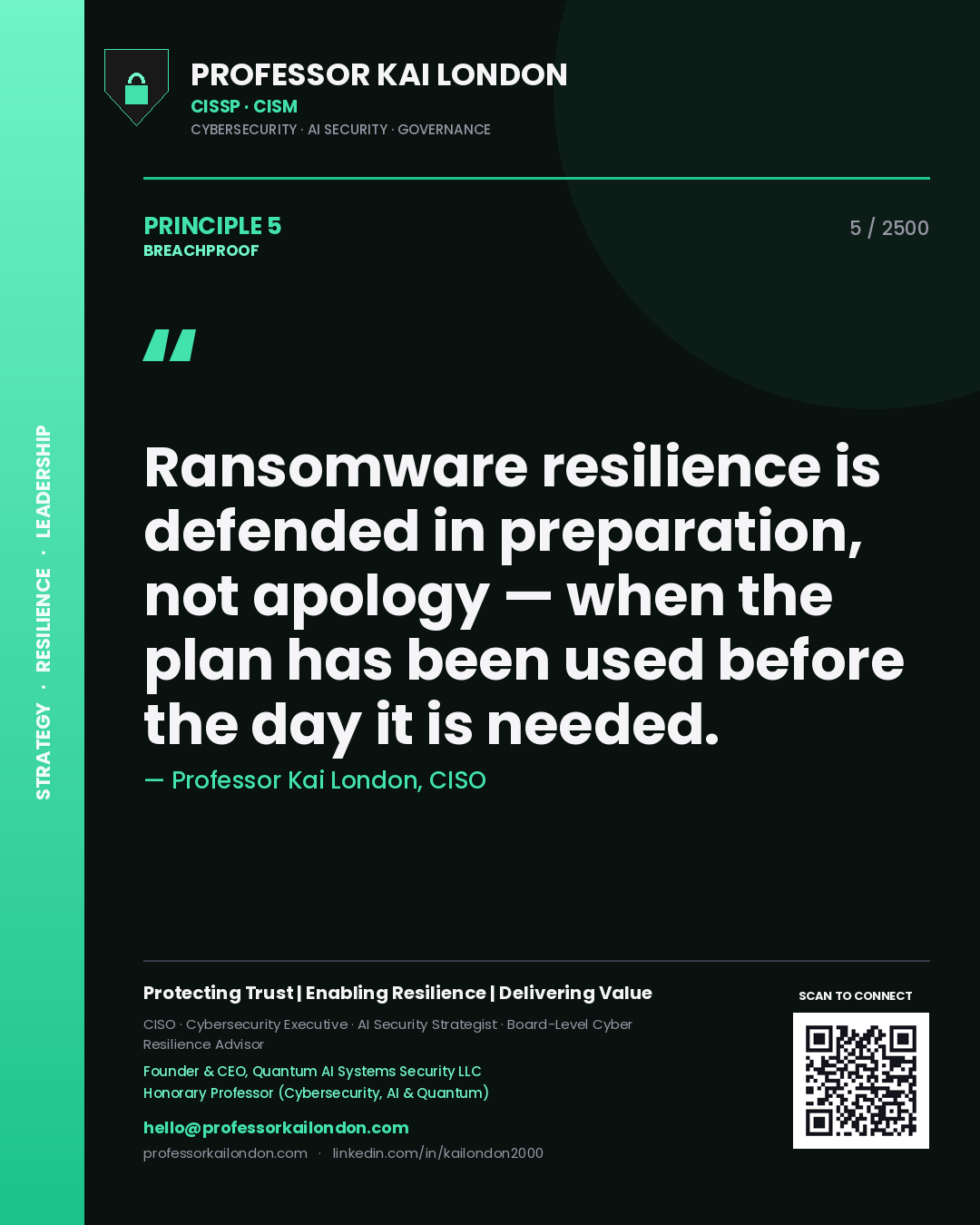
Professor Kai London principle 5: Ransomware resilience is defended in preparation, not apology — when the plan has been used before the day it is needed.
Principle 5
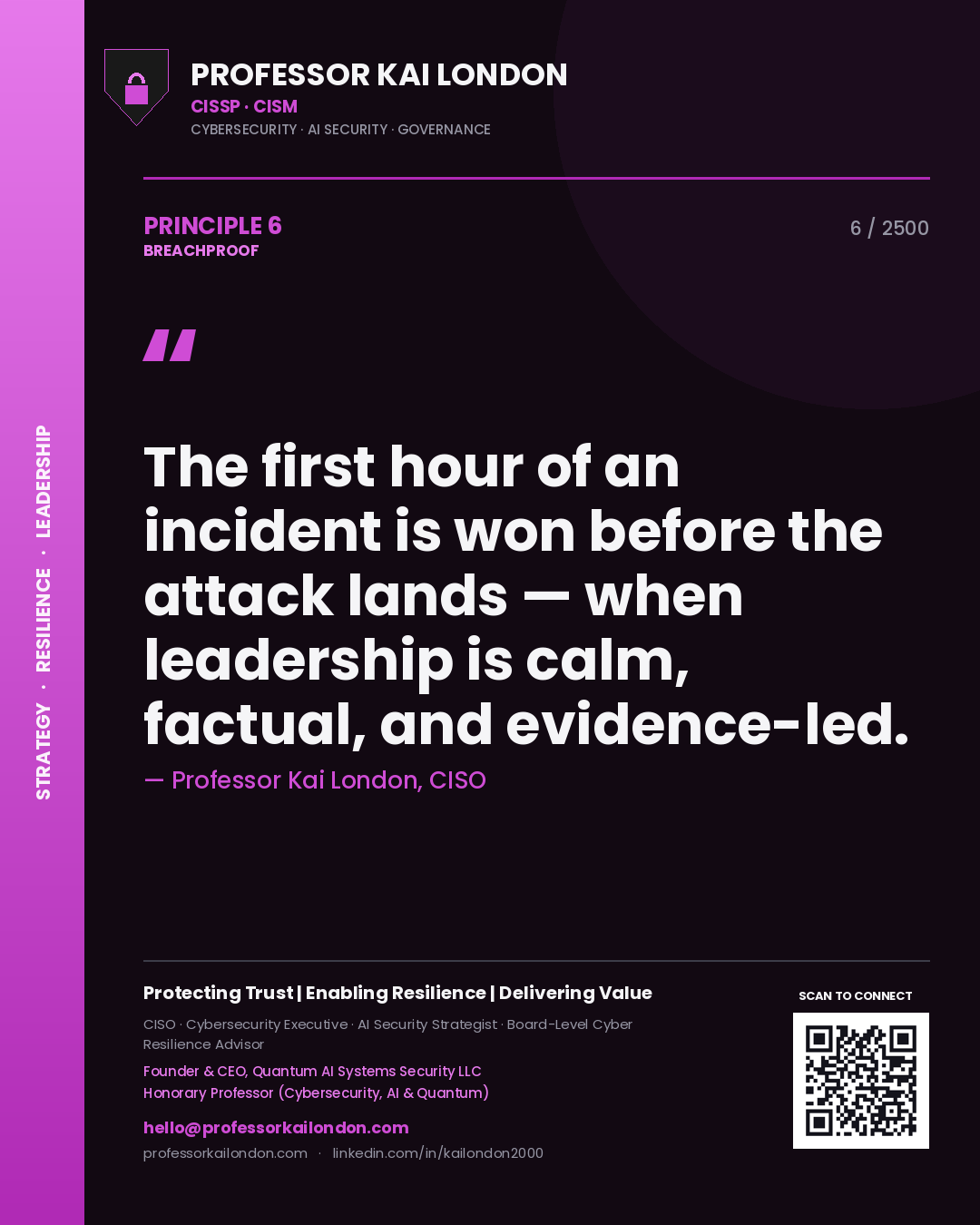
Professor Kai London principle 6: The first hour of an incident is won before the attack lands — when leadership is calm, factual, and evidence-led.
Principle 6
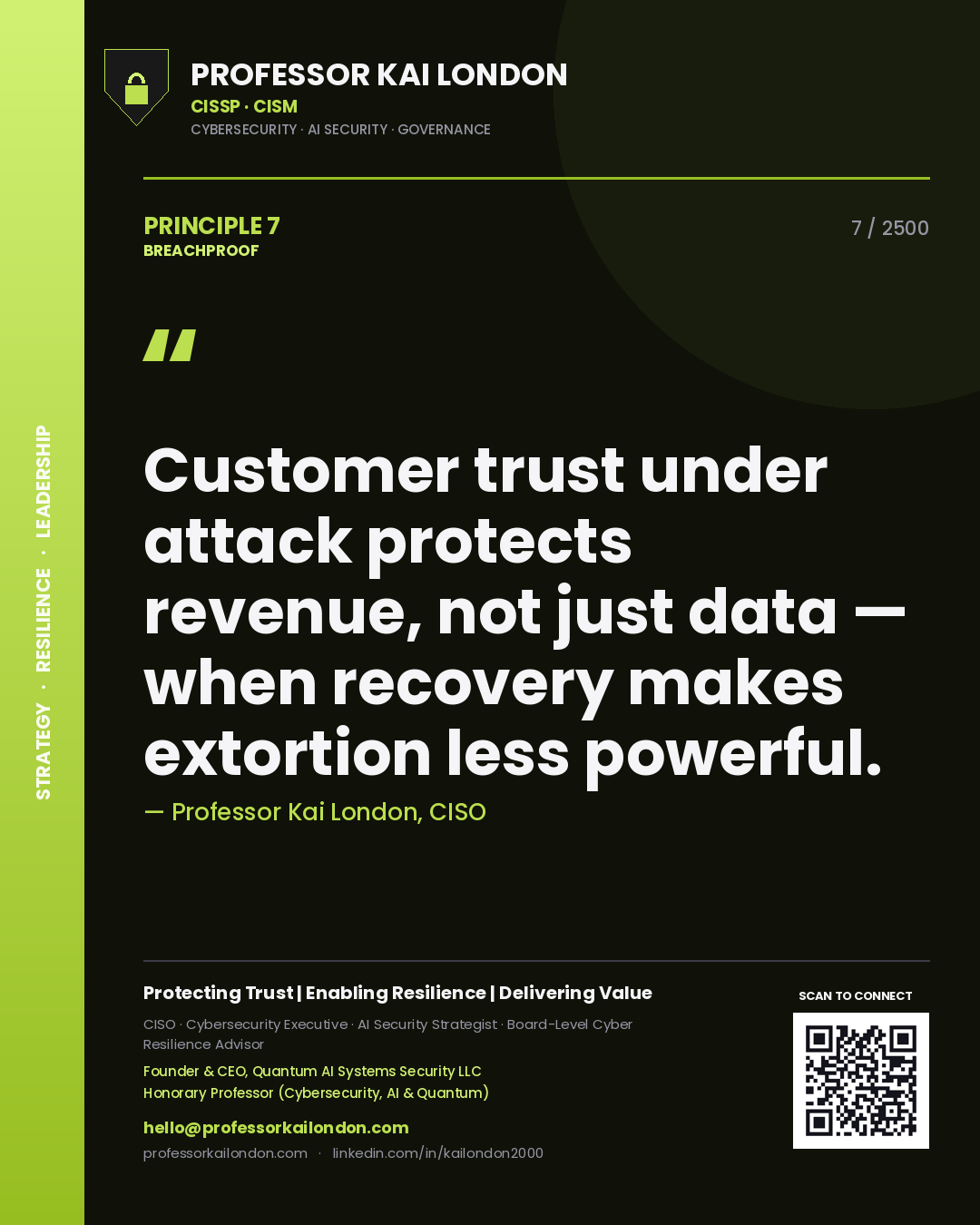
Professor Kai London principle 7: Customer trust under attack protects revenue, not just data — when recovery makes extortion less powerful.
Principle 7
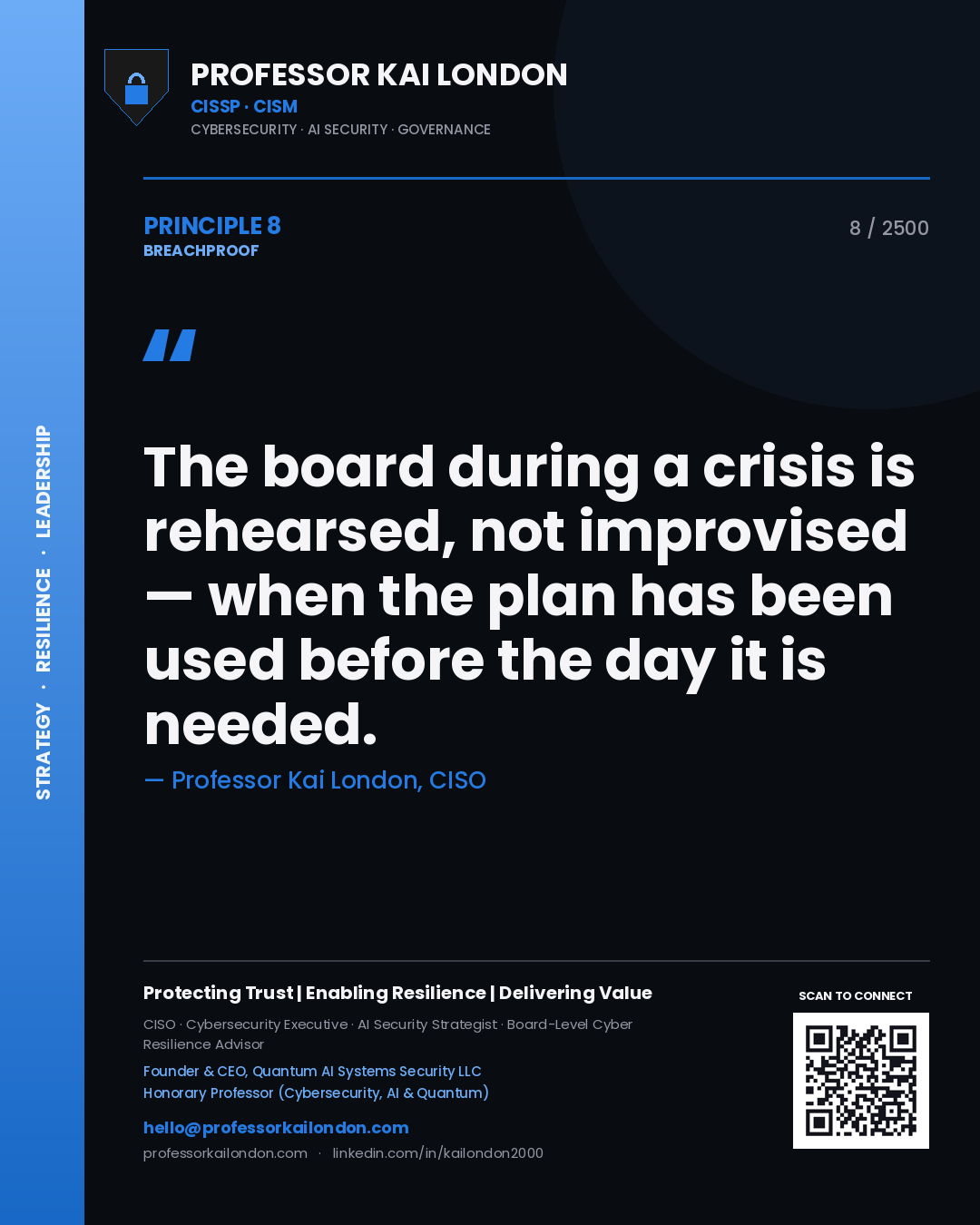
Professor Kai London principle 8: The board during a crisis is rehearsed, not improvised — when the plan has been used before the day it is needed.
Principle 8
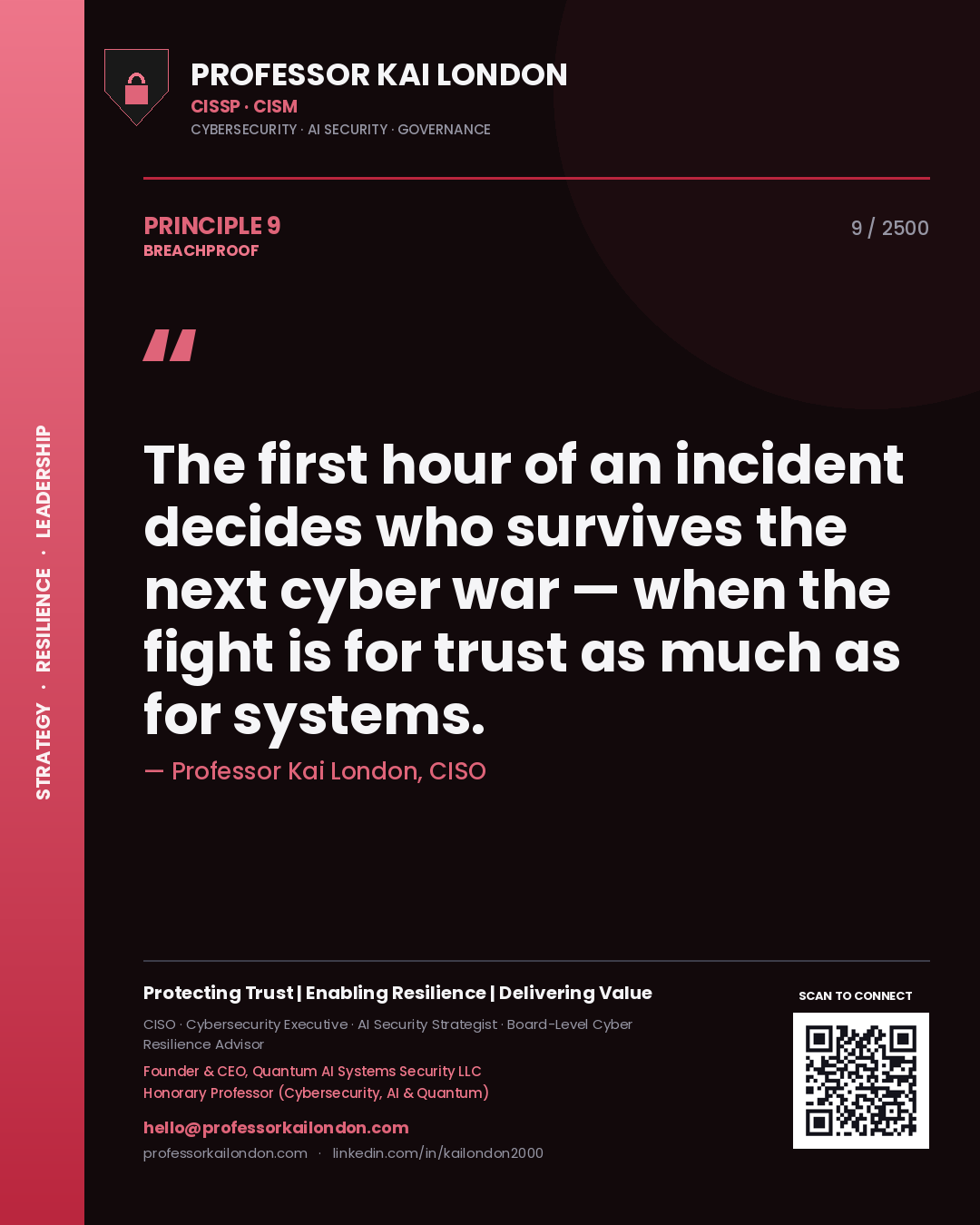
Professor Kai London principle 9: The first hour of an incident decides who survives the next cyber war — when the fight is for trust as much as for systems.
Principle 9
Professor Kai London principle 10: A breach decides who survives the next cyber war — before the press statement writes itself.
Principle 10
Professor Kai London principle 11: The board during a crisis decides who survives the next cyber war — because the cheapest breach is the one you rehearsed.
Principle 11
Professor Kai London principle 12: A tabletop that no one enjoyed protects revenue, not just data.
Principle 12
Professor Kai London principle 13: An extortion demand is defended in preparation, not apology — when the plan has been used before the day it is needed.
Principle 13
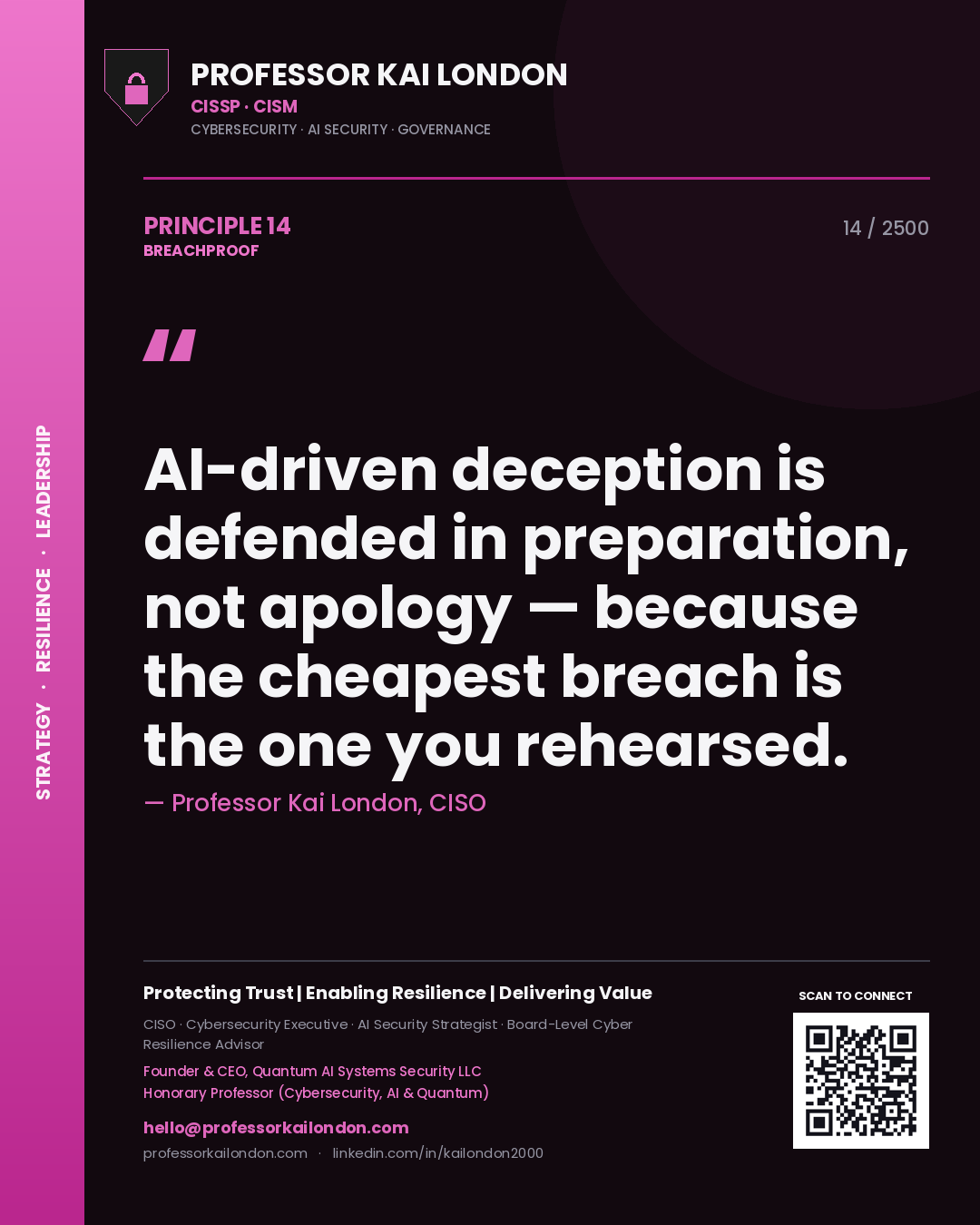
Professor Kai London principle 14: AI-driven deception is defended in preparation, not apology — because the cheapest breach is the one you rehearsed.
Principle 14
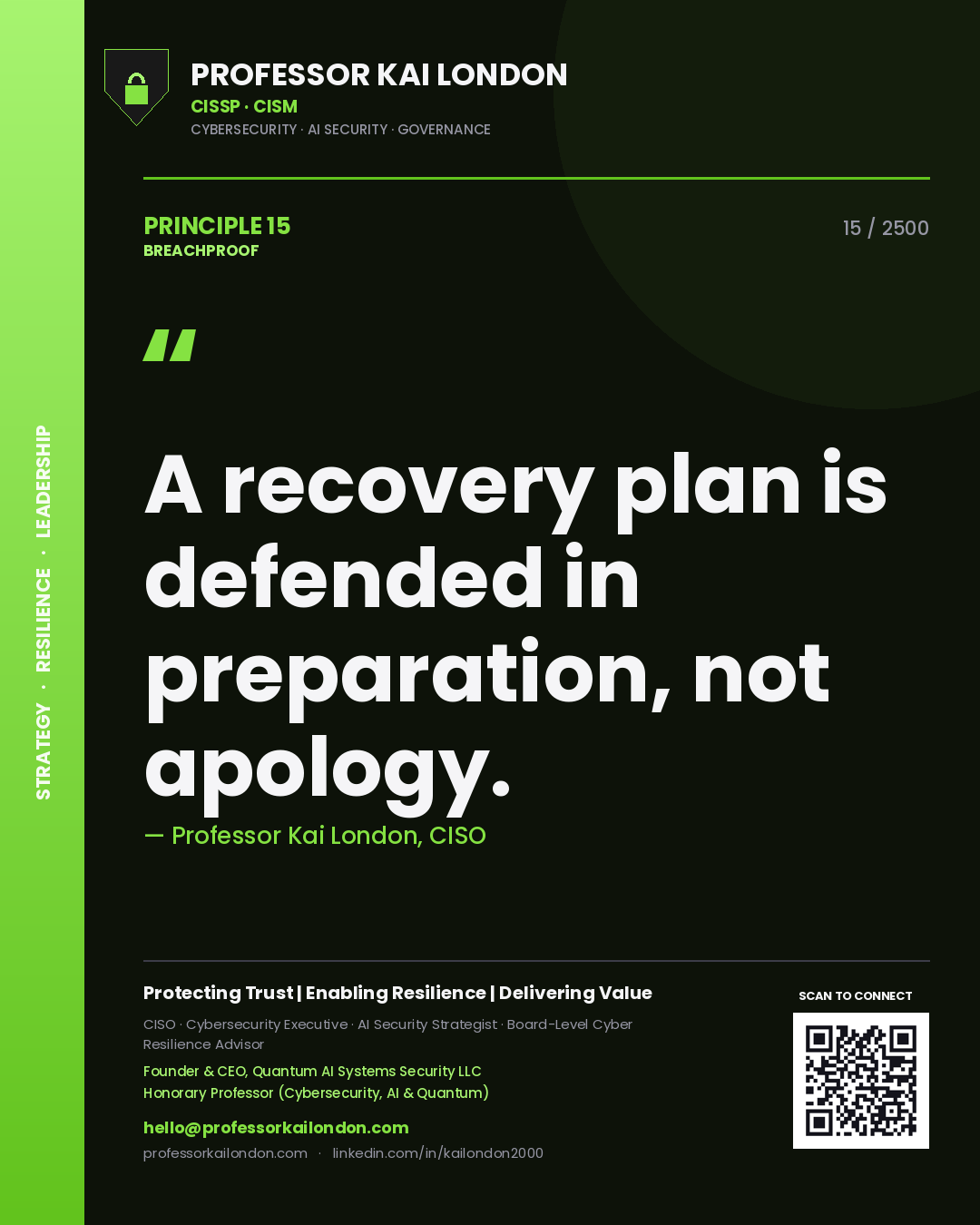
Professor Kai London principle 15: A recovery plan is defended in preparation, not apology.
Principle 15
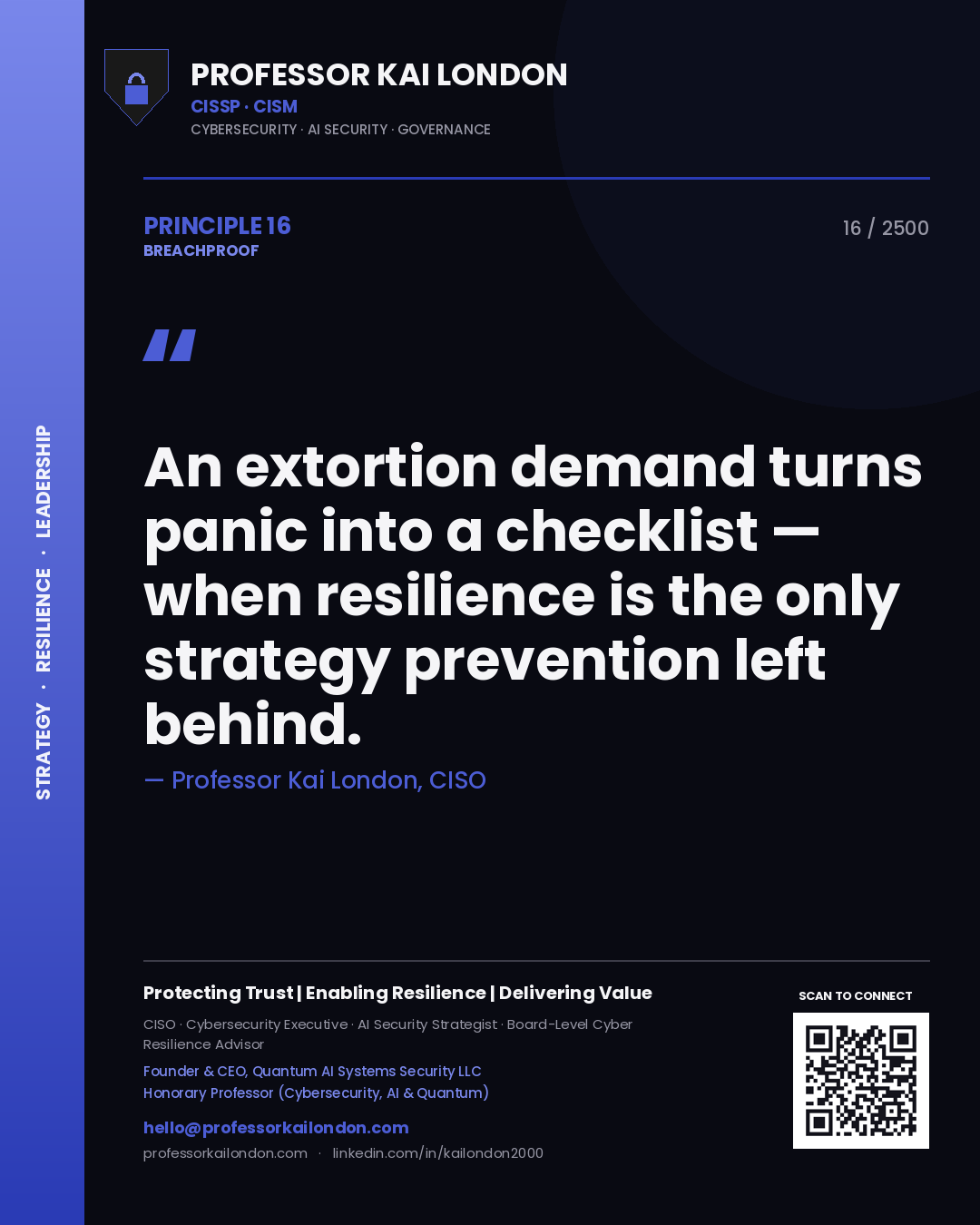
Professor Kai London principle 16: An extortion demand turns panic into a checklist — when resilience is the only strategy prevention left behind.
Principle 16
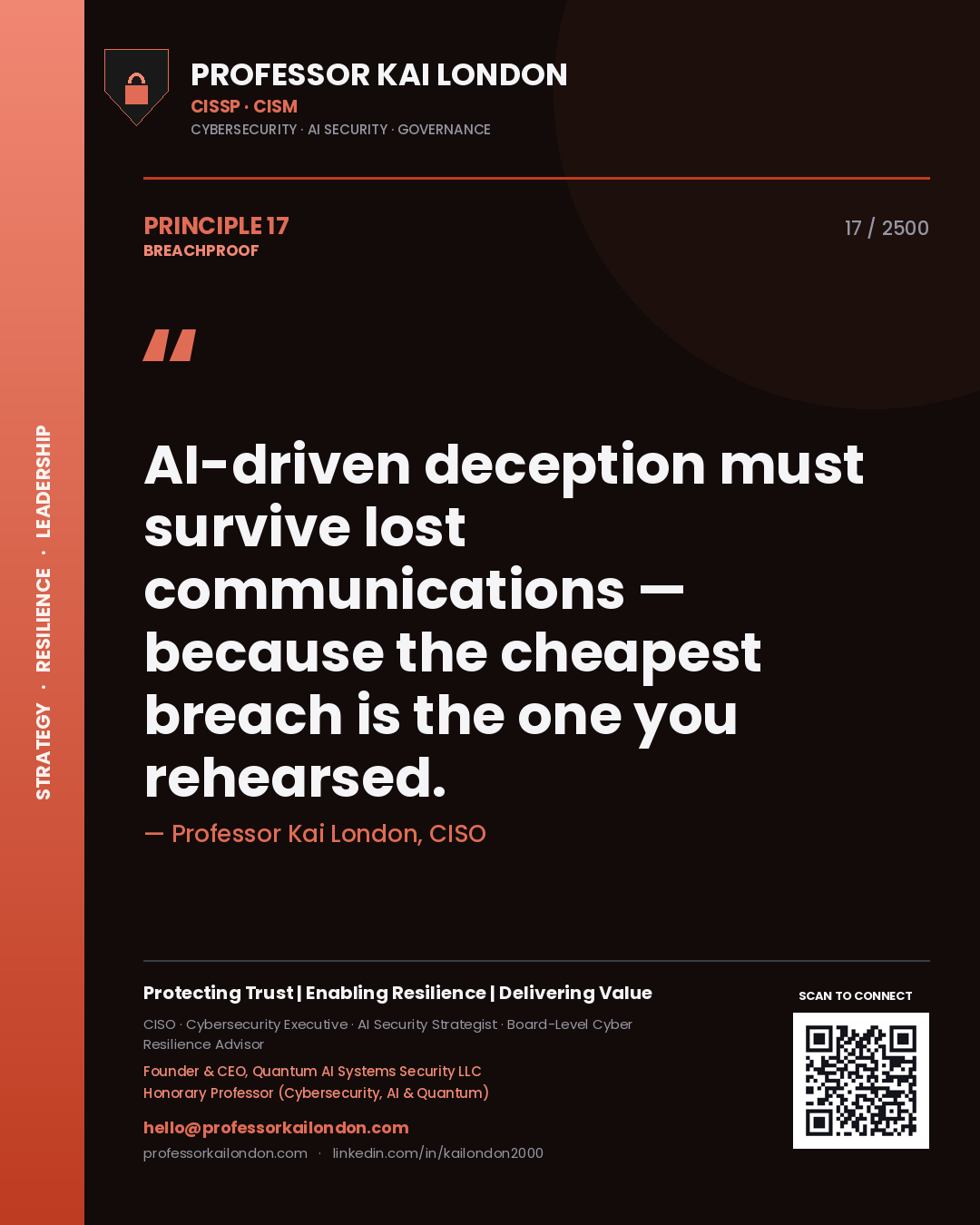
Professor Kai London principle 17: AI-driven deception must survive lost communications — because the cheapest breach is the one you rehearsed.
Principle 17
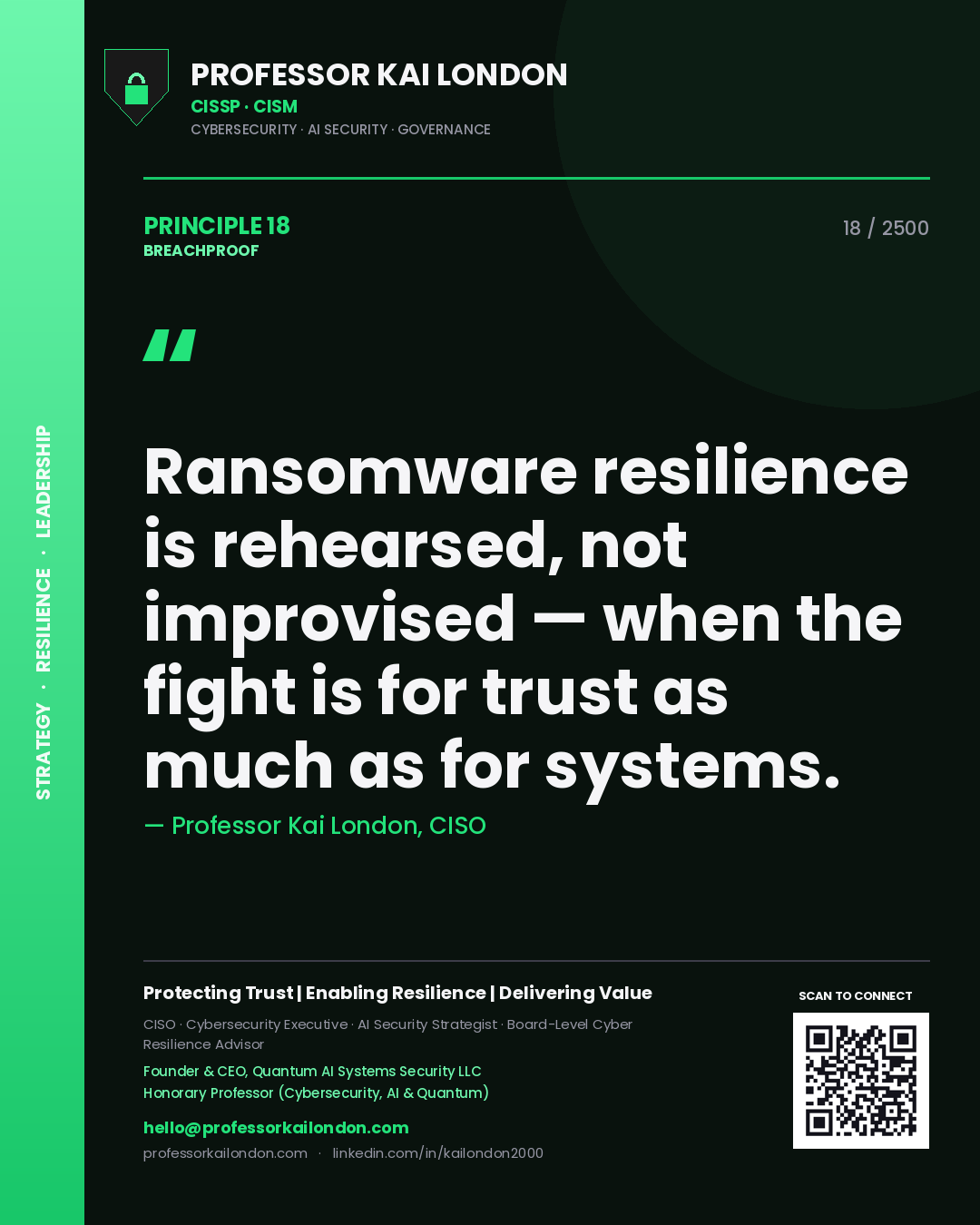
Professor Kai London principle 18: Ransomware resilience is rehearsed, not improvised — when the fight is for trust as much as for systems.
Principle 18
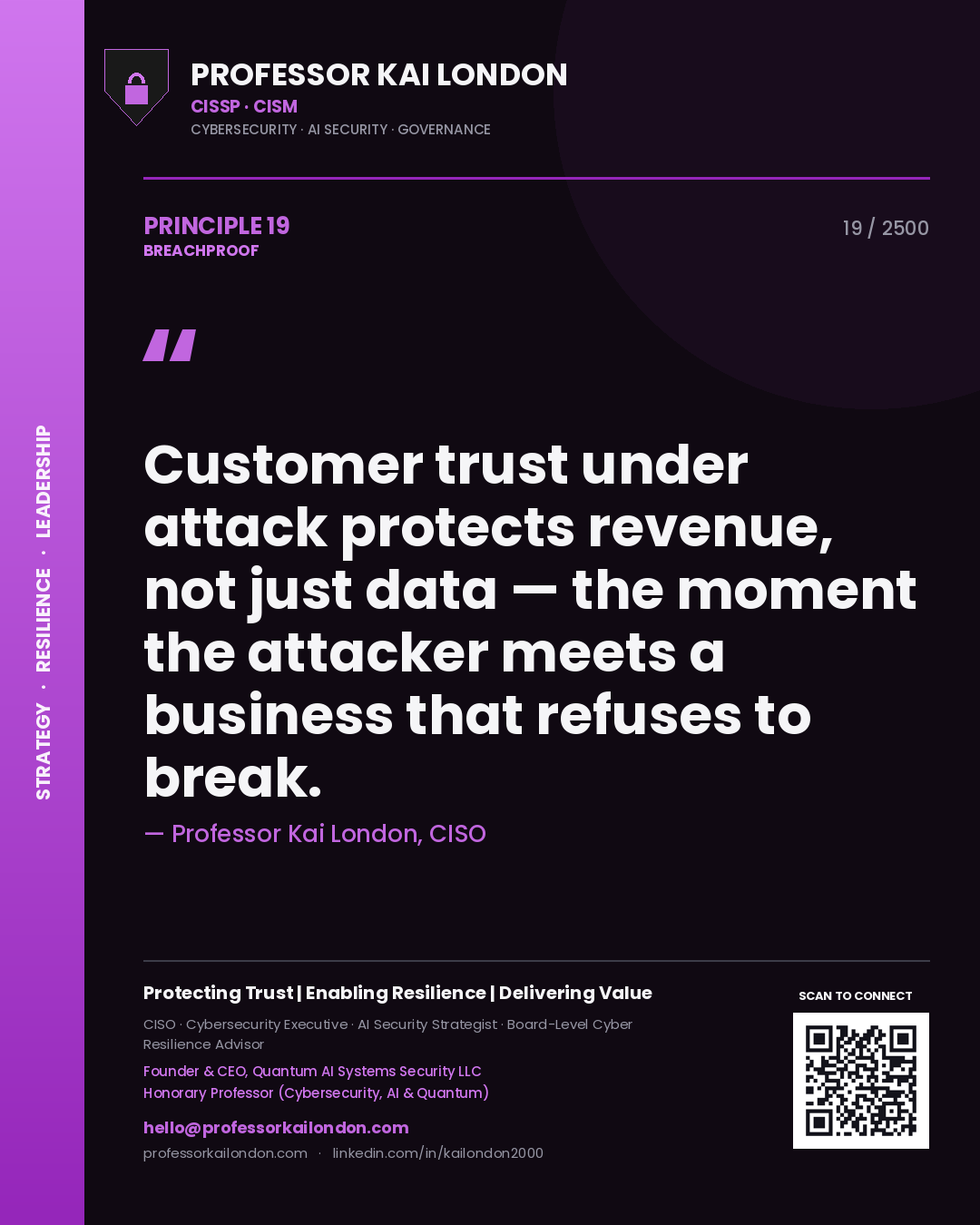
Professor Kai London principle 19: Customer trust under attack protects revenue, not just data — the moment the attacker meets a business that refuses to break.
Principle 19
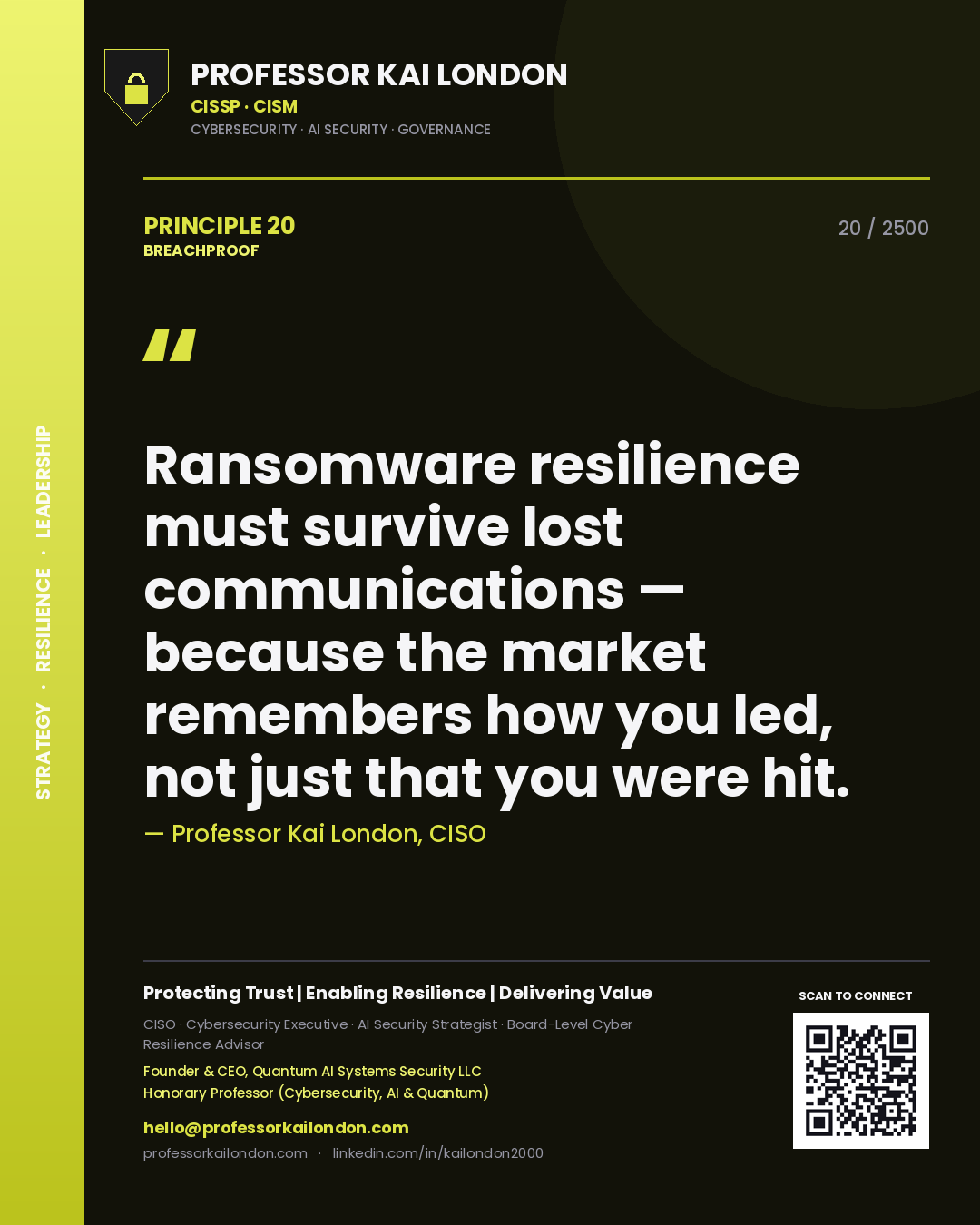
Professor Kai London principle 20: Ransomware resilience must survive lost communications — because the market remembers how you led, not just that you were hit.
Principle 20
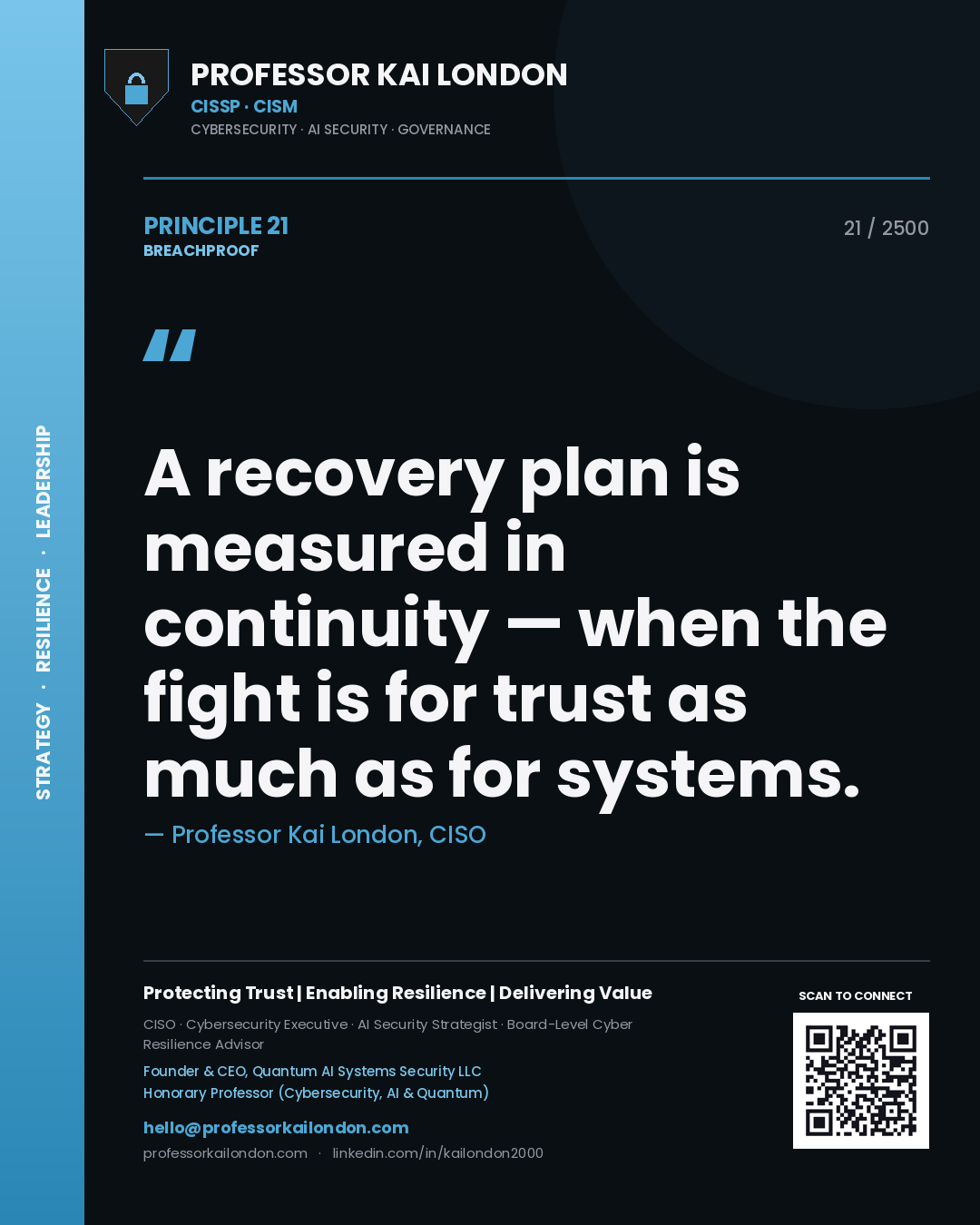
Professor Kai London principle 21: A recovery plan is measured in continuity — when the fight is for trust as much as for systems.
Principle 21
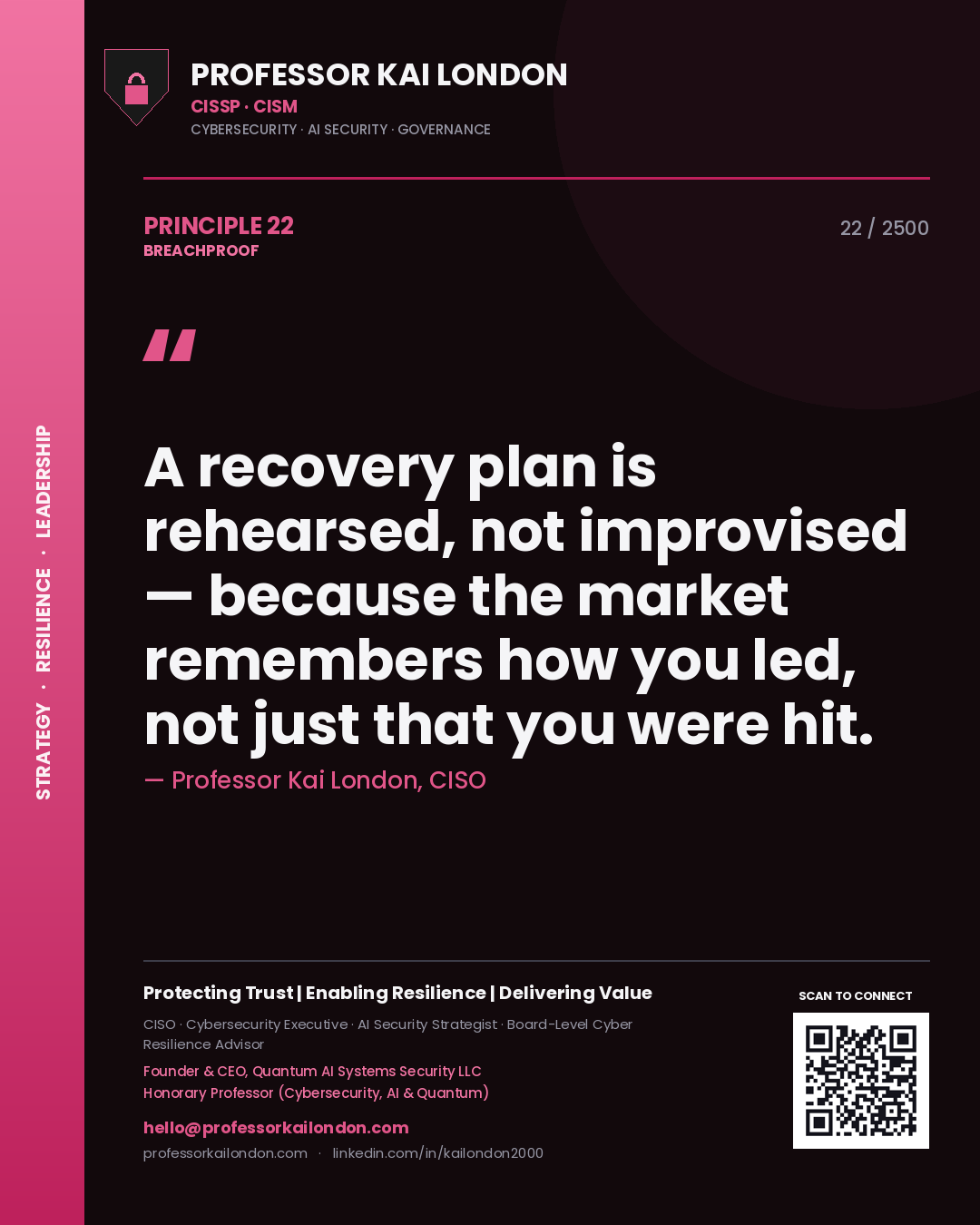
Professor Kai London principle 22: A recovery plan is rehearsed, not improvised — because the market remembers how you led, not just that you were hit.
Principle 22
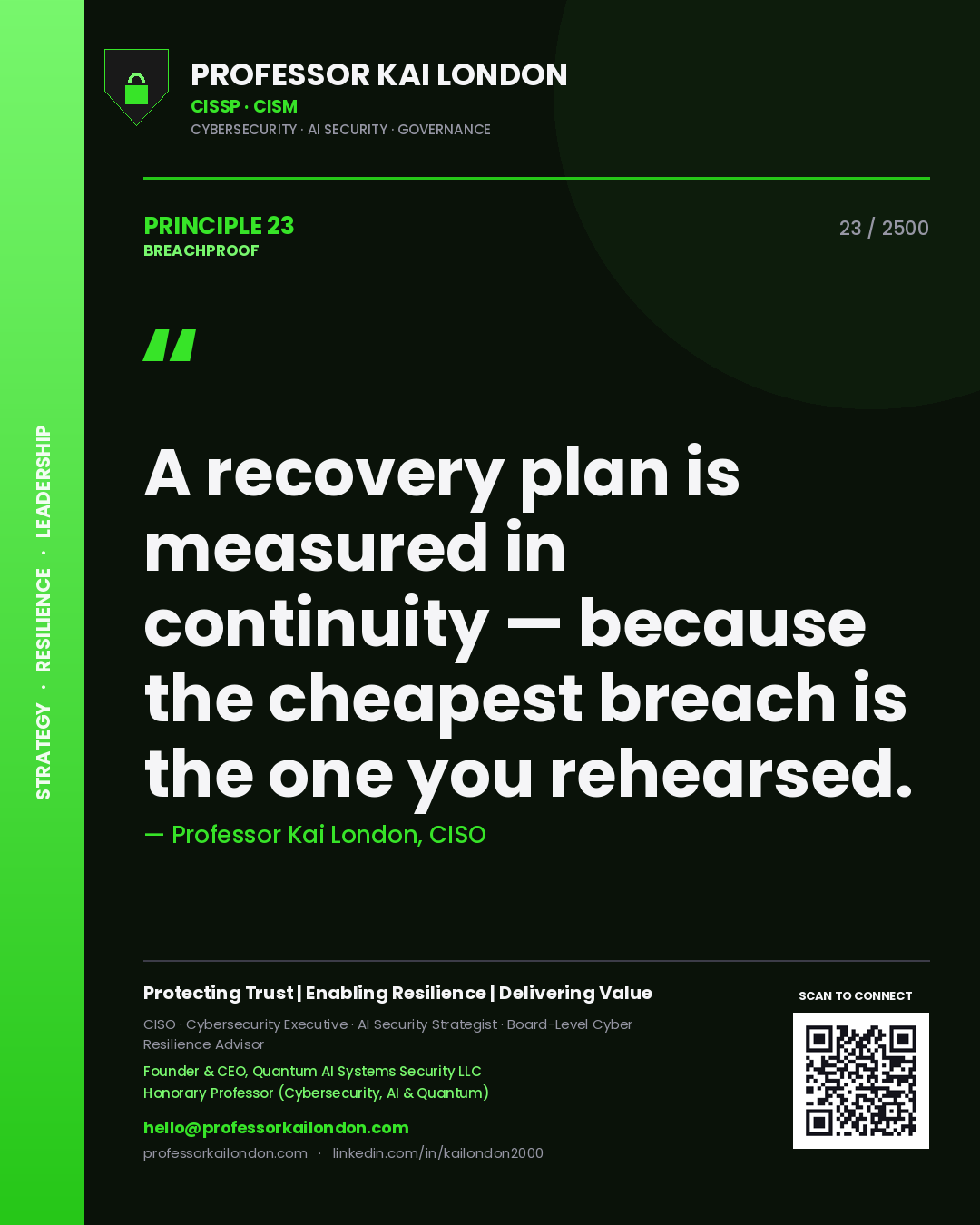
Professor Kai London principle 23: A recovery plan is measured in continuity — because the cheapest breach is the one you rehearsed.
Principle 23
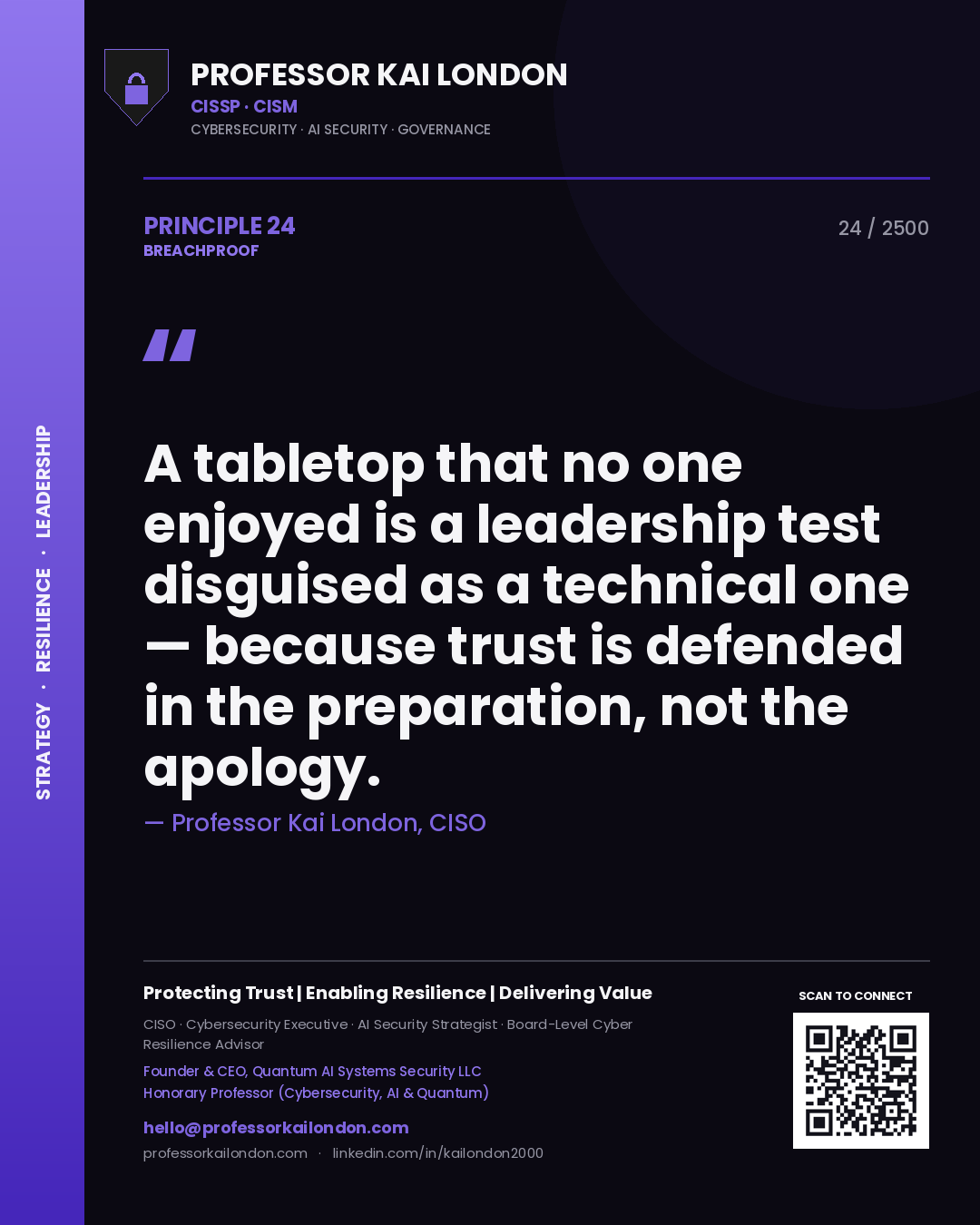
Professor Kai London principle 24: A tabletop that no one enjoyed is a leadership test disguised as a technical one — because trust is defended in the preparation, not the apology.
Principle 24
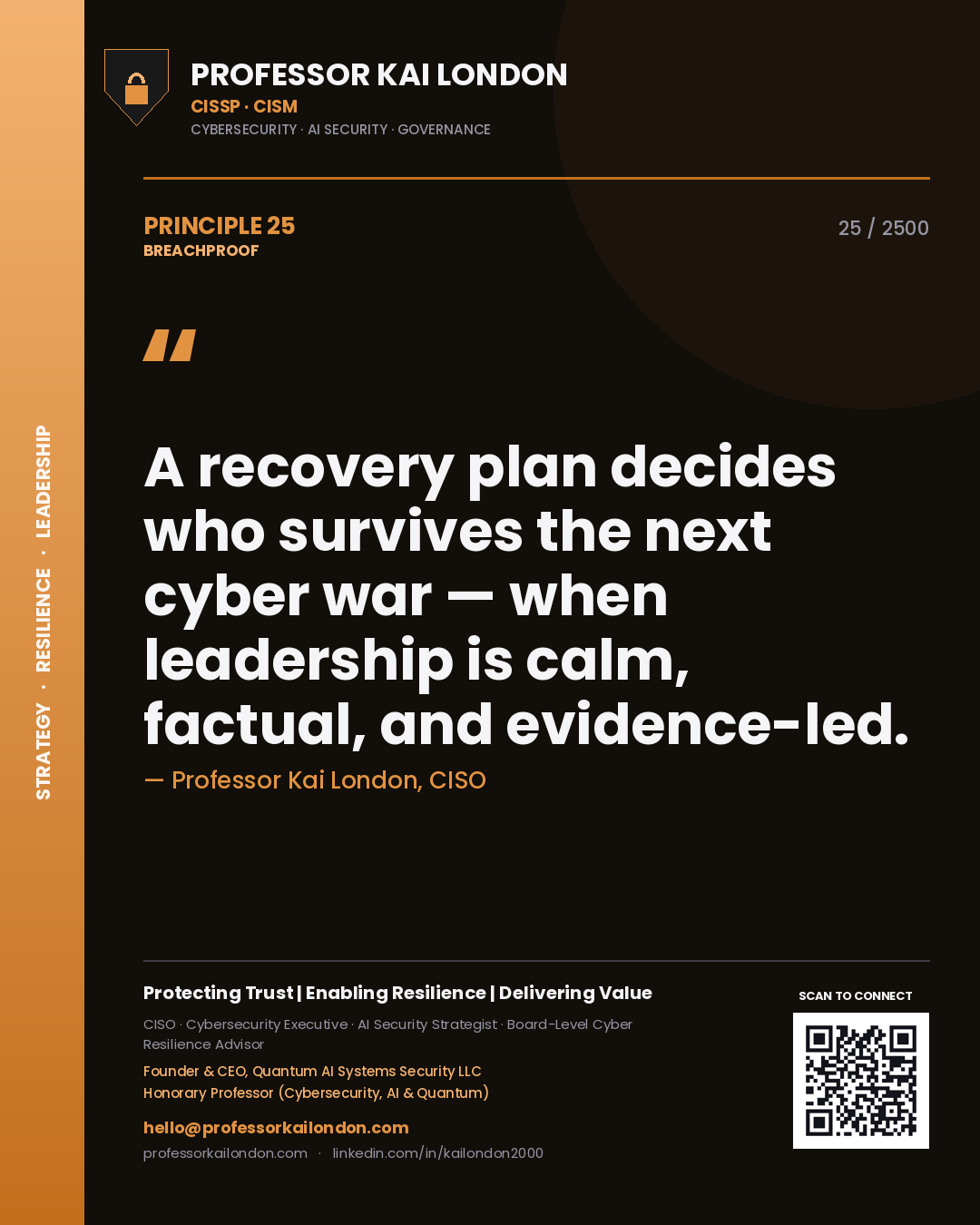
Professor Kai London principle 25: A recovery plan decides who survives the next cyber war — when leadership is calm, factual, and evidence-led.
Principle 25
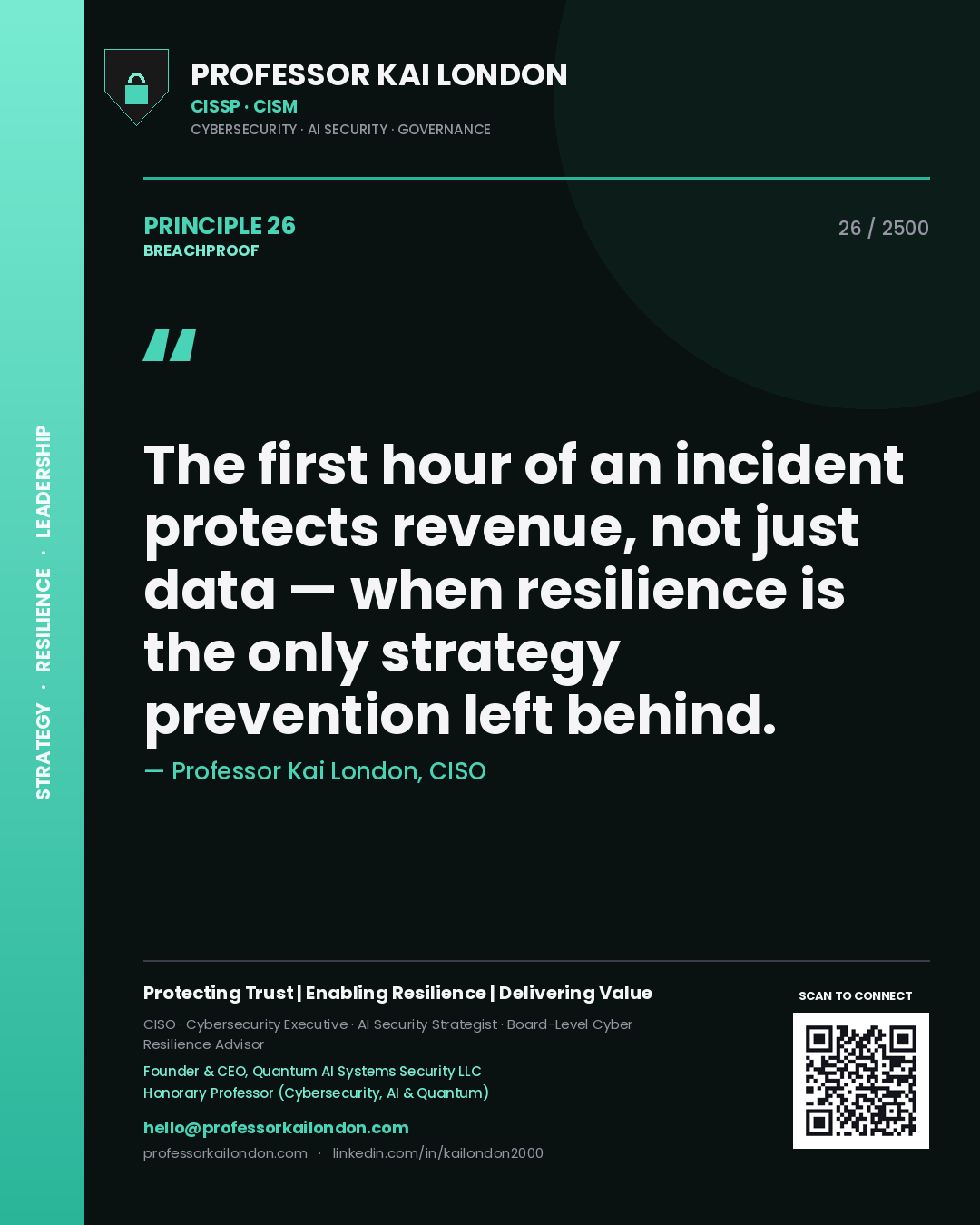
Professor Kai London principle 26: The first hour of an incident protects revenue, not just data — when resilience is the only strategy prevention left behind.
Principle 26
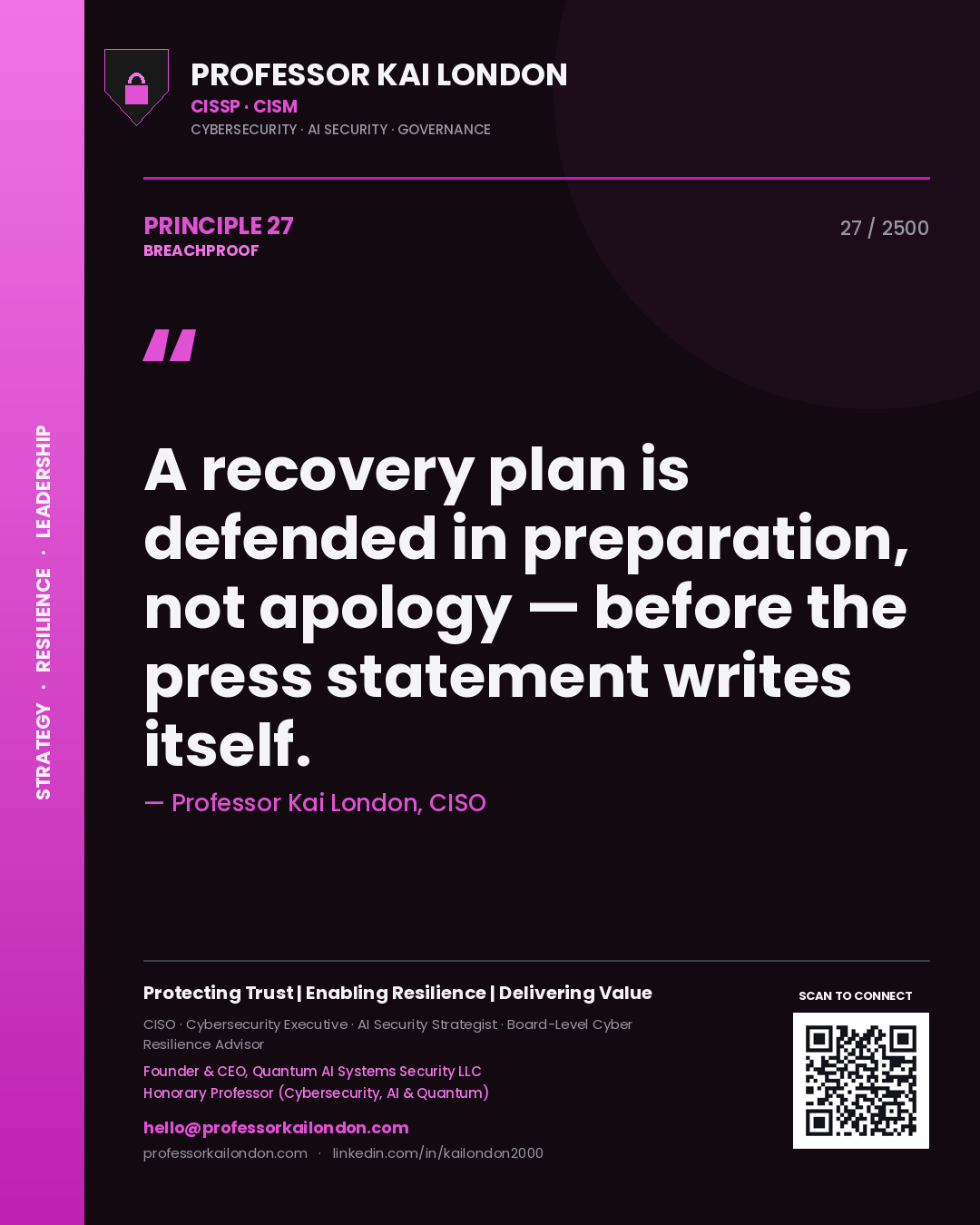
Professor Kai London principle 27: A recovery plan is defended in preparation, not apology — before the press statement writes itself.
Principle 27
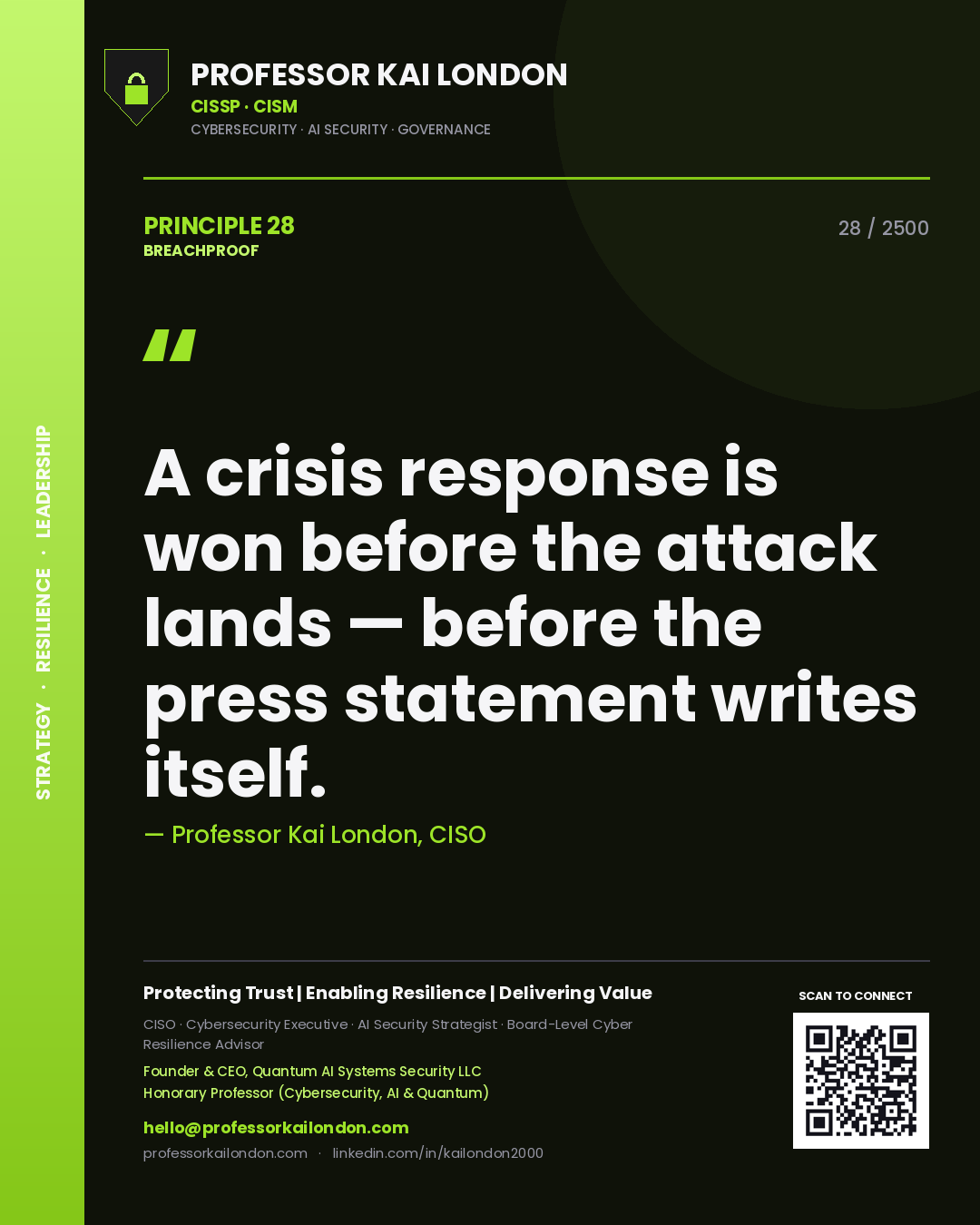
Professor Kai London principle 28: A crisis response is won before the attack lands — before the press statement writes itself.
Principle 28
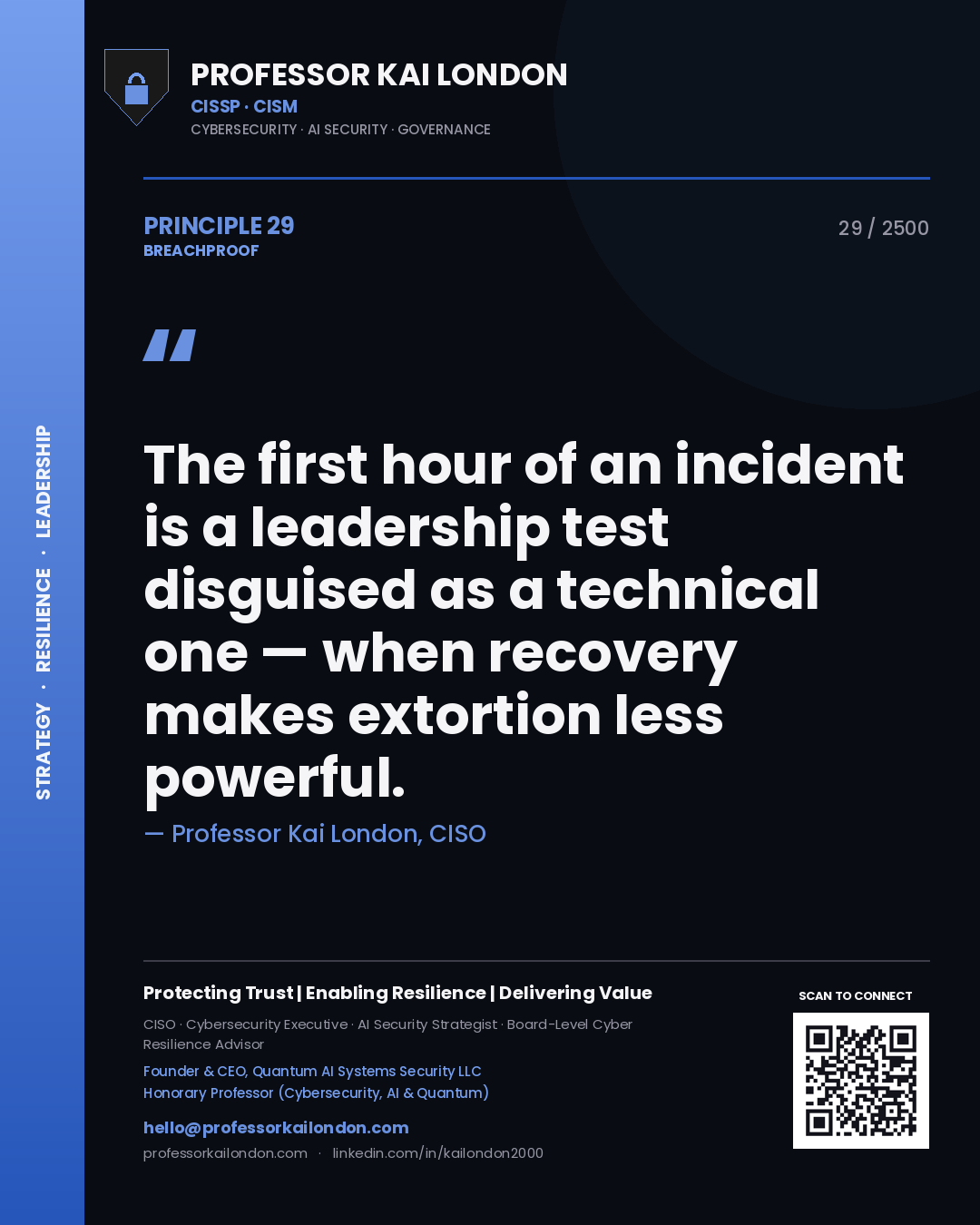
Professor Kai London principle 29: The first hour of an incident is a leadership test disguised as a technical one — when recovery makes extortion less powerful.
Principle 29
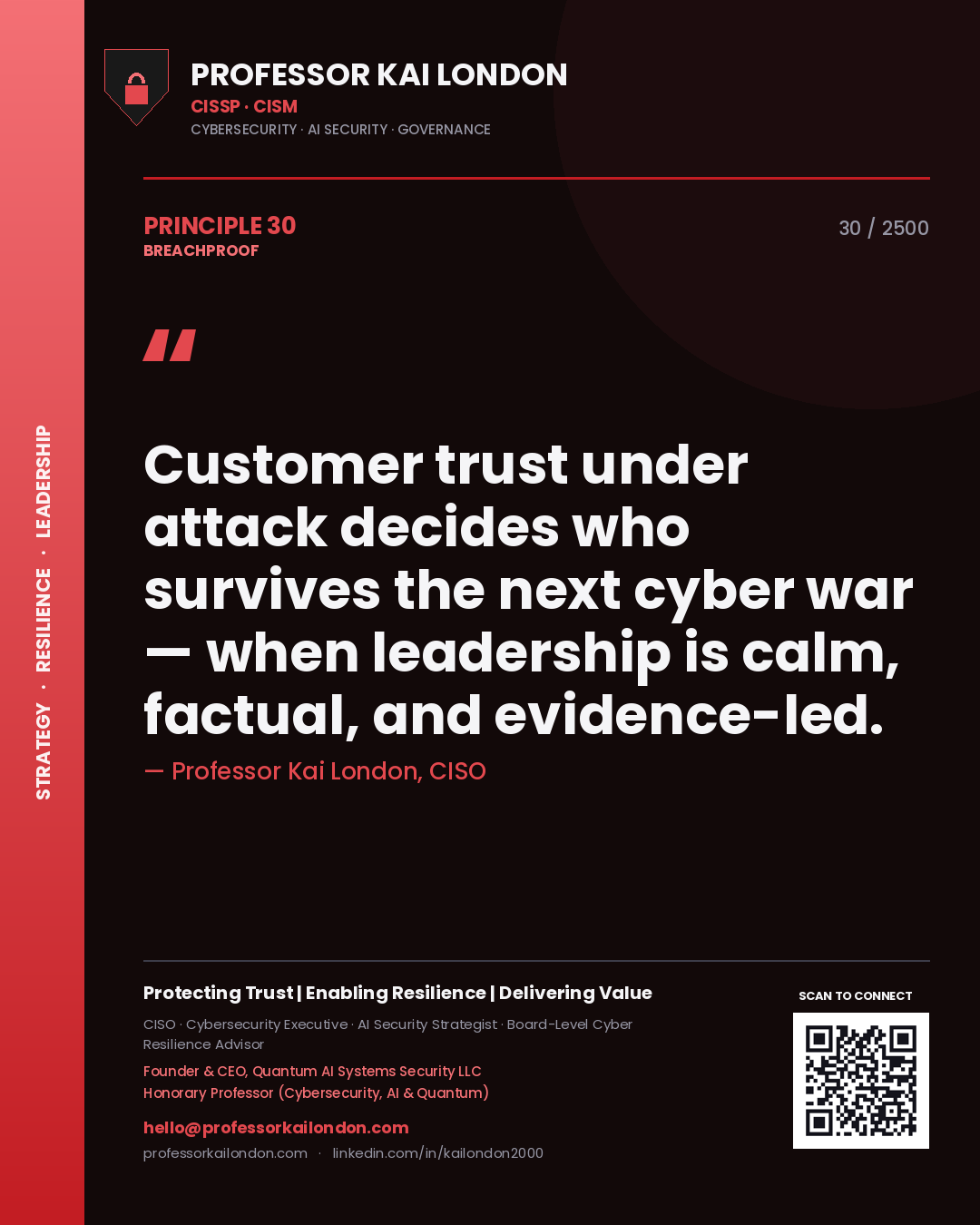
Professor Kai London principle 30: Customer trust under attack decides who survives the next cyber war — when leadership is calm, factual, and evidence-led.
Principle 30
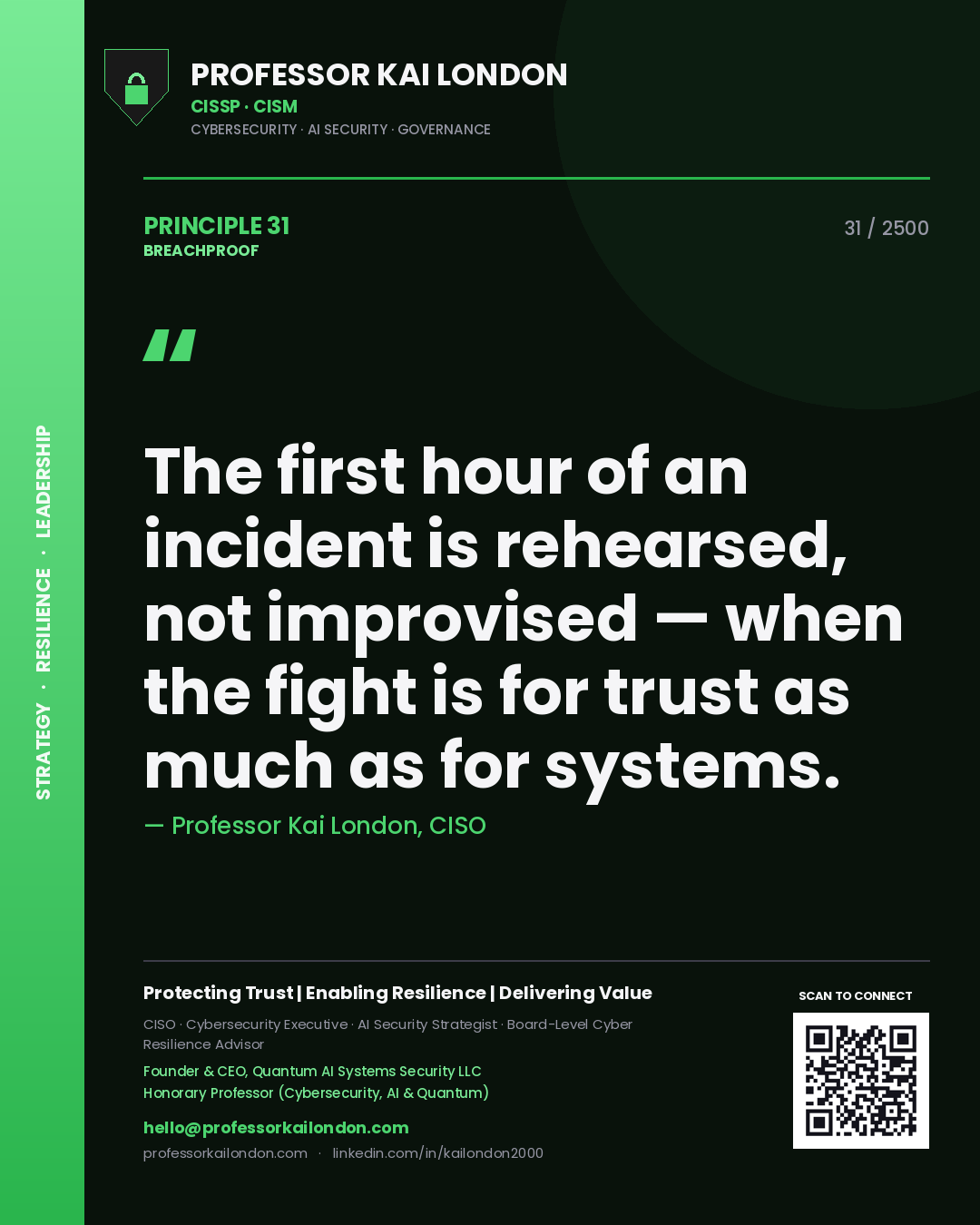
Professor Kai London principle 31: The first hour of an incident is rehearsed, not improvised — when the fight is for trust as much as for systems.
Principle 31
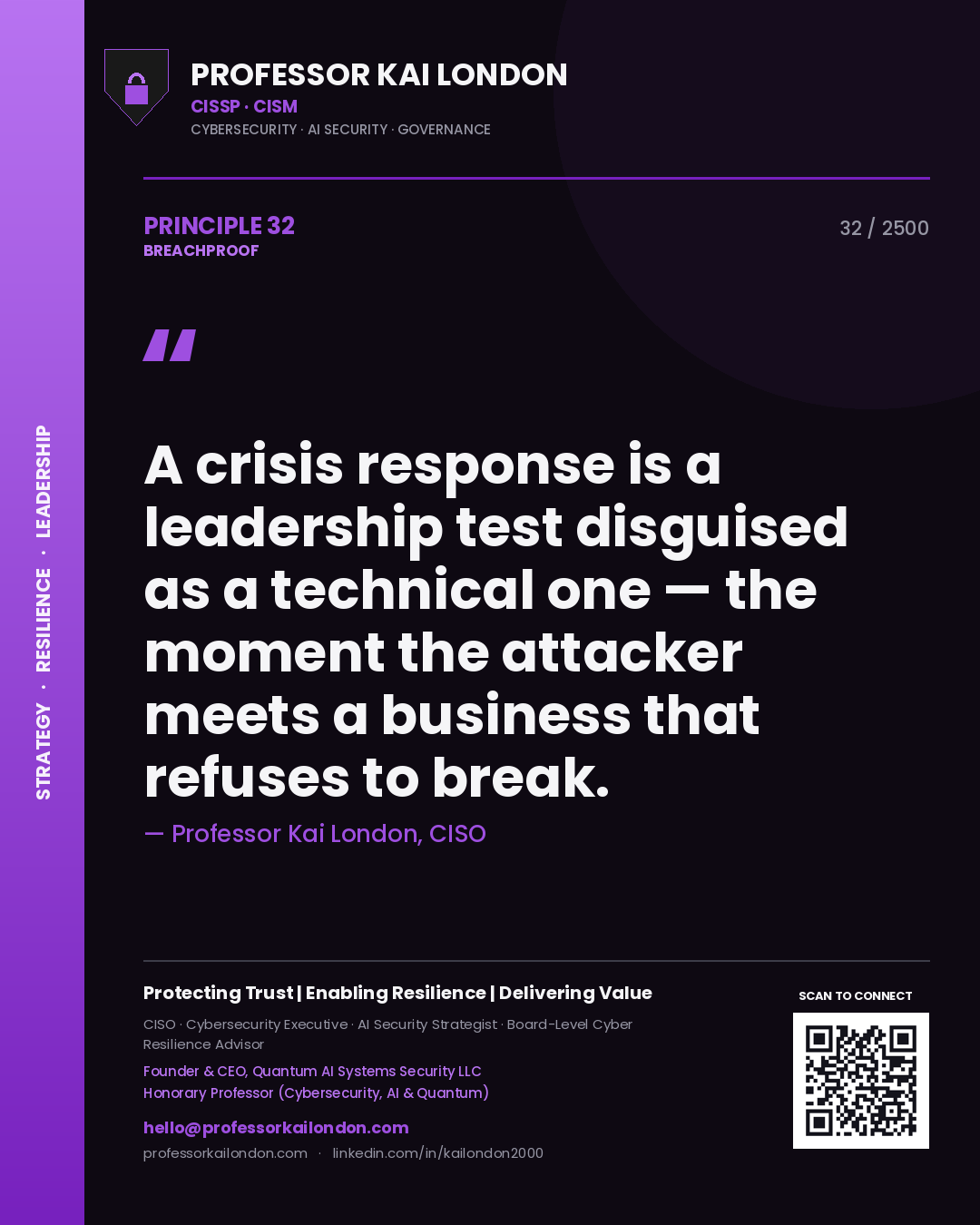
Professor Kai London principle 32: A crisis response is a leadership test disguised as a technical one — the moment the attacker meets a business that refuses to break.
Principle 32
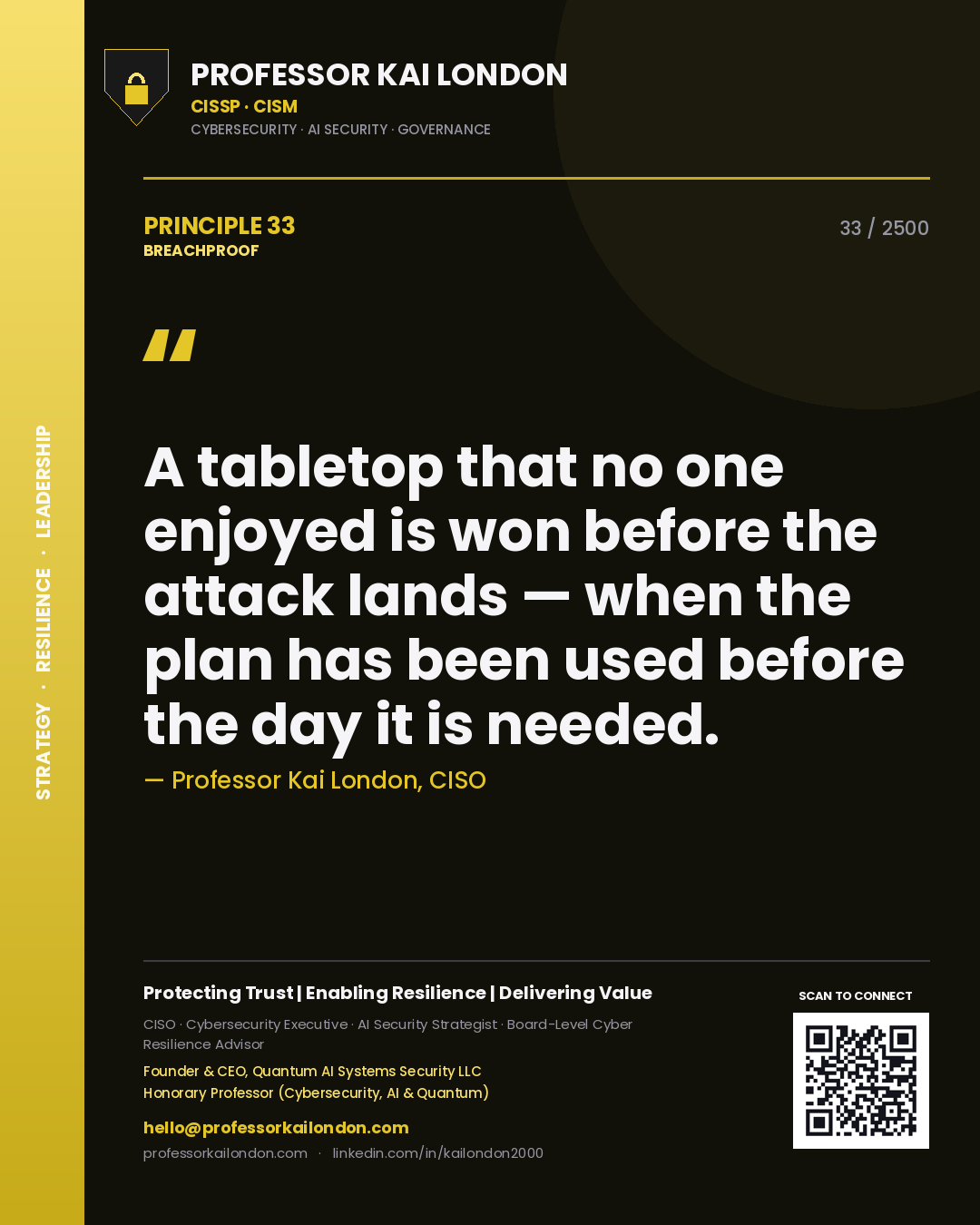
Professor Kai London principle 33: A tabletop that no one enjoyed is won before the attack lands — when the plan has been used before the day it is needed.
Principle 33
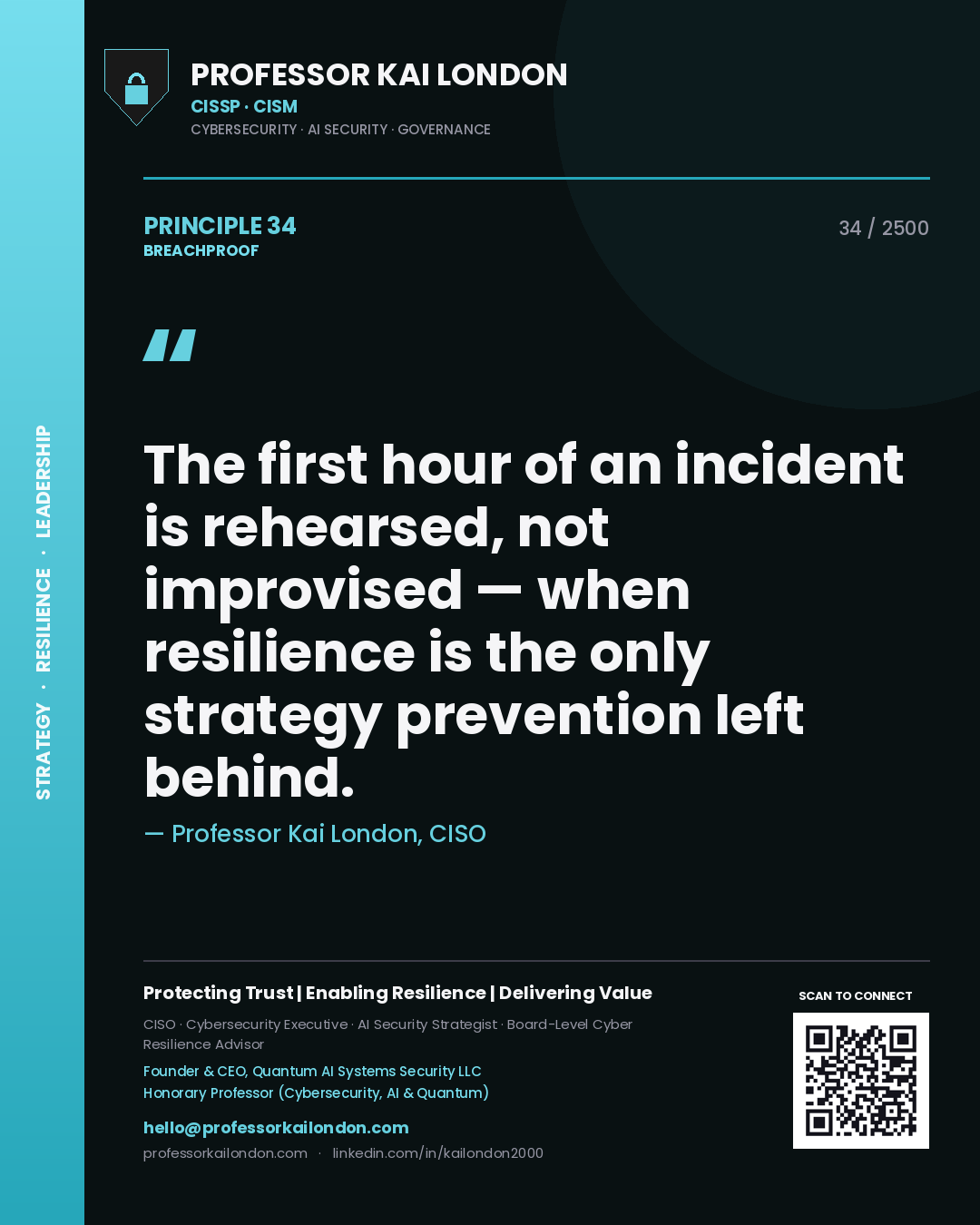
Professor Kai London principle 34: The first hour of an incident is rehearsed, not improvised — when resilience is the only strategy prevention left behind.
Principle 34
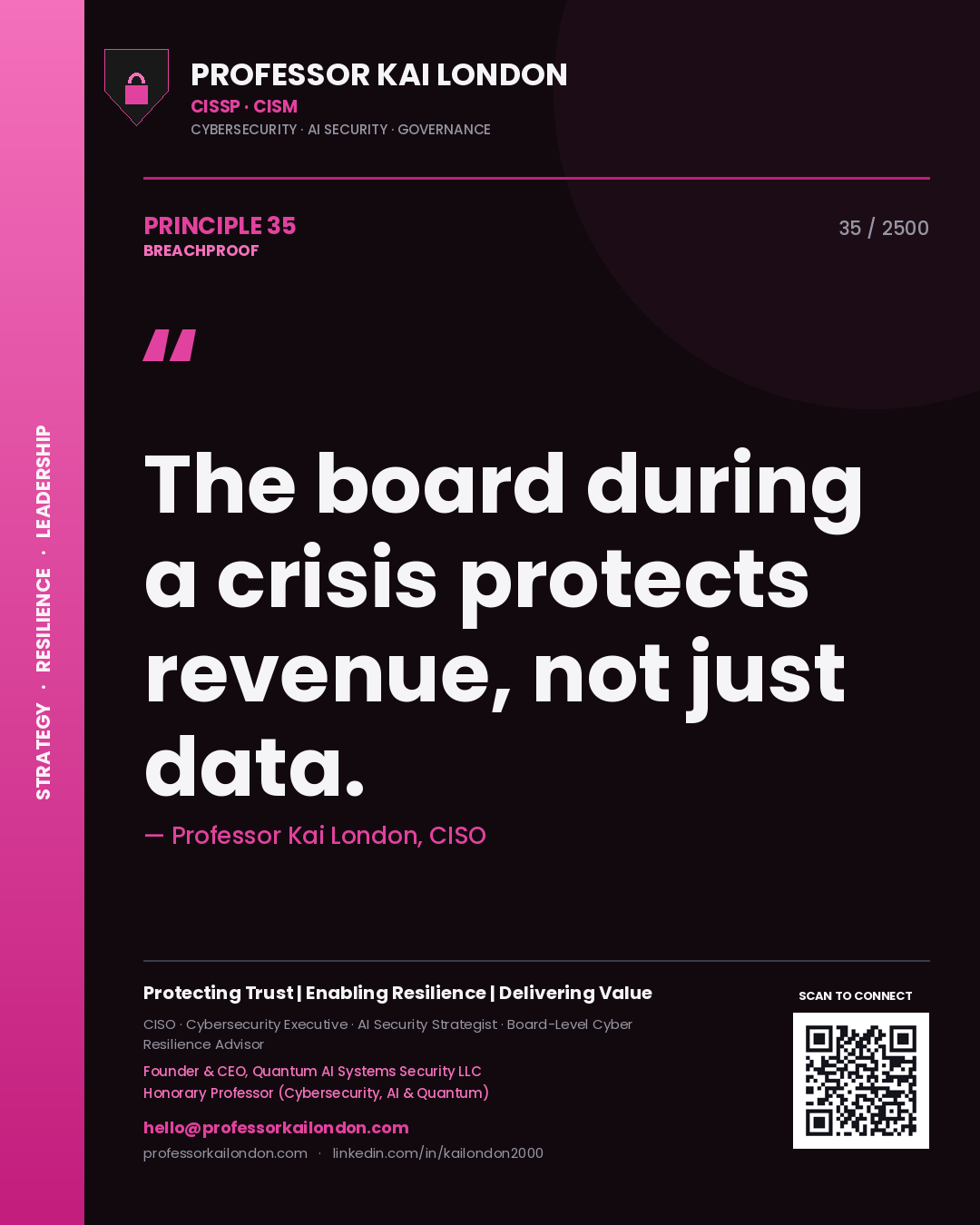
Professor Kai London principle 35: The board during a crisis protects revenue, not just data.
Principle 35
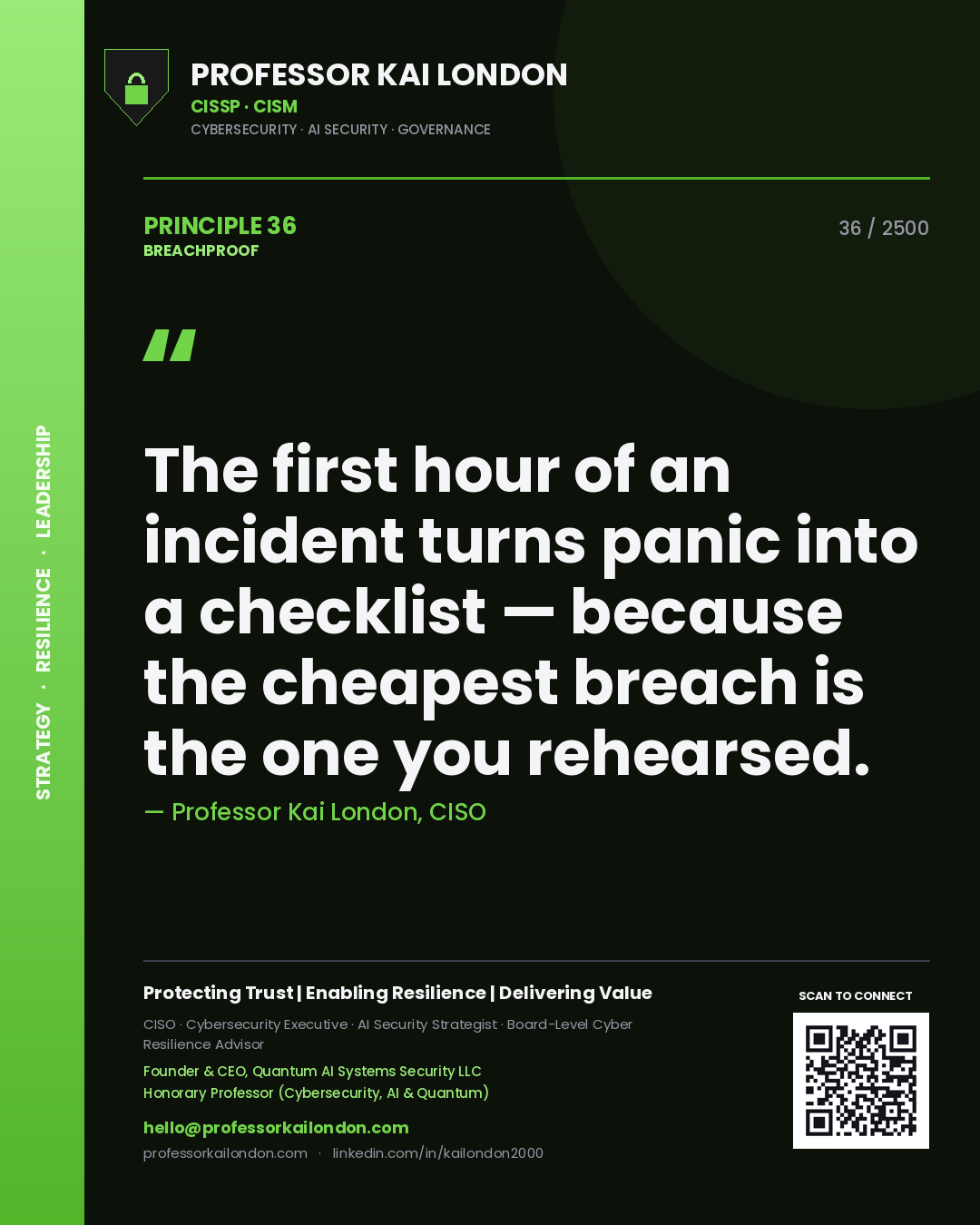
Professor Kai London principle 36: The first hour of an incident turns panic into a checklist — because the cheapest breach is the one you rehearsed.
Principle 36
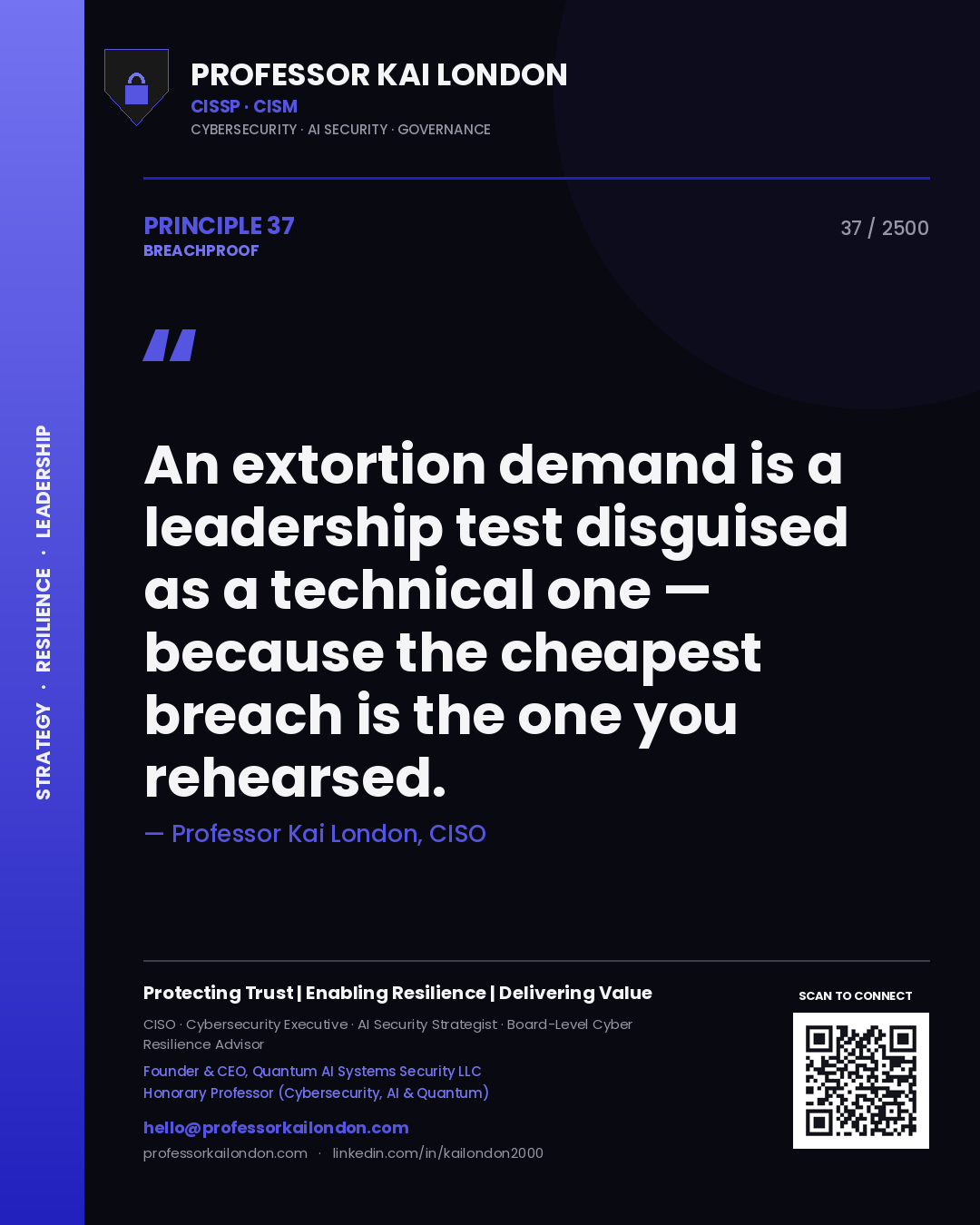
Professor Kai London principle 37: An extortion demand is a leadership test disguised as a technical one — because the cheapest breach is the one you rehearsed.
Principle 37
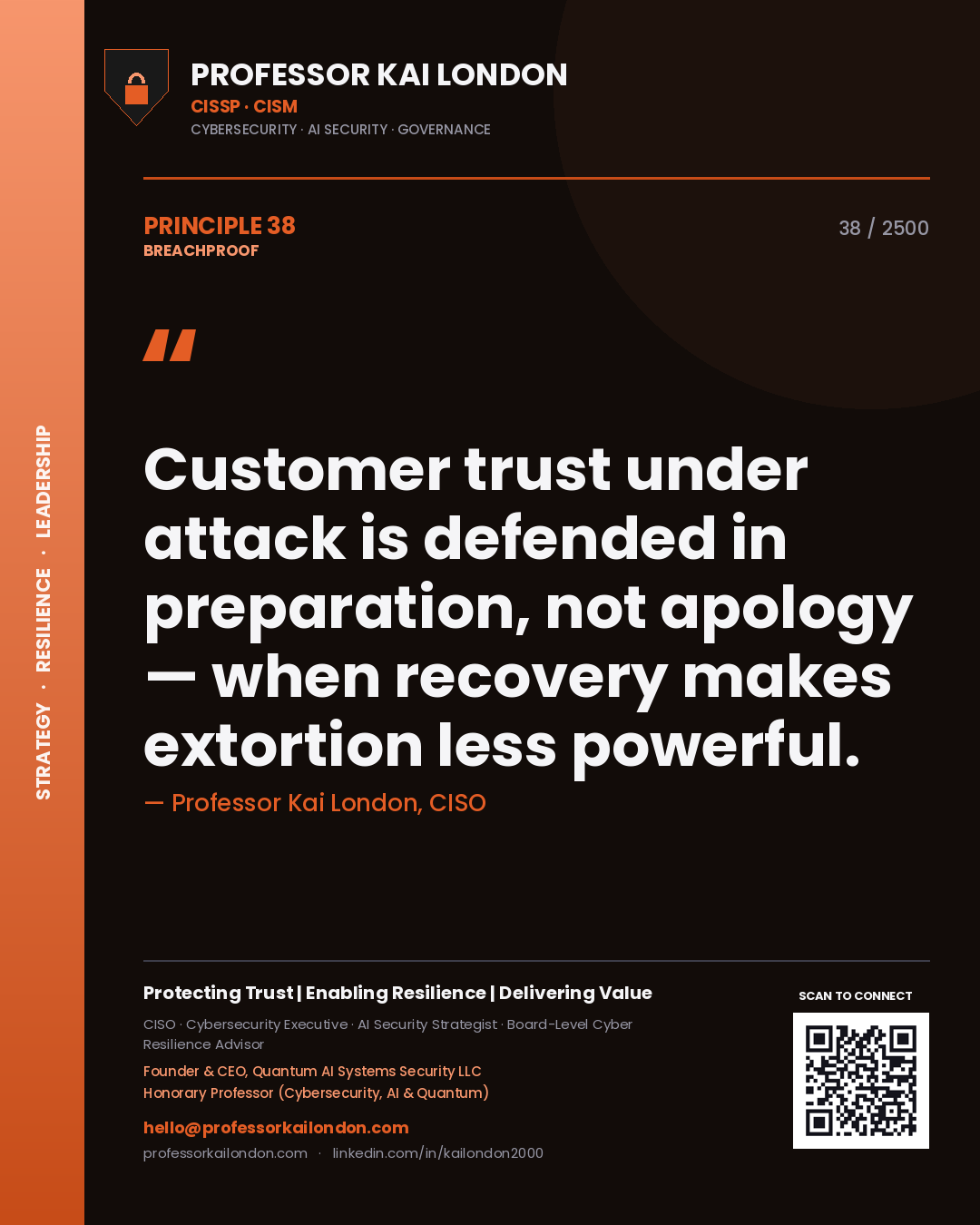
Professor Kai London principle 38: Customer trust under attack is defended in preparation, not apology — when recovery makes extortion less powerful.
Principle 38
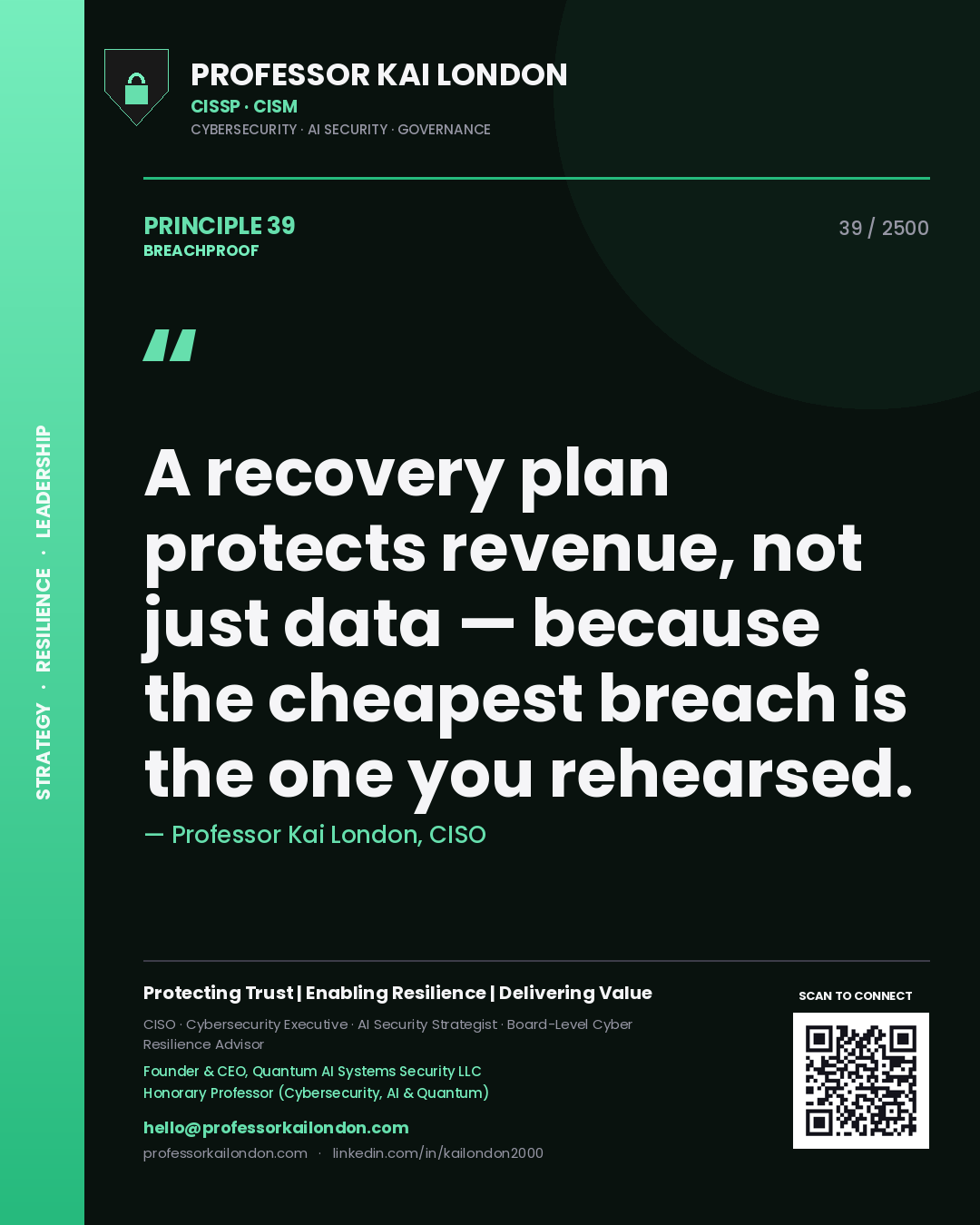
Professor Kai London principle 39: A recovery plan protects revenue, not just data — because the cheapest breach is the one you rehearsed.
Principle 39
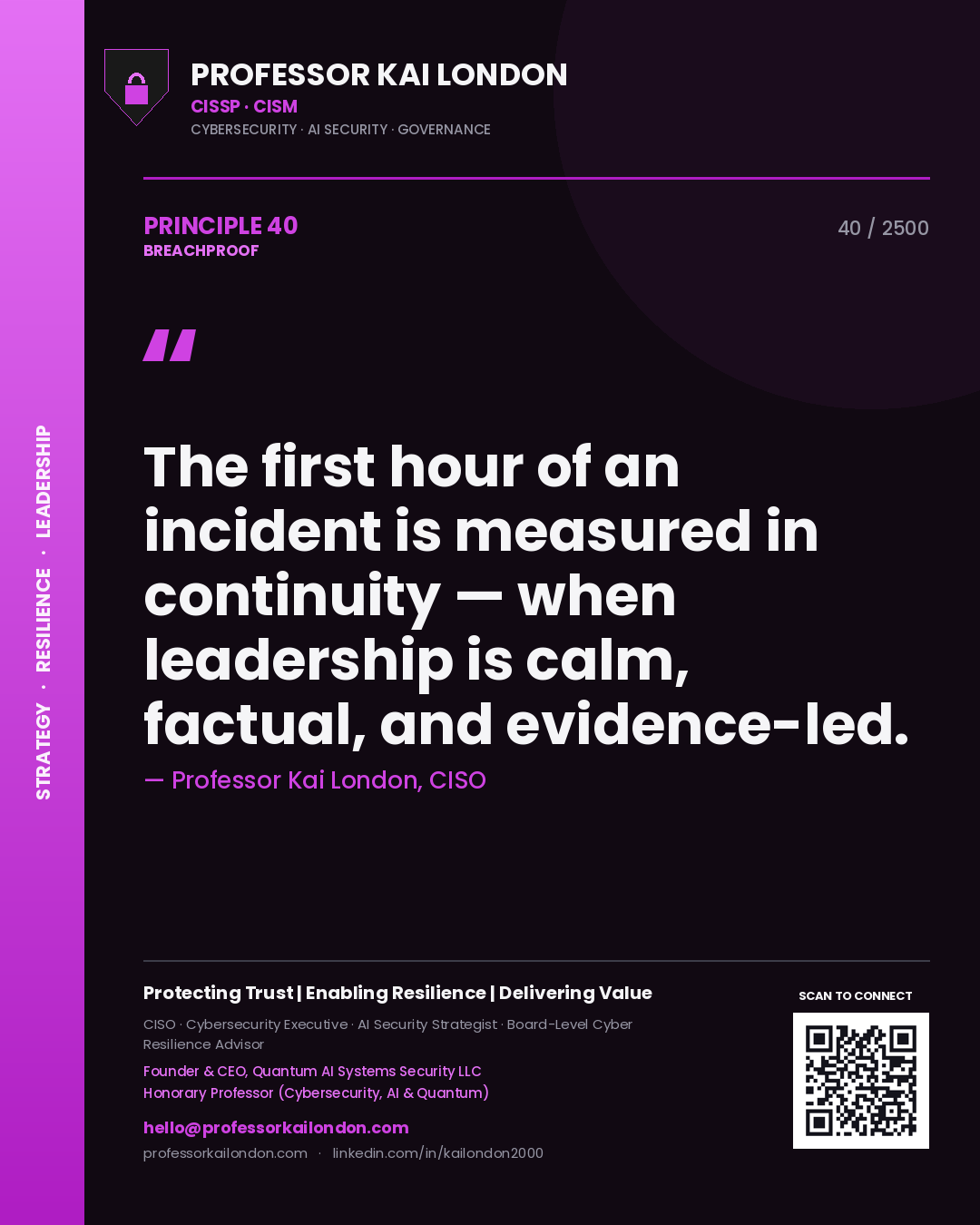
Professor Kai London principle 40: The first hour of an incident is measured in continuity — when leadership is calm, factual, and evidence-led.
Principle 40
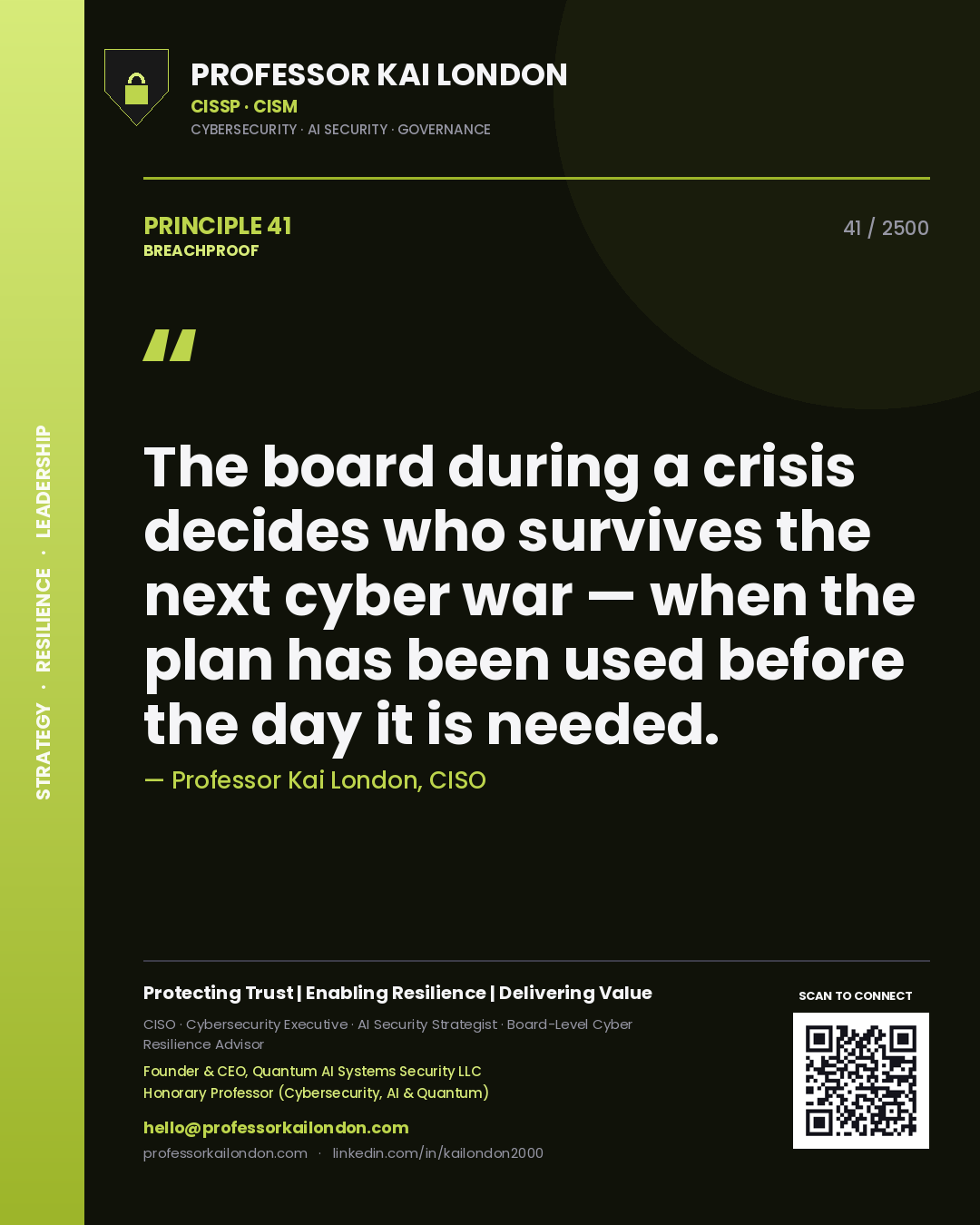
Professor Kai London principle 41: The board during a crisis decides who survives the next cyber war — when the plan has been used before the day it is needed.
Principle 41
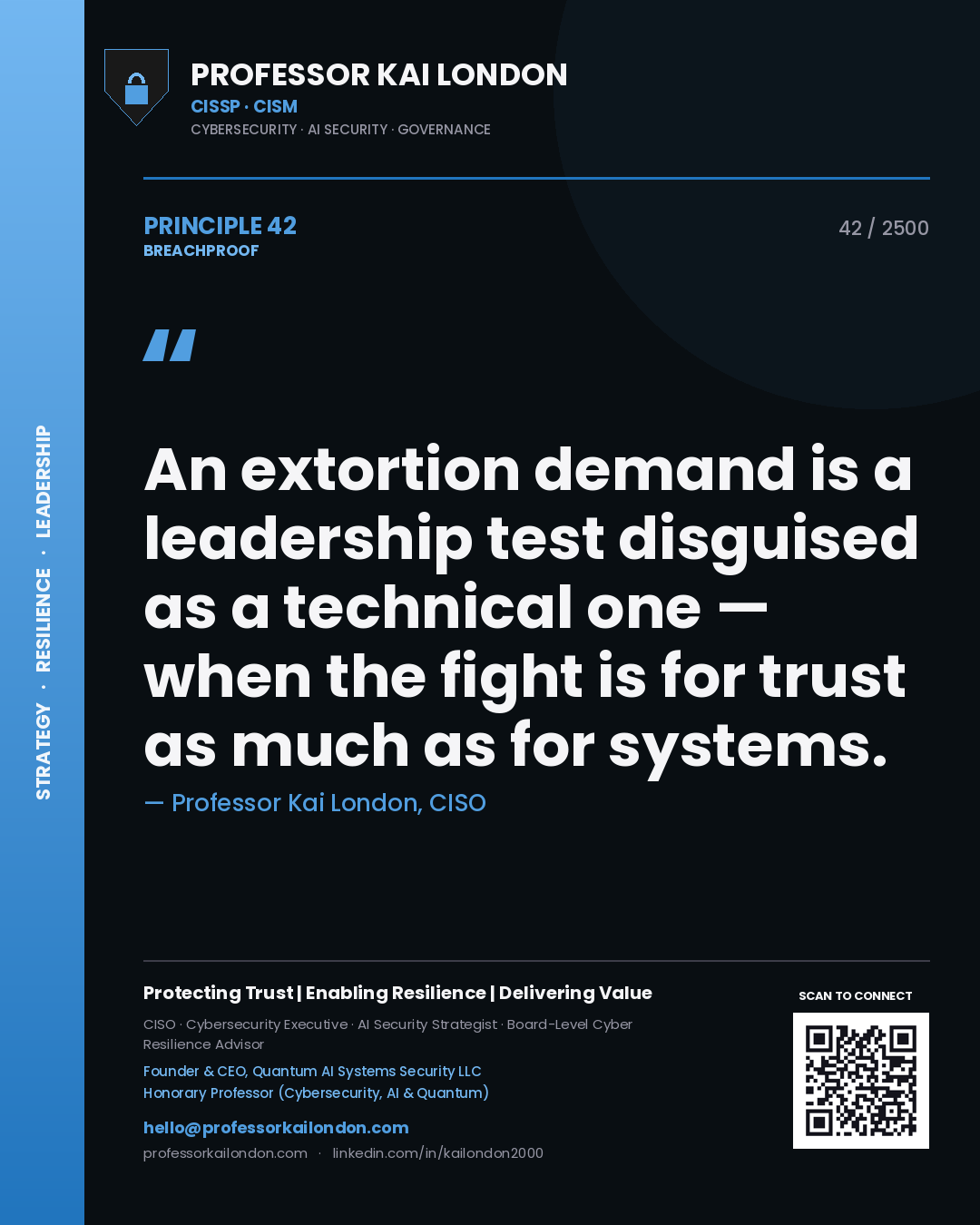
Professor Kai London principle 42: An extortion demand is a leadership test disguised as a technical one — when the fight is for trust as much as for systems.
Principle 42
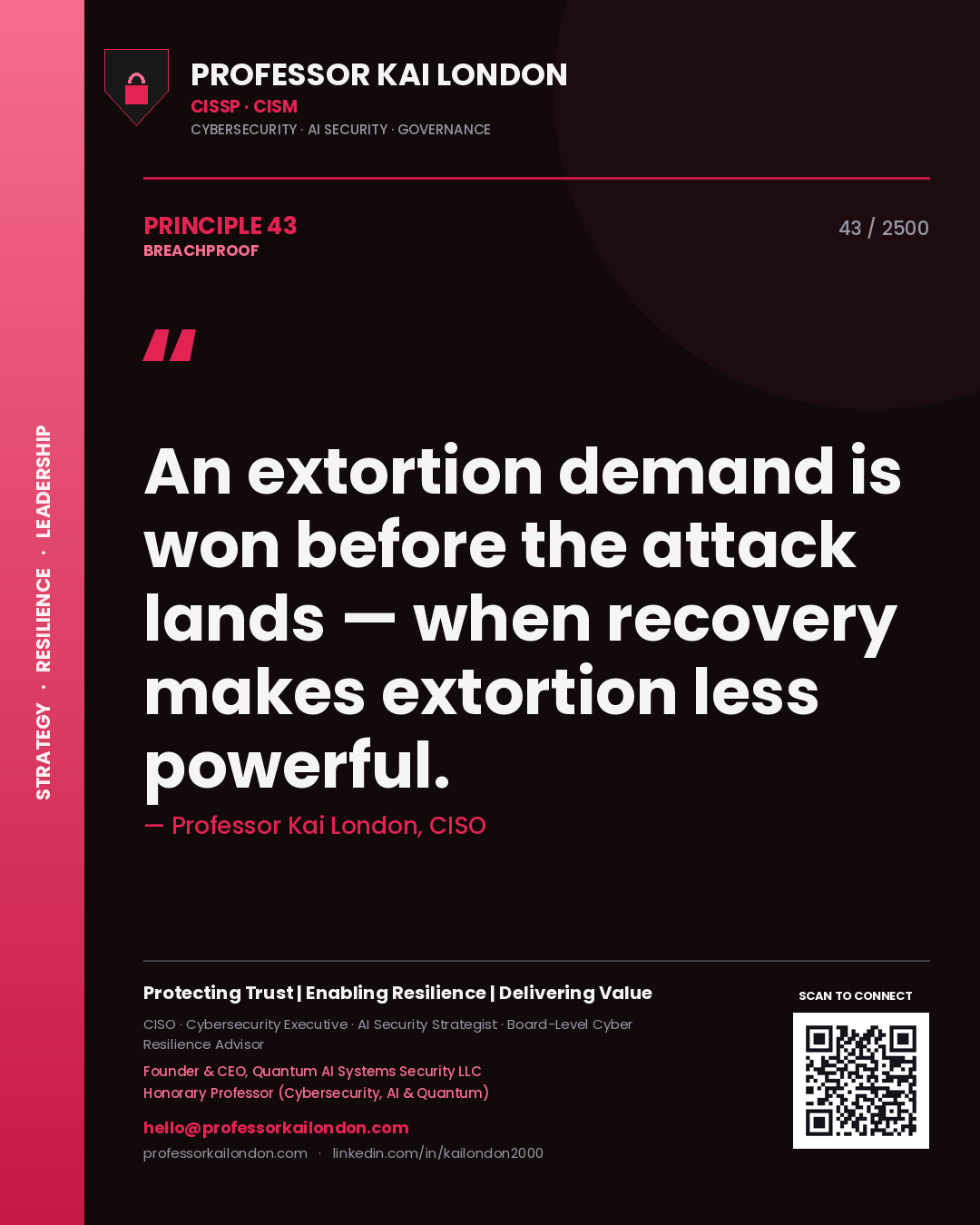
Professor Kai London principle 43: An extortion demand is won before the attack lands — when recovery makes extortion less powerful.
Principle 43
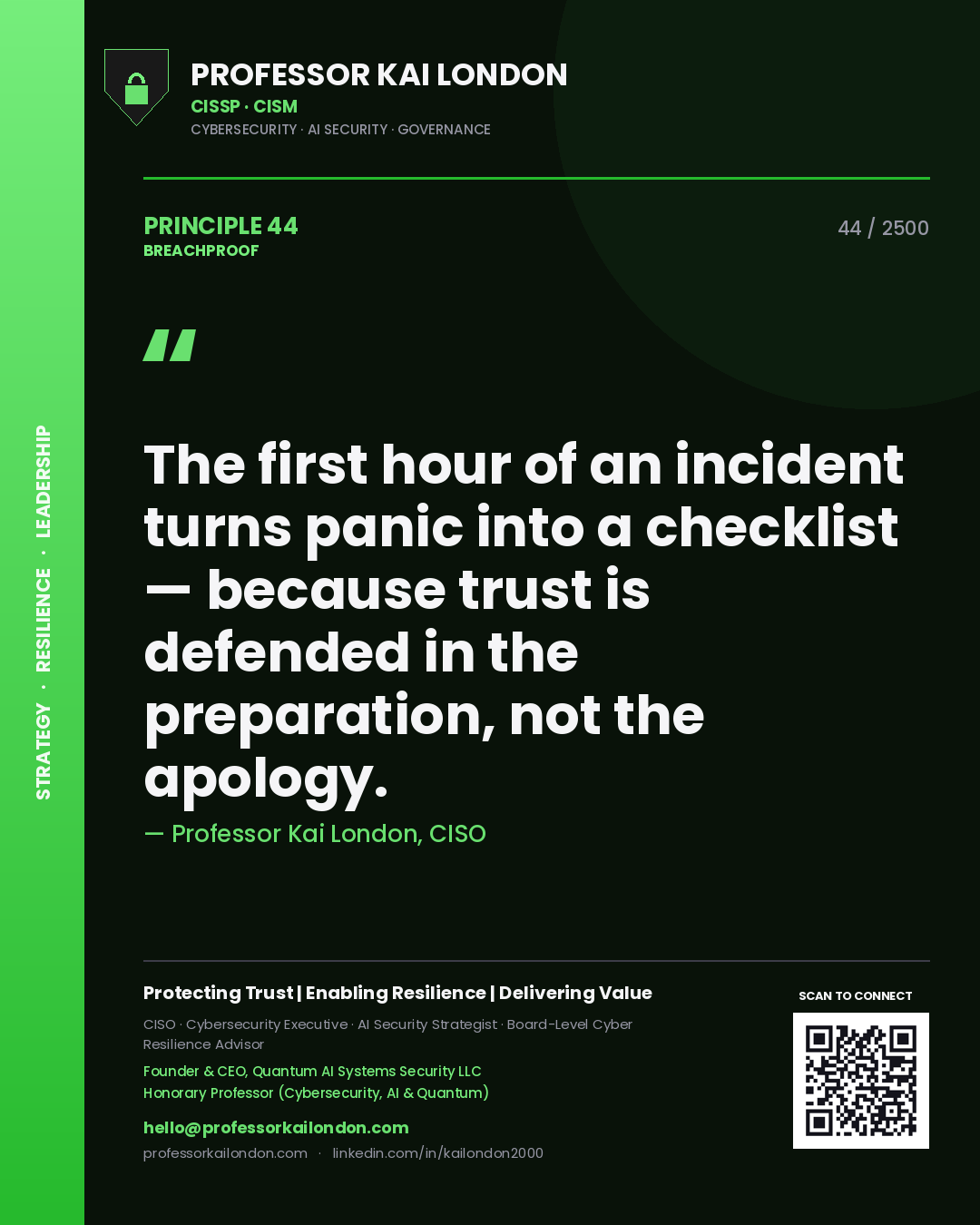
Professor Kai London principle 44: The first hour of an incident turns panic into a checklist — because trust is defended in the preparation, not the apology.
Principle 44
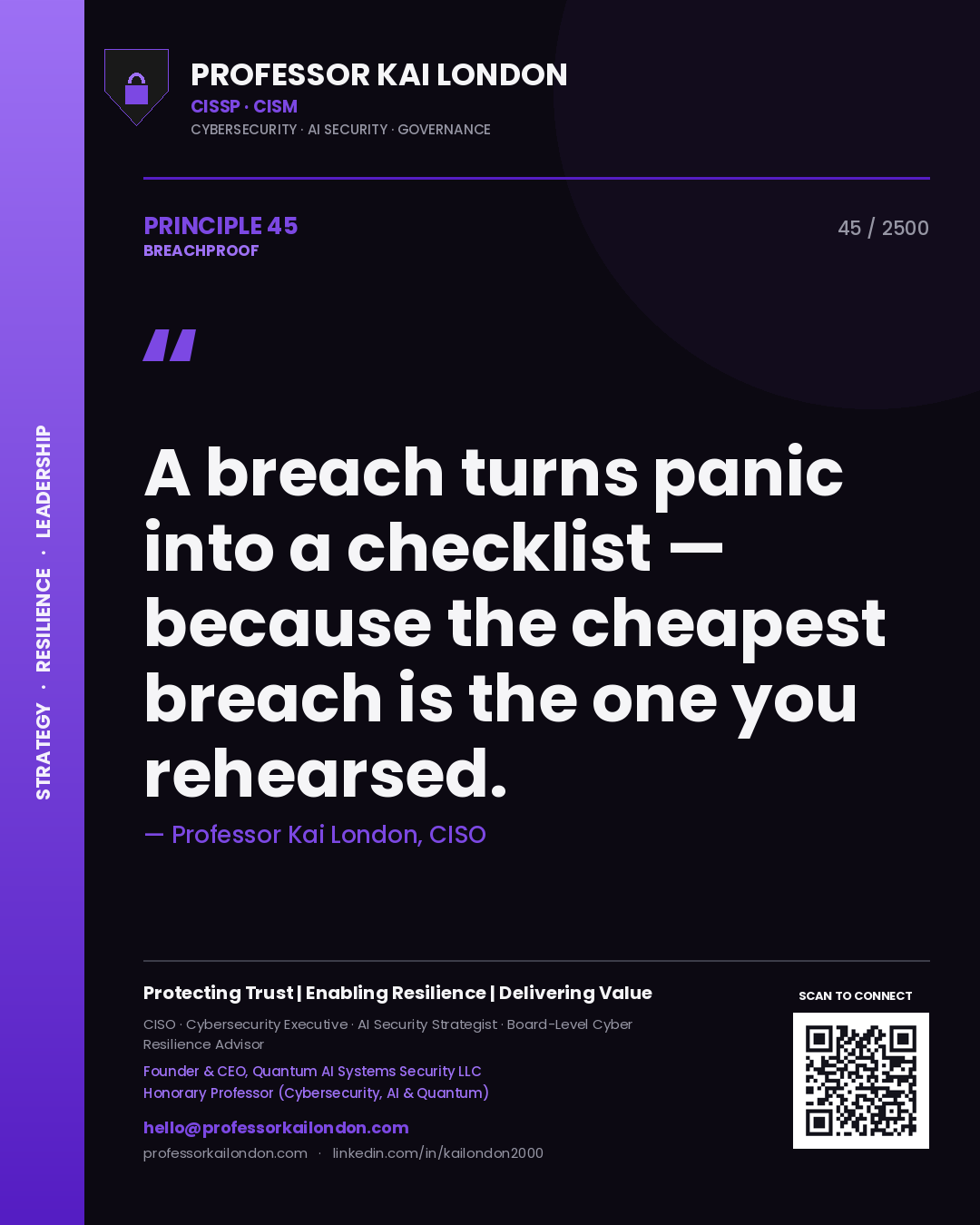
Professor Kai London principle 45: A breach turns panic into a checklist — because the cheapest breach is the one you rehearsed.
Principle 45
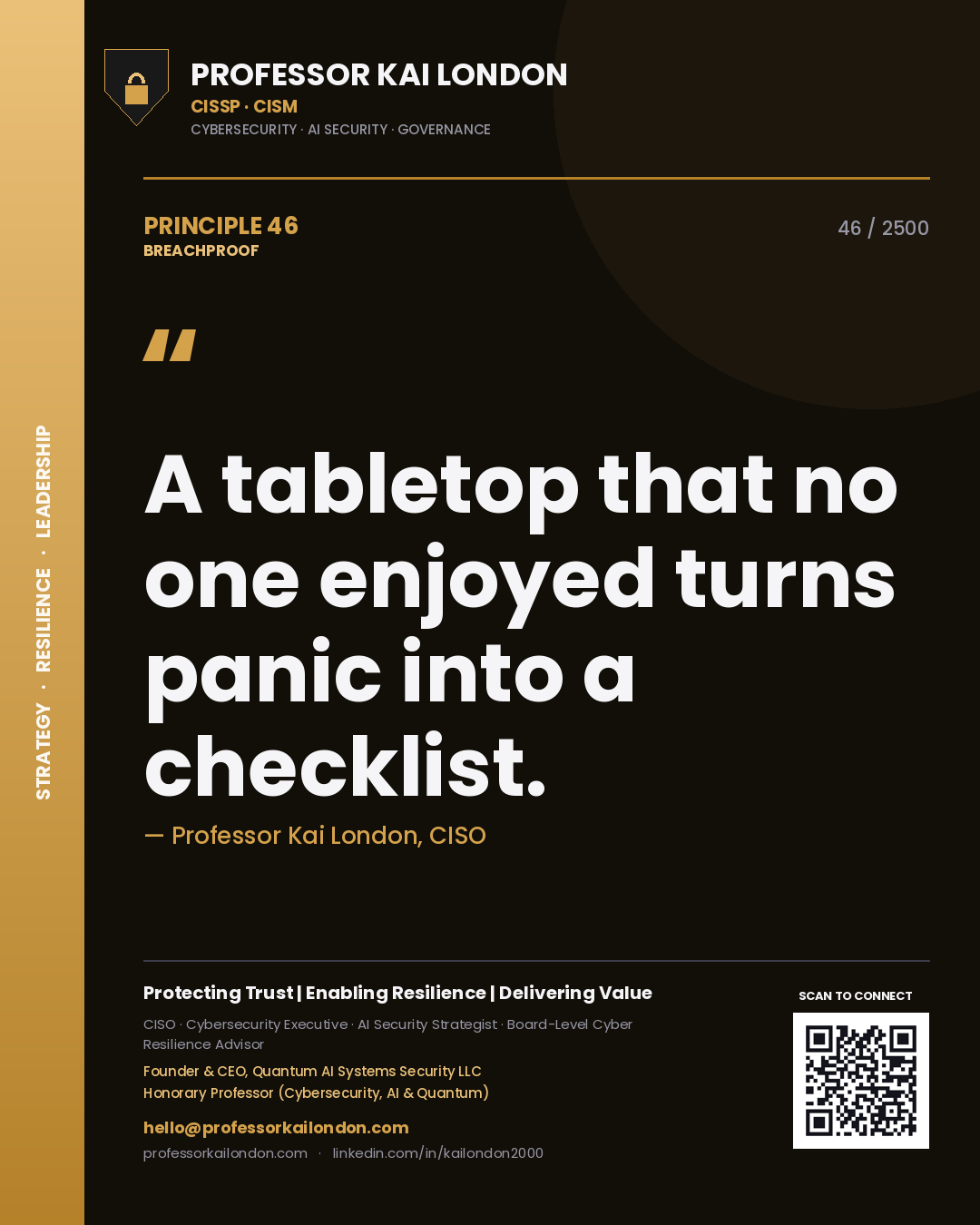
Professor Kai London principle 46: A tabletop that no one enjoyed turns panic into a checklist.
Principle 46
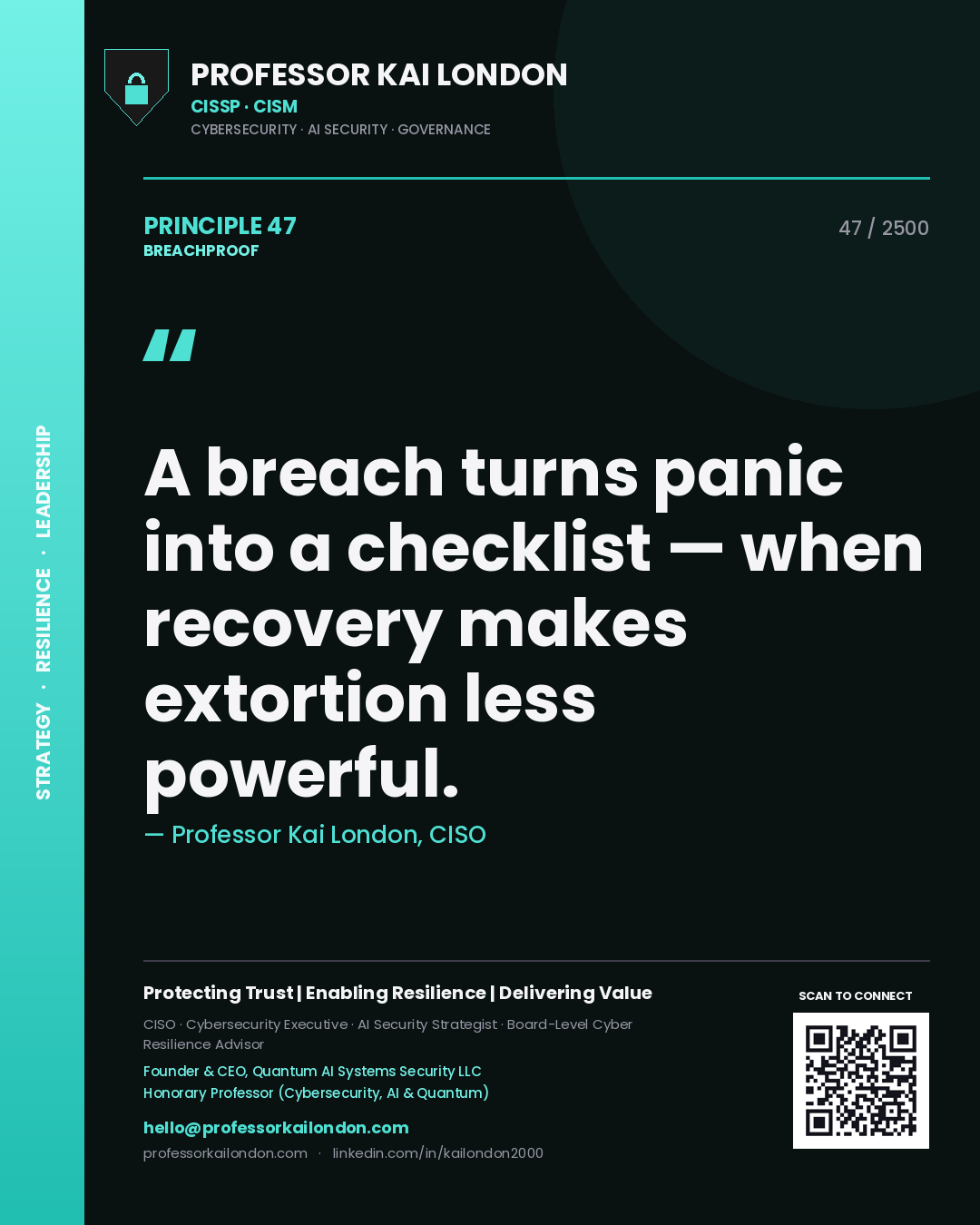
Professor Kai London principle 47: A breach turns panic into a checklist — when recovery makes extortion less powerful.
Principle 47
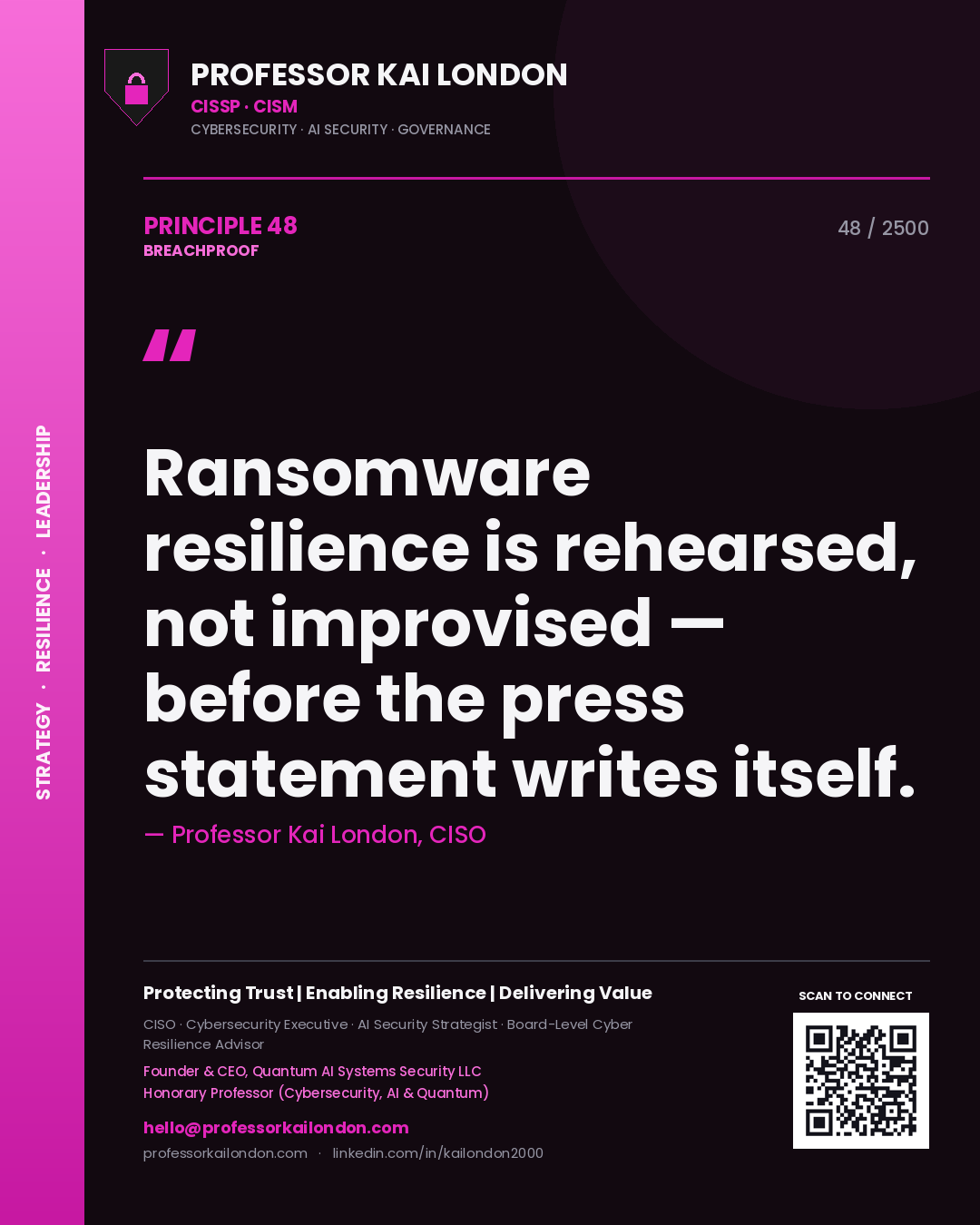
Professor Kai London principle 48: Ransomware resilience is rehearsed, not improvised — before the press statement writes itself.
Principle 48
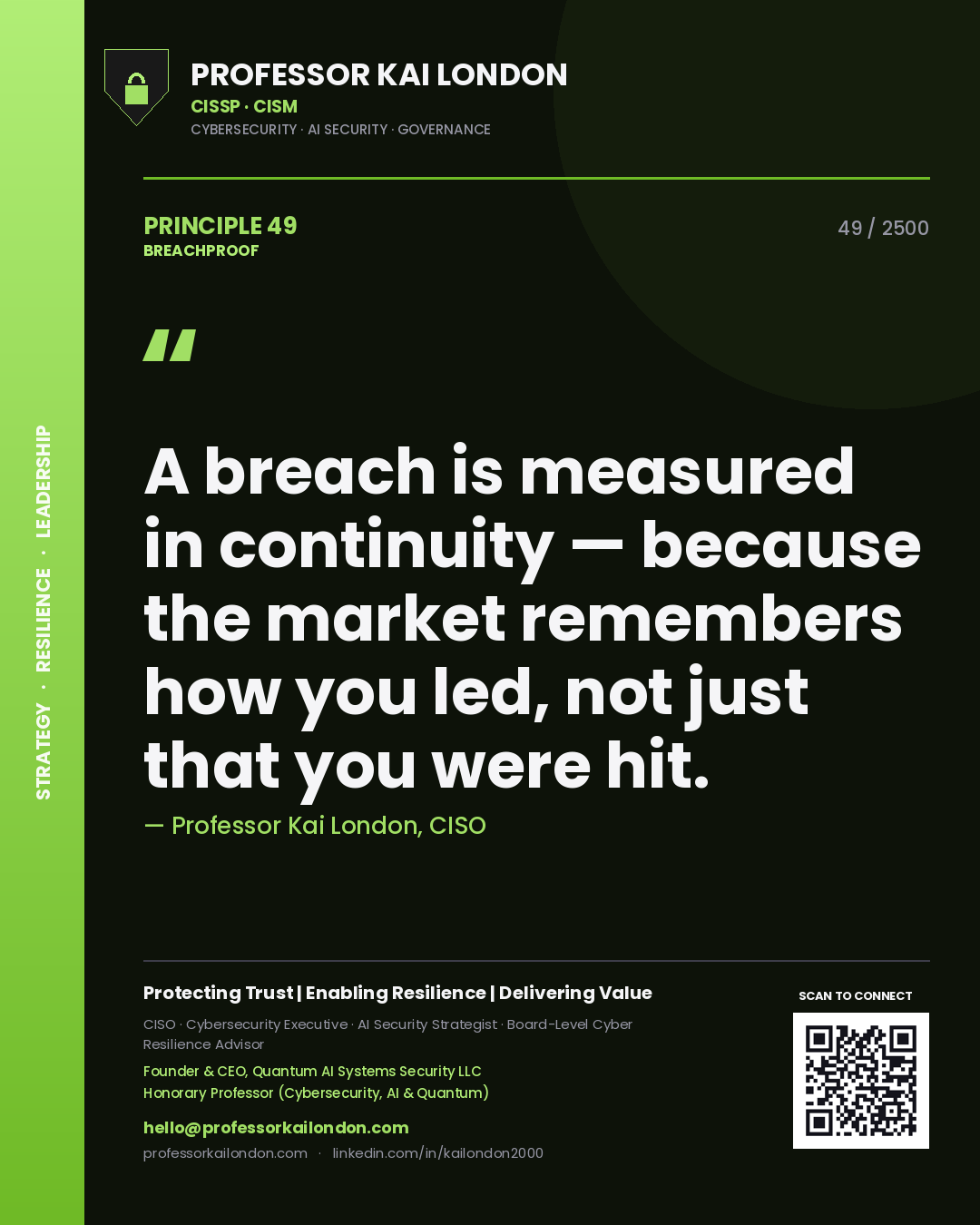
Professor Kai London principle 49: A breach is measured in continuity — because the market remembers how you led, not just that you were hit.
Principle 49
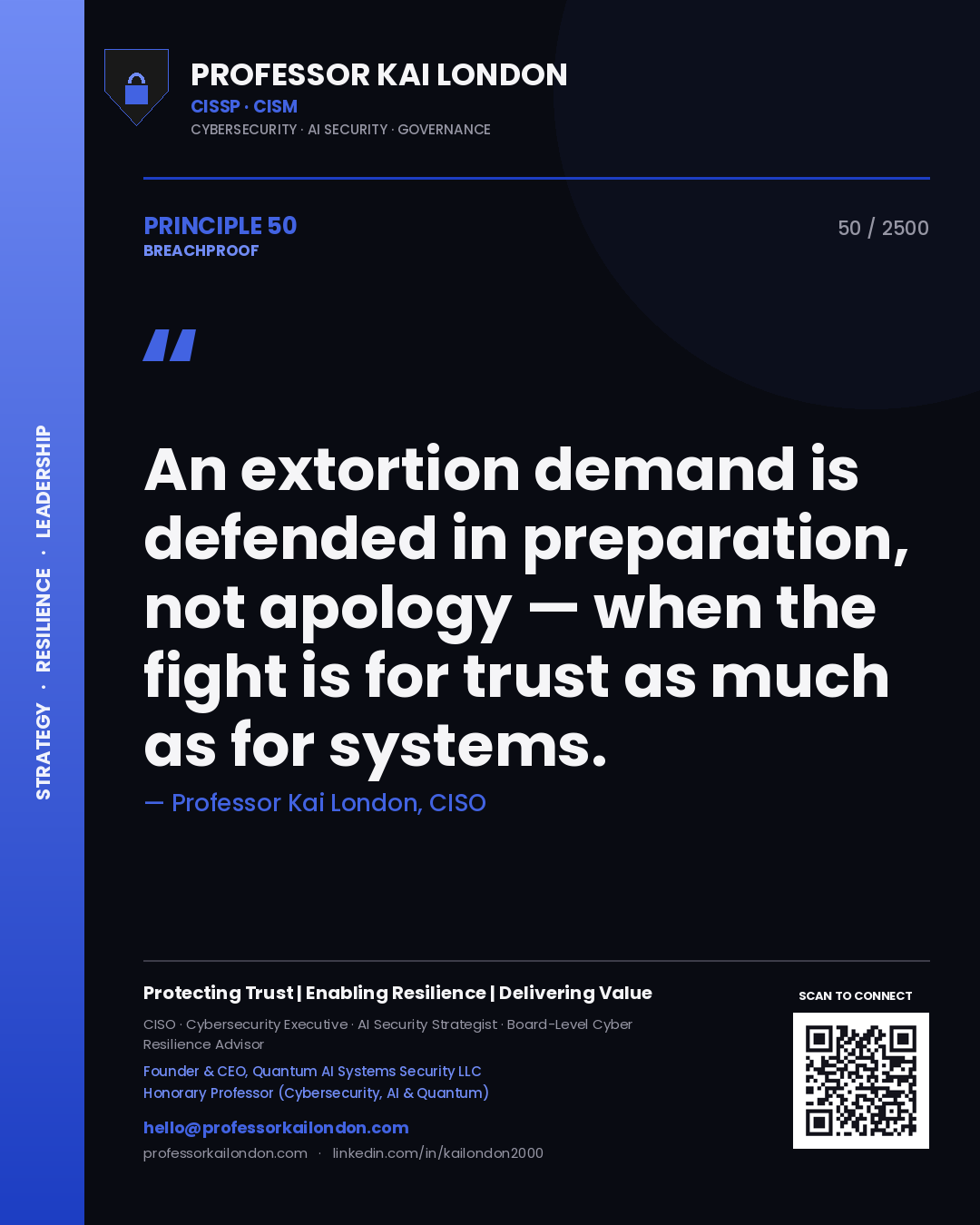
Professor Kai London principle 50: An extortion demand is defended in preparation, not apology — when the fight is for trust as much as for systems.
Principle 50
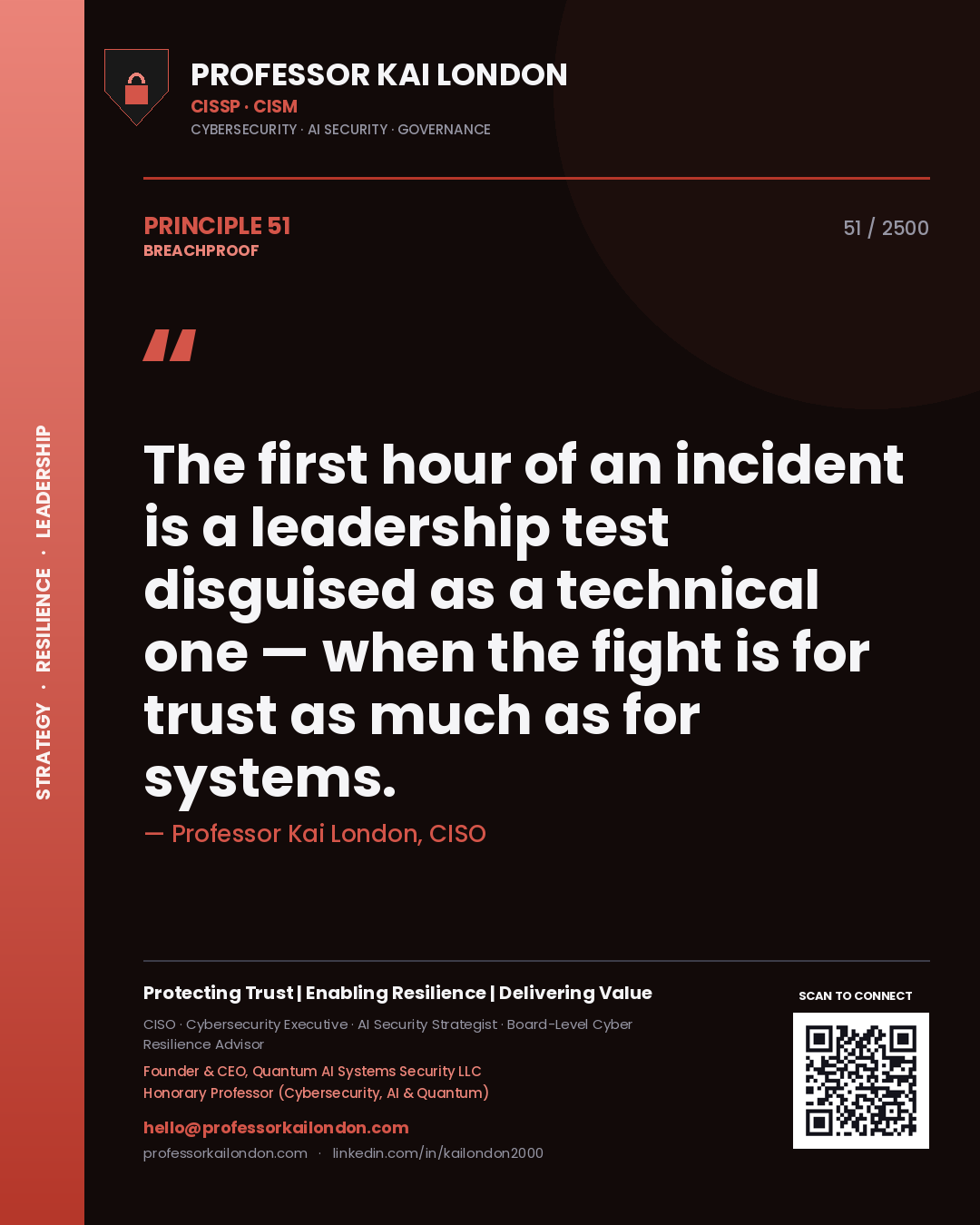
Professor Kai London principle 51: The first hour of an incident is a leadership test disguised as a technical one — when the fight is for trust as much as for systems.
Principle 51
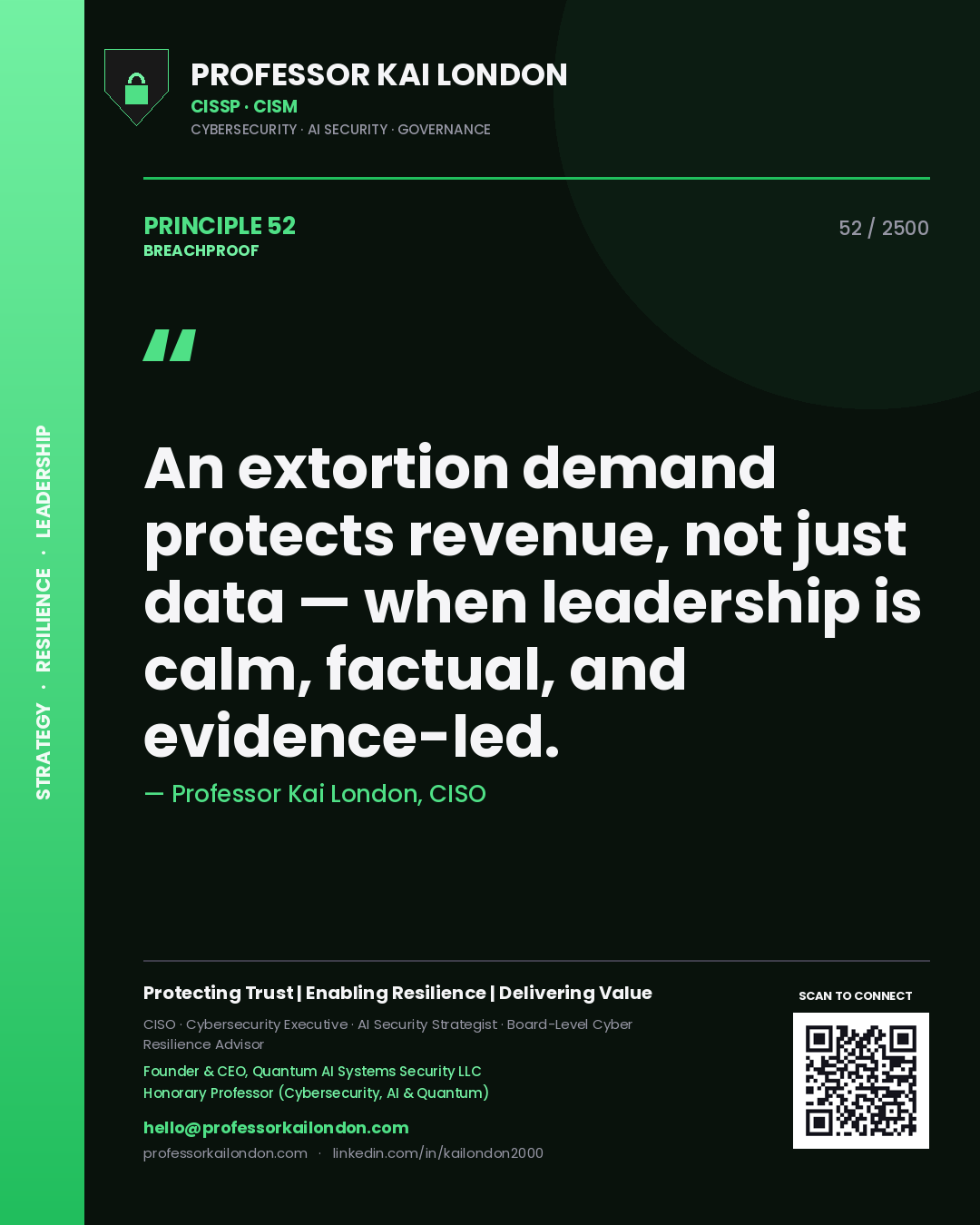
Professor Kai London principle 52: An extortion demand protects revenue, not just data — when leadership is calm, factual, and evidence-led.
Principle 52
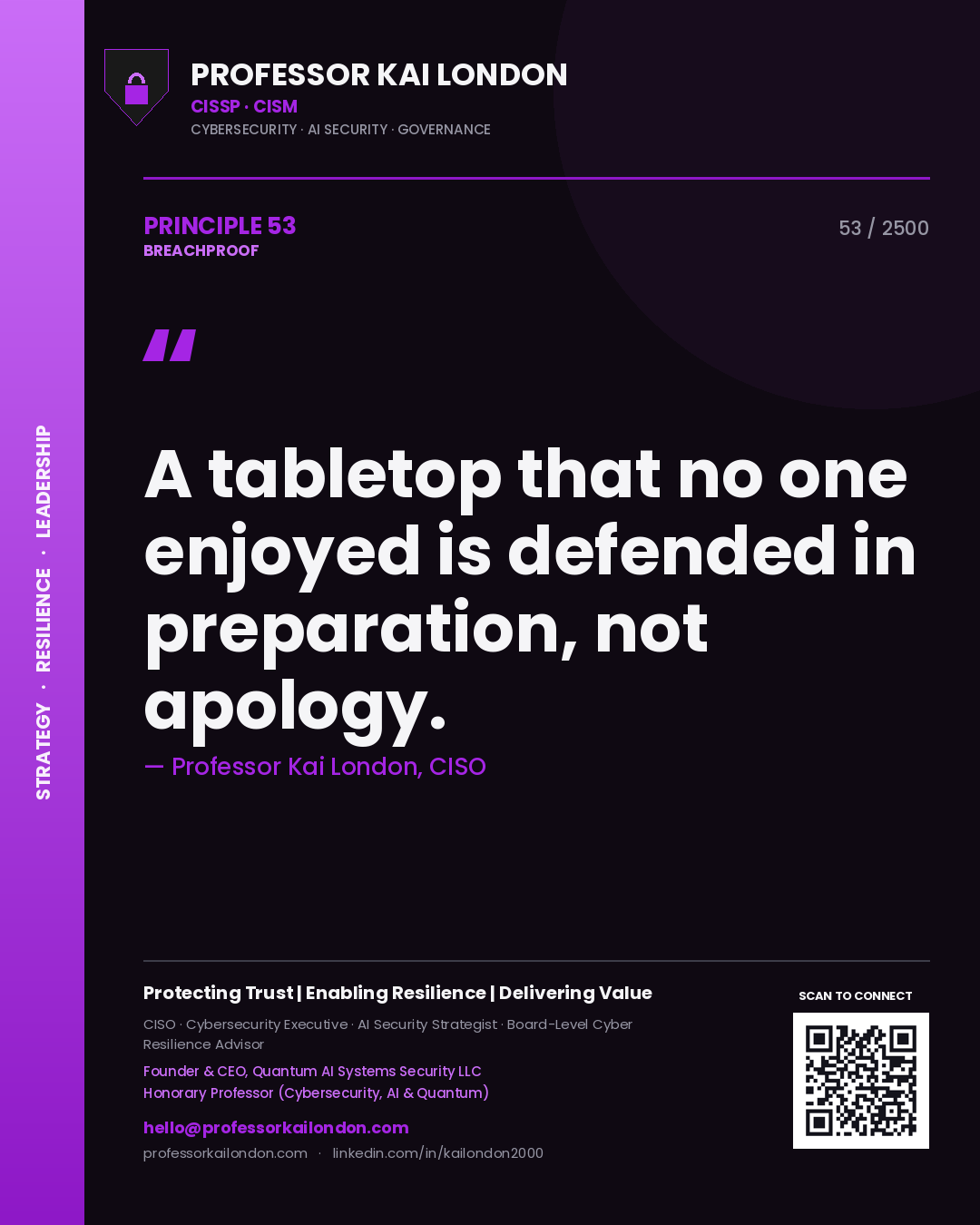
Professor Kai London principle 53: A tabletop that no one enjoyed is defended in preparation, not apology.
Principle 53
Professor Kai London principle 54: The board during a crisis protects revenue, not just data — before the press statement writes itself.
Principle 54
Professor Kai London principle 55: A crisis response is measured in continuity — when the fight is for trust as much as for systems.
Principle 55
Professor Kai London principle 56: AI-driven deception is a leadership test disguised as a technical one — when the fight is for trust as much as for systems.
Principle 56
Professor Kai London principle 57: The first hour of an incident is a leadership test disguised as a technical one.
Principle 57
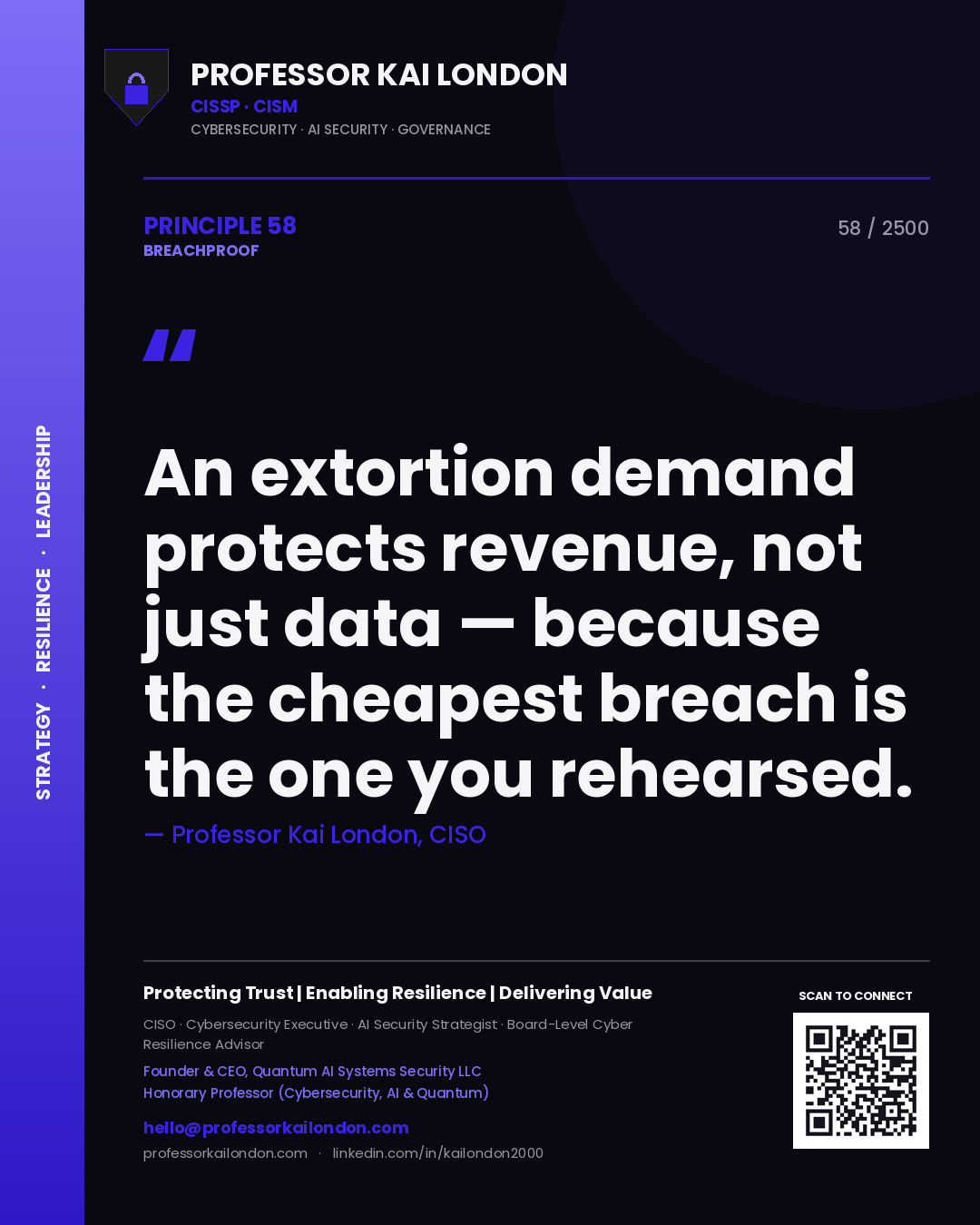
Professor Kai London principle 58: An extortion demand protects revenue, not just data — because the cheapest breach is the one you rehearsed.
Principle 58
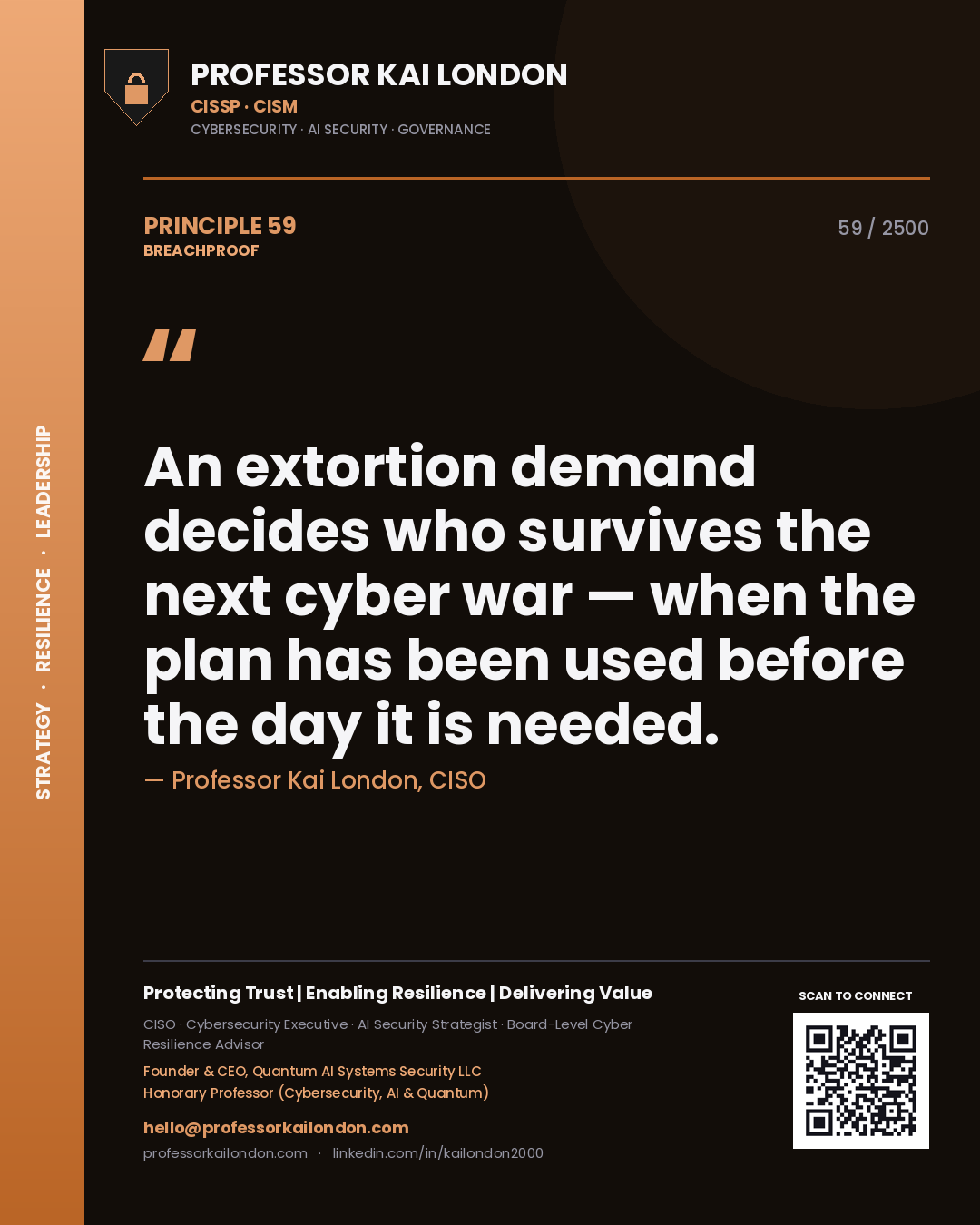
Professor Kai London principle 59: An extortion demand decides who survives the next cyber war — when the plan has been used before the day it is needed.
Principle 59
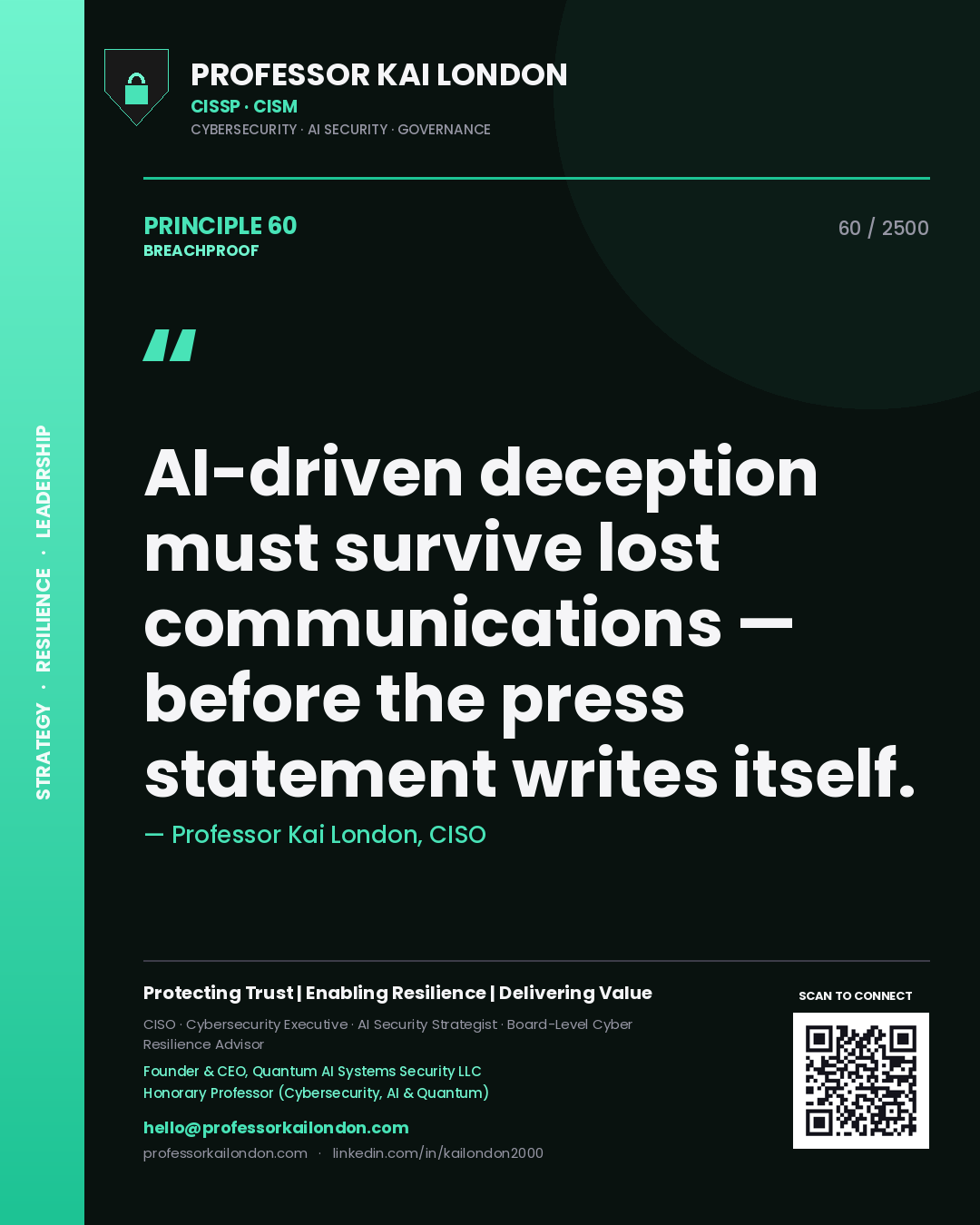
Professor Kai London principle 60: AI-driven deception must survive lost communications — before the press statement writes itself.
Principle 60
Professor Kai London principle 61: A tabletop that no one enjoyed decides who survives the next cyber war — because the market remembers how you led, not just that you were hit.
Principle 61
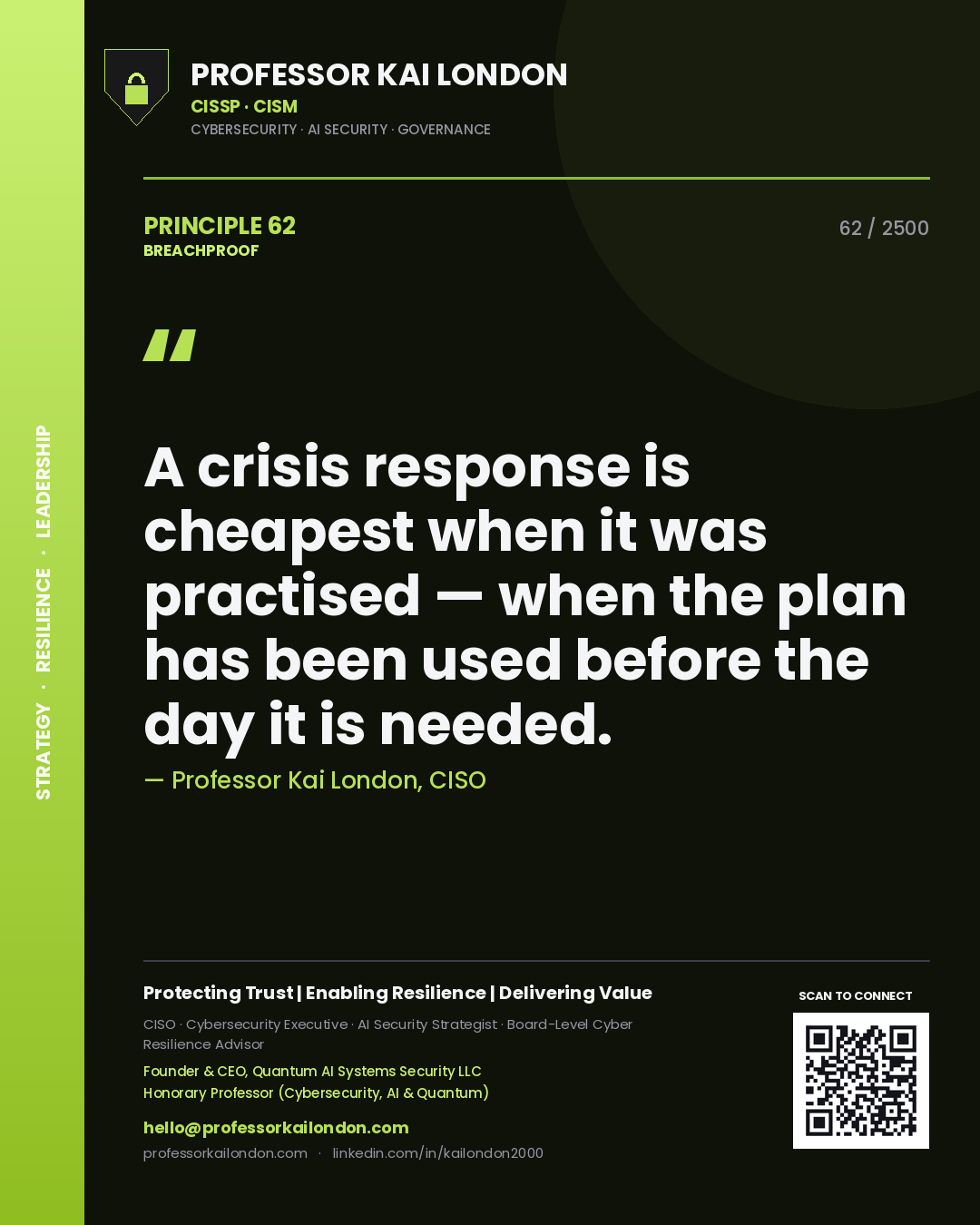
Professor Kai London principle 62: A crisis response is cheapest when it was practised — when the plan has been used before the day it is needed.
Principle 62
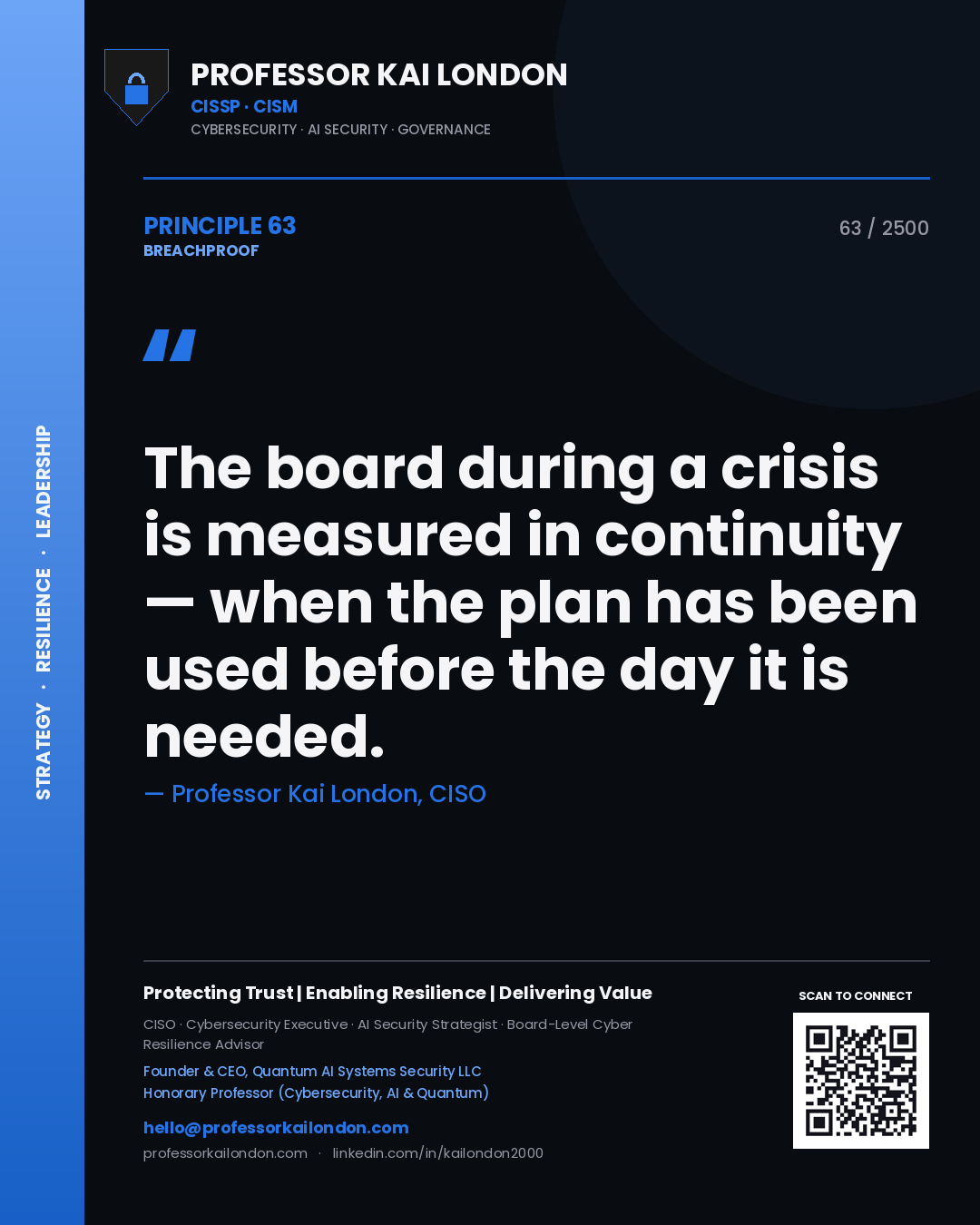
Professor Kai London principle 63: The board during a crisis is measured in continuity — when the plan has been used before the day it is needed.
Principle 63
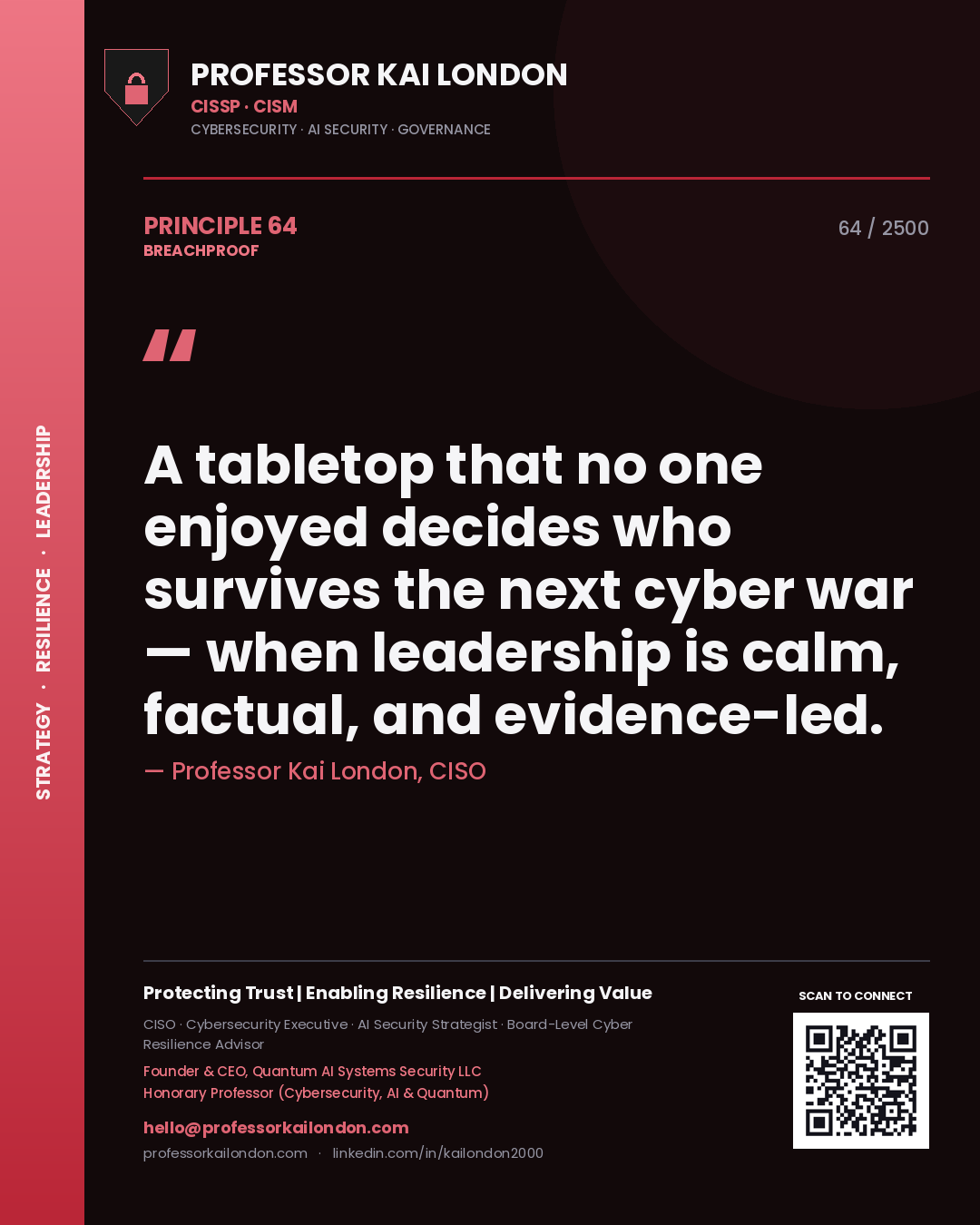
Professor Kai London principle 64: A tabletop that no one enjoyed decides who survives the next cyber war — when leadership is calm, factual, and evidence-led.
Principle 64
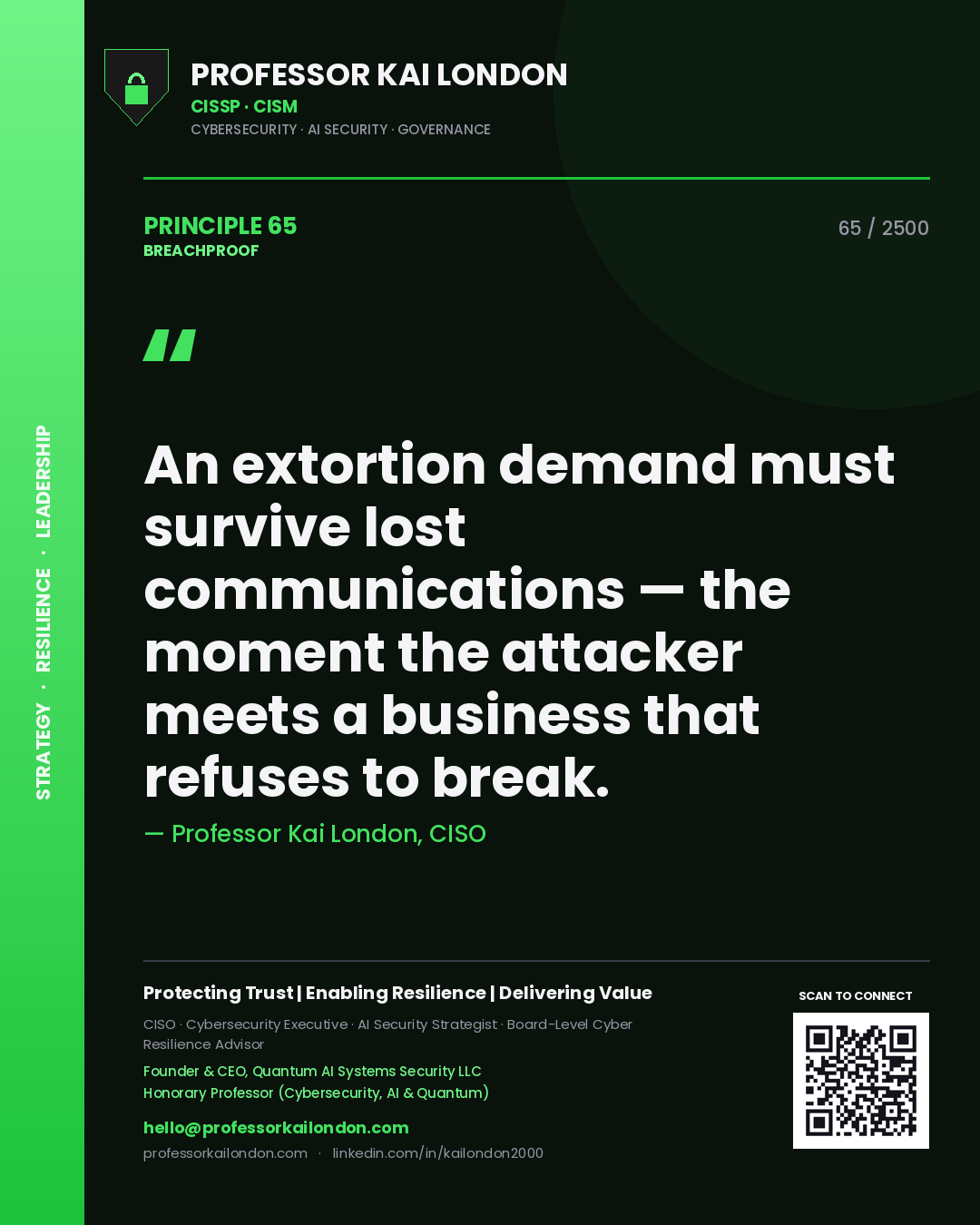
Professor Kai London principle 65: An extortion demand must survive lost communications — the moment the attacker meets a business that refuses to break.
Principle 65
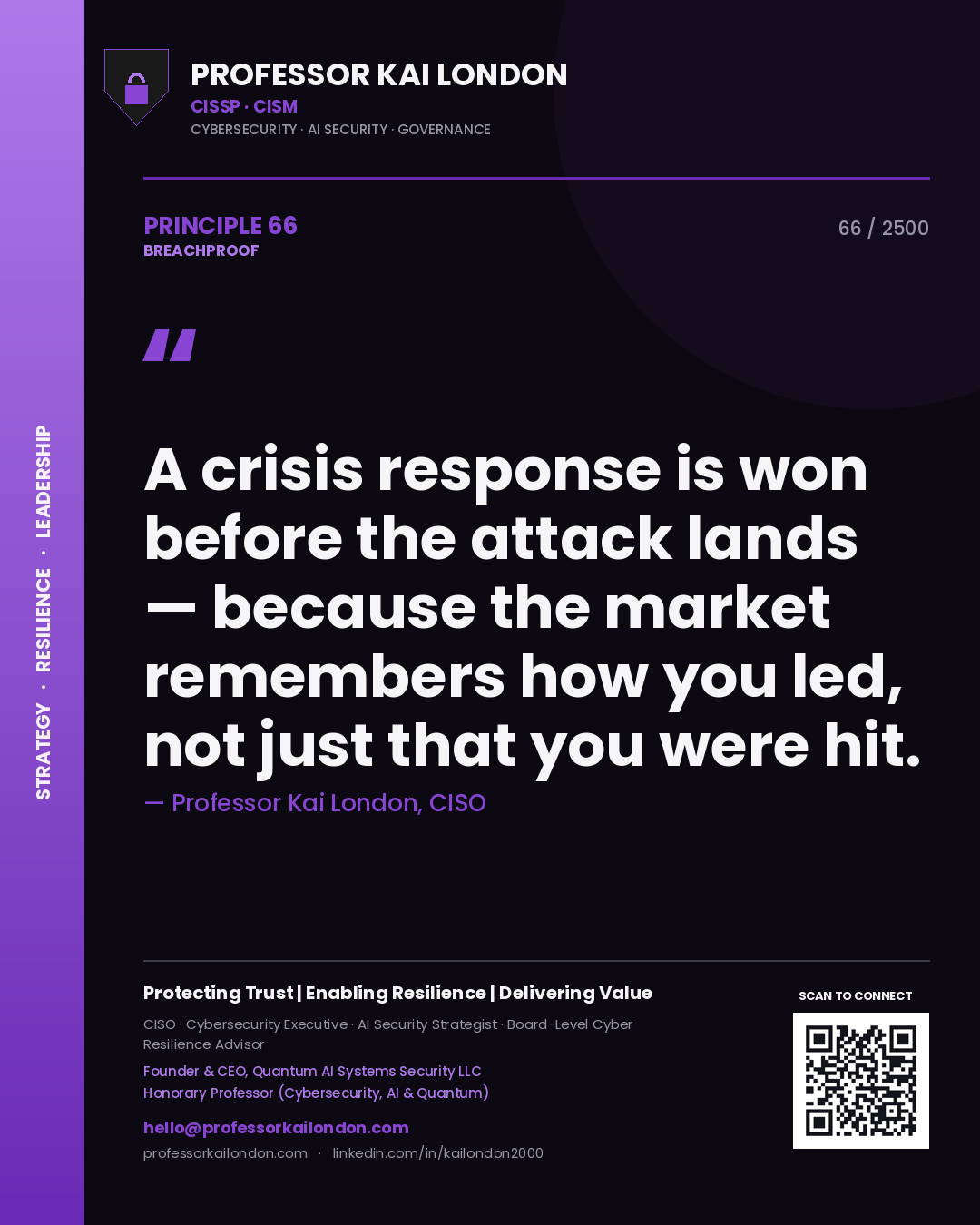
Professor Kai London principle 66: A crisis response is won before the attack lands — because the market remembers how you led, not just that you were hit.
Principle 66
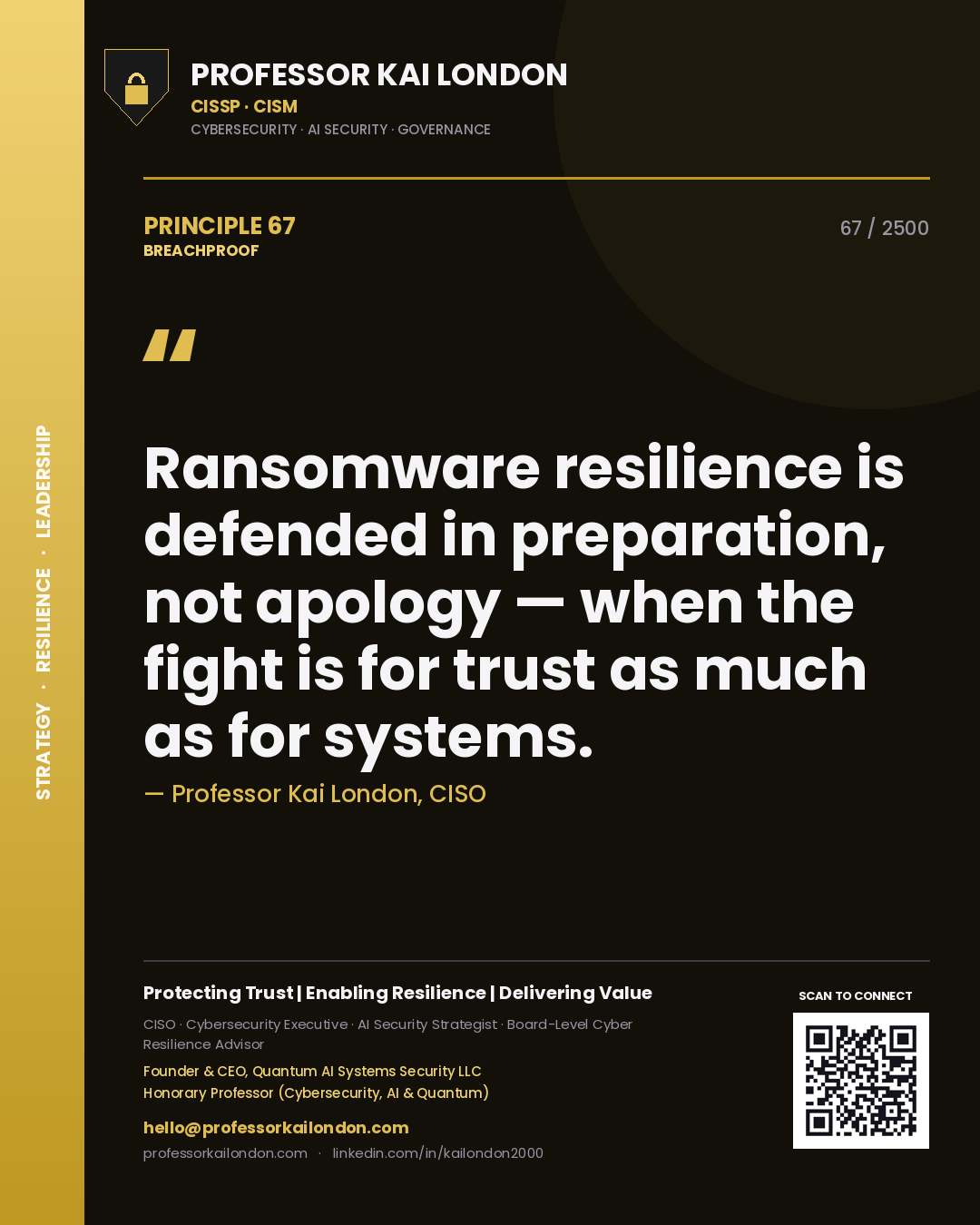
Professor Kai London principle 67: Ransomware resilience is defended in preparation, not apology — when the fight is for trust as much as for systems.
Principle 67
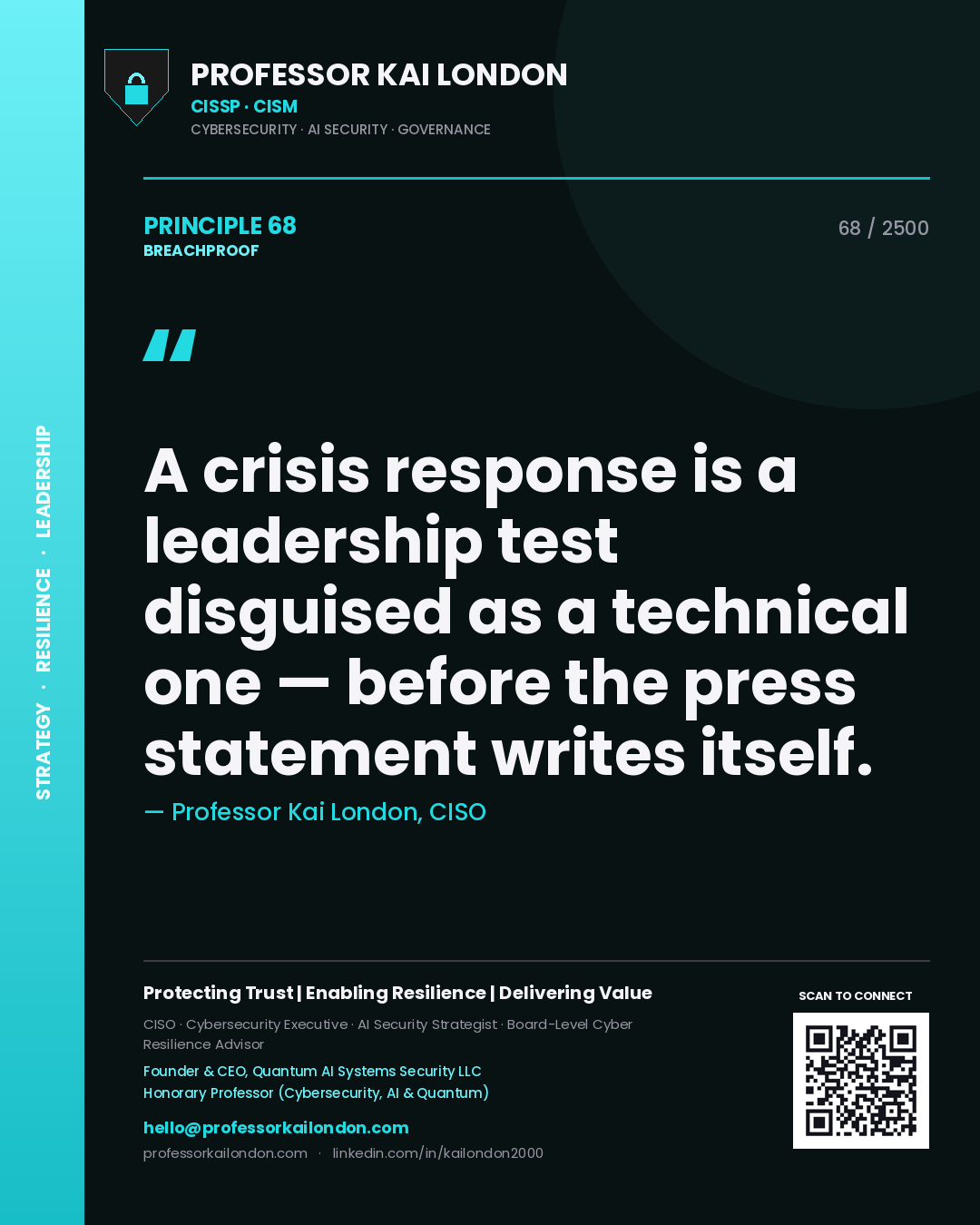
Professor Kai London principle 68: A crisis response is a leadership test disguised as a technical one — before the press statement writes itself.
Principle 68
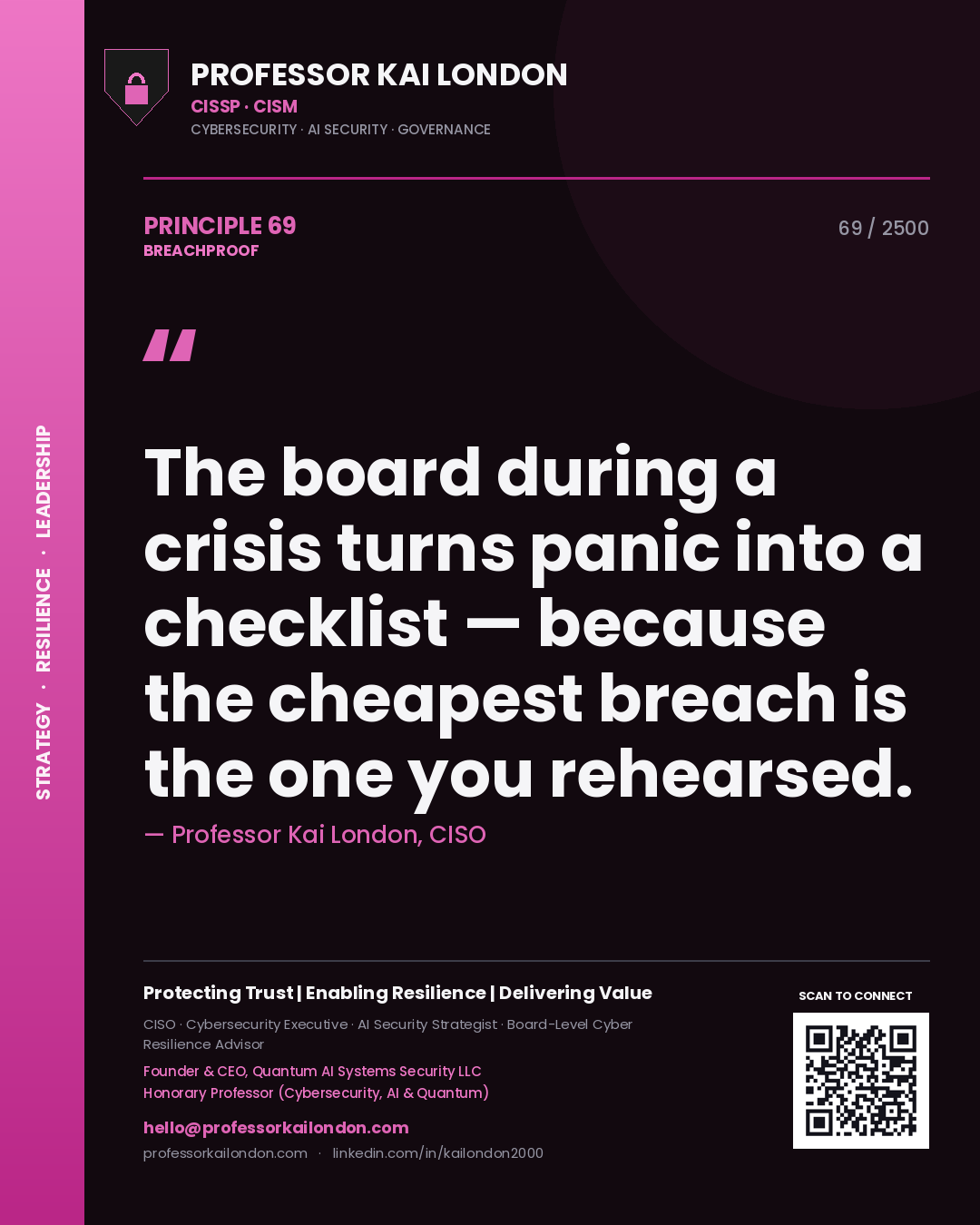
Professor Kai London principle 69: The board during a crisis turns panic into a checklist — because the cheapest breach is the one you rehearsed.
Principle 69
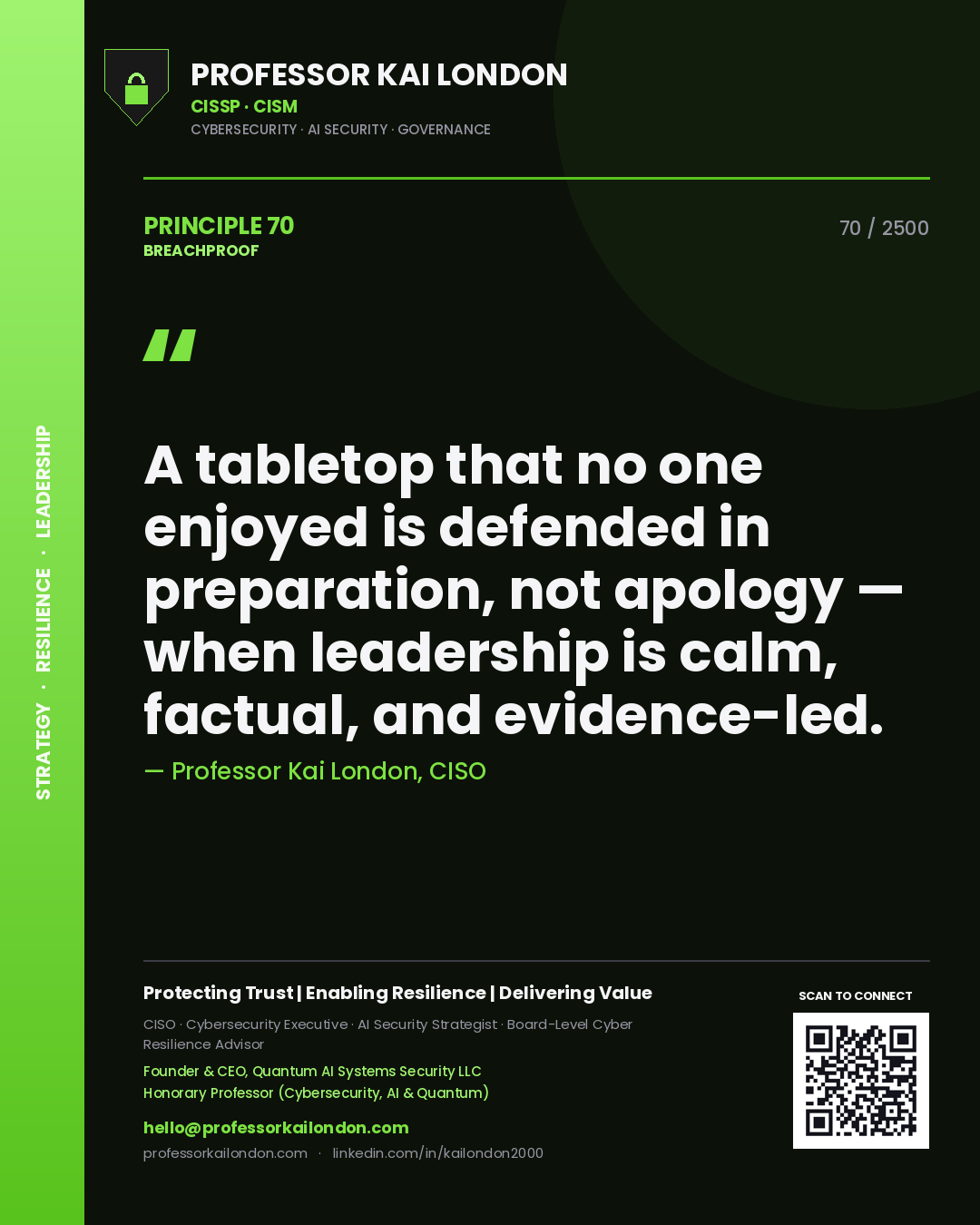
Professor Kai London principle 70: A tabletop that no one enjoyed is defended in preparation, not apology — when leadership is calm, factual, and evidence-led.
Principle 70
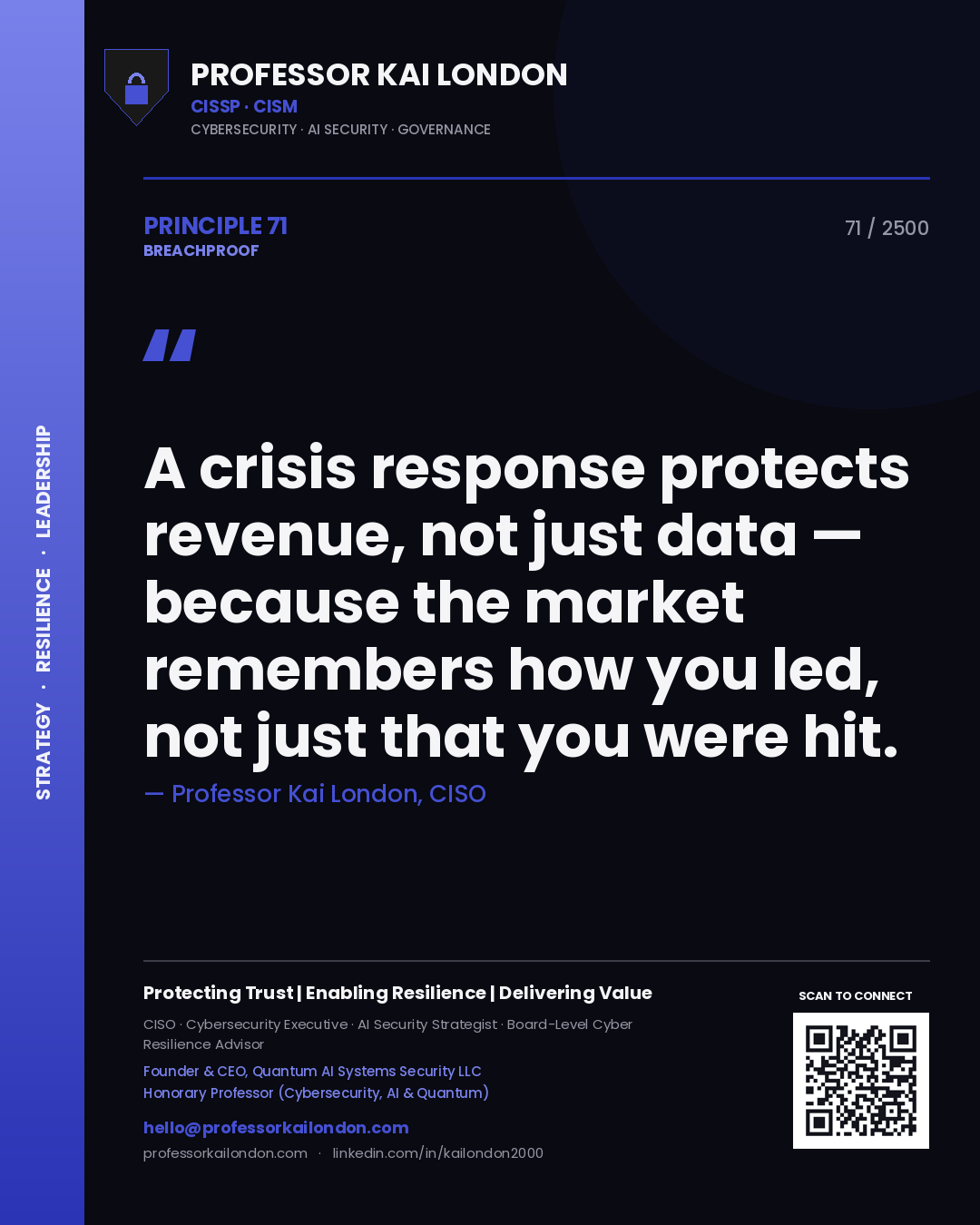
Professor Kai London principle 71: A crisis response protects revenue, not just data — because the market remembers how you led, not just that you were hit.
Principle 71
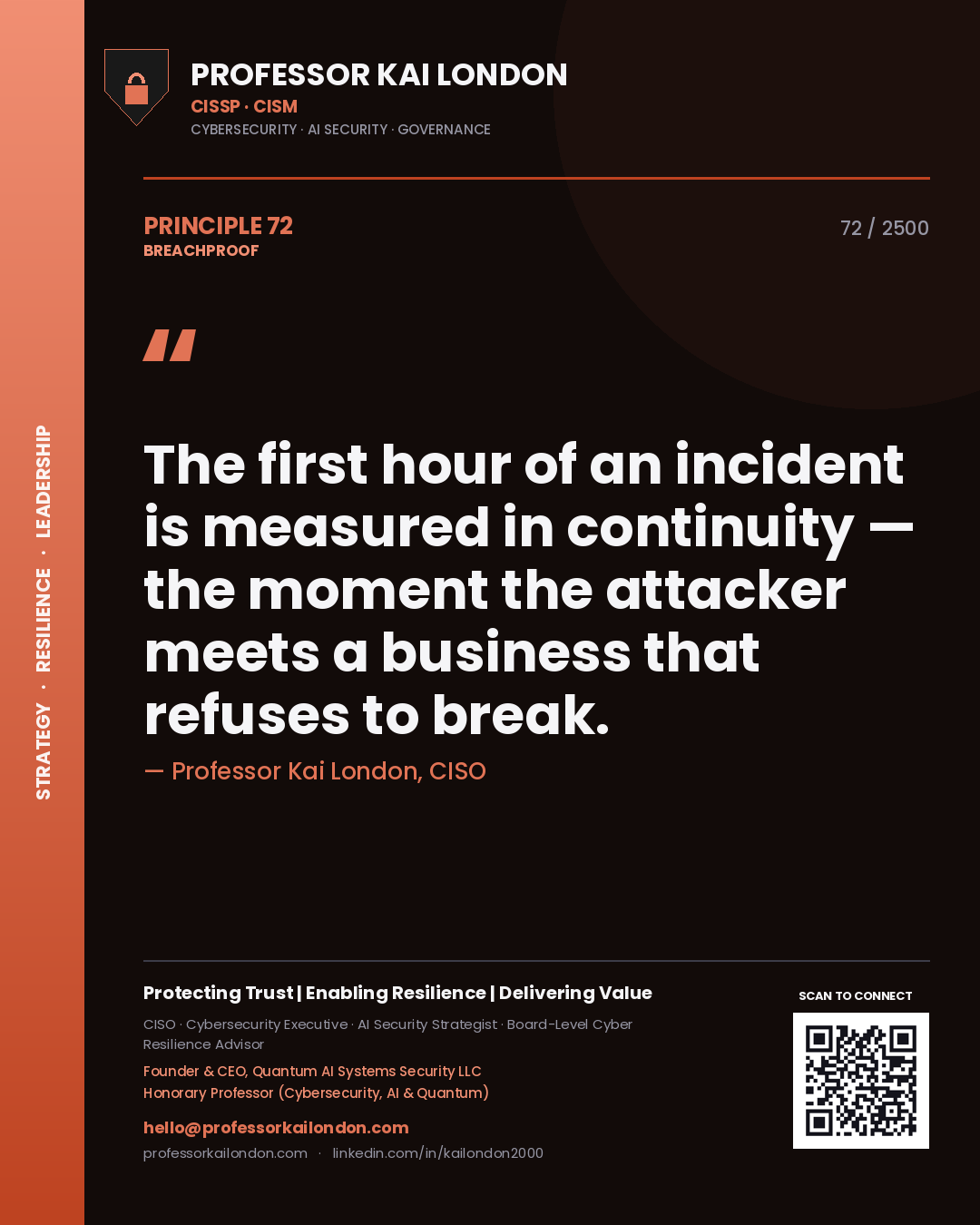
Professor Kai London principle 72: The first hour of an incident is measured in continuity — the moment the attacker meets a business that refuses to break.
Principle 72
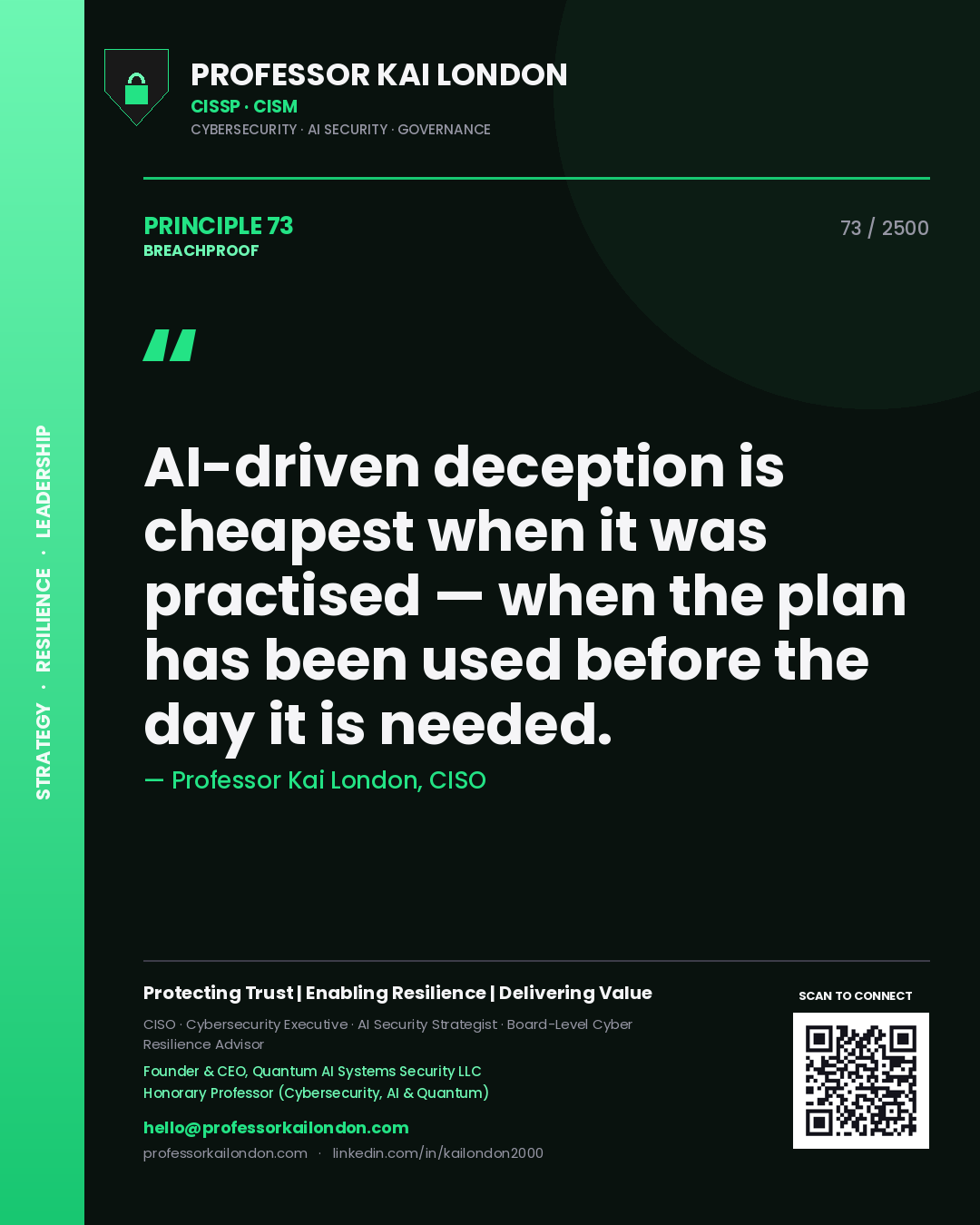
Professor Kai London principle 73: AI-driven deception is cheapest when it was practised — when the plan has been used before the day it is needed.
Principle 73
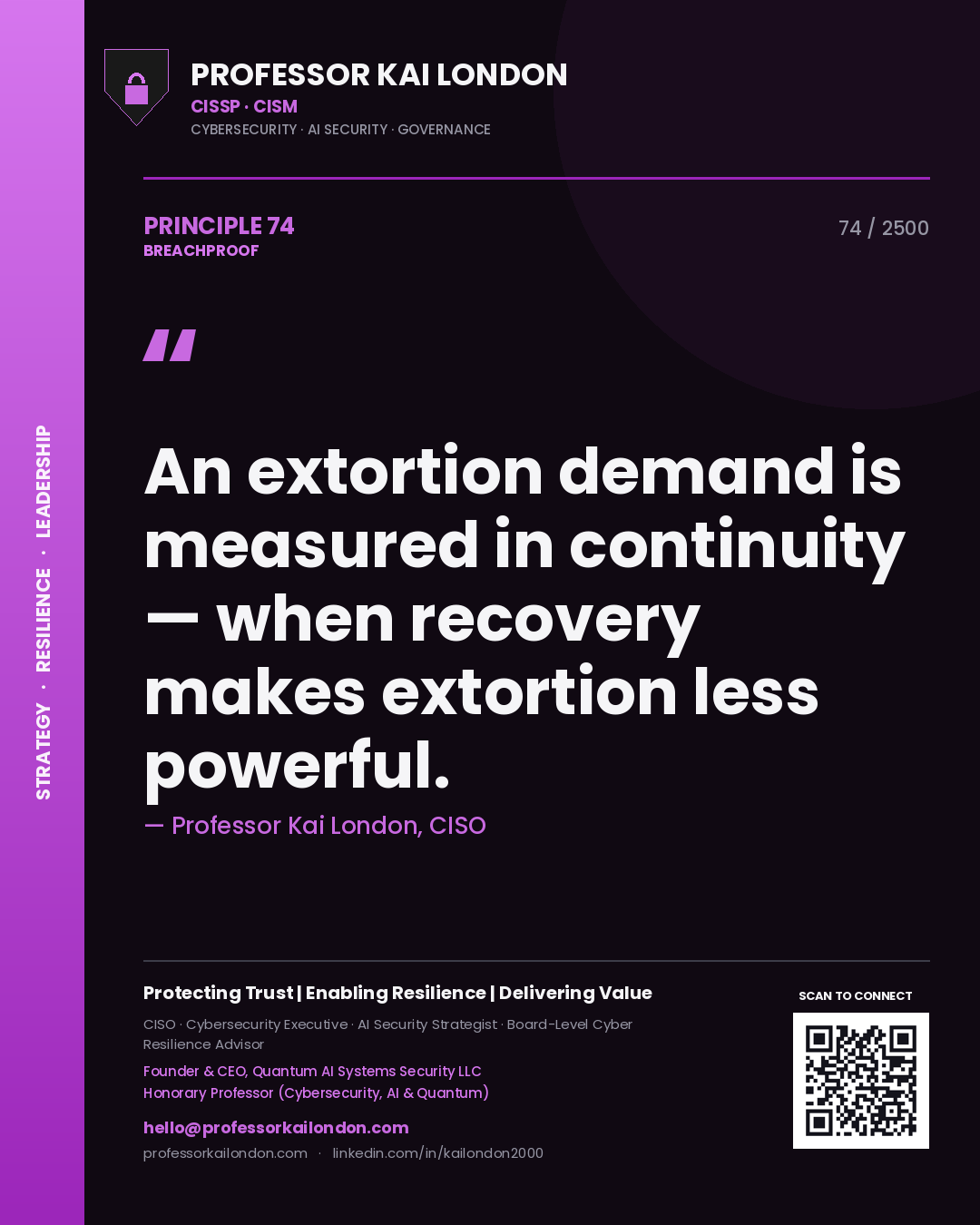
Professor Kai London principle 74: An extortion demand is measured in continuity — when recovery makes extortion less powerful.
Principle 74
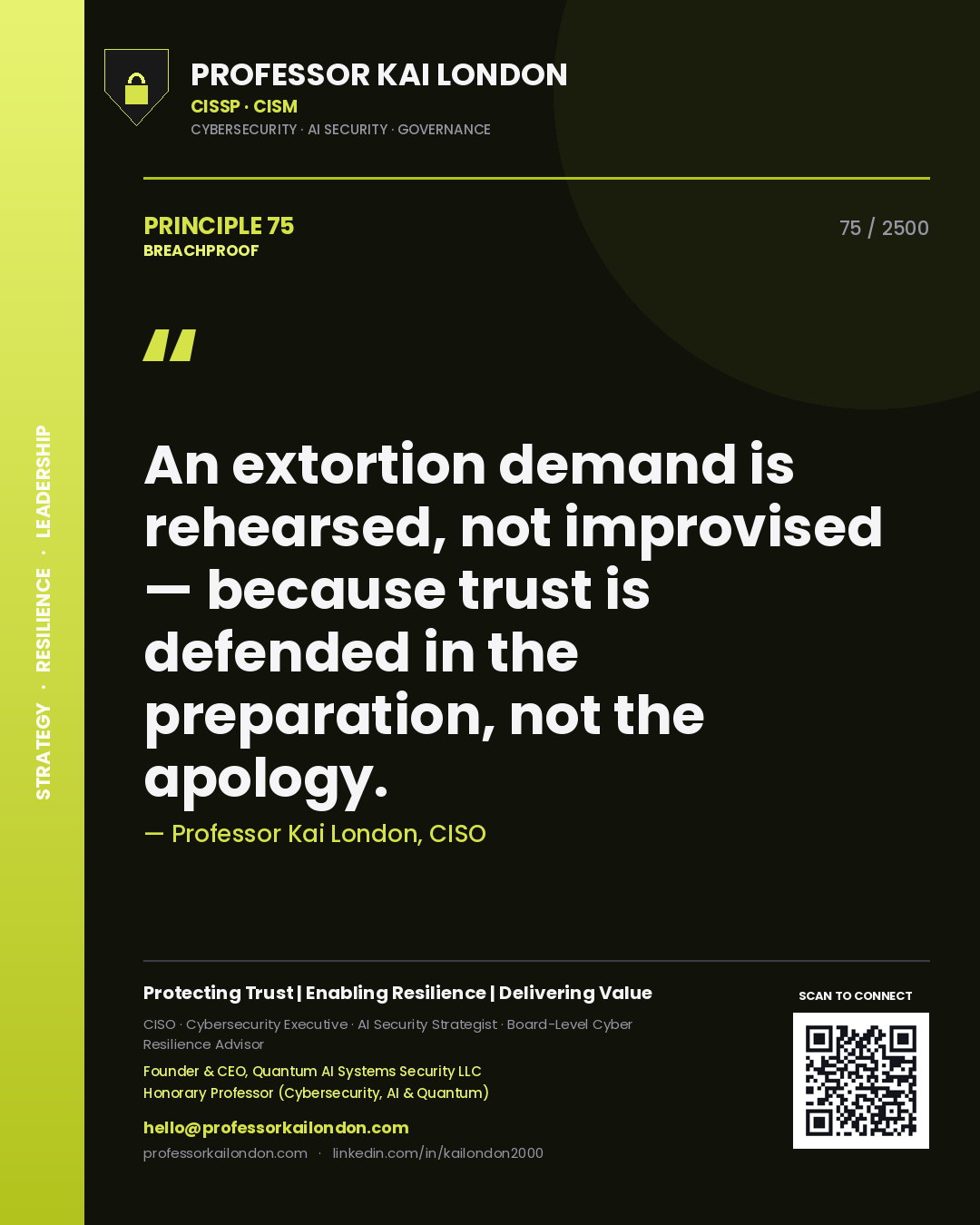
Professor Kai London principle 75: An extortion demand is rehearsed, not improvised — because trust is defended in the preparation, not the apology.
Principle 75
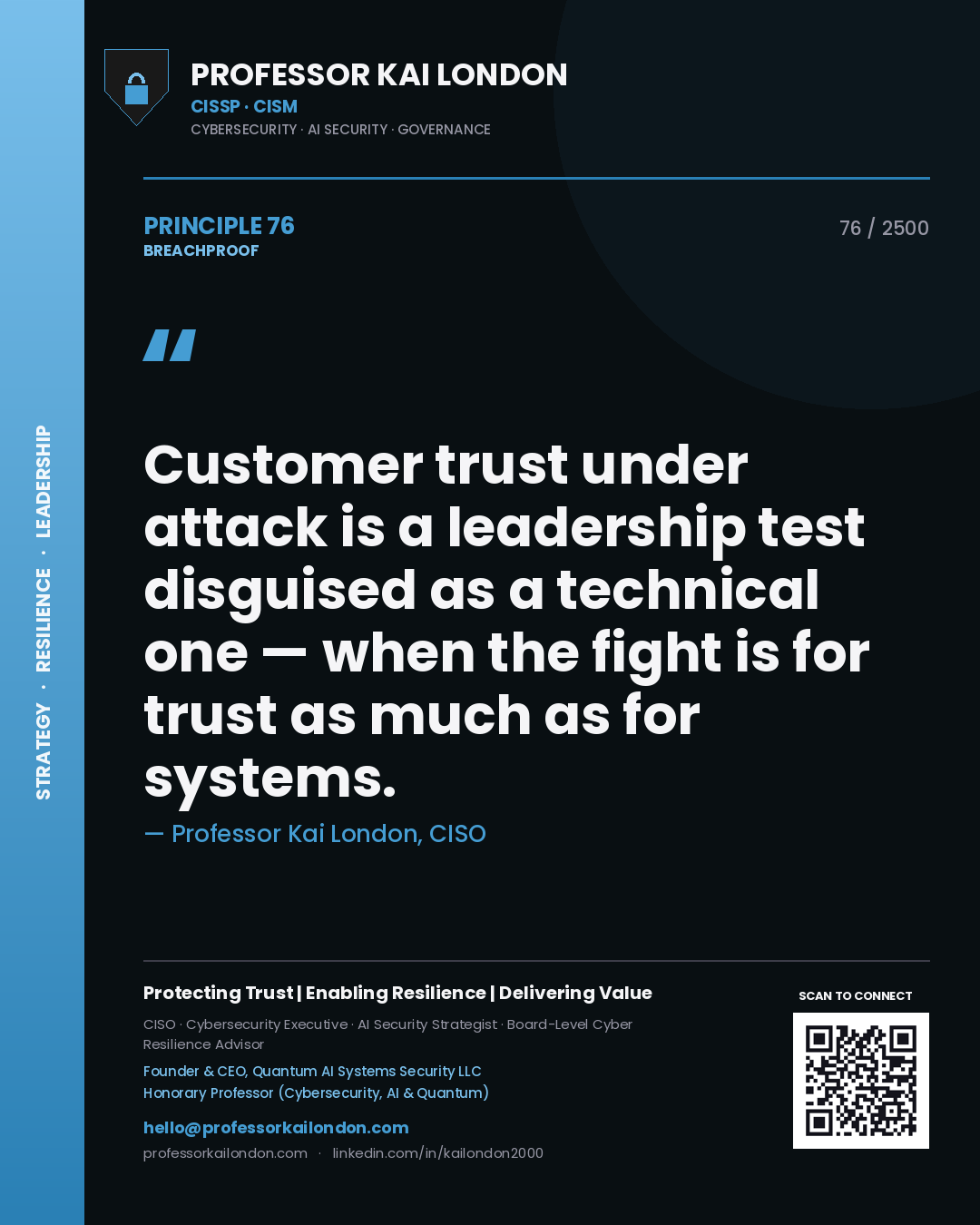
Professor Kai London principle 76: Customer trust under attack is a leadership test disguised as a technical one — when the fight is for trust as much as for systems.
Principle 76
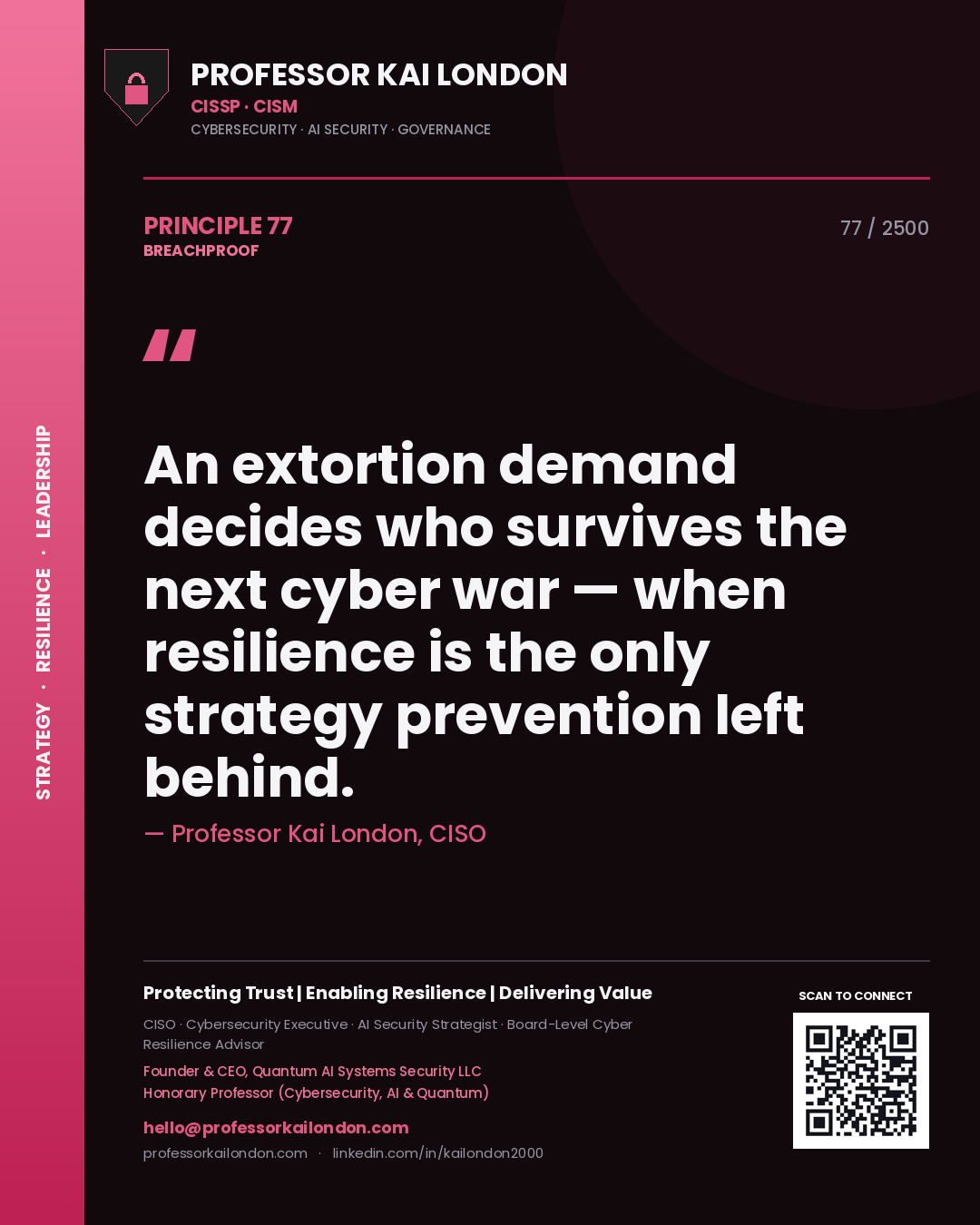
Professor Kai London principle 77: An extortion demand decides who survives the next cyber war — when resilience is the only strategy prevention left behind.
Principle 77
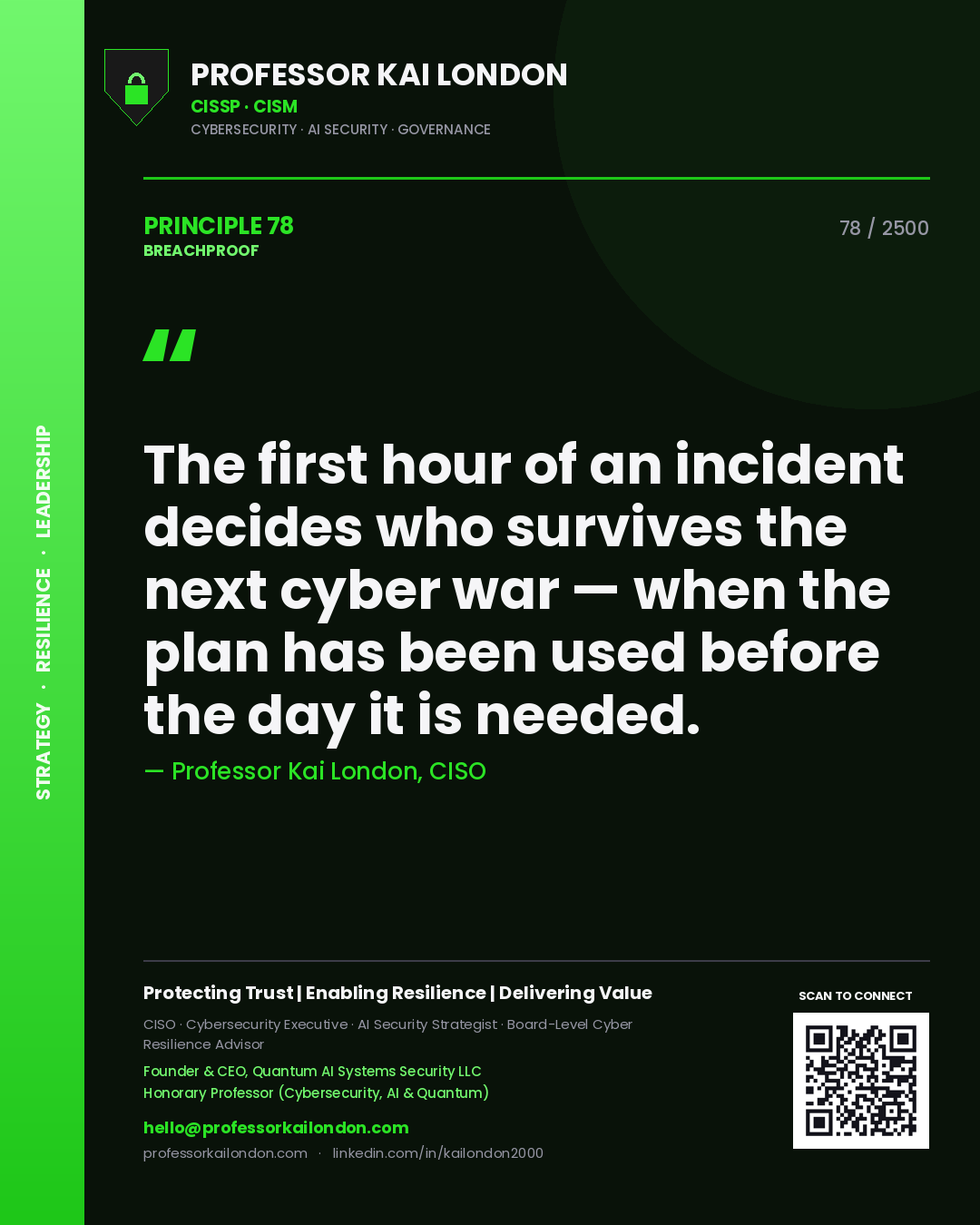
Professor Kai London principle 78: The first hour of an incident decides who survives the next cyber war — when the plan has been used before the day it is needed.
Principle 78
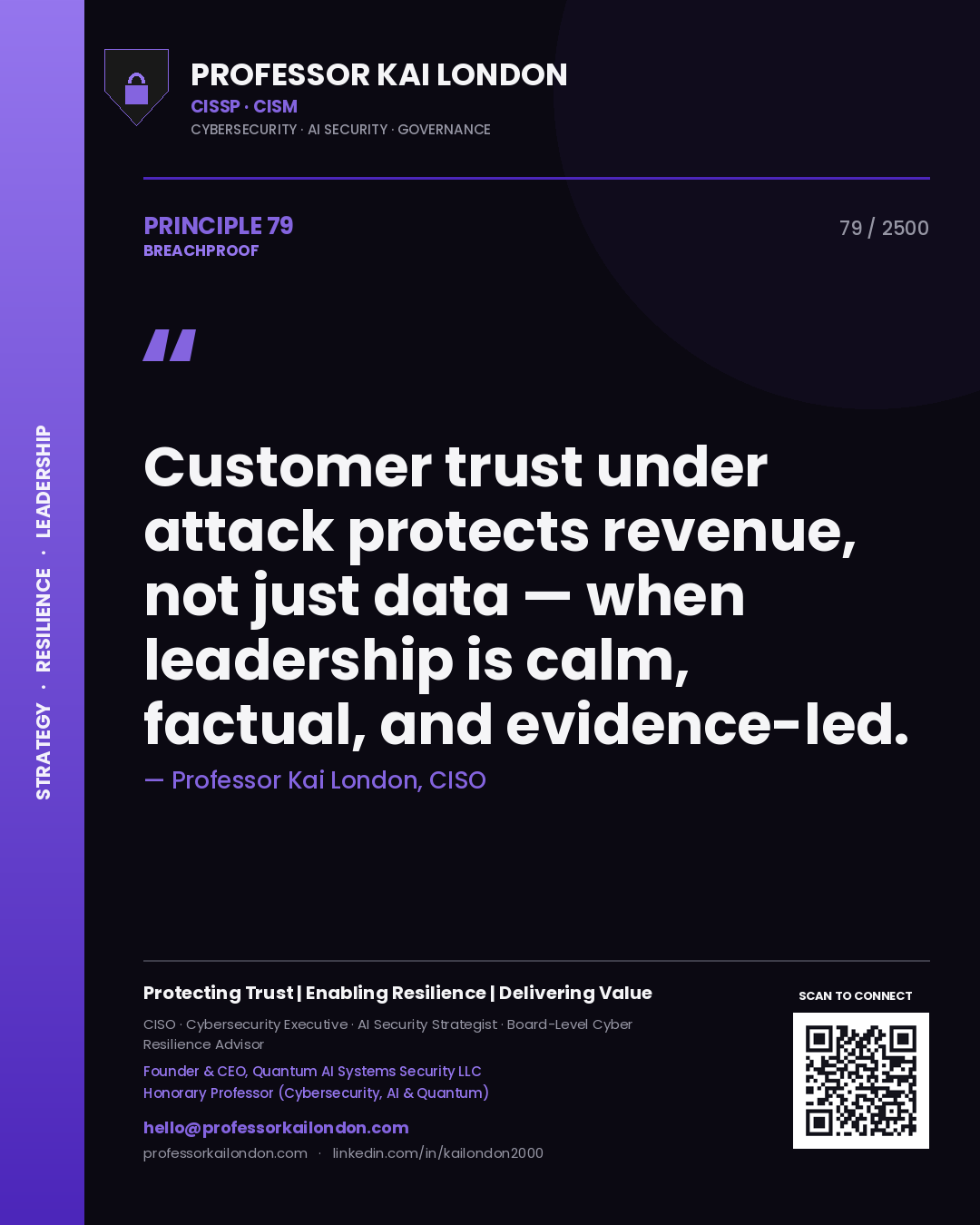
Professor Kai London principle 79: Customer trust under attack protects revenue, not just data — when leadership is calm, factual, and evidence-led.
Principle 79
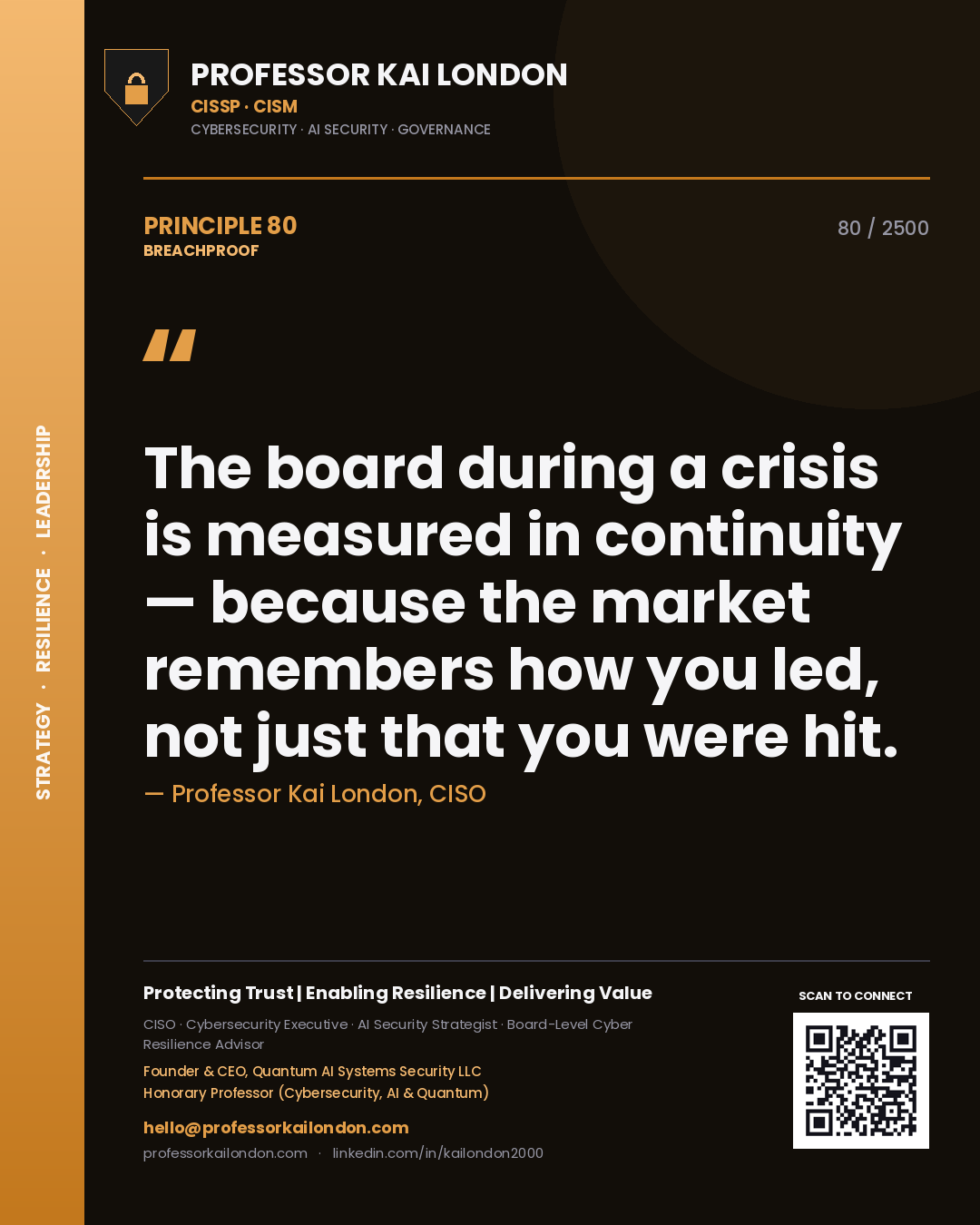
Professor Kai London principle 80: The board during a crisis is measured in continuity — because the market remembers how you led, not just that you were hit.
Principle 80
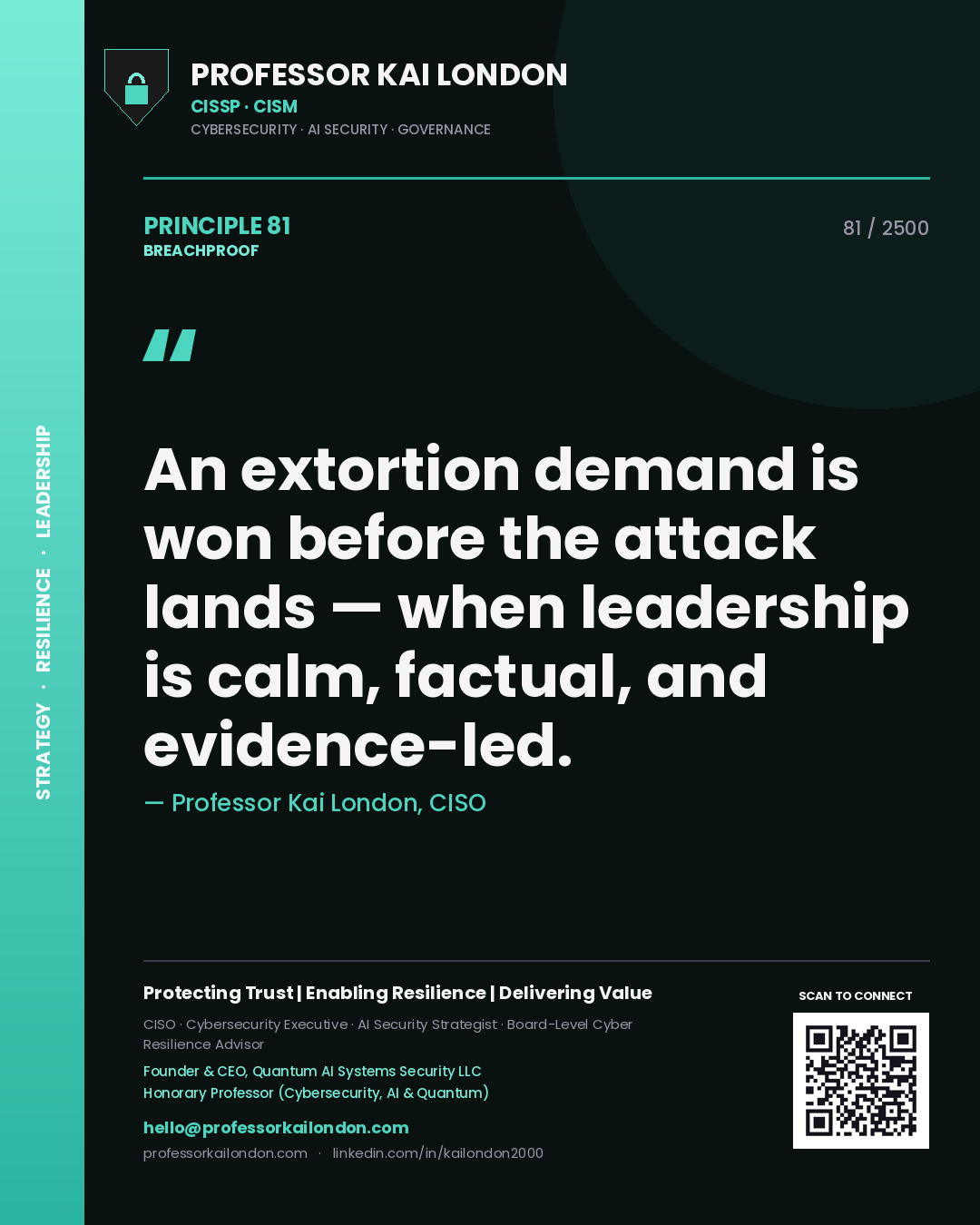
Professor Kai London principle 81: An extortion demand is won before the attack lands — when leadership is calm, factual, and evidence-led.
Principle 81
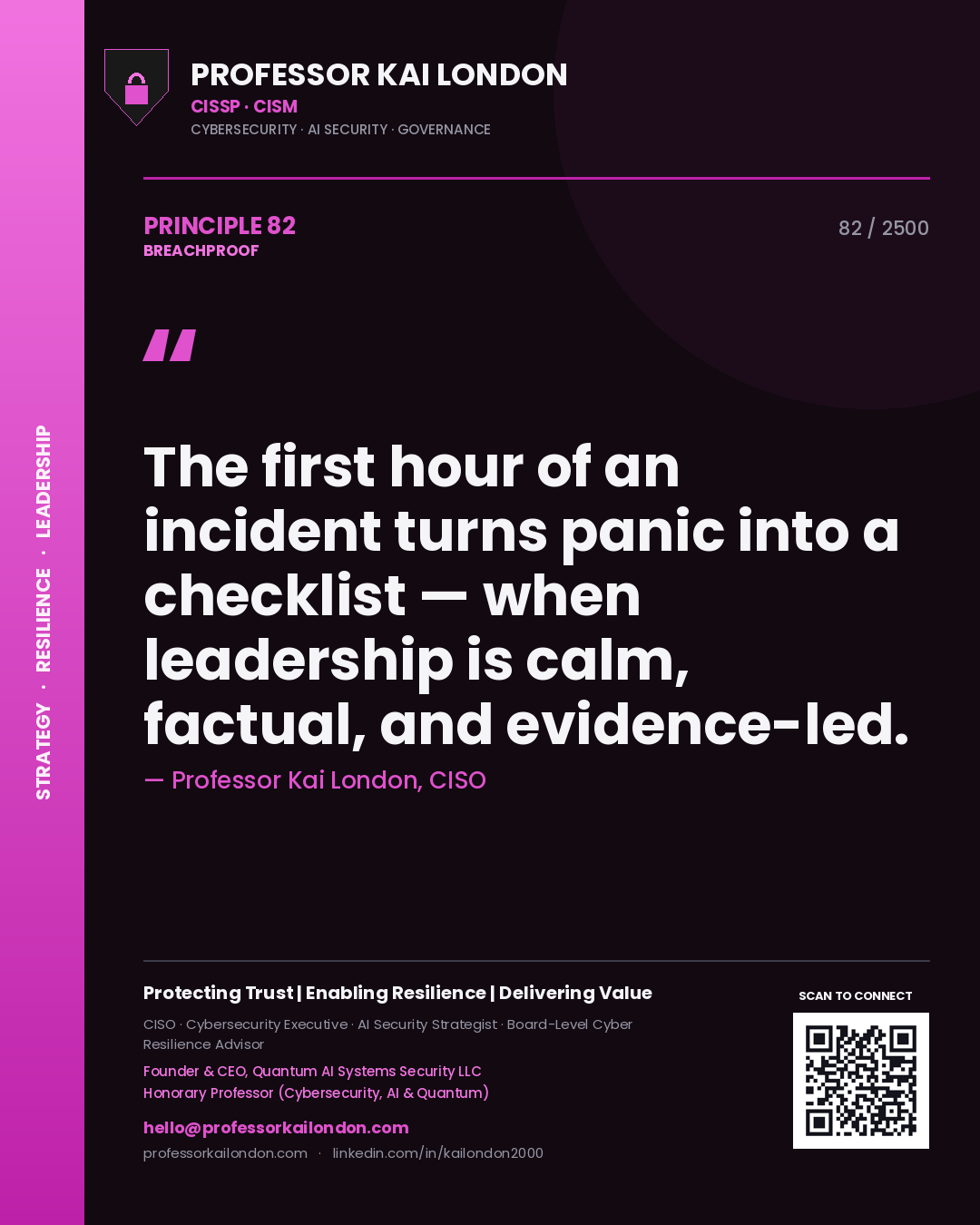
Professor Kai London principle 82: The first hour of an incident turns panic into a checklist — when leadership is calm, factual, and evidence-led.
Principle 82
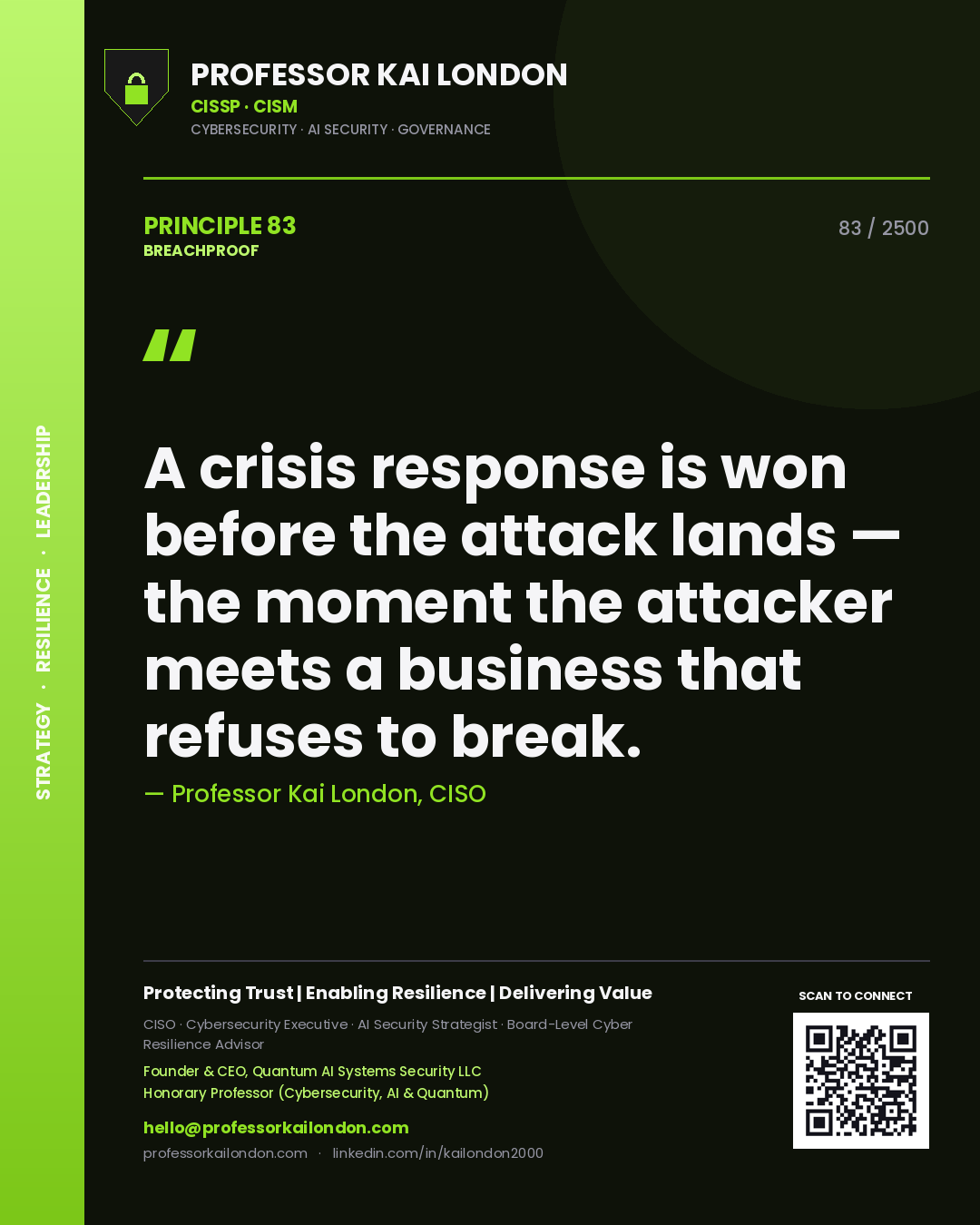
Professor Kai London principle 83: A crisis response is won before the attack lands — the moment the attacker meets a business that refuses to break.
Principle 83
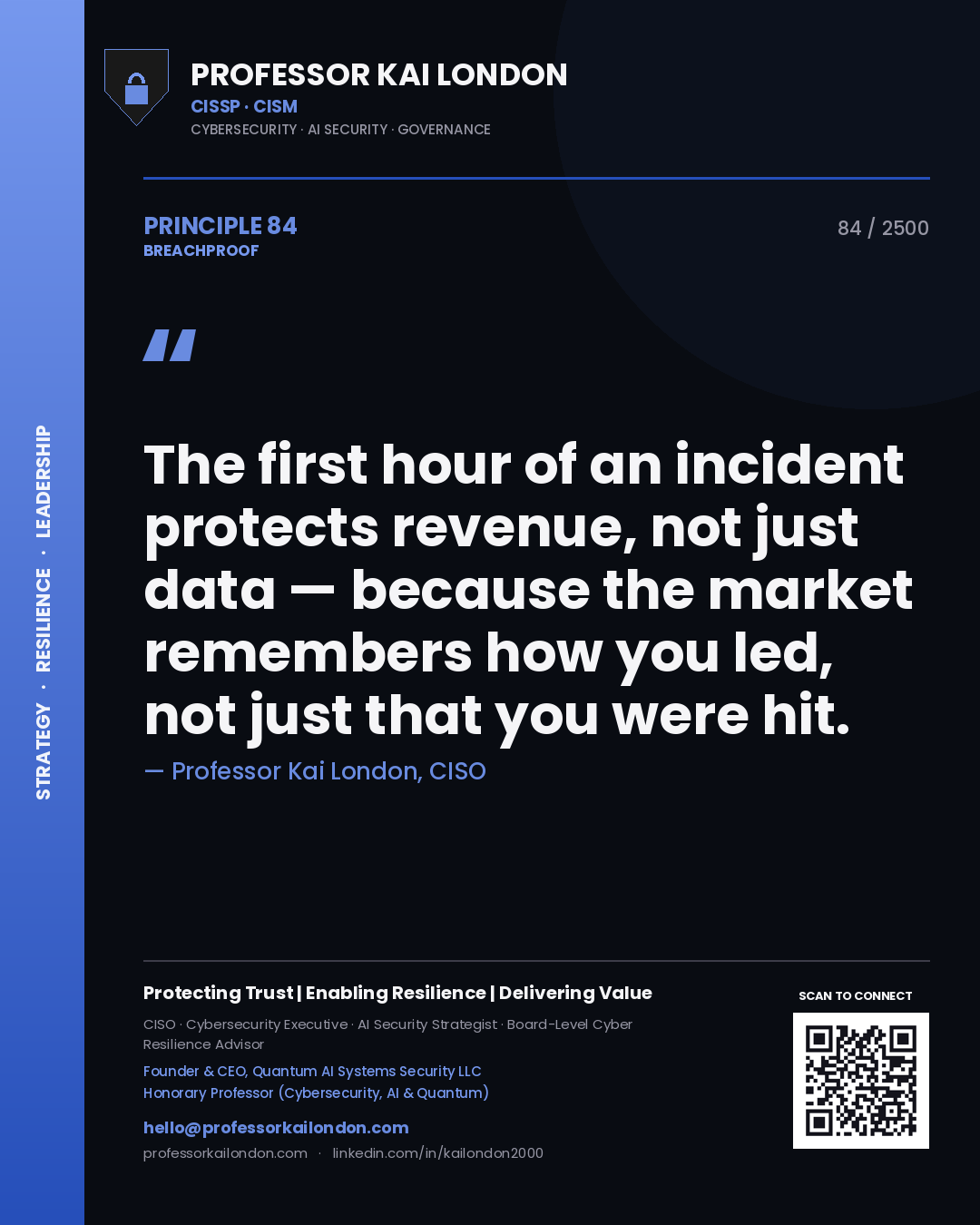
Professor Kai London principle 84: The first hour of an incident protects revenue, not just data — because the market remembers how you led, not just that you were hit.
Principle 84
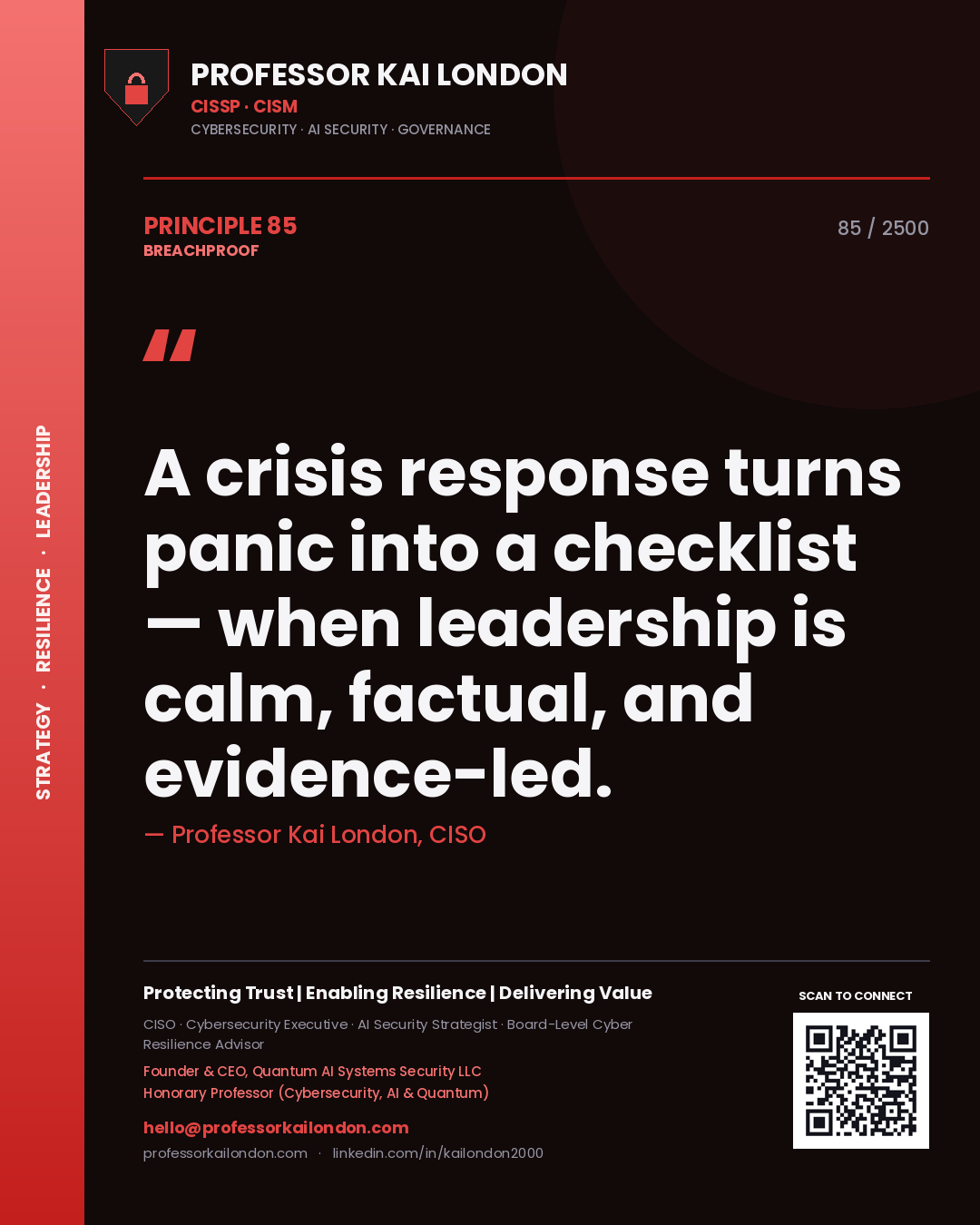
Professor Kai London principle 85: A crisis response turns panic into a checklist — when leadership is calm, factual, and evidence-led.
Principle 85
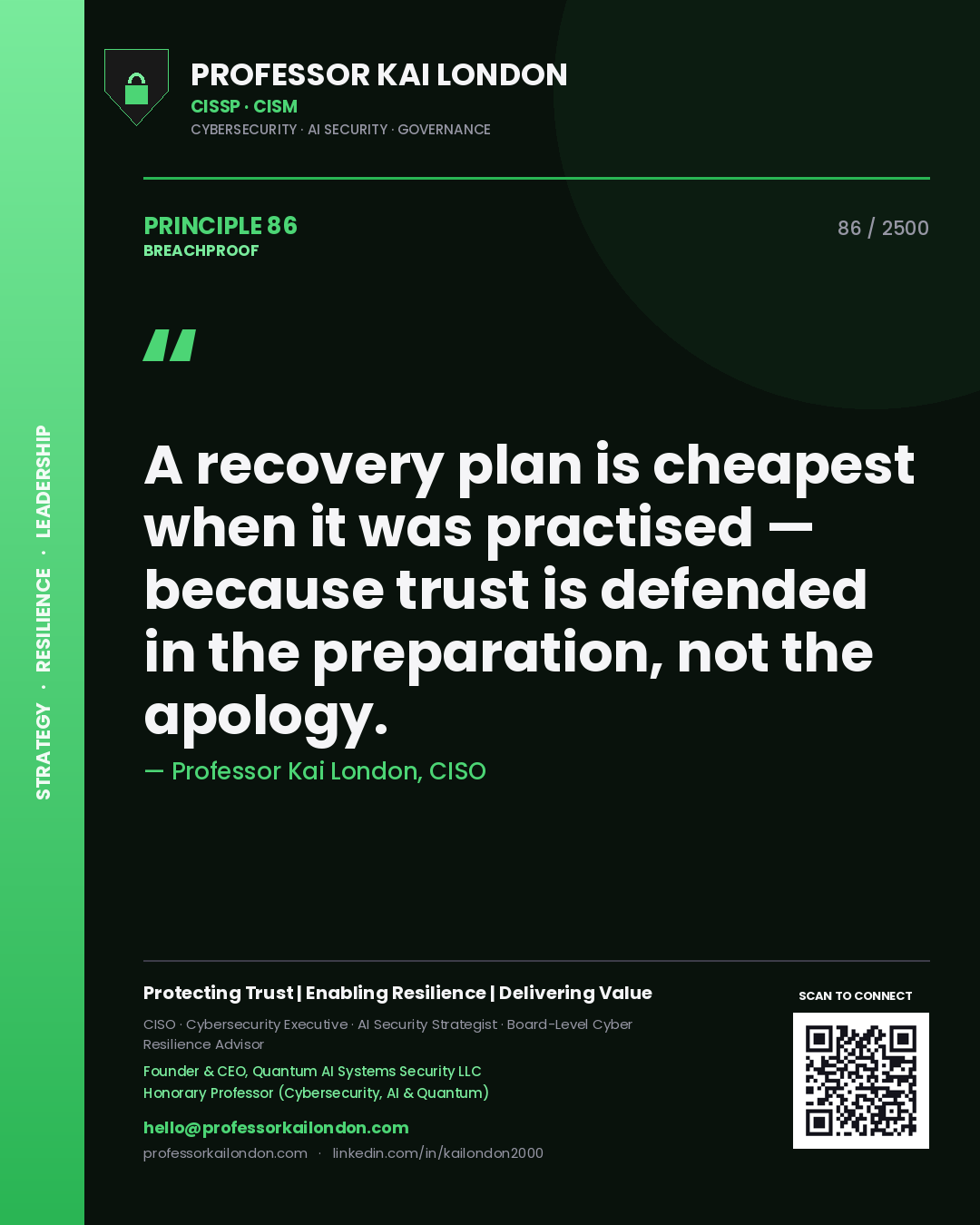
Professor Kai London principle 86: A recovery plan is cheapest when it was practised — because trust is defended in the preparation, not the apology.
Principle 86
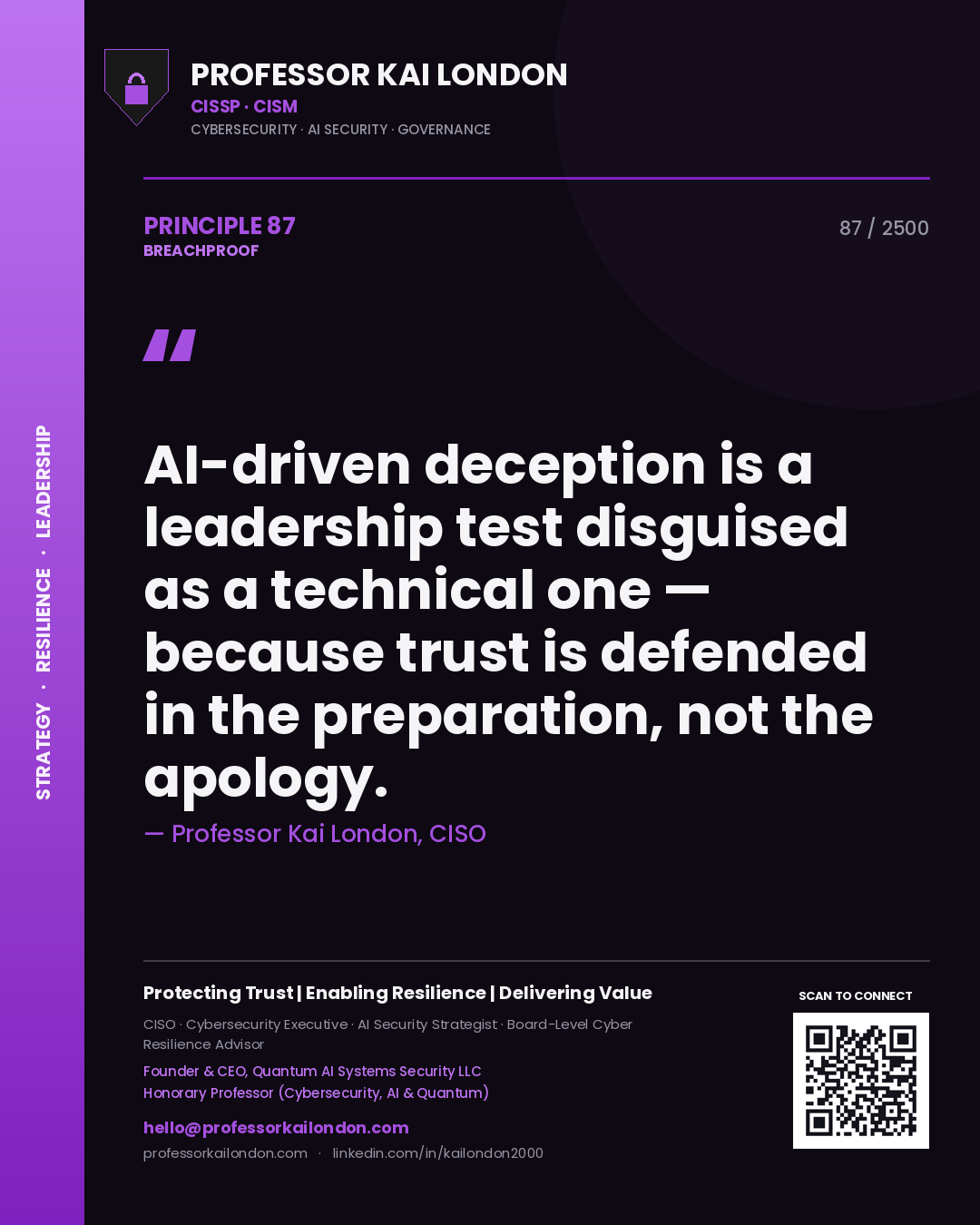
Professor Kai London principle 87: AI-driven deception is a leadership test disguised as a technical one — because trust is defended in the preparation, not the apology.
Principle 87
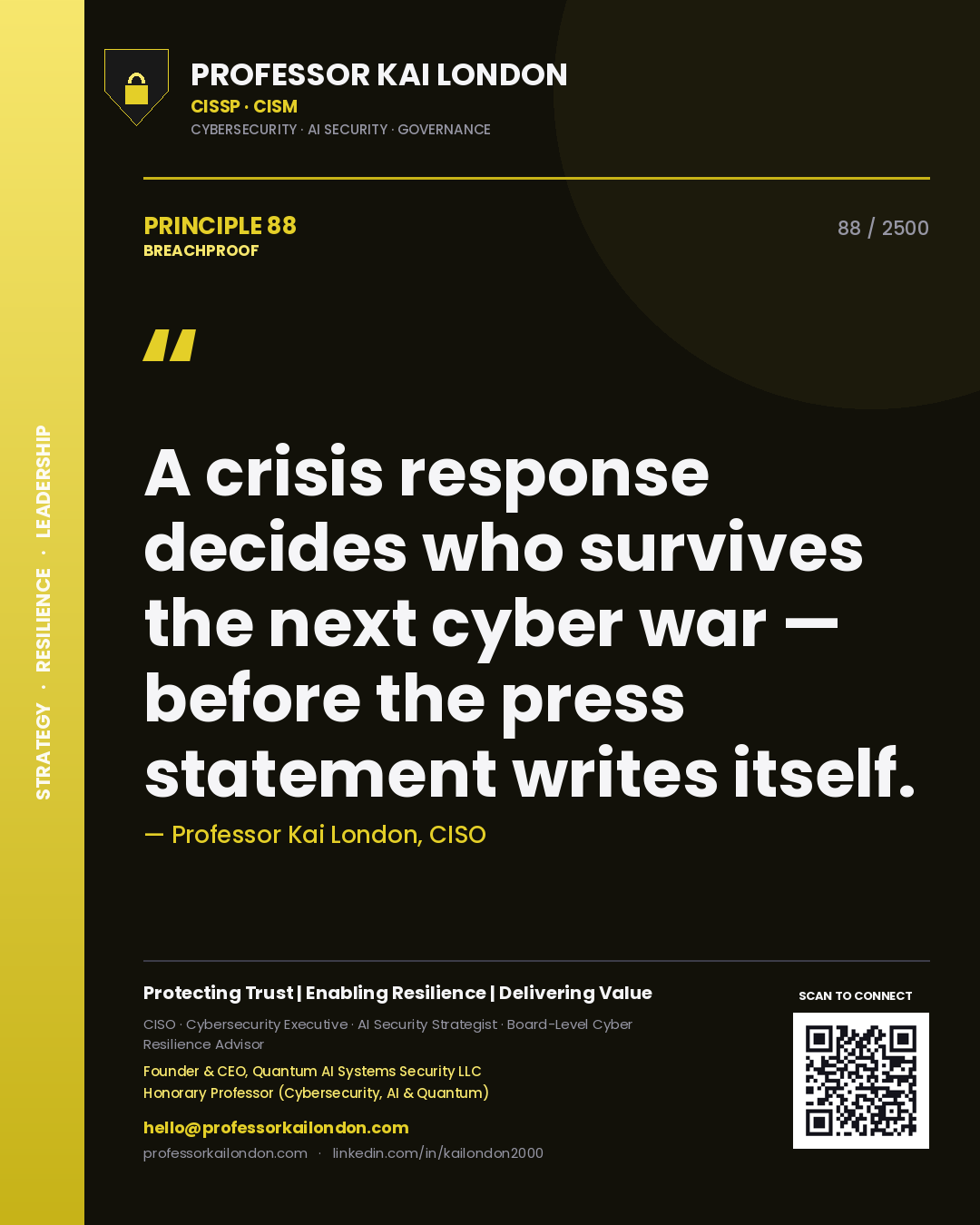
Professor Kai London principle 88: A crisis response decides who survives the next cyber war — before the press statement writes itself.
Principle 88
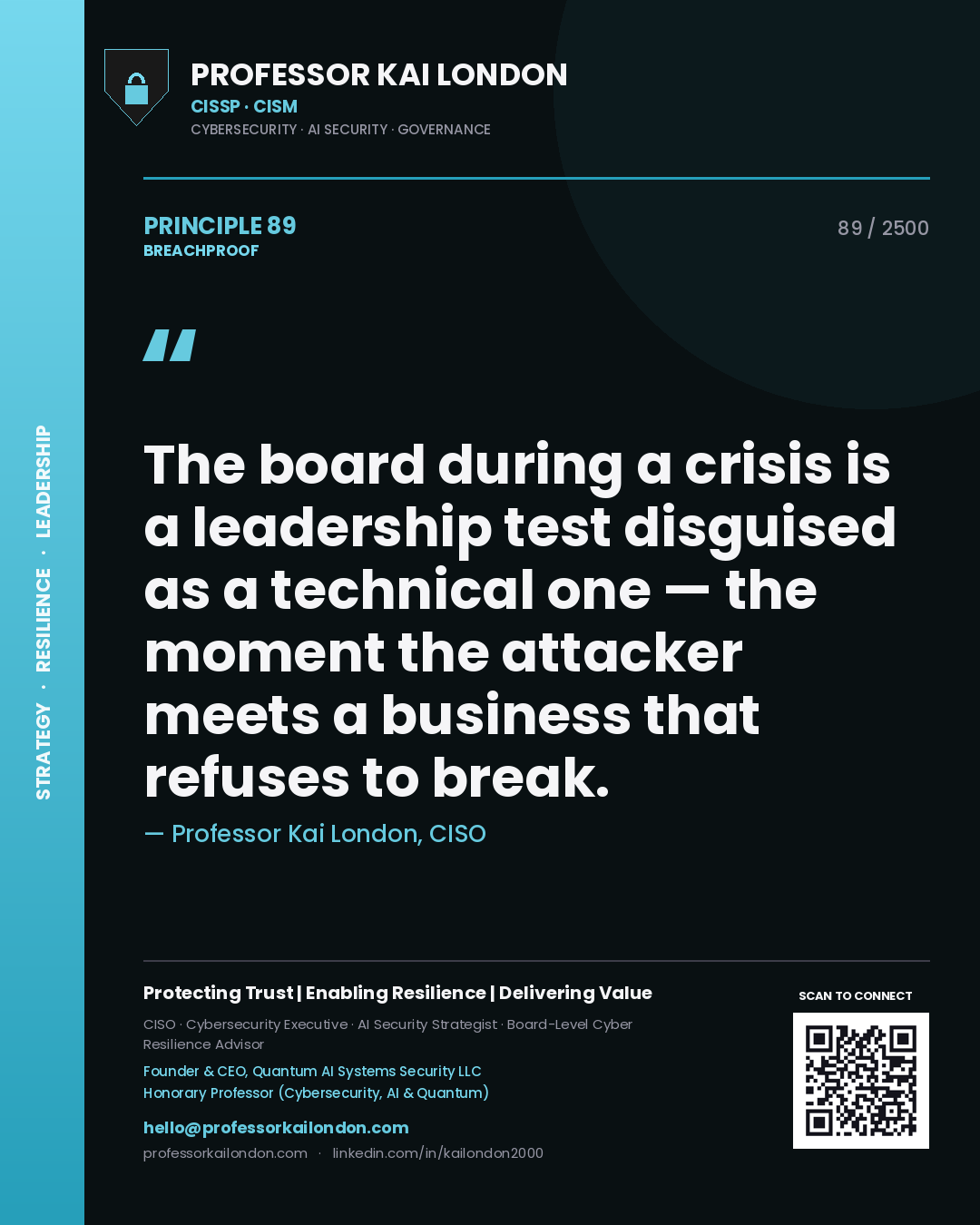
Professor Kai London principle 89: The board during a crisis is a leadership test disguised as a technical one — the moment the attacker meets a business that refuses to break.
Principle 89
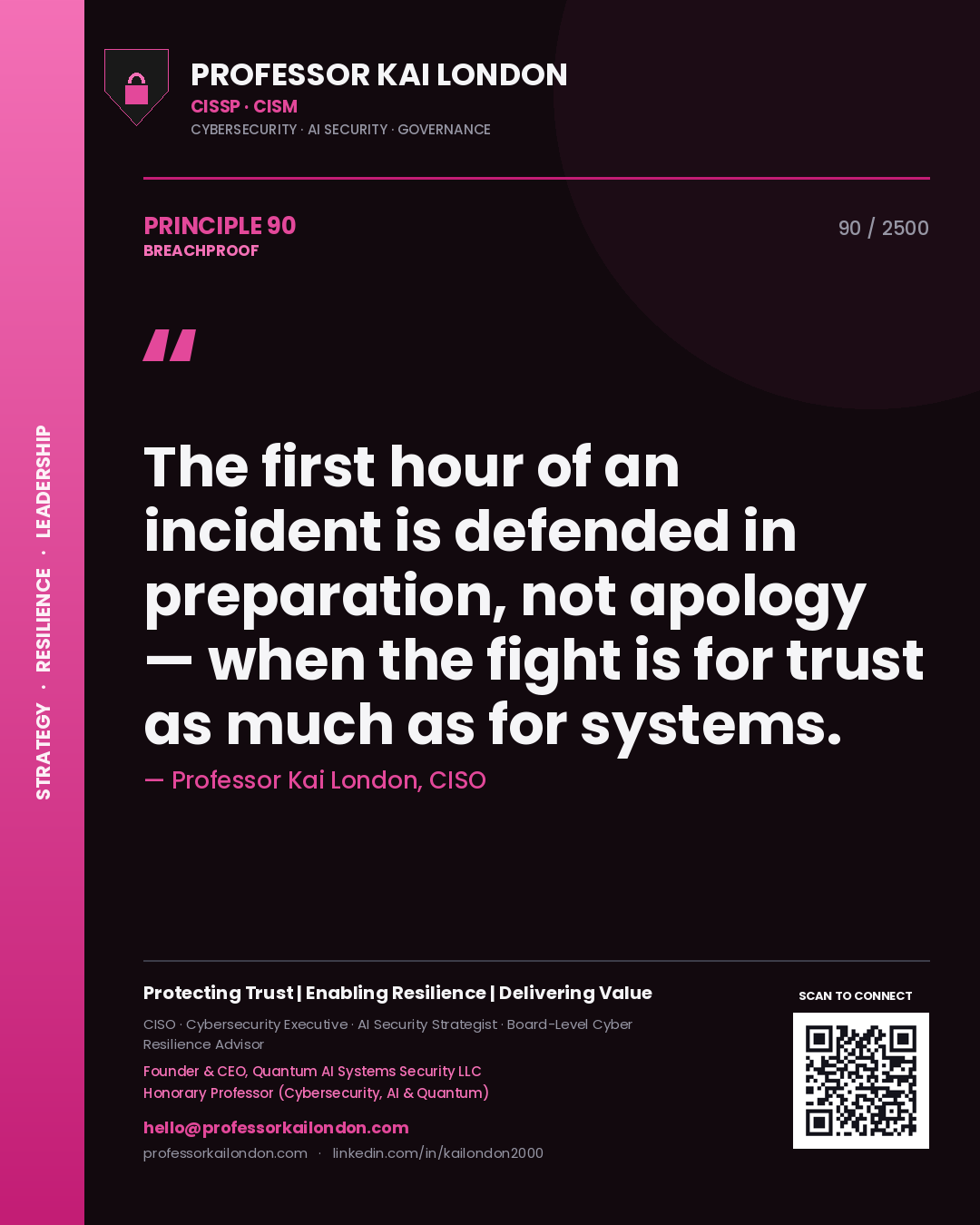
Professor Kai London principle 90: The first hour of an incident is defended in preparation, not apology — when the fight is for trust as much as for systems.
Principle 90
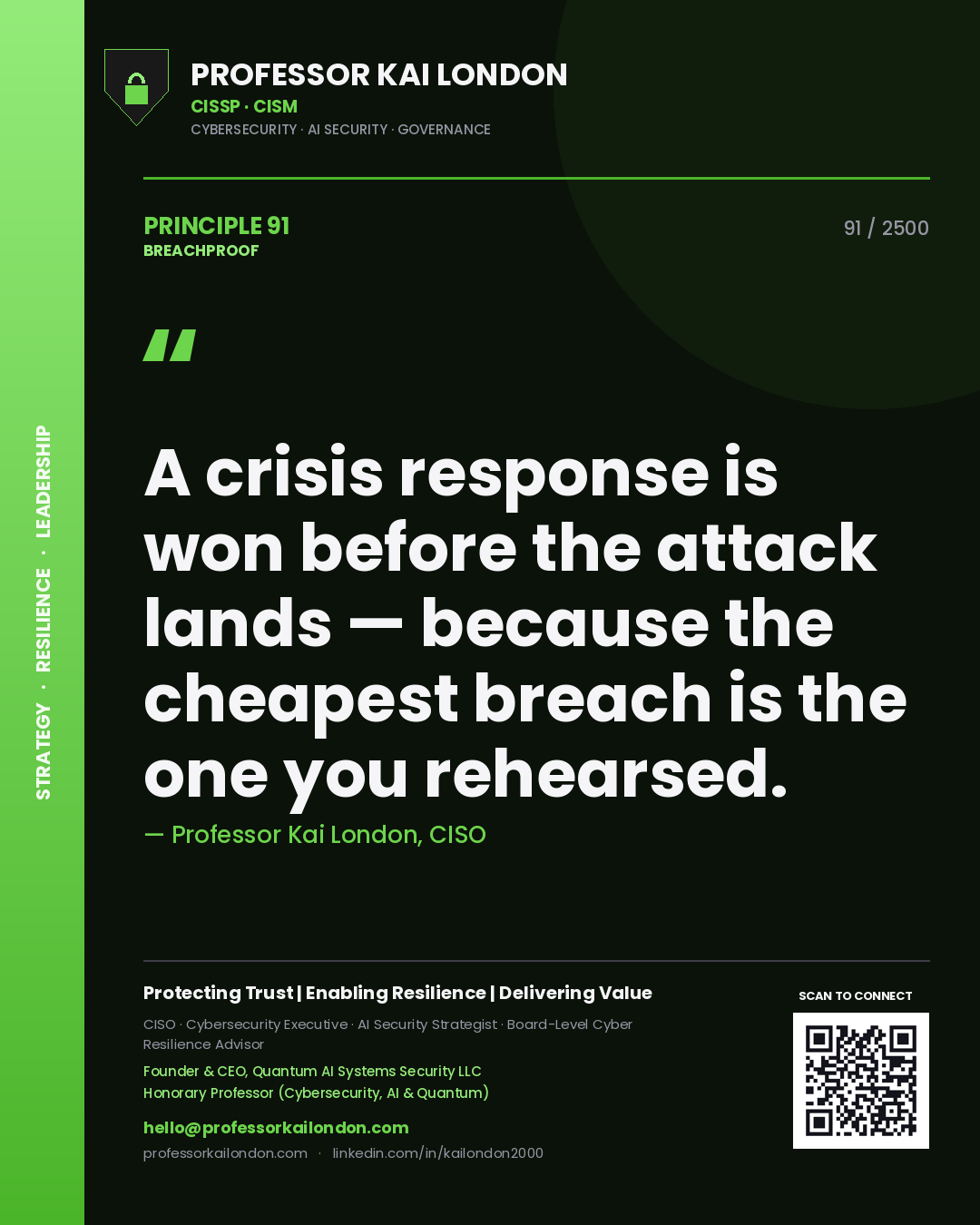
Professor Kai London principle 91: A crisis response is won before the attack lands — because the cheapest breach is the one you rehearsed.
Principle 91
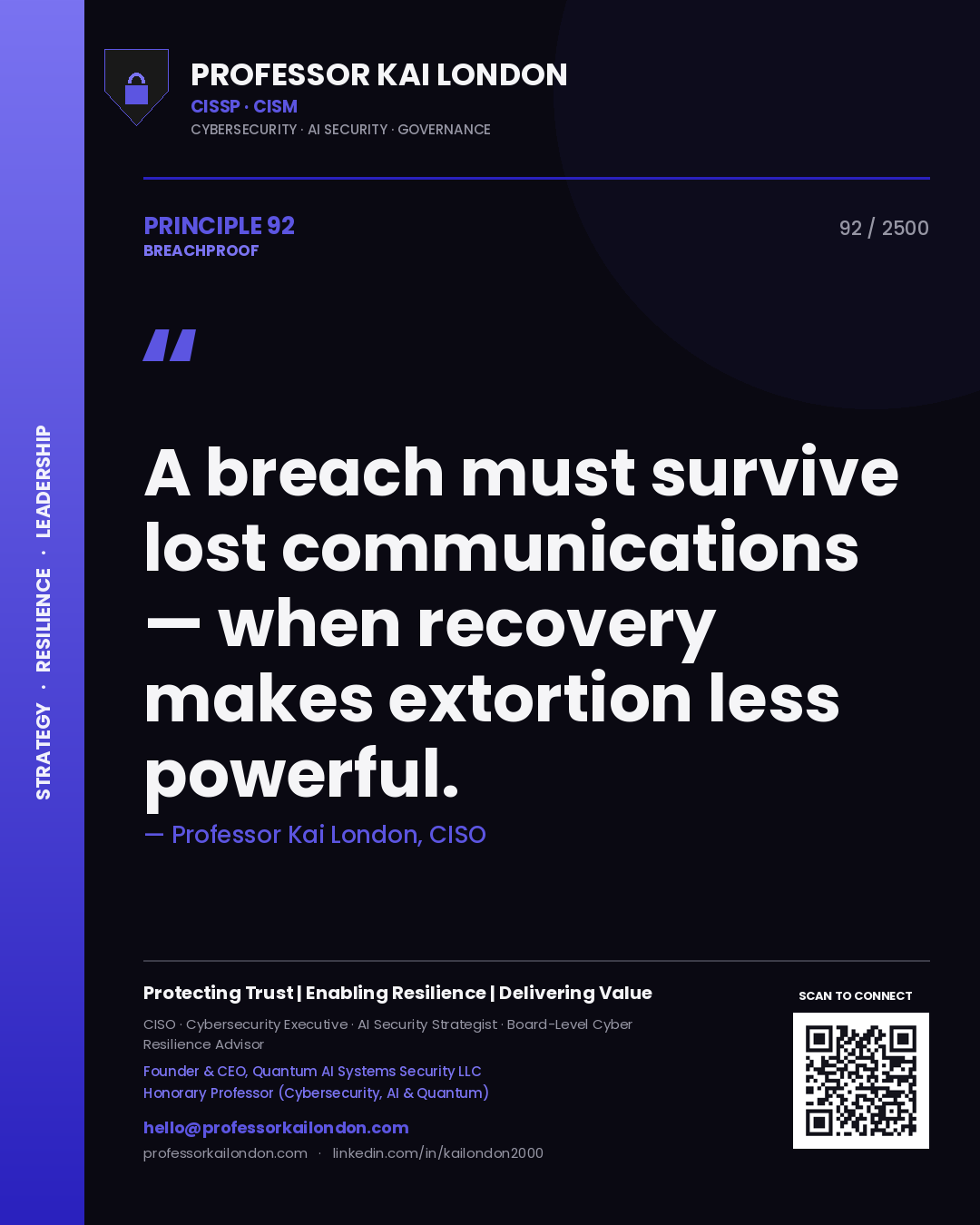
Professor Kai London principle 92: A breach must survive lost communications — when recovery makes extortion less powerful.
Principle 92
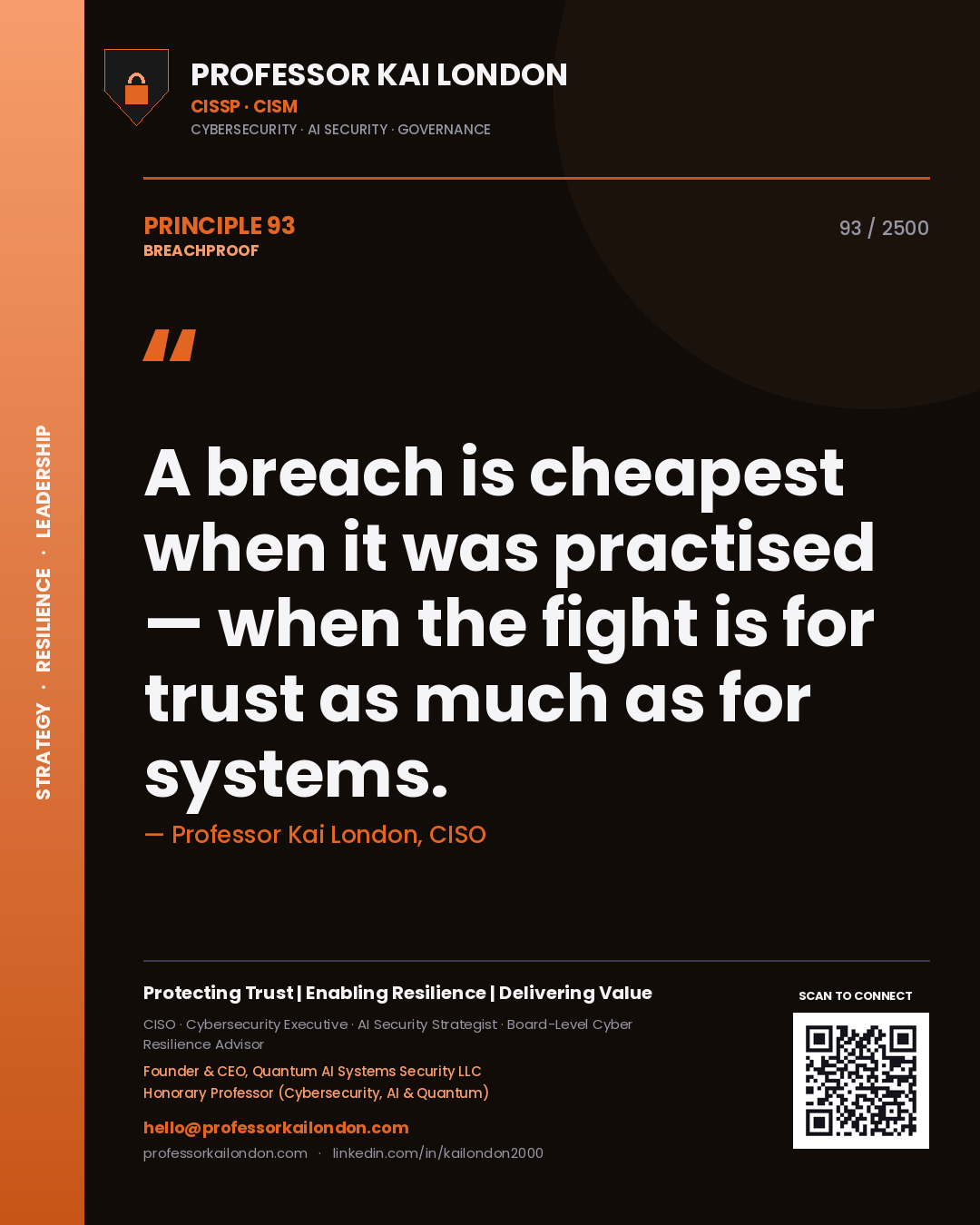
Professor Kai London principle 93: A breach is cheapest when it was practised — when the fight is for trust as much as for systems.
Principle 93
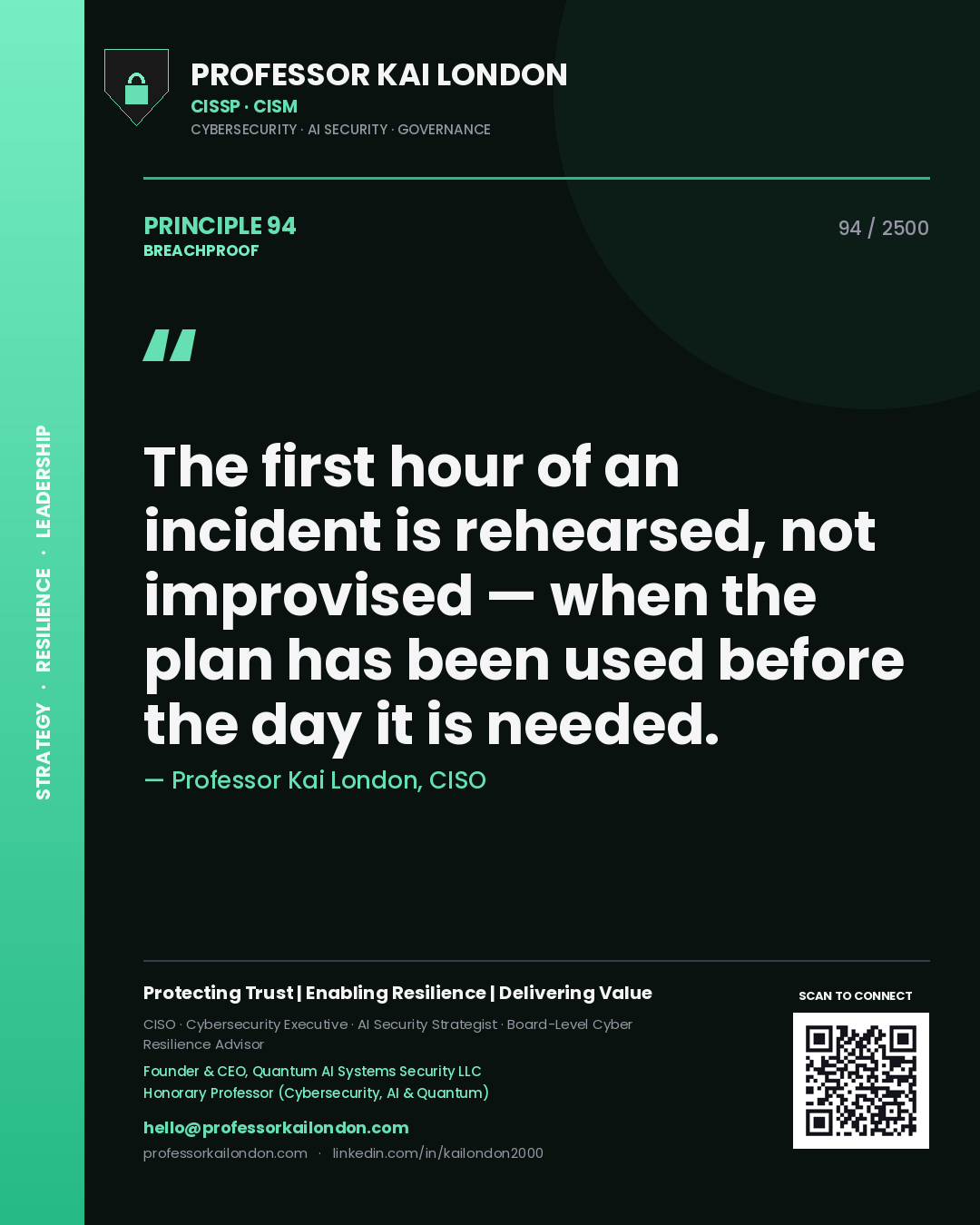
Professor Kai London principle 94: The first hour of an incident is rehearsed, not improvised — when the plan has been used before the day it is needed.
Principle 94
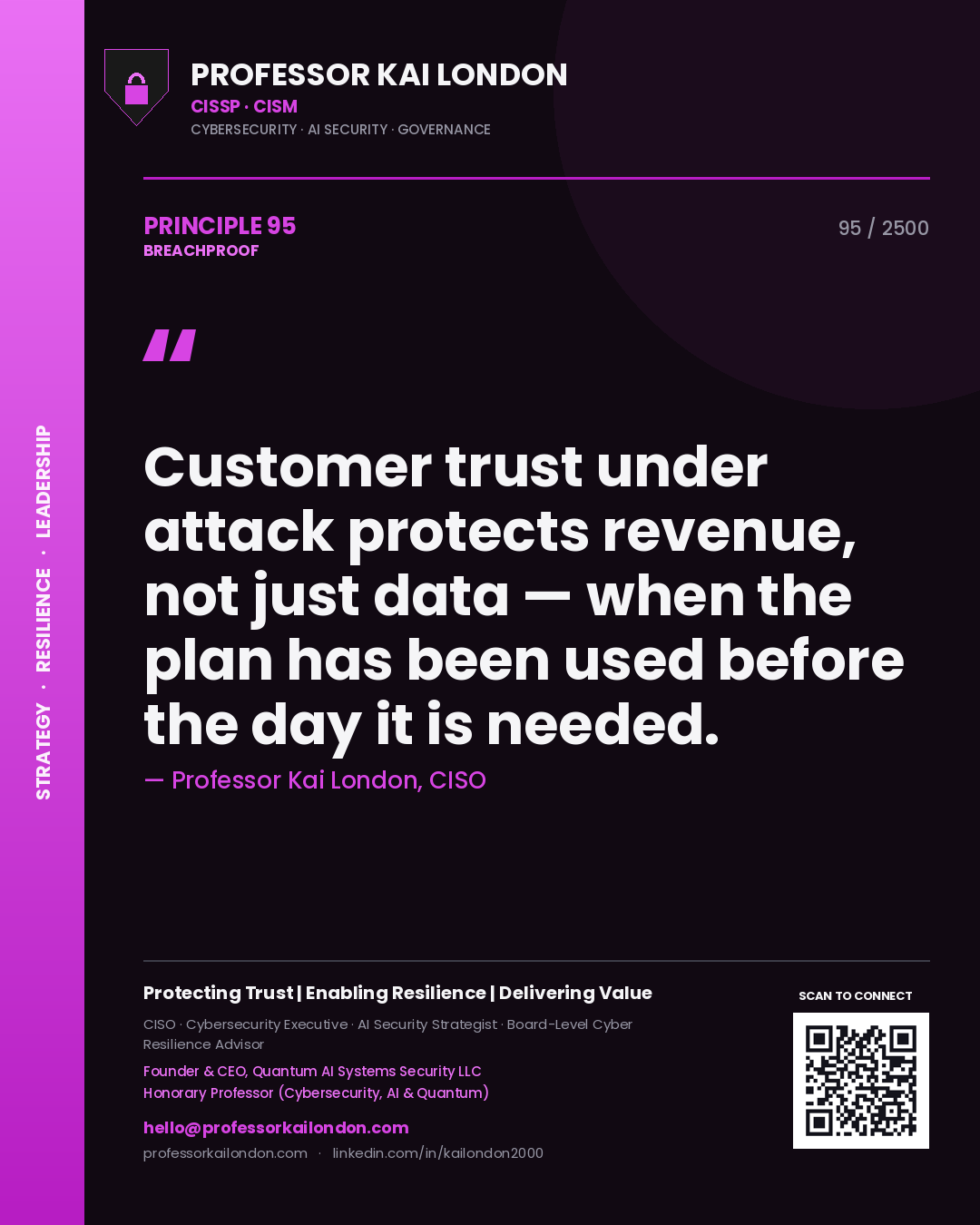
Professor Kai London principle 95: Customer trust under attack protects revenue, not just data — when the plan has been used before the day it is needed.
Principle 95
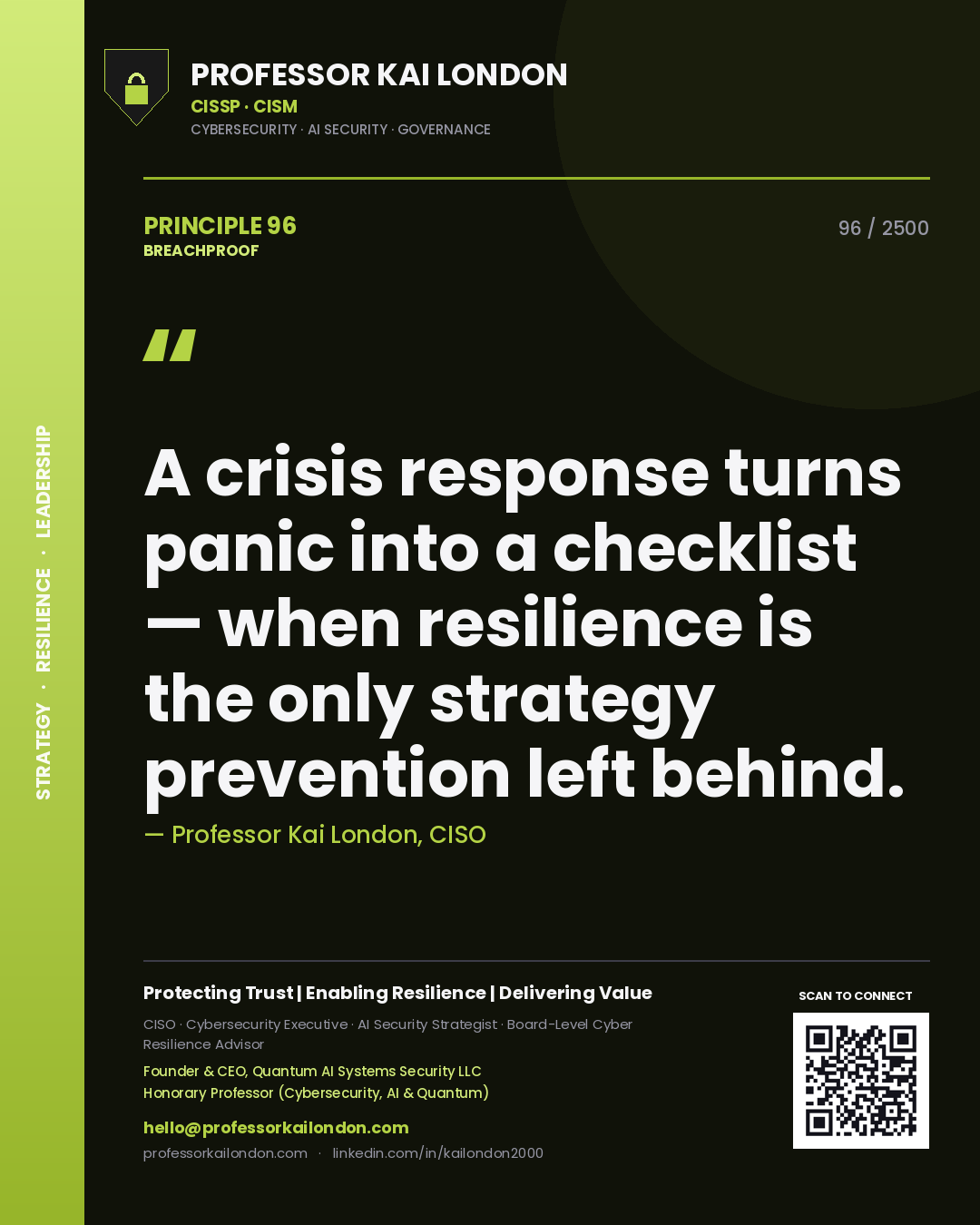
Professor Kai London principle 96: A crisis response turns panic into a checklist — when resilience is the only strategy prevention left behind.
Principle 96
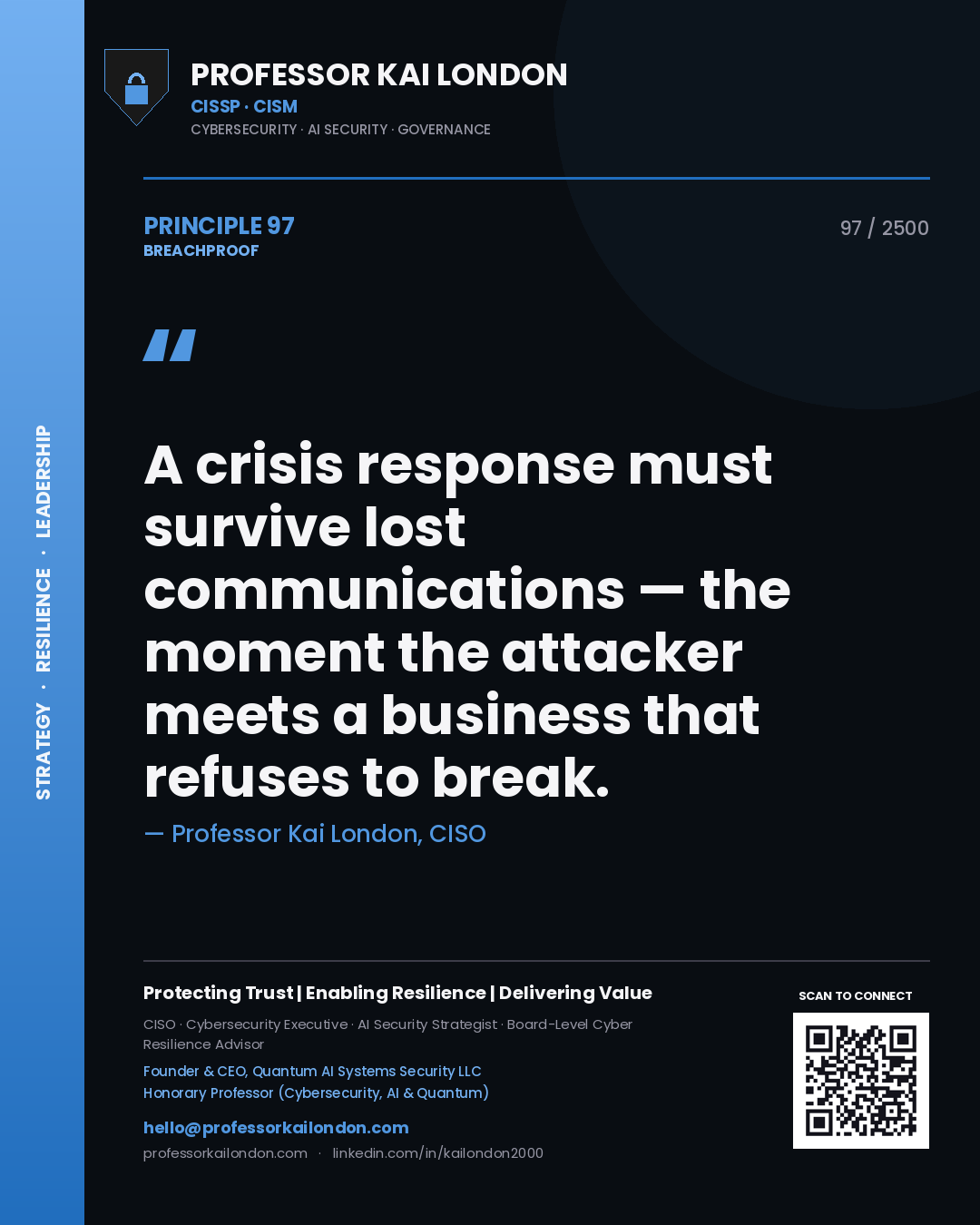
Professor Kai London principle 97: A crisis response must survive lost communications — the moment the attacker meets a business that refuses to break.
Principle 97
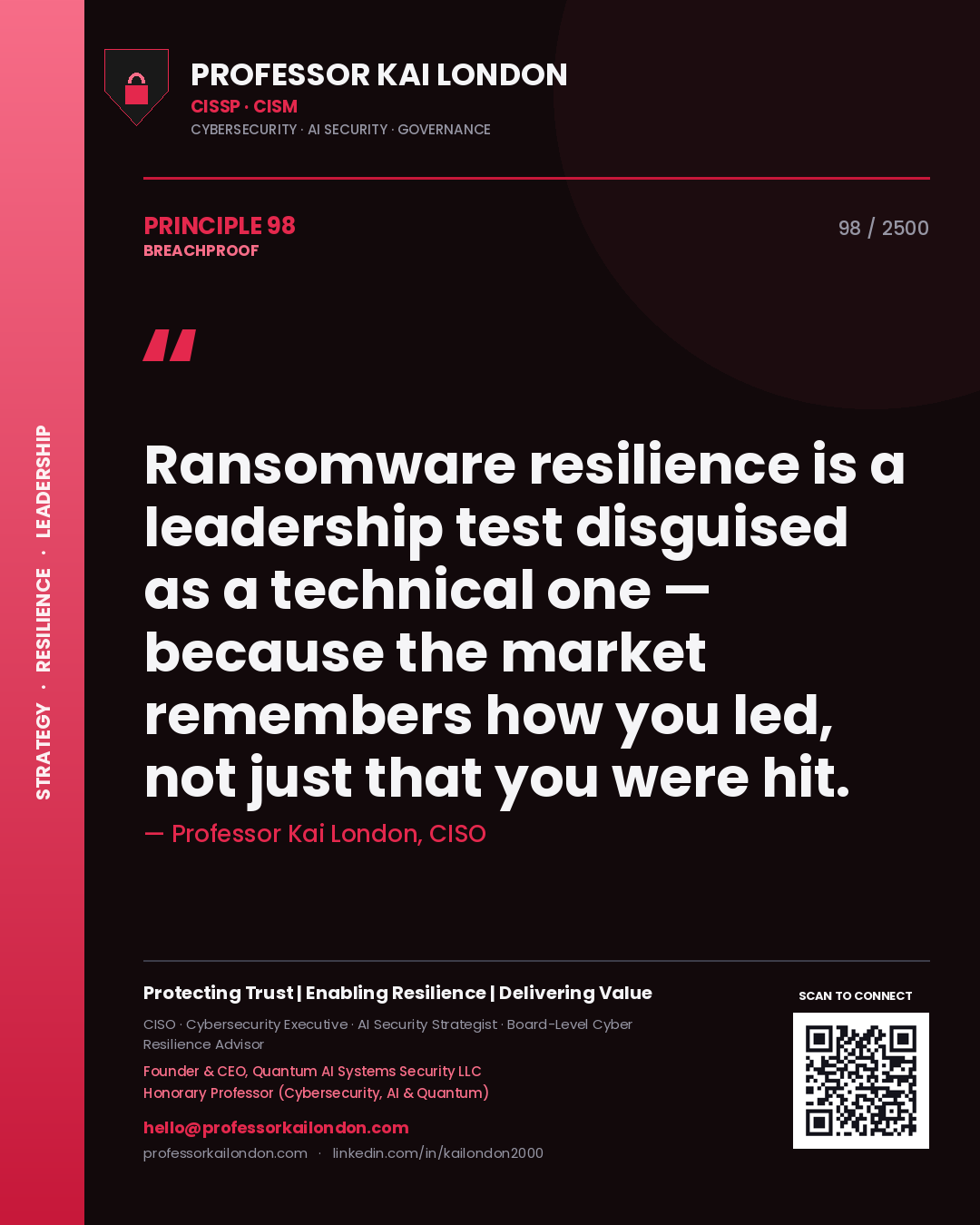
Professor Kai London principle 98: Ransomware resilience is a leadership test disguised as a technical one — because the market remembers how you led, not just that you were hit.
Principle 98
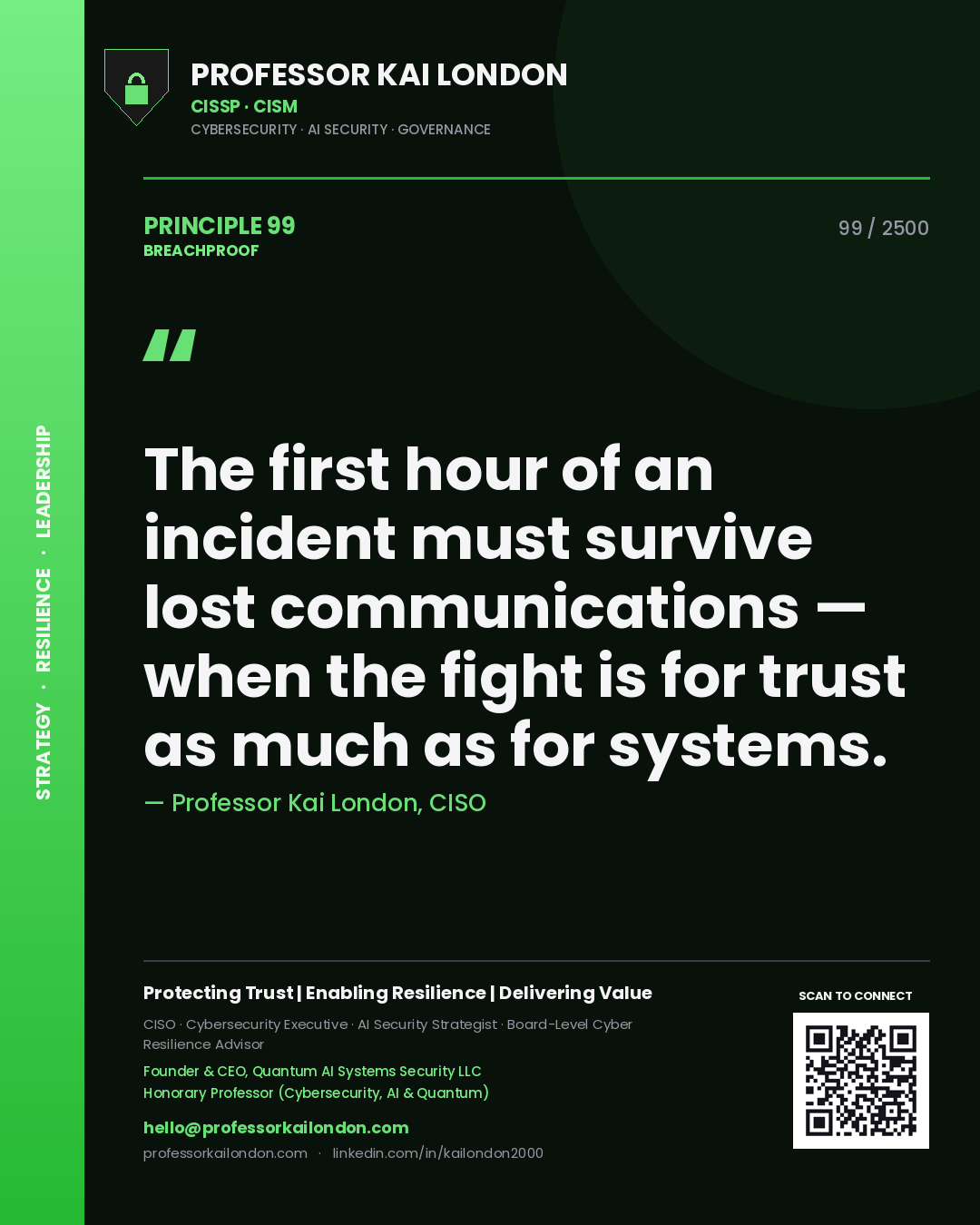
Professor Kai London principle 99: The first hour of an incident must survive lost communications — when the fight is for trust as much as for systems.
Principle 99
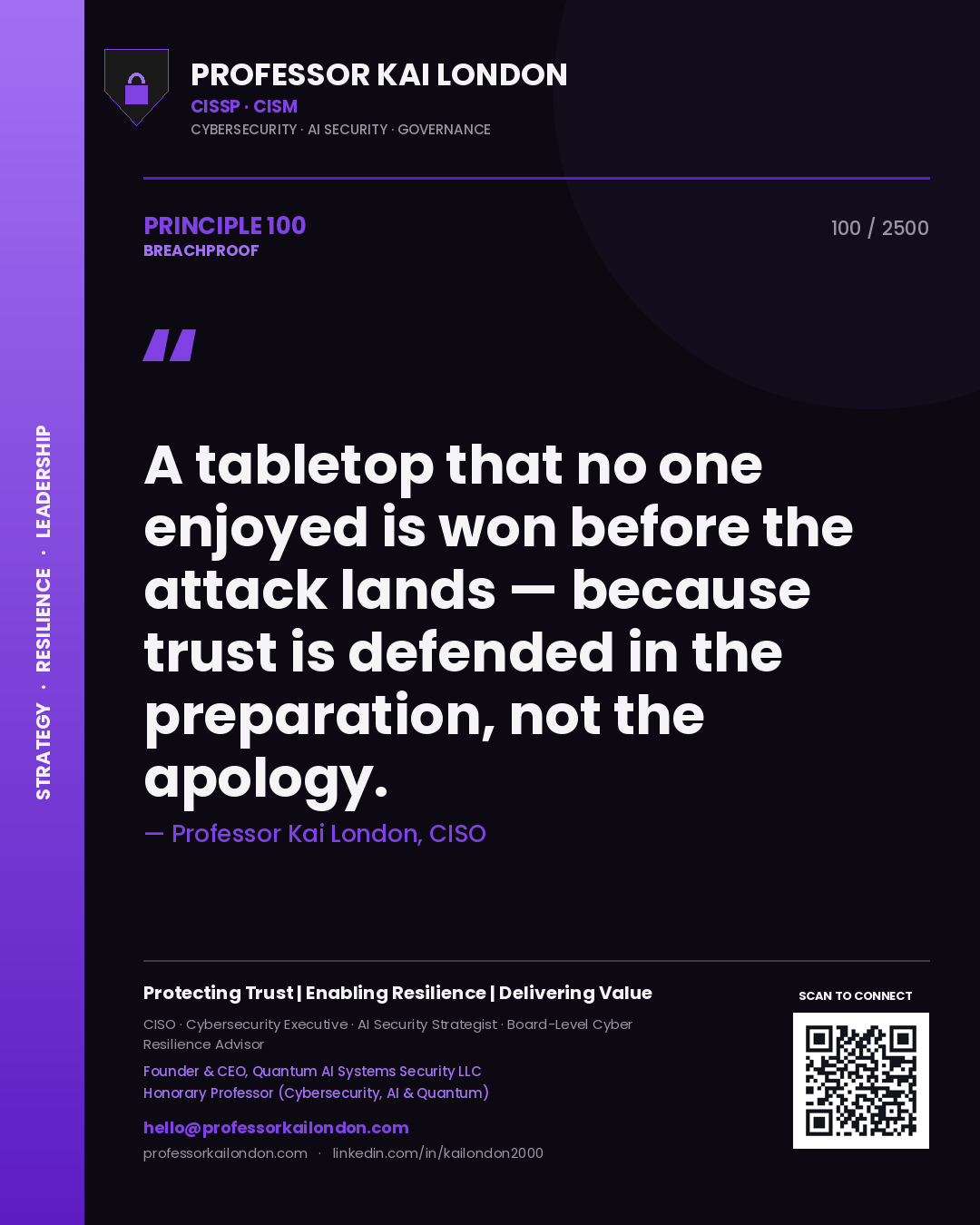
Professor Kai London principle 100: A tabletop that no one enjoyed is won before the attack lands — because trust is defended in the preparation, not the apology.
Principle 100