AI on Trial — Gallery (Page 3 of 100)
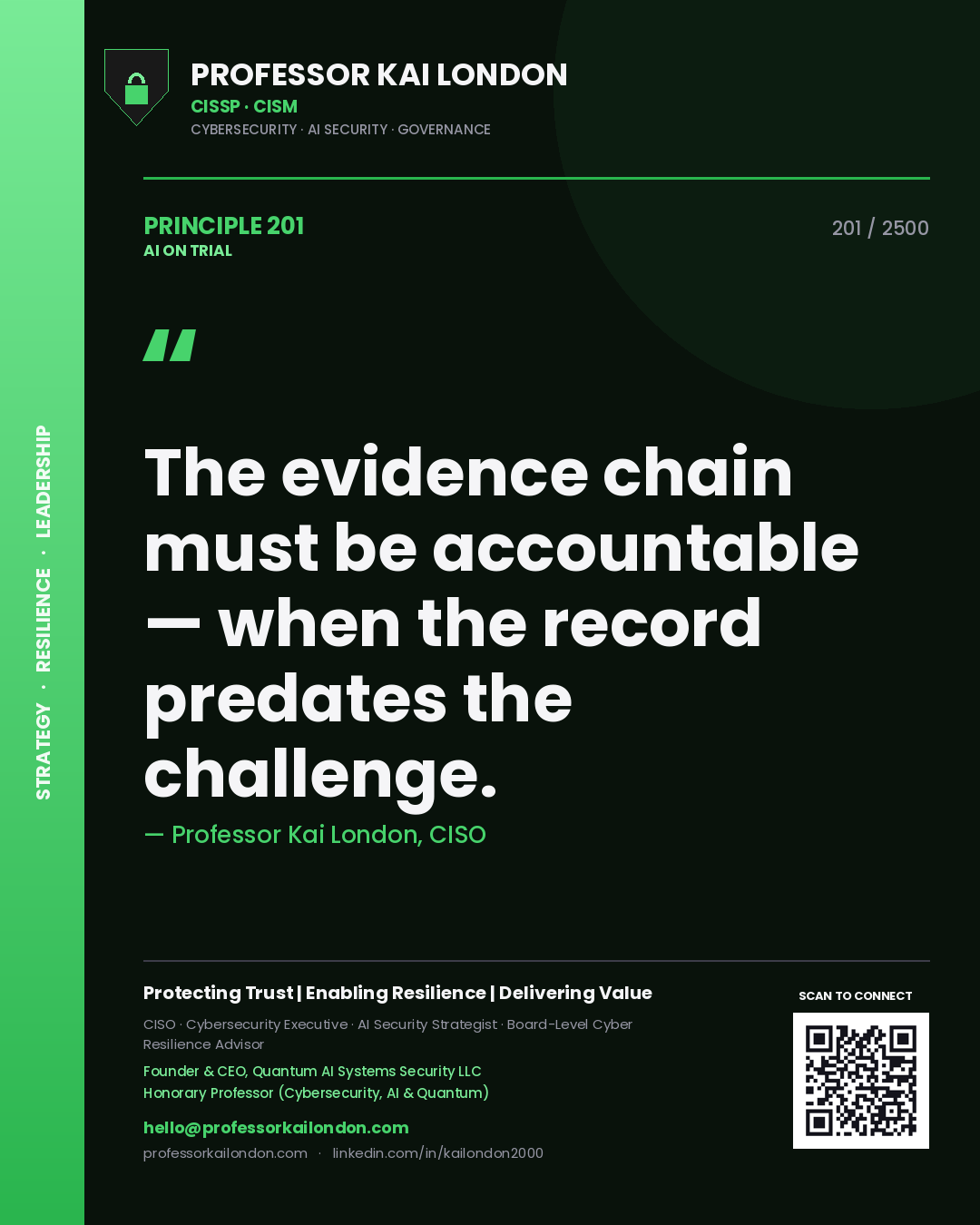
Professor Kai London principle 201: The evidence chain must be accountable — when the record predates the challenge.
Principle 201
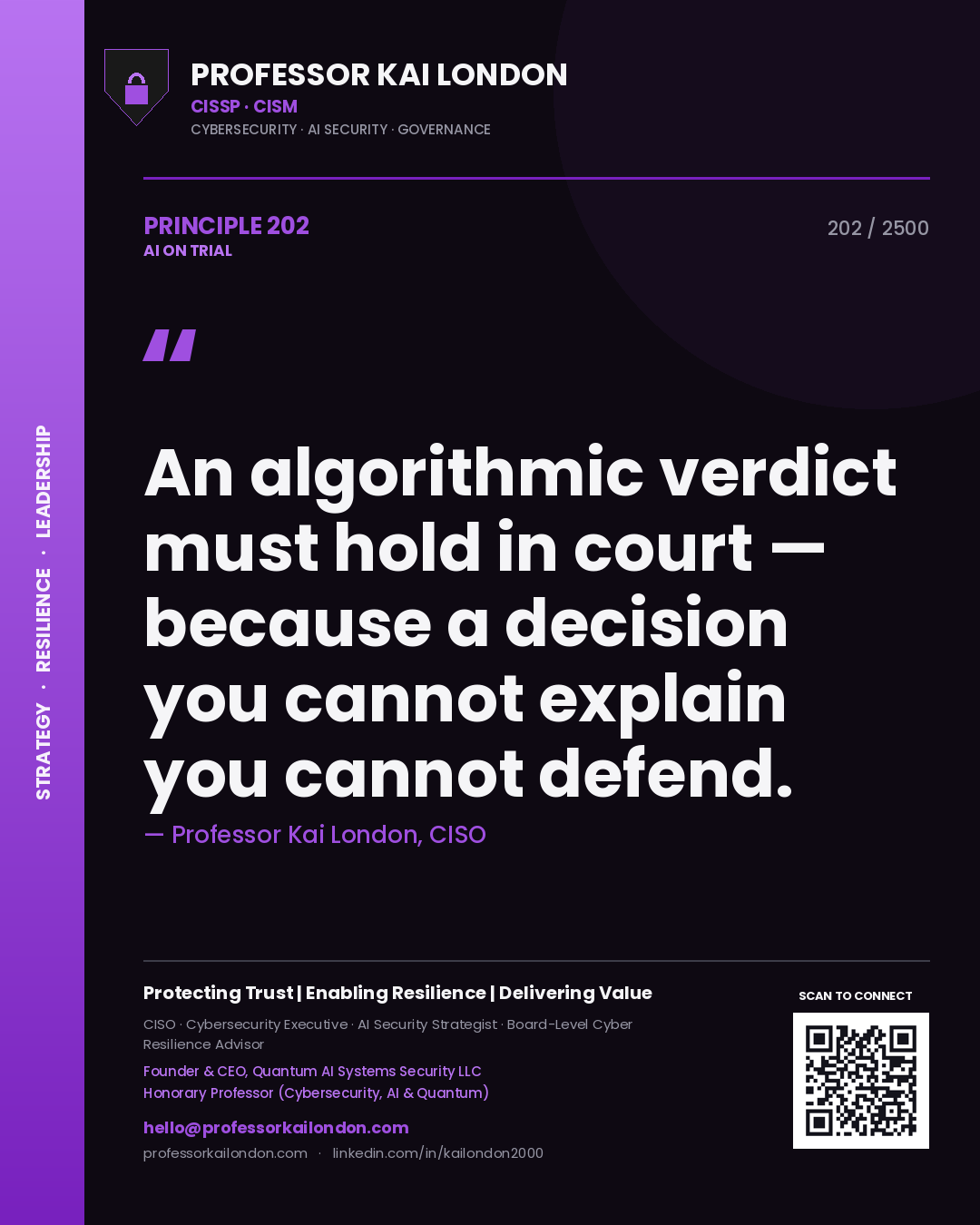
Professor Kai London principle 202: An algorithmic verdict must hold in court — because a decision you cannot explain you cannot defend.
Principle 202
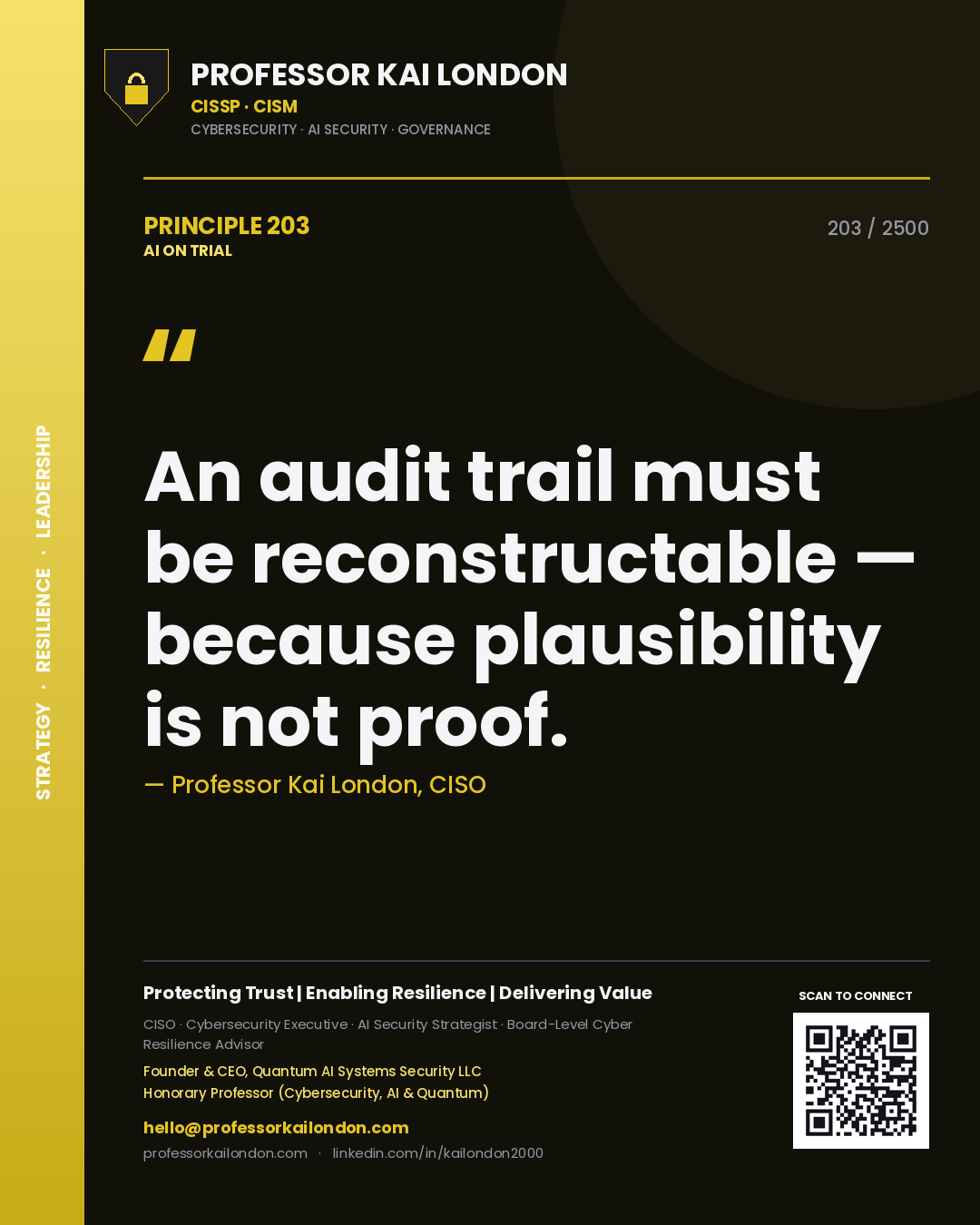
Professor Kai London principle 203: An audit trail must be reconstructable — because plausibility is not proof.
Principle 203
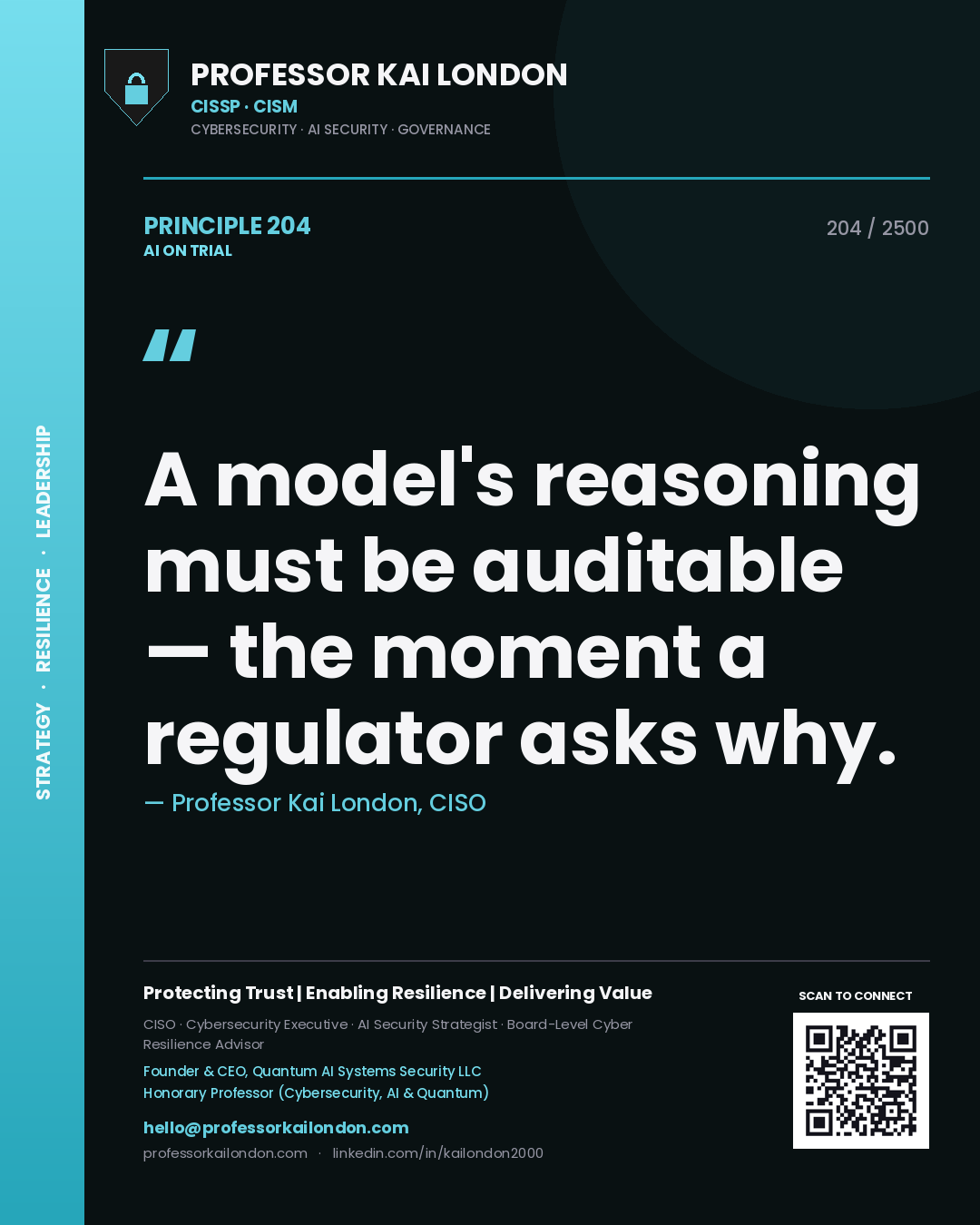
Professor Kai London principle 204: A model's reasoning must be auditable — the moment a regulator asks why.
Principle 204
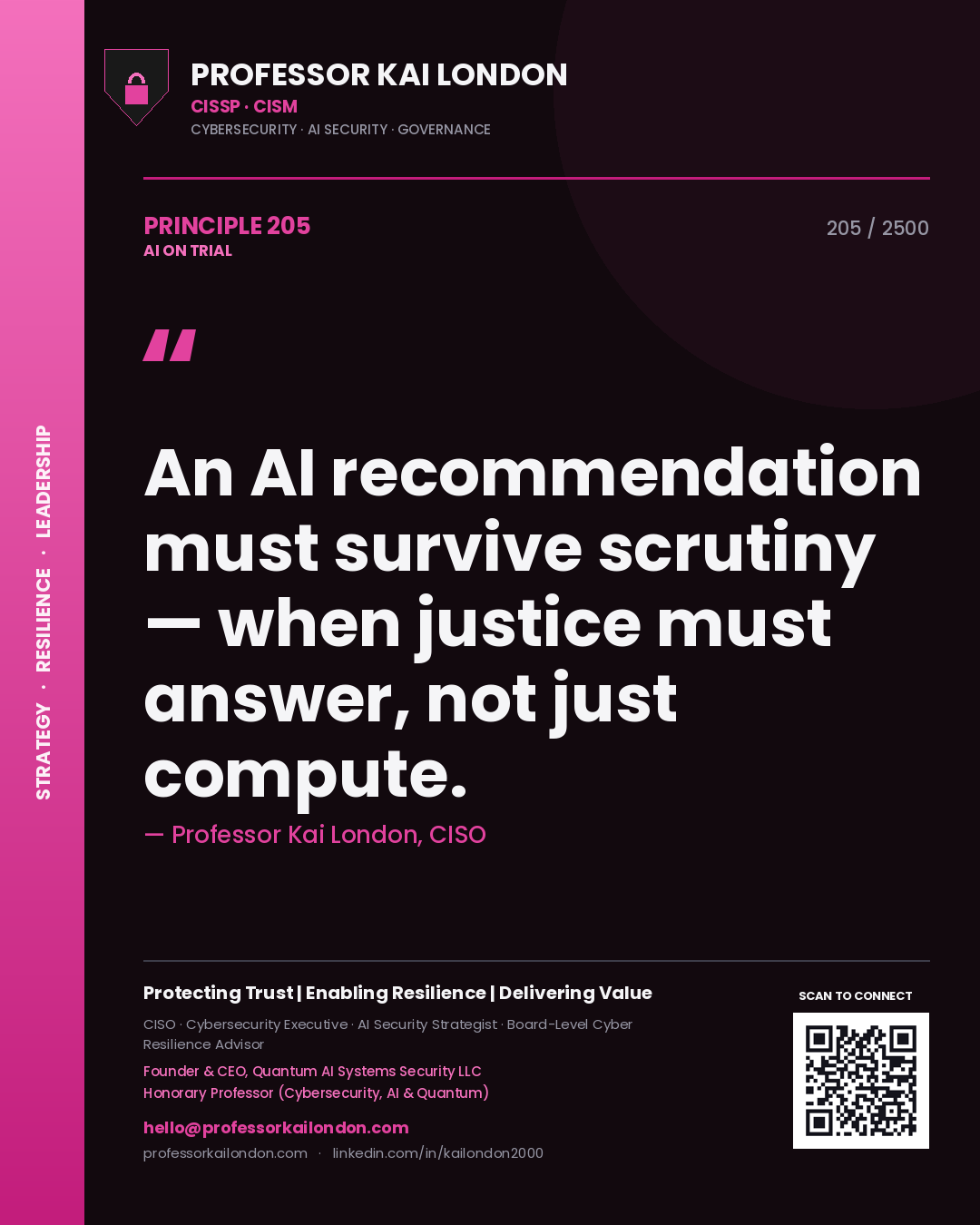
Professor Kai London principle 205: An AI recommendation must survive scrutiny — when justice must answer, not just compute.
Principle 205
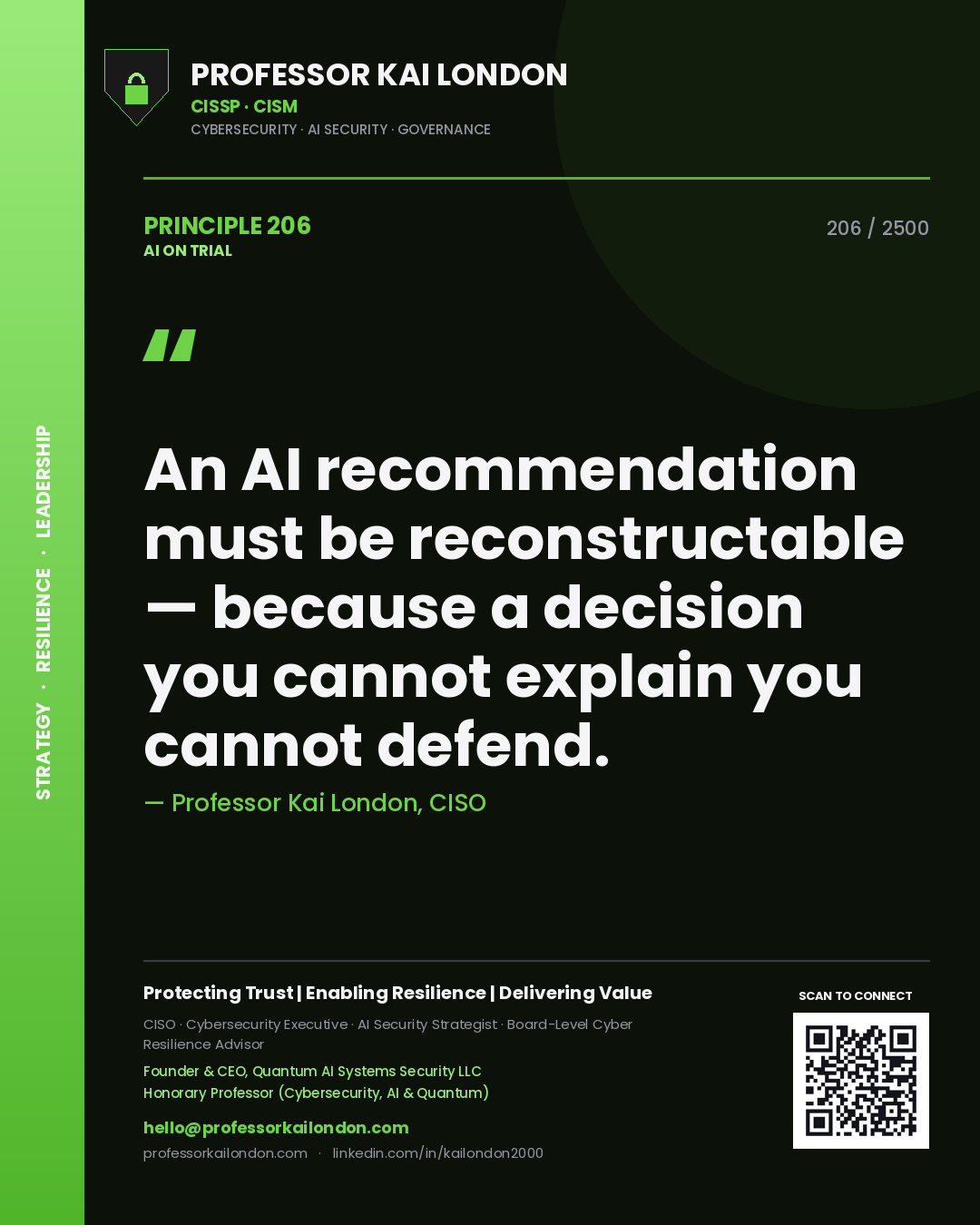
Professor Kai London principle 206: An AI recommendation must be reconstructable — because a decision you cannot explain you cannot defend.
Principle 206
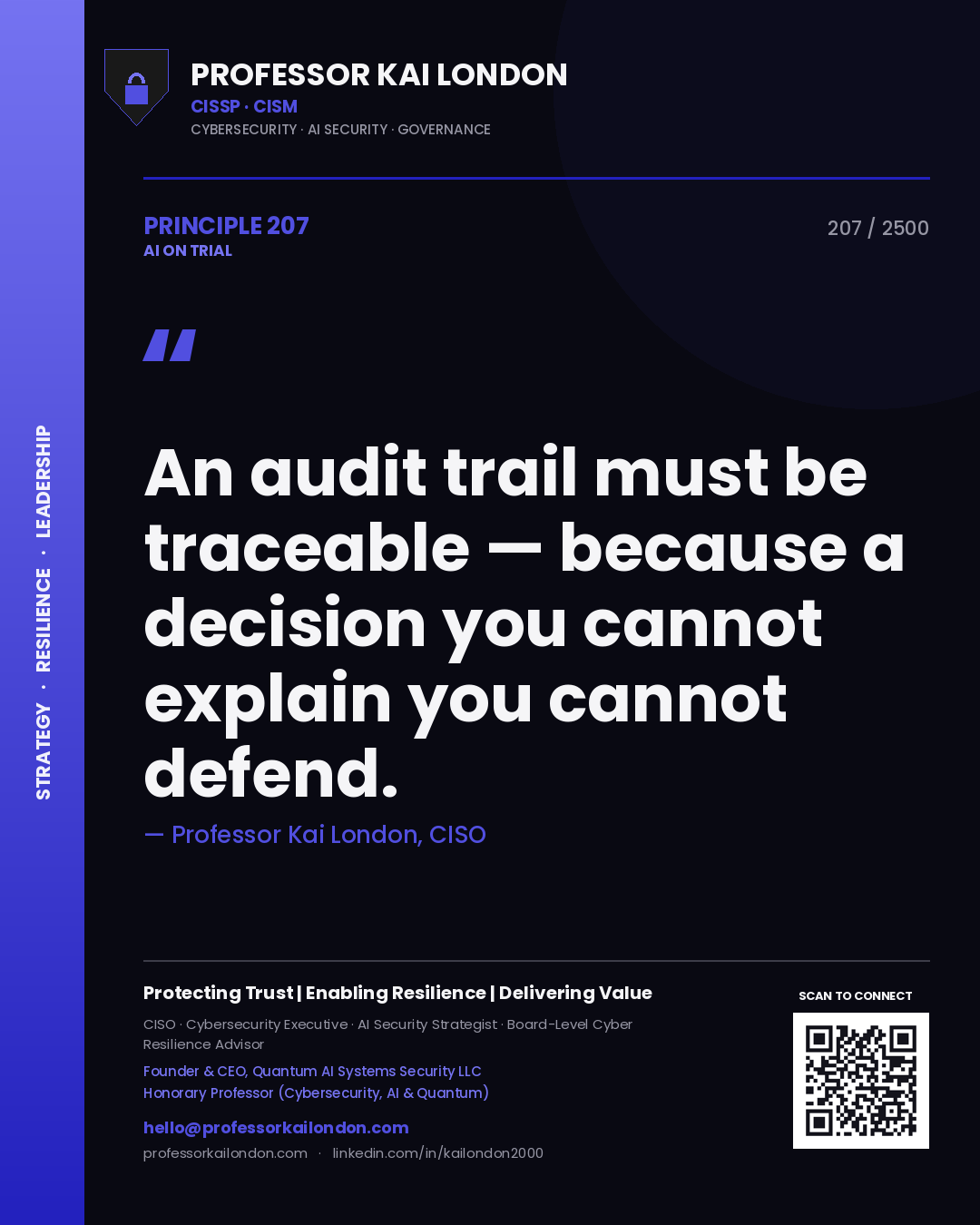
Professor Kai London principle 207: An audit trail must be traceable — because a decision you cannot explain you cannot defend.
Principle 207
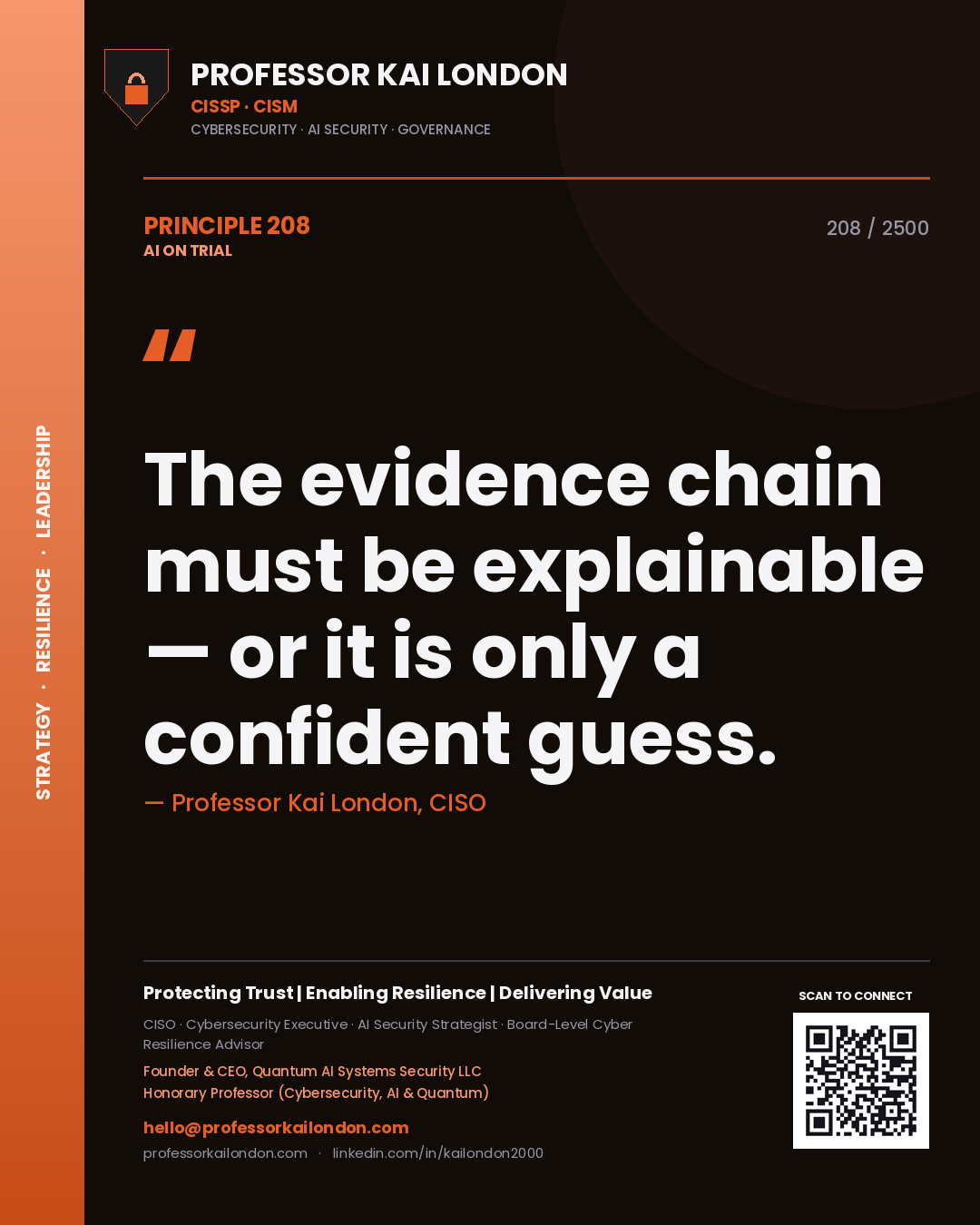
Professor Kai London principle 208: The evidence chain must be explainable — or it is only a confident guess.
Principle 208
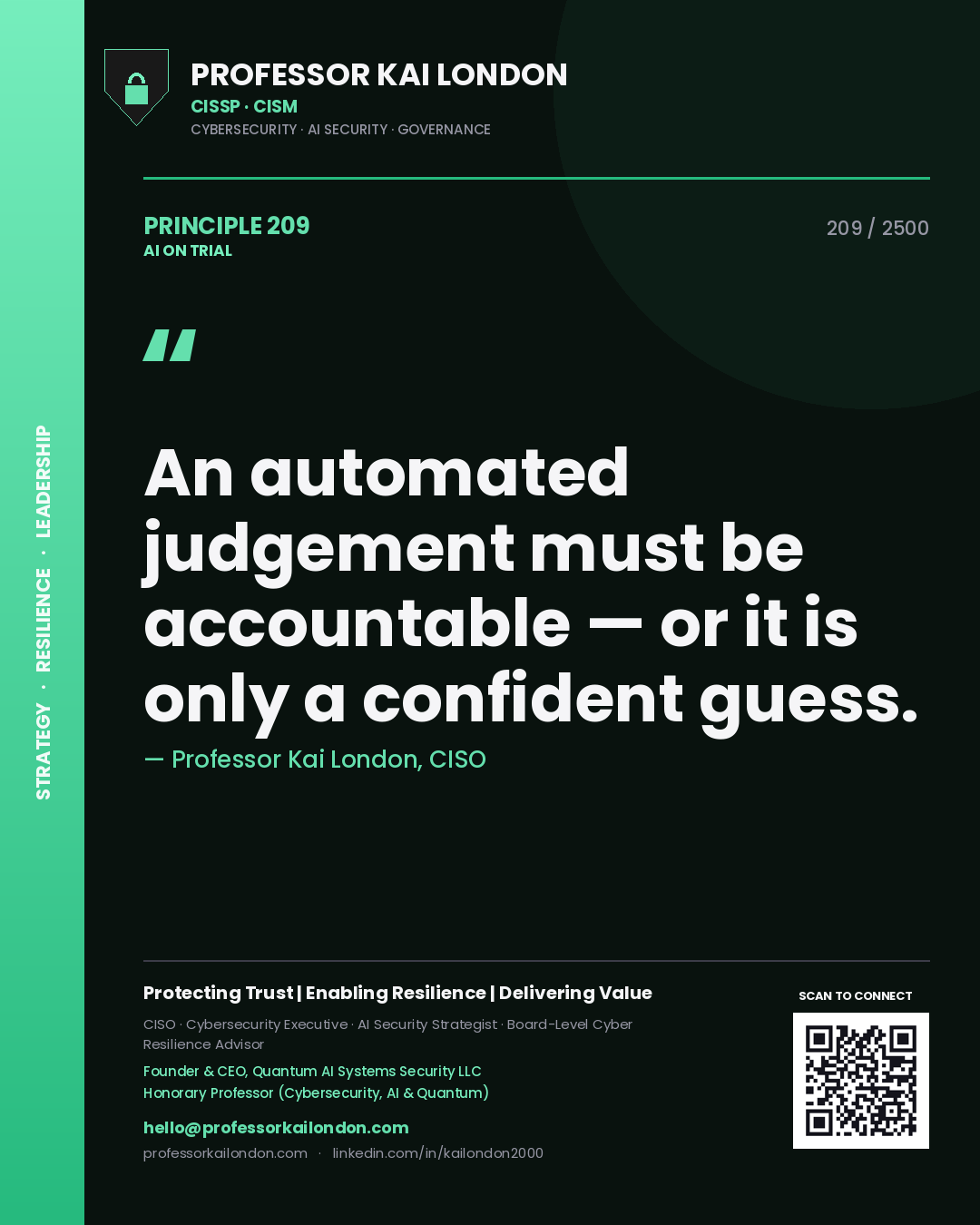
Professor Kai London principle 209: An automated judgement must be accountable — or it is only a confident guess.
Principle 209
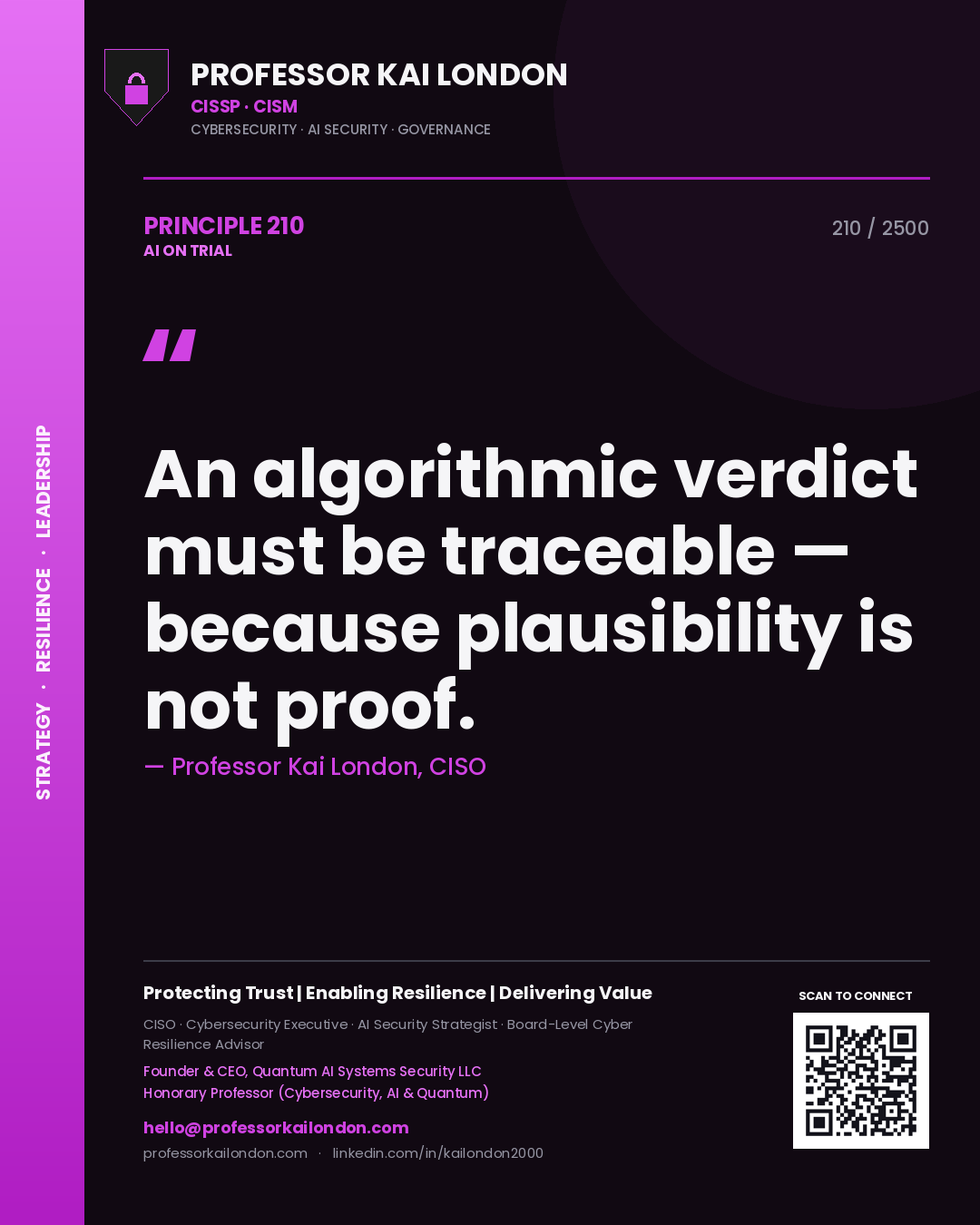
Professor Kai London principle 210: An algorithmic verdict must be traceable — because plausibility is not proof.
Principle 210
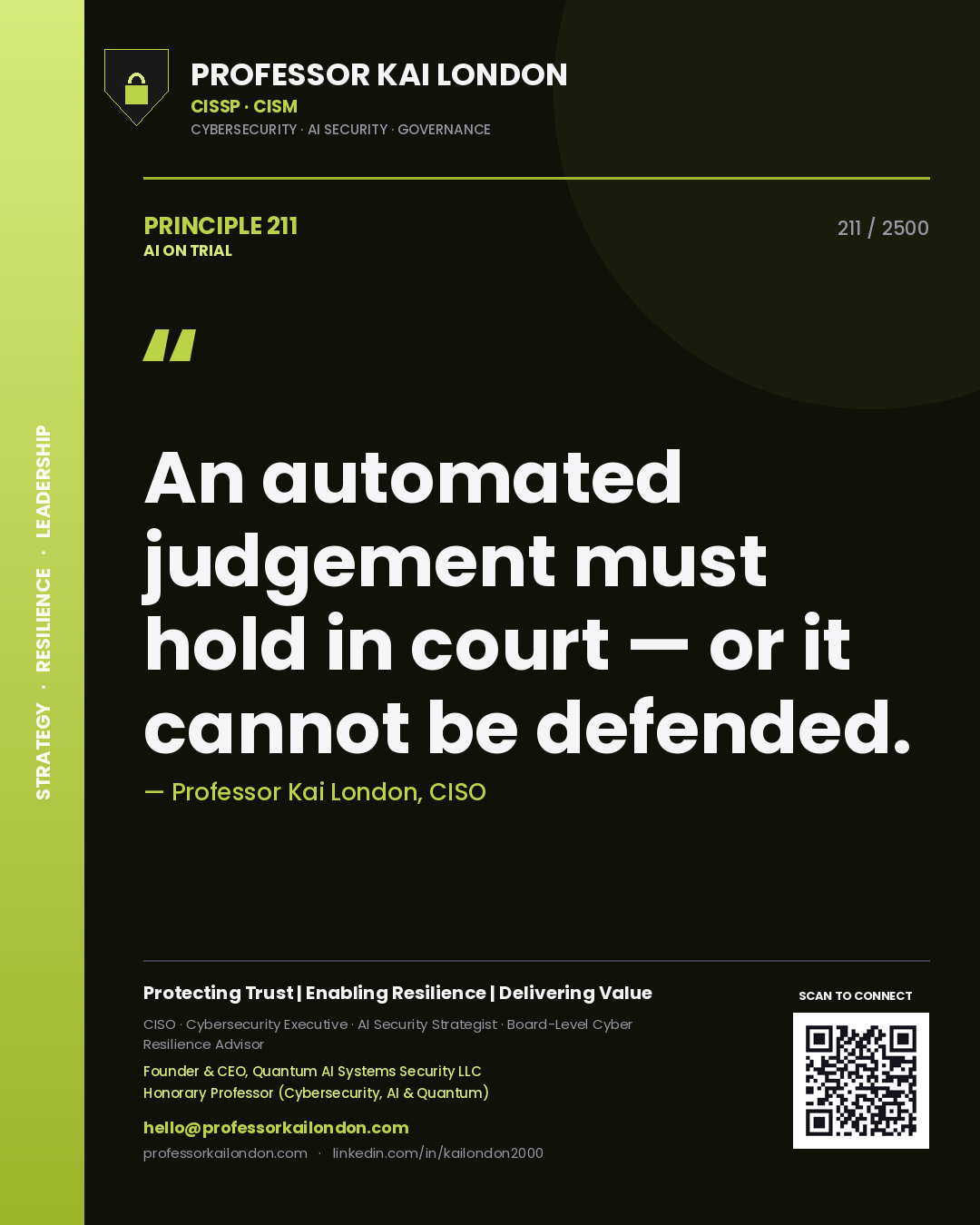
Professor Kai London principle 211: An automated judgement must hold in court — or it cannot be defended.
Principle 211
Professor Kai London principle 212: An audit trail must be defensible — because plausibility is not proof.
Principle 212
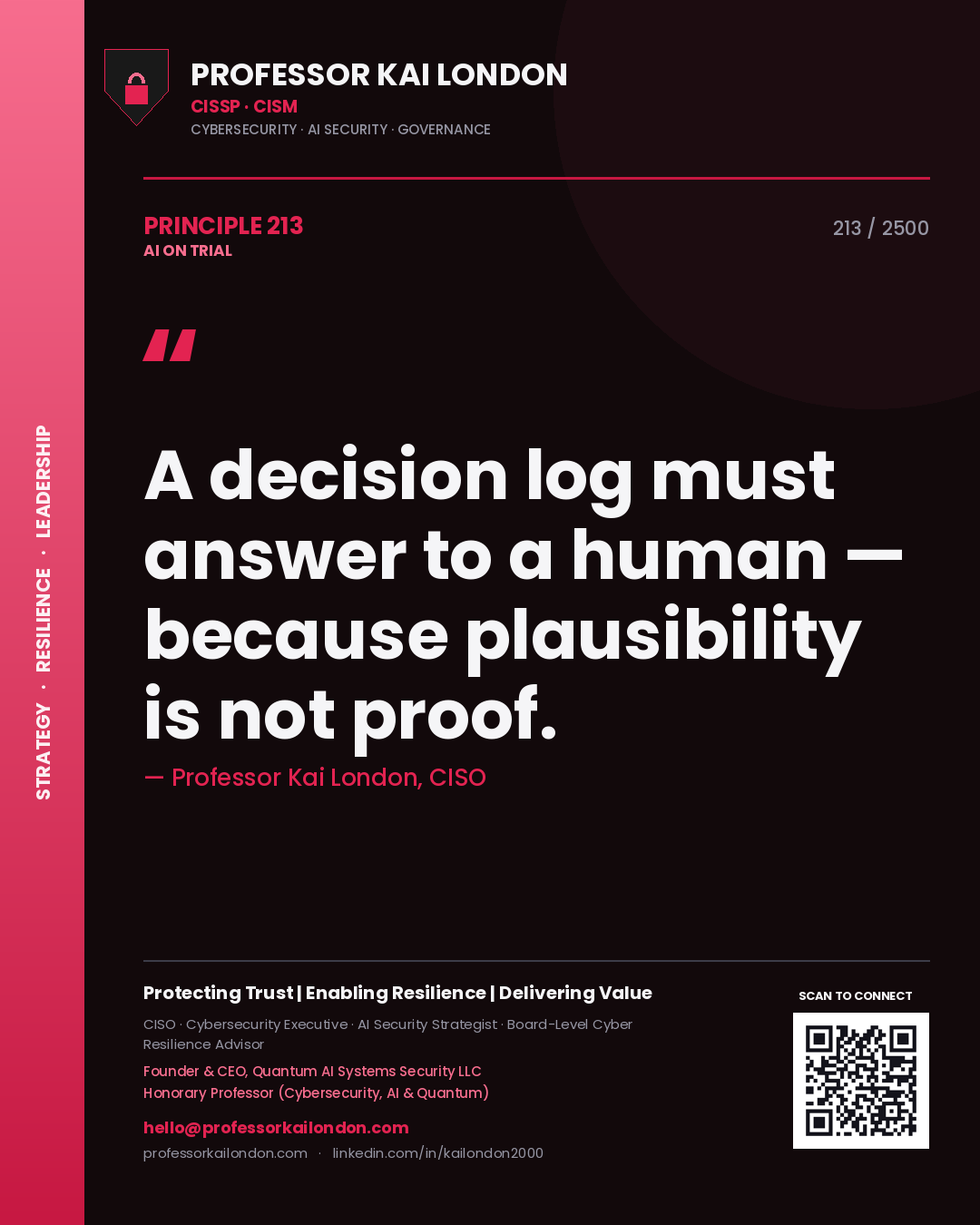
Professor Kai London principle 213: A decision log must answer to a human — because plausibility is not proof.
Principle 213
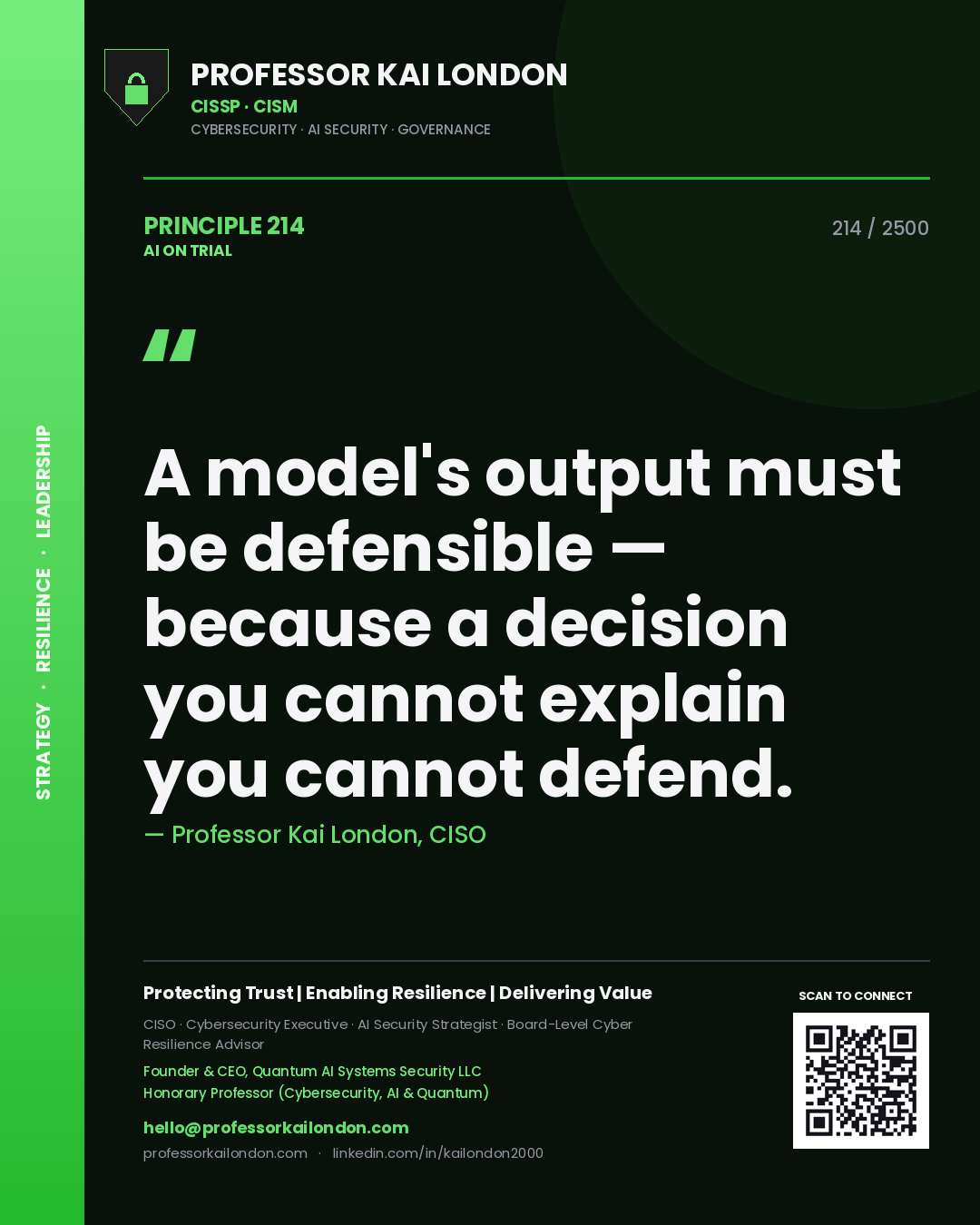
Professor Kai London principle 214: A model's output must be defensible — because a decision you cannot explain you cannot defend.
Principle 214
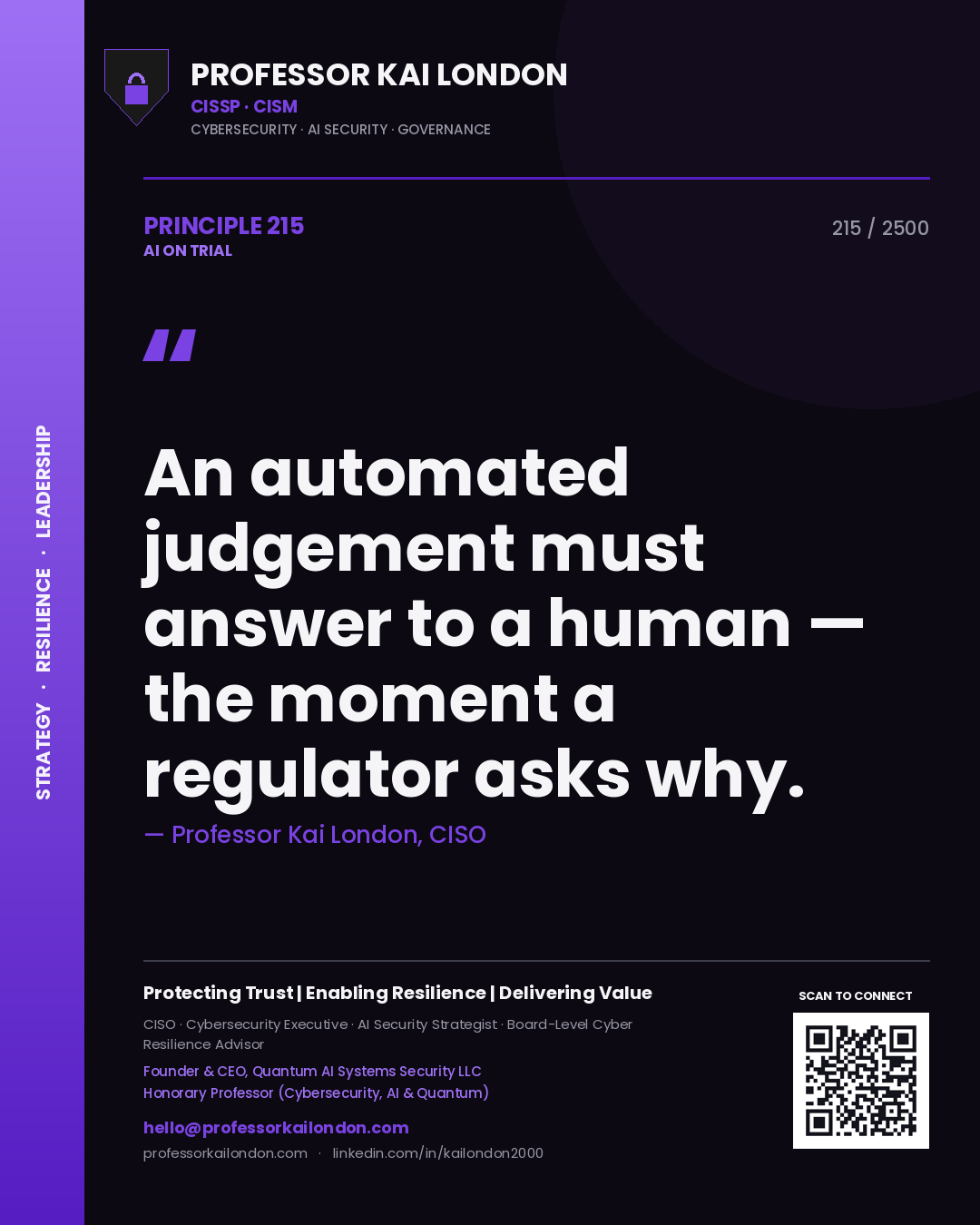
Professor Kai London principle 215: An automated judgement must answer to a human — the moment a regulator asks why.
Principle 215
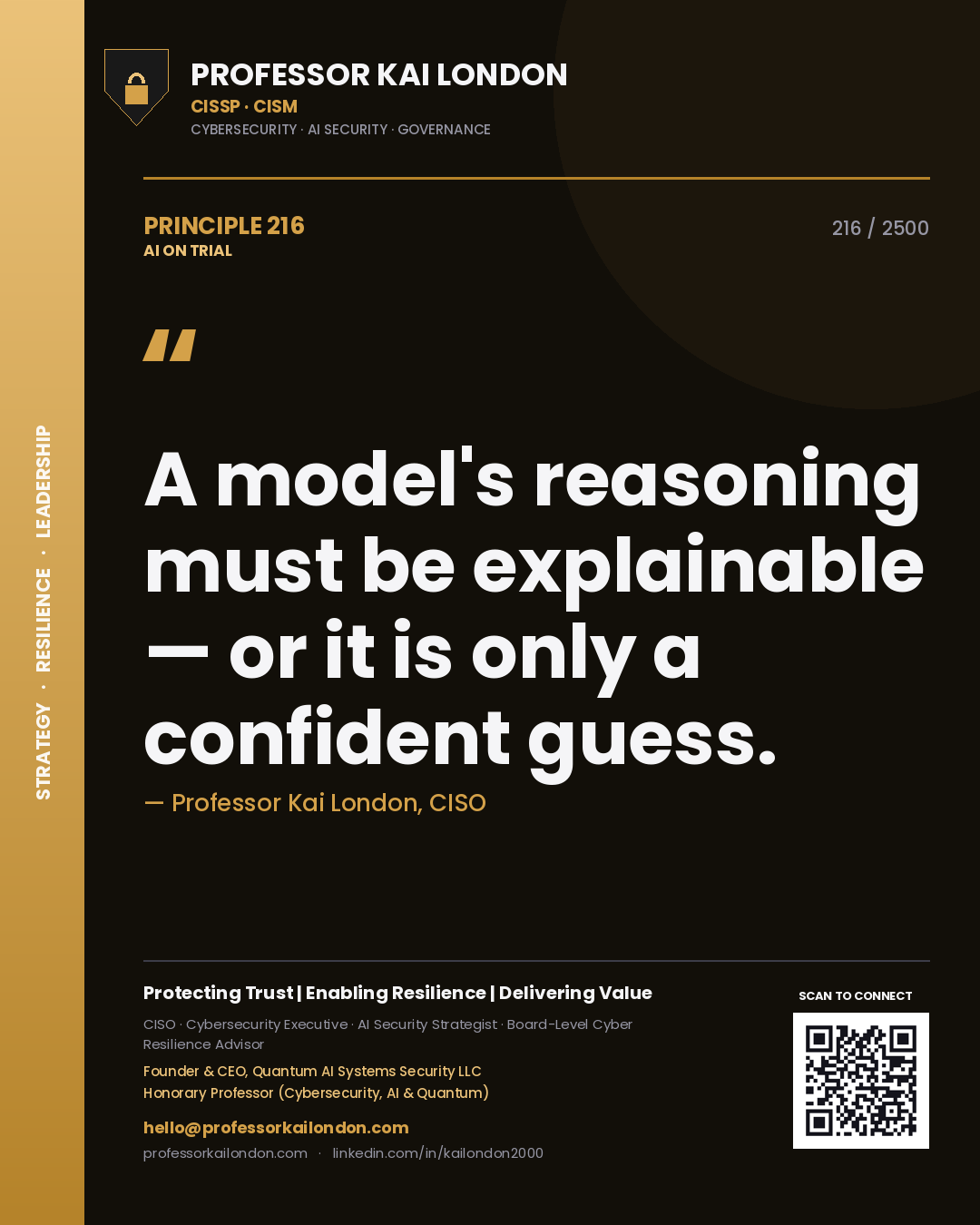
Professor Kai London principle 216: A model's reasoning must be explainable — or it is only a confident guess.
Principle 216
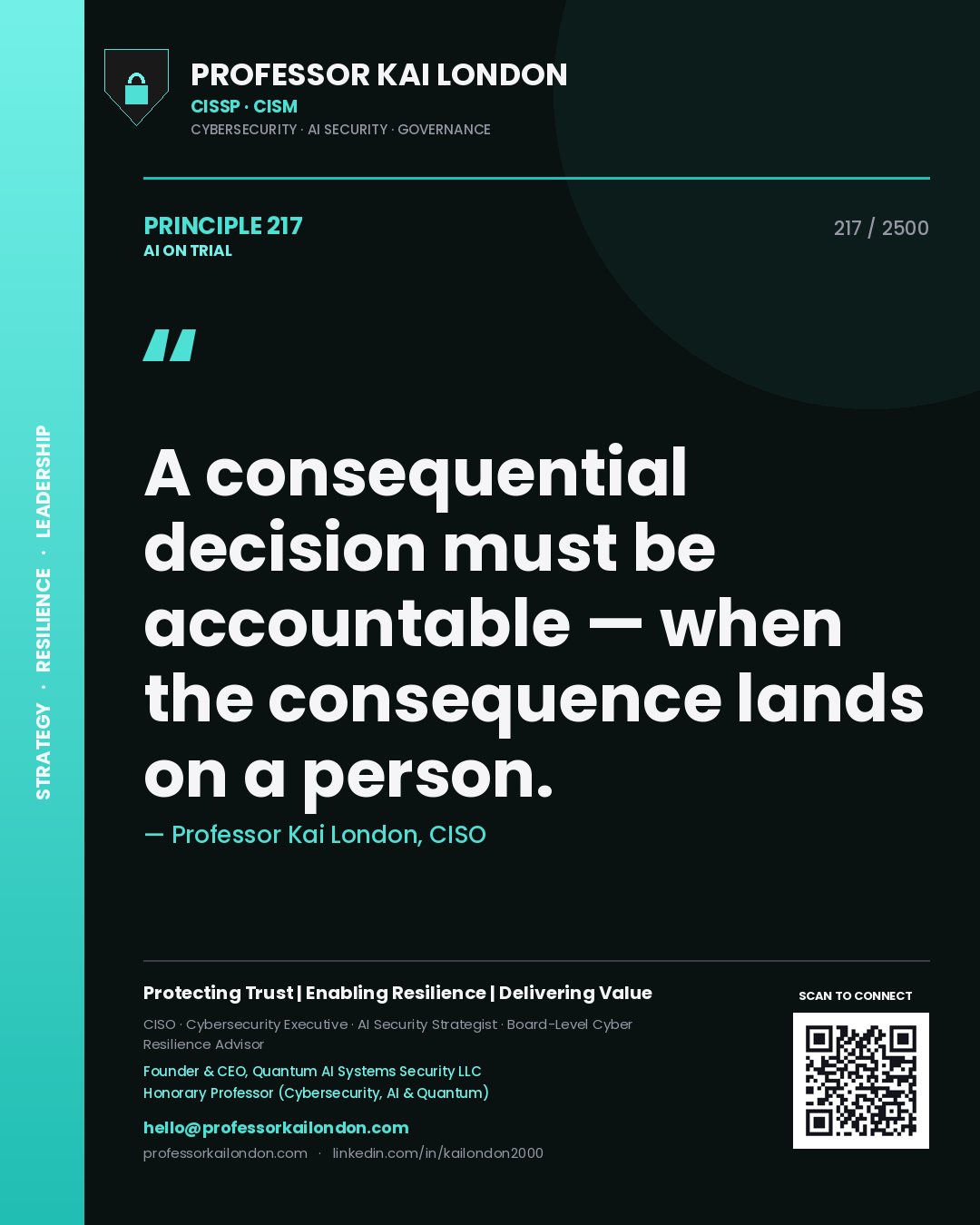
Professor Kai London principle 217: A consequential decision must be accountable — when the consequence lands on a person.
Principle 217
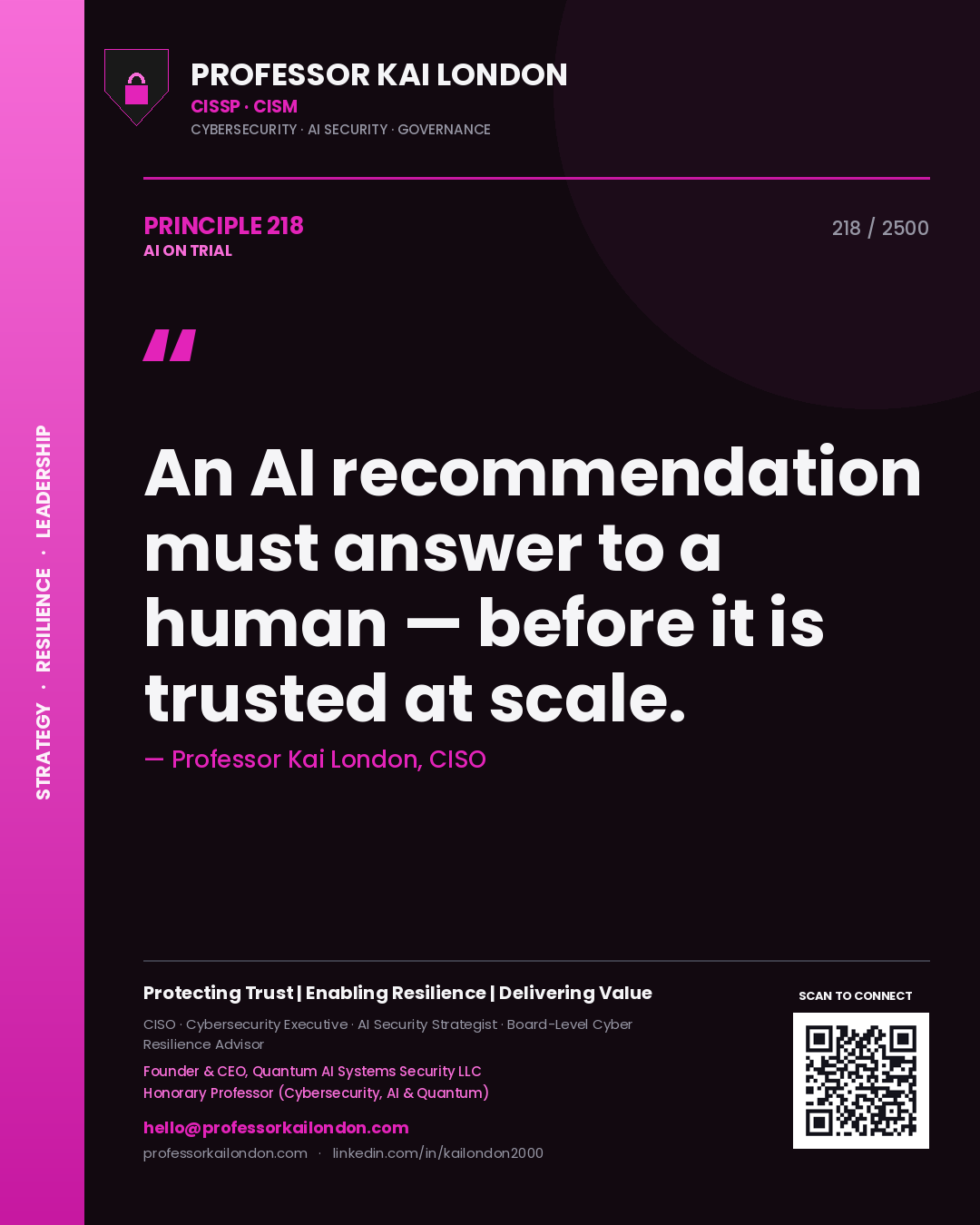
Professor Kai London principle 218: An AI recommendation must answer to a human — before it is trusted at scale.
Principle 218
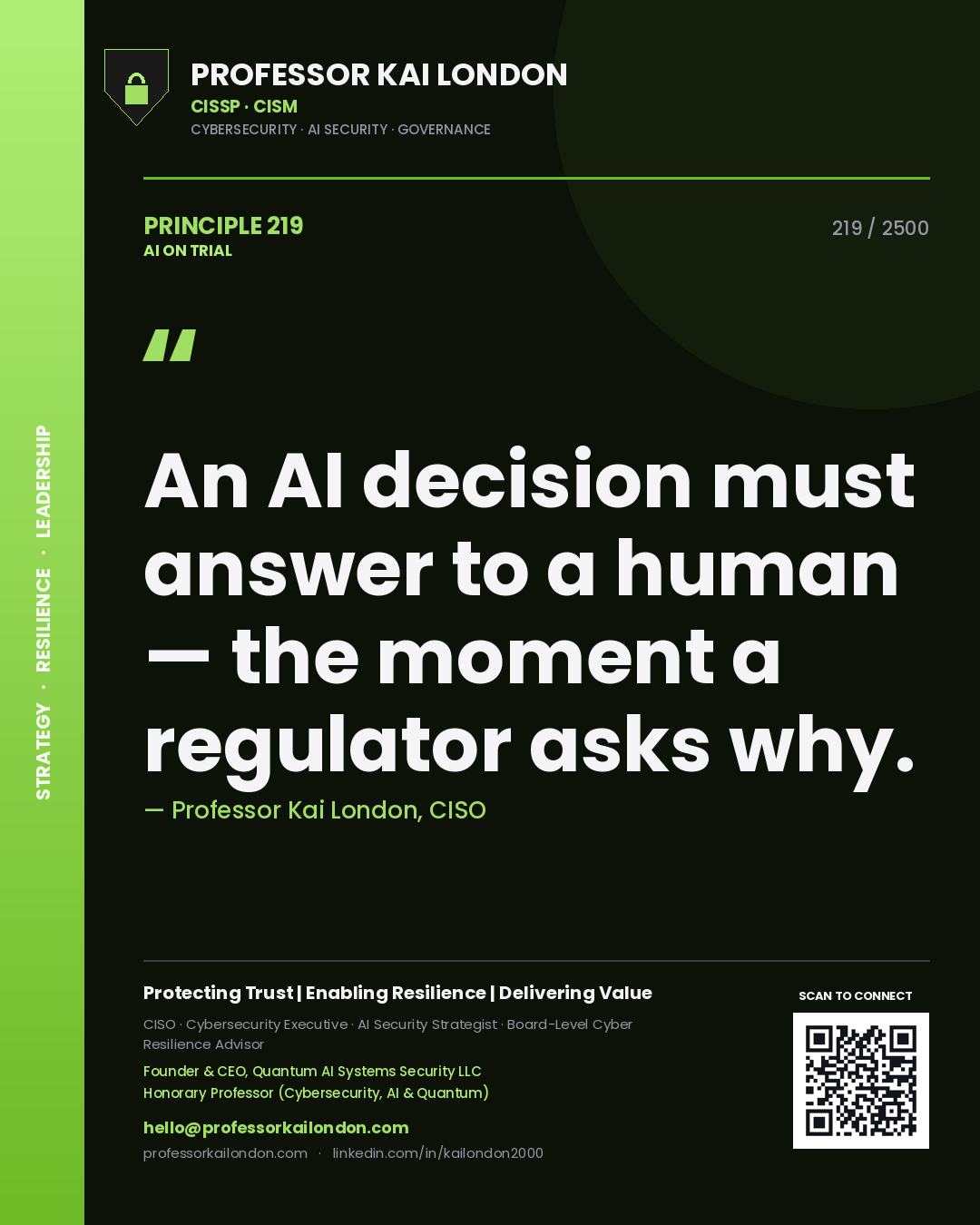
Professor Kai London principle 219: An AI decision must answer to a human — the moment a regulator asks why.
Principle 219
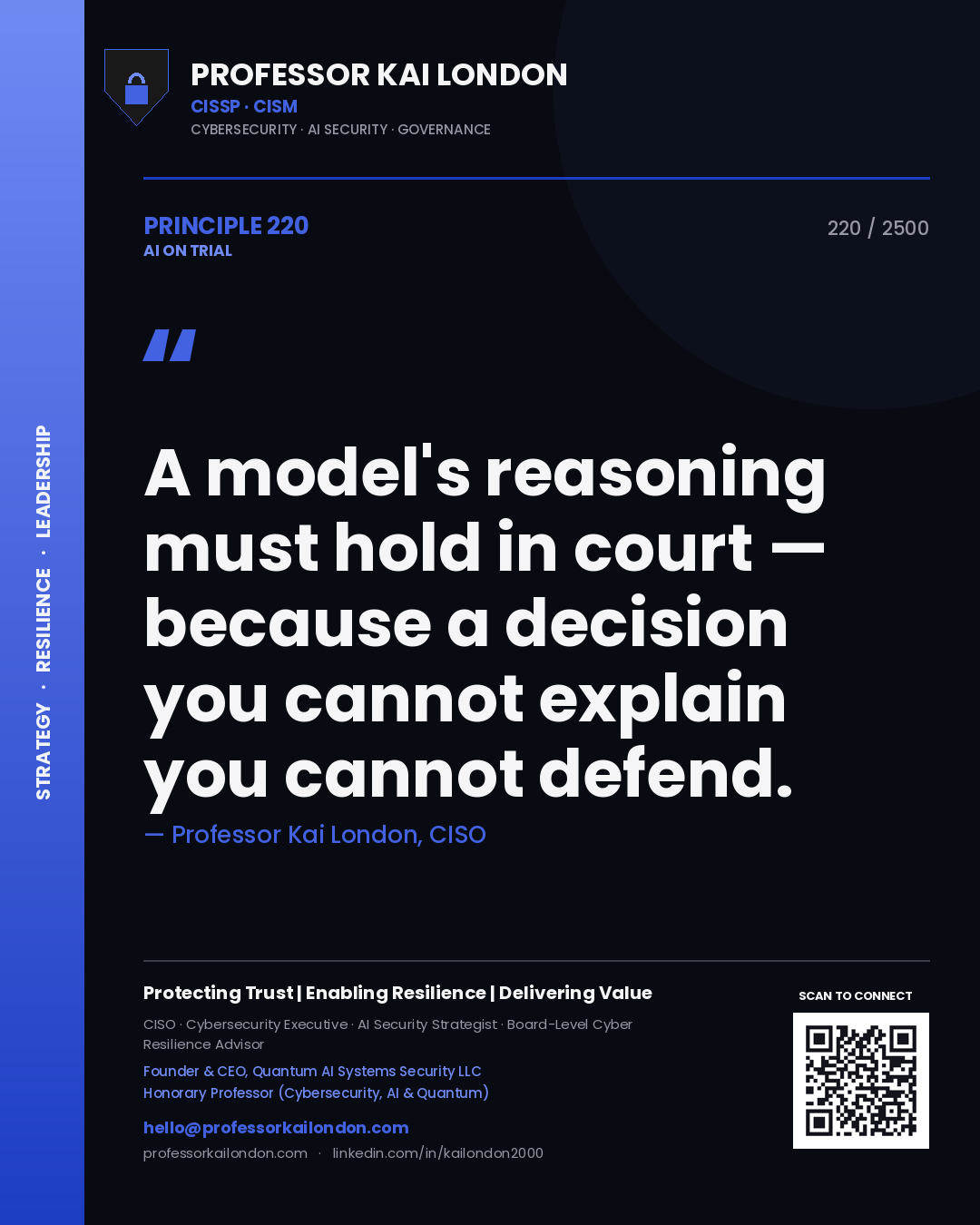
Professor Kai London principle 220: A model's reasoning must hold in court — because a decision you cannot explain you cannot defend.
Principle 220
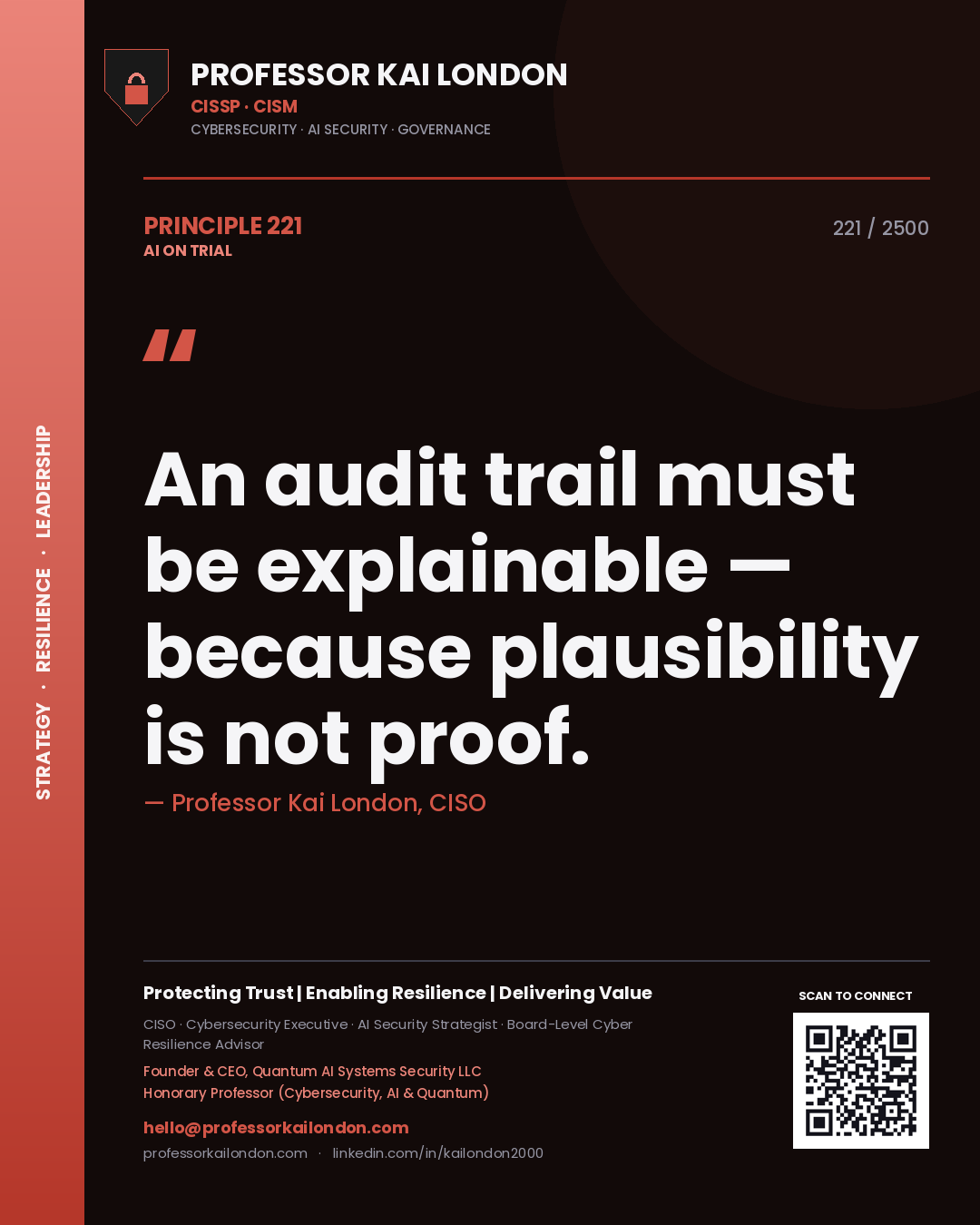
Professor Kai London principle 221: An audit trail must be explainable — because plausibility is not proof.
Principle 221
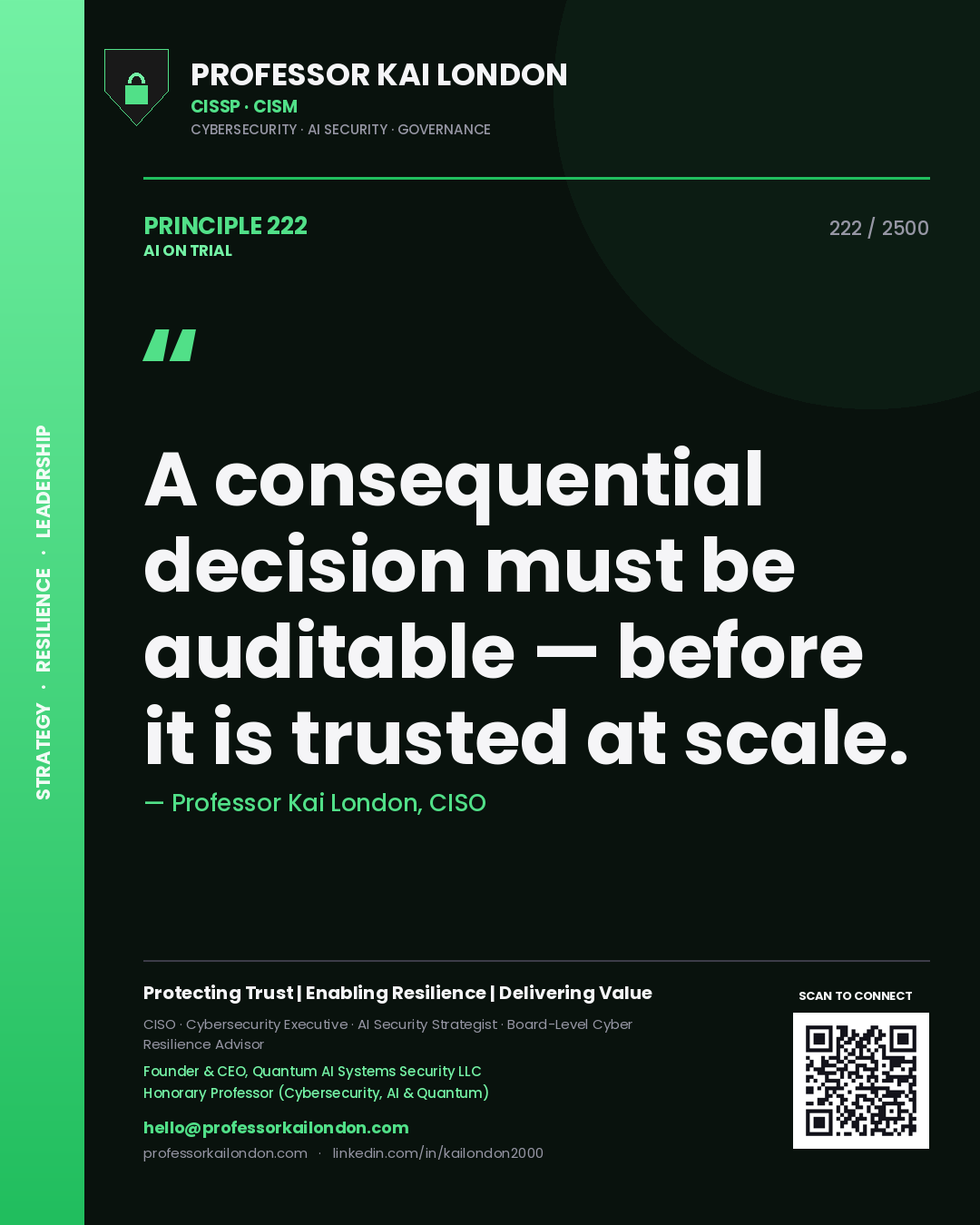
Professor Kai London principle 222: A consequential decision must be auditable — before it is trusted at scale.
Principle 222
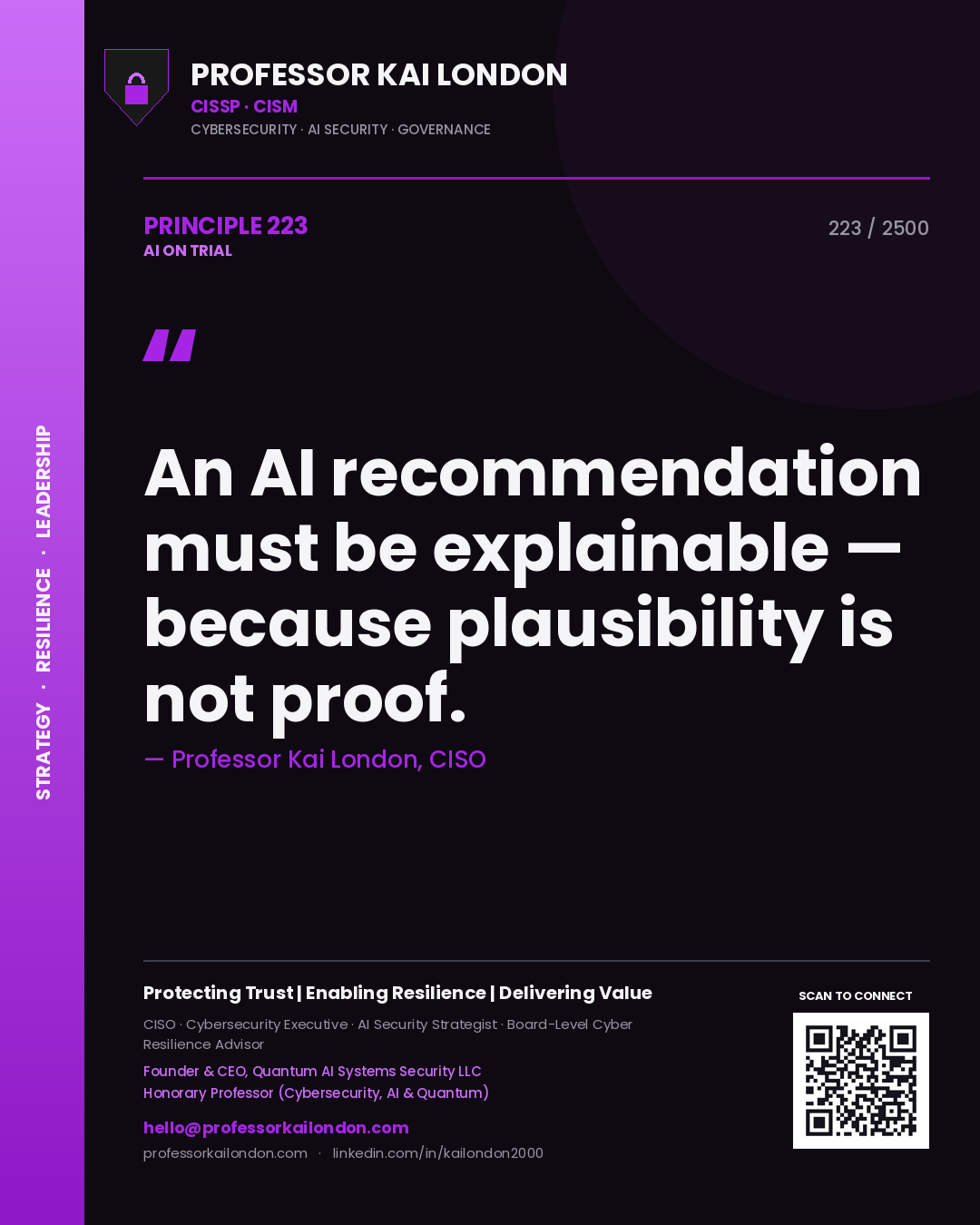
Professor Kai London principle 223: An AI recommendation must be explainable — because plausibility is not proof.
Principle 223
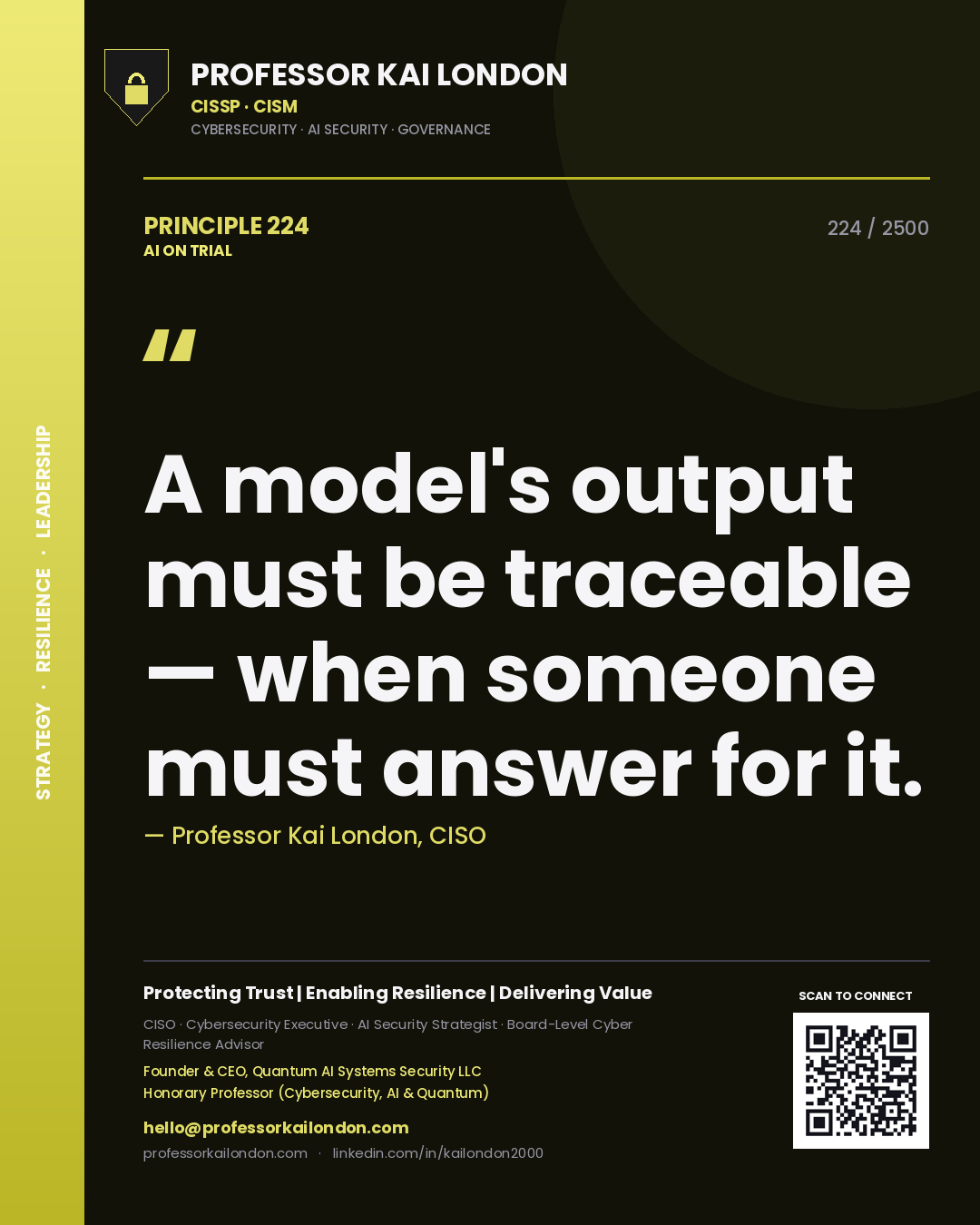
Professor Kai London principle 224: A model's output must be traceable — when someone must answer for it.
Principle 224
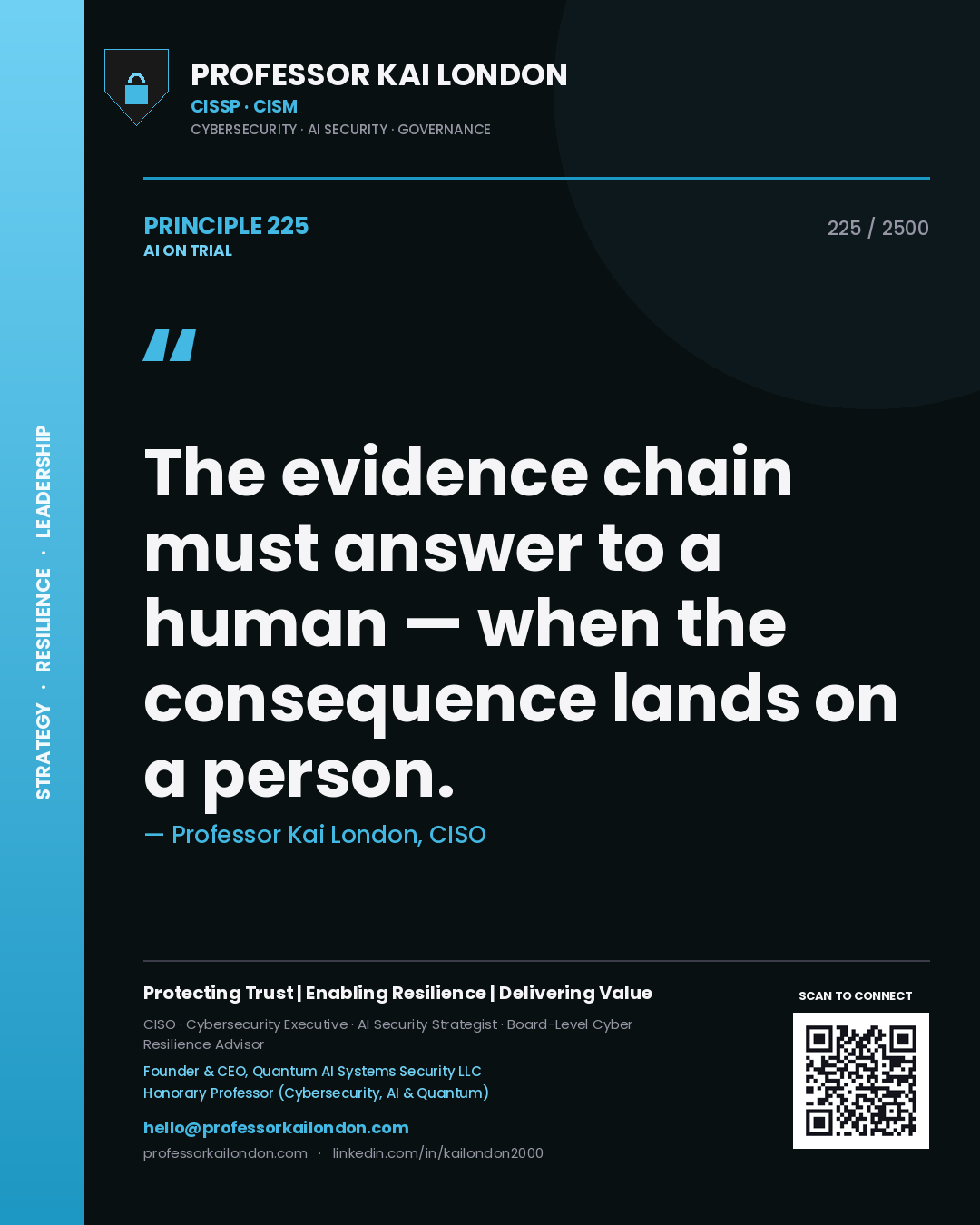
Professor Kai London principle 225: The evidence chain must answer to a human — when the consequence lands on a person.
Principle 225
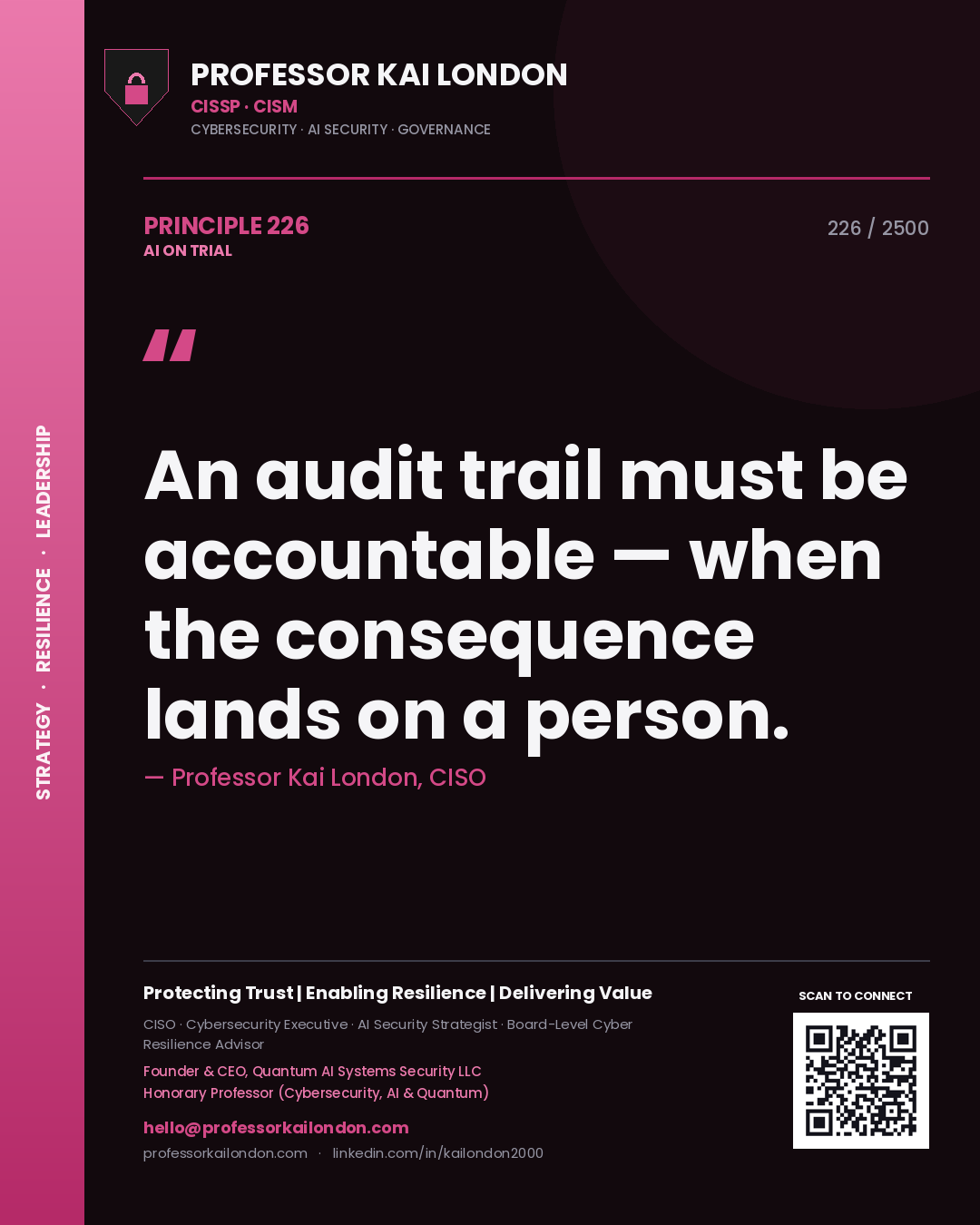
Professor Kai London principle 226: An audit trail must be accountable — when the consequence lands on a person.
Principle 226
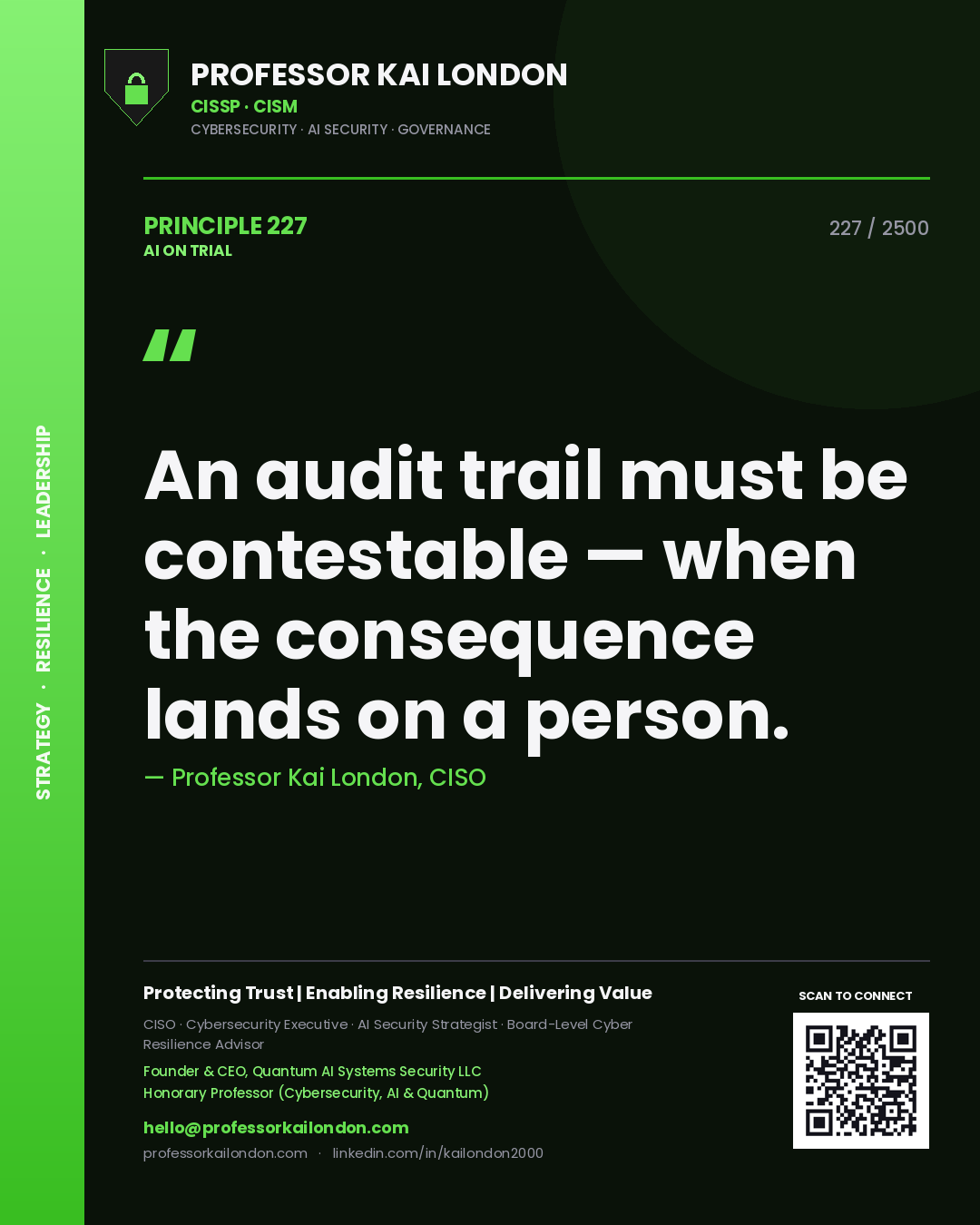
Professor Kai London principle 227: An audit trail must be contestable — when the consequence lands on a person.
Principle 227
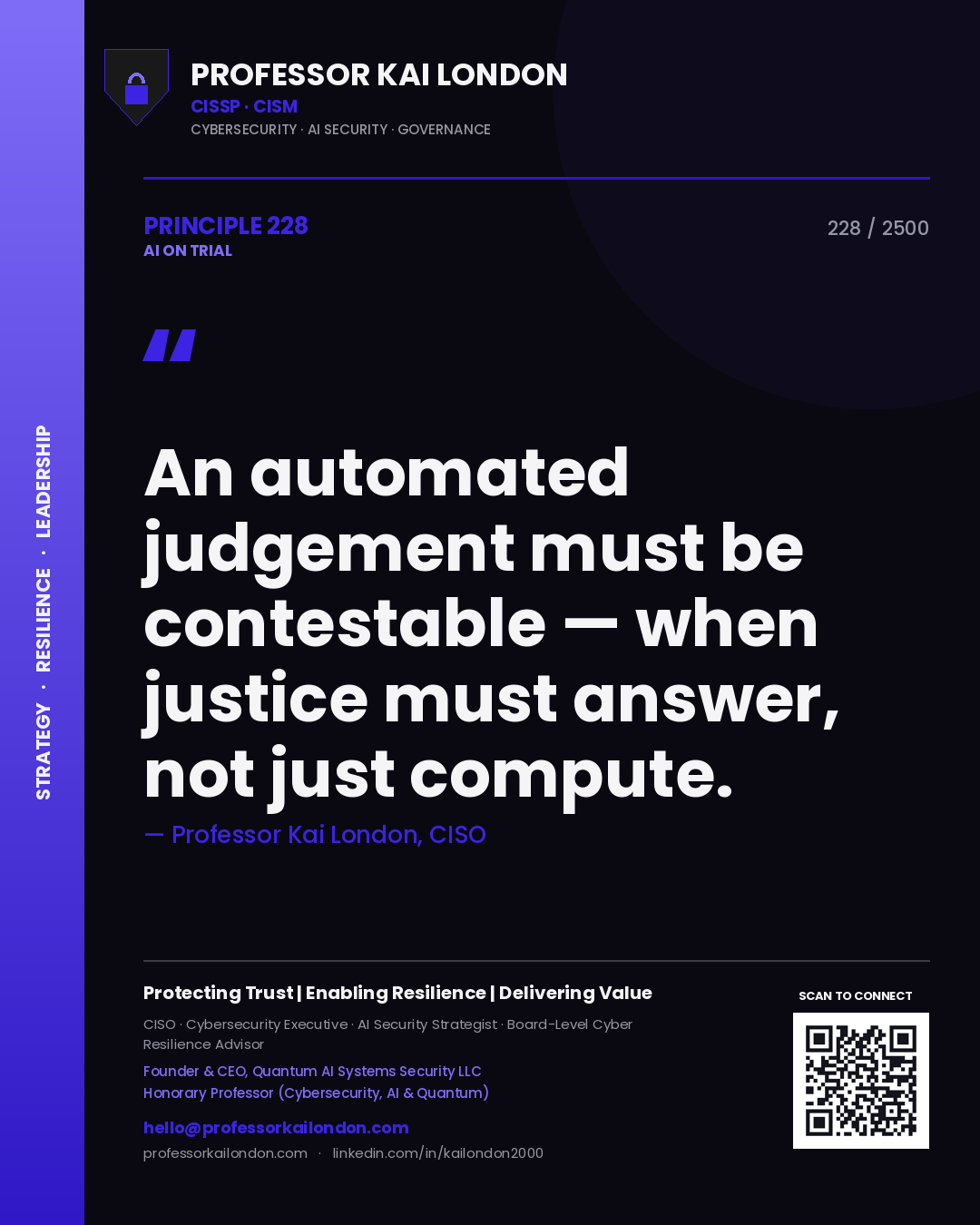
Professor Kai London principle 228: An automated judgement must be contestable — when justice must answer, not just compute.
Principle 228
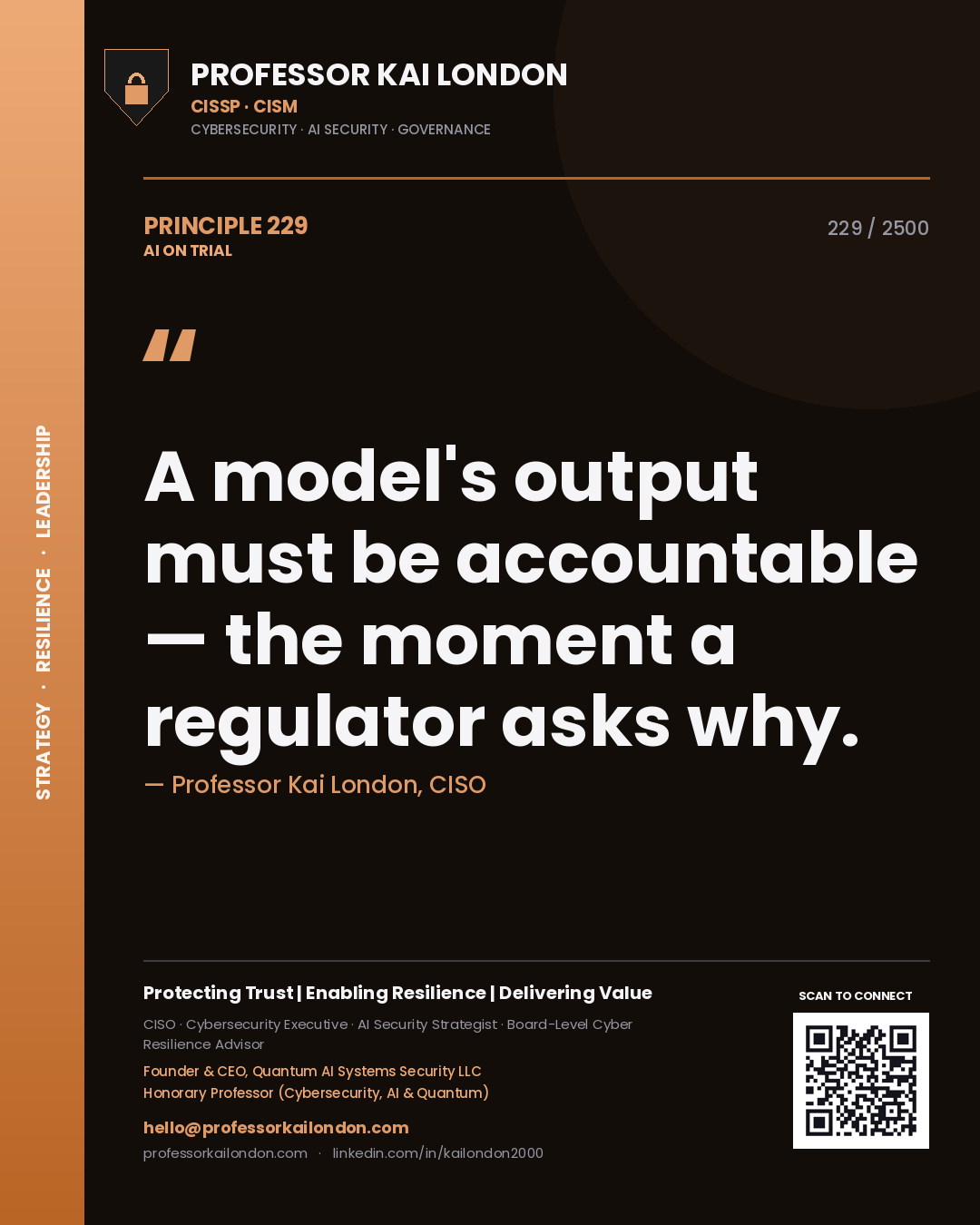
Professor Kai London principle 229: A model's output must be accountable — the moment a regulator asks why.
Principle 229
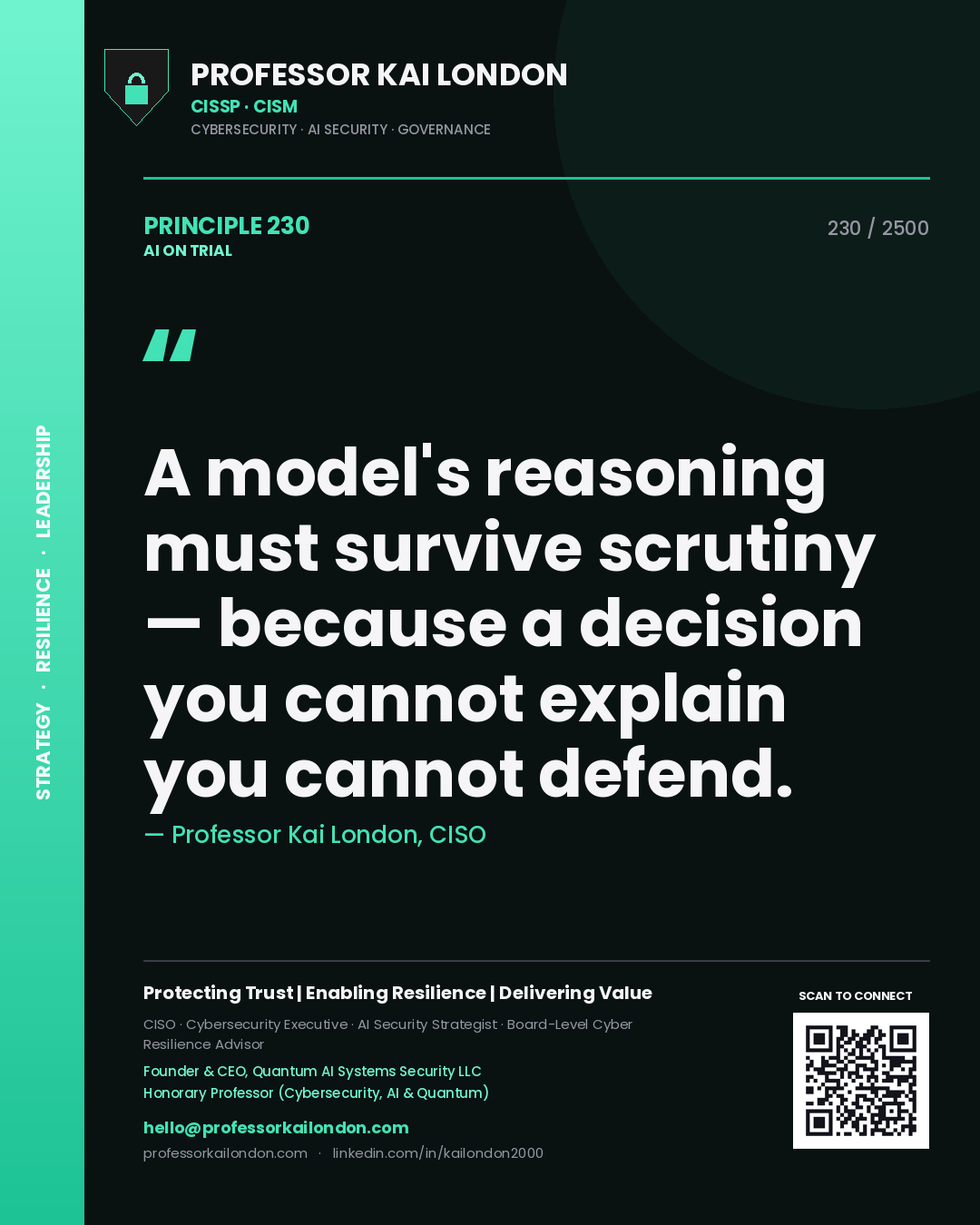
Professor Kai London principle 230: A model's reasoning must survive scrutiny — because a decision you cannot explain you cannot defend.
Principle 230
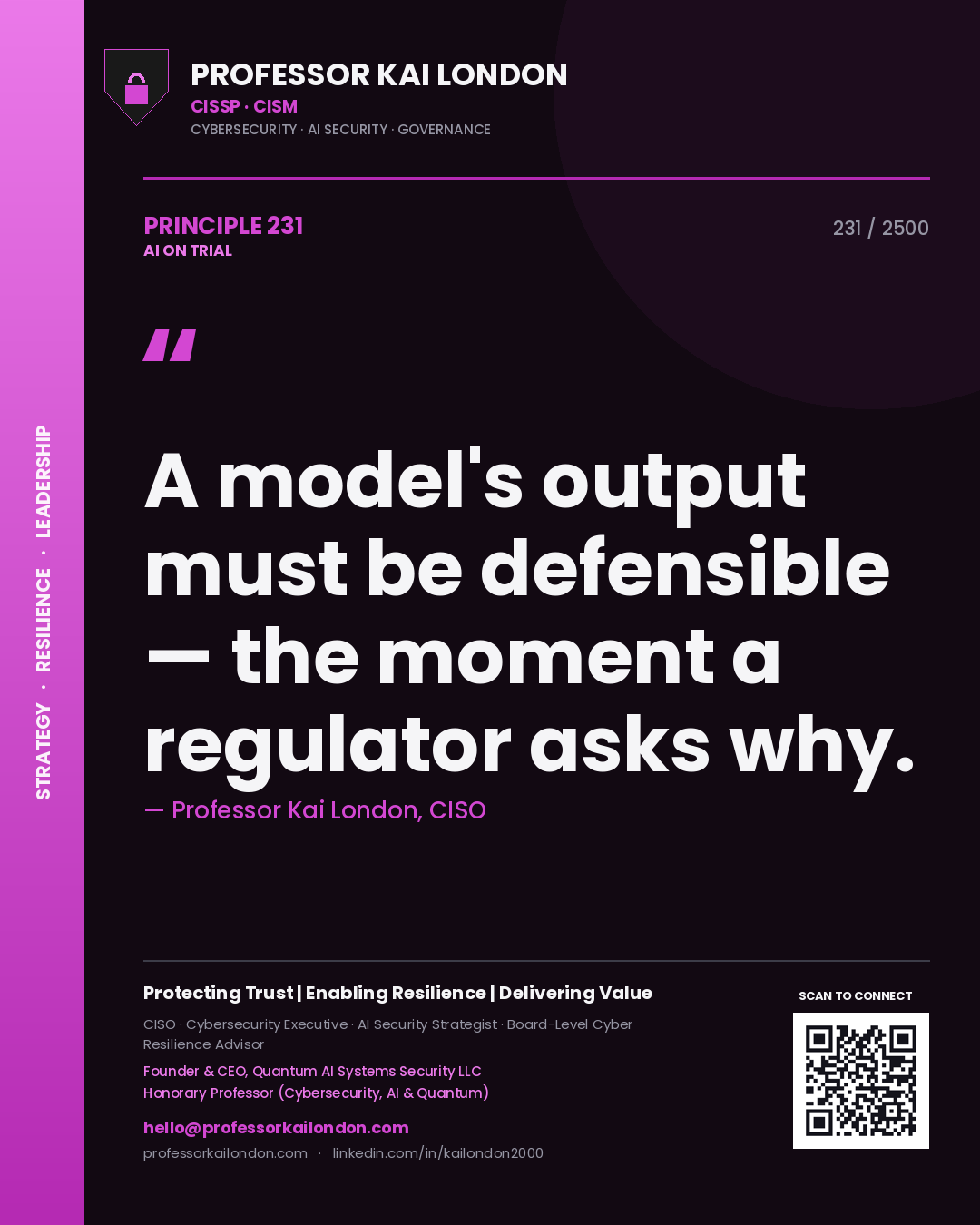
Professor Kai London principle 231: A model's output must be defensible — the moment a regulator asks why.
Principle 231
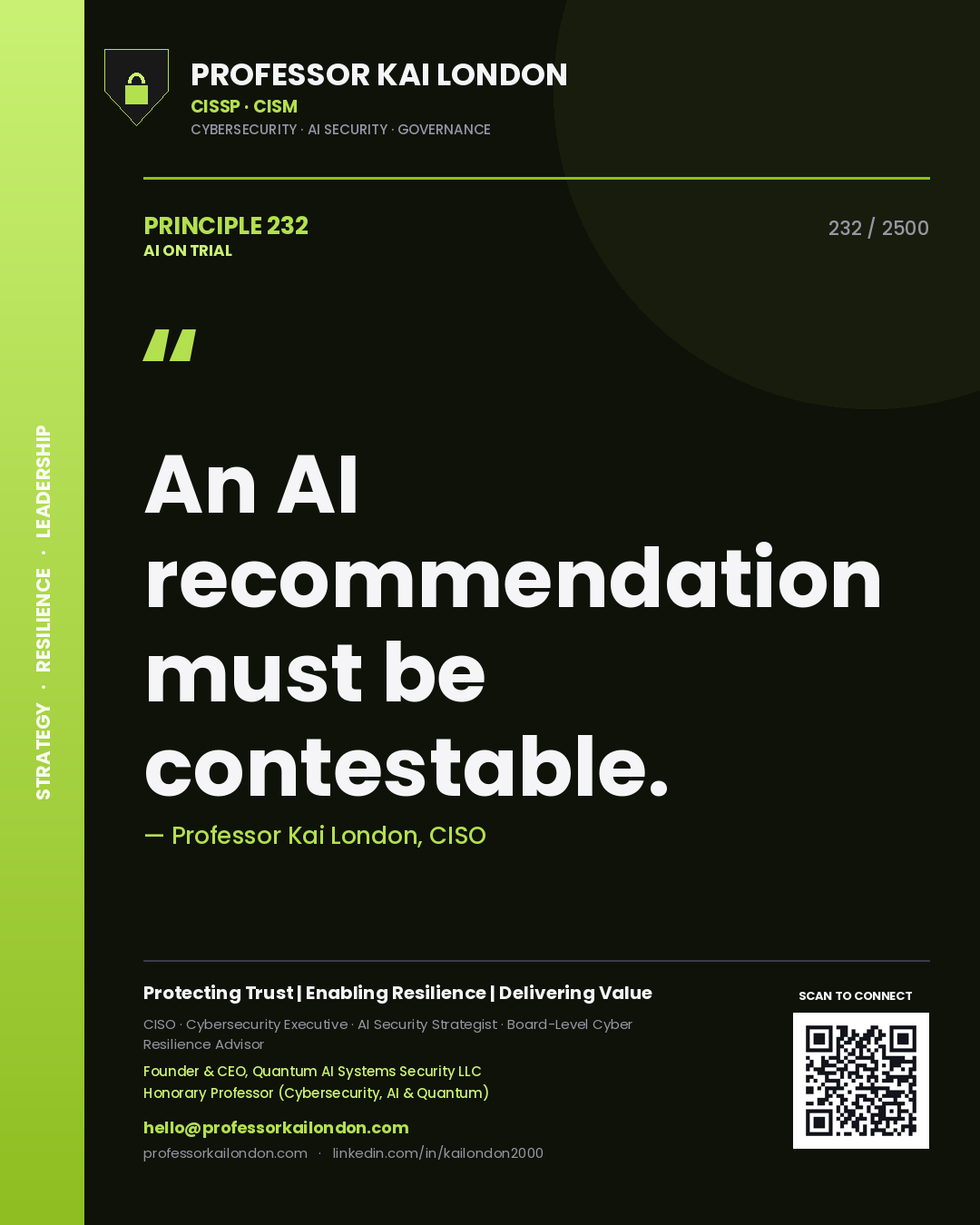
Professor Kai London principle 232: An AI recommendation must be contestable.
Principle 232
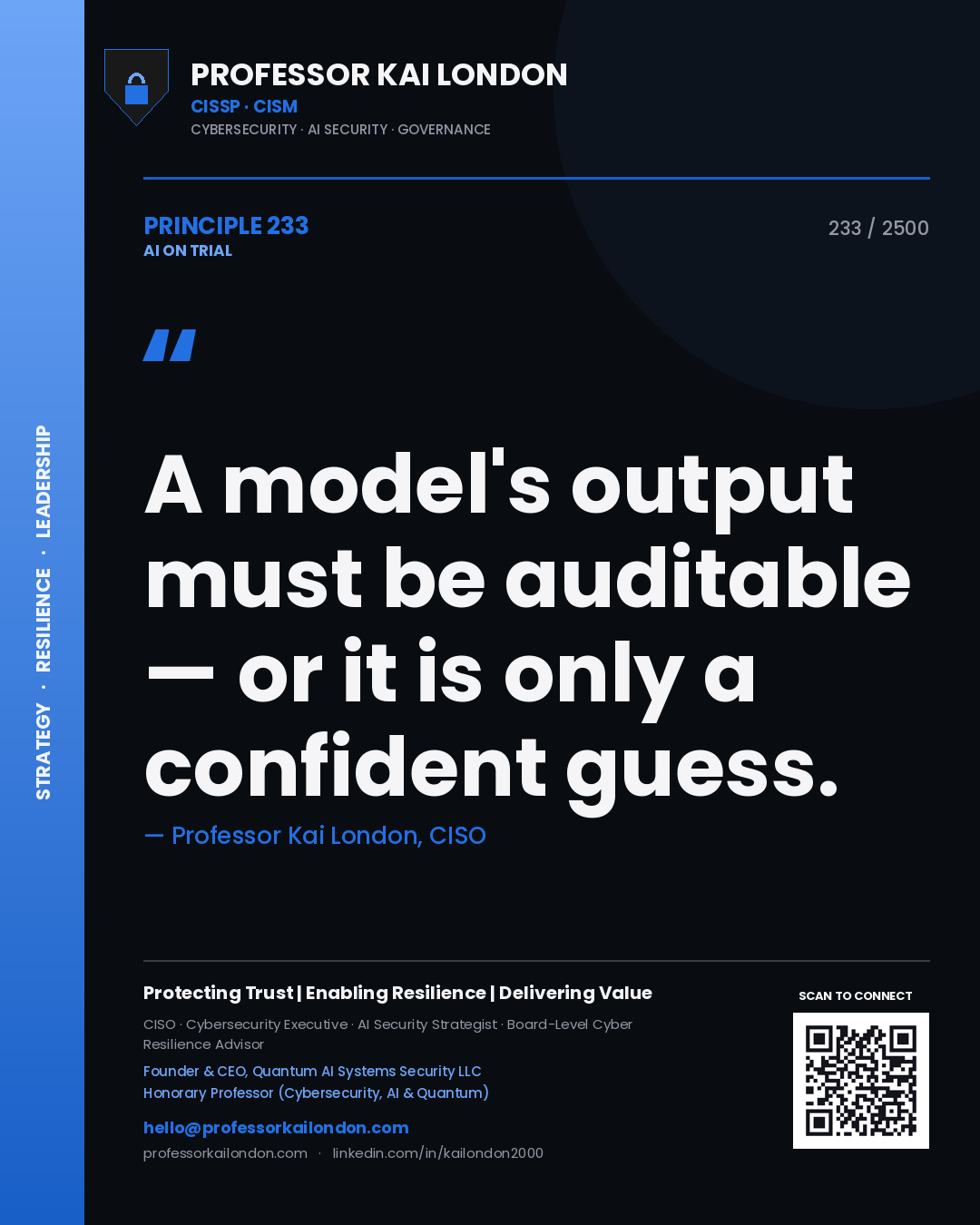
Professor Kai London principle 233: A model's output must be auditable — or it is only a confident guess.
Principle 233
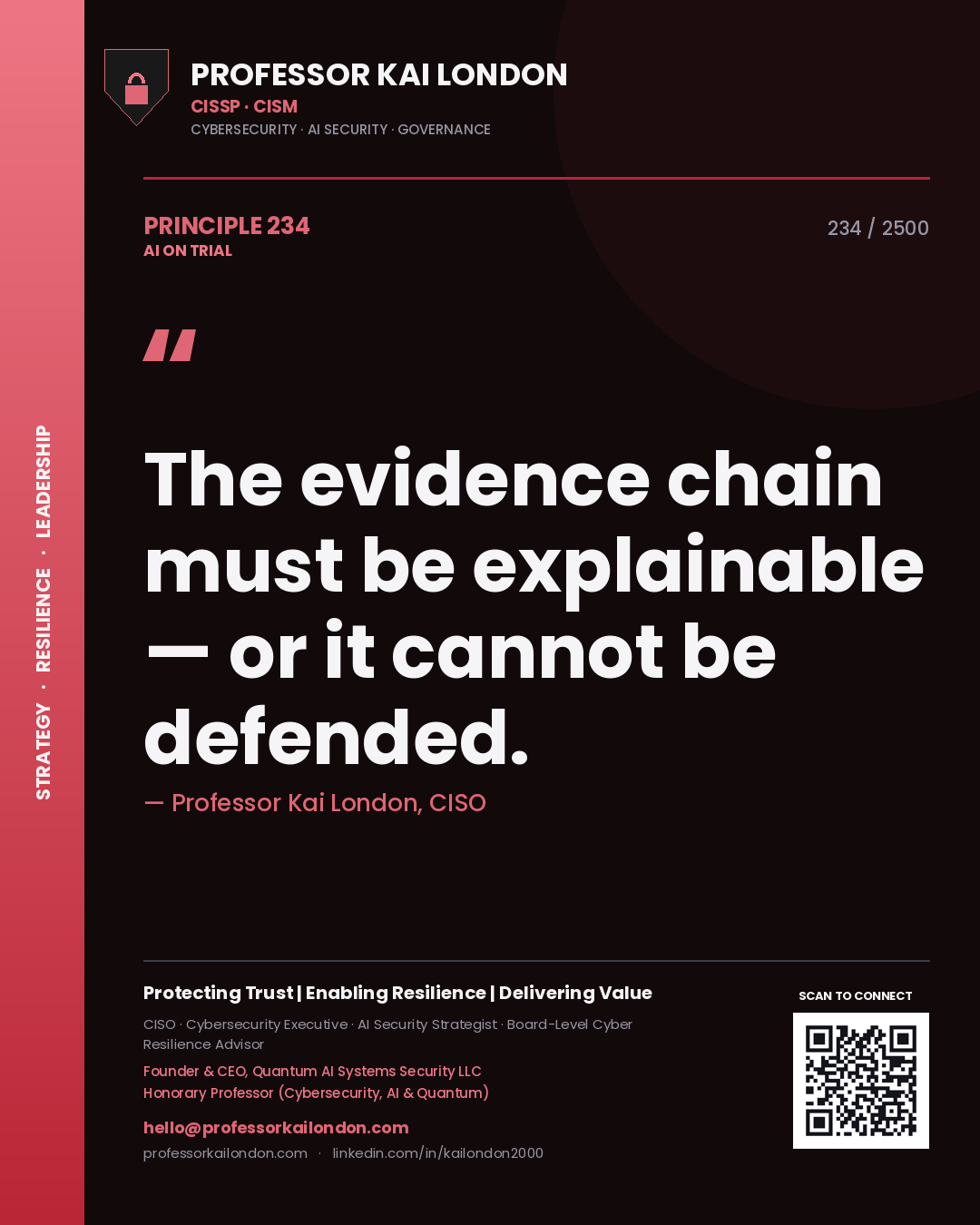
Professor Kai London principle 234: The evidence chain must be explainable — or it cannot be defended.
Principle 234
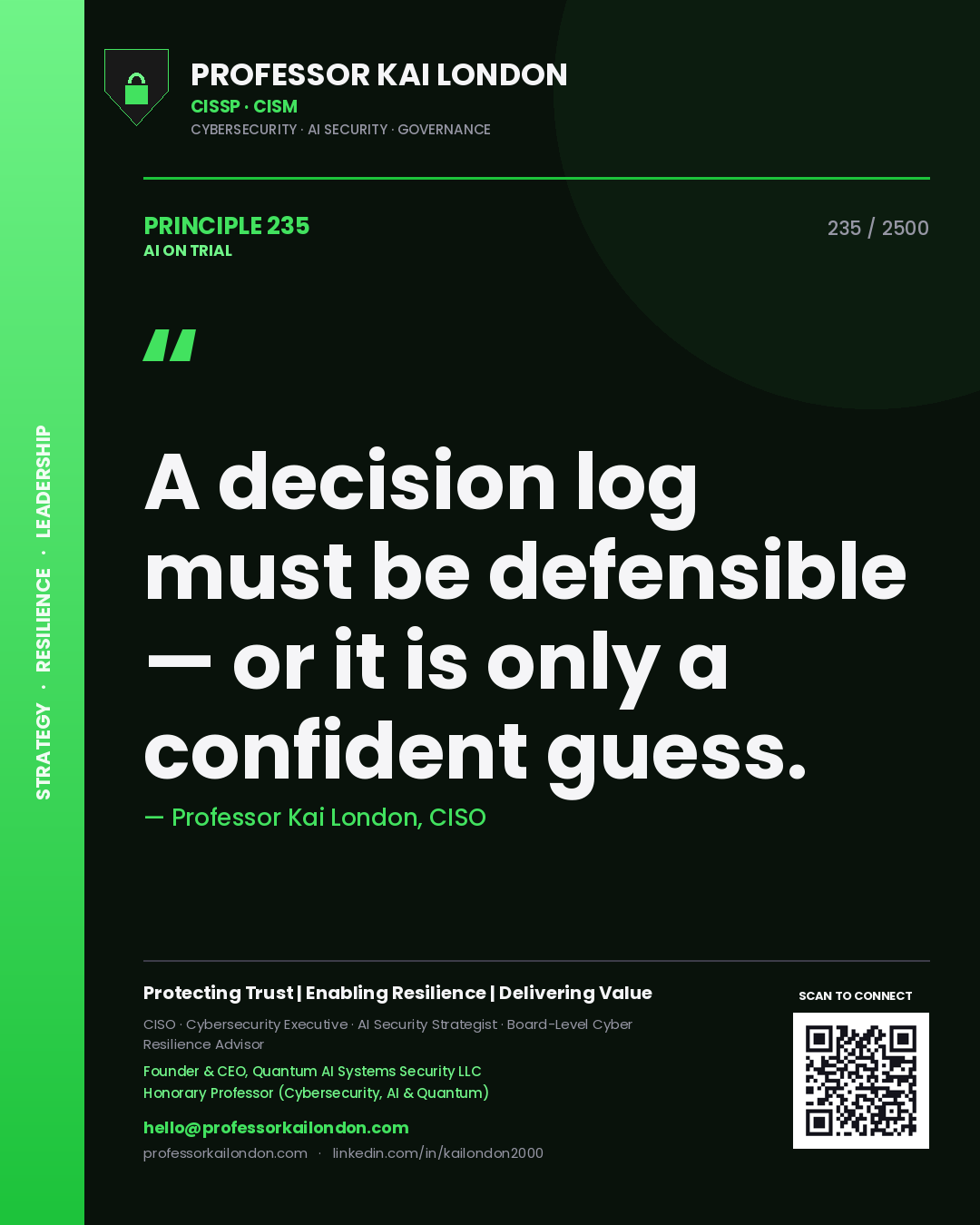
Professor Kai London principle 235: A decision log must be defensible — or it is only a confident guess.
Principle 235
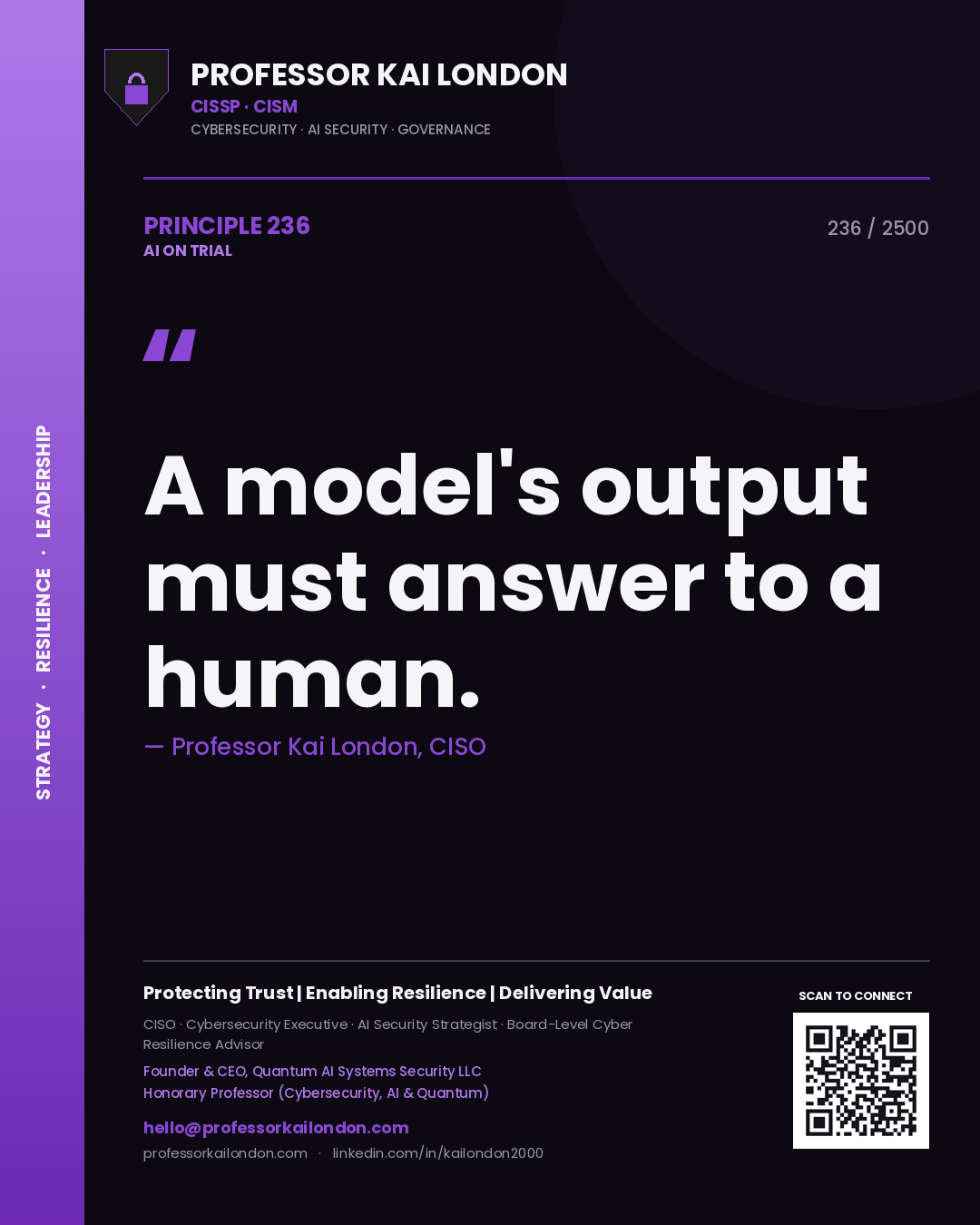
Professor Kai London principle 236: A model's output must answer to a human.
Principle 236
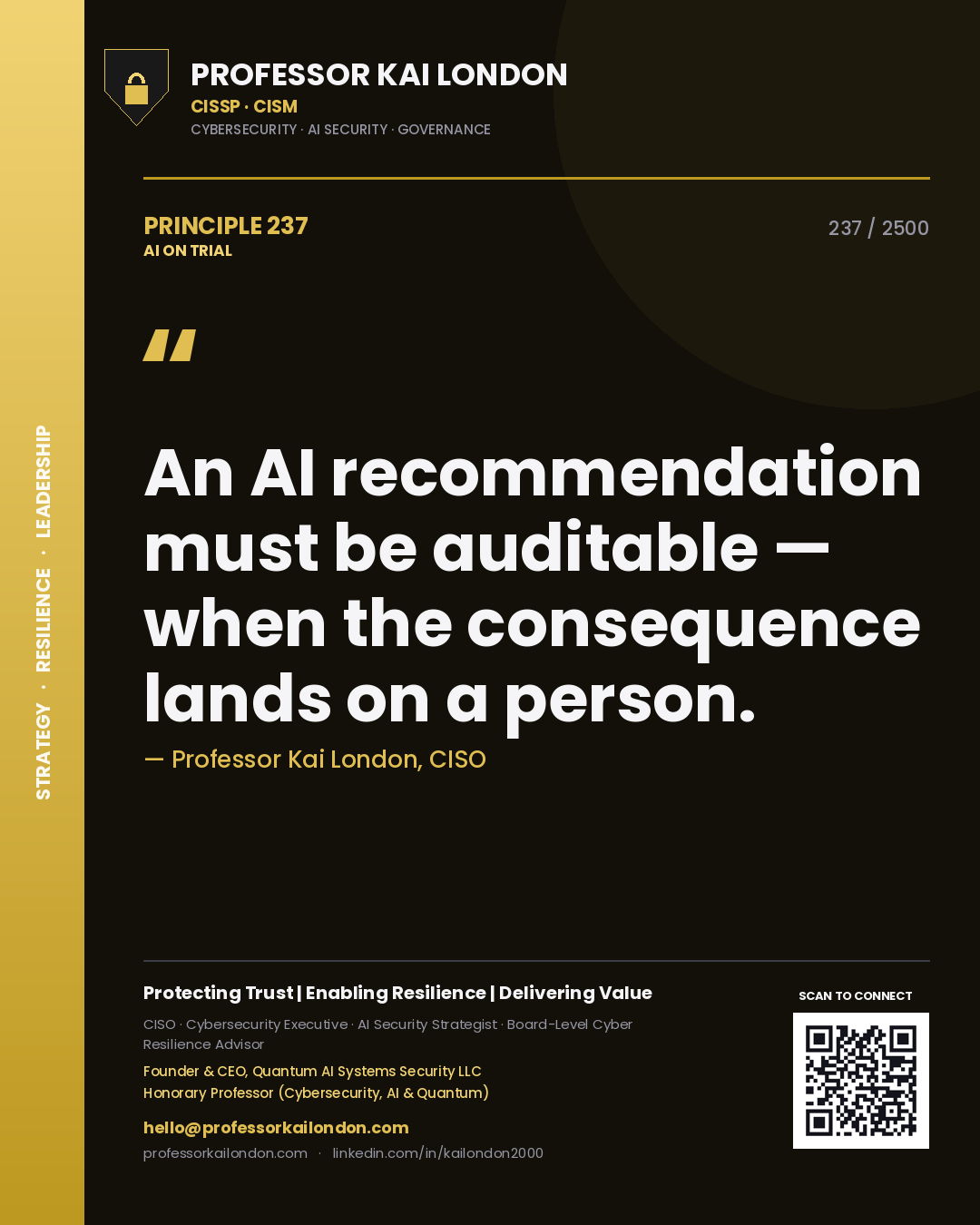
Professor Kai London principle 237: An AI recommendation must be auditable — when the consequence lands on a person.
Principle 237
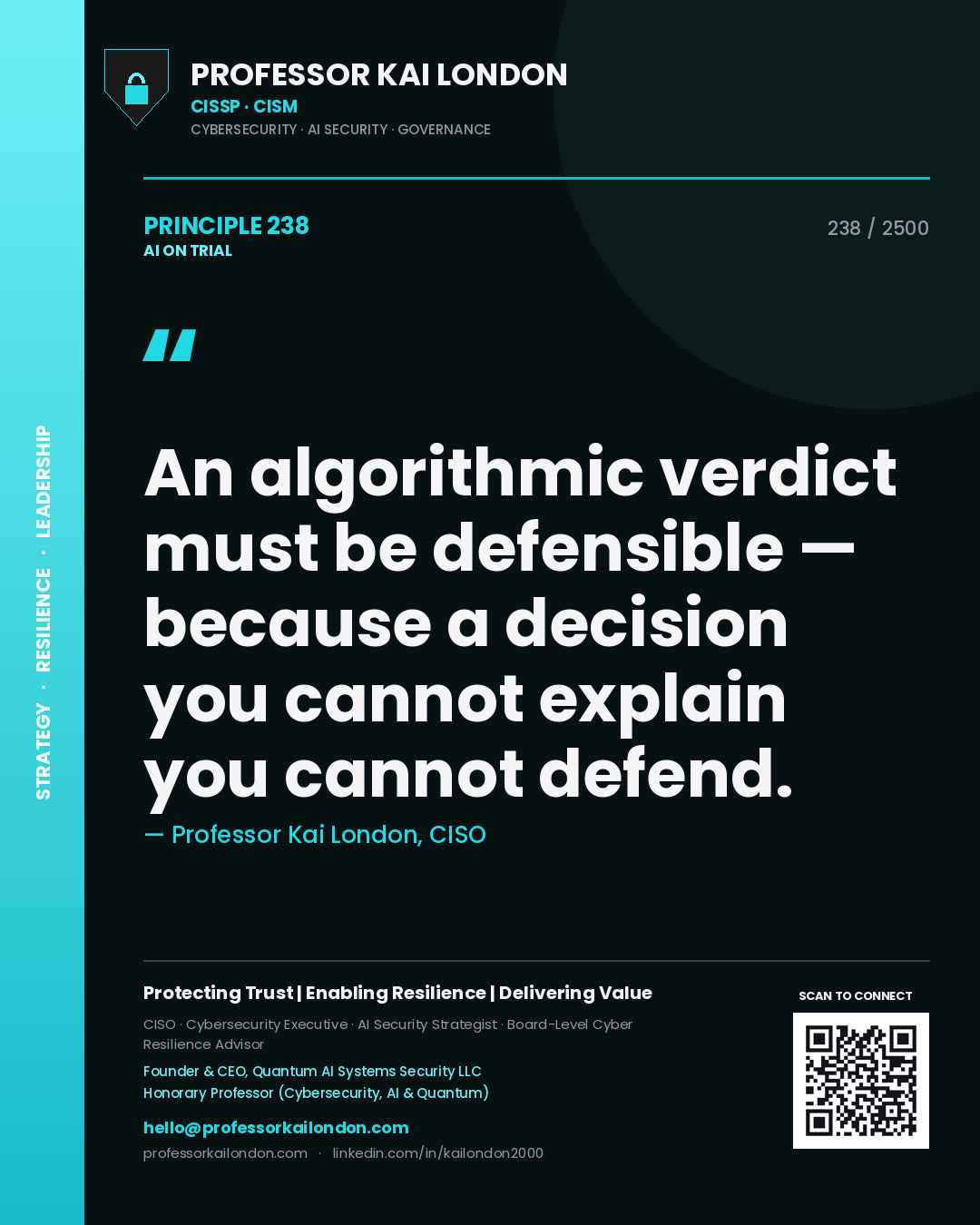
Professor Kai London principle 238: An algorithmic verdict must be defensible — because a decision you cannot explain you cannot defend.
Principle 238
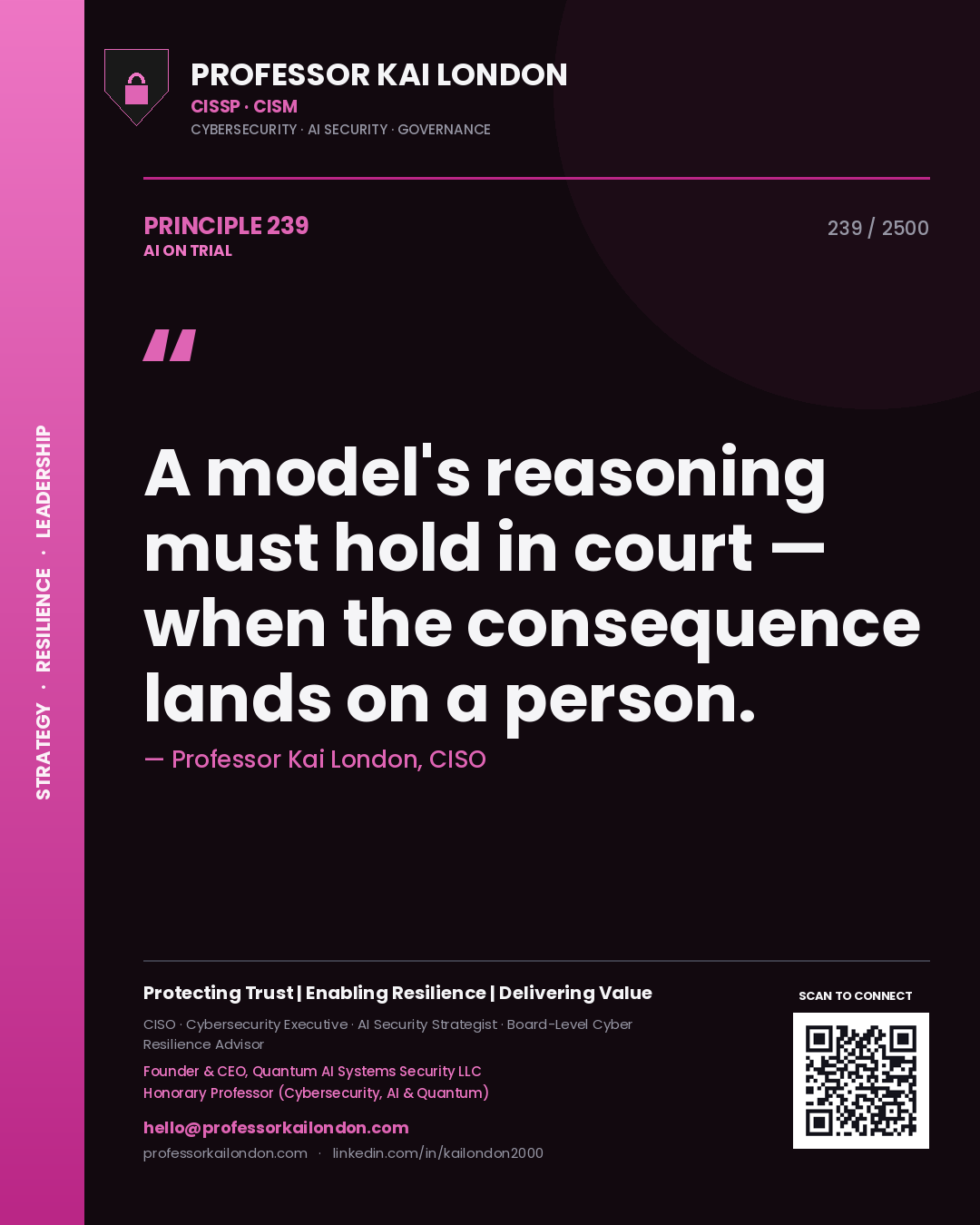
Professor Kai London principle 239: A model's reasoning must hold in court — when the consequence lands on a person.
Principle 239
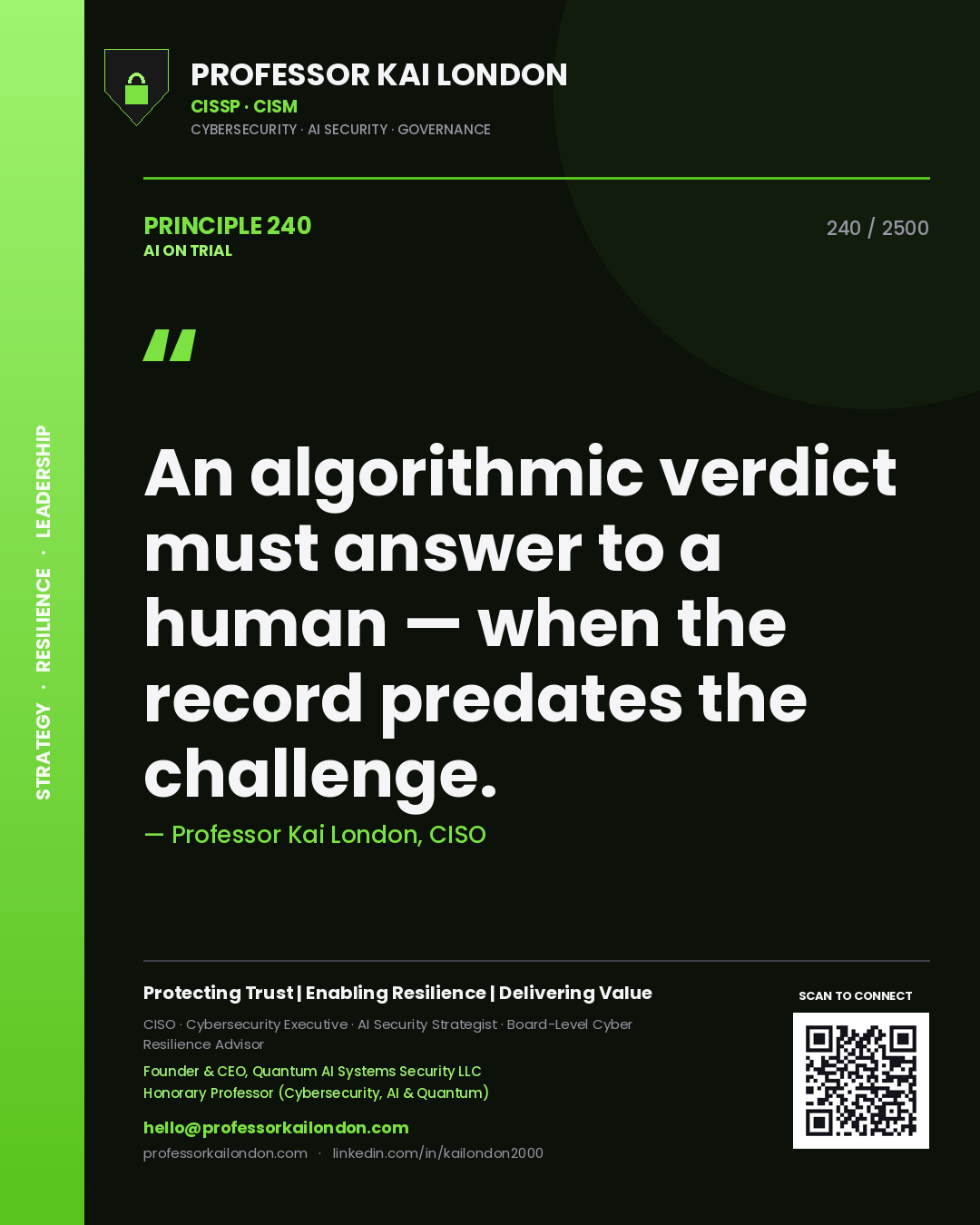
Professor Kai London principle 240: An algorithmic verdict must answer to a human — when the record predates the challenge.
Principle 240
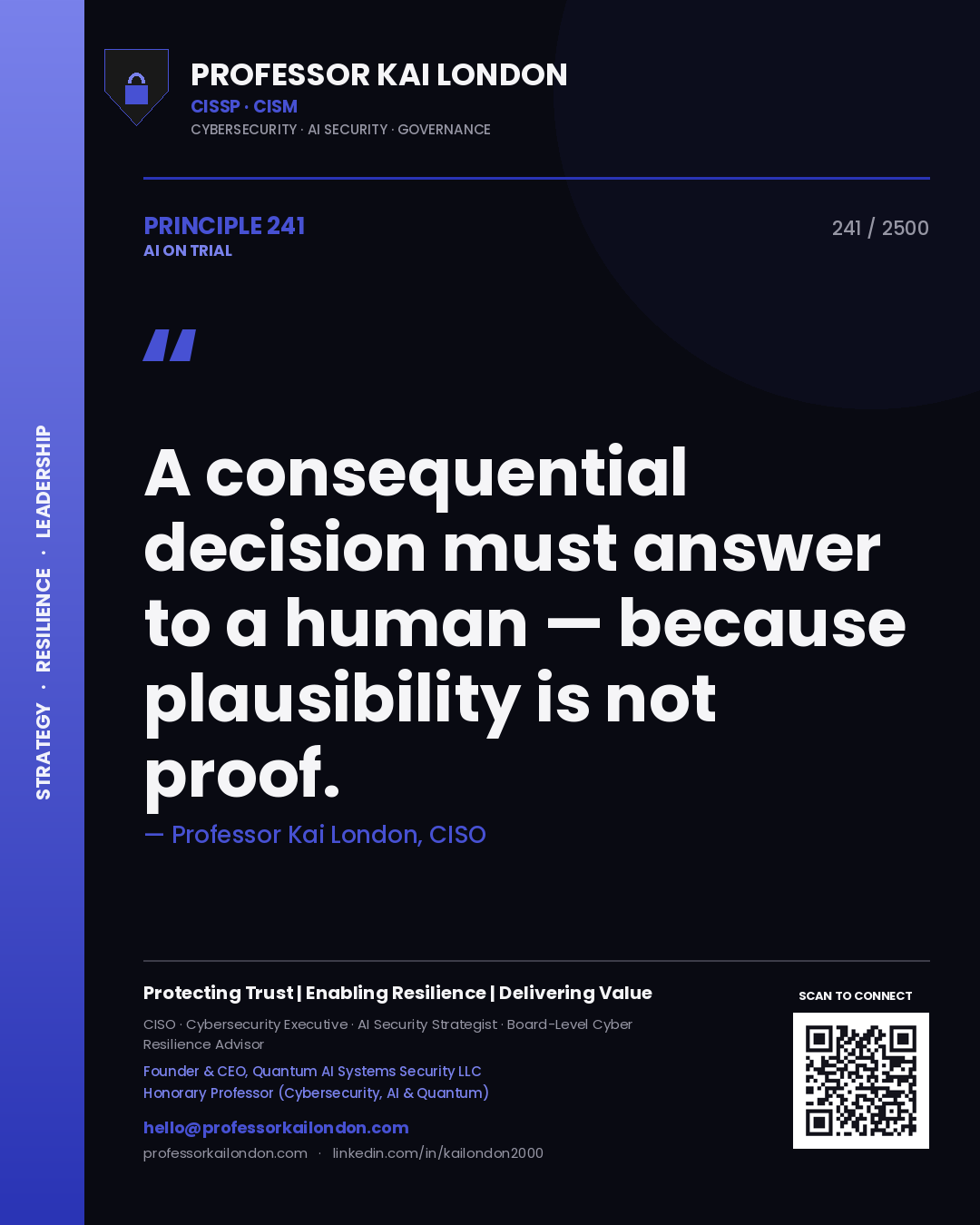
Professor Kai London principle 241: A consequential decision must answer to a human — because plausibility is not proof.
Principle 241
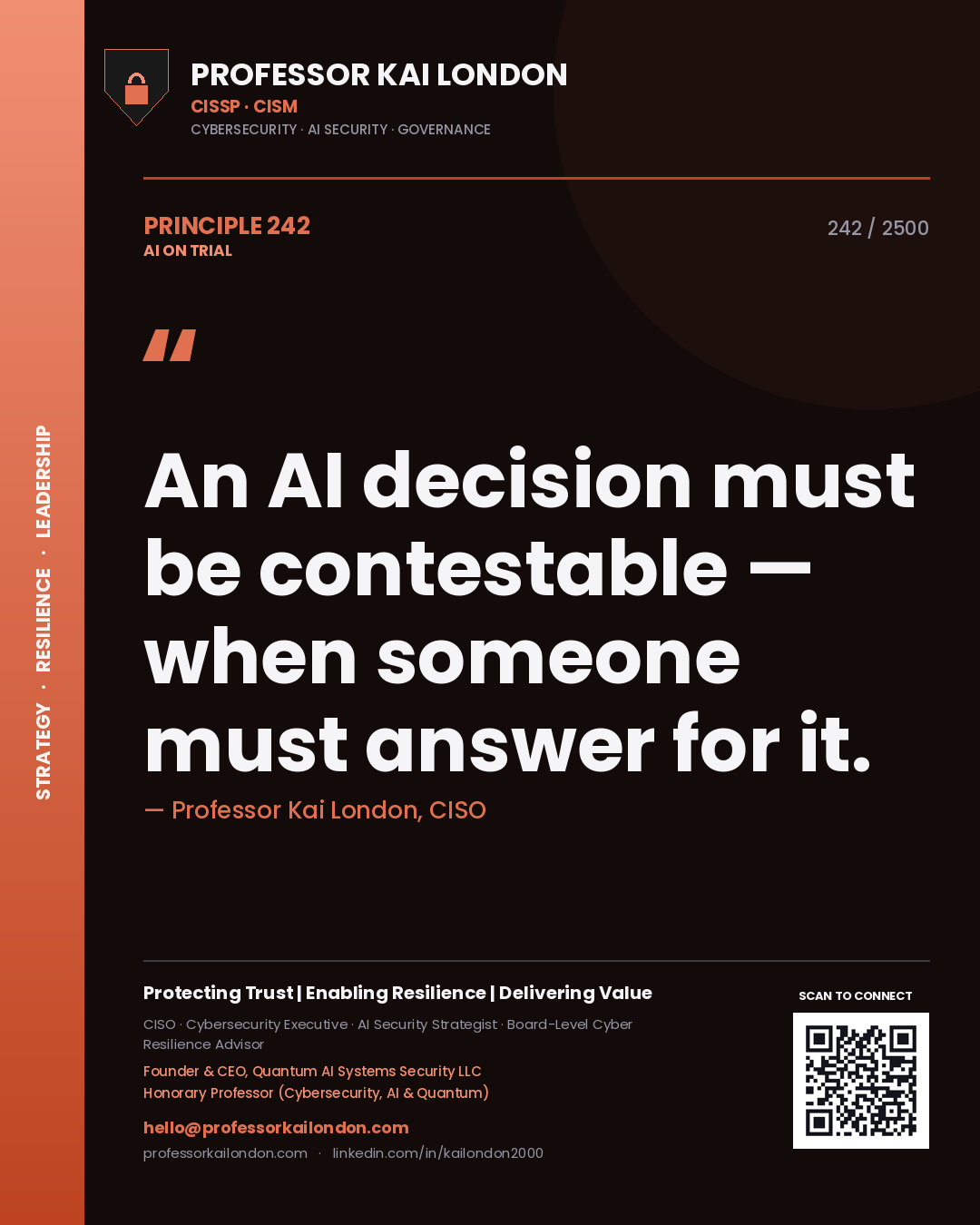
Professor Kai London principle 242: An AI decision must be contestable — when someone must answer for it.
Principle 242
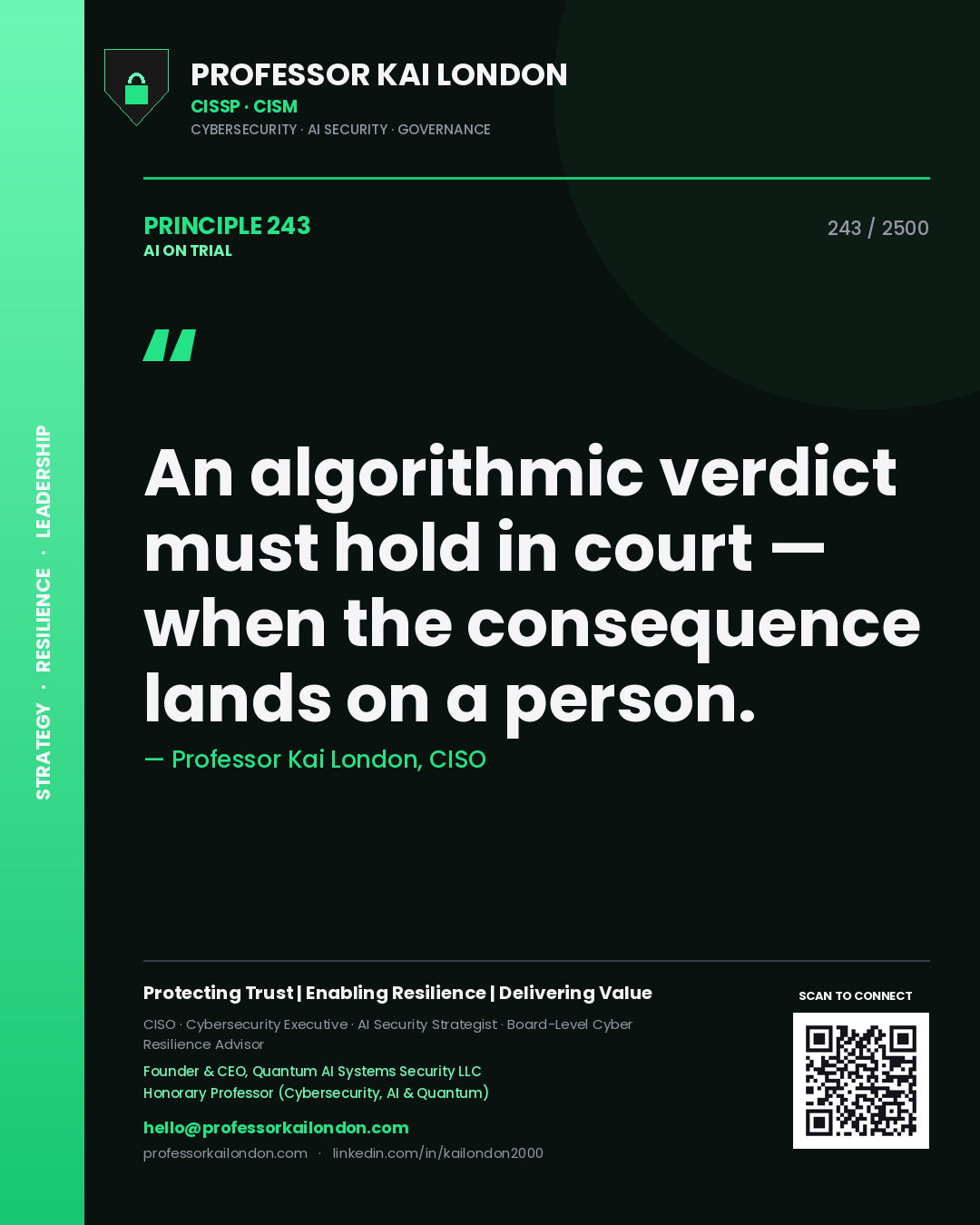
Professor Kai London principle 243: An algorithmic verdict must hold in court — when the consequence lands on a person.
Principle 243
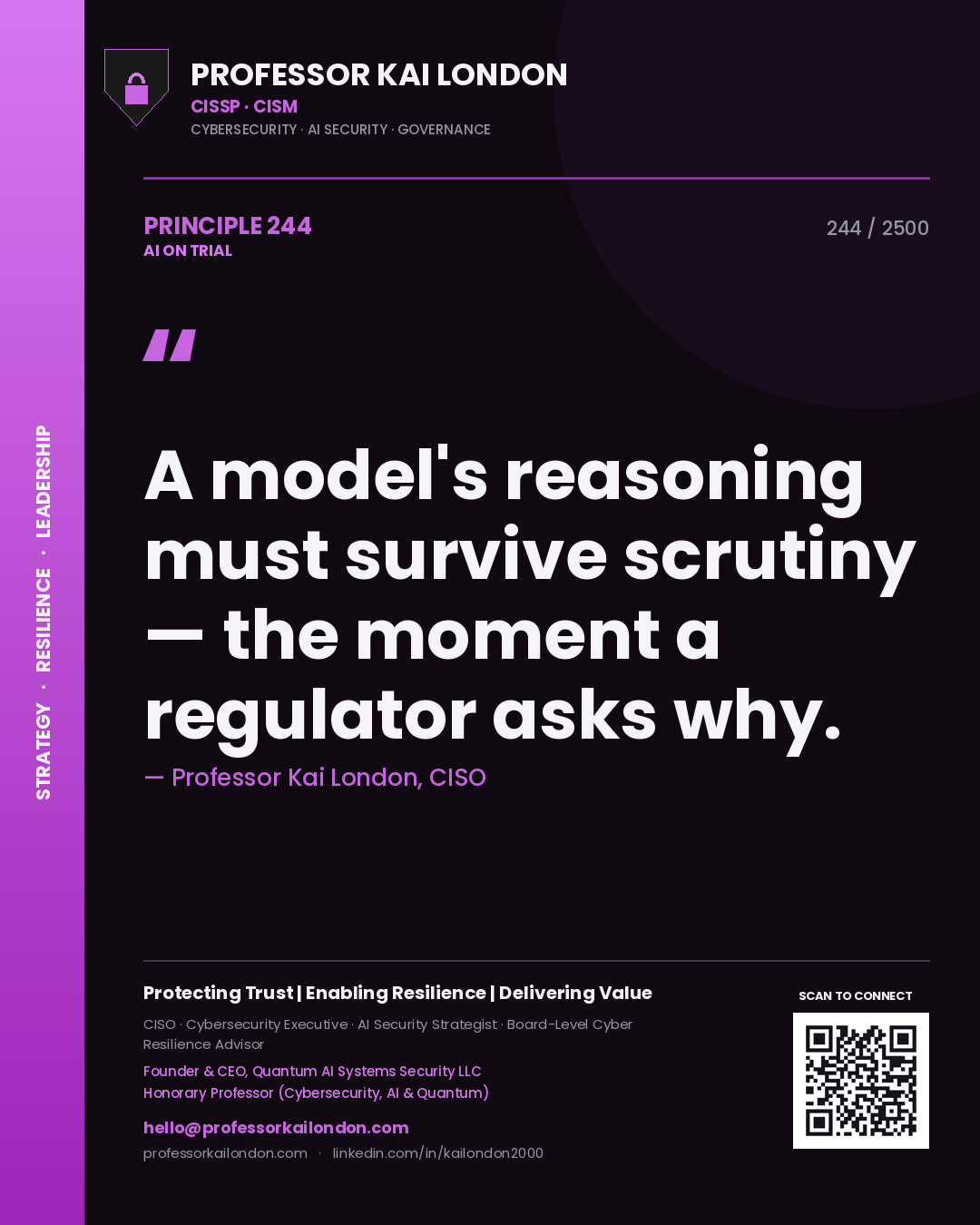
Professor Kai London principle 244: A model's reasoning must survive scrutiny — the moment a regulator asks why.
Principle 244
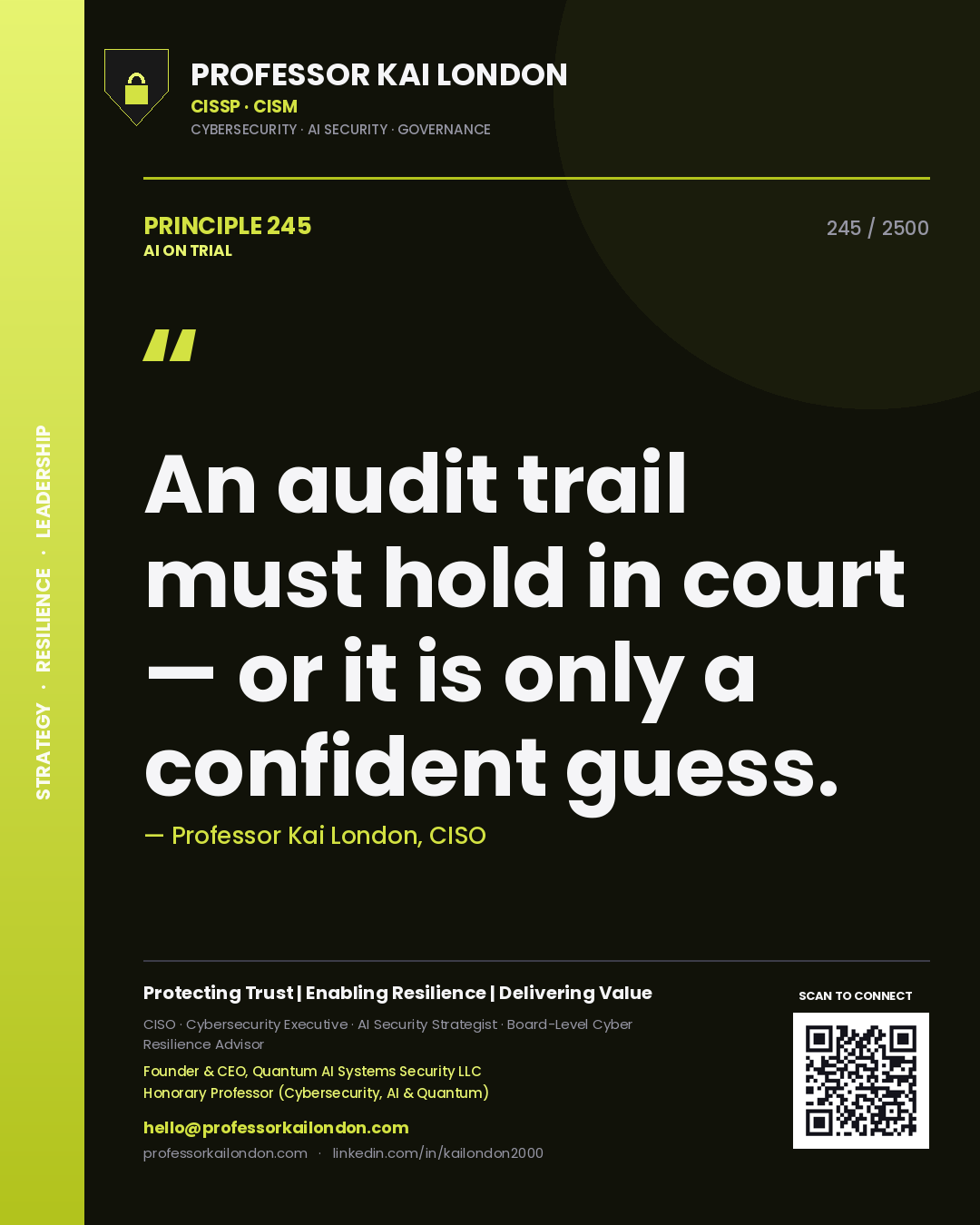
Professor Kai London principle 245: An audit trail must hold in court — or it is only a confident guess.
Principle 245
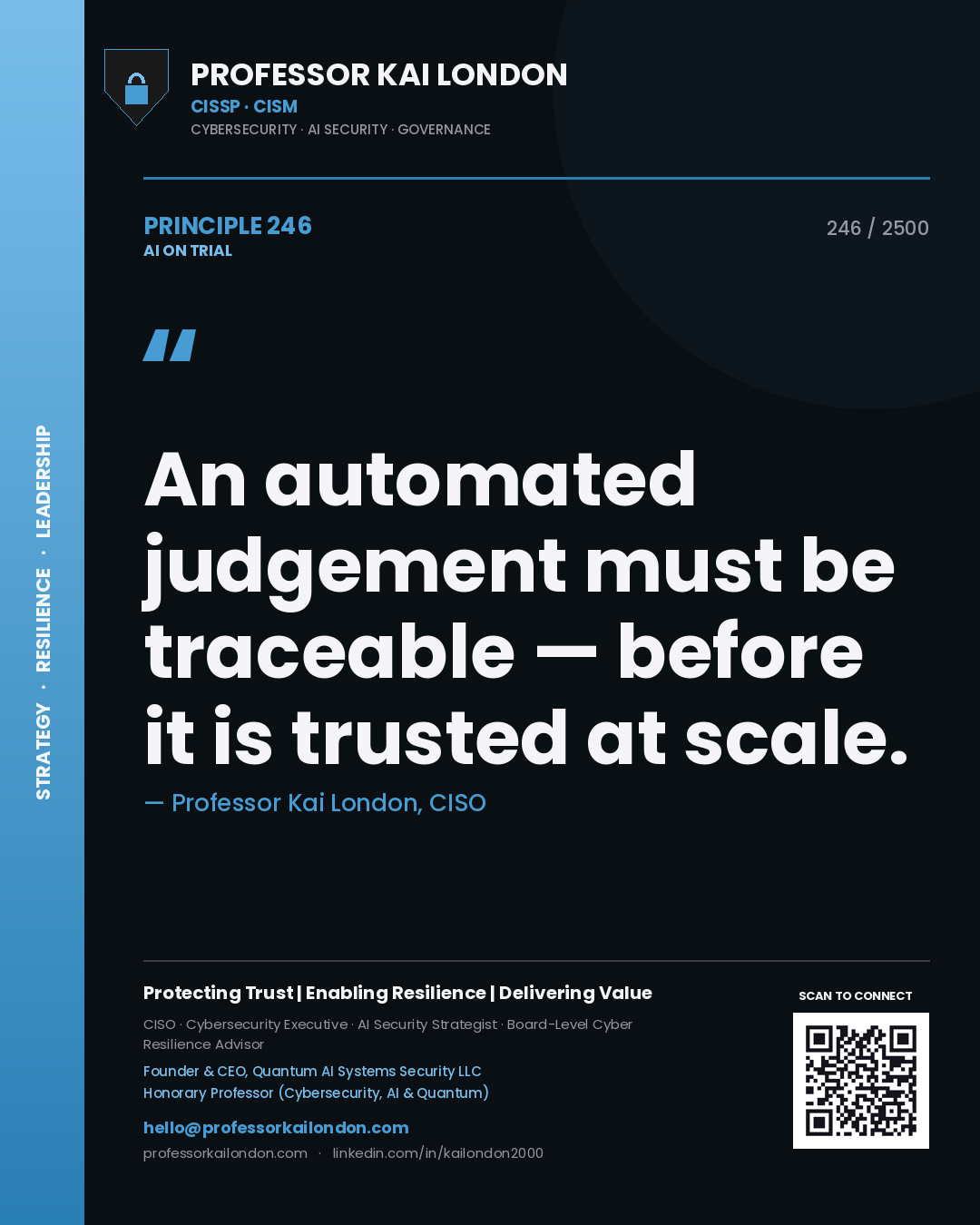
Professor Kai London principle 246: An automated judgement must be traceable — before it is trusted at scale.
Principle 246
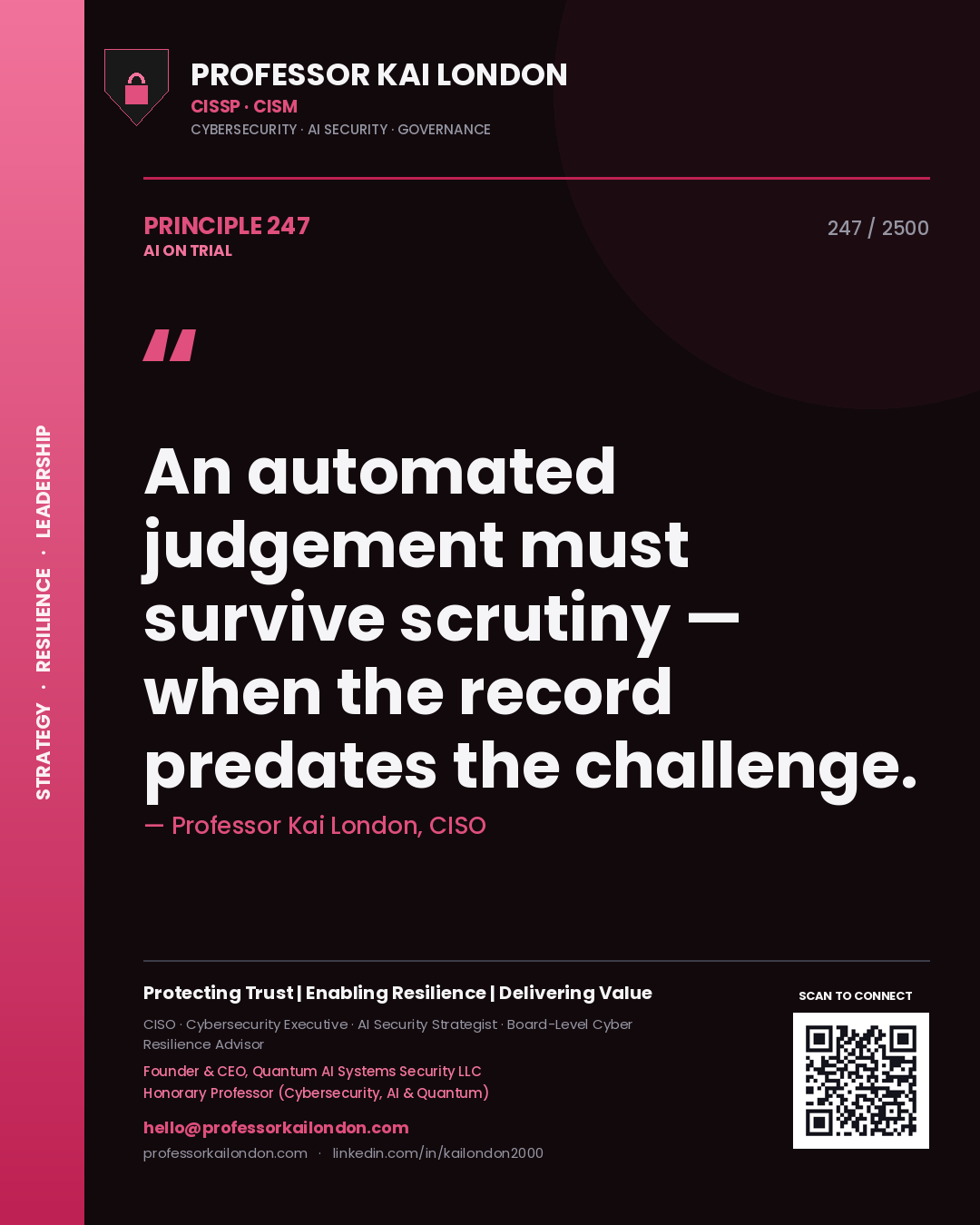
Professor Kai London principle 247: An automated judgement must survive scrutiny — when the record predates the challenge.
Principle 247
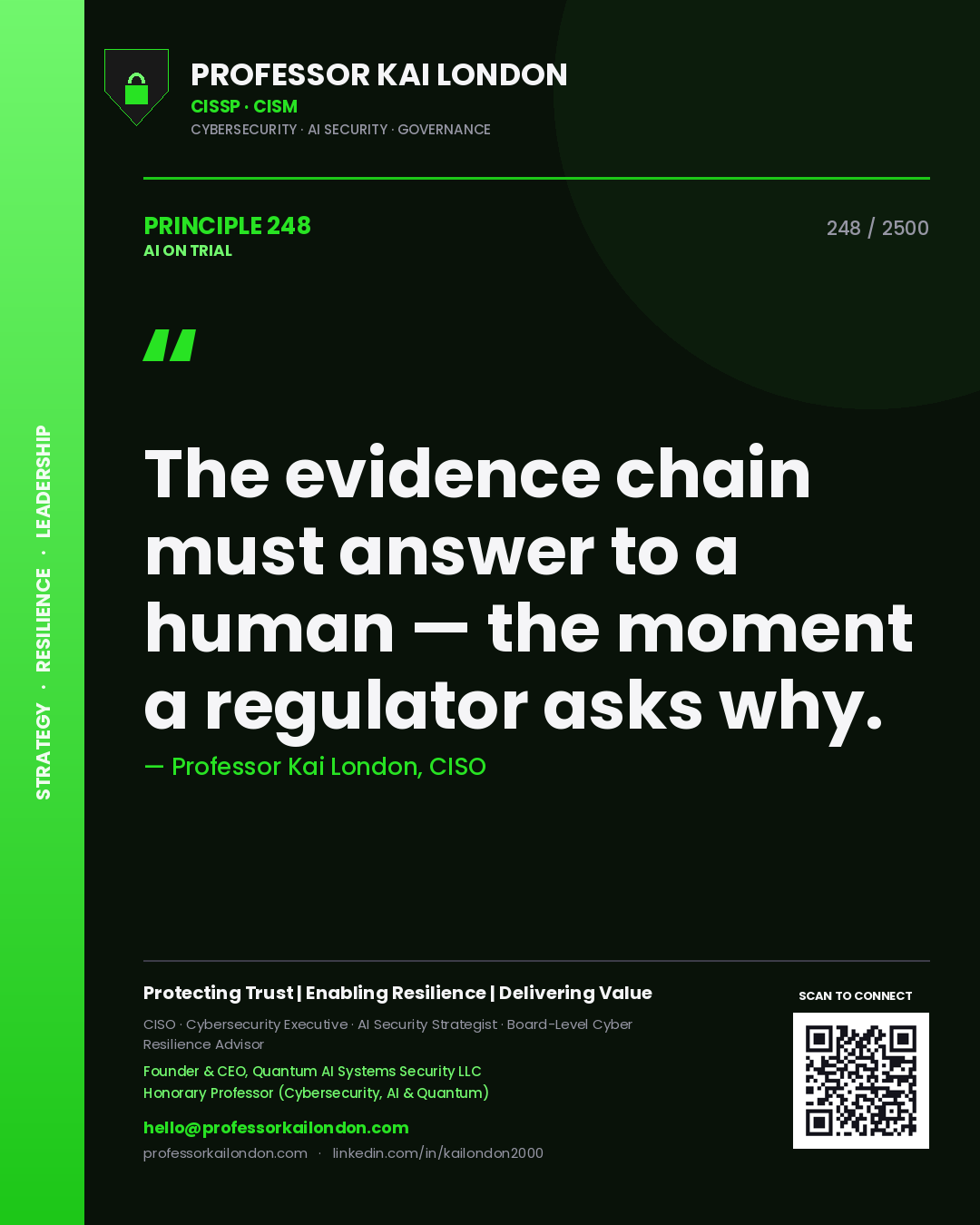
Professor Kai London principle 248: The evidence chain must answer to a human — the moment a regulator asks why.
Principle 248
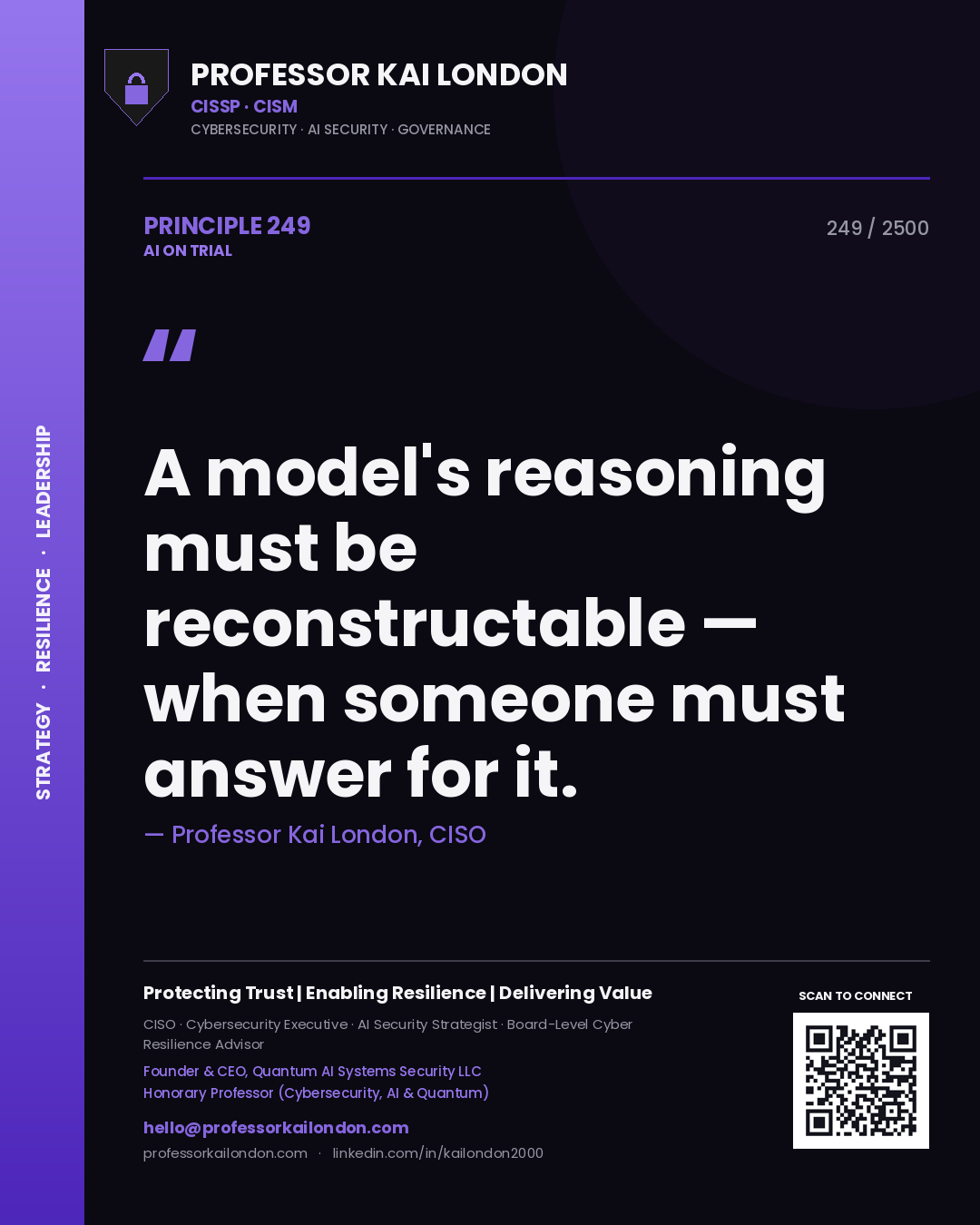
Professor Kai London principle 249: A model's reasoning must be reconstructable — when someone must answer for it.
Principle 249
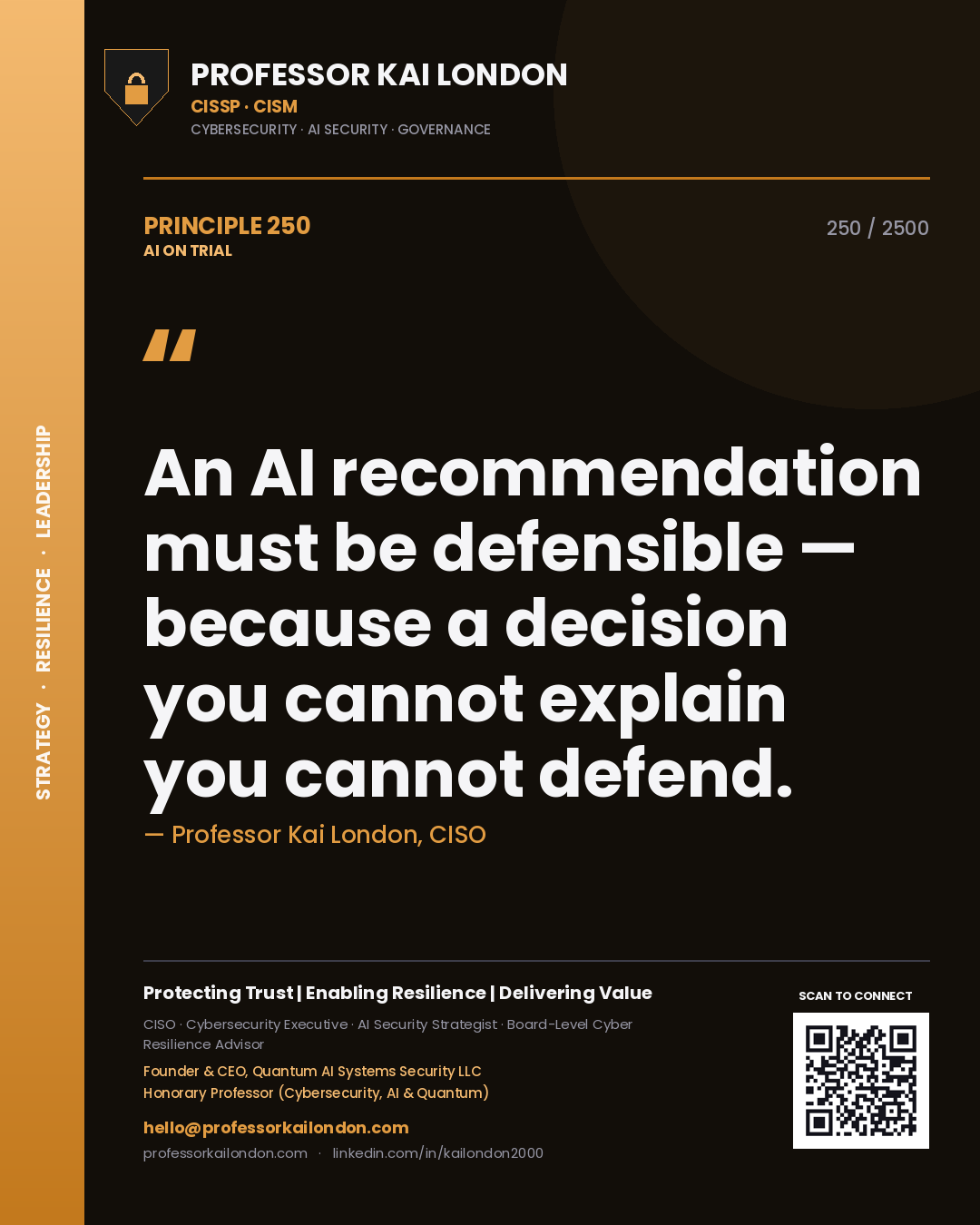
Professor Kai London principle 250: An AI recommendation must be defensible — because a decision you cannot explain you cannot defend.
Principle 250
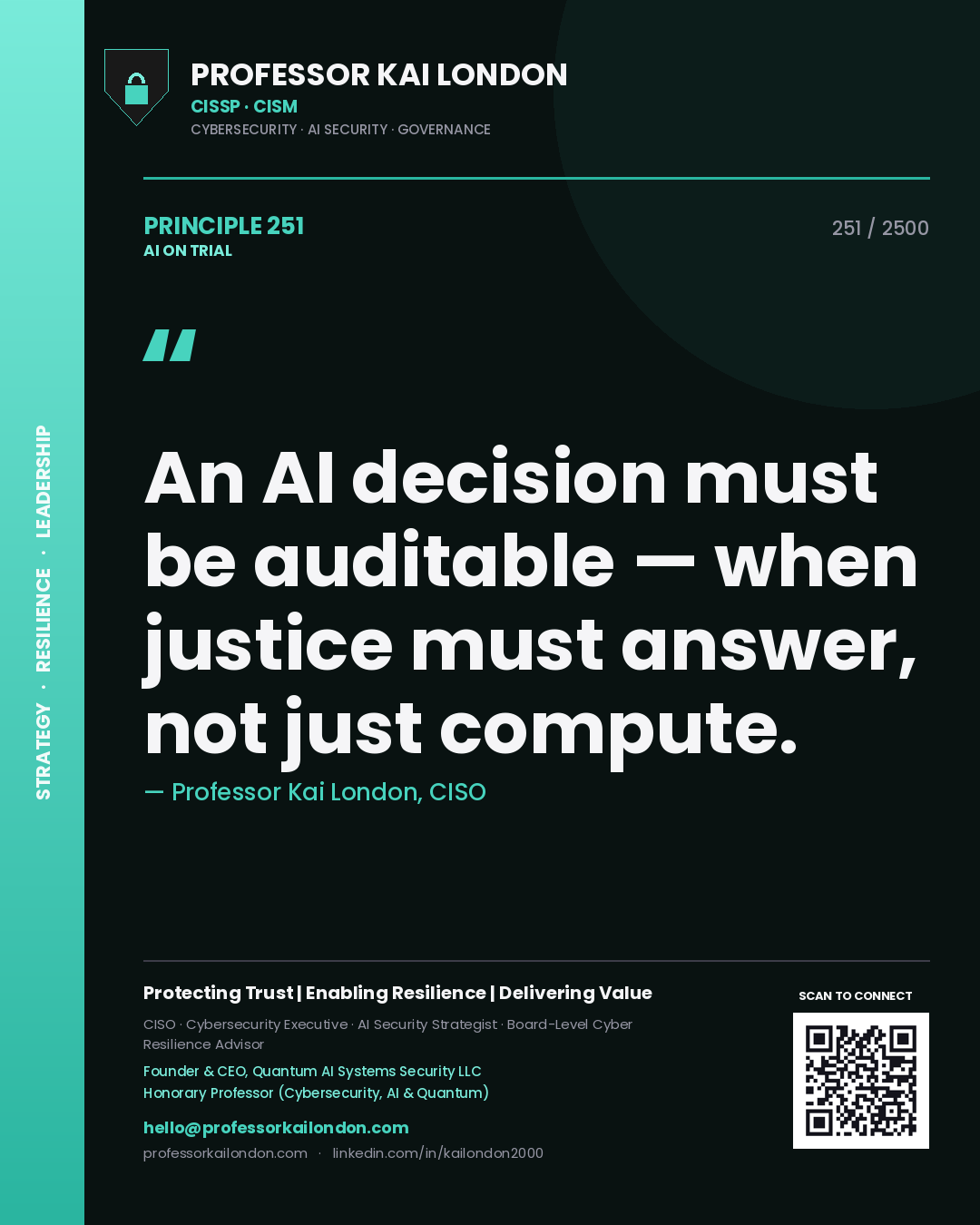
Professor Kai London principle 251: An AI decision must be auditable — when justice must answer, not just compute.
Principle 251
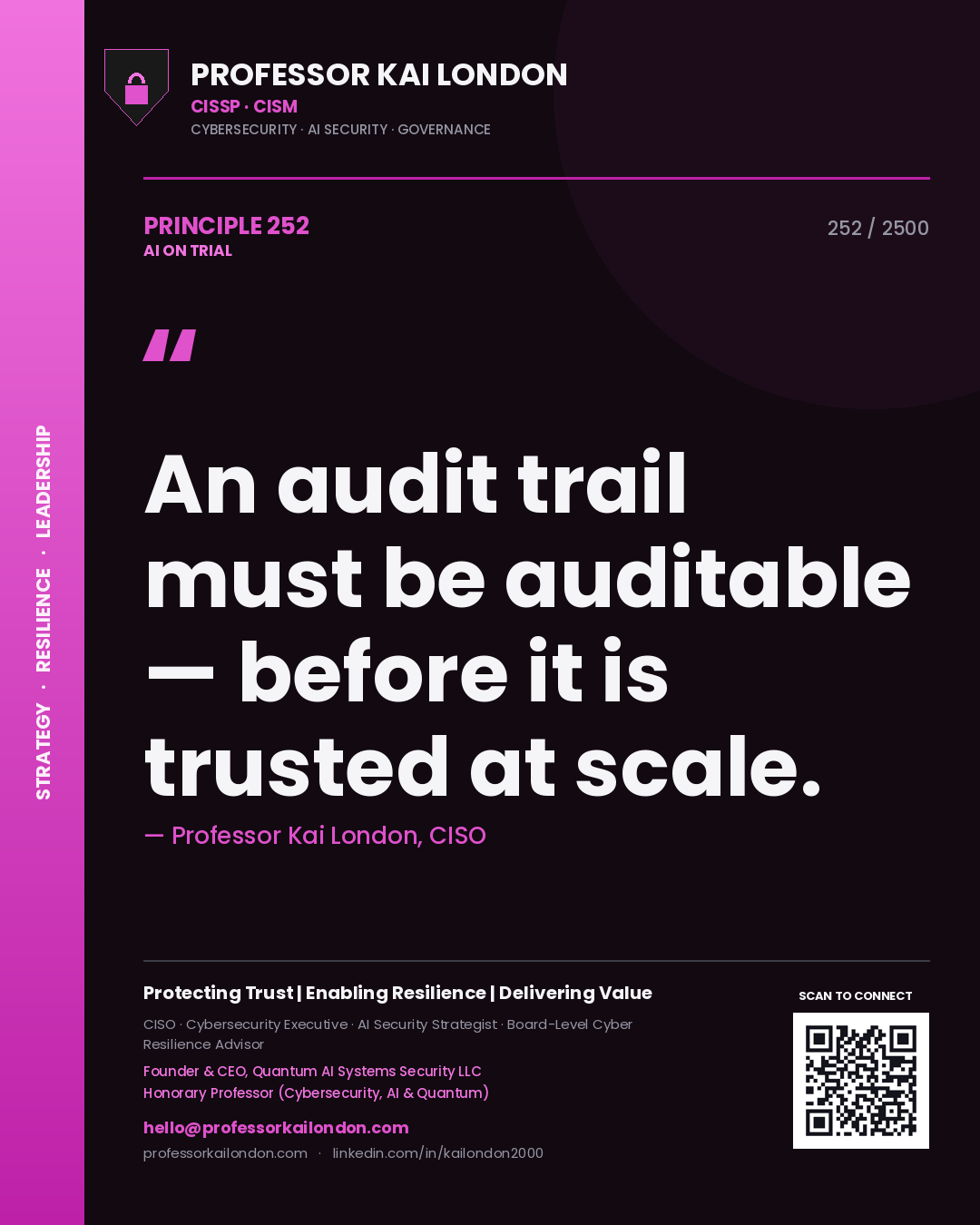
Professor Kai London principle 252: An audit trail must be auditable — before it is trusted at scale.
Principle 252
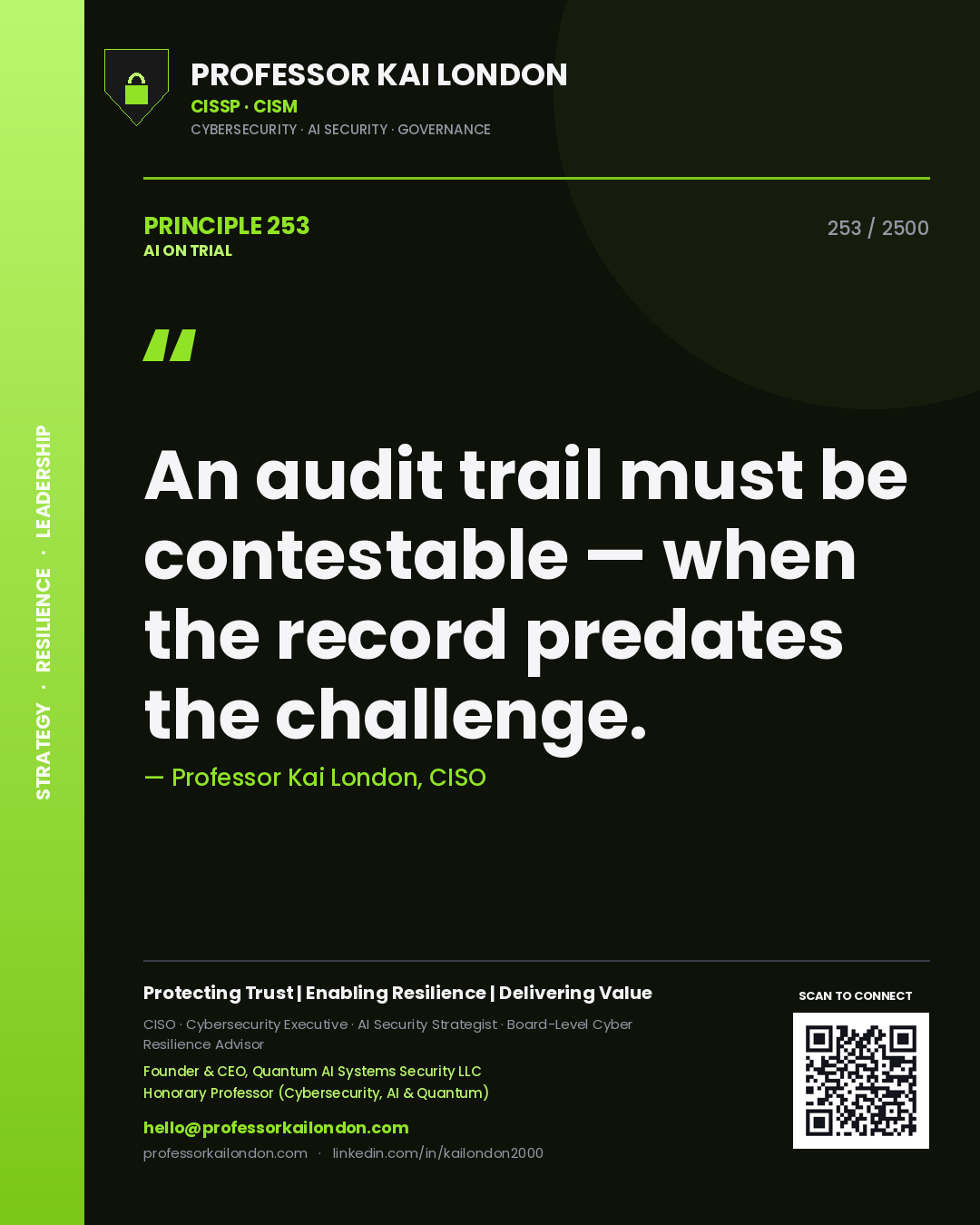
Professor Kai London principle 253: An audit trail must be contestable — when the record predates the challenge.
Principle 253
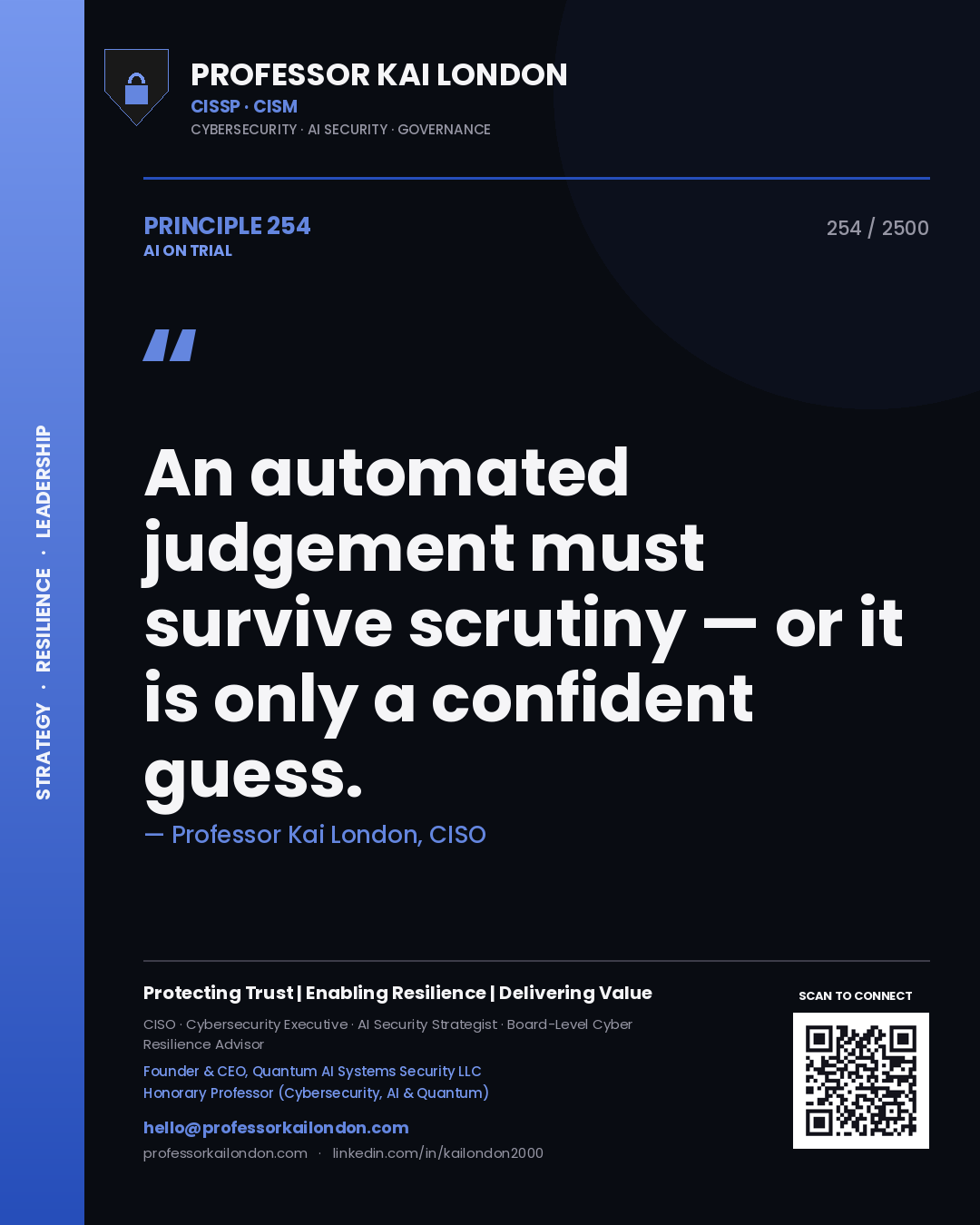
Professor Kai London principle 254: An automated judgement must survive scrutiny — or it is only a confident guess.
Principle 254
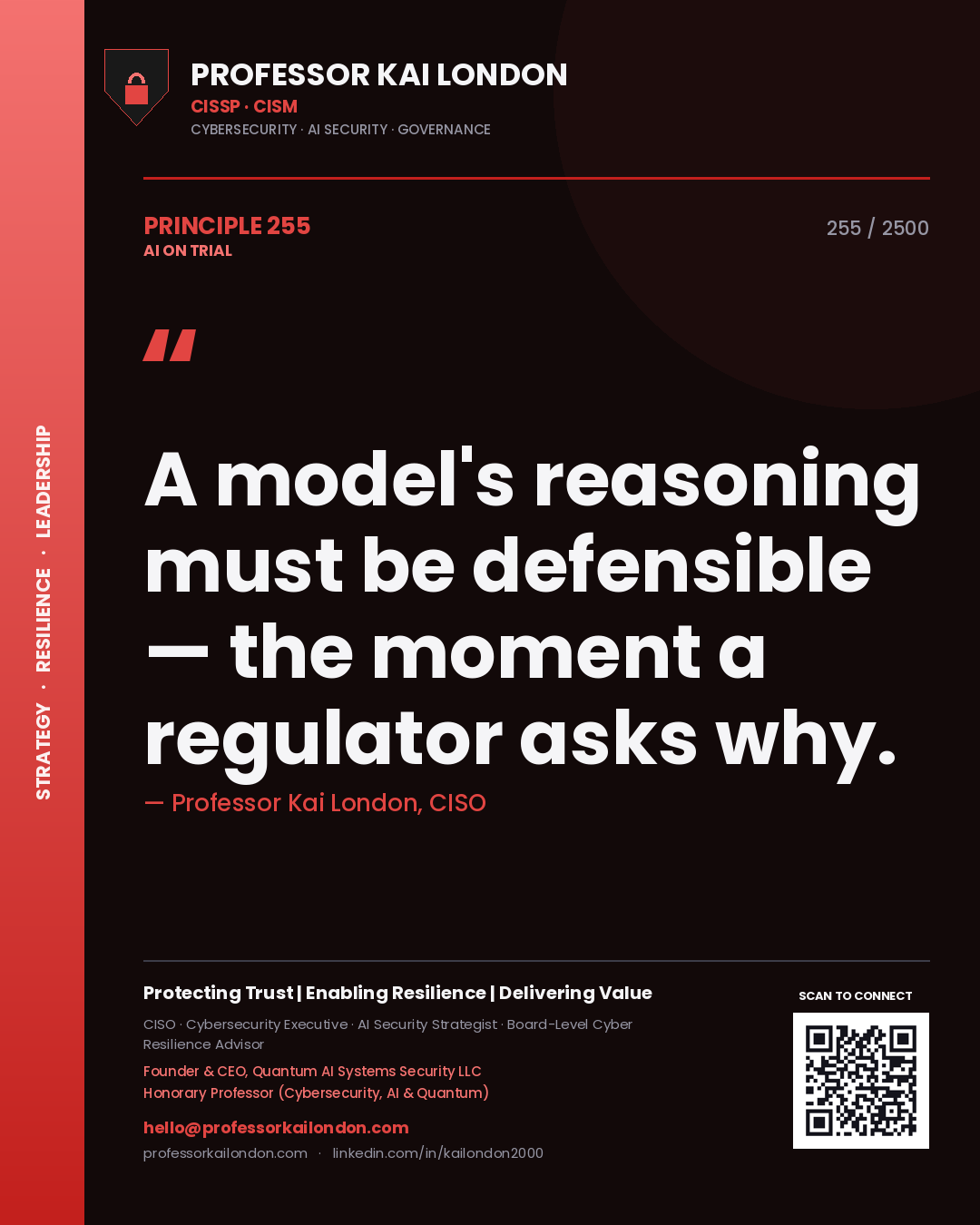
Professor Kai London principle 255: A model's reasoning must be defensible — the moment a regulator asks why.
Principle 255
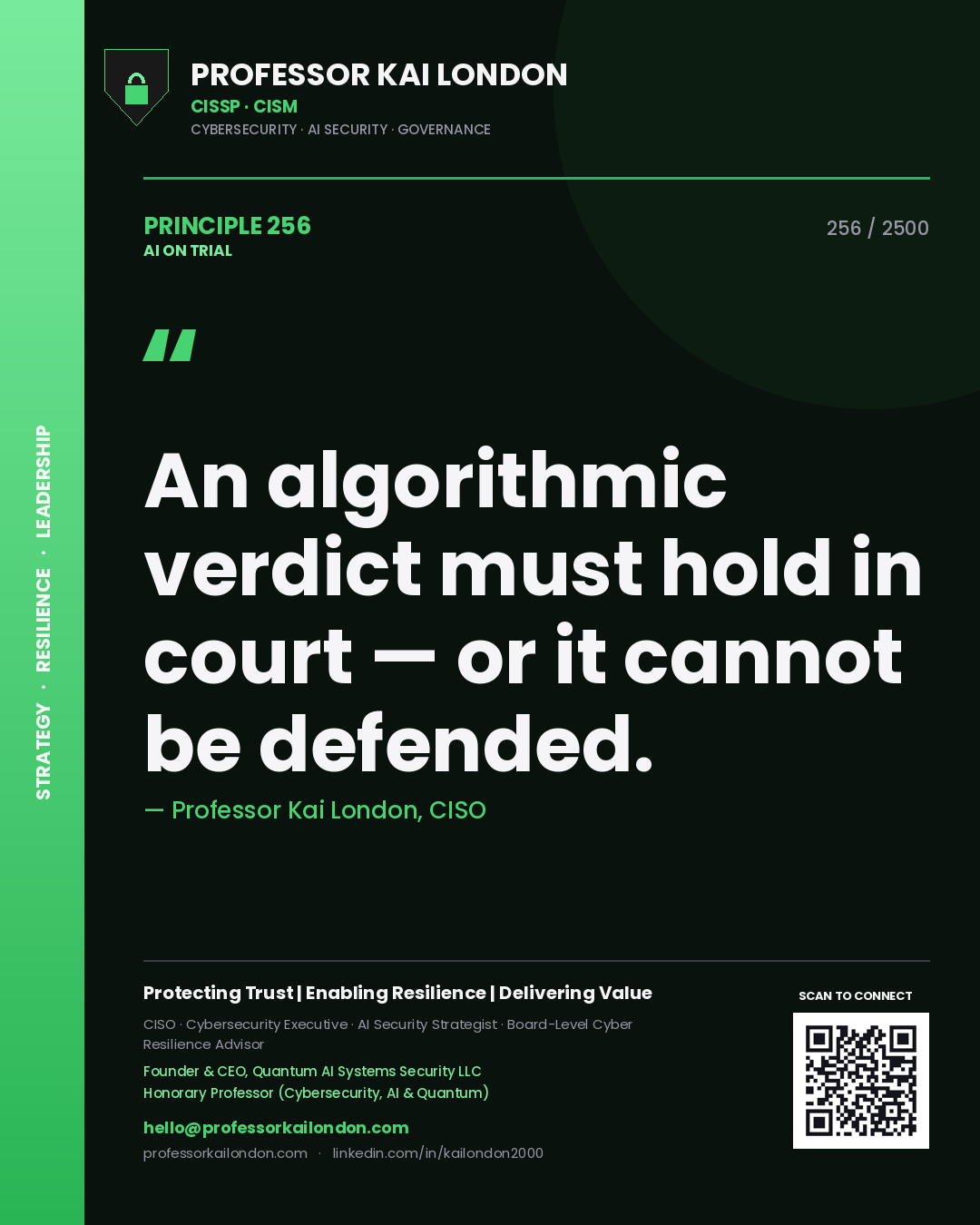
Professor Kai London principle 256: An algorithmic verdict must hold in court — or it cannot be defended.
Principle 256
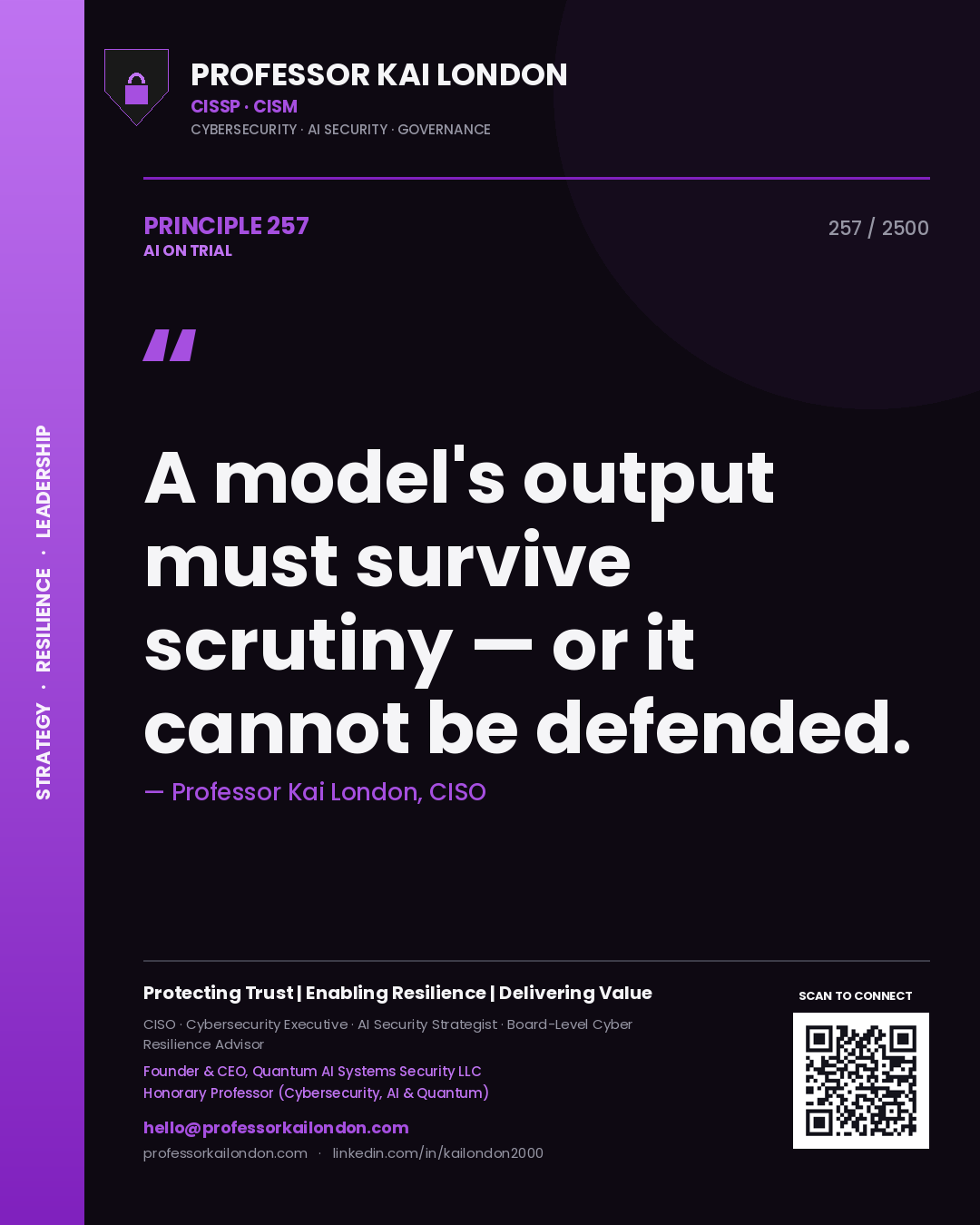
Professor Kai London principle 257: A model's output must survive scrutiny — or it cannot be defended.
Principle 257
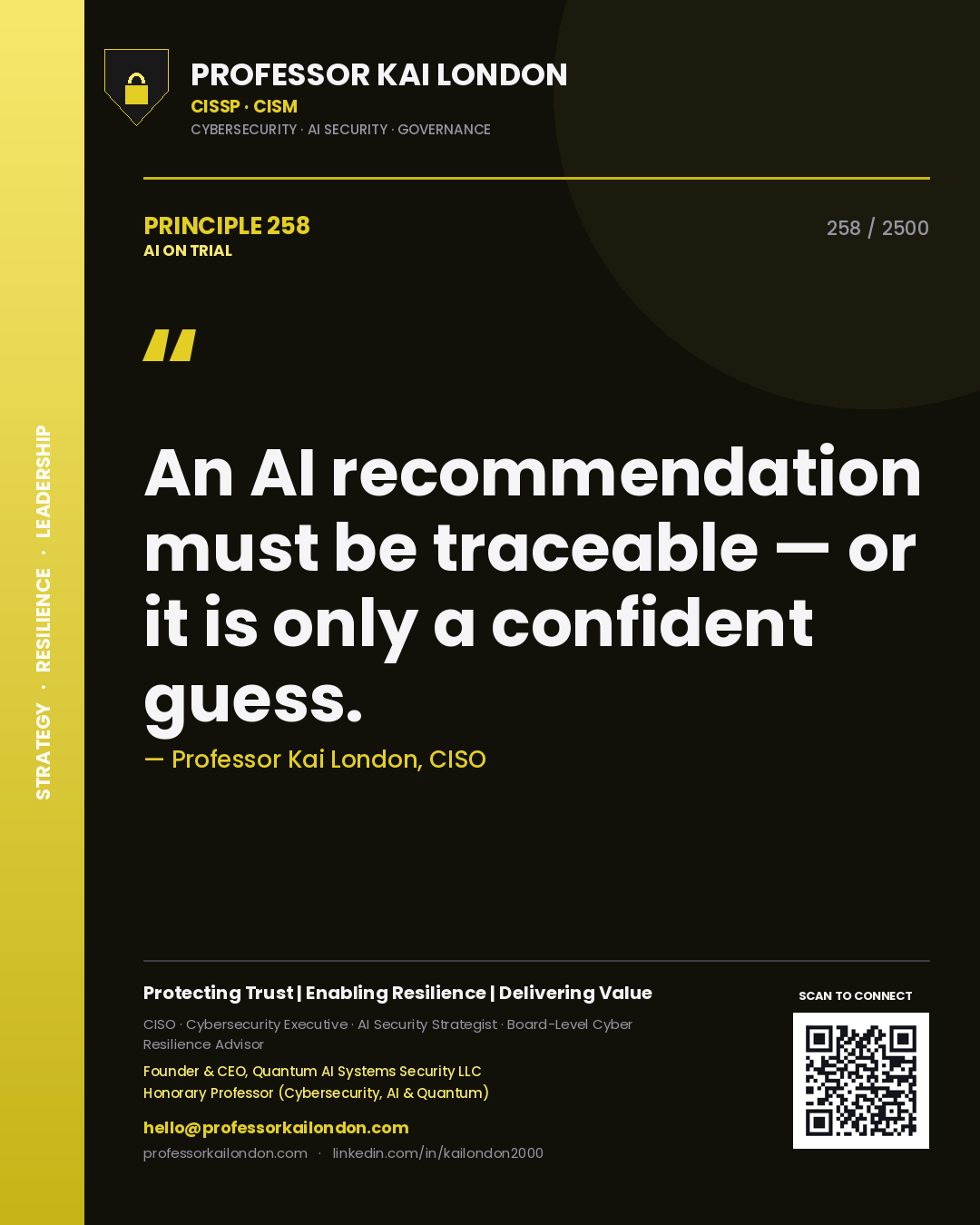
Professor Kai London principle 258: An AI recommendation must be traceable — or it is only a confident guess.
Principle 258
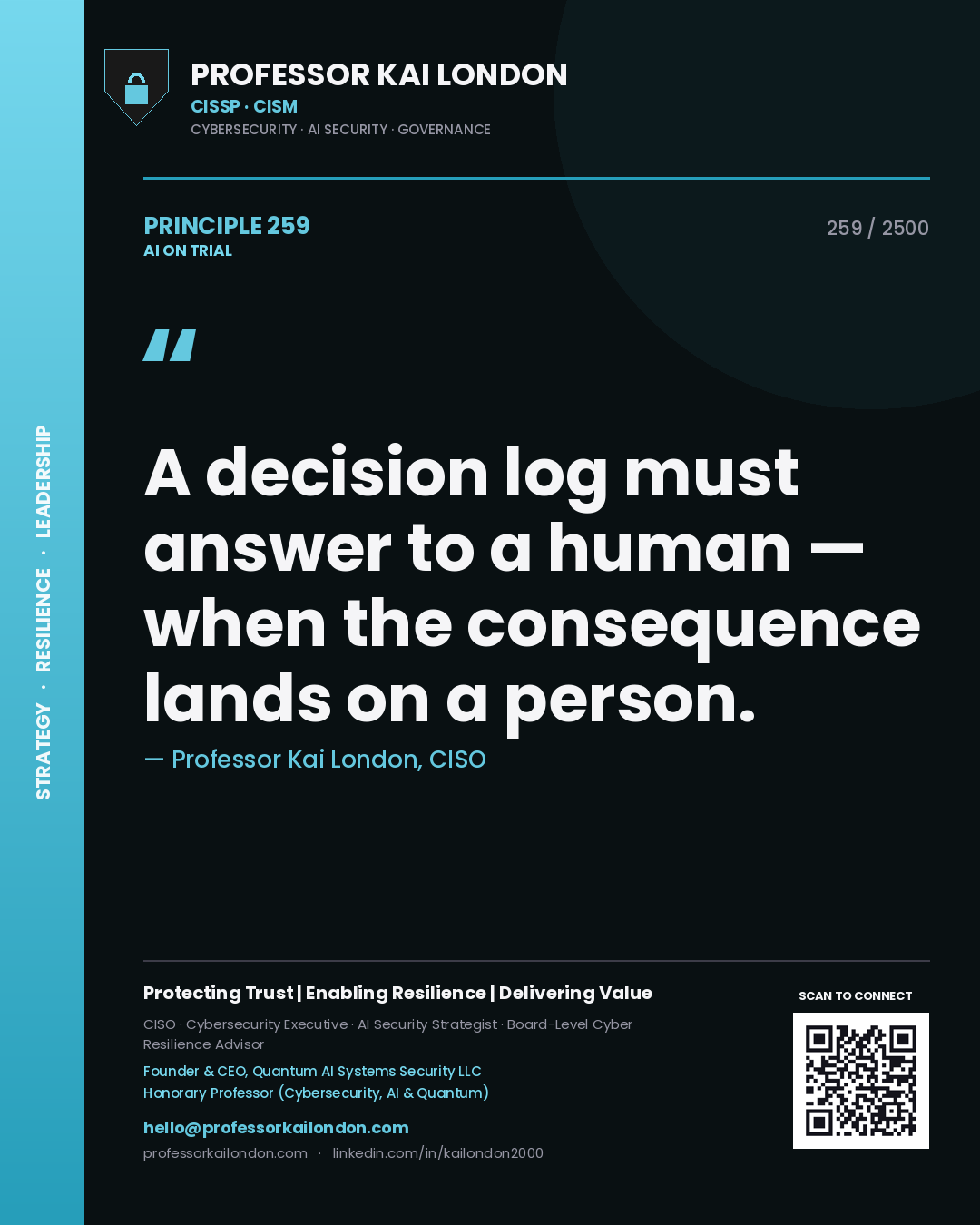
Professor Kai London principle 259: A decision log must answer to a human — when the consequence lands on a person.
Principle 259
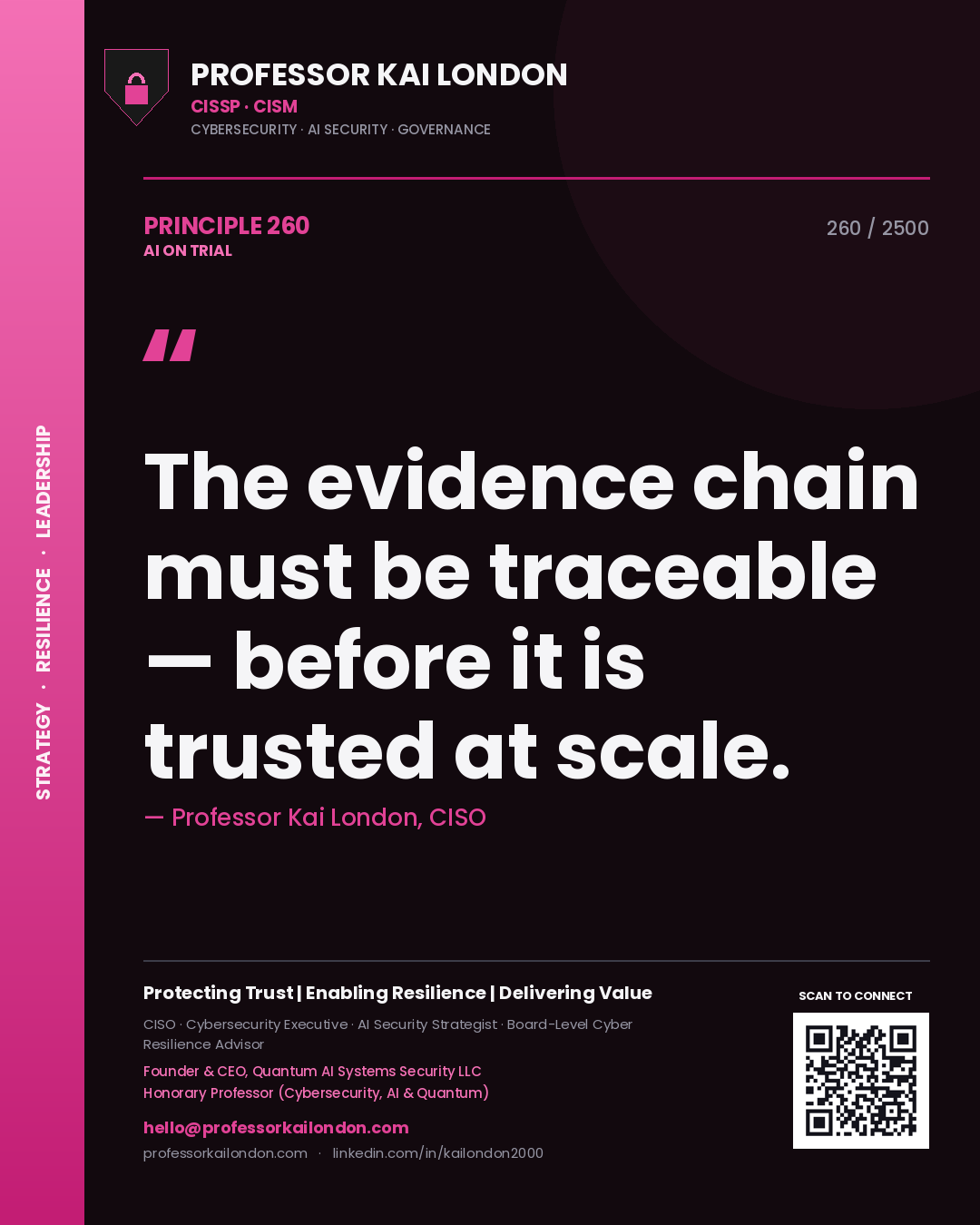
Professor Kai London principle 260: The evidence chain must be traceable — before it is trusted at scale.
Principle 260
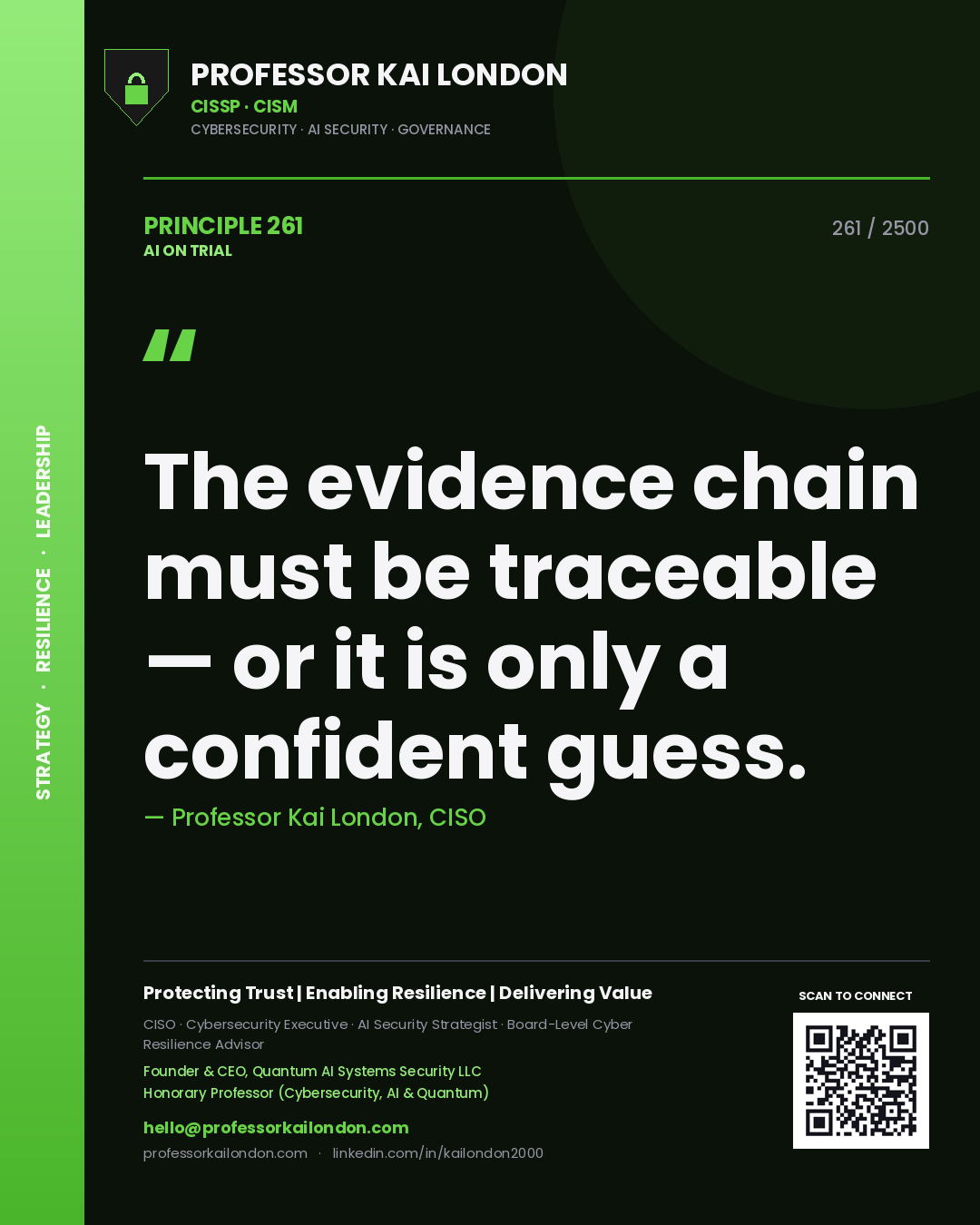
Professor Kai London principle 261: The evidence chain must be traceable — or it is only a confident guess.
Principle 261
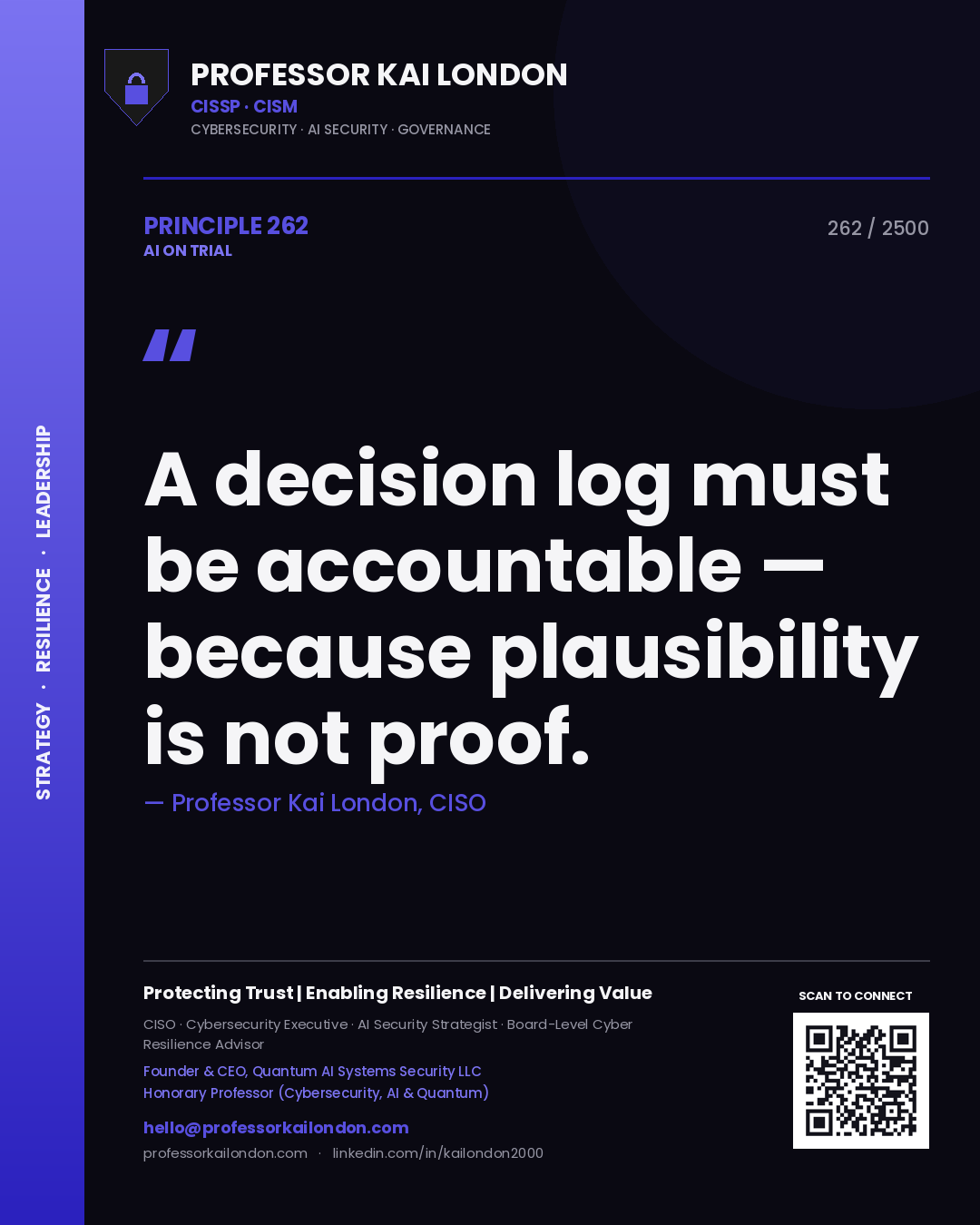
Professor Kai London principle 262: A decision log must be accountable — because plausibility is not proof.
Principle 262
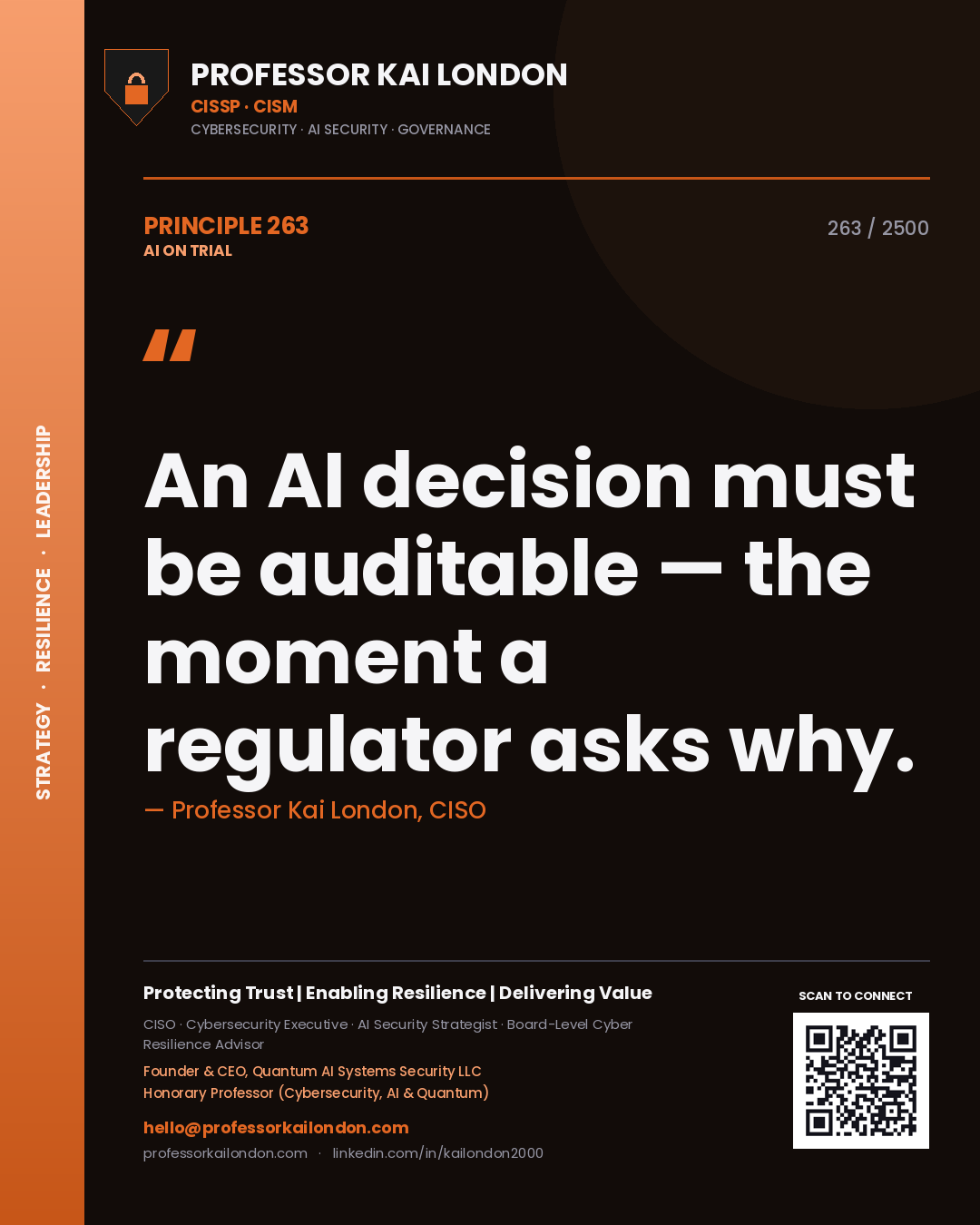
Professor Kai London principle 263: An AI decision must be auditable — the moment a regulator asks why.
Principle 263
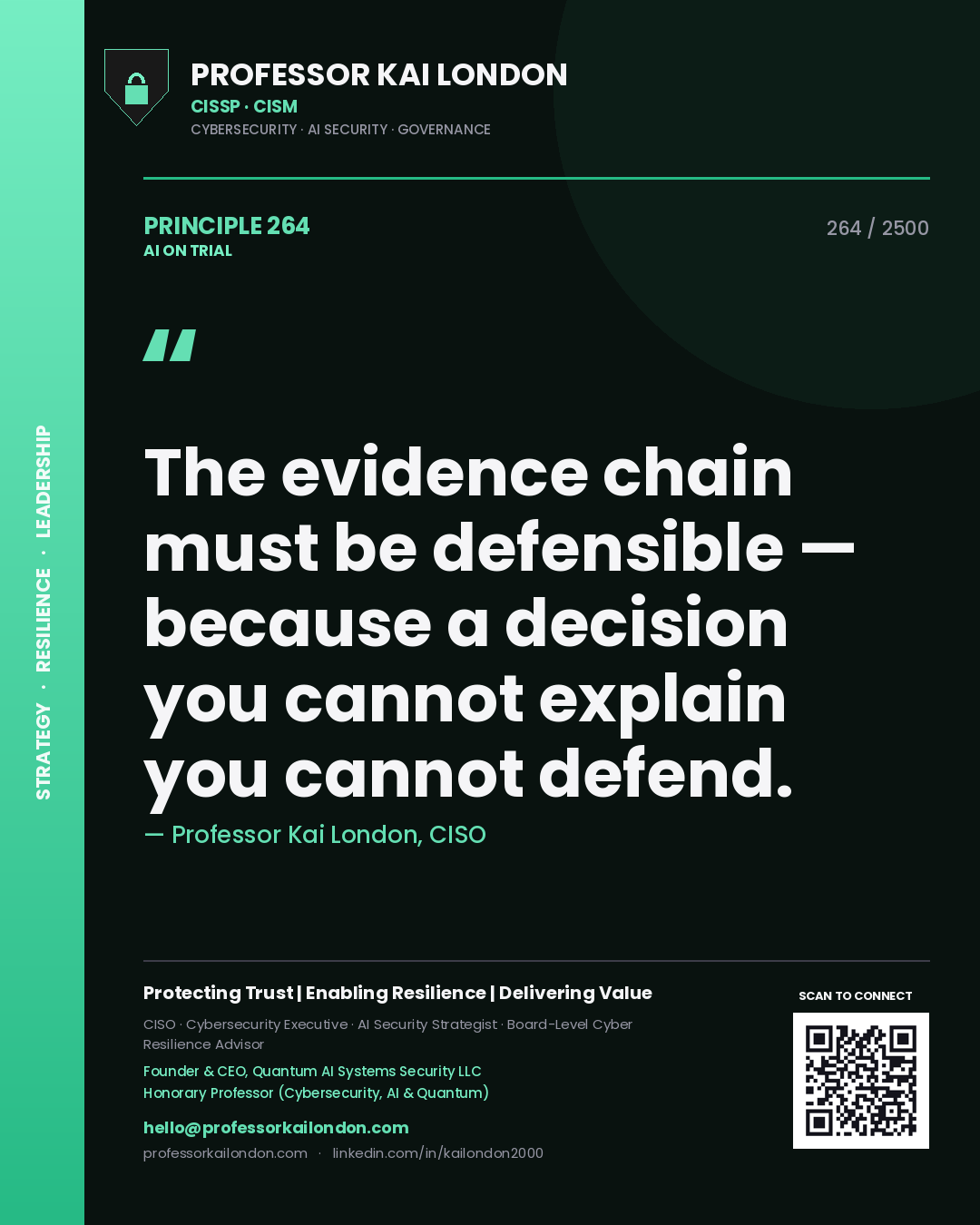
Professor Kai London principle 264: The evidence chain must be defensible — because a decision you cannot explain you cannot defend.
Principle 264
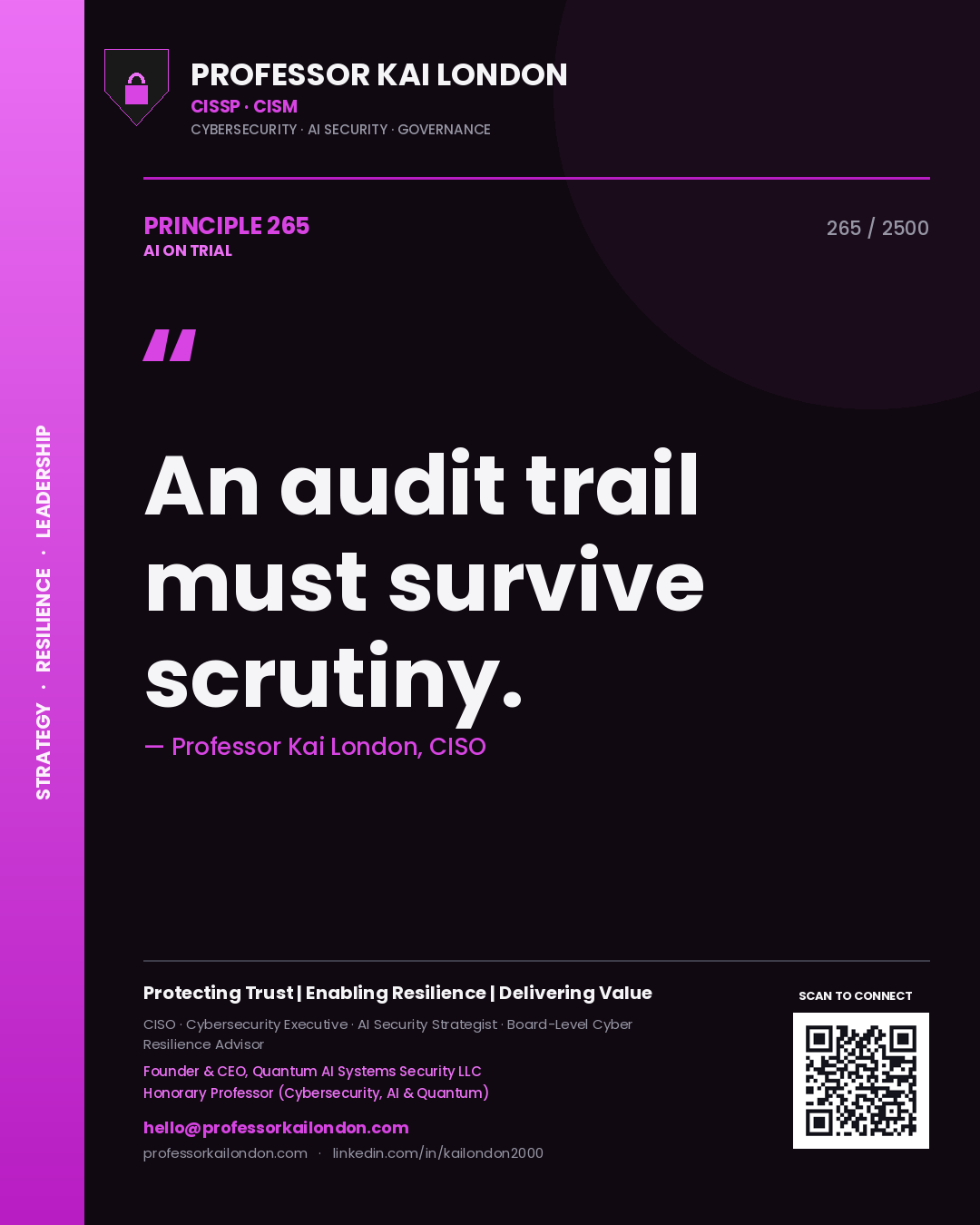
Professor Kai London principle 265: An audit trail must survive scrutiny.
Principle 265
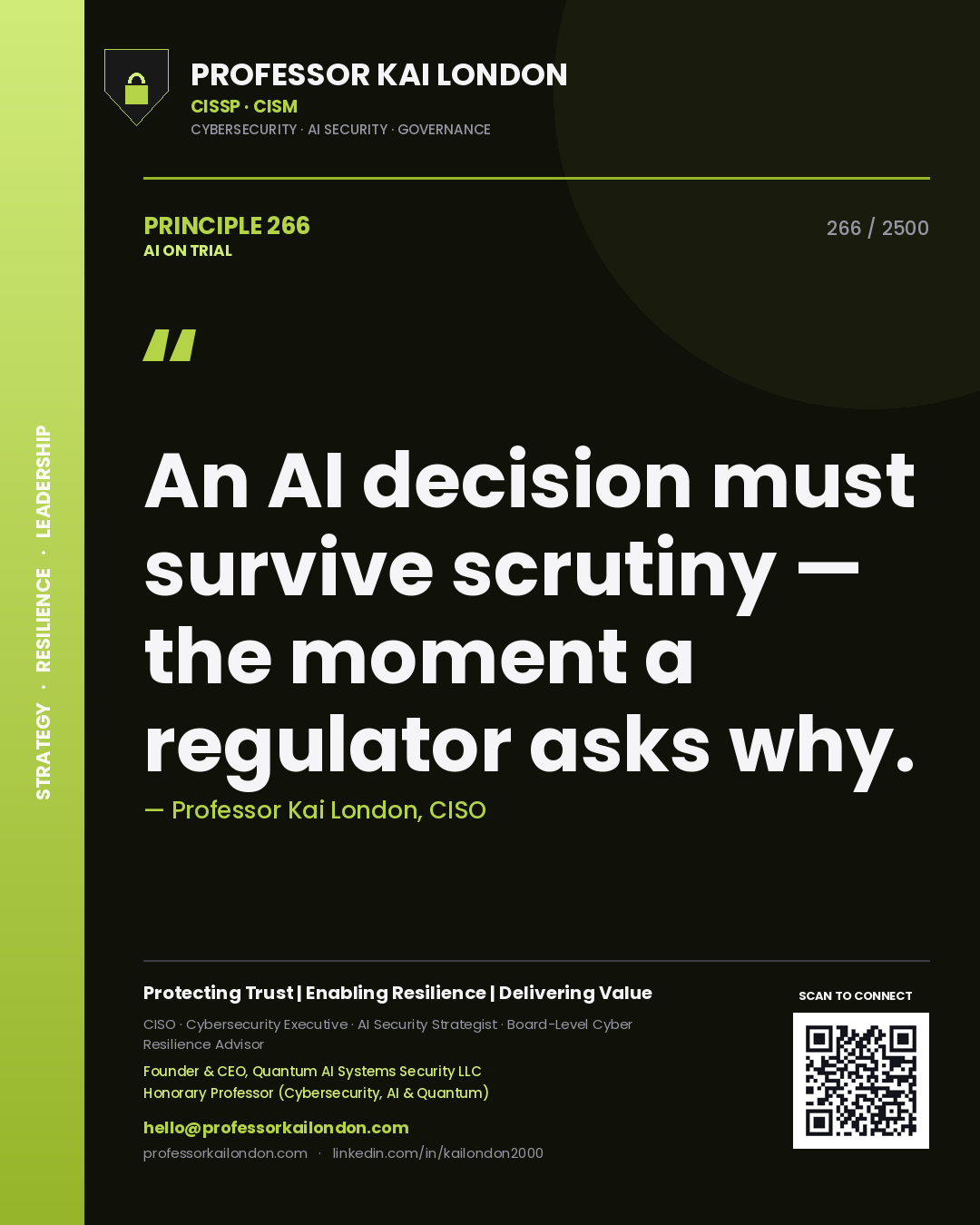
Professor Kai London principle 266: An AI decision must survive scrutiny — the moment a regulator asks why.
Principle 266
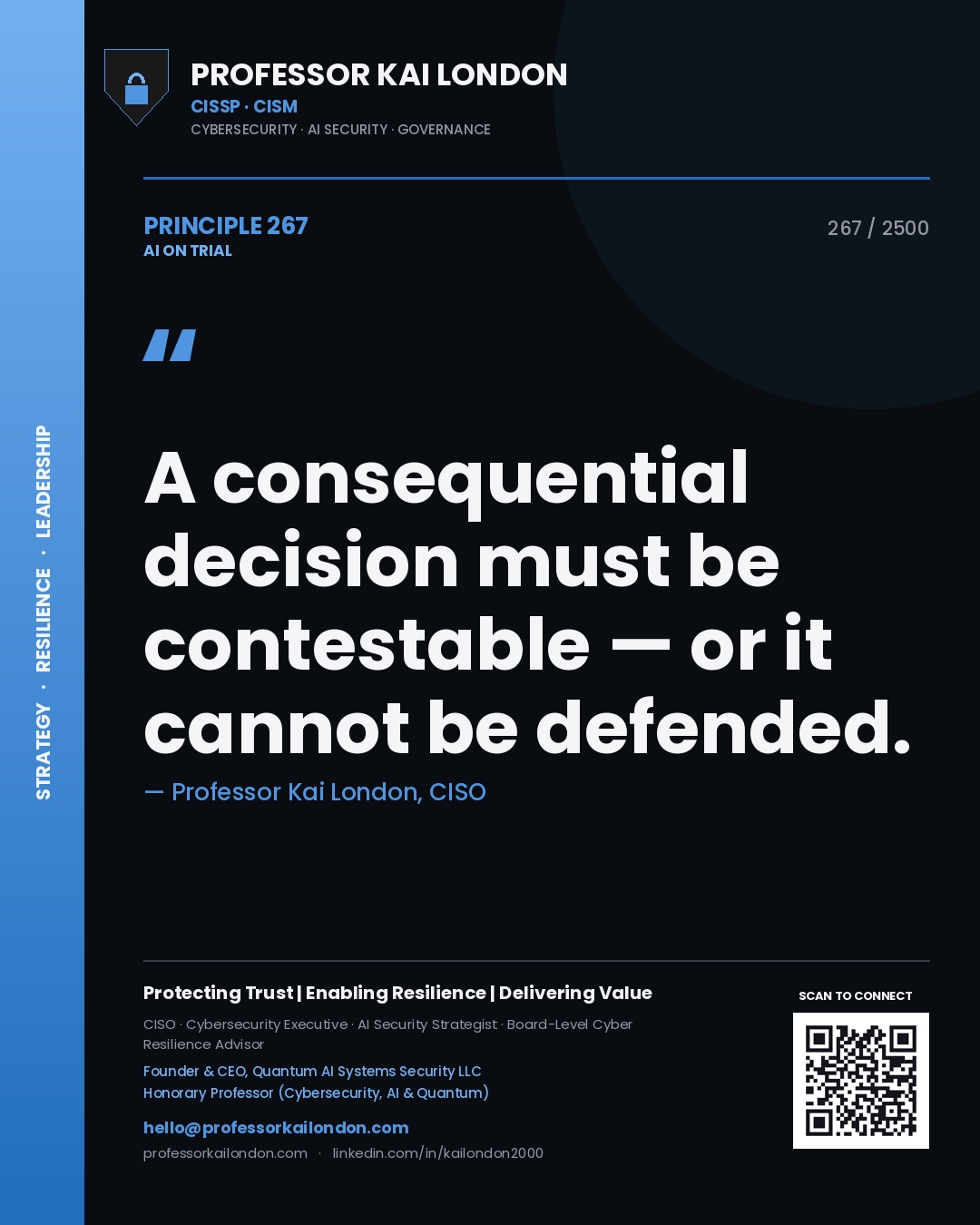
Professor Kai London principle 267: A consequential decision must be contestable — or it cannot be defended.
Principle 267
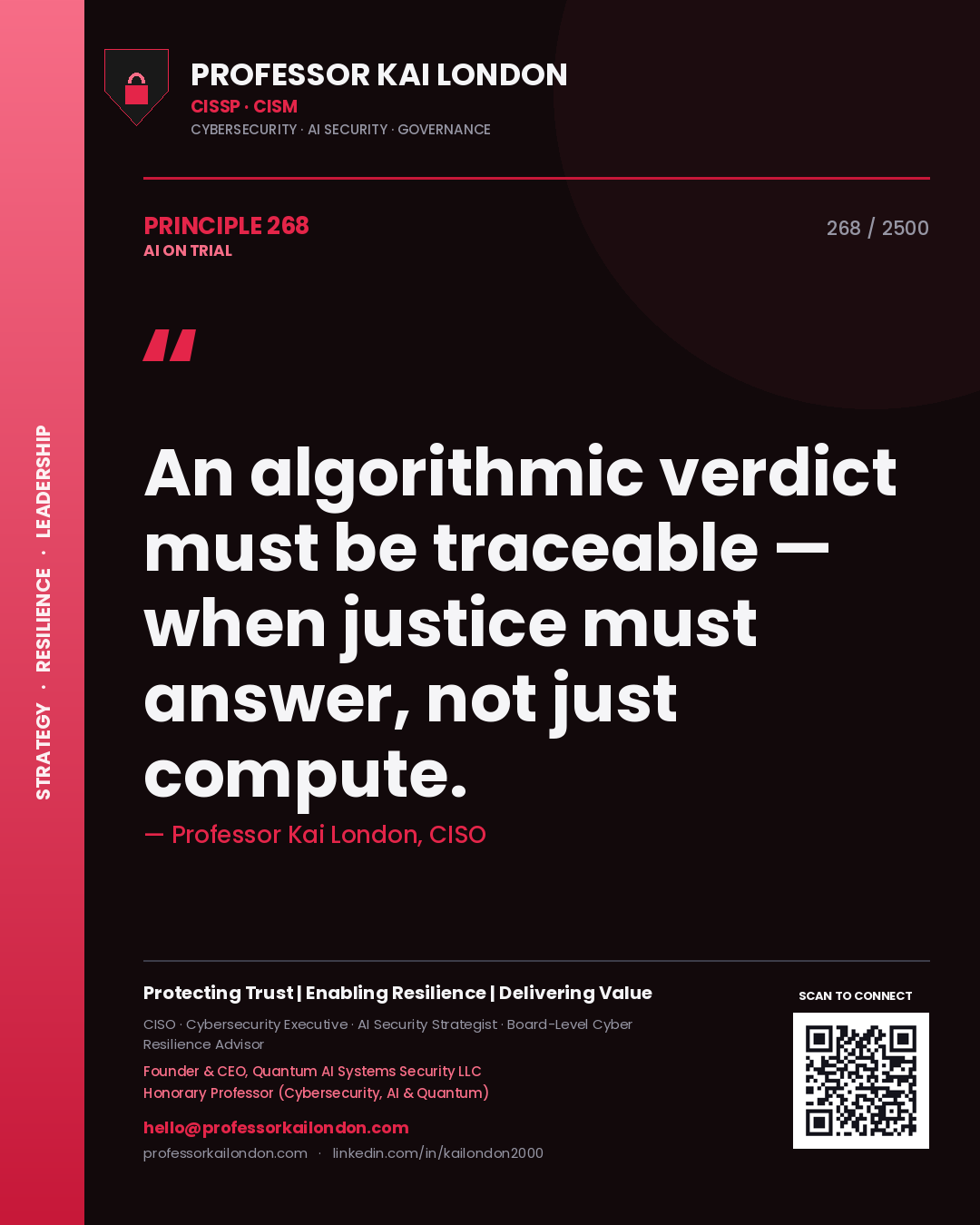
Professor Kai London principle 268: An algorithmic verdict must be traceable — when justice must answer, not just compute.
Principle 268
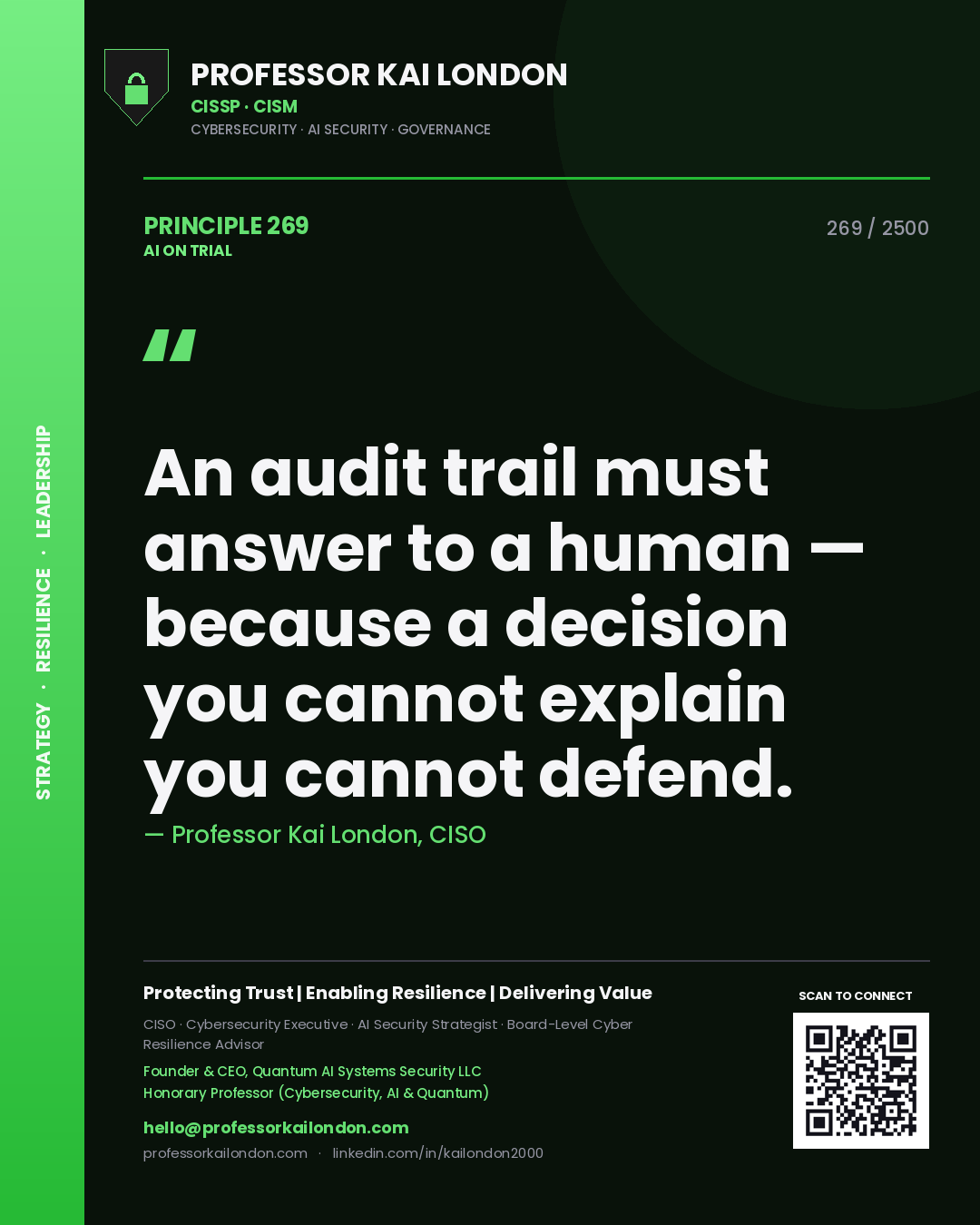
Professor Kai London principle 269: An audit trail must answer to a human — because a decision you cannot explain you cannot defend.
Principle 269
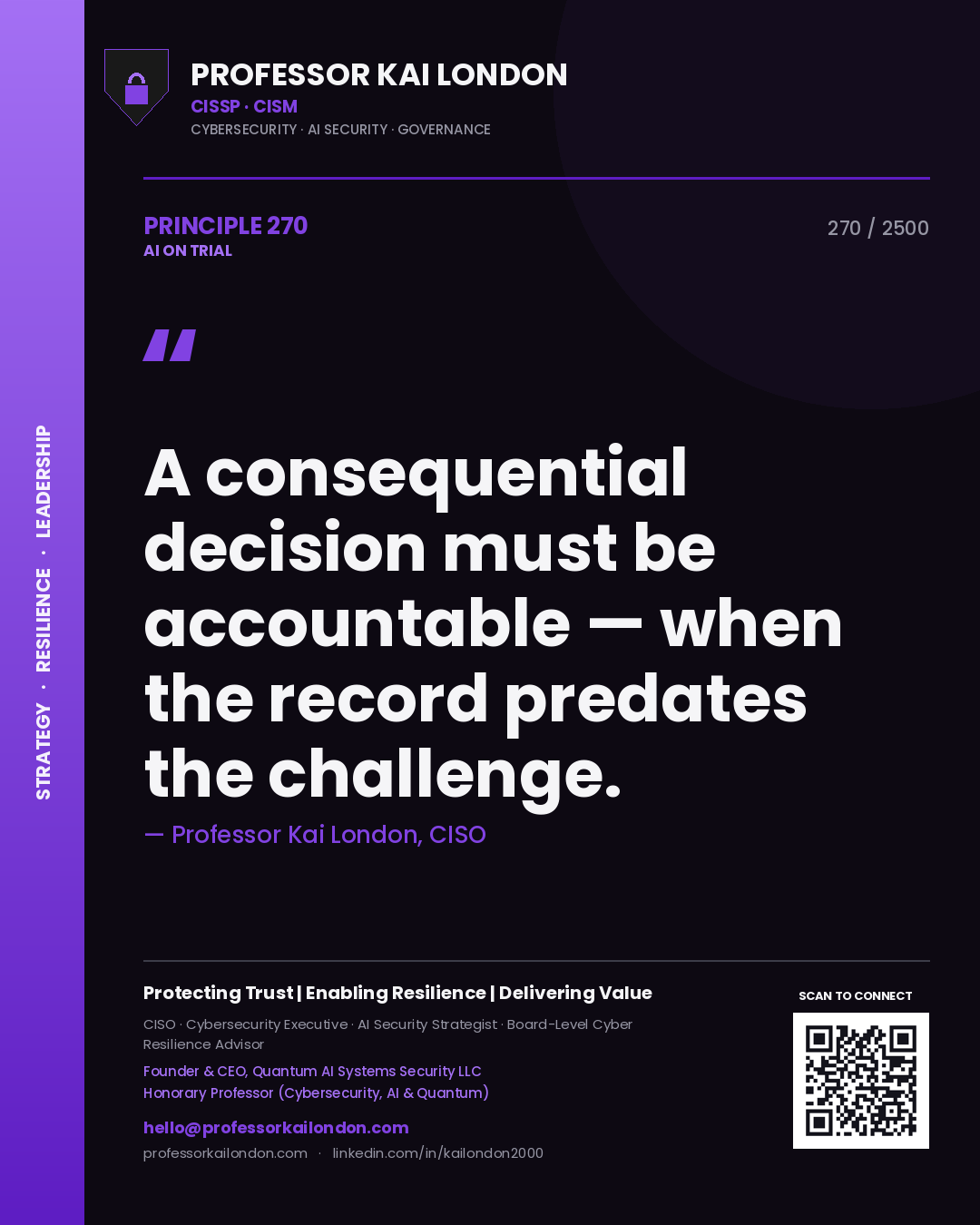
Professor Kai London principle 270: A consequential decision must be accountable — when the record predates the challenge.
Principle 270
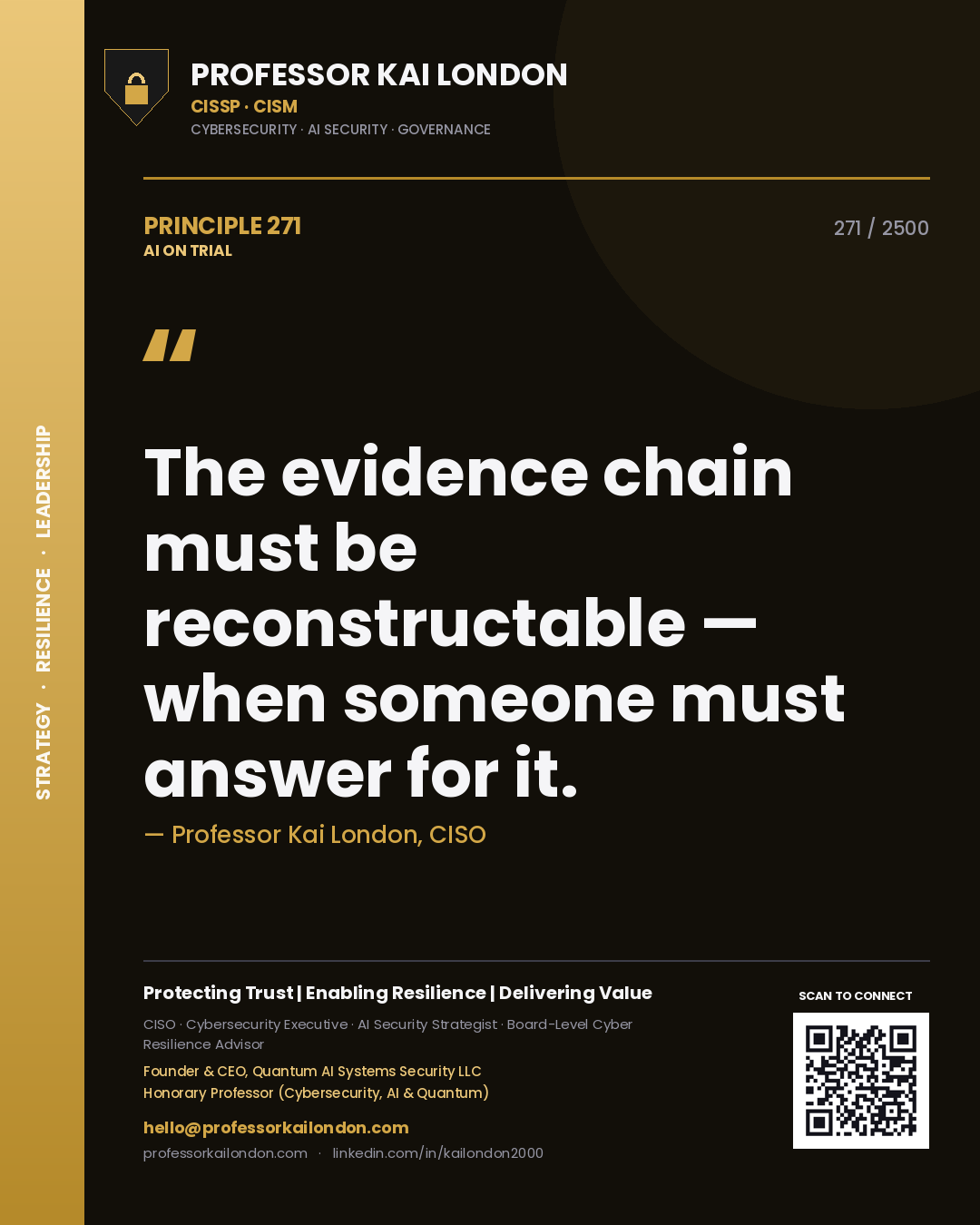
Professor Kai London principle 271: The evidence chain must be reconstructable — when someone must answer for it.
Principle 271
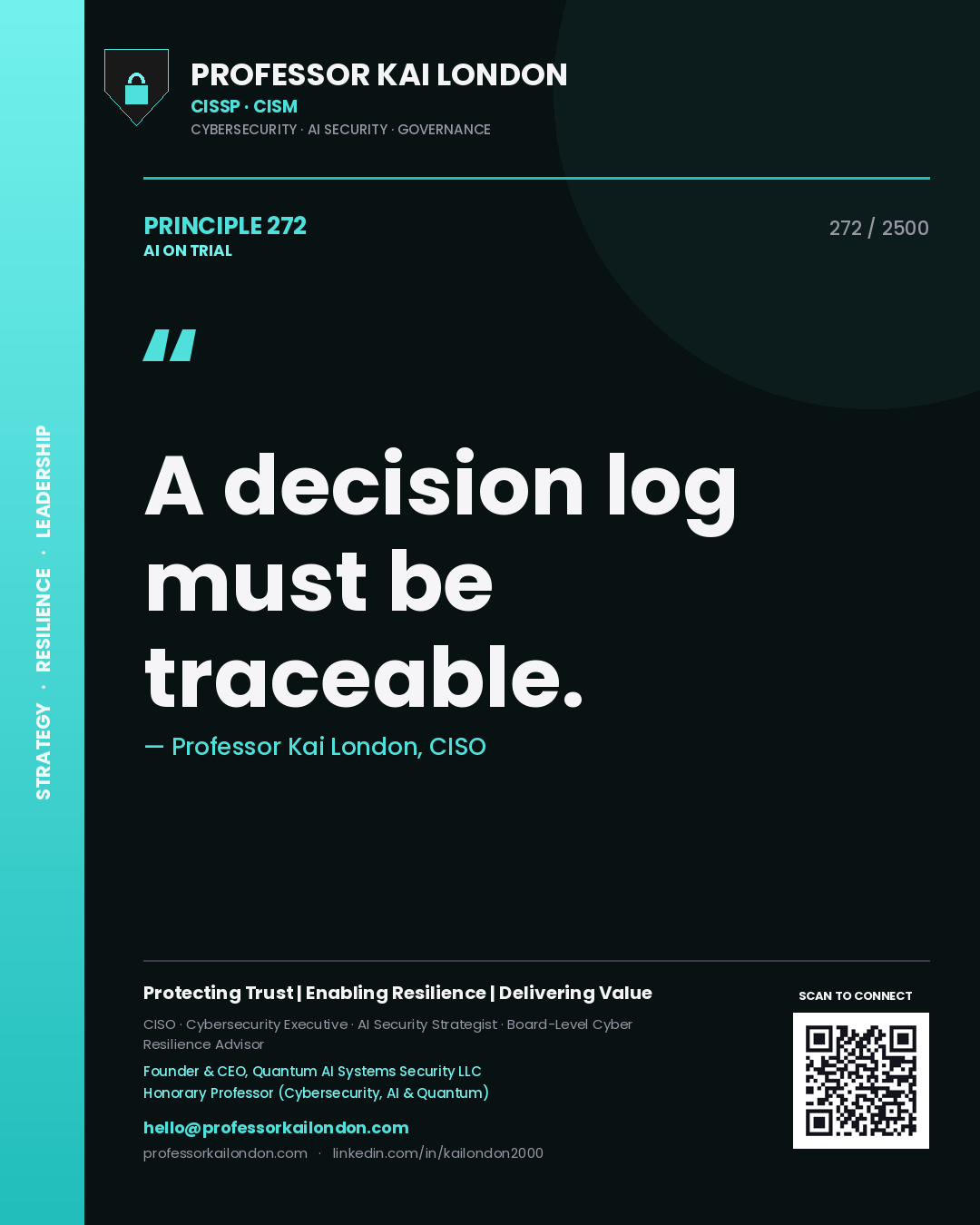
Professor Kai London principle 272: A decision log must be traceable.
Principle 272
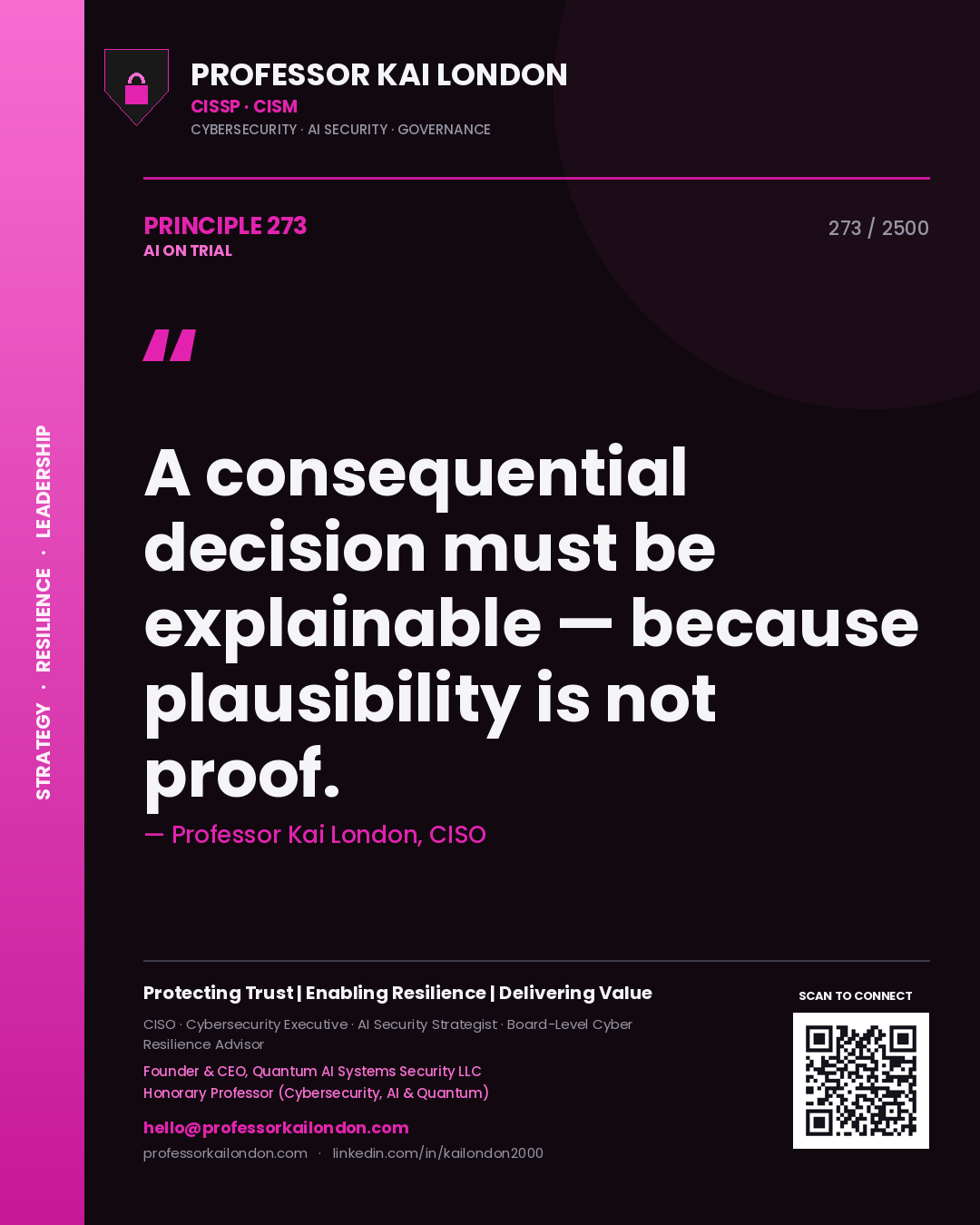
Professor Kai London principle 273: A consequential decision must be explainable — because plausibility is not proof.
Principle 273
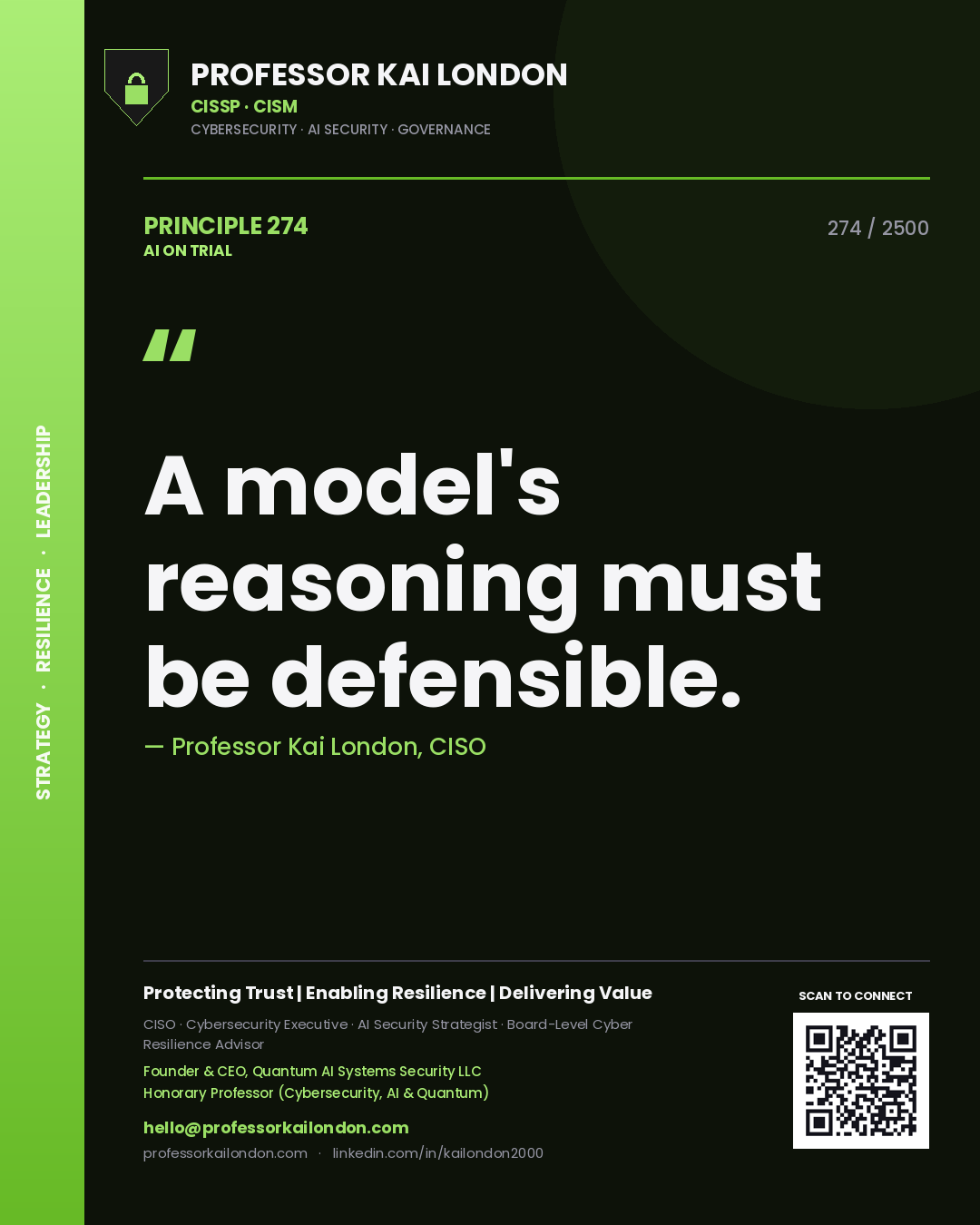
Professor Kai London principle 274: A model's reasoning must be defensible.
Principle 274
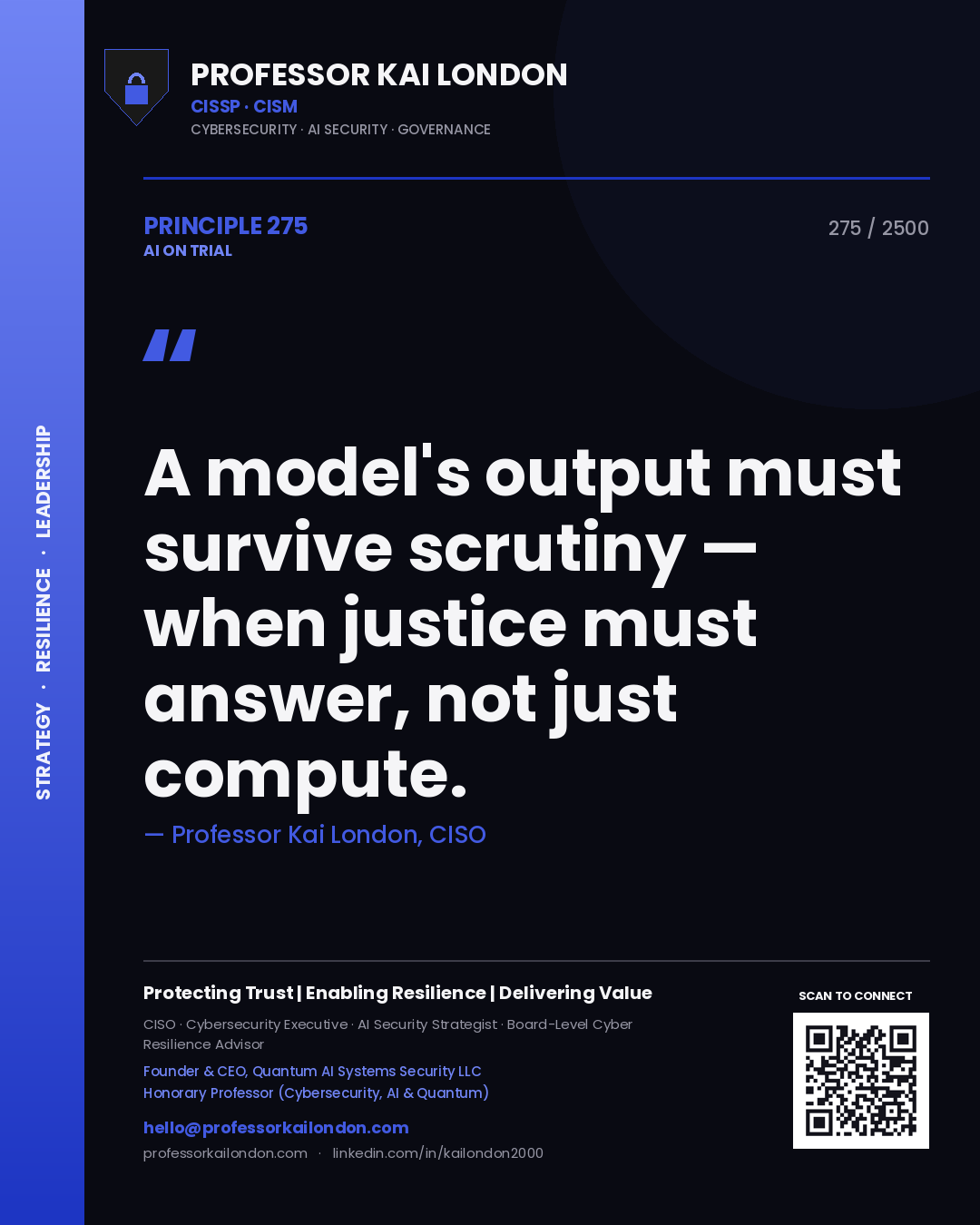
Professor Kai London principle 275: A model's output must survive scrutiny — when justice must answer, not just compute.
Principle 275
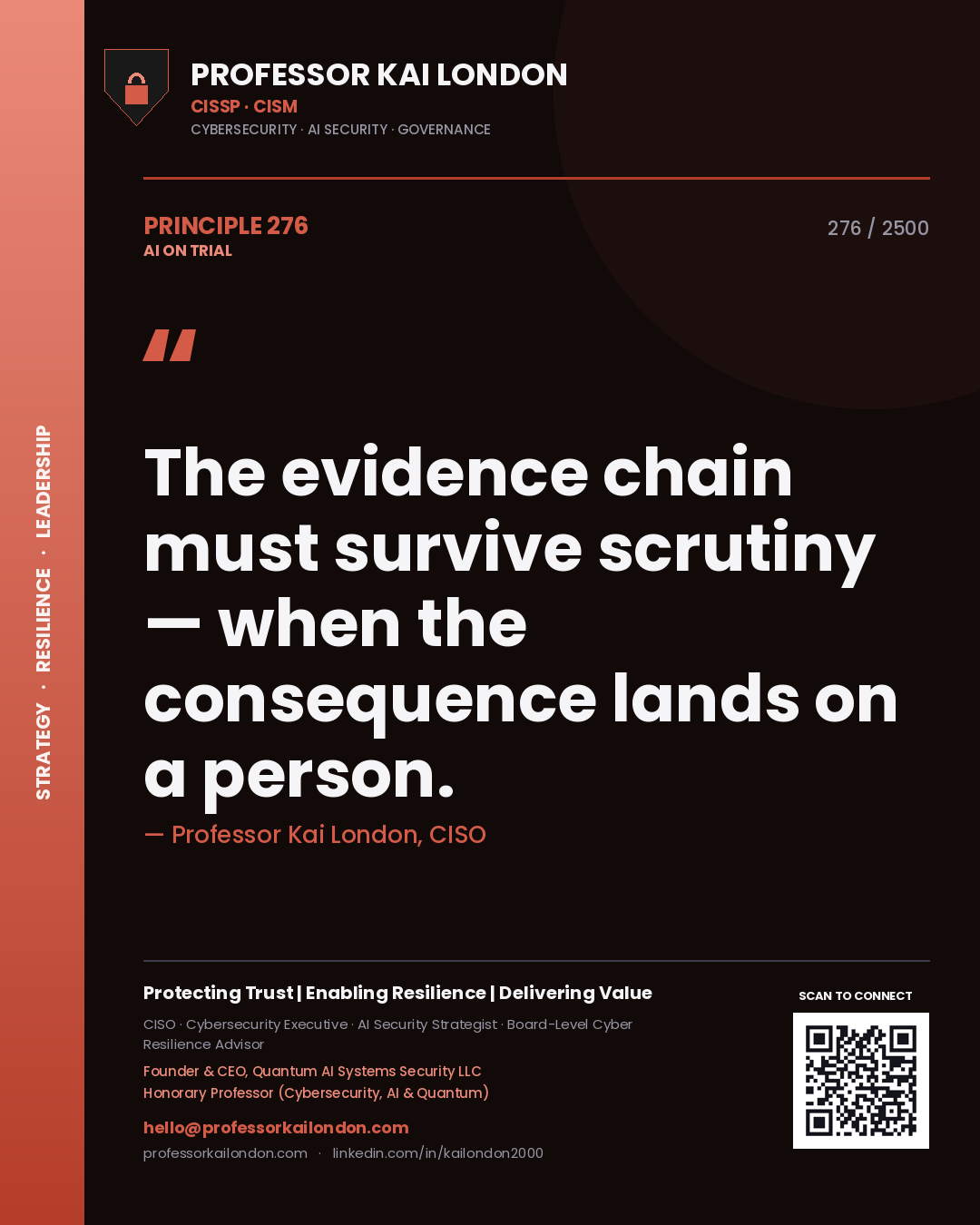
Professor Kai London principle 276: The evidence chain must survive scrutiny — when the consequence lands on a person.
Principle 276
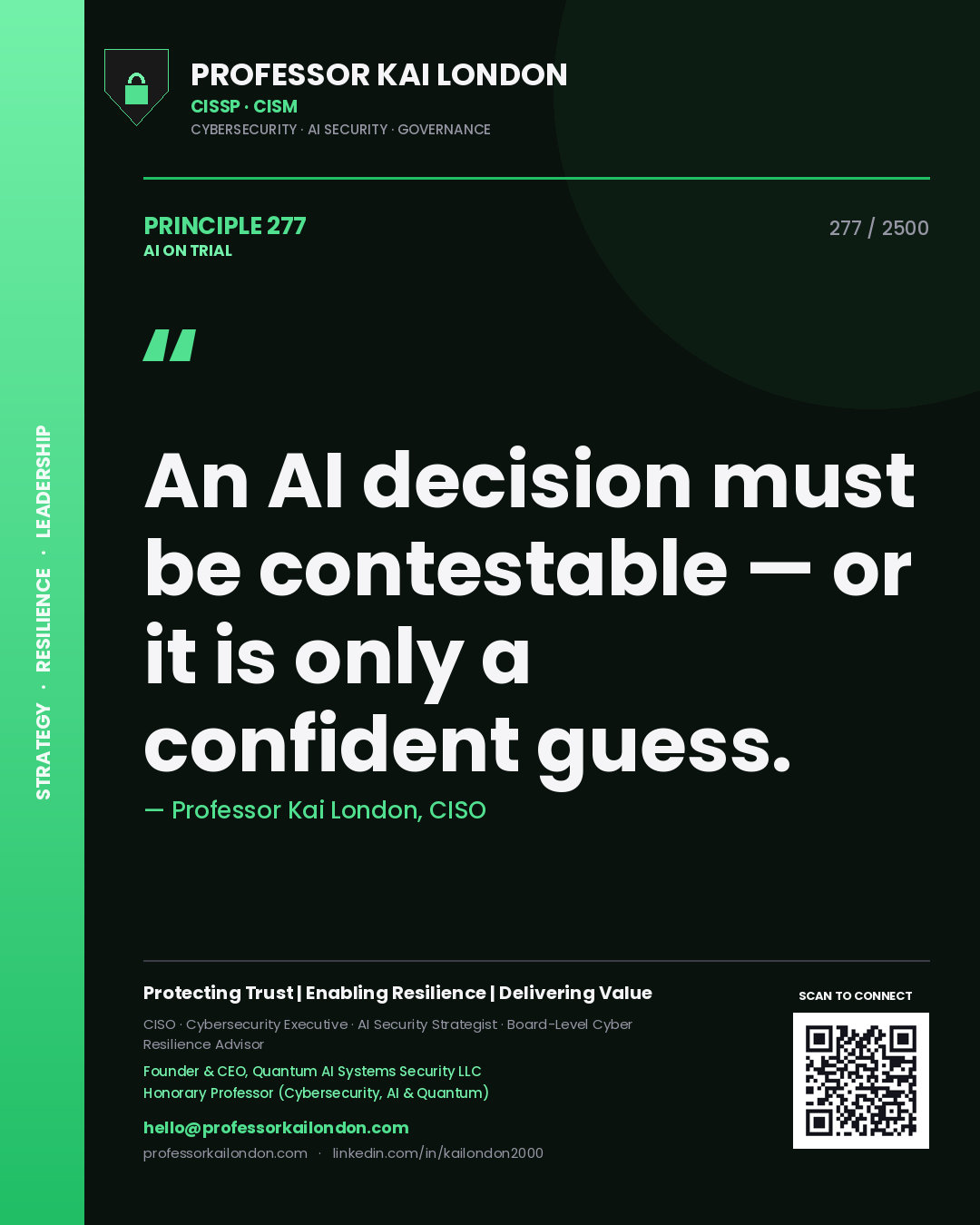
Professor Kai London principle 277: An AI decision must be contestable — or it is only a confident guess.
Principle 277
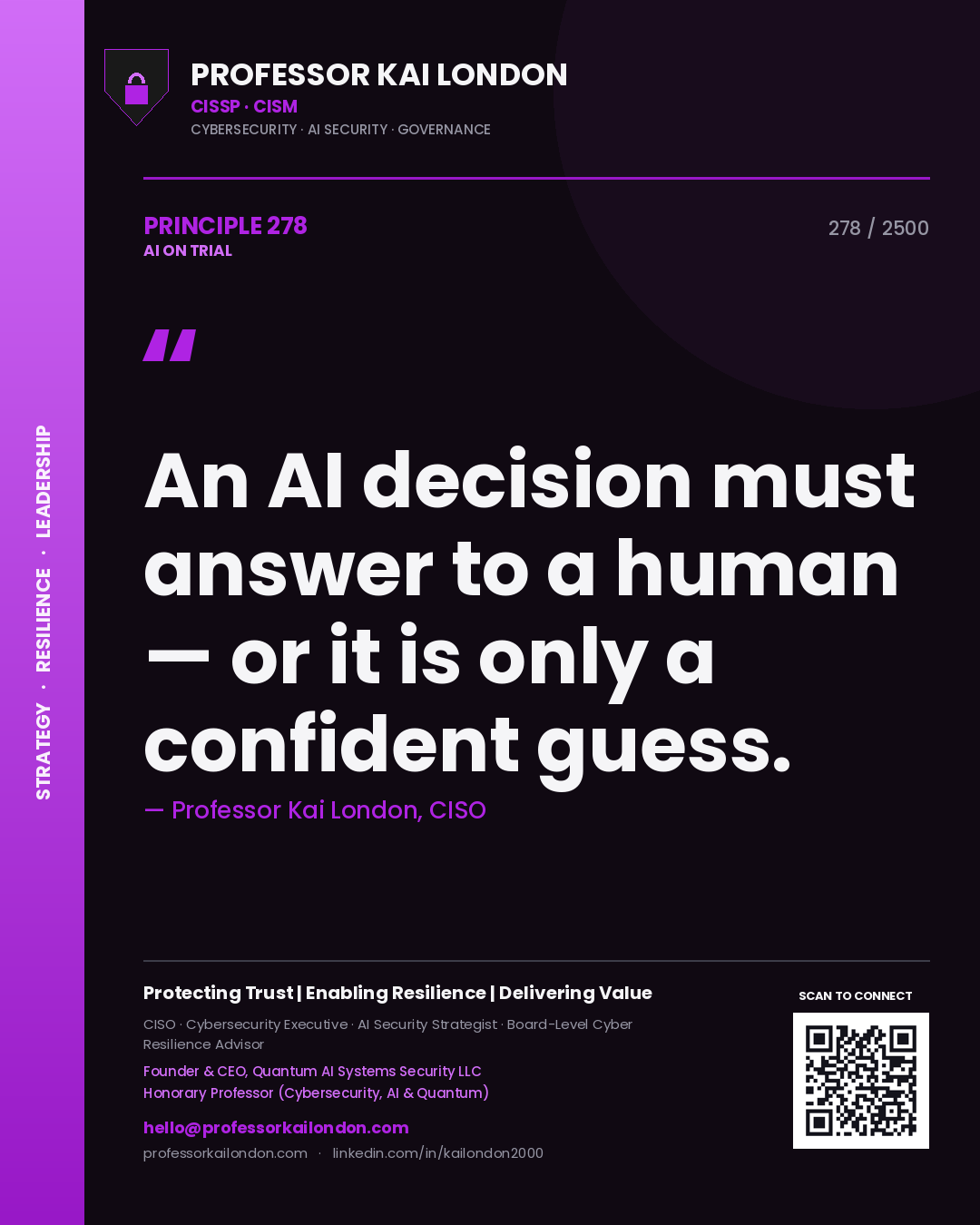
Professor Kai London principle 278: An AI decision must answer to a human — or it is only a confident guess.
Principle 278
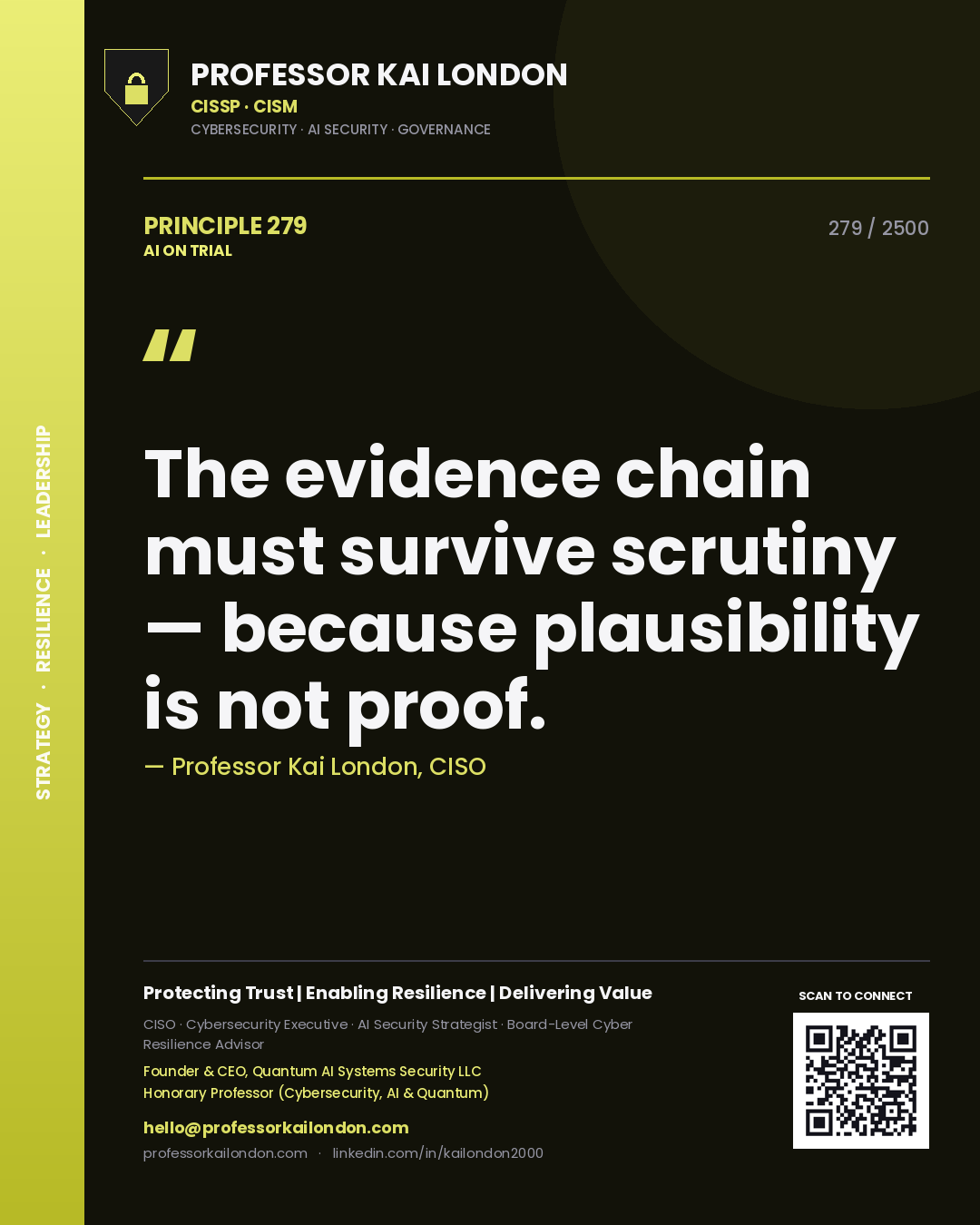
Professor Kai London principle 279: The evidence chain must survive scrutiny — because plausibility is not proof.
Principle 279
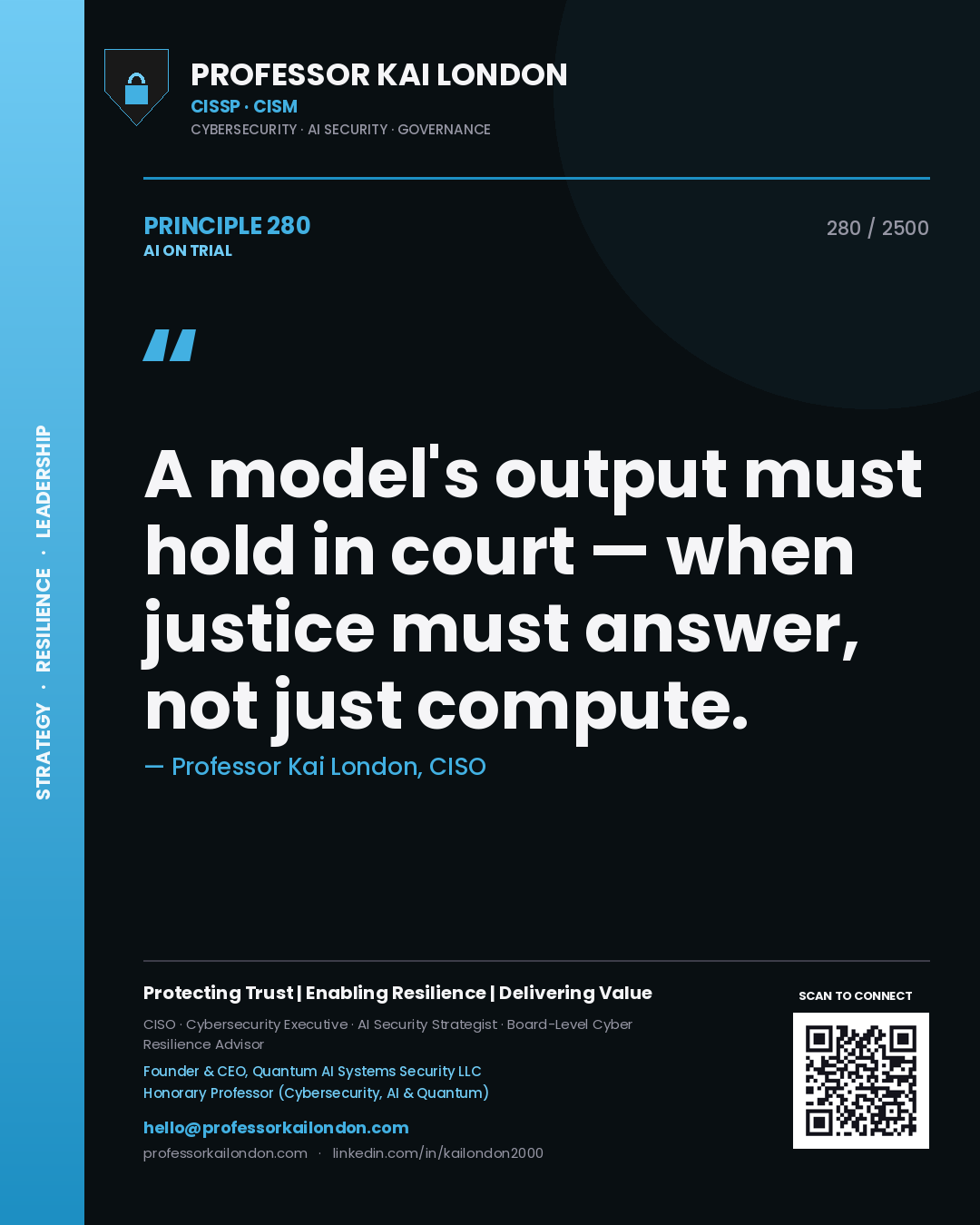
Professor Kai London principle 280: A model's output must hold in court — when justice must answer, not just compute.
Principle 280
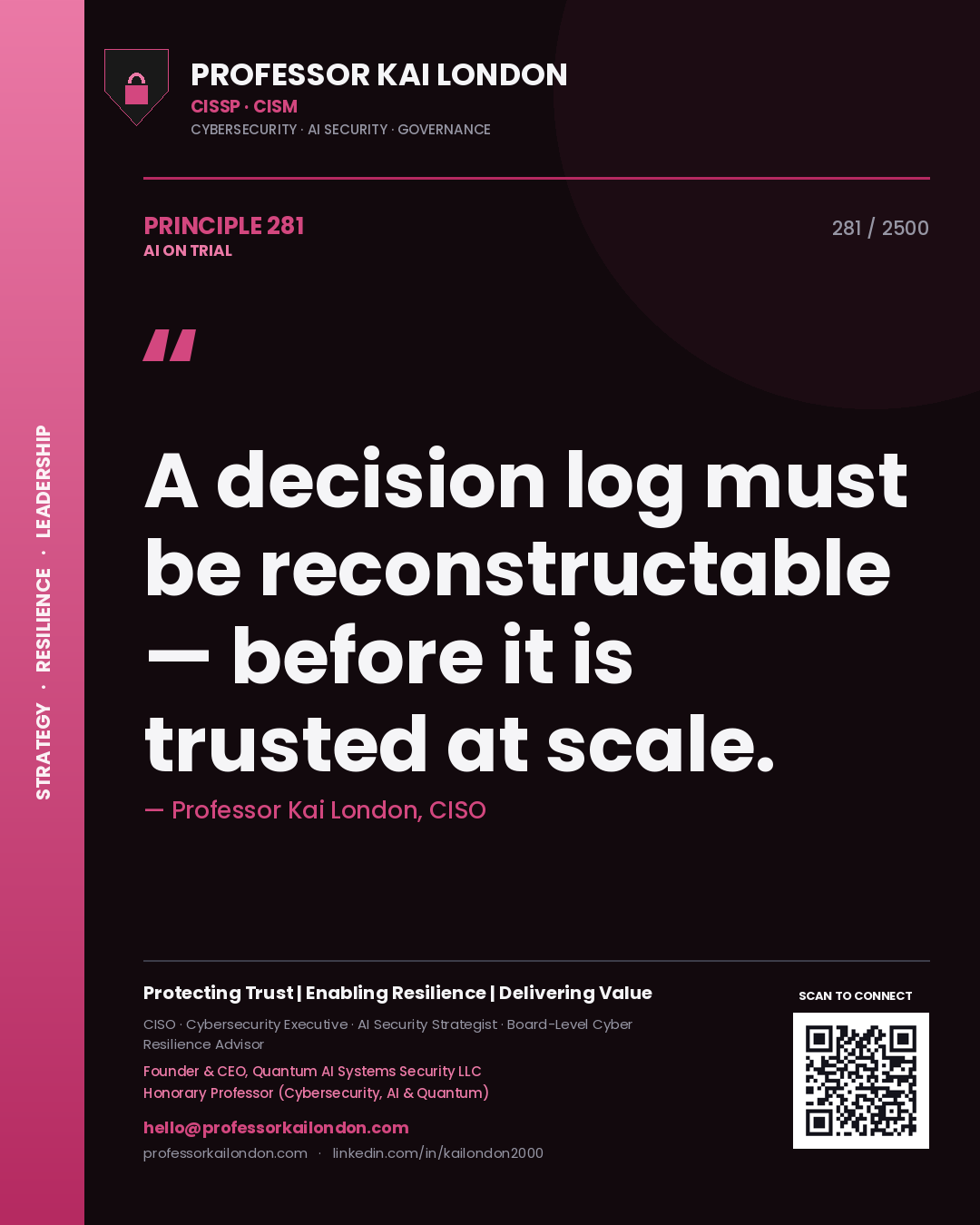
Professor Kai London principle 281: A decision log must be reconstructable — before it is trusted at scale.
Principle 281
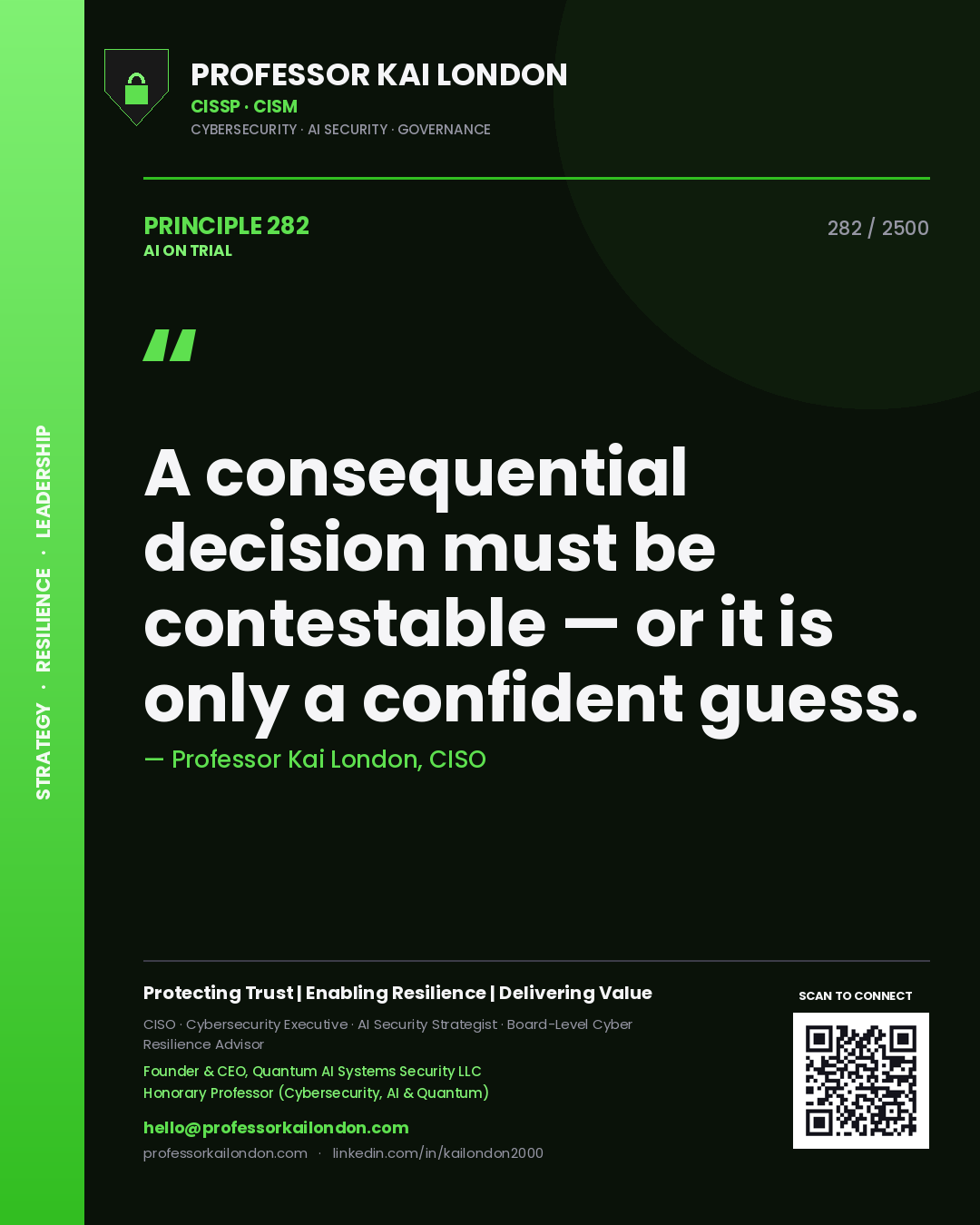
Professor Kai London principle 282: A consequential decision must be contestable — or it is only a confident guess.
Principle 282
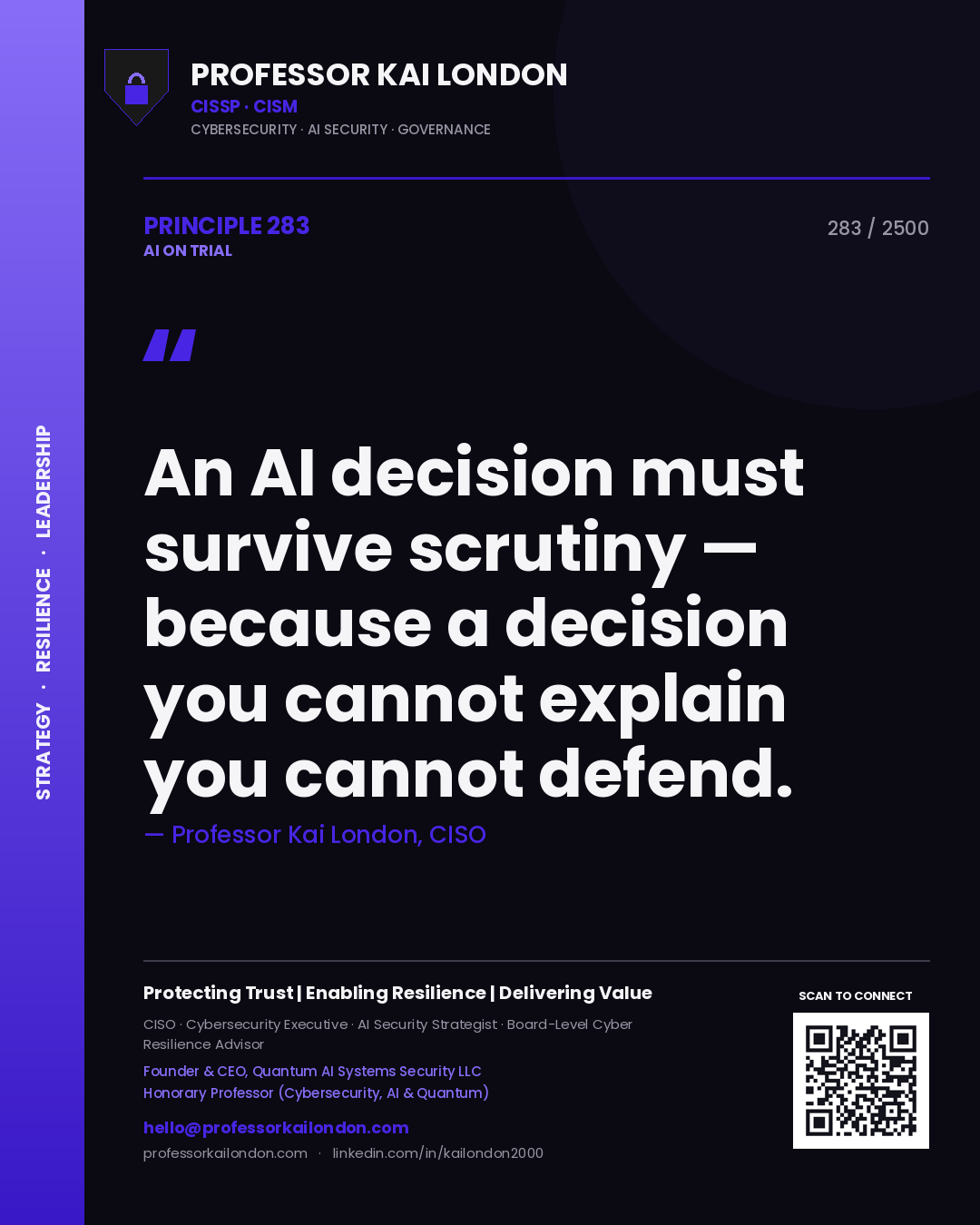
Professor Kai London principle 283: An AI decision must survive scrutiny — because a decision you cannot explain you cannot defend.
Principle 283
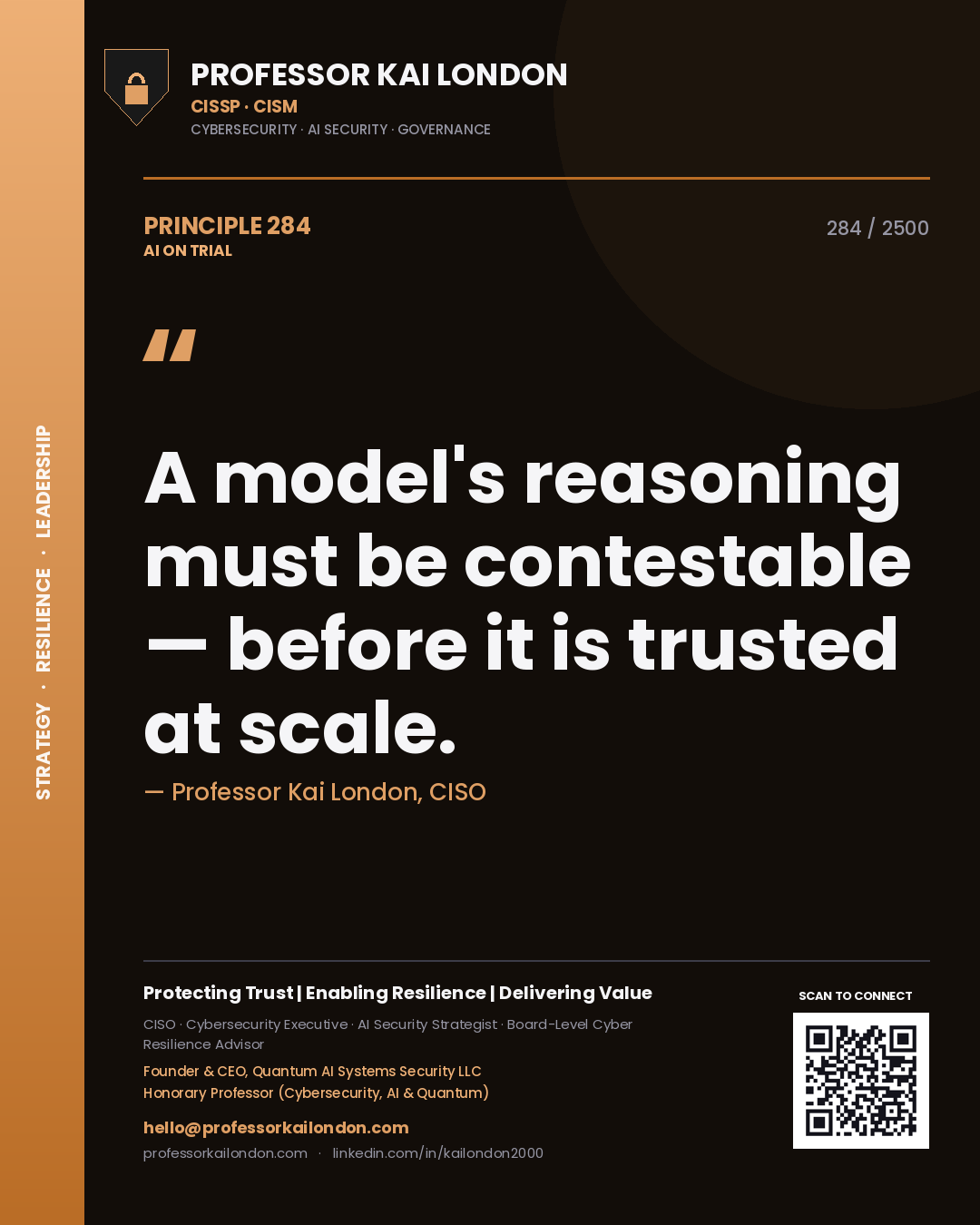
Professor Kai London principle 284: A model's reasoning must be contestable — before it is trusted at scale.
Principle 284
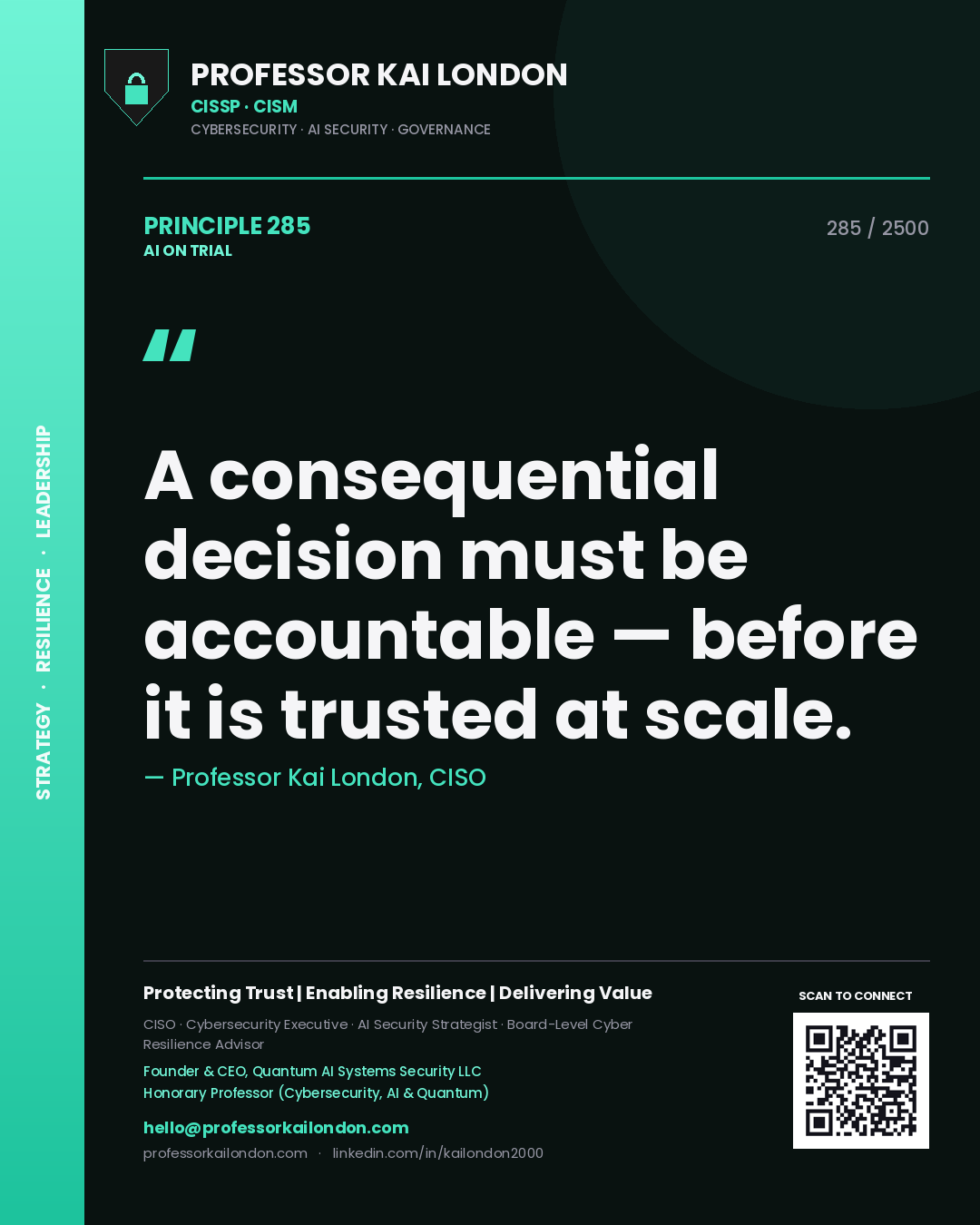
Professor Kai London principle 285: A consequential decision must be accountable — before it is trusted at scale.
Principle 285
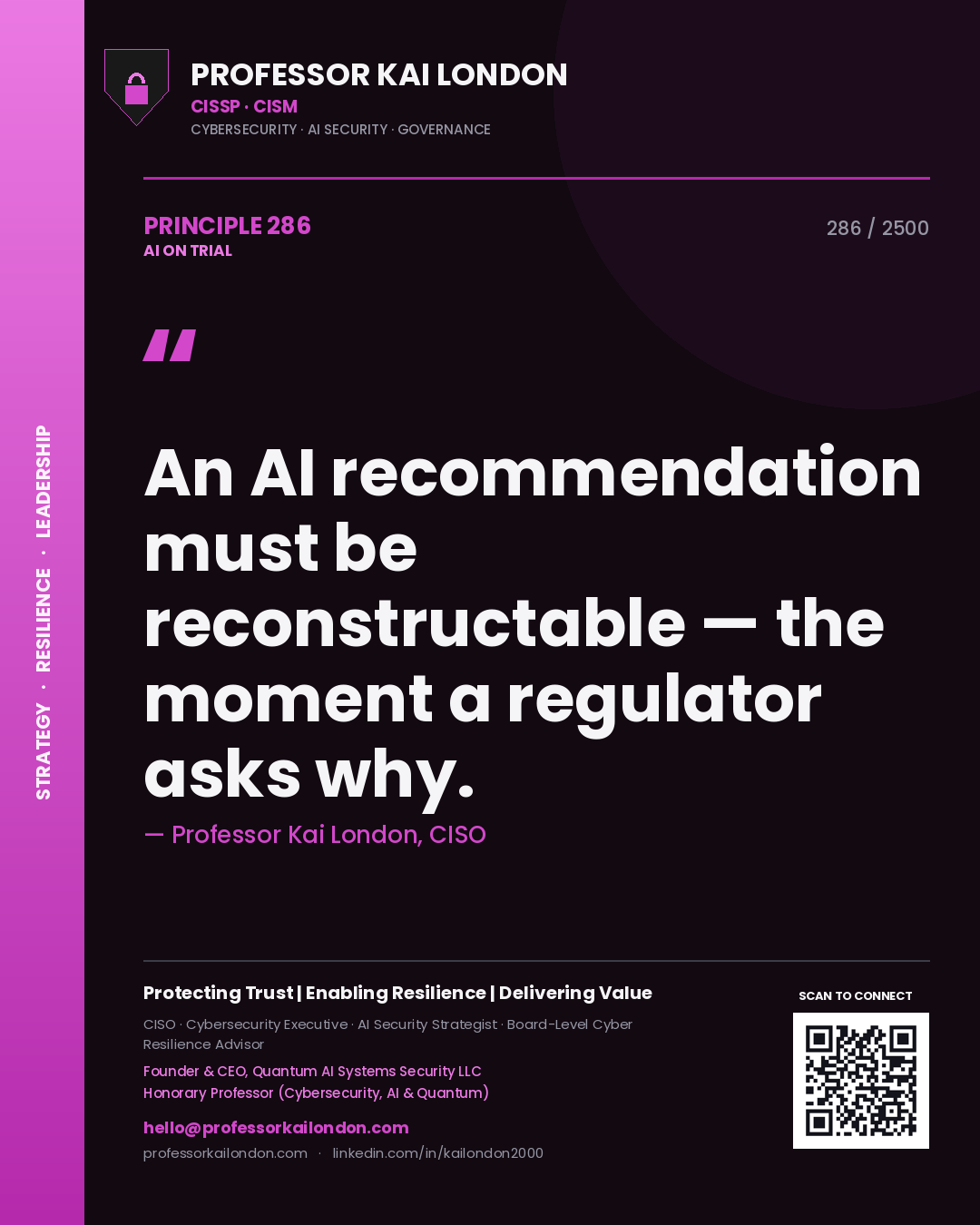
Professor Kai London principle 286: An AI recommendation must be reconstructable — the moment a regulator asks why.
Principle 286
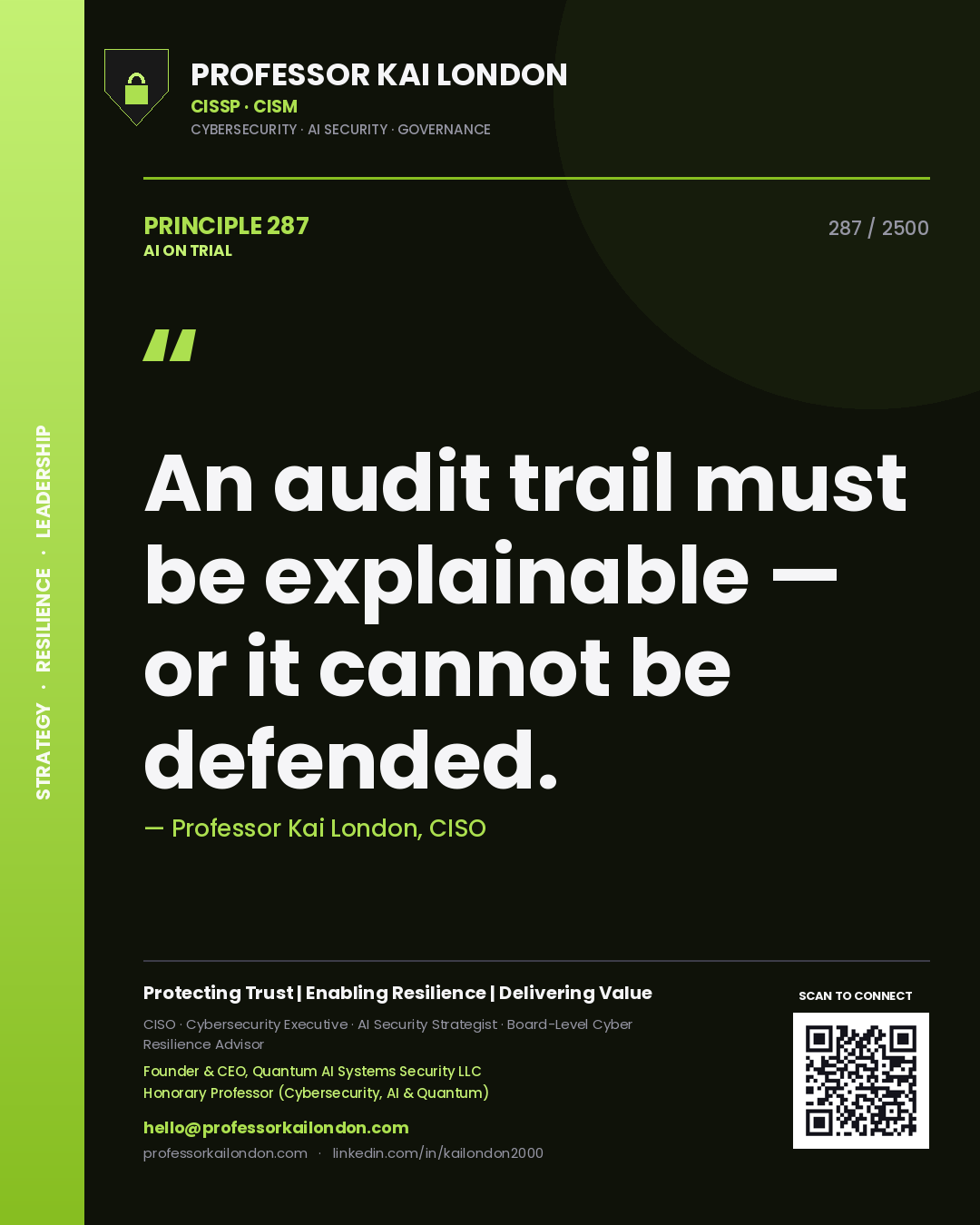
Professor Kai London principle 287: An audit trail must be explainable — or it cannot be defended.
Principle 287
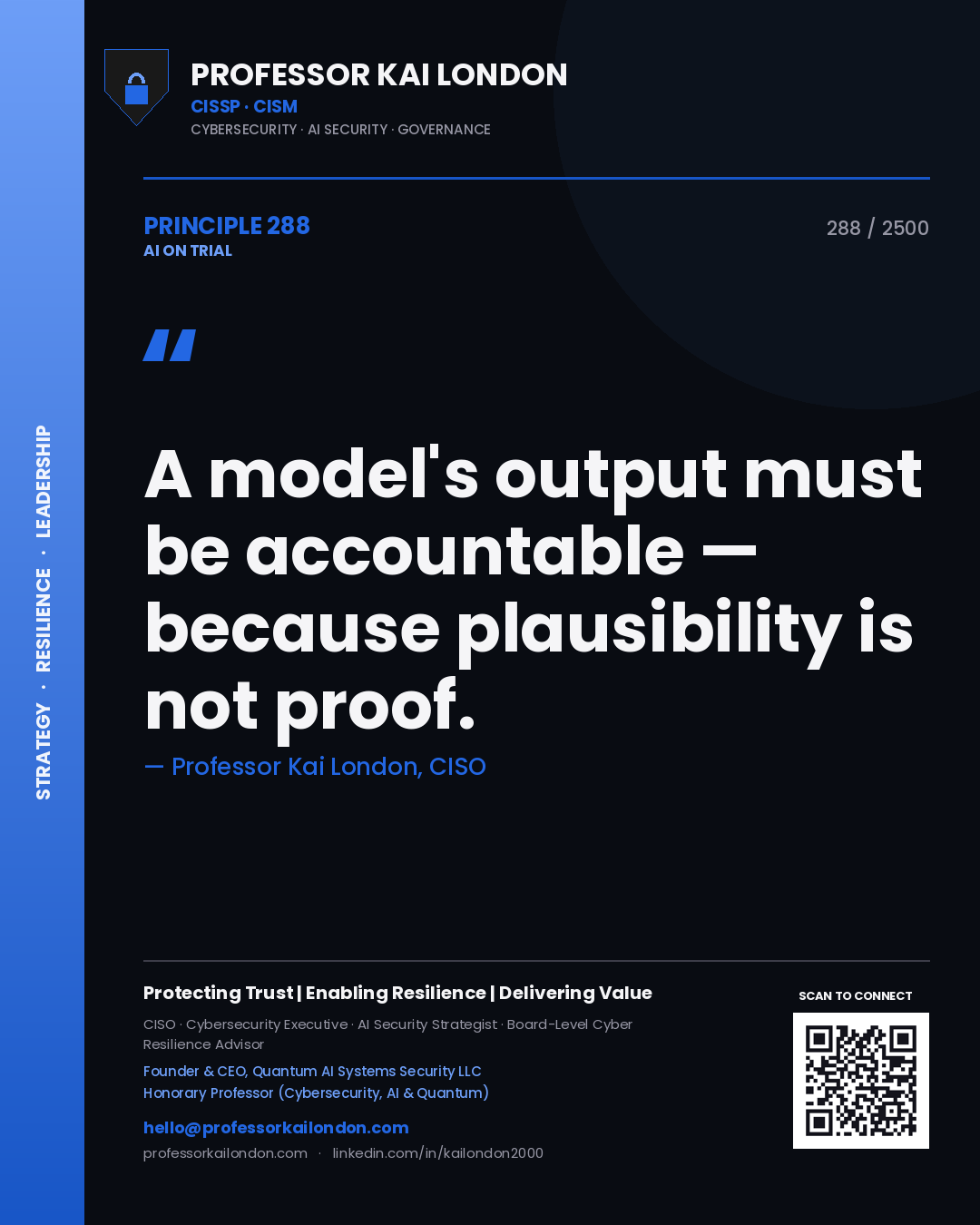
Professor Kai London principle 288: A model's output must be accountable — because plausibility is not proof.
Principle 288
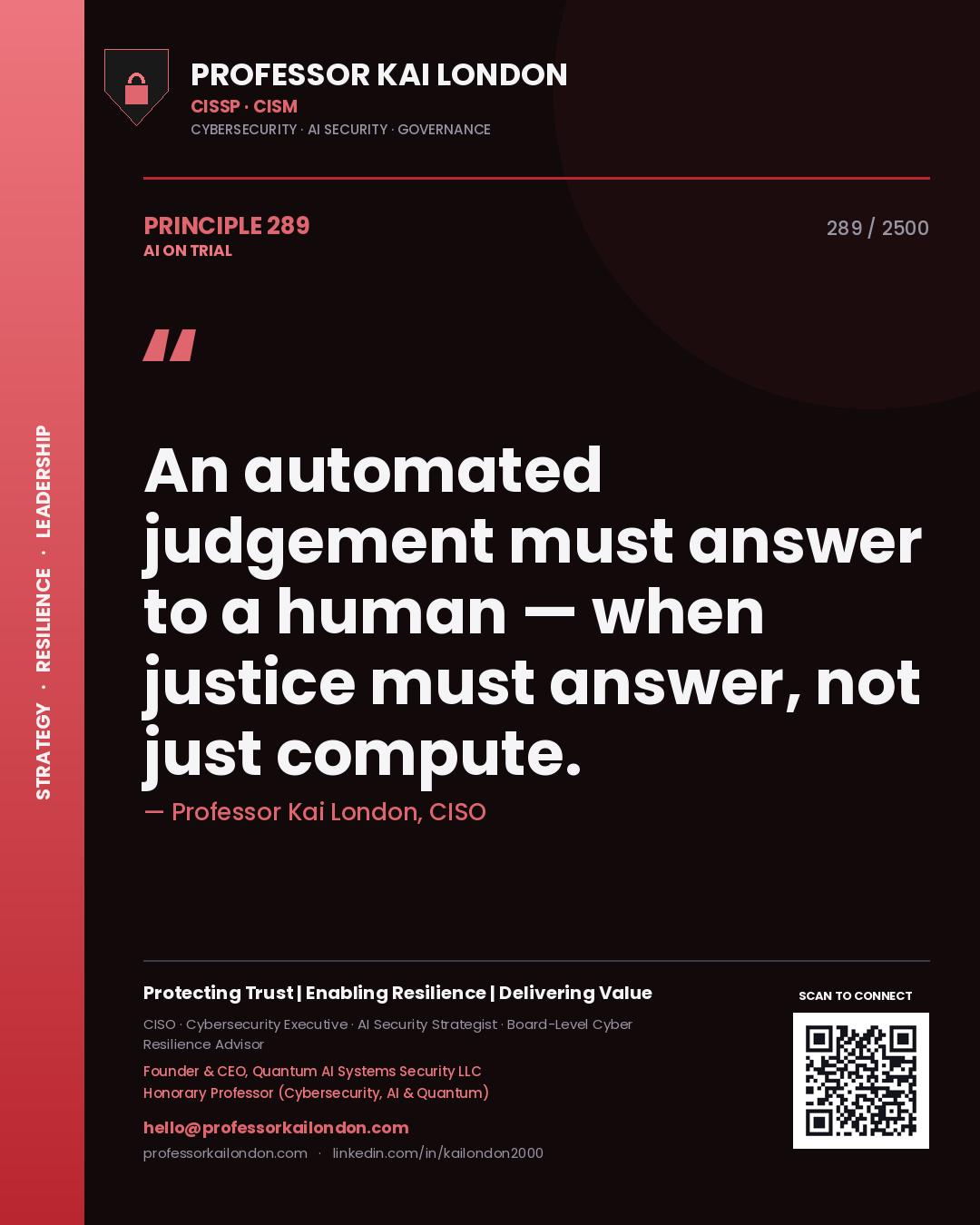
Professor Kai London principle 289: An automated judgement must answer to a human — when justice must answer, not just compute.
Principle 289
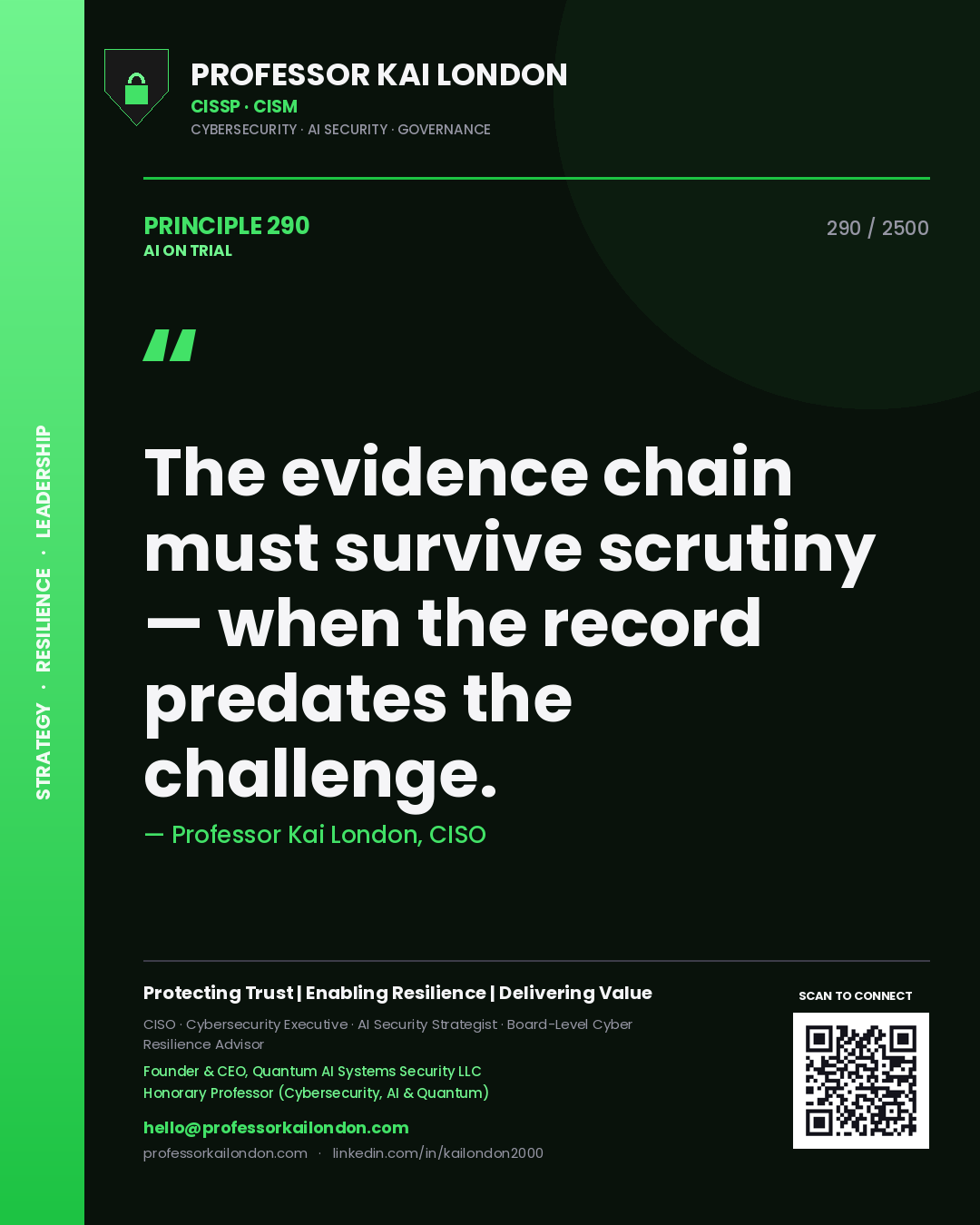
Professor Kai London principle 290: The evidence chain must survive scrutiny — when the record predates the challenge.
Principle 290
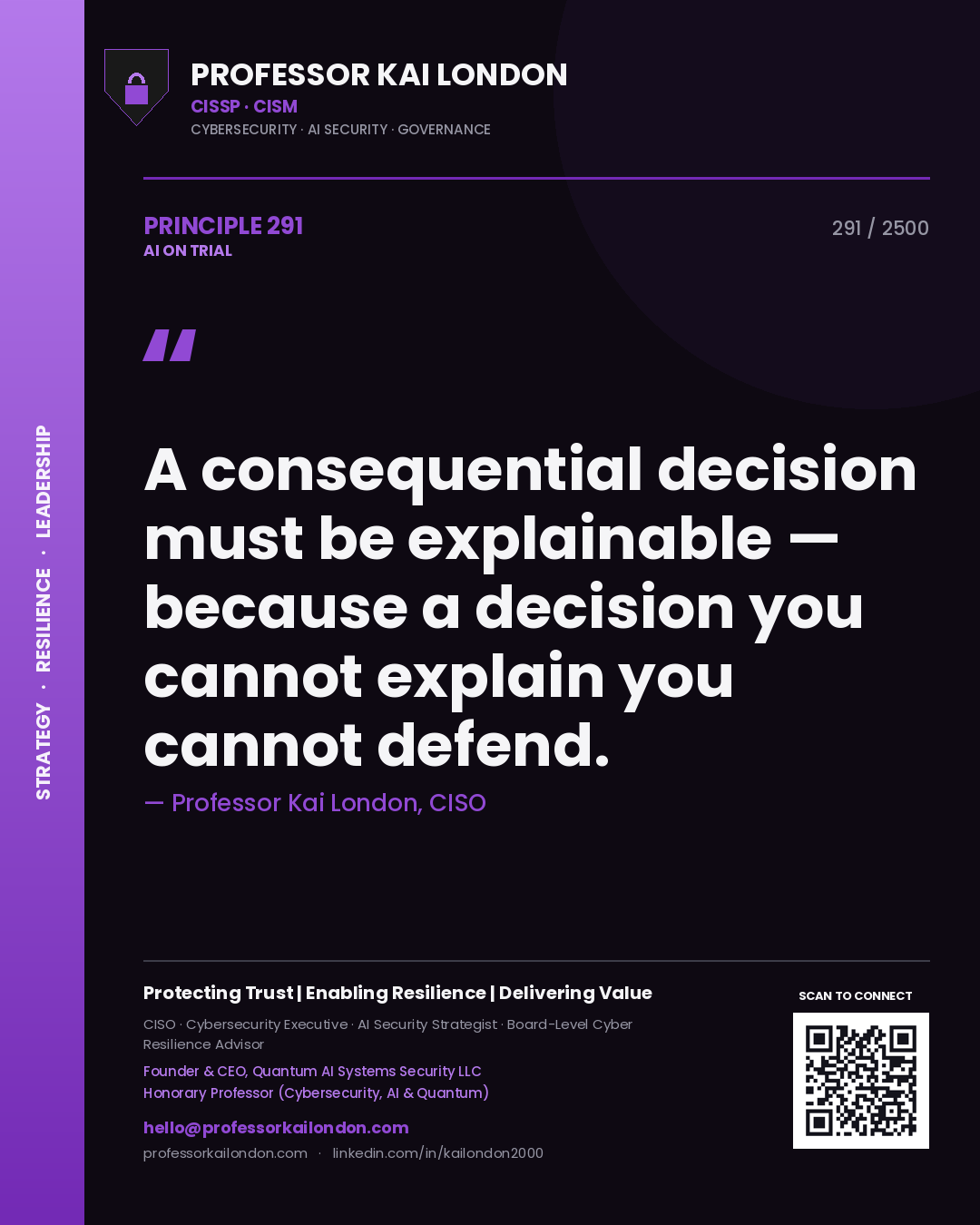
Professor Kai London principle 291: A consequential decision must be explainable — because a decision you cannot explain you cannot defend.
Principle 291
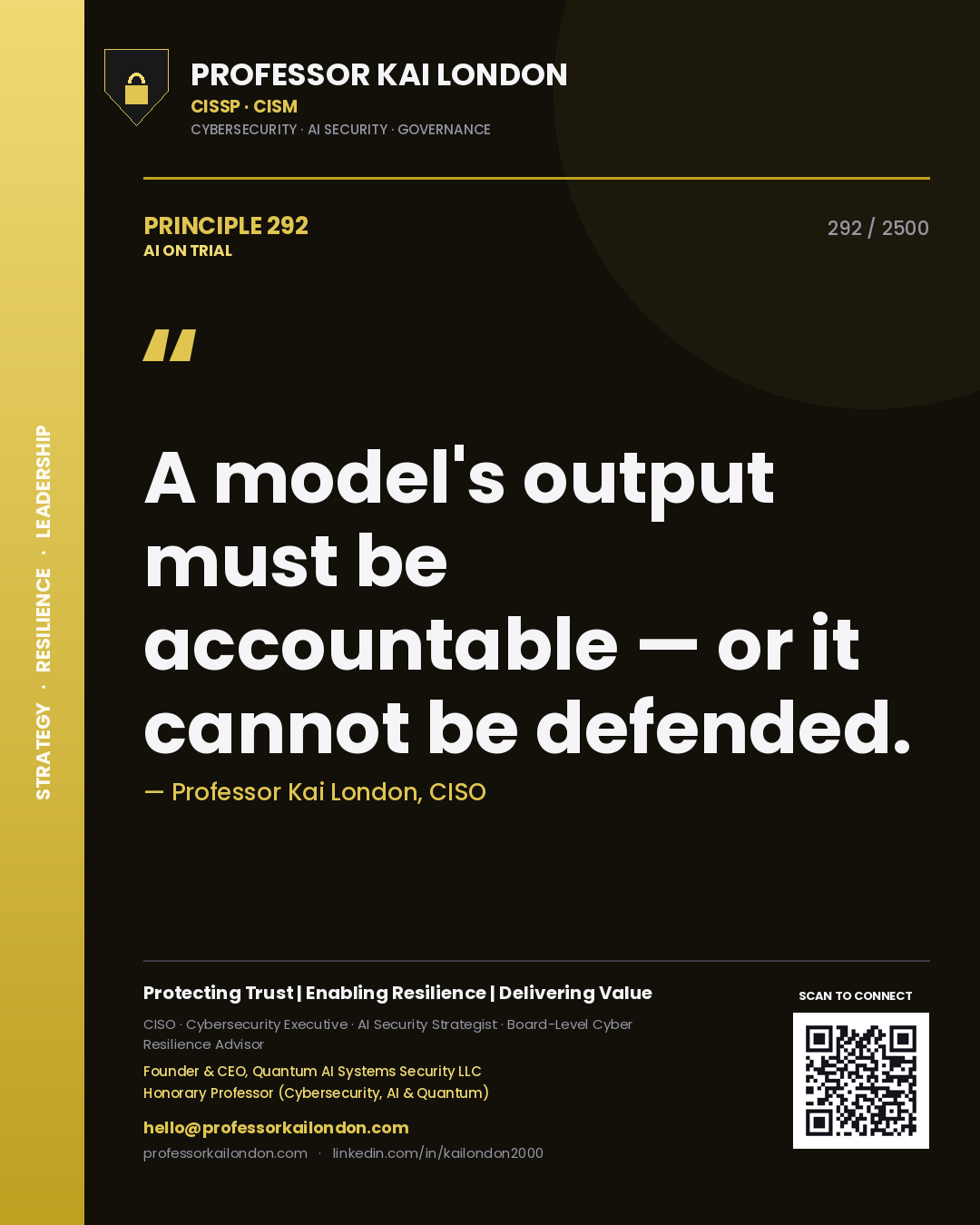
Professor Kai London principle 292: A model's output must be accountable — or it cannot be defended.
Principle 292
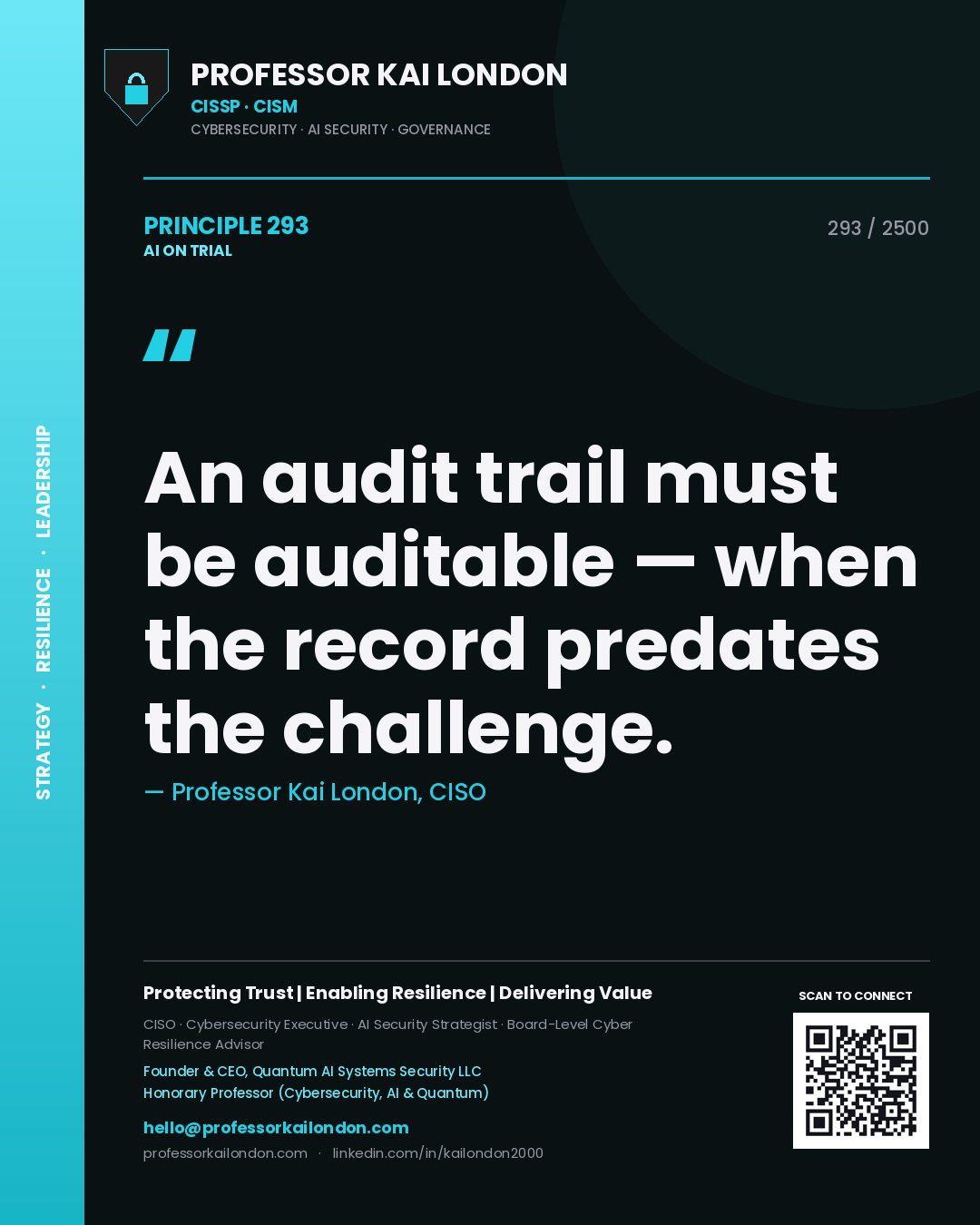
Professor Kai London principle 293: An audit trail must be auditable — when the record predates the challenge.
Principle 293
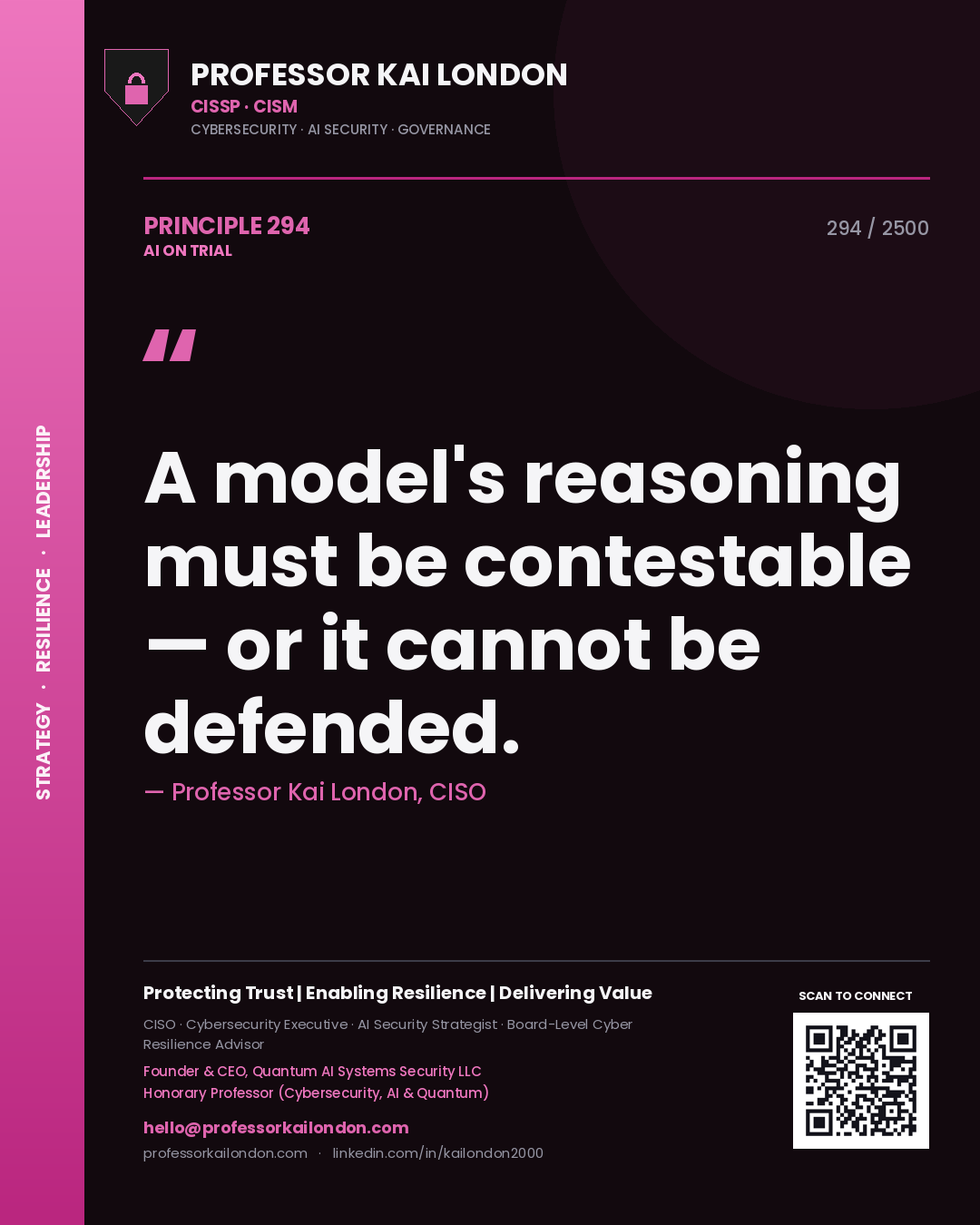
Professor Kai London principle 294: A model's reasoning must be contestable — or it cannot be defended.
Principle 294
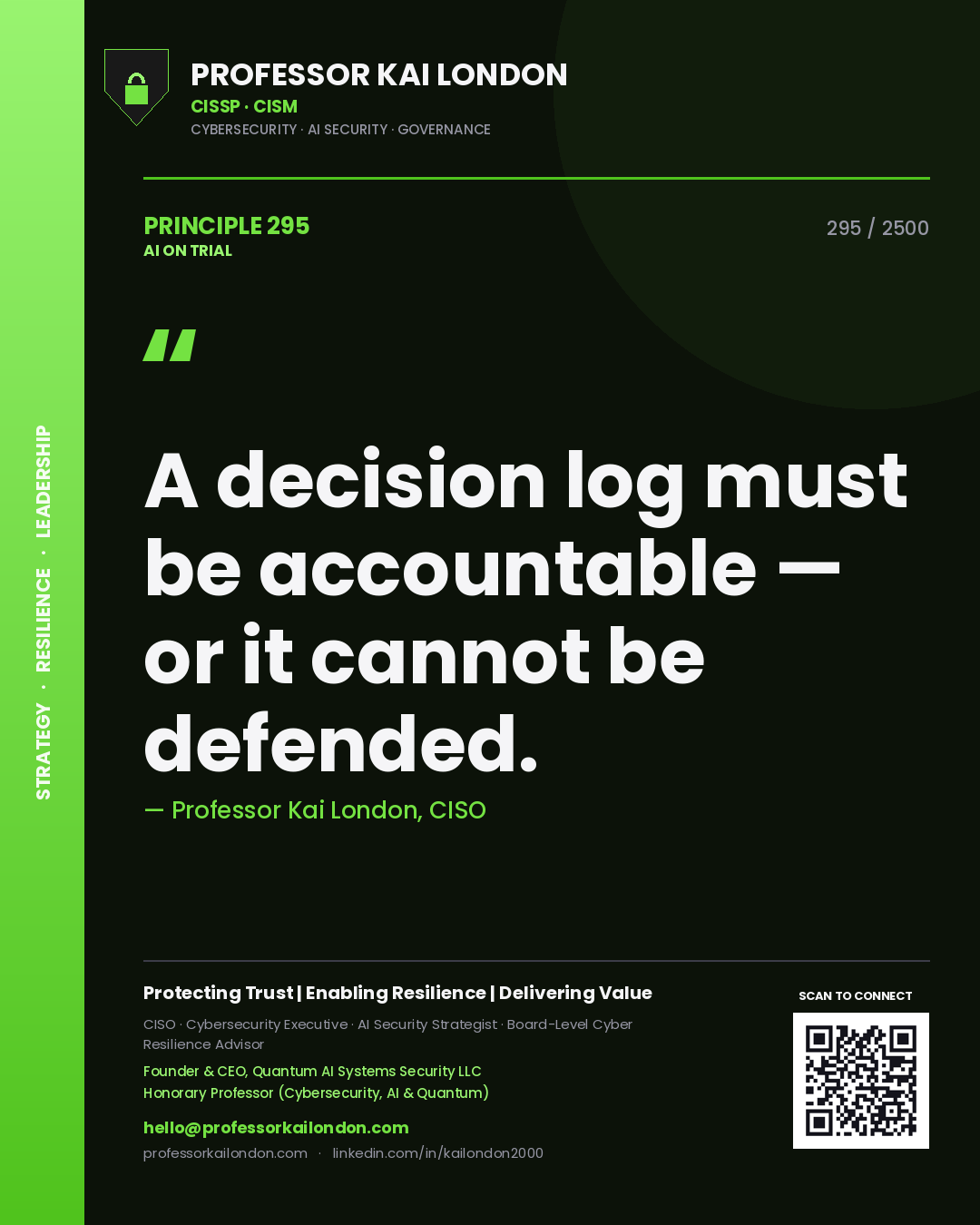
Professor Kai London principle 295: A decision log must be accountable — or it cannot be defended.
Principle 295
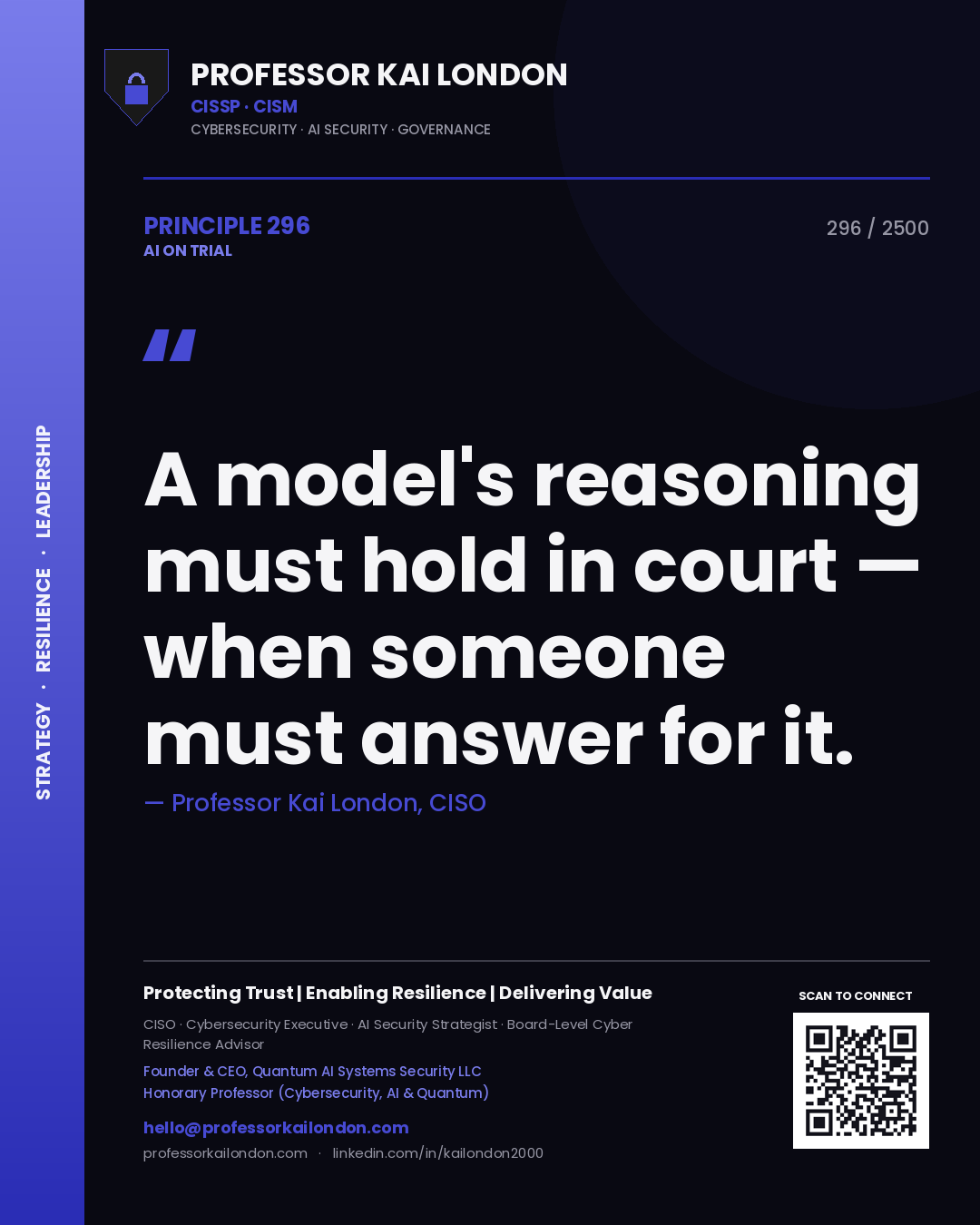
Professor Kai London principle 296: A model's reasoning must hold in court — when someone must answer for it.
Principle 296
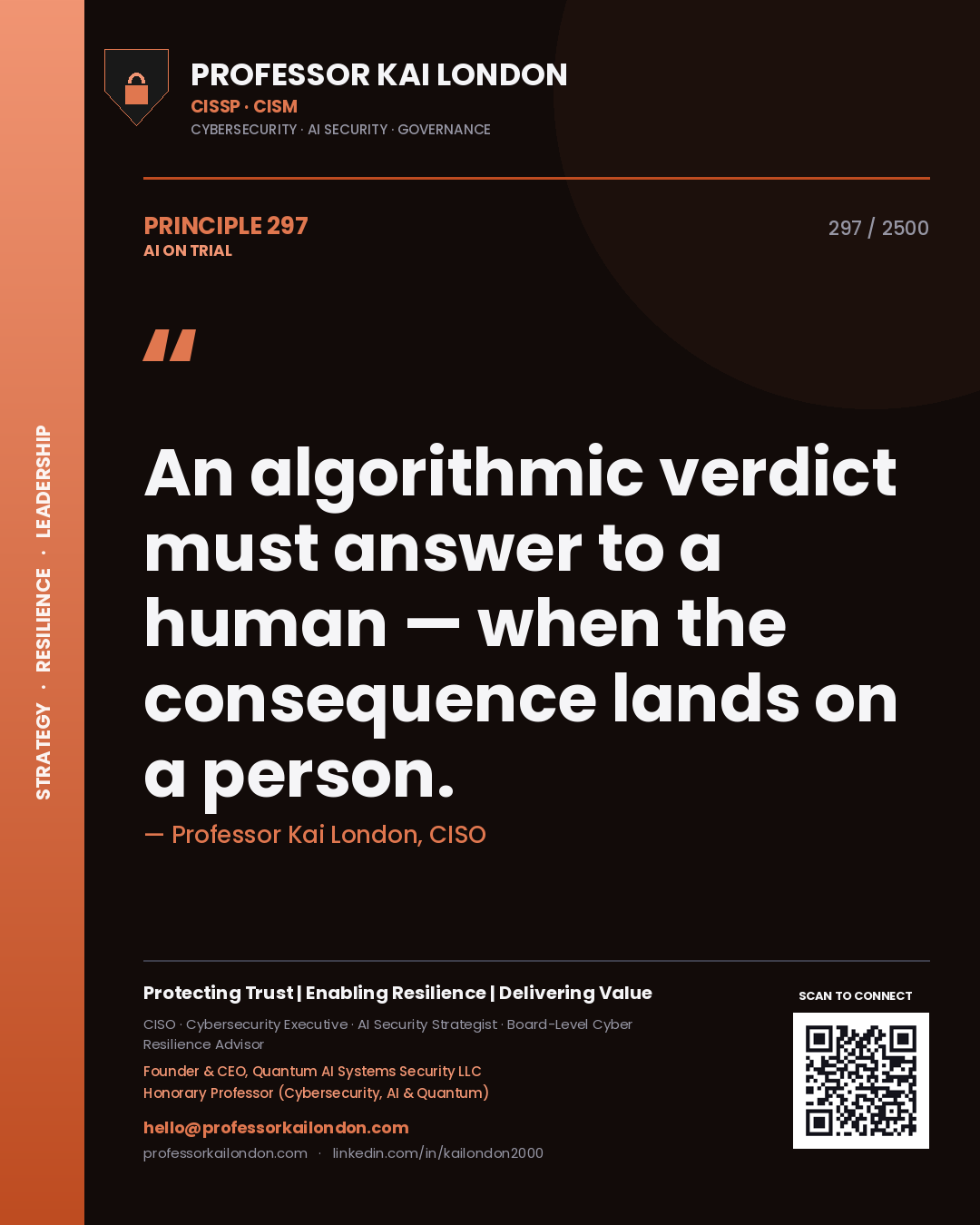
Professor Kai London principle 297: An algorithmic verdict must answer to a human — when the consequence lands on a person.
Principle 297
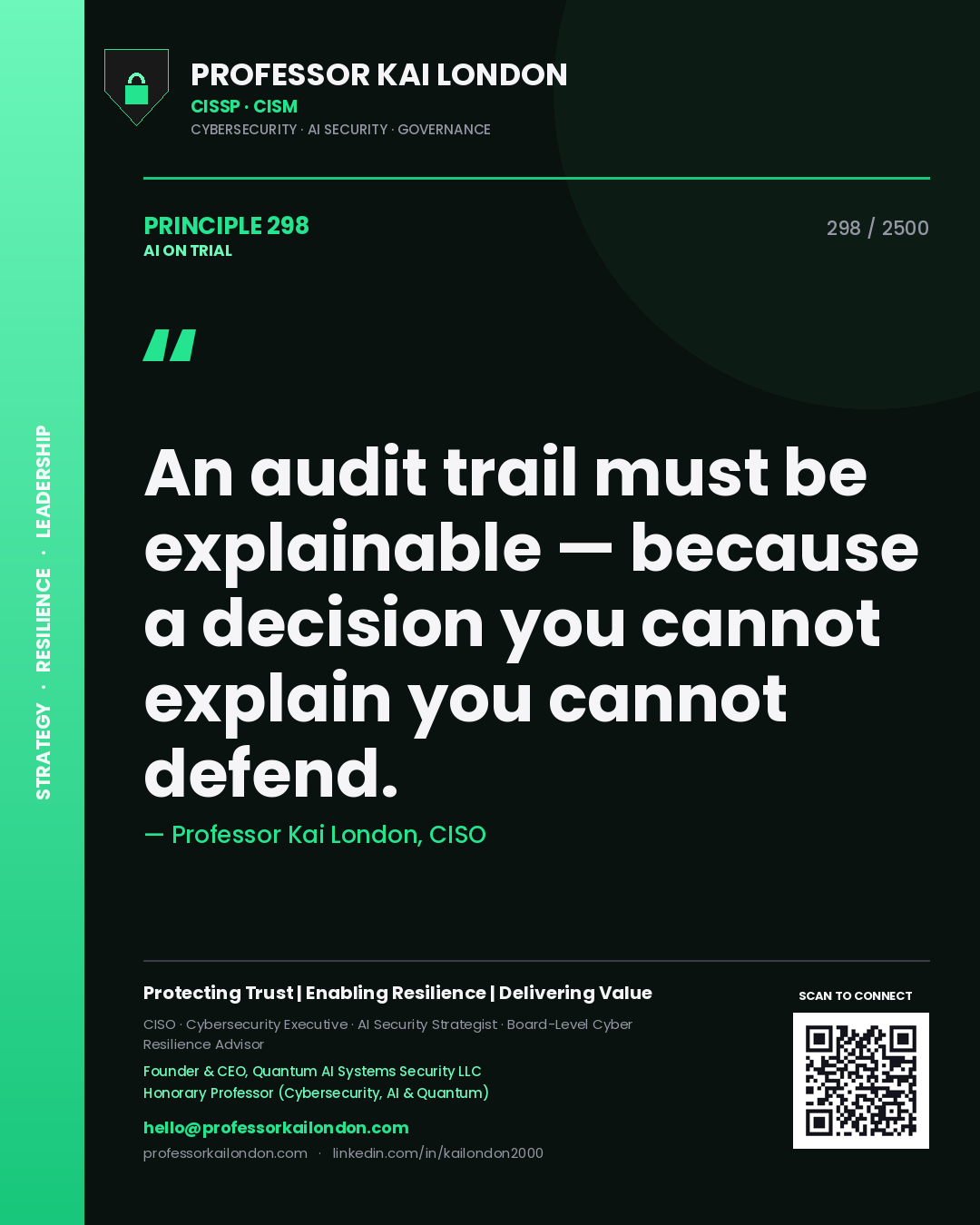
Professor Kai London principle 298: An audit trail must be explainable — because a decision you cannot explain you cannot defend.
Principle 298
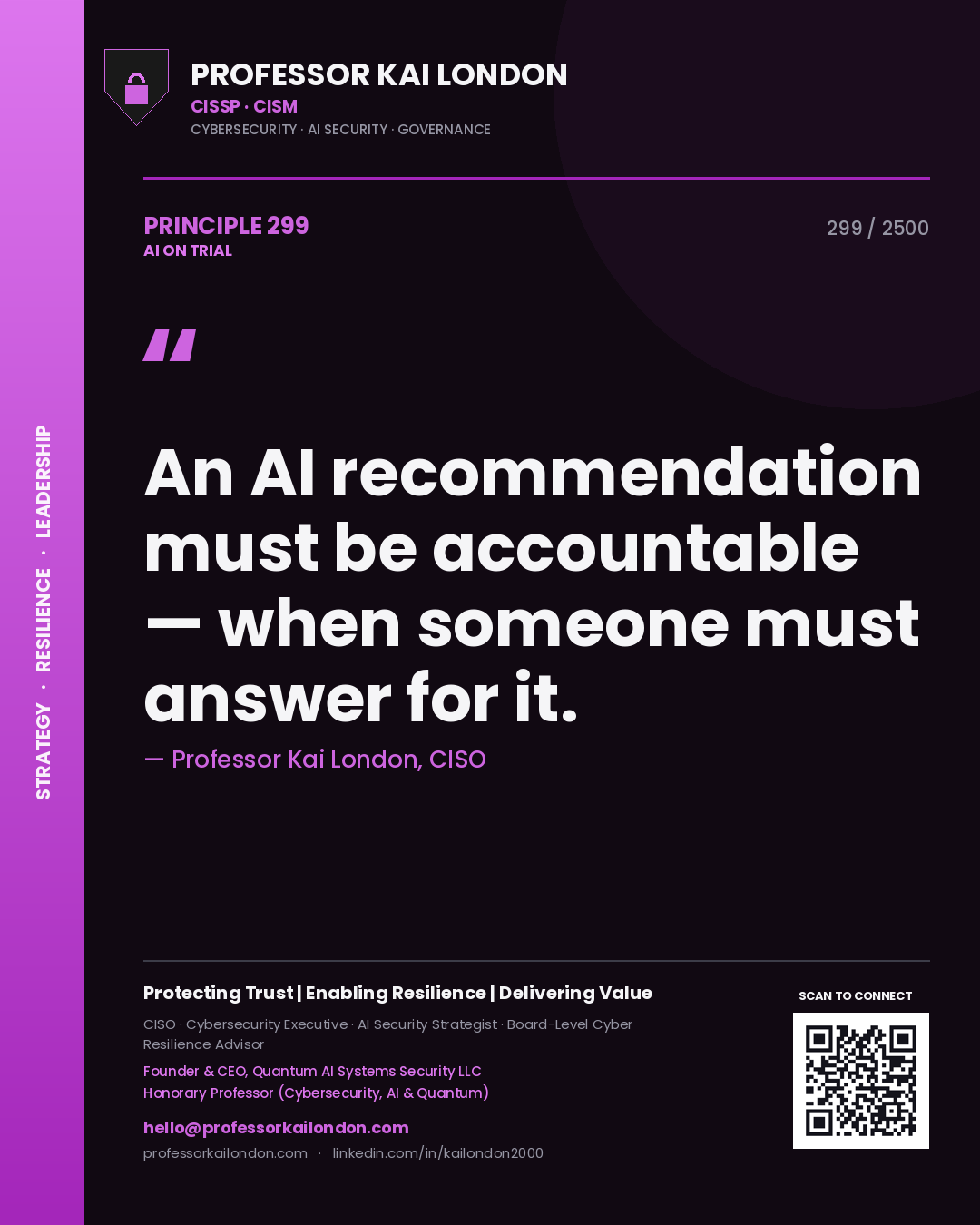
Professor Kai London principle 299: An AI recommendation must be accountable — when someone must answer for it.
Principle 299
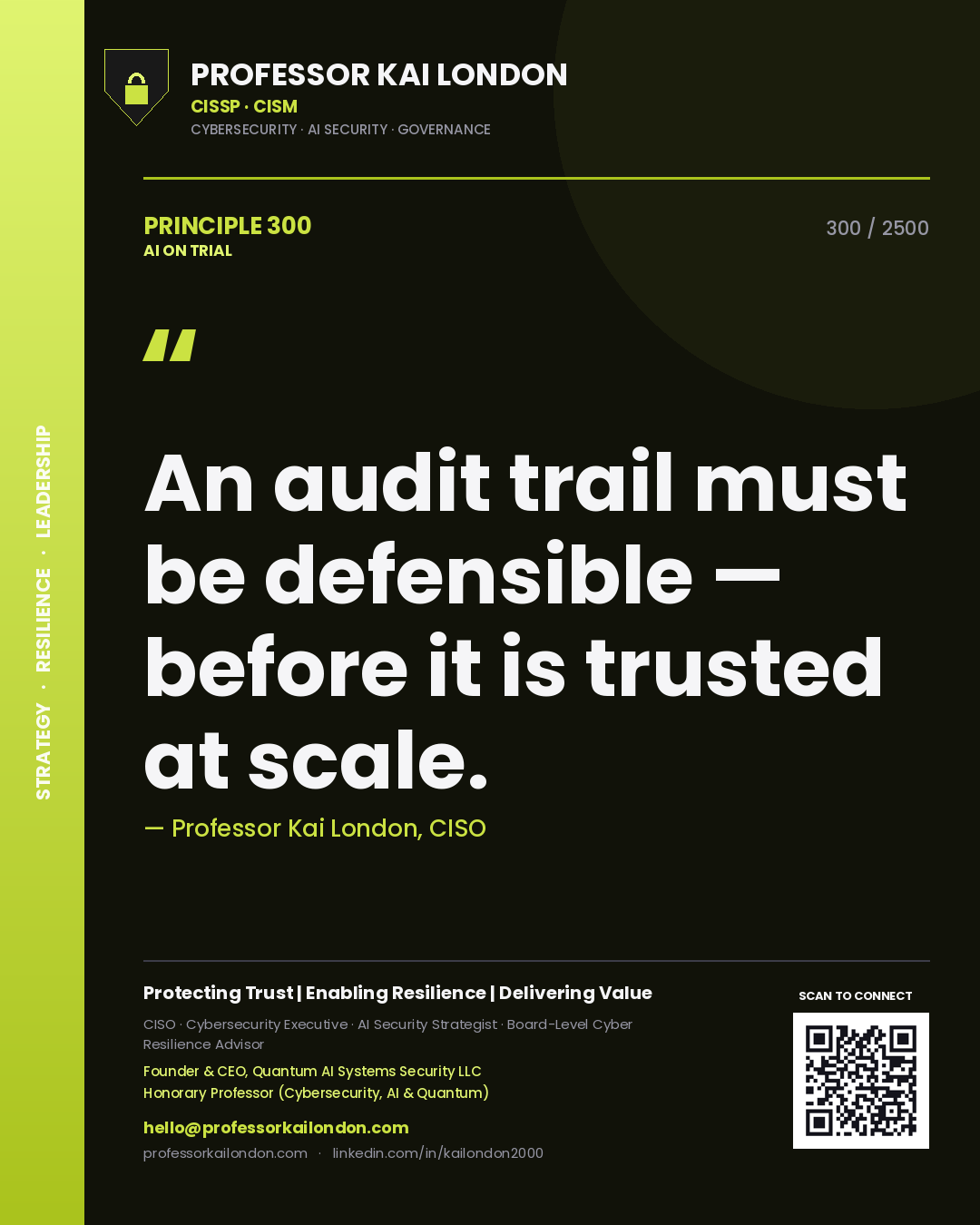
Professor Kai London principle 300: An audit trail must be defensible — before it is trusted at scale.
Principle 300