The AI Control Architecture — Gallery (Page 7 of 100)
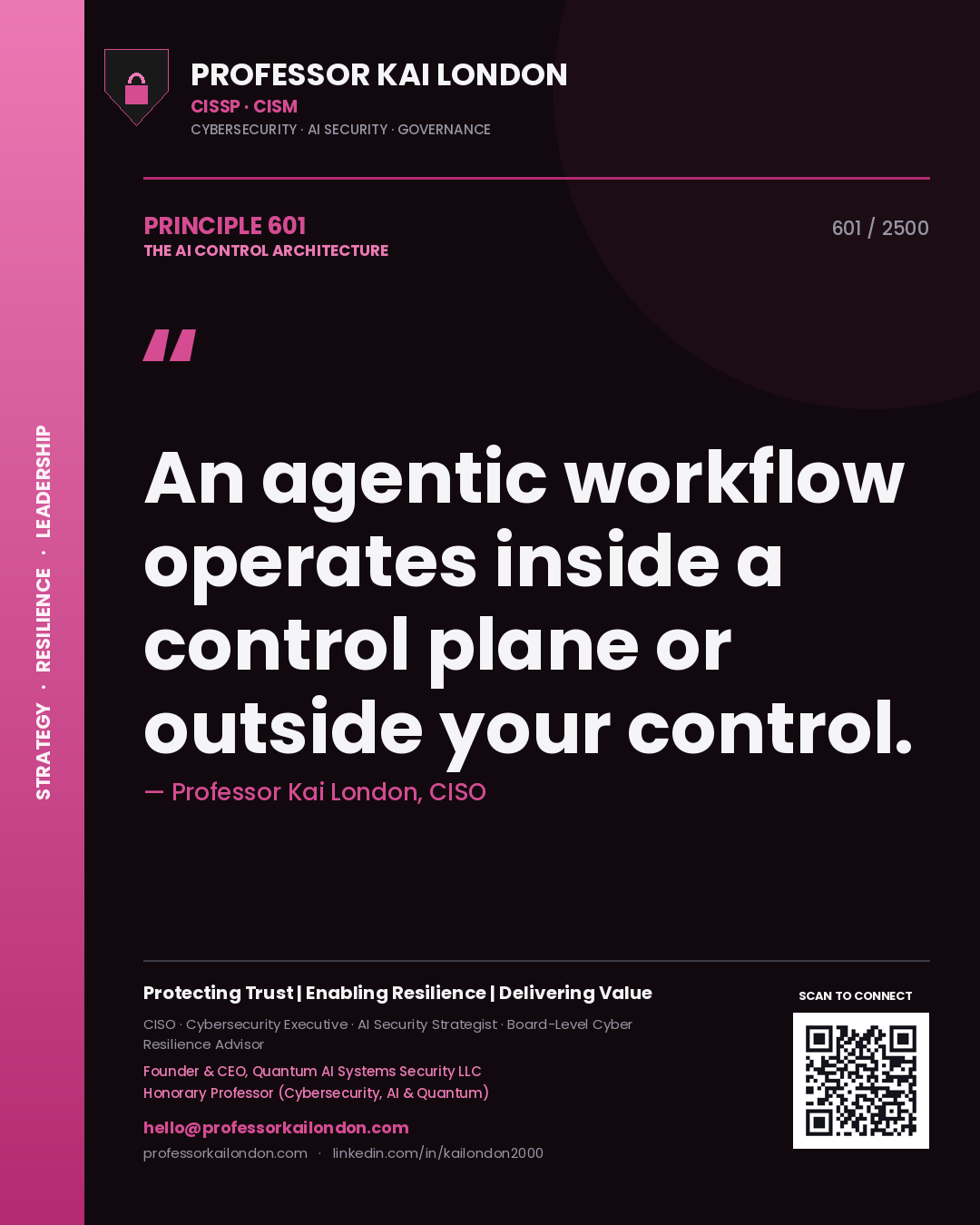
Professor Kai London principle 601: An agentic workflow operates inside a control plane or outside your control.
Principle 601
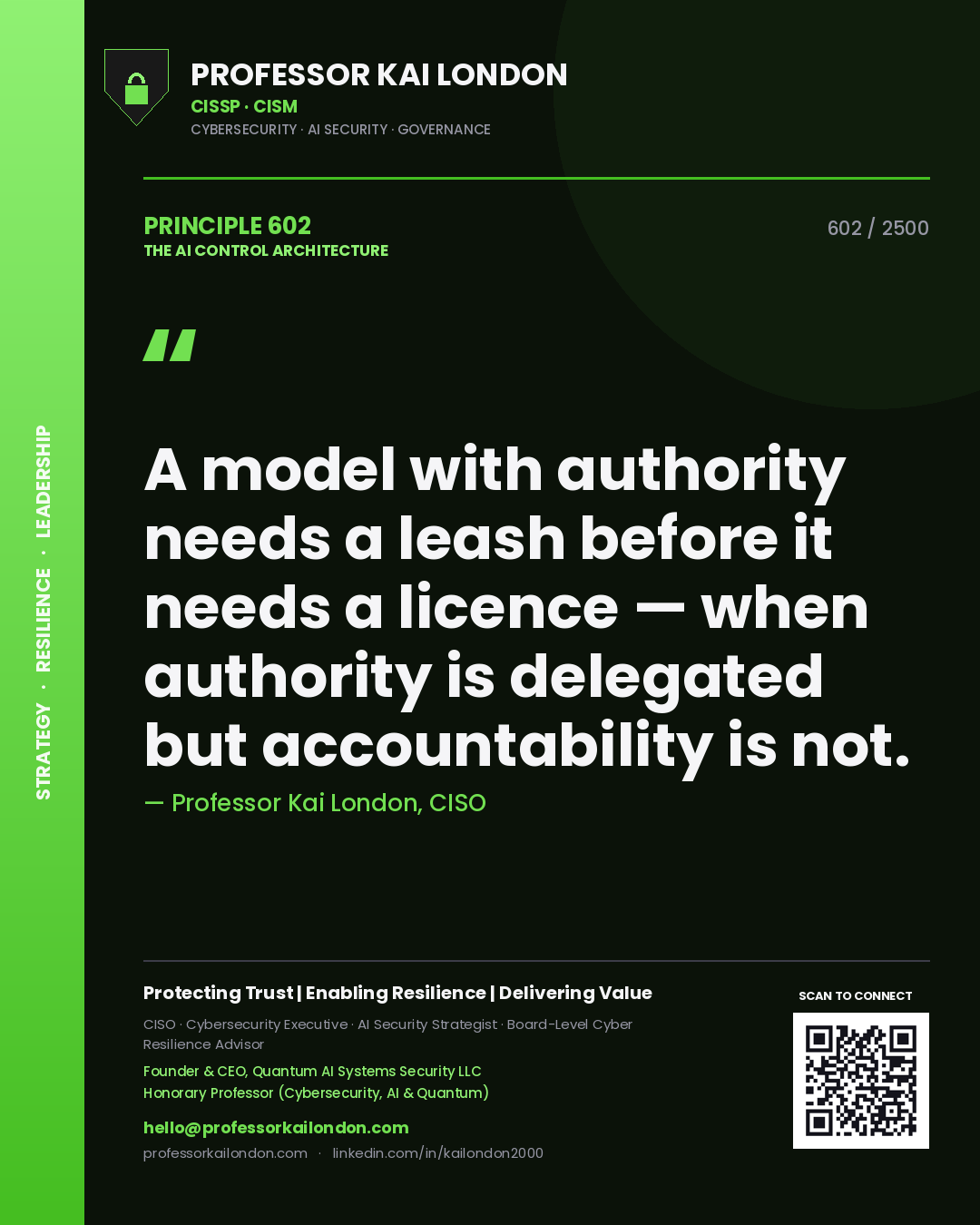
Professor Kai London principle 602: A model with authority needs a leash before it needs a licence — when authority is delegated but accountability is not.
Principle 602
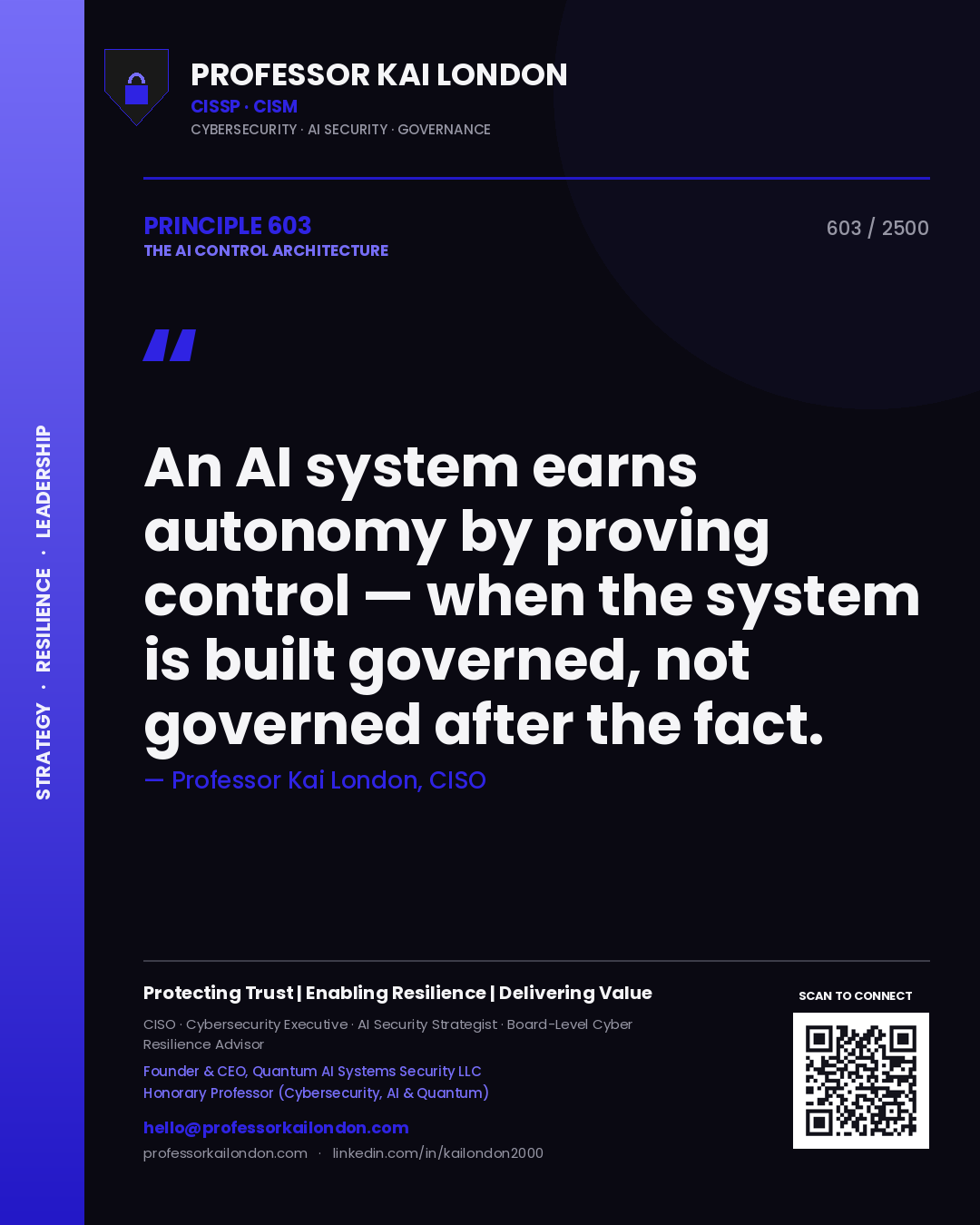
Professor Kai London principle 603: An AI system earns autonomy by proving control — when the system is built governed, not governed after the fact.
Principle 603
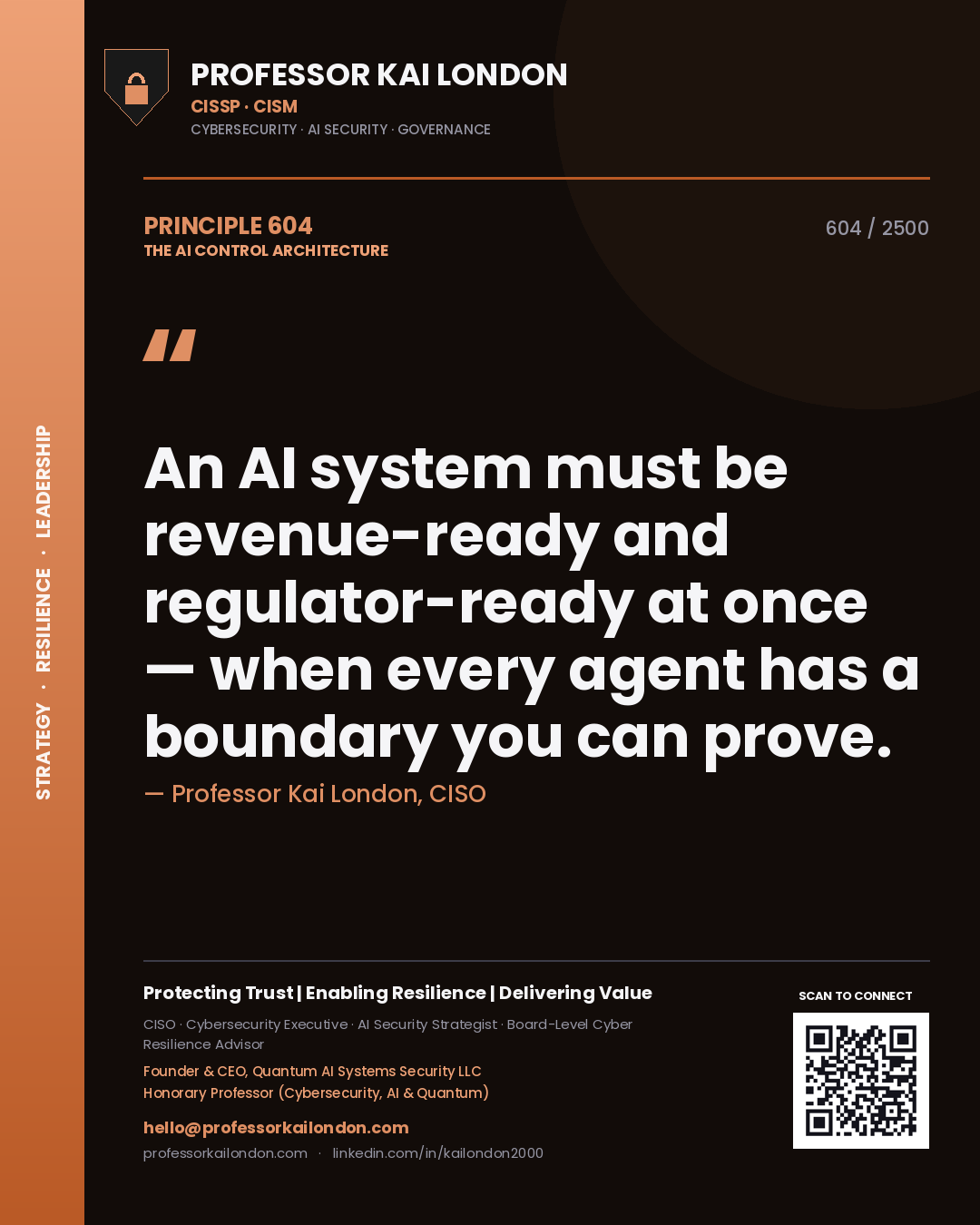
Professor Kai London principle 604: An AI system must be revenue-ready and regulator-ready at once — when every agent has a boundary you can prove.
Principle 604
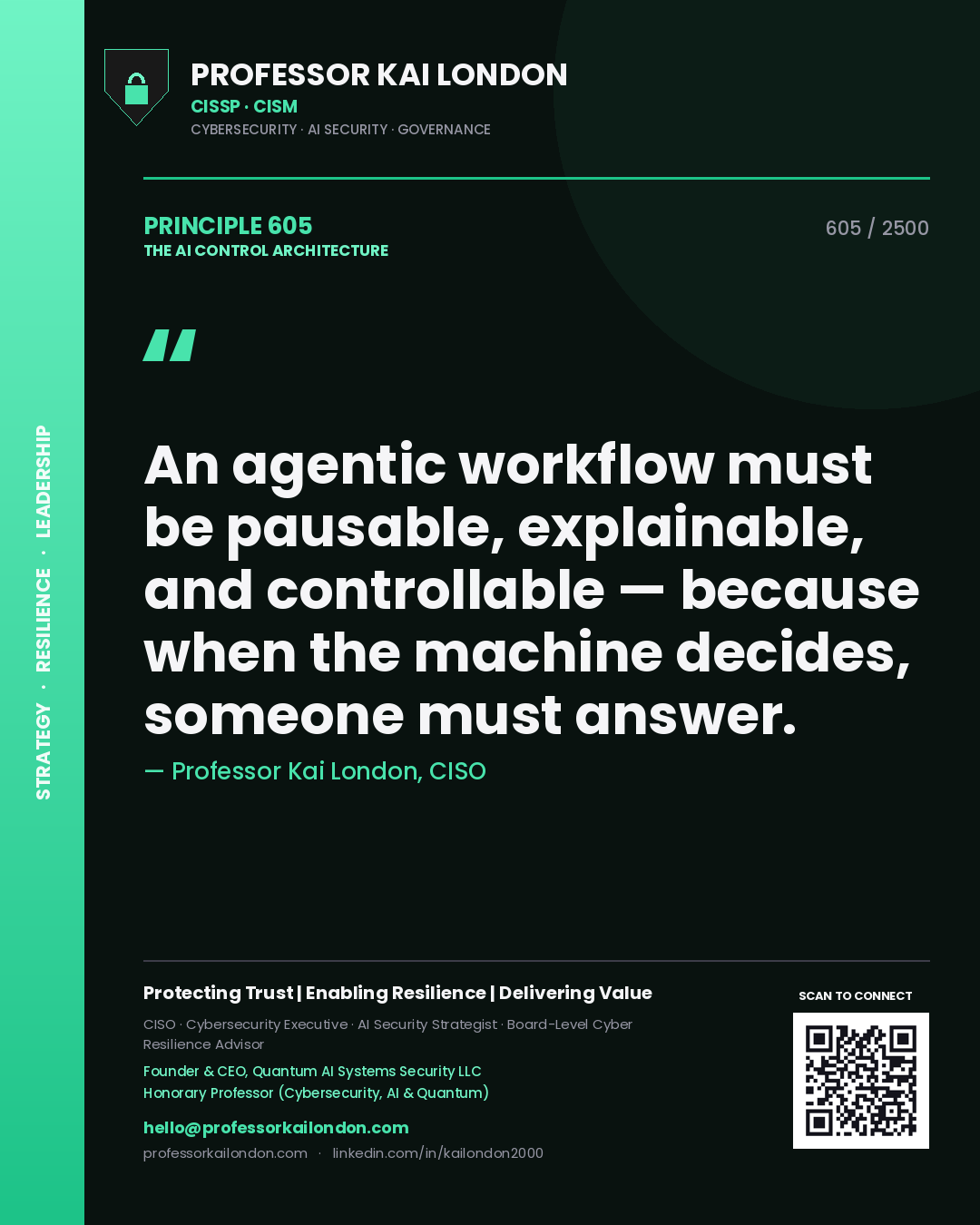
Professor Kai London principle 605: An agentic workflow must be pausable, explainable, and controllable — because when the machine decides, someone must answer.
Principle 605
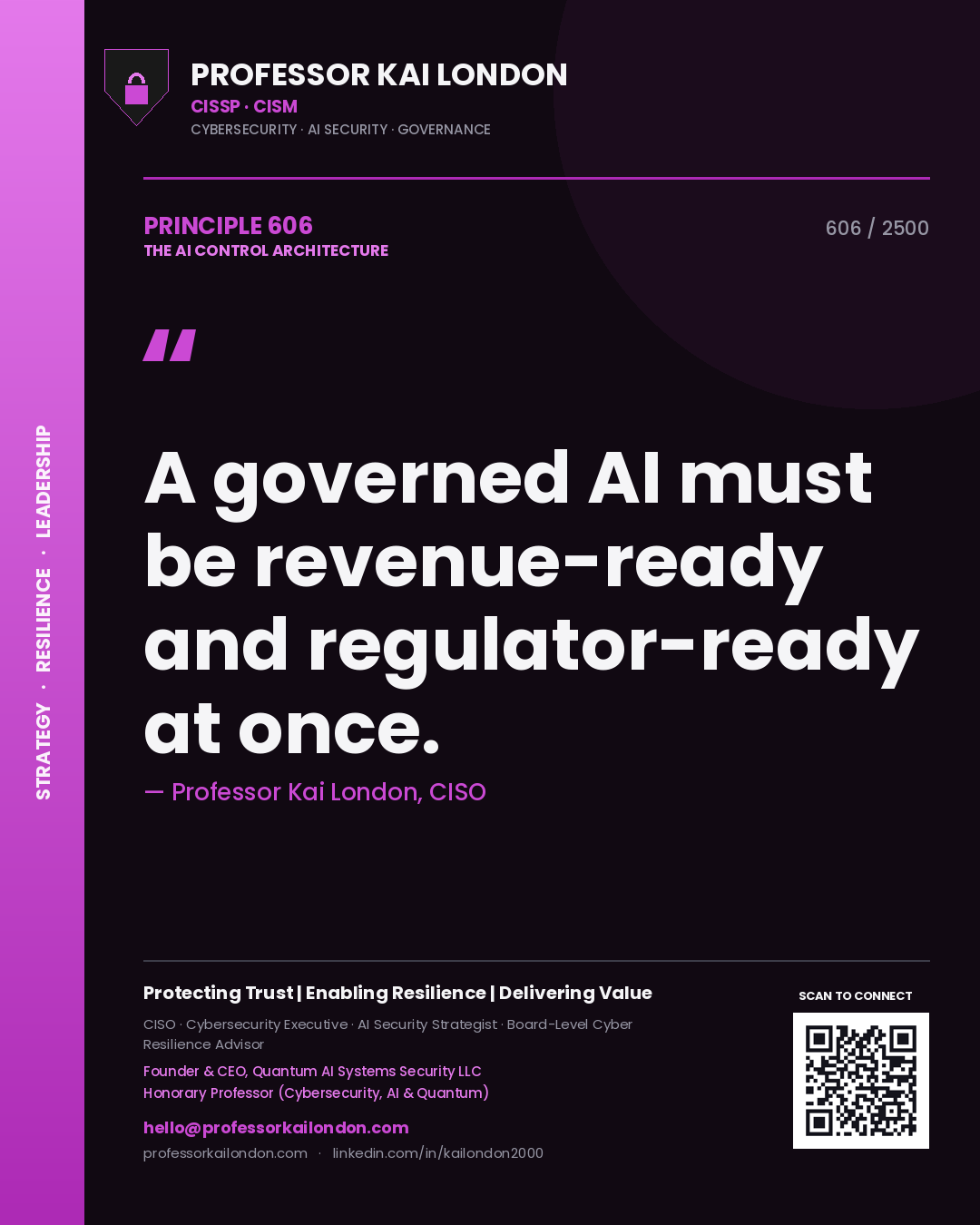
Professor Kai London principle 606: A governed AI must be revenue-ready and regulator-ready at once.
Principle 606
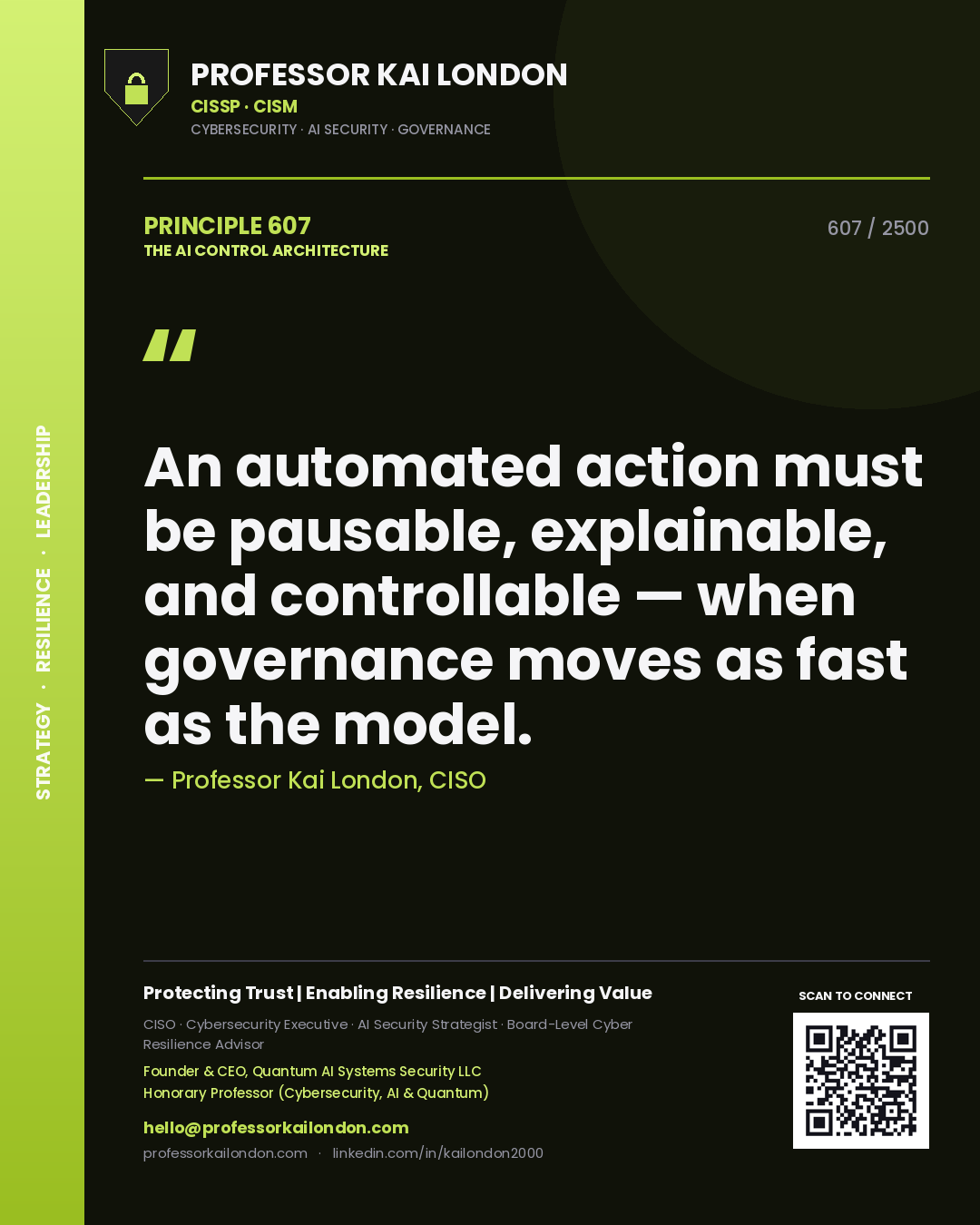
Professor Kai London principle 607: An automated action must be pausable, explainable, and controllable — when governance moves as fast as the model.
Principle 607
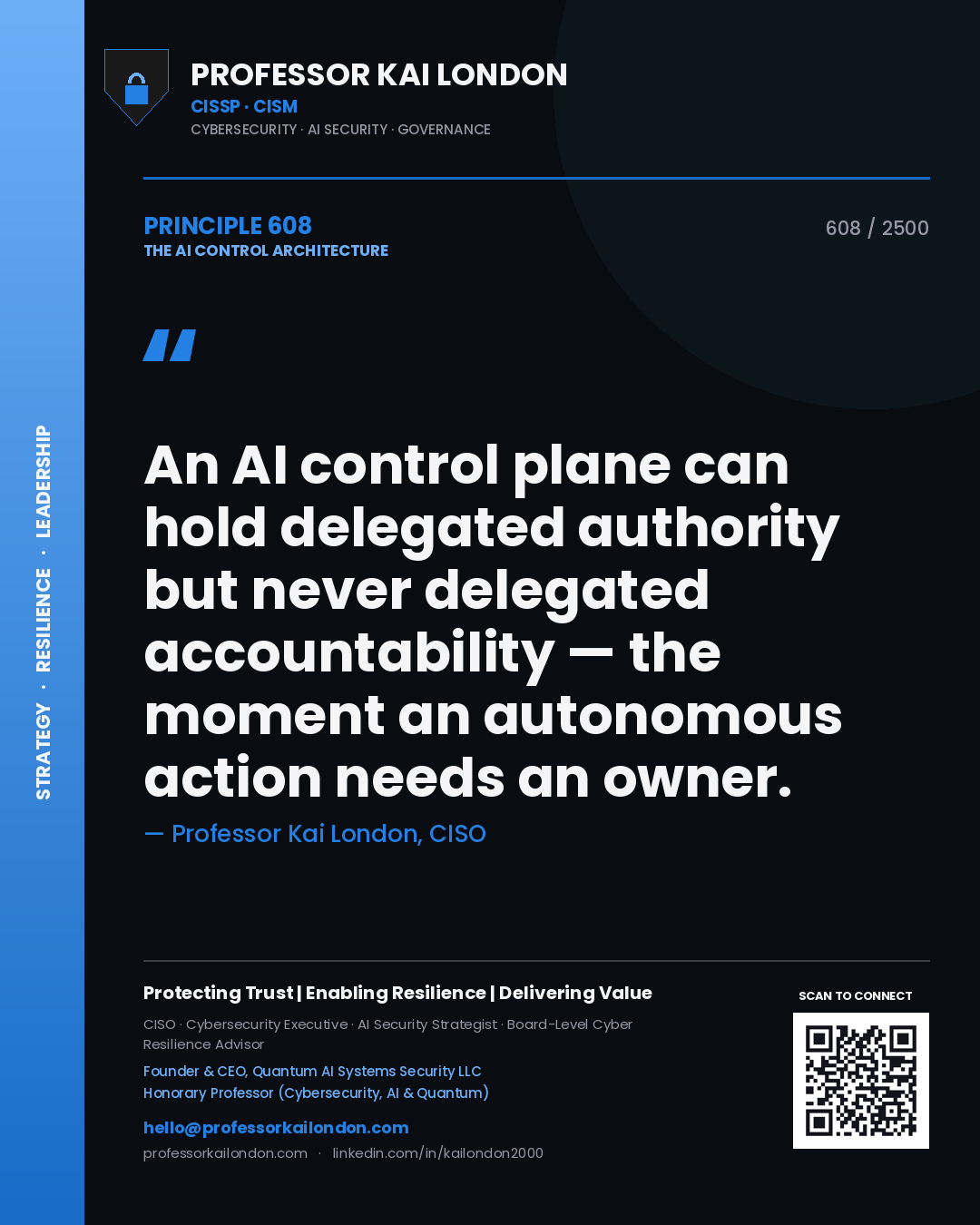
Professor Kai London principle 608: An AI control plane can hold delegated authority but never delegated accountability — the moment an autonomous action needs an owner.
Principle 608
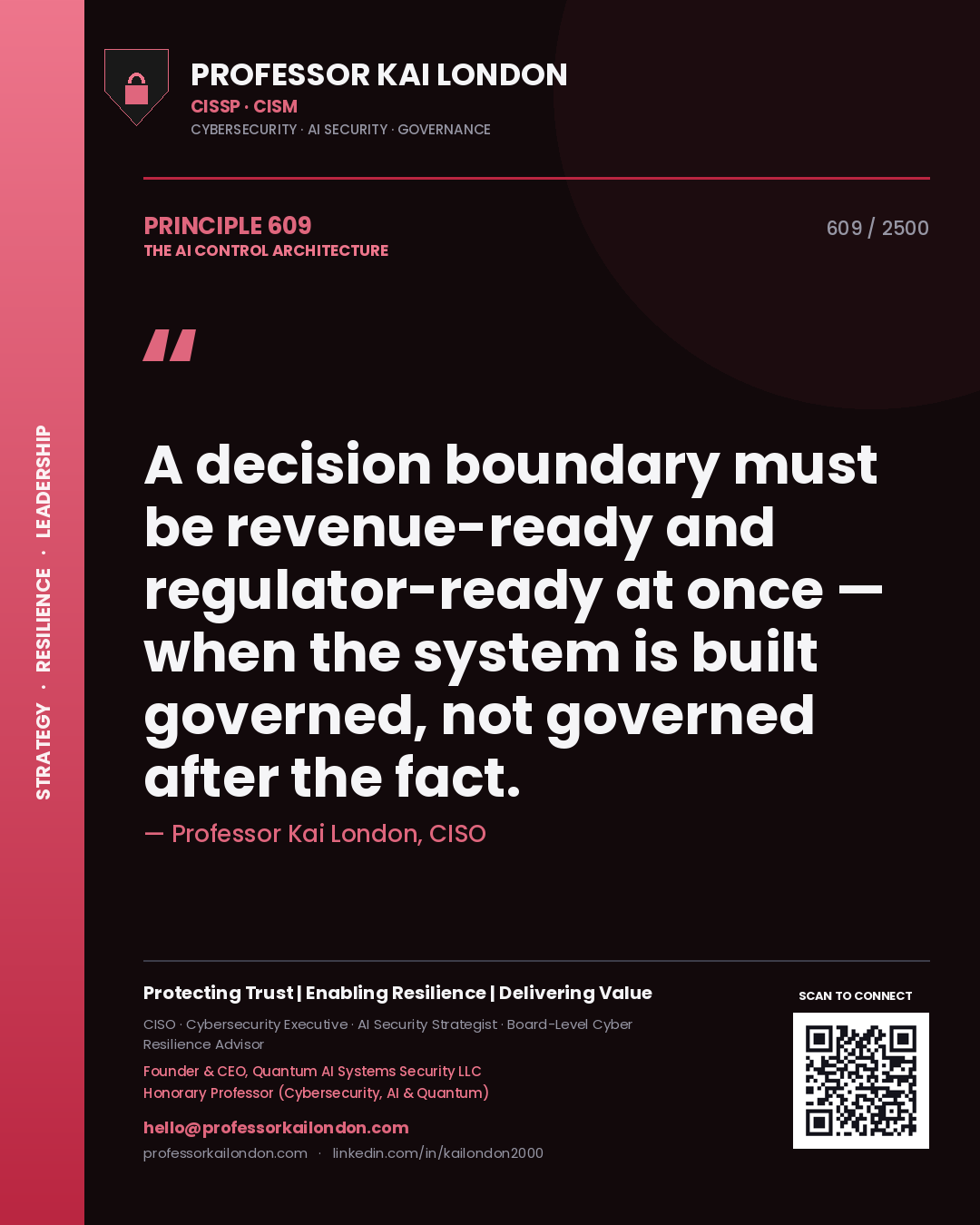
Professor Kai London principle 609: A decision boundary must be revenue-ready and regulator-ready at once — when the system is built governed, not governed after the fact.
Principle 609
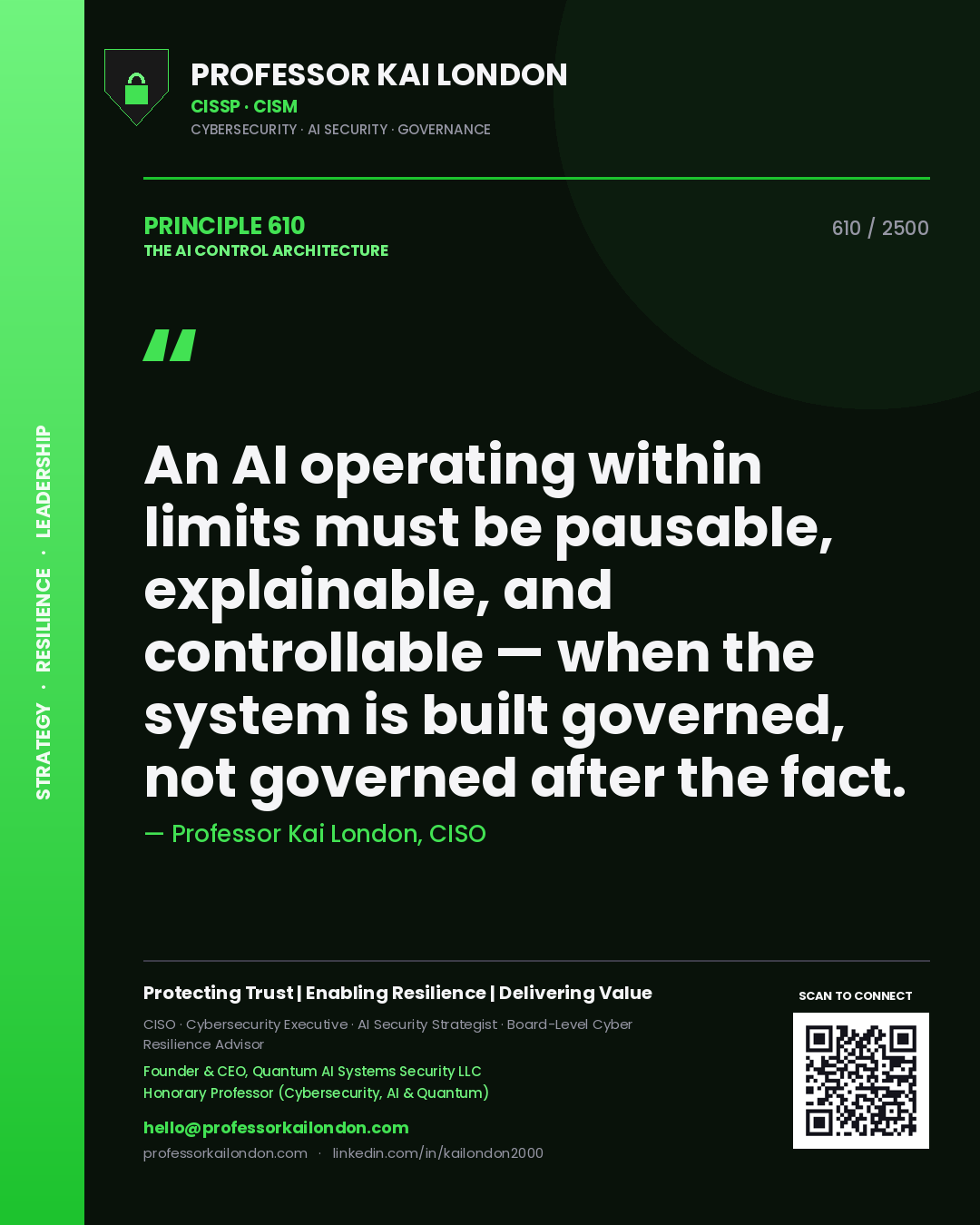
Professor Kai London principle 610: An AI operating within limits must be pausable, explainable, and controllable — when the system is built governed, not governed after the fact.
Principle 610
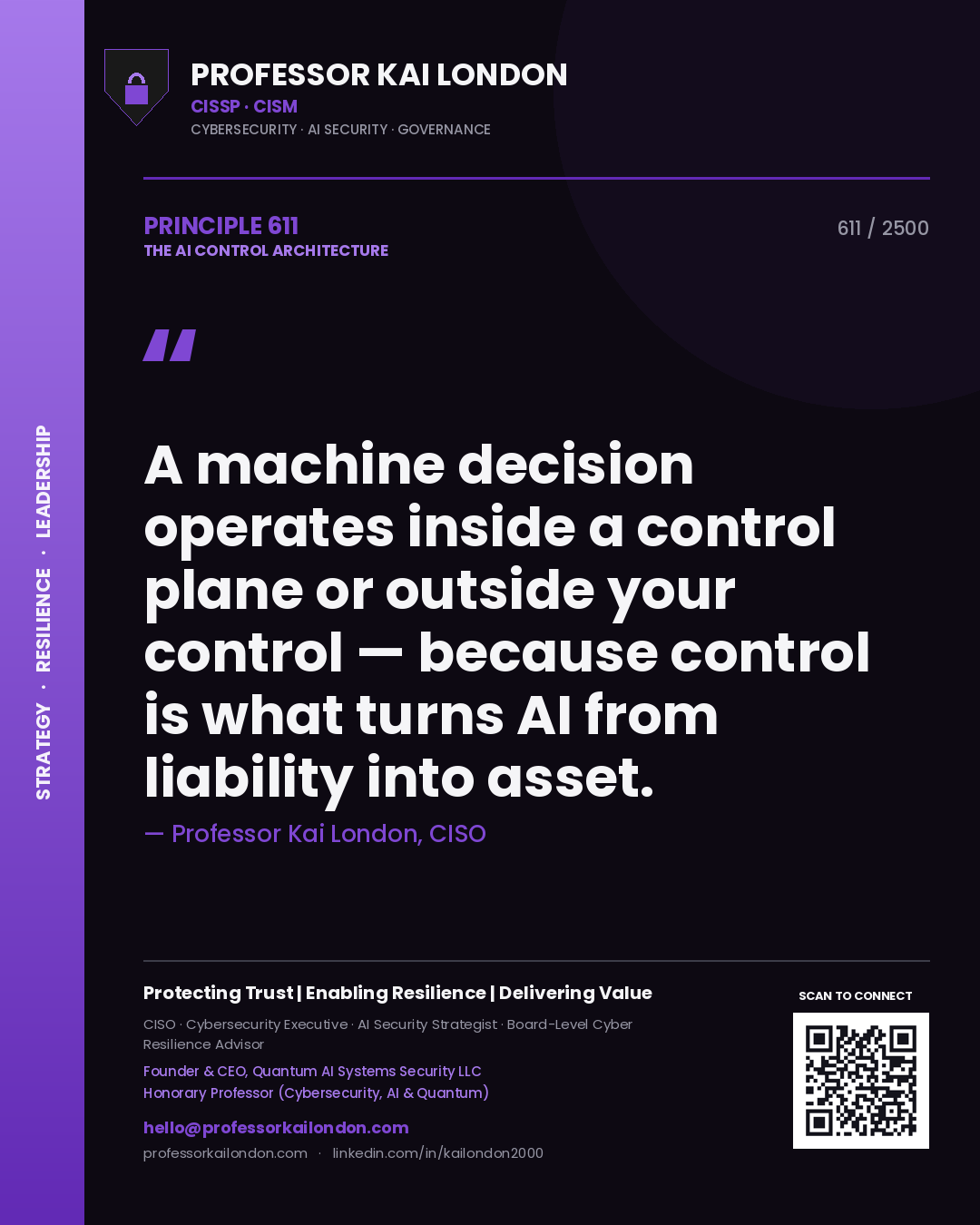
Professor Kai London principle 611: A machine decision operates inside a control plane or outside your control — because control is what turns AI from liability into asset.
Principle 611
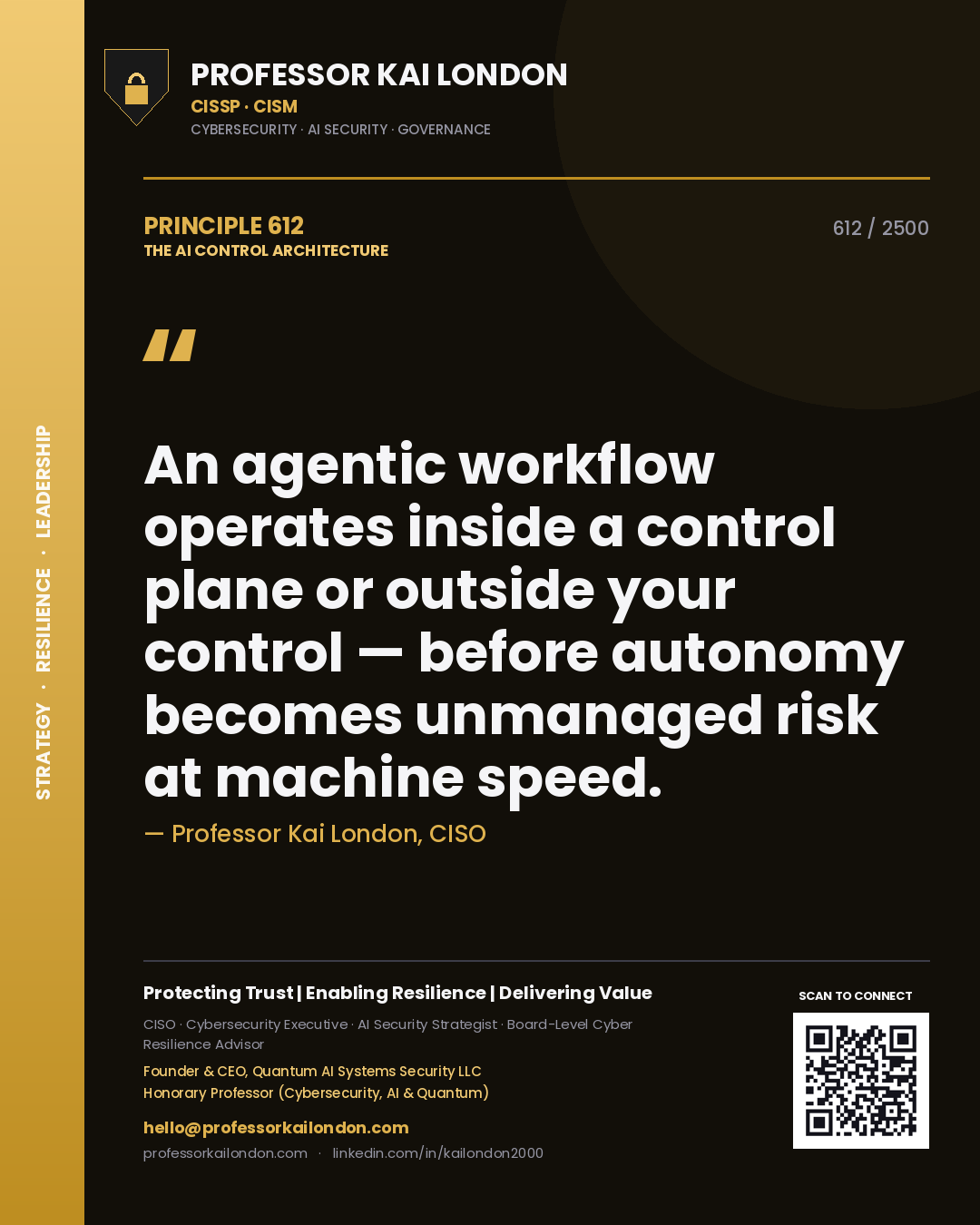
Professor Kai London principle 612: An agentic workflow operates inside a control plane or outside your control — before autonomy becomes unmanaged risk at machine speed.
Principle 612
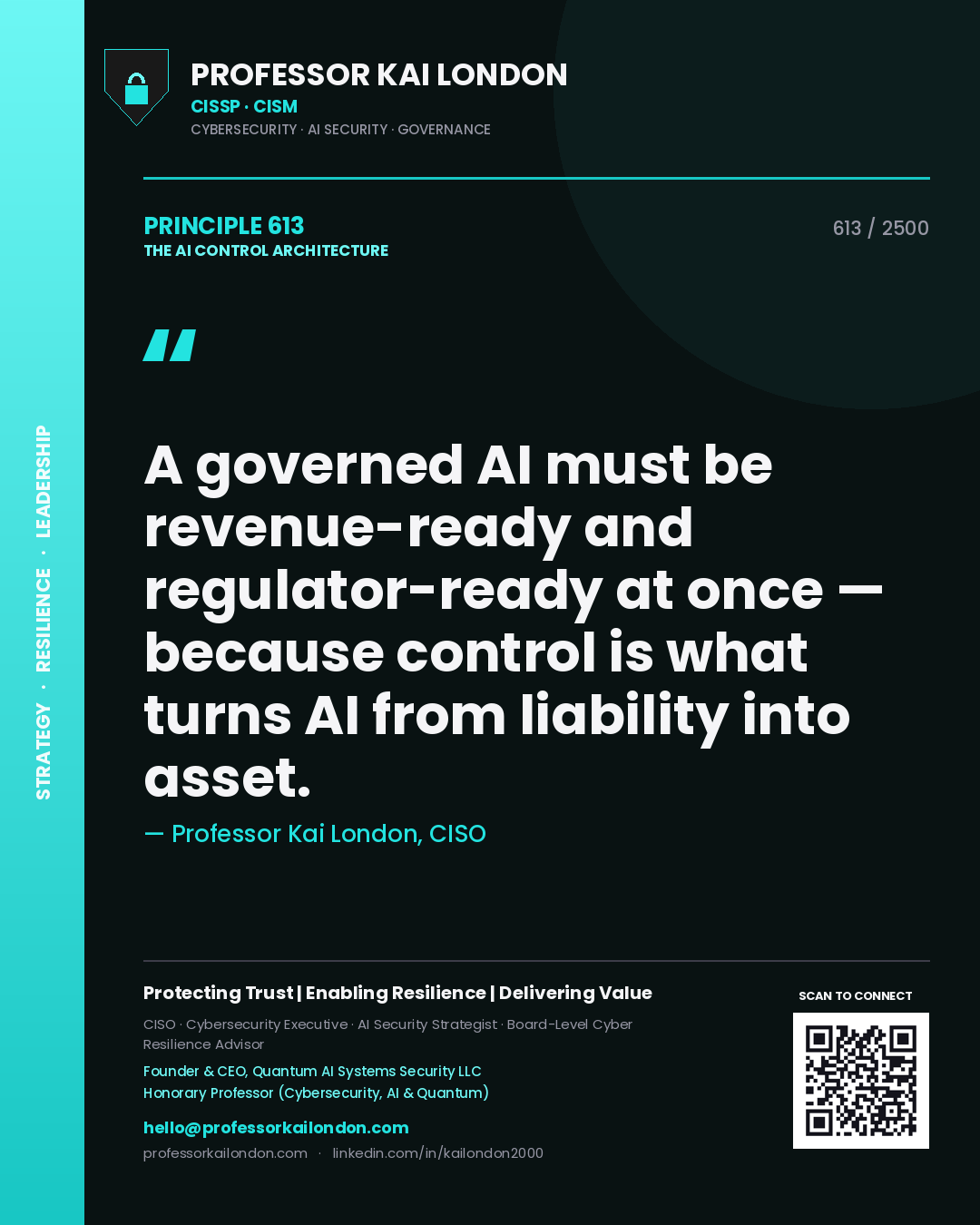
Professor Kai London principle 613: A governed AI must be revenue-ready and regulator-ready at once — because control is what turns AI from liability into asset.
Principle 613
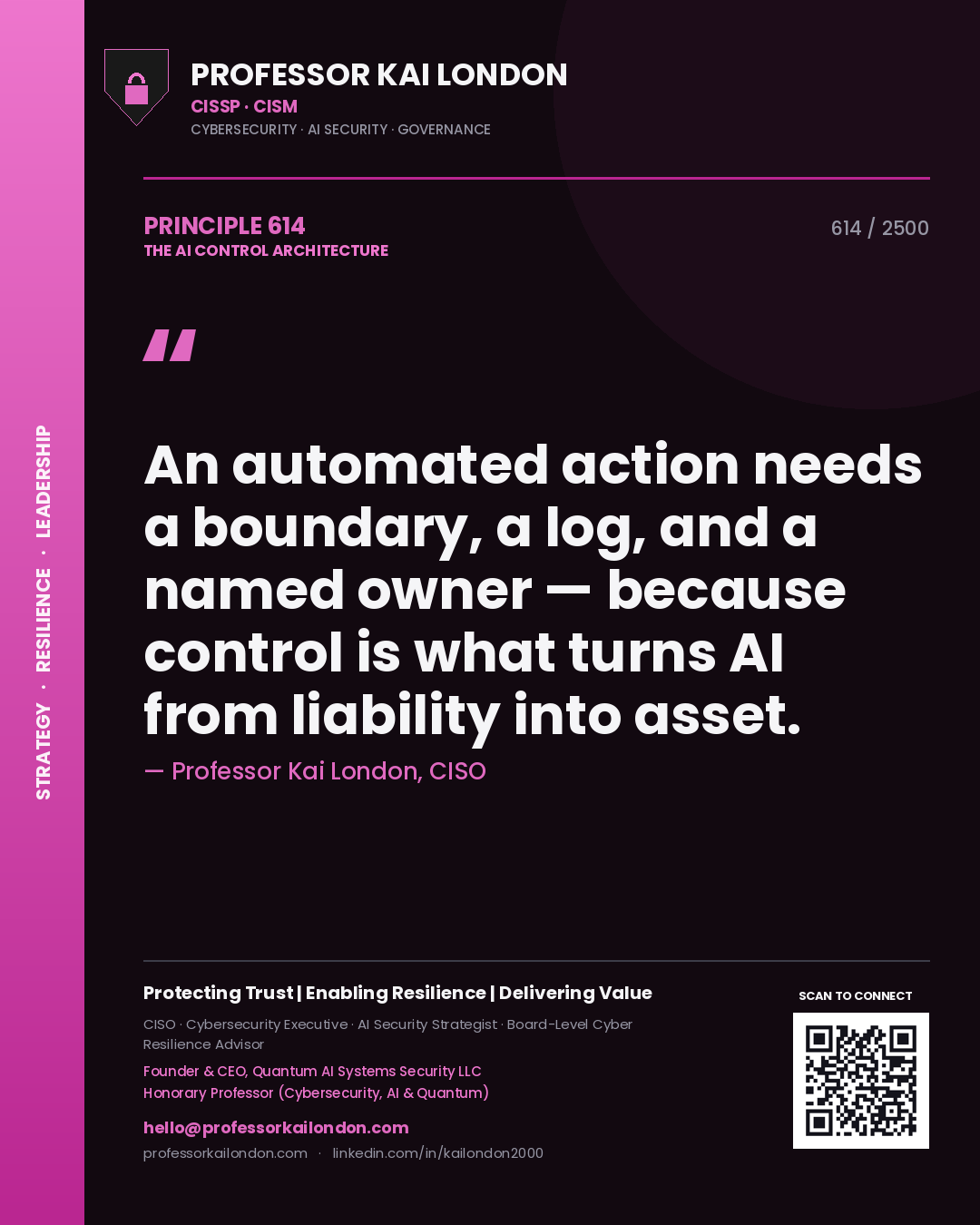
Professor Kai London principle 614: An automated action needs a boundary, a log, and a named owner — because control is what turns AI from liability into asset.
Principle 614
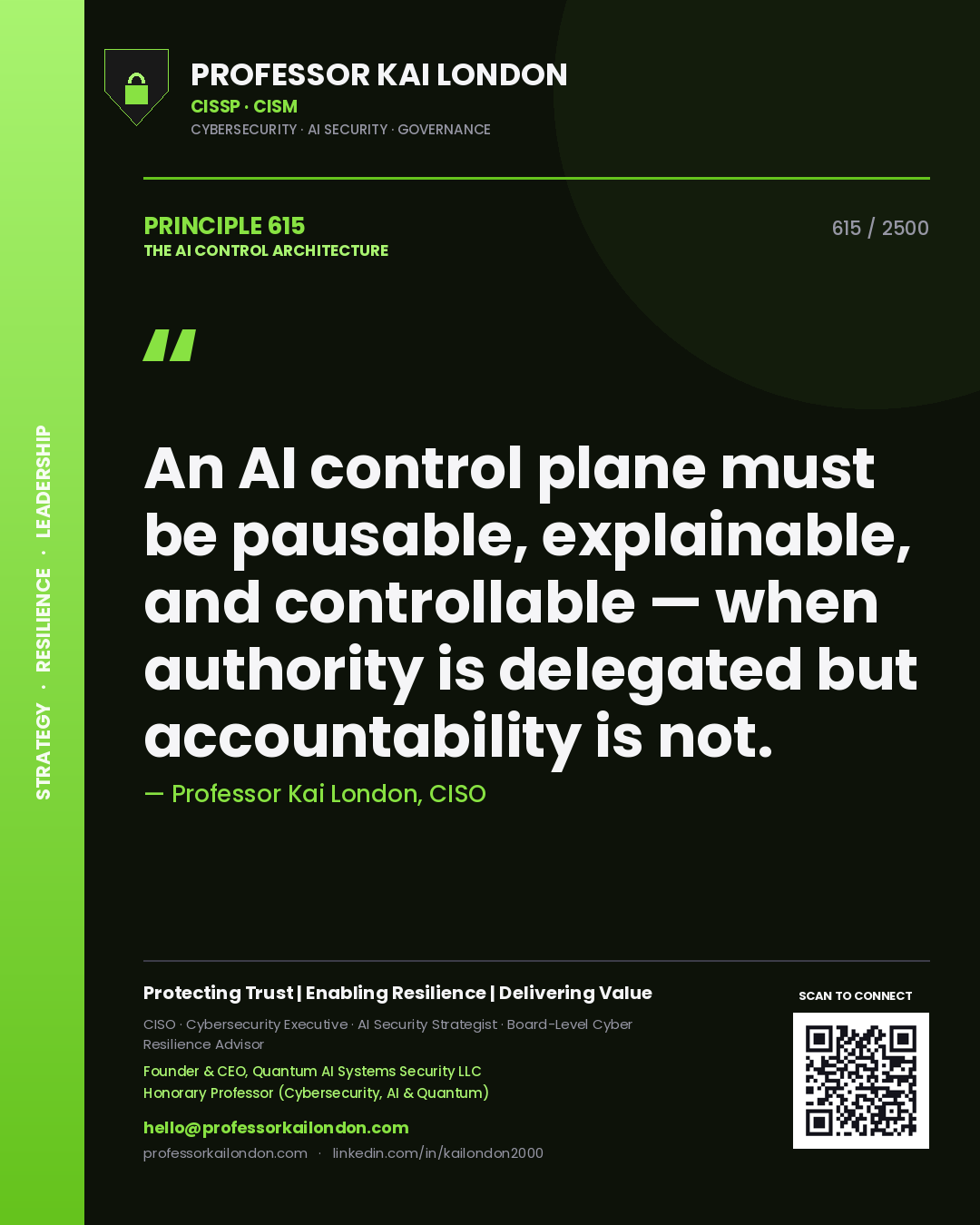
Professor Kai London principle 615: An AI control plane must be pausable, explainable, and controllable — when authority is delegated but accountability is not.
Principle 615
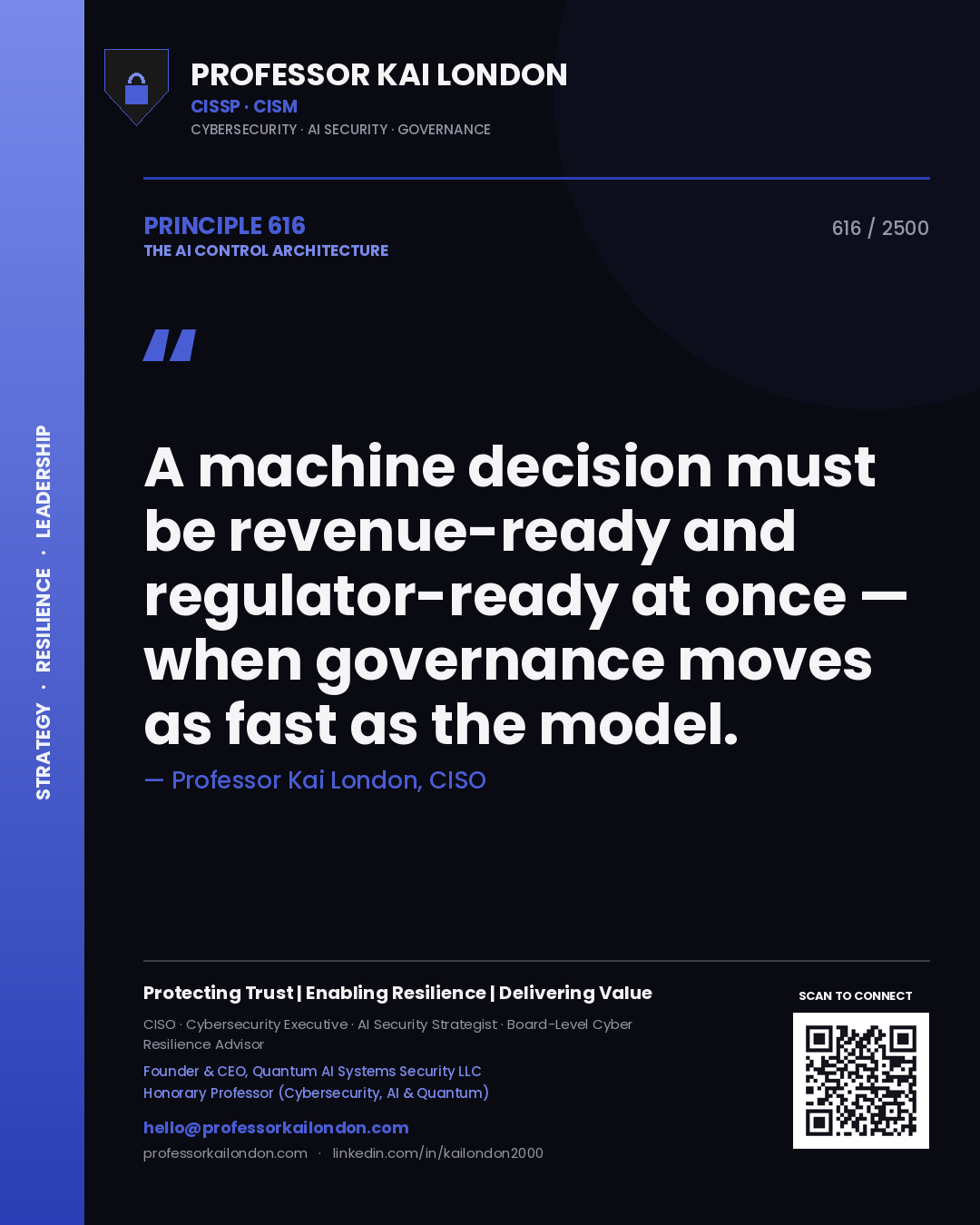
Professor Kai London principle 616: A machine decision must be revenue-ready and regulator-ready at once — when governance moves as fast as the model.
Principle 616
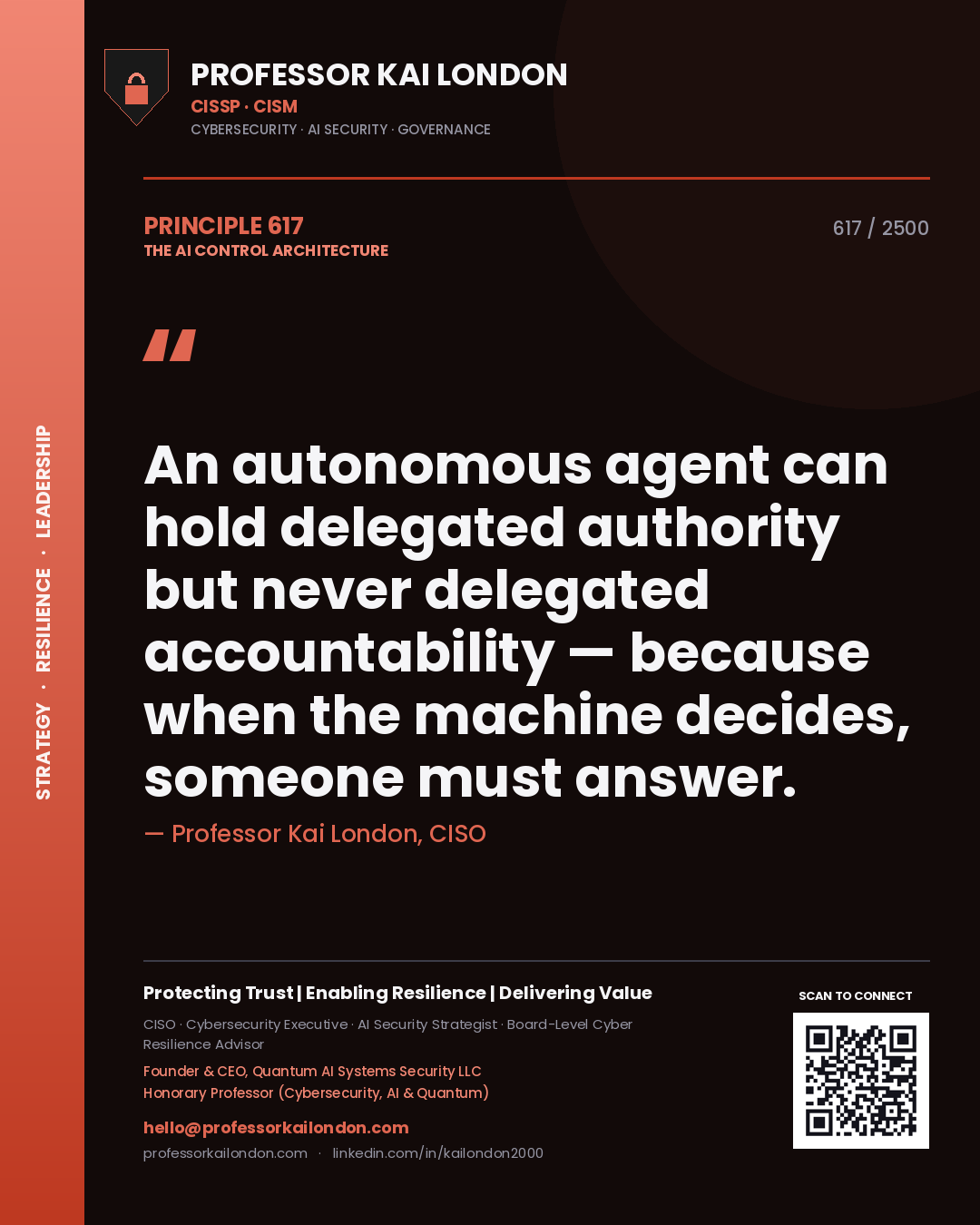
Professor Kai London principle 617: An autonomous agent can hold delegated authority but never delegated accountability — because when the machine decides, someone must answer.
Principle 617
Professor Kai London principle 618: An agentic workflow needs a leash before it needs a licence — when governance moves as fast as the model.
Principle 618
Professor Kai London principle 619: An automated action operates inside a control plane or outside your control — because control is what turns AI from liability into asset.
Principle 619
Professor Kai London principle 620: An autonomous agent must be revenue-ready and regulator-ready at once.
Principle 620
Professor Kai London principle 621: A decision boundary is governed at machine speed with human consequences — when every agent has a boundary you can prove.
Principle 621
Professor Kai London principle 622: An agentic workflow earns autonomy by proving control — because an agent you cannot pause is an agent you do not control.
Principle 622
Professor Kai London principle 623: An AI operating within limits must be revenue-ready and regulator-ready at once — when authority is delegated but accountability is not.
Principle 623
Professor Kai London principle 624: A decision boundary is governed at machine speed with human consequences.
Principle 624
Professor Kai London principle 625: An AI control plane can hold delegated authority but never delegated accountability — when authority is delegated but accountability is not.
Principle 625
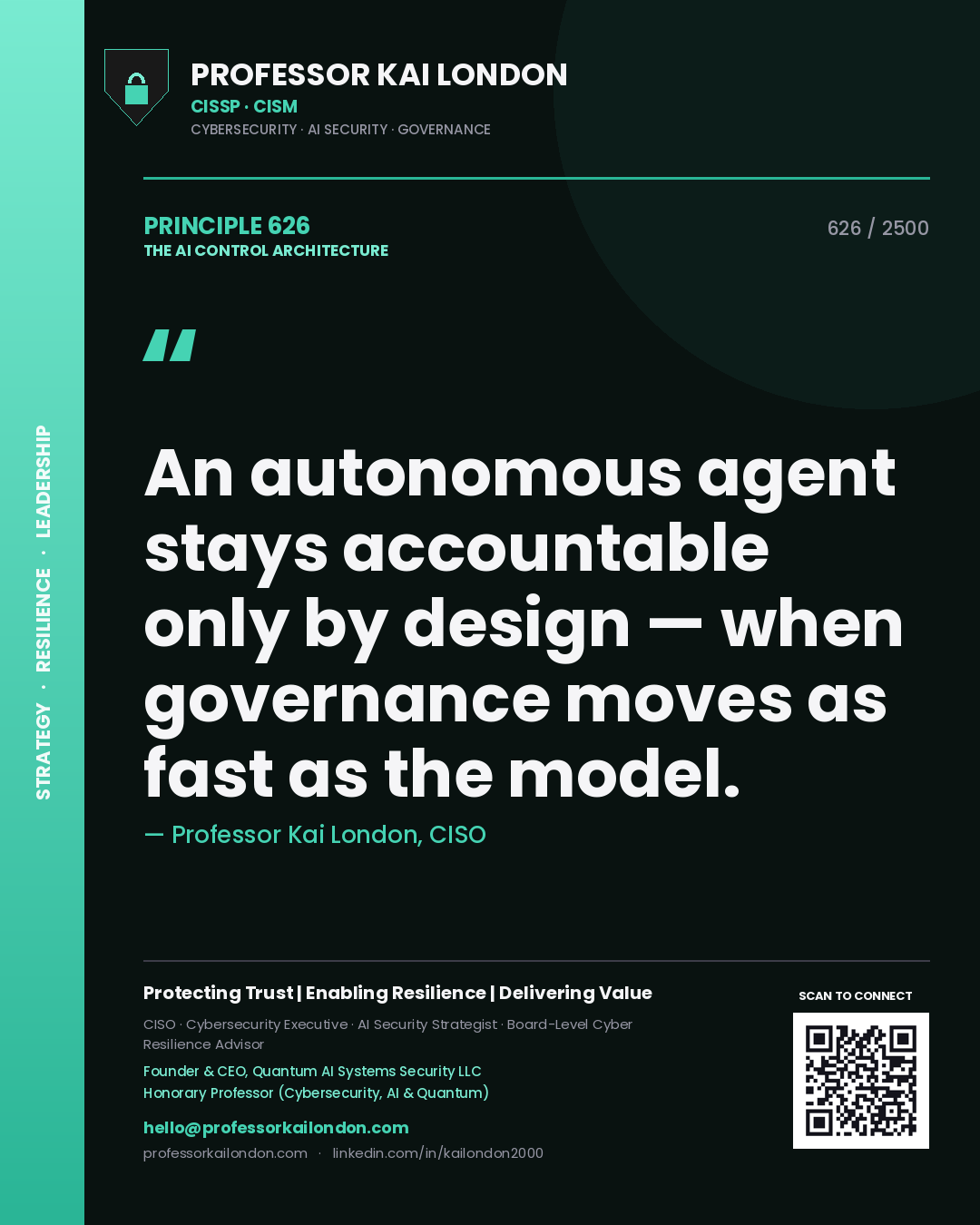
Professor Kai London principle 626: An autonomous agent stays accountable only by design — when governance moves as fast as the model.
Principle 626
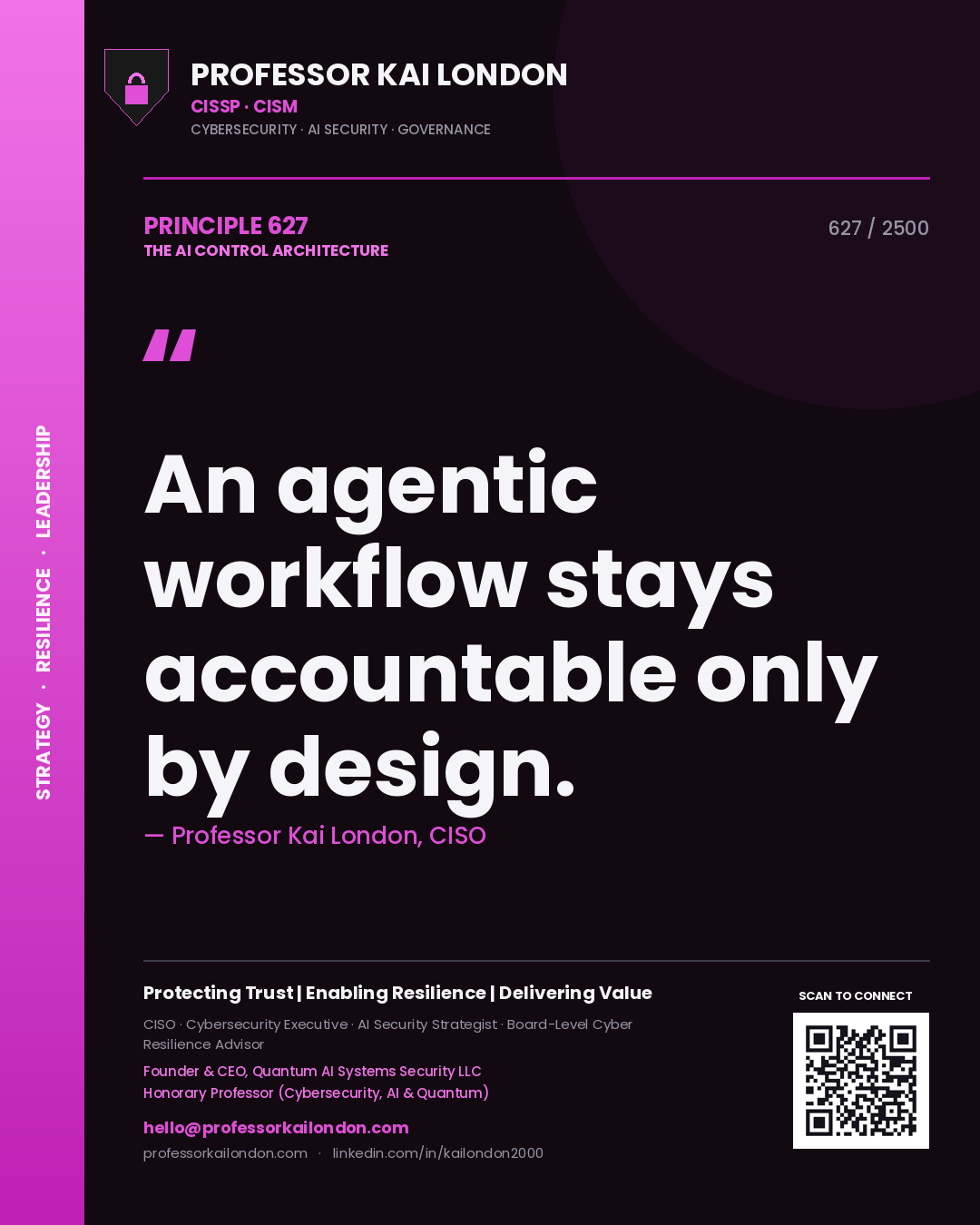
Professor Kai London principle 627: An agentic workflow stays accountable only by design.
Principle 627
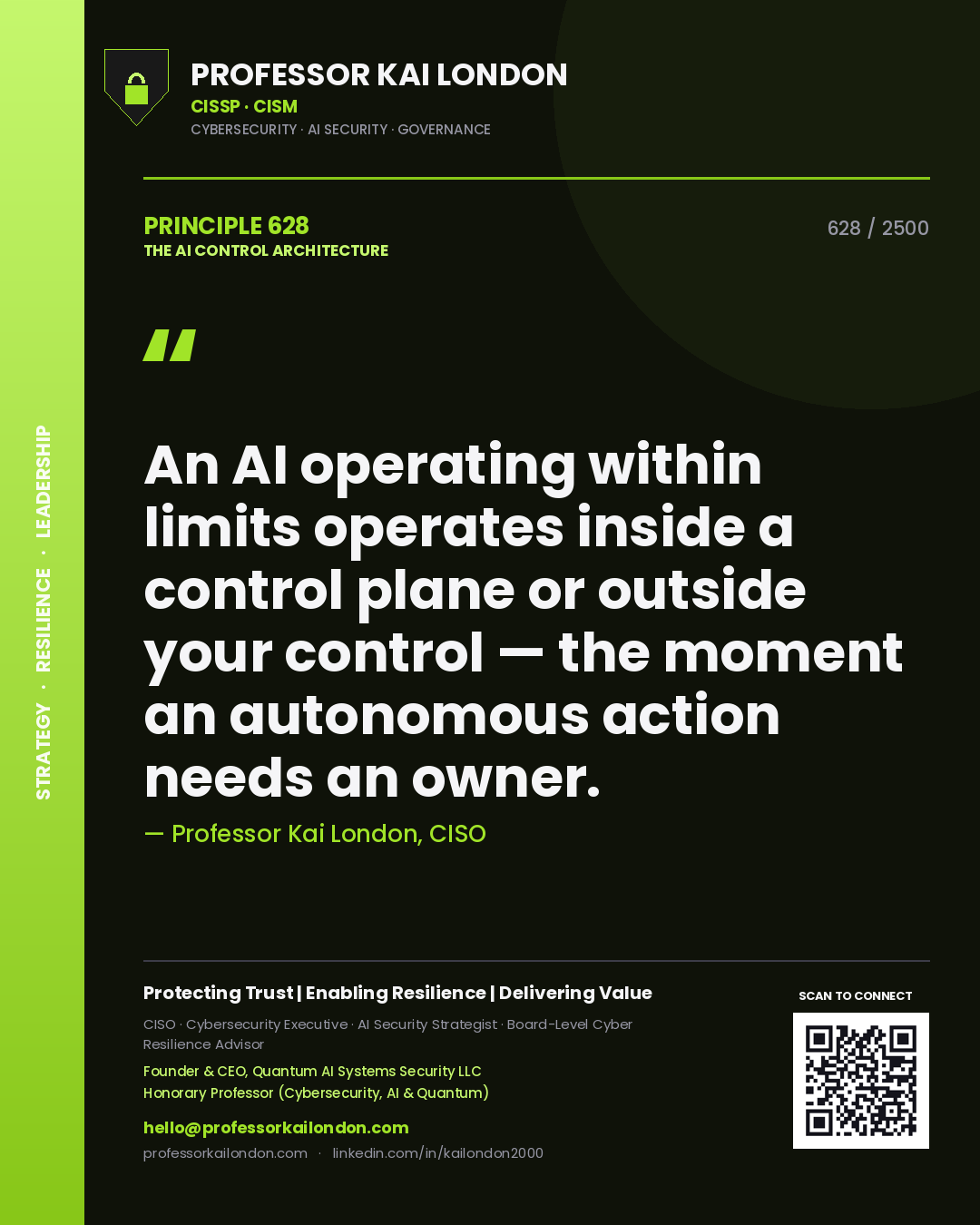
Professor Kai London principle 628: An AI operating within limits operates inside a control plane or outside your control — the moment an autonomous action needs an owner.
Principle 628
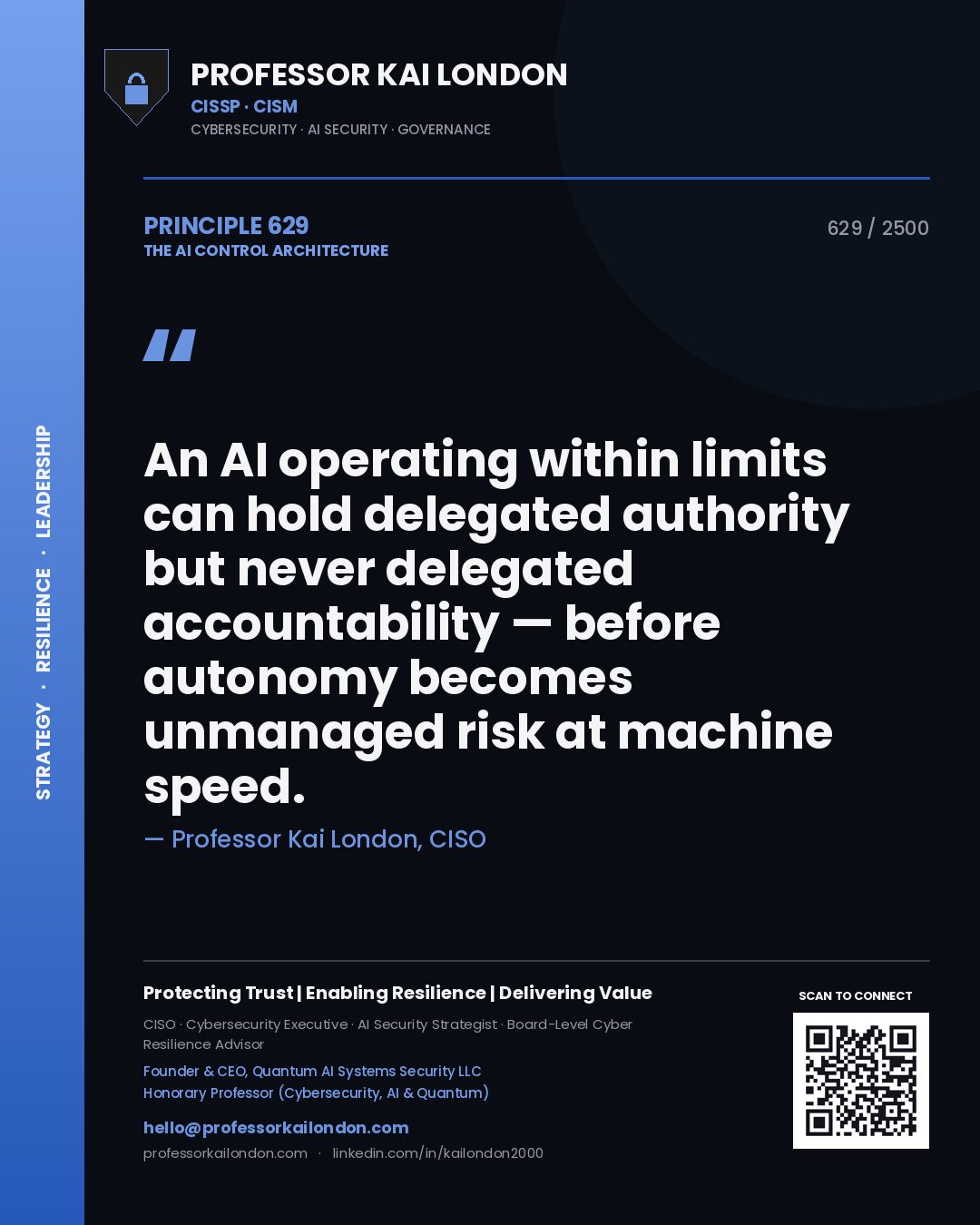
Professor Kai London principle 629: An AI operating within limits can hold delegated authority but never delegated accountability — before autonomy becomes unmanaged risk at machine speed.
Principle 629
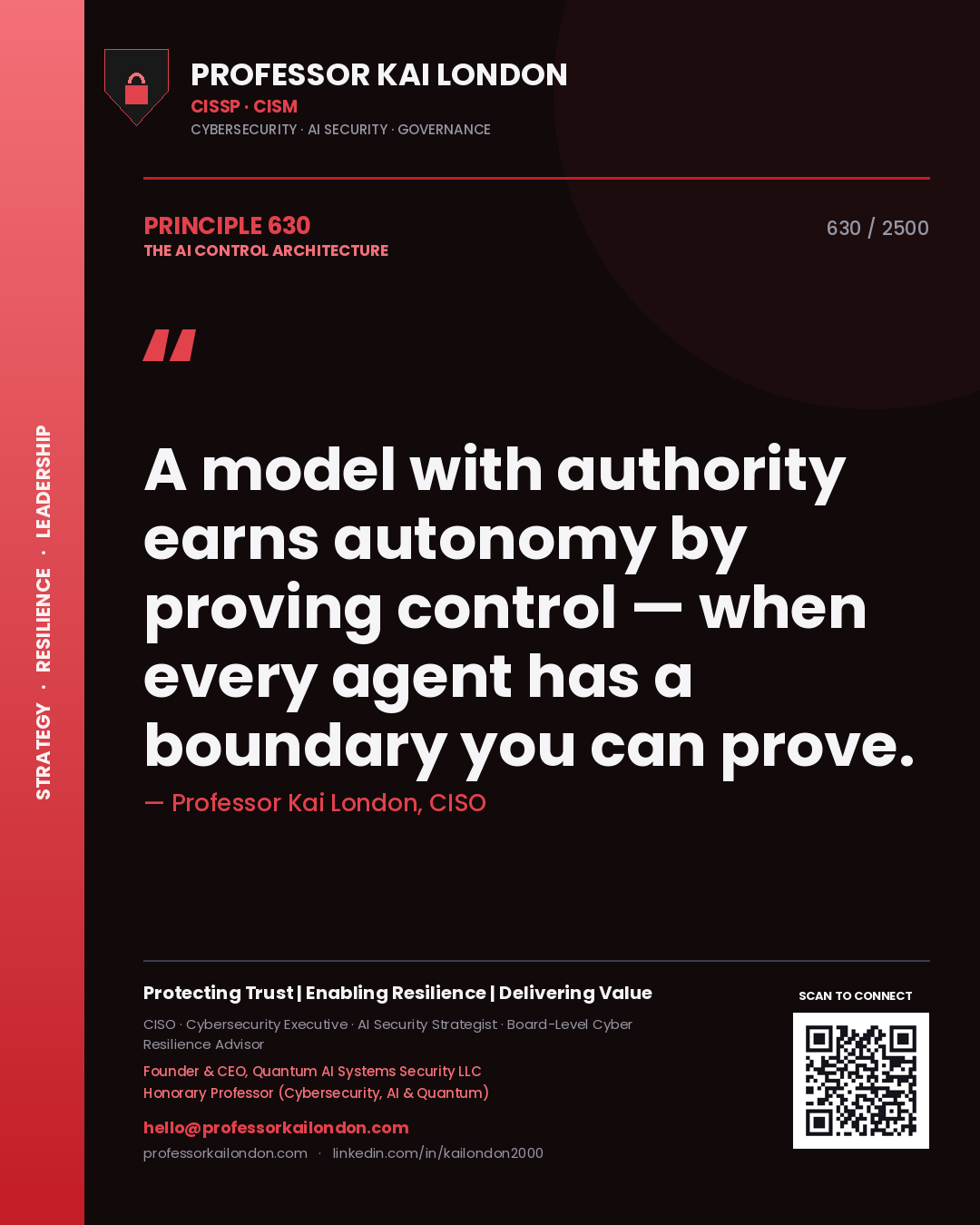
Professor Kai London principle 630: A model with authority earns autonomy by proving control — when every agent has a boundary you can prove.
Principle 630
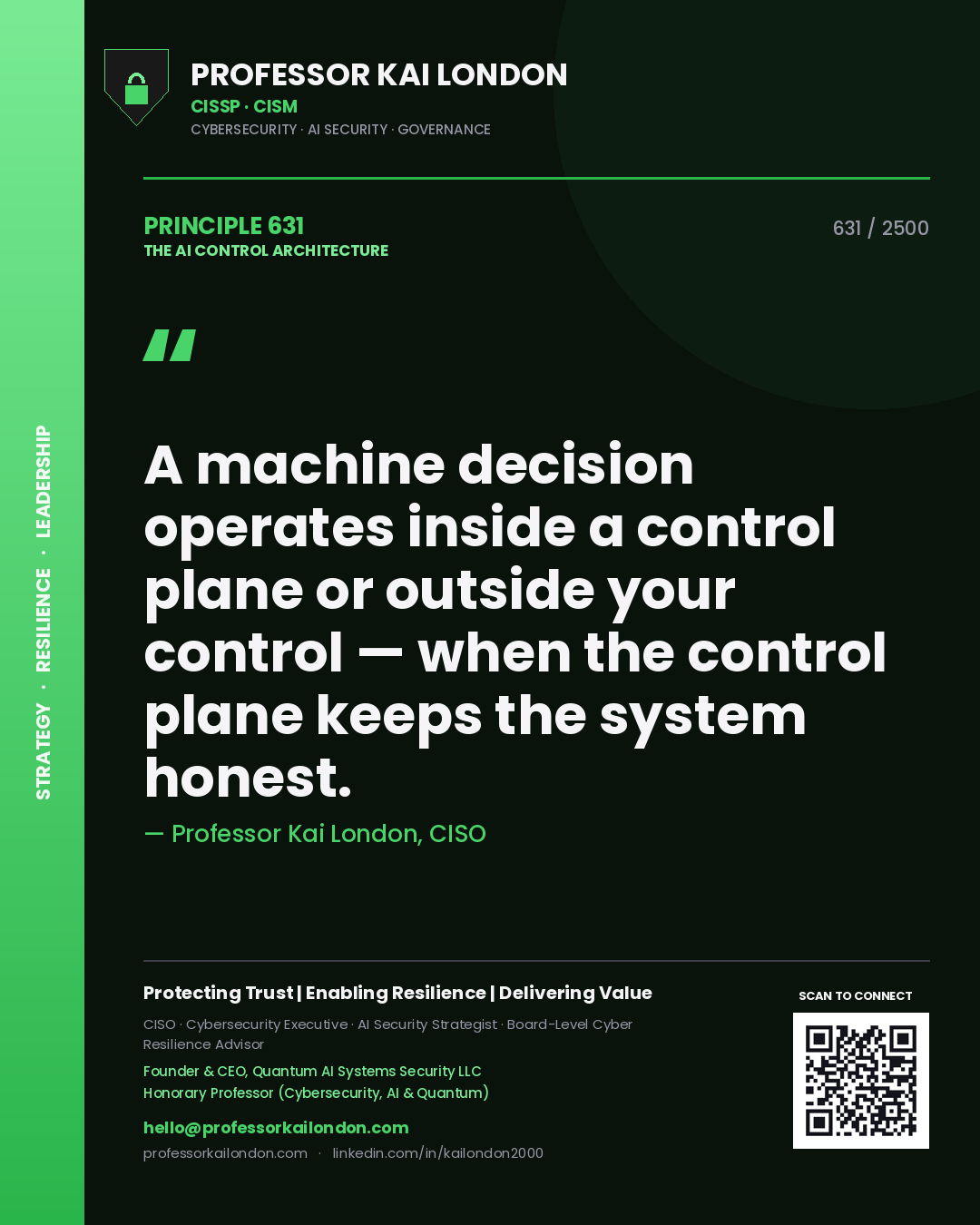
Professor Kai London principle 631: A machine decision operates inside a control plane or outside your control — when the control plane keeps the system honest.
Principle 631
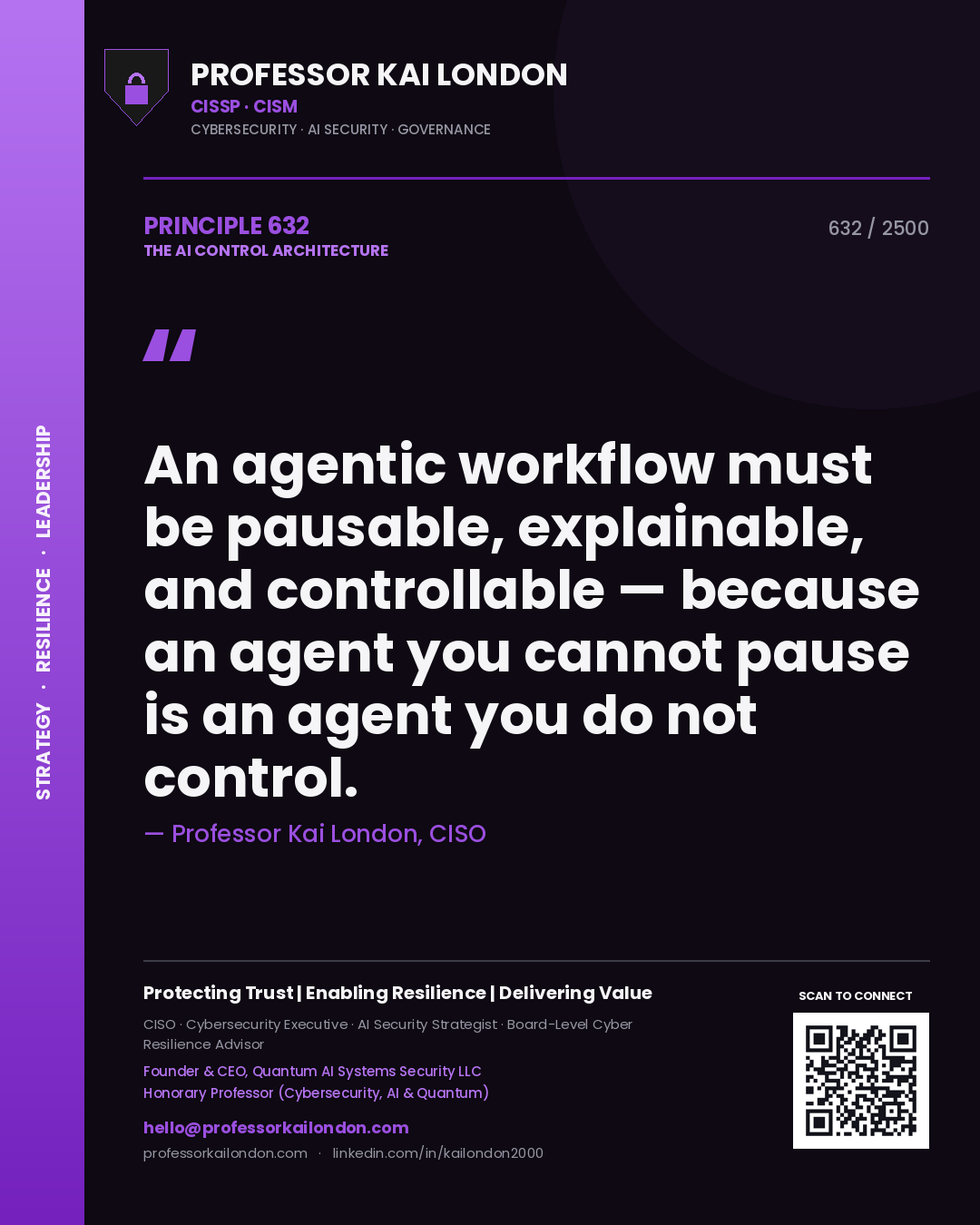
Professor Kai London principle 632: An agentic workflow must be pausable, explainable, and controllable — because an agent you cannot pause is an agent you do not control.
Principle 632
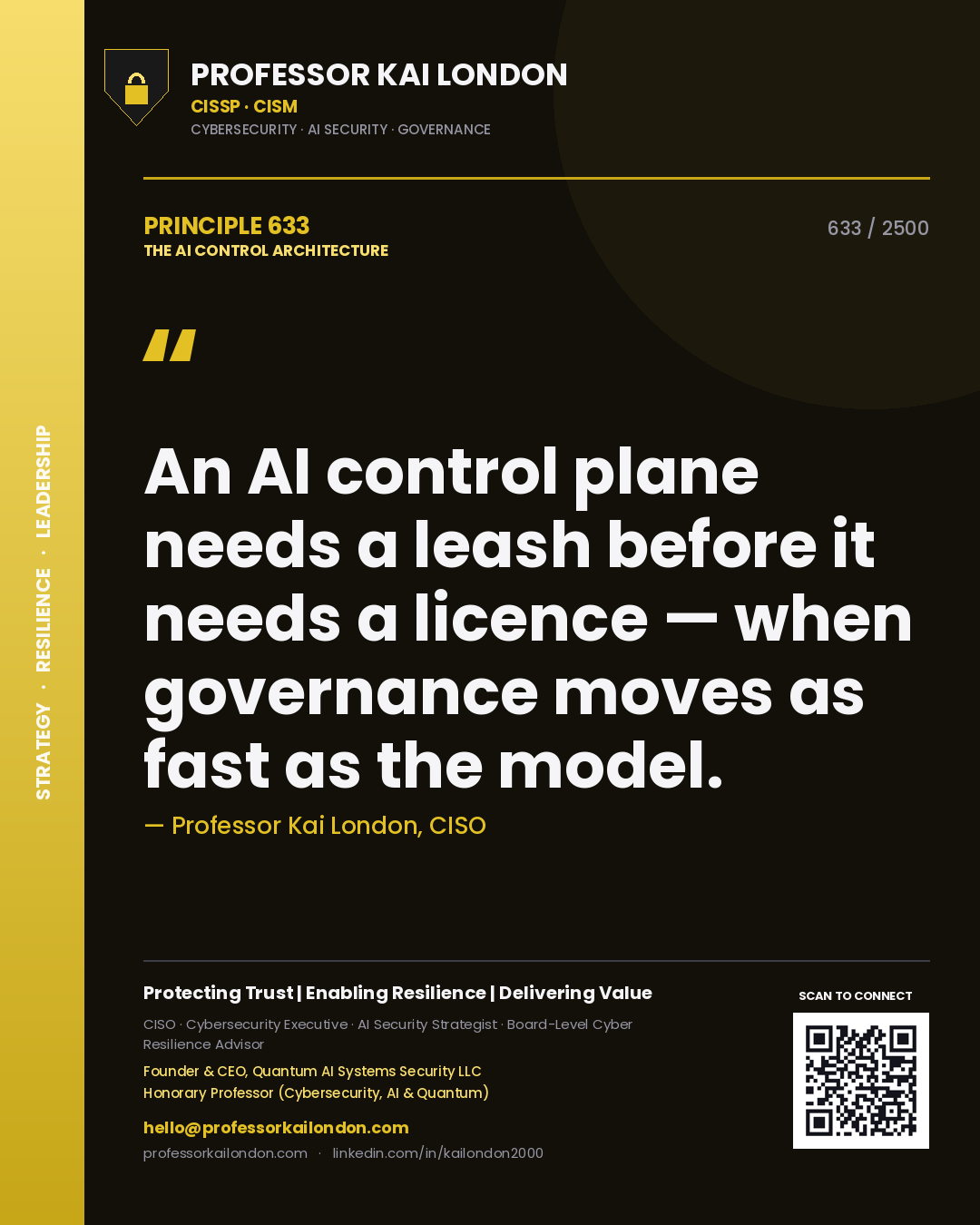
Professor Kai London principle 633: An AI control plane needs a leash before it needs a licence — when governance moves as fast as the model.
Principle 633
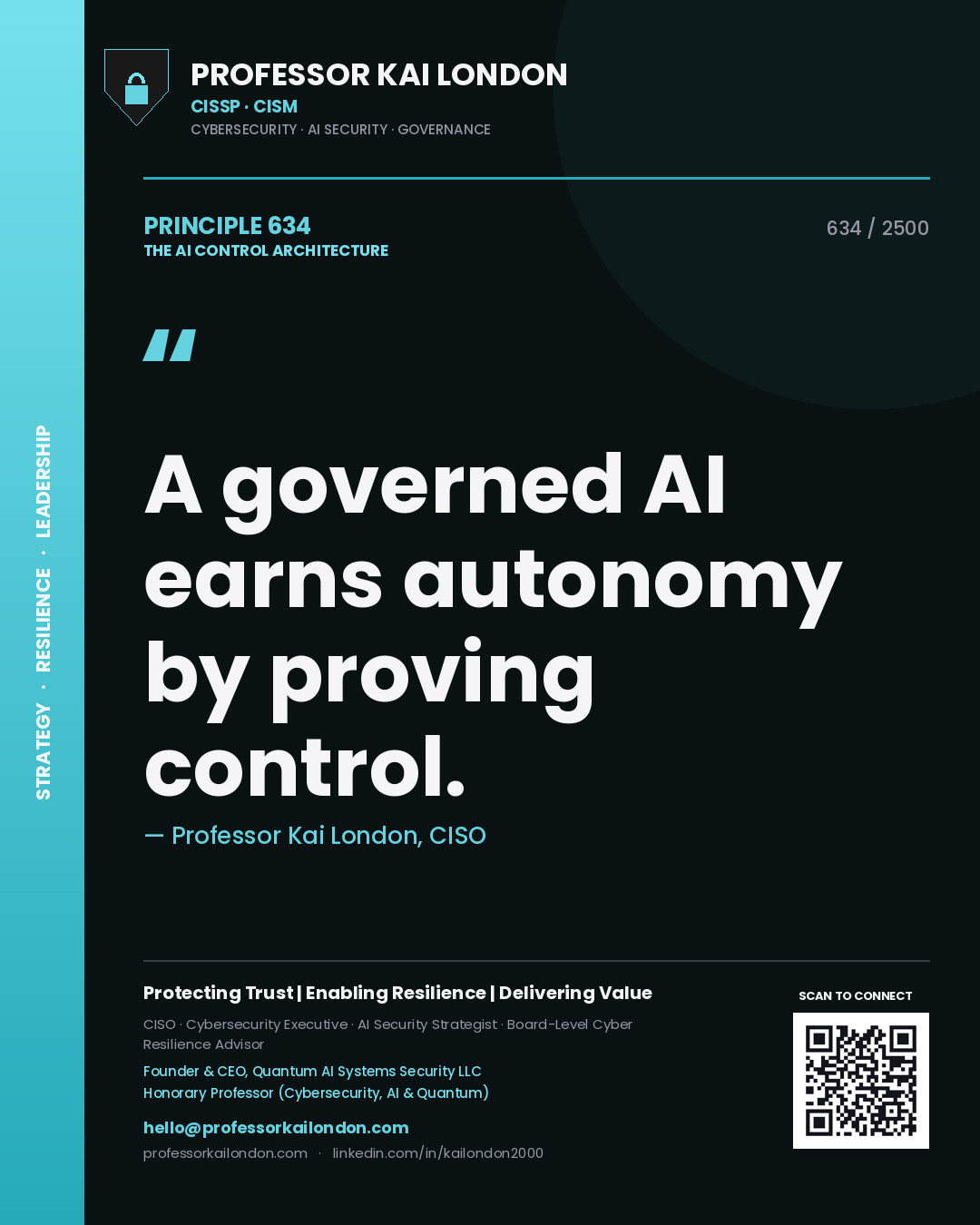
Professor Kai London principle 634: A governed AI earns autonomy by proving control.
Principle 634
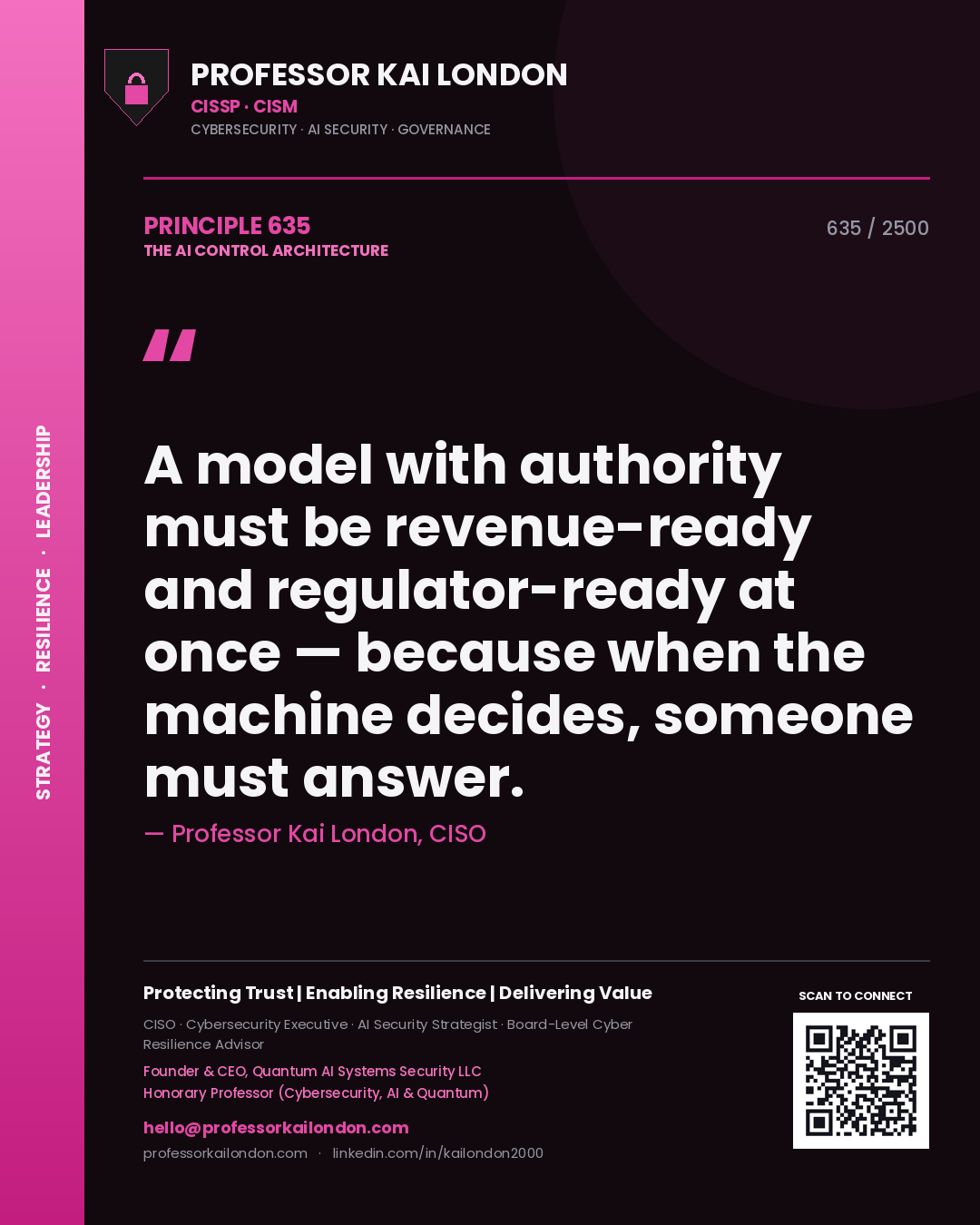
Professor Kai London principle 635: A model with authority must be revenue-ready and regulator-ready at once — because when the machine decides, someone must answer.
Principle 635
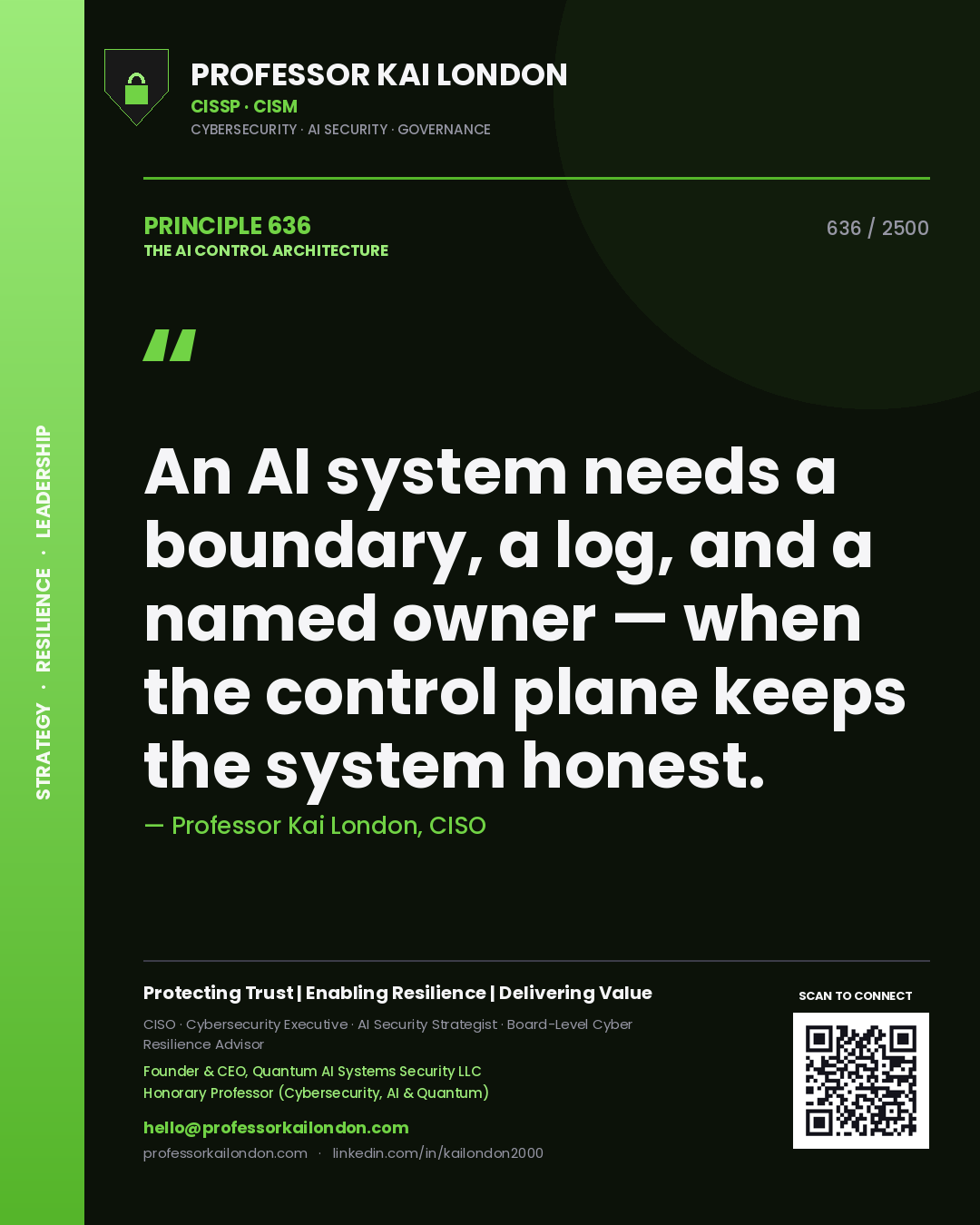
Professor Kai London principle 636: An AI system needs a boundary, a log, and a named owner — when the control plane keeps the system honest.
Principle 636
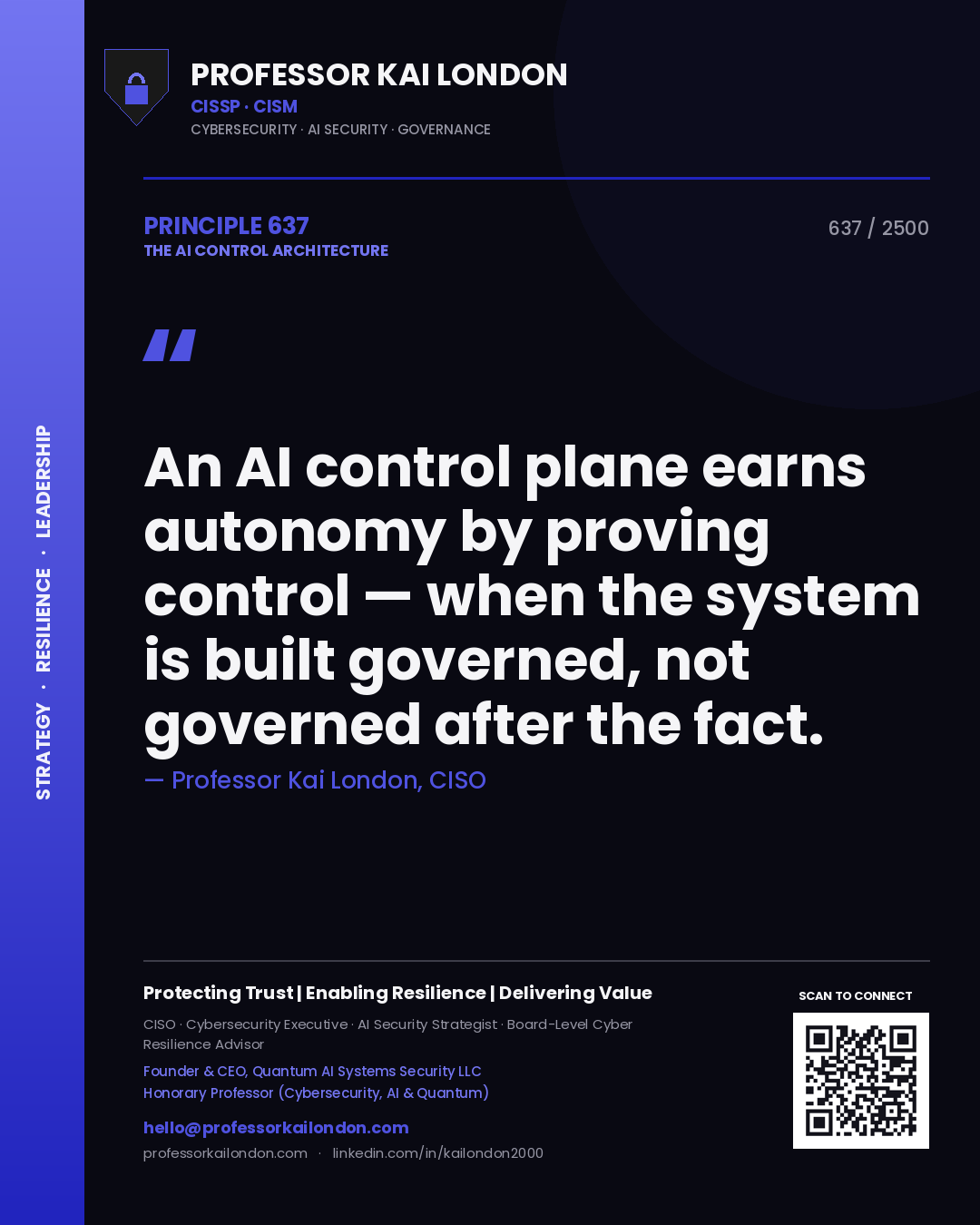
Professor Kai London principle 637: An AI control plane earns autonomy by proving control — when the system is built governed, not governed after the fact.
Principle 637
Professor Kai London principle 638: An agentic workflow stays accountable only by design — because when the machine decides, someone must answer.
Principle 638
Professor Kai London principle 639: An agentic workflow stays accountable only by design — when authority is delegated but accountability is not.
Principle 639
Professor Kai London principle 640: A model with authority stays accountable only by design — because when the machine decides, someone must answer.
Principle 640
Professor Kai London principle 641: An autonomous agent needs a leash before it needs a licence — when the control plane keeps the system honest.
Principle 641
Professor Kai London principle 642: A decision boundary stays accountable only by design — when every agent has a boundary you can prove.
Principle 642
Professor Kai London principle 643: An AI operating within limits needs a leash before it needs a licence — because when the machine decides, someone must answer.
Principle 643
Professor Kai London principle 644: An AI operating within limits must be revenue-ready and regulator-ready at once — the moment an autonomous action needs an owner.
Principle 644
Professor Kai London principle 645: An AI system needs a boundary, a log, and a named owner — when the system is built governed, not governed after the fact.
Principle 645
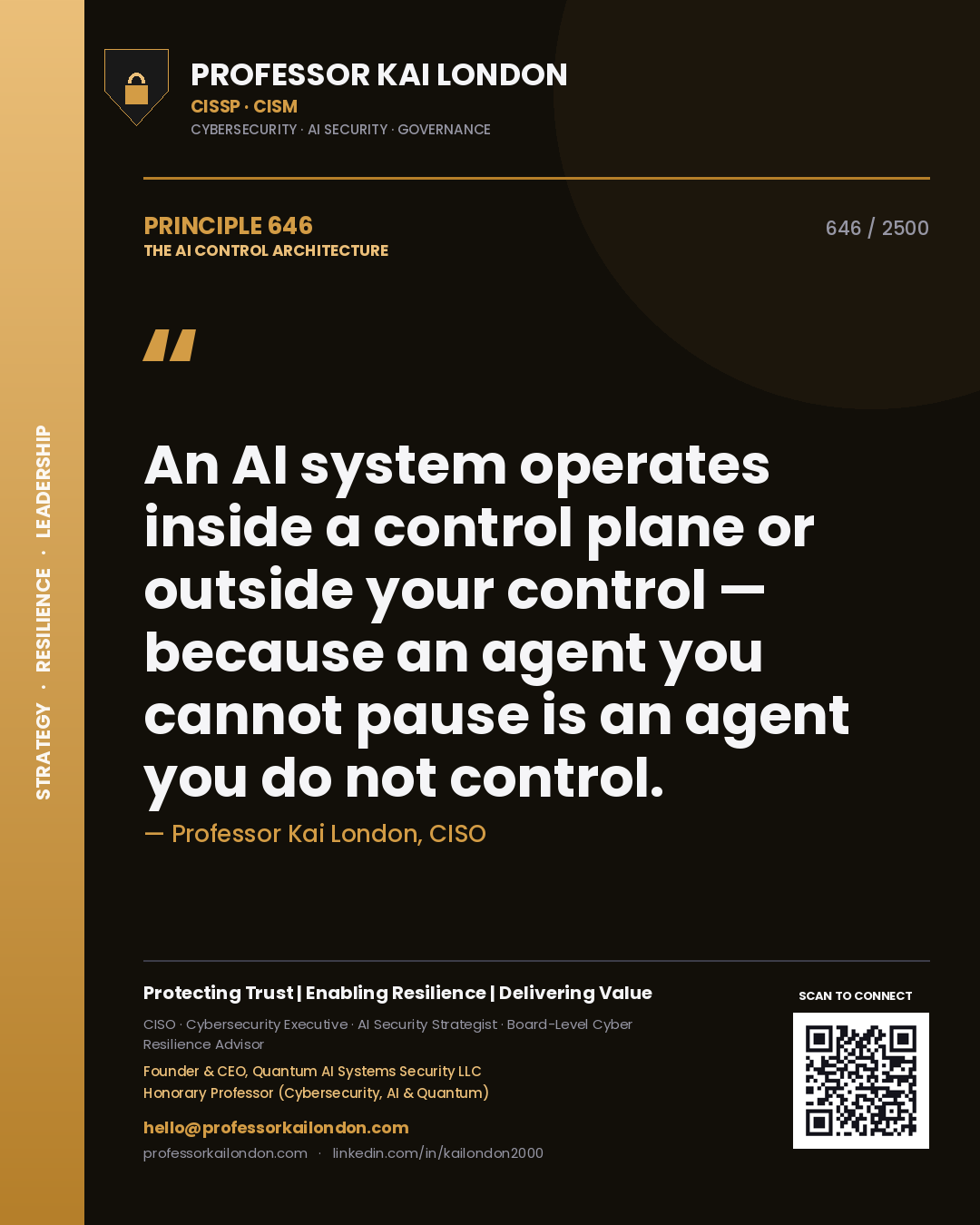
Professor Kai London principle 646: An AI system operates inside a control plane or outside your control — because an agent you cannot pause is an agent you do not control.
Principle 646
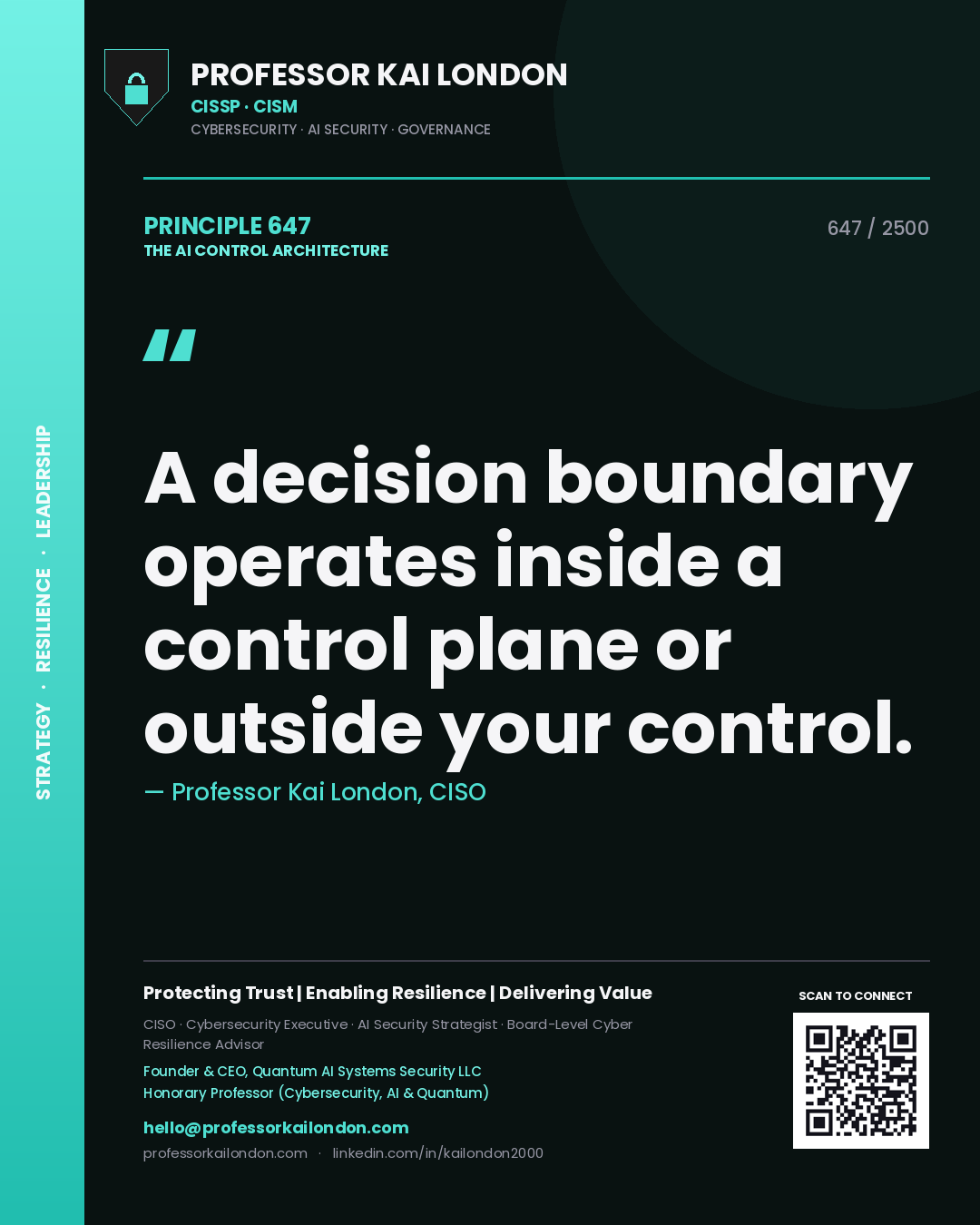
Professor Kai London principle 647: A decision boundary operates inside a control plane or outside your control.
Principle 647
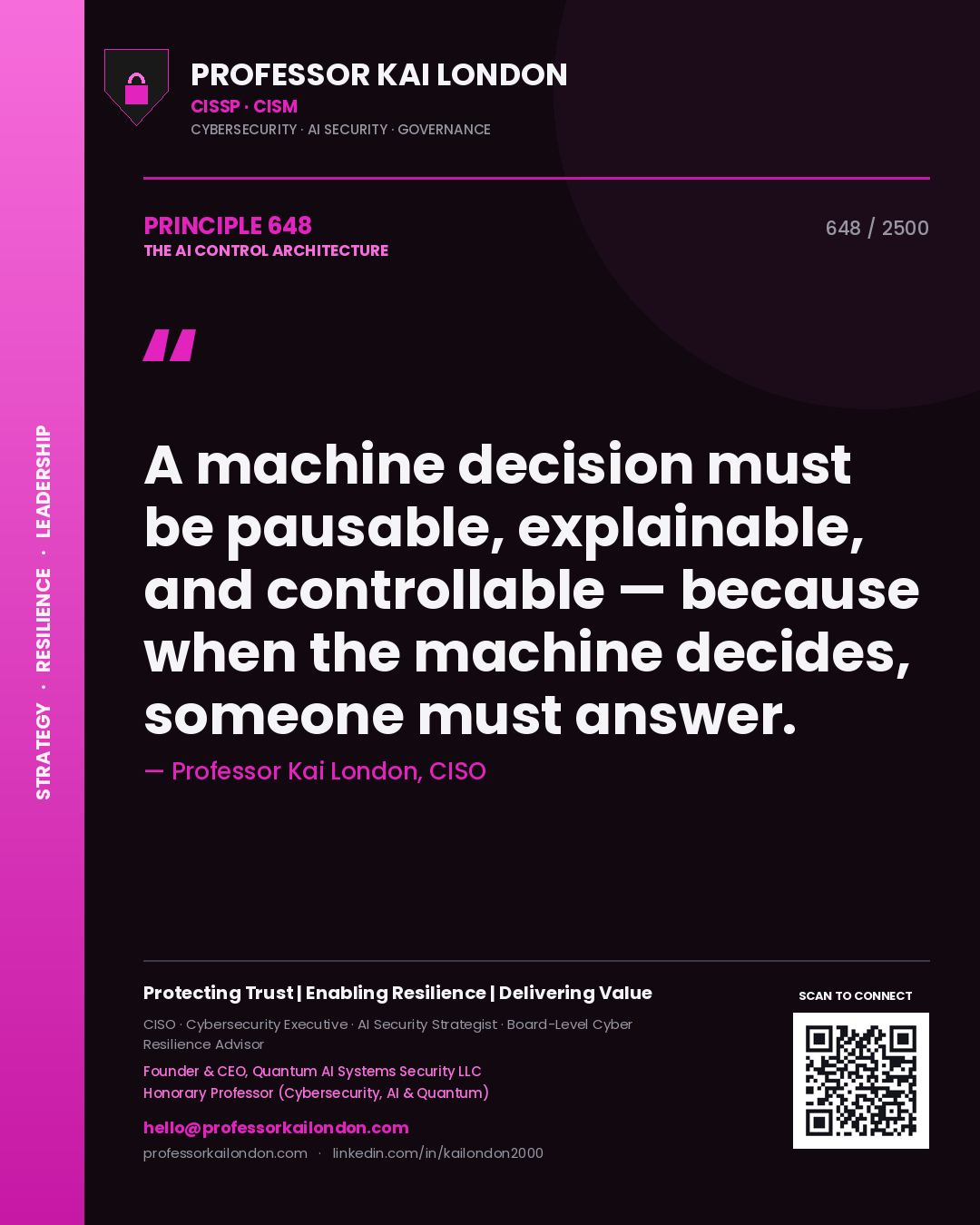
Professor Kai London principle 648: A machine decision must be pausable, explainable, and controllable — because when the machine decides, someone must answer.
Principle 648
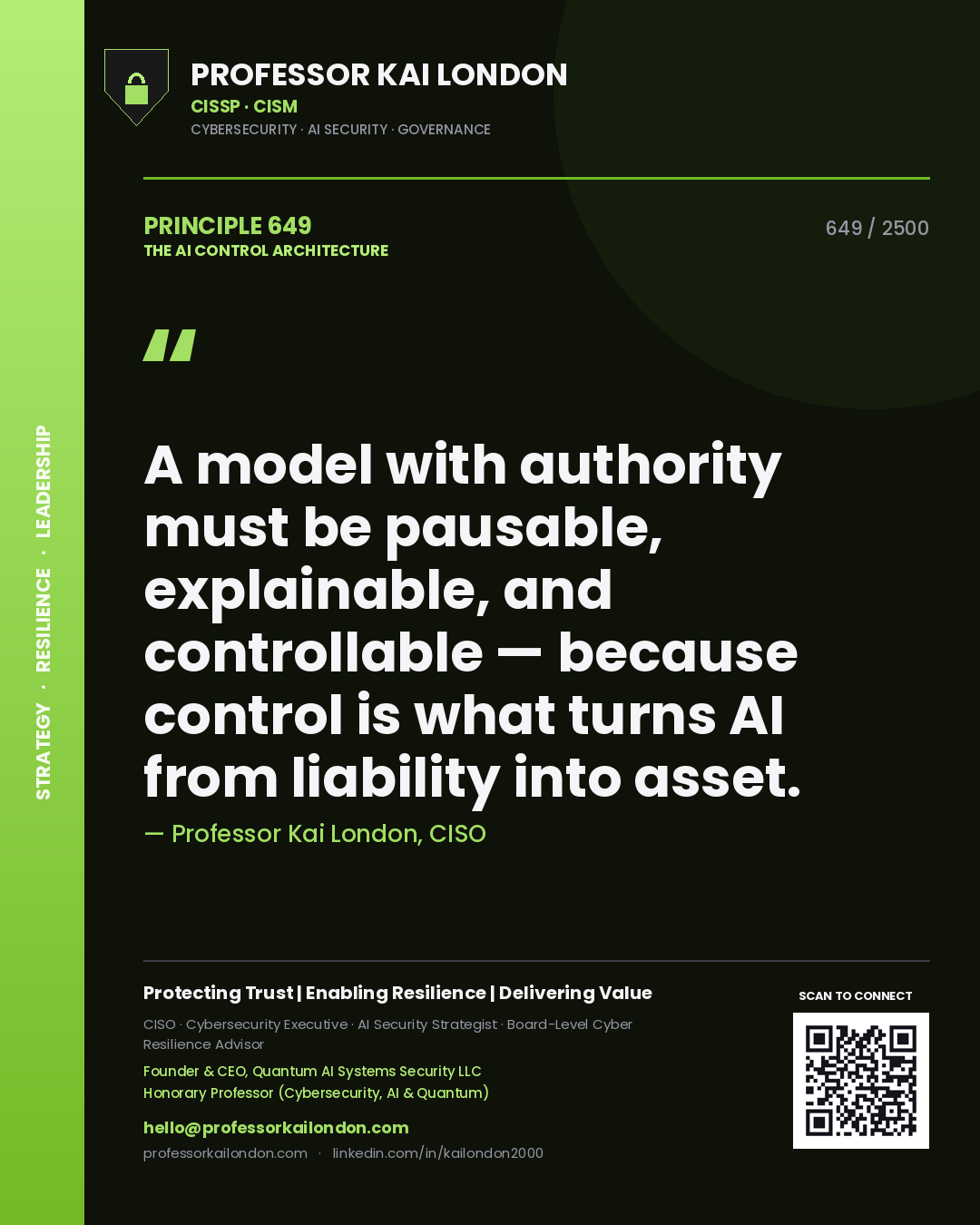
Professor Kai London principle 649: A model with authority must be pausable, explainable, and controllable — because control is what turns AI from liability into asset.
Principle 649
Professor Kai London principle 650: An AI control plane is governed at machine speed with human consequences — because control is what turns AI from liability into asset.
Principle 650
Professor Kai London principle 651: An agentic workflow operates inside a control plane or outside your control — when authority is delegated but accountability is not.
Principle 651
Professor Kai London principle 652: A machine decision is governed at machine speed with human consequences — because when the machine decides, someone must answer.
Principle 652
Professor Kai London principle 653: An AI control plane can hold delegated authority but never delegated accountability — when governance moves as fast as the model.
Principle 653
Professor Kai London principle 654: A model with authority needs a leash before it needs a licence — because an agent you cannot pause is an agent you do not control.
Principle 654
Professor Kai London principle 655: An automated action must be revenue-ready and regulator-ready at once — before autonomy becomes unmanaged risk at machine speed.
Principle 655
Professor Kai London principle 656: An automated action is governed at machine speed with human consequences — when authority is delegated but accountability is not.
Principle 656
Professor Kai London principle 657: A decision boundary must answer when it decides — when the control plane keeps the system honest.
Principle 657
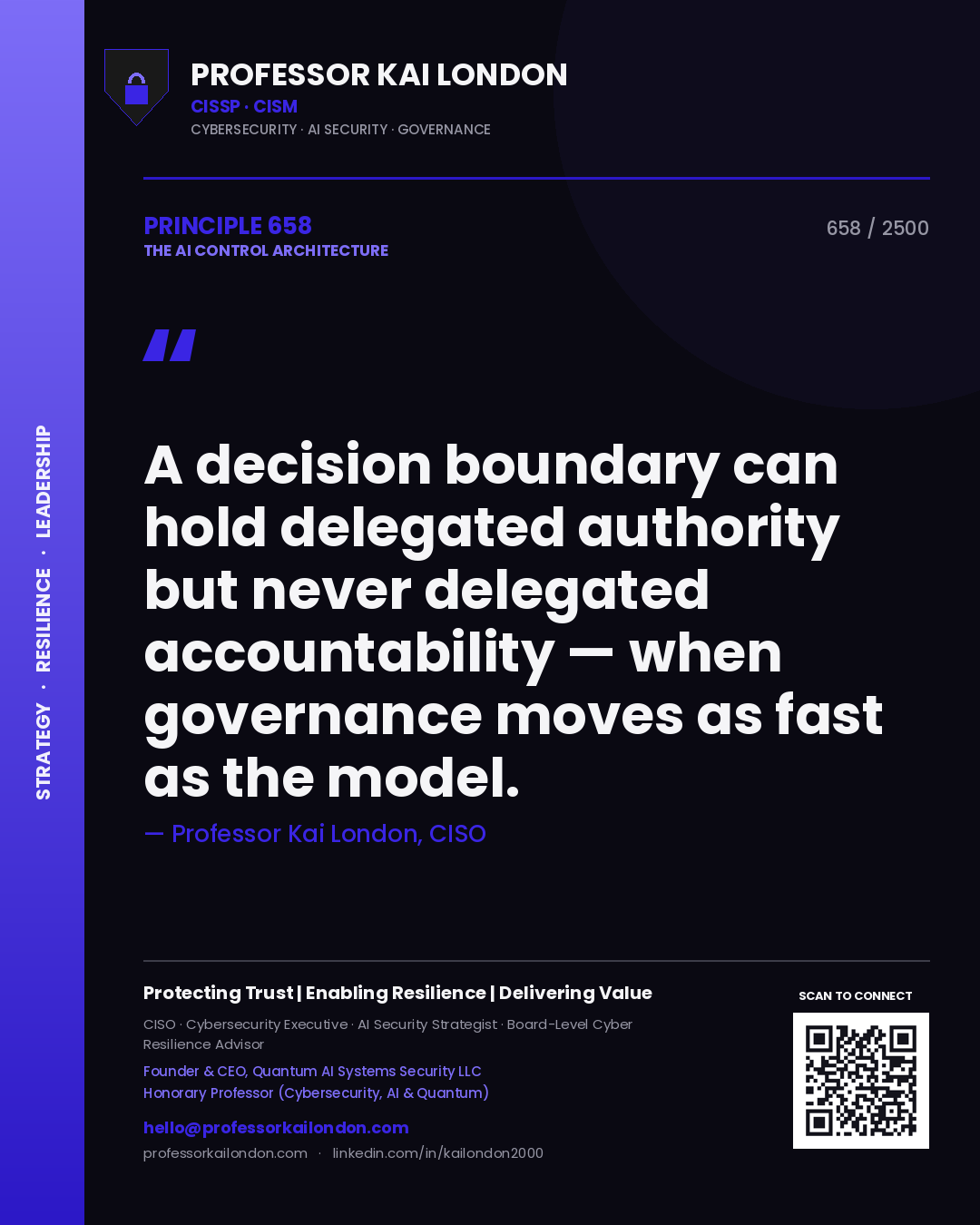
Professor Kai London principle 658: A decision boundary can hold delegated authority but never delegated accountability — when governance moves as fast as the model.
Principle 658
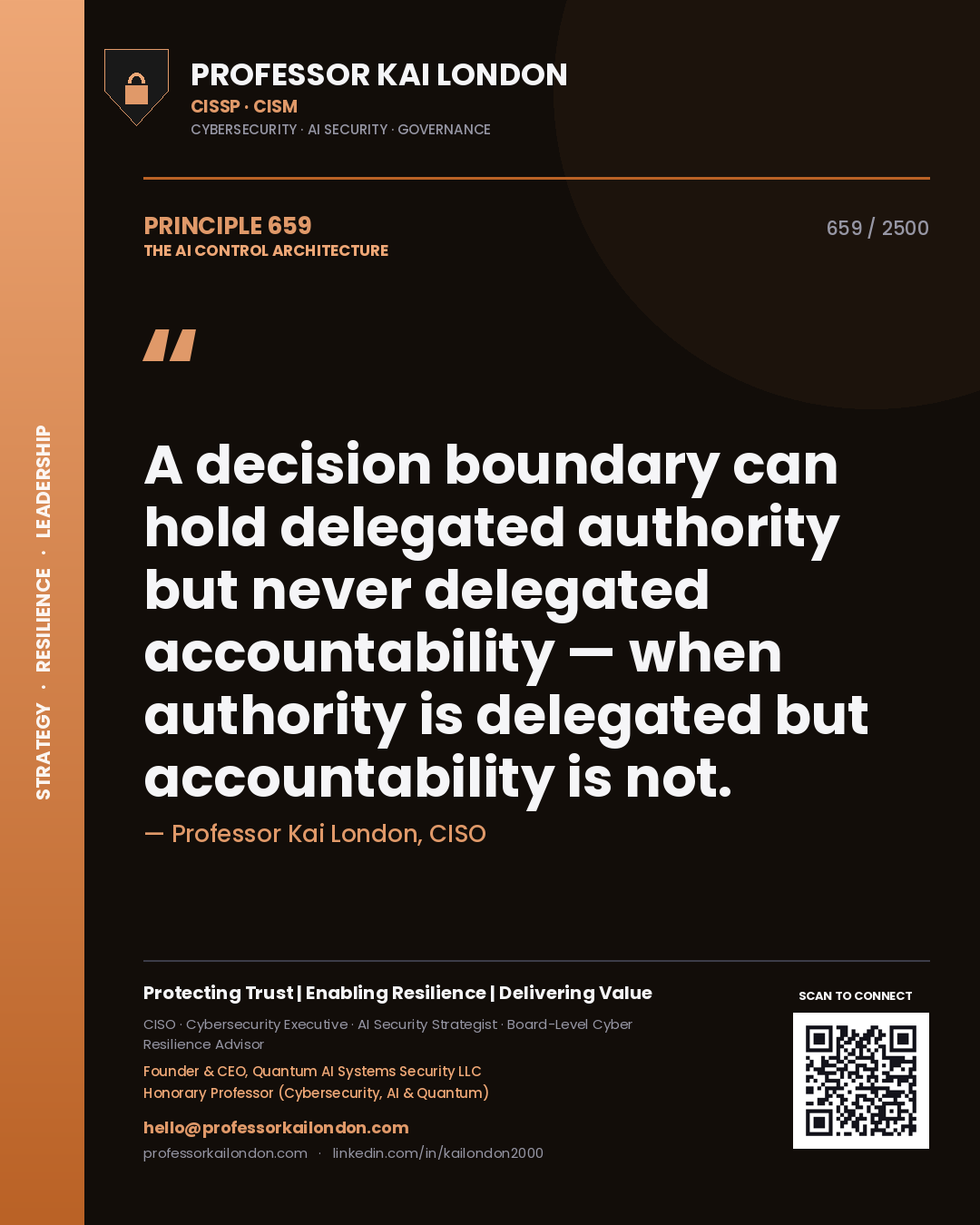
Professor Kai London principle 659: A decision boundary can hold delegated authority but never delegated accountability — when authority is delegated but accountability is not.
Principle 659
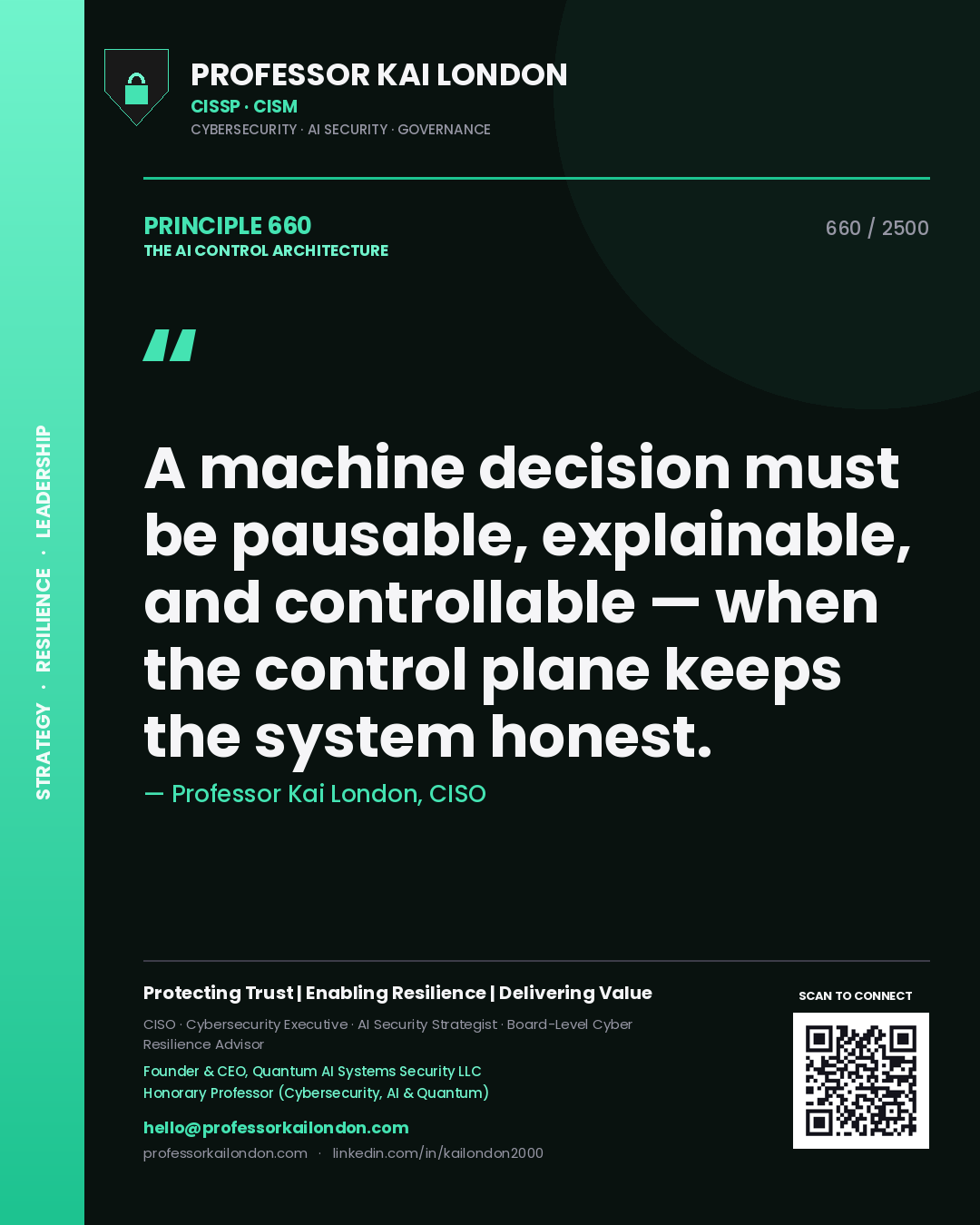
Professor Kai London principle 660: A machine decision must be pausable, explainable, and controllable — when the control plane keeps the system honest.
Principle 660
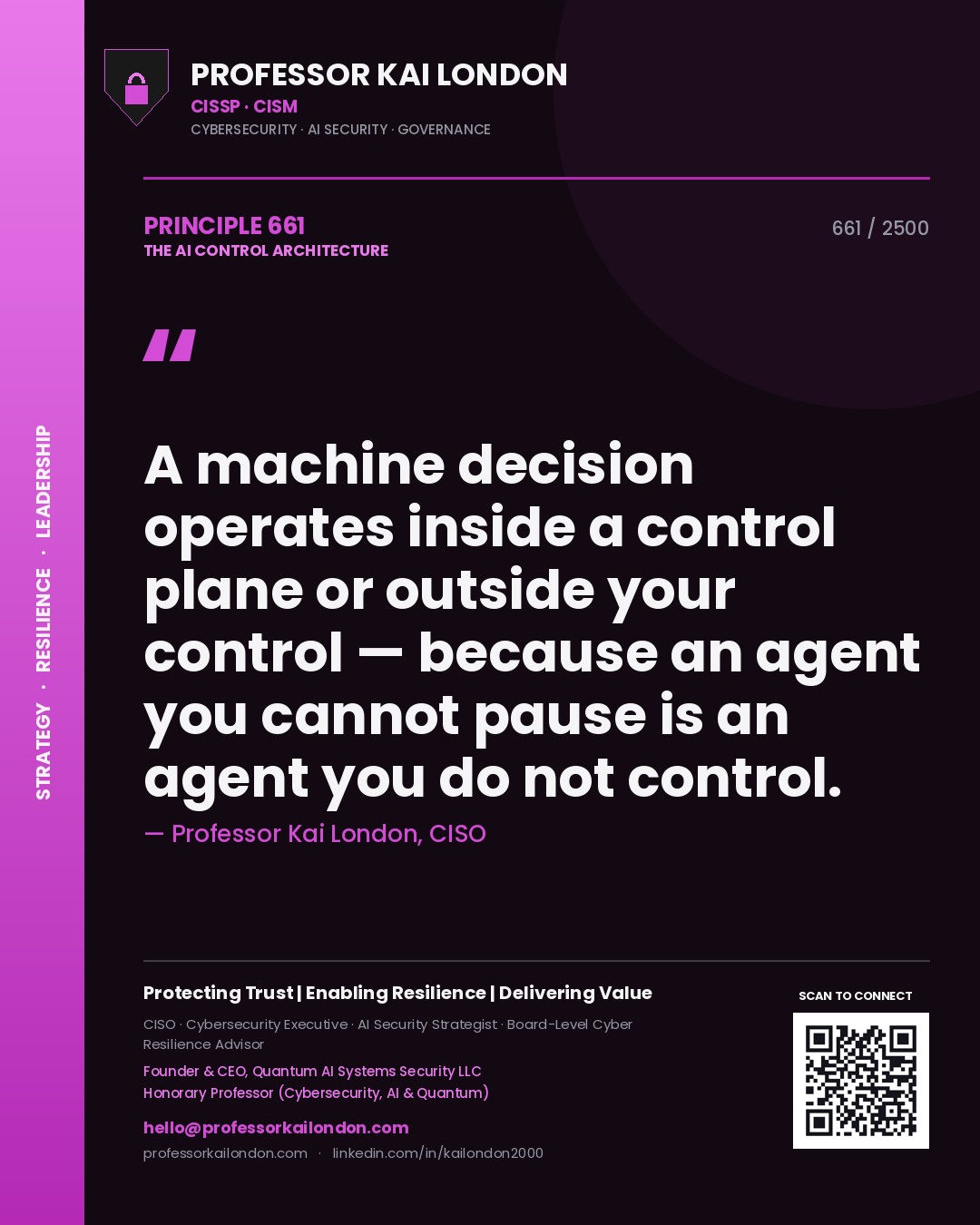
Professor Kai London principle 661: A machine decision operates inside a control plane or outside your control — because an agent you cannot pause is an agent you do not control.
Principle 661
Professor Kai London principle 662: An AI operating within limits can hold delegated authority but never delegated accountability — when the system is built governed, not governed after the fact.
Principle 662
Professor Kai London principle 663: An autonomous agent must be revenue-ready and regulator-ready at once — before autonomy becomes unmanaged risk at machine speed.
Principle 663
Professor Kai London principle 664: A machine decision must answer when it decides — before autonomy becomes unmanaged risk at machine speed.
Principle 664
Professor Kai London principle 665: A governed AI operates inside a control plane or outside your control — when authority is delegated but accountability is not.
Principle 665
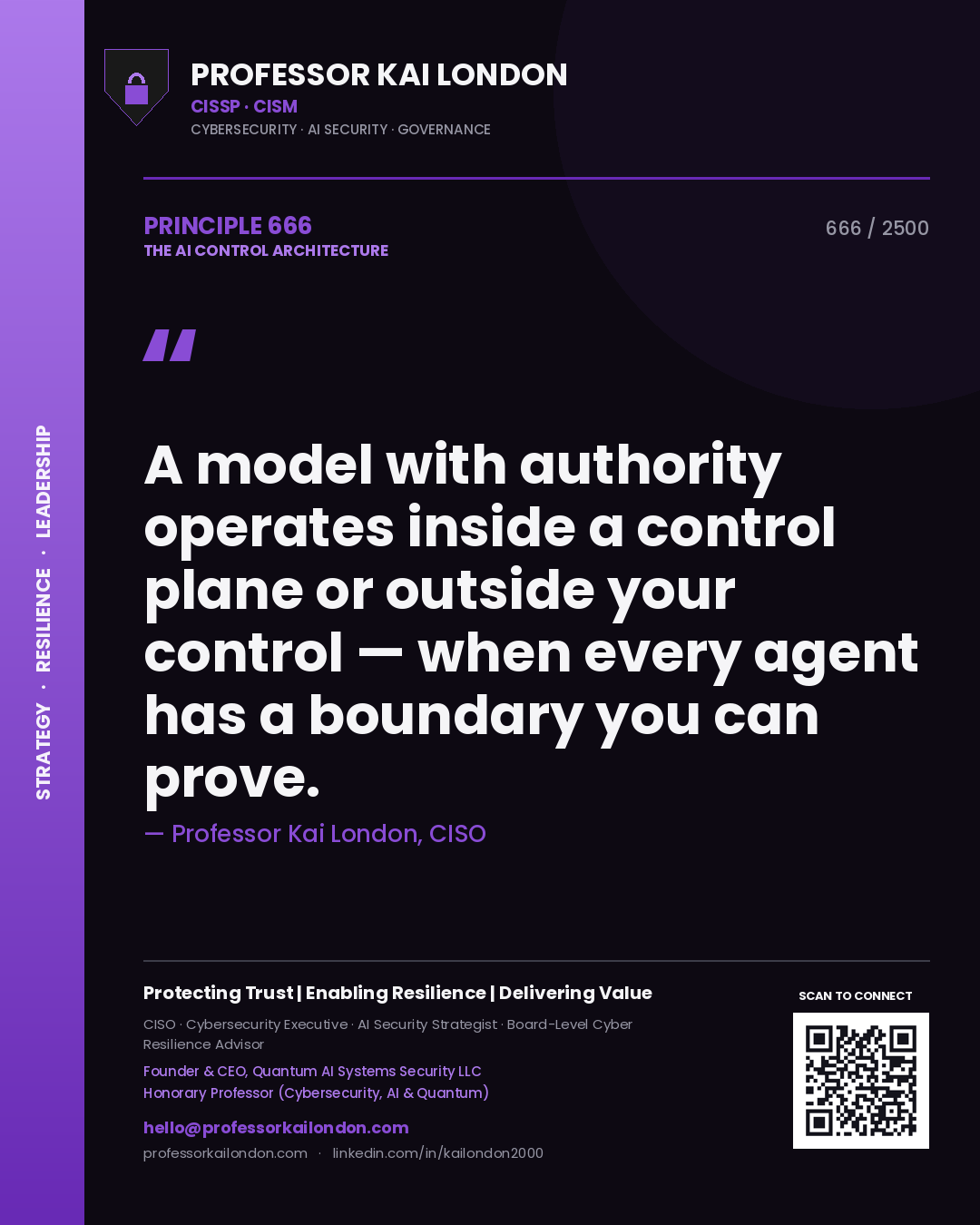
Professor Kai London principle 666: A model with authority operates inside a control plane or outside your control — when every agent has a boundary you can prove.
Principle 666
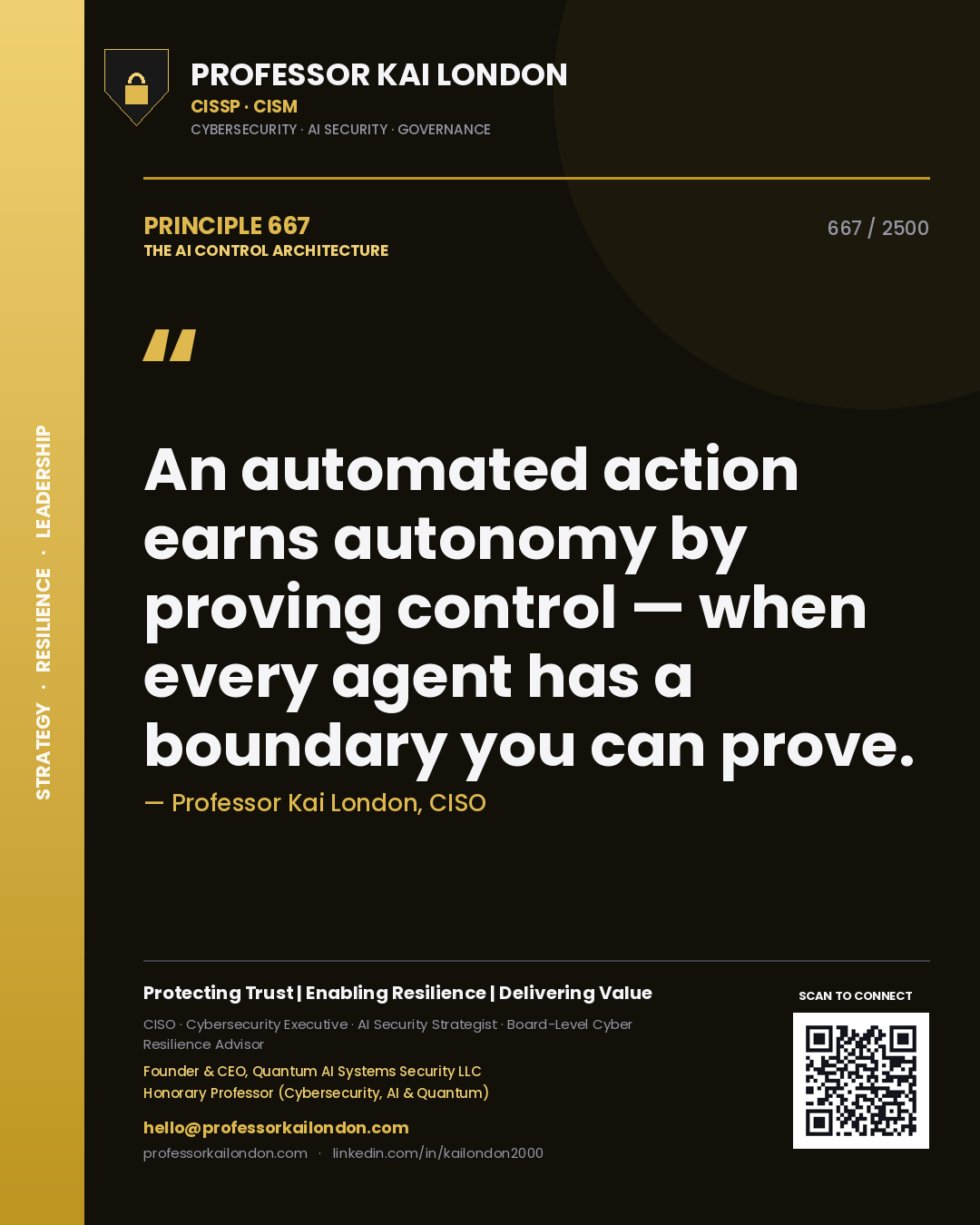
Professor Kai London principle 667: An automated action earns autonomy by proving control — when every agent has a boundary you can prove.
Principle 667
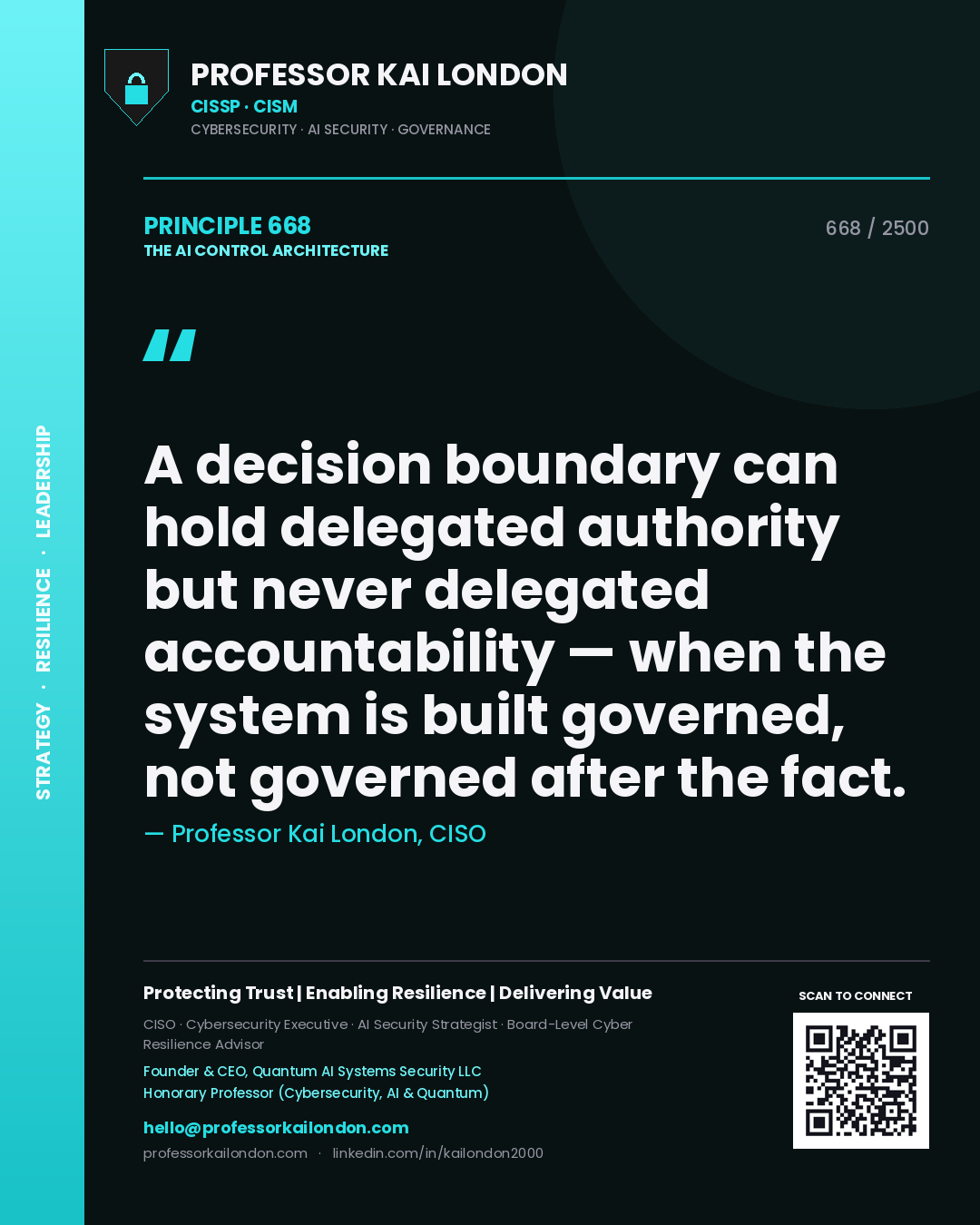
Professor Kai London principle 668: A decision boundary can hold delegated authority but never delegated accountability — when the system is built governed, not governed after the fact.
Principle 668
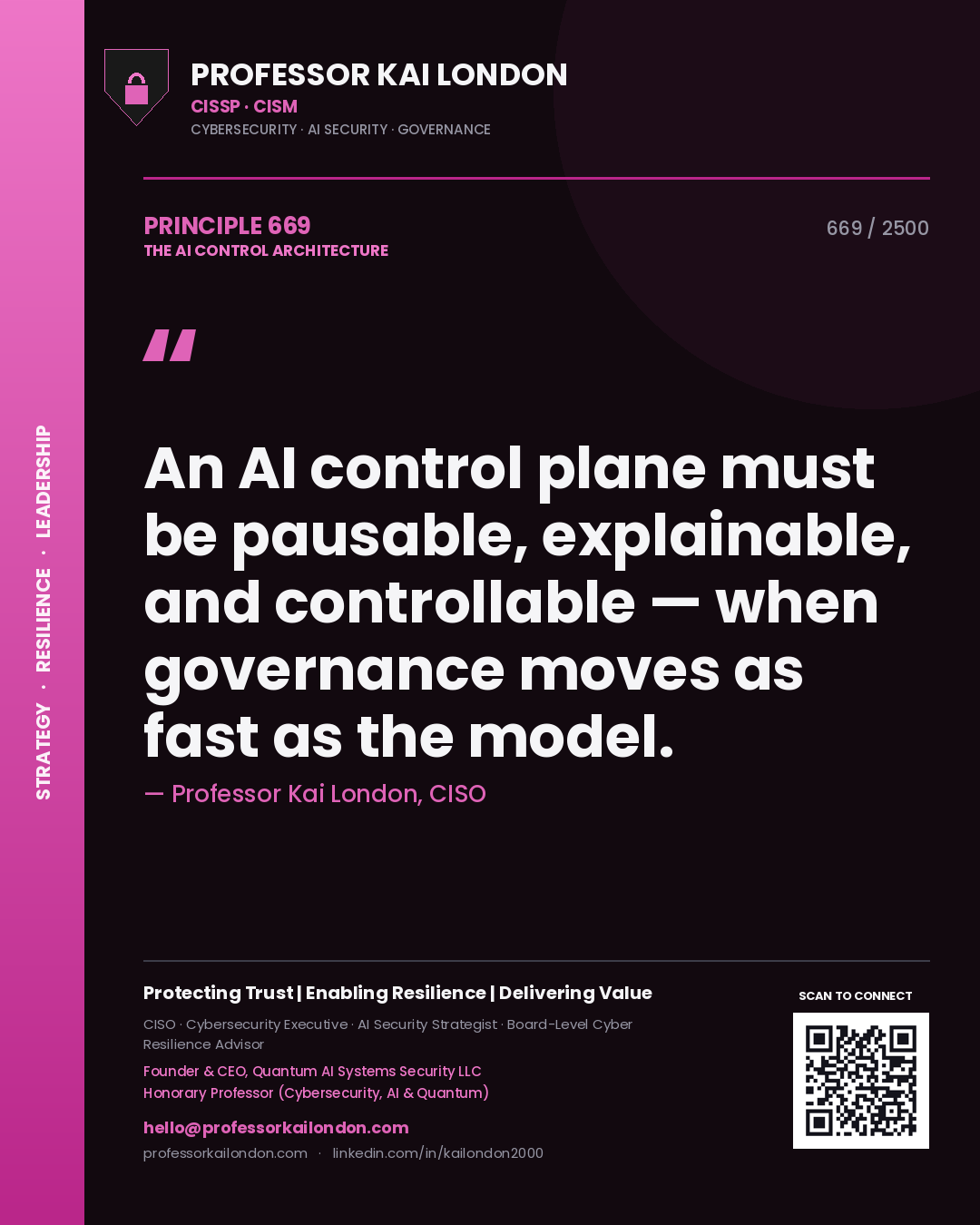
Professor Kai London principle 669: An AI control plane must be pausable, explainable, and controllable — when governance moves as fast as the model.
Principle 669
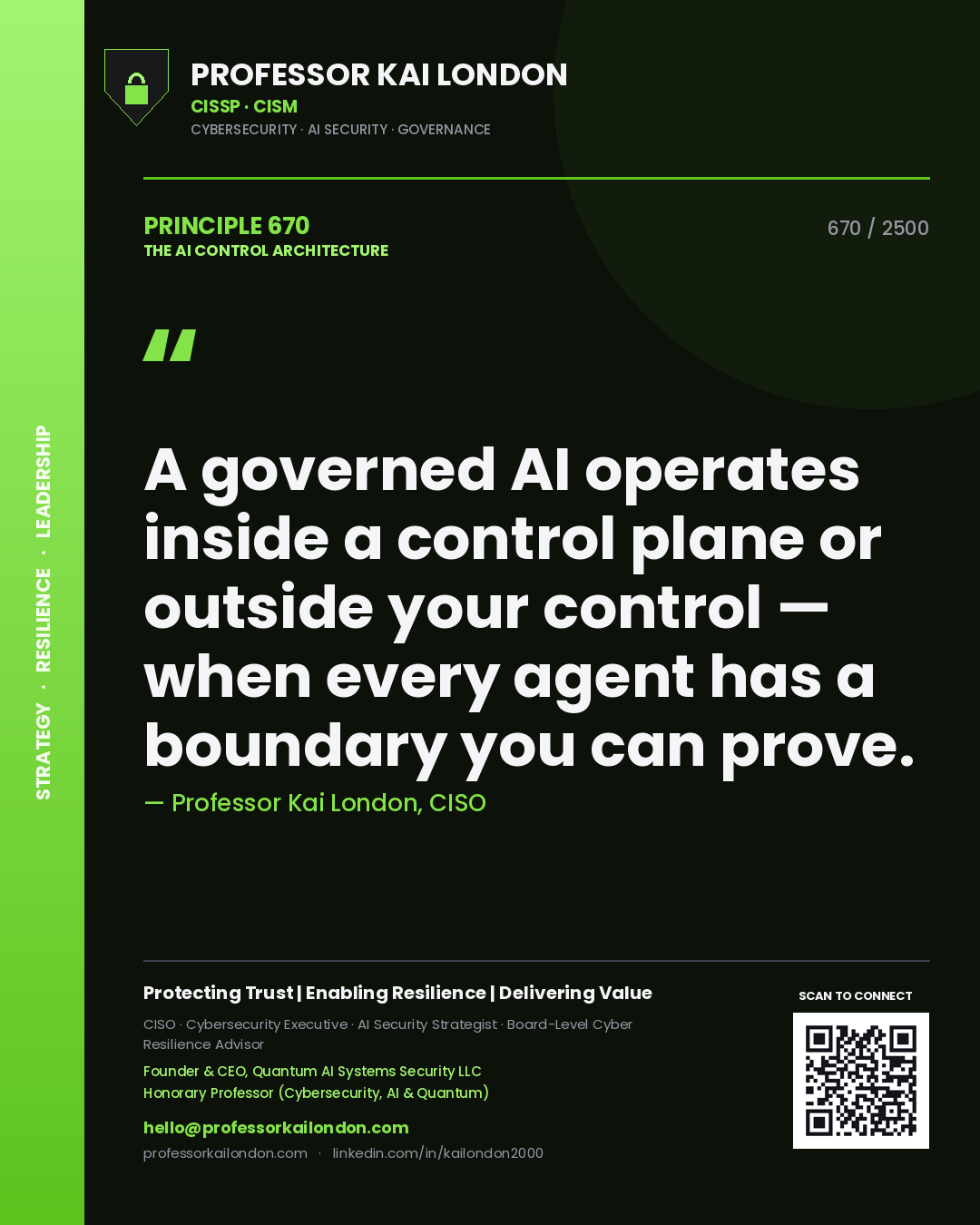
Professor Kai London principle 670: A governed AI operates inside a control plane or outside your control — when every agent has a boundary you can prove.
Principle 670
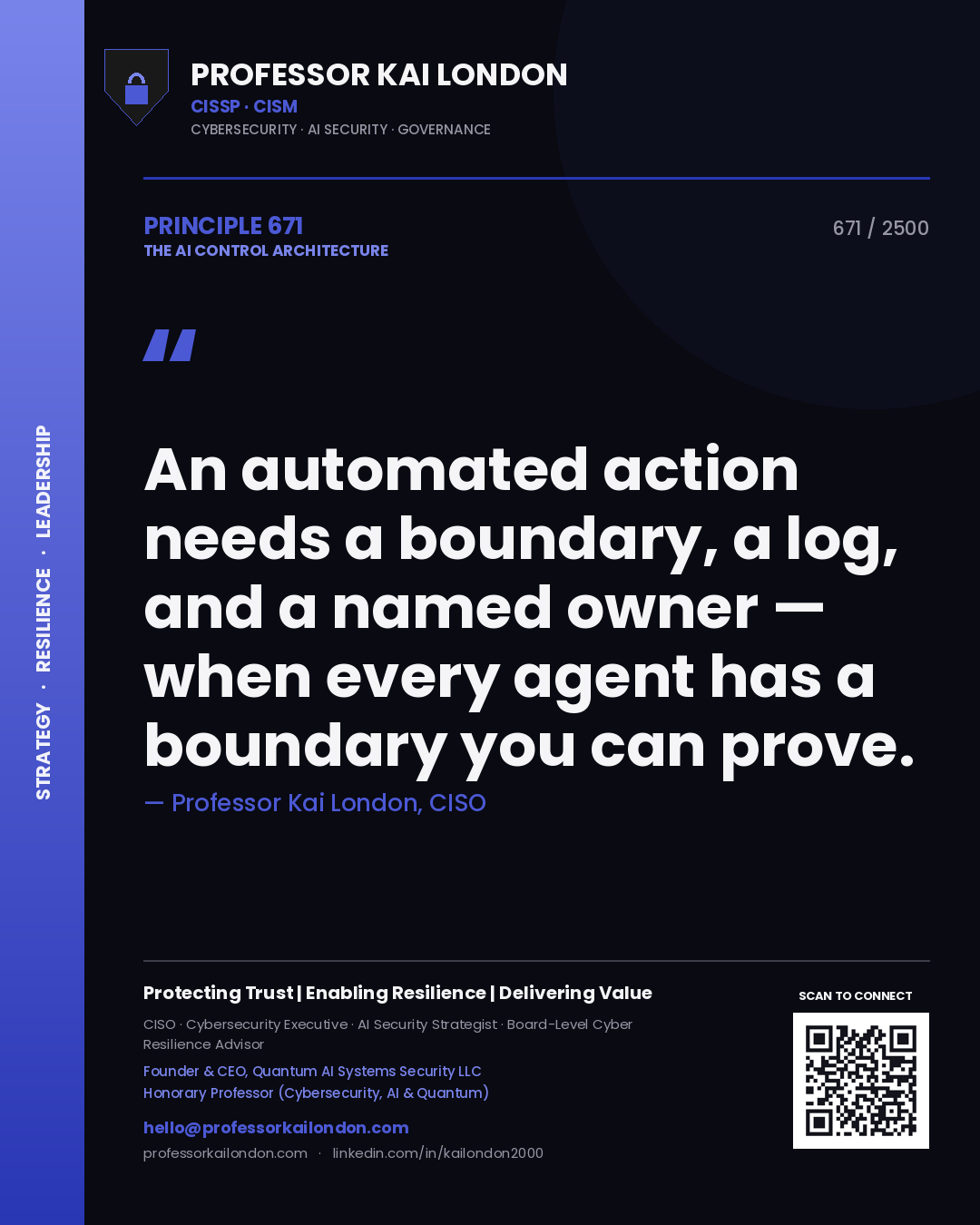
Professor Kai London principle 671: An automated action needs a boundary, a log, and a named owner — when every agent has a boundary you can prove.
Principle 671
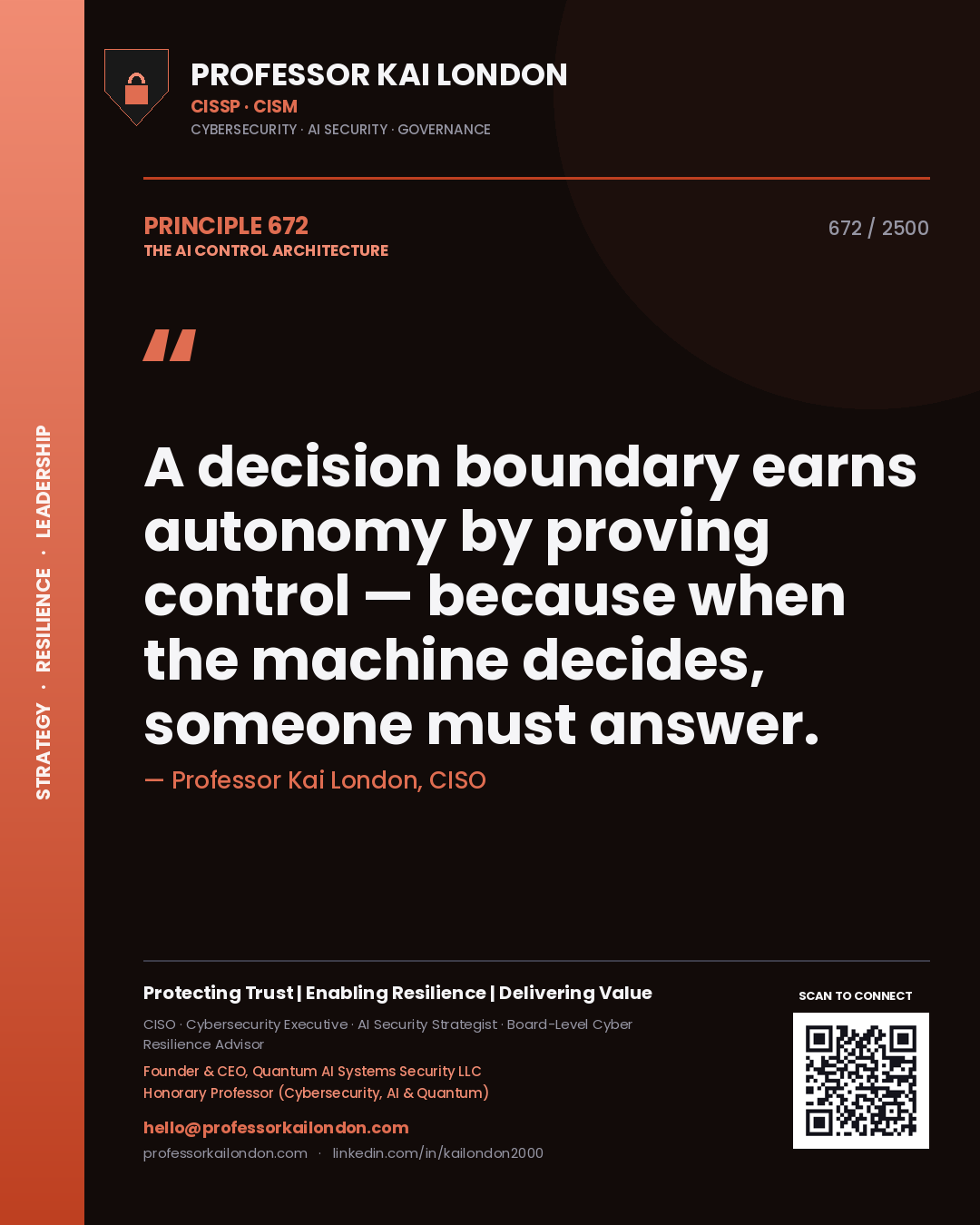
Professor Kai London principle 672: A decision boundary earns autonomy by proving control — because when the machine decides, someone must answer.
Principle 672
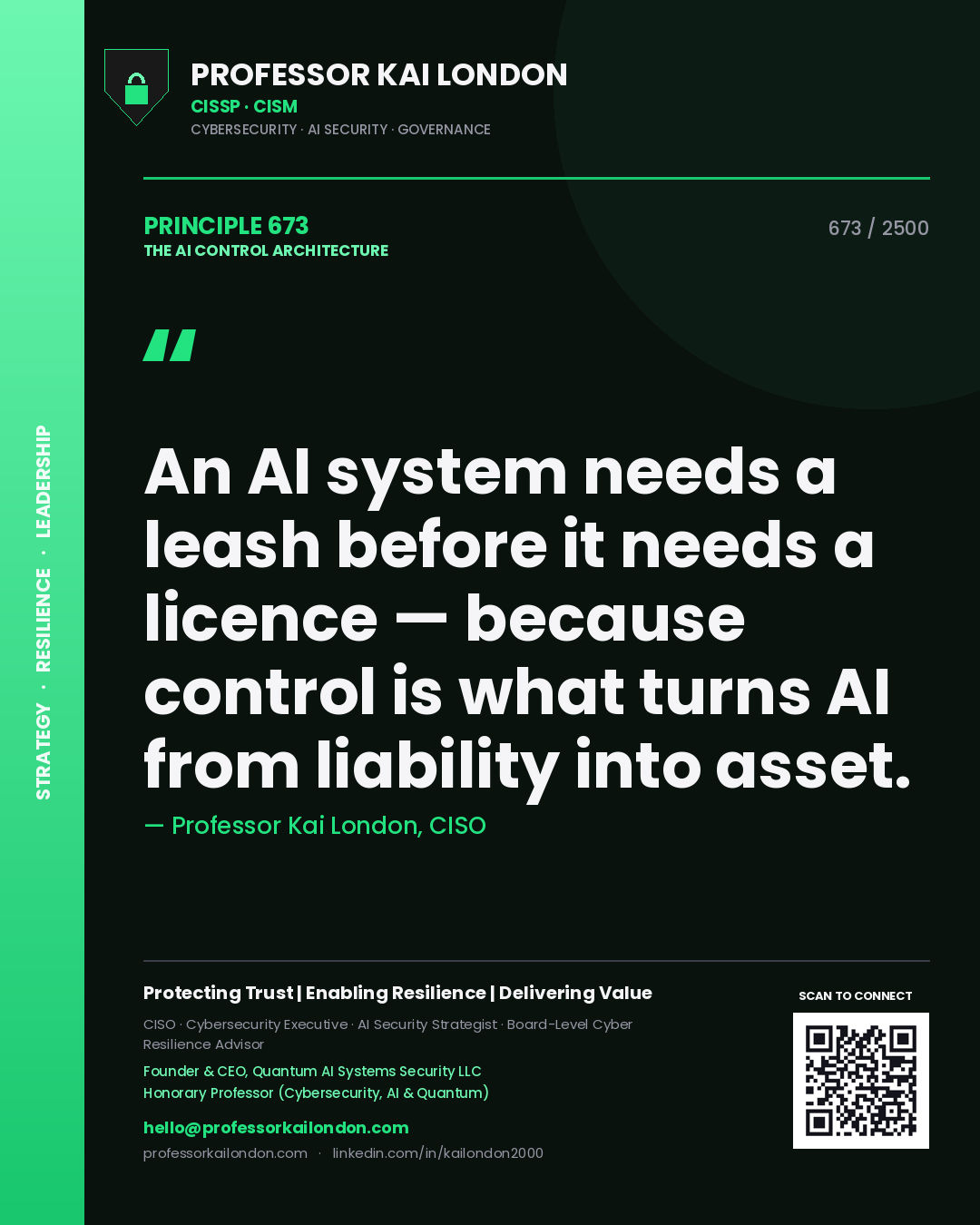
Professor Kai London principle 673: An AI system needs a leash before it needs a licence — because control is what turns AI from liability into asset.
Principle 673
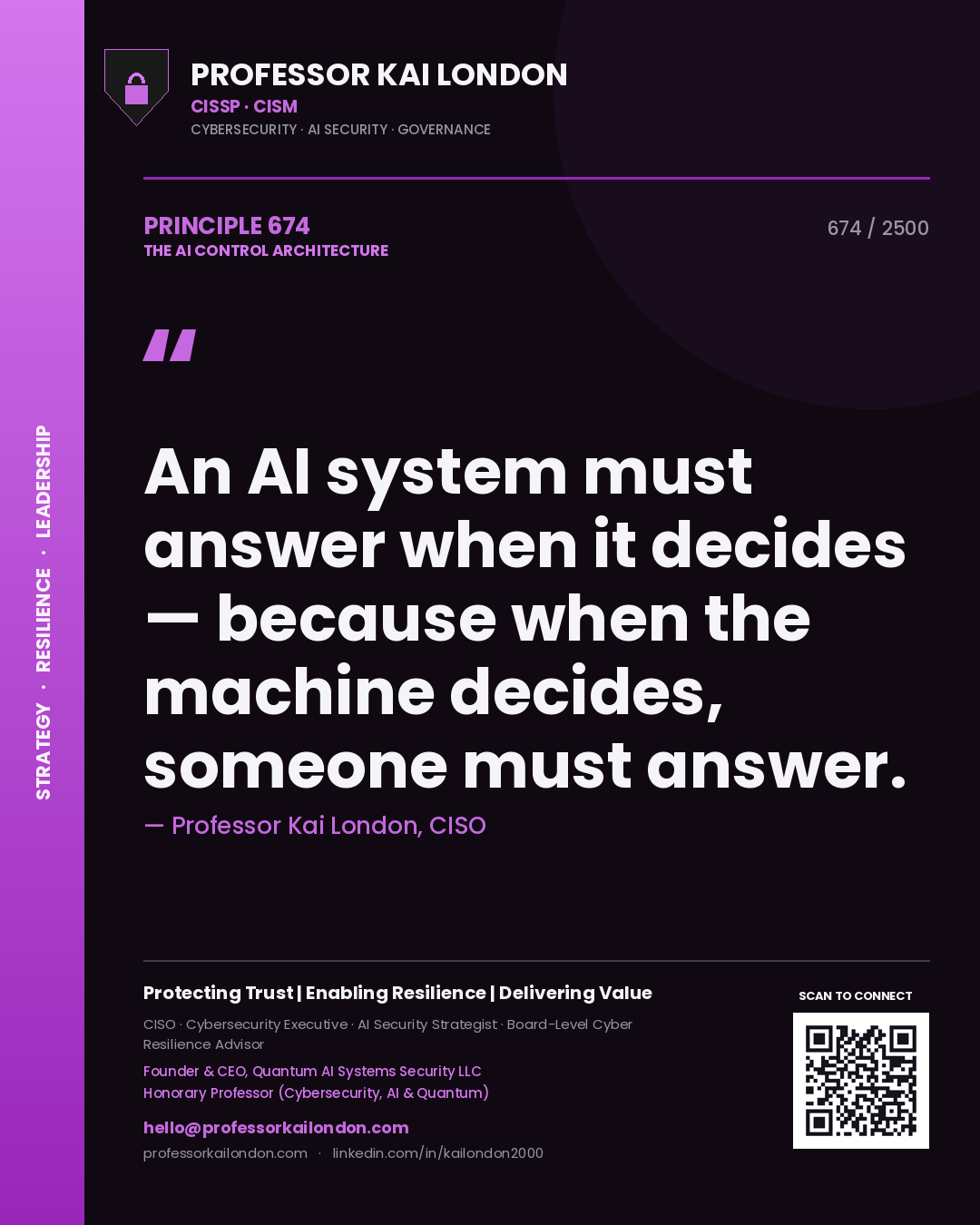
Professor Kai London principle 674: An AI system must answer when it decides — because when the machine decides, someone must answer.
Principle 674
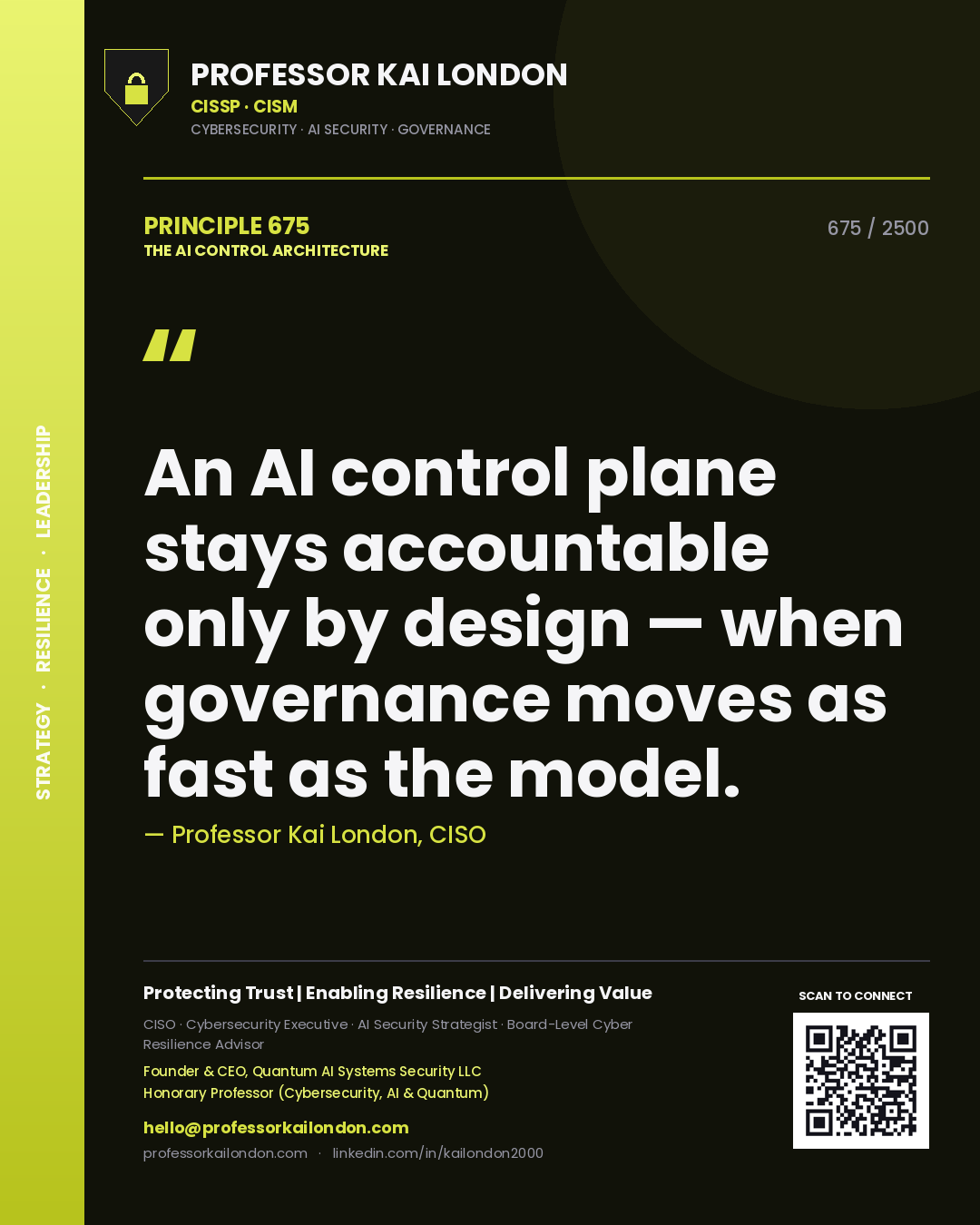
Professor Kai London principle 675: An AI control plane stays accountable only by design — when governance moves as fast as the model.
Principle 675
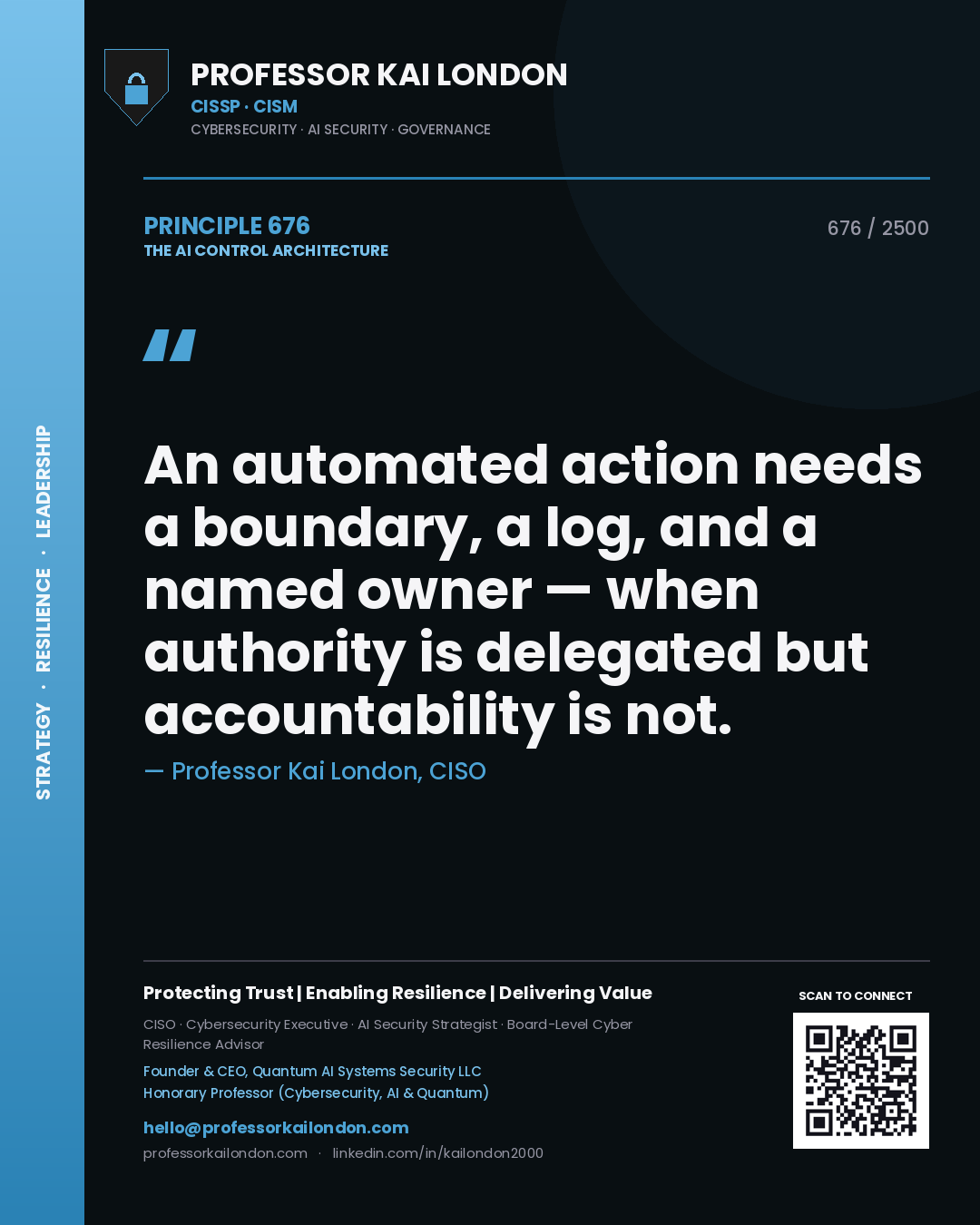
Professor Kai London principle 676: An automated action needs a boundary, a log, and a named owner — when authority is delegated but accountability is not.
Principle 676
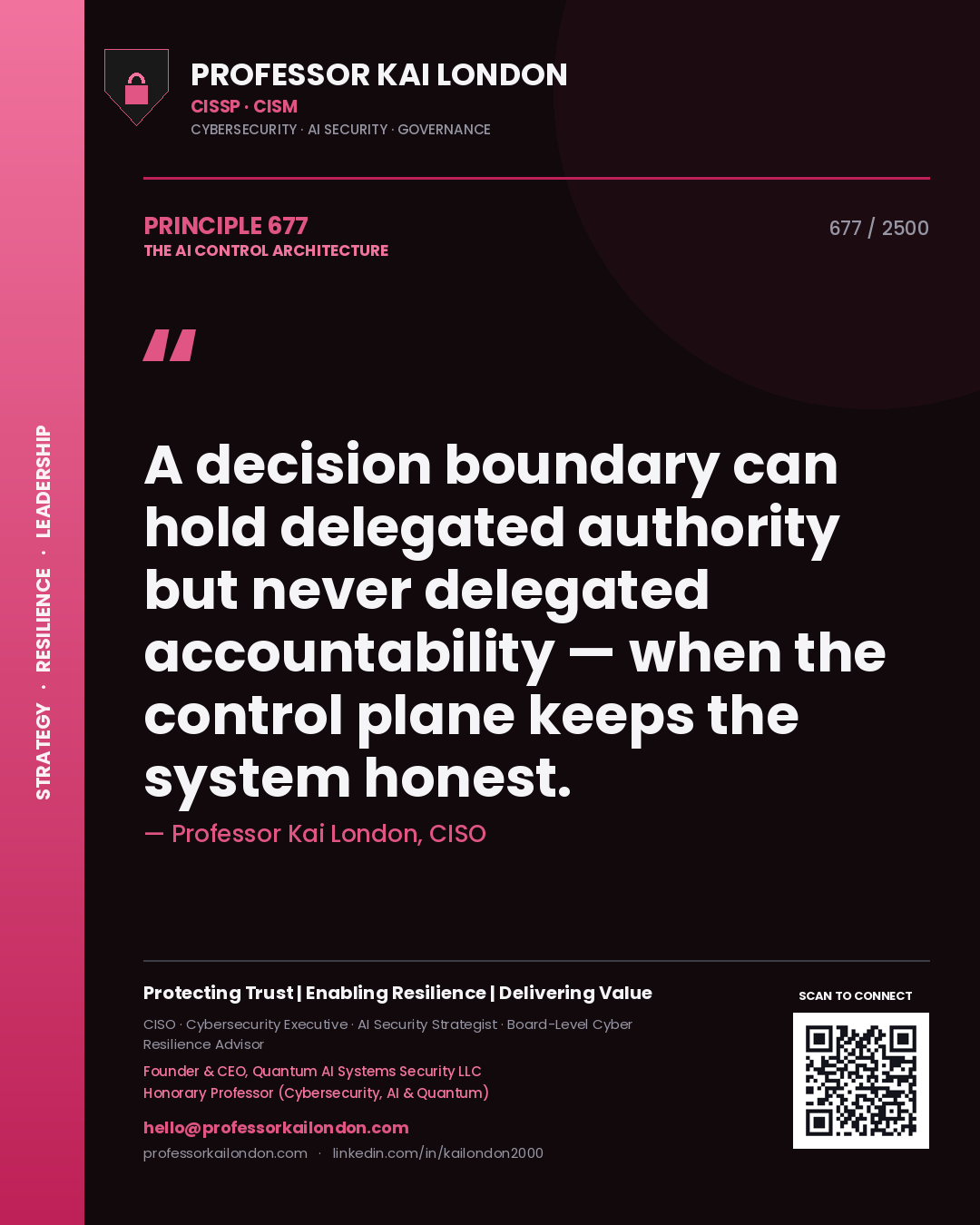
Professor Kai London principle 677: A decision boundary can hold delegated authority but never delegated accountability — when the control plane keeps the system honest.
Principle 677
Professor Kai London principle 678: An AI system must be pausable, explainable, and controllable — when the system is built governed, not governed after the fact.
Principle 678
Professor Kai London principle 679: A decision boundary needs a boundary, a log, and a named owner — when governance moves as fast as the model.
Principle 679
Professor Kai London principle 680: An AI system must answer when it decides — because an agent you cannot pause is an agent you do not control.
Principle 680
Professor Kai London principle 681: A governed AI must answer when it decides — when the control plane keeps the system honest.
Principle 681
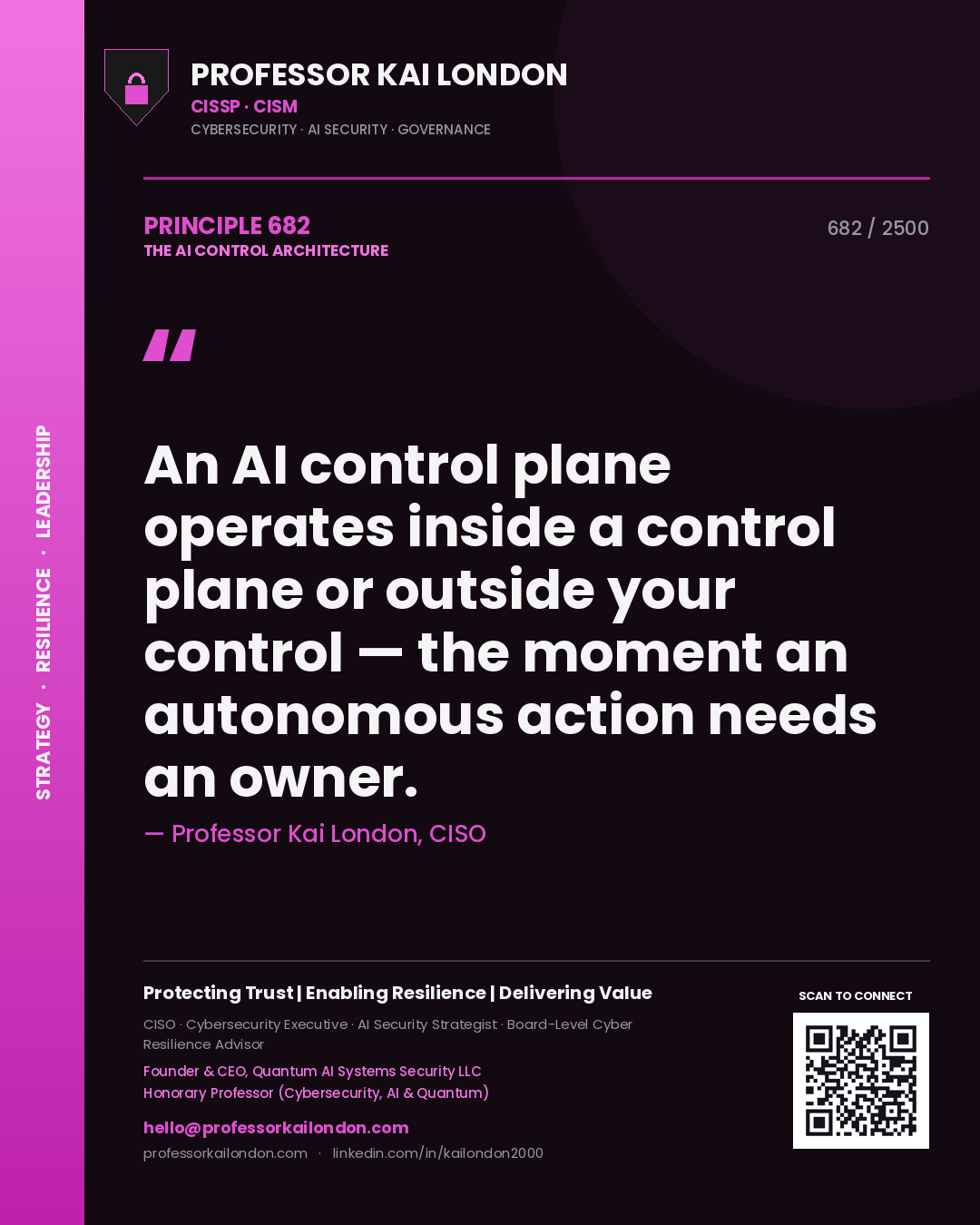
Professor Kai London principle 682: An AI control plane operates inside a control plane or outside your control — the moment an autonomous action needs an owner.
Principle 682
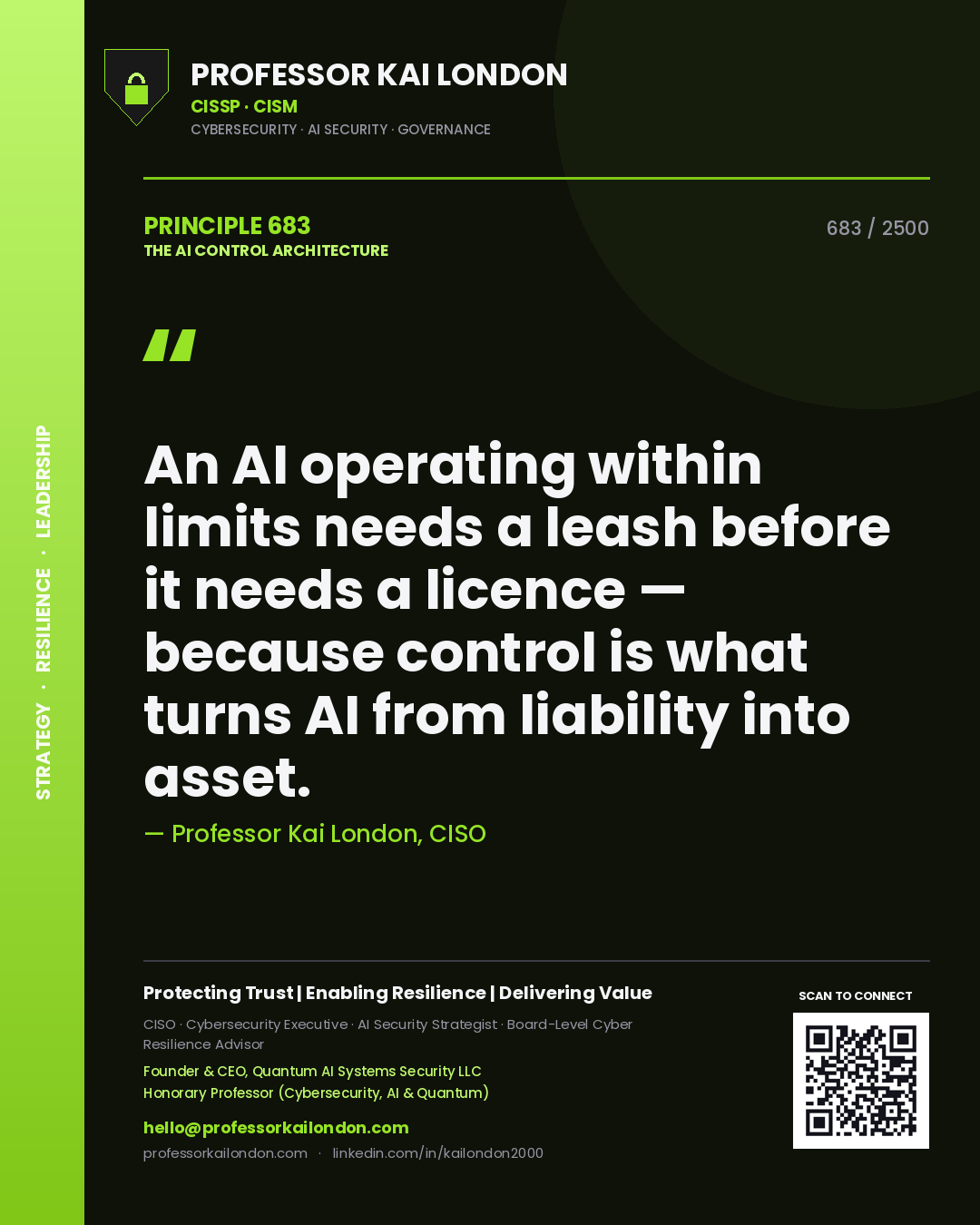
Professor Kai London principle 683: An AI operating within limits needs a leash before it needs a licence — because control is what turns AI from liability into asset.
Principle 683
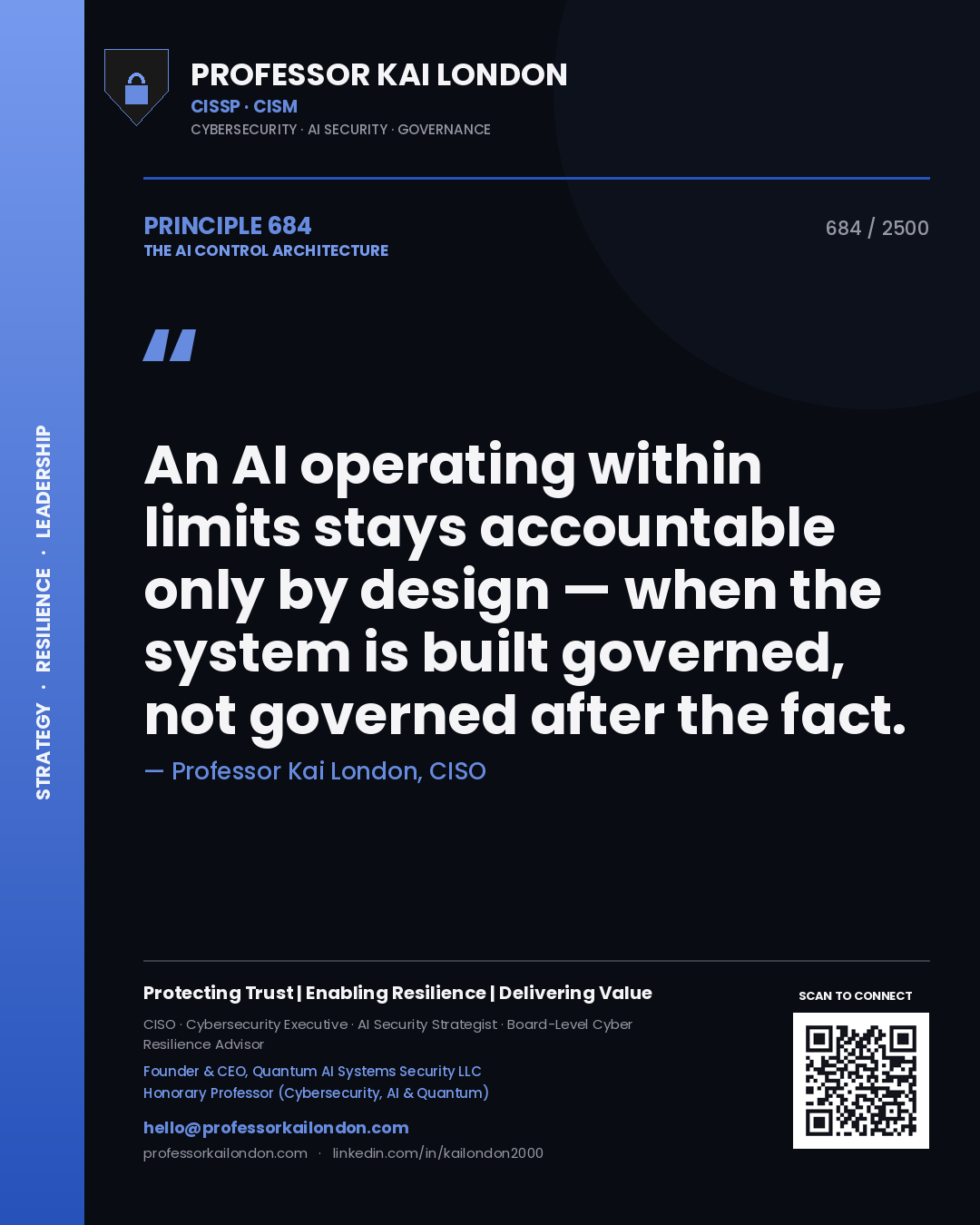
Professor Kai London principle 684: An AI operating within limits stays accountable only by design — when the system is built governed, not governed after the fact.
Principle 684
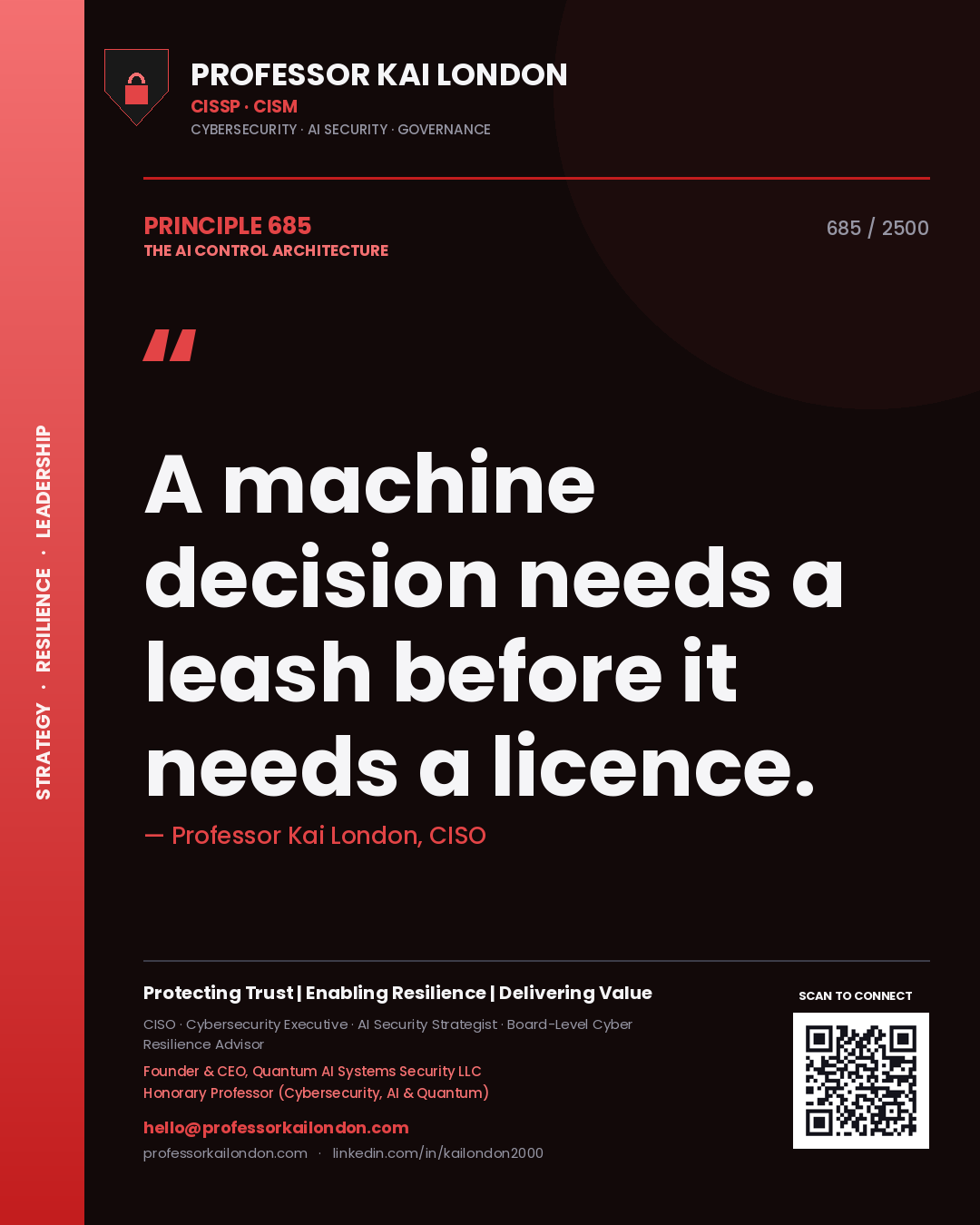
Professor Kai London principle 685: A machine decision needs a leash before it needs a licence.
Principle 685
Professor Kai London principle 686: An AI control plane is governed at machine speed with human consequences — before autonomy becomes unmanaged risk at machine speed.
Principle 686
Professor Kai London principle 687: An AI control plane must be pausable, explainable, and controllable — before autonomy becomes unmanaged risk at machine speed.
Principle 687
Professor Kai London principle 688: An autonomous agent operates inside a control plane or outside your control — when authority is delegated but accountability is not.
Principle 688
Professor Kai London principle 689: An automated action needs a boundary, a log, and a named owner — the moment an autonomous action needs an owner.
Principle 689
Professor Kai London principle 690: An AI system stays accountable only by design — before autonomy becomes unmanaged risk at machine speed.
Principle 690
Professor Kai London principle 691: An automated action can hold delegated authority but never delegated accountability — when governance moves as fast as the model.
Principle 691
Professor Kai London principle 692: An agentic workflow must be revenue-ready and regulator-ready at once.
Principle 692
Professor Kai London principle 693: An AI system needs a boundary, a log, and a named owner — because control is what turns AI from liability into asset.
Principle 693
Professor Kai London principle 694: An AI control plane operates inside a control plane or outside your control.
Principle 694
Professor Kai London principle 695: An AI control plane needs a leash before it needs a licence.
Principle 695
Professor Kai London principle 696: An AI operating within limits is governed at machine speed with human consequences — before autonomy becomes unmanaged risk at machine speed.
Principle 696
Professor Kai London principle 697: An autonomous agent can hold delegated authority but never delegated accountability — when every agent has a boundary you can prove.
Principle 697
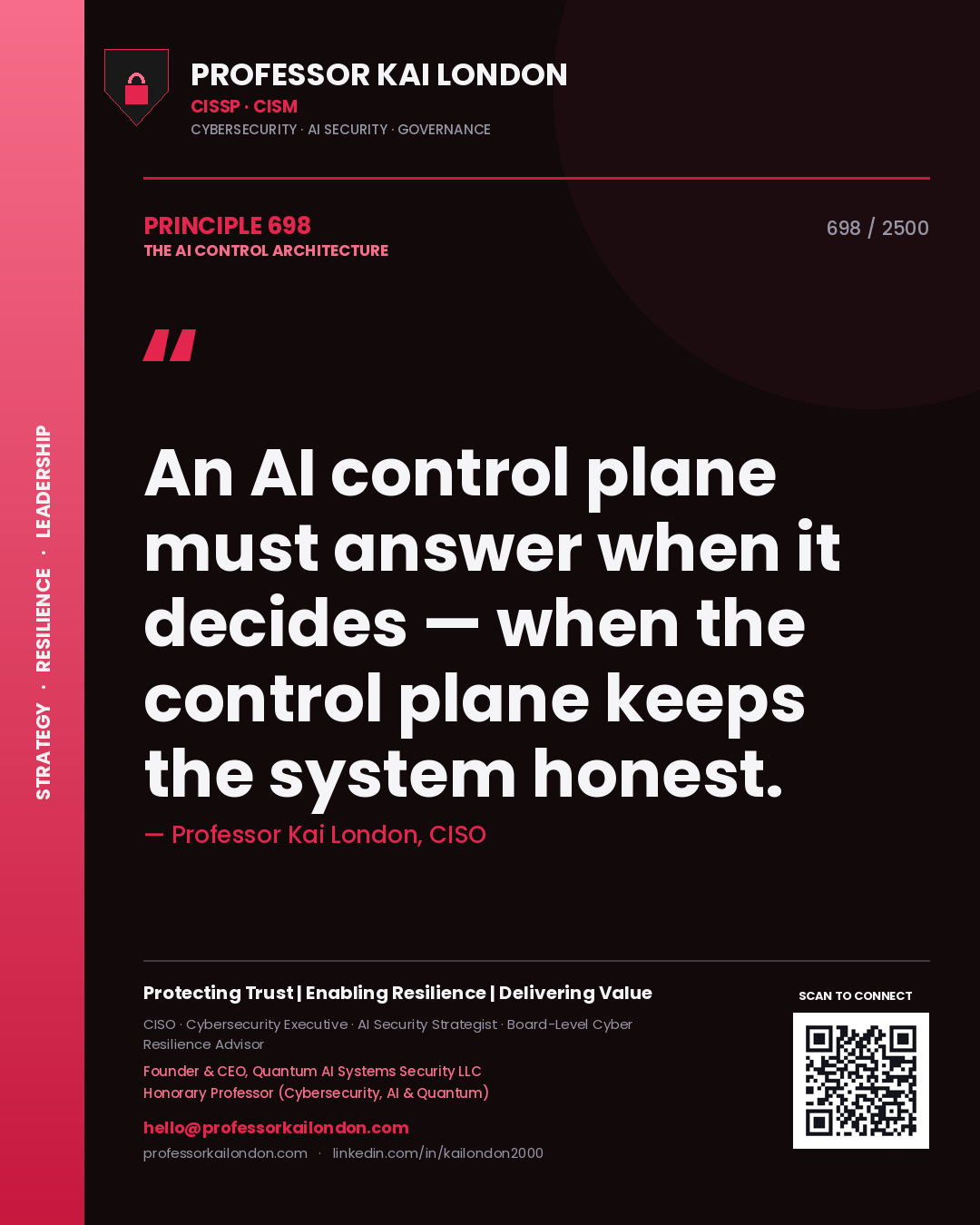
Professor Kai London principle 698: An AI control plane must answer when it decides — when the control plane keeps the system honest.
Principle 698
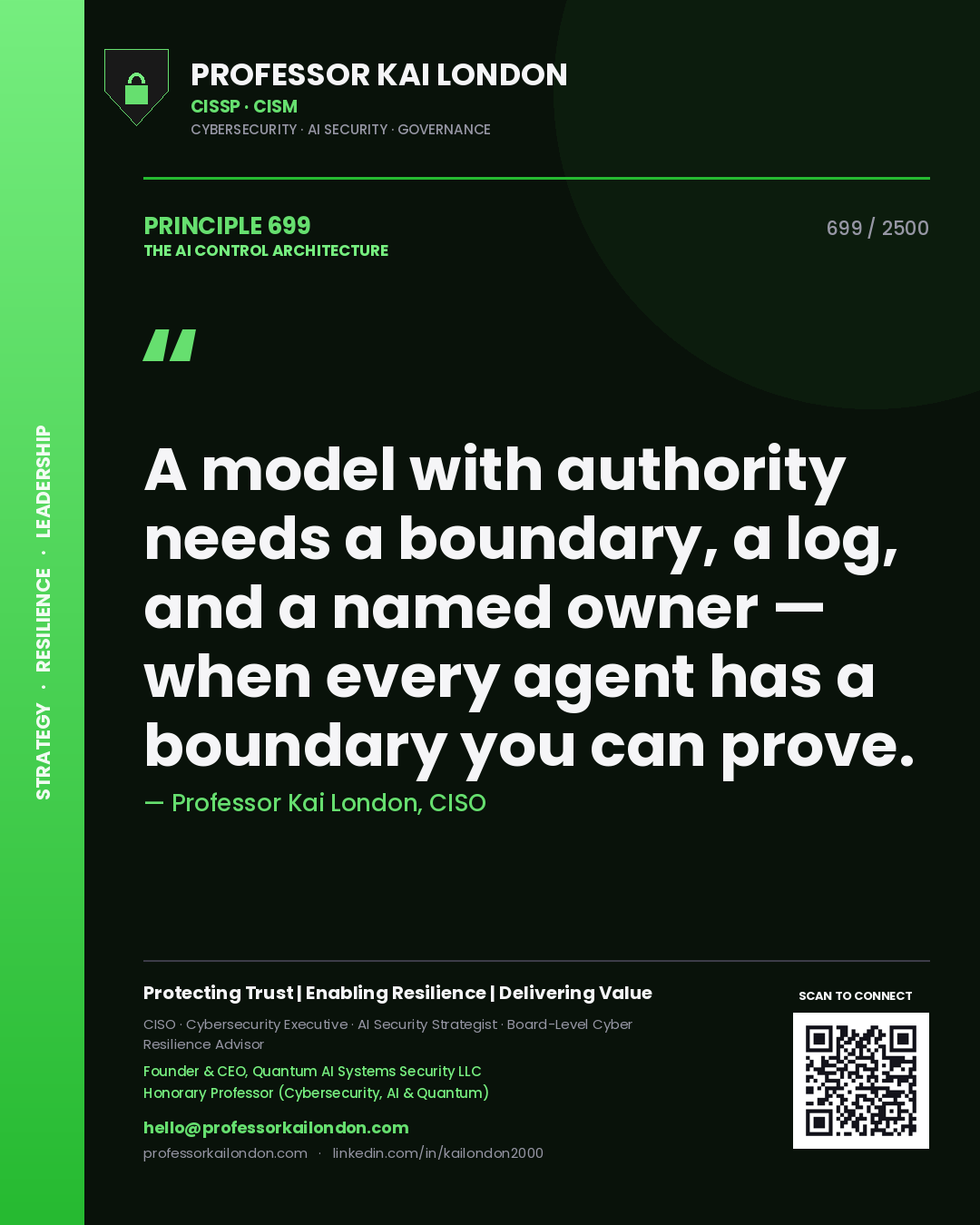
Professor Kai London principle 699: A model with authority needs a boundary, a log, and a named owner — when every agent has a boundary you can prove.
Principle 699
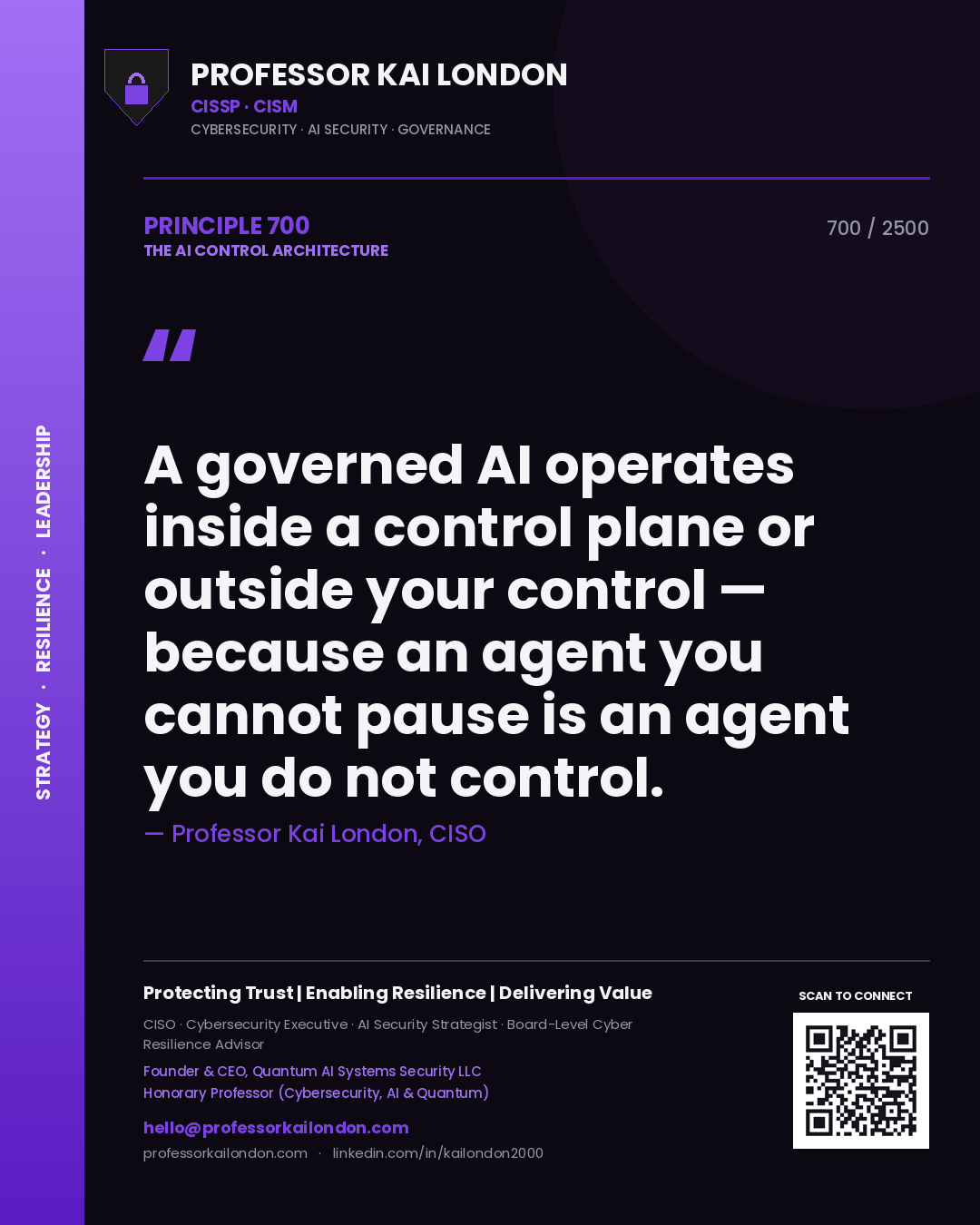
Professor Kai London principle 700: A governed AI operates inside a control plane or outside your control — because an agent you cannot pause is an agent you do not control.
Principle 700