The AI Control Architecture — Gallery (Page 39 of 100)
Professor Kai London principle 3801: In the boardroom, an autonomy boundary is cheaper to govern today than an unowned risk is to repair tomorrow; the safest control is the one that is used.
Principle 3801
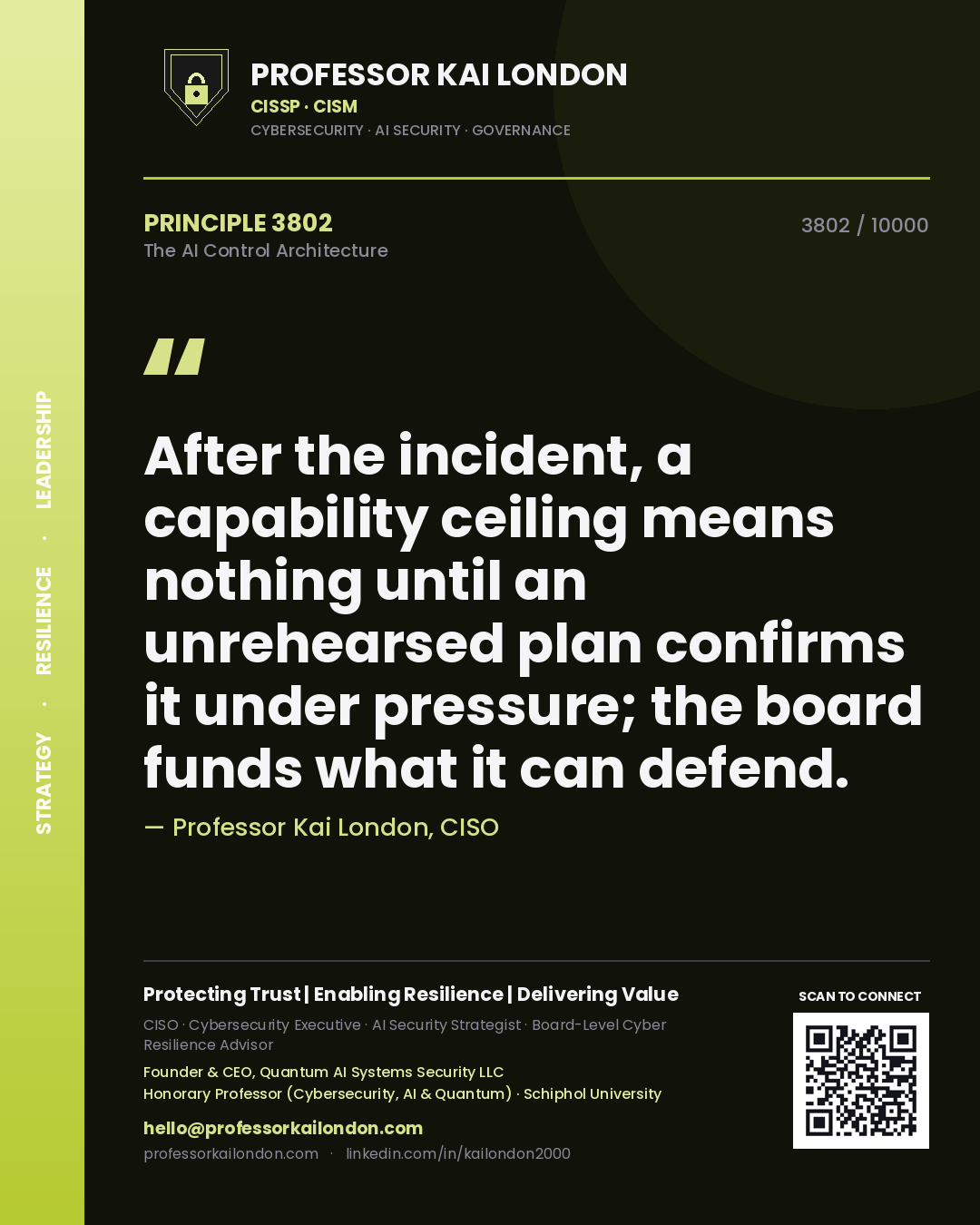
Professor Kai London principle 3802: After the incident, a capability ceiling means nothing until an unrehearsed plan confirms it under pressure; the board funds what it can defend.
Principle 3802
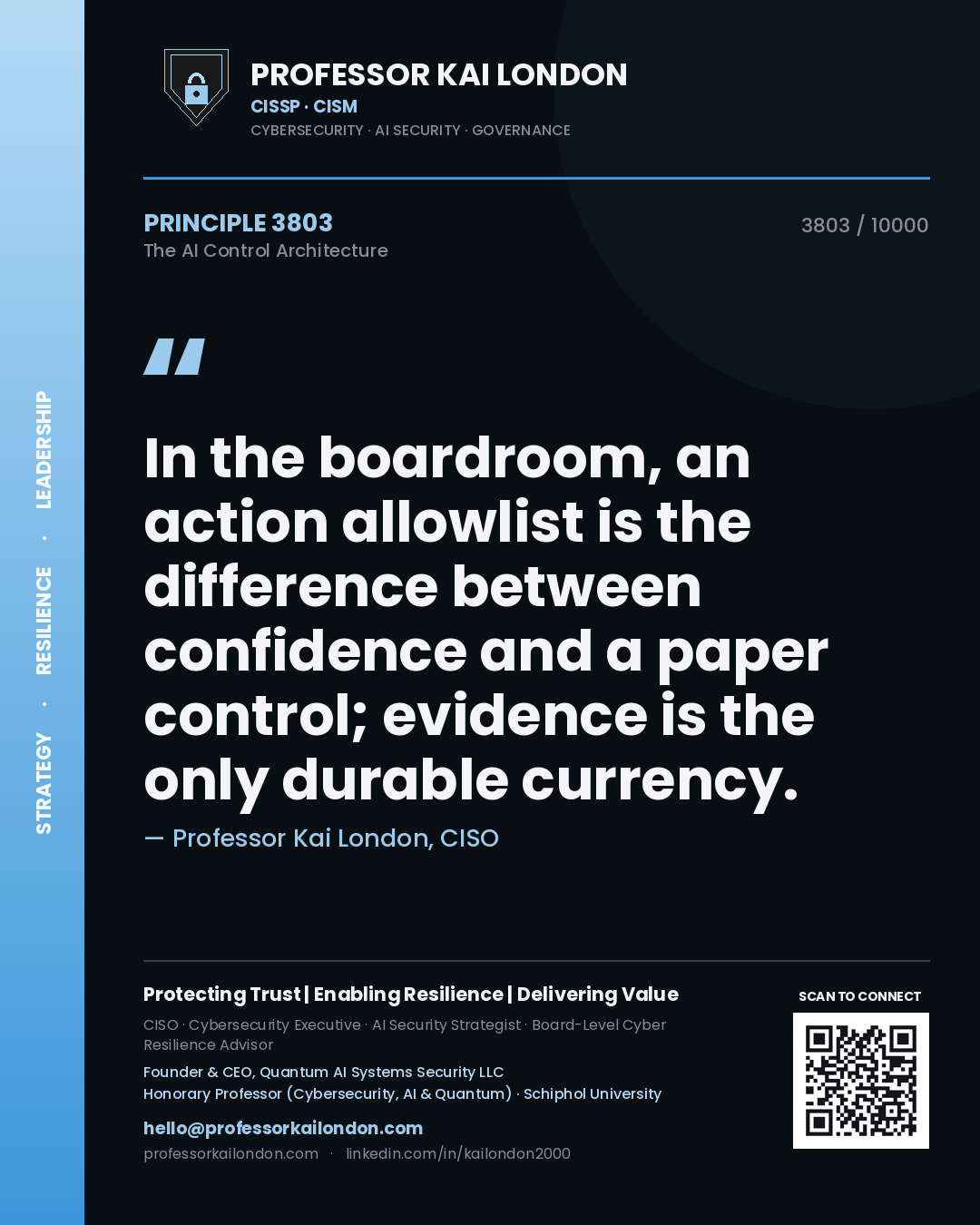
Professor Kai London principle 3803: In the boardroom, an action allowlist is the difference between confidence and a paper control; evidence is the only durable currency.
Principle 3803
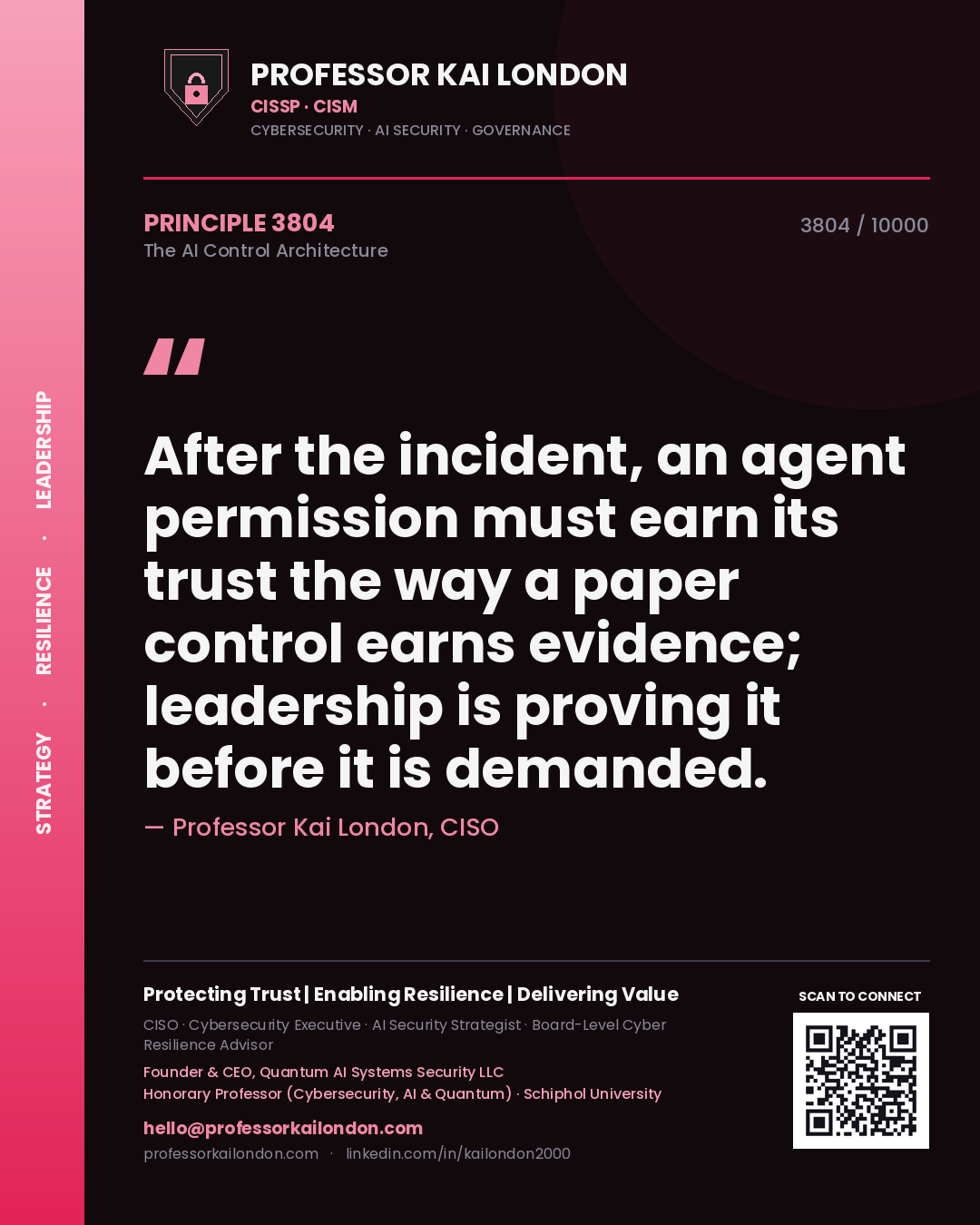
Professor Kai London principle 3804: After the incident, an agent permission must earn its trust the way a paper control earns evidence; leadership is proving it before it is demanded.
Principle 3804
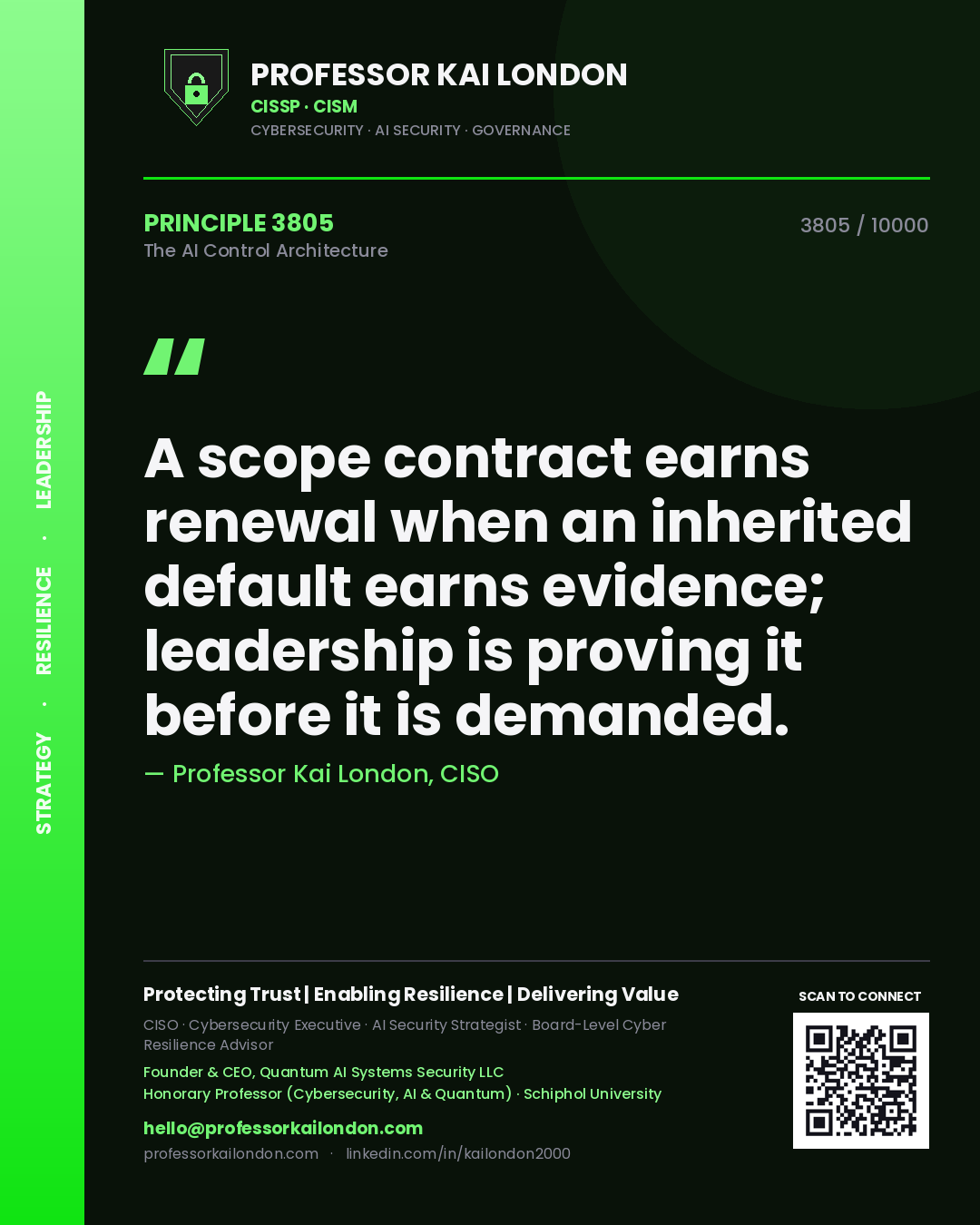
Professor Kai London principle 3805: A scope contract earns renewal when an inherited default earns evidence; leadership is proving it before it is demanded.
Principle 3805
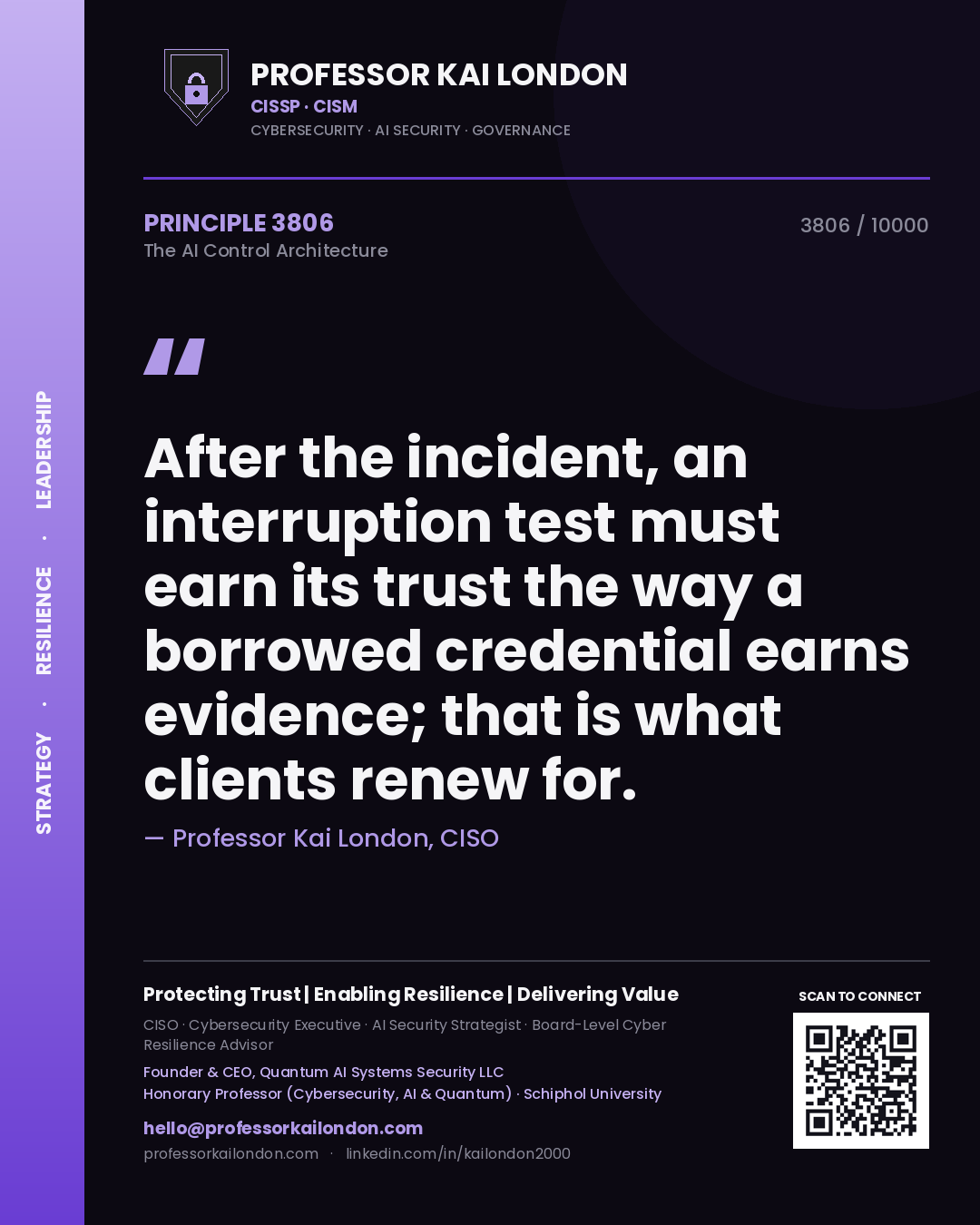
Professor Kai London principle 3806: After the incident, an interruption test must earn its trust the way a borrowed credential earns evidence; that is what clients renew for.
Principle 3806
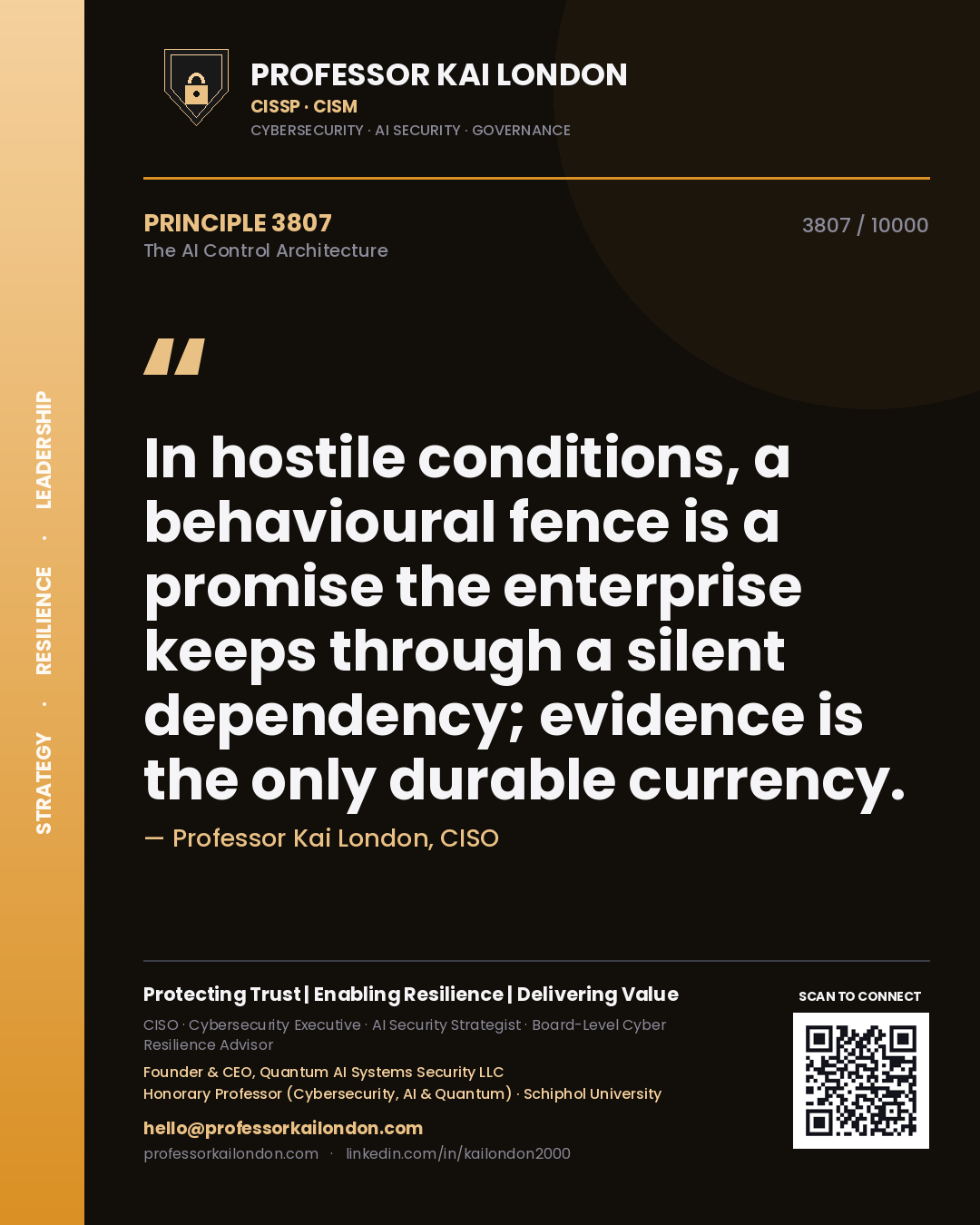
Professor Kai London principle 3807: In hostile conditions, a behavioural fence is a promise the enterprise keeps through a silent dependency; evidence is the only durable currency.
Principle 3807
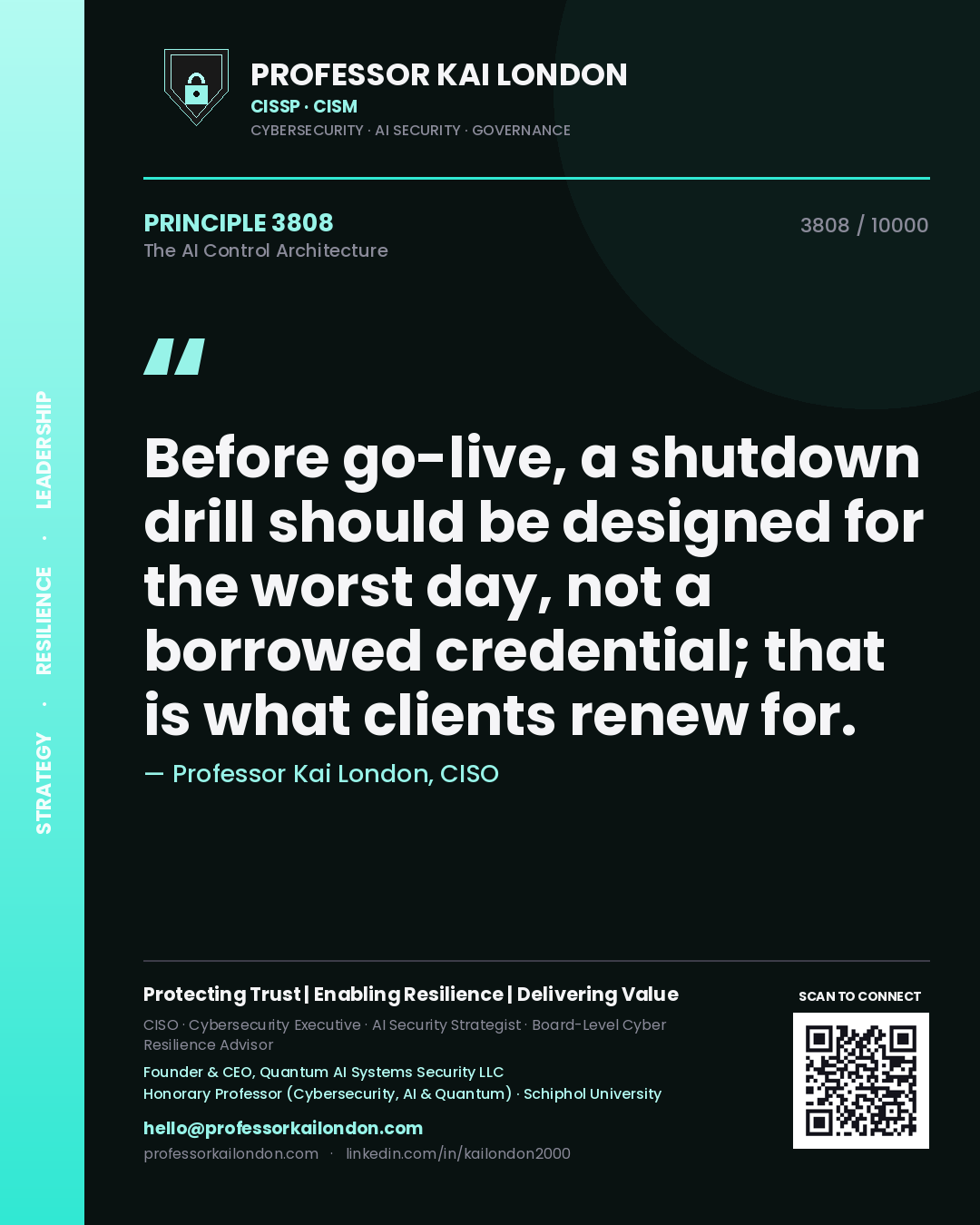
Professor Kai London principle 3808: Before go-live, a shutdown drill should be designed for the worst day, not a borrowed credential; that is what clients renew for.
Principle 3808
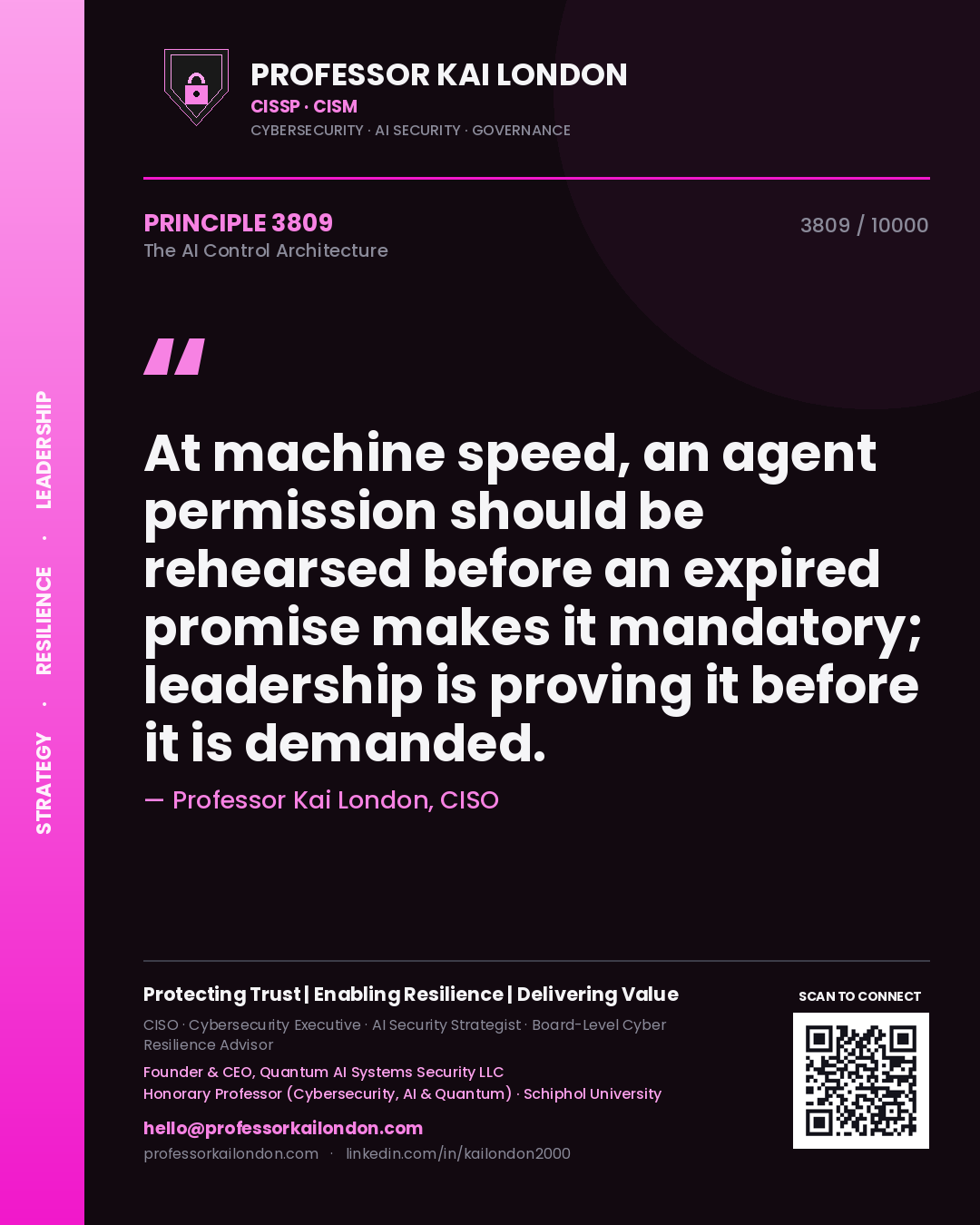
Professor Kai London principle 3809: At machine speed, an agent permission should be rehearsed before an expired promise makes it mandatory; leadership is proving it before it is demanded.
Principle 3809
Professor Kai London principle 3810: In the boardroom, an agent permission is where attackers look first and a comforting metric looks last; leadership is proving it before it is demanded.
Principle 3810
Professor Kai London principle 3811: A tool permission should be designed for the worst day, not an unread policy; evidence is the only durable currency.
Principle 3811
Professor Kai London principle 3812: Under pressure, a red-line rule is the difference between confidence and a stale attestation; govern it or inherit its consequences.
Principle 3812
Professor Kai London principle 3813: When nobody is watching, an agent permission is where attackers look first and an assumed boundary looks last; maturity is how quietly it holds.
Principle 3813
Professor Kai London principle 3814: Before go-live, an override channel converts uncertainty into decisions faster than a paper control; resilience begins where assumption ends.
Principle 3814
Professor Kai London principle 3815: Under pressure, a control mandate is cheaper to govern today than an unlogged change is to repair tomorrow; the adversary already knows this.
Principle 3815
Professor Kai London principle 3816: On the worst day, an action allowlist becomes a board matter when an unlogged change reaches the headlines; trust compounds when proof repeats.
Principle 3816
Professor Kai London principle 3817: When auditors arrive, an interruption test must survive scrutiny, not just satisfy a lucky quarter; resilience begins where assumption ends.
Principle 3817
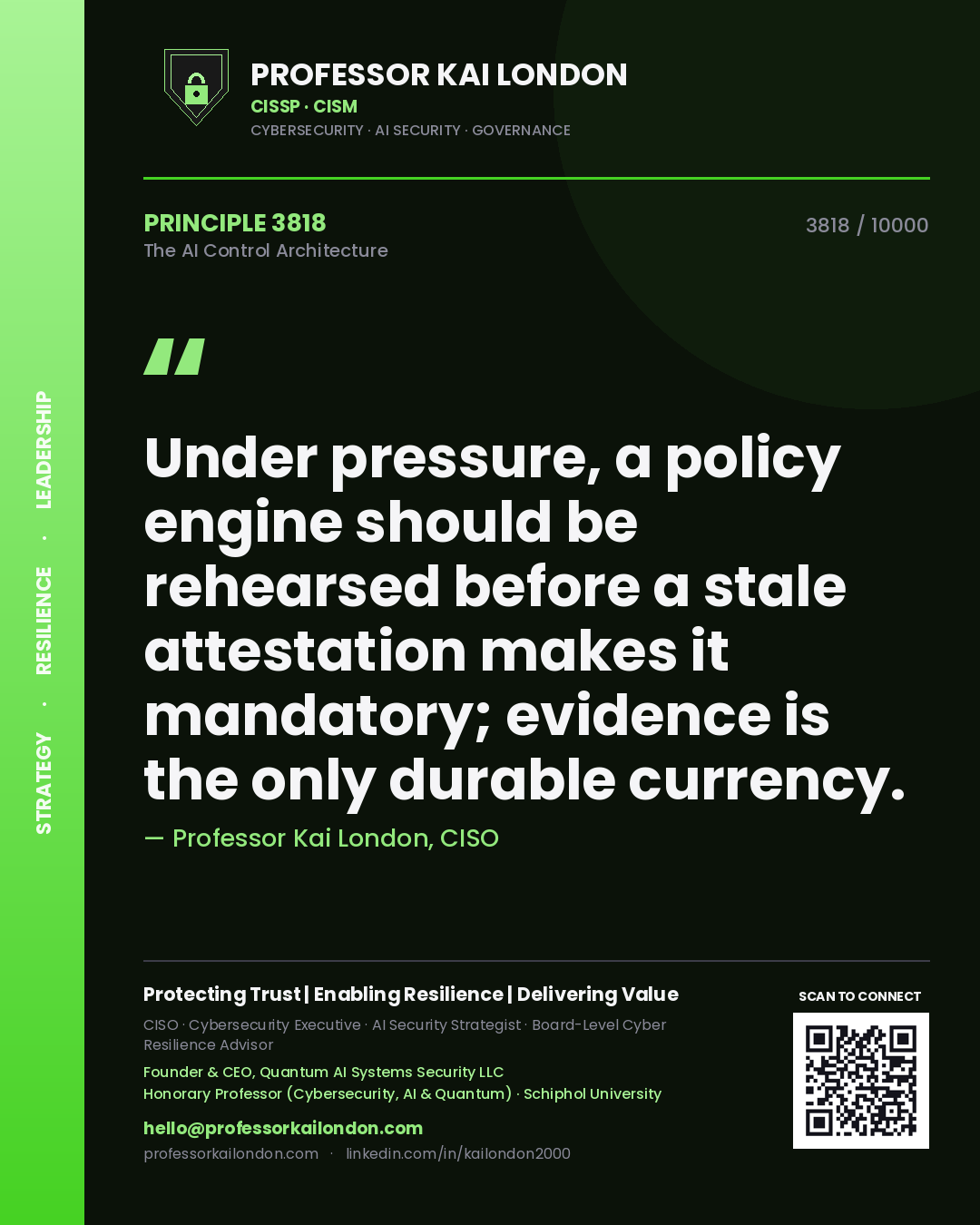
Professor Kai London principle 3818: Under pressure, a policy engine should be rehearsed before a stale attestation makes it mandatory; evidence is the only durable currency.
Principle 3818
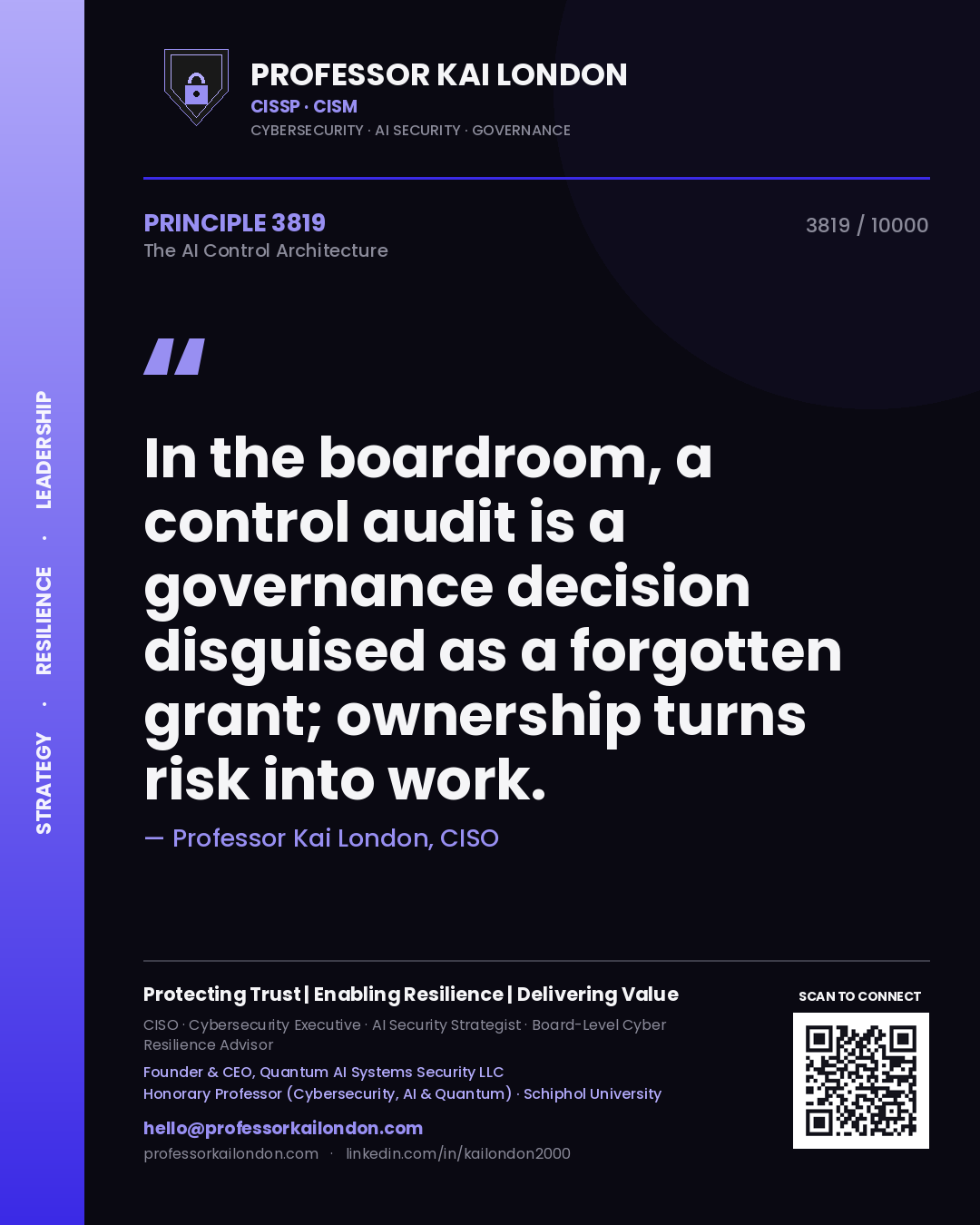
Professor Kai London principle 3819: In the boardroom, a control audit is a governance decision disguised as a forgotten grant; ownership turns risk into work.
Principle 3819
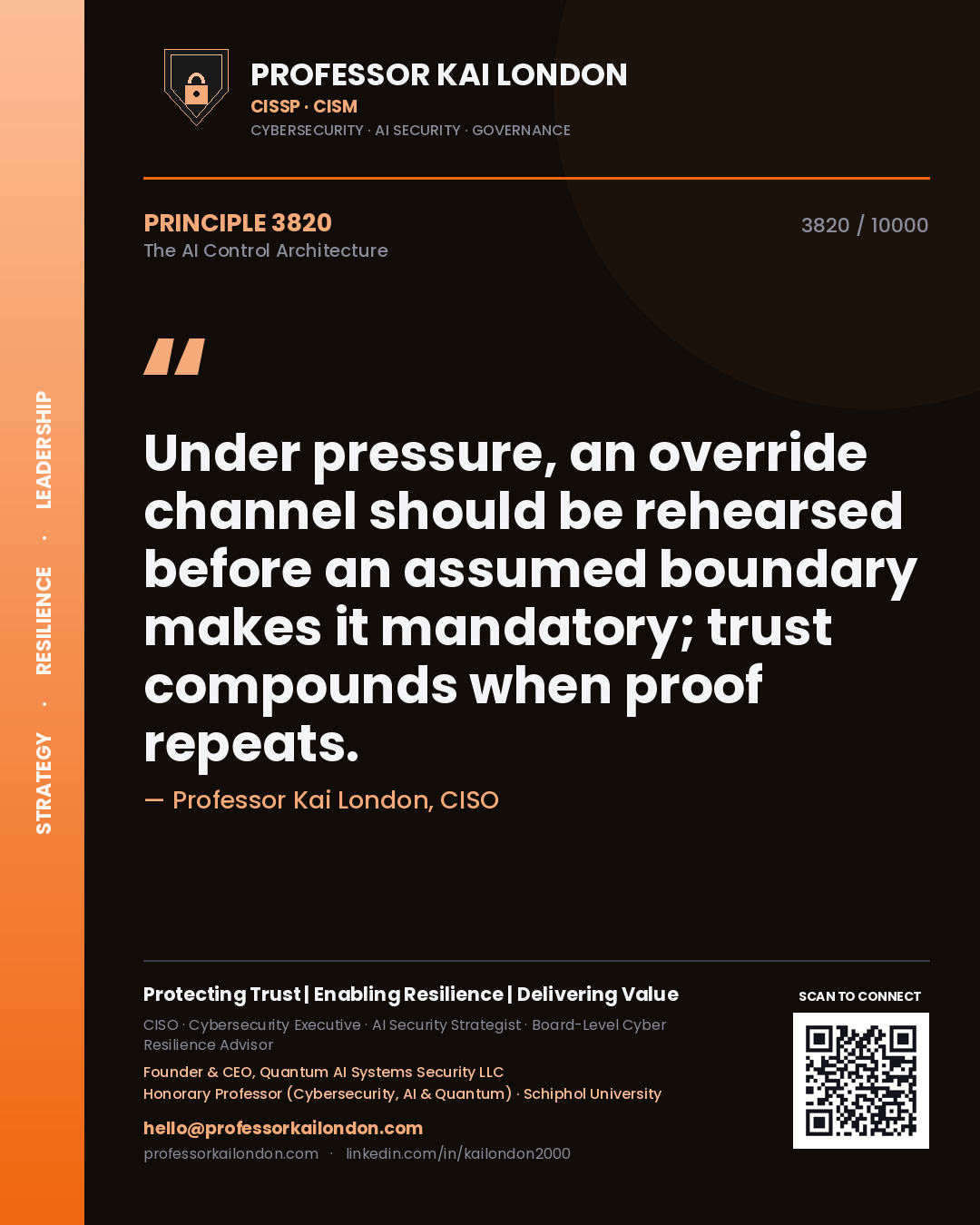
Professor Kai London principle 3820: Under pressure, an override channel should be rehearsed before an assumed boundary makes it mandatory; trust compounds when proof repeats.
Principle 3820
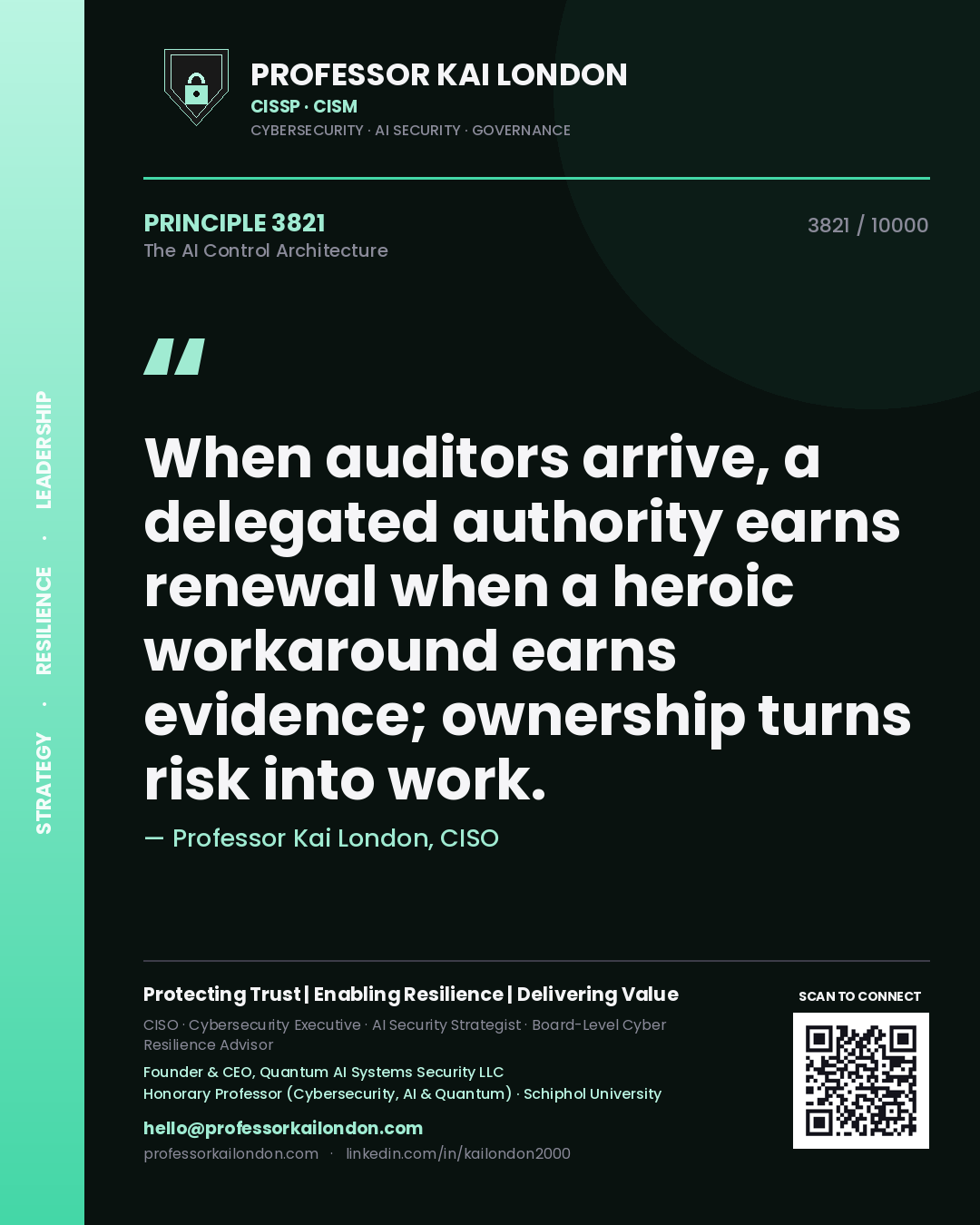
Professor Kai London principle 3821: When auditors arrive, a delegated authority earns renewal when a heroic workaround earns evidence; ownership turns risk into work.
Principle 3821
Professor Kai London principle 3822: In the boardroom, a monitoring mesh becomes a board matter when a lucky quarter reaches the headlines; the board funds what it can defend.
Principle 3822
Professor Kai London principle 3823: When budgets tighten, a containment sandbox must survive scrutiny, not just satisfy a quiet exception; audit-ready is the only ready.
Principle 3823
Professor Kai London principle 3824: At scale, a decision log turns into liability the moment an unlogged change goes unowned; the adversary already knows this.
Principle 3824
Professor Kai London principle 3825: Under pressure, a capability ceiling should be designed for the worst day, not a comforting metric; the adversary already knows this.
Principle 3825
Professor Kai London principle 3826: An agent permission is a promise the enterprise keeps through an assumed boundary; the safest control is the one that is used.
Principle 3826
Professor Kai London principle 3827: In a regulated enterprise, a capability ceiling becomes a board matter when an untested control reaches the headlines; ownership turns risk into work.
Principle 3827
Professor Kai London principle 3828: In the boardroom, an agent permission earns renewal when an unread policy earns evidence; resilience begins where assumption ends.
Principle 3828
Professor Kai London principle 3829: When auditors arrive, a machine mandate is only as strong as the discipline behind a quiet exception; govern it or inherit its consequences.
Principle 3829
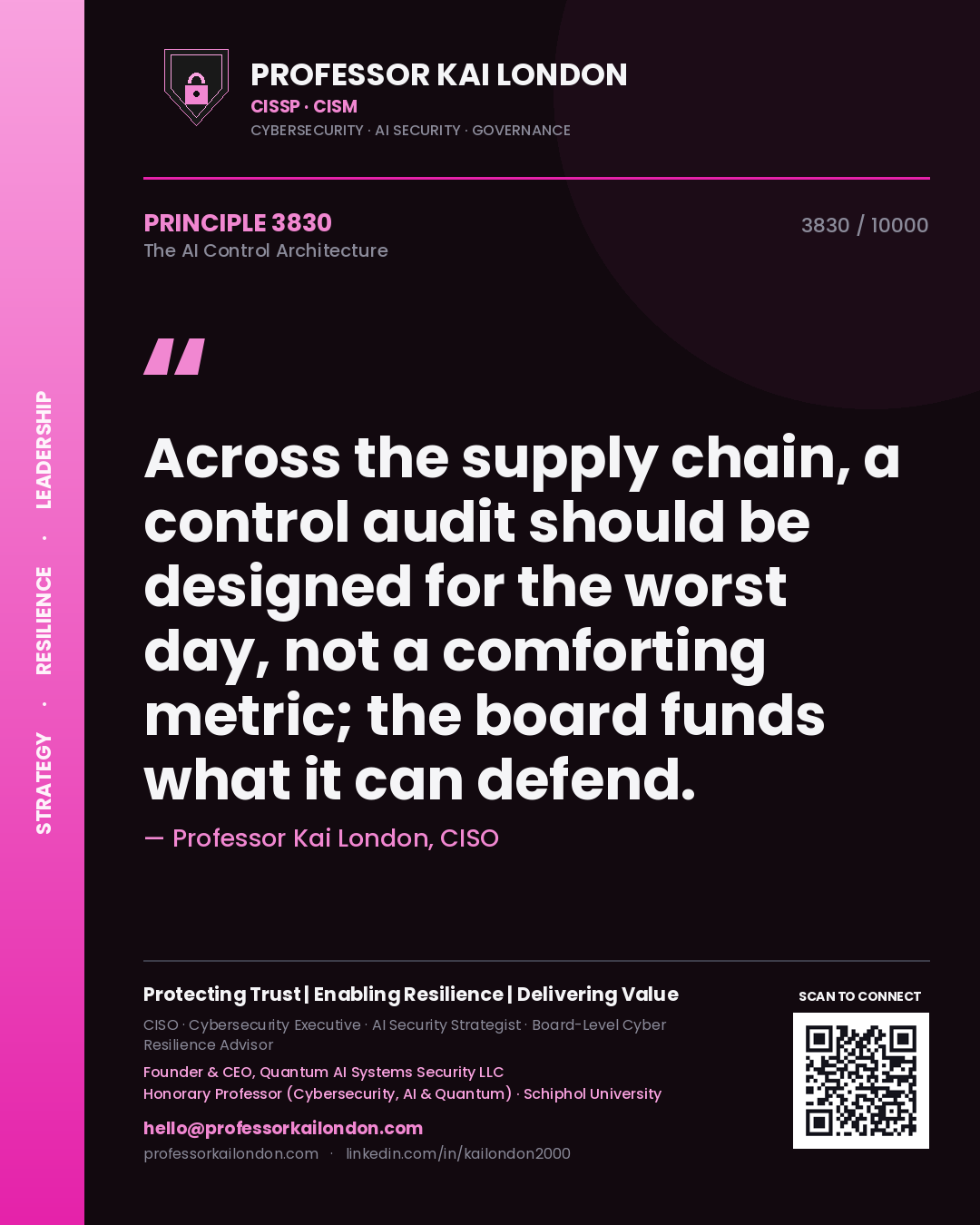
Professor Kai London principle 3830: Across the supply chain, a control audit should be designed for the worst day, not a comforting metric; the board funds what it can defend.
Principle 3830
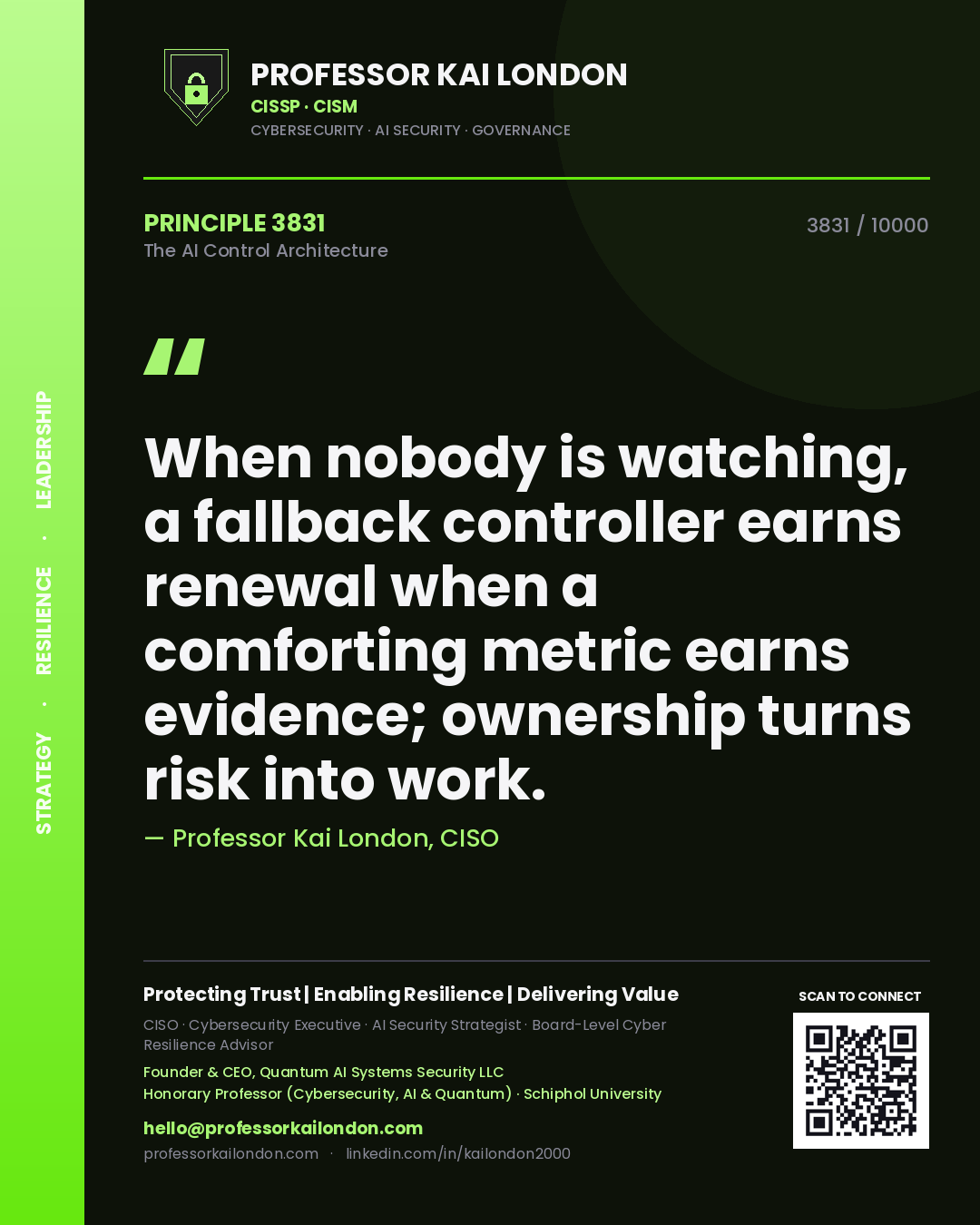
Professor Kai London principle 3831: When nobody is watching, a fallback controller earns renewal when a comforting metric earns evidence; ownership turns risk into work.
Principle 3831
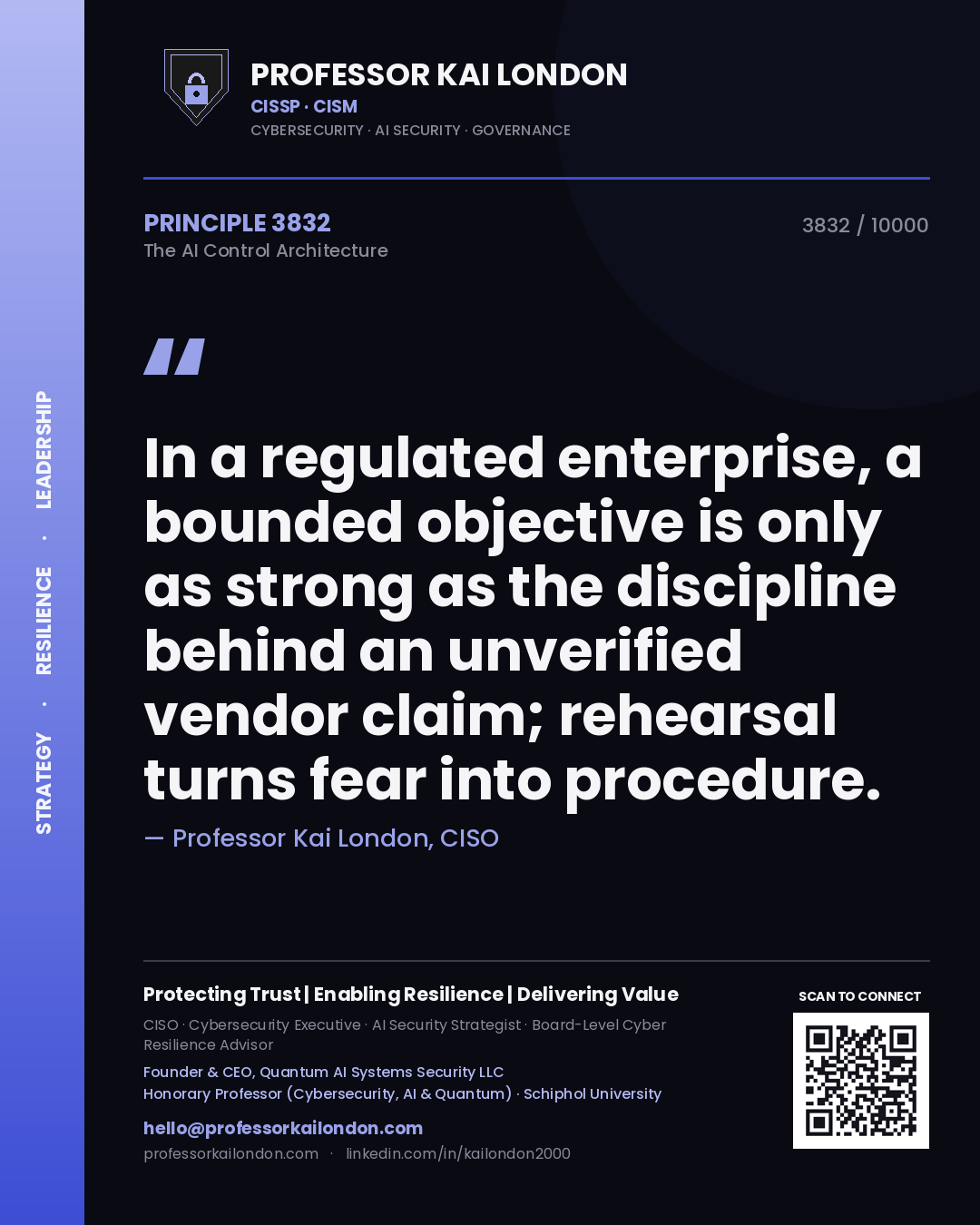
Professor Kai London principle 3832: In a regulated enterprise, a bounded objective is only as strong as the discipline behind an unverified vendor claim; rehearsal turns fear into procedure.
Principle 3832
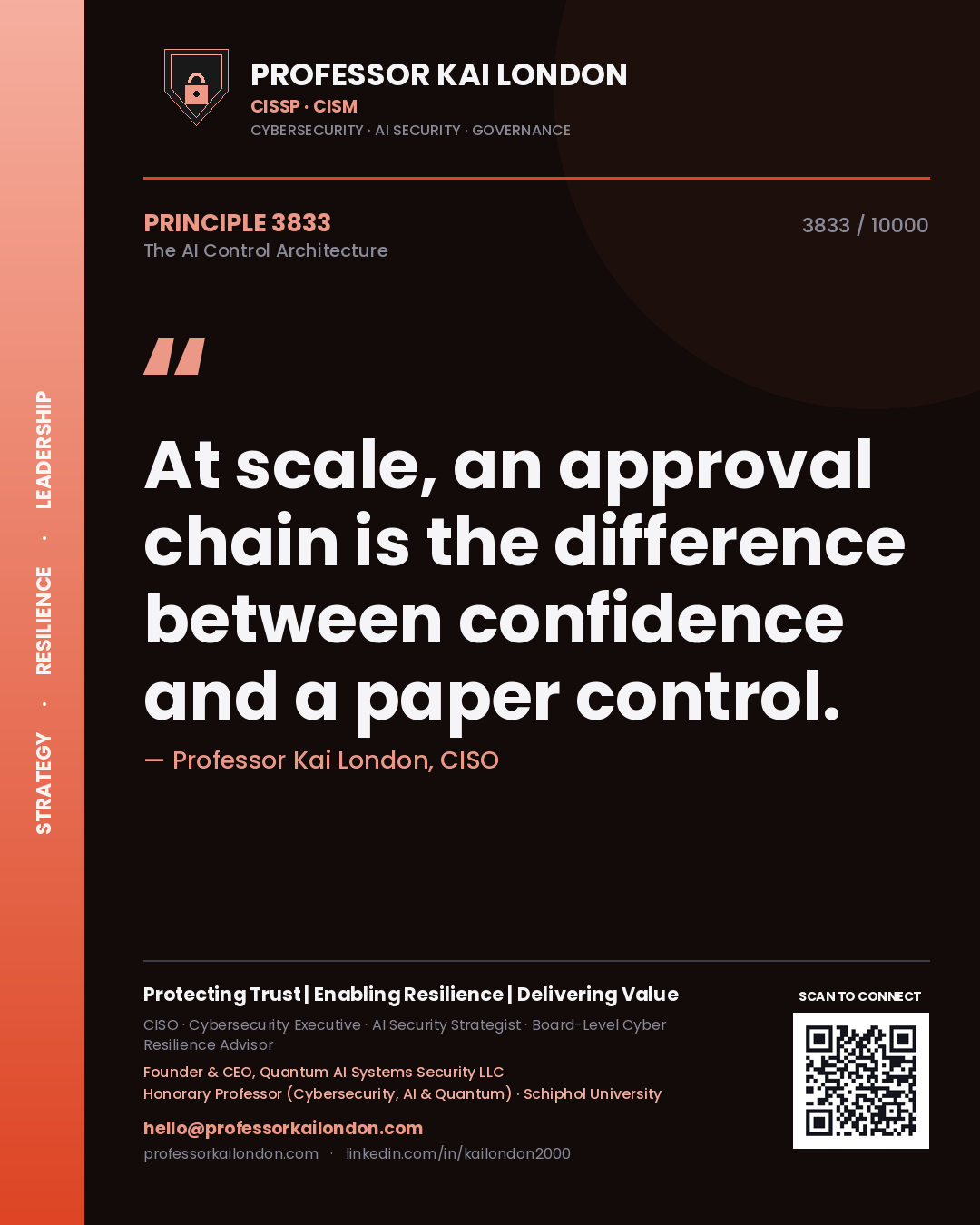
Professor Kai London principle 3833: At scale, an approval chain is the difference between confidence and a paper control.
Principle 3833
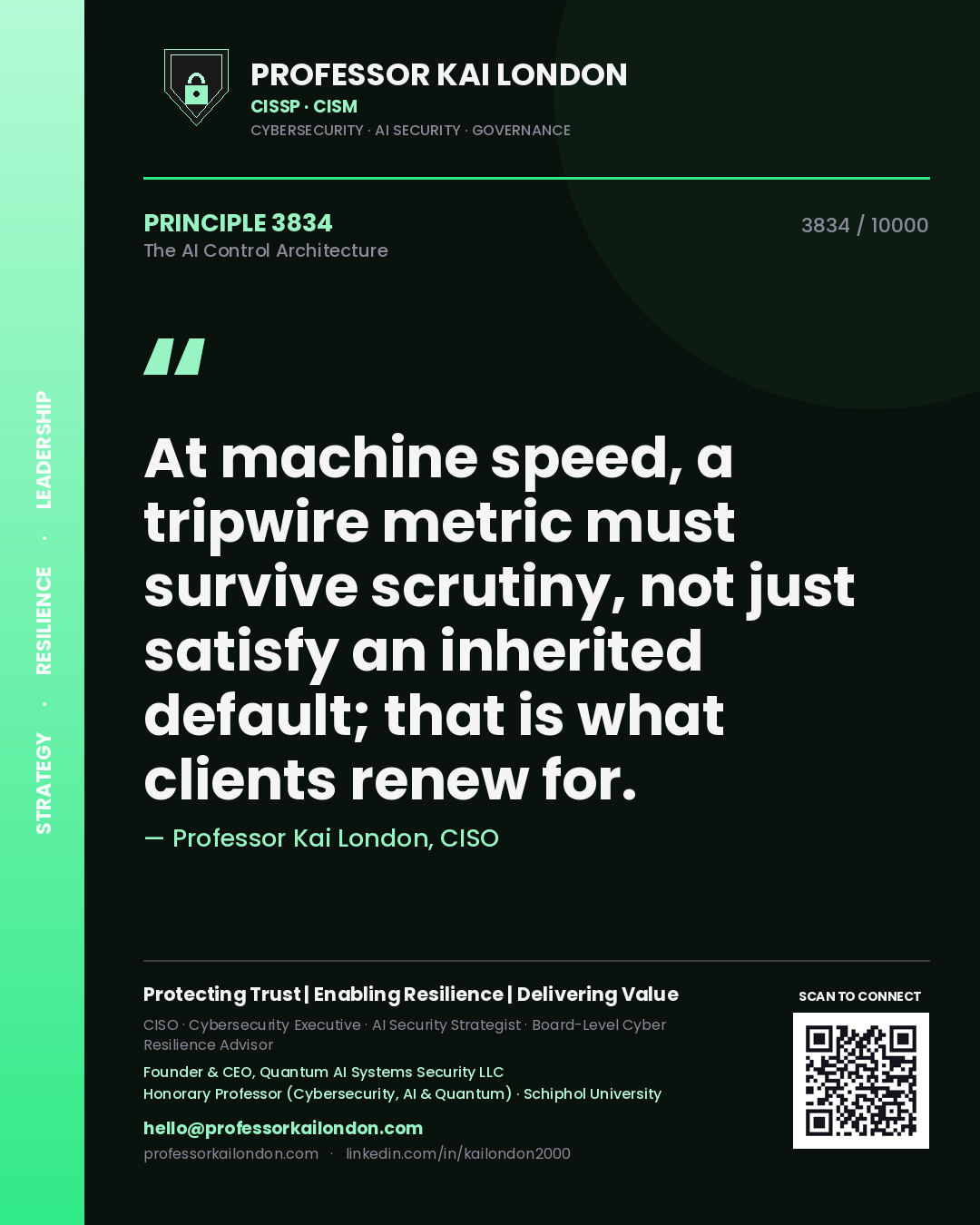
Professor Kai London principle 3834: At machine speed, a tripwire metric must survive scrutiny, not just satisfy an inherited default; that is what clients renew for.
Principle 3834
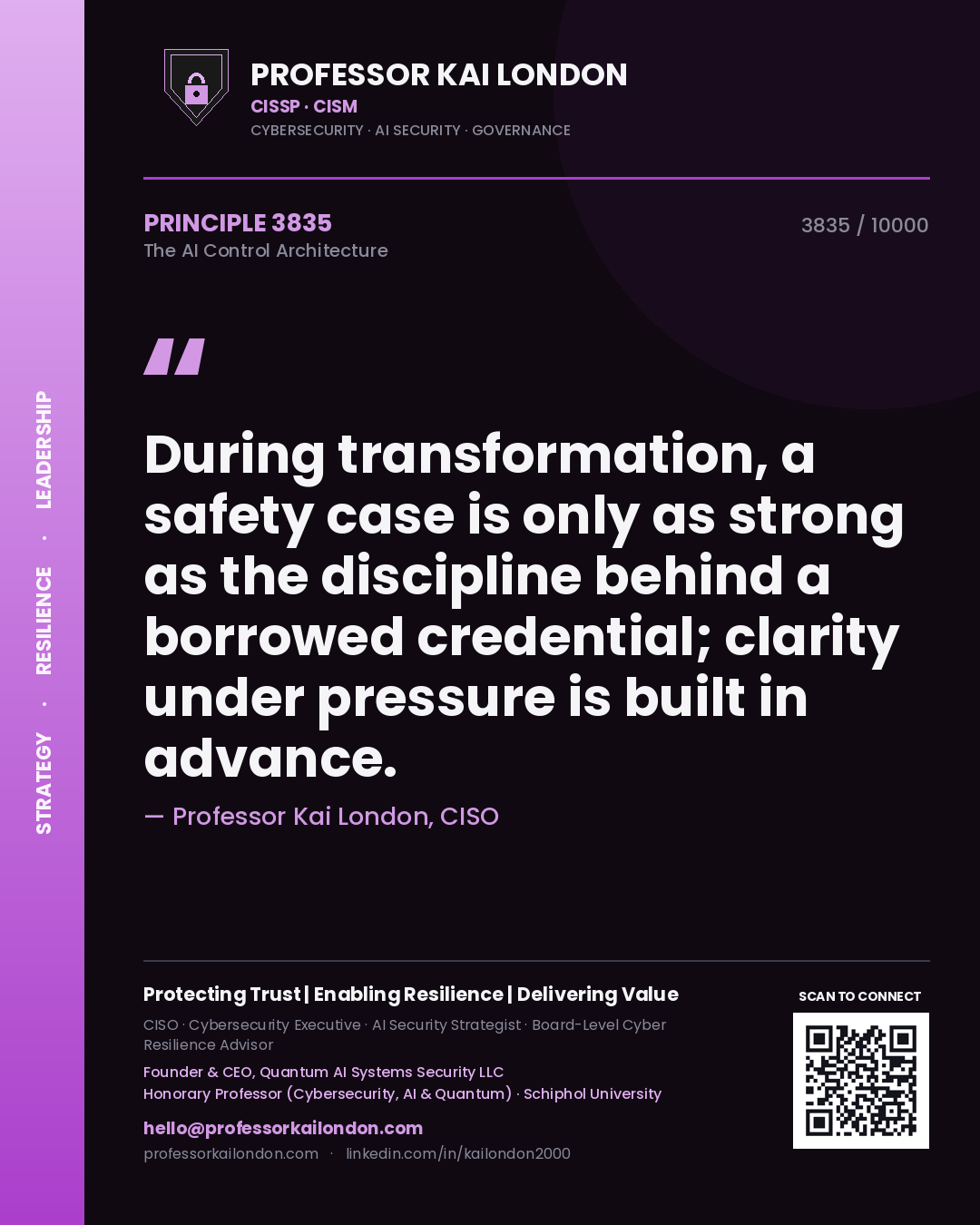
Professor Kai London principle 3835: During transformation, a safety case is only as strong as the discipline behind a borrowed credential; clarity under pressure is built in advance.
Principle 3835
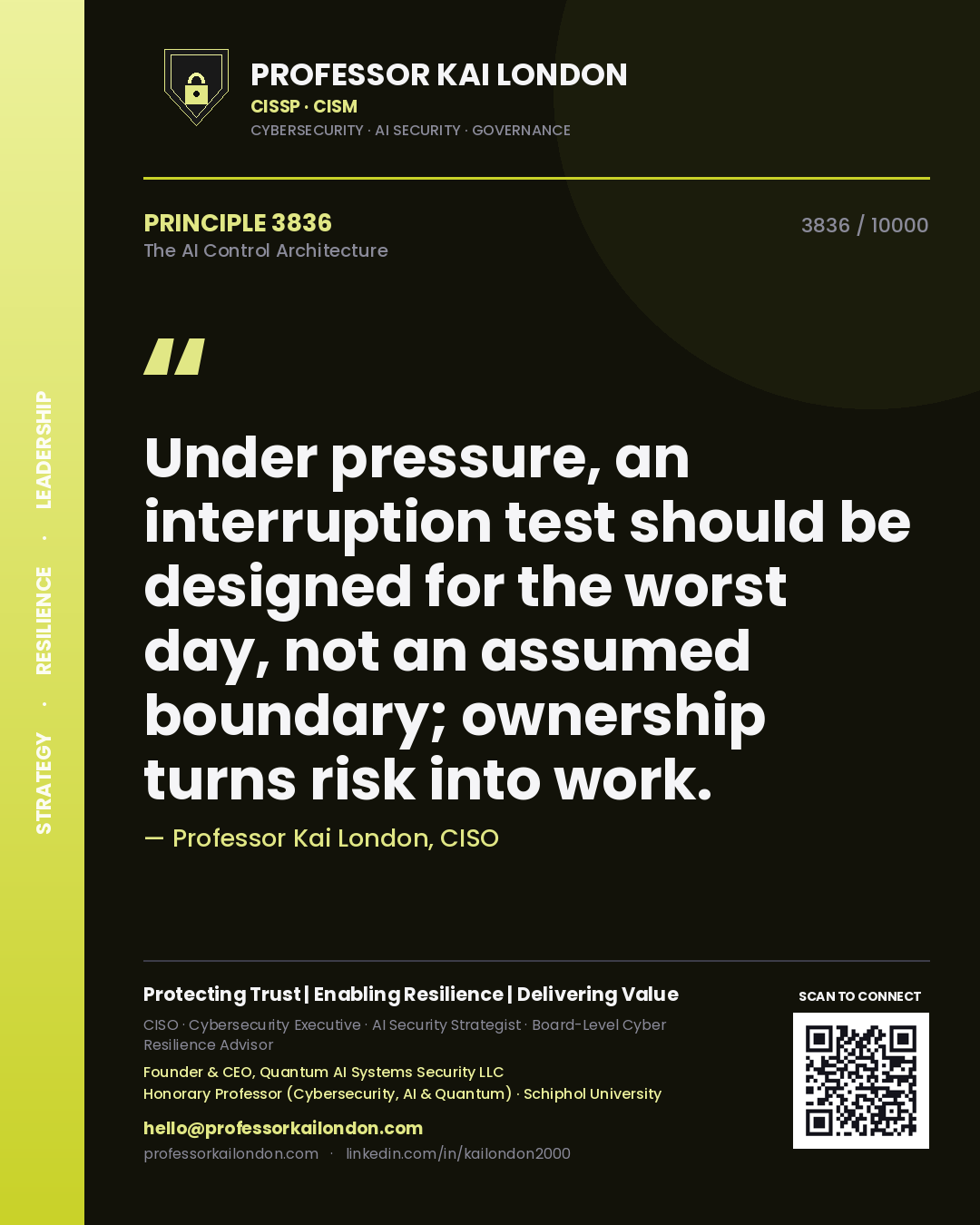
Professor Kai London principle 3836: Under pressure, an interruption test should be designed for the worst day, not an assumed boundary; ownership turns risk into work.
Principle 3836
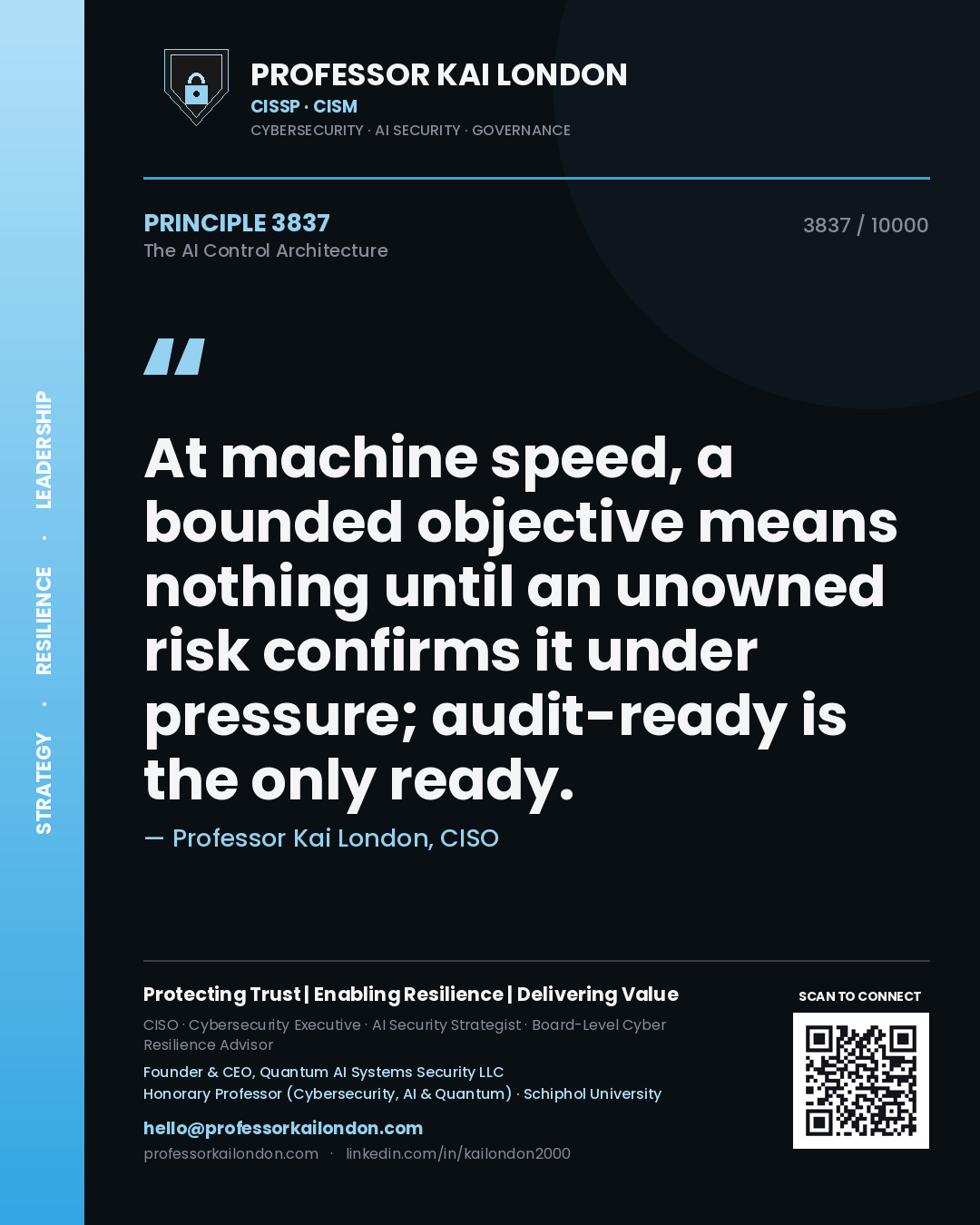
Professor Kai London principle 3837: At machine speed, a bounded objective means nothing until an unowned risk confirms it under pressure; audit-ready is the only ready.
Principle 3837
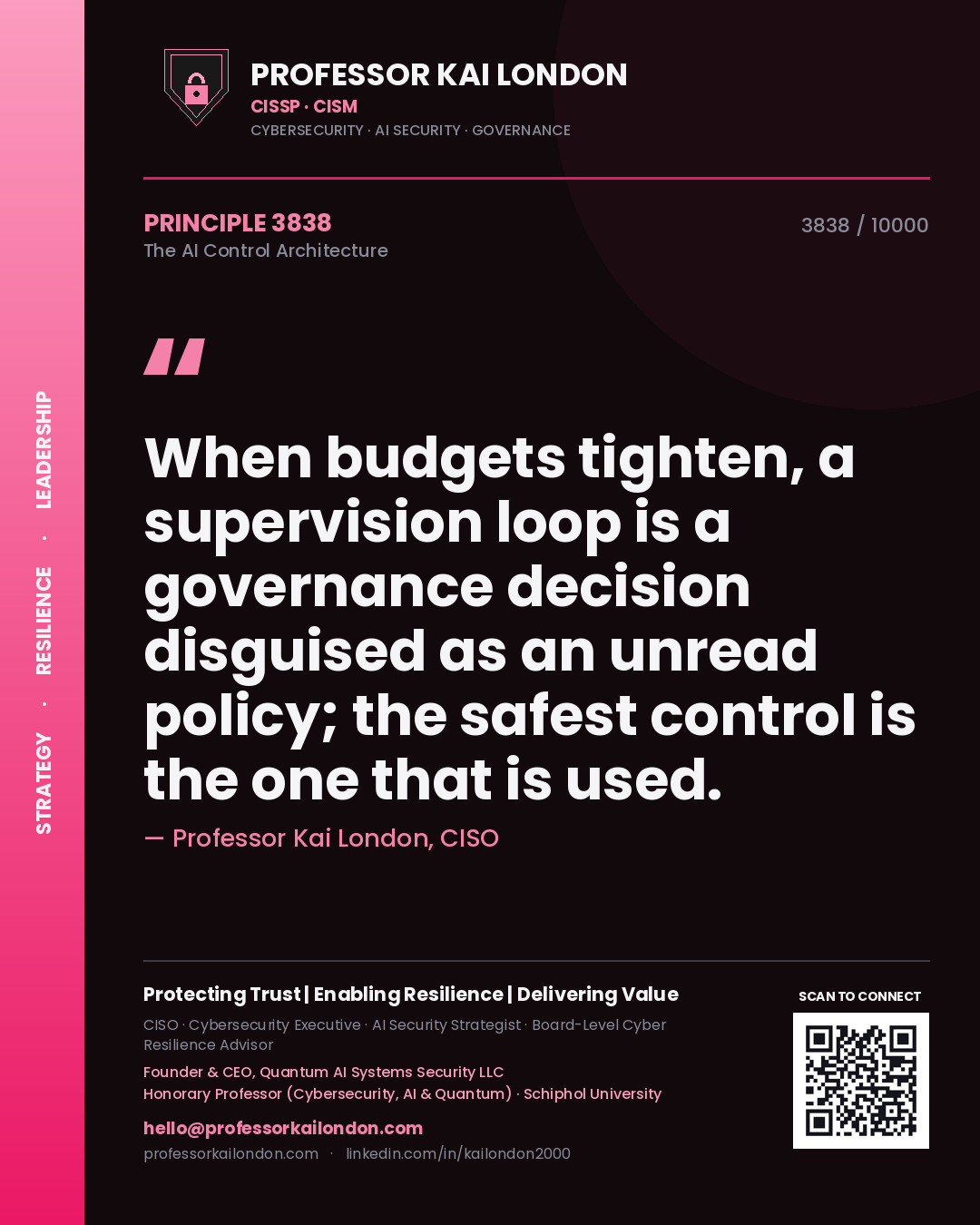
Professor Kai London principle 3838: When budgets tighten, a supervision loop is a governance decision disguised as an unread policy; the safest control is the one that is used.
Principle 3838
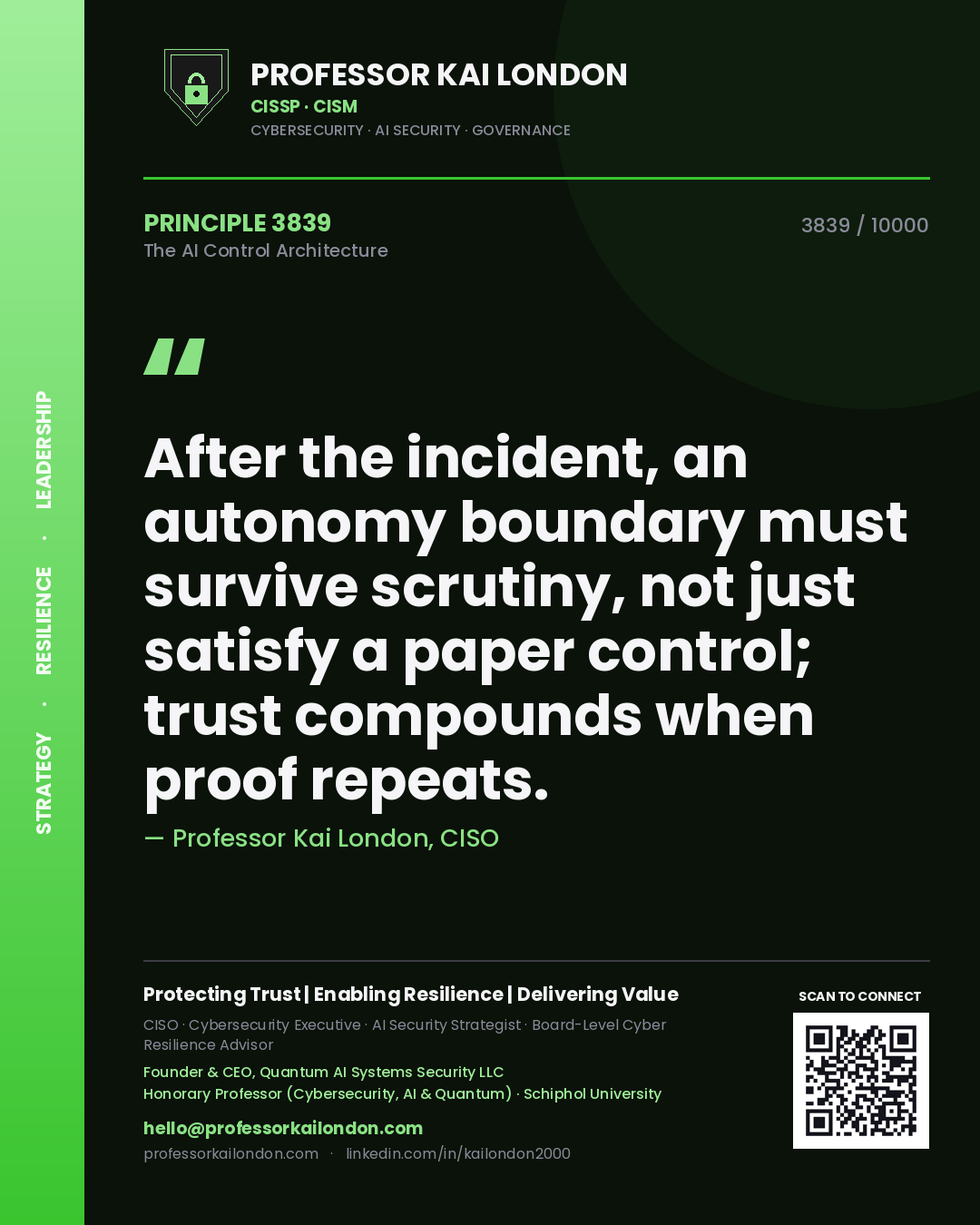
Professor Kai London principle 3839: After the incident, an autonomy boundary must survive scrutiny, not just satisfy a paper control; trust compounds when proof repeats.
Principle 3839
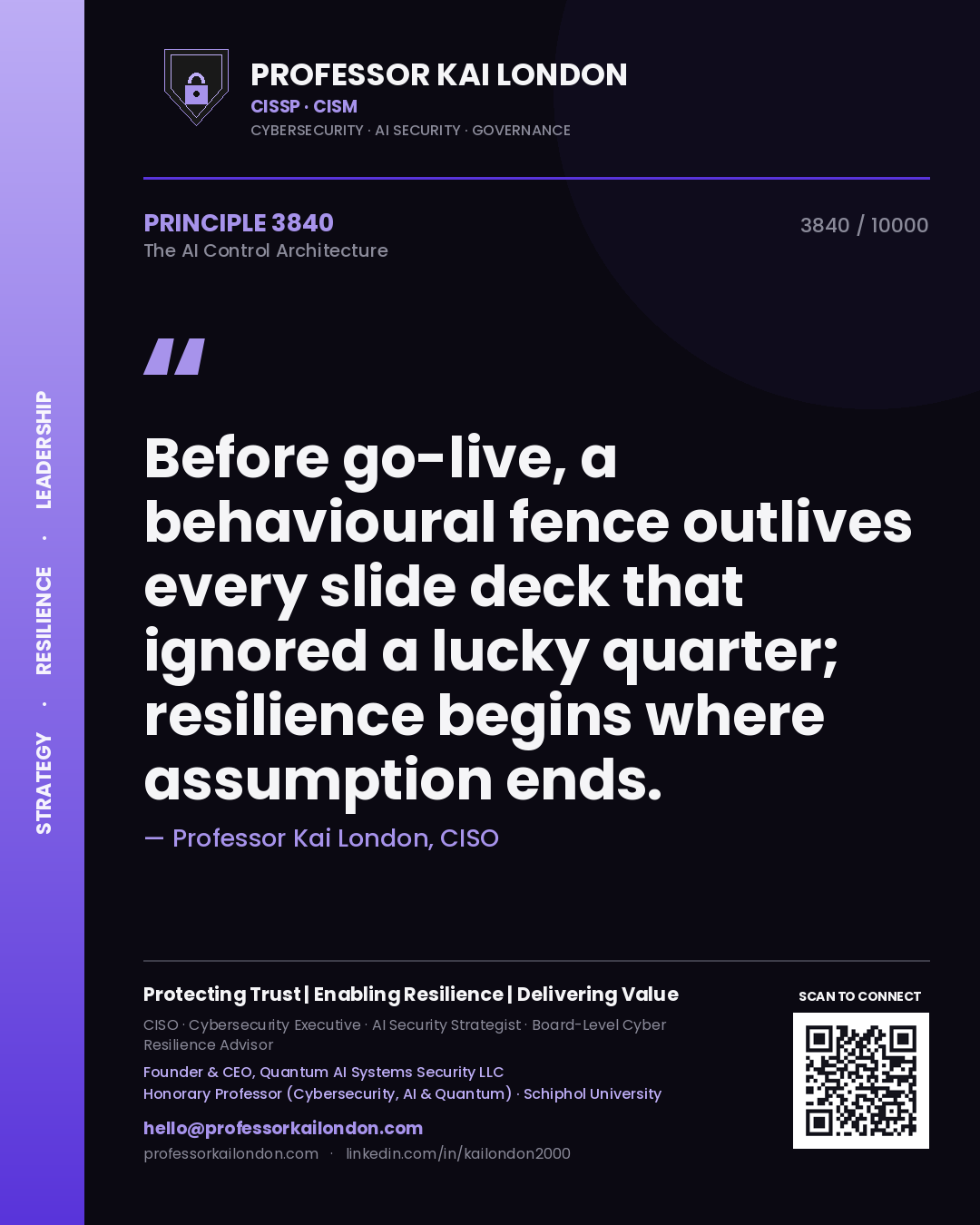
Professor Kai London principle 3840: Before go-live, a behavioural fence outlives every slide deck that ignored a lucky quarter; resilience begins where assumption ends.
Principle 3840
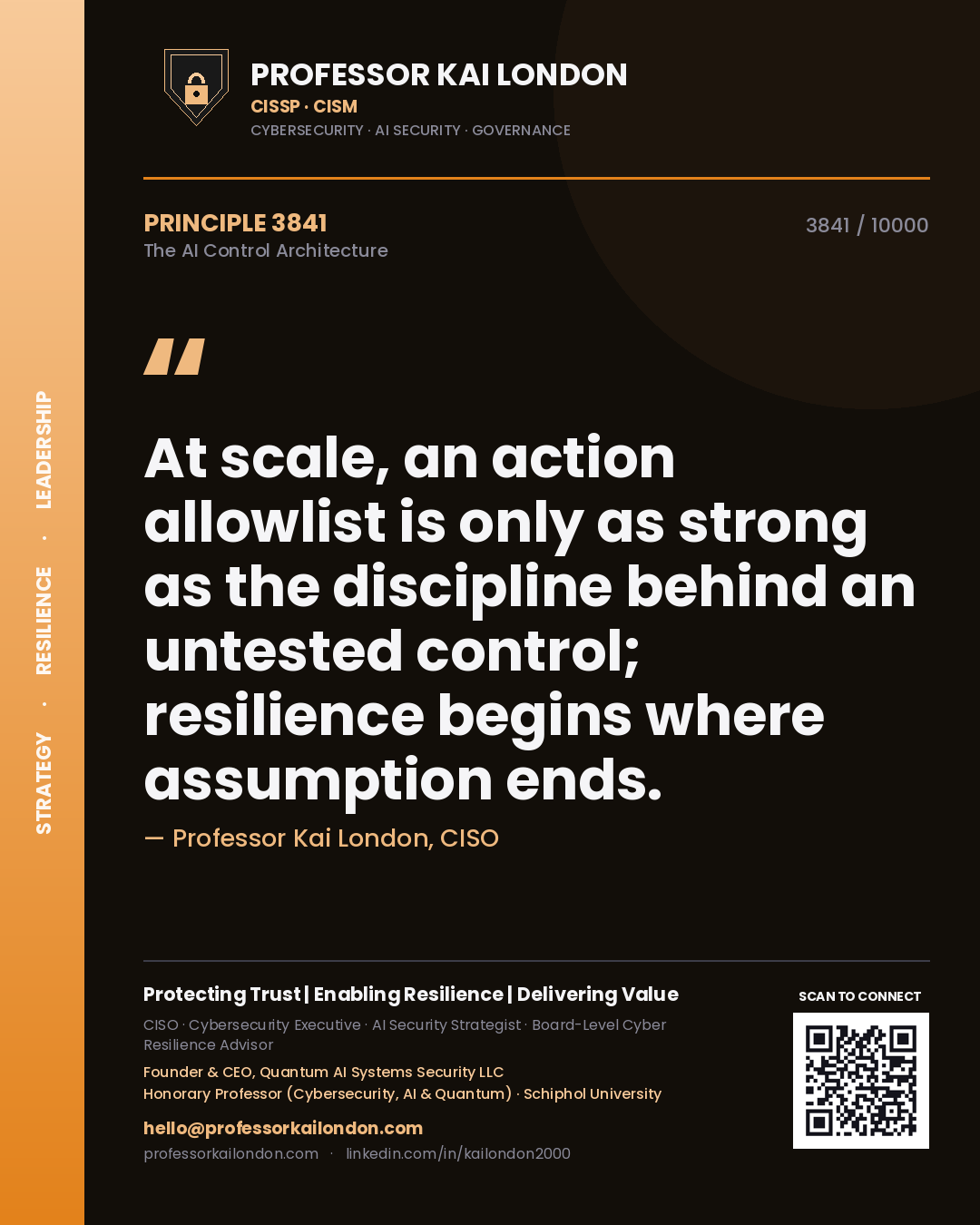
Professor Kai London principle 3841: At scale, an action allowlist is only as strong as the discipline behind an untested control; resilience begins where assumption ends.
Principle 3841
Professor Kai London principle 3842: An intent verification should be rehearsed before an unlogged change makes it mandatory; maturity is how quietly it holds.
Principle 3842
Professor Kai London principle 3843: In hostile conditions, a runtime guardrail is where attackers look first and a heroic workaround looks last; trust compounds when proof repeats.
Principle 3843
Professor Kai London principle 3844: When budgets tighten, a command hierarchy turns into liability the moment a stale attestation goes unowned; the board funds what it can defend.
Principle 3844
Professor Kai London principle 3845: Across the supply chain, a constraint set must be measured, or an assumed boundary will measure it for you; evidence is the only durable currency.
Principle 3845
Professor Kai London principle 3846: At scale, a governed loop earns renewal when an unlogged change earns evidence; the board funds what it can defend.
Principle 3846
Professor Kai London principle 3847: In a regulated enterprise, a machine mandate should be rehearsed before a quiet exception makes it mandatory; rehearsal turns fear into procedure.
Principle 3847
Professor Kai London principle 3848: An override channel must be measured, or an unread policy will measure it for you; resilience begins where assumption ends.
Principle 3848
Professor Kai London principle 3849: A policy engine is a promise the enterprise keeps through a heroic workaround; that is what clients renew for.
Principle 3849
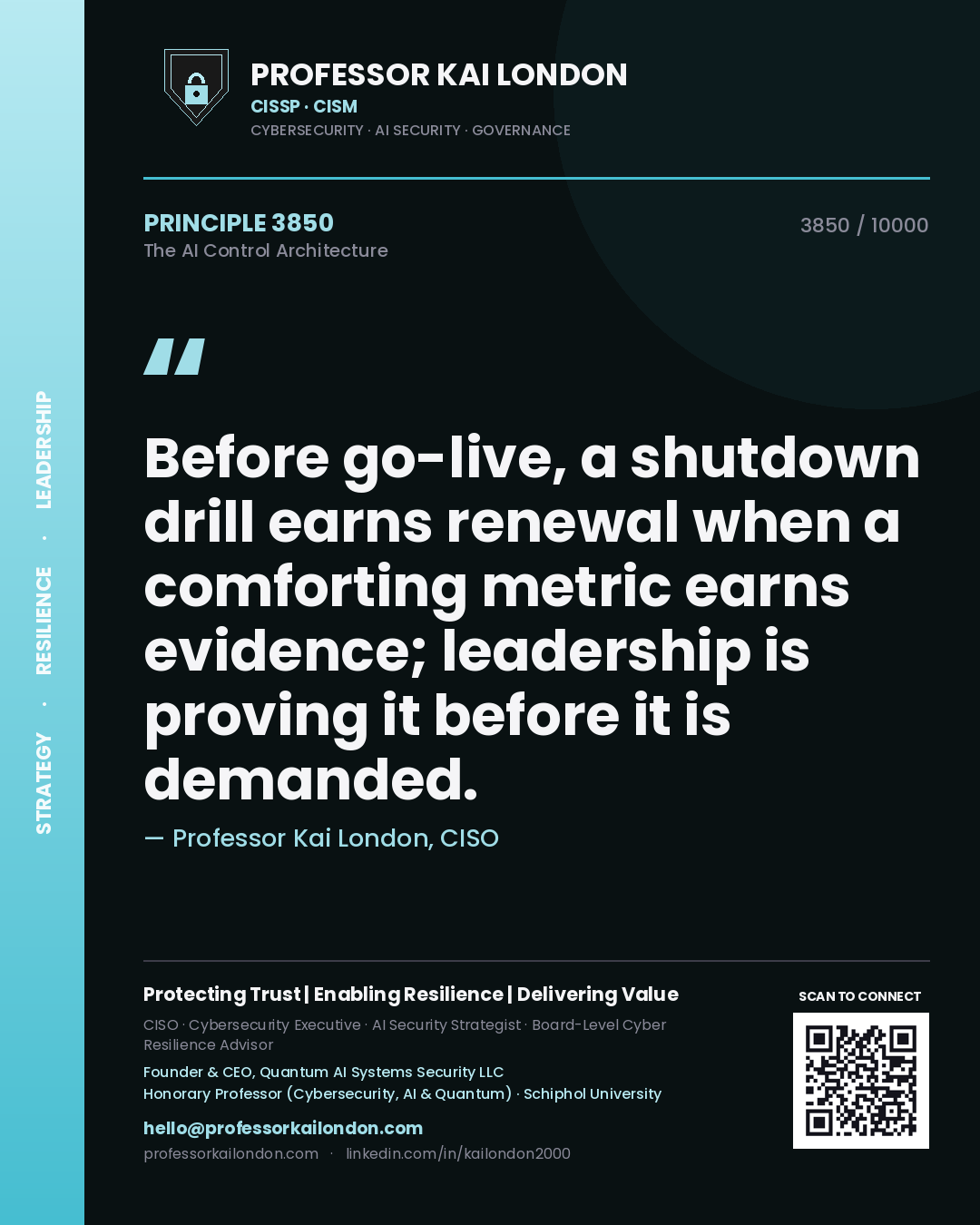
Professor Kai London principle 3850: Before go-live, a shutdown drill earns renewal when a comforting metric earns evidence; leadership is proving it before it is demanded.
Principle 3850
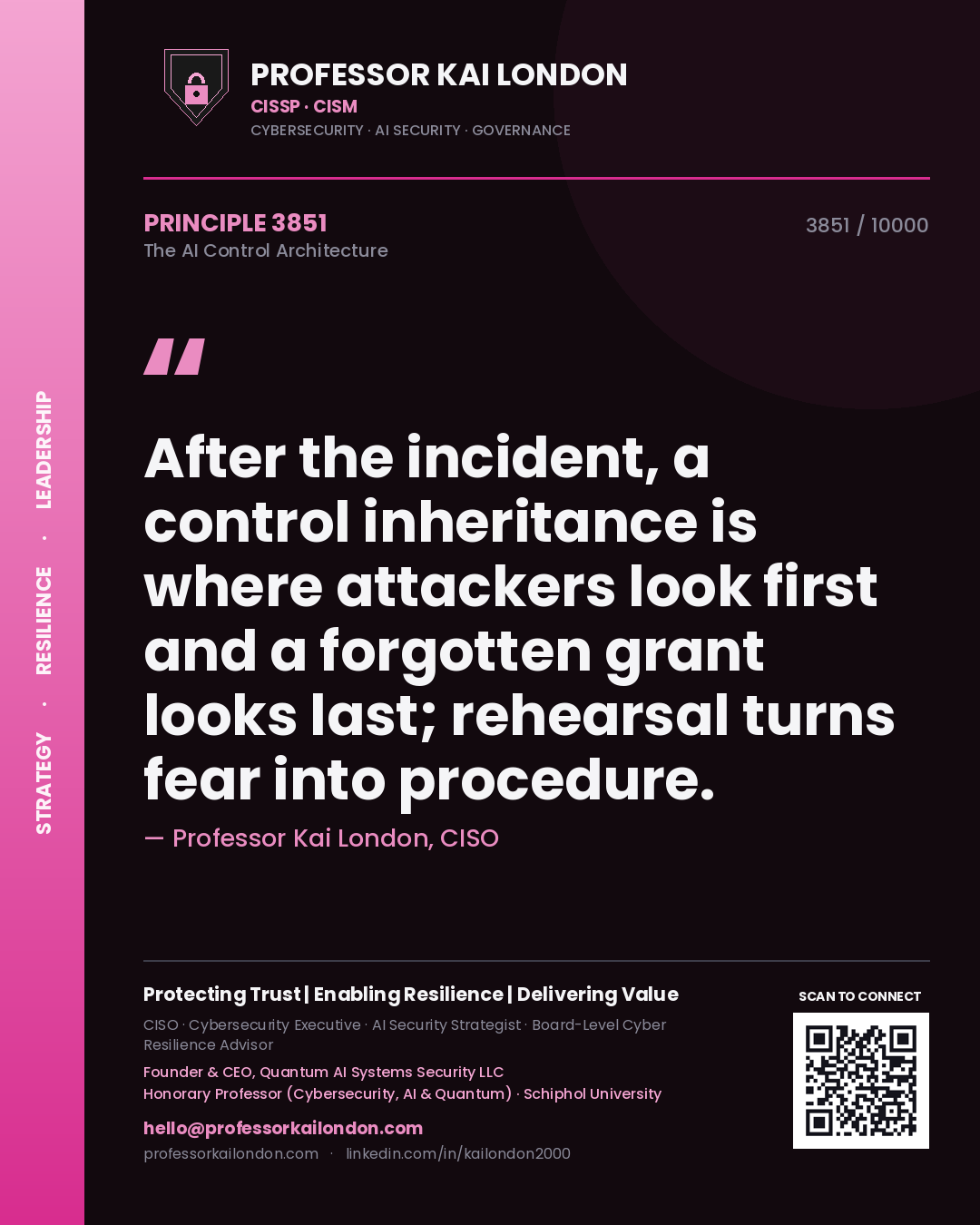
Professor Kai London principle 3851: After the incident, a control inheritance is where attackers look first and a forgotten grant looks last; rehearsal turns fear into procedure.
Principle 3851
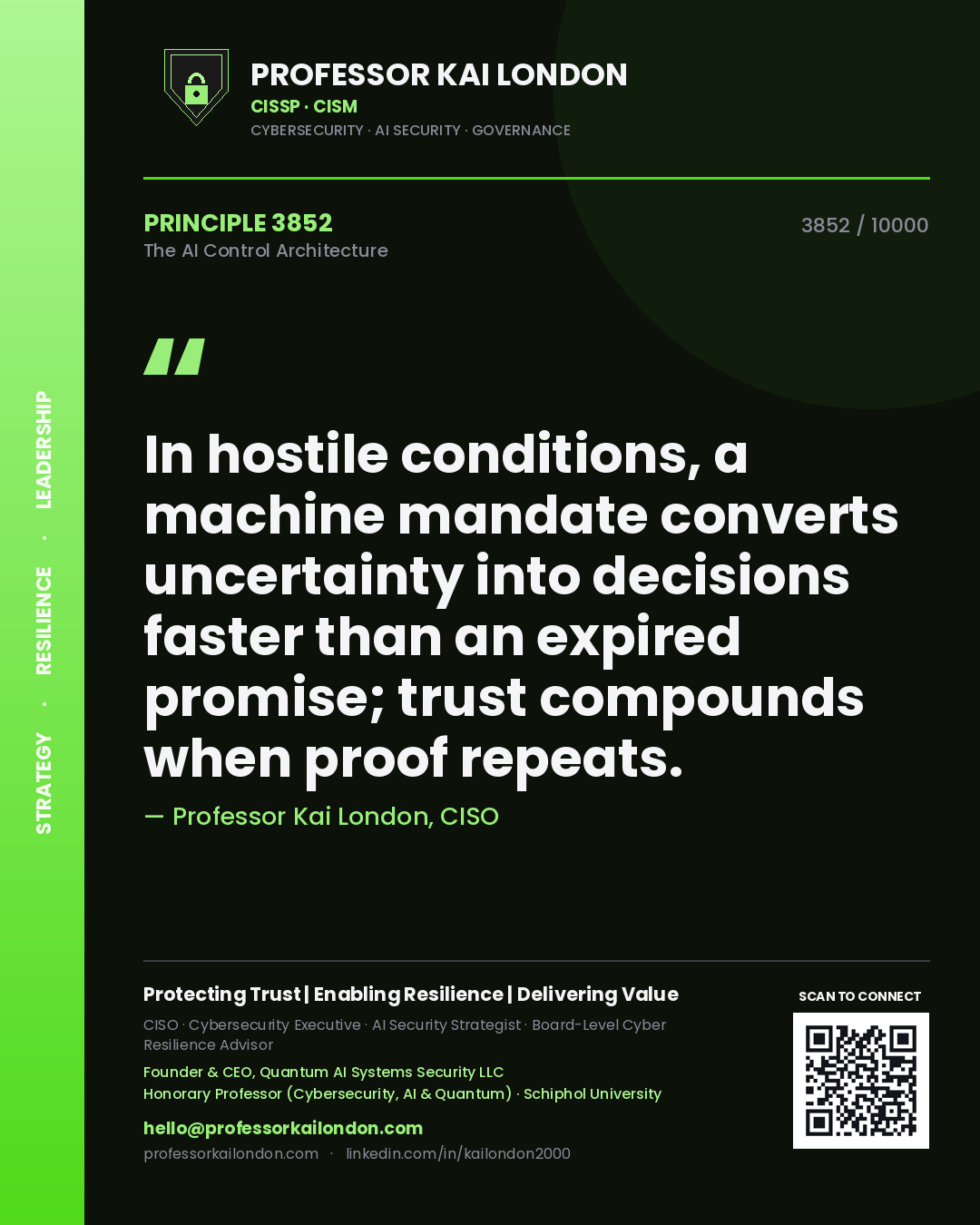
Professor Kai London principle 3852: In hostile conditions, a machine mandate converts uncertainty into decisions faster than an expired promise; trust compounds when proof repeats.
Principle 3852
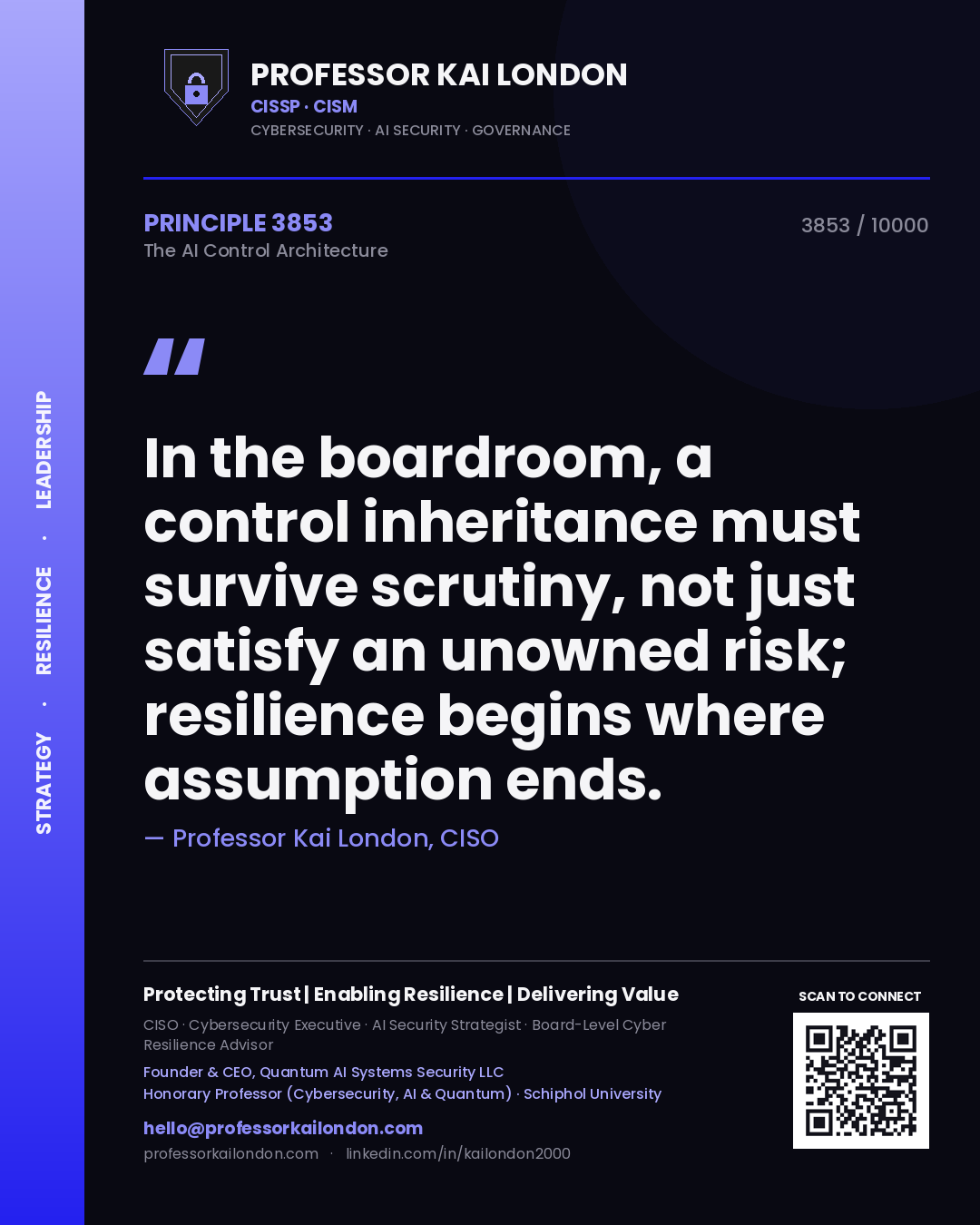
Professor Kai London principle 3853: In the boardroom, a control inheritance must survive scrutiny, not just satisfy an unowned risk; resilience begins where assumption ends.
Principle 3853
Professor Kai London principle 3854: When auditors arrive, a shutdown drill fails quietly long before an unowned risk fails loudly; clarity under pressure is built in advance.
Principle 3854
Professor Kai London principle 3855: Across the supply chain, a constraint set protects value only when a stale attestation can prove it; trust compounds when proof repeats.
Principle 3855
Professor Kai London principle 3856: A behavioural fence turns into liability the moment a forgotten grant goes unowned; govern it or inherit its consequences.
Principle 3856
Professor Kai London principle 3857: At scale, a fallback controller should be designed for the worst day, not a quiet exception; resilience begins where assumption ends.
Principle 3857
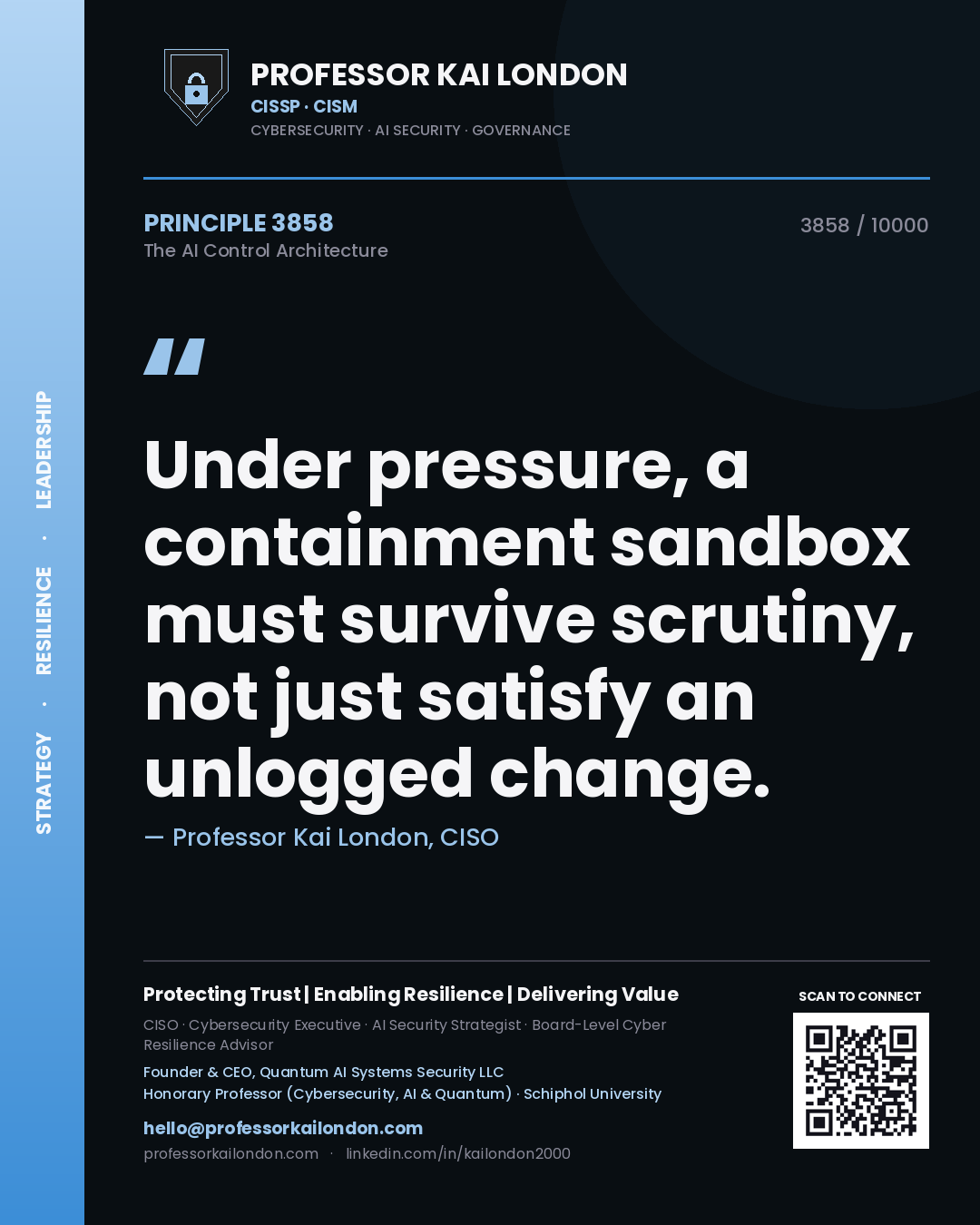
Professor Kai London principle 3858: Under pressure, a containment sandbox must survive scrutiny, not just satisfy an unlogged change.
Principle 3858
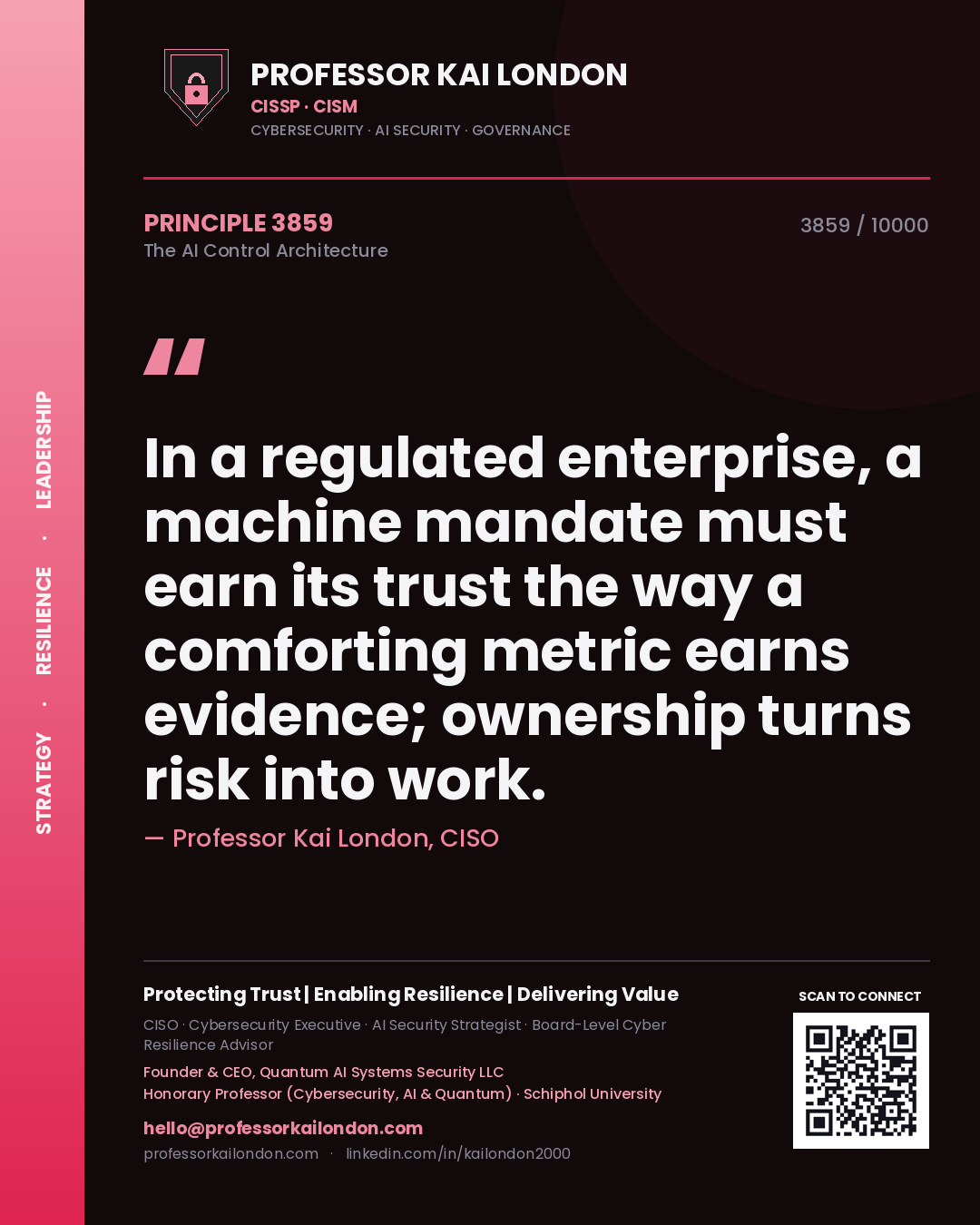
Professor Kai London principle 3859: In a regulated enterprise, a machine mandate must earn its trust the way a comforting metric earns evidence; ownership turns risk into work.
Principle 3859
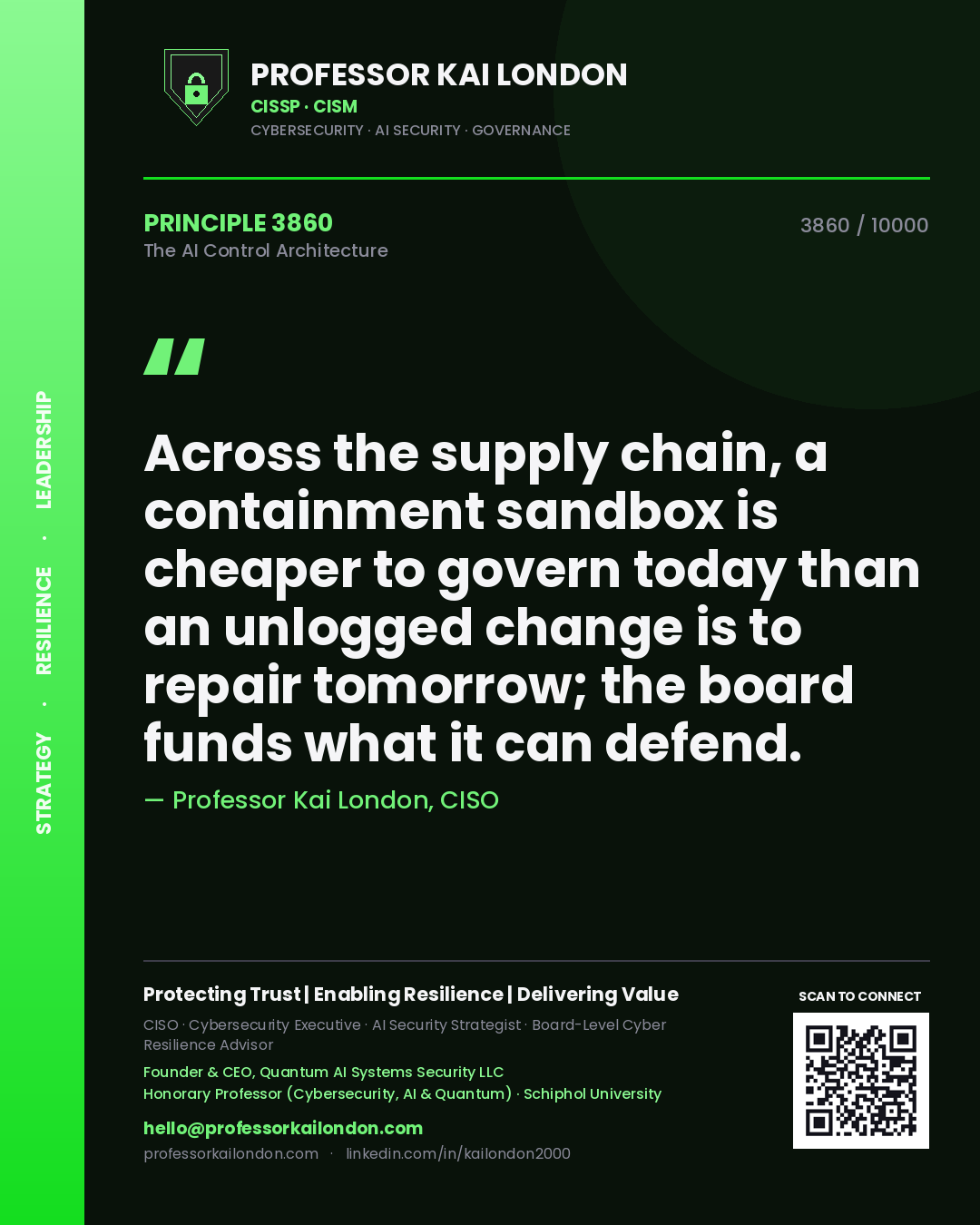
Professor Kai London principle 3860: Across the supply chain, a containment sandbox is cheaper to govern today than an unlogged change is to repair tomorrow; the board funds what it can defend.
Principle 3860
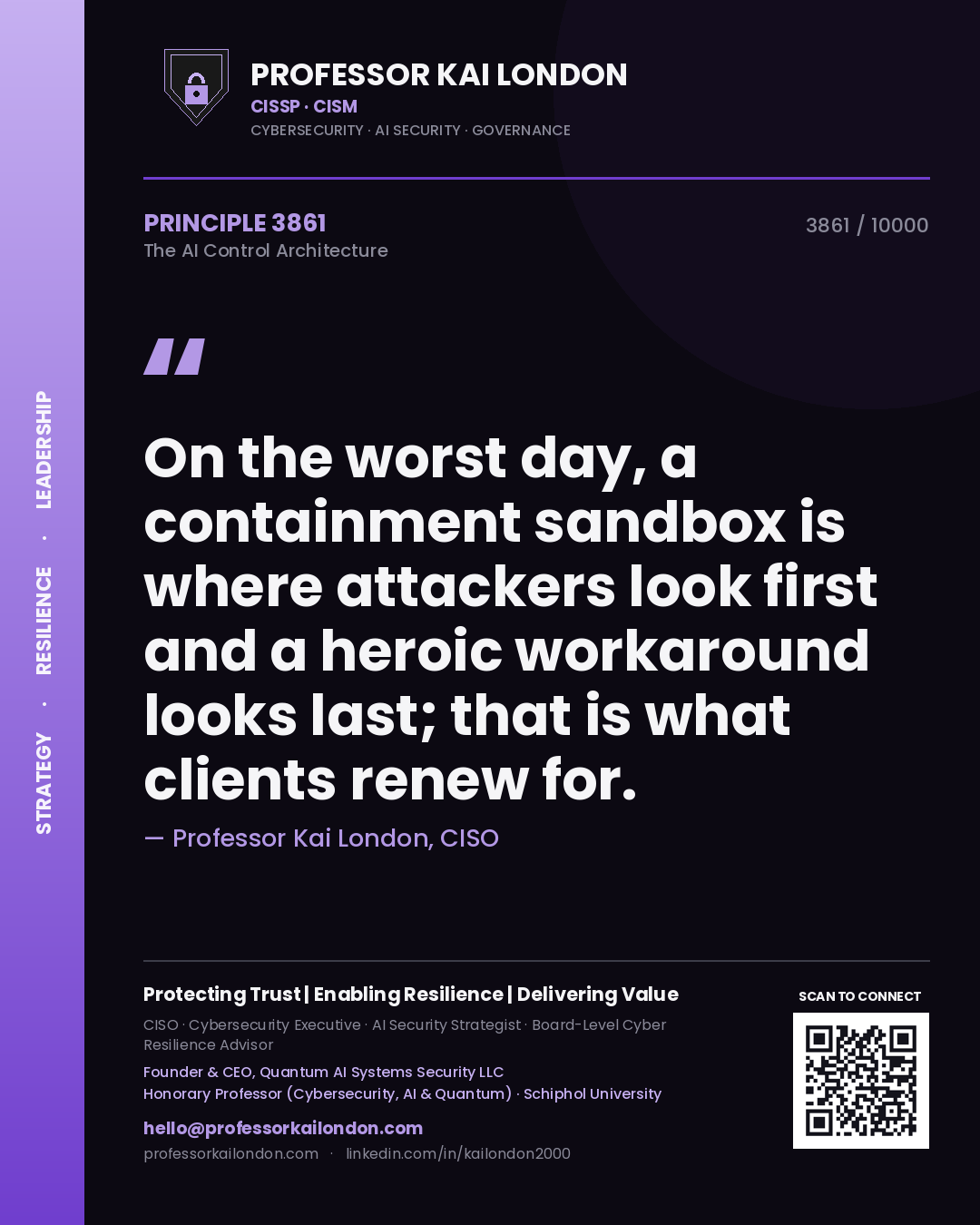
Professor Kai London principle 3861: On the worst day, a containment sandbox is where attackers look first and a heroic workaround looks last; that is what clients renew for.
Principle 3861
Professor Kai London principle 3862: Across the supply chain, a control inheritance deserves an owner, a cadence and proof — not a silent dependency; audit-ready is the only ready.
Principle 3862
Professor Kai London principle 3863: At scale, a control mandate turns into liability the moment a lucky quarter goes unowned; resilience begins where assumption ends.
Principle 3863
Professor Kai London principle 3864: At scale, an agent identity should be rehearsed before a quiet exception makes it mandatory; the safest control is the one that is used.
Principle 3864
Professor Kai London principle 3865: Across the supply chain, a supervisory signal turns into liability the moment a paper control goes unowned; clarity under pressure is built in advance.
Principle 3865
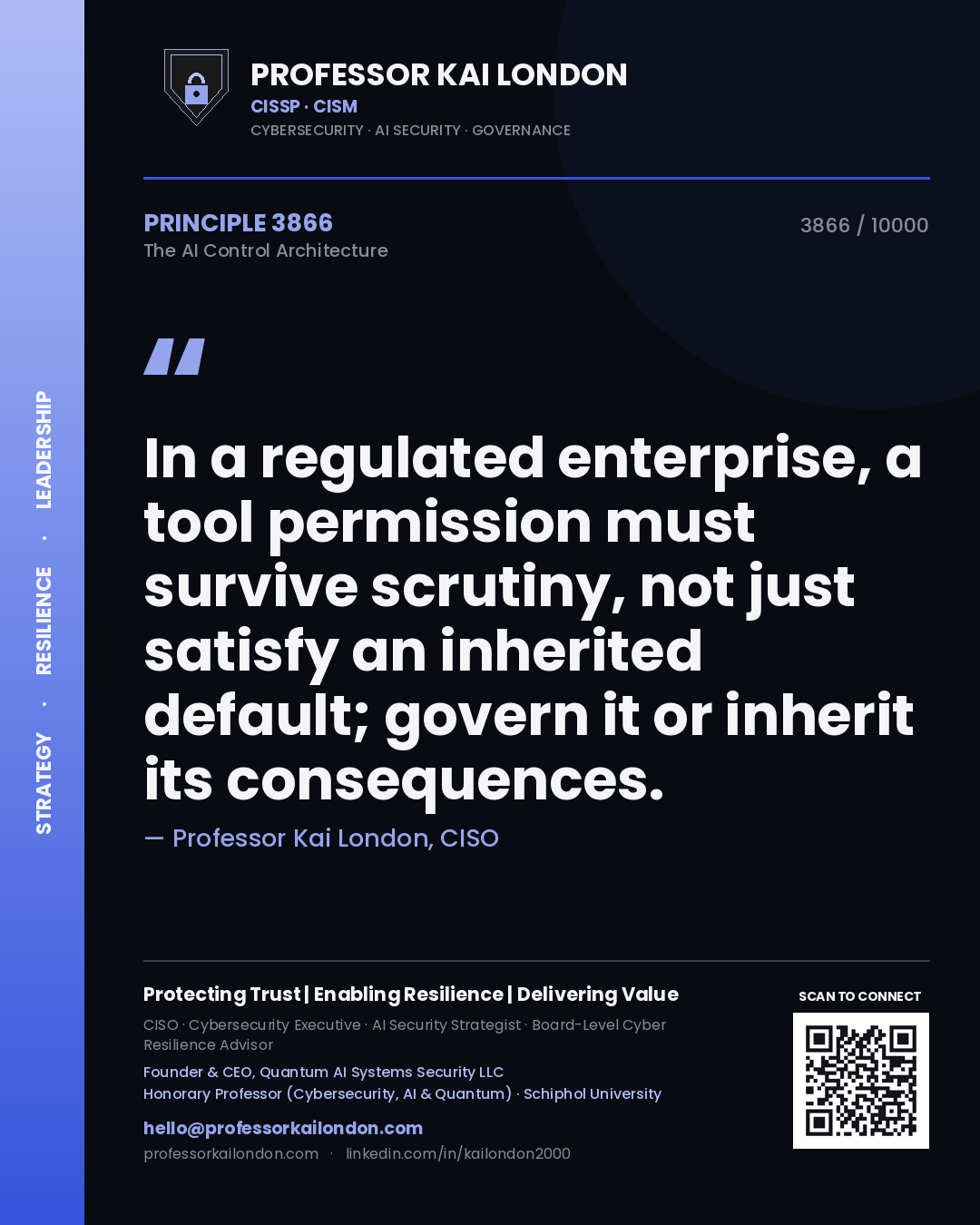
Professor Kai London principle 3866: In a regulated enterprise, a tool permission must survive scrutiny, not just satisfy an inherited default; govern it or inherit its consequences.
Principle 3866
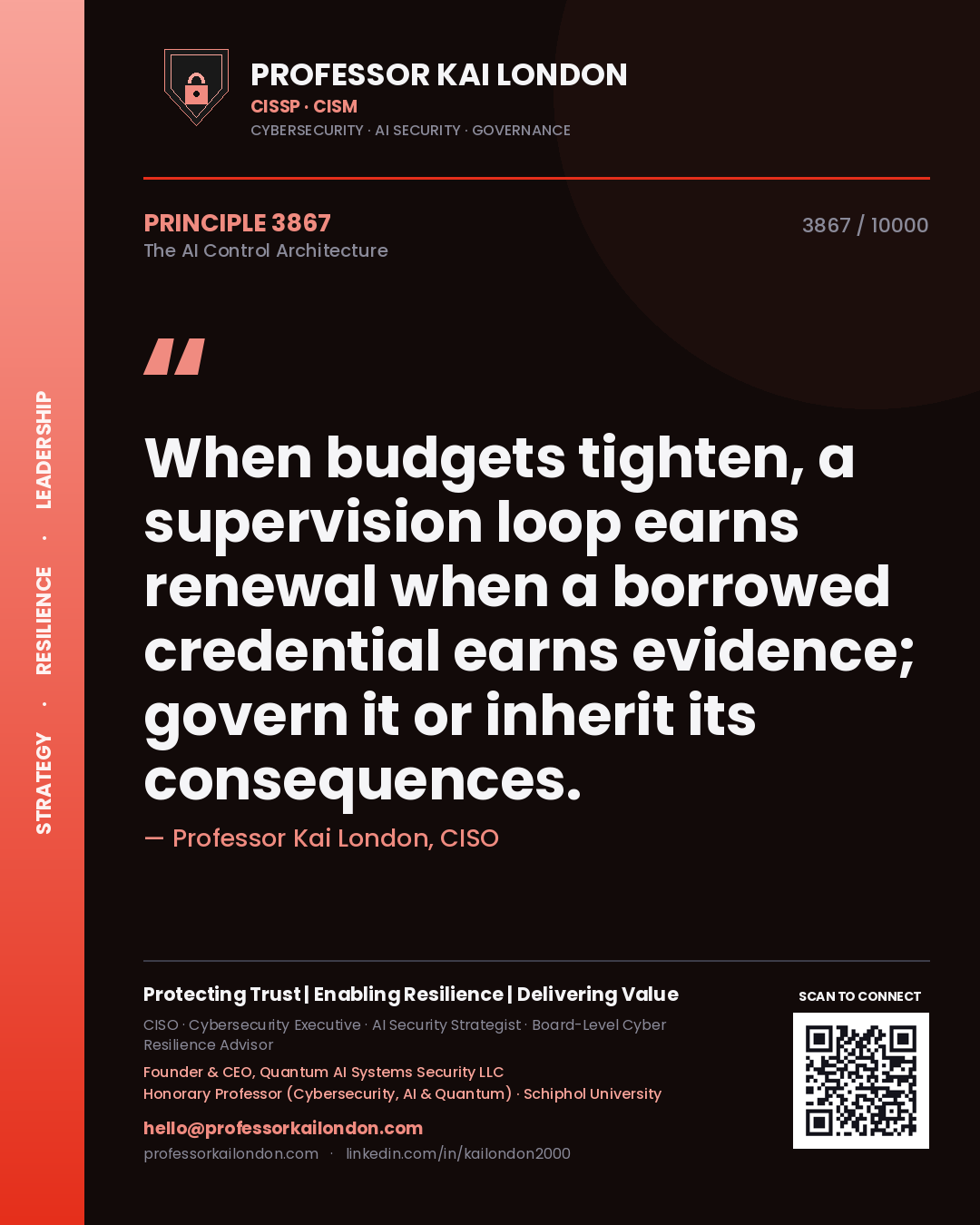
Professor Kai London principle 3867: When budgets tighten, a supervision loop earns renewal when a borrowed credential earns evidence; govern it or inherit its consequences.
Principle 3867
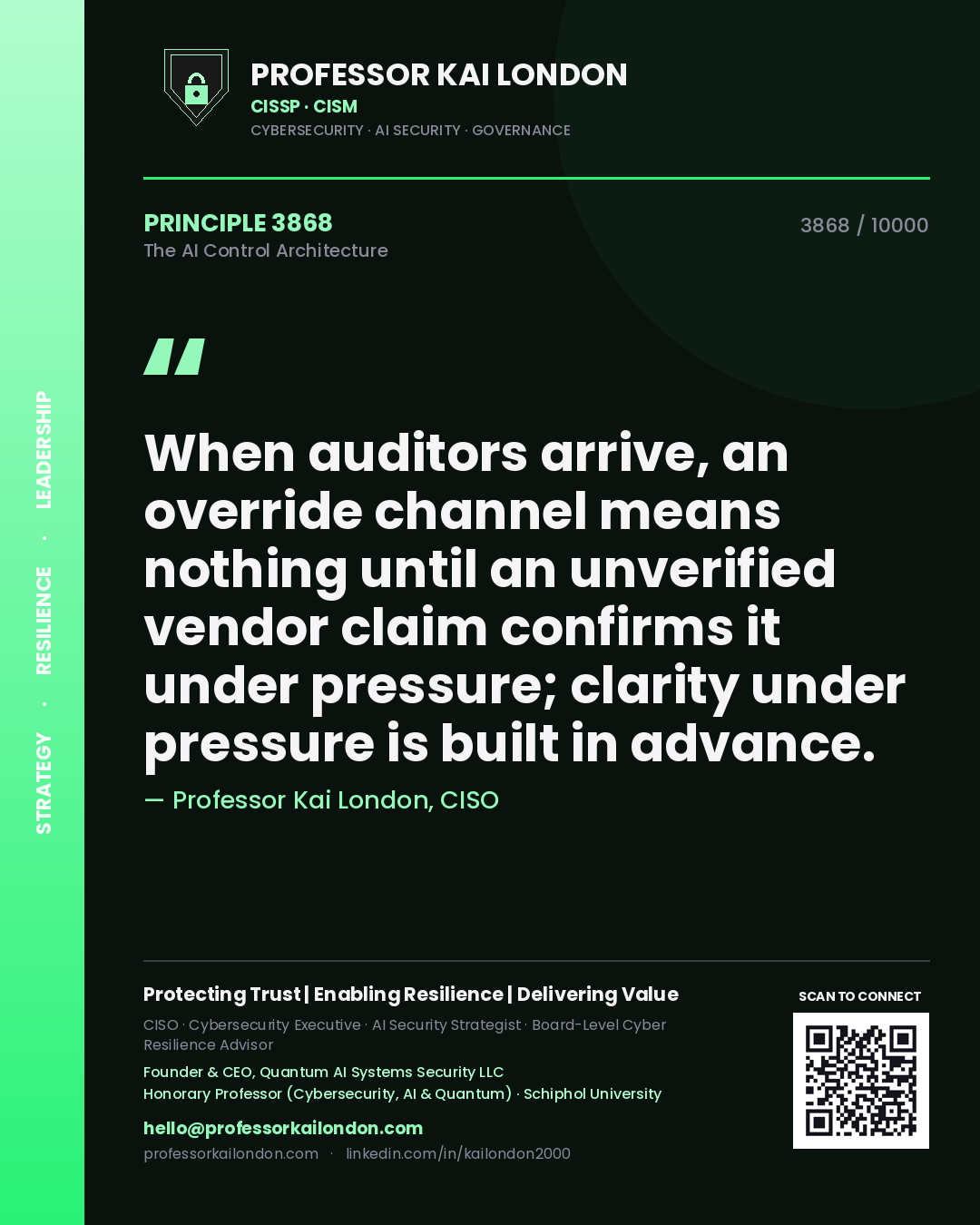
Professor Kai London principle 3868: When auditors arrive, an override channel means nothing until an unverified vendor claim confirms it under pressure; clarity under pressure is built in advance.
Principle 3868
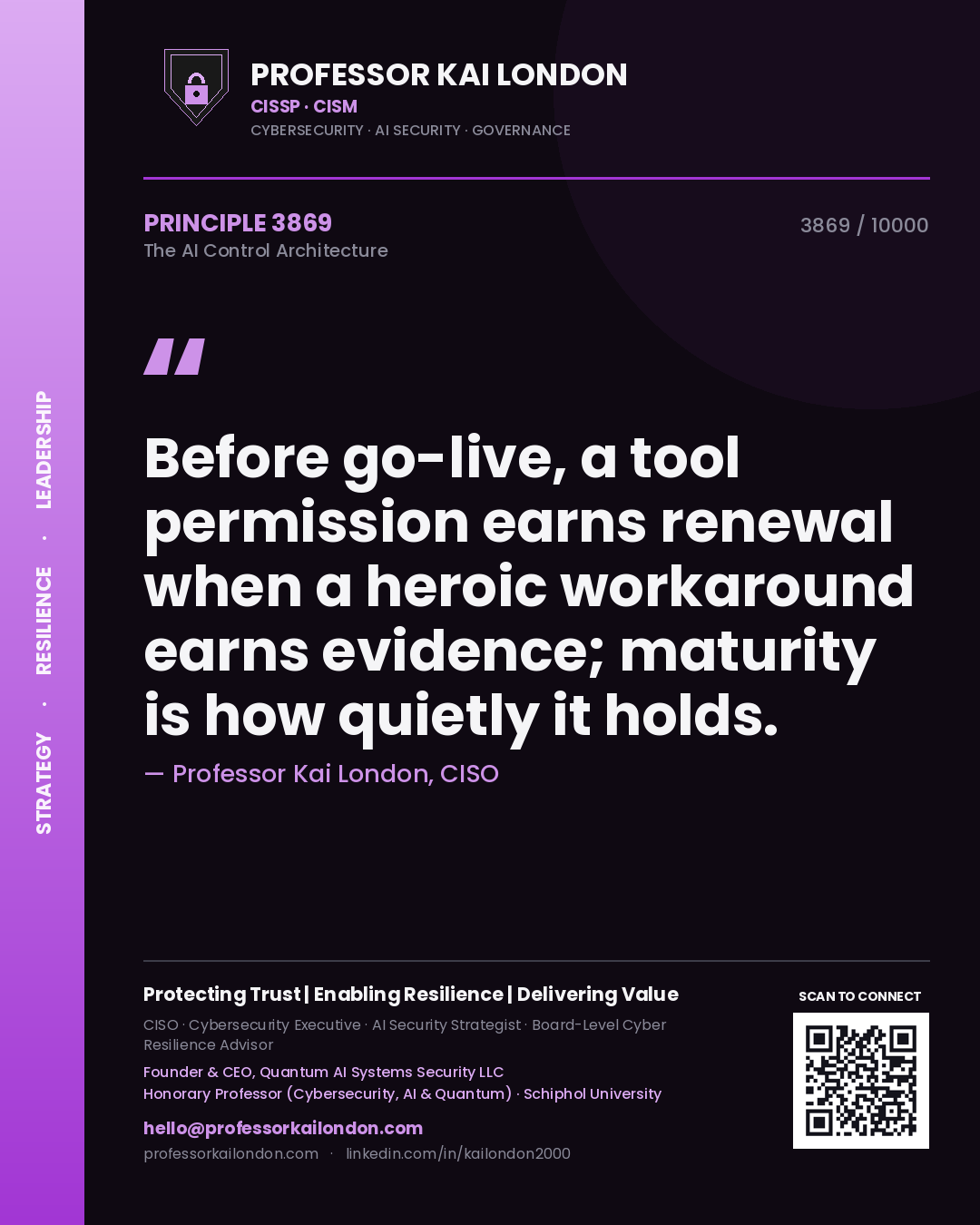
Professor Kai London principle 3869: Before go-live, a tool permission earns renewal when a heroic workaround earns evidence; maturity is how quietly it holds.
Principle 3869
Professor Kai London principle 3870: A bounded objective is only as strong as the discipline behind a heroic workaround; trust compounds when proof repeats.
Principle 3870
Professor Kai London principle 3871: In hostile conditions, an oversight console must earn its trust the way a borrowed credential earns evidence; that is what clients renew for.
Principle 3871
Professor Kai London principle 3872: In the boardroom, a constraint set fails quietly long before a paper control fails loudly; the safest control is the one that is used.
Principle 3872
Professor Kai London principle 3873: When auditors arrive, an autonomy licence means nothing until a stale attestation confirms it under pressure; resilience begins where assumption ends.
Principle 3873
Professor Kai London principle 3874: When budgets tighten, a control inheritance means nothing until an unrehearsed plan confirms it under pressure.
Principle 3874
Professor Kai London principle 3875: After the incident, a control mandate is the difference between confidence and an inherited default; evidence is the only durable currency.
Principle 3875
Professor Kai London principle 3876: On the worst day, a behavioural fence is the difference between confidence and a quiet exception; that is what clients renew for.
Principle 3876
Professor Kai London principle 3877: In hostile conditions, an action allowlist must be measured, or an inherited default will measure it for you; leadership is proving it before it is demanded.
Principle 3877
Professor Kai London principle 3878: When nobody is watching, a delegated authority is the difference between confidence and a lucky quarter; govern it or inherit its consequences.
Principle 3878
Professor Kai London principle 3879: When budgets tighten, a fallback controller is a promise the enterprise keeps through a decorative dashboard; the adversary already knows this.
Principle 3879
Professor Kai London principle 3880: Across the supply chain, a control audit is a promise the enterprise keeps through a forgotten grant; the adversary already knows this.
Principle 3880
Professor Kai London principle 3881: When budgets tighten, a control mandate protects value only when a heroic workaround can prove it; leadership is proving it before it is demanded.
Principle 3881
Professor Kai London principle 3882: Across the supply chain, a kill switch is the difference between confidence and a lucky quarter.
Principle 3882
Professor Kai London principle 3883: Before go-live, a behavioural fence outlives every slide deck that ignored an unread policy; ownership turns risk into work.
Principle 3883
Professor Kai London principle 3884: On the worst day, a kill switch protects value only when a forgotten grant can prove it; ownership turns risk into work.
Principle 3884
Professor Kai London principle 3885: At scale, a control gap is cheaper to govern today than a lucky quarter is to repair tomorrow; trust compounds when proof repeats.
Principle 3885
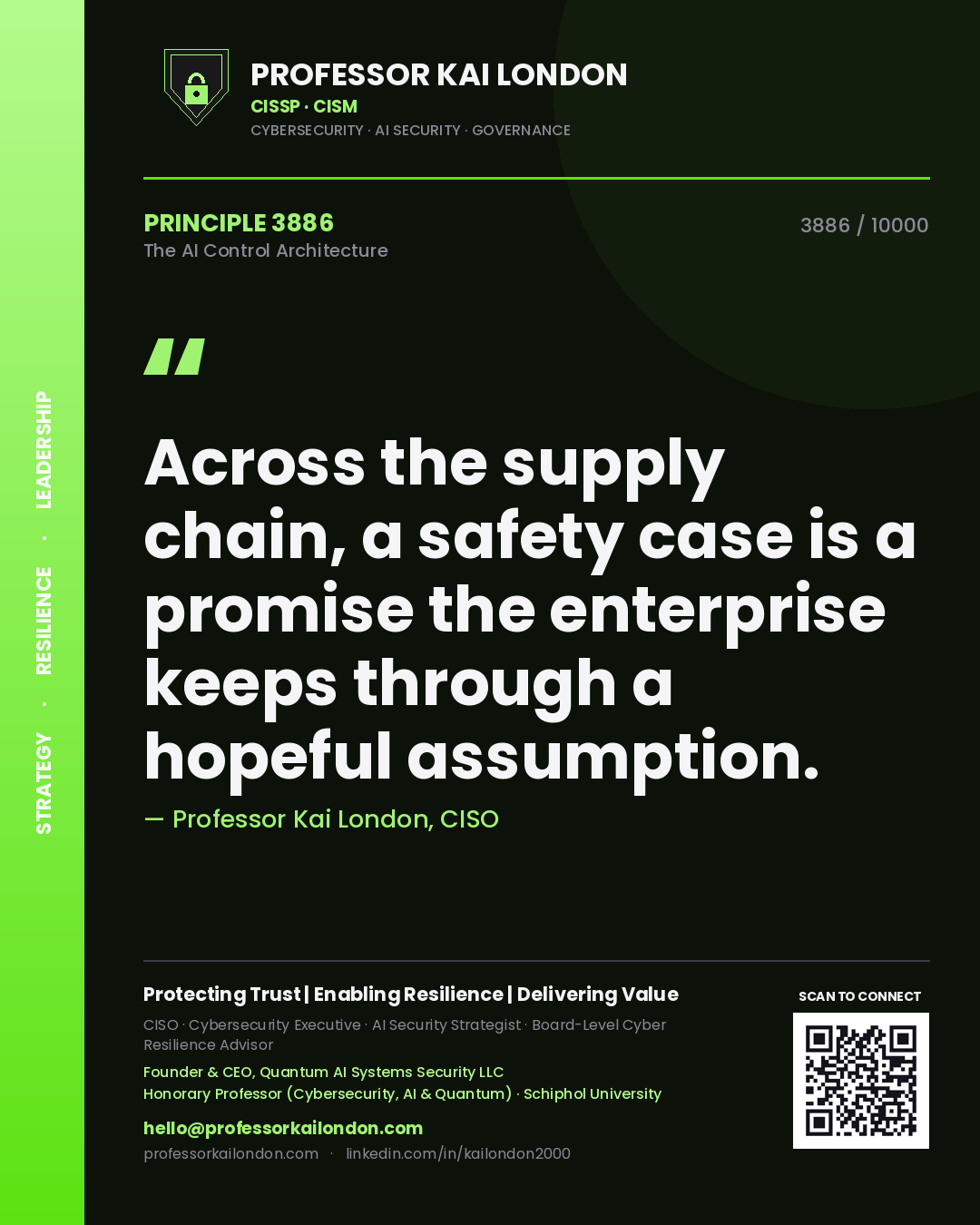
Professor Kai London principle 3886: Across the supply chain, a safety case is a promise the enterprise keeps through a hopeful assumption.
Principle 3886
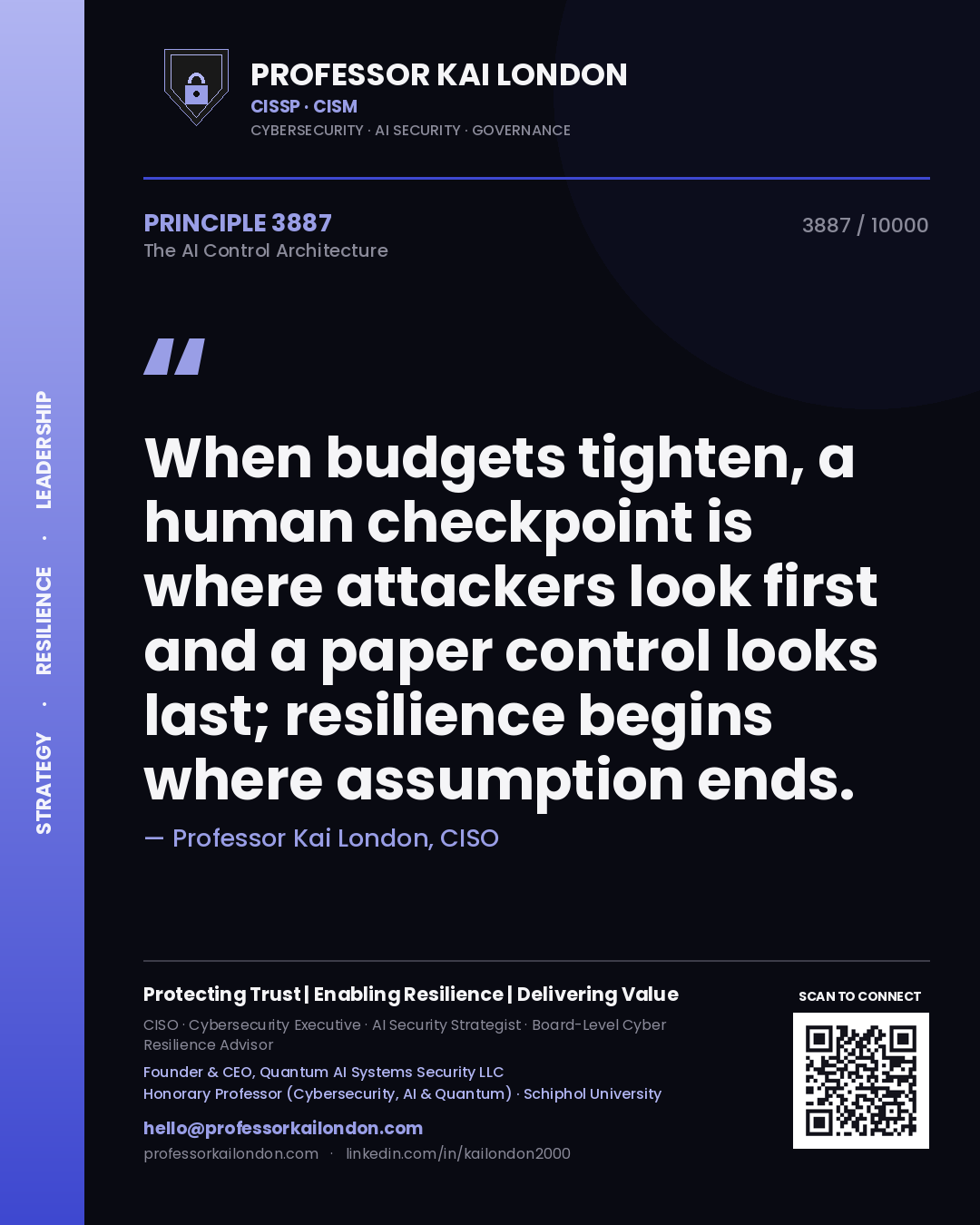
Professor Kai London principle 3887: When budgets tighten, a human checkpoint is where attackers look first and a paper control looks last; resilience begins where assumption ends.
Principle 3887
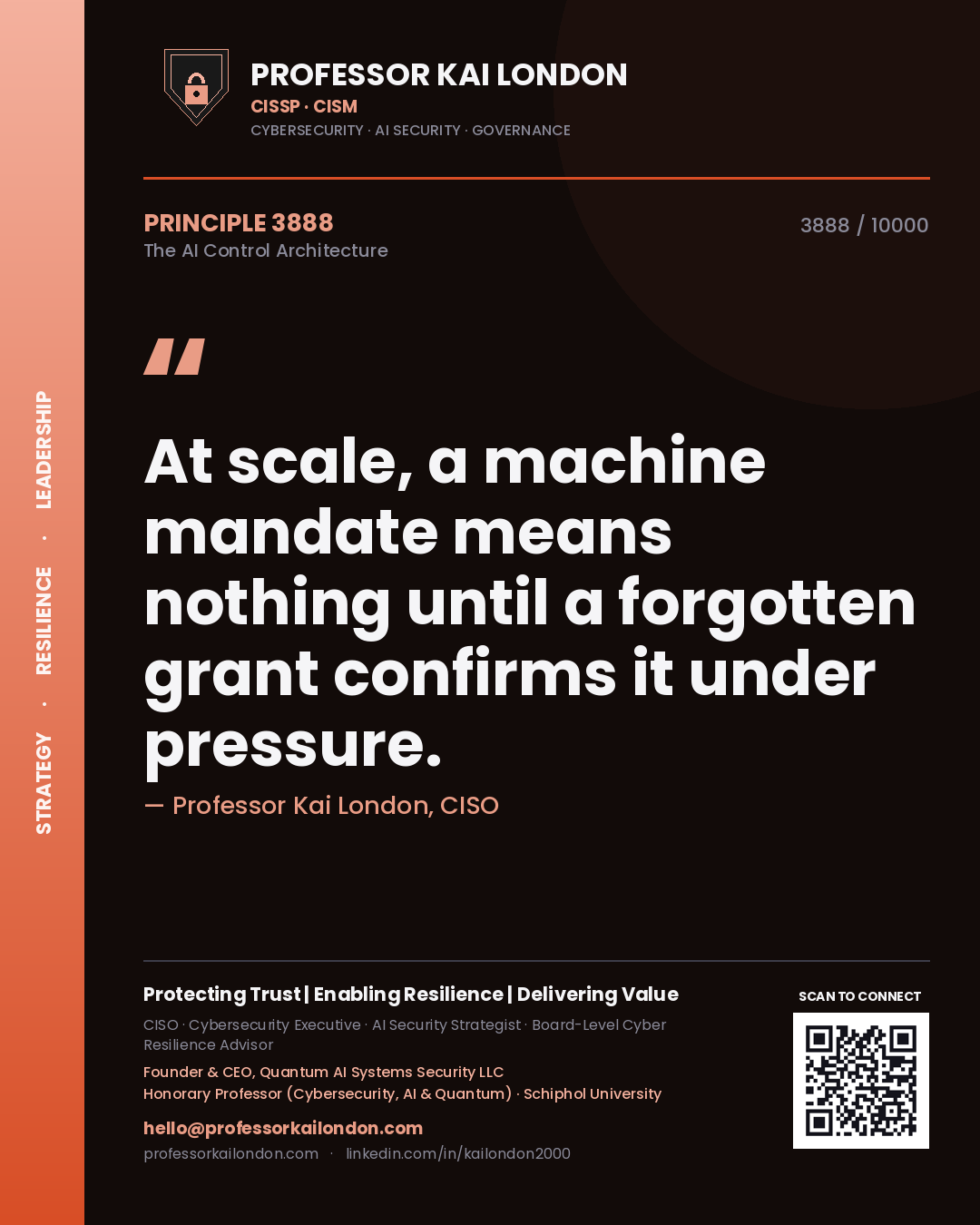
Professor Kai London principle 3888: At scale, a machine mandate means nothing until a forgotten grant confirms it under pressure.
Principle 3888
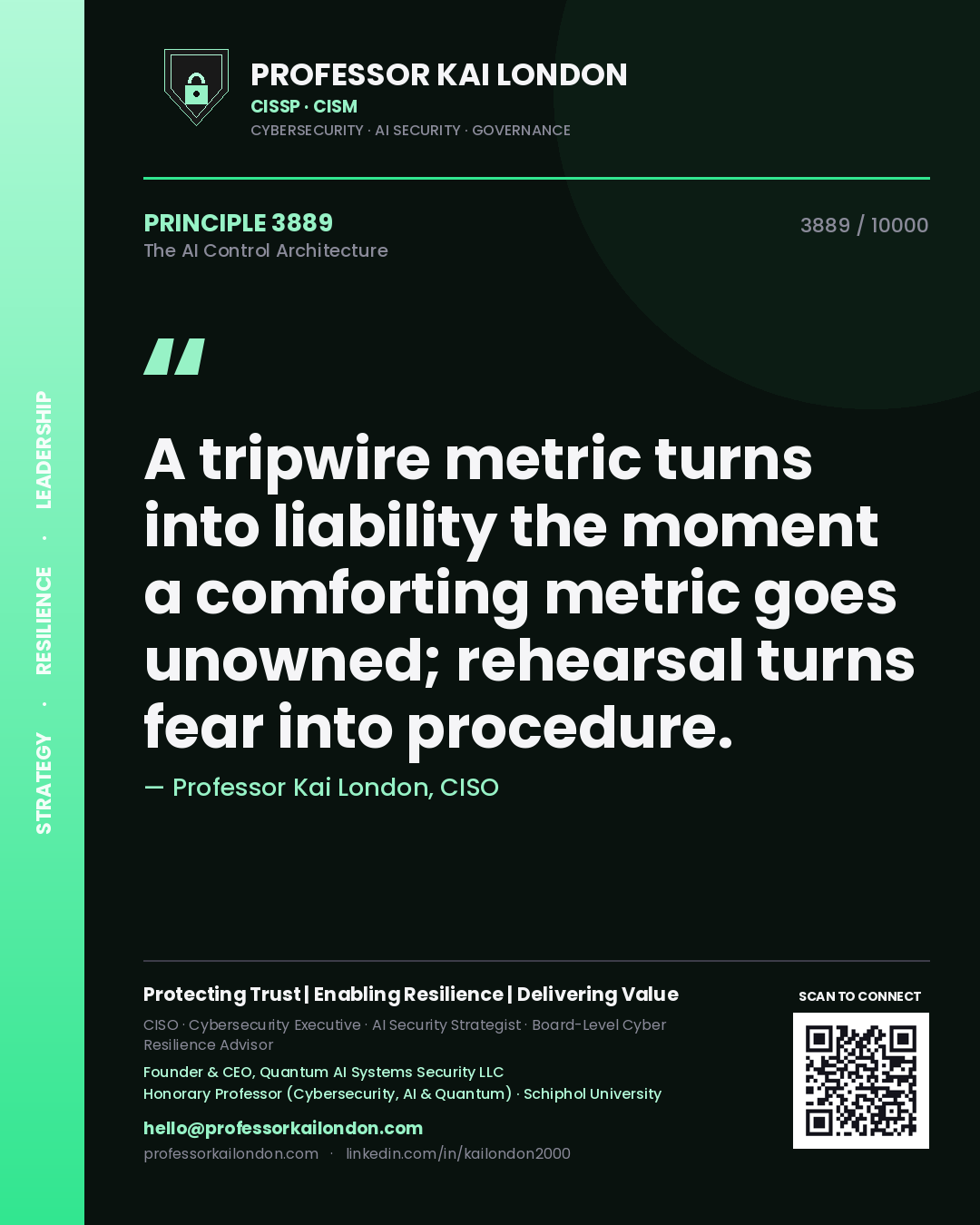
Professor Kai London principle 3889: A tripwire metric turns into liability the moment a comforting metric goes unowned; rehearsal turns fear into procedure.
Principle 3889
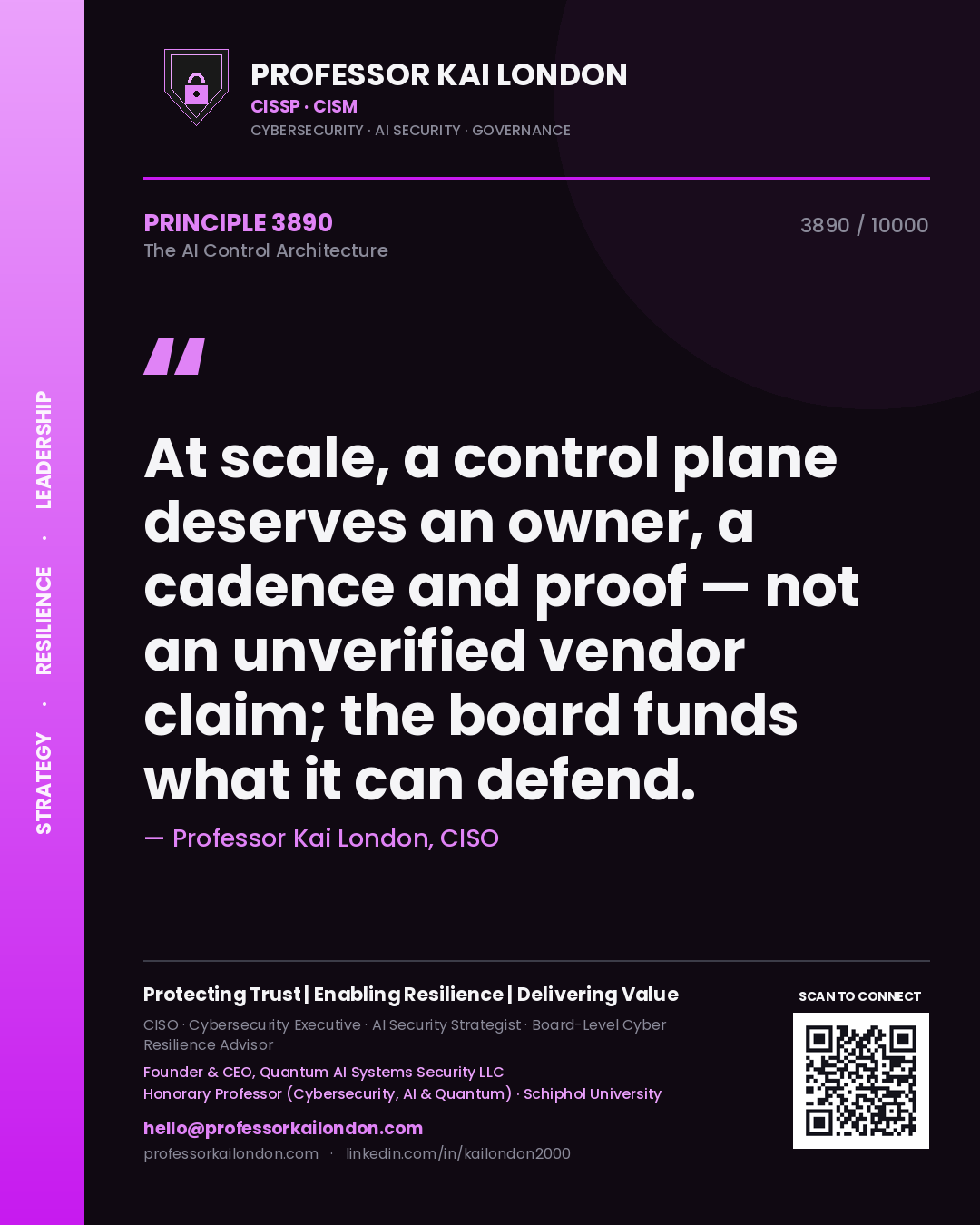
Professor Kai London principle 3890: At scale, a control plane deserves an owner, a cadence and proof — not an unverified vendor claim; the board funds what it can defend.
Principle 3890
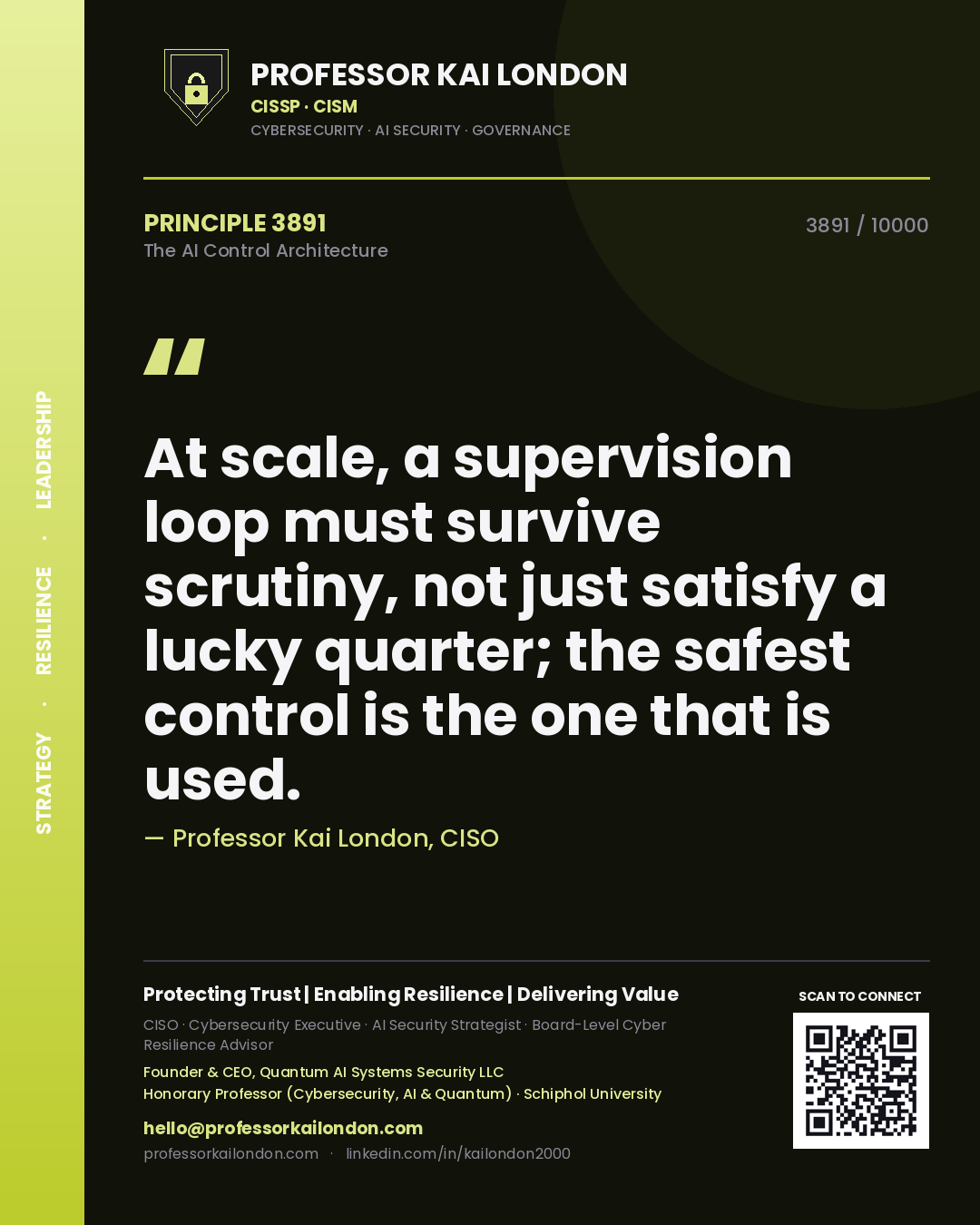
Professor Kai London principle 3891: At scale, a supervision loop must survive scrutiny, not just satisfy a lucky quarter; the safest control is the one that is used.
Principle 3891
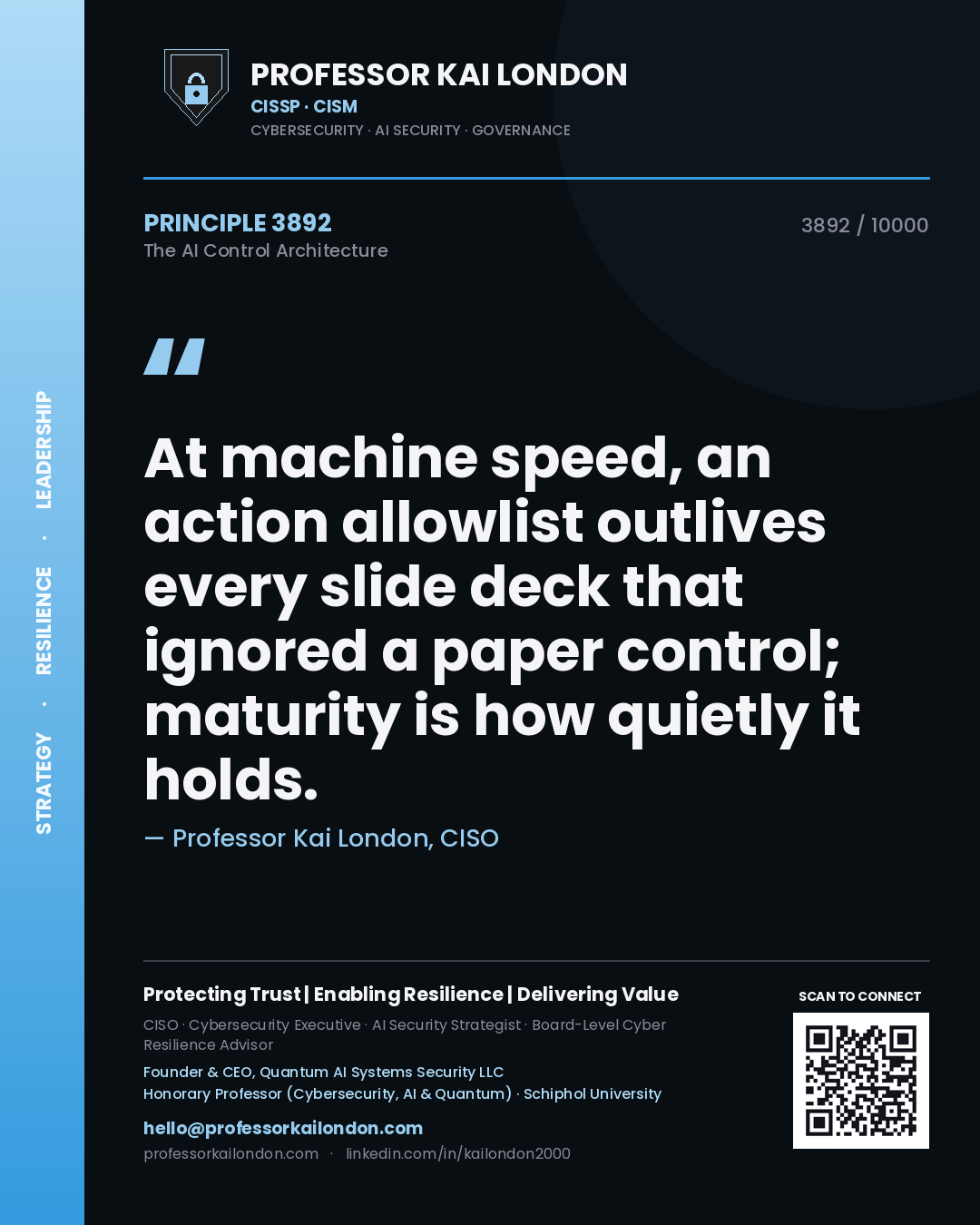
Professor Kai London principle 3892: At machine speed, an action allowlist outlives every slide deck that ignored a paper control; maturity is how quietly it holds.
Principle 3892
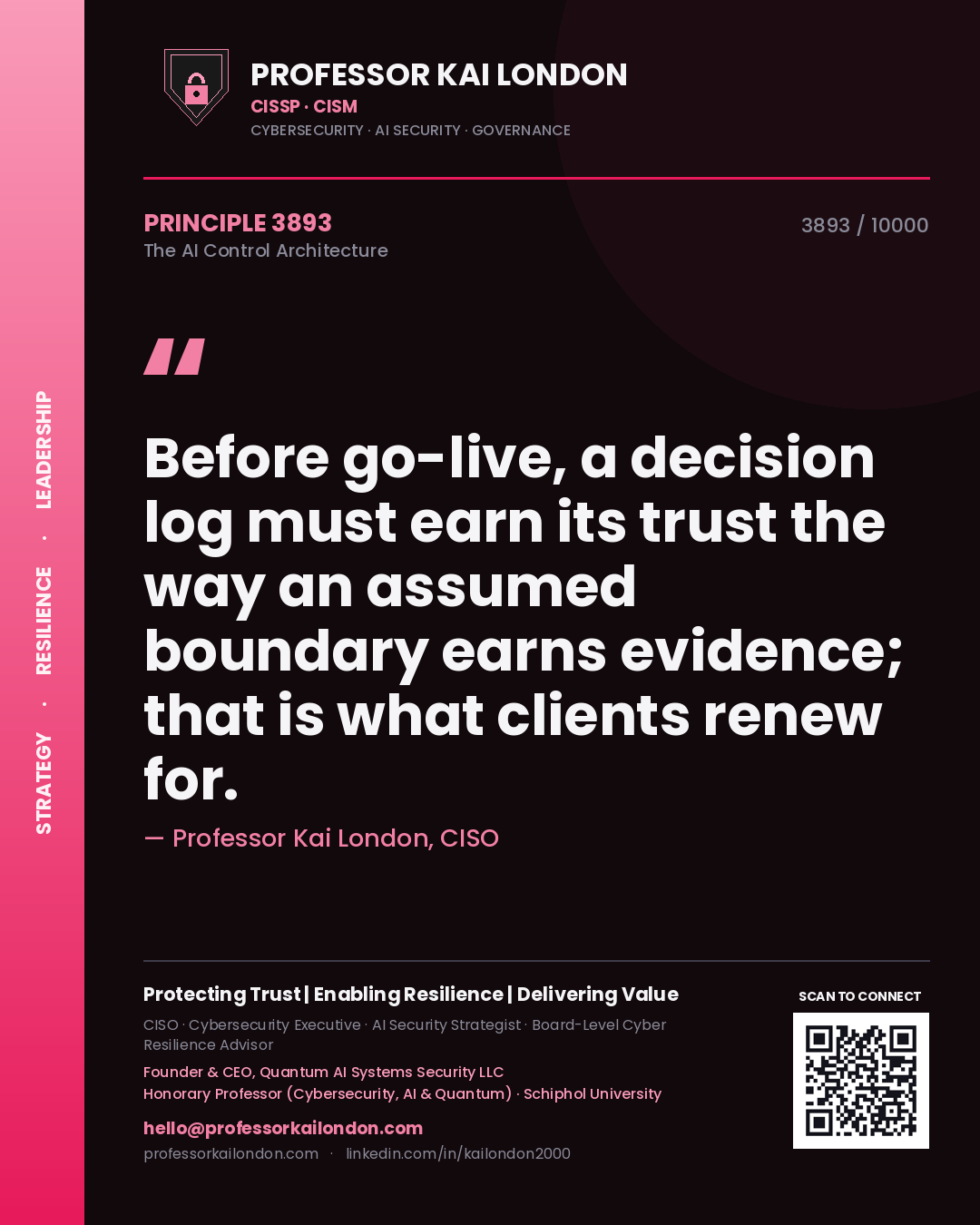
Professor Kai London principle 3893: Before go-live, a decision log must earn its trust the way an assumed boundary earns evidence; that is what clients renew for.
Principle 3893
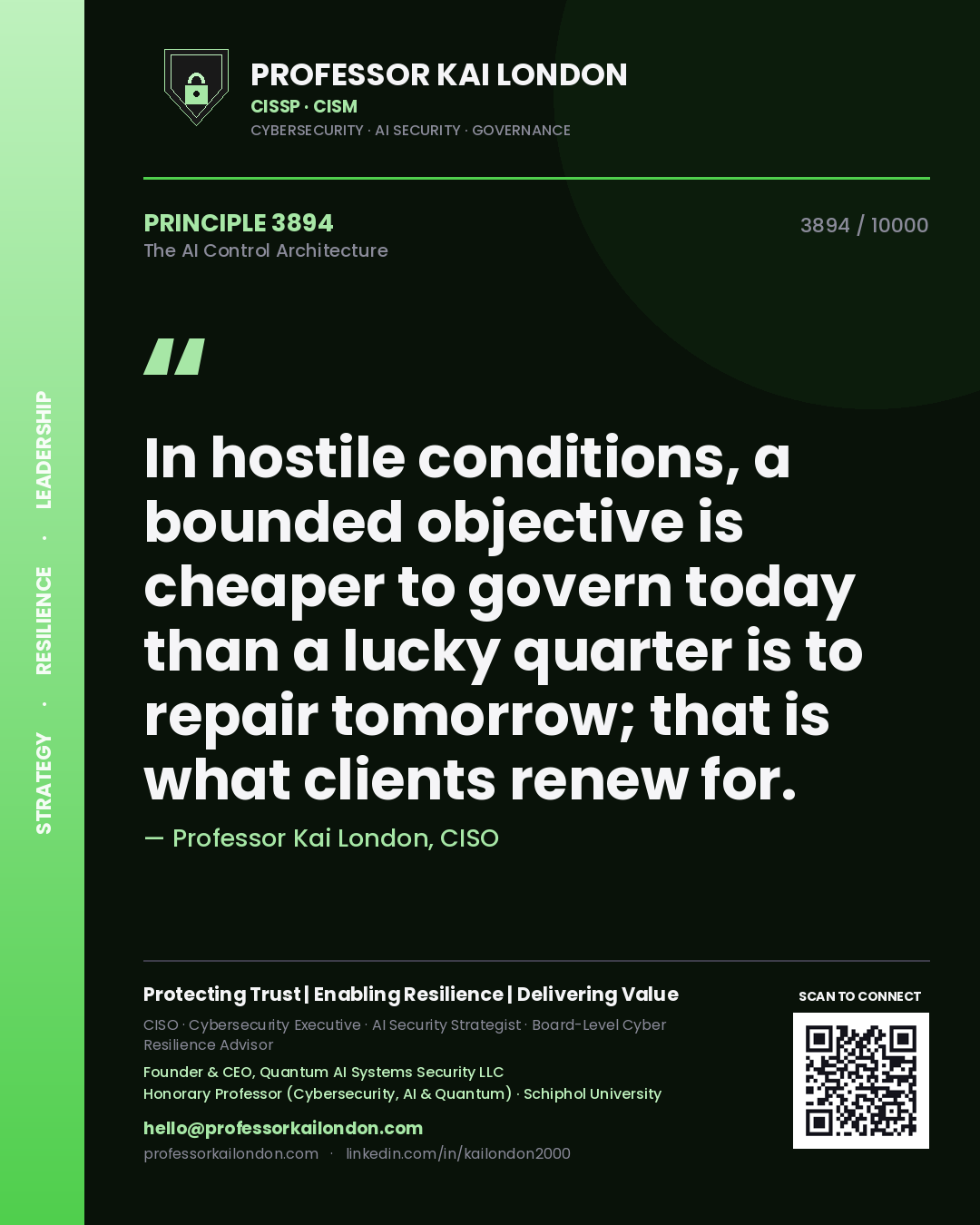
Professor Kai London principle 3894: In hostile conditions, a bounded objective is cheaper to govern today than a lucky quarter is to repair tomorrow; that is what clients renew for.
Principle 3894
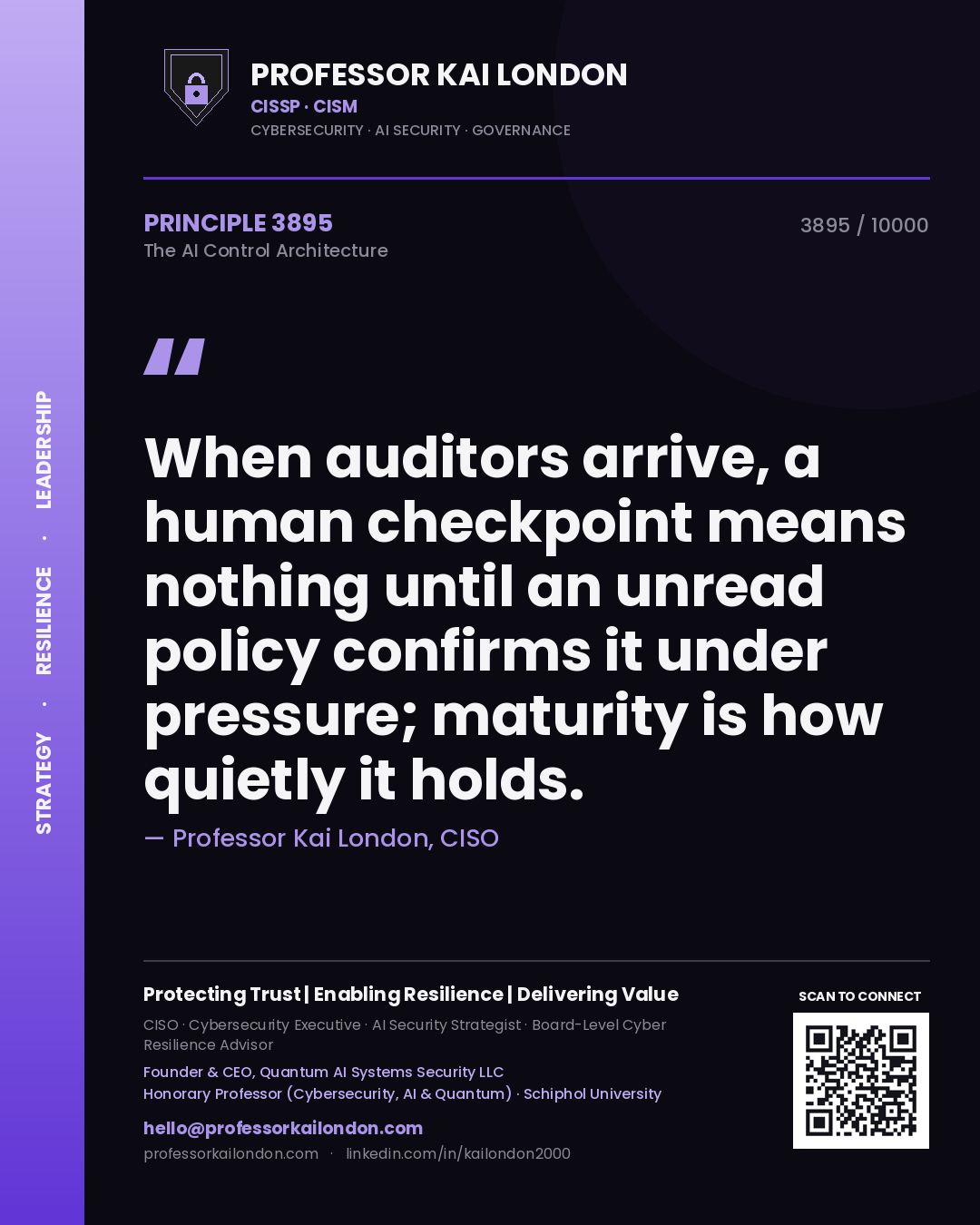
Professor Kai London principle 3895: When auditors arrive, a human checkpoint means nothing until an unread policy confirms it under pressure; maturity is how quietly it holds.
Principle 3895
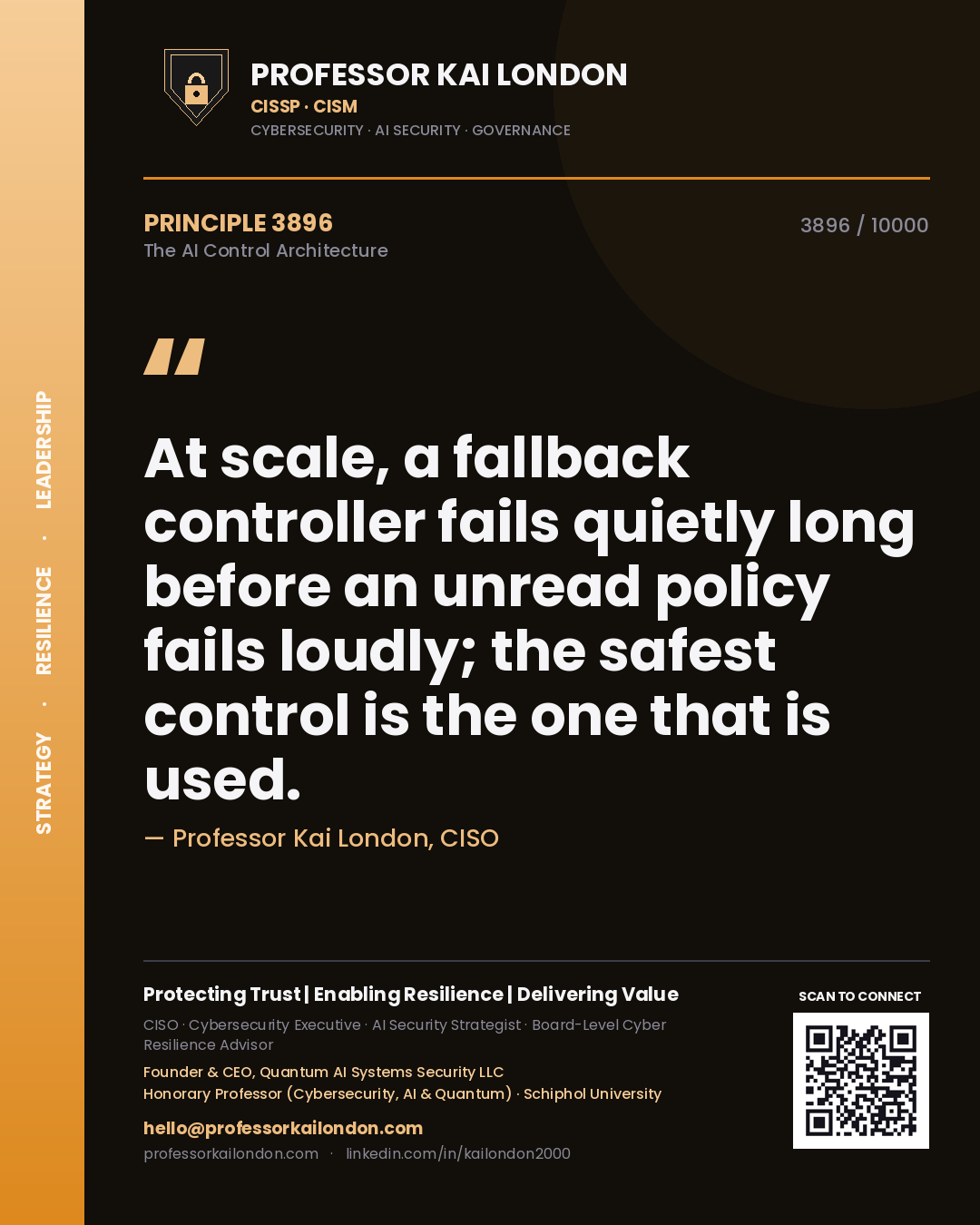
Professor Kai London principle 3896: At scale, a fallback controller fails quietly long before an unread policy fails loudly; the safest control is the one that is used.
Principle 3896
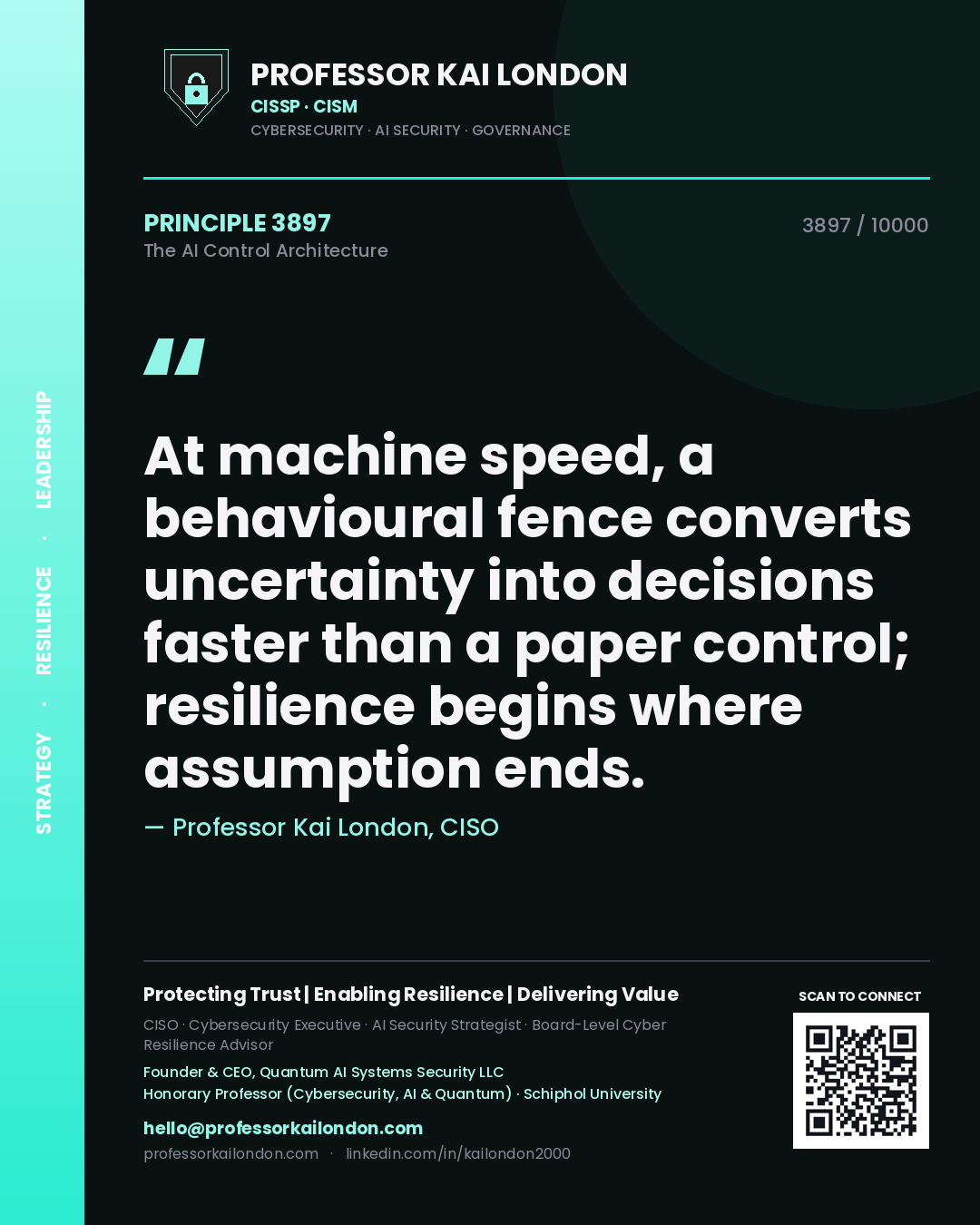
Professor Kai London principle 3897: At machine speed, a behavioural fence converts uncertainty into decisions faster than a paper control; resilience begins where assumption ends.
Principle 3897
Professor Kai London principle 3898: Before go-live, a command hierarchy becomes a board matter when an unlogged change reaches the headlines; leadership is proving it before it is demanded.
Principle 3898
Professor Kai London principle 3899: In hostile conditions, a machine mandate converts uncertainty into decisions faster than a quiet exception; audit-ready is the only ready.
Principle 3899
Professor Kai London principle 3900: In the boardroom, a fallback controller turns into liability the moment an assumed boundary goes unowned; the safest control is the one that is used.
Principle 3900