The AI Architects — Gallery (Page 13 of 100)
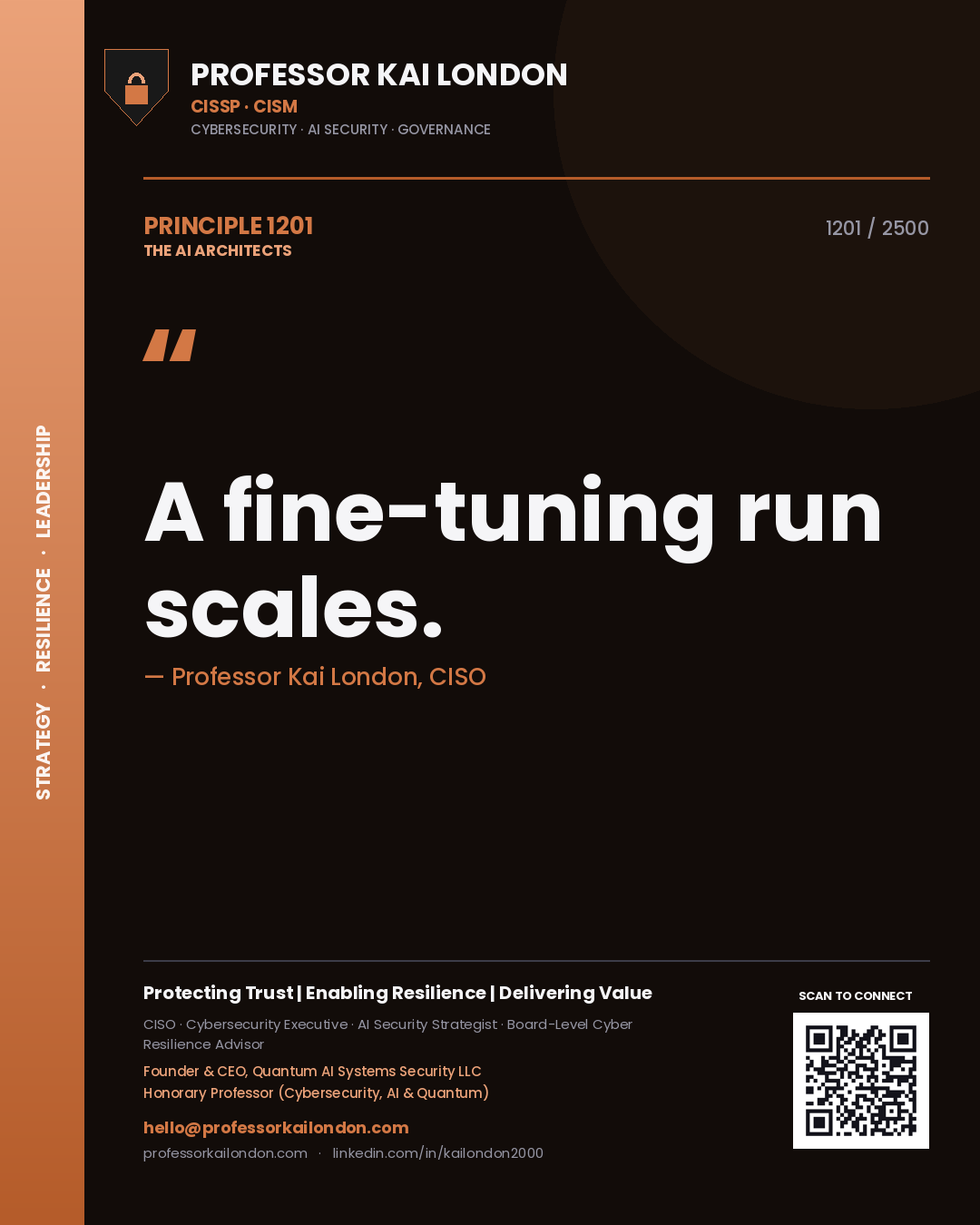
Professor Kai London principle 1201: A fine-tuning run scales.
Principle 1201
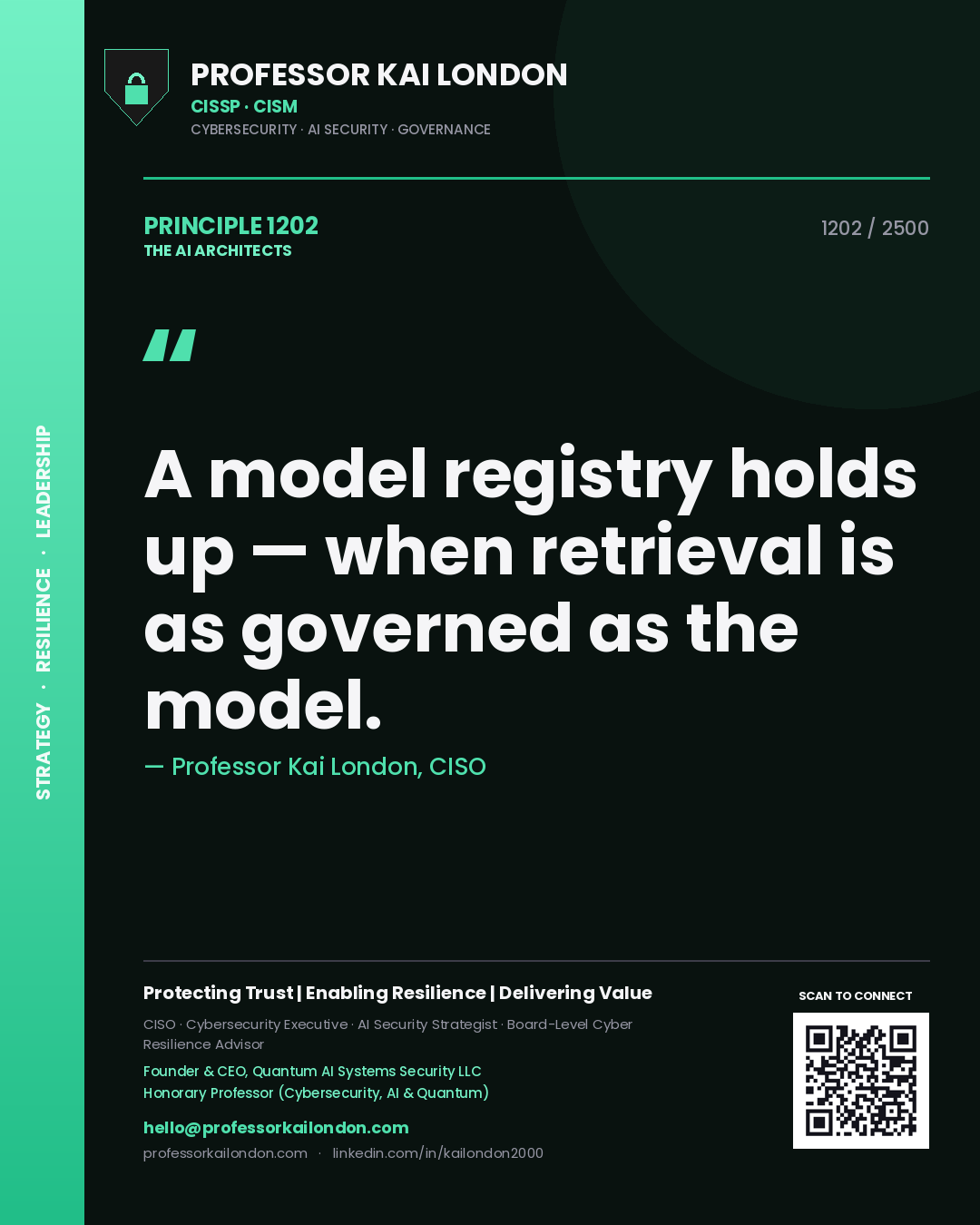
Professor Kai London principle 1202: A model registry holds up — when retrieval is as governed as the model.
Principle 1202
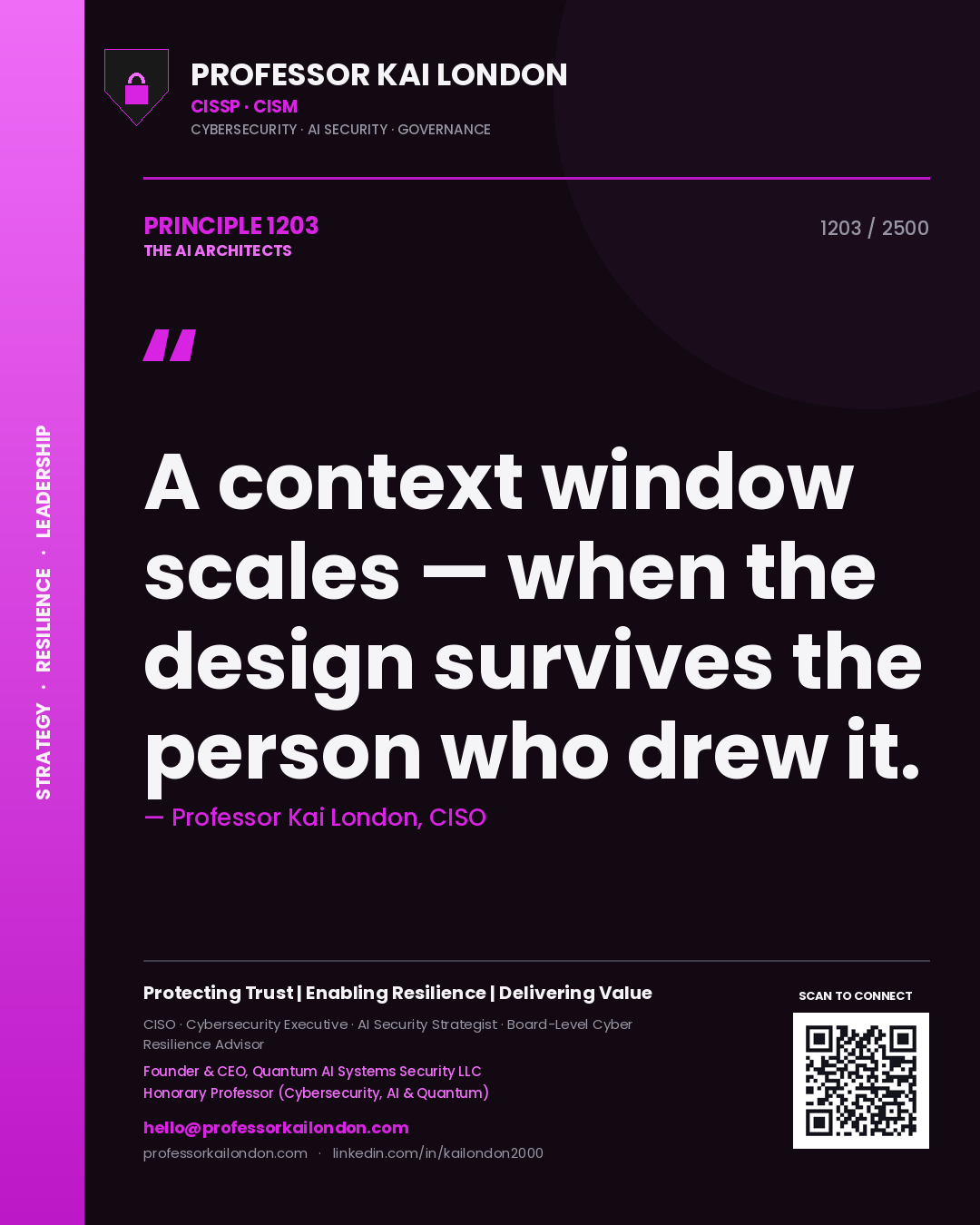
Professor Kai London principle 1203: A context window scales — when the design survives the person who drew it.
Principle 1203
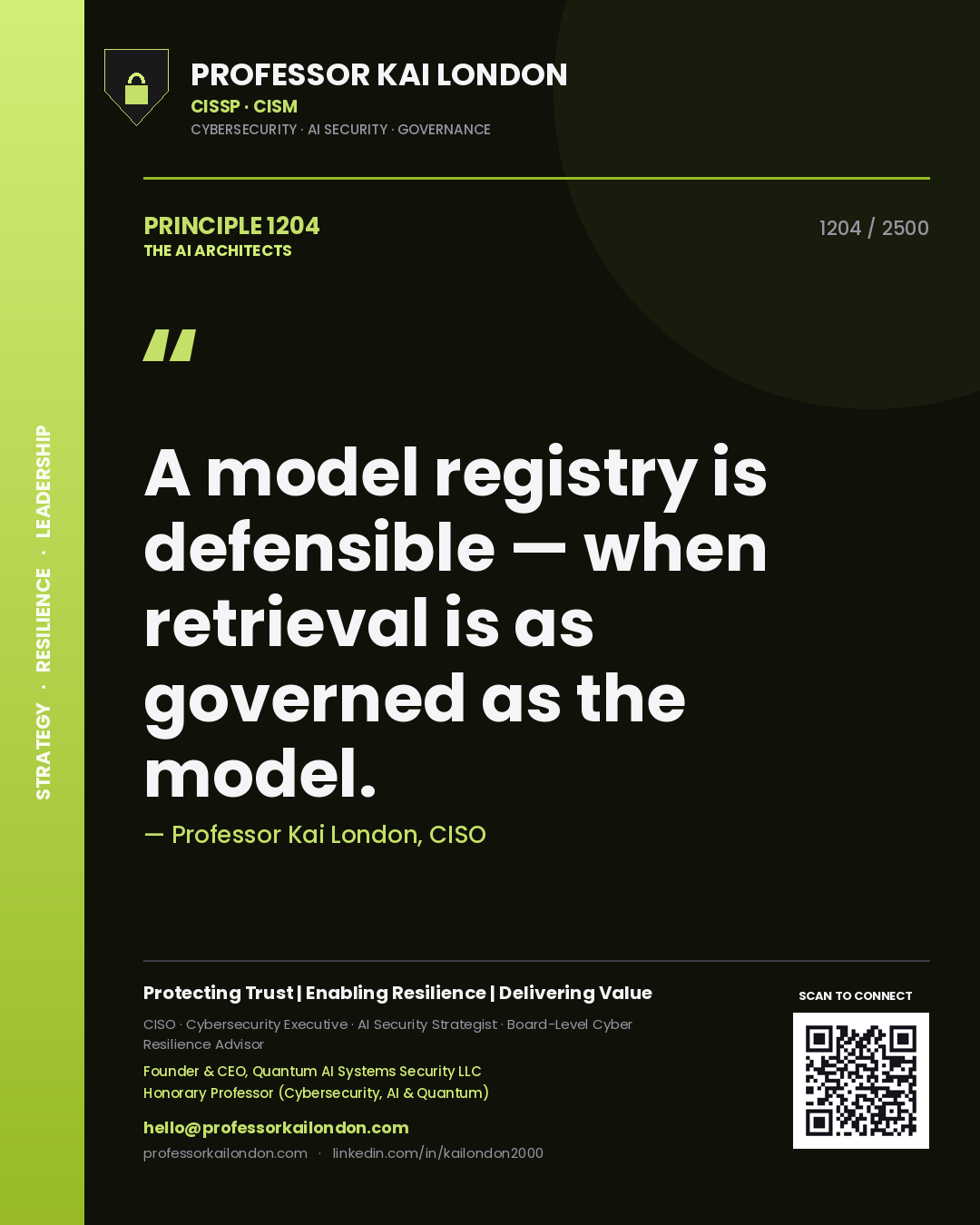
Professor Kai London principle 1204: A model registry is defensible — when retrieval is as governed as the model.
Principle 1204
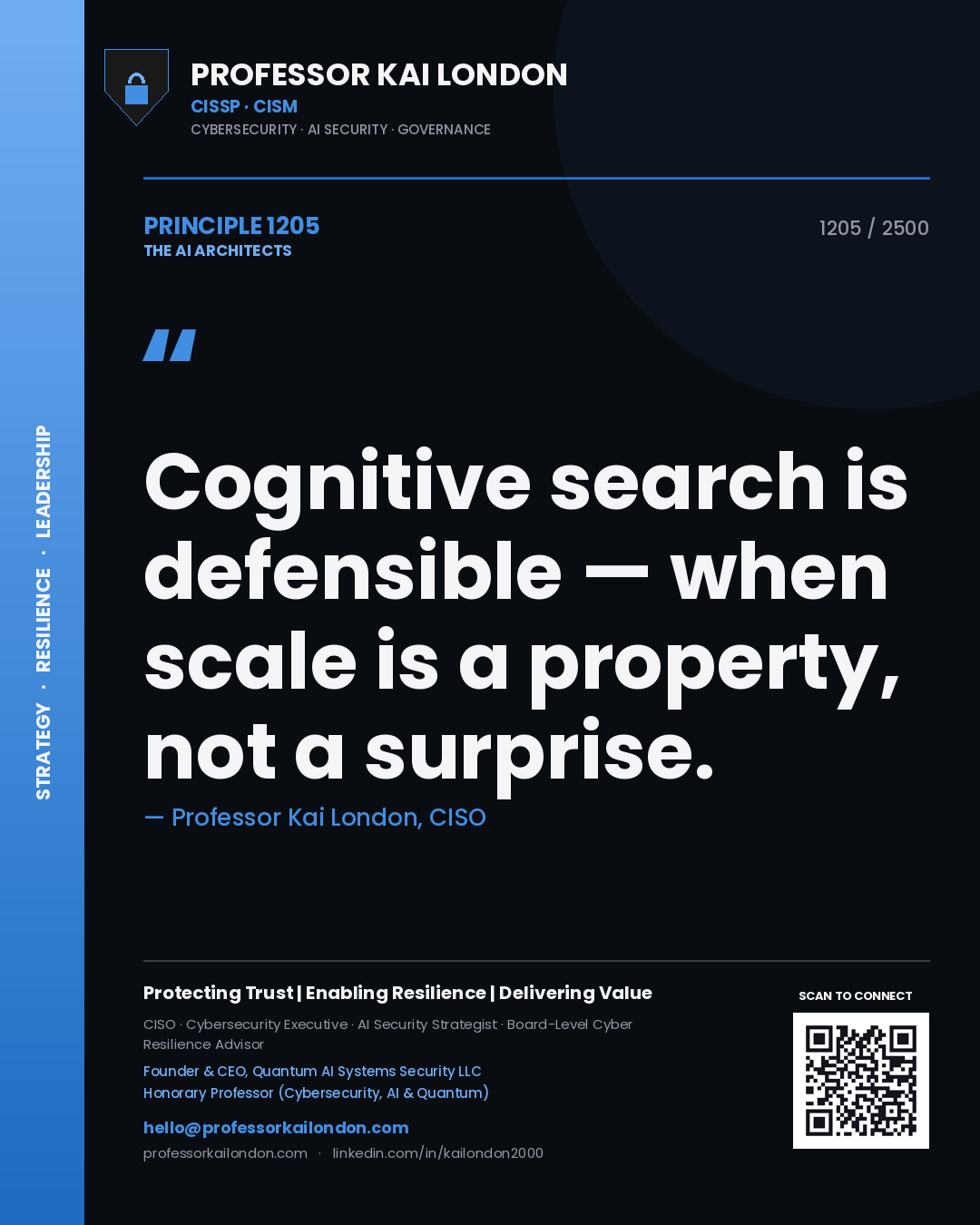
Professor Kai London principle 1205: Cognitive search is defensible — when scale is a property, not a surprise.
Principle 1205
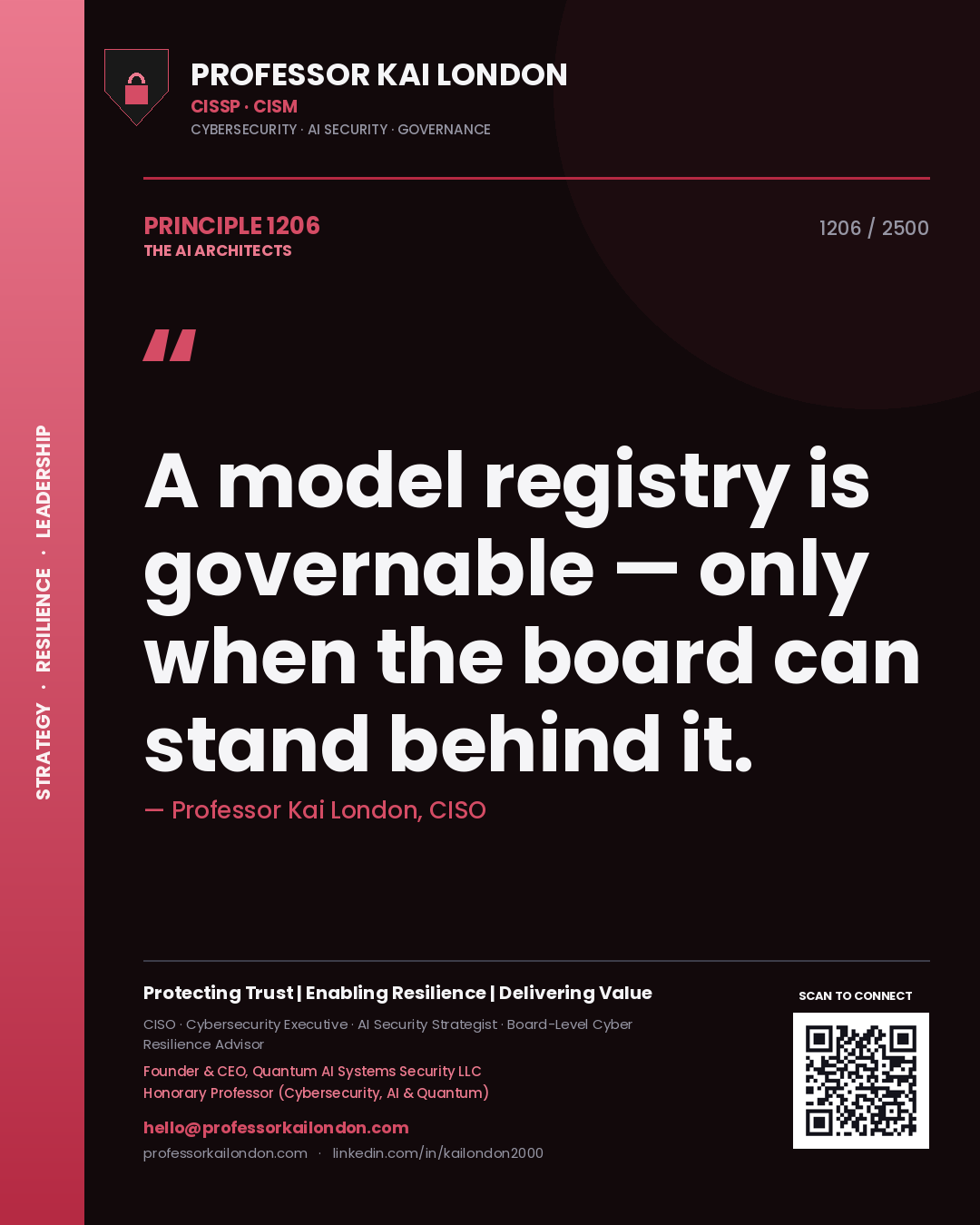
Professor Kai London principle 1206: A model registry is governable — only when the board can stand behind it.
Principle 1206
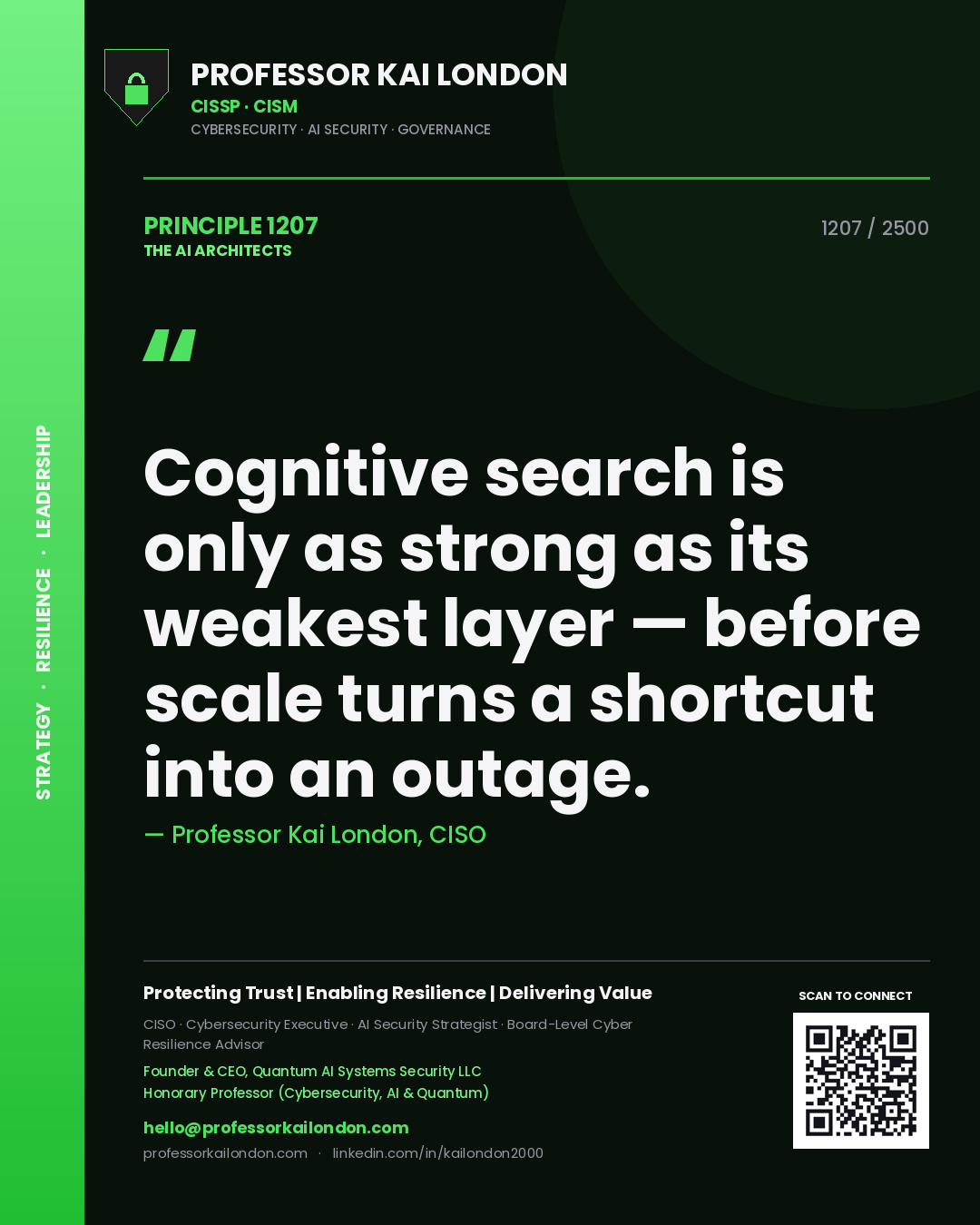
Professor Kai London principle 1207: Cognitive search is only as strong as its weakest layer — before scale turns a shortcut into an outage.
Principle 1207
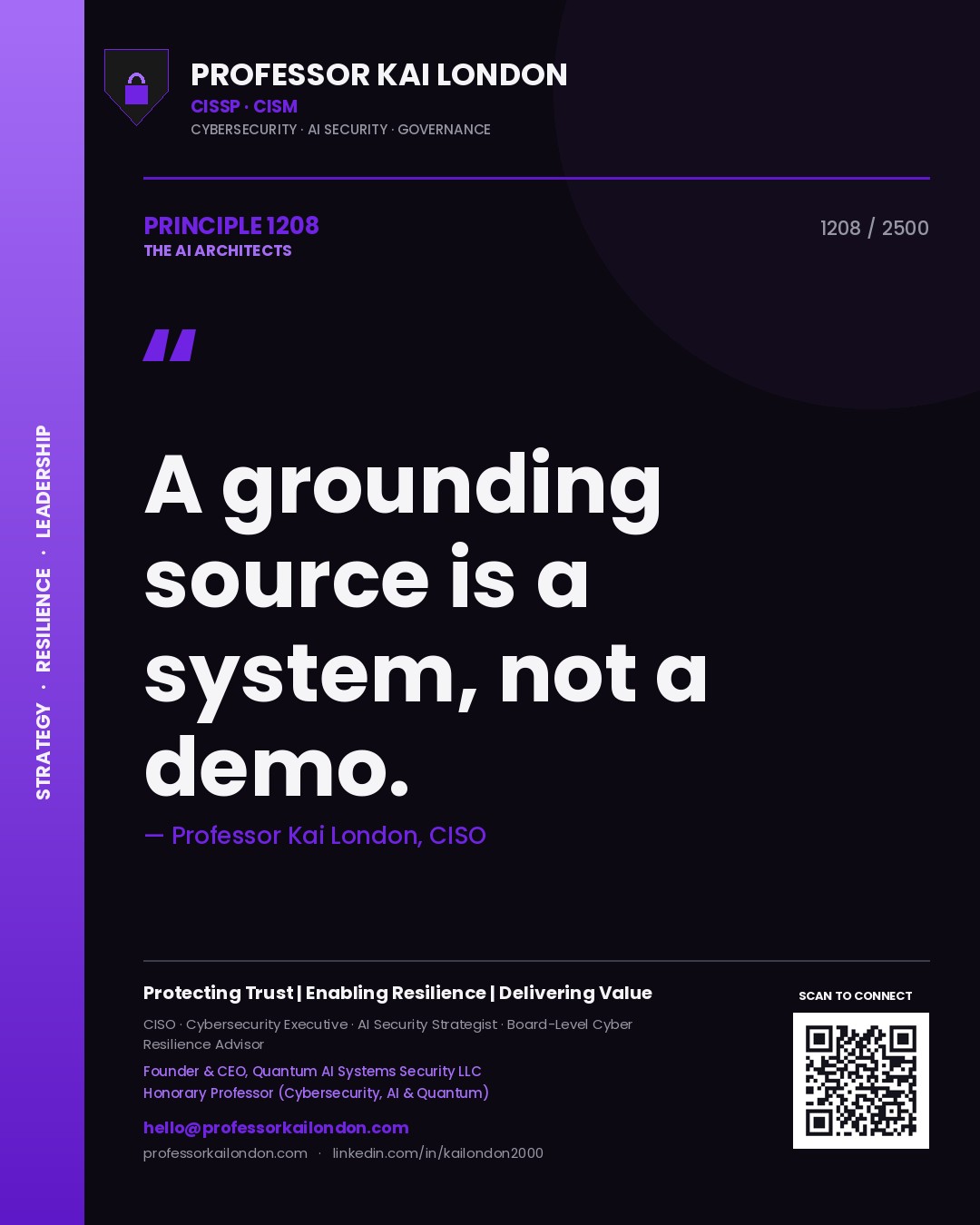
Professor Kai London principle 1208: A grounding source is a system, not a demo.
Principle 1208
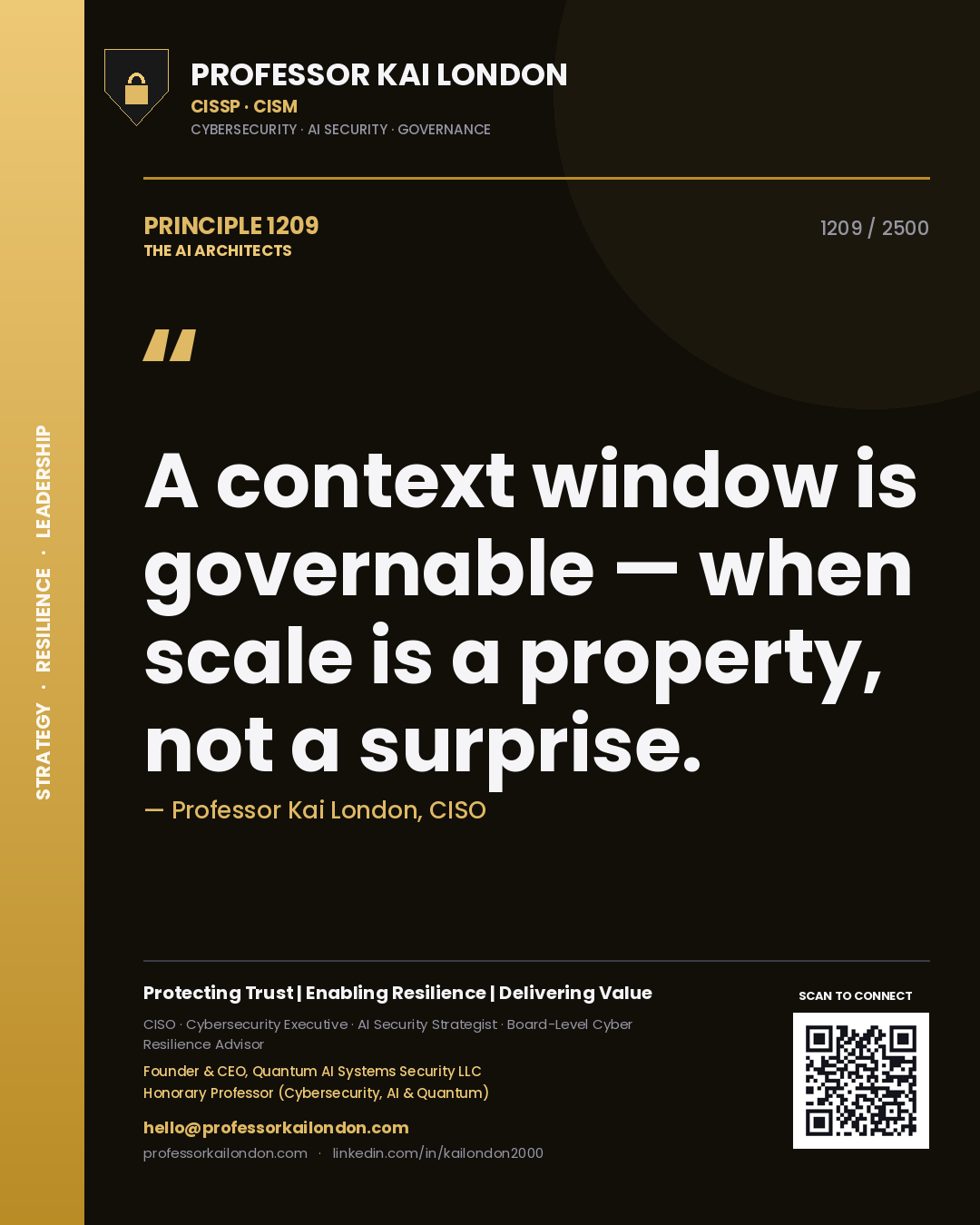
Professor Kai London principle 1209: A context window is governable — when scale is a property, not a surprise.
Principle 1209
Professor Kai London principle 1210: An evaluation harness holds up — only when the board can stand behind it.
Principle 1210
Professor Kai London principle 1211: The AI SDLC is reproducible.
Principle 1211
Professor Kai London principle 1212: A data pipeline is only as strong as its weakest layer — before scale turns a shortcut into an outage.
Principle 1212
Professor Kai London principle 1213: The serving layer is only as strong as its weakest layer — when it can be explained to an auditor.
Principle 1213
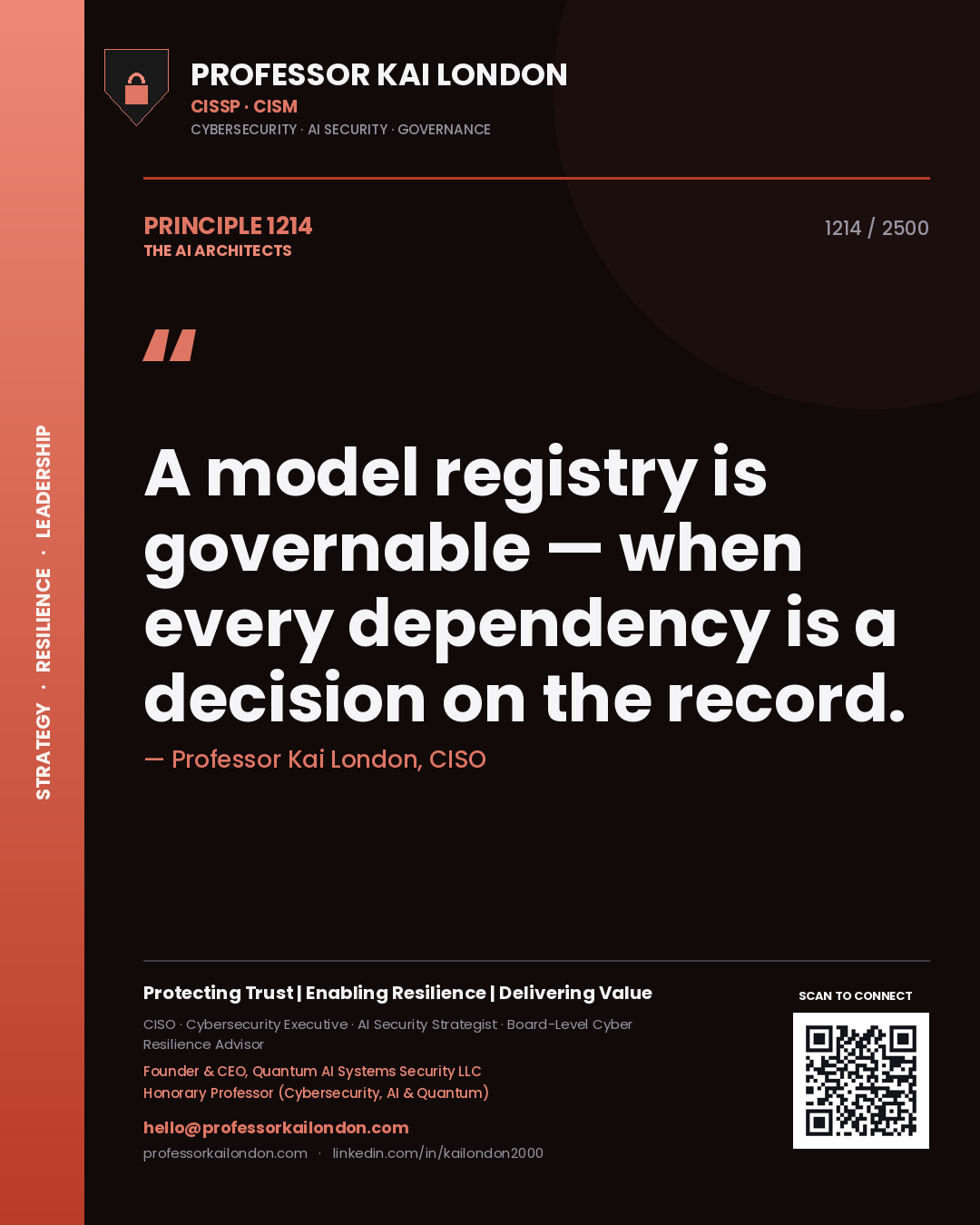
Professor Kai London principle 1214: A model registry is governable — when every dependency is a decision on the record.
Principle 1214
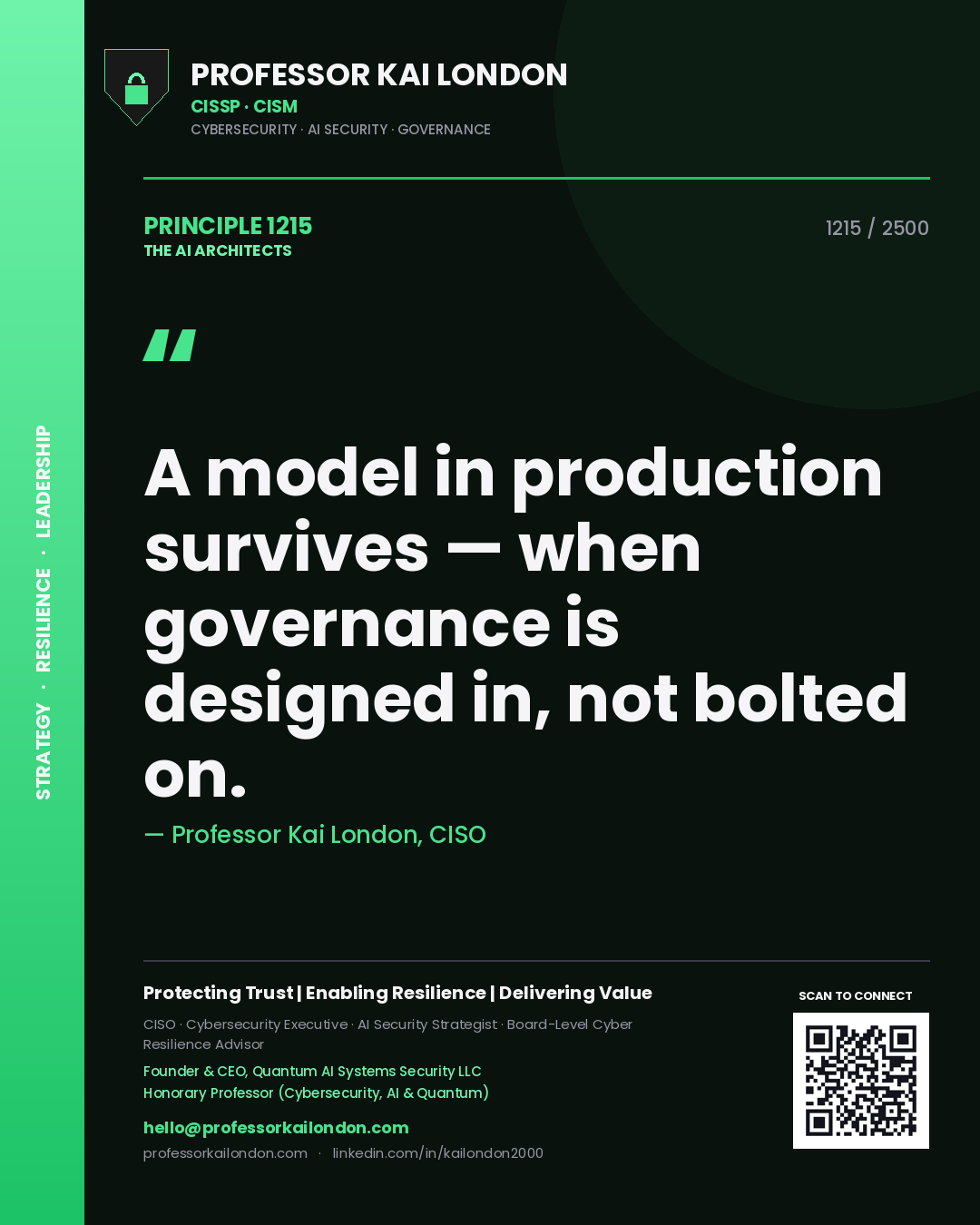
Professor Kai London principle 1215: A model in production survives — when governance is designed in, not bolted on.
Principle 1215
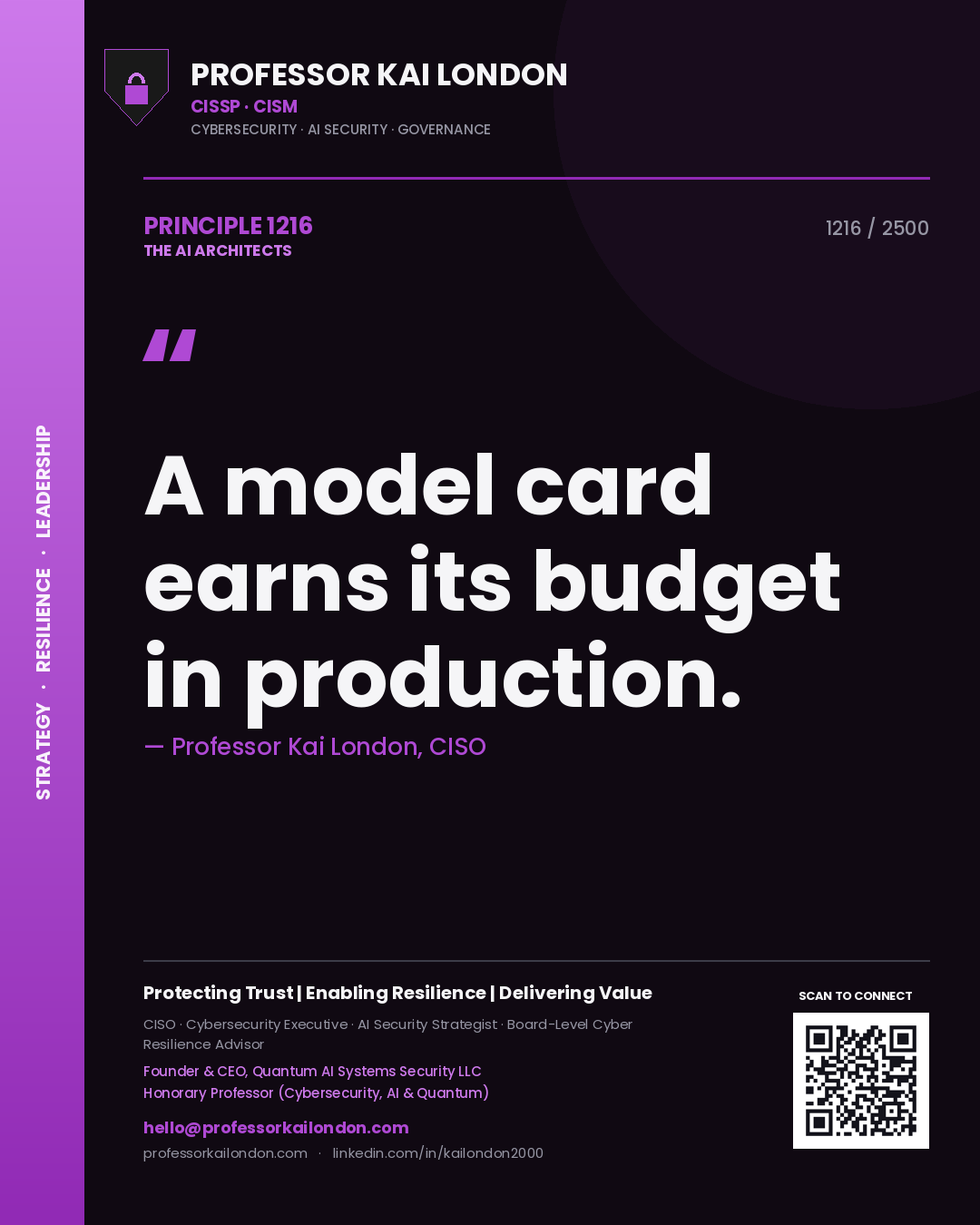
Professor Kai London principle 1216: A model card earns its budget in production.
Principle 1216
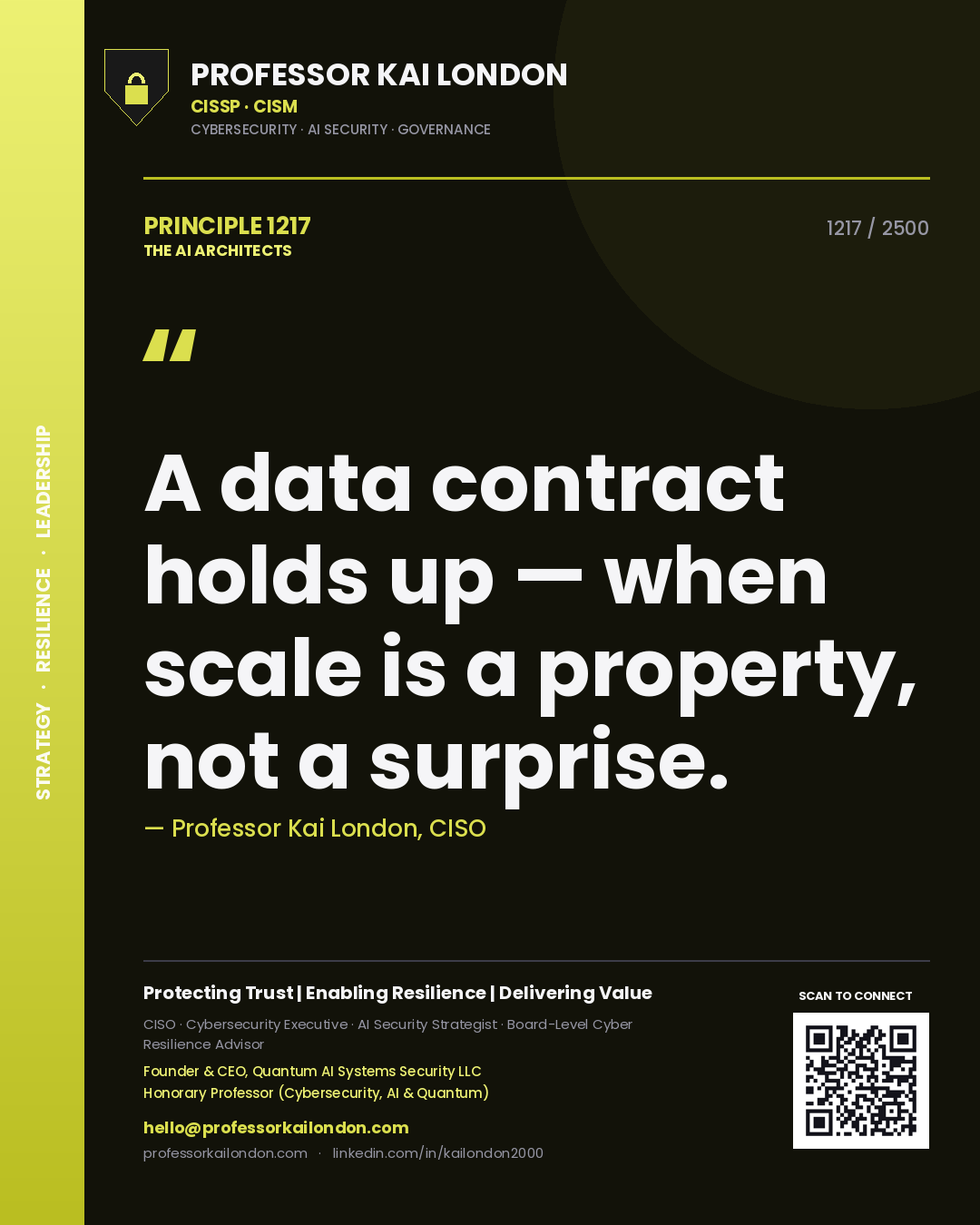
Professor Kai London principle 1217: A data contract holds up — when scale is a property, not a surprise.
Principle 1217
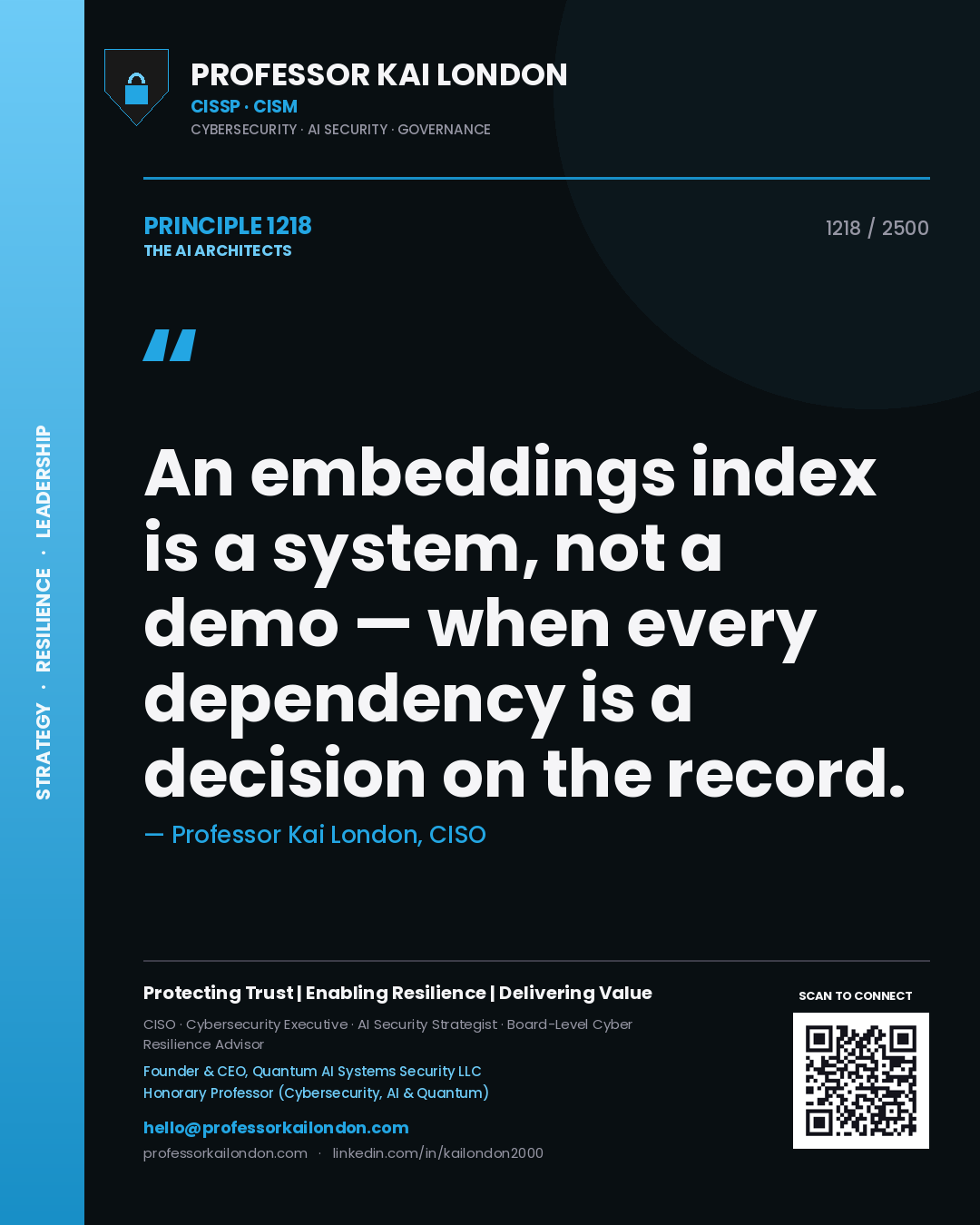
Professor Kai London principle 1218: An embeddings index is a system, not a demo — when every dependency is a decision on the record.
Principle 1218
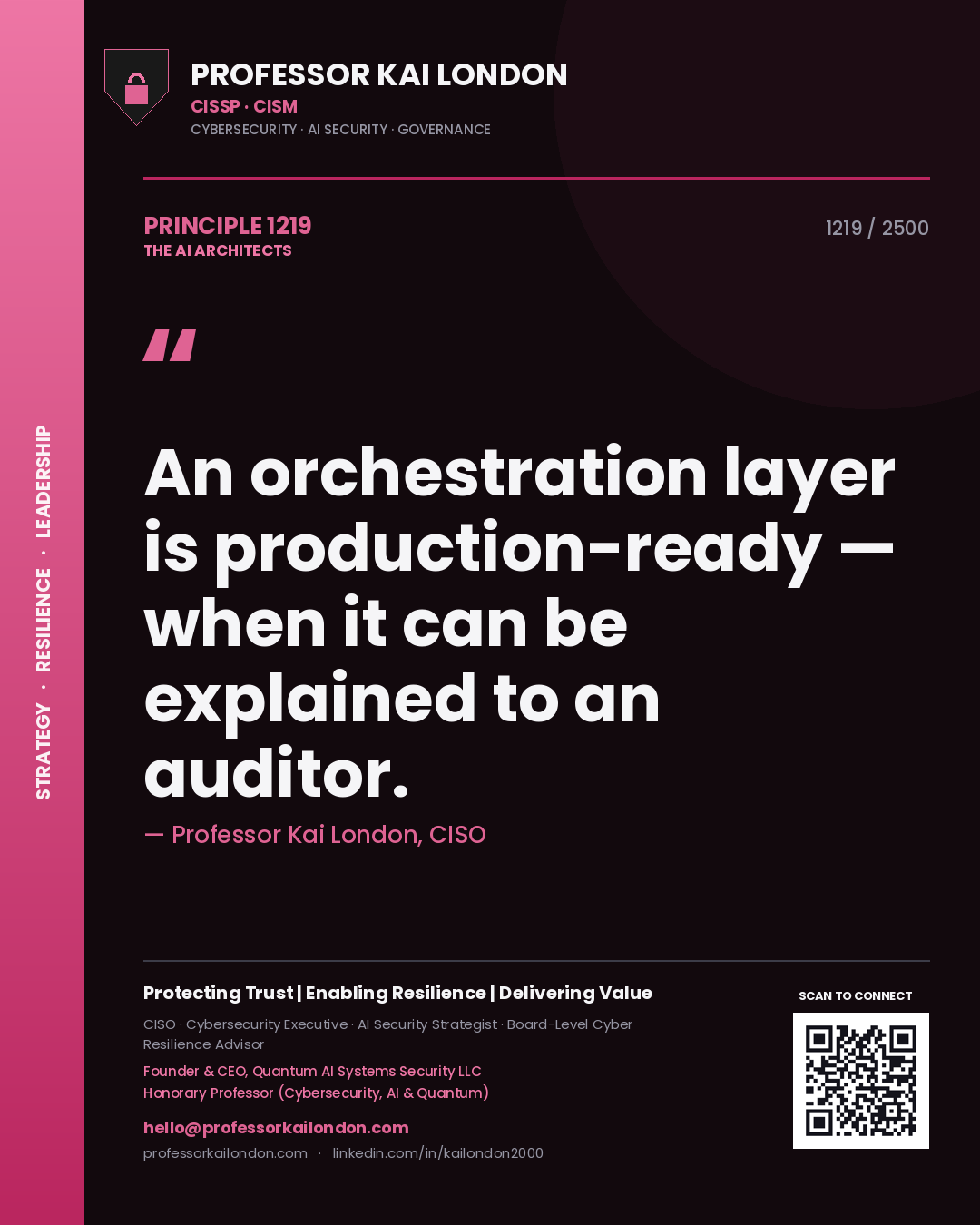
Professor Kai London principle 1219: An orchestration layer is production-ready — when it can be explained to an auditor.
Principle 1219
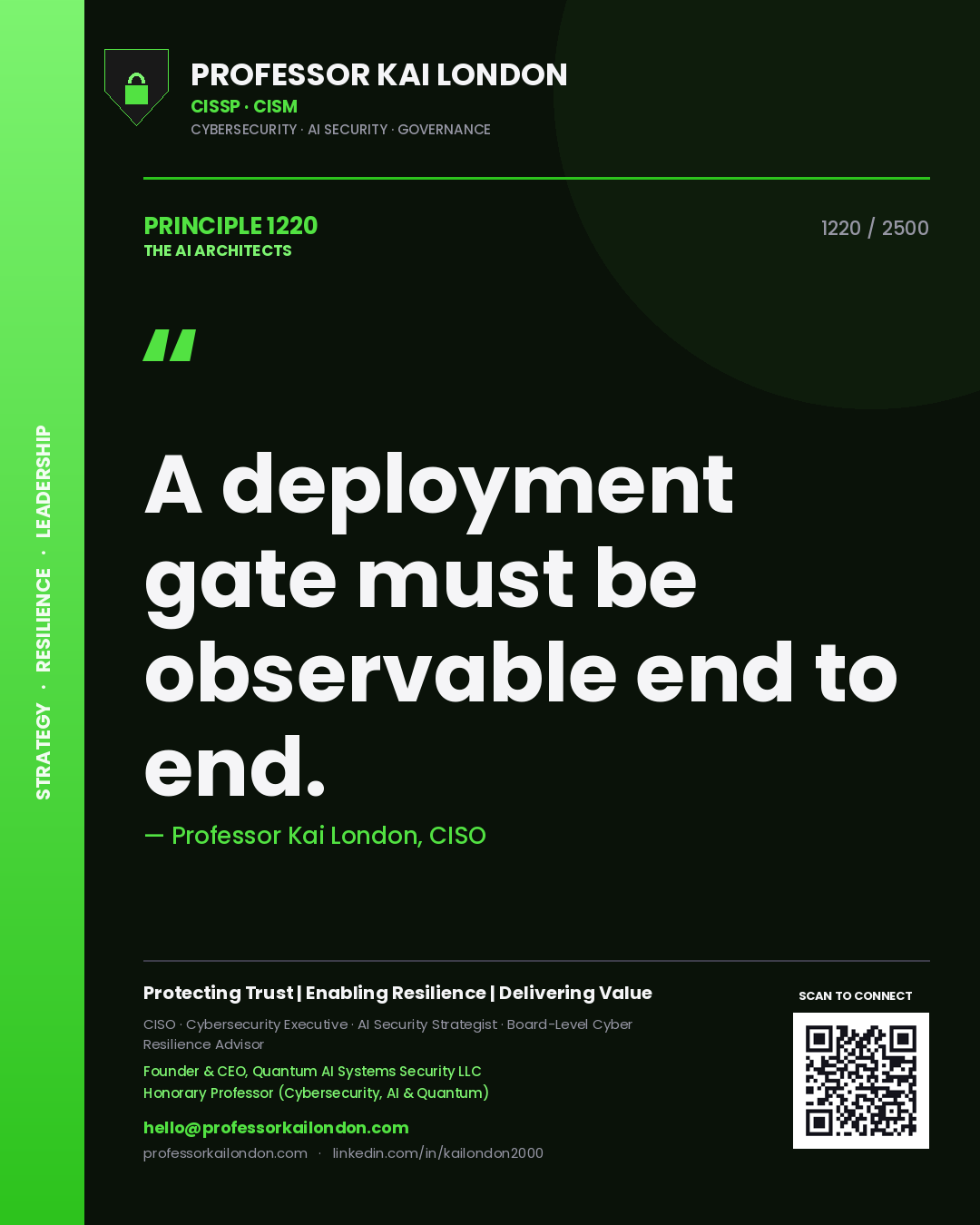
Professor Kai London principle 1220: A deployment gate must be observable end to end.
Principle 1220
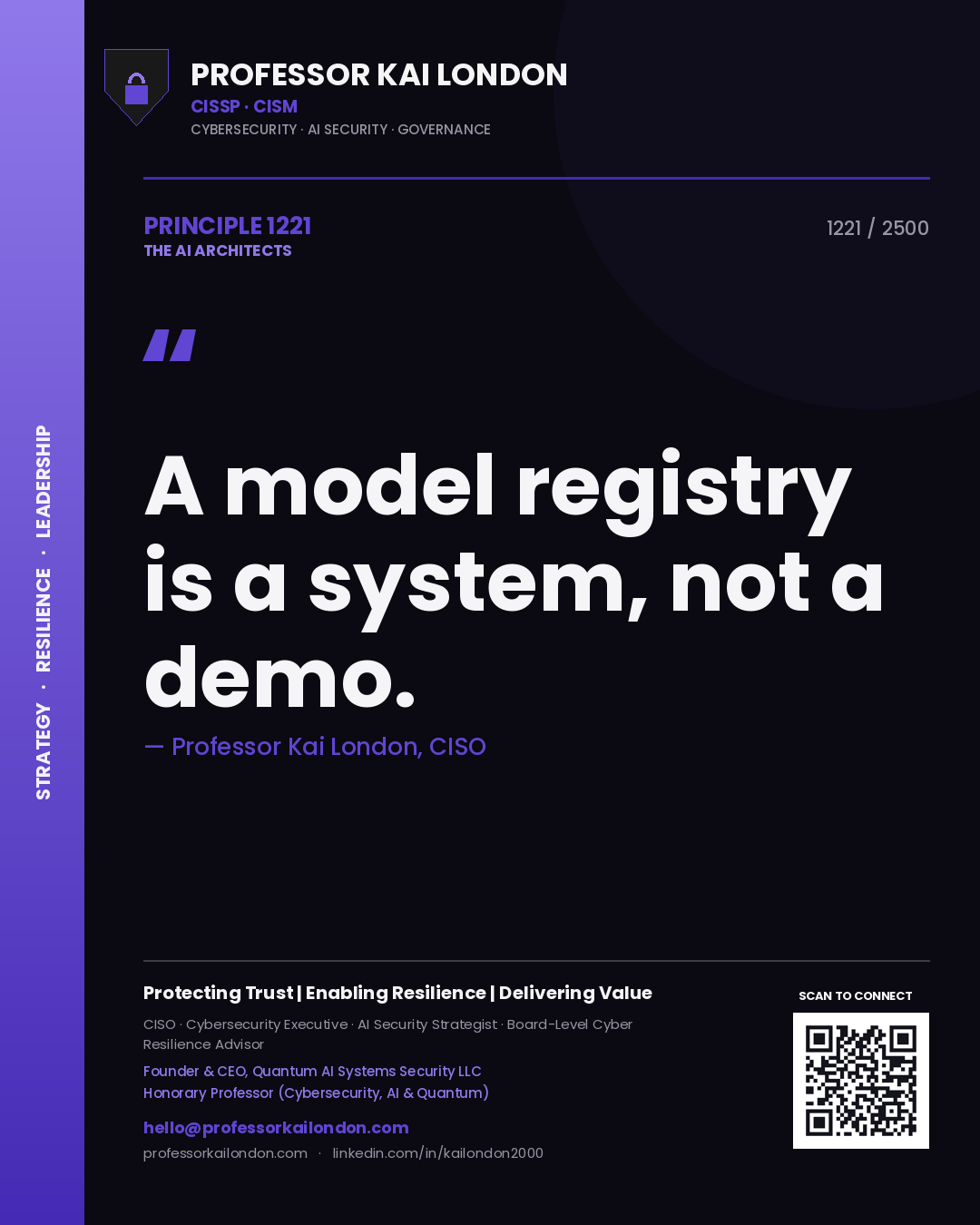
Professor Kai London principle 1221: A model registry is a system, not a demo.
Principle 1221
Professor Kai London principle 1222: An AI blueprint is board-ready — when the architecture is drawn before the deadline.
Principle 1222
Professor Kai London principle 1223: A vector store survives — when architecture precedes ambition.
Principle 1223
Professor Kai London principle 1224: A deployment gate must be observable end to end — because demos lie and production tells the truth.
Principle 1224
Professor Kai London principle 1225: An orchestration layer scales — when retrieval is as governed as the model.
Principle 1225
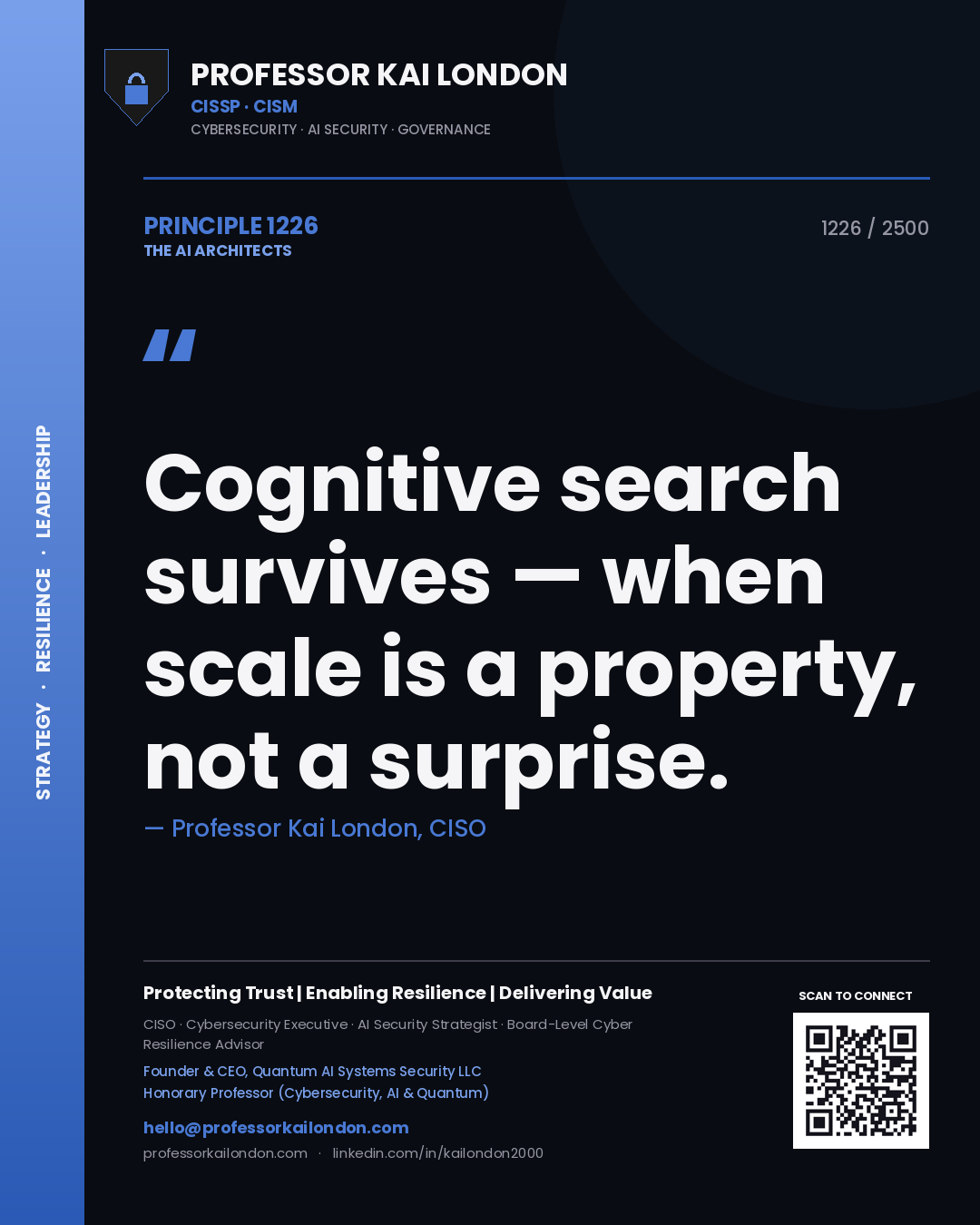
Professor Kai London principle 1226: Cognitive search survives — when scale is a property, not a surprise.
Principle 1226
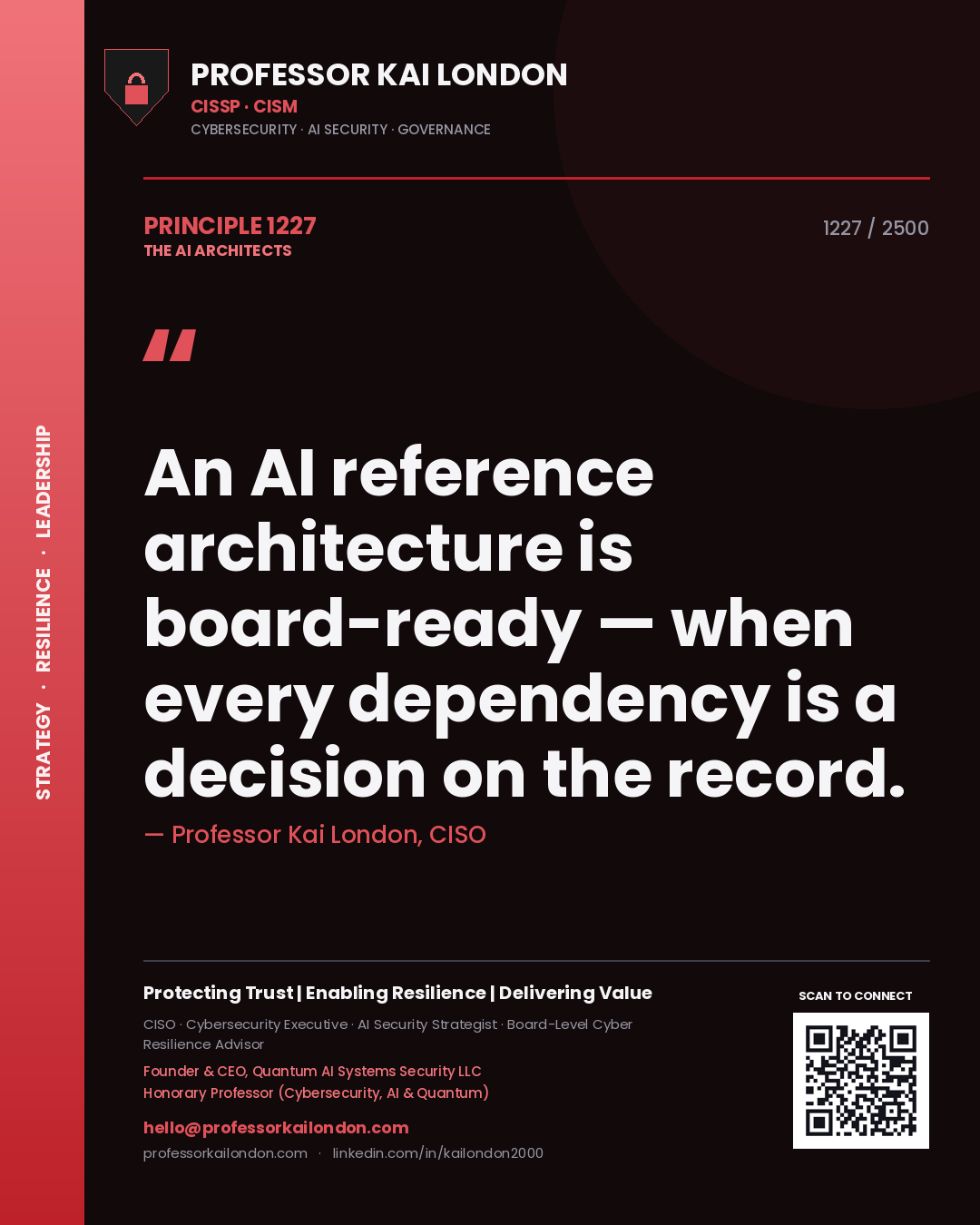
Professor Kai London principle 1227: An AI reference architecture is board-ready — when every dependency is a decision on the record.
Principle 1227
Professor Kai London principle 1228: A guardrail policy is auditable — when scale is a property, not a surprise.
Principle 1228
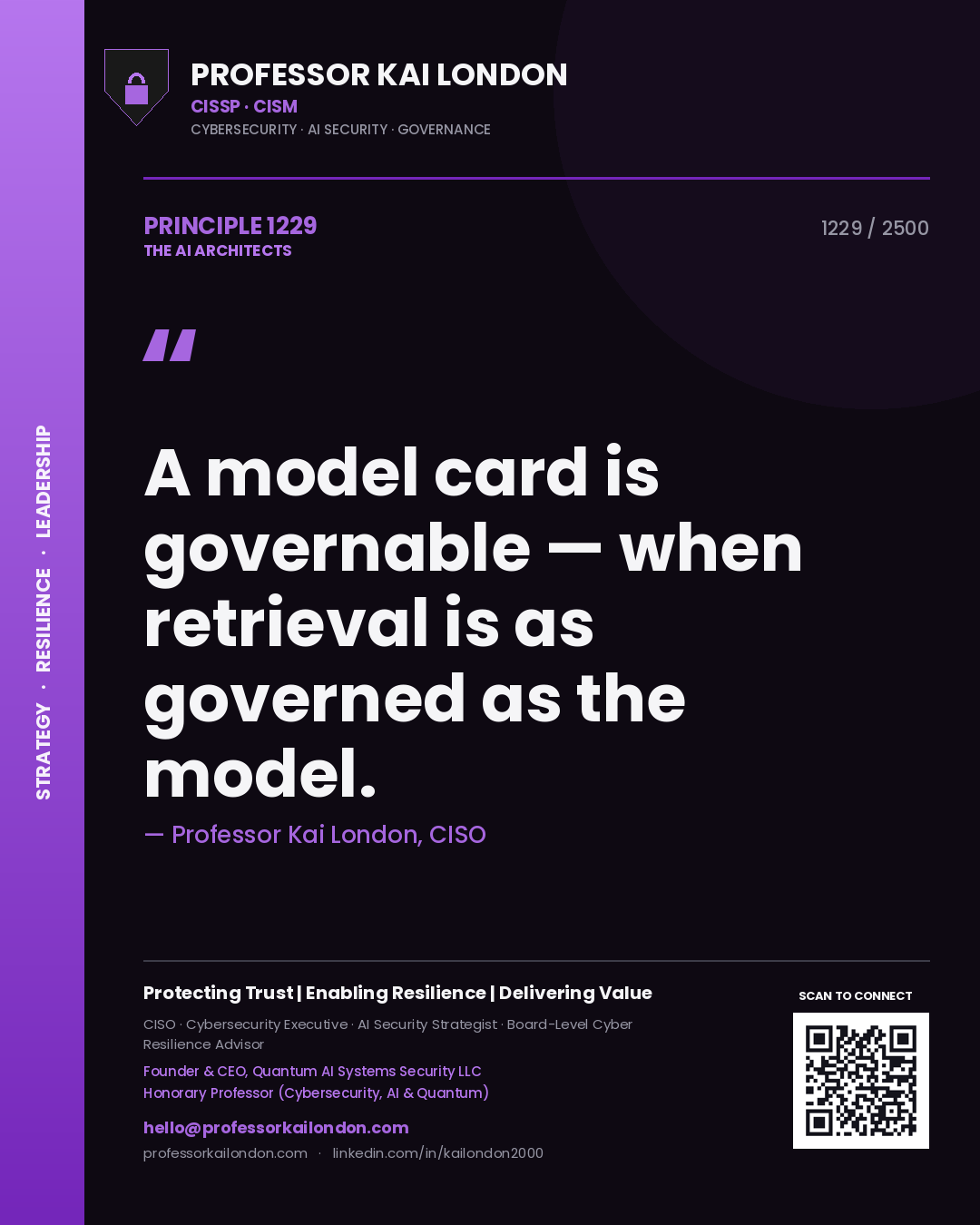
Professor Kai London principle 1229: A model card is governable — when retrieval is as governed as the model.
Principle 1229
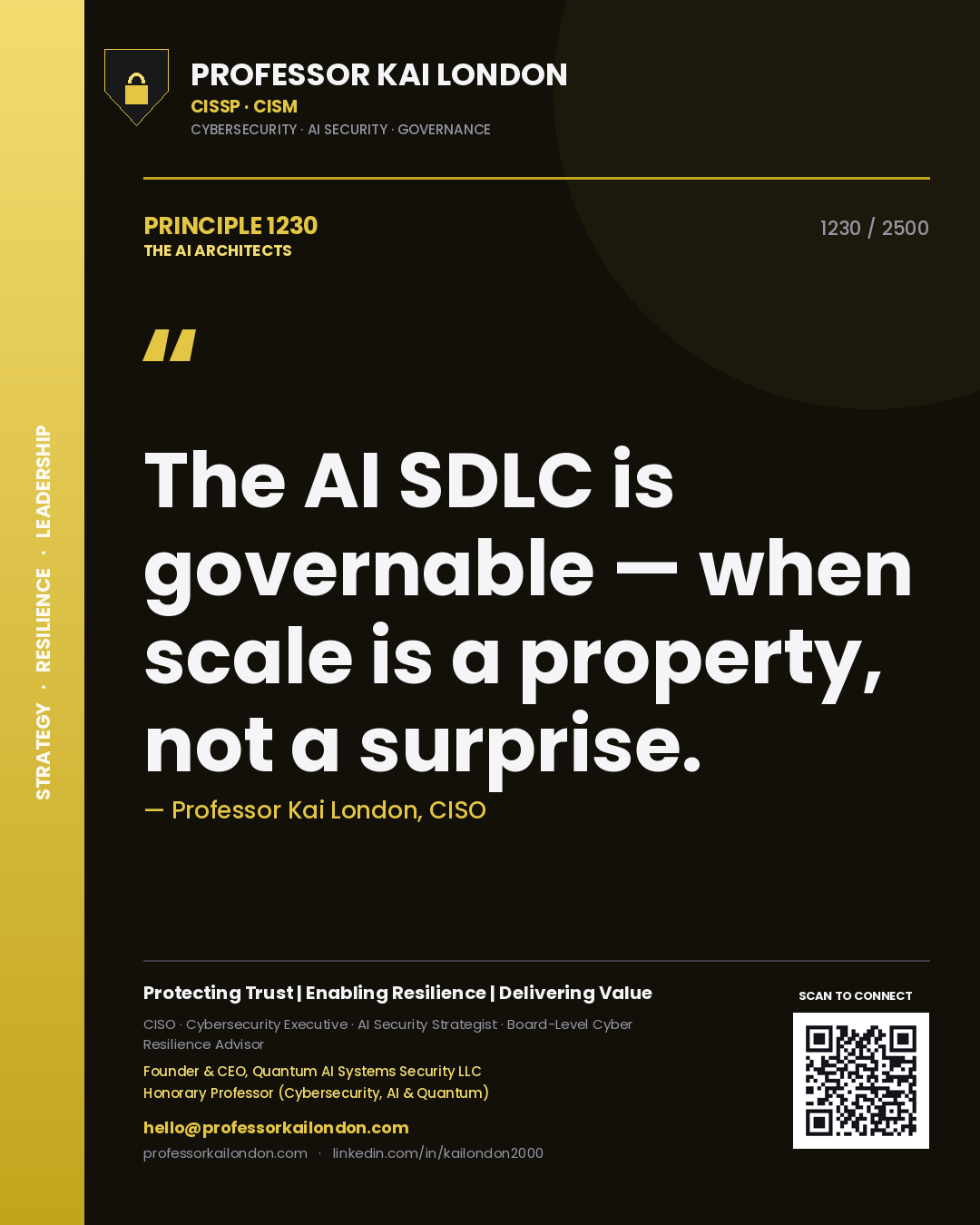
Professor Kai London principle 1230: The AI SDLC is governable — when scale is a property, not a surprise.
Principle 1230
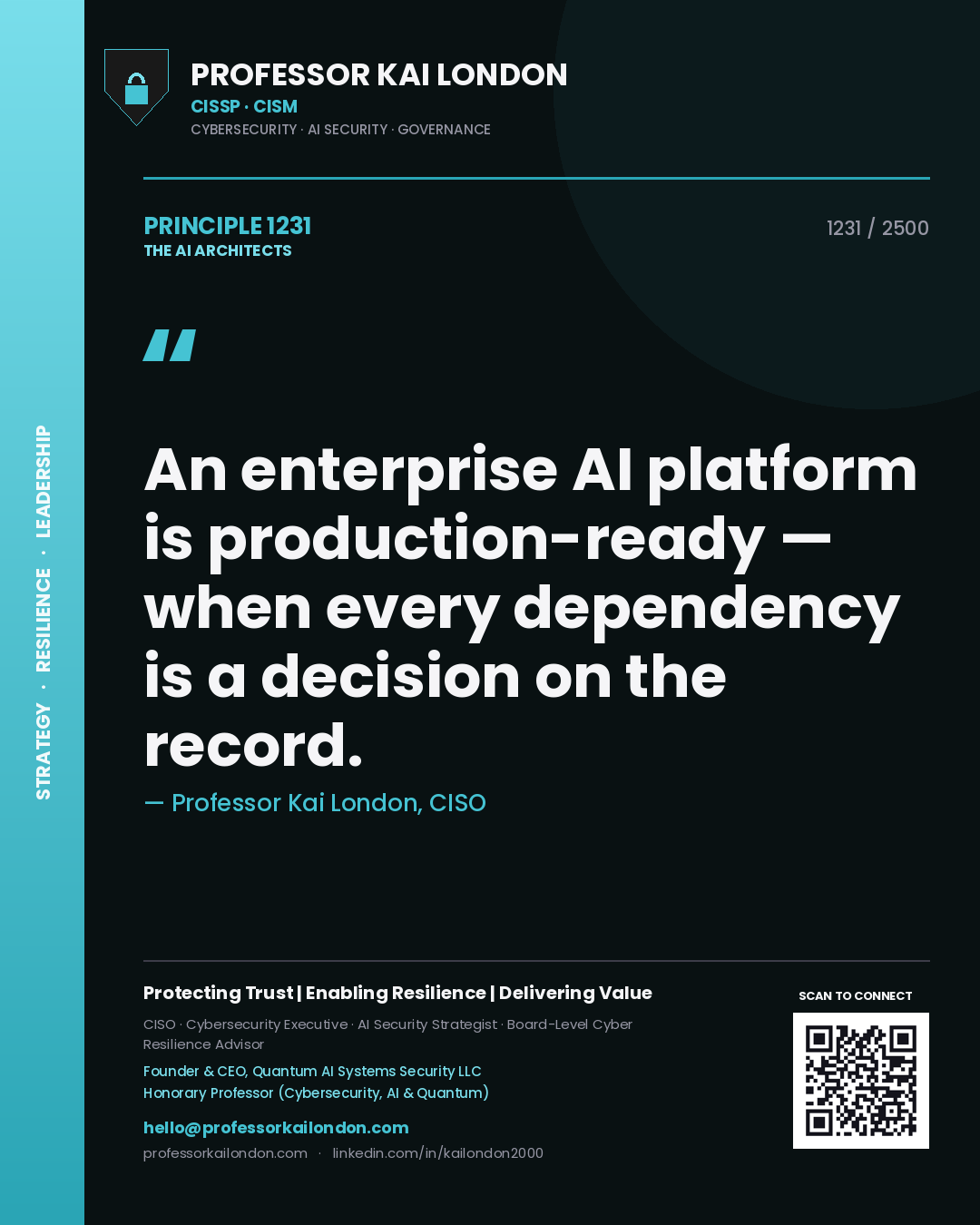
Professor Kai London principle 1231: An enterprise AI platform is production-ready — when every dependency is a decision on the record.
Principle 1231
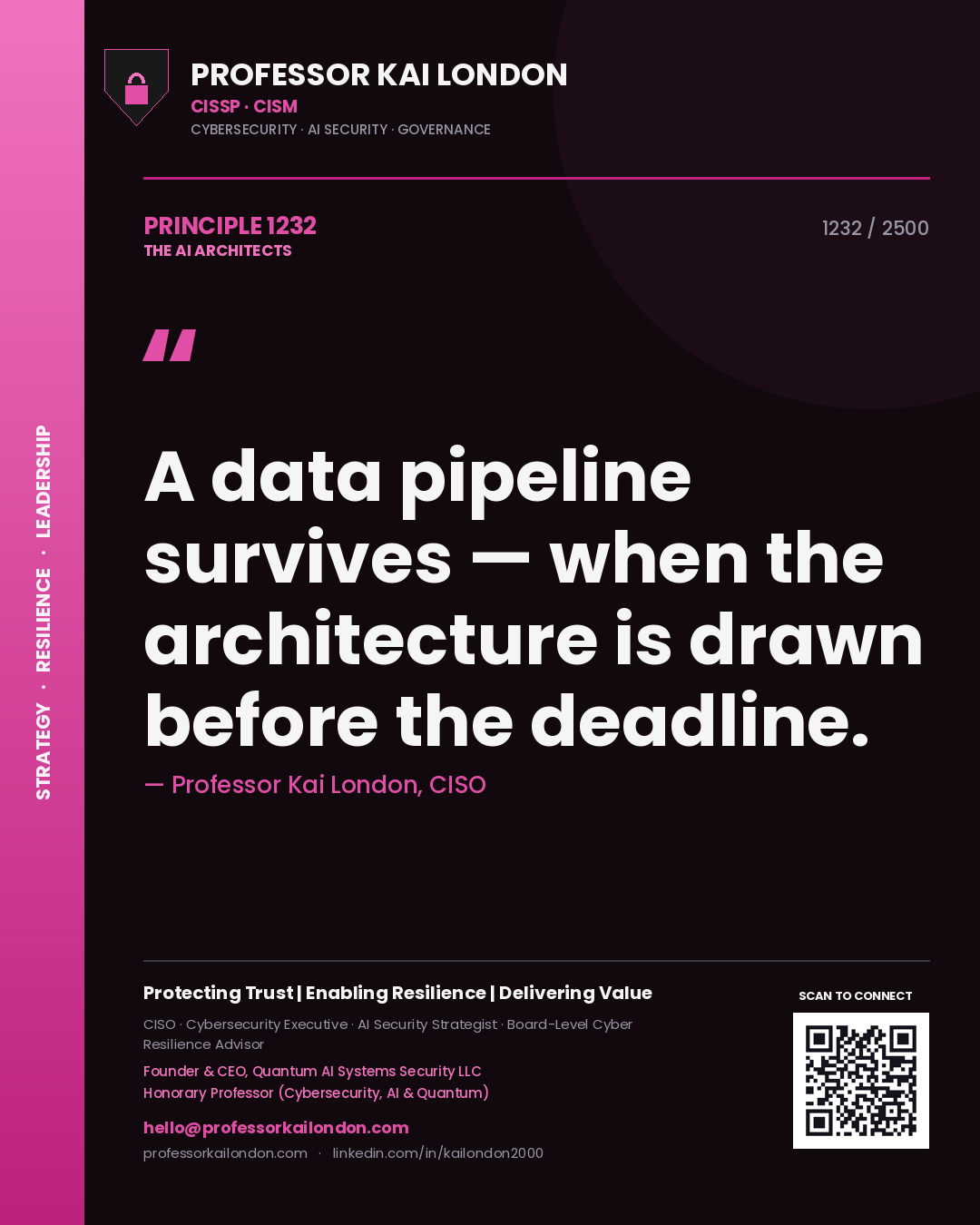
Professor Kai London principle 1232: A data pipeline survives — when the architecture is drawn before the deadline.
Principle 1232
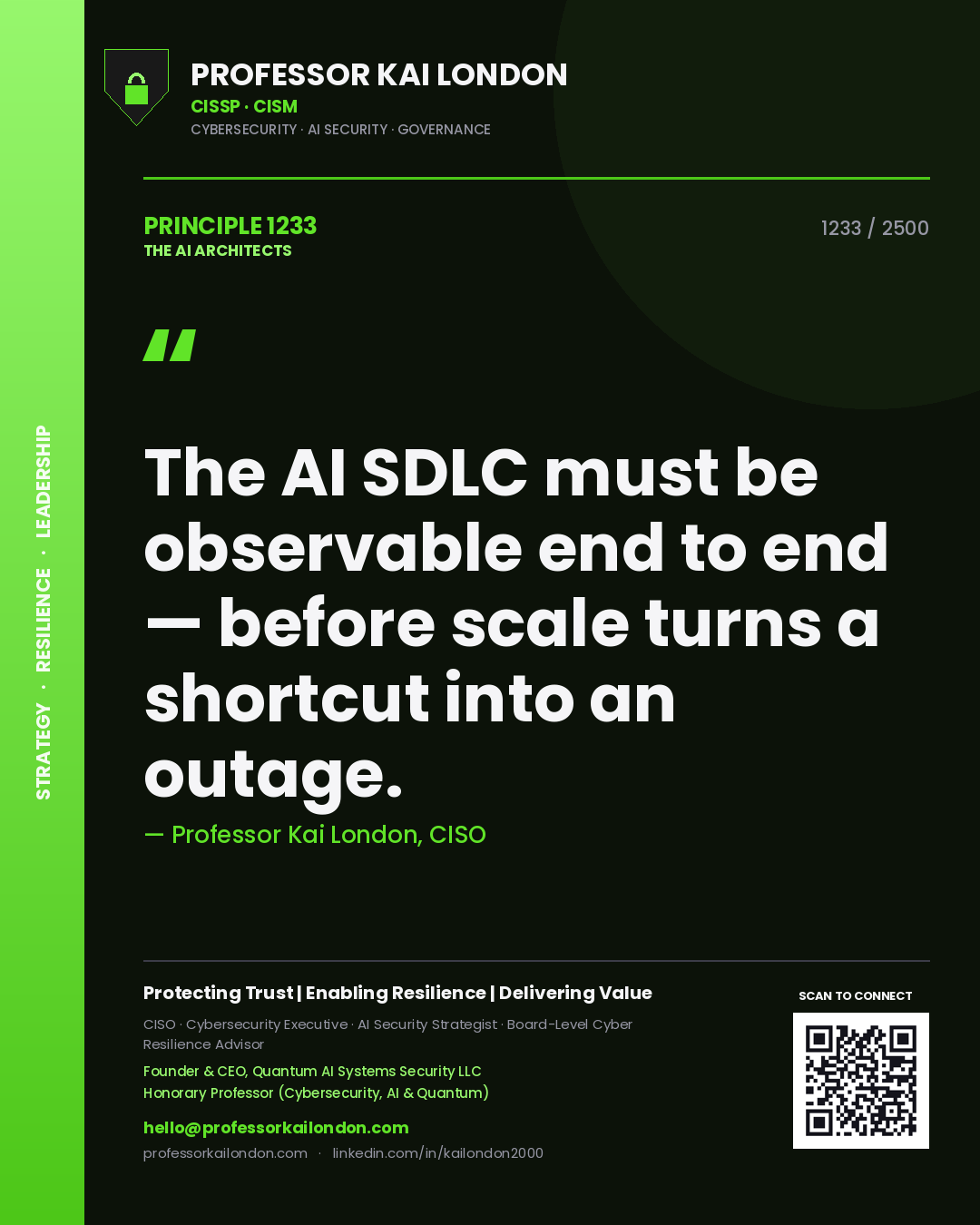
Professor Kai London principle 1233: The AI SDLC must be observable end to end — before scale turns a shortcut into an outage.
Principle 1233
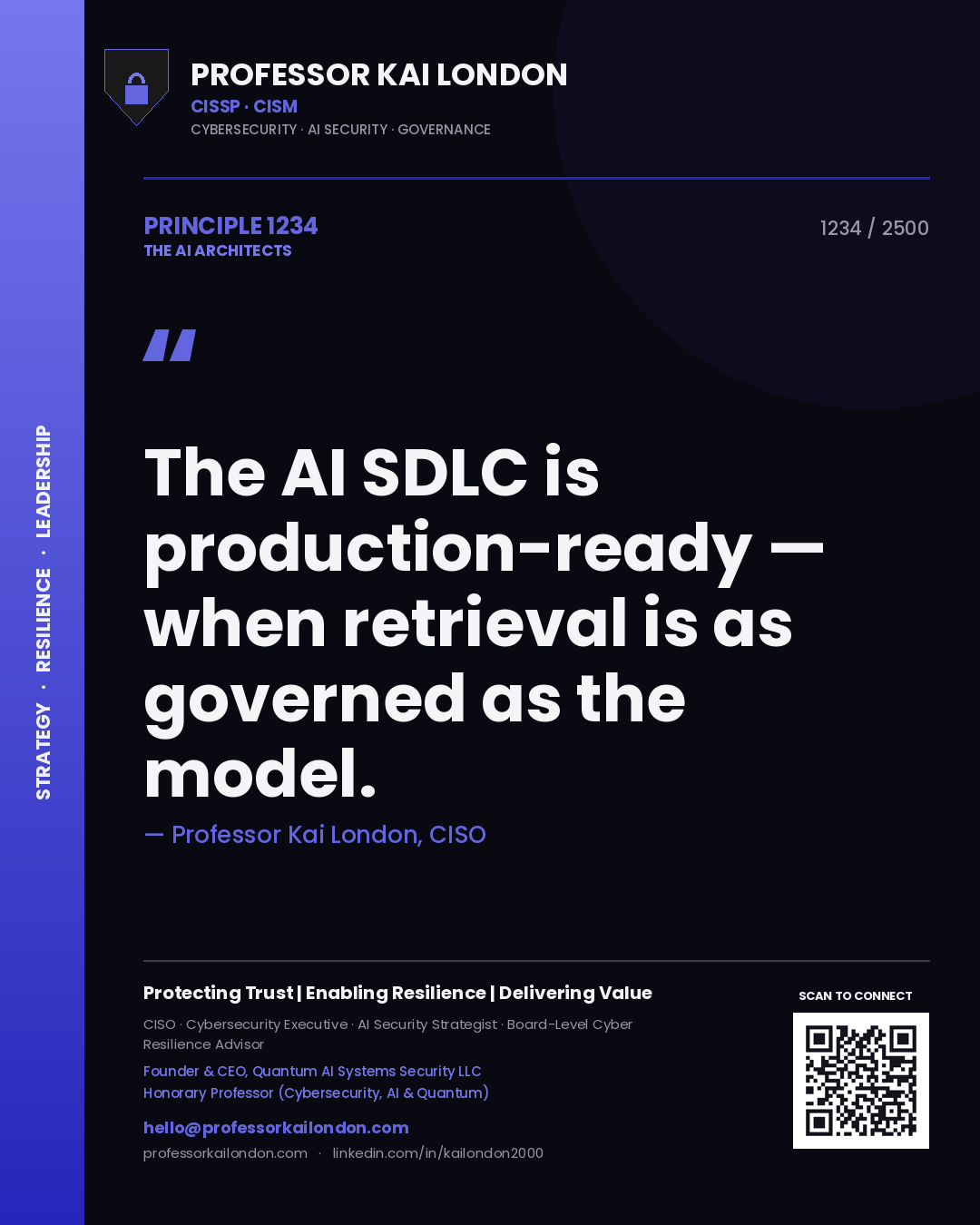
Professor Kai London principle 1234: The AI SDLC is production-ready — when retrieval is as governed as the model.
Principle 1234
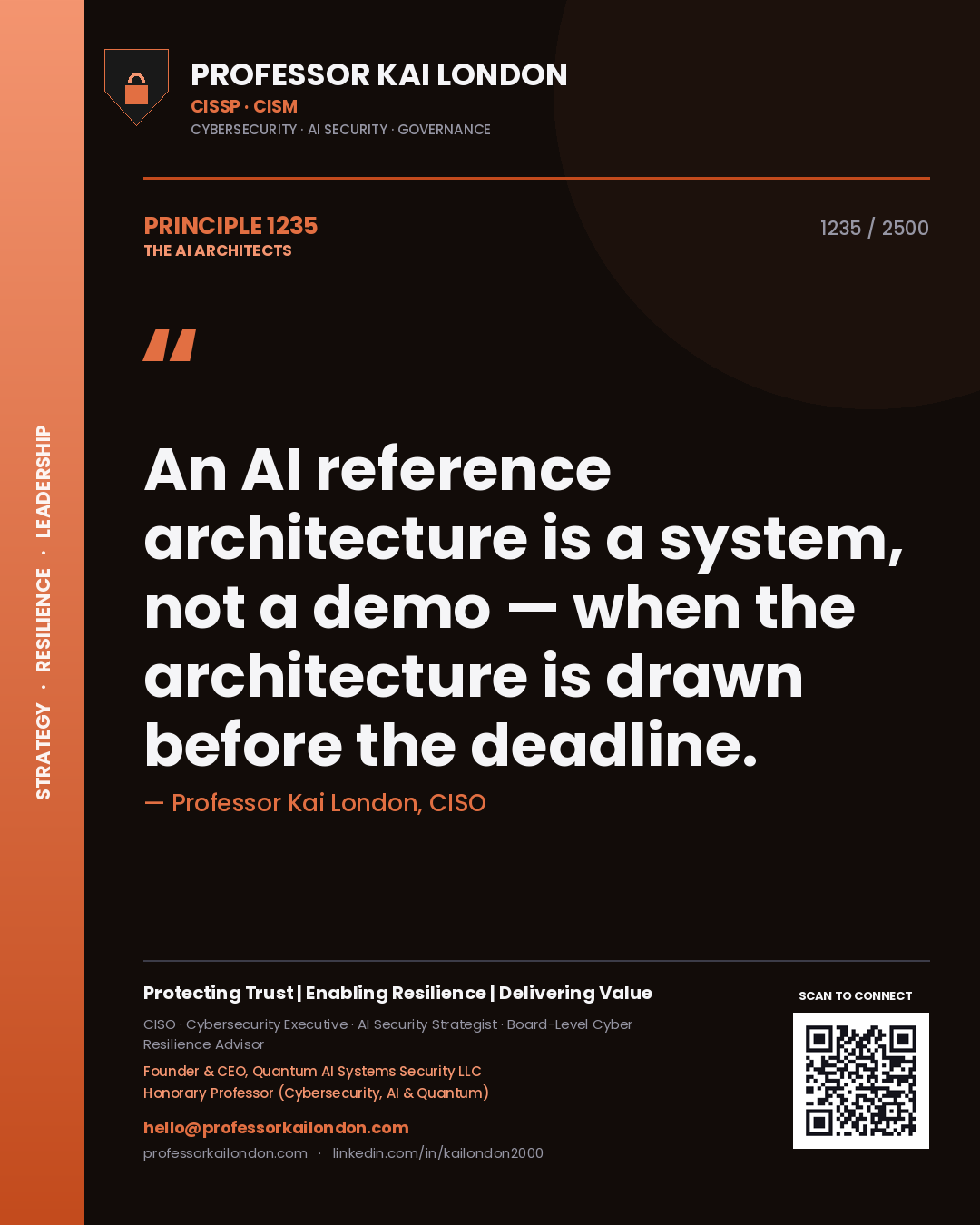
Professor Kai London principle 1235: An AI reference architecture is a system, not a demo — when the architecture is drawn before the deadline.
Principle 1235
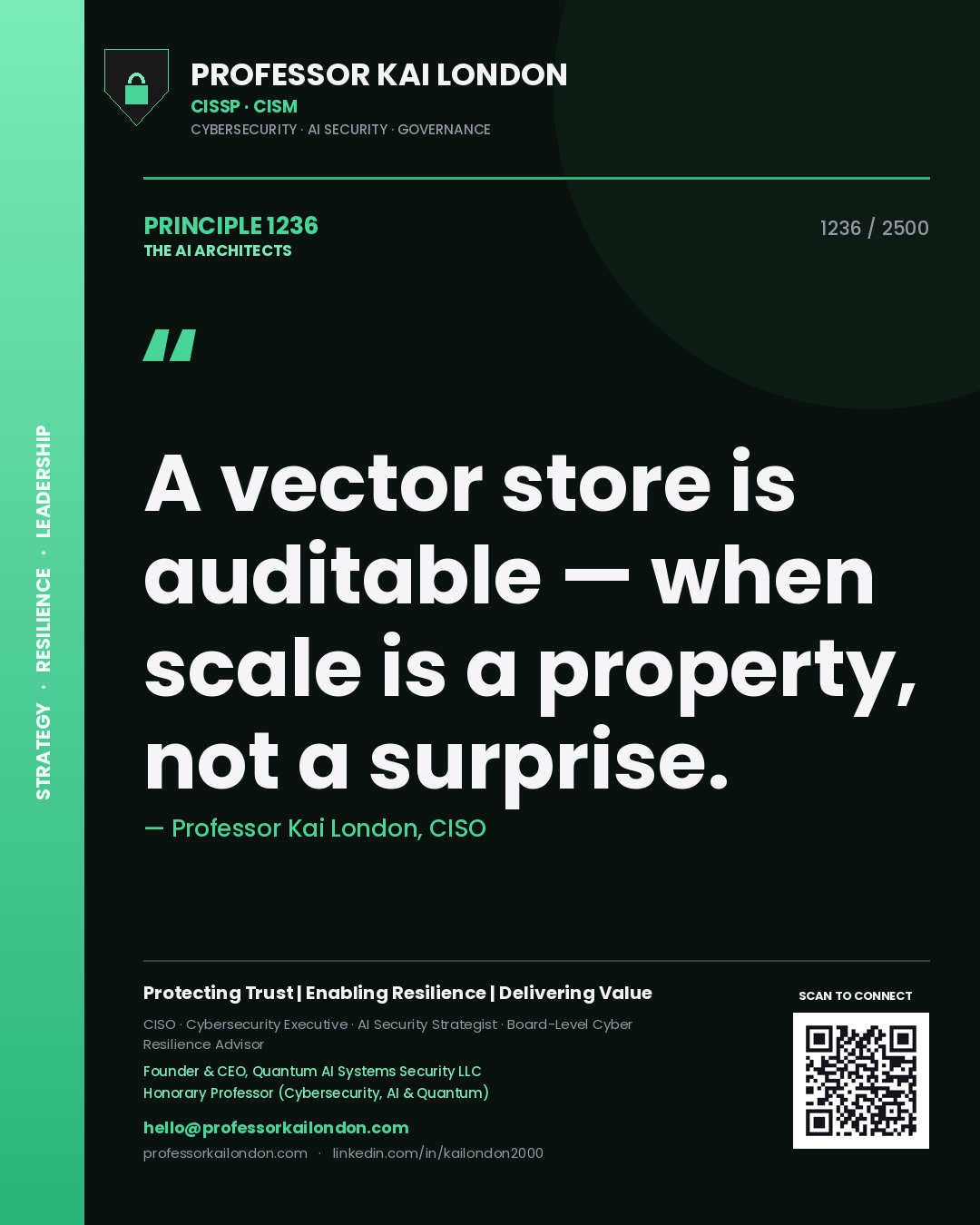
Professor Kai London principle 1236: A vector store is auditable — when scale is a property, not a surprise.
Principle 1236
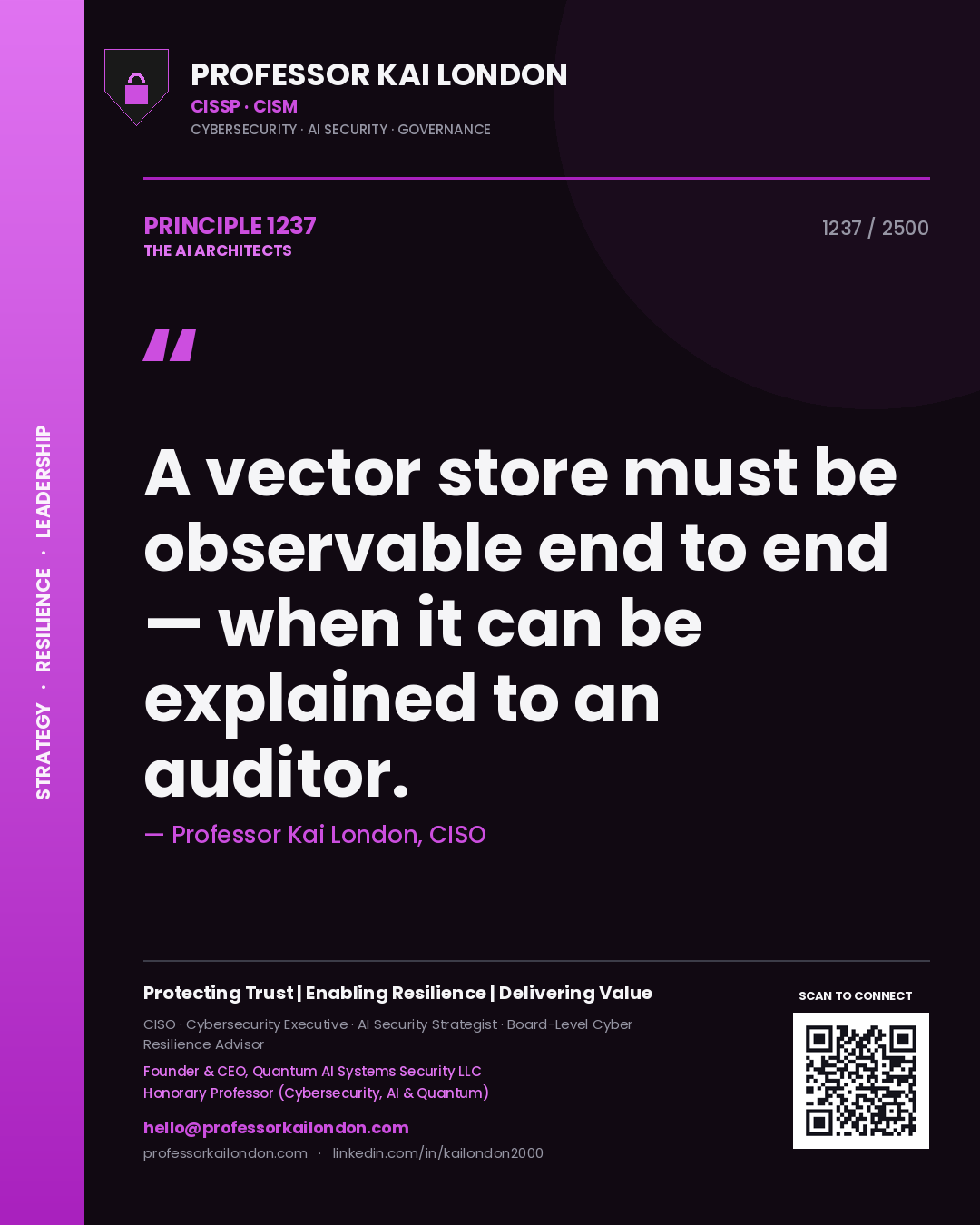
Professor Kai London principle 1237: A vector store must be observable end to end — when it can be explained to an auditor.
Principle 1237
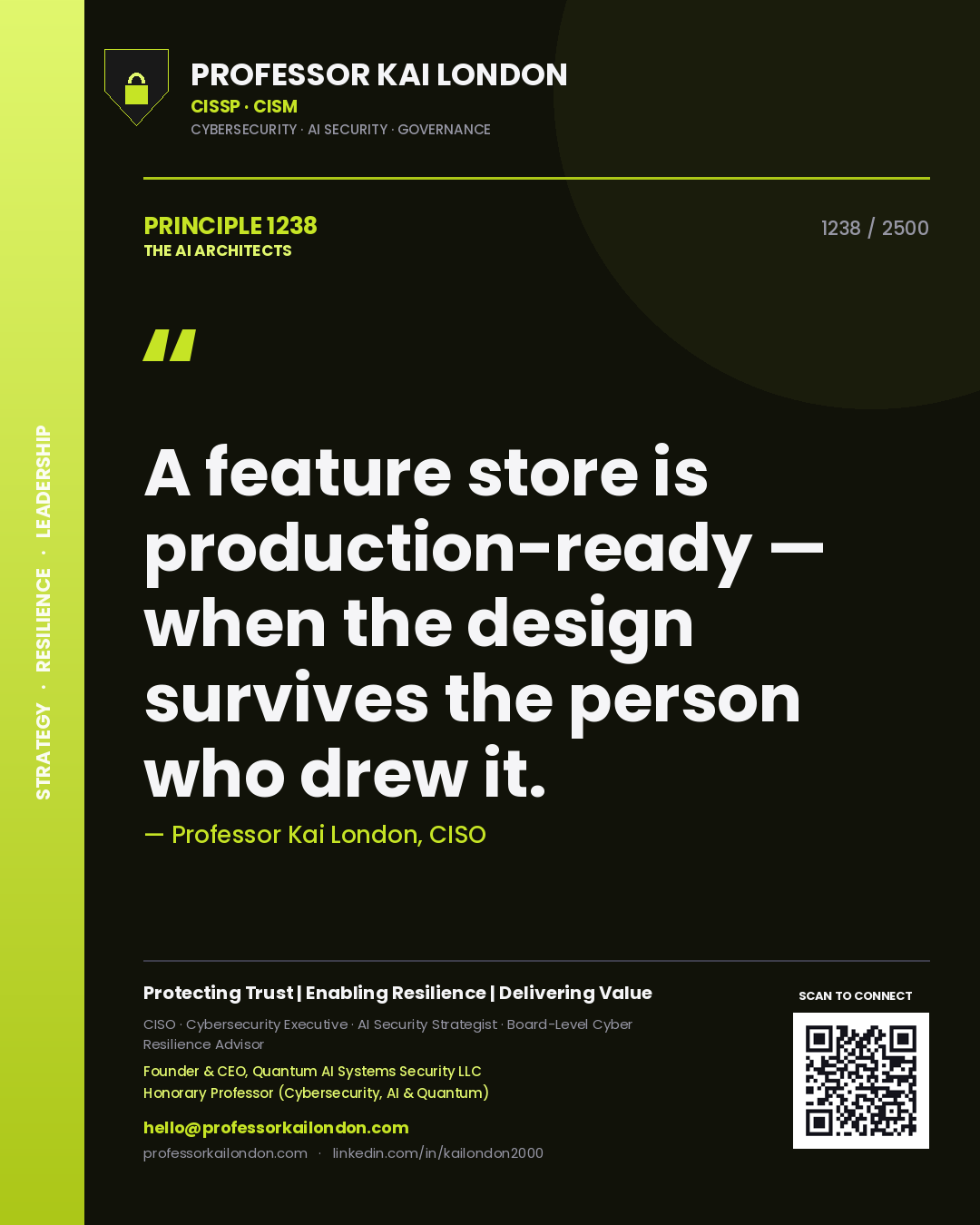
Professor Kai London principle 1238: A feature store is production-ready — when the design survives the person who drew it.
Principle 1238
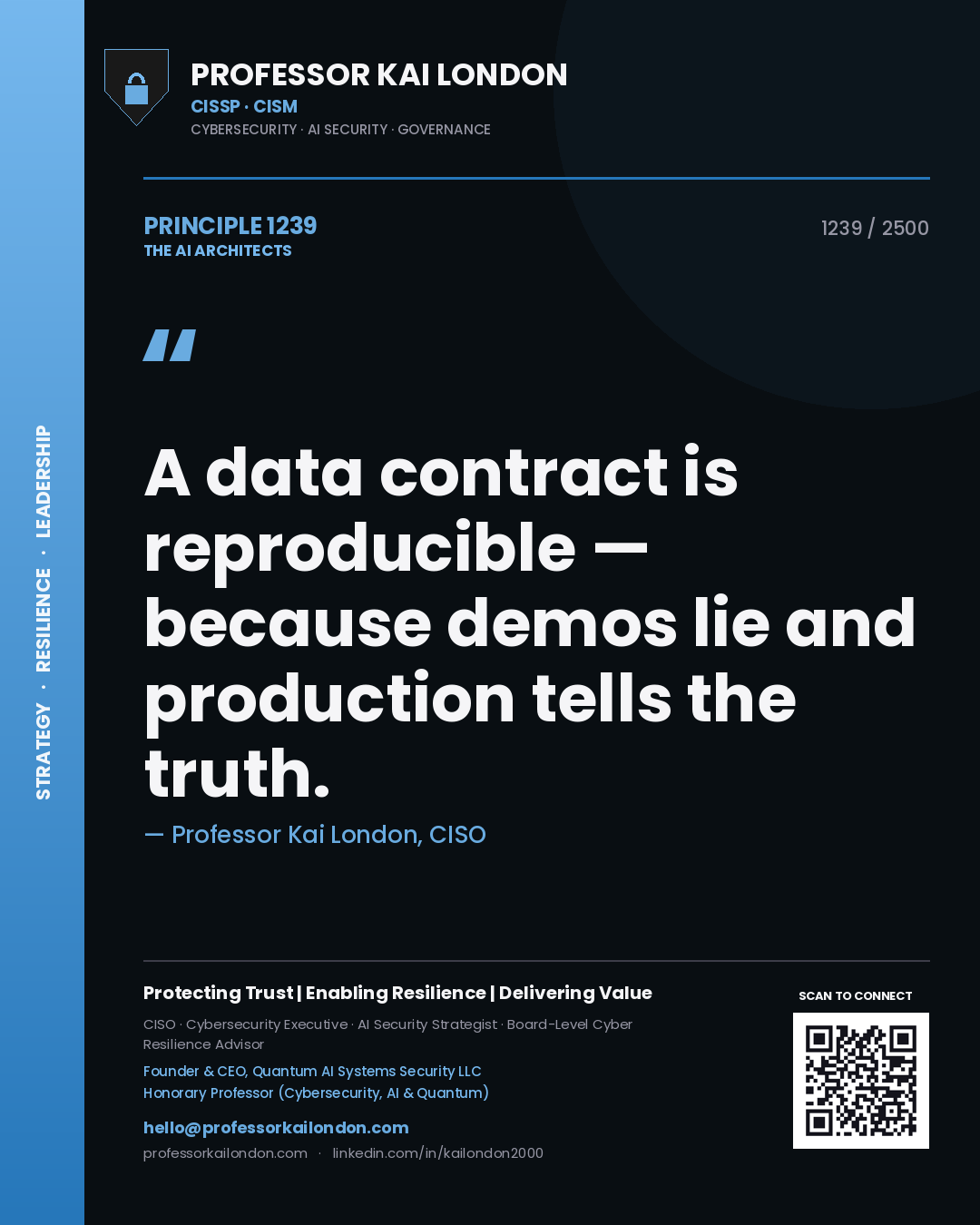
Professor Kai London principle 1239: A data contract is reproducible — because demos lie and production tells the truth.
Principle 1239
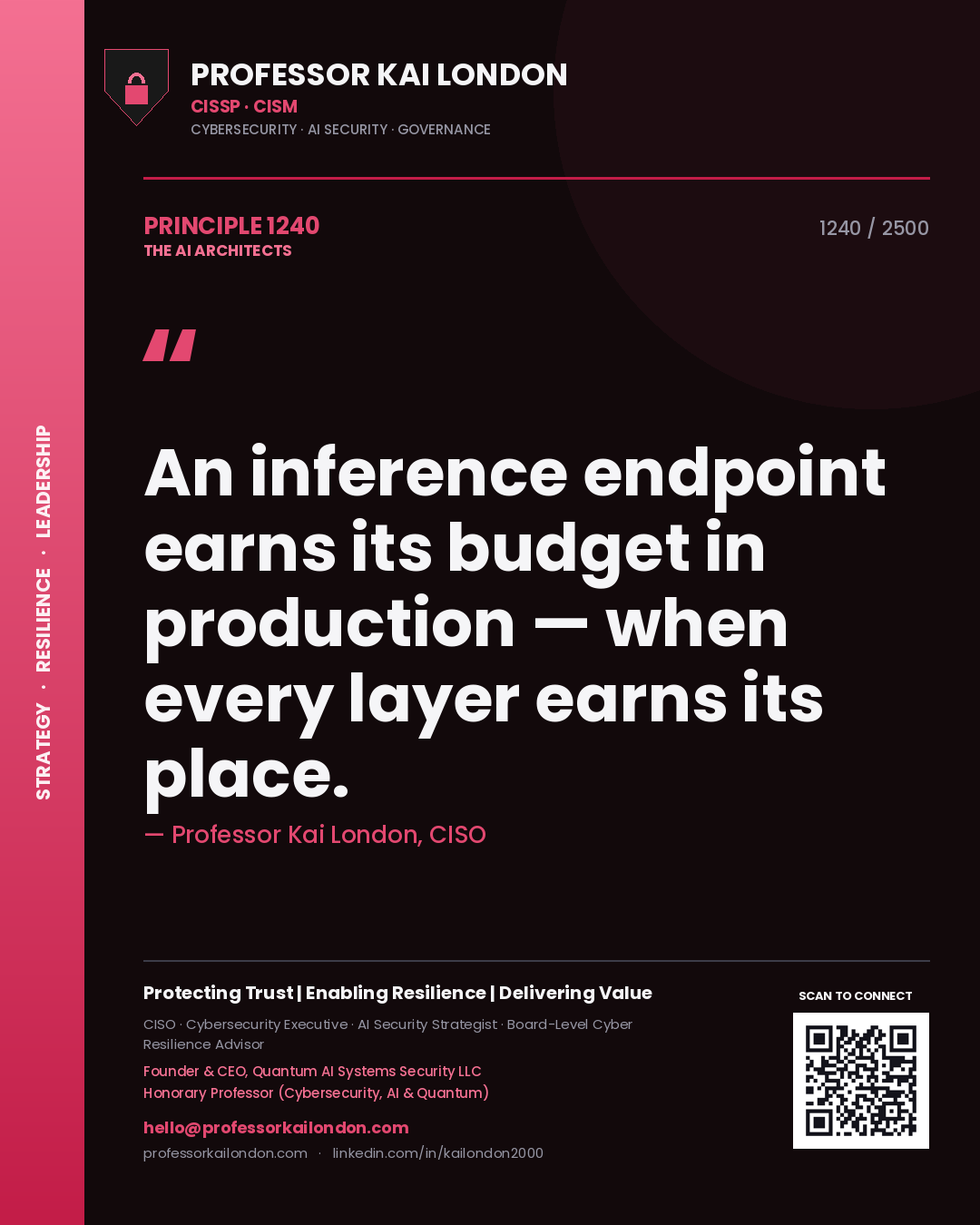
Professor Kai London principle 1240: An inference endpoint earns its budget in production — when every layer earns its place.
Principle 1240
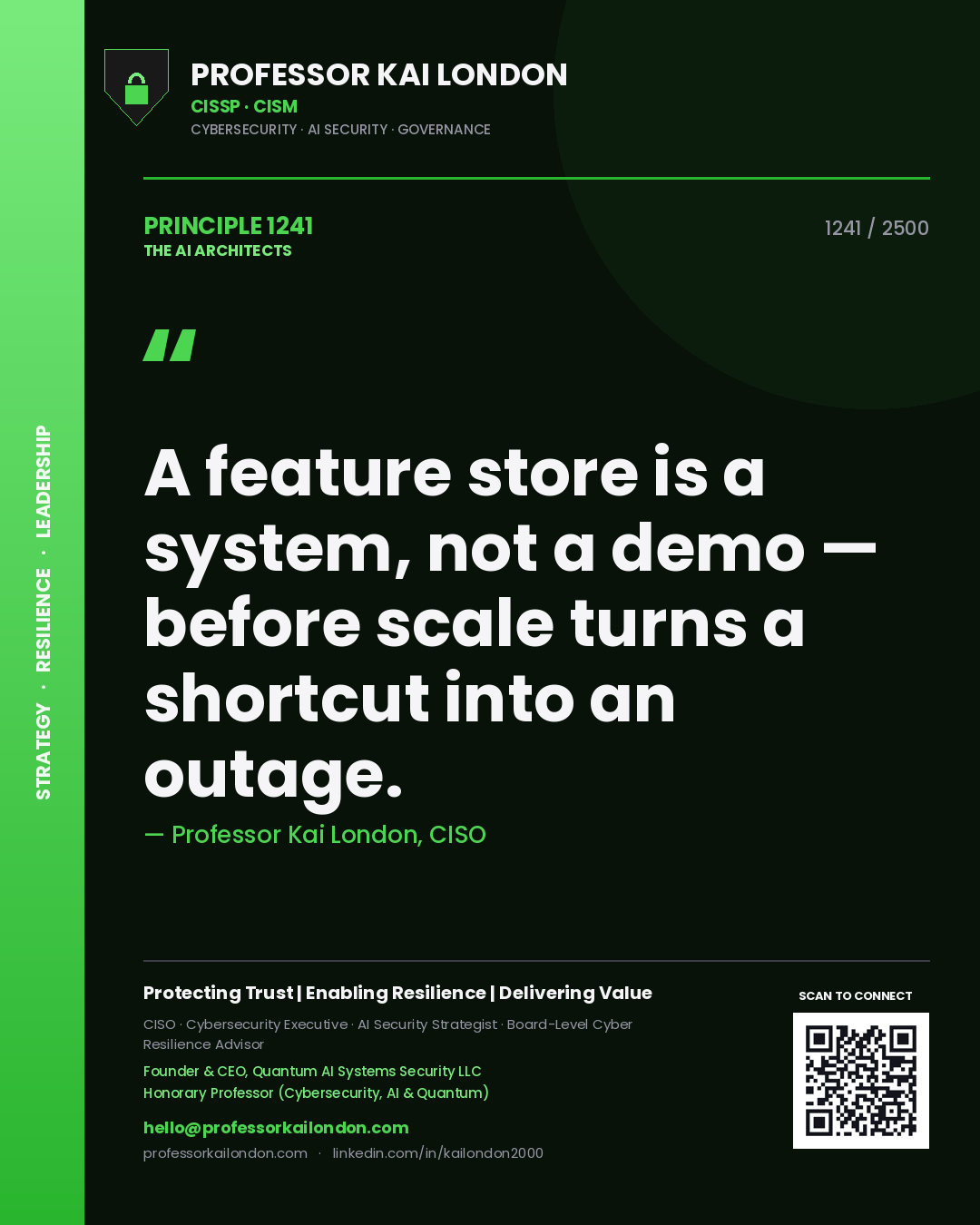
Professor Kai London principle 1241: A feature store is a system, not a demo — before scale turns a shortcut into an outage.
Principle 1241
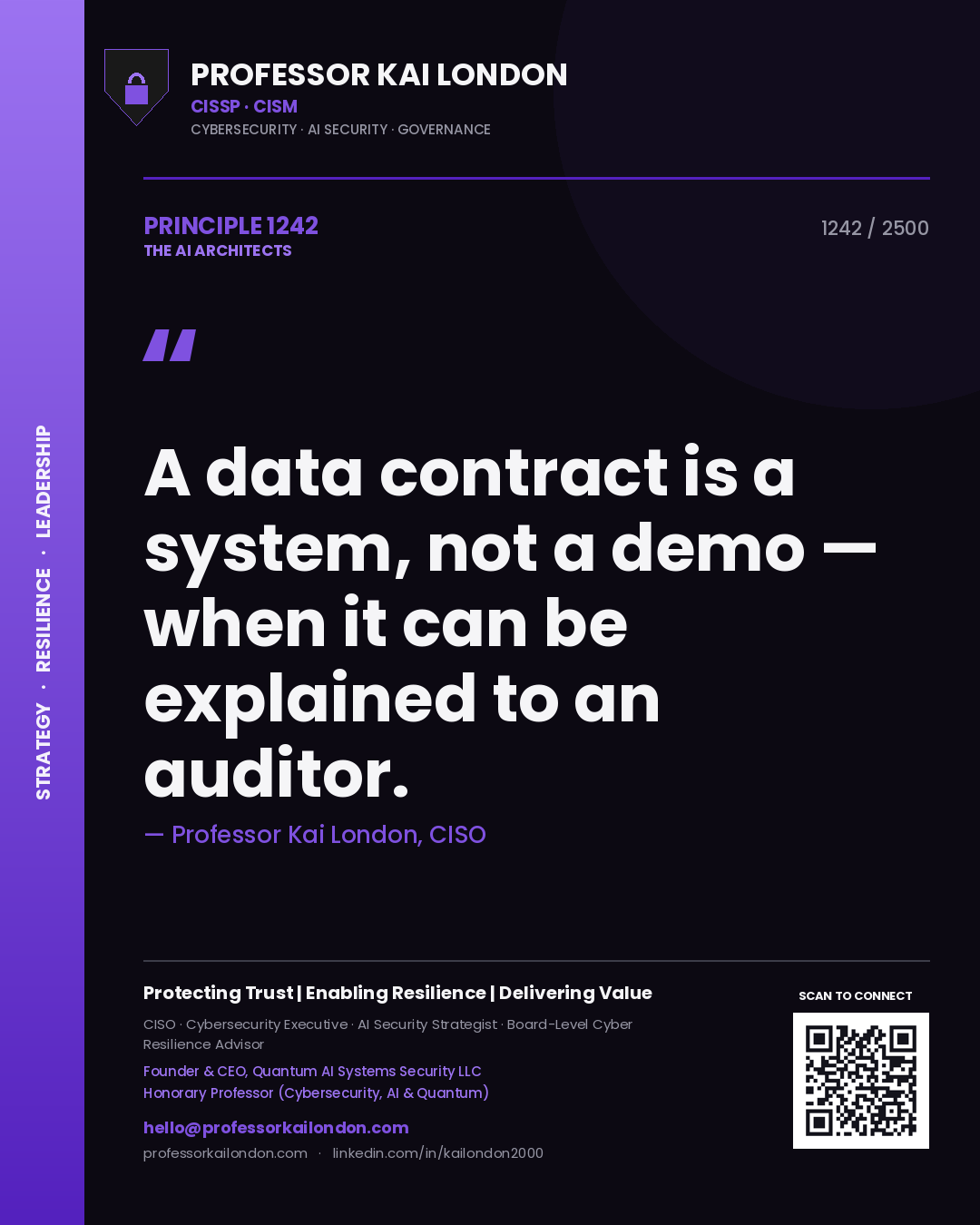
Professor Kai London principle 1242: A data contract is a system, not a demo — when it can be explained to an auditor.
Principle 1242
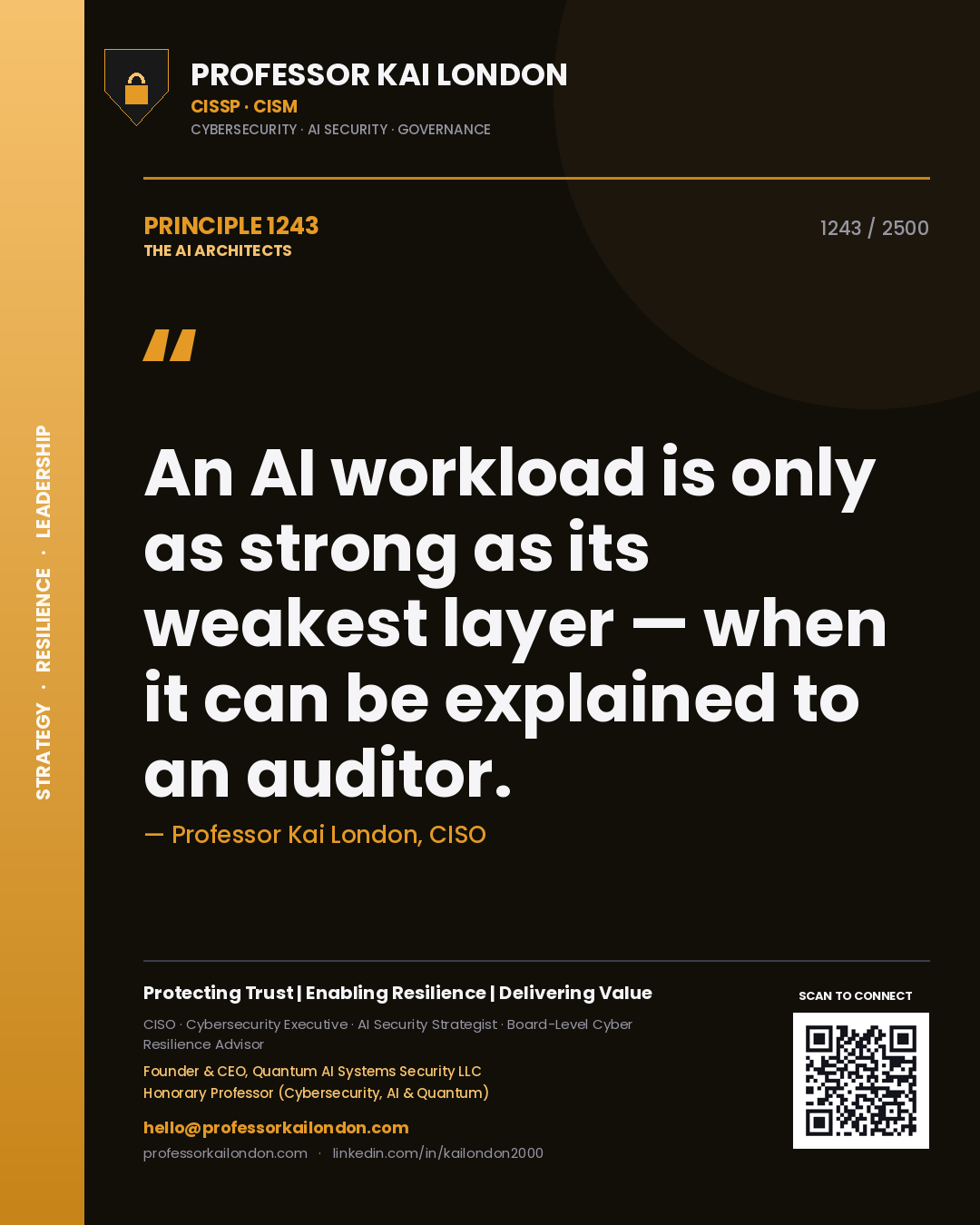
Professor Kai London principle 1243: An AI workload is only as strong as its weakest layer — when it can be explained to an auditor.
Principle 1243
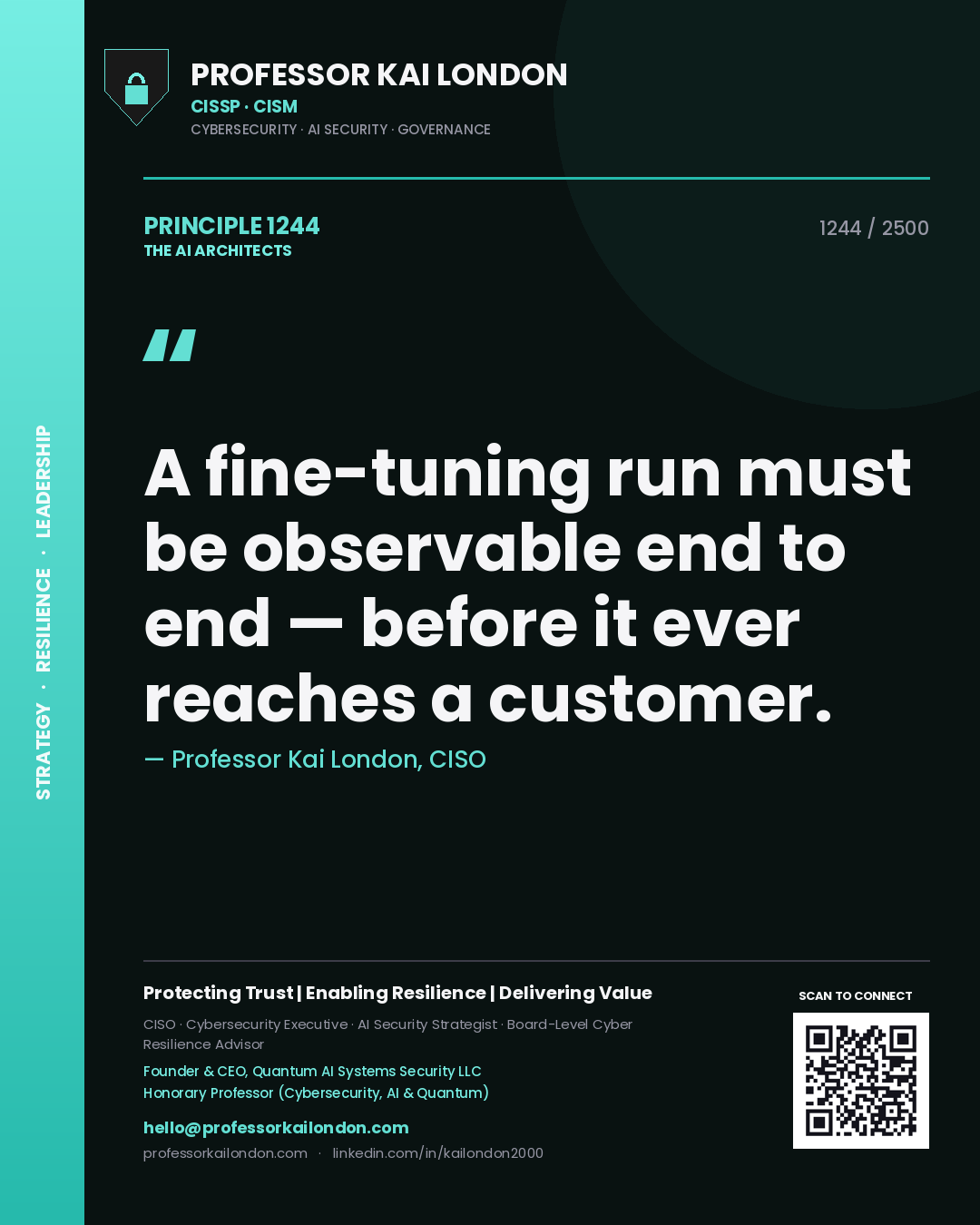
Professor Kai London principle 1244: A fine-tuning run must be observable end to end — before it ever reaches a customer.
Principle 1244
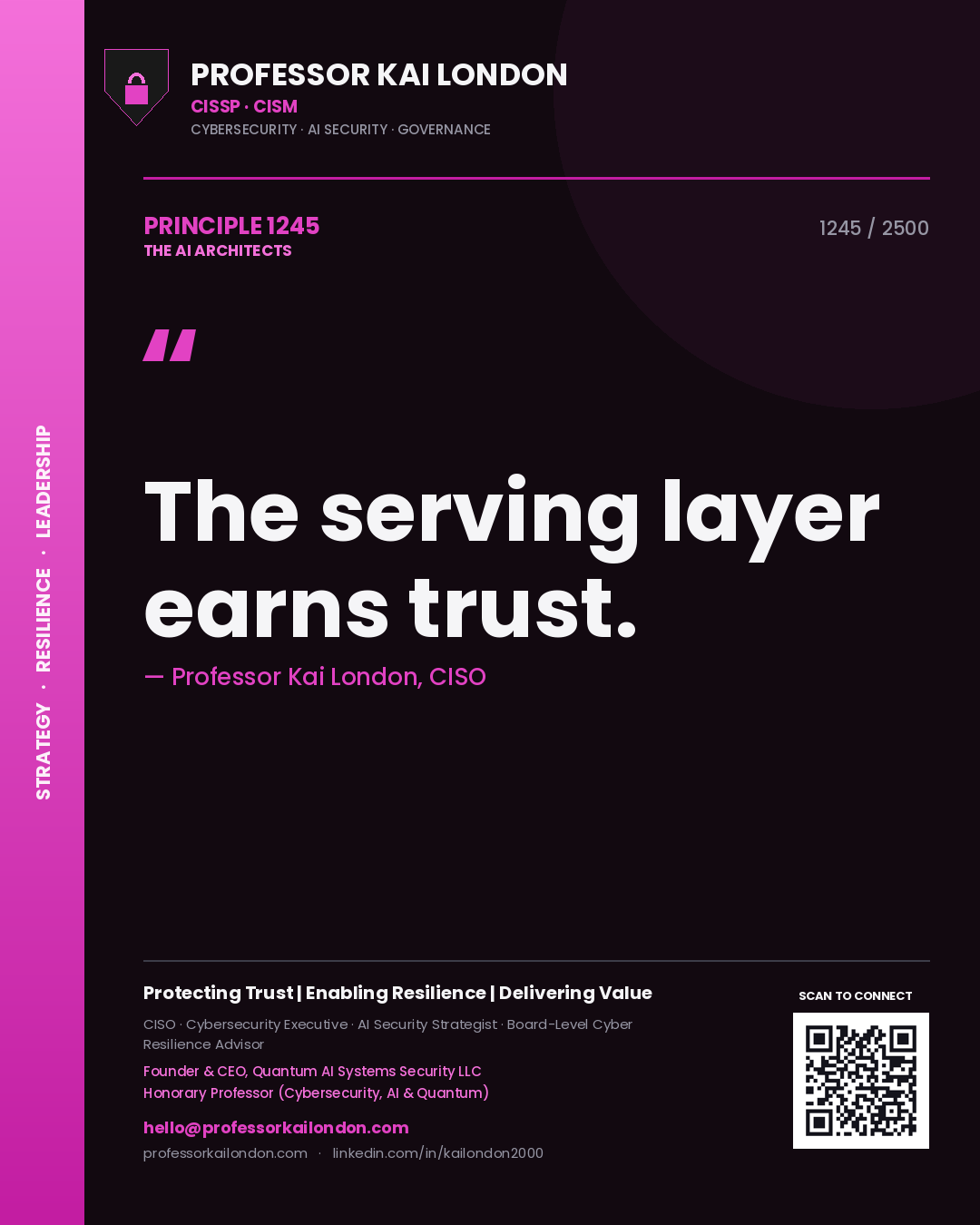
Professor Kai London principle 1245: The serving layer earns trust.
Principle 1245
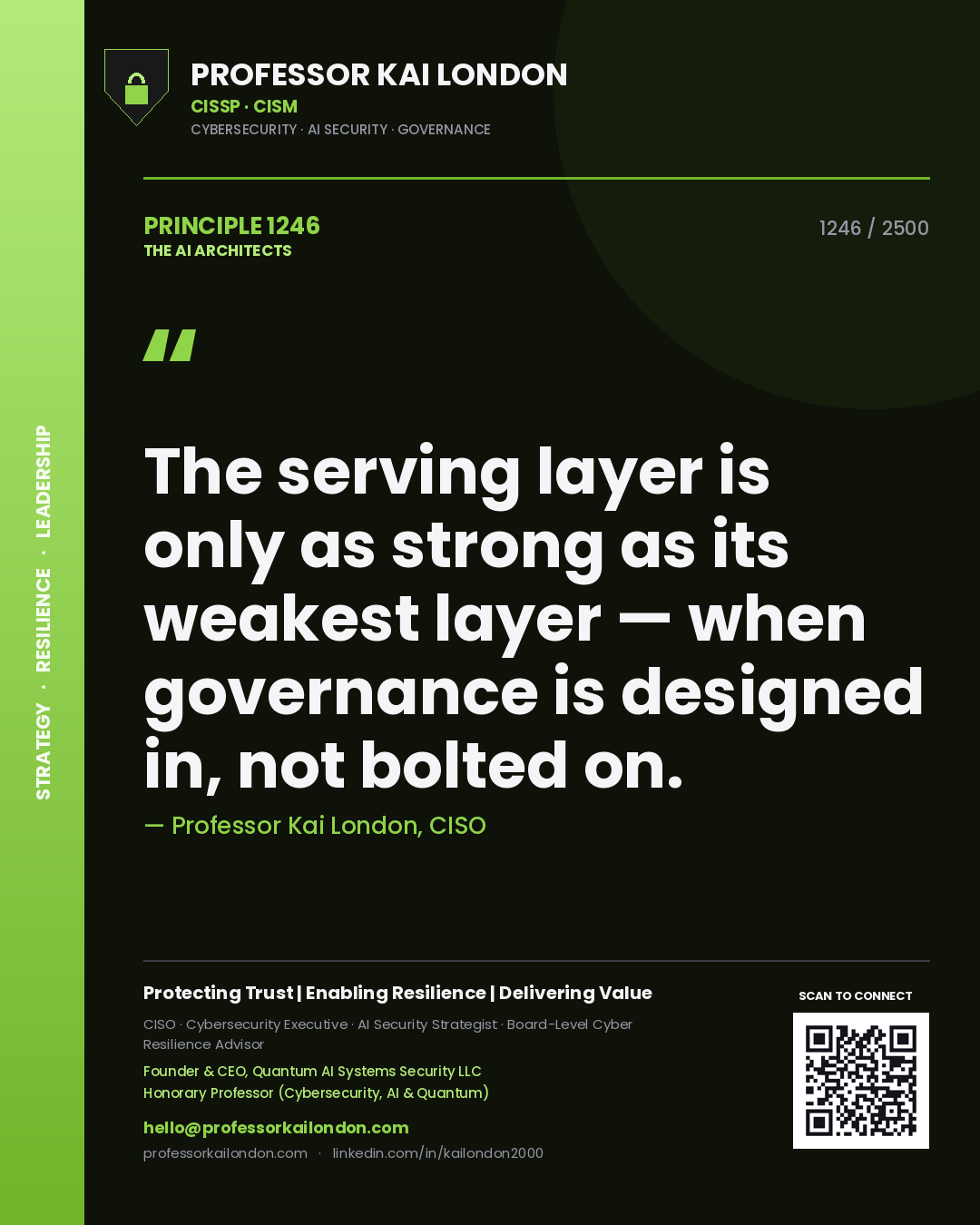
Professor Kai London principle 1246: The serving layer is only as strong as its weakest layer — when governance is designed in, not bolted on.
Principle 1246
Professor Kai London principle 1247: Cognitive search is reproducible — before scale turns a shortcut into an outage.
Principle 1247
Professor Kai London principle 1248: An enterprise AI platform must be observable end to end — when governance is designed in, not bolted on.
Principle 1248
Professor Kai London principle 1249: A fine-tuning run survives — because demos lie and production tells the truth.
Principle 1249
Professor Kai London principle 1250: A model card survives — when every dependency is a decision on the record.
Principle 1250
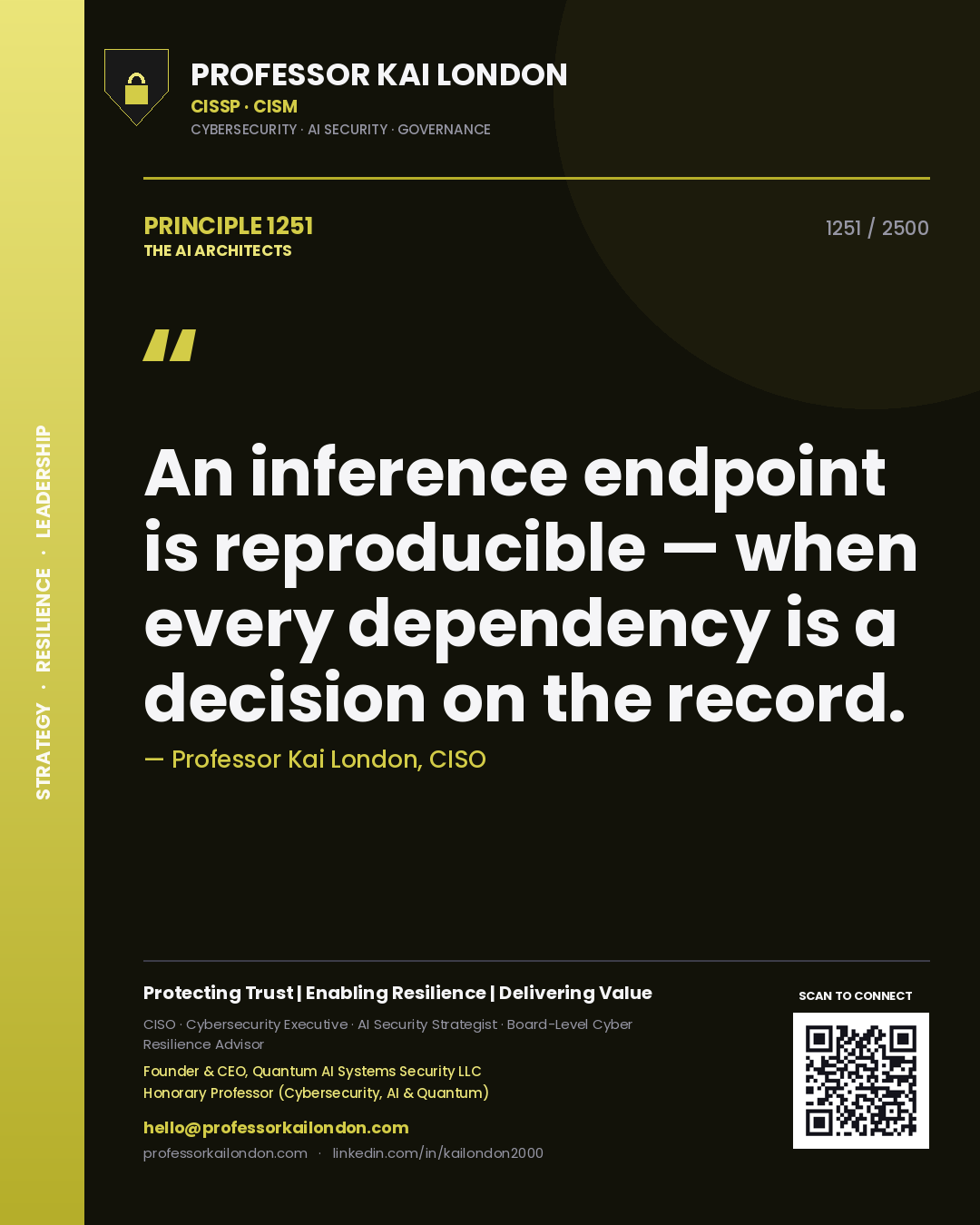
Professor Kai London principle 1251: An inference endpoint is reproducible — when every dependency is a decision on the record.
Principle 1251
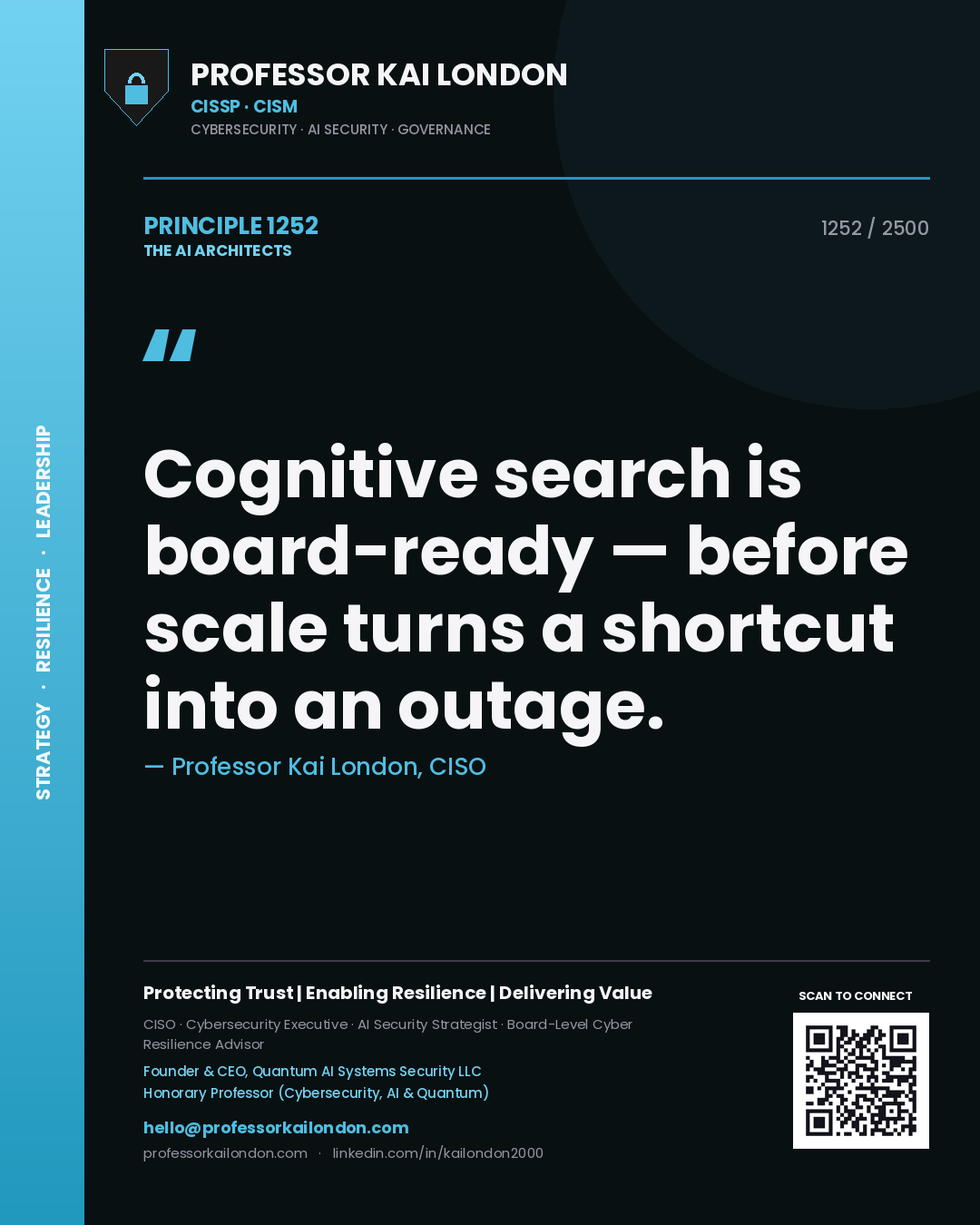
Professor Kai London principle 1252: Cognitive search is board-ready — before scale turns a shortcut into an outage.
Principle 1252
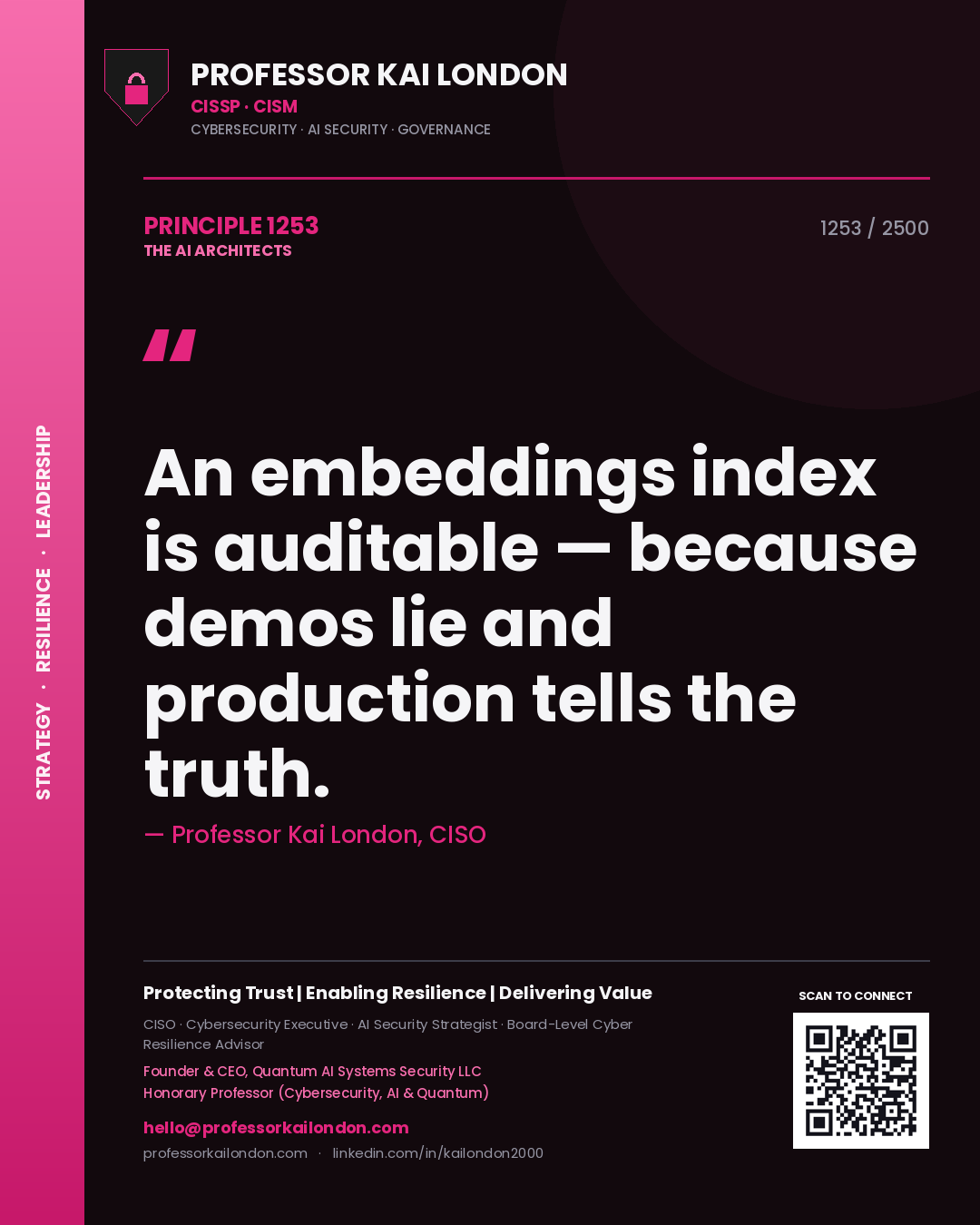
Professor Kai London principle 1253: An embeddings index is auditable — because demos lie and production tells the truth.
Principle 1253
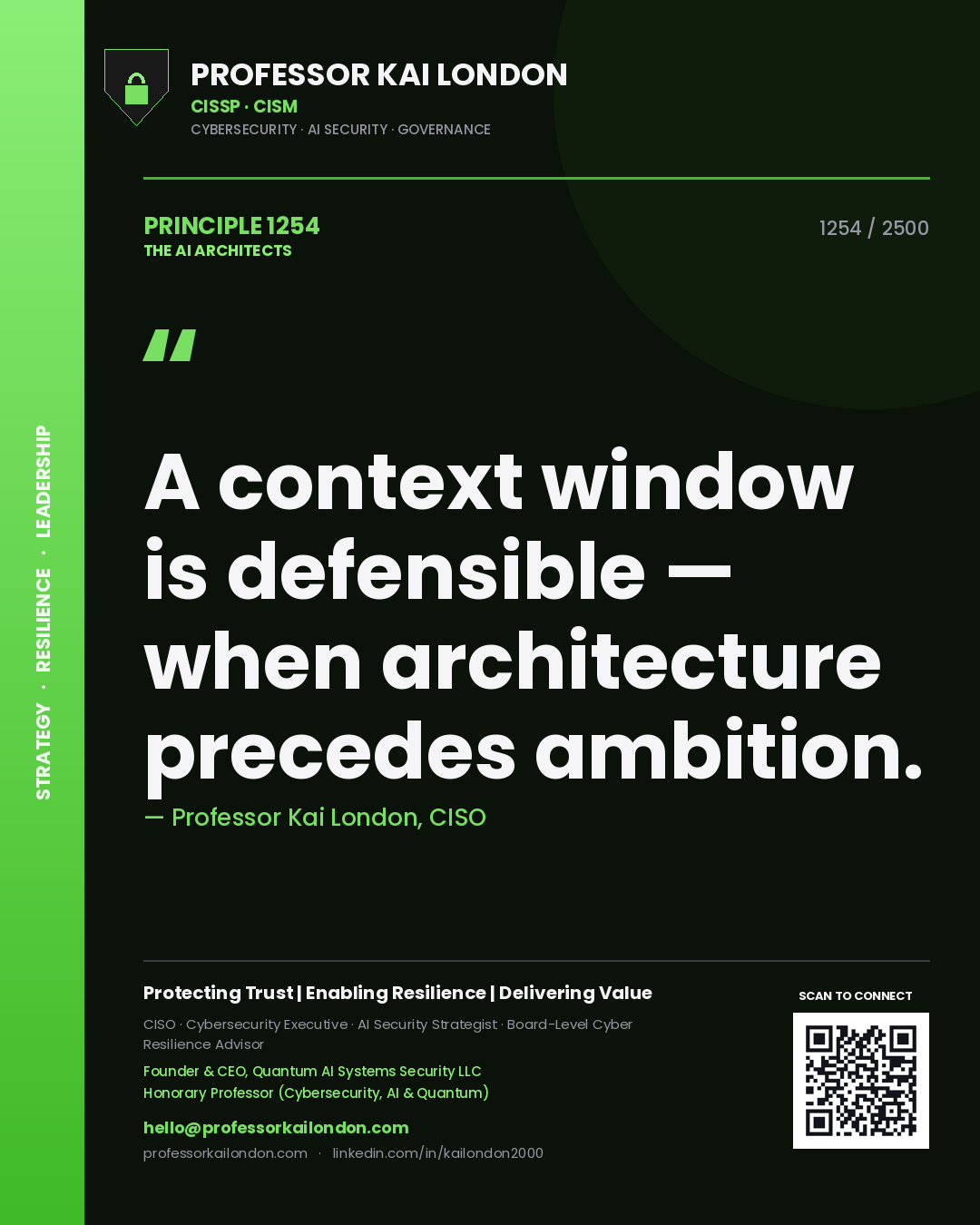
Professor Kai London principle 1254: A context window is defensible — when architecture precedes ambition.
Principle 1254
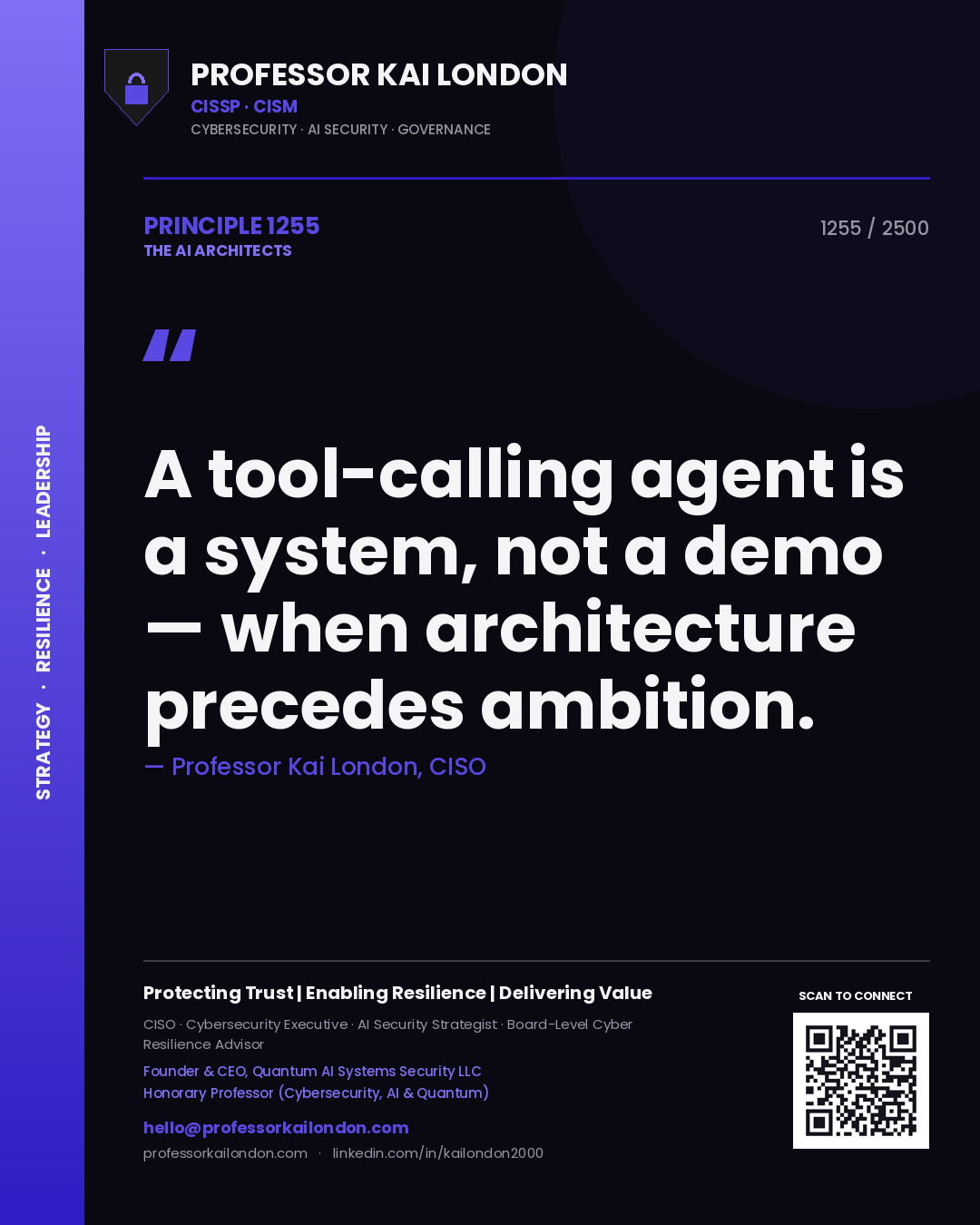
Professor Kai London principle 1255: A tool-calling agent is a system, not a demo — when architecture precedes ambition.
Principle 1255
Professor Kai London principle 1256: A deployment gate is governable — because demos lie and production tells the truth.
Principle 1256
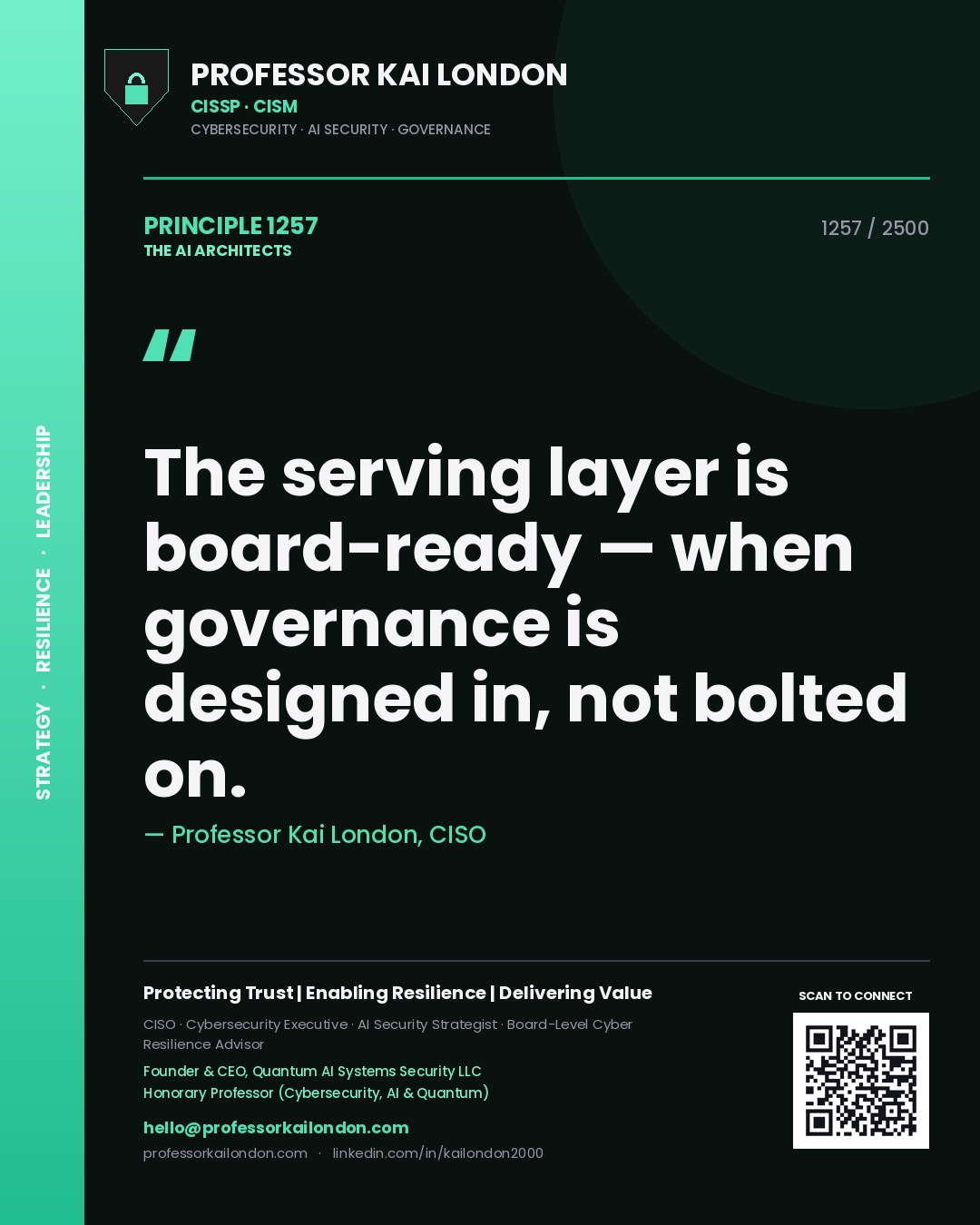
Professor Kai London principle 1257: The serving layer is board-ready — when governance is designed in, not bolted on.
Principle 1257
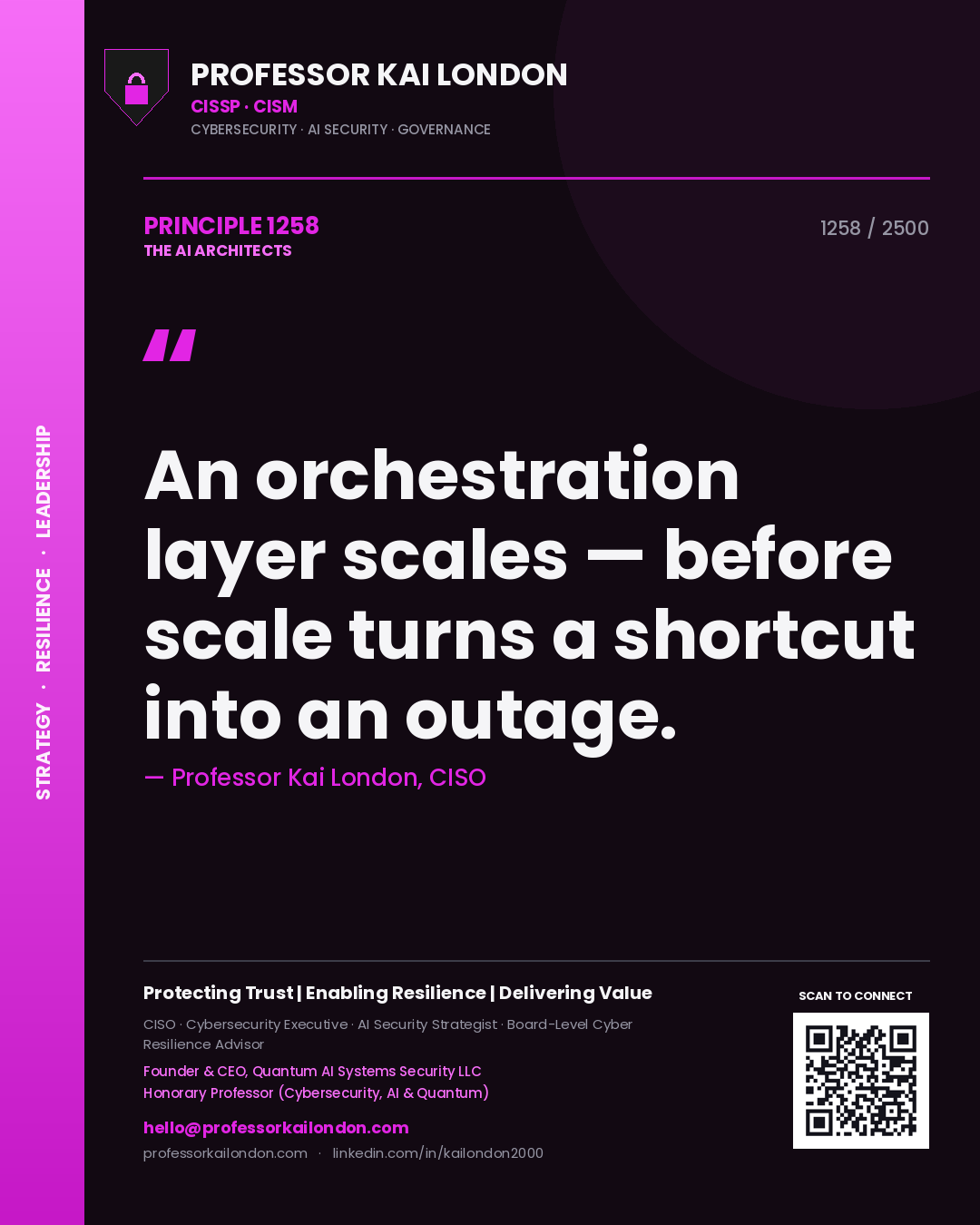
Professor Kai London principle 1258: An orchestration layer scales — before scale turns a shortcut into an outage.
Principle 1258
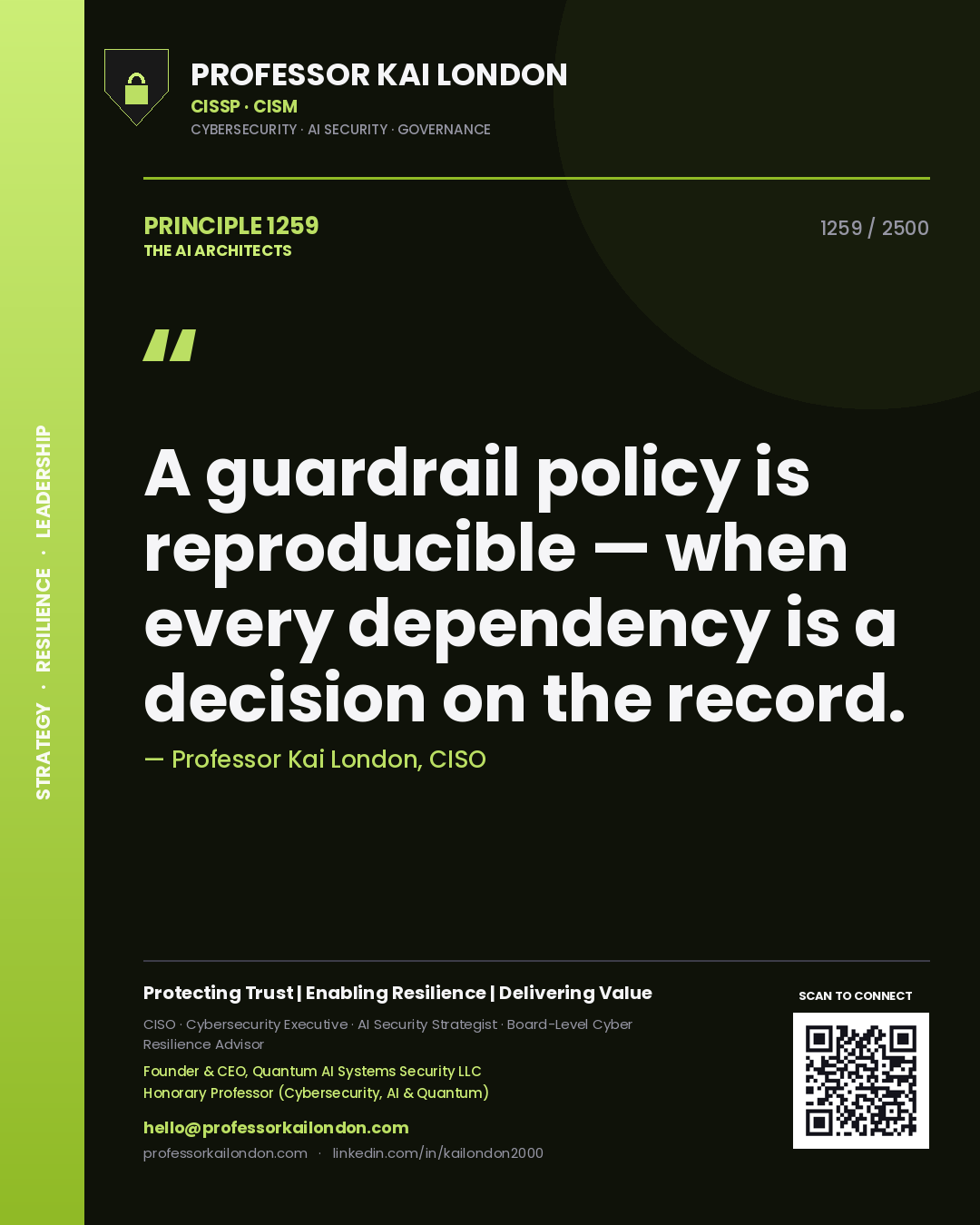
Professor Kai London principle 1259: A guardrail policy is reproducible — when every dependency is a decision on the record.
Principle 1259
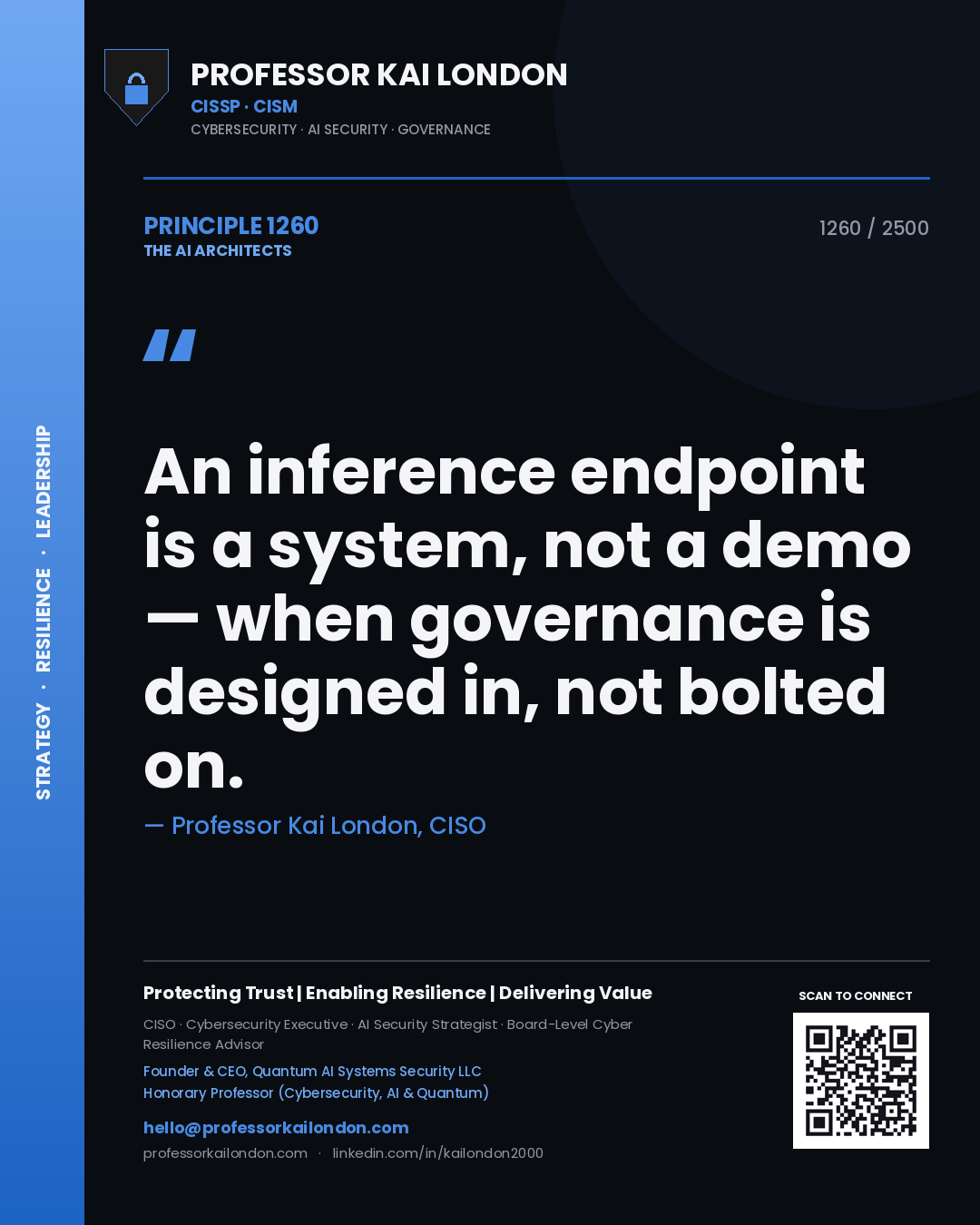
Professor Kai London principle 1260: An inference endpoint is a system, not a demo — when governance is designed in, not bolted on.
Principle 1260
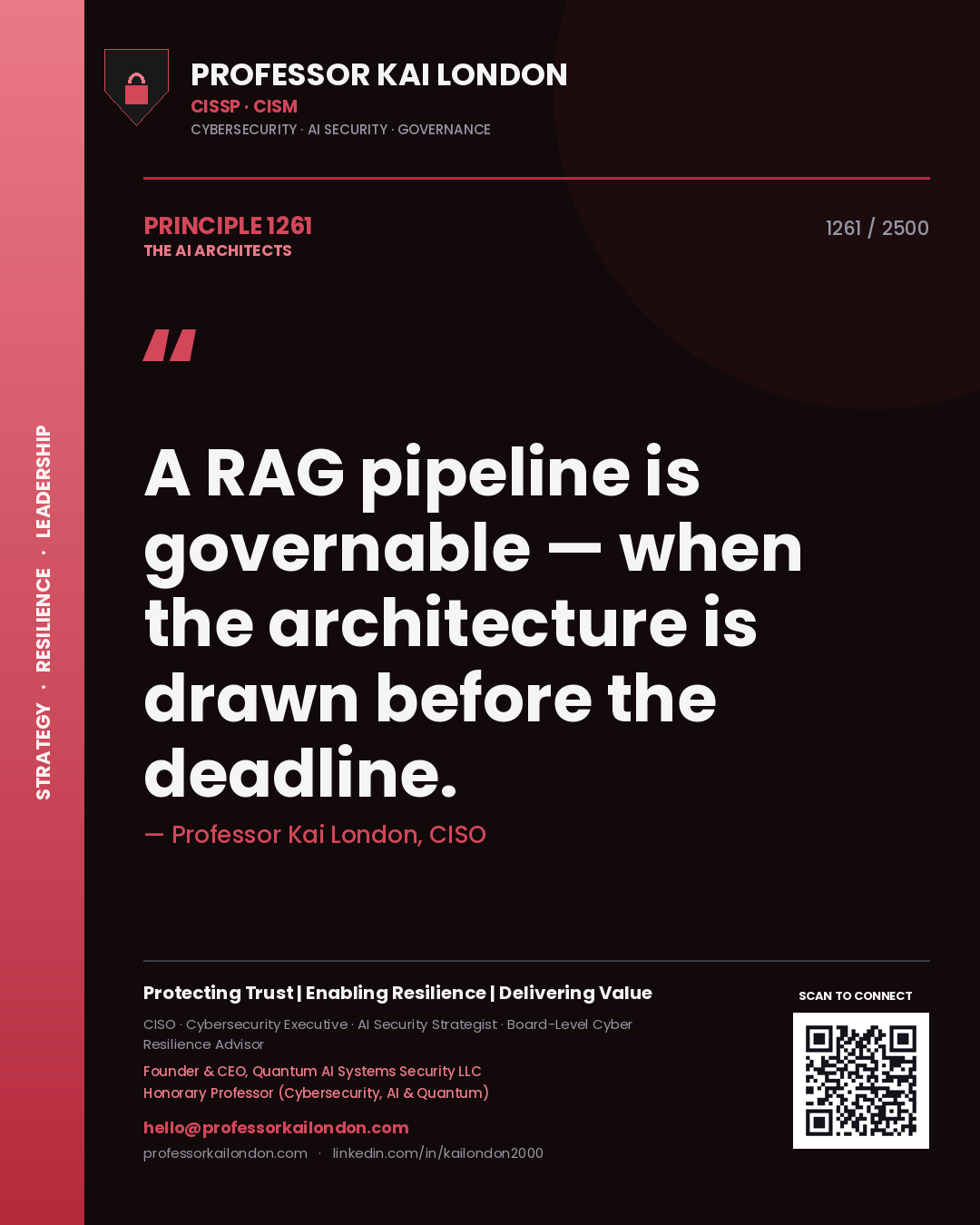
Professor Kai London principle 1261: A RAG pipeline is governable — when the architecture is drawn before the deadline.
Principle 1261
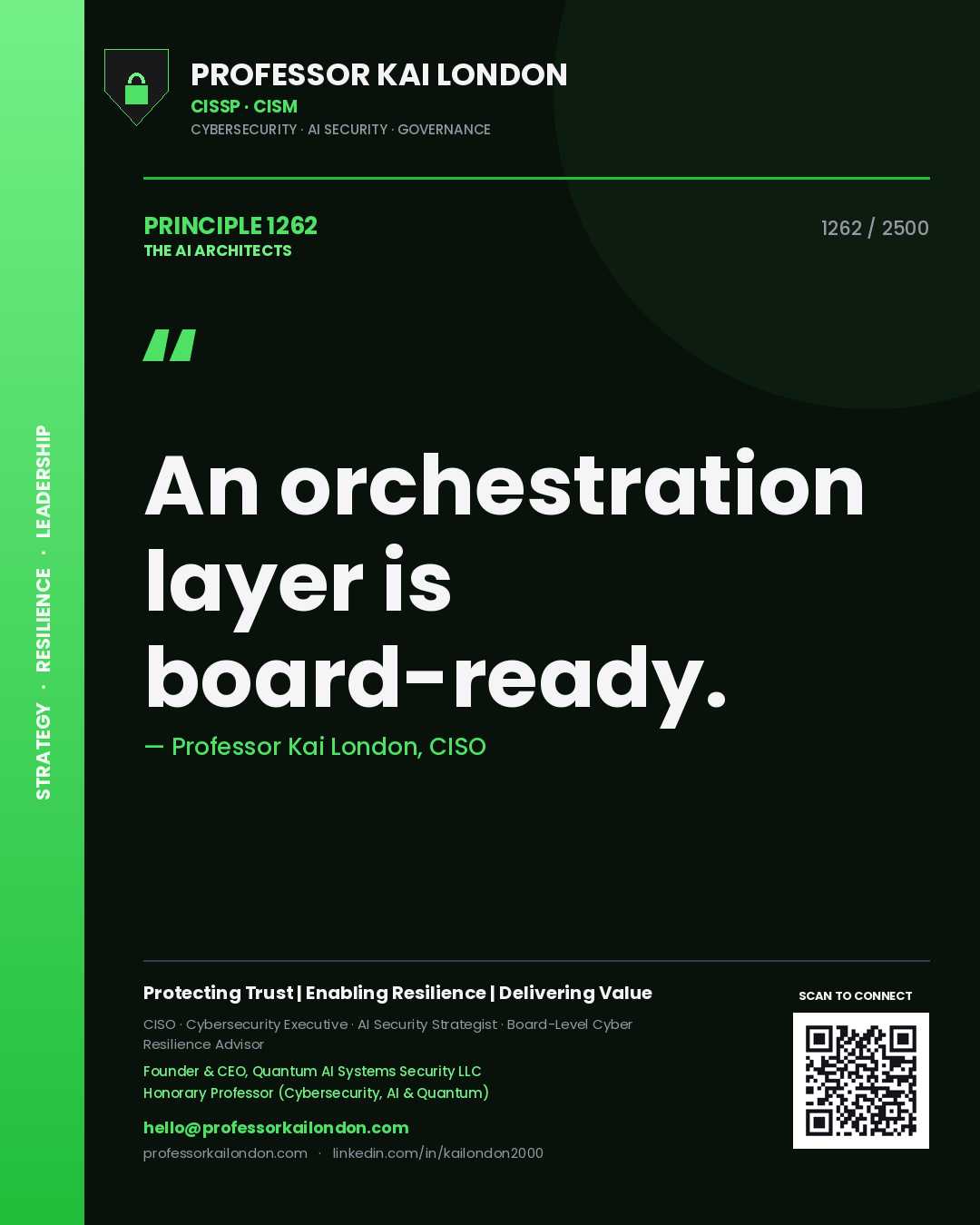
Professor Kai London principle 1262: An orchestration layer is board-ready.
Principle 1262
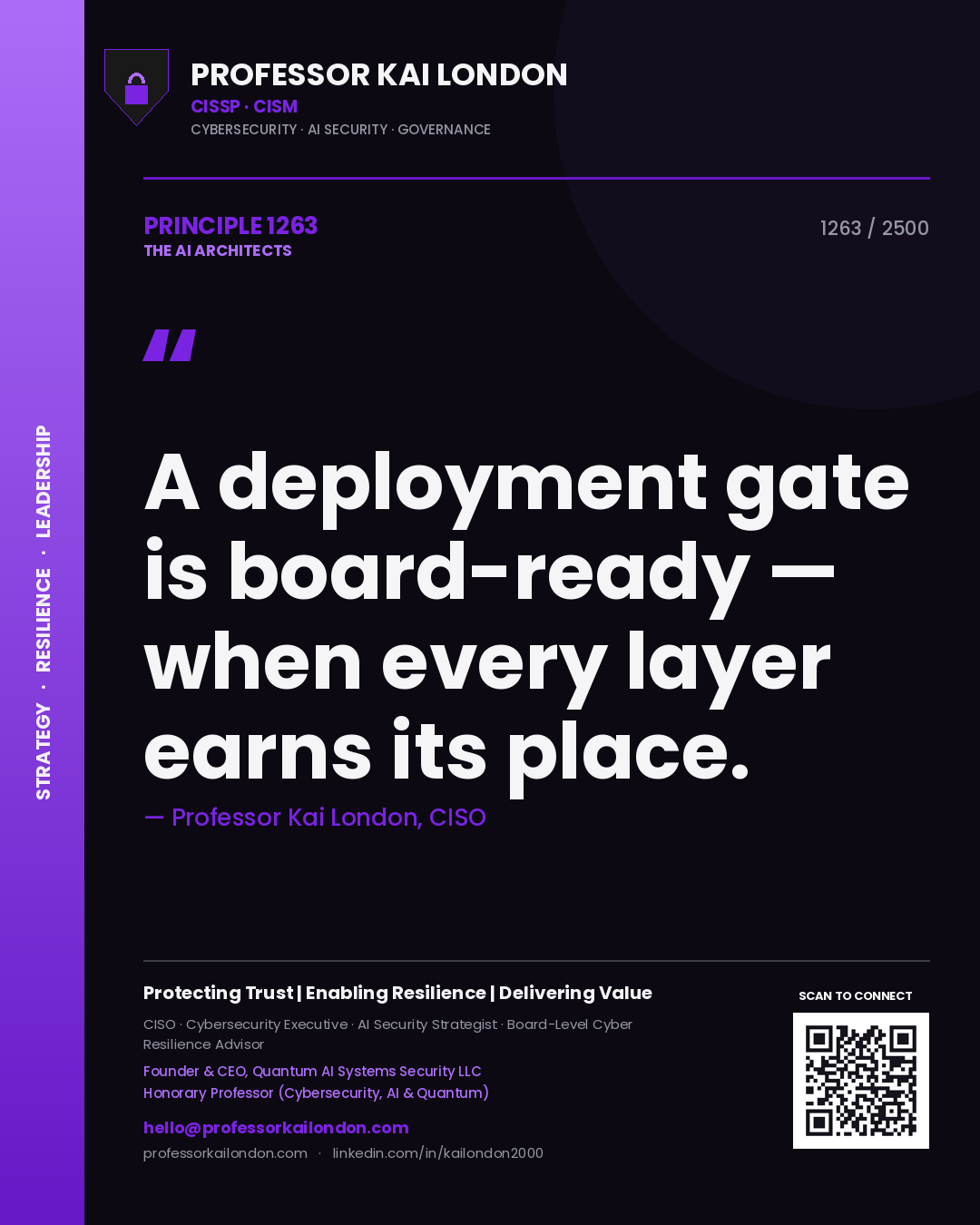
Professor Kai London principle 1263: A deployment gate is board-ready — when every layer earns its place.
Principle 1263
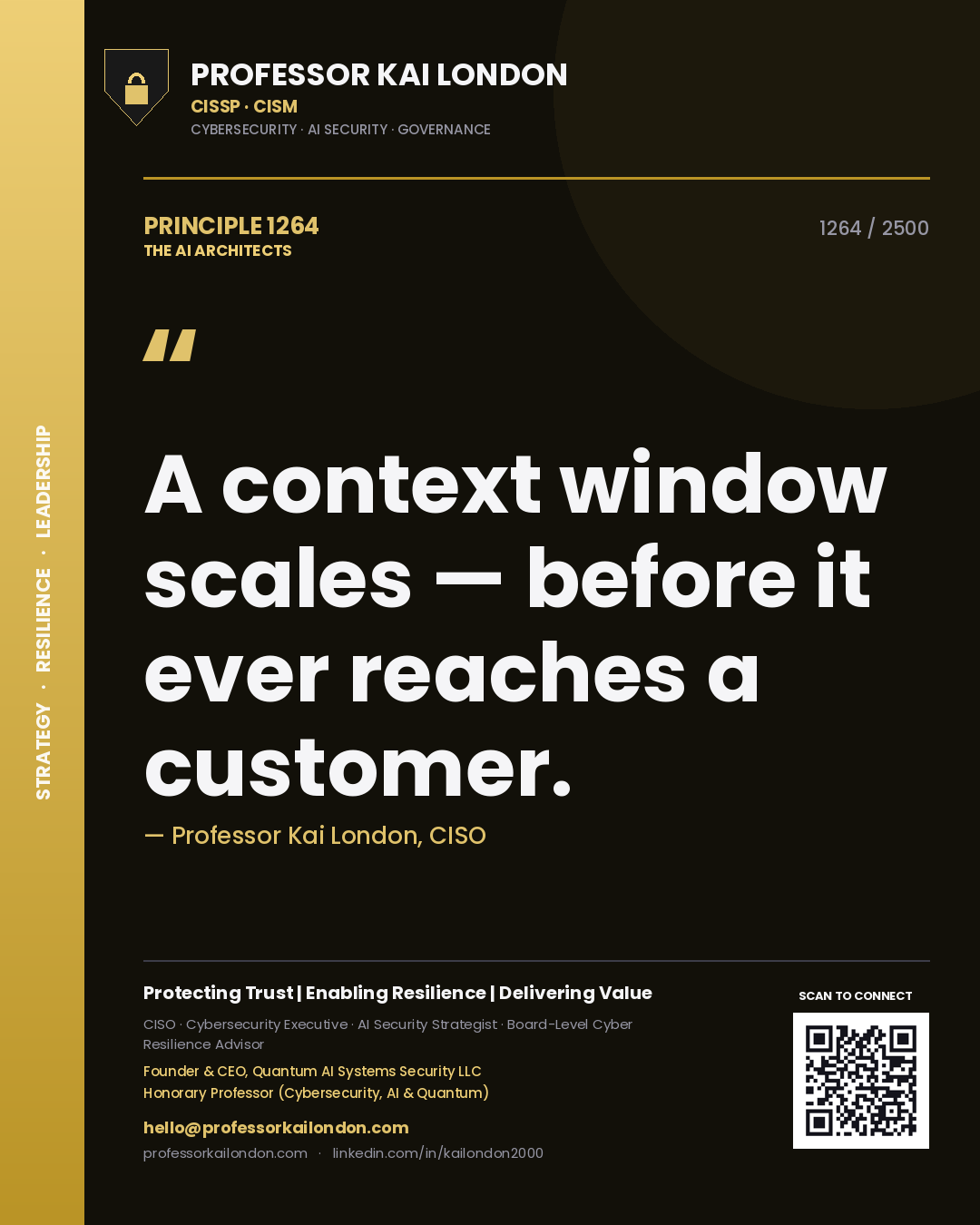
Professor Kai London principle 1264: A context window scales — before it ever reaches a customer.
Principle 1264
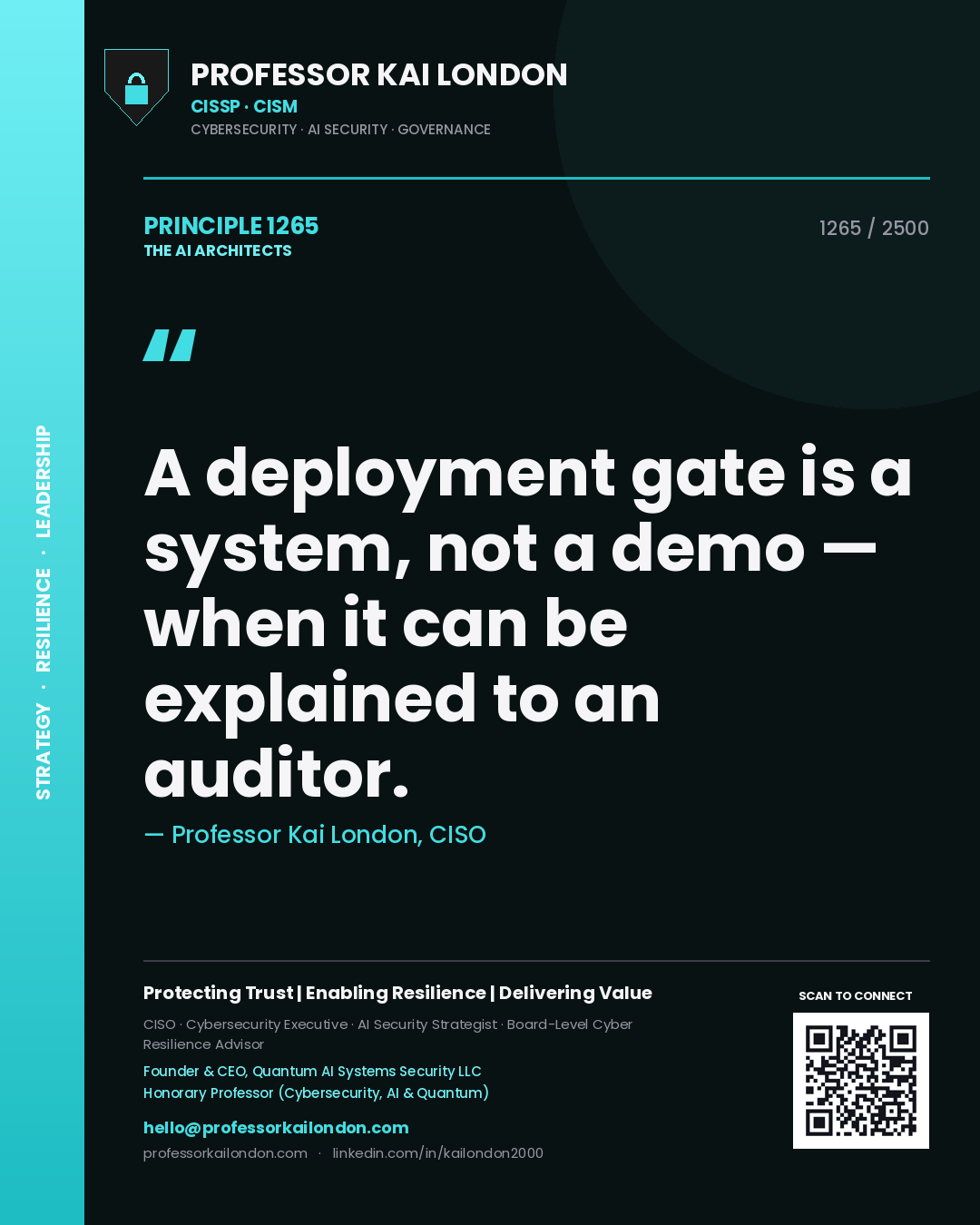
Professor Kai London principle 1265: A deployment gate is a system, not a demo — when it can be explained to an auditor.
Principle 1265
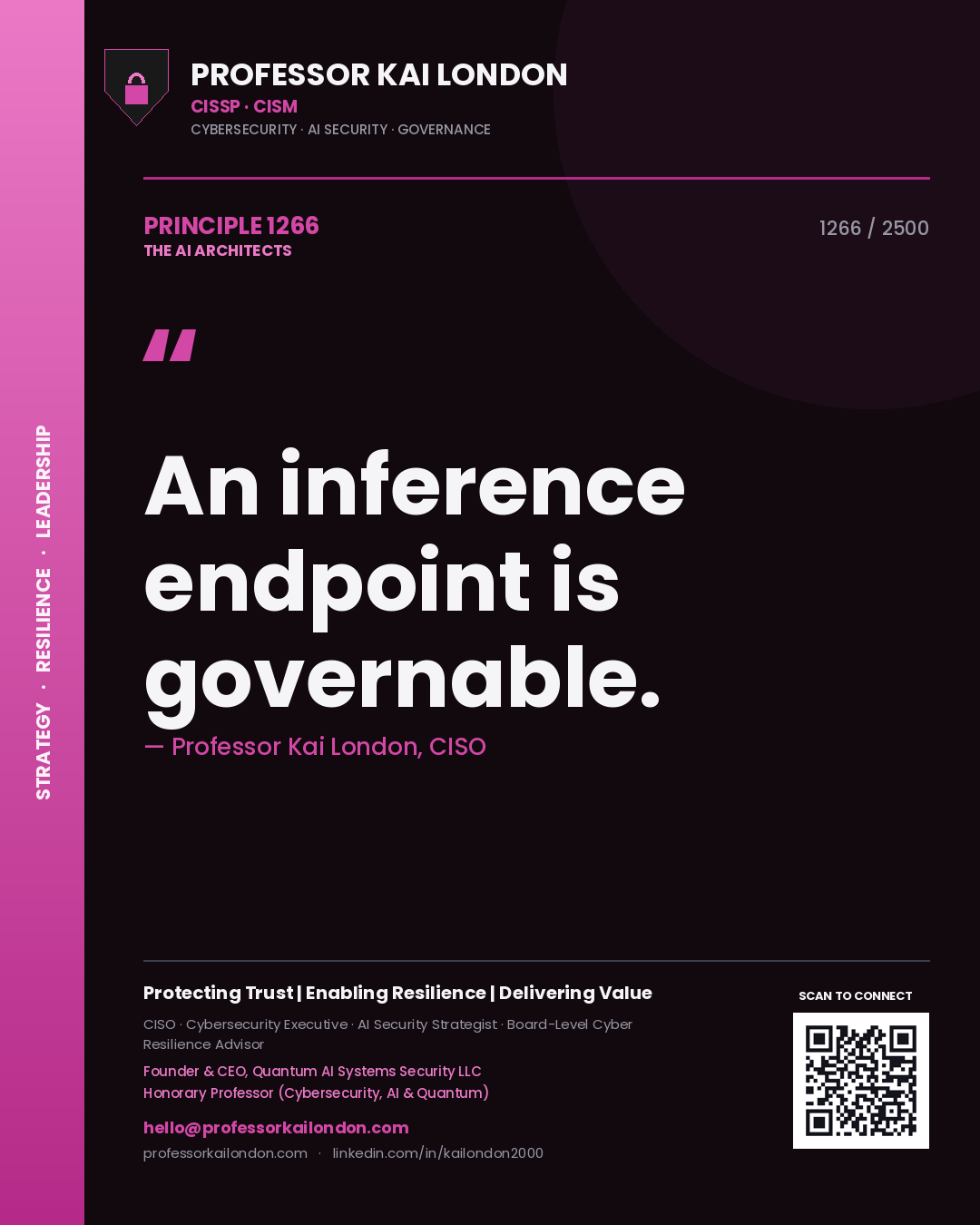
Professor Kai London principle 1266: An inference endpoint is governable.
Principle 1266
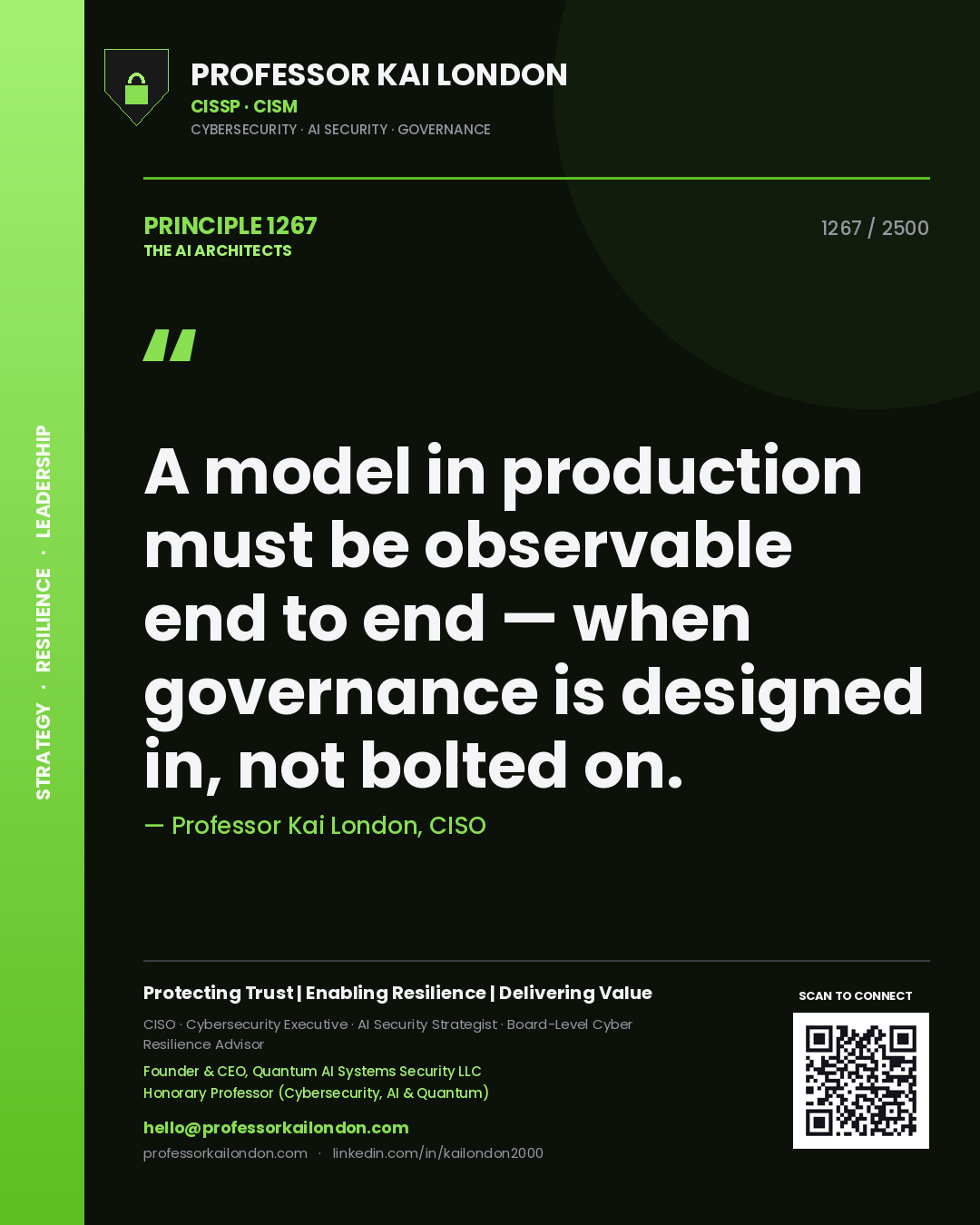
Professor Kai London principle 1267: A model in production must be observable end to end — when governance is designed in, not bolted on.
Principle 1267
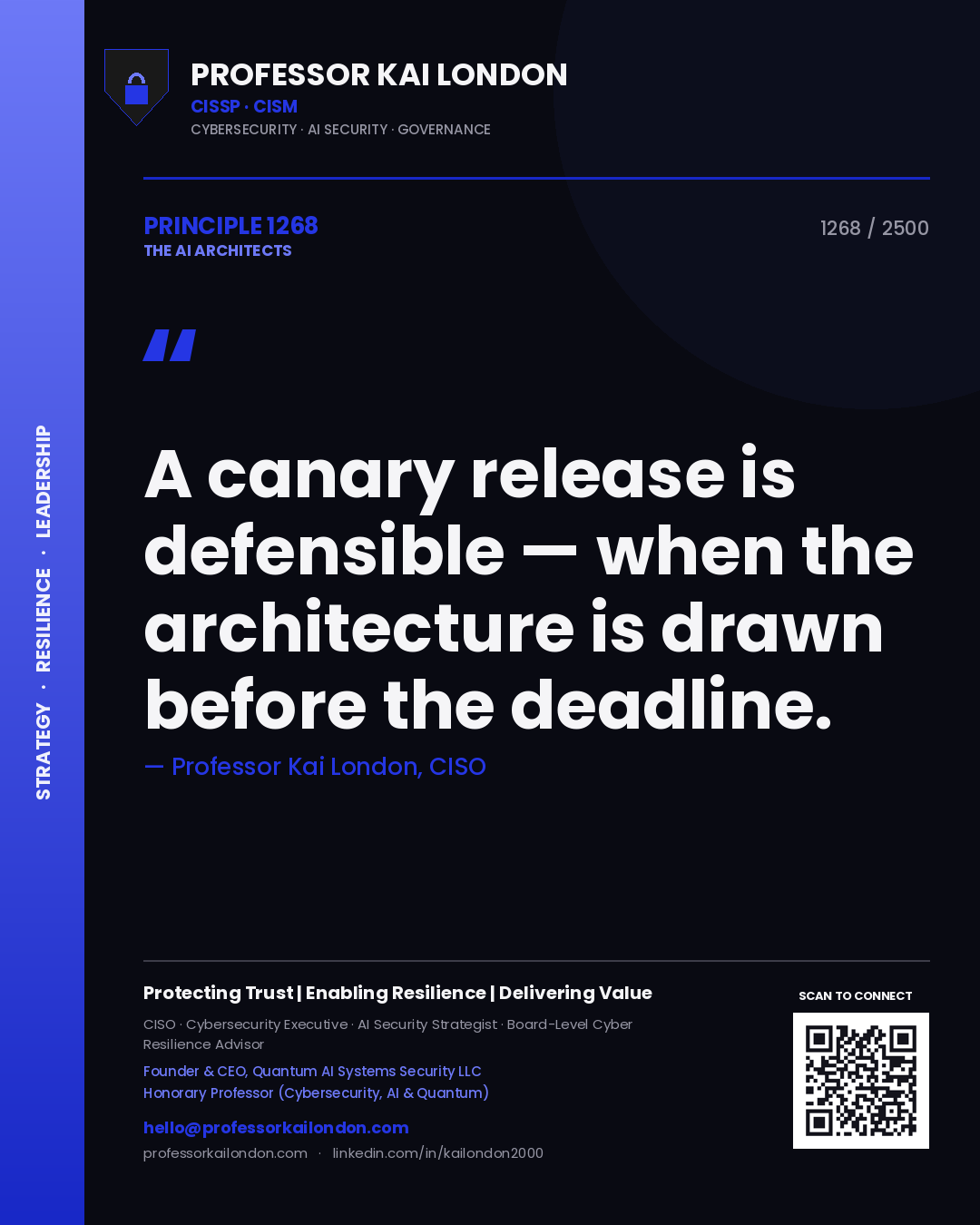
Professor Kai London principle 1268: A canary release is defensible — when the architecture is drawn before the deadline.
Principle 1268
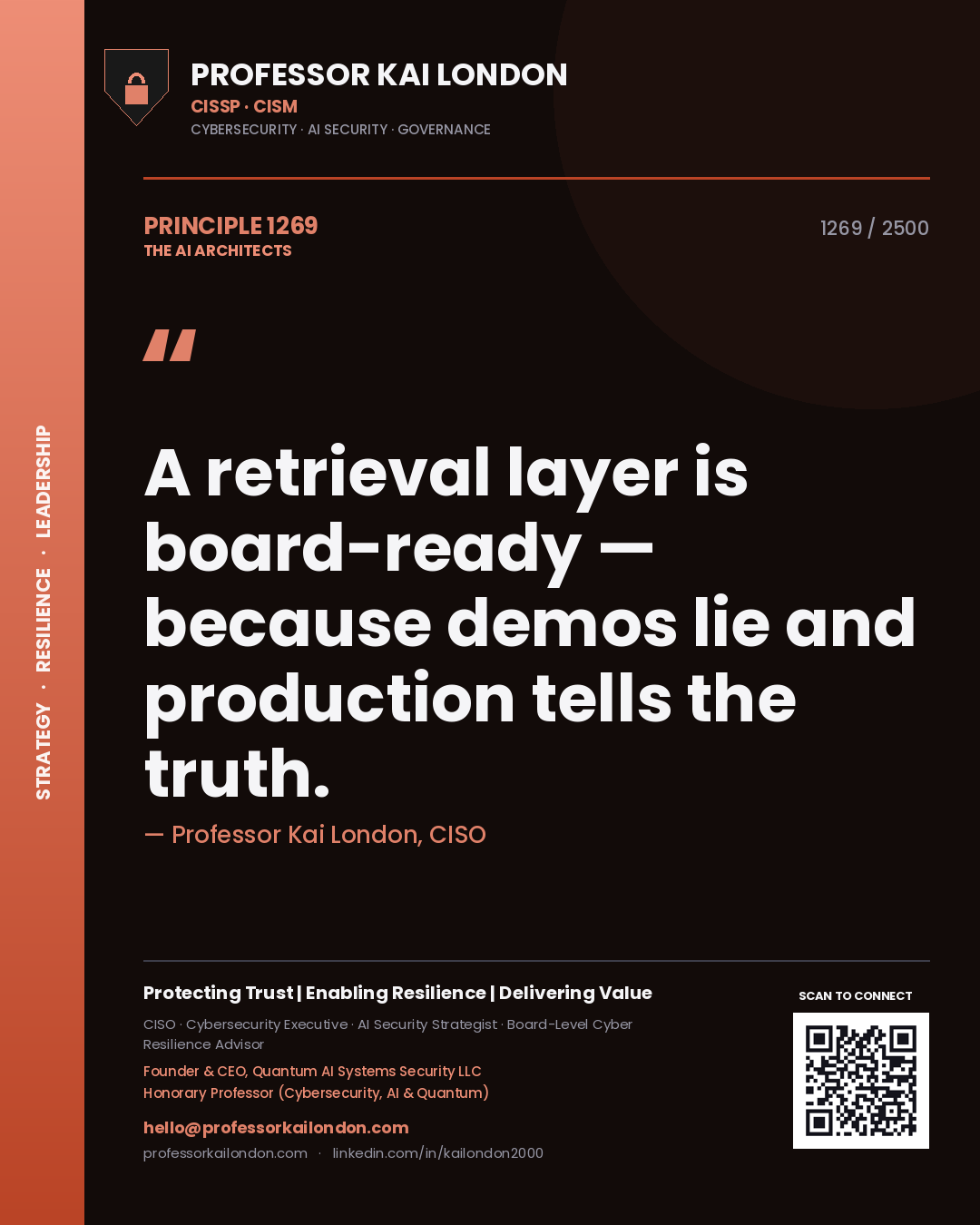
Professor Kai London principle 1269: A retrieval layer is board-ready — because demos lie and production tells the truth.
Principle 1269
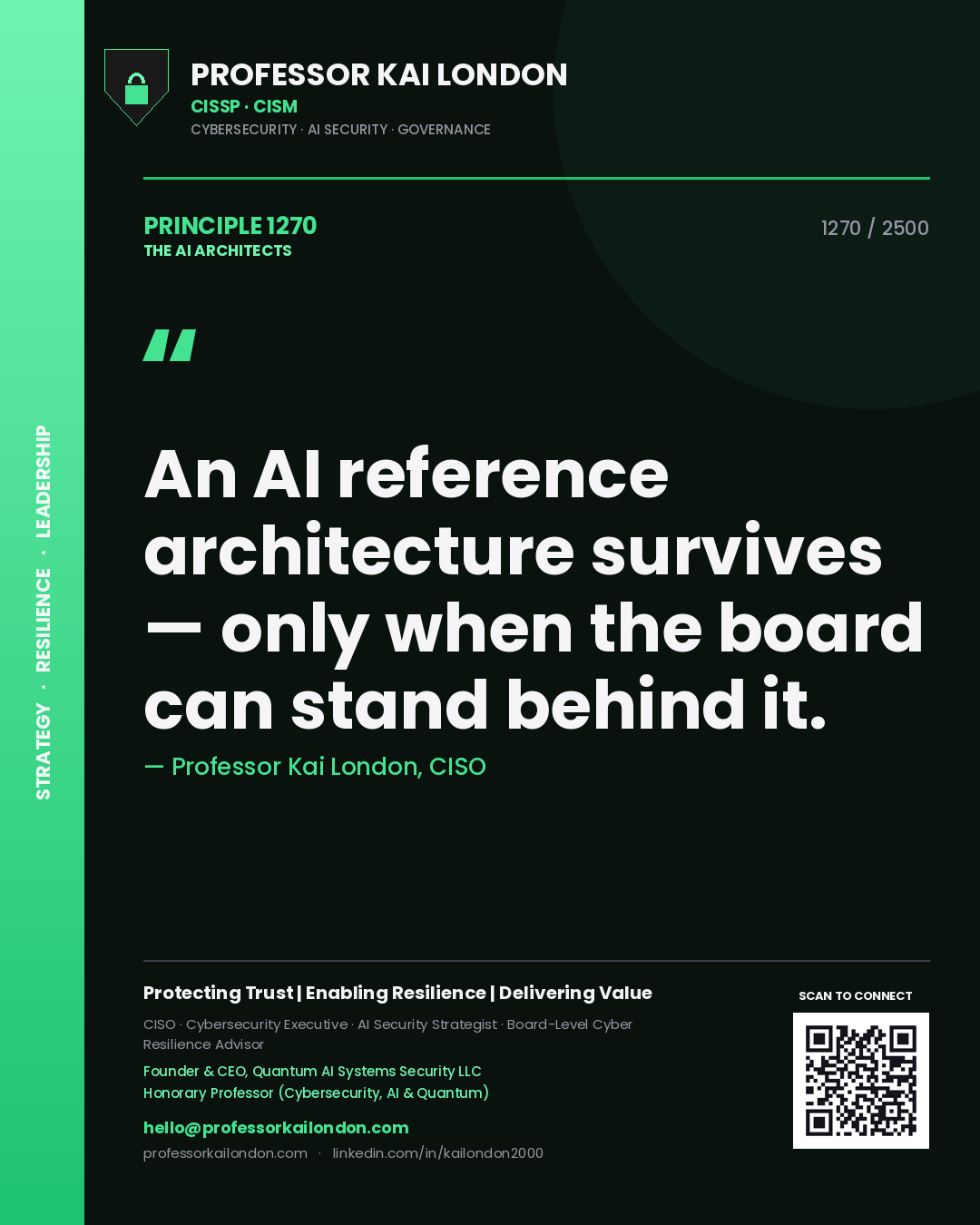
Professor Kai London principle 1270: An AI reference architecture survives — only when the board can stand behind it.
Principle 1270
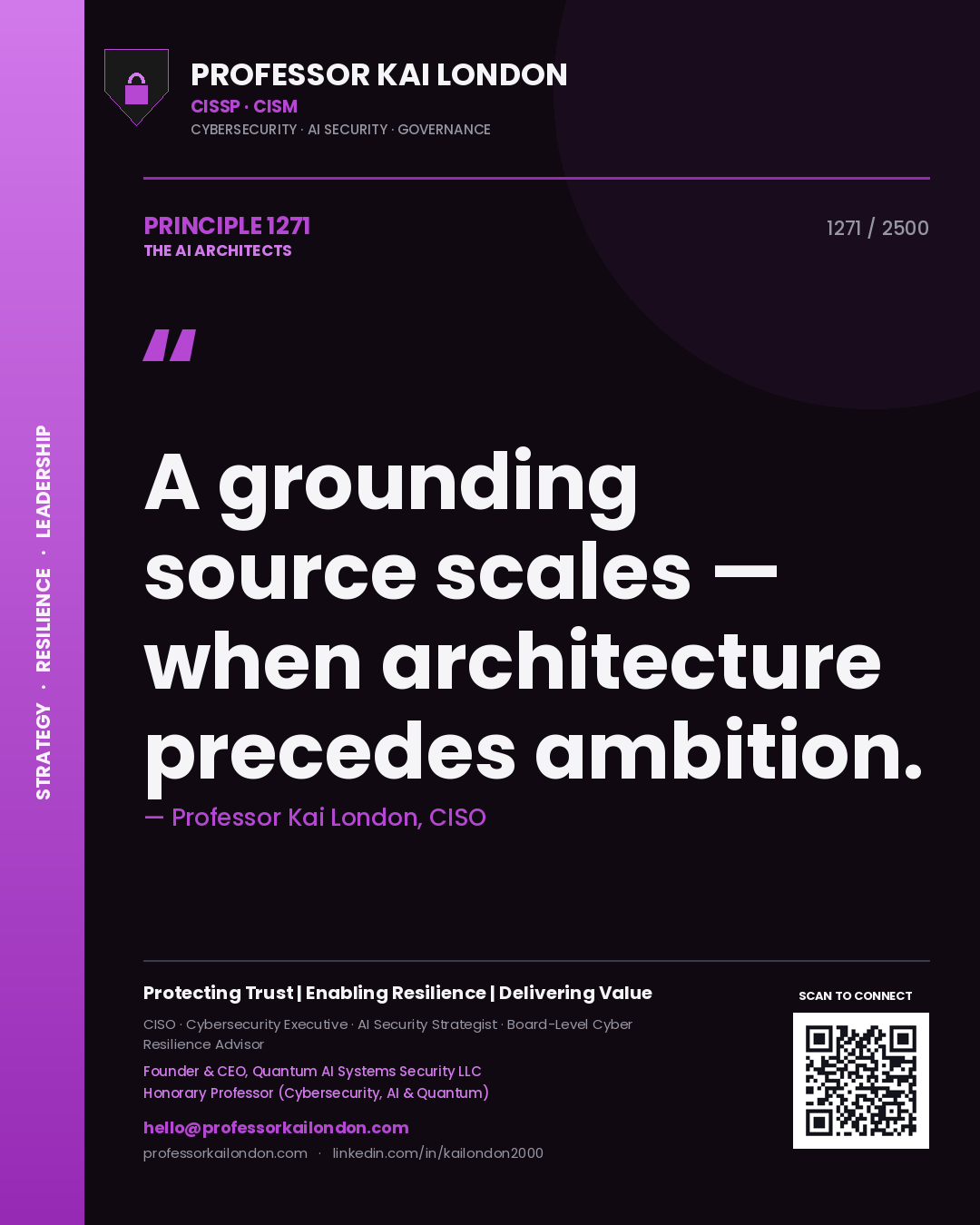
Professor Kai London principle 1271: A grounding source scales — when architecture precedes ambition.
Principle 1271
Professor Kai London principle 1272: A canary release is production-ready — because demos lie and production tells the truth.
Principle 1272
Professor Kai London principle 1273: The serving layer is reproducible — before scale turns a shortcut into an outage.
Principle 1273
Professor Kai London principle 1274: A foundation model earns trust — when the architecture is drawn before the deadline.
Principle 1274
Professor Kai London principle 1275: An embeddings index is only as strong as its weakest layer.
Principle 1275
Professor Kai London principle 1276: A deployment gate scales — when it can be explained to an auditor.
Principle 1276
Professor Kai London principle 1277: An embeddings index survives — because demos lie and production tells the truth.
Principle 1277
Professor Kai London principle 1278: An embeddings index is auditable — when its data lineage is provable.
Principle 1278
Professor Kai London principle 1279: A context window earns trust — only when the board can stand behind it.
Principle 1279
Professor Kai London principle 1280: An embeddings index is defensible — when its data lineage is provable.
Principle 1280
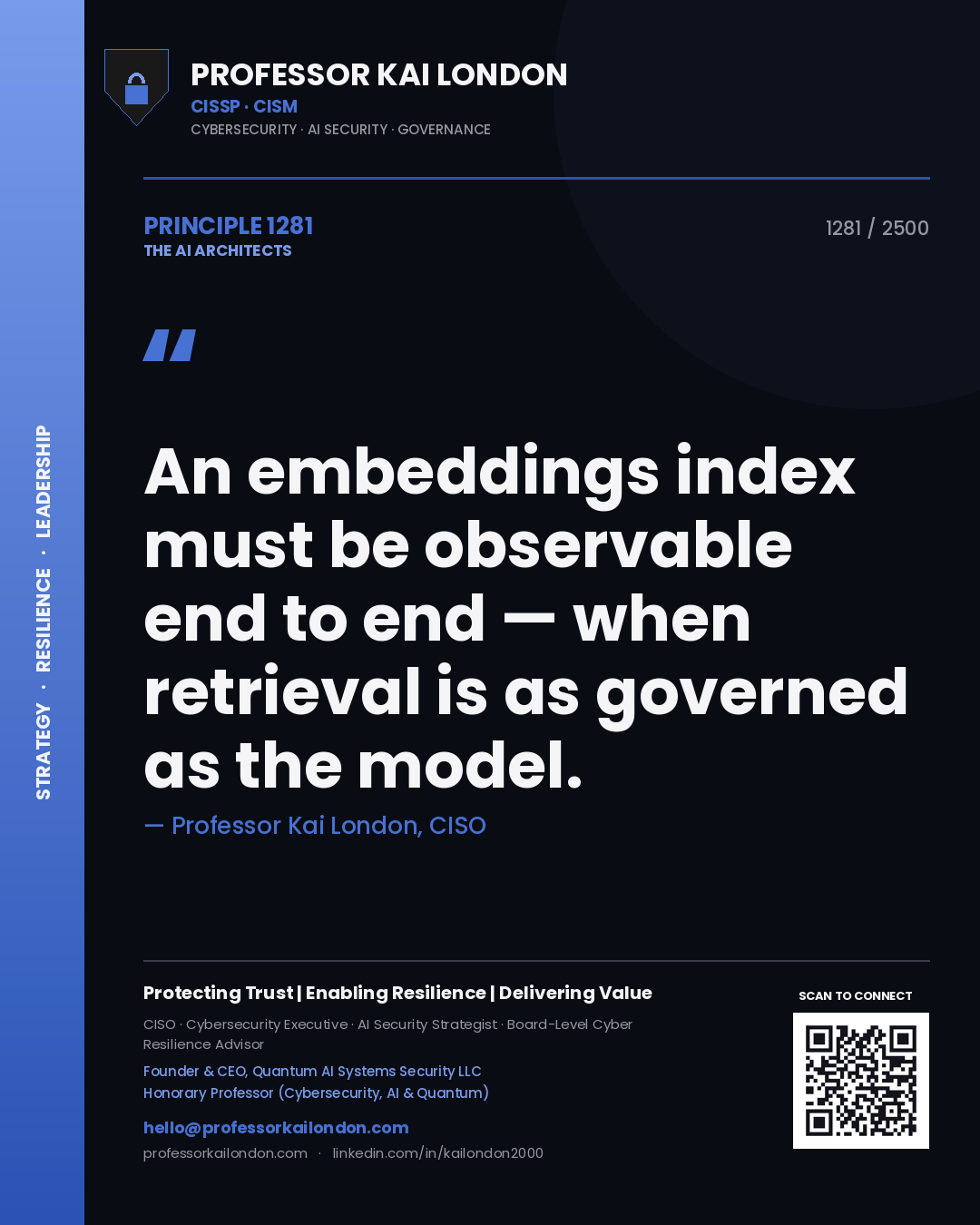
Professor Kai London principle 1281: An embeddings index must be observable end to end — when retrieval is as governed as the model.
Principle 1281
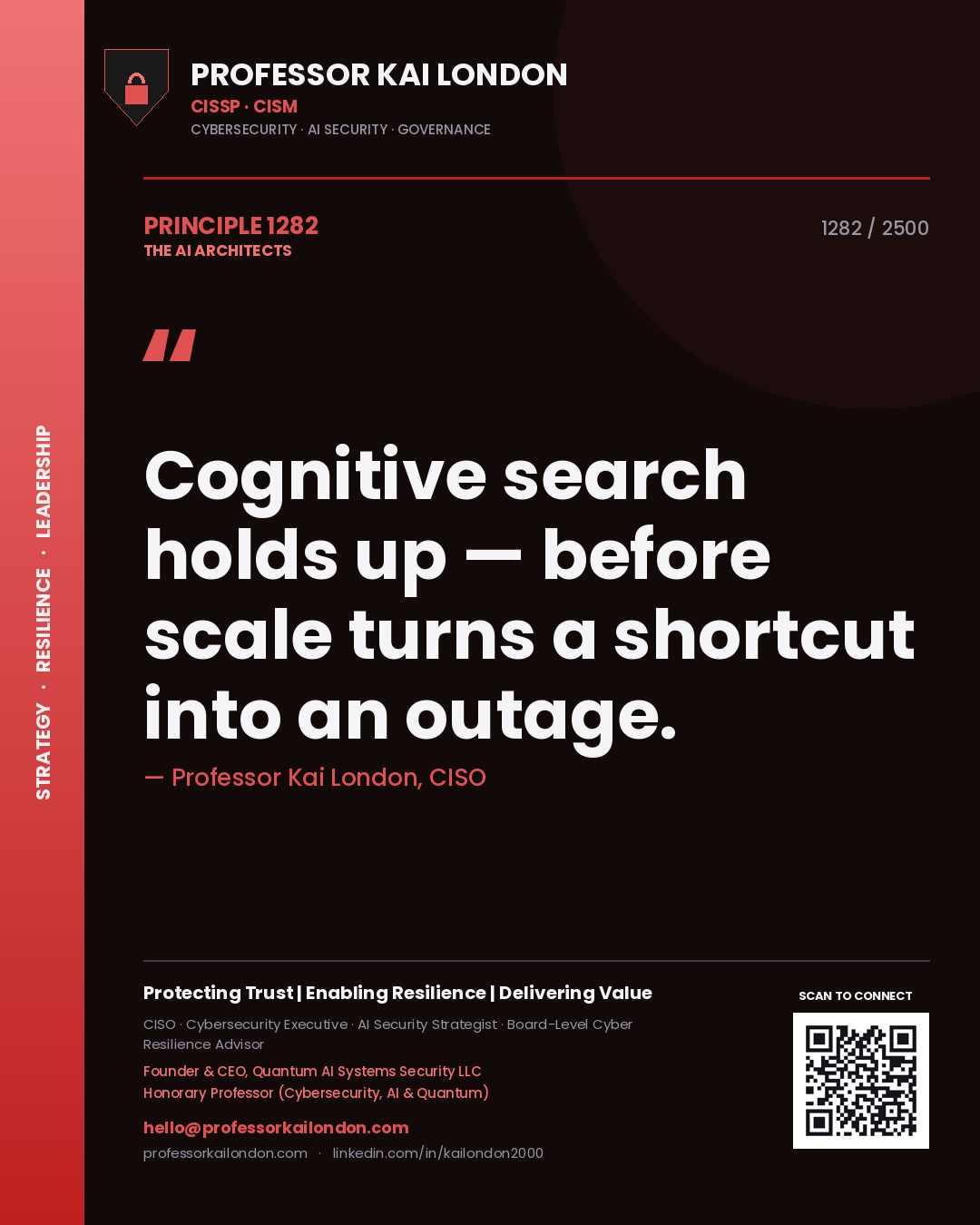
Professor Kai London principle 1282: Cognitive search holds up — before scale turns a shortcut into an outage.
Principle 1282
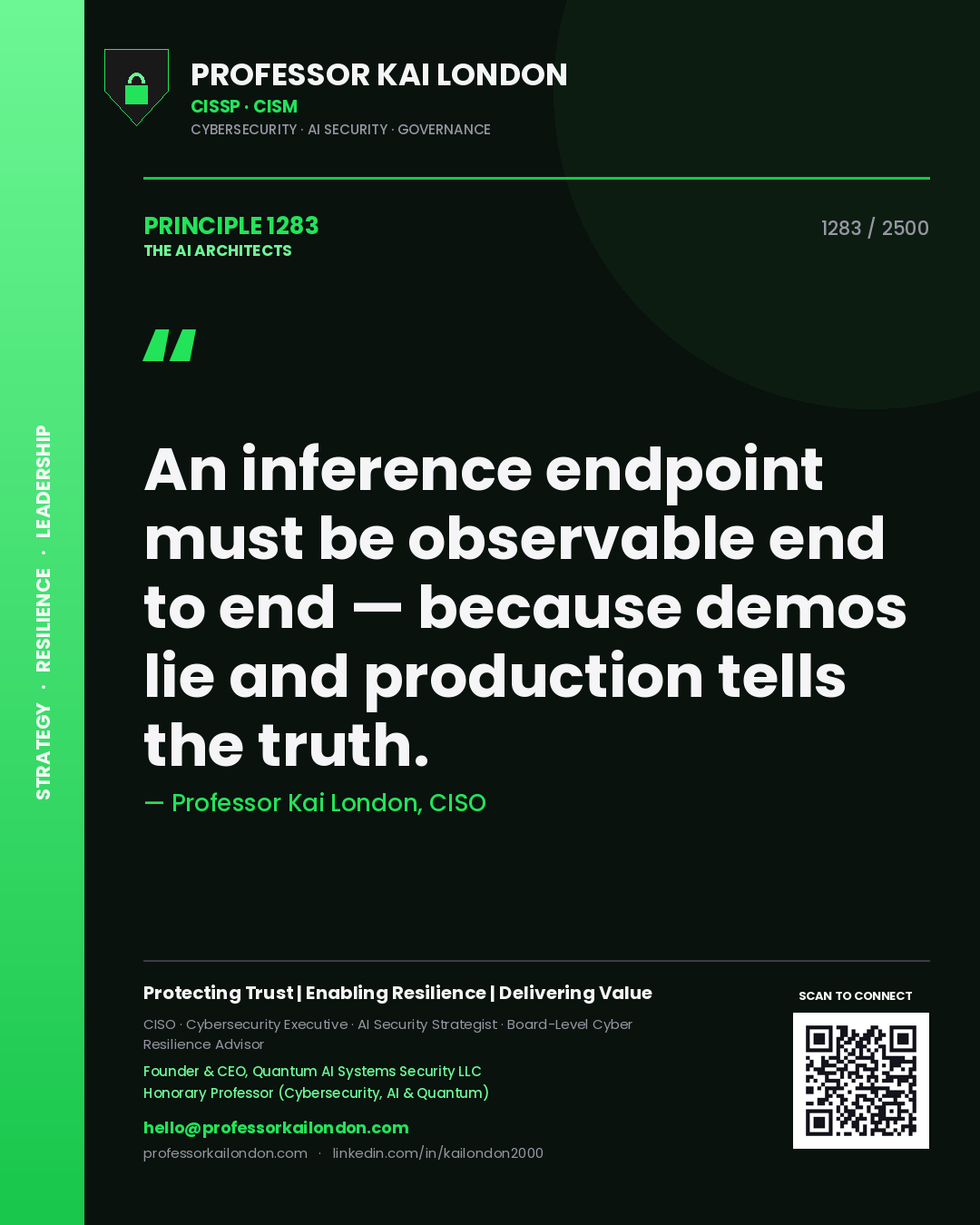
Professor Kai London principle 1283: An inference endpoint must be observable end to end — because demos lie and production tells the truth.
Principle 1283
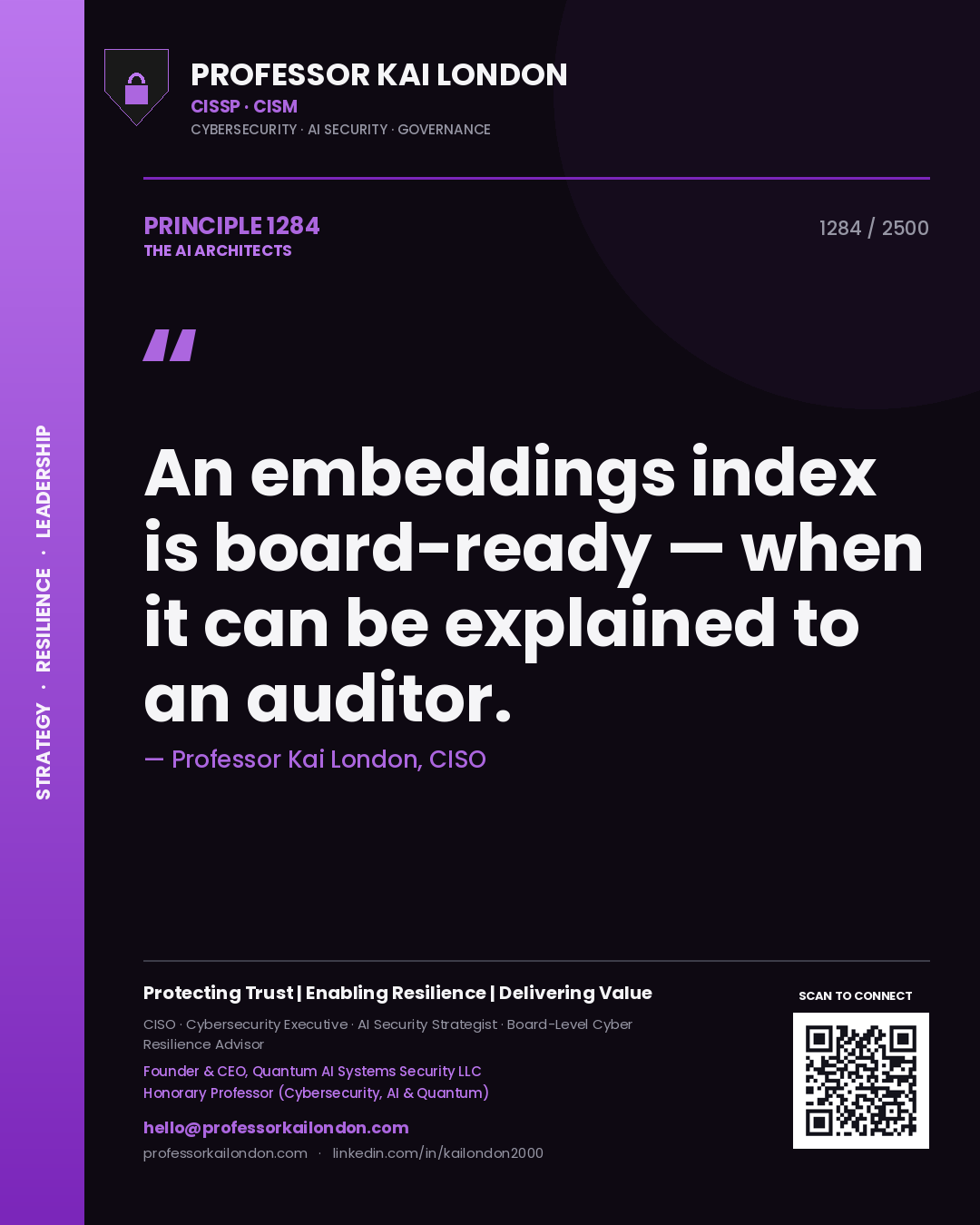
Professor Kai London principle 1284: An embeddings index is board-ready — when it can be explained to an auditor.
Principle 1284
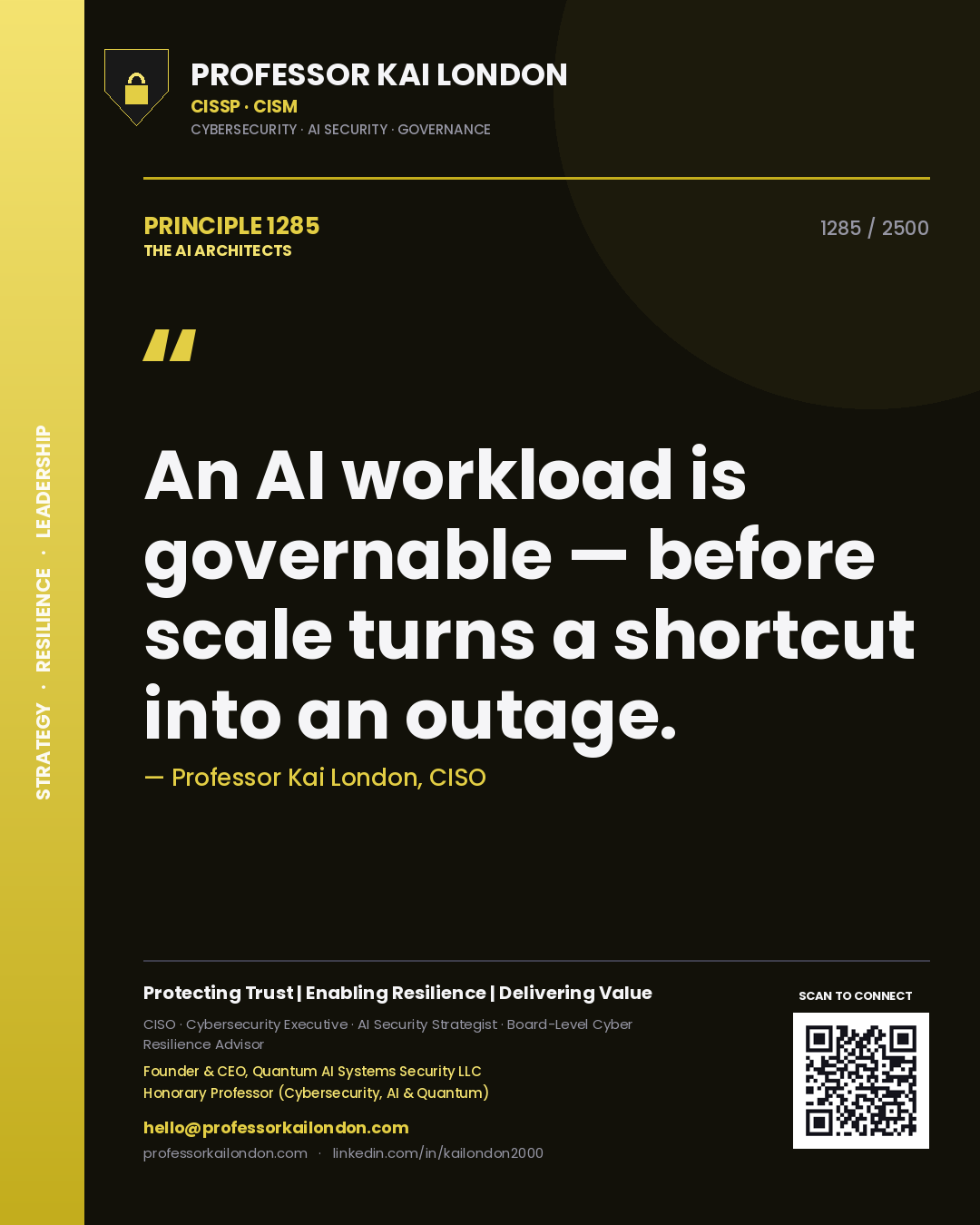
Professor Kai London principle 1285: An AI workload is governable — before scale turns a shortcut into an outage.
Principle 1285
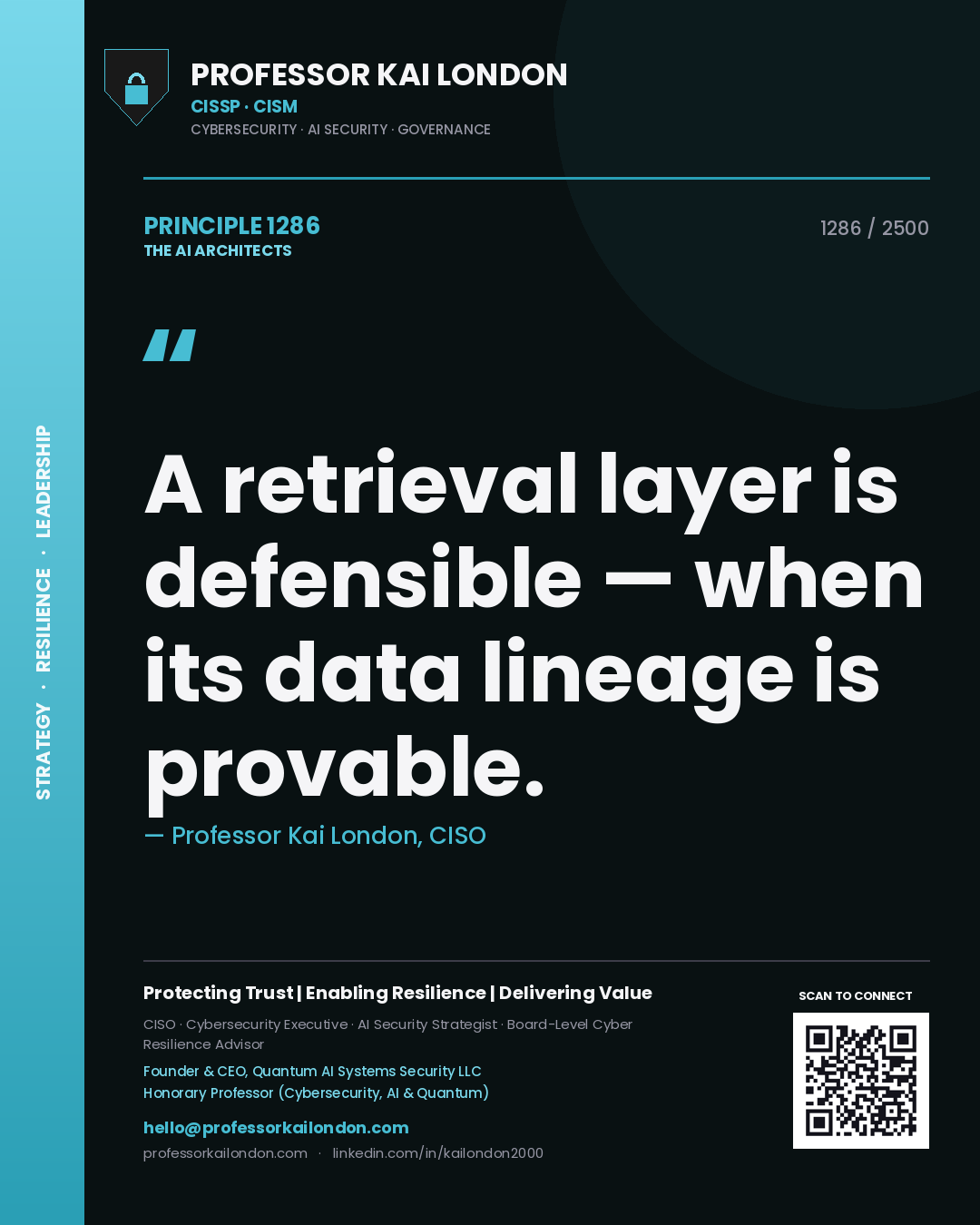
Professor Kai London principle 1286: A retrieval layer is defensible — when its data lineage is provable.
Principle 1286
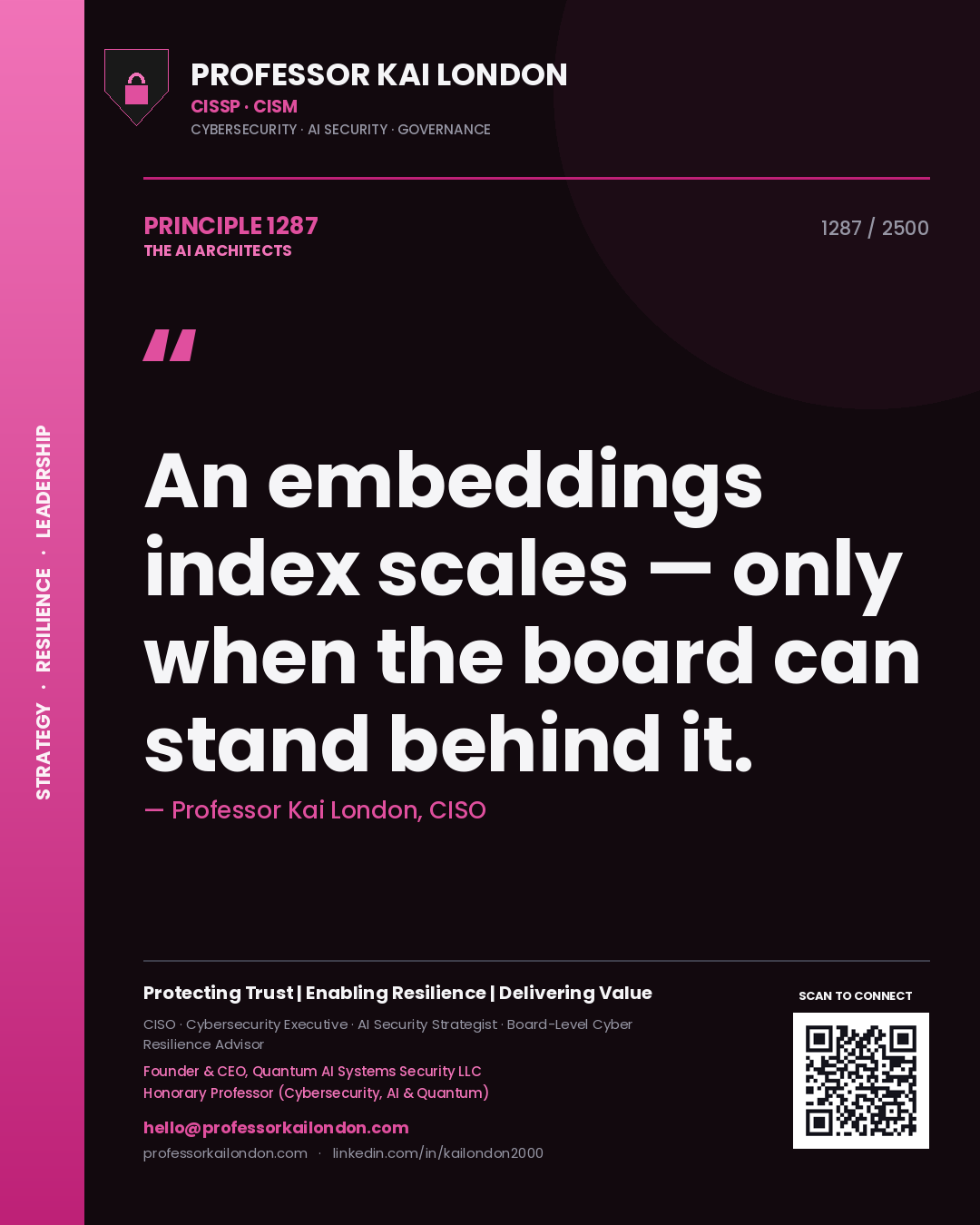
Professor Kai London principle 1287: An embeddings index scales — only when the board can stand behind it.
Principle 1287
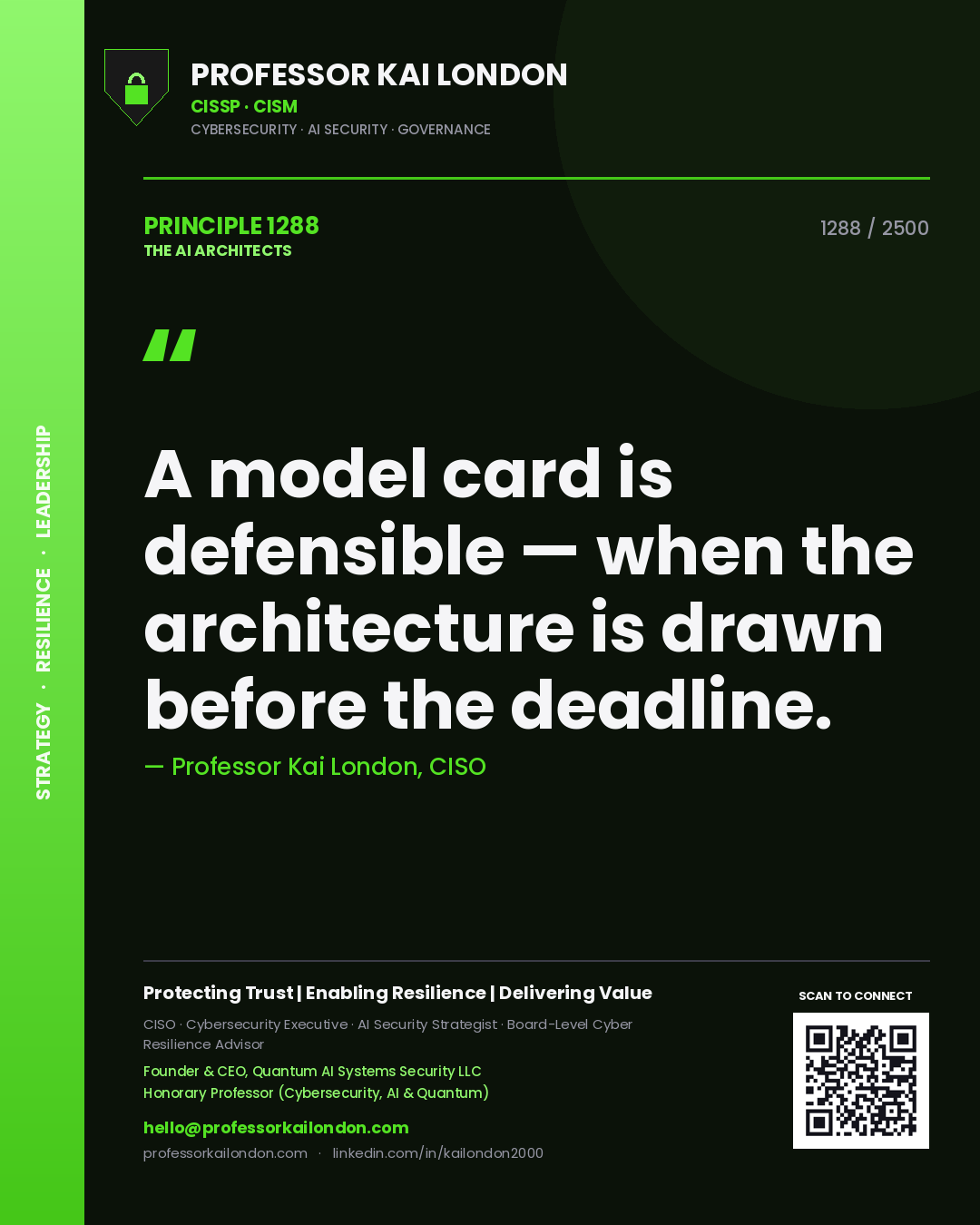
Professor Kai London principle 1288: A model card is defensible — when the architecture is drawn before the deadline.
Principle 1288
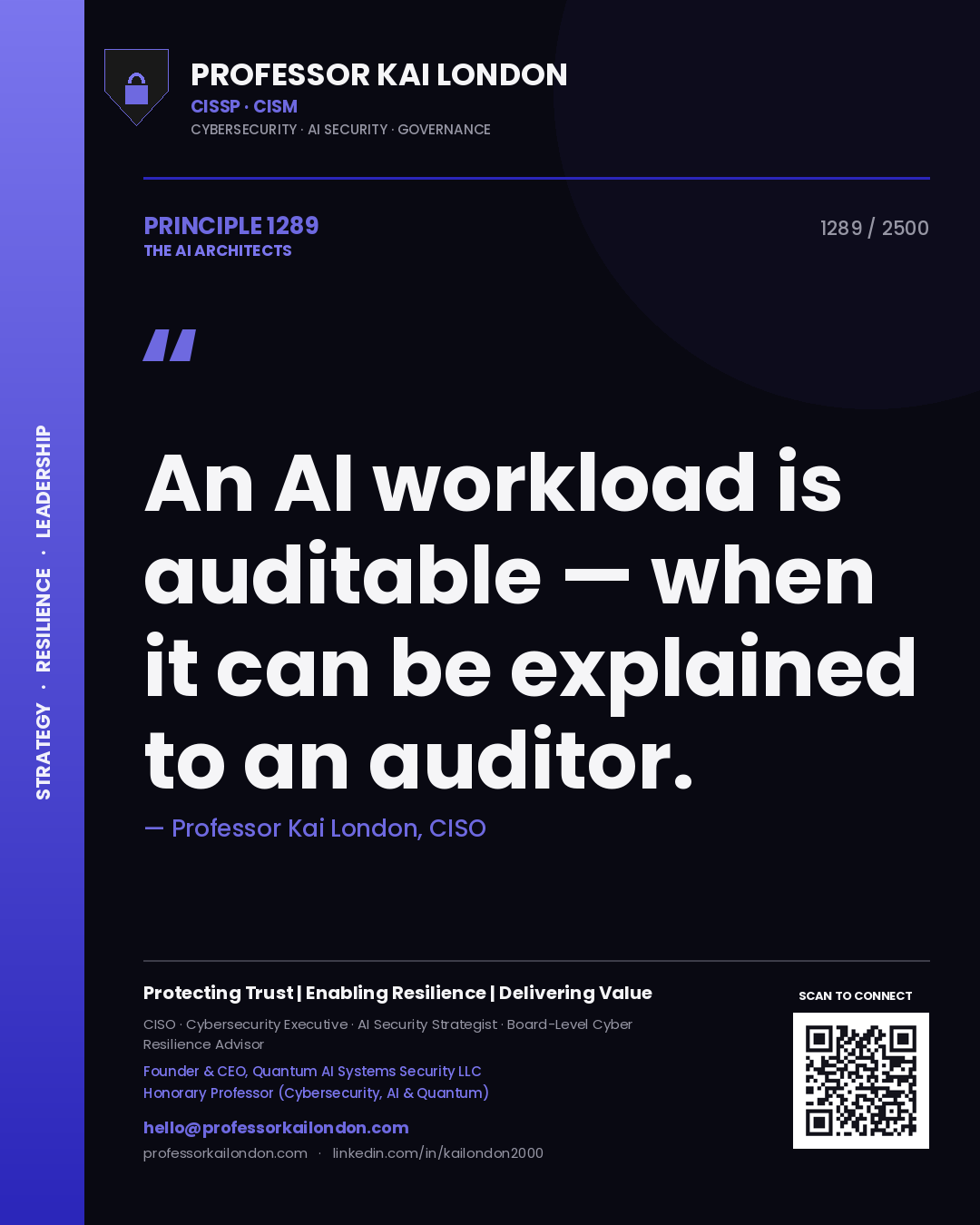
Professor Kai London principle 1289: An AI workload is auditable — when it can be explained to an auditor.
Principle 1289
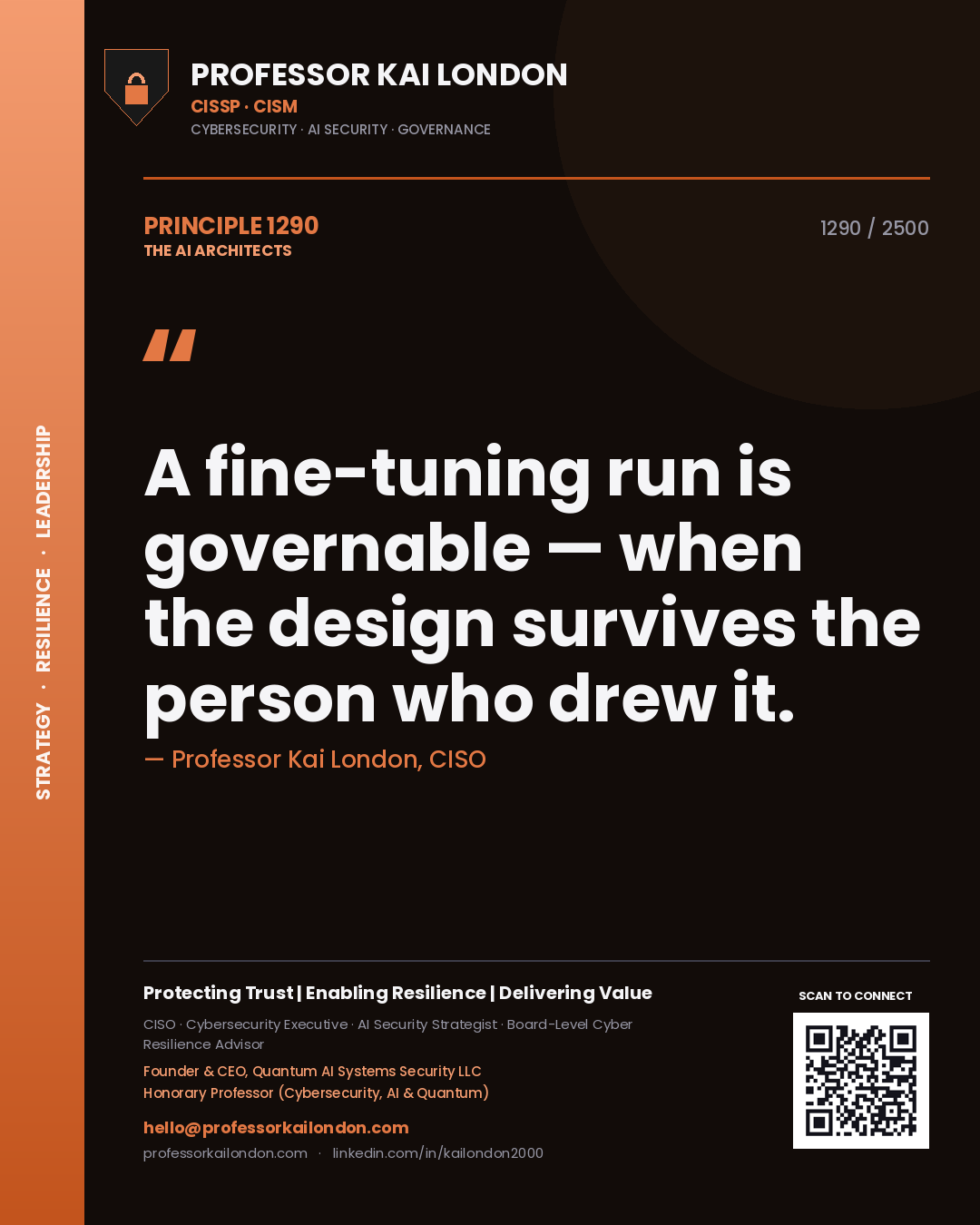
Professor Kai London principle 1290: A fine-tuning run is governable — when the design survives the person who drew it.
Principle 1290
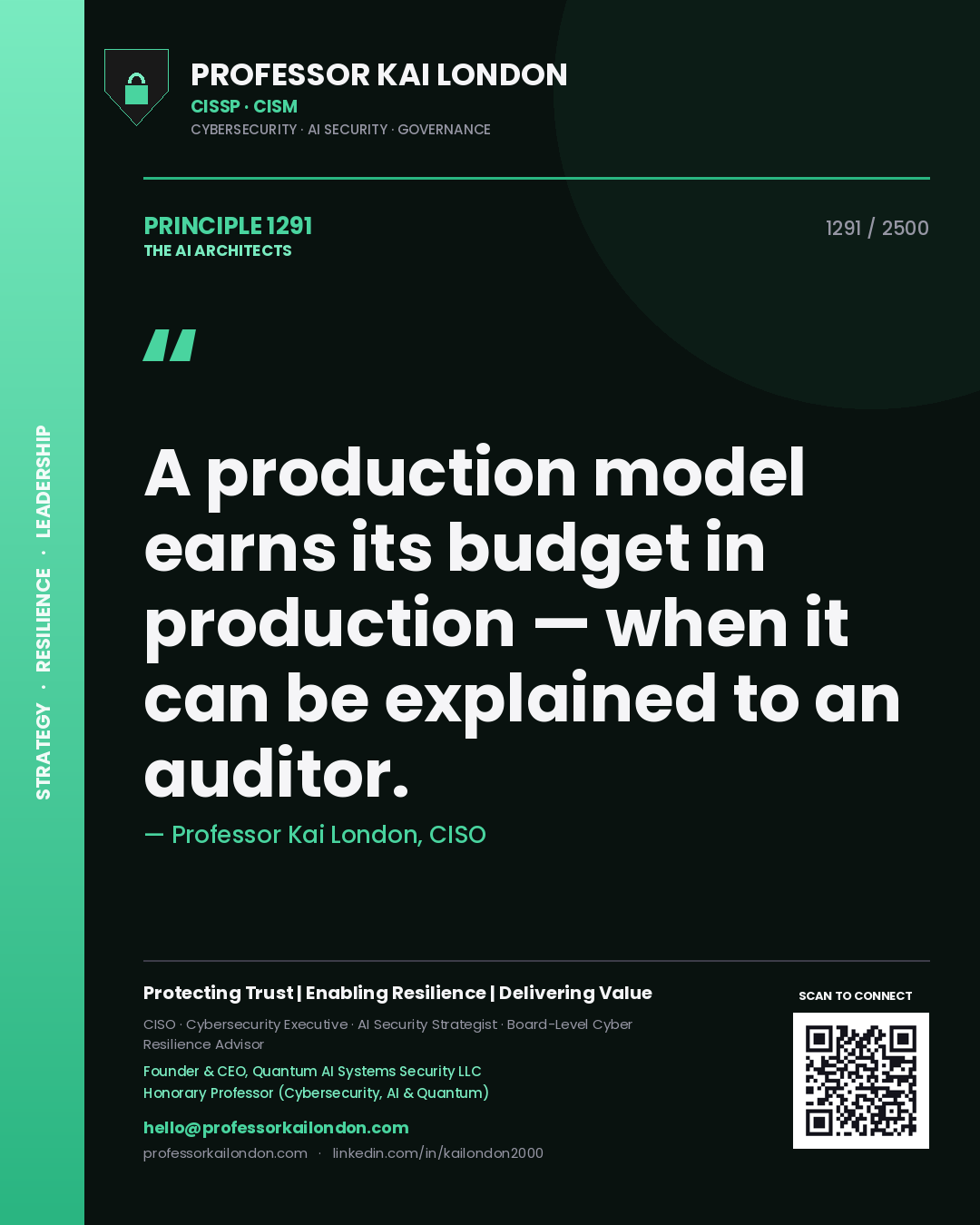
Professor Kai London principle 1291: A production model earns its budget in production — when it can be explained to an auditor.
Principle 1291
Professor Kai London principle 1292: An evaluation harness earns trust — when the architecture is drawn before the deadline.
Principle 1292
Professor Kai London principle 1293: A fine-tuning run earns its budget in production — when it can be explained to an auditor.
Principle 1293
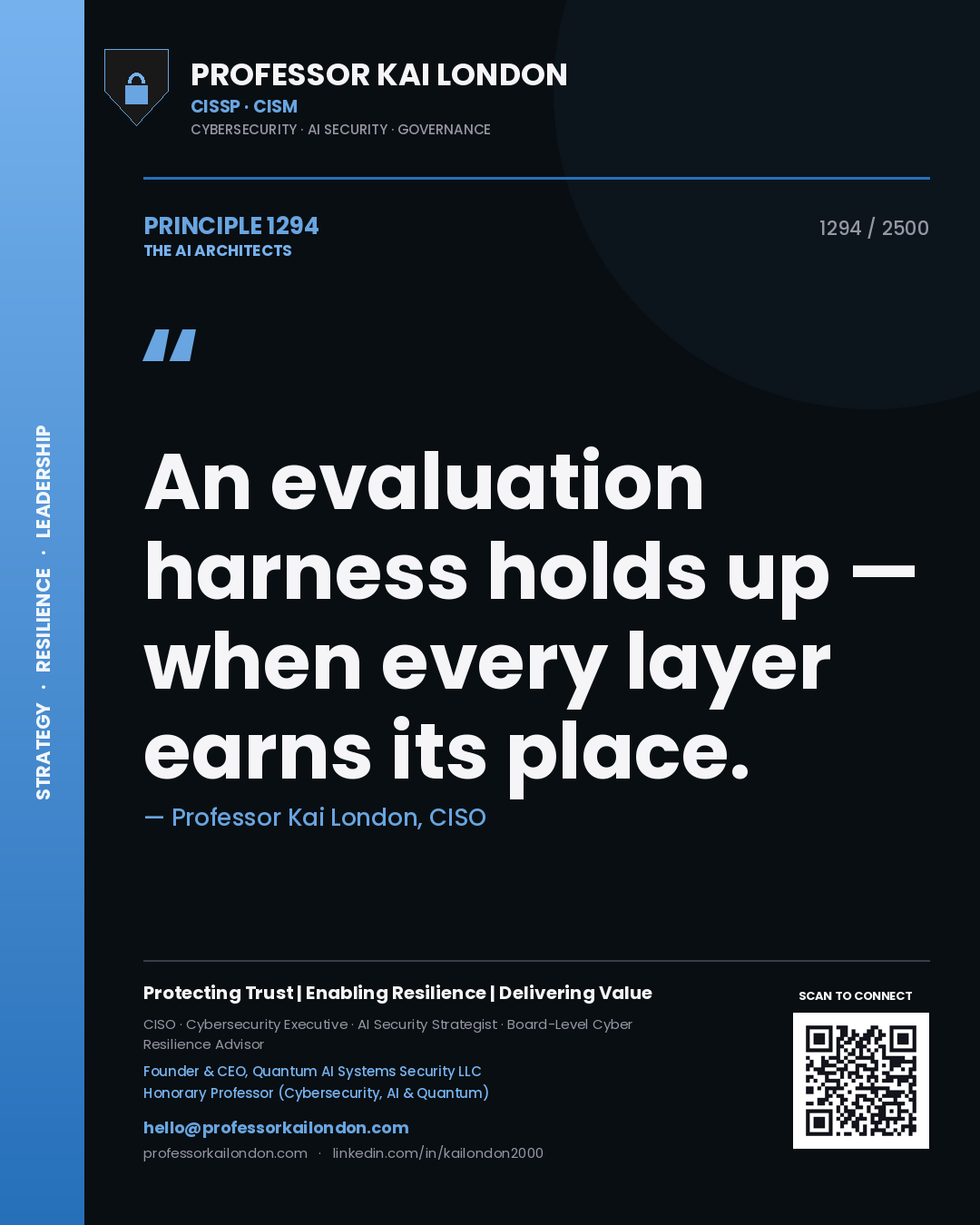
Professor Kai London principle 1294: An evaluation harness holds up — when every layer earns its place.
Principle 1294
Professor Kai London principle 1295: A model card is reproducible — when the architecture is drawn before the deadline.
Principle 1295
Professor Kai London principle 1296: A tool-calling agent is only as strong as its weakest layer — when retrieval is as governed as the model.
Principle 1296
Professor Kai London principle 1297: A canary release earns trust — when retrieval is as governed as the model.
Principle 1297
Professor Kai London principle 1298: A guardrail policy survives — when architecture precedes ambition.
Principle 1298
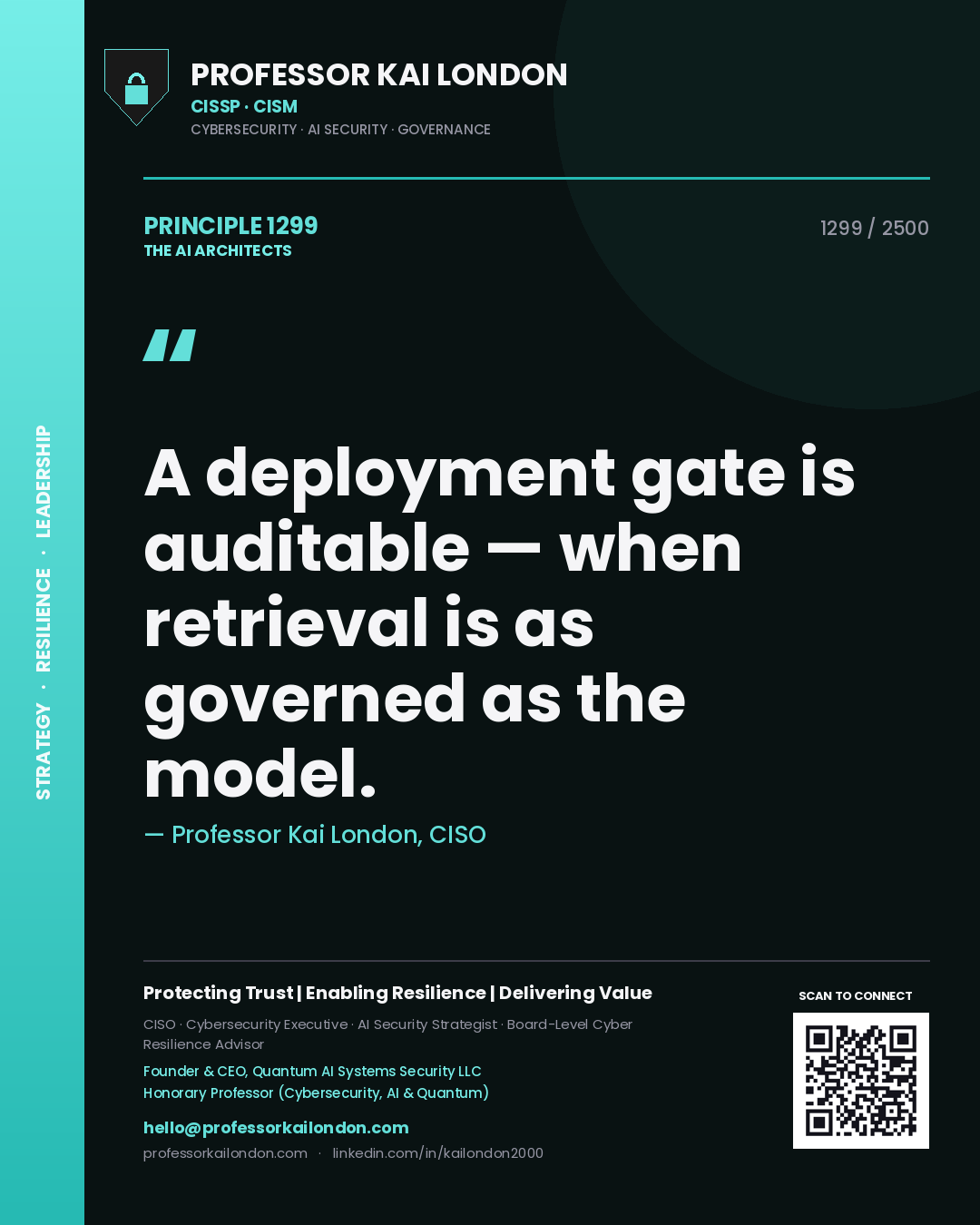
Professor Kai London principle 1299: A deployment gate is auditable — when retrieval is as governed as the model.
Principle 1299
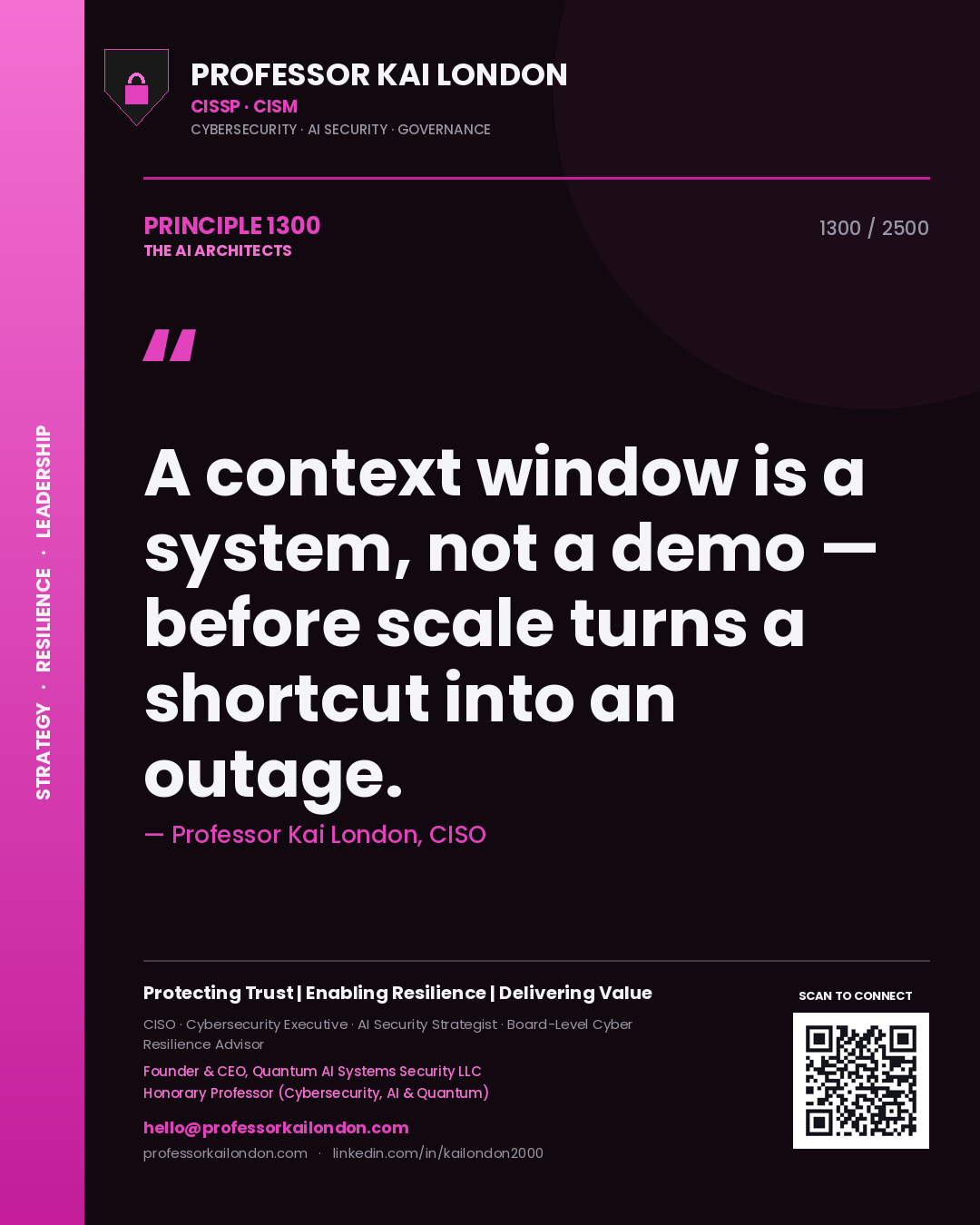
Professor Kai London principle 1300: A context window is a system, not a demo — before scale turns a shortcut into an outage.
Principle 1300